
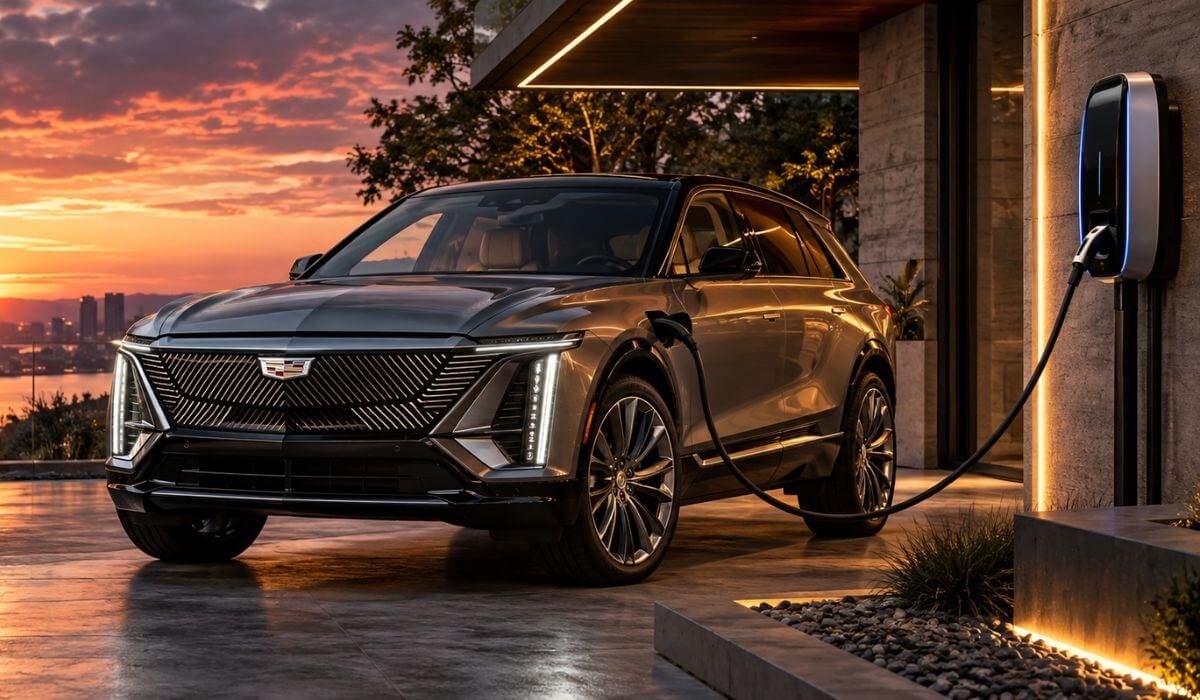
5 Best EV Chargers for Cadillac Lyriq in 2026: Smarter Home Charging Without the Guesswork
If you own a Cadillac LYRIQ, choosing a home charger becomes much easier once you stop chasing the biggest number on the box and start with what the vehicle can actually use. The LYRIQ uses a 102 kWh battery in most recent configurations, while some earlier model years can differ slightly in battery and charging equipment. For home AC charging, the LYRIQ uses a J1772 connection, so the right charger is one that works with the vehicle’s charging hardware rather than simply promising more power than the car can accept.
The bigger detail is the onboard charger, because that is what ultimately determines how much AC power the LYRIQ can take. Most LYRIQ configurations are built around roughly 11.5 kW of AC charging, while Cadillac has also offered configurations with a 19.2 kW onboard charging capability when matched with the appropriate home charging equipment and electrical installation. In other words, buying a much higher-rated EVSE does not automatically make your LYRIQ charge faster; the vehicle’s own charging hardware still sets the ceiling.
That is why I would look past the headline numbers when choosing a Cadillac LYRIQ home charger. Cable reach, installation type, charging controls, weather protection, connectivity and everyday reliability can matter far more once the charger is mounted on your garage wall and used night after night. The five chargers below were selected around those real-world differences, giving different LYRIQ owners practical options instead of pretending that one charging setup makes sense for every home.
Best Level 2 Home EV Chargers for Cadillac LYRIQ: Top 2026 Picks for 11.5 kW Home Charging
#1. ChargePoint HomeFlex Level 2 EV Charger
Best Home Charger for Cadillac LYRIQ With J1772 Compatibility, 11.5 kW Level 2 Charging & Flexible Installation
#2. Autel MaxiCharger Level 2 EV Charger
High-Power Cadillac LYRIQ EV Charger With J1772 Connection, 19.2 kW Capability, Hardwired Setup & Smart Controls
#3. EMPORIA Level 2 EV Charger
Best Smart Level 2 Charger for Cadillac LYRIQ With 11.5 kW Home Charging, WiFi Energy Monitoring & 25-Ft Cable
#4. Star Charge Level 2 EV Charger
Cadillac LYRIQ Home EV Charging Station With J1772 Compatibility, 12 kW Capability, Hardwired Installation & NEMA 4 Protection
#5. MACH 2 Fast Level 2 EV Charger
Long-Reach Cadillac LYRIQ Home Charger With J1772 Charging, 11.5 kW Capability, 30-Ft Cable & Flexible Installation
Expert Tip
If I were choosing a home charger for a LYRIQ, I would not start with the charger that has the biggest specification sheet. I would start with the car, the electrical setup at home, and how I actually park and charge it every night.
For most owners, the real difference is not whether a charger can advertise more power than the LYRIQ can use. It is whether the unit is properly matched to the vehicle, installed correctly, reaches the charge port comfortably, and gives you dependable charging without making everyday use complicated.
That is also why this list is not five versions of the same charger. ChargePoint gives you a proven all-round home setup, Autel brings a more substantial hardwired installation, EMPORIA adds useful connected controls and energy visibility, Star Charge keeps things straightforward with a permanent UL-certified setup, while MACH 2 stands out when cable reach is the problem.
The right choice depends on your garage. That is the point.
How We Chose These Cadillac LYRIQ EV Chargers
We did not build this list by taking five popular EV chargers and putting “for Cadillac LYRIQ” in front of their names. The LYRIQ comes first, and the chargers were considered around the way the vehicle actually charges at home.
1. We started with LYRIQ charging compatibility
The first filter was simple: the charger has to make sense for the LYRIQ’s AC charging setup. That means looking at connector compatibility, charging architecture and the vehicle’s onboard charging capability before considering extra features.
This matters because a charger can have a very impressive maximum rating and still provide no practical advantage if the LYRIQ itself cannot accept that amount of AC power. We therefore avoided treating the largest number on the charger as automatically meaning faster charging.
2. We looked at the installation rather than just the charger
A home EV charger becomes part of your electrical system. That makes plug-in versus hardwired installation a genuine buying decision, not a minor specification.
ChargePoint, EMPORIA and MACH 2 give buyers plug-in flexibility, while Autel and Star Charge provide stronger options for owners who prefer a permanent hardwired installation. We kept both approaches because there is no single garage setup that works for everybody.
If your garage already has the right outlet in the right place, a plug-in unit can make the installation considerably simpler. If you are having an electrician run a dedicated circuit anyway, a hardwired charger may make more sense.
3. Cable length had to earn its place
This is one of those things that looks unimportant until you actually live with an EV charger.
A 25-foot cable can be perfectly comfortable for one garage and frustratingly short for another. The MACH 2’s 30-foot cable therefore gives it a legitimate place on this list rather than simply adding another similar 48A charger.
We considered where the cable can realistically reach the LYRIQ’s charge port, whether the vehicle can be parked naturally, and whether the cable length makes the installation easier to live with.
4. We separated useful smart features from marketing features
WiFi, apps and connected controls sound impressive, but they are only useful if they make charging easier.
That is why EMPORIA gets attention for its WiFi connectivity and energy-monitoring capabilities, while ChargePoint’s connected controls make sense for owners who want a more established smart-charging experience. Autel also brings a more advanced connected charging approach.
We did not give extra credit simply because a product had more software features. A feature has to solve a real charging problem to matter here.
5. Safety and certification were part of the shortlist
An EV charger is handling substantial electrical load for potentially many hours at a time. That makes certification, electrical protection, build quality and installation requirements much more important than a flashy product description.
The Star Charge’s UL certification, for example, is a meaningful reason it remains on the list. With the other chargers, we looked at their stated safety provisions, installation requirements and intended indoor/outdoor use rather than assuming every EVSE is equally suitable.
6. We considered how each charger fits a different LYRIQ owner
This is probably the most important part of the selection.
There is no honest reason to claim that one charger is perfect for every LYRIQ owner. Someone with a conveniently located garage outlet has different priorities from someone installing a permanent wall-mounted system. A homeowner who wants energy visibility has different needs from someone who simply wants to plug in every night and forget about it.
So each charger has a specific reason for being here:
- ChargePoint HomeFlex — chosen as the balanced everyday option for owners who want an established home charging setup with flexible installation.
- Autel MaxiCharger — selected for owners considering a more powerful, permanent hardwired installation and wanting advanced connected controls.
- EMPORIA — included for drivers who care about WiFi control and energy monitoring, not just plugging in and charging.
- Star Charge — chosen for its straightforward hardwired approach and UL-certified positioning.
- MACH 2 Fast — included because its 30-foot cable solves a very real garage-layout problem that shorter cables cannot.
That is the distinction we wanted this list to have. These are not five chargers chosen because they happen to appear frequently in EV articles. They cover different ownership situations, while still making sense for the Cadillac LYRIQ’s home-charging requirements.
And before buying any of them, check your specific LYRIQ model year, onboard charging equipment, existing electrical service and installation requirements. The charger should fit the car and the house together—not just look good on a product page.
#1. ChargePoint HomeFlex Level 2 EV Charger
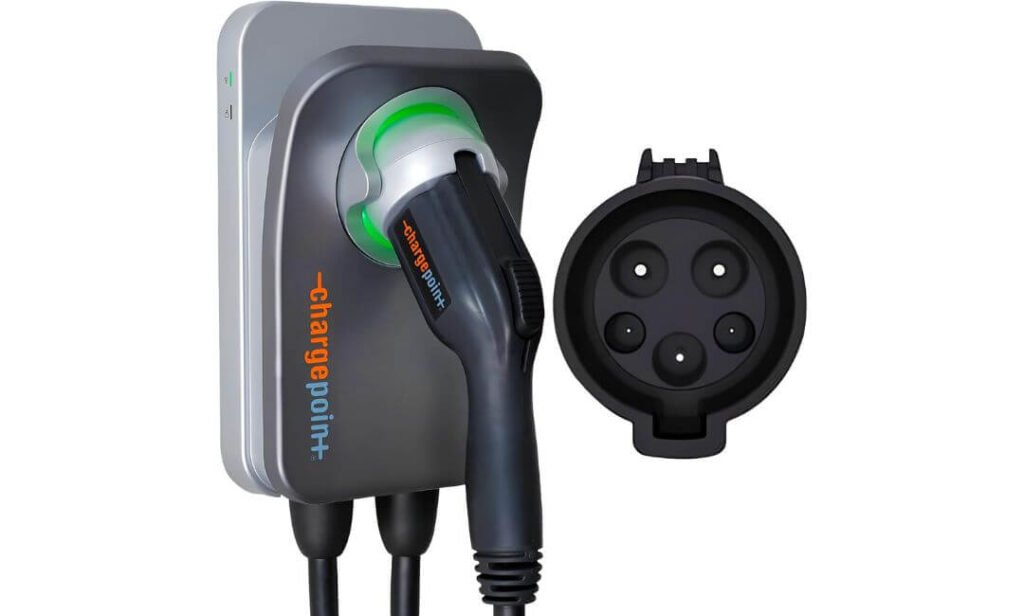
Quick Specs:
- Connector: J1772
- Plug: NEMA 14-50
- Charging: Up to 11.5 kW with hardwired installation
- Plug-In Output: Up to 9.6 kW
- Cable: 23 feet
- Installation: Plug-in or hardwired options
- Use: Indoor or outdoor
- Certification: UL-certified
- Controls: ChargePoint mobile app, scheduling and charging data
The first thing I like here for a LYRIQ is that there is no connector puzzle to solve. The native J1772 connection fits the charging setup used by the LYRIQ, so you are not buying an adapter just to make the charger physically connect to the car. That sounds obvious, but it is exactly the sort of detail worth getting right before spending money on a permanent home charger.
The installation choice is another reason this one makes sense. With the NEMA 14-50 version, you can use an existing suitable 240V outlet instead of committing to a hardwired installation. If you want the full 11.5 kW capability, the hardwired configuration is the route to look at. In other words, you can build the charging setup around your garage rather than rebuilding the garage around the charger.
Then there is the 23-foot cable, which is genuinely useful on a large SUV like the LYRIQ. You do not always park perfectly nose-first beside the wall, and a few extra feet can be the difference between an easy nightly plug-in and having to think about where the car sits every time. The cable is also designed for cold-weather use, which is a nice practical touch for an outdoor or unheated installation.
What we like
- Native J1772 connection keeps the LYRIQ setup straightforward.
- 23-foot cable gives you useful freedom when the parking position is not right beside the wall.
- Plug-in or hardwired installation lets you work with the electrical setup you already have.
- The ChargePoint app gives you charging history, energy information, scheduling and remote control rather than leaving the charger completely hands-off.
- Indoor/outdoor capability and UL certification make it a more practical long-term installation than a charger chosen only for its headline charging figure.
What we would keep in mind
The smart side is useful, but I would not buy this specifically because you expect the app or WiFi to be flawless every single day. User experiences with connectivity are mixed. The important part is that basic charging does not depend on having WiFi working, so a connection problem does not turn the unit into a useless box on the wall.
Why it makes sense for the Cadillac LYRIQ
For a LYRIQ owner, this is less about chasing an impressive specification and more about getting the fundamentals right. J1772 compatibility, proper home AC charging, flexible installation and a long cable cover the things you will actually interact with every day.
I also like that the charger can stay useful if the LYRIQ eventually shares the garage with another compatible EV. Its J1772 connection and broad non-Tesla compatibility mean you are not locking the installation to one vehicle for the rest of its life.
The Insider Pro-Tip
If your LYRIQ will live in the same garage for years, do not choose the installation first and the parking position second. Park the car exactly where you normally would, then work out where the charger should sit so the 23-foot cable reaches the charge port without being stretched across a walking path.
And if you already have a suitable NEMA 14-50 outlet in the right location, there is little reason to make the installation complicated simply for the sake of saying the charger is hardwired. On the other hand, if you are starting from scratch with an electrician anyway, have the circuit and charger location planned together. The best home charging setup is the one you barely think about after installation.
#2. Autel MaxiCharger Level 2 EV Charger
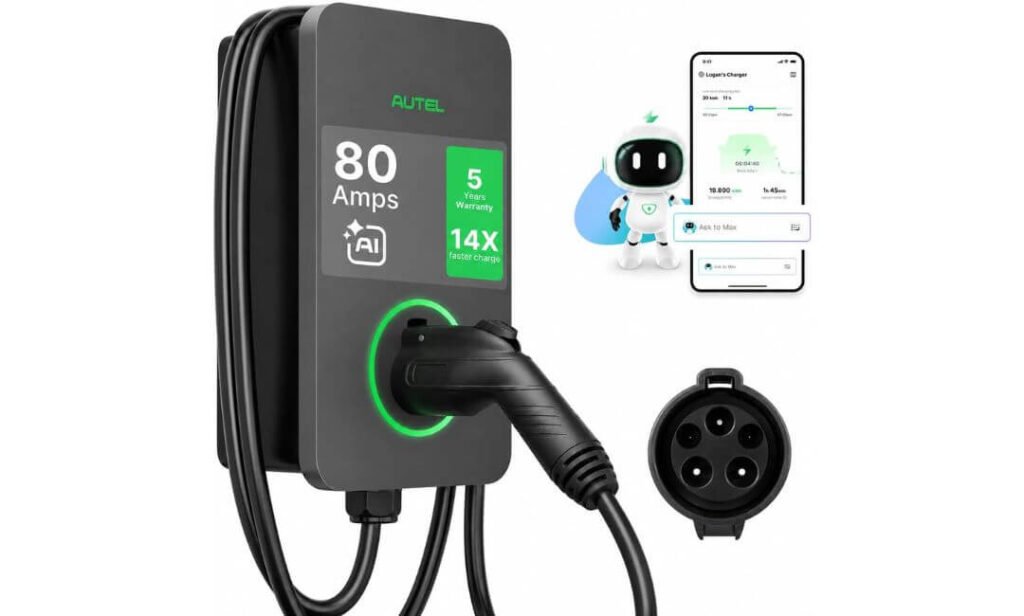
Quick Specs:
- Connector: SAE J1772
- Maximum Output: Up to 19.2 kW / 80A
- Installation: Hardwired
- Recommended Circuit: 100A for full output
- Cable: 25 feet
- Connectivity: WiFi + Wi-SUN
- Smart Controls: AI-assisted scheduling, remote start/stop and energy monitoring
- Safety: UL/CSA certified, ground-fault and surge protection
- Enclosure: NEMA 3S
- Warranty: 5 years
- Use: Indoor or outdoor
This is the charger I would look at when the goal is building a serious home charging setup rather than simply replacing a Level 1 cord. The J1772 connector connects directly to the LYRIQ, while the hardware itself is capable of substantially more AC power than the vehicle may currently need. That extra capacity is not a promise of faster LYRIQ charging by itself; it simply gives the installation more headroom for the vehicle’s own charging limits and for a future EV that may accept more.
There is also a useful distinction here between maximum charger output and what the LYRIQ actually takes. The unit is rated up to 19.2 kW, while the LYRIQ’s charging system determines how much power is ultimately accepted. So I would not buy this expecting an 80A LYRIQ to magically charge at 80A. The real advantage is having a high-capacity hardwired EVSE with adjustable output that can be configured around the electrical installation and vehicle.
The 25-foot cable is another detail that matters more than it looks on paper. A large SUV can occupy a surprising amount of garage space, and being able to reach the charge port without pulling the car into one exact position makes the nightly routine much easier. Add the internal temperature monitoring, flame-retardant enclosure, NEMA 3S protection and built-in surge and ground-fault protection, and this starts to feel like a charger designed for a permanent installation rather than a temporary piece of equipment.
What we like
- Native J1772 connection makes the LYRIQ pairing straightforward.
- 25-foot cable gives plenty of freedom around a larger garage or driveway.
- Adjustable output from 6A to 80A gives the electrician more flexibility when configuring the installation.
- AI-assisted scheduling and energy tracking can make off-peak charging easier to manage.
- Five-year warranty and 24/7 support give this setup a longer ownership runway than a typical short-warranty EVSE.
What we would keep in mind
This is not the plug-and-play choice in this lineup. It is a hardwired charger, and getting its full 80A capability requires a substantial electrical circuit. The source specifies a 100A circuit for full output, so your home’s panel capacity and the electrician’s installation plan need to be checked before ordering.
Why it makes sense for the Cadillac LYRIQ
The interesting thing about this unit is that you are buying more than today’s LYRIQ requirement. The vehicle still decides its actual charging rate, but the charger gives you additional electrical headroom, configurable output and a permanent installation that can remain useful if another high-capacity EV eventually takes its place in the garage.
For a LYRIQ owner planning to stay with home charging for years, that long-term angle is more meaningful than simply seeing “80A” printed on the product page. The 25-foot cable, smart scheduling, energy monitoring and five-year warranty make the package feel designed for daily ownership rather than occasional charging.
The Insider Pro-Tip
Before paying for an 80A charger, have the electrician look at the entire electrical picture—not just whether there is an empty breaker slot. The full-output installation calls for a 100A circuit, and that can make the panel capacity and available electrical service more important than the charger itself.
I also would not chase the 19.2 kW figure simply because it is there. With a LYRIQ, the smarter reason to choose this unit is the combination of hardwired installation, adjustable output, long cable, smart controls and future headroom. If your garage is being wired from scratch, that is when this charger starts making considerably more sense.
#3. EMPORIA Level 2 EV Charger
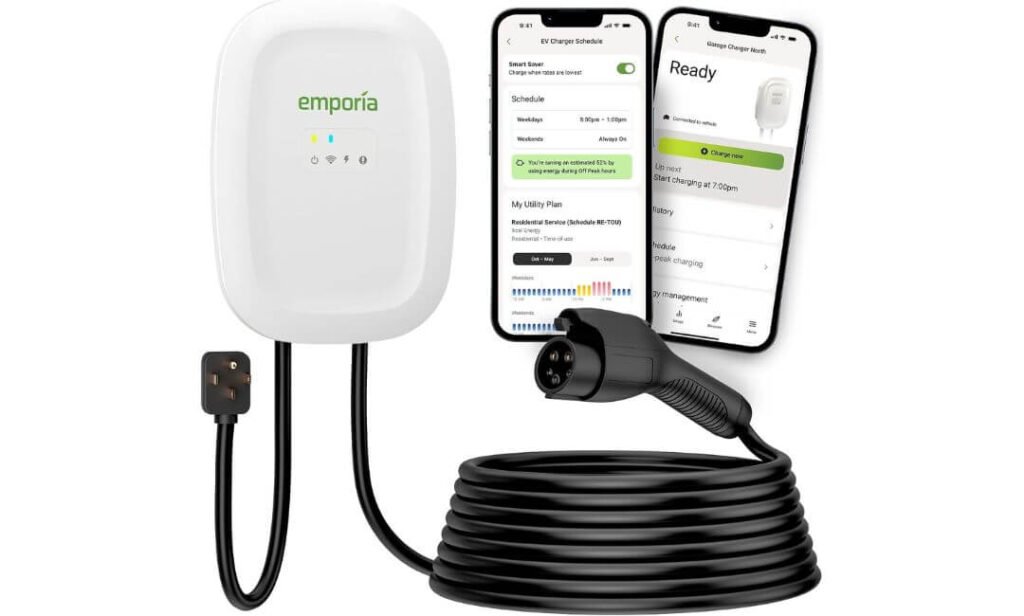
Quick Specs:
- Connector: SAE J1772
- Hardwired Output: Up to 11.5 kW
- Plug-In Output: Up to 9.6 kW
- Installation: NEMA 14-50 plug-in or hardwired
- Cable: 25 feet
- Connectivity: 2.4 GHz WiFi
- Smart Features: Scheduling, remote control and energy monitoring
- Enclosure: NEMA Type 4
- Certifications: UL listed and ENERGY STAR certified
- Warranty: 3 years
The appeal here is flexibility without making the charger feel complicated. You can use the NEMA 14-50 configuration if your garage already has a suitable outlet, or have it hardwired when you want the higher charging capability. For a LYRIQ owner, that gives you two sensible installation paths instead of forcing you into one setup from day one. Pasted markdown
The 25-foot cable is another detail I would pay attention to. With an SUV-sized vehicle like the LYRIQ, the charge port is not always going to end up conveniently beside the wall-mounted charger. A longer, heavy-duty cable gives you more freedom to park naturally, while the included holster keeps that extra length from becoming garage clutter. Pasted markdown
Then there is the smart side. The 2.4 GHz WiFi connection lets you schedule charging, see energy usage and manage sessions from your phone, which can be genuinely useful if your electricity plan has cheaper off-peak periods. I would treat those features as a convenience rather than the reason to buy it, though—the core job is still simple, dependable overnight charging. Pasted markdown
What we like
- Native J1772 connector keeps the LYRIQ connection straightforward.
- Two installation routes make it easier to match the charger to your existing electrical setup.
- 25-foot heavy-duty cable gives excellent reach without requiring the vehicle to be parked perfectly.
- WiFi energy monitoring and scheduling are useful additions for owners who actively manage charging costs.
- NEMA Type 4 enclosure plus UL and ENERGY STAR certification make it suitable for a serious indoor or outdoor installation. Pasted markdown
What we would keep in mind
The smart features are useful, but WiFi should not be treated as essential equipment. Some owners report connection or setup issues, while the charger itself can continue basic charging without WiFi. That makes the connectivity more of a convenience layer than something the LYRIQ depends on. Pasted markdown
Why it makes sense for the Cadillac LYRIQ
This is a particularly sensible choice for someone who wants the same charger to work around the garage rather than having the garage dictate how the charger is used. Plug it in if you already have the right outlet, or hardwire it when you are setting up a more permanent charging circuit.
The combination of 11.5 kW-class hardwired charging, 25-foot cable reach, J1772 compatibility, energy tracking and weather-resistant construction gives it a well-rounded role in a LYRIQ charging setup. It is not trying to win with one extravagant specification; its strength is that the important pieces work together. Pasted markdown
The Insider Pro-Tip
If you are deciding between the plug-in and hardwired versions, think about how long you expect the charger to stay in that exact location. The NEMA 14-50 setup is attractive when flexibility matters, while hardwiring makes more sense when the charger is becoming a permanent part of the home’s electrical system.
And don’t underestimate the cable. A charger that sits five feet farther from the LYRIQ than you expected can make a technically excellent installation annoying every single night. The 25-foot lead is one of the reasons this particular unit works so naturally for a larger SUV and awkward garage layouts.
#4. Star Charge Level 2 EV Charger
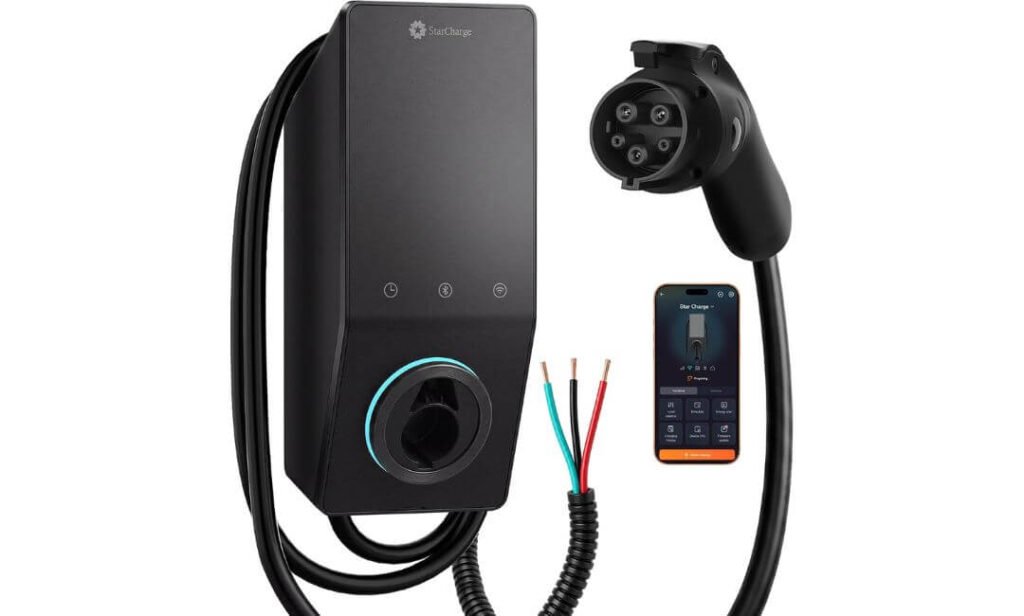
Quick Specs:
- Connector: J1772
- Charging Output: Up to 12 kW
- Installation: Hardwired 240V
- Required Circuit: 60A dedicated circuit
- Cable: 25 feet, flexible
- Connectivity: WiFi + Bluetooth
- Current Adjustment: 6A–50A
- Enclosure: NEMA 4
- Safety: UL certified with CCID20 ground-fault protection
- Use: Indoor or outdoor
- Designed Lifespan: 10 years
Some home chargers try to do everything through an app. This one takes a more balanced approach. You can simply plug in the LYRIQ and let it charge, but you still have WiFi and Bluetooth available when you want scheduling, remote control or charging information. That makes the everyday experience feel less dependent on the software.
The physical installation is where this model becomes particularly interesting. It is hardwired rather than NEMA 14-50 plug-in, giving the finished setup a cleaner wall-mounted appearance. The two conduit-entry options also give an electrician some flexibility when routing the wiring, which can matter when the charger has to fit an existing garage layout rather than a perfectly planned new build.
I also would not overlook the 25-foot flexible cable. A cable can be long on paper but unpleasant to handle. Here, flexibility is part of the design, while the built-in dock gives you somewhere sensible to put it when the LYRIQ is not charging. For a daily driver, those small physical details can matter more than another feature buried inside an app.
What we like
- Native J1772 connector keeps the LYRIQ connection simple.
- 25-foot flexible cable gives plenty of reach without feeling unnecessarily awkward to manage.
- WiFi and Bluetooth together provide a useful backup when one connection is unavailable.
- NEMA 4 enclosure makes it suitable for garages, carports and exposed wall installations.
- UL certification and multiple protection systems add confidence for a permanently wired high-load installation.
What we would keep in mind
This is a hardwired-only setup, so it is not the choice if you specifically want to plug an EV charger into an existing NEMA 14-50 outlet and take it with you later. A licensed electrician and a dedicated circuit are part of the installation, which is worth planning before ordering.
Why it makes sense for the Cadillac LYRIQ
For the LYRIQ, the attraction is not simply the charger’s headline output. It is the combination of native J1772 compatibility, permanent installation, long flexible cable, weather protection and simple daily operation. Once installed, it is designed to behave like part of the garage rather than another portable appliance sitting on the floor.
The WiFi/Bluetooth control adds another layer when you need it, including scheduling and adjustable charging, while the physical charger remains straightforward enough that you can plug in and walk away. That balance is what gives this model its place in the LYRIQ shortlist.
The Insider Pro-Tip
If your LYRIQ is normally parked in one garage spot, hardwiring can be worth it for the clean installation alone. But have the electrician decide the cable route before the charger goes on the wall—the two available conduit-entry directions give you an opportunity to keep the wiring much neater.
And if you charge outdoors, the NEMA 4 enclosure is one of the features I would pay attention to. You are not just buying charging power; you are putting electrical equipment outside for years. A weather-ready enclosure and proper professional installation are the sort of details you appreciate much more after the charger has been on the wall through a few seasons.
#5. MACH 2 Fast Level 2 EV Charger
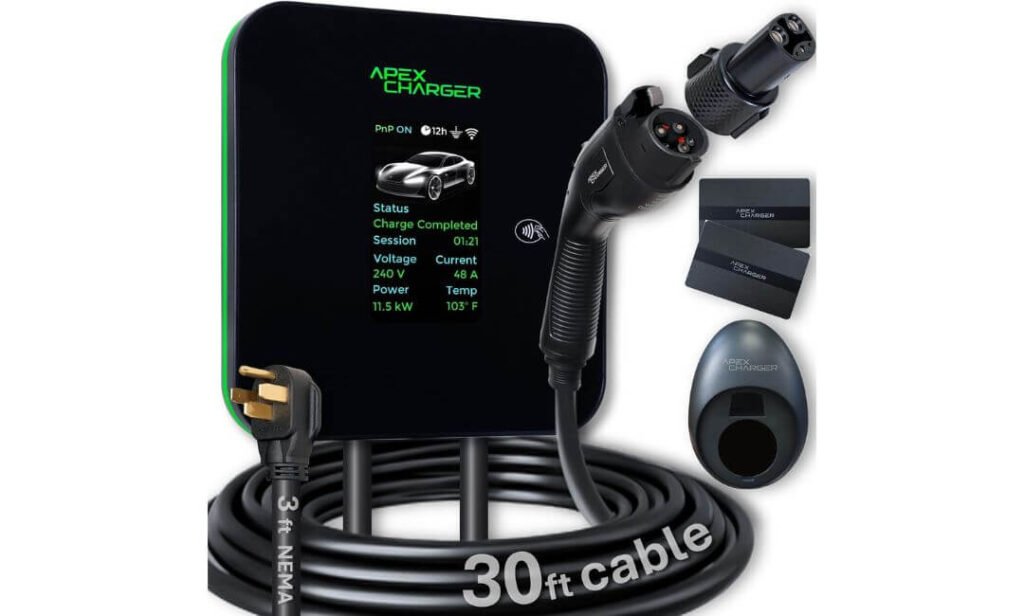
Quick Specs:
- Connector: J1772
- Hardwired Output: Up to 11.5 kW
- Plug-In Output: Up to 9.6 kW
- Installation: NEMA 14-50 plug-in or hardwired
- Cable: 30 feet
- Connectivity: WiFi + Bluetooth
- Display: 4¾-inch LED charging display
- Controls: App, RFID cards and on-unit controls
- Current Adjustment: 6A–48A
- Safety: Outdoor-ready enclosure and anti-theft hardware
The 30-foot cable is the reason I would put this charger on a LYRIQ shortlist in the first place. It is not just another specification to make the product page look impressive. If your garage has the charger mounted on one side and the LYRIQ parks several feet away—or you occasionally charge in the driveway—that extra reach can save you from repositioning the car every time you plug in.
It also gives you a choice in how permanent you want the installation to be. With the NEMA 14-50 connection, it can work as a more flexible home setup, while the included hardwiring option allows the unit to operate at its higher charging level when paired with the appropriate 60A circuit. That makes it useful for someone who may change the garage setup later rather than being locked into one installation method from the start.
The feature I particularly like for everyday use is the 4¾-inch LED display. You can see charging information directly on the wall—rather than reaching for your phone every time you want to know what is happening. The display shows information such as charging time, energy and electrical readings, while the breathing-light indicator gives you a quick visual status. That is a small feature, but one you actually notice during daily charging.
What we like
- 30-foot cable gives this charger exceptional freedom around large garages and driveways.
- J1772 connection works directly with the LYRIQ’s charging setup.
- Plug-in or hardwired installation gives you more control over the final setup.
- Built-in 4¾-inch display lets you check charging information without opening an app.
- WiFi + Bluetooth controls, RFID access and adjustable output give it more flexibility than a basic plug-and-charge EVSE.
What we would keep in mind
The 30-foot cable is a major advantage when you need the reach, but it is also more cable to manage when you don’t. The included holder helps, so I would mount the charger where that extra length can be coiled neatly instead of left across the garage floor.
Why it makes sense for the Cadillac LYRIQ
This is the charger in the group I would look at when garage layout matters as much as charging hardware. The LYRIQ is a large vehicle, and the most convenient charging point is not always the same place where the car naturally parks. A 30-foot lead gives you considerably more freedom without requiring an extension cable—which is not how I would want to solve an EV charging installation.
The other nice touch is that the charger does not force you to use your phone for everything. The physical display, breathing-light indicator and plug-and-charge operation make the basic experience simple, while WiFi, Bluetooth and the app are there when you want scheduling, energy information or remote control.
The Insider Pro-Tip
Before deciding where to mount this one, park your LYRIQ exactly where you normally leave it overnight and physically map the cable route. With 30 feet available, you may find that one wall position can comfortably serve more than one parking position.
And there is another reason I like that approach: do not install the charger simply because that is where the electrician finds the easiest wiring route. Spend a few minutes planning where the cable will actually travel. A good EV installation should make plugging in feel almost automatic—not turn a 10-second job into something you have to think about every night.
Best EV Charger for Cadillac LYRIQ (2026): Side-by-Side Comparison of Level 2 Chargers for Home Use
| What matters for LYRIQ |
ChargePoint HomeFlex
Everyday home charging
|
Autel MaxiCharger
High-output hardwired setup
|
EMPORIA
Smart and flexible installation
|
Star Charge
Permanent garage installation
|
MACH 2 Fast
Long-reach charging
|
|---|---|---|---|---|---|
| LYRIQ connector |
Native J1772
No adapter needed for the listed setup.
|
Native J1772
Designed around the LYRIQ’s J1772 connection.
|
Native J1772
Straightforward home-charging match.
|
Native J1772
No adapter required for the vehicle connection.
|
Native J1772
Includes an additional NACS adapter, but LYRIQ charging uses J1772.
|
| Maximum charger output |
50A / 11.5 kW hardwired
40A / 9.6 kW plug-in
|
80A / 19.2 kW
Full output requires a 100A circuit.
|
48A / 11.5 kW hardwired
40A / 9.6 kW plug-in
|
50A / up to 12 kW
Hardwired 240V installation.
|
48A / 11.5 kW hardwired
40A / 9.6 kW plug-in
|
| How that relates to the LYRIQ | Very well matched to the commonly referenced 11.5 kW AC charging range. | The charger has substantial headroom; the LYRIQ still determines actual charging intake. | Closely aligned with the 11.5 kW home-charging range on compatible LYRIQ configurations. | Provides enough output for a typical LYRIQ home-charging setup without chasing extreme hardware. | A sensible match when you want around 11.5 kW capability plus installation flexibility. |
| Installation |
Plug-in or hardwired
NEMA 14-50 at 40A or hardwired at 50A.
|
Hardwired only
Best suited to a dedicated permanent installation.
|
Plug-in or hardwired
NEMA 14-50 or 60A hardwired circuit.
|
Hardwired
60A dedicated circuit recommended for the listed output.
|
Plug-in or hardwired
40A plug-in or 48A hardwired configuration.
|
| Cable reach |
23 ft
Good balance for a typical garage.
|
25 ft
Heavy-duty cable for wider parking flexibility.
|
25 ft
Useful when the charge port and wall box are not close together.
|
25 ft
Flexible heavy-duty cable with holster.
|
30 ft
The standout option for awkward parking positions.
|
| Smart controls | App control, scheduling and real-time energy information. | AI-assisted scheduling, remote start/stop and energy tracking. | WiFi app, scheduling, remote control and energy monitoring. | WiFi + Bluetooth, scheduling, energy tracking and notifications. | WiFi/Bluetooth, scheduling, remote control and adjustable current. |
| Adjustable charging current | 40A / 50A depending on installation. | 6A–80A | 40A / 48A depending on installation. | 6A–50A | 6A–48A |
| Outdoor / garage use | Weather-resistant construction. | NEMA 3S enclosure with outdoor-oriented protection. | NEMA Type 4 weather protection. | NEMA 4 enclosure for indoor/outdoor installation. | Outdoor equipment enclosure with anti-theft hardware. |
| Safety / certification |
UL + ENERGY STAR
Built-in GFCI protection.
|
UL + CSA + ENERGY STAR
Ground-fault and surge protection.
|
UL + ENERGY STAR
GFCI protection and Type 4 enclosure.
|
UL + CCID20
Eight listed safety systems.
|
Outdoor-ready design
Protection-focused enclosure and anti-theft hardware.
|
| Useful everyday advantage |
Simple ownership. Plug it in, schedule charging and let the app handle the routine. |
Electrical headroom. More charger capacity than the LYRIQ necessarily needs today. |
Flexible setup. Plug-in convenience or a higher-output hardwired installation. |
Permanent installation. Clean wall-mounted setup with straightforward plug-and-charge use. |
Reach. The 30-ft cable can solve parking layouts that make shorter cables frustrating. |
| Best fit if your priority is… | Balanced daily use | Maximum charger headroom | Smart monitoring + flexibility | Clean hardwired setup | Long cable reach |
Buying Guide for Cadillac LYRIQ Home Charger Installation
Choosing the right Cadillac LYRIQ home charger is only half of the job. The other half is making sure the electrical system, circuit, outlet or hardwired connection, mounting location and local requirements are all suitable for the way you actually plan to charge.
Cadillac itself recommends having a qualified electrician inspect the home’s electrical system before connecting Level 2 charging equipment. Its current LYRIQ information also makes an important point that is easy to miss when shopping: the vehicle and the charging equipment work together, so installing a higher-rated EVSE does not automatically mean the LYRIQ will charge at that higher rate. The standard LYRIQ configuration is listed with an 11.5 kW onboard charger, while certain vehicles can be equipped with the optional 19.2 kW onboard charging module.
That distinction matters because a good installation should be designed around the actual LYRIQ configuration, available electrical capacity and intended charging routine, rather than simply buying the most powerful charger available.
Start with the electrical panel before choosing the installation method
The first thing an electrician should look at is not the charger box. It is the home’s electrical service and the panel feeding the proposed charging circuit.
A Level 2 EV charger can place a substantial, sustained load on a residential electrical system. That is different from briefly running a microwave, hair dryer or power tool. An EV can draw charging power for several hours, often overnight, so the circuit needs to be designed for that continuous demand.
Before installation, have the electrician check:
- Main service capacity: The home needs enough electrical capacity to accommodate the charging load alongside existing household demand.
- Panel rating and condition: The panel should be suitable for the proposed circuit, with adequate space and compatible equipment.
- Existing electrical loads: Electric heating, central air conditioning, water heaters, dryers, ranges, pool equipment and other large loads can materially affect available capacity.
- Available breaker space: A suitable space for the required circuit protection is necessary, but an empty breaker position by itself does not prove that the service can support the additional load.
- Distance from panel to charger: A long cable run can affect conductor sizing, installation complexity and cost.
- Routing: The electrician should determine whether wiring will run through finished walls, an attic, crawlspace, exterior conduit or another route.
- Location of the charging equipment: The best wall location is usually the one that gives the cable a practical path to the LYRIQ without forcing the cable across a walkway or vehicle path.
- Outdoor exposure: If the charger will be outside, the equipment, enclosure, wiring method and mounting location need to be appropriate for that environment.
- Future electrical demand: If you expect to add another EV, solar equipment, electric heating or other major loads, tell the electrician before the circuit is designed.
A common mistake is to see a 200A service and assume that means there is automatically plenty of capacity for any charger. That is not how residential electrical planning works. The electrician needs to evaluate the service and the home’s overall load rather than making the decision from the main-breaker number alone.
Build the charging circuit around the charger’s actual configuration
Once the electrical service has been checked, the next question is what circuit the selected EVSE actually requires.
This is where the five chargers in this guide are meaningfully different.
Some support NEMA 14-50 plug-in installation, while others are designed around hardwired installation. Several can operate at different current levels depending on how they are installed. The charger should therefore be installed according to its manufacturer instructions and the electrical design approved for the home, not simply according to the highest number printed in the product listing.
For example, the ChargePoint HomeFlex can be configured for plug-in charging at up to 40A or hardwired charging at up to 50A. EMPORIA similarly supports a 40A plug-in configuration and up to 48A when hardwired. MACH 2 follows the same general idea, with 40A plug-in operation and 48A hardwired operation.
That difference has a practical consequence: the same wall charger can require a different electrical installation depending on the configuration you choose.
Do not buy the charger first and then ask an electrician to make the electrical system fit the product’s maximum specification. It is better to decide the desired charging configuration first, then have the electrical installation designed around it.
Plug-in versus hardwired charging for a LYRIQ
There is no universal answer here because the better installation depends on the home, the charger and how permanent you want the setup to be.
| Installation | What it means in practice | Advantages | Things to consider |
|---|---|---|---|
| NEMA 14-50 plug-in | Charger connects to a properly installed 240V receptacle | Easier to remove or replace, useful for some portable EVSE setups | Receptacle, plug and wiring must be correctly rated for EV charging; installation still needs proper electrical work |
| Hardwired | EVSE connects directly to the dedicated circuit | Cleaner permanent installation, fewer plug/receptacle connection points, often enables higher charger output | Requires more permanent installation work and should be performed by a qualified electrician |
| Existing 240V outlet | Uses an outlet already present at the charging location | Potentially less installation work | The existing outlet and circuit still need to be verified as suitable for the continuous EV load |
Cadillac’s own guidance recognises both approaches for Level 2 home charging, describing a 240V outlet option as well as professionally installed hardwired equipment. Cadillac also specifically advises having a qualified electrician inspect and verify the electrical system before using a Level 2 setup.
The important part is that a 240V outlet existing in the garage does not automatically make it suitable for EV charging. Its circuit rating, wiring, protection, condition and installation method all matter.
When a plug-in setup makes practical sense
A properly installed NEMA 14-50 setup can be attractive if you want some flexibility.
For example, a plug-in charger can be easier to remove if you move house, change charging equipment or need to take the EVSE with you. It can also make sense when the chosen charger is specifically designed for that connection and the electrical installation is built accordingly.
But this should not be confused with simply plugging a high-power charger into any 14-50 outlet.
EV charging is a long-duration electrical load. The receptacle, conductors, breaker, connections and enclosure all need to be suitable for that duty. Cadillac also explicitly warns against using extension cords, multi-outlet power strips, splitters, grounding adapters, surge protectors or similar devices when connecting its EV charging equipment.
That is why I would treat a professionally installed NEMA 14-50 circuit as an EV charging circuit, not as an ordinary household outlet that happens to have the right plug shape.
When hardwired charging makes more sense
Hardwiring becomes particularly attractive when the charger is going to stay in one place for years.
There is no large plug and receptacle hanging between the branch circuit and the EVSE, and the installation can look cleaner when the charger is mounted close to the panel or the wiring route is planned neatly through conduit or the building structure.
It can also allow certain chargers in this guide to operate at their higher supported current. ChargePoint HomeFlex, EMPORIA and MACH 2 all have different plug-in and hardwired output configurations, while the Autel MaxiCharger and Star Charge options in this guide are positioned around permanent hardwired installations.
The trade-off is simple: hardwired does not mean DIY-friendly. The circuit, conductor sizing, disconnecting means where required, grounding, protection and installation method need to be handled correctly.
For a new permanent Level 2 installation, I would generally involve a licensed electrician from the planning stage rather than buying the equipment and trying to solve the electrical side afterwards.
Professional installation versus DIY
This is one area where saving a little money can create a much bigger problem later.
Mounting the physical charger to a wall is not the difficult part. The electrical work behind it is what matters.
A homeowner may be comfortable assembling the wall bracket, organising the cable and following the manufacturer’s setup instructions. That does not make it appropriate to perform the branch-circuit installation personally, particularly where local law requires electrical work to be performed by a licensed professional.
A qualified electrician should handle the parts involving:
- service and load assessment,
- breaker selection,
- conductor sizing,
- conduit and wiring routes,
- grounding and bonding,
- receptacle installation where applicable,
- hardwired EVSE connections,
- weatherproof electrical boxes and fittings for outdoor installations,
- required protection,
- final electrical testing,
- and any permit or inspection process required by the local authority.
Cadillac specifically recommends qualified-electrician inspection of the electrical system before Level 2 charging, and its home-charging guidance describes professionally installed Level 2 equipment for faster home charging.
The practical rule is simple: if the job involves opening the electrical panel or installing a new high-load circuit, this is electrician territory.
Do not size the circuit from the charger’s marketing number alone
This is one of the most important points in the entire buying guide.
A charger advertised as 80A does not mean the LYRIQ will pull 80A from it.
The Autel MaxiCharger, for example, is capable of substantially more output than the standard LYRIQ’s commonly specified 11.5 kW onboard AC charging capability. That can make sense for future flexibility or another EV, but it does not turn today’s LYRIQ into an 80A AC-charging vehicle.
Cadillac states that the vehicle automatically adjusts charging to the maximum rate supported by both the vehicle and the power source.
For most owners, the smarter question is therefore:
“What charging rate can my exact LYRIQ configuration use, and what installation gives me that rate reliably?”
That is more useful than asking which charger has the biggest number.
Think about conduit and cable routing before the electrician arrives
Cable routing is one of those details that looks insignificant on paper and becomes very noticeable once the charger is installed.
Before installation, decide where the LYRIQ will normally sit.
If the charge port is on one side of the vehicle and the charger is mounted too far forward or too far back, even a 25-foot cable can feel surprisingly short. A 30-foot cable, such as the one supplied with the MACH 2, can be useful in a garage where parking positions vary.
At the same time, longer is not automatically better.
A very long heavy-duty cable can take up more space, be harder to coil and become more cumbersome when the charger is mounted close to the vehicle.
A good installation should consider:
- Where the vehicle normally parks.
- Where the LYRIQ charge port sits relative to the wall.
- Whether you reverse in or pull in.
- Whether another vehicle may use the space later.
- Whether the cable will cross a walking route.
- Where the connector holster will be mounted.
- How the cable will be supported when not charging.
- Whether the installation is inside the garage or exposed to weather.
This is why I would choose cable length after thinking about the parking layout, not simply because the longest cable looks better in a specification table.
Outdoor installation needs more than a weatherproof charger
A charger being advertised as outdoor-rated does not mean every part of the installation can be treated casually.
The EVSE enclosure, mounting surface, conduit, electrical boxes, fittings and cable routing all need to be appropriate for the location.
For an outdoor LYRIQ charging station, consider:
- direct rain and water exposure,
- snow or ice accumulation,
- sunlight and heat,
- drainage around the mounting area,
- physical impact from vehicles,
- cable storage,
- connector protection,
- access to the electrical equipment,
- and whether the mounting surface can securely support the equipment.
Several chargers in this guide have weather-oriented enclosure ratings, but those ratings belong to the equipment itself. They do not replace proper electrical installation.
If the charger is being installed outside, tell the electrician that before the circuit is planned. The installation method can be different from a simple indoor garage setup.
Permits and electrical codes for a Cadillac LYRIQ charging station
This part varies by location, so there is no single permit rule that applies to every homeowner.
In the United States, EV charging installations are generally subject to the electrical code adopted and enforced by the relevant jurisdiction. The current National Electrical Code is the 2026 edition of NFPA 70, but local authorities may adopt a particular edition with amendments or additional requirements.
That means the correct question is not simply, “Does an EV charger need a permit?”
The better question is:
“What does my local permitting authority require for this particular electrical installation?”
Depending on the location and the scope of the work, the process can involve:
- an electrical permit,
- an inspection after installation,
- approval of the new branch circuit,
- requirements for the receptacle or hardwired EVSE,
- specific grounding and protection requirements,
- local zoning or building requirements,
- and additional requirements for outdoor installations.
Your electrician should be able to tell you what applies locally and, where applicable, handle the permit and inspection process.
Do not assume that a charger being UL listed or otherwise certified eliminates the need for a permit. Product certification and local electrical approval are two different things.
What to ask the electrician before approving the installation
A good electrician should be able to answer these questions clearly:
- Can my existing electrical service support the proposed EV charging load?
- What is the calculated available capacity?
- What breaker and circuit configuration will be used?
- What current will the charger actually be configured to deliver?
- Will the charger be plug-in or hardwired?
- If using a NEMA 14-50 receptacle, is the entire circuit designed for continuous EV charging?
- What wire and conduit will be used, and why?
- How far is the run from the panel to the charger?
- Does the installation require a panel upgrade or other electrical work?
- Is a permit required in my jurisdiction?
- Who will arrange the inspection?
- Is the proposed mounting location suitable for indoor or outdoor use?
- How will the cable be positioned so it does not become a trip or vehicle hazard?
- What happens if I later add a second EV?
If the answer to the last question is “we can figure it out later,” I would raise that issue before the installation begins. Planning for future electrical demand while the electrician is already working can sometimes be much simpler than modifying the installation later.
A sensible installation path for most LYRIQ owners
The cleanest way to approach the project is to work backwards from the car and the home’s electrical system.
Step 1 — Confirm your LYRIQ configuration
Check the exact model year and equipment because charging capability can vary. Cadillac currently lists an 11.5 kW standard onboard charging module for LYRIQ, with an available 19.2 kW module on suitably equipped vehicles.
Step 2 — Decide where the car normally parks
This determines cable length, charger position and the most sensible wiring route.
Step 3 — Choose plug-in or hardwired charging
Do this before the electrical work begins because the required circuit configuration can change with the installation method.
Step 4 — Have the electrical system assessed
Let the electrician evaluate service capacity, existing loads, panel condition and the proposed charging load.
Step 5 — Confirm the required circuit and protection
The electrician should design the circuit according to the charger manufacturer’s instructions and the electrical code applicable in your jurisdiction.
Step 6 — Confirm permit requirements
Ask the electrician or local authority whether a permit and inspection are required before work starts.
Step 7 — Install and test the equipment
The charger should be securely mounted, properly connected, tested and configured to the intended charging current.
Step 8 — Set the LYRIQ’s charging preferences
Cadillac provides vehicle charging controls for options such as Charge Now, Charge Later, target charge level and home charging schedules.
The real-world takeaway
For a Cadillac LYRIQ, the best installation is rarely the one with the biggest charger specification. It is the one where the vehicle, EVSE, circuit, electrical service and parking setup all make sense together.
If your LYRIQ is using the standard 11.5 kW onboard AC capability, a properly installed charger around that range can already provide a strong overnight home-charging setup. If you have a configuration capable of the optional 19.2 kW onboard charging, the electrical installation needs to be planned accordingly rather than assuming every home circuit can simply support it.
And if you are choosing between the five chargers above, I would make the installation decision in this order: confirm the LYRIQ’s charging capability, inspect the home’s electrical capacity, decide between plug-in and hardwired installation, then choose the charger whose cable length, controls and enclosure fit the actual parking situation.
That approach may sound less exciting than buying the charger with the largest number on the box, but it is much closer to how a reliable home charging system should actually be designed.
Setup, Usage and Optimization Tips for Cadillac LYRIQ Home Charging
Getting the charging hardware installed correctly is the foundation, but the way you use it afterwards can make just as much difference to the ownership experience. A well-installed Level 2 charger should become something you barely think about: plug in when you get home, let the vehicle charge during the most sensible window, and start the next day with the energy you actually need.
The useful part is that you do not have to run the charger at its maximum setting every night. For most owners, consistent overnight charging, sensible scheduling and keeping the electrical load predictable are more important than chasing the fastest possible charging session.
The following tips are aimed at making the setup work efficiently over the long term, including owners who have time-of-use electricity rates, solar panels, smart-home equipment or simply want to avoid unnecessary wear and troubleshooting.
Set the charging schedule around your electricity plan
If your utility offers time-of-use pricing, the charging schedule can be one of the easiest ways to reduce the cost of home charging.
Instead of starting a charging session immediately after returning home, you can schedule the vehicle or compatible EVSE to begin charging during the lower-cost period. The exact off-peak window varies by utility, so there is no universal “best” charging time.
A sensible approach is:
- Check your utility’s current residential time-of-use schedule rather than relying on a generic overnight recommendation.
- Identify when electricity is cheapest on weekdays, weekends and holidays, if your plan treats them differently.
- Set the charging window around those periods.
- Allow enough time for the vehicle to reach the target charge before departure.
- Recheck the schedule if your utility changes its rate structure.
- Avoid creating an unnecessarily narrow charging window if the vehicle needs more time than that window provides.
There is also a practical reason not to make the schedule overly complicated. If you normally return home with plenty of battery remaining and leave again the next morning, a simple overnight schedule is usually easier to live with than constantly adjusting charging times.
The ChargePoint, Autel, EMPORIA, Star Charge and MACH 2 options covered in this guide offer different forms of scheduling and app-based control, but the underlying principle remains the same: the schedule should serve your driving routine, not become another thing you have to manage every day.
Let the car and charger work together instead of fighting each other
Smart charging becomes less useful when too many different systems are trying to control the same session.
For example, if the EVSE has a charging schedule enabled and the vehicle also has a separate schedule configured, make sure the two settings are compatible. Otherwise, you can end up with a charger that appears ready but does not actually deliver power when expected.
A good setup usually has one clearly defined control strategy.
You might let the vehicle handle the charging schedule, use the EVSE primarily as the power source, or use the charger’s app when its scheduling and energy-management features are more useful for your household. The important thing is knowing which system is supposed to initiate charging.
After changing a schedule, perform one test rather than assuming it worked. Plug the vehicle in, confirm the expected charging behaviour, and check the app or vehicle display later to make sure the session started and stopped when intended.
Use solar charging with realistic expectations
If you have rooftop solar, home charging can become another part of your household energy strategy, but it is worth separating genuine energy management from marketing language.
Solar generation changes throughout the day. Your home’s electricity demand changes as well. A vehicle that is plugged in during the middle of the day may therefore use a mixture of solar generation and grid electricity unless the charging system is specifically configured to respond to available solar production.
A basic setup can still be useful.
For example, if your home regularly produces excess solar electricity during the afternoon and your vehicle is parked at home, charging during that period can allow more of that generation to be used on-site.
However, do not assume that a solar-compatible charger automatically means the vehicle will charge exclusively from solar power.
The actual result depends on:
- Solar array output.
- Household electricity consumption.
- Battery storage, if installed.
- Utility metering arrangements.
- The capabilities of your inverter and energy-management system.
- Whether the EVSE can respond to available generation.
- How the vehicle’s charging schedule is configured.
If you already have a home energy management system, check whether it can communicate with the selected EVSE before buying additional equipment. Compatibility between the systems matters more than simply having WiFi on the charger.
Avoid charging at maximum power simply because you can
This is one of those areas where EV charger specifications can encourage the wrong mindset.
If your LYRIQ is capable of accepting a particular amount of AC power, there is little practical benefit in configuring the EVSE above what the vehicle can use simply because the charger supports it.
The vehicle’s onboard charger remains the gatekeeper.
For an owner with a standard 11.5 kW onboard charging configuration, an EVSE capable of considerably more power does not make an individual charging session magically faster. That extra capability may still have value for another EV, future vehicle use or electrical flexibility, but it should not be confused with additional charging speed for the current vehicle.
For everyday use, choose a charging current that comfortably meets your needs while fitting the electrical installation.
If you only need enough energy for the next day’s commute, there is no reason to treat every overnight session like a race.
Give the charger a quick visual check every few weeks
Home EV chargers generally require very little routine maintenance, but “maintenance-free” should not be interpreted as “never inspect it.”
A quick visual check every few weeks is enough for most owners.
Look for:
- Cuts, flattening or obvious damage to the charging cable.
- Cracked connector housing.
- Bent or damaged connector pins.
- Loose wall mounting.
- Damage to the charger enclosure.
- Water intrusion or signs of moisture around an outdoor installation.
- Unusual heat or discolouration around a plug or receptacle.
- A connector holster that no longer holds the handle securely.
- Error lights or warning messages that were not previously present.
- Dirt or debris around the charging connector.
You do not need to dismantle the charger or open the electrical enclosure as part of normal maintenance. If something electrical looks damaged, leave the equipment de-energized as appropriate and have a qualified electrician or the manufacturer’s support team evaluate it.
Pay particular attention to the NEMA 14-50 connection
If your installation uses a plug-in EVSE, the receptacle deserves more attention than it usually gets.
A high-power EV charging session can continue for several hours, so a poor connection can become a serious problem even if the outlet initially appears to work normally.
Stop and investigate if you notice:
- A plug or receptacle becoming unusually hot.
- Burning or melted-plastic smell.
- Discolouration around the receptacle.
- Intermittent charging.
- Repeated circuit-breaker trips.
- A plug that does not sit securely.
- Visible damage to the receptacle.
Do not simply replace the outlet with another model and continue charging without finding out why the original connection became hot or damaged.
The problem could involve the receptacle, wiring, termination, circuit loading or another part of the installation. That is electrician territory.
Keep the cable supported when the vehicle is not charging
The charging cable is heavy, particularly on higher-output units with longer cable lengths.
Do not leave the connector hanging from the vehicle’s charge port when the session is finished. Return it to the charger holster or designated storage position.
Likewise, avoid leaving the cable stretched across a driveway or walkway where someone can drive over it, trip over it or repeatedly bend it at the same point.
A simple habit helps: finish the charging session, remove the connector, place it in the holder and coil the cable without sharply folding it.
This is especially useful with the longer 30-foot cable on the MACH 2, where having a proper storage routine prevents the extra reach from becoming unnecessary clutter.
Keep the connector and charge port clean
The charging connector does not need aggressive cleaning.
If the connector or vehicle charge port becomes dirty, follow the vehicle and EVSE manufacturer’s cleaning guidance and avoid introducing water or cleaning chemicals into electrical contacts.
Before connecting, check for obvious debris, ice or moisture. If something does not look right, do not force the connector into place.
The same applies if the connector suddenly becomes difficult to insert or remove. Mechanical resistance is a reason to inspect the connection, not a reason to apply more force.
Understand what a failed charging session is actually telling you
A charging session that stops unexpectedly does not automatically mean the EVSE has failed.
There are several possible points where the charging process can stop:
Vehicle side:
The vehicle may have reached its target state of charge, encountered a vehicle-side condition or paused charging according to its settings.
EVSE side:
The charger may have detected a fault, lost connectivity, experienced a protection event or stopped the session because of its internal safety controls.
Electrical side:
A breaker may have tripped, the circuit may have experienced a problem, or the installation may have an issue that needs professional inspection.
Connectivity side:
The charger may have lost WiFi or cloud connectivity even though the physical charging function itself remains available.
This distinction is important because an app showing “offline” does not necessarily mean the car cannot charge.
Several of the chargers covered in this article can continue basic charging without an active internet connection. Smart features such as remote monitoring, scheduling through the cloud or energy reporting may be affected, but the physical charging path can still operate depending on the particular unit and configuration.
If charging stalls, start with the simplest checks
When the vehicle is not charging, do not immediately reset everything.
Start with the basics:
- Check whether the LYRIQ is showing a charging request or a vehicle-side message.
- Check whether the EVSE is displaying an error or fault indicator.
- Confirm that the connector is fully inserted.
- Check whether a scheduled charging window is preventing immediate charging.
- Look at the circuit breaker only if it can be safely checked without opening electrical equipment.
- Check the EVSE app for a specific fault description.
- If WiFi is unavailable, determine whether the charger can still provide local charging.
- If the same problem happens repeatedly, stop treating it as a one-off glitch and investigate the underlying cause.
A single failed session can happen for many harmless reasons. Repeated failures are different.
If the charger repeatedly stops at roughly the same point, trips the circuit, reports ground-fault conditions or produces unusual heat, it is time to involve the manufacturer or a qualified electrician rather than repeatedly restarting the system.
WiFi problems are not always charging problems
Smart EV chargers rely on connectivity for features such as remote monitoring, scheduling, firmware updates and energy reporting.
That creates a common source of confusion.
You might open the app and see the charger as offline while the LYRIQ is still charging normally. In that situation, the immediate problem may be the network connection rather than the electrical charging system.
Work through the connection systematically:
- Confirm that your home internet is working.
- Check whether the charger is within reliable WiFi range.
- Confirm that the charger is using the wireless network and frequency supported by that particular model.
- Restart the network connection only when necessary.
- Check the manufacturer’s app for service or firmware messages.
- If the charger supports local controls, test those controls before assuming the hardware has failed.
- Do not repeatedly factory-reset the charger unless the manufacturer’s troubleshooting procedure calls for it.
This is particularly relevant to chargers that rely heavily on 2.4 GHz WiFi. A modern router can support multiple wireless bands, but the charger may still require a particular network configuration.
What to do when you see an error code
Do not guess what an error code means.
Different manufacturers use different codes for conditions such as ground faults, over-temperature protection, communication problems, input voltage issues and connector faults. A code that looks similar between two brands can represent completely different conditions.
The correct process is:
Record the exact code → check the manufacturer’s documentation → follow the specified reset procedure → test once → escalate if the fault returns.
If the documentation instructs you to turn off the circuit breaker, follow the manufacturer’s instructions and make sure you understand what is being asked. Never open the electrical panel or charger enclosure simply because an error message tells you to “check power.”
For persistent electrical faults, let a qualified electrician handle the electrical diagnosis.
Watch for heat, because heat is different from normal warmth
EV charging equipment can become warm during operation. That alone is not proof that something is wrong.
What should concern you is unusual or increasing heat, especially when it is accompanied by an odour, discolouration, repeated charging interruptions or a hot plug or receptacle.
If a plug, receptacle or cable connection becomes unusually hot, stop using the equipment and have the installation inspected.
Do not solve a suspected overheating problem by reducing the charging current and assuming everything is fixed. Lower current may reduce the symptom without addressing the underlying connection or installation problem.
Keep firmware and the charging app reasonably current
Connected EVSEs can receive software or firmware updates that improve functionality, fix bugs or address compatibility issues.
There is no need to obsess over updates, but if the manufacturer recommends an important firmware update, it is worth installing it according to the manufacturer’s procedure.
Before an update, avoid starting a charging session if the manufacturer’s instructions specifically tell you not to. Afterward, confirm that:
- The charger reconnects to WiFi.
- The vehicle can start a normal charging session.
- Scheduling still works.
- Current settings have not unexpectedly changed.
- Energy reporting is functioning if you use it.
This is a small check that can prevent a smart charger from becoming “smart” in ways you did not intend.
A simple monthly charging-system checklist
| Check | What you are looking for | When to act |
|---|---|---|
| Cable | Cuts, crushing, exposed damage or severe kinks | Stop using if damaged |
| Connector | Damage, debris, unusual discolouration | Clean or inspect according to manufacturer guidance |
| Wall unit | Loose mounting, cracks or physical damage | Arrange inspection if damaged |
| Plug/receptacle | Excessive heat, smell or discolouration | Stop charging and have it inspected |
| Charging session | Unexpected stops or repeated faults | Check vehicle and EVSE diagnostics |
| WiFi | Offline status or repeated disconnections | Troubleshoot network before assuming hardware failure |
| App | Missing data, failed schedules or alerts | Check connectivity and software status |
| Breaker | Repeated trips | Stop repeated resets and investigate the circuit |
| Outdoor setup | Water exposure, damaged conduit or fittings | Have the installation inspected |
| Cable storage | Cable lying where vehicles or people can damage it | Reposition and store properly |
Do not confuse an app problem with an electrical problem
This is worth repeating because smart EV chargers can make troubleshooting feel more complicated than it actually is.
If the app says the charger is offline but the vehicle is charging, you have a connectivity issue, not necessarily a charging issue.
If the app is online but the vehicle will not charge, look at the vehicle status, connector connection, charging schedule and EVSE fault information.
If the charger repeatedly stops and the electrical protection trips, treat it as an electrical problem until proven otherwise.
Separating those three situations saves a lot of unnecessary resets and support calls.
The most useful long-term setup is usually the simplest one
A good home charging routine does not need constant attention.
Set a sensible charging schedule, use the vehicle’s target-charge controls where appropriate, keep the cable stored properly, check the equipment periodically and pay attention when something changes.
If you have solar or a time-of-use electricity plan, take advantage of it, but do not build a complicated energy-management system unless the savings or convenience actually justify it.
And if charging suddenly behaves differently after months of normal operation, do not immediately blame the charger. A change in the vehicle, electrical supply, WiFi network, schedule or household load can produce the same symptom.
The goal is not to make home charging complicated. It is to create a setup that quietly delivers the energy you need, at a sensible time and with as little daily intervention as possible.
Practical Comparison Matrix for Cadillac LYRIQ Home Chargers
At this point, the differences between these five chargers are less about whether they can charge a Cadillac LYRIQ and more about how each one fits into your garage, electrical system and daily routine.
All five options use the LYRIQ’s J1772 charging connection, so compatibility itself is not the difficult part. The more useful questions are whether you want plug-in or hardwired installation, how much cable reach you need, whether smart controls are genuinely useful to you, and whether you are paying for charging capacity that the vehicle may not actually use.
| Charger | Maximum Output | Level 2 / LYRIQ Compatibility | Smart Features | Installation & Cable | Price Position | Warranty / Ownership |
|---|---|---|---|---|---|---|
| ChargePoint HomeFlex | Up to 50A / 11.5 kW hardwired; 40A / 9.6 kW plug-in | J1772; direct connection for the LYRIQ | App control, charging schedules, real-time energy information | Plug-in or hardwired; NEMA 14-50 option; 23-ft cable | Mid-range depending on configuration and retailer | UL listed, ENERGY STAR, GFCI protection; established charging ecosystem |
| Autel MaxiCharger | Up to 80A / 19.2 kW | J1772; substantially more charger capacity than a standard LYRIQ configuration requires | AI-assisted scheduling, remote start/stop, energy tracking, WiFi + Wi-SUN | Hardwired; 25-ft heavy-duty cable; 100A circuit for full output | Premium | UL, CSA and ENERGY STAR; 5-year warranty; indoor/outdoor-oriented design |
| EMPORIA | Up to 48A / 11.5 kW hardwired; 40A / 9.6 kW plug-in | J1772; closely matched to the LYRIQ’s commonly specified 11.5 kW AC charging range | WiFi app, scheduling, remote control, energy monitoring | Plug-in or hardwired; NEMA 14-50 option; 25-ft cable | Value-oriented | UL, ENERGY STAR, NEMA Type 4, GFCI protection; 3-year warranty |
| Star Charge | Up to 50A / 12 kW | J1772; suitable for the LYRIQ’s Level 2 setup | WiFi + Bluetooth, scheduling, energy tracking, notifications, adjustable current | Hardwired 240V; 60A dedicated circuit; 25-ft cable | Mid-range | UL certified, CCID20, NEMA 4; 10-year engineered lifespan |
| MACH 2 Fast | Up to 48A / 11.5 kW hardwired; 40A / 9.6 kW plug-in | J1772; native connection for the LYRIQ; NACS adapter included separately for compatible vehicles | WiFi + Bluetooth, scheduling, energy tracking, remote start/stop, RFID, onboard display | Plug-in or hardwired; NEMA 14-50; 30-ft cable | Value to mid-range depending on configuration | Outdoor-ready enclosure, anti-theft hardware, app and local controls |
What the numbers actually mean for a Cadillac LYRIQ
The headline output figures need a little context.
A charger being capable of 19.2 kW does not mean the LYRIQ will automatically charge at 19.2 kW. The vehicle’s onboard AC charging hardware determines how much power it can accept.
That is why the Autel’s 80A capability should not be interpreted as an 80A charging requirement for every LYRIQ. Its extra capacity can make sense if you want more electrical headroom, plan to use the charger with another EV later, or simply prefer a high-capacity permanent installation. But for a LYRIQ with the commonly specified 11.5 kW onboard charger, much of that additional EVSE capacity remains unused by the vehicle itself.
On the other hand, the 11.5 kW-class options in this comparison are naturally aligned with that charging range. That makes the ChargePoint HomeFlex, EMPORIA and MACH 2 particularly straightforward choices when the goal is simply to provide the LYRIQ with a capable Level 2 home-charging setup.
Star Charge sits slightly above that range at a listed 12 kW maximum, but again, the vehicle—not the charger label—determines the actual charging rate.
Installation flexibility can matter more than a small difference in output
This is where the comparison becomes more useful than a typical “best charger” list.
ChargePoint HomeFlex, EMPORIA and MACH 2 give you both plug-in and hardwired installation options. That can be valuable if your garage already has a suitable electrical setup or if you want some flexibility in how permanent the installation is.
Autel MaxiCharger and Star Charge are more firmly positioned around hardwired installation. That makes them better suited to an owner who already knows the charger is going to have a permanent place on the wall.
There is no reason to choose hardwired simply because it sounds more serious, though. Likewise, plug-in is not automatically the better option because it appears easier.
The correct choice depends on the electrical installation, local requirements, the charger’s supported configuration and how permanent you want the setup to be.
Cable length is an underrated difference
The cable figures look small on paper, but they can make a surprising difference in an actual garage.
The 23-foot cable on the ChargePoint is perfectly reasonable for a conventional parking arrangement where the charger is mounted fairly close to the LYRIQ’s charging position.
The 25-foot cables on Autel, EMPORIA and Star Charge give you a little more freedom if the wall-mounted charger cannot sit directly beside the normal charging position.
The 30-foot cable on MACH 2 is the standout if your garage has an awkward layout, multiple parking positions or a charger mounting location that would otherwise leave you stretching the cable.
Longer is not automatically better. Extra cable also means more weight and more cable to manage. If the charger is only a few feet from the charge port, buying an extra-long cable may simply create more clutter.
Smart features should solve a real problem
Every smart charger in this group offers some combination of scheduling, monitoring or remote controls, but they are not equally important to every LYRIQ owner.
If you have a time-of-use electricity plan, scheduled charging can be genuinely useful because you can shift charging into the lower-cost period.
If you have solar or a broader home energy-management system, energy monitoring can provide useful information about how much electricity the vehicle is consuming.
If you rarely use an app and simply plug in every evening, however, advanced connectivity may not change your day-to-day experience very much.
That is why I would not choose a charger purely because it has the longest list of app features. The useful question is whether you will actually use those features after the novelty wears off.
Price needs to include the installation, not just the charger
EV charger prices can change considerably between retailers, sales periods and configurations, so a fixed price comparison can become outdated quickly.
More importantly, the price displayed for the charger is only one part of the ownership cost.
Your actual project may also involve:
- A new 240V circuit.
- A NEMA 14-50 receptacle for a plug-in installation.
- Additional wiring or conduit.
- A longer electrical run.
- Panel modifications.
- A hardwired installation.
- Outdoor-rated electrical components.
- Permit and inspection costs where applicable.
- Additional electrical work if the home’s existing service cannot support the proposed load.
That is why a charger that costs less at checkout can sometimes produce a similar or even higher installed cost than a more expensive unit.
For this particular comparison, I would treat price as a buying factor rather than a ranking factor. The installation requirements can change the final number considerably.
Warranty and long-term ownership differences
Warranty length is worth considering, but it should not be read in isolation.
Star Charge lists a 10-year engineered lifespan, while Autel provides a 5-year warranty. EMPORIA lists a 3-year warranty. ChargePoint’s established ecosystem and service infrastructure can also be part of the ownership equation, while MACH 2 focuses on features such as local controls, app connectivity and its included accessories.
A longer warranty can provide more reassurance, but it does not automatically tell you which charger will be the easiest to live with. Support quality, replacement availability, software reliability and the simplicity of the physical installation all matter once the charger has been on your garage wall for several years.
Which charger fits which type of LYRIQ owner?
Rather than giving every charger another generic “best” label, I would look at the decision this way:
- Choose ChargePoint HomeFlex if you want a balanced setup with a mature app experience, native J1772 compatibility and the choice between plug-in and hardwired installation.
- Choose Autel MaxiCharger if you specifically want a high-capacity hardwired EVSE and value the extra electrical headroom, advanced controls and substantial 25-foot cable.
- Choose EMPORIA if flexible installation and energy monitoring are high on your list, particularly if you want to keep the system around the LYRIQ’s typical 11.5 kW charging range.
- Choose Star Charge if you want a permanent hardwired installation with a weather-ready enclosure, 25-foot cable and straightforward plug-and-charge operation.
- Choose MACH 2 Fast if cable reach is a major concern, especially where a 30-foot cable could make the difference between an easy connection and constantly repositioning the vehicle.
The comparison I would actually use before buying
If you have narrowed the decision to these five, I would not start by asking which one has the highest amperage.
Ask these questions instead:
Does it connect directly to my LYRIQ?
All five options here use J1772 for the vehicle connection.
Does my home’s electrical system support the installation?
This needs to be confirmed before choosing a high-output configuration.
Do I want plug-in or hardwired installation?
That immediately narrows the field and can affect installation cost.
How far is the charger from the LYRIQ’s charge port?
Measure it. Do not guess. Cable length becomes important surprisingly quickly.
Will I actually use the smart features?
If yes, scheduling and energy monitoring can be valuable. If not, do not pay extra simply for an app you will rarely open.
Am I buying capacity the LYRIQ cannot use?
If the answer is yes, make sure there is a genuine reason for that extra capacity, such as another EV or future electrical needs.
What will the complete installed project cost?
Get the electrician’s installation estimate before making the final purchase decision.
The real buying takeaway
There is no single specification in this comparison that determines the right charger for every LYRIQ owner.
The ChargePoint HomeFlex and EMPORIA make sense when installation flexibility and an 11.5 kW-class setup are central to the decision. Autel is a different proposition, offering far more charger capacity than a standard LYRIQ configuration needs, which can be useful when the installation is being designed with additional headroom in mind. Star Charge focuses on a permanent hardwired installation, while MACH 2 brings a particularly useful 30-foot cable for garages where reach matters.
That is the distinction I would keep in mind when buying: match the charger to the vehicle, then match the installation to the home, and only after that worry about the extra features. A charger that fits those three things properly is far more useful than one that simply wins the specification sheet.
FAQs About Cadillac LYRIQ Home Charging
Does the Cadillac LYRIQ actually need an 80A home charger to use its fastest Level 2 charging?
No, and this is one of the easiest places to overspend when shopping for a home EV charger.
The standard LYRIQ has an 11.5 kW onboard AC charging module, while Cadillac offers certain configurations with an available 19.2 kW onboard charger. Cadillac says the standard setup can add up to about 31 miles of range per hour, while the available 19.2 kW system can provide up to about 50 miles per hour under its stated conditions.
That means an 80A EVSE, such as a high-output charger in this guide, does not automatically make a standard 11.5 kW LYRIQ charge faster. The vehicle and charger negotiate the available power, and Cadillac explicitly notes that the vehicle adjusts its charging rate to the maximum rate supported by both the vehicle and power source.
The 80A route starts making more sense when you have the 19.2 kW onboard charging option, or when you deliberately want a higher-capacity wall charger for another EV or future use. Cadillac’s own 19.2 kW PowerShift charger, for example, is an 80A unit and is listed as compatible with 2024–2027 LYRIQ configurations.
So the real question is not “What’s the biggest charger I can buy?” It is “Which onboard charger does my LYRIQ actually have?”
Can I use a J1772 home charger with a 2026 Cadillac LYRIQ even though GM is moving toward NACS?
Yes. This is an area where public DC charging changes can create unnecessary confusion around home charging.
Cadillac’s current LYRIQ information identifies a CCS1 inlet, which incorporates the J1772 AC connection, and Cadillac says an existing compatible SAE J1772/CCS1 home-charging setup can charge the LYRIQ.
The NACS change is more important when you are talking about access to newer public charging networks, particularly Tesla Superchargers. Cadillac says LYRIQ owners can use a GM-approved NACS adapter for supported Tesla Supercharger locations.
For the home chargers covered in this article, the important thing is much simpler:
- J1772 EVSE → LYRIQ: direct AC connection.
- NACS public charging: a different situation involving the appropriate GM-approved adapter where required.
- Buying an NACS adapter just to use a J1772 home charger: generally unnecessary for the J1772 setup discussed here.
So I would not replace a perfectly good J1772 home charger simply because NACS is becoming more common elsewhere. Home AC compatibility and public DC charging access are two separate decisions
Is the optional 19.2 kW charging capability worth paying for on a Cadillac LYRIQ?
It depends heavily on how you use the vehicle and, just as importantly, what your house can support.
The 19.2 kW option is not simply a software switch that makes any home charger deliver 19.2 kW. Cadillac specifies that the higher charging rate requires the 19.2 kW onboard charging module plus supporting high-capacity home charging equipment. Cadillac’s own information specifies professional installation and, for its 19.2 kW setup, a 100A dedicated charging station circuit. That changes the economics considerably.
If you normally plug in overnight and the standard 11.5 kW system already replenishes what you drive each day, the extra hardware may not change your routine much. On the other hand, if you regularly return home with a heavily depleted battery and need to put a large amount of energy back into the vehicle during a shorter home window, the higher-capacity system becomes more meaningful.
There is also a less obvious consideration: your electrical service.
Before choosing the 19.2 kW route, have an electrician assess the home’s available capacity. Cadillac’s own documentation is clear that the 19.2 kW setup requires supporting charging equipment and a professionally installed high-capacity circuit.
In other words, don’t calculate this decision from charging speed alone. Calculate it from charging speed + driving pattern + electrical upgrade requirements + installation cost.
Should I leave my Cadillac LYRIQ plugged into the Level 2 charger every night, or only charge it when the battery gets low?
For normal home use, there is little reason to turn charging into a “wait until nearly empty” routine.
Cadillac provides charging controls that allow owners to use Charge Now, Charge Later, target charge levels and home charging schedules, and Cadillac’s current home-charging guidance says that for most GM EVs, setting the battery charge limit around 80% for daily use can help promote battery health and optimal regenerative-braking performance.
The more practical approach is to make the car ready for the next day’s driving rather than chasing a particular battery percentage.
For example, if you typically use 15–25% of the battery during a normal day, there is little reason to wait until the battery is very low before charging again. Plugging in at home and allowing the scheduled charging system to replenish the energy you used is generally a much more convenient routine.
There is one important exception: long trips.
If you know you need maximum available range the following morning, temporarily increasing the target charge can make sense. That is exactly where a target-charge setting becomes more useful than following a rigid “always charge to X%” rule.
The goal is not to keep the battery at a particular number forever. It is to charge according to the driving you actually expect to do.
Why can my Cadillac LYRIQ charge more slowly than the charger’s advertised 11.5 kW or 19.2 kW rating?
Because the number printed on the EVSE is a capability, not a promise that the vehicle will receive that exact power during every minute of every charging session.
Several things can affect the actual rate:
- The LYRIQ’s onboard AC charger.
- The electrical circuit and available supply.
- The EVSE’s configured current.
- Battery state of charge.
- Battery temperature.
- Vehicle charging settings.
- Outside temperature.
- Electrical load elsewhere in the home.
- The particular vehicle configuration.
Cadillac itself notes that actual charging speed depends on the vehicle and power source, and its published charging figures are expressed as estimates under specified conditions.
There is also a difference between instantaneous charging power and the amount of range added over an hour. A vehicle may not maintain its peak charging rate continuously, and the miles of range added can vary with temperature, driving conditions and other factors.
So if your 11.5 kW-capable LYRIQ occasionally reports a lower charging rate, that does not automatically mean your charger is defective.
What I would look for is a persistent, unexplained change.
If the same charger previously delivered normal charging and suddenly begins charging much more slowly, repeatedly stops, trips the circuit or reports a fault, then it is worth checking the vehicle settings, EVSE status and electrical installation rather than simply assuming that a higher-rated charger will fix it.
Final Thoughts on Choosing the Right Home Charger for Your Cadillac LYRIQ
Choosing a home charger for the Cadillac LYRIQ becomes much easier once you stop treating the charger as a standalone product and start looking at the entire charging system.
The charger on the wall is only one part of it. The LYRIQ’s onboard AC charging capability, your home’s electrical service, the circuit feeding the EVSE, cable length, installation method and the way you actually drive all influence what makes sense. That is why simply choosing the charger with the largest amperage number can be the wrong way to approach the purchase.
For many LYRIQ owners, an 11.5 kW-class Level 2 setup is already a very capable home-charging solution. A properly installed J1772 charger in that range can comfortably fit an overnight charging routine without requiring you to build the entire installation around hardware the vehicle may not be able to use. If your LYRIQ has the available 19.2 kW onboard charging capability, the calculation changes, but so does the electrical requirement. That is a decision worth making from the vehicle’s actual configuration and your charging habits, not from the charger specification alone.
The five chargers covered here take different approaches for that reason. ChargePoint HomeFlex keeps the setup balanced and flexible, Autel makes more sense when high-capacity hardwired charging and additional headroom are important, EMPORIA puts more emphasis on flexible installation and energy monitoring, Star Charge is built around a permanent hardwired setup, and MACH 2 stands out when cable reach and flexible everyday controls matter more than chasing the highest specification.
There is also a point that is easy to overlook when comparing EV chargers online: installation quality will usually matter more than a small difference between two otherwise capable chargers. A properly sized circuit, secure connections, sensible cable routing and an appropriate mounting location are what turn a specification sheet into a charging system you can rely on every night.
And you do not need to make home charging unnecessarily complicated.
Set the charging schedule around your electricity plan if that saves money. Use solar intelligently if your home energy system supports it. Keep the cable and connector in good condition. Pay attention to repeated faults instead of endlessly resetting the charger. If something electrical starts behaving differently, investigate it rather than assuming a software glitch will eventually disappear.
That is ultimately what I would look for in a best EV charger for Cadillac LYRIQ: not the charger with the most impressive number, the longest feature list or the most aggressive marketing, but the one that fits the LYRIQ, the electrical system and the owner’s real routine without creating unnecessary complexity.
Once those three things line up, home charging becomes exactly what it should be — quiet, predictable and almost boring, because the system simply does its job every time you plug in.
Also Check:


