
Can Zero Depreciation and Consumables Cover Be Useful Together?
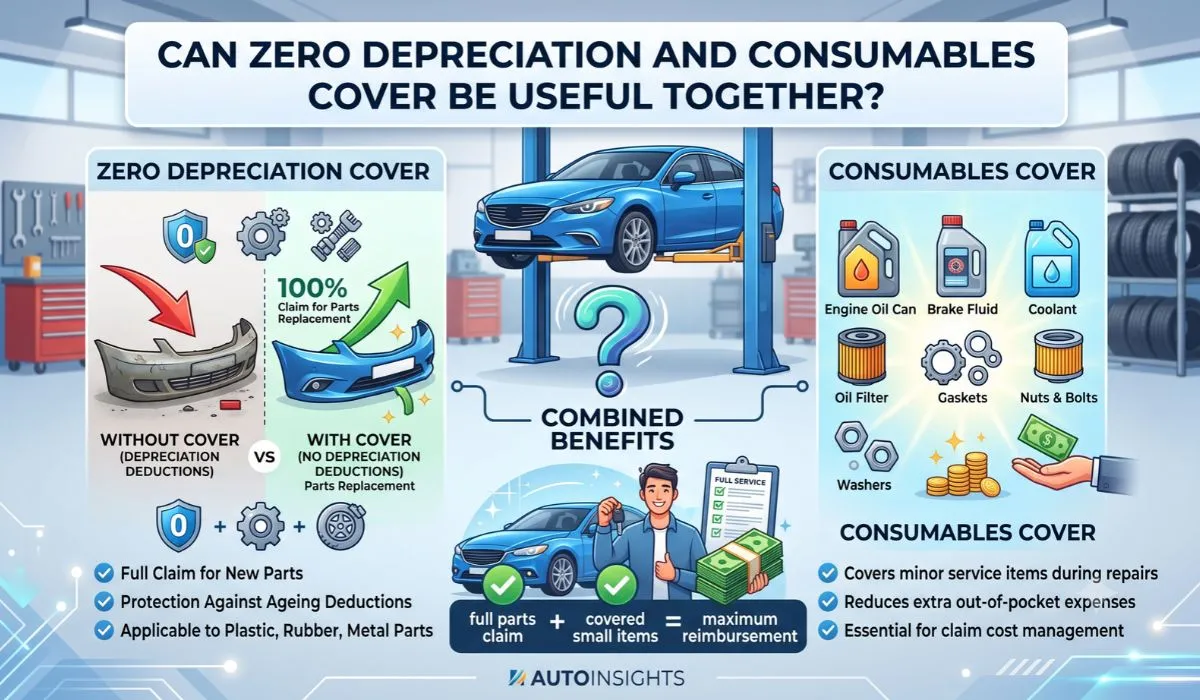
Repair bills after an accident often contain more than the obvious cost of replacing damaged parts. Depreciation deductions and small workshop materials can still leave a vehicle owner paying part of an otherwise admissible claim. This is where zero depreciation and consumables cover can complement each other.
Each add-on addresses a different portion of repair expenses, so combining them may create broader financial support during covered repairs, provided the claim meets the policy terms, conditions, limits, and applicable exclusions carefully.
What Zero Depreciation Cover Pays For
Zero depreciation cover is designed to reduce the depreciation deduction usually applied to eligible replaced parts in an admissible own-damage claim. For people who buy car insurance online, understanding this add-on can make claim expectations clearer before selecting a policy.
- It may cover eligible depreciation deductions on replaced parts.
- It generally works with an own-damage policy.
- Coverage depends on the insurer’s wording and claim admissibility.
- Deductibles, limits, and specific parts may remain applicable. This distinction matters before repairs.
What Consumables Cover Pays For
Consumables cover focuses on small materials that are used up, replaced, or rendered unsuitable during an insured repair. A comprehensive insurance policy may cover the vehicle’s own damage, while this add-on can extend protection to eligible workshop consumables connected with an admissible claim.
- Examples may include lubricants, grease, coolant, and filters.
- Nuts, bolts, clips, and washers may also qualify.
- Coverage applies only to listed or eligible consumable items.
- Policy terms determine when these expenses are payable. Checking definitions avoids confusion.
Why Both Covers Can Be Useful Together
These add-ons address different parts of the same repair bill. Zero depreciation may reduce the amount deducted for depreciation on eligible replacement parts, while consumables cover may address certain workshop materials used during repair. Holding both can therefore make protection more complete for an admissible own-damage claim.
- One focuses mainly on depreciation deductions.
- The other focuses on eligible consumable materials.
- Their benefits can complement rather than duplicate each other.
- Final payment remains subject to policy conditions. Review both add-ons together.
Repair Costs That Zero Depreciation May Not Cover
Zero depreciation does not automatically make every repair expense payable. Its purpose is usually limited to eligible depreciation deductions on approved replacement parts. Labour charges, deductibles, non-admissible damage, consumables, or items outside the add-on wording may be treated separately under the policy.
- Consumable materials may require a separate add-on.
- Compulsory or voluntary deductibles can still apply.
- Unapproved repairs may not qualify for reimbursement.
- Wear, maintenance, or unrelated damage may remain outside scope. This makes policy wording especially important before purchase.
Consumable Expenses Covered during Repairs
During a covered repair, workshops may use several items that do not become permanent components of the vehicle. Consumables cover can help with eligible materials that are used, replaced, or rendered unfit as part of repairing insured damage. The precise list should always be checked in the policy wording.
- Engine oil or other lubricants may be eligible.
- Coolant, grease, and certain filters may qualify.
- Clips, washers, nuts, and bolts may be included.
- Eligibility can vary across insurers and products.
How the Two Covers Reduce Out-of-Pocket Costs
A repair invoice can contain separate entries for replacement parts and smaller materials. Without suitable add-ons, depreciation deductions and eligible consumable expenses may form part of the amount paid by the policyholder. Combining these covers can reduce that financial gap when the underlying claim is admissible.
- Zero depreciation may reduce eligible depreciation deductions.
- Consumables cover may pay specified workshop materials.
- Together, they can address different claim components.
- Deductibles and policy-specific limits may still affect payment. This can make expectations clearer.
When Buying Both Covers Makes More Sense
Buying both covers may make sense for owners who want broader protection against common repair-related expenses and prefer greater predictability during claims. They can be particularly relevant when the vehicle has parts whose replacement may attract depreciation and repairs are likely to involve multiple consumable materials.
- Consider the vehicle’s age and eligibility.
- Review how often and where the car is driven.
- Compare add-on terms before making a decision.
- Balance additional premium against the protection offered. Suitability differs for every policyholder.
Are Zero Depreciation and Consumables Cover Worth Combining?
Combining these covers can be worthwhile when their benefits match the vehicle owner’s priorities, driving pattern, and budget. The main advantage is that they address separate repair expenses instead of covering the same cost twice. A careful reading of policy wording helps determine whether the combination offers meaningful value.
- Check eligibility for both add-ons.
- Understand claim limits and applicable deductibles.
- Review covered parts and consumable definitions.
- Choose based on practical needs, not add-on quantity alone. Value depends on individual circumstances.
Conclusion
Zero depreciation and consumables cover can work well together because they respond to different parts of an eligible repair bill. One may reduce depreciation deductions on approved replacement parts, while the other may cover specified materials consumed during repairs. Used together, they can make claim-related expenses easier to manage without changing the basic requirement for claim admissibility. Before adding either cover, read the policy wording carefully and consider vehicle age, usage, budget, and the protection that matters most before purchase.


