

Best Battery for Nissan Sentra in 2026: Smooth Cold Starts & Longer Reserve Power
If you own a newer Nissan Sentra, you’ve probably already noticed one thing: these cars are far more sensitive to battery quality than older models. A weak battery might still crank the engine, but the moment cold weather hits or the car sits for a couple of days, the electronics start acting different. Slow starts, dim displays, laggy infotainment, random warning lights — most owners blame the car first when the real issue is usually the wrong battery sitting under the hood.
For most 2020–2026 Nissan Sentra models, the safest and most commonly compatible fitment is a Group 35 AGM battery, while some trims and upgraded replacements also support H5 / Group 47 AGM sizes for better reserve capacity and stronger cold-start performance. Older Sentra models mostly stayed with traditional Group 35 setups, which is why nearly every battery recommendation in this guide focuses on real-world compatibility instead of just marketing numbers on the box.
The truth is, newer Sentras don’t need the most expensive battery on the shelf. They need one thing: stable cold-start power with dependable reserve capacity. That’s exactly why the batteries below were chosen. Not because of flashy branding or sponsored hype, but because these are the models owners keep coming back to when factory batteries start giving up earlier than expected.
Best Nissan Sentra Battery: Top 2026 Picks for Smooth Cold Starts & AGM Reliability
#1. UPLUS BCI Group 35 AGM Battery
Best Group 35 battery for Nissan Sentra owners wanting reliable cold starts, maintenance-free performance, and stronger everyday durability for newer 2020–2026 models.
#2. Mighty Max MM-G35 AGM Battery
Smart Nissan Sentra battery replacement choice for drivers who want dependable AGM performance without overspending on premium-name brands.
#3. Goodyear 35-AGM Platinum Series Battery
One of the better AGM battery for Nissan Sentra upgrades if you want smoother winter starts, longer reserve power, and better support for newer electronics.
#4. Interstate MTX-47/H5 AGM Battery
Strong H5 battery for Nissan Sentra drivers needing upgraded reserve capacity and more stable voltage for heavy daily driving or accessory-heavy setups.
#5. Weize Platinum AGM Group 47 Battery
High-output Group 47 AGM replacement battery for Nissan Sentra with impressive 680CCA performance for colder climates and demanding start-stop conditions.
Expert Tip
If your Nissan Sentra still starts normally, don’t assume the battery is healthy. Modern Sentras can hide a weak battery longer than older cars because the electronics compensate until the voltage suddenly drops one morning. That’s why many owners get caught off guard after a cold night or a weekend without driving. A battery with strong reserve capacity and stable AGM voltage usually matters more in real life than chasing the highest CCA number on the shelf.
One more thing most people never talk about: many newer Sentra owners accidentally install a cheaper flooded battery just because it “fits.” The car may run fine for a few weeks, but over time you start seeing slower cranks, inconsistent stop/start behavior, or electrical weirdness that wasn’t there before. A proper Group 35 AGM or H5 AGM setup simply handles modern Sentra electronics better, especially in daily traffic, short commutes, and colder weather.
How We Chose These Nissan Sentra Battery Recommendations
There’s a reason this list looks different from most generic “top battery” articles online.
We didn’t choose these batteries based on whichever brand had the loudest marketing or the biggest sponsored presence. The focus here was simple: real compatibility with newer Nissan Sentra models, especially the 2020–2026 cars that demand more stable voltage than older generations ever did.
The first thing we looked at was actual Group 35 and H5/Group 47 fitment compatibility. A lot of batteries technically fit inside a Sentra battery tray, but that doesn’t mean they deliver the kind of cold-start consistency or reserve capacity modern Sentras need once temperatures drop or electrical load increases. That’s why every battery on this list stays within the safest and most commonly trusted fitment range owners are already using successfully.
Then came the part most articles completely ignore: real-world driving behavior.
A Nissan Sentra used for short daily commutes behaves very differently from one doing long highway miles every day. Short trips are harder on batteries because the charging system gets less time to recover after every engine start. That’s exactly why the list leans heavily toward AGM batteries with stronger reserve power, not just flashy CCA numbers printed on the label.
We also avoided batteries that looked impressive on paper but had inconsistent sizing, weak reserve capacity, or lower long-term confidence for newer Sentra electronics. Some cheaper batteries can absolutely start the car today, but six months later they begin struggling with cold starts, dashboard electronics, or repeated stop-and-go driving. That’s not the kind of recommendation worth making.
The final selections came down to a few things that genuinely matter to Sentra owners:
Stable cold-weather starting power. Reliable AGM construction. Proper Group 35 or H5 sizing. Strong reserve capacity. Maintenance-free ownership. And consistent everyday performance instead of short-term hype.
That’s why this list includes a mix of trusted Group 35 AGM batteries for mainstream Sentra owners and a few upgraded H5/Group 47 options for drivers wanting extra reserve power for newer electronics and demanding daily use.
Most importantly, none of these picks were chosen to look good in a comparison table. They were chosen because they make the ownership experience easier once the original factory battery starts becoming unpredictable — which, honestly, happens sooner than many Sentra owners expect.
#1. UPLUS BCI Group 35 AGM Battery
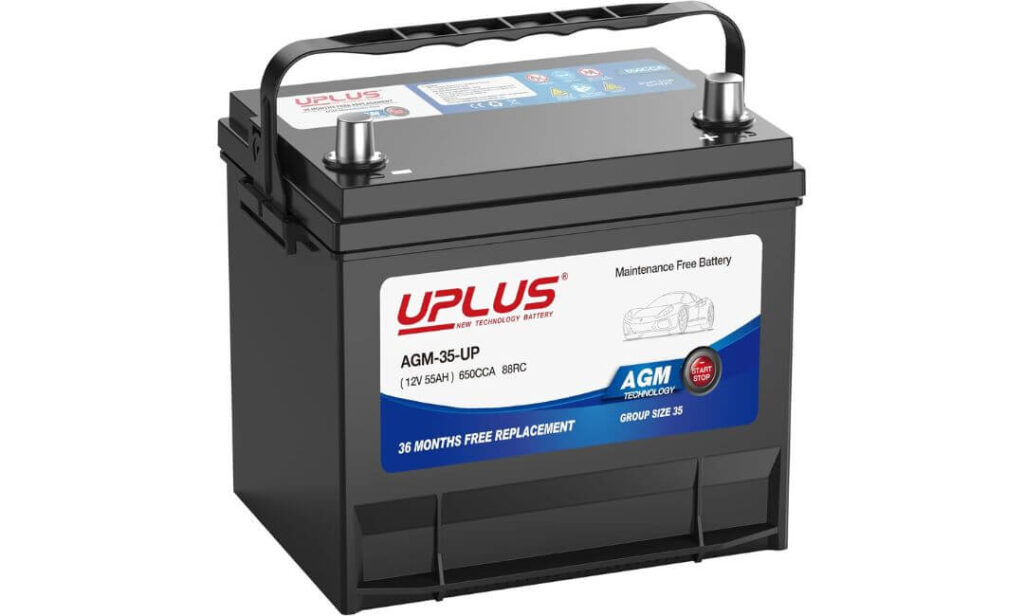
Quick Specs:
- Group Size: 35
- AGM Construction with Start-Stop Support
- 650 Cold Cranking Amps (CCA)
- 55Ah Capacity
- 88 Minutes Reserve Capacity
- Maintenance-Free Sealed Design
- Left Negative / Right Positive Terminal Layout
- Heavy-Duty Vibration-Resistant Build
- 3-Year Warranty Coverage
- Best Fit Focus: Modern Nissan Sentra models using Group 35 setups
The first thing you notice with this battery isn’t some magical performance boost. It’s the absence of problems. No lazy morning cranks, no weird electrical hesitation after the car sits for two or three days, no struggling when the weather suddenly drops overnight. That matters more in a Nissan Sentra than many owners realize because newer models react badly to unstable voltage long before the battery fully dies.
What makes this setup interesting is the balance. 650CCA, true AGM construction, solid 55Ah capacity, and enough reserve power to handle modern electronics without feeling stressed in stop-and-go driving. That’s exactly where many factory batteries begin fading early. Especially if the car mostly sees short trips, traffic, school runs, or daily commuting instead of long highway drives.
The heavy-duty construction also feels more confidence-inspiring than most budget AGM batteries in this range. The internal vibration resistance is noticeably better, and that matters because compact sedans like the Sentra transfer more road vibration into the battery tray than people think. Add in the maintenance-free sealed design and reliable cold-start behavior, and this starts feeling less like a “cheap online replacement” and more like the kind of battery owners end up recommending after living with it for months.
(Honestly, this is the kind of battery most Sentra owners wish the factory unit felt like after year two.)
Where It Earned Real Respect During Our Research
- Strong cold-start consistency without exaggerated marketing numbers
- AGM setup handles short-trip city driving noticeably better than flooded batteries
- Reserve capacity feels more stable during heavy accessory use
- Better vibration protection than many lower-cost AGM competitors
- Excellent balance between price, fitment confidence, and daily reliability
One Thing Worth Knowing Before Ordering
- The casing is slightly heavier and taller than some older Sentra batteries, so checking tray clearance beforehand is smart.
Nissan Sentra Compatibility Notes That Actually Help
This battery makes the most sense for 2020+ Nissan Sentra owners still running the factory Group 35 setup and wanting a more dependable AGM replacement without jumping into oversized H5 conversions. The dimensions and terminal layout are already aligned with what most Sentra owners expect, which keeps installation straightforward.
It also fits the way most Sentras are actually driven today — frequent restarts, traffic, quick errands, and long hours sitting in parking lots while electronics continue pulling power in the background. That’s exactly the environment where weaker batteries usually begin showing cracks early.
The Insider Pro-Tip
A surprising number of Sentra owners replace their battery only after the car completely refuses to start. In reality, the smarter move is replacing it the moment cold starts begin sounding even slightly slower than normal. Modern AGM batteries usually fail gradually, not dramatically — and Sentras are very sensitive to that voltage drop before drivers notice it themselves.
Also, don’t get distracted by giant CCA numbers alone. For a daily-driven Sentra, reserve capacity and voltage stability often matter more than chasing the biggest advertised starting figure. That’s one reason this battery stands out quietly instead of loudly.
#2. Mighty Max MM-G35 AGM Battery
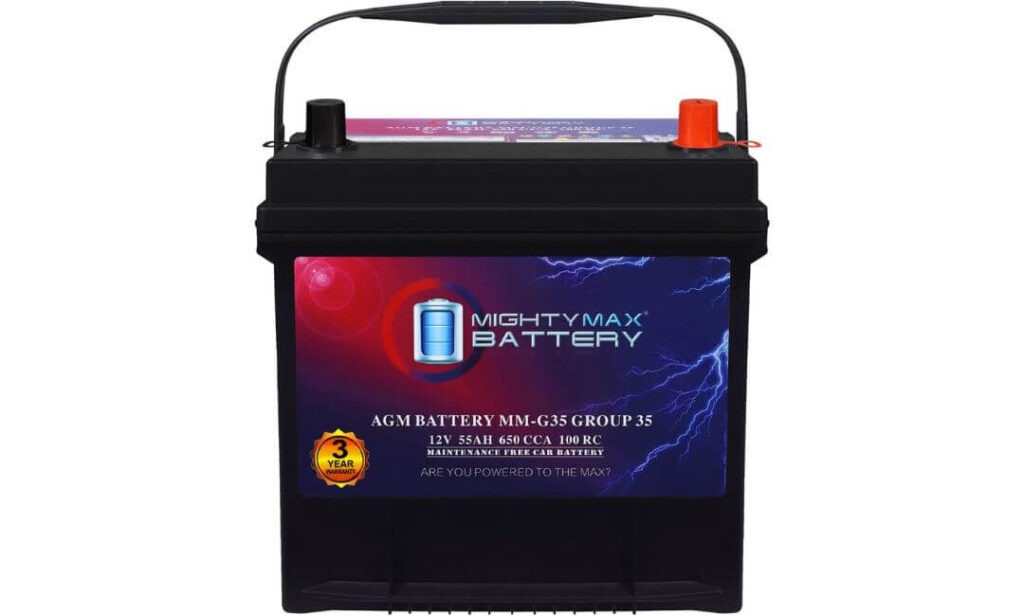
Quick Specs:
- Group Size: 35
- AGM Sealed Lead Acid Construction
- 650 Cold Cranking Amps (CCA)
- 55Ah Capacity
- 100 Minutes Reserve Capacity
- Vehicle-Specific Group 35 Fitment
- Maintenance-Free Spill-Proof Design
- Deep Discharge Recovery Support
- Wide Temperature Operating Range
- 3-Year Manufacturer Warranty
Some batteries feel fine the day you install them, then slowly lose confidence every cold morning after that. This one doesn’t really behave like that. The first reason it stands out is the unusually healthy 100-minute reserve capacity, which is honestly stronger than many people expect at this price range. That extra reserve power becomes noticeable in real-world Sentra driving — especially during traffic-heavy commutes, repeated short trips, or long periods with accessories running.
The AGM construction also feels more mature than the typical “budget AGM” label suggests. Starts are sharp, voltage delivery stays stable, and the battery recovers surprisingly well after heavy drain situations. That matters in modern Nissan Sentras because today’s electronics keep drawing power quietly even when the car is parked. A weaker battery might still technically start the engine, but over time the car begins feeling inconsistent in small ways owners immediately notice.
Another thing worth appreciating here is the physical durability. The internal structure is clearly built for rougher daily use than many lower-tier batteries pretending to be premium. Road vibration, temperature swings, potholes, constant stop-and-go traffic — this setup feels engineered for that kind of abuse instead of just laboratory specs printed on a sales page. And honestly, that’s probably why so many owners end up saying the car simply “feels happier” after switching to it.
(The extra reserve capacity quietly changes the ownership experience more than most people expect.)
What Made This One Easy to Keep on the List
- Strong 100RC reserve capacity for newer Sentra electronics
- AGM design handles repeated city starts far better than standard flooded batteries
- Reliable cold-weather cranking without exaggerated marketing claims
- Deep discharge recovery helps during accessory-heavy use
- Installation stays straightforward thanks to proper Group 35 sizing and terminal layout
One Small Thing Smart Buyers Should Double-Check
- Since some Sentra trims have slightly tighter battery tray spacing, quickly confirming dimensions before ordering helps avoid unnecessary installation adjustments.
Real-World Nissan Sentra Compatibility Insights
For Sentra owners wanting a battery that feels more stable during everyday driving instead of just sounding good on paper, this setup makes a lot of sense. The Group 35 sizing keeps it within the most trusted fitment range for modern Sentras, while the AGM construction gives newer models the voltage consistency they respond best to.
It especially suits drivers dealing with daily traffic, frequent engine restarts, colder mornings, or shorter commutes where the charging system doesn’t always get enough time to fully recover the battery between trips. That’s exactly where lower-quality replacements usually begin showing weaknesses early.
The Insider Pro-Tip
Most people focus only on CCA numbers because they sound impressive, but daily-driven Sentras often benefit more from stronger reserve capacity than giant starting numbers alone. That’s why this battery’s 100RC rating matters more than many shoppers realize. The car simply stays more consistent under real-world use.
Also, AGM batteries like this tend to reward owners who drive smarter, not harder. If your Sentra mostly handles quick errands and stop-and-go traffic, a battery with better deep-cycle recovery usually ages far more gracefully than cheaper flooded alternatives that constantly struggle to recharge fully between trips.
#3. Goodyear 35-AGM Platinum Series Battery
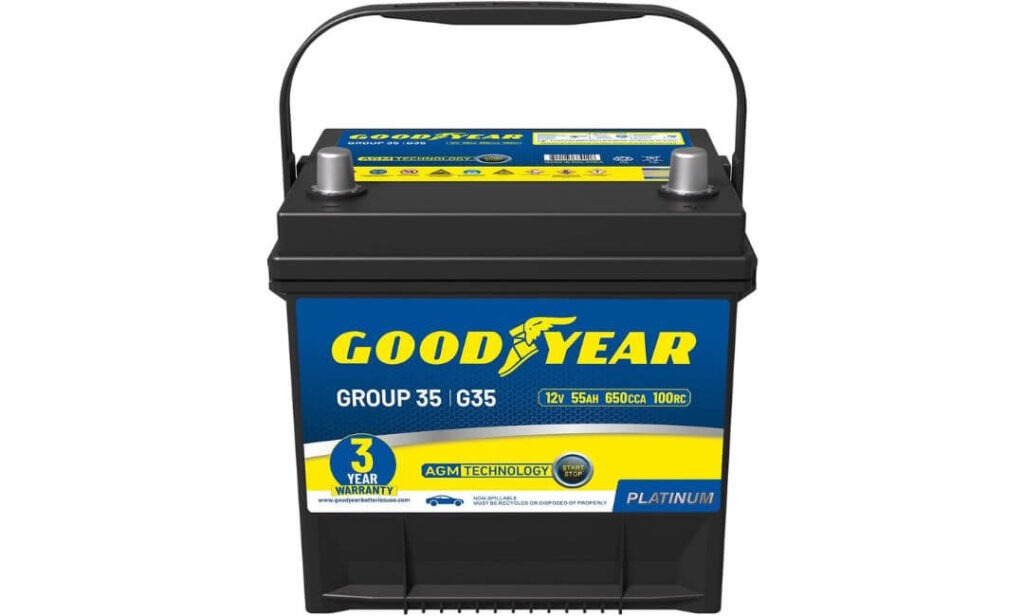
Quick Specs:
- Group Size: 35
- AGM Maintenance-Free Construction
- 650 Cold Cranking Amps (CCA)
- 55Ah Battery Capacity
- 100 Minutes Reserve Capacity
- Heavy-Duty Calcium-Alloy Internal Grid
- Spill-Proof Valve-Regulated Design
- Multi-Position Mounting Support
- High Vibration & Shock Resistance
- 36-Month Warranty Coverage
There’s a certain type of battery that feels “fine” for the first few months, then quietly starts becoming unpredictable when daily driving gets harder on it. This doesn’t really give off that impression. Right away, the stronger internal construction stands out — especially the combination of AGM design, calcium-alloy grid technology, and a genuinely healthy 100RC reserve capacity that feels far more useful in real-world Sentra ownership than flashy advertising phrases ever will.
What makes it interesting is how balanced the power delivery feels under pressure. The 650CCA output handles cold starts confidently, but the bigger story is how stable the battery remains once the car is already running. Infotainment systems, climate controls, lights, charging accessories — modern Sentras quietly ask more from their batteries than older generations ever did, especially during stop-and-go driving where charging cycles stay shorter. This setup feels designed with that reality in mind instead of just focusing on startup numbers.
The rugged construction also deserves real credit. Road vibration, rough pavement, temperature swings, constant commuting — this battery feels engineered to absorb punishment without immediately showing weakness. And honestly, that’s one reason many drivers end up trusting AGM batteries like this more over time. The ownership experience simply stays calmer. Fewer weird moments, fewer hesitant starts, fewer reminders that the battery might already be getting tired.
(Some batteries only feel strong during installation week. This one feels built for year three.)
What Quietly Makes This One a Smarter Upgrade
- Strong 100RC reserve power helps modern Sentra electronics stay more stable
- AGM construction handles repeated city starts better than conventional batteries
- Heavy-duty calcium-alloy internals improve long-term cycling durability
- Reliable cold-weather starting without exaggerated “performance battery” hype
- Better vibration resistance for rough daily driving conditions
One Small Detail Worth Checking First
- Since the casing sits slightly taller than some factory batteries, verifying hood and tray clearance beforehand is simply a smart move.
Nissan Sentra Compatibility Notes Owners Actually Care About
For Sentra drivers wanting something that feels closer to an “OEM-plus” upgrade instead of a basic replacement, this battery fits the role well. The Group 35 sizing keeps installation familiar, while the AGM platform gives newer Sentras the kind of voltage consistency these cars genuinely respond well to during everyday driving.
It especially makes sense for owners dealing with colder mornings, traffic-heavy commutes, frequent accessory use, or shorter drives where the charging system doesn’t always fully replenish weaker batteries. That’s exactly where AGM setups with stronger reserve capacity begin separating themselves from cheaper alternatives.
The Insider Pro-Tip
One thing experienced Sentra owners eventually notice: the car usually gives subtle warning signs before the battery completely fails. Slower auto start-stop behavior, slightly delayed cranking, dimmer startup lighting, infotainment lag after sitting overnight — these small changes often appear weeks before total failure happens.
That’s also why reserve capacity matters so much. A battery with stronger RC and AGM voltage stability usually keeps the car feeling healthier overall, not just easier to start on cold mornings. And in a modern Sentra loaded with electronics, that difference becomes surprisingly noticeable over time.
#4. Interstate Batteries Mega-Tron MTX-47/H5 AGM Battery
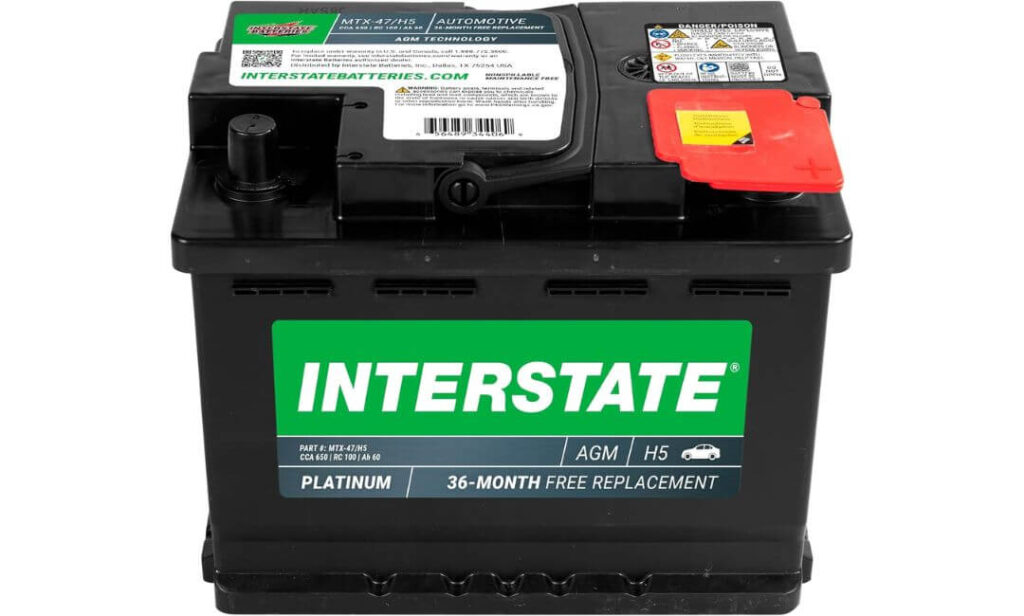
Quick Specs:
- Group Size: H5 / 47
- Premium Pure Lead AGM Construction
- 650 Cold Cranking Amps (CCA)
- 60Ah Capacity
- 100 Minutes Reserve Capacity
- VRLA Spill-Proof Sealed Design
- Start-Stop Optimized Performance
- Heavy-Duty Vibration Resistant Build
- Top Post Terminal Layout
- 36-Month Free Replacement Coverage
Here’s the thing many Sentra owners notice after moving from a standard Group 35 battery into a stronger H5 AGM setup like this: the car suddenly feels more composed electrically. Starts become sharper, voltage delivery feels steadier, and the little annoyances modern cars sometimes develop — delayed crank response, dim startup lighting, infotainment hesitation — quietly disappear in the background.
A huge reason comes down to the internals. Interstate packed this battery with a denser pure lead AGM design, and honestly, you can feel the difference in everyday use. The extra lead content combined with the healthy 60Ah capacity and 100RC reserve power gives the battery a calmer, more effortless feel under heavy electrical demand. That matters more than people think in newer Sentras loaded with screens, charging ports, sensors, safety systems, and constant stop-and-go cycling.
The real strength here isn’t just the 650CCA number. Plenty of batteries advertise similar startup figures. What separates this one is how stable it stays after repeated use. Frequent short drives, traffic-heavy commutes, colder mornings, accessory-heavy driving — this setup feels engineered specifically for the kind of real-world stress that quietly destroys weaker batteries over time. And that’s probably why Interstate still has such a strong reputation among actual technicians and installers instead of just online marketing pages.
(This is the type of AGM battery that makes the car feel newer again without changing anything else.)
Why This One Earned a Higher Spot Than Most H5 Alternatives
- Pure lead AGM construction delivers noticeably stronger long-term stability
- Higher 60Ah capacity handles modern Sentra electronics more confidently
- Excellent reserve capacity for traffic-heavy driving and short commutes
- Better durability under repeated start-stop cycles and accessory load
- Trusted professional-grade reputation built over decades, not hype
One Small Thing Smart Owners Usually Check First
- Since H5 batteries are slightly different from traditional Group 35 sizing, confirming tray fitment beforehand helps keep installation completely stress-free.
Nissan Sentra Fitment Insights That Actually Matter
This battery makes the most sense for Sentra owners wanting to step beyond a basic replacement and move into a more premium AGM setup with stronger reserve power. It especially suits newer Sentra models where electrical demand stays consistently higher due to infotainment systems, charging accessories, driver-assist tech, and repeated stop-start traffic driving.
The lower-profile H5 casing also gives some newer Sentra engine bays a cleaner, more OEM-like fit while still delivering noticeably more reserve stability than many standard Group 35 batteries owners typically replace.
The Insider Pro-Tip
Most battery problems in modern Sentras don’t start with a completely dead battery. They start with unstable voltage under load. That’s why higher-quality AGM batteries with stronger reserve power often feel dramatically better long before the original battery fully fails.
And honestly, this is where premium H5 AGM setups quietly justify the extra money. The car simply behaves more consistently day after day — especially during colder weather, short commutes, or heavy electrical use where weaker batteries slowly begin losing composure.
#5. Weize Platinum AGM Group 47 Battery
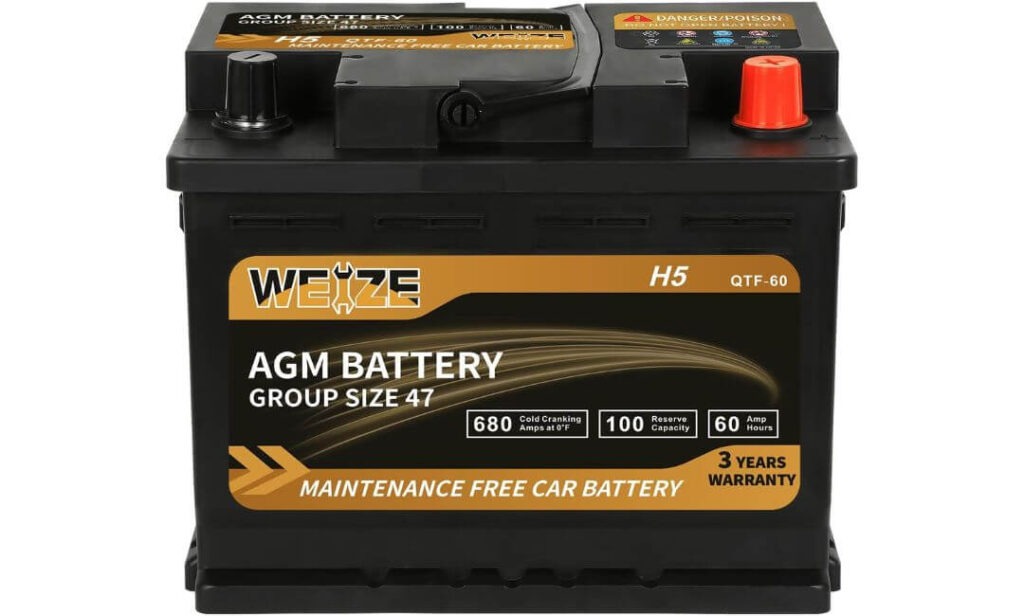
Quick Specs:
- Group Size: H5 / 47
- AGM Sealed Maintenance-Free Construction
- 680 Cold Cranking Amps (CCA)
- 60Ah Capacity
- 100 Minutes Reserve Capacity
- Start-Stop Ready AGM Platform
- Leak-Proof Spill-Resistant Design
- Enhanced Vibration Protection
- Wide Temperature Operating Range
- 36-Month Warranty Coverage
Oddly enough, this is the battery in the lineup that feels the most “future-proof” once you start looking past the branding. The combination of 680CCA, true 60Ah AGM capacity, and a healthy 100RC reserve rating gives it a noticeably stronger electrical cushion than many standard replacement batteries Sentra owners end up installing after the factory unit weakens.
And honestly, you can feel that extra overhead in daily driving. Cold starts sound cleaner, accessory load feels less stressful on the system, and the car behaves more confidently during repeated stop-and-go traffic where weaker batteries usually begin losing consistency. Modern Sentras quietly rely on stable voltage for everything now — driver-assist systems, infotainment, charging ports, safety sensors, climate controls — and this setup feels built with that newer reality in mind instead of chasing marketing buzzwords.
Another thing that stands out is how balanced the battery feels across different weather conditions. The 680CCA output gives it excellent cold-weather confidence, but the bigger advantage is the way the AGM construction handles heat, vibration, and repeated cycling without immediately feeling tired after months of use. That’s important because many batteries perform well initially, then gradually feel weaker every season afterward. This one feels engineered to delay that decline longer than most people expect at this level.
(This is the kind of battery that quietly makes the entire car feel less stressed during everyday driving.)
What Quietly Makes This One a Strong Final Pick
- Higher 680CCA output gives stronger winter-start confidence
- 60Ah AGM platform handles modern electronics more comfortably
- Excellent reserve capacity for traffic-heavy commuting and short trips
- Better resistance to heat and vibration compared to conventional flooded batteries
- Strong balance between performance, AGM durability, and long-term value
One Helpful Thing to Verify Before Installation
- Since H5/Group 47 sizing differs slightly from standard Group 35 batteries, checking tray dimensions and terminal orientation beforehand keeps fitment simple.
Nissan Sentra Compatibility Notes That Actually Matter
This battery fits best for Sentra owners wanting a stronger AGM upgrade beyond the typical factory-style replacement. The H5 footprint works especially well in newer Sentra models where electrical demand stays consistently higher due to modern safety systems, charging accessories, larger displays, and repeated engine cycling during city driving.
It also makes a lot of sense for drivers living in colder climates or areas with major seasonal temperature swings, where reserve capacity and stronger cold-start power become more noticeable after the original battery starts aging.
The Insider Pro-Tip
A lot of Sentra owners assume their battery is “fine” simply because the engine still starts. What they don’t notice is how many modern vehicle systems begin compensating for weak voltage long before total failure happens. Slower startup response, weaker stop-start behavior, delayed electronics, inconsistent charging performance — these are often battery symptoms first, not vehicle problems.
That’s also why higher-capacity AGM batteries like this tend to feel better over time instead of just on day one. The extra reserve power gives the electrical system more breathing room, especially during real-world driving where short trips, traffic, heat, and cold weather constantly stress the battery behind the scenes.
Best Nissan Sentra Battery Upgrades Compared for Modern Electronics & Smooth Starting
| Battery | Group Size | Cold Start Power | Reserve Capacity | Real-World Driving Feel | Best For | What Stands Out |
|---|---|---|---|---|---|---|
|
UPLUS BCI Group 35 AGM
Reliable everyday AGM setup with strong balance for newer Sentra models.
MOST BALANCED PICK |
Group 35 OEM-style fitment for most modern Sentra setups. |
650CCA Confident cold starts without feeling stressed in winter. |
88RC Good stability during traffic-heavy commuting and short trips. |
Smooth startup behavior, stable electronics, less voltage fluctuation during daily use. | Drivers wanting dependable AGM performance without overspending. | 4x cycle-life design and strong vibration resistance make it feel more durable than typical budget AGM options. |
|
Mighty Max MM-G35 AGM
Strong reserve-capacity focused upgrade for stop-and-go driving.
BEST VALUE AGM |
Group 35 Easy replacement sizing for most Sentra owners. |
650CCA Steady starts even after sitting overnight. |
100RC Excellent backup power for accessories and repeated starts. |
Feels more stable during short trips where weaker batteries usually struggle to recharge fully. | Daily commuters, traffic-heavy driving, short-distance usage. | Deep discharge recovery and strong reserve power quietly improve long-term consistency. |
|
Goodyear 35-AGM Platinum
Premium-feeling Group 35 AGM with smoother long-term behavior.
LONG-TERM COMFORT PICK |
Group 35 Traditional Sentra-friendly sizing with AGM upgrade benefits. |
650CCA Reliable winter starts without exaggerated numbers. |
100RC Helps maintain electrical stability under heavier load. |
Noticeably calmer electrical performance during everyday driving and cold mornings. | Owners planning to keep their Sentra for years. | Heavy-duty calcium-alloy internals give it a more refined and durable feel over time. |
|
Interstate Mega-Tron MTX-47/H5
Professional-grade H5 AGM upgrade with stronger reserve stability.
BEST H5 UPGRADE |
H5 / Group 47 Premium AGM sizing for newer electronics-heavy Sentra setups. |
650CCA Strong startup confidence with cleaner voltage delivery. |
100RC Handles repeated accessory load and traffic driving exceptionally well. |
Makes the car feel electrically smoother and more composed overall. | Drivers wanting a more premium AGM experience beyond factory feel. | Pure lead AGM construction gives it a more effortless feel under daily electrical demand. |
|
Weize Platinum AGM Group 47
High-output AGM option with extra cold-weather confidence.
STRONGEST COLD START PICK |
H5 / Group 47 Modern AGM sizing with higher electrical overhead. |
680CCA Strongest cold-weather starting power in this lineup. |
100RC Stable reserve support during demanding daily driving. |
Feels less stressed during repeated starts, winter mornings, and accessory-heavy driving. | Cold-climate drivers and owners wanting maximum electrical confidence. | Higher 680CCA output combined with AGM durability makes it feel surprisingly overbuilt for the price. |
What Actually Matters When Choosing a Nissan Sentra Battery
A lot of Nissan Sentra owners end up buying the wrong battery for one simple reason: they shop by brand name first and compatibility second. Modern Sentras are far less forgiving than older compact sedans when battery quality, reserve power, or sizing is even slightly off. The car may still start at first, but weak voltage stability usually shows up later through slower cold starts, inconsistent electronics, weaker stop/start behavior, or random electrical quirks that didn’t exist before.
That’s why understanding a few real-world battery basics matters more than chasing the biggest marketing claims on the box.
Why Cold Cranking Amps Matter More Than Most Owners Think
Cold-cranking amps, usually written as CCA, measure how much starting power a battery can deliver during cold weather. In simple terms, higher CCA helps the engine crank faster when temperatures drop and oil becomes thicker.
For most newer Nissan Sentra models, the sweet spot is usually around 650CCA to 680CCA. That’s enough power to keep starts feeling smooth without forcing the electrical system to work harder than necessary. Anything significantly weaker can start feeling lazy during winter mornings, especially once the battery ages past its first couple of years.
But here’s the part many online guides completely ignore: CCA only matters for a few seconds during startup. What affects the ownership experience every single day is how stable the battery remains after the engine already starts.
That’s where reserve capacity becomes important.
Reserve Capacity Quietly Affects Everyday Driving More Than CCA
Reserve capacity, or RC, measures how long the battery can continue supporting electrical systems if charging output drops or demand suddenly increases.
In real-world Sentra driving, this matters constantly.
Traffic jams, short commutes, repeated engine restarts, charging phones, running climate control, headlights, infotainment screens, safety sensors — modern compact sedans quietly place a much heavier load on batteries than older models ever did. A battery with weak reserve capacity may technically start the car, but the electrical system usually feels more strained during daily use.
That’s one reason most batteries in this guide stay around the 100RC range. It gives newer Sentra models noticeably better electrical stability during stop-and-go driving and colder weather, especially once the factory battery starts aging.
Nissan Sentra Battery Size Isn’t Something You Should Guess
One of the biggest mistakes people make is assuming any battery that physically “fits” inside the tray is automatically correct for the car.
The most common Nissan Sentra battery size for newer models is usually Group 35, while some upgraded AGM replacements use H5 / Group 47 sizing for additional reserve capacity and stronger long-term performance. Older Sentra generations also relied heavily on Group 35 configurations, which is why that size remains the safest and most widely trusted fitment overall.
The important thing is not just tray size, but also:
- Terminal placement
- Battery height
- Hold-down compatibility
- Electrical output consistency
- AGM vs flooded compatibility
That’s why checking your original battery label before ordering anything is always smarter than relying only on generic online fitment tools.
AGM vs Conventional Batteries Is a Bigger Decision Than Most Guides Admit
This is where newer Sentra owners usually separate into two groups.
Some install a cheaper flooded battery because it technically works and costs less upfront. Others move to AGM and immediately notice the difference in everyday driving behavior.
AGM batteries simply handle modern vehicles better.
They recharge faster, resist vibration more effectively, deliver steadier voltage under heavy electrical demand, and usually tolerate repeated short trips better than conventional flooded batteries. That matters in Sentras because many owners primarily drive in traffic, make shorter commutes, or leave the car parked for days between drives.
Flooded batteries still work, of course. But in newer Sentras packed with screens, charging ports, sensors, driver-assist systems, and start-stop functionality, AGM setups generally feel calmer and more reliable long term.
Especially during winter.
Stop/Start Systems and Modern Electronics Change Everything
A newer Nissan Sentra asks more from its battery than older generations ever did.
Even when the engine is off, the car still supports security systems, memory settings, sensors, communication modules, and infotainment functions in the background. Add stop/start technology, repeated restarts in traffic, heated accessories, and constant phone charging into the mix, and battery demand increases quickly.
That’s why many factory batteries begin feeling weaker earlier than owners expect — not because the car is unreliable, but because modern electrical systems are simply more demanding now.
Climate matters too.
Cold weather stresses startup performance, while extreme heat slowly damages internal battery chemistry over time. If you live somewhere with freezing winters or brutal summers, investing in a higher-quality AGM battery with stronger reserve capacity usually pays off long before the original battery completely fails.
And honestly, that’s the real reason the batteries in this guide were chosen the way they were. Not because they look impressive on paper, but because they match how modern Nissan Sentras are actually driven in the real world.
Nissan Sentra Battery Group Size Explained the Way Owners Actually Need It
One of the biggest reasons people accidentally buy the wrong battery for a Nissan Sentra is because the term “group size” sounds far more complicated than it really is. Most drivers assume it only refers to physical battery dimensions, but in reality, group size affects far more than whether the battery simply fits inside the tray.
It also determines terminal placement, hold-down compatibility, height clearance, electrical stability, and how naturally the battery works with the Sentra’s charging system over time.
That’s why getting the correct Nissan Sentra battery group size matters much more than many online fitment charts make it seem.
What “Battery Group Size” Actually Means on a Nissan Sentra
Battery group size is an industry-standard measurement system used to identify batteries with specific dimensions and terminal layouts. In simpler terms, it tells you whether the battery is physically and electrically compatible with your car.
For Nissan Sentra owners, the most common and safest fitment for many modern trims is usually:
- Group 35
- H5 / Group 47 AGM (on some upgraded or newer configurations)
Out of those two, Group 35 remains the most widely trusted Nissan Sentra battery size, especially for owners wanting straightforward installation without unnecessary fitment headaches.
The reason Group 35 became so common is simple: it balances compact sizing with enough reserve capacity and starting power to support the Sentra’s electrical demands without overcomplicating fitment.
And honestly, that’s why nearly every serious Sentra battery recommendation still revolves around quality Group 35 AGM batteries first.
Why Group 35 Is Usually the Safest Choice for Most Sentra Owners
There’s a reason Group 35 batteries appear in so many Sentra replacement discussions year after year.
They simply work well with the platform.
The dimensions typically align correctly with the battery tray, terminal orientation stays familiar, and installation usually remains straightforward without requiring custom hold-down adjustments or awkward cable stretching. More importantly, modern AGM Group 35 batteries now deliver enough reserve power and cold-start performance to comfortably support newer Sentra electronics.
For most owners, that combination matters more than chasing oversized battery conversions.
A properly built Group 35 AGM battery for Nissan Sentra usually provides:
- Reliable cold-weather starts
- Stable voltage during short trips
- Better support for infotainment and accessories
- Cleaner fitment without modification
- Easier long-term replacement compatibility
That’s exactly why most batteries in this guide focus heavily on Group 35 configurations before stepping into larger H5 upgrades.
How to Verify Your Exact Nissan Sentra Battery Size Before Ordering
This is the step many people skip — and it’s usually where fitment problems begin.
Before buying any battery, check the label on your current battery first. Most factory and aftermarket batteries clearly display the group size somewhere near the top label or side casing.
Common examples usually look like:
- Group 35
- 35 AGM
- H5
- 47 AGM
- 47/H5
You’ll also often see the battery specifications printed nearby, including:
- CCA rating
- Reserve Capacity (RC)
- Amp-hour rating
- Terminal orientation
If the original battery is still factory-installed, checking the owner’s manual can also confirm the recommended Nissan Sentra battery group size directly from Nissan’s fitment information.
And honestly, that quick two-minute check can prevent hours of frustration later.
Why Physical Fitment Matters More Than Online Compatibility Tools
One thing experienced installers learn quickly: online battery fitment tools are helpful, but they are not perfect.
Some websites list multiple battery sizes as “compatible” simply because they physically fit inside the engine bay. That does not always mean the battery sits correctly, clears the hood properly, or delivers the electrical stability newer Sentras actually prefer.
That’s why details like these matter:
- Terminal position
- Tray dimensions
- Battery height
- Hold-down alignment
- AGM compatibility
- Charging-system behavior
A battery that technically fits but stresses the cables or shifts slightly under vibration can create long-term reliability issues many owners never expect.
The Real Difference Between Group 35 and H5/Group 47 in a Sentra
This is where many newer Sentra owners become curious about upgrades.
Group 35 remains the safest “plug-and-play” choice for most trims, while H5 / Group 47 AGM batteries usually appeal to drivers wanting stronger reserve capacity, slightly higher electrical overhead, or more confidence during heavy accessory use and colder climates.
The H5 setup often provides:
- More reserve power
- Slightly stronger long-term voltage stability
- Better support for stop/start systems
- More breathing room for electronics-heavy driving
But the tradeoff is that H5 sizing may require closer attention to tray dimensions and fitment compatibility depending on the exact Sentra trim and model year.
That’s why Group 35 still remains the safest recommendation for the majority of owners — especially if the goal is dependable fitment without overthinking the installation process.
And honestly, for most daily-driven Sentras, a high-quality AGM Group 35 battery already delivers everything the car realistically needs.
Buying Guide: What Actually Matters Before You Buy a Nissan Sentra Battery
Most Nissan Sentra battery problems don’t start because owners bought a “bad” battery. They usually start because the battery was rushed, mismatched, poorly stored, or chosen only by price instead of compatibility.
Modern Sentras are much more sensitive to battery quality than older compact cars. A battery that technically starts the engine may still cause weak voltage delivery, inconsistent stop/start behavior, slower cold starts, infotainment glitches, or charging-system stress weeks later. That’s why buying the right battery involves more than simply matching dimensions on a website.
And honestly, this is the stage where spending ten extra minutes researching usually saves owners years of frustration afterward.
OEM vs Aftermarket Batteries: The Real Difference Most Owners Notice Later
A lot of people automatically assume OEM batteries are always better because they come directly from the dealership. In reality, many factory Sentra batteries are built to meet cost targets first, not necessarily maximize long-term lifespan.
OEM batteries usually offer:
- Direct factory fitment
- Dealer-backed installation
- Easier warranty processing through Nissan dealerships
- Plug-and-play compatibility
But aftermarket AGM batteries have improved dramatically over the last few years. High-quality aftermarket options now often provide:
- Higher reserve capacity
- Better AGM construction
- Stronger cold-start performance
- Longer cycle life
- Better pricing compared to dealer replacements
That’s exactly why many Sentra owners move toward AGM aftermarket batteries once the original battery begins weakening.
The important thing is avoiding ultra-cheap unknown brands with vague warranty terms or inconsistent quality control. A battery is one of those parts where saving a little money upfront sometimes creates bigger headaches later.
Why Warranty Terms Matter More Than Big Marketing Claims
Battery warranties can sound impressive until you actually need to use them.
A “3-year warranty” does not always mean the same thing across every brand. Some companies offer a true free replacement period, while others switch into prorated coverage much earlier, meaning you still pay part of the replacement cost.
That’s why smart buyers usually look for:
- Clear free replacement periods
- Simple claim procedures
- Easy retailer support
- Nationwide availability
- Real customer service access
The strongest battery warranty isn’t always the longest one on paper. Sometimes the best warranty is simply the one that’s easiest to actually use when something goes wrong.
And honestly, local store support matters more than many online guides admit. If a battery fails unexpectedly, dealing with a nearby replacement location usually feels much better than complicated shipping claims weeks later.
Voltage, Terminals, and Fitment Mistakes People Accidentally Make
This is where many compatibility issues begin.
Almost every Nissan Sentra battery replacement will still use a 12-volt automotive battery, but terminal orientation and physical sizing matter just as much as voltage itself.
Before ordering, always verify:
- Group size
- Terminal position
- Battery height
- Tray dimensions
- Hold-down compatibility
- AGM or flooded compatibility
For example, most Sentra batteries use:
- Left negative (-)
- Right positive (+)
If the terminal layout is reversed, cable routing can become difficult or even unsafe during installation.
Battery height also matters more than people think. Some upgraded AGM batteries are slightly taller than factory setups, and even small clearance differences can create hood fitment issues in compact engine bays.
That’s one reason Group 35 remains such a safe recommendation for most Sentra trims — fitment stays simple, predictable, and stress-free.
Why AGM Batteries Usually Make More Sense for Modern Sentras
If your Sentra includes:
- Stop/start technology
- Heavy accessory use
- Large infotainment screens
- Heated features
- Frequent short trips
- Daily traffic driving
…then AGM batteries usually make far more sense long term than conventional flooded batteries.
AGM batteries recharge faster, resist vibration better, tolerate repeated restarts more effectively, and maintain steadier voltage under electrical load. That’s especially important in newer Sentras where electronics stay active constantly, even when the engine is off.
Flooded batteries still work, of course. But most owners upgrading from factory batteries immediately notice modern AGM setups feel more stable and predictable during real-world driving.
Realistic Price Ranges Nissan Sentra Owners Should Expect
Battery prices have increased noticeably over the last few years, especially for AGM models.
Realistically, most quality Nissan Sentra battery replacements now fall into these ranges:
- Standard flooded batteries: around $120–$180
- Quality AGM Group 35 batteries: around $180–$280
- Premium H5 / Group 47 AGM upgrades: around $250–$350+
Installation costs usually vary between:
- Free installation at some auto parts stores
- Around $25–$80 at independent shops
- Higher pricing at dealerships depending on labor rates
And honestly, paying slightly more for a stronger AGM battery usually feels cheaper over time than replacing weaker batteries repeatedly every couple of years.
One Thing Many Buyers Never Think About Until It’s Too Late
Battery freshness matters.
A brand-new battery that has already been sitting on a warehouse shelf for a year is not really “new” anymore in practical terms. AGM batteries hold charge better than flooded designs, but they still age while sitting unused.
That’s why checking the manufacturing date code before installation is genuinely important.
Most newer batteries include a stamped production code somewhere on the top label or side casing. Ideally, you want a battery manufactured within the last few months, not something that has been sitting discharged in storage for an extended period.
Because honestly, even the best battery in the world won’t feel impressive if it already lost part of its lifespan before ever reaching your car.
Maintenance Tips That Actually Help a Nissan Sentra Battery Last Longer
Most Nissan Sentra batteries do not suddenly fail overnight without warning. In many cases, the battery slowly weakens because of heat, short trips, corrosion, poor charging habits, or long periods without driving. The frustrating part is that many owners replace batteries years earlier than necessary simply because small maintenance habits were ignored.
And honestly, modern AGM batteries are far more durable than people think — if they’re treated properly.
A well-maintained Sentra battery can feel stable and reliable for years, while the exact same battery in poor conditions may start struggling surprisingly early. That’s why a few simple habits usually matter more than expensive “battery saver” products or marketing gimmicks.
Keep Battery Terminals Clean Before Problems Start
One of the easiest ways to shorten battery life is allowing corrosion to slowly build around the terminals.
At first, the corrosion looks harmless — maybe a little white or bluish residue near the battery posts. But over time, that buildup increases electrical resistance, weakens charging efficiency, and eventually affects startup performance. Many Sentra owners mistake those symptoms for a “bad battery” when the real problem is simply poor terminal contact.
A quick inspection every few months makes a bigger difference than most people realize.
Things worth checking regularly:
- White or green corrosion buildup
- Loose terminal clamps
- Moisture around the battery tray
- Dirt trapped near hold-down brackets
- Frayed or stressed battery cables
Cleaning terminals carefully with a battery-safe cleaner or a simple baking soda solution can dramatically improve charging consistency and starting reliability.
And honestly, newer Sentras are sensitive enough electrically that even small voltage resistance at the terminals can create noticeable startup hesitation over time.
Short Trips Quietly Damage Batteries Faster Than Long Drives
This surprises a lot of people.
Many drivers assume frequent driving automatically keeps the battery healthy. In reality, repeated short trips are often harder on a battery than occasional long drives.
Every engine start drains power. If the car only drives for a few minutes afterward, the alternator may never fully recharge the battery before the next shutdown. Over weeks and months, that constant partial charging slowly weakens battery health, especially during colder weather.
This becomes even more important with:
- Stop/start systems
- Heavy traffic commuting
- Daily errands
- Frequent accessory use
- Short-distance city driving
That’s one reason AGM batteries usually perform better in modern Sentras. They tolerate repeated cycling and partial charging much more effectively than conventional flooded batteries.
Why Proper Charging Habits Matter More Than Most Owners Realize
A battery should not constantly live in a partially discharged state.
If the car sits often, or mostly handles short drives, using a quality smart charger occasionally can dramatically extend battery life. This is especially useful during winter months or for second vehicles that aren’t driven daily.
The important thing is using the correct charger type.
Modern AGM batteries require chargers compatible with AGM charging profiles. Overcharging or using outdated chargers can slowly damage internal battery chemistry, even if the battery still appears functional afterward.
Good charging habits usually include:
- Avoiding repeated deep discharge situations
- Keeping voltage stable during long storage periods
- Using AGM-compatible smart maintainers when necessary
- Preventing battery drain from accessories left plugged in overnight
And honestly, one overnight deep discharge can sometimes shorten battery lifespan more than people expect.
Storage Tips for Nissan Sentras That Sit for Long Periods
Cars that sit unused regularly often kill batteries faster than high-mileage daily drivers.
Modern Sentras continue drawing small amounts of power even while parked. Security systems, memory functions, sensors, infotainment modules — all of them slowly consume power in the background. Over time, that constant drain weakens batteries if the car isn’t driven enough to recharge properly.
If your Sentra sits frequently:
- Start and drive it long enough to fully recharge the battery
- Avoid leaving it parked for weeks without movement
- Use a battery maintainer for extended storage
- Disconnect unnecessary accessories or chargers
- Keep the battery stored in moderate temperatures whenever possible
Extreme heat and freezing temperatures both accelerate battery aging differently. Heat usually damages internal chemistry slowly over time, while cold weather mainly exposes existing weakness already developing inside the battery.
Seasonal Checks Make a Bigger Difference Than Most People Think
A battery that feels “fine” during summer can suddenly struggle the first cold morning of winter.
That’s because colder temperatures reduce battery efficiency while increasing engine starting resistance at the exact same time. Weak batteries often reveal themselves only after seasonal temperature changes begin stressing the system harder.
A quick seasonal inspection before winter or summer usually prevents surprise failures later.
Important things worth checking include:
- Slow crank speed
- Dim startup lighting
- Weak stop/start behavior
- Battery age
- Corrosion buildup
- Voltage consistency
- Loose terminals
And honestly, replacing a battery slightly early usually feels far less stressful than getting stranded unexpectedly in freezing weather or during heavy traffic.
The Real Secret Behind Longer Battery Life
Most people assume battery lifespan comes down purely to brand quality. In reality, driving habits often matter just as much.
A properly maintained AGM battery in a Nissan Sentra can easily outlast neglected “premium” batteries costing much more. Stable charging, clean terminals, proper fitment, occasional longer drives, and preventing deep discharge situations all quietly add years to battery life without owners even realizing it.
That’s also why the best battery isn’t always the one with the biggest numbers on paper. It’s the one that stays consistently healthy through real-world driving, changing weather, traffic, short commutes, and everyday electrical demand without constantly reminding you it’s there.
FAQs About Nissan Sentra Battery
Why do newer Nissan Sentra models seem harder on batteries than older Sentras?
A lot of owners notice this after their first factory battery replacement. Older Sentras were comparatively simple cars electrically. Modern Sentras are completely different underneath. Even when parked, the car still keeps multiple systems alive in the background — infotainment memory, keyless entry modules, safety sensors, communication systems, charging ports, and stop/start monitoring all continue drawing small amounts of power.
That constant electrical activity changes how the battery ages over time. A weaker battery may still technically start the engine, but newer Sentras react quickly to unstable voltage. That’s why owners often notice strange symptoms before total failure happens, including:
- Slower cold starts
- Dim startup lighting
- Delayed infotainment response
- Weak auto stop/start behavior
- Random warning messages that disappear later
Honestly, this is also why AGM batteries feel noticeably better in newer Sentras. The electrical system simply behaves more consistently when voltage delivery stays stable under everyday load.
Is upgrading from a standard Group 35 battery to an H5/Group 47 AGM actually worth it in a Nissan Sentra?
For some drivers, absolutely.
If the car mostly handles highway commuting and moderate weather, a high-quality Group 35 AGM battery already works extremely well. But drivers dealing with colder climates, heavy traffic, repeated short trips, or lots of accessory usage often notice the difference immediately after moving into a stronger H5 AGM setup.
The biggest improvement usually isn’t raw starting power. It’s reserve stability.
The car feels calmer electrically. Starts sound cleaner, voltage stays steadier during stop-and-go traffic, and the battery doesn’t feel as stressed during short commutes where charging recovery stays limited. That’s especially noticeable in Sentras loaded with larger screens, charging accessories, heated features, or frequent stop/start cycling.
The important part is fitment. H5 upgrades only make sense when tray dimensions and terminal layout remain compatible with the specific Sentra trim.
Why do some Nissan Sentra batteries fail early even when the car is driven regularly?
This catches a lot of people off guard because the car may technically be “driven daily,” but the type of driving matters more than the mileage itself.
Short trips are surprisingly hard on modern batteries. Every engine start consumes a large amount of energy, and if the drive afterward only lasts ten or fifteen minutes, the charging system may never fully recover the battery before shutdown happens again. Repeat that cycle for months and even expensive batteries slowly weaken from constant partial charging.
The problem becomes worse when combined with:
- Traffic-heavy commuting
- Frequent stop/start operation
- Cold weather
- Phones and accessories constantly charging
- Long parking periods between drives
Honestly, many batteries blamed as “bad quality” were simply never getting enough full recharge time to stay healthy long term.
Does higher CCA automatically mean a better battery for a Nissan Sentra?
Not always — and this is one of the biggest misunderstandings people have while shopping for batteries online.
CCA matters mainly during startup, especially in freezing temperatures. But once the engine starts, reserve capacity and voltage stability usually matter far more during real-world daily driving. A battery with huge CCA numbers but weak reserve capacity may still feel inconsistent over time in stop-and-go traffic or short-trip driving.
That’s why the strongest overall Sentra batteries usually balance:
- Healthy CCA ratings
- Strong reserve capacity
- AGM durability
- Stable charging behavior
- Correct group size fitment
Honestly, many experienced installers would rather choose a balanced AGM battery with strong reserve power over an oversized “high-CCA” battery that doesn’t match the car’s real driving conditions properly.
What’s the biggest mistake Nissan Sentra owners make when replacing a battery?
Waiting too long.
Most modern batteries don’t fail dramatically anymore. They slowly become unstable first. The problem is that many Sentra owners ignore the early warning signs because the engine still technically starts. By the time the battery fully dies, the car has often been struggling electrically for weeks or even months already.
The smartest owners usually replace the battery when they first notice changes like:
- Slower morning cranking
- Dim startup lighting
- Electrical hesitation after sitting overnight
- Weak stop/start performance
- Random voltage-related warning behavior
And honestly, replacing a battery slightly early almost always feels cheaper and less stressful than dealing with a completely dead car during winter weather, heavy traffic, or late-night parking situations.
Final Thoughts
Finding the best battery for a Nissan Sentra honestly comes down to one thing most buyers overlook: choosing a battery that matches how the car is actually driven in real life, not just what looks impressive on a spec sheet.
That’s why this guide focused so heavily on real-world behavior instead of marketing hype. Modern Sentras demand more from their batteries than older generations ever did. Cold starts, stop-and-go traffic, short commutes, infotainment systems, charging accessories, driver-assist features — everything quietly adds electrical load behind the scenes. And once the original battery starts weakening, the car usually tells you long before it completely dies.
For most owners, a quality Group 35 AGM battery remains the safest and most balanced choice overall. It keeps installation simple, works naturally with most Sentra trims, and delivers the kind of stable everyday performance newer models respond best to. Drivers wanting more reserve capacity or stronger electrical overhead may still benefit from a premium H5 / Group 47 AGM upgrade, especially in colder climates or heavier daily driving conditions.
But honestly, the biggest difference usually comes from buying the battery before the car begins struggling regularly — not after.
Because once a Sentra starts showing slow cranks, unstable electronics, weak stop/start behavior, or random voltage-related quirks, the battery has often been warning you for a while already.
And that’s really the entire reason these recommendations were chosen the way they were. Not because they looked good inside a comparison table, but because they consistently solve the problems modern Sentra owners actually deal with every day.
Also Check:

