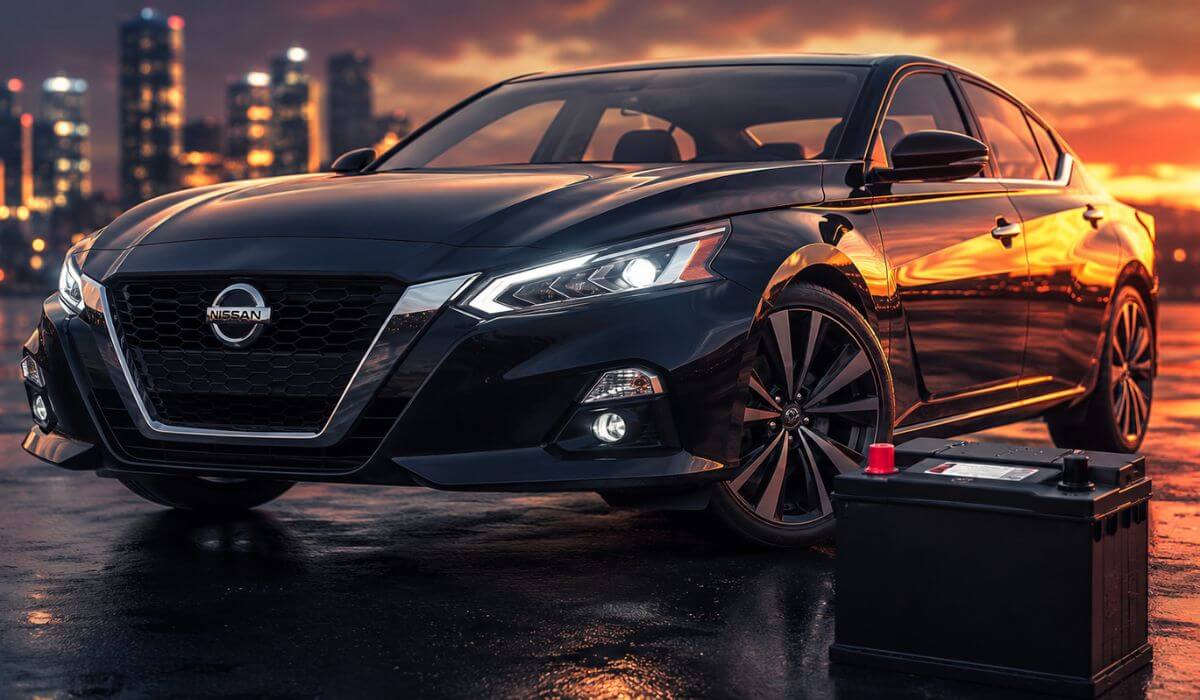
6 Best Batteries for Nissan Altima in 2026: AGM, 650–680 CCA, Start-Stop Ready Options
If you’ve searched for the best battery for Nissan Altima, you’ve probably already noticed how confusing newer Altima fitments have become. Some stores still push older Group 35 batteries for everything, while newer 2019–2026 Altima models actually use an H5 / Group 47 battery in most trims — especially cars with start-stop systems, extra electronics, and factory EFB setups. That difference matters more than most owners realize.
A weak or wrong-size battery on these newer Altimas usually shows up fast. Slow morning cranks, random warning lights, start-stop issues, weak AC performance at idle, and electrical glitches are all common once the factory battery starts fading. And because Nissan packs more electronics into recent Altima models, a cheap low-reserve battery often struggles long before it completely dies.
That’s why the batteries in this guide weren’t picked just because of brand names or online ratings. The focus here was simple: proper H5 Group 47 fitment, strong 650–680 CCA performance, reliable reserve capacity, and real-world cold-start consistency for daily-driven Altimas. We also included a couple of strong Group 35 options for older 2013–2018 models so owners don’t end up buying the wrong size.
Best Nissan Altima Battery: Top 2026 Picks With AGM Design, 100RC, and Strong Cold Starts
#1. Interstate Batteries Mega-Tron MTX-47/H5 AGM Battery
Best replacement battery for Nissan Altima owners wanting OEM-level H5 Group 47 performance with stronger cold starts and long-term AGM reliability
#2. Weize Platinum AGM Group 47 Battery
Best value H5 battery for Nissan Altima with 680 CCA output, solid reserve capacity, and reliable daily-driver performance
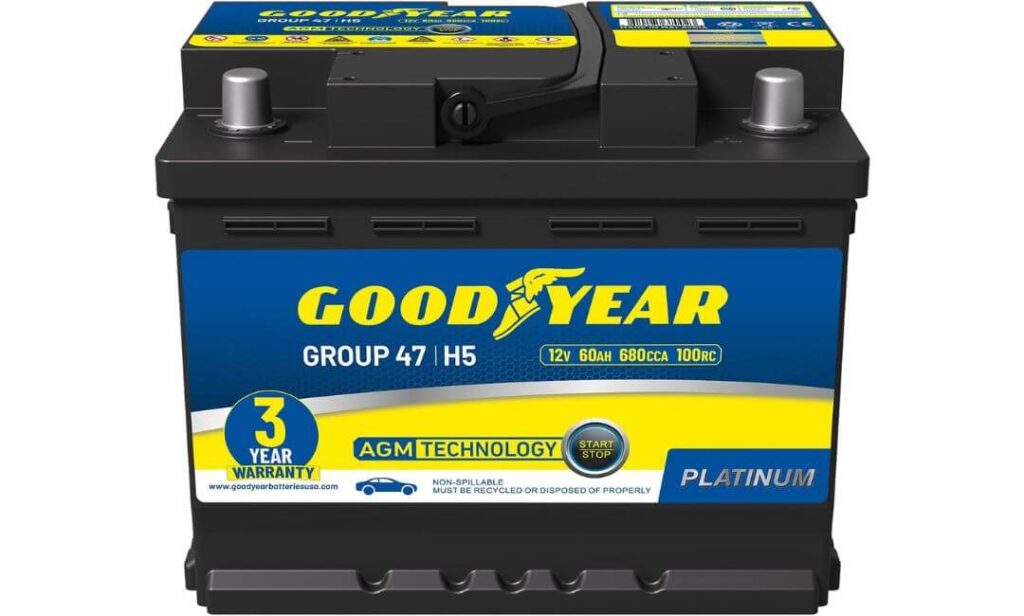
#3. Goodyear 47-H5-AGM Platinum Battery
Best AGM battery for Nissan Altima start-stop models needing maintenance-free power and dependable year-round starting
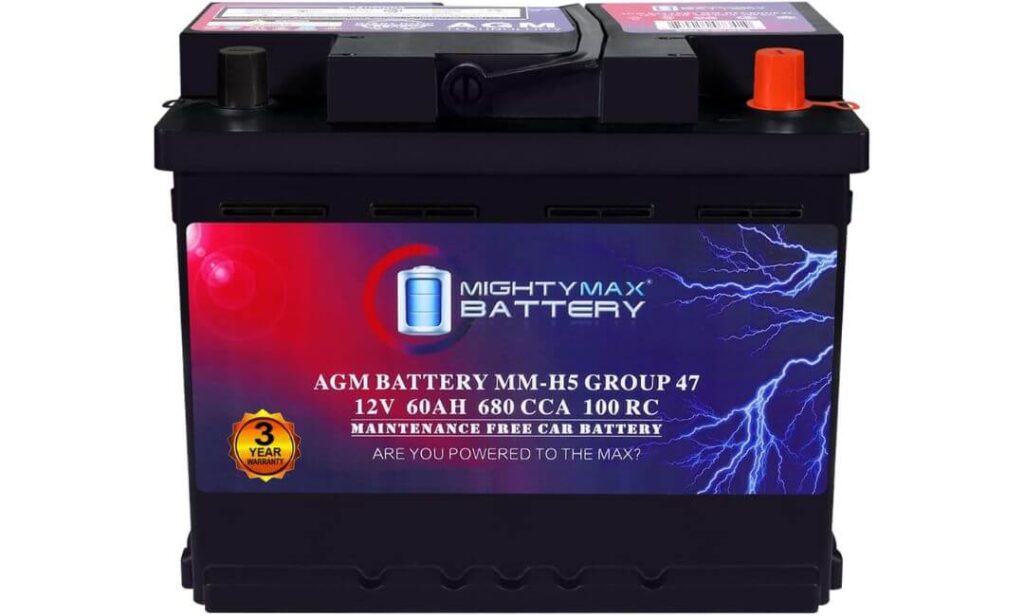
#4. Mighty Max MM-H5 Start and Stop AGM Battery
Best budget-friendly Group 47 battery for Nissan Altima drivers wanting strong 680 CCA performance without overspending
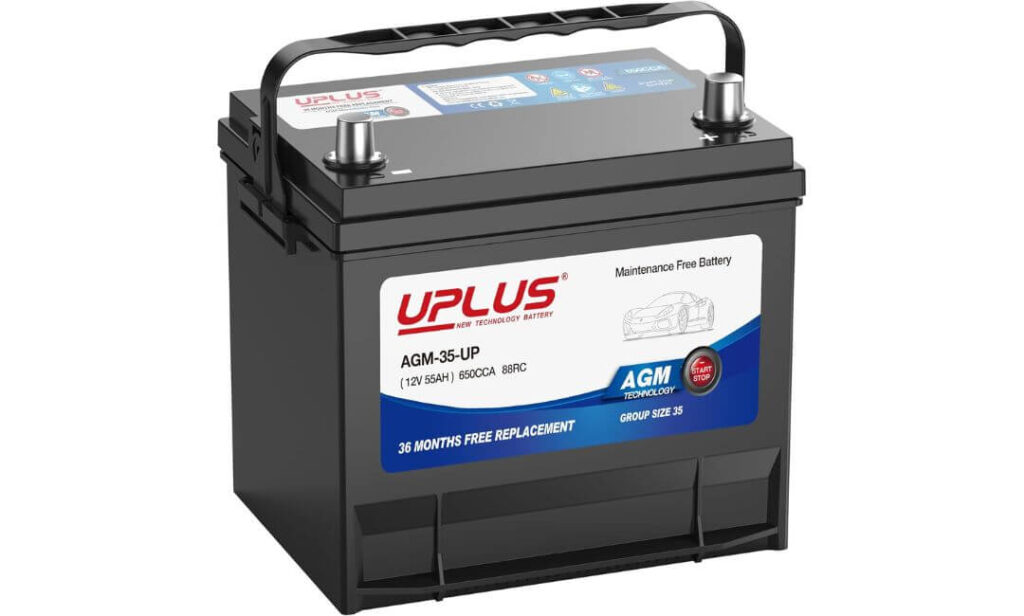
#5. UPLUS Group 35 AGM Battery
Best AGM upgrade for older Nissan Altima models using Group 35 batteries with improved reserve capacity and smoother starts
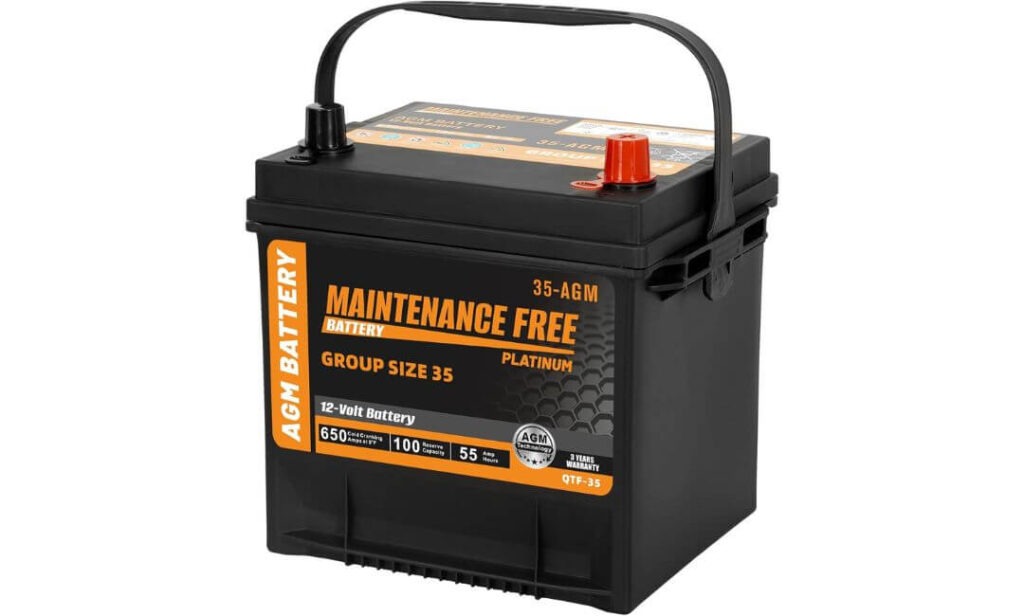
#6. Autocessking Group 35 AGM Automotive Battery
Best affordable Group 35 battery replacement for older Nissan Altima owners needing dependable daily starting power
Expert Tip:
If your Nissan Altima still has the original factory battery and the car is already crossing the 3–4 year mark, don’t wait for a complete no-start situation. On newer Altima models, the battery usually starts getting weak long before it fully dies. The first signs are subtle — slightly slower morning starts, dimmer interior lighting at idle, weak start-stop operation, or random electronic warnings that disappear after restarting the car. Most owners ignore these early symptoms and end up stranded later because the car still “starts fine” until one day it suddenly doesn’t. A properly sized H5 Group 47 AGM battery with higher reserve capacity usually fixes these problems before they turn into expensive electrical headaches.
How We Chose These Nissan Altima Batteries
There are hundreds of batteries online claiming to fit the Nissan Altima, but most generic recommendation lists ignore one important detail: newer Altima models are far more sensitive to battery quality than older generations. A battery that technically “fits” is not always a battery that performs properly once temperatures drop, the AC is running, headlights are on, and the start-stop system keeps cycling in traffic.
That’s why this list was built around real fitment first, not marketing claims.
For newer 2019–2026 Altima models, we focused mainly on H5 / Group 47 AGM batteries because that’s the size most owners actually need. These cars draw more power than older Altimas, especially in trims loaded with safety tech, larger infotainment systems, remote start features, and start-stop systems. Lower reserve batteries often struggle in real daily driving even when their listed specs look decent on paper.
The biggest thing we looked at was cold-cranking performance and reserve capacity together. A battery can show high CCA numbers online and still feel weak after sitting overnight or running accessories in traffic. That’s why nearly every battery selected here stays around the sweet spot of 650–680 CCA with strong reserve capacity near 100RC, which is where newer Altimas usually feel the most stable electrically.
We also avoided stuffing the list with random low-quality brands just to make the article longer. Every battery here either offers:
- proven AGM durability,
- proper start-stop support,
- stable cold-weather starting,
- or OEM-style fitment for newer Altima models.
For older 2013–2018 Altima owners, we included a couple of strong Group 35 AGM options because many older Altimas start developing slow crank issues once cheaper flooded batteries age. AGM upgrades tend to hold voltage better and recover faster during repeated short trips and city driving.
Another thing that mattered was real-world practicality. Some batteries look impressive in specifications but become difficult to install because of terminal placement, case dimensions, or weak build quality around the posts. The batteries selected here stay close to factory dimensions and specs so owners don’t end up dealing with unnecessary fitment problems after ordering online.
Most importantly, none of these picks were chosen just because of brand popularity. They were chosen because their specifications, sizing, AGM design, reserve capacity, and real-world starting performance actually make sense for the way modern Nissan Altima models are driven today.
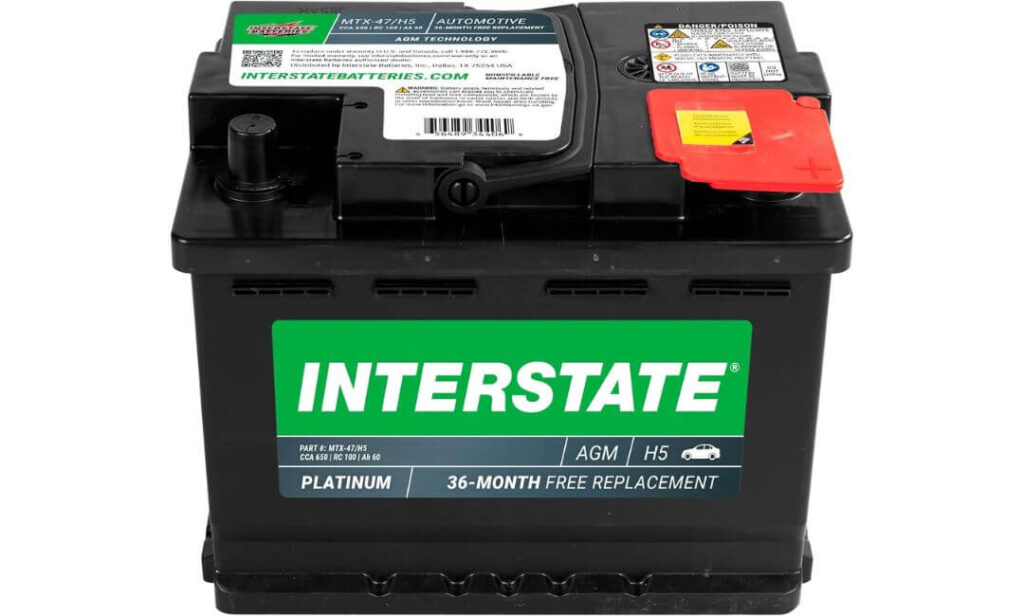
#1. Interstate Batteries Mega-Tron MTX-47/H5 AGM Battery
Technical Specs:
- Proper H5 / Group 47 fitment for most newer Nissan Altima models
- Strong 650 CCA output for colder morning starts and heavy electrical loads
- Healthy 100-minute reserve capacity that helps stabilize electronics in traffic
- Premium AGM + pure lead internal design built for start-stop systems
- Spill-proof, vibration-resistant construction with maintenance-free operation
- Factory-style dimensions that fit cleanly without awkward terminal clearance issues
- Backed by a 36-month replacement warranty
There’s a reason this battery keeps showing up in serious Nissan Altima discussions instead of disappearing into the sea of random budget AGM listings online. The first thing you notice isn’t even the startup power — it’s how “stable” the car suddenly feels electrically. The slow crank hesitation, weak idle voltage feeling, flickering cabin lights at stoplights… all that stuff newer Altimas quietly develop with aging batteries starts disappearing once this H5 AGM is installed.
What really makes this one stand out is the balance between real reserve capacity and usable cold-start power. A lot of batteries chase big CCA numbers for marketing, but this one feels engineered more like an OEM+ upgrade. The 60Ah capacity paired with a 100RC setup gives the Altima enough breathing room when the AC, infotainment, headlights, charging ports, and start-stop system are all pulling power together in daily traffic. That matters more in real-world driving than most spec sheets admit.
The pure lead AGM construction also deserves attention because it’s one of the few things that actually affects long-term ownership experience. More lead inside the battery usually translates into stronger cycling durability and better voltage stability over time — especially important for modern Altimas that don’t tolerate weak batteries very gracefully anymore. (And honestly, that’s the difference most owners feel within the first week of driving, not six months later.)
Why This One Earned a Spot in Our Nissan Altima Picks
- Feels closer to an OEM-grade electrical upgrade than a basic replacement battery
- Strong reserve capacity helps newer Altima electronics stay consistent under load
- AGM design handles repeated short trips and city driving much better than cheap flooded batteries
- Proper H5 dimensions make installation cleaner and less frustrating
- Excellent choice for Altima trims with start-stop systems and heavier accessory usage
Where It Falls Slightly Short
- Heavier than cheaper flooded batteries because of the extra lead-packed AGM construction
Nissan Altima Compatibility Notes
For most 2019+ Nissan Altima models, this H5 / Group 47 battery is exactly the type of fitment owners should be looking at — especially if the car came factory-equipped with start-stop technology or an EFB battery setup. The dimensions stay very close to OEM sizing, so installation usually feels straightforward without strange bracket or cable issues.
It also makes a lot more sense for Altima owners who deal with constant city driving, frequent short trips, hot weather, or heavy accessory use. That extra reserve capacity becomes noticeable once the car is sitting in traffic with everything running at once.
The Insider Pro-Tip
One thing experienced Altima owners eventually learn the hard way: modern Nissan electrical systems hate weak voltage more than dead batteries. The car can technically still start while quietly throwing weird electronic behavior in the background — delayed push-button starts, lazy auto start-stop operation, random warning messages, weak idle response from the AC blower — all because the battery is slowly falling below stable operating voltage.
That’s why batteries like this tend to feel “better” than basic replacements even when both technically fit the car. It’s not just about starting the engine anymore. It’s about keeping the entire electrical system calm, stable, and predictable every single day.
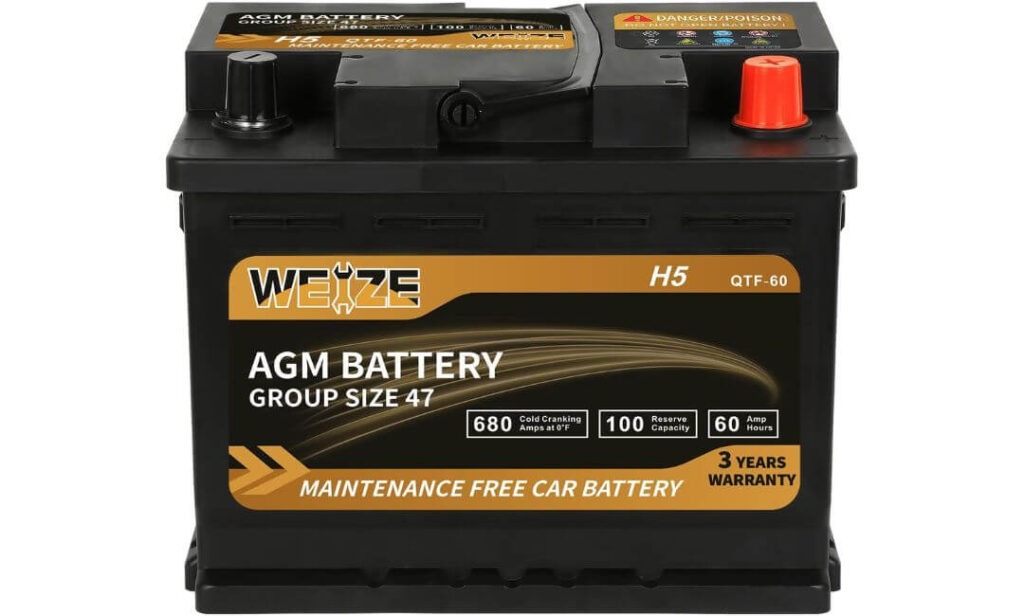
#2. Weize Platinum AGM Group 47 Battery
Technical Specs:
- Correct H5 / Group 47 sizing for most newer Nissan Altima models
- Stronger-than-expected 680 CCA output for cold starts and daily commuting
- Healthy 100-minute reserve capacity that helps modern electronics stay stable
- AGM construction designed for start-stop systems and higher accessory loads
- Faster recharge recovery compared to many conventional flooded batteries
- Wide operating temperature range from -22°F to 158°F
- Maintenance-free, leak-proof, vibration-resistant design with 36-month coverage
At first glance, this looks like another affordable AGM battery trying to compete with premium brands — until you actually look deeper into the numbers. A true 680 CCA + 100RC combination in a properly sized H5 case is exactly the kind of setup newer Nissan Altima owners benefit from in real daily driving. The electrical demands on modern Altimas are simply higher now, and weaker reserve batteries usually start showing cracks once traffic, heat, AC load, and repeated short trips become part of everyday use.
What makes this battery surprisingly easy to recommend is how balanced everything feels. The startup response stays sharp, but the bigger story is the voltage stability after the engine is already running. That matters because many Altima owners don’t realize their “battery problem” often shows up through weird electronic behavior first — sluggish push-button starts, lazy start-stop response, dim cabin lighting at idle, or infotainment glitches that randomly disappear later. Batteries with stronger reserve capacity tend to smooth out those issues before they become obvious breakdown problems.
Another reason this one earned a place here is because it doesn’t feel cheaply engineered despite the price positioning. The AGM internals, vibration resistance, lower self-discharge rate, and faster recharge characteristics make it a much smarter fit for modern Altima driving habits than older flooded batteries. (Especially for owners who mostly drive short city routes where the battery rarely gets a full recovery charge.)
Why It Stood Out During Our Nissan Altima Research
- Excellent balance between price, reserve capacity, and real-world startup consistency
- Strong 680 CCA output helps newer Altima models feel more confident in colder weather
- AGM construction handles start-stop cycling far better than standard flooded batteries
- Good option for drivers running multiple accessories, chargers, and infotainment daily
- Voltage delivery feels surprisingly stable for an aggressively priced AGM battery
One Small Thing Worth Knowing Before Ordering
- Slightly heavier than some competing H5 batteries because of the AGM construction and higher internal lead content
Nissan Altima Sizing and Compatibility Notes
This battery makes the most sense for 2019+ Nissan Altima models using the newer H5 / Group 47 platform, especially trims equipped with start-stop systems or heavier electronic loads. The dimensions stay very close to factory fitment, which helps avoid unnecessary installation headaches.
It’s also a smart choice for Altima owners who spend a lot of time in traffic, make repeated short trips, or deal with extreme summer temperatures. The stronger reserve capacity helps the electrical system stay calmer when the car is constantly cycling accessories at low speeds.
The Insider Pro-Tip
One thing many Altima owners discover too late is that modern AGM batteries are less about “starting the engine” and more about protecting the entire driving experience. Once battery voltage starts becoming unstable, the car slowly stops feeling smooth electrically — even before the battery fully fails.
That’s why a properly sized AGM battery with healthy reserve capacity can genuinely change how the car behaves day to day. Better idle stability, smoother start-stop operation, quicker startup response, and fewer random electrical quirks are often the first things owners notice after upgrading from a weaker or aging battery setup.
#3. Goodyear 47-H5-AGM Platinum Battery
Technical Specs:
- Proper H5 / Group 47 AGM sizing for newer Nissan Altima models
- Strong 680 CCA output for confident cold-weather starts
- Healthy 100-minute reserve capacity for modern electrical loads
- Maintenance-free sealed AGM construction with spill-proof design
- Built to resist vibration, shock, and repeated start-stop cycling
- Flexible mounting capability for easier fitment positioning
- Backed by a 36-month manufacturer warranty
Oddly enough, this is one of those batteries that starts making sense the more you look beyond the logo on the front. Underneath the branding, the actual numbers are exactly what modern Nissan Altima owners should be paying attention to — real 680 CCA starting power, a solid 100RC reserve setup, AGM durability, and the kind of voltage consistency newer cars quietly depend on every single day.
What separates this battery from many cheaper H5 options is how composed it feels under heavier electrical demand. Modern Altimas don’t just need enough power to crank the engine anymore. They’re constantly feeding power to safety systems, touchscreens, charging ports, sensors, LED lighting, climate control modules, and start-stop functions at the same time. Batteries with weak reserve capacity usually begin feeling “tired” surprisingly early, especially during stop-and-go traffic or extreme temperatures. This one holds itself together much better than most people expect.
The AGM construction also plays a bigger role than marketing pages make it sound. Better vibration resistance, spill-proof internals, and stronger cycling durability become important once the car starts seeing rough roads, repeated short trips, or daily commuting heat. (And honestly, that’s exactly the kind of driving where many factory Altima batteries begin losing their smoothness long before they fully fail.)
What Made It Stand Out for This Nissan Altima Guide
- Strong combination of 680 CCA and 100RC for real-world electrical stability
- AGM internals handle start-stop systems far better than basic flooded batteries
- Performs confidently in both extreme cold and high summer heat
- Stable voltage delivery helps newer Altima electronics behave more consistently
- Good balance between premium specs and everyday usability
One Thing Owners Should Keep in Mind
- Long-term lifespan feedback is mostly positive, though a smaller number of owners reported earlier-than-expected aging under heavy use
Nissan Altima Fitment and Daily Driving Notes
This battery is best suited for 2019+ Nissan Altima models using the newer H5 / Group 47 battery platform. The dimensions stay close to OEM sizing, which usually keeps installation clean without unnecessary cable tension or tray adjustment issues.
It also works especially well for Altima owners dealing with constant commuting, hot climates, frequent accessory use, or heavy stop-and-go traffic where weaker batteries usually start showing voltage instability first.
The Insider Pro-Tip
One of the easiest ways to tell when an Altima battery is losing stability isn’t the startup itself — it’s how the car behaves after it starts. Weak AGM batteries often create tiny electrical inconsistencies that owners mistake for random glitches: slower infotainment response, lazy auto start-stop operation, dimming at idle, or occasional warning lights that disappear later.
That’s why reserve capacity matters so much more than most buyers realize. A battery with healthy reserve performance doesn’t just “start the car.” It keeps the entire electrical system feeling smoother, calmer, and more predictable during real-world driving.
#4. Mighty Max MM-H5 Start and Stop AGM Battery
Technical Specs:
- Proper H5 / Group 47 fitment for most modern Nissan Altima models
- Strong 680 CCA starting output for year-round reliability
- Healthy 100-minute reserve capacity for traffic-heavy daily driving
- AGM sealed construction with spill-proof, maintenance-free operation
- Designed for start-stop systems and higher electrical demand vehicles
- Deep discharge recovery support for repeated short-trip driving
- Vibration-resistant internal construction with 3-year warranty coverage
Surprisingly, this is one of the few affordable AGM batteries that doesn’t immediately feel “cheap” once you start digging into the actual specifications. The combination of 680 CCA, proper 100RC reserve capacity, and AGM construction puts it right into the sweet spot newer Nissan Altima models quietly benefit from the most — especially cars dealing with daily commuting, constant accessory usage, and repeated engine restarts from start-stop systems.
Where this battery starts making sense is during real everyday driving, not laboratory numbers. Modern Altimas place a steady load on the battery long after the engine starts. Between touchscreens, safety sensors, charging ports, climate control systems, LED lighting, and stop-and-go traffic, weaker batteries usually begin feeling strained far earlier than most owners expect. This setup holds voltage surprisingly well under normal commuting stress, which helps the car feel smoother electrically throughout the day.
Another thing worth appreciating here is the deep discharge recovery design. A lot of Altima owners make frequent short trips where the alternator never fully recharges the battery properly. Over time, cheaper flooded batteries slowly lose responsiveness under those conditions. AGM batteries built with stronger cycling recovery tend to stay healthier longer in real city driving. (And honestly, that’s a huge reason many newer Altima owners eventually move away from basic flooded replacements altogether.)
What Helped This Battery Earn Its Spot Here
- Delivers the right balance between affordability and real AGM performance
- Strong 680 CCA output helps reduce cold-start hesitation
- AGM design handles repeated stop-start driving much more confidently
- Stable reserve capacity supports modern Altima electronics under daily load
- Easy installation dimensions stay close to OEM H5 battery sizing
One Minor Tradeoff Worth Mentioning
- Long-term lifespan feedback is generally positive, though heavy high-temperature usage may shorten life expectancy faster than premium-tier AGM batteries
Nissan Altima Fitment and Driving Compatibility
This battery is best suited for 2019+ Nissan Altima models requiring the newer H5 / Group 47 battery size, especially trims equipped with automatic start-stop technology or higher electrical accessory loads.
The dimensions stay close to factory battery sizing, which usually keeps installation straightforward without awkward tray movement or terminal alignment issues. It’s also a practical fit for owners who spend most of their time in traffic, urban commuting, or short-trip driving where AGM batteries typically outperform standard flooded designs.
The Insider Pro-Tip
One thing that catches many Altima owners off guard is how quickly modern electrical systems expose a weak battery. The engine may still crank normally while the car quietly starts developing small annoyances — slower push-button starts, inconsistent auto stop-start behavior, dimming at idle, or infotainment lag during heavy electrical demand.
That’s why batteries with strong reserve capacity tend to feel dramatically better in everyday driving even when the raw specs look similar online. Stable voltage delivery changes how the entire car behaves, especially once the Altima starts stacking multiple electrical loads together during real-world commuting.
#5. UPLUS Group 35 AGM Battery
Technical Specs:
- Correct Group 35 fitment for many older Nissan Altima models
- Strong 650 CCA output for reliable cold-weather starts
- Solid 88-minute reserve capacity for daily commuting stability
- Premium AGM construction with maintenance-free sealed design
- Built specifically for start-stop traffic and heavy accessory usage
- Enhanced alloy internals designed for up to 4x longer cycle life
- Heavy-duty vibration resistance for rough roads and constant urban driving
Quietly, this ends up being one of the smarter AGM upgrades for older Nissan Altima owners who are tired of replacing weak flooded batteries every couple of years. The first thing that stands out isn’t just the 650 CCA number — it’s how much stronger the battery feels once the car is sitting in real-world traffic with the AC running, headlights on, phone charging, and electronics constantly pulling power in the background.
A lot of older Altimas slowly develop that “lazy electrical” feeling before owners even realize the battery is fading. Slower morning cranks, weak idle voltage, dim interior lights at red lights, or random hesitation during startup become surprisingly common once cheaper batteries start aging. This AGM setup feels much more composed under those conditions because the reserve capacity and cycling durability are built around repeated daily stress rather than occasional perfect-condition starts.
The bigger story here is the internal construction. UPLUS uses a denser negative paste and enhanced alloy design specifically aimed at improving cycling life, which matters more than most owners think — especially for cars driven mostly on short trips or constant stop-and-go commuting. (That’s usually where older Altima batteries wear out fastest because they rarely get enough time to recharge properly.)
Why This Battery Made Sense for Older Nissan Altima Models
- AGM construction feels noticeably more stable than standard flooded Group 35 batteries
- Strong 650 CCA output helps older Altimas crank confidently during winter mornings
- Built for repeated city driving, short trips, and stop-and-go traffic
- Higher cycling durability helps reduce premature battery aging
- Excellent direct-fit dimensions for many older Nissan Altima trims
One Small Reality Buyers Should Know
- Reserve capacity is slightly lower than some premium H5 AGM batteries, though still very solid for most older Altima daily driving needs
Nissan Altima Compatibility and Usage Notes
This battery fits best in many 2013–2018 Nissan Altima models using the traditional Group 35 battery platform. The sizing and terminal layout stay close to OEM specifications, which usually keeps installation simple without needing tray modifications or cable adjustments.
It’s especially well-suited for older Altima owners dealing with frequent short trips, daily traffic, hotter climates, or vehicles carrying more electronic accessories than they originally had years ago.
The Insider Pro-Tip
One thing many older Altima owners don’t realize is that AGM batteries often improve the “feel” of the car long before they improve the startup itself. Better voltage stability changes how consistently the electronics behave — especially in aging vehicles where sensors, modules, and charging systems become more sensitive over time.
That’s why moving from a basic flooded battery to a properly sized AGM setup can make an older Altima feel smoother and more predictable during daily driving, even if the original battery technically still starts the engine.
#6. Autocessking Group 35 AGM Automotive Battery
Technical Specs:
- Proper Group 35 AGM fitment for many older Nissan Altima models
- Strong 650 CCA output for dependable cold-weather starts
- Impressive 100-minute reserve capacity for a Group 35 setup
- Maintenance-free AGM construction with sealed spill-proof design
- Built for start-stop traffic, heat resistance, and voltage stability
- Low self-discharge design helps maintain charge during longer parked periods
- Durable vibration-resistant construction with extended service life focus
Honestly, this is the kind of battery many older Nissan Altima owners end up appreciating more after a few months than they do on installation day. On paper, the specs already look strong for a Group 35 AGM battery — especially the combination of 650 CCA and a full 100RC reserve capacity — but the real difference shows up during normal daily driving when the car starts feeling more electrically stable overall.
Older Altimas tend to become surprisingly sensitive to voltage fluctuations as they age. The engine may still start fine while the rest of the car slowly begins acting inconsistent: dimmer lights at idle, weaker blower motor response, occasional infotainment hesitation, or random startup sluggishness during colder mornings. Batteries with higher reserve capacity usually smooth out those little issues because the electrical system isn’t constantly operating near its limit anymore.
Another thing this battery gets right is long-term usability for drivers who don’t use their Altima every single day. AGM batteries naturally hold charge better during longer parked periods, but the lower self-discharge characteristics here make an even bigger difference for owners who leave the car sitting for several days between drives. (That’s a situation where many cheaper flooded batteries quietly lose strength faster than people realize.)
Why It Earned a Place in This Nissan Altima Lineup
- Strong reserve capacity gives older Altimas noticeably steadier electrical behavior
- AGM design handles heat, vibration, and repeated short trips better than conventional flooded batteries
- Reliable 650 CCA output helps aging engines crank more confidently
- Low self-discharge design benefits cars that aren’t driven every day
- One of the stronger value-focused AGM options in the Group 35 category
One Minor Thing Worth Keeping in Mind
- Brand recognition is lower than some premium battery manufacturers, though the actual specifications are surprisingly competitive for the price range
Nissan Altima Compatibility and Real-World Usage
This battery is best suited for many 2013–2018 Nissan Altima models using the traditional Group 35 battery size. The dimensions and terminal layout stay close to factory specifications, helping installation remain straightforward for most owners.
It’s particularly useful for Altima drivers dealing with frequent stop-and-go traffic, hotter climates, longer parked periods, or aging electrical systems where voltage stability becomes more important year after year.
The Insider Pro-Tip
One thing experienced Altima owners eventually notice is that older Nissan charging systems don’t always hide weak batteries very well. Once reserve capacity starts fading, the car slowly begins feeling “off” electrically before the battery actually dies.
That’s why a Group 35 AGM battery with healthy reserve capacity often feels like a bigger upgrade than expected. It’s not just about starting power anymore — it’s about keeping the entire car calmer, smoother, and more predictable during everyday driving.
Best Nissan Altima Battery Comparison Table for Reliable H5 AGM and Group 35 Upgrades
“`html| Battery | Group Size | CCA | Reserve Capacity | Best For | Why It Stands Out |
|---|---|---|---|---|---|
|
Interstate Mega-Tron MTX-47/H5
Best Overall Pick
|
H5 / 47 | 650 CCA | 100RC |
Newer Altima start-stop models |
OEM-like electrical stability with strong AGM durability and smoother daily driving feel. |
|
Weize Platinum AGM Group 47
Best Value AGM
|
H5 / 47 | 680 CCA | 100RC |
Daily commuters with heavy electronics |
Strong cold-start power with impressive reserve capacity at a very aggressive price point. |
|
Goodyear 47-H5-AGM Platinum
Best Premium Feel
|
H5 / 47 | 680 CCA | 100RC |
Extreme weather and long drives |
Feels stable under heavy electrical load with excellent year-round consistency. |
|
Mighty Max MM-H5 AGM
Best Budget H5
|
H5 / 47 | 680 CCA | 100RC |
City traffic and short-trip driving |
Affordable AGM option that still delivers solid reserve capacity and start-stop support. |
|
UPLUS Group 35 AGM
Best Older Altima Upgrade
|
Group 35 | 650 CCA | 88RC |
Older Altima daily drivers |
Excellent AGM upgrade for aging electrical systems and repeated stop-and-go use. |
|
Autocessking Group 35 AGM
Best Reserve Capacity
|
Group 35 | 650 CCA | 100RC |
Older Altimas with voltage issues |
Strong reserve capacity helps older Altima electronics feel smoother and more stable. |
Understanding What a Nissan Altima Battery Actually Needs
A surprising number of Nissan Altima battery problems start with one simple mistake: installing a battery that technically fits the tray, but doesn’t properly support the way modern Altimas use power every day. That matters far more now than it did on older sedans because newer Altima models rely heavily on electronics, voltage-sensitive modules, and start-stop systems that constantly cycle the battery in traffic.
That’s why choosing the correct battery today is less about “Will the car start?” and more about how stable the entire electrical system feels over time.
Why AGM Batteries Make More Sense for Modern Nissan Altima Models
For newer Altima models, especially 2019+ trims, AGM batteries usually make far more sense than traditional flooded batteries. Nissan’s newer electrical systems place a steady demand on the battery even after the engine is already running, and standard flooded batteries often struggle to maintain stable voltage once they begin aging.
AGM batteries handle this much better because the internal design is built for:
- repeated stop-start cycling,
- heavier accessory loads,
- stronger reserve capacity,
- faster recharge recovery,
- and improved voltage consistency during city driving.
That becomes important once the Altima starts juggling multiple systems at once — climate control, infotainment, sensors, push-button ignition, charging ports, LED lighting, safety tech, and auto start-stop operation all pull power continuously during normal driving.
A weaker flooded battery can still crank the engine while quietly creating strange electrical behavior in the background. Slower startup response, inconsistent auto stop-start operation, dimming at idle, and random warning messages are often early signs of battery instability long before the battery completely dies.
The Most Common Nissan Altima Battery Size
For most newer Nissan Altima models, the most common battery size is:
- H5 / Group 47
This is the battery platform most commonly found in:
- 2019 Nissan Altima
- 2020 Nissan Altima
- 2021 Nissan Altima
- 2022 Nissan Altima
- 2023 Nissan Altima
- newer current-generation Altima trims
H5 / Group 47 batteries became common because they offer a better balance between:
- reserve capacity,
- cold-cranking power,
- compact fitment,
- and support for modern electrical loads.
Most quality H5 AGM batteries for the Altima now sit around:
- 60Ah capacity
- 650–680 CCA
- roughly 100 minutes reserve capacity
That combination tends to deliver the most stable real-world performance for daily-driven Altimas.
Older Nissan Altima Models Usually Use Group 35 Batteries
If you own an older Nissan Altima, especially many 2013–2018 models, there’s a good chance the car uses a:
- Group 35 battery
These batteries are slightly different in shape and sizing compared to H5 / Group 47 setups found in newer models.
Older Altimas generally place less electrical demand on the battery than current-generation cars, but that doesn’t mean battery quality suddenly stops mattering. In fact, aging electrical systems often become even more sensitive to unstable voltage over time.
That’s why many owners upgrading older Altimas now move toward:
- AGM Group 35 batteries,
- stronger reserve capacity,
- and higher cycling durability instead of cheap flooded replacements.
Why Cold Cranking Amps Matter More Than Most Owners Think
Many people shop for a battery based only on price or brand name, but the CCA rating — Cold Cranking Amps — directly affects how confidently the engine starts during cold mornings, temperature swings, or longer parked periods.
For most Nissan Altima models, the ideal range usually sits around:
- 650–680 CCA
That range gives the car enough startup power without sacrificing reserve performance or fitment quality.
But raw CCA numbers alone don’t tell the full story.
A battery can advertise huge cranking numbers while still feeling weak during real-world driving if the reserve capacity and voltage stability aren’t strong enough. That’s why the best Altima batteries balance:
- CCA,
- reserve capacity,
- AGM durability,
- and cycling performance together.
The goal isn’t just starting the engine once — it’s keeping the entire car feeling electrically smooth every single day.
Start-Stop Systems Change Battery Demands Completely
If your Nissan Altima has an automatic start-stop system, battery quality becomes even more important.
Unlike older cars where the battery mostly started the engine and rested afterward, start-stop systems repeatedly restart the engine during traffic, intersections, parking situations, and daily commuting. That constant cycling places far more stress on the battery internally.
This is exactly why AGM batteries dominate newer Altima battery recommendations now.
They recover faster after repeated starts, tolerate deeper cycling better, and maintain stable voltage under heavier electrical demand. Standard flooded batteries can work temporarily, but many simply wear out faster once subjected to repeated start-stop operation every day.
The Biggest Mistake Altima Owners Make When Buying a Battery
One of the most common mistakes is buying the cheapest battery that physically fits the car without checking:
- group size,
- reserve capacity,
- AGM compatibility,
- terminal orientation,
- or start-stop support.
That usually leads to:
- shorter battery lifespan,
- unstable electronics,
- weaker startup response,
- and more charging system stress later.
A properly sized AGM battery with healthy reserve capacity may cost more upfront, but it almost always delivers a smoother ownership experience — especially in modern Nissan Altima models packed with electronics and daily commuting demands.
How to Make Sure a Battery Actually Fits Your Nissan Altima Before Buying
One of the biggest reasons Nissan Altima owners end up returning batteries — or worse, dealing with electrical problems after installation — is because many online listings oversimplify compatibility. A battery may physically fit inside the tray while still being the wrong choice for the car’s electrical demands, terminal layout, reserve capacity, or start-stop system requirements.
That’s why verifying fitment properly matters far more than simply matching the year and model name online.
Start With the Correct Nissan Altima Battery Group Size
The first thing to confirm is the actual battery group size your Altima uses.
For most newer Nissan Altima models, especially:
- 2019+
- current-generation trims
- and start-stop equipped variants
…the most common fitment is:
- H5 / Group 47
This size became standard because it offers the right balance between:
- compact fitment,
- reserve capacity,
- AGM compatibility,
- and electrical stability for modern Nissan systems.
Older Altima models, especially many:
- 2013–2018 trims
…commonly use:
- Group 35 batteries
The difference matters because Group 35 and H5 batteries are shaped differently, use different tray fitment dimensions, and sometimes position terminals differently as well.
A battery that “almost fits” can still create:
- cable tension,
- loose hold-down mounting,
- terminal interference,
- or poor electrical contact over time.
That’s why checking the actual group number before ordering is always worth the extra minute.
Why H5 / Group 47 Became So Common in Newer Altimas
Newer Nissan Altimas simply demand more from the battery than older generations did.
Between:
- start-stop systems,
- larger infotainment screens,
- charging ports,
- safety sensors,
- driver assistance features,
- push-button ignition,
- and climate electronics,
…the battery constantly supports active electrical loads during normal driving.
H5 / Group 47 batteries became the preferred fitment because they typically provide:
- stronger reserve capacity,
- higher cycling durability,
- improved AGM compatibility,
- and better voltage stability under daily commuting conditions.
That’s exactly why most of the strongest batteries in this guide focus heavily on the H5 AGM platform.
Don’t Ignore the CCA Rating
Many people focus only on physical fitment, but the CCA rating — Cold Cranking Amps — matters just as much.
For most Nissan Altima applications, the sweet spot usually falls between:
- 650–680 CCA
That range delivers strong cold-weather starting performance without sacrificing reserve capacity or long-term durability.
Lower CCA batteries can technically work, but they often begin showing weakness faster during:
- winter mornings,
- repeated short trips,
- stop-and-go traffic,
- or extreme summer heat.
And modern Altimas don’t always react kindly to weak voltage. The car may still start while quietly developing:
- slower push-button response,
- unstable auto start-stop behavior,
- dimming electronics,
- or random warning messages.
That’s usually the battery struggling to maintain stable operating voltage under load.
If Your Altima Has Start-Stop, AGM Matters Much More
This is one detail many owners accidentally overlook.
If your Nissan Altima uses:
- automatic engine stop-start technology,
…then the battery experiences dramatically more stress than traditional systems.
Every traffic light restart, parking maneuver, or stop-and-go commute repeatedly cycles the battery internally. Standard flooded batteries can technically function in these cars, but many wear down much faster because they aren’t built for constant cycling recovery.
That’s why AGM batteries are strongly preferred for newer Altimas.
They handle:
- repeated restart cycles,
- deeper discharge recovery,
- faster recharging,
- and heavier accessory loads far more effectively.
In real-world driving, AGM batteries usually feel smoother electrically and maintain stable voltage longer as the battery ages.
Compare More Than Just the Year and Model
Before buying any Nissan Altima battery replacement, compare these details directly against your current battery:
- Battery group size
- Terminal orientation
- AGM or flooded design
- CCA rating
- Reserve capacity
- Physical dimensions
- Start-stop compatibility
This matters because some Altima trims vary slightly depending on:
- engine option,
- production year,
- electrical package,
- or factory battery configuration.
Even within the same generation, different trims can sometimes leave the factory with slightly different battery setups.
Real-World Signs Your Current Battery Is No Longer Enough
Sometimes the easiest compatibility clue is how the car already behaves.
If your Altima has started showing:
- slower morning cranks,
- weak idle voltage,
- inconsistent auto start-stop operation,
- flickering interior lights,
- infotainment lag,
- or random electronic warnings,
…the battery may already be struggling to maintain proper reserve performance.
In many cases, upgrading to a correctly sized AGM battery with stronger reserve capacity solves these issues before they become full no-start situations.
The Smartest Way to Avoid Buying the Wrong Battery
The safest approach is simple:
- Check your current battery label directly
- Verify the group size and terminal layout
- Match or slightly improve the CCA rating
- Upgrade to AGM if your Altima uses start-stop technology
- Choose reserve capacity over flashy marketing claims
Because at the end of the day, the best Nissan Altima battery isn’t just the one that starts the engine — it’s the one that keeps the entire electrical system stable, smooth, and dependable every single day.
Nissan Altima Battery Installation and Long-Term Care Tips
A good battery can still turn into a frustrating experience if it’s installed carelessly or maintained the wrong way afterward. Modern Nissan Altima models are far more sensitive to voltage changes than older sedans used to be, which means even small installation mistakes can create strange electrical behavior later.
The good news is that replacing an Altima battery is usually straightforward once you understand a few important details before starting.
AGM and Flooded Batteries Install Differently in Real Life
Technically, both AGM and flooded batteries connect the same way:
- negative terminal,
- positive terminal,
- hold-down bracket,
- and tray fitment.
But in real-world driving, AGM batteries behave differently once installed.
AGM batteries:
- recharge faster,
- tolerate repeated start-stop cycling better,
- resist vibration more effectively,
- and usually maintain steadier voltage under heavy electrical loads.
That’s a huge advantage in modern Altimas where the battery constantly supports:
- infotainment systems,
- climate controls,
- push-button ignition,
- driver-assistance sensors,
- and automatic stop-start functions.
Flooded batteries can still work in some older Altima models, but they typically lose consistency faster once exposed to repeated short trips, heat, or traffic-heavy commuting.
That’s exactly why most newer Nissan Altima battery replacements now lean heavily toward AGM setups instead of traditional flooded designs.
The Smart Way to Replace a Nissan Altima Battery
Before removing the old battery:
- turn the engine completely off,
- remove the key or key fob from the vehicle,
- and allow the electrical system to settle for a few minutes.
Then:
- Disconnect the negative terminal first
- Disconnect the positive terminal second
- Remove the hold-down bracket carefully
- Lift the old battery straight upward
- Clean any corrosion from terminals and tray area
- Install the new battery securely into position
- Connect positive terminal first
- Connect negative terminal last
That terminal order matters more than many people realize because reversing the process increases the risk of accidental electrical shorting.
Another important detail people overlook is battery movement. A loose battery tray or poorly tightened hold-down bracket creates vibration stress over time, which slowly damages internal battery plates — especially on rough roads or daily commuting routes.
Why Voltage Stability Matters After Installation
One thing many Altima owners notice after installing a healthy AGM battery is how much smoother the car suddenly feels electrically.
The difference often shows up through:
- quicker startup response,
- steadier idle behavior,
- smoother auto start-stop operation,
- brighter lighting,
- and fewer random warning messages.
That happens because modern Nissan systems rely heavily on stable voltage delivery. A weak battery may still start the engine while quietly causing inconsistent behavior across multiple electronic systems at the same time.
This is especially common in:
- older batteries,
- low-reserve replacements,
- or cheap flooded batteries installed in newer start-stop Altimas.
Important Safety Tips Most People Ignore
Battery replacement seems simple until one small mistake damages electronics or creates sparks near the terminals.
A few important habits make a huge difference:
- Never allow metal tools to bridge both terminals
- Always wear gloves and eye protection
- Avoid smoking or open flames near batteries
- Double-check terminal polarity before connecting
- Keep terminals tight, but avoid over-tightening
If corrosion is present around the old battery:
- clean the area fully before installing the new one,
- because leftover corrosion can interfere with charging performance later.
And if the old battery appears swollen, leaking, or unusually hot, avoid handling it aggressively. Internal battery damage can create dangerous pressure buildup.
Don’t Throw the Old Battery in Regular Trash
This is one mistake that should never happen.
Old automotive batteries contain:
- lead,
- acid,
- and recyclable materials that require proper disposal.
Most auto parts stores, battery retailers, and service centers will:
- recycle the old battery,
- offer core credit,
- or safely dispose of it during replacement.
In many places, returning the old battery is actually required to avoid additional core charges when purchasing a new one.
How to Make a Nissan Altima Battery Last Longer
Battery lifespan depends heavily on driving habits.
The fastest ways to shorten battery life are:
- repeated short trips,
- leaving electronics running with the engine off,
- extreme heat exposure,
- and allowing the battery to stay partially discharged for long periods.
To help extend battery life:
- drive long enough for full charging cycles occasionally,
- keep terminals clean,
- avoid leaving accessories running unnecessarily,
- and inspect charging voltage if electrical behavior changes suddenly.
AGM batteries especially perform best when kept properly charged instead of repeatedly drained and recovered.
Understanding Battery Warranty Coverage the Right Way
Many people assume battery warranties guarantee lifespan, but most warranties mainly cover:
- manufacturing defects,
- premature internal failure,
- or abnormal performance during the coverage period.
That’s why keeping:
- purchase receipts,
- installation dates,
- and warranty paperwork
…actually matters.
Most AGM batteries in this guide include:
- roughly 3-year warranty coverage,
- though real-world lifespan depends heavily on climate, charging system health, and driving habits.
Hot climates, frequent stop-and-go traffic, and short-trip commuting naturally place more stress on the battery over time.
The Biggest Long-Term Mistake Altima Owners Make
The most common mistake isn’t buying the wrong battery — it’s ignoring early warning signs once the battery starts weakening.
Most batteries don’t fail instantly anymore.
Instead, the car slowly begins showing:
- slower cranking,
- weak voltage at idle,
- inconsistent electronics,
- stop-start problems,
- or random dashboard warnings.
That’s usually the battery telling you reserve capacity is fading long before a complete no-start situation happens.
Replacing the battery early enough often prevents:
- alternator stress,
- charging system strain,
- and unnecessary electrical troubleshooting later.
And honestly, that’s usually cheaper than waiting for the car to leave you stranded unexpectedly.
FAQs About Nissan Altima Battery
Does the Nissan Altima actually benefit from upgrading to an AGM battery, or is it mostly marketing?
For newer Nissan Altima models, especially cars with start-stop systems, AGM batteries genuinely make a noticeable difference in daily driving. The improvement is not always dramatic during the first engine start — it’s usually the overall electrical behavior that changes first.
A healthy AGM battery tends to make the Altima feel:
- smoother at idle,
- more responsive during push-button starts,
- more stable with the AC running,
- and less “glitchy” electrically during heavy accessory use.
That happens because AGM batteries recover faster after repeated discharge cycles and maintain voltage more consistently under load. Modern Altimas rely heavily on stable voltage across dozens of small systems working simultaneously, and weak batteries often create weird behavior long before the engine refuses to start.
A lot of owners think they have alternator problems, infotainment issues, or sensor failures when the real issue is simply unstable battery voltage from an aging or low-quality battery.
Why do some Nissan Altima batteries fail surprisingly early even when the car still starts normally?
This catches many Altima owners off guard because modern batteries rarely fail the old-fashioned way anymore.
Years ago, a weak battery usually gave obvious warning signs:
- painfully slow cranking,
- repeated no-start situations,
- or completely dead mornings.
Modern Nissan Altimas behave differently. The car can technically still start while the battery quietly loses reserve capacity underneath. That’s when owners begin noticing:
- inconsistent auto start-stop behavior,
- dimming lights at idle,
- weak startup response,
- random dashboard warnings,
- or infotainment lag during heavy electrical load.
In many cases, the battery itself is no longer capable of maintaining stable voltage once multiple systems start pulling power simultaneously.
Short-trip driving also plays a massive role. Altimas driven mostly in city traffic often never fully recharge the battery properly, especially with:
- climate control running,
- phone charging,
- navigation active,
- and repeated engine restart cycles.
That constant partial-charge operation slowly shortens battery lifespan even if the car technically “starts fine” every day.
Is a higher CCA battery always better for a Nissan Altima?
Not necessarily — and this is where many online battery recommendations become misleading.
A lot of people chase the highest CCA number possible thinking bigger automatically means better. In reality, modern Nissan Altimas usually perform best when the battery balances:
- proper group size,
- healthy reserve capacity,
- AGM cycling durability,
- and stable voltage delivery together.
For most Altima applications, the sweet spot tends to stay around:
- 650–680 CCA
Once you move far beyond that range, you don’t always gain meaningful real-world benefits unless the reserve capacity and overall battery quality improve too.
A battery with inflated cranking numbers but weak reserve performance can still feel unstable during:
- stop-and-go traffic,
- heavy electrical usage,
- summer heat,
- or repeated short trips.
That’s why some premium AGM batteries feel dramatically smoother than cheaper “high CCA” batteries even when the raw starting numbers look similar online.
Why does the Nissan Altima start acting strange electrically before the battery completely dies?
Because modern Altimas are far more sensitive to voltage fluctuations than older sedans ever were.
Today’s Altima constantly manages:
- electronic throttle systems,
- safety sensors,
- touchscreen modules,
- push-button ignition,
- automatic climate controls,
- charging ports,
- and stop-start technology.
Once battery voltage starts becoming unstable, the car often reacts in subtle ways before a total failure happens.
Owners commonly notice:
- delayed startup response,
- inconsistent idle behavior,
- flickering interior lighting,
- weak blower motor performance,
- random warning lights that disappear later,
- or stop-start systems refusing to activate.
That’s usually reserve capacity fading — not necessarily a completely dead battery.
And honestly, this is why reserve capacity matters more than many buyers realize. A battery that maintains stable voltage under daily electrical load usually makes the entire car feel calmer and more predictable.
Can the wrong battery size damage a Nissan Altima over time even if it fits physically?
Absolutely — and this happens more often than people think.
A battery that physically fits the tray but lacks:
- proper reserve capacity,
- correct terminal positioning,
- AGM compatibility,
- or sufficient cycling durability
…can slowly create charging-system stress over time.
The alternator may work harder trying to maintain voltage, the battery may cycle deeper than intended during stop-start operation, and electronics can become increasingly unstable as the battery ages prematurely.
This is especially common when:
- cheap flooded batteries are installed into start-stop Altimas,
- incorrect group sizes are forced into the tray,
- or low-reserve batteries are used in heavy daily commuting.
That’s exactly why newer Altimas commonly use the H5 / Group 47 platform now. The sizing, reserve capacity, and AGM compatibility simply match the electrical demands of modern Nissan systems far better than smaller low-capacity alternatives.
Final Thoughts
Finding the best battery for a Nissan Altima is no longer as simple as grabbing the cheapest battery that physically fits the tray. Modern Altimas — especially newer H5 / Group 47 models with start-stop systems and heavier electronics — demand far more stability, reserve capacity, and cycling durability than older sedans ever did.
That’s exactly why the batteries in this guide were chosen so carefully.
Some owners simply need the most dependable OEM-style AGM upgrade possible. Others want stronger cold-weather starts, better reserve capacity during traffic-heavy commuting, or a smarter long-term replacement for an aging factory battery that’s slowly making the car feel electrically inconsistent. And for older Group 35 Altima models, choosing the right AGM setup can genuinely make the car feel smoother and more reliable again without overspending unnecessarily.
The biggest thing to remember is this: most battery problems in a Nissan Altima don’t begin with a complete no-start situation anymore. They begin quietly — slower startup response, weak voltage under load, unstable stop-start behavior, flickering electronics, or random warning messages that seem impossible to trace. That’s usually the battery telling you it’s losing reserve strength long before it fully fails.
A properly sized AGM battery with healthy reserve capacity doesn’t just help the engine crank harder. It helps the entire car feel calmer, smoother, and more dependable during real everyday driving.
And honestly, once you experience the difference a strong AGM battery makes in a modern Altima, it becomes very difficult to go back to a weaker low-reserve replacement again.
Also Check:

