

6 Best Batteries for Subaru Outback in 2026: High-CCA Picks for Start-Stop and Winter Driving
If you own a newer Subaru Outback, you’ve probably already noticed one thing: these SUVs are far pickier about batteries than older Subarus ever were. The factory Group 35 battery works fine when it’s new, but once cold weather hits, the auto start-stop system starts acting weird, or the vehicle sits for a few days, weak batteries show themselves fast. That’s exactly why so many Outback owners are now upgrading to AGM batteries in Group 47/H5 or even larger 24F setups instead of simply replacing the original unit with another basic OEM-style battery.
For this guide, we focused mainly on 2020–2026 Subaru Outback models because they generate the most battery complaints and replacement searches right now. Most newer Outback trims use a Group 35 battery from the factory, but H5/Group 47 AGM batteries have become one of the most popular upgrades for better cold starts, stronger reserve capacity, and improved reliability with modern electronics. We also included a couple of Group 24F AGM options for owners who run extra accessories, drive in harsh winters, or simply want a battery that won’t feel stressed after two years.
Older Outback models from 2015–2019 can still use many of these Group 35 batteries without issues, while some earlier trims used Group 25 setups. The key thing is choosing the right combination of fitment, cold cranking amps, and reserve capacity instead of buying the cheapest battery on the shelf. Every battery below was selected around real-world Subaru Outback usage, not marketing claims.
Best Subaru Outback Battery: Top 2026 Picks for Stronger Winter Starts and AGM Upgrades
#1. Weize Platinum AGM Battery BCI Group 47
Best AGM Battery Upgrade for Subaru Outback Owners Wanting Better Cold Starts, Higher Reserve Capacity, and More Reliable Daily Performance Than the Factory Group 35 Battery
#2. Interstate Batteries MTX-35 AGM
Most Reliable Subaru Outback Battery Replacement for Drivers Who Want OEM Fitment With Stronger AGM Durability and Consistent Start-Stop Performance
#3. Odyssey 35-PC1400T Automotive Battery
High-Performance Group 35 AGM Battery for Subaru Outback Drivers Needing Maximum Starting Power in Winter and Long-Term Reliability
#4. Mighty Max MM-H5 AGM Battery
Affordable H5 Battery Upgrade for Subaru Outback Models With Auto Start-Stop Systems and Higher Power Demands Than Standard OEM Batteries
#5. UPLUS BCI Group 24F AGM Battery
Heavy-Duty Subaru Outback AGM Battery Upgrade With Extra Reserve Capacity for Camping Gear, Accessories, and Extreme Weather Driving
#6. Goodyear 24F-AGM Platinum Series Battery
Best High-CCA 24F AGM Battery for Subaru Outback Owners Looking for Longer Runtime, Strong Winter Starts, and Added Electrical Stability
Expert Tip
One mistake Subaru Outback owners make all the time is replacing the factory battery with another low-capacity battery just because it “fits.” On newer Outback models, especially 2020–2026 trims with auto start-stop systems, electronics stay active far more than people realize. A battery can still crank the engine and still be too weak for the vehicle’s electrical demands. That’s why so many owners start noticing random warning lights, sluggish cold starts, weak auto stop-start performance, or batteries dying earlier than expected.
The biggest difference-maker usually isn’t the brand name alone. It’s choosing the right battery group size, higher reserve capacity, and enough cold cranking amps for the way the Outback is actually used. If you deal with winter weather, short trips, roof accessories, camping gear, or long idle times, moving from the stock Group 35 setup to a stronger H5/Group 47 AGM battery can completely change how reliable the vehicle feels day to day.
How We Chose These Subaru Outback Batteries
There are hundreds of batteries online that technically “fit” the Subaru Outback. Most of them never made this list because we weren’t interested in paper specs alone. We focused on the things owners actually notice after living with these vehicles for months: cold morning starts, electrical stability, reserve power during stop-and-go driving, and whether the battery still feels strong after a year instead of fading halfway through winter.
That’s why this list is built heavily around AGM batteries instead of cheaper flooded options. Newer Subaru Outback models put more strain on batteries than older Subarus did. Between auto start-stop systems, larger infotainment screens, safety tech, power liftgates, and constant background electronics, a weak battery gets exposed fast. AGM batteries handle repeated starts, voltage fluctuations, and deeper cycling much better in real-world driving.
We also paid close attention to battery group sizes instead of throwing random “universal fit” options into the article. The factory Group 35 battery still makes sense for owners who want direct OEM-style fitment with no modifications. But we intentionally included H5/Group 47 batteries because they’ve become one of the smartest upgrades for newer Outback owners wanting more reserve capacity and stronger cold-weather reliability without going oversized.
The larger 24F AGM batteries were selected for a different type of driver entirely. These are for people who regularly drive in freezing temperatures, run dash cams or camping accessories, take longer road trips, or simply want a battery that doesn’t feel stressed every winter. The extra reserve capacity and higher CCA numbers matter more in real use than most spec sheets make it sound.
Another thing we avoided was choosing batteries purely because a brand is famous. Some well-known batteries still offer average reserve capacity or weak warranty support at premium prices. We looked for combinations of CCA, reserve capacity, AGM construction, fitment consistency, and overall value relative to what Subaru Outback owners actually need today.
Most importantly, we built this list around the reality that many of these batteries are still relatively new on the market. Instead of pretending every product has years of long-term data behind it, we focused on measurable specs, real compatibility for Subaru Outback models, practical upgrade paths, and the types of features that genuinely improve ownership experience. That matters far more than inflated marketing claims or generic “best battery” rankings copied across the internet.
#1.Weize Platinum AGM Battery BCI Group 47
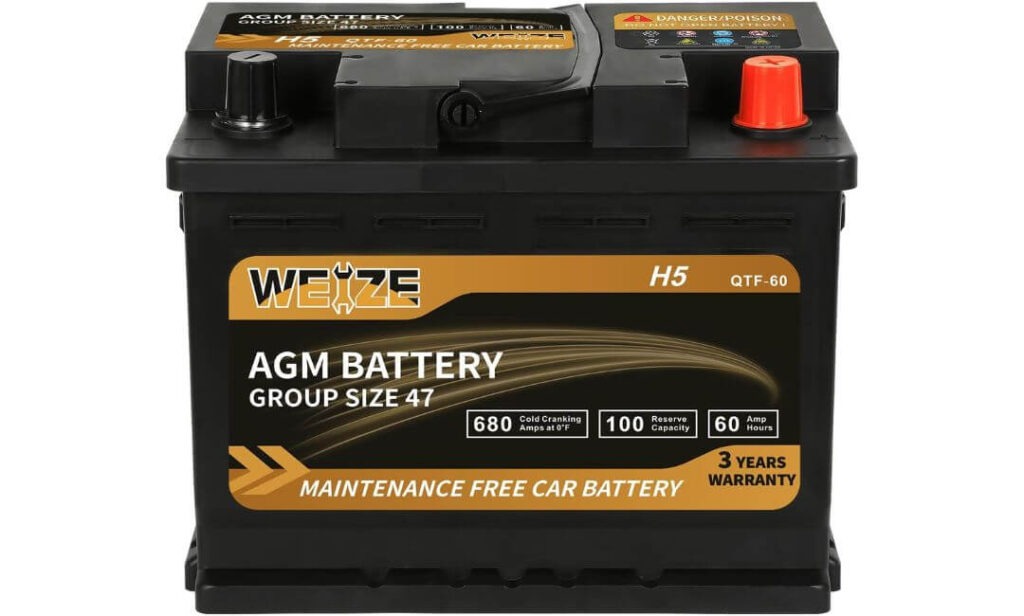
Technical Specs:
- Battery Group Size: H5 / Group 47 AGM
- Cold Cranking Amps: 680 CCA for stronger winter starts and faster ignition response
- Reserve Capacity: 100 minutes for better backup power during stop-start driving and heavy electronics use
- Battery Capacity: 60Ah with quicker recharge recovery than conventional flooded batteries
- Battery Type: Advanced AGM (Absorbent Glass Mat) construction
- Voltage: 12V automotive setup
- Terminal Layout: Left negative (-), right positive (+) tapered terminals
- Operating Temperature Range: -22°F to 158°F
- Cycle Life: Up to 2x longer lifespan than many standard lead-acid batteries
- Recharge Performance: Faster charging recovery during short commutes and city driving
- Construction: Leak-proof, maintenance-free, vibration-resistant design
- Warranty Coverage: 36-month warranty support
- Dimensions: 9.52″ L × 6.89″ W × 7.48″ H
- Weight: 41.6 lbs
The first thing that stands out here isn’t the brand name — it’s the balance of specs. A lot of Subaru Outback owners move toward H5 batteries after dealing with weak factory batteries that start struggling the second temperatures drop or the SUV sits for a few days. The jump to 680 CCA and a 100RC reserve capacity gives the Outback noticeably stronger electrical stability compared to many stock Group 35 setups.
What makes this battery genuinely interesting is how well it lines up with the way modern Outbacks are actually driven now. Short trips, constant phone charging, power liftgates, large infotainment systems, remote starts, dash cams — all of that slowly punishes weak batteries. The AGM construction here handles repeated charging cycles much better than standard flooded batteries, and the recharge speed difference becomes surprisingly noticeable during colder months or heavy city driving.
Another thing worth mentioning is the sizing. This is not a direct Group 35 replacement, and honestly, that’s part of why many owners prefer it. The H5 footprint allows for more reserve capacity without stepping into oversized territory. It feels like the kind of upgrade Subaru should have offered from the factory on more trims in the first place.
(If your Outback has been acting perfectly “fine” but randomly feels slower to crank in the morning, this is exactly the type of upgrade that usually fixes it before bigger battery problems start showing up.)
Where This Battery Really Earns Its Place
- Stronger cold-weather starts than most factory Subaru batteries
- AGM design handles stop-start systems and electronics far better
- Higher reserve capacity helps during short-trip driving
- Recharge performance feels noticeably quicker in daily use
- Excellent balance between fitment, power, and real-world usability
A Small Thing Worth Knowing Before Ordering
- Since this is an H5/Group 47 battery, double-check tray dimensions and terminal orientation before buying
Subaru Outback Compatibility Notes That Actually Matter
This battery makes the most sense for newer Subaru Outback models where owners want something stronger than the original Group 35 battery without jumping into oversized modifications. It works especially well for drivers dealing with winter climates, frequent short commutes, or extra electronics that keep drawing power even when the vehicle is parked.
For many Outback owners, this ends up feeling less like a “replacement” and more like a correction to the weak battery behavior these SUVs sometimes develop over time. The added reserve capacity changes the overall driving experience more than spec sheets make it sound.
The Insider Pro-Tip
A surprising number of battery complaints in newer Subaru Outbacks are not caused by alternator problems at all. The issue is usually reserve capacity. The engine still starts, so people assume the battery is healthy — meanwhile the electrical system is constantly working harder than the battery comfortably can. That’s why random warning lights, weak auto stop-start performance, and sluggish cold starts tend to appear gradually instead of all at once.
This is the kind of battery upgrade that people usually appreciate most six months later, not the first day after installation. The difference shows up during freezing mornings, after the SUV sits unused for a weekend, or when everything inside the vehicle is running at once and the battery still feels calm instead of stressed.
#2. Interstate Batteries MTX-35 AGM
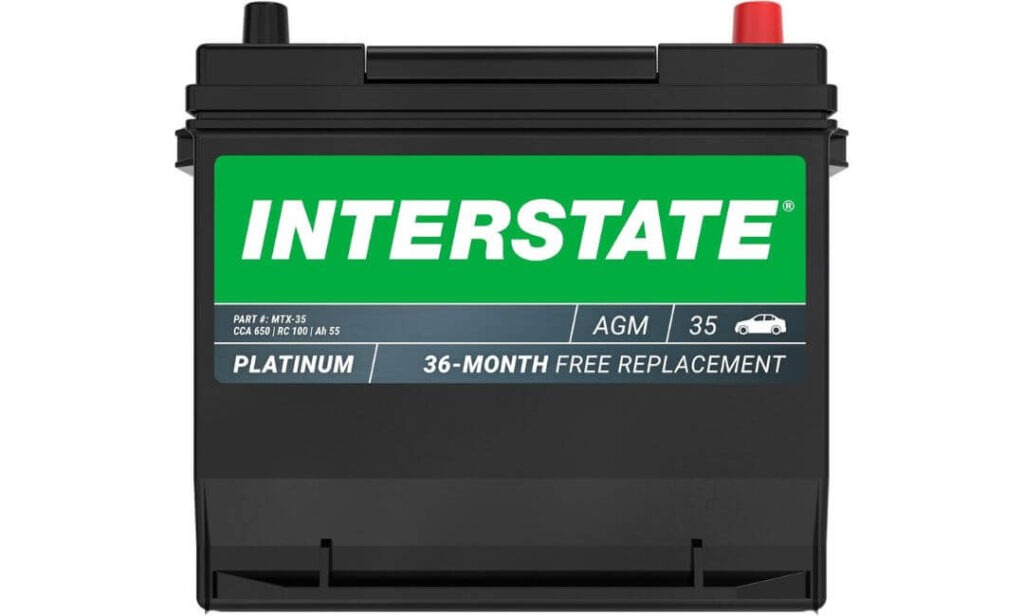
Technical Specs:
- Battery Group Size: Group 35 AGM
- Cold Cranking Amps: 650 CCA for dependable winter starts and smoother ignition response
- Cranking Amps: 800 CA for stronger startup performance in varying temperatures
- Reserve Capacity: 100-minute RC for improved backup power during stop-and-go driving
- Battery Capacity: 55Ah pure lead AGM design
- Battery Type: Sealed AGM with VRLA (Valve Regulated Lead Acid) technology
- Voltage: 12V automotive battery setup
- Construction: Spill-proof, maintenance-free, vibration-resistant housing
- Battery Design: Pure lead internal construction for longer cycle life and better stability
- Expected Lifespan: Up to 2x longer than many conventional AGM batteries
- Terminal Style: Top-post automotive terminals
- Dimensions: 9.06″ L × 6.94″ W × 8.85″ H
- Weight: 42 lbs
- Warranty Coverage: 36-month manufacturer warranty
Some batteries feel built around marketing numbers. This one feels built around daily reliability. The biggest reason so many Subaru Outback owners still trust Interstate batteries comes down to consistency — especially in climates where weak batteries get exposed fast. The 650 CCA output combined with the pure lead AGM design gives this battery a more stable feel during cold starts and heavy electrical loads than many cheaper replacements that technically “fit” but struggle after a year or two.
What really makes this battery stand out for the Outback is the way it matches the factory setup without feeling underbuilt like some OEM batteries do. Since it stays within the Group 35 footprint, installation stays straightforward for most owners, yet the AGM construction dramatically improves resistance to vibration, repeated starts, and voltage fluctuations. Modern Outbacks quietly drain batteries more than people realize — power liftgates, safety systems, huge screens, heated accessories — and that’s exactly where this type of AGM setup starts making sense.
Another detail worth appreciating is the reserve capacity. A lot of batteries can start an engine once. That’s not impressive anymore. The difference shows up after repeated short trips, freezing mornings, or when the vehicle sits longer than usual and still fires up without sounding stressed. This battery feels designed for people who want their Outback to behave the same way every morning instead of gambling on whether the battery feels “strong enough” today.
(For many Subaru owners, this ends up feeling like the battery the vehicle should’ve shipped with from day one.)
Where This Battery Quietly Outperforms Most OEM Replacements
- Pure lead AGM construction feels noticeably more stable in daily driving
- Excellent fitment for Subaru Outback owners wanting direct Group 35 replacement
- Handles stop-start systems and modern electronics better than standard flooded batteries
- Strong reserve capacity helps reduce electrical strain during short-trip driving
- Maintenance-free design with solid vibration resistance for long-term durability
A Small Thing Worth Knowing Before Ordering
- This battery keeps the standard Group 35 sizing, so owners looking for oversized H5/47 upgrades may want slightly more reserve capacity
Subaru Outback Compatibility Notes That Actually Matter
This battery works especially well for Subaru Outback owners who want a premium AGM upgrade without changing the original Group 35 footprint. It fits naturally into the type of daily use most Outbacks see — commuting, winter driving, family hauling, and constant accessory use without needing tray modifications or oversized battery adjustments.
It’s also one of the smarter options for people who simply want predictable reliability. No oversized setup, no complicated fitment concerns — just a stronger version of what the Outback should already have from the factory.
The Insider Pro-Tip
One thing experienced Subaru owners learn quickly is that battery performance usually fades long before total battery failure happens. The engine still cranks, so the battery gets ignored — meanwhile electronics start acting strange, start-stop systems become inconsistent, and cold-weather starts slowly get weaker month after month.
That’s where higher-quality AGM batteries separate themselves from generic replacements. The difference isn’t always dramatic on day one. It shows up later, when temperatures drop, the vehicle sits for several days, or the Outback is loaded with electronics and still starts like nothing happened. That quiet consistency is what most owners actually end up paying for.
#3. Odyssey 35-PC1400T Automotive Battery
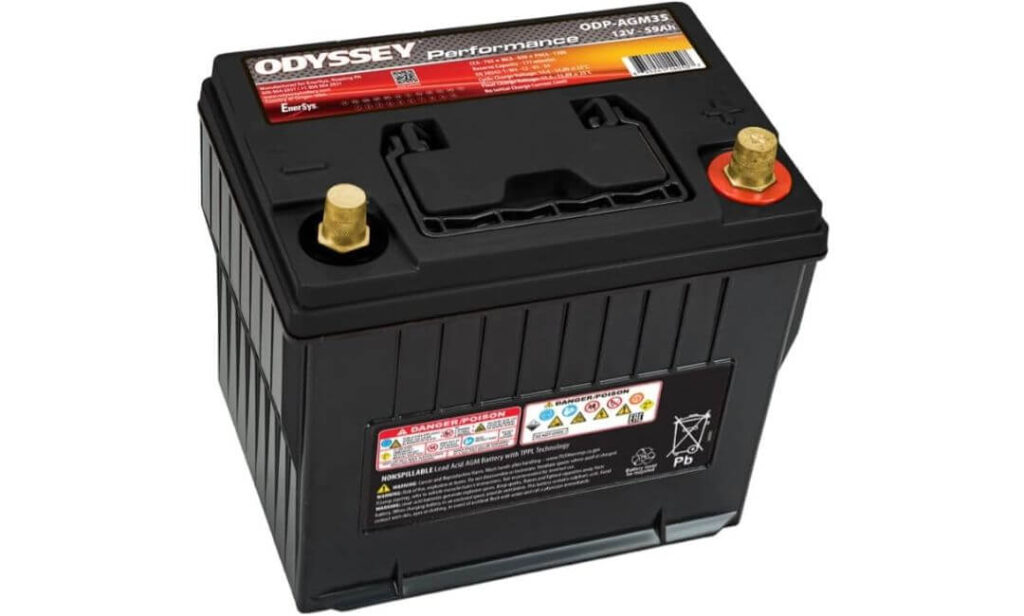
Technical Specs:
- Battery Group Size: Group 35 AGM
- Cold Cranking Amps: 850 CCA for extremely strong cold-weather starting power
- Battery Capacity: 65Ah high-output reserve design
- Battery Chemistry: Pure virgin lead AGM construction
- Cycle Life: Up to 400 deep discharge cycles at 80% depth of discharge
- Expected Service Life: Approximately 3–10 years depending on driving conditions
- Recharge Speed: Capable of full recharge in roughly 4–6 hours under proper charging conditions
- Battery Type: Non-spillable sealed AGM design
- Temperature Tolerance: Operates from -40°F to 113°F
- Construction: Heavy-duty vibration and impact-resistant internal design
- Terminal Type: SAE top-post terminals
- Voltage: 12V automotive setup
- Weight: 50 lbs
- Warranty Coverage: 3–4 year full replacement warranty
There’s a noticeable difference between a battery designed to “meet requirements” and one designed to overpower them completely. This one lands firmly in the second category. The moment you look at the 850 CCA output and the pure lead internal construction, it becomes obvious this battery was built for vehicles with serious electrical demands, harsh weather, and owners who are tired of average batteries fading halfway through their lifespan.
What makes this battery genuinely different for Subaru Outback owners is the way it handles stress. Cold starts, repeated short trips, heavy accessory usage, winter mornings, long idle periods — most batteries slowly lose confidence under those conditions. This one feels almost unaffected by them. The recharge speed alone changes the ownership experience in real-world driving. Modern Outbacks rarely spend enough uninterrupted highway time fully recovering weak batteries, especially in city driving. The faster recharge efficiency here helps compensate for that better than most standard AGM options.
Another thing many people overlook is how much extra electrical stability matters once an Outback starts aging. Heated seats, liftgates, larger infotainment systems, dash cams, chargers, safety systems — all of it adds up quietly over time. The larger reserve capacity and incredibly stable voltage delivery here make the entire SUV feel more composed electrically, especially during colder months when weak batteries start exposing themselves fast.
(This is the type of battery people usually buy after getting frustrated replacing “good enough” batteries every couple of winters.)
Where This Battery Separates Itself From Typical AGM Replacements
- Massive 850 CCA output gives exceptional winter starting confidence
- Pure lead AGM construction delivers stronger long-term stability
- Extremely fast recharge recovery during short-trip driving
- Handles high accessory loads better than most standard Group 35 batteries
- Outstanding vibration resistance and temperature tolerance for harsh climates
A Small Thing Worth Knowing Before Ordering
- This battery is noticeably heavier than many standard Group 35 options because of its pure lead construction and higher internal capacity
Subaru Outback Compatibility Notes That Actually Matter
For Subaru Outback owners wanting the absolute strongest Group 35 battery setup without stepping into oversized fitment territory, this is easily one of the most serious options available. It works especially well for drivers dealing with freezing winters, mountain climates, camping setups, aftermarket electronics, or repeated short-trip driving where weaker batteries tend to wear down early.
It’s also one of the few batteries in this category that feels engineered around long-term performance instead of simply meeting minimum OEM specifications. The difference becomes more noticeable the longer you own the vehicle.
The Insider Pro-Tip
One thing many Outback owners don’t realize until later is that cold weather doesn’t just affect starting power — it also slows recharge recovery. That’s why batteries that look perfectly fine on paper suddenly feel weak during winter commuting or short-distance driving.
That’s exactly where higher-end AGM batteries like this quietly justify their price. The stronger recharge efficiency, higher stable voltage, and extra reserve capacity keep the electrical system feeling consistent even when the vehicle isn’t being driven under ideal charging conditions. Over time, that usually matters more than the initial specs people focus on when shopping.
#4. Mighty Max Battery MM-H5 AGM Battery
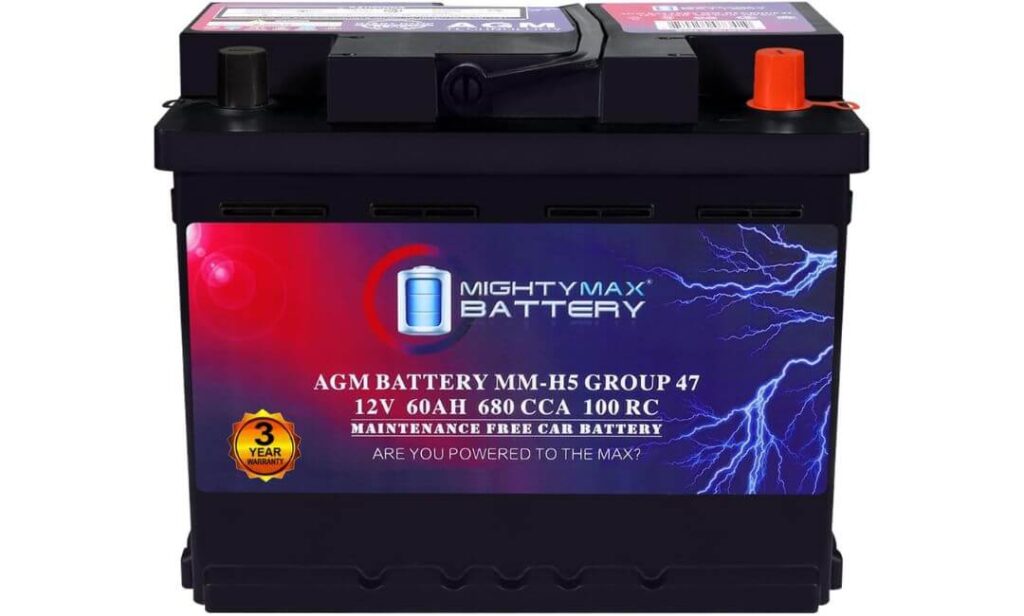
Technical Specs:
- Battery Group Size: H5 / Group 47 AGM
- Cold Cranking Amps: 680 CCA for dependable cold-weather starts
- Reserve Capacity: 100-minute RC for stronger electrical backup during daily driving
- Battery Capacity: 60Ah setup designed for modern start-stop vehicles
- Battery Type: Sealed AGM (Absorbent Glass Mat) lead-acid battery
- Voltage: 12V automotive configuration
- Terminal Layout: Positive on right, negative on left
- Construction: Spill-proof, vibration-resistant heavy-duty casing
- Deep Discharge Recovery: Designed to recover faster after repeated short trips or accessory use
- Mounting Flexibility: Multi-position installation capability (except upside down)
- Operating Strength: Built for hot summers, freezing winters, and rough road conditions
- Certifications: ISO-certified manufacturing and CE safety standards
- Warranty Coverage: 3-year manufacturer warranty
- Dimensions: 9.53″ L × 6.88″ W × 7.48″ H
Oddly enough, this is the kind of battery many Subaru Outback owners end up discovering after getting frustrated paying premium prices for factory replacements that don’t always feel noticeably better. The first thing that immediately makes sense here is the combination of 680 CCA, 100RC reserve capacity, and H5 sizing without the price jumping into ultra-premium territory. On paper that sounds simple — in real-world Outback driving, it matters more than most people expect.
Modern Outbacks quietly punish weak batteries. Short commutes, stop-start traffic, winter mornings, liftgates, infotainment systems, chargers, safety tech — all of it stacks together slowly until the factory battery starts feeling tired far earlier than it should. That’s exactly where the AGM construction here starts working in its favor. The battery recovers well from repeated discharge cycles, recharges faster than conventional flooded setups, and handles electrical load fluctuations much more confidently during daily use.
Another thing worth appreciating is the overall balance. Some H5 batteries chase huge numbers while sacrificing practicality or value. This one feels aimed directly at people who simply want their Outback to start consistently every single morning without drama. The fitment stays straightforward, the reserve capacity is strong for this category, and the battery doesn’t feel overwhelmed by modern Subaru electronics the way cheaper replacements often do after a year or two.
(For many owners, this ends up being the point where the Outback finally starts feeling electrically “healthy” again instead of barely getting by on the original battery setup.)
Where This Battery Quietly Makes the Most Sense
- Strong balance between price, reserve capacity, and real-world reliability
- H5 sizing gives more electrical stability than many factory Group 35 batteries
- AGM construction handles modern Subaru electronics far better than standard batteries
- Excellent cold-weather starting confidence for daily commuting
- Faster discharge recovery helps during stop-and-go and short-trip driving
A Small Thing Worth Knowing Before Ordering
- This battery uses the H5/Group 47 footprint, so it’s smart to verify tray size and terminal orientation before installation
Subaru Outback Compatibility Notes That Actually Matter
This battery fits especially well with newer Subaru Outback models where owners want a practical AGM upgrade without stepping into oversized heavy-duty battery territory. It works particularly well for daily-driven Outbacks that see frequent short trips, cold weather, family hauling, or constant accessory usage throughout the week.
For drivers upgrading from a weak or aging factory battery, the biggest difference usually isn’t raw starting power — it’s how much calmer and more stable the entire vehicle feels electrically once reserve capacity improves.
The Insider Pro-Tip
A lot of people judge a battery by whether the engine starts. Modern Subarus are more complicated than that. The real test is how the battery behaves after multiple cold starts, short drives, parked weekends, and constant electronic drain all stacked together.
That’s why reserve capacity matters so much more than most owners realize. A battery with stronger reserve power usually ages more gracefully because it spends less time operating near its limits. Over time, that tends to translate into fewer strange electrical quirks, stronger winter behavior, and a vehicle that simply feels more dependable every day.
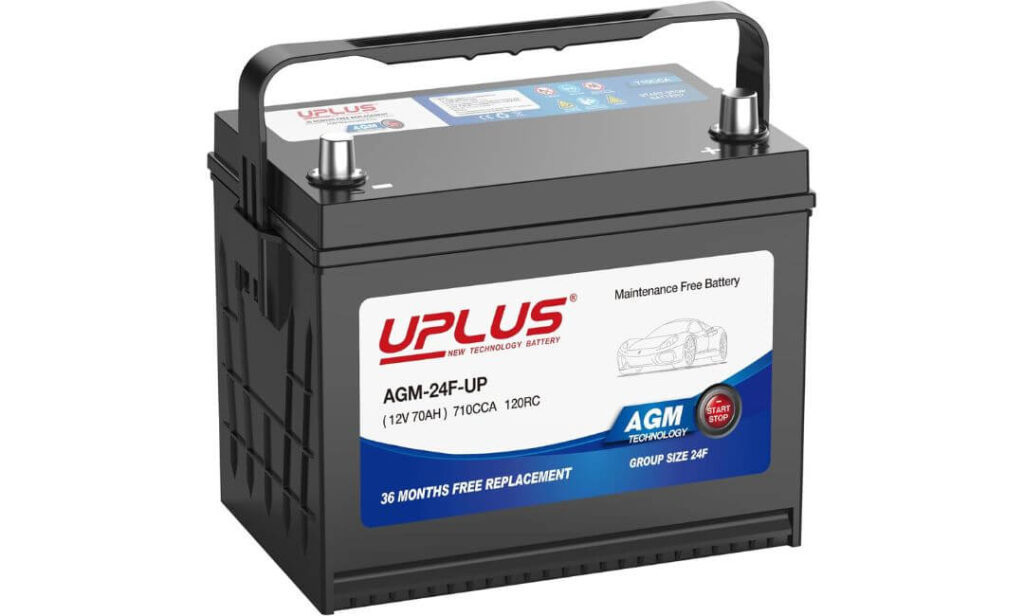
#5. UPLUS BCI Group 24F AGM Battery
Technical Specs:
- Battery Group Size: Group 24F AGM
- Cold Cranking Amps: 710 CCA for powerful cold-weather engine starts
- Reserve Capacity: 120-minute RC for extended electrical backup and accessory use
- Battery Capacity: 70Ah high-capacity AGM setup
- Battery Type: Premium sealed AGM lead-acid battery
- Voltage: 12V automotive configuration
- Terminal Layout: Left negative (-), right positive (+)
- Cycle Life: Up to 4x longer cycling capability than conventional batteries
- Construction: Silver-calcium alloy and high-density negative paste design
- Vibration Resistance: Up to 15x more vibration-resistant than standard batteries
- Safety Design: Leak-resistant vent cap system with no free acid
- Vehicle Focus: Designed for start-stop systems and heavy electrical loads
- Dimensions: 10.7″ L × 6.77″ W × 8.98″ H
- Weight: 46.8 lbs
- Warranty Coverage: 3-year manufacturer warranty
Here’s the truth most Subaru Outback owners only realize after a few winters: once you start loading these SUVs with modern electronics, roof accessories, camping gear, heated seats, chargers, and constant short-trip driving, standard batteries begin feeling undersized very quickly. That’s exactly where this Group 24F setup starts making a lot more sense than the smaller factory battery many Outbacks come with.
The biggest advantage here isn’t only the 710 CCA — it’s the combination of that starting power with a massive 120-minute reserve capacity. That extra reserve changes how the Outback behaves during real-world use. Cold starts feel more confident, stop-start systems recover quicker, and the vehicle feels far less strained electrically during heavy accessory use. For owners who regularly drive in winter weather or leave the SUV parked for longer periods, that additional reserve power becomes surprisingly valuable over time.
Another thing that stands out is how heavily this battery leans into durability instead of chasing flashy marketing numbers. The upgraded silver-calcium alloy construction, deeper cycle capability, and strong vibration resistance all point toward one thing: this battery was clearly designed for vehicles that work harder than average daily commuters. Modern Subaru Outbacks absolutely fall into that category once you start adding real-world usage into the equation.
(This is the kind of battery upgrade people usually make after realizing the original setup simply wasn’t built for the way they actually use their Outback.)
Where This Battery Starts Feeling Worth the Upgrade
- Massive 120RC reserve capacity supports modern Subaru electronics far better
- Strong 710 CCA output gives excellent cold-weather starting confidence
- Group 24F sizing offers noticeably more electrical stability than smaller batteries
- Built specifically for stop-start systems and repeated short-trip driving
- Extremely strong vibration resistance for rough roads and long-term durability
A Small Thing Worth Knowing Before Ordering
- Since this is a larger Group 24F battery, verifying tray dimensions and terminal clearance before ordering is extremely important
Subaru Outback Compatibility Notes That Actually Matter
This battery makes the most sense for Subaru Outback owners who regularly push their vehicle harder than average daily commuting. If the Outback sees winter driving, camping trips, power accessories, frequent stop-and-go traffic, or extended parked periods, the larger reserve capacity here can make a noticeable difference in long-term reliability.
It’s especially appealing for drivers who are tired of replacing weaker batteries every couple of years and simply want something that feels overbuilt for real-world use instead of barely adequate.
The Insider Pro-Tip
A lot of modern vehicle battery problems actually begin during short trips. The engine starts, but the battery never fully recovers the energy it just lost — especially with heated seats, navigation systems, chargers, and stop-start systems constantly running in the background.
That’s why reserve capacity quietly matters more than most people think. Batteries with larger reserves tend to stay healthier longer because they aren’t operating near their limits every single day. Over time, that usually translates into stronger winter reliability, fewer strange electrical issues, and a vehicle that feels consistently ready instead of constantly recovering.
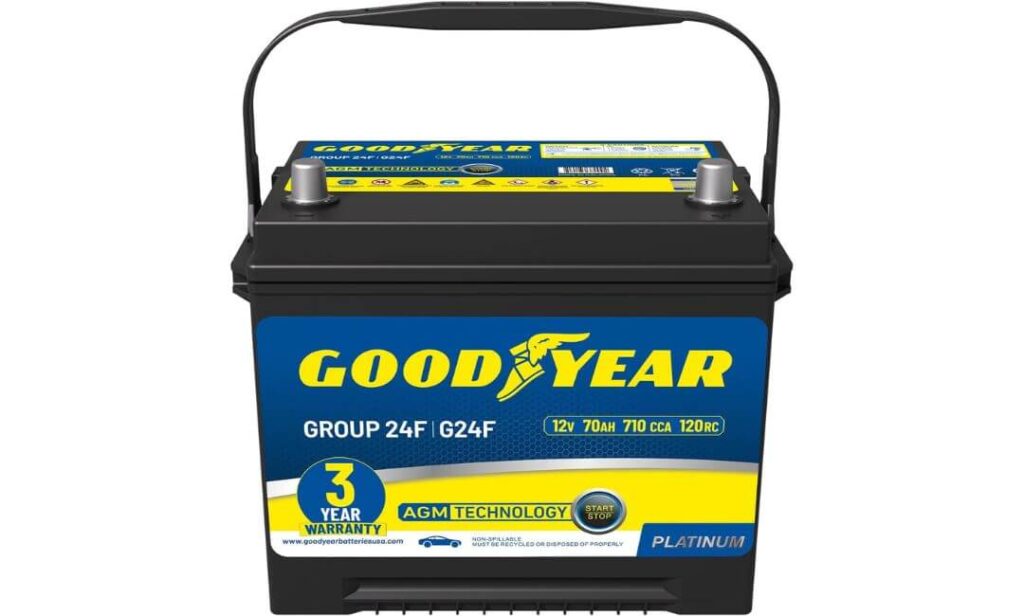
#6. Goodyear 24F-AGM Platinum Series Battery
Technical Specs:
- Battery Group Size: Group 24F AGM
- Cold Cranking Amps: 710 CCA for strong cold-weather startup performance
- Reserve Capacity: 120-minute RC for extended accessory support and electrical stability
- Battery Capacity: 70Ah high-capacity AGM setup
- Battery Type: Sealed maintenance-free AGM lead-acid battery
- Voltage: 12V automotive configuration
- Terminal Layout: Positive right (+), negative left (-)
- Cycle Life: Up to 2x longer lifespan than many conventional batteries
- Construction: Heavy-duty calcium-alloy internal grid structure
- Mounting Design: Multi-position installation capability (except upside down)
- Temperature Performance: Designed for both freezing winters and high-heat conditions
- Safety Features: Valve-regulated leak-resistant construction with spill-proof AGM design
- Certifications: CE-certified and manufactured in ISO-certified facilities
- Dimensions: 10.5″ L × 6.75″ W × 9″ H
- Weight: 48.15 lbs
- Warranty Coverage: 36-month manufacturer warranty
Frankly, this battery feels aimed at Subaru Outback owners who are tired of thinking about batteries altogether. The moment you look at the 70Ah capacity, 120-minute reserve, and full-size 24F AGM footprint, it becomes clear this isn’t trying to be a lightweight OEM replacement. It’s built more like a heavy-duty electrical upgrade for drivers who use their Outback the way people actually use modern adventure-oriented SUVs now.
One thing this battery gets right is reserve strength under real-world conditions. A lot of batteries perform fine during ideal testing and then slowly fall apart once winter arrives, electronics pile up, and stop-and-go driving becomes daily routine. Here, the larger AGM construction combined with the strong reserve capacity gives the Outback noticeably more breathing room electrically. Heated seats, power liftgates, navigation, chargers, dash cams — the battery never feels like it’s constantly fighting to keep up.
There’s also a very practical side to the way this battery is designed. The vibration resistance, leak-proof AGM construction, and high-temperature tolerance all matter more in a Subaru Outback than many people realize. These SUVs see rough roads, camping trips, snow, gravel, temperature swings, and long highway drives regularly. Smaller batteries can survive that lifestyle for a while. Bigger AGM setups like this tend to stay stable much longer under the same abuse.
(This feels less like a simple replacement battery and more like the type of setup you install once because you’re tired of repeating the same battery problems every couple of years.)
Where This Battery Quietly Feels Overbuilt in the Best Way
- Huge 120RC reserve capacity supports heavy electrical loads with ease
- Strong 710 CCA output delivers confident starts during harsh winters
- Group 24F sizing provides noticeably stronger long-term electrical stability
- AGM construction handles vibration, rough roads, and temperature swings extremely well
- Excellent fit for Outback owners using accessories, camping gear, or stop-start driving daily
A Small Thing Worth Knowing Before Ordering
- Since this uses the larger Group 24F footprint, checking battery tray dimensions and terminal clearance beforehand is important for proper installation
Subaru Outback Compatibility Notes That Actually Matter
This battery fits best with Subaru Outback owners who want maximum reserve power and stronger long-term durability rather than simply replacing the original battery with another average OEM-style setup. It especially suits vehicles dealing with winter climates, road trips, heavy accessory use, or long periods parked between drives.
For many drivers, the biggest difference isn’t even starting power — it’s how much more relaxed the entire electrical system feels once the vehicle has enough reserve capacity behind it.
The Insider Pro-Tip
Most battery failures don’t happen suddenly. They build slowly through repeated stress — short trips, temperature swings, accessory drain, parked weekends, and incomplete recharge cycles stacking together month after month.
That’s why larger AGM batteries often age differently than smaller factory setups. They simply spend less time operating near their limit. Over the long run, that usually translates into fewer weak winter mornings, less electrical weirdness, and an Outback that continues feeling dependable even after years of daily use.
Best Subaru Outback Battery Comparison for AGM Power, Winter Starts, and Daily Reliability
| Battery | Group Size | CCA | Reserve Capacity | Best Use | Real-World Feel | Why It Stands Out |
|---|---|---|---|---|---|---|
|
Weize Platinum AGM
Best Overall Upgrade
|
H5 / 47 | 680 | 100RC | Daily driving cold weather |
Feels stronger than stock without overdoing it | Excellent balance of reserve power, AGM durability, and H5 sizing |
|
Interstate MTX-35 AGM
OEM-Style Favorite
|
Group 35 | 650 | 100RC | Factory-style fitment daily use |
Very stable and predictable every morning | Pure lead AGM construction with excellent long-term consistency |
|
Odyssey 35-PC1400T
High-Performance Pick
|
Group 35 | 850 | High Reserve | Extreme winters heavy electronics |
Feels overbuilt in the best possible way | Massive starting power with ultra-fast recharge recovery |
|
Mighty Max MM-H5 AGM
Best Value H5 Upgrade
|
H5 / 47 | 680 | 100RC | Budget AGM upgrade city driving |
Surprisingly strong for the price range | Strong specs without jumping into premium pricing territory |
|
UPLUS 24F AGM
Heavy-Duty Choice
|
24F | 710 | 120RC | Camping accessories winter driving |
Electrical system feels calmer under load | Huge reserve capacity with excellent cycling durability |
|
Goodyear 24F AGM
Maximum Reserve Power
|
24F | 710 | 120RC | Long trips cold climates heavy usage |
Feels built for long-term abuse | Large AGM reserve setup with strong temperature resistance |
Why Choosing the Right Subaru Outback Battery Matters More Than Most Owners Realize
The Subaru Outback is one of those vehicles that quietly asks more from its battery than people expect. On paper, it still looks like a normal midsize SUV. In real life, modern Outbacks are packed with electronics, safety systems, large infotainment displays, heated accessories, power liftgates, driver-assistance tech, and in many trims, auto start-stop systems constantly cycling the battery throughout daily driving.
That changes everything about how the battery ages.
A weak battery in an older vehicle usually meant slower cranking during winter. In newer Outbacks, weak batteries create smaller warning signs first — sluggish stop-start behavior, delayed starts after sitting overnight, random warning messages, dimmer electronics, inconsistent remote start performance, or a vehicle that suddenly feels “off” electrically even though it technically still starts.
That’s exactly why battery choice matters so much more on the Outback than it did on older Subarus.
Modern Subaru Outbacks Put More Electrical Stress on Batteries Than Older Models
A lot of owners still assume the battery’s only job is starting the engine. That stopped being true years ago. Modern Outbacks constantly draw power, even when parked. Security systems, memory settings, safety modules, infotainment systems, sensors, and connected electronics all continue using battery power quietly in the background.
Now combine that with:
- short daily trips,
- winter temperatures,
- stop-and-go traffic,
- charging phones and accessories,
- heated seats and steering wheels,
- dash cams,
- roof lighting or camping setups,
- frequent remote starts,
and suddenly the factory battery starts working much harder than many people realize.
That’s why reserve capacity becomes such a big deal in real-world Outback ownership. Batteries with stronger reserve power simply feel more stable over time because they aren’t constantly operating near their limit.
Why Cold Weather Exposes Weak Subaru Outback Batteries So Quickly
Cold weather is where weak batteries stop hiding.
The problem is not only reduced starting power. Winter also slows recharge recovery, thickens engine oil, increases electrical demand, and forces the battery to work harder during every startup. Meanwhile, many Outbacks are still being driven on short commutes where the battery barely gets enough time to fully recover after each drive.
That’s why some batteries feel perfectly fine during summer and suddenly struggle the second temperatures drop.
Higher-CCA AGM batteries help solve that problem in two ways:
- stronger initial starting power during freezing conditions,
- faster recovery after repeated cold starts and short trips.
For Subaru Outback owners living in colder climates, that difference becomes obvious very quickly once temperatures fall below freezing.
The Real Reason So Many Owners Upgrade Beyond the Factory Group 35 Battery
The factory Group 35 battery size still works for many drivers, especially people with lighter daily use and warmer climates. But a growing number of Outback owners move toward H5/Group 47 or even Group 24F AGM batteries because modern driving habits demand more reserve capacity than the original setup comfortably provides.
The upgrade is usually less about “more power” and more about reducing stress.
Larger AGM batteries typically provide:
- higher reserve capacity,
- better voltage stability,
- improved stop-start performance,
- stronger winter reliability,
- better durability during short-trip driving,
- improved support for accessories and electronics.
That’s why many experienced Outback owners eventually stop replacing the stock battery with another stock-sized budget battery and instead move toward a stronger AGM setup designed for heavier daily use.
AGM vs Flooded Batteries for Subaru Outback Models
This is one of the biggest differences people actually notice long-term.
Traditional flooded batteries are cheaper upfront, but modern Outbacks are rarely gentle on batteries anymore. Repeated short trips, constant electronics, and stop-start systems create charging and discharge cycles that conventional batteries simply do not tolerate as well over time.
AGM batteries handle those conditions much better because they:
- recharge faster,
- resist vibration better,
- tolerate deeper cycling,
- deliver more stable voltage,
- recover more efficiently after short trips,
- perform better during freezing temperatures,
- remain sealed and maintenance-free.
That’s exactly why nearly every serious upgrade in this guide uses AGM construction instead of older flooded battery technology.
For many Subaru Outback owners, switching to AGM is the point where battery problems finally stop feeling like a recurring issue and the vehicle simply starts behaving consistently again every morning.
The Battery Spec Most People Ignore — But Shouldn’t
Most people shop batteries using only one number: CCA.
CCA absolutely matters, especially during winter, but reserve capacity is often the more important long-term number for Subaru Outback ownership.
Reserve capacity determines how long the battery can continue supporting electronics and voltage stability under load. Modern Outbacks rely heavily on stable voltage because so many systems remain active constantly in the background.
That’s why batteries with higher reserve capacity usually:
- feel more stable electrically,
- handle accessories better,
- recover more smoothly after short drives,
- age more gracefully over time,
- and reduce many of the annoying low-voltage quirks modern vehicles develop.
Once you start looking at batteries through that lens instead of only raw starting power, the reason behind larger AGM upgrades starts making a lot more sense.
Buying Guide: How to Choose the Right Battery for Your Subaru Outback
Choosing a battery for the Subaru Outback used to be simple. Find the factory size, match the terminals, install it, done. Modern Outbacks changed that completely. Between auto start-stop systems, constant electronic loads, cold-weather demands, and shorter daily driving habits, the battery now affects far more than just whether the engine starts in the morning.
That’s why blindly buying the cheapest battery that “fits” usually ends up costing more later.
The right battery for your Outback depends on how the vehicle is actually used, where it’s driven, how often it sits parked, and whether you want basic replacement performance or a real long-term upgrade that feels noticeably stronger every day.
Choosing Between AGM and Conventional Flooded Batteries
This is the first decision that matters, and honestly, for most newer Subaru Outback models, AGM batteries simply make more sense now.
Traditional flooded batteries still work, especially for older Outbacks with lighter electrical demands. They cost less upfront and can handle basic daily commuting reasonably well in mild climates. The problem is that modern Outbacks rarely live easy battery lives anymore.
Short trips, stop-and-go traffic, remote starts, heated seats, larger infotainment systems, power liftgates, chargers, driver-assistance systems — all of those things increase battery stress dramatically over time.
That’s where AGM batteries start separating themselves.
AGM batteries are better suited for modern Subaru Outback ownership because they:
- recover faster after short drives,
- tolerate repeated discharge cycles better,
- resist vibration and rough roads more effectively,
- provide more stable voltage to electronics,
- perform better during freezing weather,
- support auto start-stop systems more reliably,
- and usually age more gracefully over time.
For many Outback owners, upgrading to AGM is less about chasing bigger specs and more about eliminating the small electrical frustrations weak batteries slowly create.
Understanding Subaru Outback Battery Sizes Before Buying
Battery size matters more on the Outback than many people expect because Subaru owners commonly upgrade beyond the original factory setup.
Most newer Subaru Outback models typically use a Group 35 battery from the factory. That size still works perfectly fine for many drivers wanting simple OEM-style replacement fitment without changing anything.
But over the last few years, many owners started moving toward:
- H5 / Group 47 AGM batteries
- or larger Group 24F AGM batteries
The reason is simple: more reserve capacity.
An H5/Group 47 battery usually provides:
- stronger reserve power,
- improved winter reliability,
- better stop-start performance,
- and more electrical stability overall,
while still fitting comfortably in many newer Outback battery trays.
Group 24F batteries go even further. Those are typically chosen by drivers dealing with:
- harsh winters,
- camping accessories,
- roof lighting,
- dash cams,
- heavy electronics,
- long road trips,
- or frequent parked periods between drives.
Before upgrading sizes, always verify:
- battery tray dimensions,
- terminal orientation,
- hood clearance,
- and hold-down compatibility.
That step matters far more than people realize.
Why Start-Stop Compatibility Matters on Modern Outbacks
A lot of battery problems in newer Outbacks actually begin because the replacement battery was never designed for modern start-stop systems in the first place.
Vehicles with auto start-stop technology cycle batteries much harder than older vehicles ever did. Every stoplight restart creates another discharge-and-recharge cycle, and weaker batteries wear down quickly under that kind of repeated stress.
That’s why many newer Subaru Outback trims benefit heavily from AGM batteries designed specifically for:
- stop-start systems,
- repeated short trips,
- high accessory loads,
- and frequent charging cycles.
If your Outback regularly sees city traffic, winter driving, or lots of electronics running simultaneously, choosing a battery with stronger reserve capacity and proper AGM construction usually makes a noticeable difference long-term.
Climate matters too.
Drivers in colder states or mountain regions should pay much closer attention to:
- higher CCA ratings,
- reserve capacity,
- recharge efficiency,
- and AGM cold-weather performance.
Winter exposes weak batteries incredibly fast, especially in vehicles loaded with modern electronics.
Why Reserve Capacity Often Matters More Than Raw CCA
Most battery shoppers focus almost entirely on CCA numbers because they’re easy to compare. The reality is that reserve capacity often affects daily Outback reliability even more.
Reserve capacity determines how long the battery can continue supplying stable power when electrical demand increases.
Modern Outbacks constantly draw power for:
- infotainment systems,
- safety modules,
- heated accessories,
- charging ports,
- sensors,
- remote functions,
- and stop-start systems.
That’s why batteries with larger reserve capacity usually feel:
- more stable electrically,
- stronger during short-trip driving,
- more reliable after sitting parked,
- and less stressed overall during winter.
A battery with slightly lower CCA but much higher reserve capacity often performs better long-term than a battery chasing huge cranking numbers alone.
Subaru Outback Battery Replacement Tips Most Owners Learn the Hard Way
Battery replacement on the Subaru Outback is generally straightforward, but there are a few things owners often overlook.
First, always verify terminal orientation before ordering. Some upgraded battery sizes place terminals differently, and that alone can turn a simple installation into a frustrating one.
Second, physically measure the existing battery tray before upgrading beyond Group 35 sizing. Many H5 batteries fit perfectly, but larger 24F setups may require checking:
- tray width,
- hold-down brackets,
- cable reach,
- and surrounding clearance carefully.
Third, modern Outbacks sometimes react oddly after battery replacement until systems fully reset. Temporary warning lights, idle adjustments, or stop-start recalibration can happen briefly after installation. That’s normal in many cases.
One more thing experienced owners pay attention to: charging health.
A brand-new premium battery can still underperform if:
- the alternator is weak,
- charging voltage is inconsistent,
- or the vehicle spends most of its life on extremely short trips without fully recharging the battery.
That’s why the best battery setup is always a combination of:
- correct fitment,
- strong reserve capacity,
- proper AGM construction,
- realistic climate needs,
- and healthy charging behavior overall.
Once those pieces line up correctly, the Subaru Outback usually becomes far more dependable electrically than many owners realize it can be.
Installation and Long-Term Battery Care Tips for Subaru Outback Owners
A surprising number of battery problems start after the installation process, not before it. Modern Subaru Outbacks are far more sensitive to voltage interruptions, weak terminal connections, and improper charging habits than older vehicles used to be. That’s why installing the right battery correctly matters just as much as choosing the right one in the first place.
The good news is that Subaru Outback battery replacement is still very manageable for most owners. The important part is slowing down enough to avoid the small mistakes that quietly create electrical problems later.
Before Replacing the Battery, Verify More Than Just Battery Size
Most people only compare group size and assume everything else will work automatically. In reality, several other things matter just as much:
- terminal orientation,
- battery height,
- hold-down bracket position,
- cable reach,
- hood clearance,
- and venting compatibility on certain trims.
This becomes especially important when upgrading from the original Group 35 battery to an H5/Group 47 or Group 24F AGM setup.
A battery that technically “fits” can still create:
- cable tension,
- loose hold-down pressure,
- terminal interference,
- or improper hood clearance,
all of which reduce long-term reliability.
Before installation, physically compare:
- tray dimensions,
- terminal placement,
- and hold-down locations
against the original battery instead of relying only on online compatibility charts.
The Correct Subaru Outback Battery Disconnect Sequence Actually Matters
Modern vehicles hate voltage spikes.
That’s why disconnect order matters much more than people think.
When removing the old battery:
- Turn the vehicle completely off
- Remove the key or keep the push-button ignition fully inactive
- Disconnect the negative terminal first
- Disconnect the positive terminal second
- Remove the hold-down bracket carefully
- Lift the battery straight upward without tilting excessively
When installing the new battery:
- Position the battery securely in the tray
- Reinstall the hold-down bracket firmly
- Connect the positive terminal first
- Connect the negative terminal last
- Double-check terminal tightness before starting the vehicle
That sequence helps reduce accidental shorting and protects sensitive electronics from unnecessary voltage disruptions.
One thing many people overlook: loose battery terminals can mimic the symptoms of a failing battery almost perfectly. Random warning lights, weak starts, flickering electronics, and inconsistent stop-start behavior are often caused by poor terminal contact instead of the battery itself.
Why Battery Hold-Down Security Matters More on the Outback
The Subaru Outback sees rougher real-world driving conditions than many crossover SUVs:
- potholes,
- gravel roads,
- snow,
- camping trails,
- long-distance highway vibration,
- and uneven terrain.
A battery that moves even slightly inside the tray creates constant vibration stress internally over time.
That’s one reason AGM batteries generally survive longer in Outbacks than flooded batteries — they handle vibration significantly better. But even AGM batteries should always be secured tightly with the correct hold-down pressure.
Overtightening is not good either.
The goal is firm, stable mounting without crushing or deforming the battery casing.
Smart Winter Battery Habits That Extend Battery Life Dramatically
Winter destroys weak batteries quickly, especially in modern vehicles loaded with electronics.
The biggest mistake many owners make is assuming cold weather only affects starting power. In reality, winter also:
- slows charging efficiency,
- thickens engine oil,
- increases electrical demand,
- reduces battery chemical efficiency,
- and makes short-trip driving much harder on the charging system.
That’s why winter battery care matters so much more than people realize.
A few habits genuinely make a major difference:
- Keep battery terminals clean and corrosion-free
- Avoid repeated ultra-short drives whenever possible
- Let the vehicle fully recharge during longer highway drives occasionally
- Reduce unnecessary accessory use before startup during extreme cold
- Inspect terminal tightness before winter begins
- Use a smart AGM-compatible maintainer if the vehicle sits unused often
One thing experienced Subaru owners learn quickly: batteries usually die during recovery, not startup. Repeated short drives in winter slowly drain batteries faster than the alternator can fully recharge them.
That’s exactly why reserve capacity and AGM recharge efficiency matter so much on the Outback.
Protecting Battery Terminals the Right Way
Battery terminal corrosion creates resistance, and resistance creates heat, voltage loss, and unstable charging behavior.
Even a strong AGM battery can behave poorly if terminal connections are dirty or partially corroded.
A simple maintenance routine helps dramatically:
- inspect terminals every few months,
- clean corrosion early before buildup spreads,
- use battery terminal protectant spray if needed,
- and ensure terminals stay tight without over-clamping.
White or bluish corrosion buildup should never be ignored, especially before winter.
The electrical systems in newer Outbacks are sensitive enough that even minor voltage instability can trigger strange behavior long before the battery itself actually fails.
What to Expect After Installing a New Battery in a Subaru Outback
A lot of owners get nervous after replacement because the vehicle suddenly behaves slightly differently for a short time.
That’s normal.
Modern Outbacks store adaptive memory for:
- idle behavior,
- fuel trims,
- window calibration,
- infotainment settings,
- auto start-stop behavior,
- and driver-assistance systems.
After disconnecting power, the vehicle may temporarily:
- idle differently,
- disable auto windows briefly,
- reset radio presets,
- trigger warning lights,
- or recalibrate certain systems automatically.
Most of that resolves naturally after a short drive cycle.
Power windows sometimes need recalibration manually:
- fully lower the window,
- hold the switch briefly,
- fully raise it again,
- then hold the switch for several seconds.
Auto start-stop systems may also take time before functioning normally again because the vehicle re-evaluates battery health after installation.
Proper Battery Disposal Is More Important Than Most People Think
Automotive batteries should never be thrown away with regular waste.
Lead-acid and AGM batteries contain recyclable materials and hazardous chemicals that require proper disposal. Most battery retailers, auto parts stores, and service centers accept old batteries for recycling and often provide a core refund credit during replacement.
Keeping the old battery upright during transport matters too, especially if the casing is damaged.
One final thing many experienced owners recommend: after installing a new battery, monitor charging voltage for a few days if possible. A healthy charging system usually keeps voltage roughly within:
- 13.7V to 14.7V while running,
- depending on temperature and electrical load.
A premium battery can only perform as well as the charging system supporting it. That’s why healthy alternator performance and realistic driving habits matter just as much as the battery itself in long-term Subaru Outback reliability.
FAQs About Subaru Outback Battery
Why do so many Subaru Outback owners complain about batteries even when the vehicle is still relatively new?
One thing that catches a lot of Subaru Outback owners off guard is that modern battery problems rarely look dramatic at first. The vehicle still starts, so most people assume the battery is healthy. Meanwhile, the Outback is quietly struggling with low reserve capacity in the background.
That’s why symptoms usually appear gradually:
- weaker auto start-stop behavior,
- rougher cold starts,
- random warning messages,
- slower infotainment boot-up,
- dim interior lighting during startup,
- or electronics acting slightly inconsistent after the vehicle sits overnight.
The Outback simply uses more electrical power than many older Subaru owners expect. Heated accessories, safety systems, larger displays, remote functions, and constant background modules continue pulling power even when parked. Once the original battery starts aging, those smaller electrical issues often appear long before total battery failure happens.
That’s also why many owners feel a massive difference after upgrading from the factory Group 35 battery to a stronger AGM setup with more reserve capacity. The vehicle usually feels electrically “calmer” again almost immediately.
Is upgrading from a Group 35 battery to an H5 or 24F battery actually worth it on the Subaru Outback?
For many owners, yes — especially if the vehicle sees real-world use beyond simple highway commuting.
The factory Group 35 battery works adequately for lighter driving habits. But once the Outback starts seeing:
- winter temperatures,
- stop-and-go traffic,
- short trips,
- camping gear,
- dash cams,
- roof accessories,
- frequent parked periods,
- or heavy accessory usage,
the limits of smaller batteries start showing up faster.
That’s why H5/Group 47 upgrades became so popular in newer Outbacks. They provide more reserve capacity without becoming oversized or difficult to fit. Larger 24F AGM batteries go even further by giving the vehicle significantly more electrical breathing room during harsh conditions.
Interestingly, most owners who upgrade don’t talk about “more power.” They usually describe the vehicle feeling:
- smoother electrically,
- more consistent during cold mornings,
- less stressed after sitting,
- and more dependable overall.
That’s the real advantage.
Why does my Subaru Outback battery keep dying even though the alternator tests fine?
This is far more common than people realize.
Modern Subaru Outbacks often drain batteries through repeated partial charging cycles rather than outright charging failure. In other words, the alternator works normally, but the battery never fully recovers because the vehicle’s driving habits constantly keep it below ideal charge levels.
The biggest causes are usually:
- repeated short drives,
- winter commuting,
- long parked periods,
- heavy electronics usage,
- and aging batteries with weak reserve capacity.
That creates a frustrating situation where:
- the alternator tests healthy,
- the battery technically still starts the engine,
- but the battery slowly weakens month after month anyway.
AGM batteries help significantly here because they:
- recharge faster,
- tolerate partial charging better,
- recover more efficiently after discharge,
- and maintain voltage stability under heavier electrical loads.
A lot of owners think they need a bigger alternator when the real issue is simply a battery no longer matched to how the Outback is actually being used daily.
Does cold weather damage Subaru Outback batteries faster than hot weather?
Both temperature extremes hurt batteries, just in completely different ways.
Cold weather exposes weak batteries immediately because chemical activity slows down while engine resistance increases. That’s why weak batteries suddenly fail during winter mornings even if they seemed “fine” during fall.
Hot weather is actually more destructive long-term.
High heat:
- accelerates internal chemical breakdown,
- increases evaporation inside flooded batteries,
- weakens internal plates,
- and shortens battery lifespan quietly over time.
The reason many Outback owners think winter “killed” the battery is because winter finally exposed damage that summer heat had already been creating for months beforehand.
That’s one reason AGM batteries tend to survive longer in modern Outbacks. They tolerate temperature swings, vibration, and repeated charging cycles much better than conventional flooded batteries, especially in climates where summers and winters are both extreme.
Is it normal for the Subaru Outback to behave strangely after battery replacement?
Completely normal in many cases.
Modern Outbacks store adaptive memory for dozens of systems, and disconnecting battery power temporarily resets portions of that learned behavior. Right after installation, owners sometimes notice:
- warning lights,
- rough idle,
- disabled auto windows,
- temporary EyeSight messages,
- stop-start inactivity,
- or infotainment resets.
Usually, the vehicle simply needs time to relearn and recalibrate itself during normal driving.
Power windows often need manual recalibration, and auto start-stop systems may temporarily stay disabled until the vehicle confirms battery health and charging behavior again.
One thing experienced Subaru owners know well: the first 15 minutes after battery replacement can look far more dramatic than the actual problem really is. Most systems stabilize naturally after a few normal drive cycles once voltage and charging behavior return to normal.
Final Thoughts
The Subaru Outback has quietly become the kind of vehicle where battery choice genuinely changes the ownership experience. A weak or undersized battery doesn’t just create hard starts anymore — it slowly affects how the entire SUV behaves day to day. Electronics become inconsistent, winter mornings feel unpredictable, stop-start systems turn annoying, and the vehicle gradually starts feeling more stressed electrically than it should.
That’s exactly why so many experienced Outback owners eventually move beyond basic factory-style replacements and start paying closer attention to AGM construction, reserve capacity, recharge behavior, and real-world reliability instead of chasing the cheapest battery that technically fits.
For some drivers, a quality Group 35 AGM battery will still be the perfect balance of direct fitment and dependable daily use. Others will immediately benefit from stepping into an H5/Group 47 upgrade with stronger reserve power and better cold-weather confidence. And for drivers who push their Outback harder — winter climates, camping setups, road trips, heavy electronics, parked weekends — larger 24F AGM batteries simply provide a level of long-term stability smaller batteries often struggle to maintain.
The important thing is choosing a battery around how the Outback is actually used, not how battery catalogs assume it’s used.
Because in real-world ownership, the best Subaru Outback battery usually isn’t the one with the flashiest marketing or the biggest number on the label. It’s the one that keeps the vehicle feeling calm, consistent, and dependable every single morning, even years after installation.
Also Check:

