
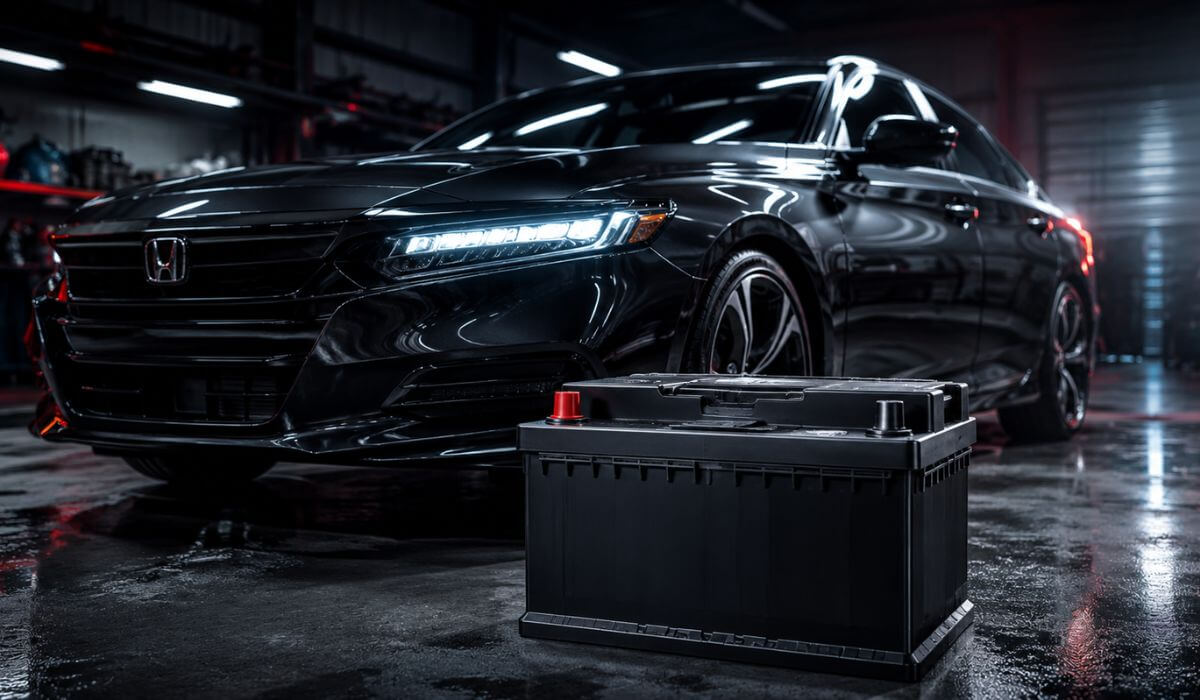
7 Best Batteries for Honda Accord in 2026: Top AGM Picks With Higher CCA & Longer Life
If you drive a newer Honda Accord, there’s a good chance the factory battery already feels smaller than the car deserves. The 2018–2026 Accord lineup packs more electronics, larger infotainment screens, auto start-stop systems, radar sensors, heated seats, and power-hungry safety tech than older generations ever did. That’s exactly why so many Accord owners end up replacing weak OEM batteries much earlier than expected.
Most newer Honda Accord models use either an H5 (Group 47) or H6 (Group 48) battery, while older Accord trims commonly use Group 35, 51R, or 24F sizes. Choosing the wrong group size is one of the biggest mistakes owners make. A battery may physically fit the tray, but poor reserve capacity or weak cold-cranking amps can still leave the car struggling during winter starts, heavy traffic commutes, or long accessory use.
After comparing real-world owner feedback, warranty coverage, cold-start performance, AGM durability, and reserve capacity numbers, these are the batteries that actually make sense for daily-driven Honda Accord models — especially newer hybrids and turbocharged trims that demand more stable voltage than older sedans ever did.
Our Top Recommendations for Honda Accord Owners
- Interstate Batteries Mega-Tron H5 AGM: 650 CCA, AGM construction, and reliable voltage stability make this one of the safest upgrades over the stock Accord battery. It handles stop-and-go traffic, short commutes, and modern Honda electronics without the random weak starts many factory batteries develop after a couple of summers. For most newer Accord owners, this is the “install it and forget it” option.
- UPLUS Group 48 H6 AGM Battery: With 760 CCA and a larger H6 footprint, this battery feels built for fully loaded Accord trims running heated seats, larger displays, driver-assist systems, and hybrid power management. The extra reserve capacity becomes noticeable during cold starts and heavy accessory use, especially in newer Accord hybrids where voltage consistency matters more than most owners realize.
A good Honda Accord battery should do more than just start the engine. The right AGM battery keeps the electrical system stable, protects sensitive electronics, and removes that annoying hesitation newer Accords sometimes develop during morning startups. That’s why every battery below was chosen around real Accord ownership — not just spec-sheet numbers.
Best Honda Accord Battery: Top 2026 Picks Built for Modern Honda Electronics
#1. Interstate Batteries Mega-Tron H5 AGM
Best AGM Replacement Battery for 2018–2026 Honda Accord 1.5T & Daily-Driven Newer Models With Strong Cold-Start Reliability
#2. UPLUS Group 48 H6 AGM Battery
Best High-CCA H6 Battery for Honda Accord Hybrid, Touring & Fully Loaded Trims With Heavy Electronics
#3. Weize Platinum H5 AGM Battery
Best Value AGM Battery for Newer Honda Accord Models Needing Longer Reserve Capacity Without Premium Pricing
#4. ACDelco Gold 48AGM Battery
Best Premium Group 48 AGM Battery for Honda Accord Owners Wanting OEM-Level Performance & Smooth Voltage Stability
#5. Goodyear 35-AGM Battery
Best Group 35 AGM Battery for Older Honda Accord Sedans Requiring Stronger Starts & Better Long-Term Reliability
#6. Interstate Batteries 51R AGM
Best 51R Honda Accord Battery Replacement for Older 4-Cylinder Models With Consistent Everyday Performance
#7. Mighty Max 24F AGM Battery
Best Group 24F AGM Battery for Honda Accord V6 Models With Higher Power Demand & Larger Engine Bays
Expert Tip Before You Buy a Honda Accord Battery
One thing most Honda Accord owners don’t realize until it’s too late: newer Accord models are far less forgiving about weak voltage than older Hondas ever were. A battery can still crank the engine and still be causing slow infotainment loading, random warning lights, weak auto start-stop performance, delayed push-button starts, or rough cold-morning behavior.
That’s exactly why cheap low-reserve batteries usually disappoint in newer 2018–2026 Accord models. Modern Hondas constantly pull power even while parked, especially hybrid and Touring trims loaded with driver-assist tech, larger displays, radar systems, heated features, and remote functions. A battery with weak reserve capacity may work fine for a few months — then suddenly start feeling “off” long before it completely dies.
If there’s one upgrade genuinely worth paying attention to on a Honda Accord, it’s a proper AGM battery with strong CCA and reserve capacity. The difference shows up every single morning you press the start button.
How We Chose the Best Batteries for Honda Accord Models
There are hundreds of batteries online claiming to fit the Honda Accord. Most technically do. That doesn’t mean they perform well once the car starts dealing with real daily use, summer heat, winter mornings, short commutes, traffic idling, or heavy electrical loads.
That’s why this list was built around something far more important than marketing claims: real-world Accord ownership.
We prioritized batteries that consistently perform well in newer Honda Accord models using H5 and H6 group sizes, because those trims place far more stress on the electrical system than older Accords. A newer Accord with push-button start, adaptive cruise control, active safety systems, and stop-start technology needs stable voltage delivery — not just enough power to barely crank the engine.
Every battery here was selected after comparing:
- Cold Cranking Amps (CCA) for reliable winter starts
- Reserve Capacity (RC) for electronics-heavy Accord trims
- AGM durability for stop-and-go driving and modern charging systems
- Real fitment compatibility with Honda Accord battery trays
- Long-term voltage stability for hybrids and turbocharged models
- Warranty coverage and brand reliability over time
That’s also why the list is heavily focused on AGM batteries instead of cheaper flooded designs. AGM batteries handle vibration better, recharge faster, tolerate deeper electrical cycling, and maintain more stable voltage under load — all things modern Honda Accord models quietly benefit from every day.
For example, the Interstate H5 AGM earned its place because it delivers the kind of balanced performance most Accord owners actually need: reliable starts, stable voltage, strong reserve capacity, and fewer long-term headaches. Meanwhile, the UPLUS H6 AGM stood out because its higher 760 CCA output and larger reserve capacity make a noticeable difference in newer Accord Hybrid and Touring trims packed with electronics.
Older Accord owners weren’t ignored either. That’s why proven Group 35, 51R, and 24F options were included for drivers keeping older 4-cylinder and V6 models on the road without sacrificing reliability.
Most importantly, none of these batteries were chosen just because of brand recognition. Some well-known batteries simply don’t deliver enough reserve power for newer Accord platforms anymore. A battery may look impressive on paper, but if it struggles after a few months of heat cycles and daily commutes, it doesn’t belong on a serious recommendation list.
The goal here was simple: recommend batteries that Honda Accord owners can install today and still trust years from now when temperatures drop, traffic gets worse, and the car keeps demanding more power than the factory battery was ever really built to handle.
#1. Interstate Batteries Mega-Tron H5 AGM
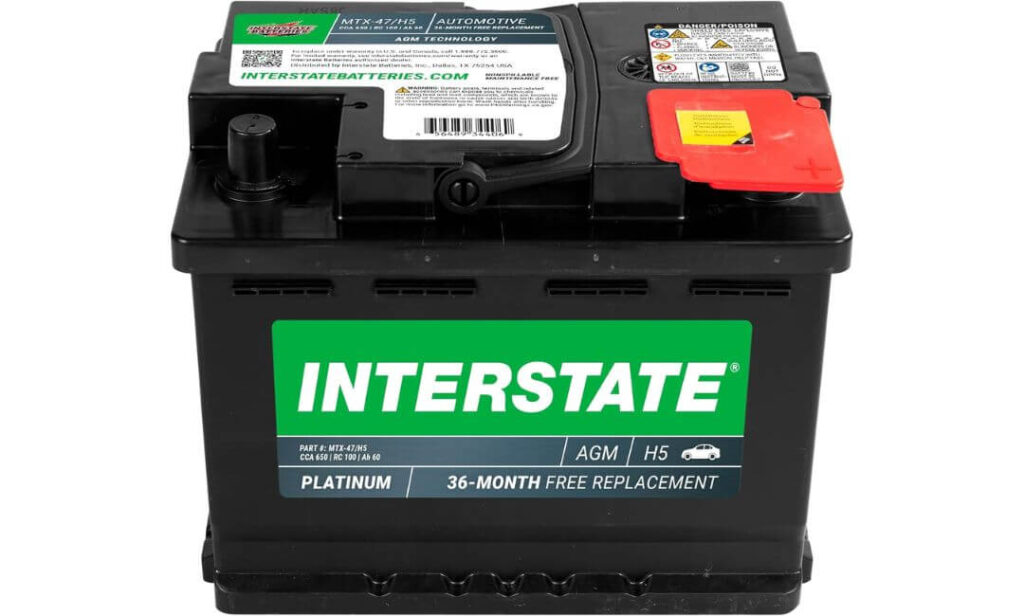
Technical Specs:
- Group Size: H5 / 47
- Battery Type: Premium AGM (Absorbent Glass Mat)
- Cold Cranking Amps: 650 CCA
- Reserve Capacity: 100 Minutes
- Capacity: 60Ah
- Voltage: 12V
- Warranty: 36-Month Free Replacement
- Terminal Layout: Top Post
- Weight: 39.2 lbs
- Best Use Case: Daily-driven Honda Accord models with heavy electronics, stop-start traffic, and short commutes
Some batteries technically “fit” the Honda Accord. This one actually feels like it belongs there.
The first thing most Accord owners notice after upgrading to this H5 AGM is how much more stable the car feels electrically. Push-button starts become sharper, dashboard flickering disappears, auto start-stop reacts quicker, and the infotainment system stops acting sluggish during cold mornings. That difference usually comes down to one thing most drivers overlook: voltage stability under load.
With 650 CCA, 100 minutes of reserve capacity, and a true AGM design packed with more internal lead material than cheaper batteries, this battery handles newer Accord electronics far better than many factory-installed units. That matters more than ever in Accord Touring, EX-L, Hybrid, and Sport trims constantly powering radar systems, safety sensors, large displays, heated features, and USB accessories even while idling in traffic.
Another reason this one stands out is consistency. A lot of cheaper batteries feel strong for the first few months, then slowly develop weak morning starts once temperatures swing or the car sits overnight. This one holds voltage noticeably better during repeated short trips — exactly the kind of driving most Accord owners actually do every day. The spill-proof AGM construction also helps reduce vibration wear, which quietly destroys many standard flooded batteries long before owners expect replacement time.
And unlike many oversized batteries that create fitment headaches, the H5 footprint here feels almost tailor-made for newer Honda Accord battery trays. No awkward squeezing, no loose mounting, no unnecessary guesswork. Just a clean, proper fit with enough reserve power to make the car feel healthier overall.
(Honestly, this is the kind of battery most owners wish Honda installed from the factory in the first place.)
Where This Battery Quietly Outperforms Most Competitors
- Delivers noticeably stronger cold starts during winter mornings
- AGM construction handles modern Accord electronics far better than standard flooded batteries
- 100-minute reserve capacity helps during traffic-heavy commutes and accessory use
- Voltage delivery feels more stable on push-button start Accord models
- Spill-proof and vibration-resistant design improves long-term durability
- H5 sizing fits many newer Honda Accord models without tray modification headaches
A Small Tradeoff Worth Knowing
- Premium AGM pricing costs more upfront than entry-level flooded batteries
Honda Accord Fitment Insights
This H5 AGM battery works especially well in many newer Honda Accord trims using Group 47 / H5 sizing, particularly turbocharged and electronics-heavy models where stable voltage matters more than raw cranking power alone.
It’s a smart fit for Accord owners dealing with stop-and-go commuting, frequent short drives, remote start use, or heavy accessory loads. If the factory battery already feels strained after a couple of summers, this upgrade usually solves that “something feels weak” problem immediately.
The Insider Pro-Tip
Most Accord owners shop by CCA first. Experienced owners usually look at reserve capacity before anything else.
That’s because newer Honda Accord models continue pulling power constantly — even parked. Safety systems, memory functions, remote access modules, and infotainment components never fully sleep the way older cars did. A battery with weak reserve capacity may still start the engine, but the car slowly begins feeling less refined everywhere else.
This is exactly why this H5 AGM setup works so well in real ownership. The extra reserve power keeps the entire electrical system calmer, smoother, and more consistent during everyday driving — especially once the weather gets extreme or the car racks up mileage.
#2. UPLUS Group 48 H6 AGM Battery
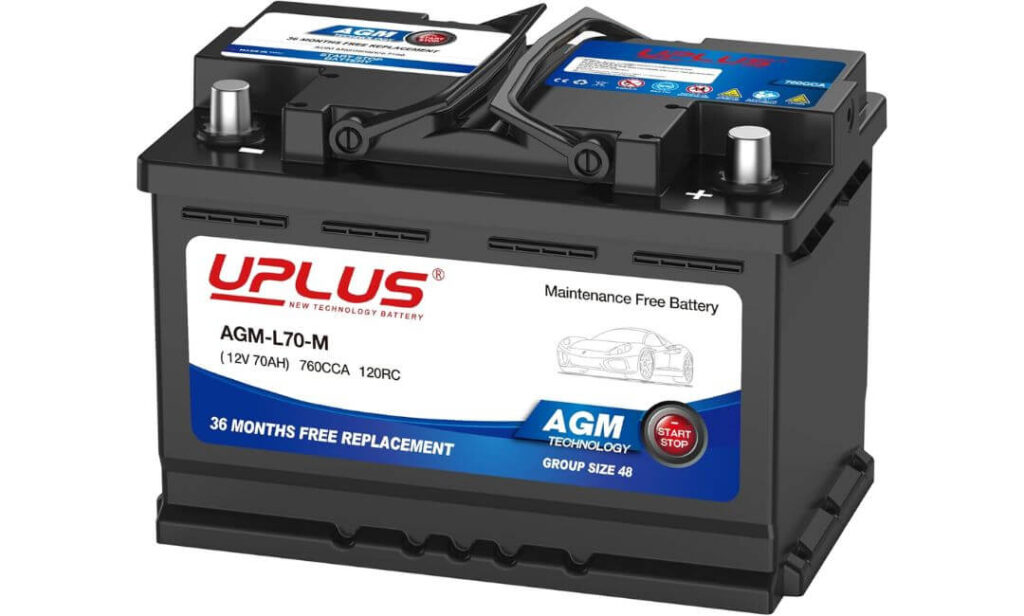
Technical Specs:
- Group Size: H6 / Group 48 / L3
- Battery Type: Premium AGM Maintenance-Free Battery
- Cold Cranking Amps: 760 CCA
- Reserve Capacity: 120 Minutes
- Capacity: 70Ah
- Voltage: 12V
- Warranty: 3-Year Warranty
- Terminal Layout: Left Negative / Right Positive
- Weight: 46.7 lbs
- Best Use Case: Honda Accord Hybrid, Touring, EX-L, and electronics-heavy trims with stop-start systems
There’s a point where the factory Honda Accord battery stops feeling “weak” and starts feeling overwhelmed. Heated seats, adaptive cruise control, bigger infotainment screens, phone charging, traffic idling, short trips — newer Accord models quietly demand far more power than most owners realize. That’s exactly where this H6 AGM setup starts making sense almost immediately.
With a massive 760 CCA output and an impressive 120-minute reserve capacity, this battery doesn’t just crank the engine confidently — it keeps the entire electrical system feeling stronger under load. You notice it during cold starts, stop-start traffic, rainy-night driving with everything running, and those moments when the car has been sitting for days but still fires up like it was driven an hour ago.
What really separates this battery from many cheaper alternatives is how planted it feels during real daily use. The upgraded AGM internals, enhanced alloy construction, and deep-cycle capability make it especially good for modern Accord trims constantly cycling electronics on and off. In hybrids and Touring models packed with sensors, displays, driver-assist systems, and charging ports, voltage consistency matters more than people think — and this battery handles that pressure surprisingly well.
Another underrated advantage is durability. The vibration-resistant design and spill-proof AGM structure make it feel less fragile over time compared to standard flooded batteries that slowly fade after repeated heat cycles and traffic-heavy commutes. And despite the larger H6 footprint, installation remains surprisingly straightforward in compatible Accord trims.
(This is the type of battery that makes the car feel newer again — not just “started.”)
Where This Battery Quietly Earns Its Reputation
- 760 CCA delivers extremely confident cold-weather starts
- 120-minute reserve capacity supports heavy electrical loads with ease
- Deep-cycle AGM design handles stop-start driving far better than standard batteries
- Excellent fit for Accord Hybrid and Touring trims loaded with electronics
- Vibration-resistant construction improves long-term durability
- Stronger voltage stability helps modern Honda systems operate more smoothly
- Performs especially well for drivers taking frequent short trips
A Small Tradeoff Worth Knowing
- The larger H6 size and heavier build may feel excessive for basic older Accord trims with minimal electronics
Honda Accord Fitment Insights
This battery works best in Honda Accord models designed around Group 48 / H6 sizing, especially trims running heavier electrical loads or hybrid systems. Touring, Hybrid, EX-L, and fully equipped daily drivers benefit the most from the additional reserve capacity and stronger AGM construction.
It’s also an excellent option for Accord owners dealing with frequent stop-and-go traffic, long accessory usage, colder climates, or vehicles that sometimes sit parked for several days between drives. The extra reserve power helps the car feel noticeably less strained overall.
The Insider Pro-Tip
Most people only think about battery power during engine startup. Modern Honda Accord models use battery power constantly — even after the engine is already running.
That’s why higher reserve capacity quietly matters more than headline numbers alone. Features like radar sensors, adaptive safety systems, remote access modules, infotainment memory, and hybrid management systems all depend on stable voltage in the background. When the battery weakens, the car slowly starts feeling less refined everywhere else.
This H6 AGM setup solves that problem better than most. The combination of 760 CCA, 120 RC, and AGM stability gives newer Accord models the kind of electrical headroom they genuinely benefit from during real-world ownership — especially once mileage, weather, and daily commuting start stacking up.
#3. Weize Platinum H5 AGM Battery
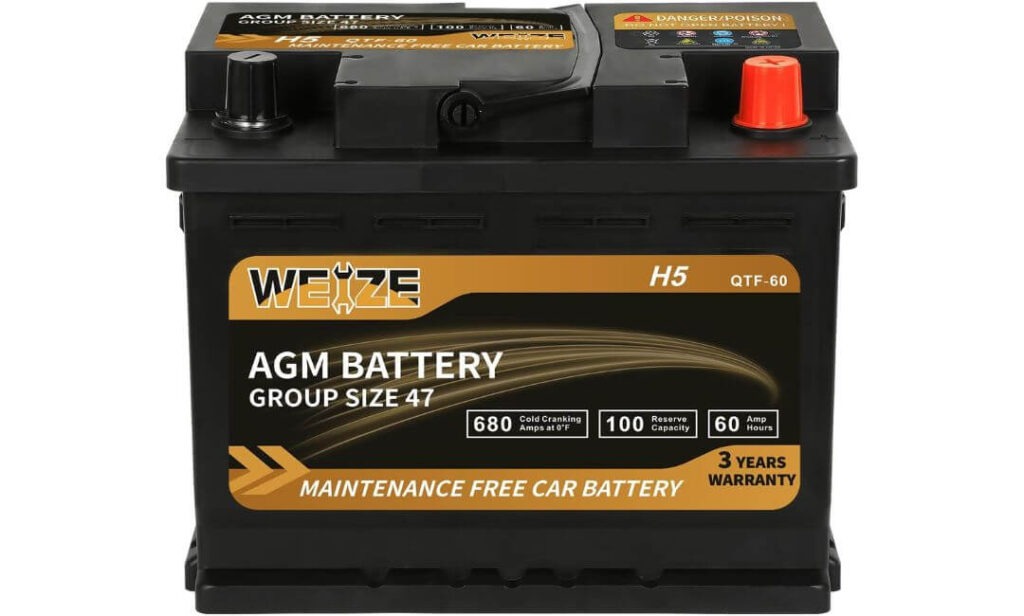
Technical Specs:
- Group Size: H5 / Group 47
- Battery Type: AGM Maintenance-Free Automotive Battery
- Cold Cranking Amps: 680 CCA
- Reserve Capacity: 100 Minutes
- Capacity: 60Ah
- Voltage: 12V
- Warranty: 36-Month Free Replacement
- Terminal Layout: Left Negative (-) / Right Positive (+)
- Weight: 41.6 lbs
- Operating Temperature Range: -22°F to 158°F
- Best Use Case: Honda Accord owners wanting stronger AGM performance without paying premium-brand pricing
Here’s the surprising part about this battery: it doesn’t try too hard to look premium — yet in real-world Accord ownership, it checks nearly every box that actually matters.
The combination of 680 CCA, 100-minute reserve capacity, and true AGM construction gives this battery far more capability than most drivers expect at first glance. In newer Honda Accord models loaded with push-button start systems, driver-assist tech, large infotainment screens, and constant accessory usage, that extra electrical stability becomes noticeable almost immediately.
What makes this one especially interesting is balance. Some batteries focus only on raw starting power, while others chase long reserve capacity numbers but feel sluggish during cold starts. This setup lands right in the sweet spot for daily Accord use. Morning starts feel crisp, stop-start systems react cleaner, and voltage delivery stays surprisingly steady during heavy traffic commutes where modern Hondas constantly cycle electronics in the background.
The AGM internals also make a bigger difference than many people realize over long-term ownership. Faster recharge recovery, stronger vibration resistance, spill-proof construction, and improved cycling durability help this battery tolerate real commuting abuse much better than older flooded designs. For Accord owners tired of replacing weak batteries every couple of summers, that alone makes this setup worth paying attention to.
And unlike some oversized AGM units that feel overkill for standard trims, the H5 sizing here keeps installation straightforward while still delivering enough reserve power to support modern Accord electronics comfortably.
(Honestly, this feels like one of those rare batteries that overdelivers quietly instead of screaming marketing numbers everywhere.)
Where This Battery Builds Real Everyday Confidence
- 680 CCA delivers reliable cold starts without hesitation
- AGM design handles modern Honda Accord electronics more smoothly than standard batteries
- 100-minute reserve capacity supports traffic-heavy daily driving extremely well
- Faster recharge recovery helps during short commutes and stop-start driving
- Strong operating temperature range handles both extreme heat and winter mornings confidently
- Spill-proof and vibration-resistant construction improves long-term reliability
- Excellent value for drivers wanting AGM performance without premium-brand pricing
A Small Tradeoff Worth Knowing
- Brand recognition isn’t as established as some long-time premium battery manufacturers
Honda Accord Fitment Insights
This H5 AGM battery works especially well in Honda Accord models using Group 47 / H5 fitment, including many newer trims equipped with start-stop systems and electronics-heavy interiors.
It’s an especially smart option for daily-driven Accords dealing with frequent short trips, city commuting, accessory-heavy usage, or climates where temperature swings quietly punish weaker batteries faster than expected.
The Insider Pro-Tip
One thing experienced Accord owners eventually learn: the best battery isn’t always the one with the loudest marketing — it’s the one that keeps the car feeling normal year after year.
That’s where this battery earns trust. The combination of AGM durability, stable voltage delivery, and strong reserve capacity helps newer Honda Accord models avoid the small electrical annoyances that usually appear before complete battery failure ever happens.
Weak morning starts, delayed push-button response, random infotainment lag, inconsistent auto start-stop behavior — these are often battery warning signs long before the engine actually refuses to crank. This setup does a remarkably good job preventing those issues before they start becoming part of daily driving.
#4. ACDelco Gold 48AGM Battery
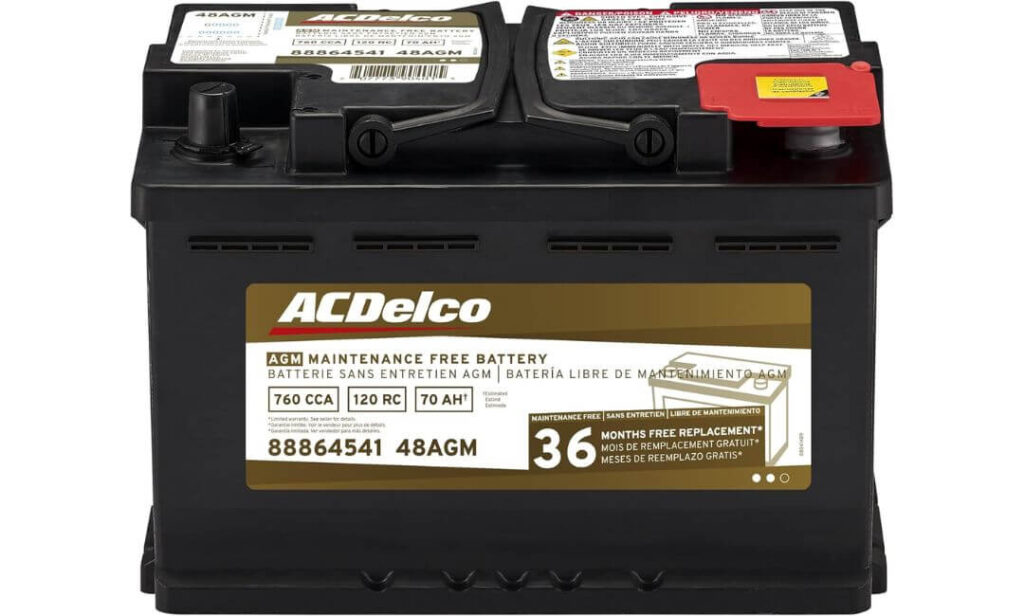
Technical Specs:
- Group Size: 48 / H6
- Battery Type: Silver-Calcium AGM Battery
- Voltage: 12V
- Capacity: 70Ah
- Warranty: 36-Month Free Replacement
- Battery Technology: High-Cycle AGM Design
- Construction: Leak-Proof & Maintenance-Free
- Weight: 45.5 lbs
- Dimensions: 11.9″ W x 7.5″ D x 7.6″ H
- Best Use Case: Honda Accord Touring, Hybrid, and higher-trim models with heavy electrical demand
Some aftermarket batteries try to impress with oversized numbers. This one takes a different approach — it simply makes the Honda Accord feel properly powered all the time.
The first thing noticeable about this AGM setup is smoothness. The electrical system feels calmer, starts feel more immediate, and the car behaves more consistently during situations where weaker batteries usually begin showing stress — cold mornings, long traffic idles, heavy accessory use, or repeated short-distance trips.
That refined feel comes from the battery’s internal design. ACDelco uses a Silver-Calcium AGM construction, high-density negative paste, and enhanced alloy materials that help improve conductivity while reducing long-term internal wear. In real Accord ownership, that translates into more stable voltage delivery for push-button starts, driver-assist systems, heated features, infotainment memory, and stop-start operation.
Another underrated advantage is thermal stability. Modern Honda Accord models generate more electrical heat than older sedans ever did, especially hybrids and upper trims constantly managing sensors, charging systems, displays, and safety tech simultaneously. The improved acid circulation and puncture-resistant separator design help this battery stay cooler and more stable under heavy daily loads — something many standard flooded batteries quietly struggle with after repeated heat cycles.
And unlike some aggressively oversized AGM units, this H6 setup feels balanced instead of excessive. It delivers the extra reserve capacity modern Accord models genuinely benefit from without creating unnecessary installation complications.
(Honestly, this feels less like an “upgrade battery” and more like the battery Honda engineers probably wanted to use from the beginning.)
Where This Battery Builds Long-Term Confidence
- Silver-Calcium AGM design improves long-term cycle durability
- Excellent fit for electronics-heavy Honda Accord trims
- Stable voltage delivery helps modern driver-assist systems operate more consistently
- Leak-proof AGM construction handles daily commuting abuse extremely well
- Improved internal cooling helps reduce heat-related wear over time
- Strong cycling capability supports stop-start systems effectively
- Maintenance-free setup keeps long-term ownership simple
A Small Tradeoff Worth Knowing
- Heavier AGM construction may feel unnecessary for older base-model Accords with minimal electronics
Honda Accord Fitment Insights
This battery works especially well in Honda Accord trims using Group 48 / H6 sizing, particularly Touring, Hybrid, EX-L, and higher-optioned models running larger electrical loads every day.
It’s a strong fit for drivers spending time in traffic, relying heavily on in-car electronics, making frequent short trips, or simply wanting an AGM battery that feels refined instead of aggressively overbuilt.
The Insider Pro-Tip
One thing many Accord owners mistake for “normal aging” is actually unstable battery voltage slowly affecting the car behind the scenes.
Features like adaptive cruise control, infotainment responsiveness, remote functions, stop-start operation, and even startup smoothness all depend on consistent electrical delivery. Once the battery weakens, the car slowly loses that refined Honda feel — usually long before the engine struggles to crank.
That’s exactly why this AGM setup works so well in real ownership. The combination of Silver-Calcium internals, stronger cycling stability, and H6 reserve capacity helps newer Accord models maintain that smooth, effortless daily-driving behavior people buy Hondas for in the first place.
#5. Goodyear 35-AGM Battery
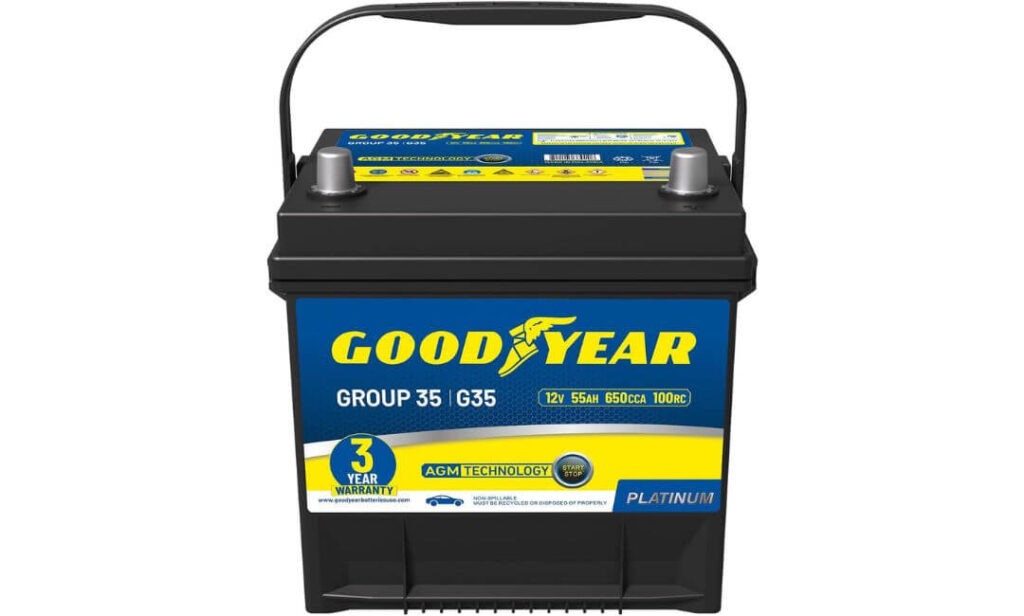
Technical Specs:
- Group Size: 35
- Battery Type: AGM Maintenance-Free Automotive Battery
- Cold Cranking Amps: 650 CCA
- Reserve Capacity: 100 Minutes
- Capacity: 55Ah
- Voltage: 12V
- Warranty: 36-Month Warranty
- Weight: 39.7 lbs
- Terminal Layout: Positive Right / Negative Left
- Best Use Case: Older Honda Accord models needing stronger cold starts and upgraded AGM reliability
Older Honda Accords have a reputation for lasting forever — but many are still running on weak replacement batteries that were never really built for long-term daily use. That’s exactly where this Group 35 AGM setup changes the experience almost immediately.
The combination of 650 CCA and 100 minutes of reserve capacity gives older Accord models a much more confident feel during startup, especially in colder mornings or after sitting overnight. Instead of that slow, tired crank many aging sedans eventually develop, starts feel sharper, quicker, and far more consistent.
What makes this battery genuinely interesting is how modern it feels compared to the basic flooded batteries many older Accords still use. The AGM construction improves vibration resistance, recharge recovery, and voltage stability in ways most drivers notice without even realizing why the car suddenly feels “healthier.” Headlights stay steadier, startup hesitation fades, and accessories behave more consistently during traffic-heavy driving.
The durability side matters too. Older Honda Accord models often see rougher real-world use now — long commutes, uneven roads, temperature swings, or sitting parked for days at a time. This battery’s spill-proof AGM design and reinforced internal construction handle that kind of aging-car life far better than many entry-level replacements that start feeling weak after a single harsh summer.
And while some AGM batteries feel oversized or unnecessary for older sedans, this Group 35 setup lands in a sweet spot: enough reserve power to feel like a real upgrade without becoming excessive for naturally simpler Accord electrical systems.
(Honestly, this feels less like replacing an old battery and more like waking the entire car back up.)
Where This Battery Quietly Earns Daily Trust
- 650 CCA provides stronger cold starts for aging Accord engines
- AGM construction improves durability over standard flooded batteries
- 100-minute reserve capacity supports accessories and daily commuting comfortably
- Excellent vibration resistance for long-term reliability
- Performs confidently in both hot summers and cold mornings
- Faster recharge recovery helps during stop-and-go driving
- Great balance between modern AGM performance and older Accord compatibility
A Small Tradeoff Worth Knowing
- Slightly larger external dimensions may feel tight in certain older Accord battery trays
Honda Accord Fitment Insights
This Group 35 AGM battery works especially well in many older Honda Accord models originally designed around Group 35 sizing, particularly 4-cylinder sedans used as dependable daily drivers.
It’s an excellent choice for Accord owners wanting a noticeable improvement in startup confidence, electrical stability, and long-term reliability without stepping into oversized heavy-duty battery territory meant for larger vehicles.
The Insider Pro-Tip
A lot of older Honda Accords get blamed for “age-related electrical issues” when the real problem is simply weak reserve power.
As batteries age, voltage becomes less stable during startup and low-speed driving. That’s usually when dim headlights, lazy cranking, slow power accessories, or random dashboard behavior begin showing up. Many owners think the car itself is aging badly — when the battery is actually the weak link.
This AGM setup fixes that problem better than most standard replacements. The stronger reserve capacity and steadier voltage delivery help older Accord models feel smoother, more responsive, and far more dependable during real everyday driving — exactly why so many long-term Honda owners eventually switch to AGM and never go back.
#6. Interstate Batteries 51R AGM
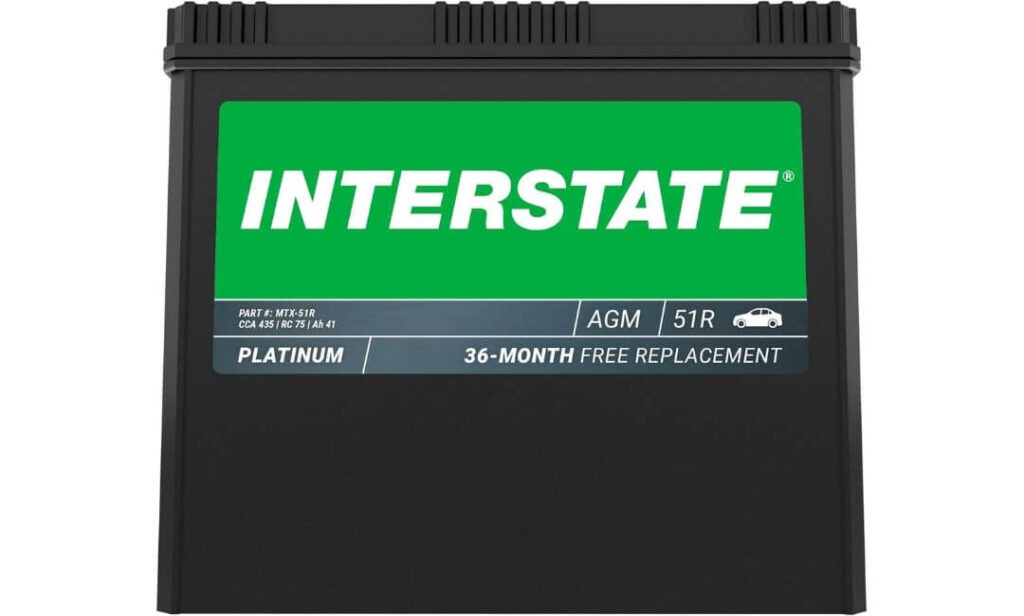
Technical Specs:
- Group Size: 51R
- Battery Type: AGM Sealed Lead Acid Battery
- Cold Cranking Amps: 435 CCA
- Reserve Capacity: 75 Minutes
- Capacity: 41Ah
- Voltage: 12V
- Cranking Amps: 540 CA
- Warranty: 36-Month Free Replacement
- Terminal Layout: Top Post
- Weight: 29.4 lbs
- Best Use Case: Older Honda Accord 4-cylinder models needing compact AGM reliability and stable daily performance
Not every Honda Accord needs an oversized heavy-duty AGM battery. For many older 4-cylinder Accord models originally designed around the compact 51R fitment, going too large can actually create unnecessary installation headaches without improving daily driving much at all.
That’s where this Interstate 51R AGM setup feels surprisingly well judged.
The compact design keeps fitment clean and straightforward, while the AGM internals deliver a noticeable improvement in consistency over traditional flooded batteries. Starts feel sharper, voltage delivery stays steadier during daily commuting, and the battery recovers much better from short trips — something older Accord owners quietly struggle with more than they realize.
Now yes, 435 CCA sounds smaller beside modern H5 and H6 batteries. But context matters. Older Honda Accord 4-cylinder engines simply don’t require massive cranking numbers to start reliably. What they benefit from far more is dependable voltage stability, proper tray fitment, faster recharge recovery, and long-term AGM durability — exactly where this battery performs well.
The spill-proof AGM construction also helps reduce one of the biggest problems aging Accord owners face: vibration wear and gradual internal battery breakdown over time. Cheaper flooded batteries often begin feeling weak long before complete failure, especially in cars used for constant commuting, stop-and-go driving, or sitting parked between errands. This setup handles that lifestyle much more confidently.
And unlike oversized batteries forcing awkward cable stretching or tray modifications, this one fits many older Accord platforms the way they were originally engineered to fit.
(Honestly, this feels less like an aggressive “upgrade” and more like giving older Accord models the dependable battery they should’ve had years ago.)
Where This Battery Quietly Delivers Everyday Reliability
- AGM construction improves durability over basic flooded batteries
- Compact 51R sizing fits many older Accord models properly
- Faster recharge recovery helps during short daily trips
- Stable voltage delivery improves startup consistency
- Spill-proof design handles vibration and heat better over time
- Lightweight AGM construction keeps installation manageable
- Strong long-term daily-driver battery for aging 4-cylinder Accords
A Small Tradeoff Worth Knowing
- Lower CCA and reserve capacity make it less ideal for heavily modified or electronics-loaded Accord builds
Honda Accord Fitment Insights
This battery works especially well in many older Honda Accord 4-cylinder models designed around Group 51R fitment, particularly daily drivers prioritizing dependable starts and clean OEM-style installation.
It’s a smart choice for owners who want AGM reliability without moving into oversized battery territory that older Accord charging systems were never really designed around.
The Insider Pro-Tip
A lot of older Accord owners automatically assume “bigger battery equals better battery.” In reality, proper fitment and voltage consistency matter far more on compact 4-cylinder Hondas.
Oversized batteries can sometimes create unnecessary strain on mounting systems, cables, and charging behavior without delivering noticeable real-world benefits. What older Accords usually need most is simply a battery that starts reliably every morning and maintains stable voltage during daily use.
That’s exactly why this AGM 51R setup continues making sense. It keeps the lightweight, compact fitment older Accord models were engineered around — while quietly upgrading durability, recharge performance, and long-term reliability in the places drivers actually feel every day.
#7. Mighty Max 24F AGM Battery
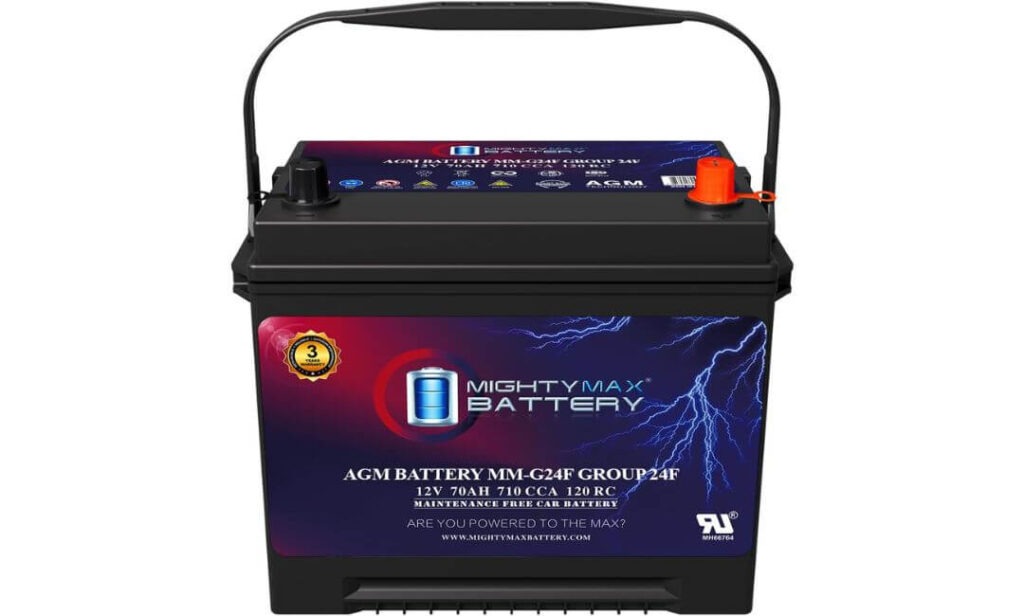
Technical Specs:
- Group Size: 24F
- Battery Type: AGM Maintenance-Free Automotive Battery
- Cold Cranking Amps: 710 CCA
- Reserve Capacity: 120 Minutes
- Capacity: 70Ah
- Voltage: 12V
- Warranty: 3-Year Warranty
- Terminal Layout: Positive Right / Negative Left
- Weight: 49.1 lbs
- Best Use Case: Older Honda Accord V6 models needing higher reserve power and stronger all-weather starting performance
There’s a completely different feeling to driving an older Honda Accord V6 compared to the smaller 4-cylinder trims. The engine is smoother, heavier, more powerful — and naturally asks more from the battery during startup and daily driving. That’s exactly why this Group 24F AGM setup feels so well matched to those older V6 Accord platforms.
The first thing noticeable here is sheer reserve strength. With 710 CCA and a huge 120-minute reserve capacity, this battery feels noticeably more confident during cold starts, long drives with accessories running, and situations where weaker batteries slowly begin losing stability. Older Accord V6 models especially benefit from that extra reserve power because they tend to run larger electrical loads and higher startup demands compared to smaller Accord trims.
Another thing this battery gets right is durability under real-world use. The AGM construction is sealed, spill-proof, vibration-resistant, and built to recover better from repeated discharge cycles — something aging Accord V6 owners quietly deal with more often during modern commuting patterns. Short trips, traffic idling, long parked periods, and temperature swings punish weaker flooded batteries surprisingly fast. This setup handles that stress much more confidently.
And despite its stronger output, this battery still feels practical rather than excessive. The 24F footprint matches many older Accord V6 battery trays naturally, while the AGM internals bring a much more modern feel to startup consistency and voltage stability. Even simple things — headlights, startup smoothness, accessory response — begin feeling stronger once the old battery is replaced with something built like this.
(Honestly, this is one of those batteries that makes older Accord V6 models feel far younger than their mileage suggests.)
Where This Battery Quietly Stands Out
- 710 CCA delivers extremely confident V6 cold starts
- Massive 120-minute reserve capacity supports heavier electrical loads easily
- AGM construction improves recharge recovery and long-term durability
- Spill-proof and vibration-resistant design handles aging daily drivers well
- Excellent all-weather performance in both extreme heat and winter mornings
- Strong fit for older Honda Accord V6 models using Group 24F sizing
- High reserve power helps maintain smoother electrical performance overall
A Small Tradeoff Worth Knowing
- Heavier AGM construction may feel oversized for smaller 4-cylinder Accord trims not designed around Group 24F fitment
Honda Accord Fitment Insights
This battery works especially well in older Honda Accord V6 models designed around Group 24F fitment, particularly drivers wanting stronger startup performance and additional reserve power for long-term reliability.
It’s also a smart choice for Accord owners regularly using accessories, taking longer drives, dealing with harsh weather conditions, or simply wanting a battery that feels noticeably more robust than standard replacement options.
The Insider Pro-Tip
Older V6 Accord models usually don’t fail because the engine gets weak — they start feeling old because the electrical system slowly loses consistency over time.
Weak reserve capacity affects far more than startup power. Slower cranking, dimmer lighting, inconsistent accessories, rougher idle behavior during startup, and delayed electrical response all begin appearing gradually as weaker batteries age.
That’s why this AGM setup works so well for long-term Accord ownership. The combination of 710 CCA, 120 RC, and heavy-duty AGM construction gives older V6 models the kind of electrical stability they quietly benefit from every single day — especially once the car starts carrying real mileage and real commuting abuse.
Best Honda Accord Battery Comparison for H5, H6, 51R & 24F AGM Replacements
| Battery | Battery Specs | Ideal Honda Accord Fitment | What Makes It Stand Out | Real-World Driving Feel | Best Choice For |
|---|---|---|---|---|---|
|
1
Interstate Batteries Mega-Tron H5 AGM
Best Overall Daily-Driver AGM Pick
One of the most balanced AGM batteries for newer Accord owners wanting reliable starts, smoother voltage delivery, and long-term confidence.
|
H5 / 47 650 CCA 100 RC 60Ah AGM |
Excellent for newer Honda Accord Sport, EX-L, LX, and 1.5T trims using Group 47 sizing.
|
Strong reserve capacity helps modern Honda electronics behave more consistently during daily commuting and traffic-heavy driving.
|
Smooth cold starts, cleaner push-button response, and noticeably steadier electrical behavior overall.
|
Owners wanting the safest long-term AGM upgrade without overthinking fitment.
|
|
2
UPLUS Group 48 H6 AGM Battery
Highest Reserve Capacity Performer
Built for electronics-heavy Accord trims constantly running large displays, heated features, sensors, and hybrid systems.
|
H6 / 48 760 CCA 120 RC 70Ah AGM |
Ideal for Honda Accord Hybrid, Touring, EX-L, and fully loaded trims using H6 sizing.
|
Massive reserve power keeps voltage stable during short trips, stop-start traffic, and winter mornings.
|
Feels extremely strong under electrical load, especially during cold starts and heavy accessory usage.
|
Drivers wanting premium AGM performance with maximum reserve capacity.
|
|
3
Weize Platinum H5 AGM Battery
Best AGM Value Upgrade
A surprisingly refined AGM battery that delivers strong real-world Accord performance without premium-brand pricing.
|
H5 / 47 680 CCA 100 RC 60Ah AGM |
Strong match for newer Accord trims requiring Group 47 / H5 fitment.
|
Balances startup power, reserve capacity, and AGM stability better than many budget batteries.
|
Sharp starts, fast recharge recovery, and smoother electronics behavior during commuting.
|
Budget-conscious Accord owners still wanting true AGM durability.
|
|
4
ACDelco Gold 48AGM Battery
Most OEM-Like Premium Feel
Refined Silver-Calcium AGM setup focused more on long-term stability than flashy marketing specs.
|
H6 / 48 70Ah Silver-Calcium AGM 36-Month Warranty |
Excellent for Accord Touring, Hybrid, and upper trims carrying larger electrical demand.
|
Improved voltage consistency helps the Accord feel calmer and smoother during daily driving.
|
Very refined startup feel, especially during traffic-heavy commuting and colder mornings.
|
Drivers wanting premium OEM-style smoothness instead of aggressive high-output setups.
|
|
5
Goodyear 35-AGM Battery
Best Group 35 AGM Upgrade
Modern AGM durability upgrade for older Accord generations still used as dependable daily drivers.
|
Group 35 650 CCA 100 RC 55Ah AGM |
Designed for older Honda Accord models originally using Group 35 fitment.
|
Brings stronger startup confidence and steadier reserve power to aging Accord platforms.
|
Feels noticeably healthier during cold starts and daily commuting.
|
Older Accord owners upgrading from weak flooded batteries to AGM reliability.
|
|
6
Interstate Batteries 51R AGM
Best Compact OEM-Style AGM Fit
Compact AGM battery delivering dependable daily-driver performance for older 4-cylinder Accords.
|
51R 435 CCA 75 RC 41Ah AGM |
Excellent for older Honda Accord 4-cylinder models using compact 51R fitment.
|
Maintains proper OEM-style fitment while improving AGM durability and recharge recovery.
|
Simple, stable, and dependable for lightweight daily-driven Accords.
|
Owners prioritizing clean fitment and long-term reliability over oversized batteries.
|
|
7
Mighty Max 24F AGM Battery
Strongest Older V6 Power Upgrade
Heavy-duty AGM setup built for older Accord V6 models demanding higher reserve power.
|
24F 710 CCA 120 RC 70Ah AGM |
Perfect for older Honda Accord V6 trims originally designed around Group 24F fitment.
|
Massive reserve capacity helps older V6 models feel stronger during startup and long drives.
|
Very confident cold-weather starting with noticeably stronger electrical stability.
|
Accord V6 owners wanting maximum reserve power and stronger long-term AGM performance.
|
Why AGM Batteries Make More Sense for Modern Honda Accord Models
The Honda Accord has changed a lot over the years. Older models were simple, lightweight sedans that mainly needed enough battery power to crank the engine and run a few accessories. Newer Accord generations are completely different machines. Push-button start systems, adaptive cruise control, lane-keeping assist, larger infotainment displays, remote connectivity, heated features, hybrid systems, and constant background electronics have dramatically increased the electrical demand placed on the battery every single day.
That’s exactly why AGM batteries have become such a smart upgrade for both newer and older Honda Accord models.
A traditional flooded battery can still work, but modern Accord platforms usually benefit far more from the stronger voltage stability, higher reserve capacity, faster recharge recovery, and longer cycle durability AGM technology provides. And once you actually drive an Accord with a quality AGM battery installed, the difference becomes surprisingly noticeable in daily use.
Higher Cold Cranking Power Helps the Accord Feel More Responsive
A lot of people think Cold Cranking Amps (CCA) only matter during freezing winter mornings. In reality, stronger cranking power affects the entire startup experience year-round.
Modern Honda Accord models rely on stable voltage immediately after startup because dozens of systems wake up at the same time — infotainment, sensors, cameras, safety systems, climate controls, hybrid management modules, and stop-start systems all begin drawing power almost instantly. A weak battery may still start the engine, but the car often feels sluggish electrically afterward.
That’s why higher-CCA AGM batteries like the H5 and H6 options in this guide tend to feel noticeably better during real daily driving. Starts become cleaner, voltage recovers faster, and the car simply feels more stable overall, especially during traffic-heavy commuting or colder weather.
Older Accord V6 models also benefit heavily from stronger cranking power because larger engines naturally place more demand on the battery during startup. That’s one reason batteries like the Group 24F AGM setup stand out so much in long-term ownership.
AGM Batteries Handle Modern Honda Electronics Much Better
One of the biggest hidden reasons batteries fail early in newer Honda Accord models is constant electrical cycling.
Modern Accords continue pulling power even while parked. Remote functions, memory systems, safety modules, sensors, and onboard electronics never fully “sleep” the way older cars once did. During short trips or stop-and-go driving, the battery repeatedly cycles between charging and discharging much harder than many drivers realize.
AGM batteries are built specifically for this kind of workload.
Compared to standard flooded batteries, AGM designs recharge faster, tolerate deeper discharge cycles better, resist internal wear more effectively, and maintain steadier voltage under heavy electrical loads. That’s why they work especially well in Accord Hybrid, Touring, EX-L, and Sport trims loaded with electronics.
In real ownership, that often translates into:
- More reliable push-button starts
- Fewer weak-start symptoms during winter
- Better stop-start system behavior
- More stable infotainment performance
- Reduced voltage-related warning issues
- Longer overall battery lifespan under daily commuting conditions
Longer Service Life Makes AGM Batteries Worth the Extra Cost
A cheaper flooded battery may save money upfront, but many Honda Accord owners end up replacing those batteries far sooner than expected — especially in hot climates, heavy traffic conditions, or vehicles driven mostly on short commutes.
AGM batteries usually last longer because the internal construction is far more resistant to heat, vibration, and repeated discharge cycles. The electrolyte is absorbed into fiberglass mats instead of freely moving inside the battery, which helps protect internal components from gradual breakdown over time.
That durability becomes especially valuable in Honda Accord models used as true daily drivers. Repeated short trips, constant stoplights, summer heat, and heavy accessory use quietly destroy weaker batteries faster than most owners realize.
A properly matched AGM battery often avoids those issues by maintaining stronger voltage consistency throughout its lifespan instead of slowly degrading after a couple of difficult seasons.
Vibration Resistance Quietly Improves Long-Term Reliability
This is one of the most overlooked benefits of AGM batteries.
Daily commuting exposes a battery to constant vibration — potholes, uneven pavement, highway expansion joints, traffic impacts, rough roads, and engine movement all create long-term internal stress. Standard flooded batteries can gradually develop internal plate damage from that repeated movement, especially after years of use.
AGM batteries resist vibration significantly better because the internal components are tightly compressed and supported by fiberglass mat separators. That makes them much more durable during long-term ownership, particularly for older Honda Accord models that may already have higher mileage or rougher suspension wear.
In simple terms, AGM batteries usually age more gracefully under real-world driving abuse.
Honda Accord Battery Sizes Matter More Than Most Owners Realize
One of the biggest mistakes Accord owners make is choosing a battery based only on price or cranking power while ignoring proper group size fitment.
The Honda Accord uses several battery sizes depending on generation, engine, and trim level. Choosing the correct fitment is critical not just for physical installation, but also for proper reserve capacity and long-term electrical performance.
Here are the most common Honda Accord battery sizes:
- H5 / Group 47: Common in many newer Accord 1.5T models
- H6 / Group 48: Often found in Hybrid, Touring, and electronics-heavy trims
- Group 35: Popular fitment for many older Accord generations
- 51R: Common in older 4-cylinder Accord models
- 24F: Typically used in older Honda Accord V6 models
Larger batteries like H6 and 24F generally provide higher reserve capacity and stronger long-term electrical stability, while smaller fitments like H5 and 51R prioritize compact installation and OEM-style compatibility.
That’s exactly why this guide includes multiple AGM battery sizes instead of forcing a single “one-size-fits-all” recommendation. The best Honda Accord battery depends heavily on how the car is actually used, how much electrical demand it carries daily, and which group size the vehicle was originally designed around.
Buying Guide: How to Choose the Right Honda Accord Battery Without Regret Later
A surprising number of Honda Accord battery problems start before the new battery is even installed. Wrong group size, incorrect terminal layout, weak reserve capacity, poor AGM compatibility — small mistakes here usually lead to weak starts, charging issues, loose mounting, or electrical behavior that never feels completely right afterward.
The Honda Accord may look simple on the surface, but newer generations especially are far more sensitive to battery quality and fitment than most drivers realize. That’s why choosing the right battery is less about grabbing the highest number on the label and more about matching the battery correctly to how the car is actually used every day.
How to Confirm the Correct Honda Accord Battery Group Size
Before buying any battery, the first thing to verify is the original battery group size already installed in the car. This matters because group size controls:
- Physical dimensions
- Terminal placement
- Mounting fitment
- Cable reach
- Tray compatibility
- Reserve capacity potential
Even a battery with excellent specs can become a headache if the fitment is wrong.
The easiest way to confirm sizing is to check the label directly on the old battery. Honda Accord models commonly use:
- H5 / Group 47
- H6 / Group 48
- Group 35
- 51R
- 24F
The battery label usually displays this clearly near the top or side casing.
If the original label is missing or unreadable, measure:
- Battery length
- Width
- Height
- Terminal orientation
Terminal placement matters more than many owners expect. Most Honda Accord batteries use:
- Positive terminal on the right
- Negative terminal on the left
Choosing the wrong orientation can leave battery cables stretched awkwardly across the tray, which creates long-term reliability issues and poor installation quality.
Newer Accord models using H5 or H6 batteries also have tighter engine bay packaging, so proper dimensions become especially important. Slightly oversized batteries can interfere with brackets, intake components, or protective covers even if they technically “fit.”
Why Reserve Capacity Matters More Than Most Accord Owners Think
A lot of battery shopping guides focus only on CCA numbers. Real Accord ownership tells a different story.
Reserve Capacity (RC) often matters more during everyday driving because modern Honda Accord models continuously power electronics long after startup. Radar sensors, infotainment systems, adaptive safety tech, remote functions, climate controls, and charging ports all place constant demand on the battery.
That’s why batteries with:
- 100 RC
- 120 RC
usually feel noticeably stronger in real-world Accord use compared to lower-capacity options.
Higher reserve capacity helps:
- Reduce weak-start symptoms
- Improve stop-start system consistency
- Stabilize voltage during traffic idling
- Support short-trip driving better
- Maintain smoother electrical behavior over time
For Hybrid and Touring Accord trims especially, reserve power quietly becomes one of the most important specs in the entire battery.
Quick Installation Checks Most People Skip
Installing the battery is only half the job. The first few minutes after installation tell you whether everything is actually working correctly.
Once the battery is connected:
- Confirm the engine cranks immediately without hesitation
- Check for stable dashboard lighting
- Make sure infotainment loads normally
- Verify windows, locks, and memory functions operate correctly
- Watch for warning lights staying active unusually long
- Test stop-start operation after a short drive if equipped
A properly installed AGM battery should make the Accord feel sharper almost immediately. Starts should feel cleaner, electronics should respond faster, and voltage-related sluggishness should disappear.
If the vehicle suddenly behaves strangely after installation, the problem is often:
- Incorrect group size
- Loose terminal connections
- Poor grounding contact
- Wrong terminal orientation
- Battery not fully charged before installation
One small but important detail many owners overlook: AGM batteries perform best when fully charged before first use. Even premium batteries shipped pre-charged may not arrive at 100% state of charge after warehouse storage or shipping time.
AGM Batteries Need Proper Charging Habits
Modern AGM batteries are tougher than standard flooded batteries, but they still reward good charging habits.
Short commutes are one of the biggest battery killers for Honda Accord owners because the alternator often doesn’t get enough time to fully recharge the battery after startup. Repeated short trips slowly drain battery health over time, especially during winter or heavy accessory use.
If the Accord regularly sits unused for extended periods:
- Drive the car longer occasionally
- Avoid leaving accessories running parked
- Consider a smart AGM-compatible maintainer for long-term storage
This matters even more for:
- Hybrid trims
- Touring models
- Electronics-heavy daily drivers
- Stop-start equipped Accords
Modern Hondas simply consume more standby power than older generations ever did.
Safety Tips That Actually Matter During Battery Replacement
Car batteries look simple, but they store enough power to cause serious damage if handled carelessly.
Before removal:
- Turn the vehicle completely off
- Remove key fobs from the cabin
- Wear gloves and eye protection
- Disconnect the negative terminal first
- Avoid touching both terminals simultaneously with tools
AGM batteries are spill-proof, but they are still extremely heavy. Larger H6 and 24F batteries can easily strain wrists or damage nearby components during removal if lifted awkwardly.
After installation:
- Double-check terminal tightness
- Make sure hold-down brackets are fully secured
- Prevent cable movement or rubbing
- Confirm nothing touches the battery posts accidentally
Loose mounting is one of the fastest ways to shorten battery lifespan because vibration slowly damages internal components over time.
Proper Battery Disposal Is More Important Than Most People Realize
Old batteries should never be thrown into household trash.
Lead-acid batteries contain recyclable materials and hazardous chemicals that need proper handling. Most auto parts stores, battery retailers, and repair shops accept used batteries for recycling — many even provide a core refund during replacement purchases.
Interstate, ACDelco, and several other manufacturers actively encourage battery recycling programs because nearly every major battery component can be reused safely when processed correctly.
And honestly, recycling the old battery properly is one of the easiest things any car owner can do that actually helps both the vehicle industry and the environment at the same time.
AGM Battery Maintenance Tips That Actually Help a Honda Accord Battery Last Longer
One of the biggest misconceptions about AGM batteries is that they are completely maintenance-free forever. Technically, yes — you don’t add water like older flooded batteries. But modern AGM batteries still depend heavily on charging habits, driving patterns, temperature exposure, and voltage stability to reach their full lifespan.
And in a Honda Accord, especially newer models packed with electronics, battery care matters more than many drivers realize.
A quality AGM battery can easily feel stronger, smoother, and more reliable for years longer than a cheap replacement — but only if the battery is allowed to stay properly charged and protected from repeated deep discharge stress.
Why Short Trips Quietly Kill AGM Batteries Faster
Most Honda Accord owners don’t realize their daily driving habits are often harder on the battery than extreme weather itself.
Short commutes are one of the biggest reasons AGM batteries lose performance early. Every startup pulls a heavy amount of energy from the battery, especially in:
- Cold weather
- Hybrid trims
- Stop-start equipped models
- Electronics-heavy Touring and EX-L trims
If the drive afterward is only 5–10 minutes, the alternator often never fully replaces the power used during startup. Over time, repeated partial charging slowly weakens the battery internally.
That’s why many batteries seem “fine” for months, then suddenly start showing:
- Slow morning starts
- Weak stop-start operation
- Delayed push-button response
- Random voltage warnings
- Sluggish infotainment behavior
The battery was never fully recovering in the first place.
Longer drives matter more than people think. Even one proper highway drive occasionally helps AGM batteries maintain healthier charge levels and more stable internal chemistry over time.
The Ideal Charging Voltage for AGM Batteries
AGM batteries are more sensitive to charging voltage than standard flooded batteries. Using the wrong charger or incorrect charging profile can slowly shorten lifespan even if the battery still appears to work normally.
Most AGM batteries used in Honda Accord models perform best around:
- 14.4V to 14.8V during active charging
- Around 12.6V to 12.8V at resting full charge
That’s one reason modern AGM-compatible smart chargers are worth using if the vehicle sits often.
Older low-quality chargers designed for flooded batteries sometimes:
- Overcharge AGM batteries
- Create excess heat
- Dry out internal materials
- Reduce long-term capacity
And unlike flooded batteries, AGM damage from improper charging usually happens quietly over time before owners notice symptoms.
If charging at home:
- Use an AGM-compatible charger
- Avoid rapid cheap chargers whenever possible
- Never leave the battery deeply discharged for extended periods
- Disconnect chargers properly after completion
A healthy AGM battery should recover quickly and hold stable resting voltage after charging.
Deep Discharges Are Harder on AGM Batteries Than Most Drivers Think
AGM batteries tolerate deeper cycling better than flooded batteries — but that does not mean repeated deep discharges are harmless.
Modern Honda Accords constantly draw standby power from:
- Remote access systems
- Security modules
- Keyless entry sensors
- Infotainment memory
- Driver-assist electronics
- Hybrid management systems
If the vehicle sits unused for long periods, battery voltage can slowly fall lower than expected.
Once AGM batteries repeatedly drop into very low charge levels, long-term capacity starts degrading much faster. And the frustrating part is the battery may still technically start the car for a while, making the damage harder to notice early.
Try avoiding situations like:
- Leaving interior lights on overnight
- Running accessories extensively with engine off
- Letting the Accord sit unused for weeks without charging
- Repeated jump-start dependency
A deeply discharged AGM battery often never feels completely “normal” again afterward, even if recharged successfully.
Temperature Plays a Bigger Role Than Most Accord Owners Expect
Extreme heat quietly destroys more batteries than winter ever does.
Hot climates accelerate:
- Internal corrosion
- Water loss
- Plate degradation
- Voltage instability
- Capacity reduction
That’s why many Honda Accord batteries suddenly fail after multiple summers rather than during winter itself.
Meanwhile, cold weather exposes weaknesses already developing inside the battery. A battery weakened by heat may still seem acceptable during summer, then suddenly struggle once temperatures drop and cold cranking demand rises sharply.
This is exactly why stronger AGM batteries with higher reserve capacity usually age more gracefully in real-world Accord ownership.
Winter Care Matters More for Modern Honda Accord Models
Newer Honda Accord models depend heavily on stable electrical voltage during winter startups.
Cold weather thickens engine oil, increases startup resistance, and forces the battery to deliver far more power immediately. At the same time, heated seats, defrosters, climate systems, and lighting all begin drawing heavy electrical loads instantly after startup.
To help AGM batteries survive winter more comfortably:
- Avoid repeated extremely short trips
- Let the engine run briefly before blasting accessories
- Keep battery terminals clean and tight
- Check charging voltage if starts begin feeling weak
- Consider a maintainer if the car sits frequently
And importantly, don’t ignore slower crank speeds during winter mornings. AGM batteries usually give warning signs gradually before complete failure.
That small hesitation during startup often appears weeks before the battery finally gives up.
Proper Storage Habits Can Add Years to AGM Battery Life
If the Honda Accord sits unused for extended periods, battery maintenance becomes even more important.
For long-term storage:
- Keep the battery fully charged before parking
- Use a smart AGM maintainer if possible
- Store in a cool, dry environment
- Avoid freezing conditions with low charge levels
- Start and drive the car occasionally when practical
A fully charged AGM battery handles storage surprisingly well. A partially discharged AGM battery stored for months, however, can degrade much faster than most owners expect.
This becomes especially important for:
- Weekend cars
- Secondary family vehicles
- Older Accord projects
- Seasonal-use vehicles
- Hybrid trims with higher standby electrical demand
Small Maintenance Habits Make a Huge Difference Over Time
The truth is, most AGM batteries fail early because of repeated small habits rather than one major mistake.
Things like:
- Constant short trips
- Weak alternator charging
- Loose terminals
- Cheap chargers
- Long parked periods
- Extreme heat exposure
all slowly stack together over time.
The good news is that AGM batteries reward proper care better than standard flooded batteries ever did. When matched with the right fitment, stable charging habits, and occasional long drives, a quality AGM battery can keep a Honda Accord feeling noticeably stronger and more refined for years longer than most drivers expect.
FAQs About Honda Accord Battery
Does the Honda Accord actually benefit from upgrading to an AGM battery, or is it just marketing?
For older Honda Accord models with minimal electronics, a standard flooded battery can still work perfectly fine. But newer Accord generations are a completely different story. Once Honda added stop-start systems, larger infotainment screens, radar sensors, push-button ignition, adaptive cruise control, hybrid management systems, and constant standby electronics, battery quality started affecting the entire driving experience far more than most owners realize.
That’s why many Accord owners notice strange issues before the battery even “fails” completely:
- Slower push-button starts
- Weak auto start-stop operation
- Random infotainment lag
- Delayed sensor wake-up
- Voltage-related warning lights
- Rougher cold starts
A quality AGM battery usually fixes those small frustrations because AGM technology maintains voltage more consistently under real-world electrical loads.
And honestly, this is the part many people underestimate: the car itself often feels more refined afterward. The Accord starts feeling smoother, calmer electrically, and more responsive during everyday driving — especially on Hybrid, Touring, and Sport trims loaded with electronics.
Why do some Honda Accord batteries fail so early even when the car is relatively new?
Most modern Honda Accord batteries don’t fail because of age alone. They fail because modern driving habits are extremely hard on batteries.
Short trips, heavy traffic, remote start use, phone charging, stop-start systems, parked standby drain, heated features, and constant electronics usage slowly wear batteries down long before owners expect replacement time. A newer Accord can quietly drain battery health much faster than older Hondas ever did.
The biggest hidden battery killers today are usually:
- Repeated short-distance commuting
- Extreme summer heat
- Long parked periods
- Weak reserve capacity
- Cheap replacement batteries
- Constant stop-start cycling
A battery may still crank the engine while already losing voltage stability internally. That’s usually when the Accord starts feeling “off” before total battery failure finally happens months later.
This is exactly why reserve capacity matters so much on newer Accord models. Batteries with stronger RC ratings simply tolerate modern driving abuse much better over time.
Is it safe to install a larger H6 battery in a Honda Accord originally using an H5?
Sometimes yes — but only if the vehicle tray, bracket clearance, terminal orientation, and cable reach all support it correctly.
This is one of the most misunderstood Honda Accord battery upgrades online. Many people assume a physically larger battery automatically means better performance. In reality, forcing oversized batteries into tight engine bays can create:
- Improper mounting pressure
- Cable strain
- Loose fitment
- Airbox interference
- Vibration damage over time
Now, when the Accord platform is already designed to support H6 sizing, upgrading from H5 to H6 can genuinely improve:
- Reserve capacity
- Cold-start consistency
- Stop-start behavior
- Electrical stability during traffic
But if the tray and mounting hardware were designed specifically around H5 dimensions, forcing an H6 battery simply isn’t worth the headache.
The smartest approach is always choosing the strongest AGM battery that properly matches the original factory fitment first.
Why does my Honda Accord still crank normally even though the battery is clearly getting weak?
Because modern batteries usually decline gradually, not suddenly.
A weak AGM battery can still start the engine while already struggling to maintain stable voltage across the rest of the electrical system. That’s why many Accord owners notice strange behavior weeks or months before total battery failure:
- Dimmer startup lighting
- Slower infotainment loading
- Hesitation during push-button starts
- Weak stop-start response
- Random electronic glitches
- Rougher cold-weather starts
The engine cranking normally doesn’t automatically mean the battery is healthy anymore.
In fact, newer Honda Accord models are extremely sensitive to voltage fluctuations because so many systems operate simultaneously during startup. By the time obvious hard-start symptoms appear, the battery has often been weakening internally for quite a while already.
What’s the biggest mistake people make when buying a replacement battery for a Honda Accord?
Shopping only by price or CCA numbers.
A lot of buyers chase the highest cold-cranking rating they can find while ignoring the things that actually affect long-term Accord ownership:
- Correct group size
- Reserve capacity
- AGM compatibility
- Voltage stability
- Proper terminal layout
- Daily driving habits
That’s why two batteries with similar-looking specs can feel completely different after installation.
For example, a battery with slightly lower CCA but stronger reserve capacity often performs far better in real Accord commuting conditions because modern Hondas continuously draw power during traffic, short trips, and parked standby periods.
The best Honda Accord battery usually isn’t the most aggressive-looking option on paper. It’s the battery that:
- Fits properly
- Holds voltage consistently
- Handles repeated cycling well
- Tolerates heat and traffic
- Keeps the Accord feeling electrically stable years later
That’s exactly why AGM batteries have become such a smart long-term choice for modern Accord ownership.
Final Thoughts
The Honda Accord has always had a reputation for being one of those cars that simply keeps going. But modern Accord models — especially hybrids, turbo trims, and electronics-heavy daily drivers — demand far more from a battery than older generations ever did. And honestly, that’s exactly why the difference between a cheap replacement battery and a properly matched AGM setup becomes impossible to ignore once you actually live with the car every day.
A good AGM battery doesn’t just help the Accord start. It helps the entire car feel healthier.
Cleaner cold starts, steadier voltage, smoother stop-start operation, fewer random electrical quirks, stronger accessory performance during traffic, more confidence during winter mornings — these are the things owners actually notice long after the installation is finished. And once an Accord gets used to stable AGM power, going back to a weaker flooded battery usually feels like a downgrade immediately.
That’s also why this guide focused heavily on real-world fitment instead of blindly recommending one battery for every Honda Accord ever made. An H5 battery that works perfectly in a newer 1.5T model may not be the right choice for an older V6 using Group 24F sizing. Likewise, Hybrid and Touring trims quietly benefit far more from higher reserve capacity than many drivers initially realize.
At the end of the day, the best Honda Accord battery is the one that matches:
- The correct group size
- Your driving habits
- Your climate conditions
- Your electrical load
- And how long you actually plan to keep the car
Because when the battery is right, the entire Accord feels right.
And that’s probably the best compliment any daily-driven Honda can get.
Also Check:

