
5 Best Batteries for Honda Passport in 2026: Top H6 AGM Picks With 760 CCA Power
If you have been searching for the best battery for the 2026 Honda Passport, you have probably already noticed something frustrating. Half the internet still throws random Group 35 or 24F recommendations at this SUV even though the newer Passport is built around an H6 AGM setup with higher electrical demands, auto start-stop tech, and way more onboard electronics than older Honda crossovers ever had.
That matters more than most owners realize. A weak or incorrect battery might still start the vehicle today, but once cold mornings, short trips, or constant stop-and-go driving hit, voltage drops start showing up fast. Flickering infotainment screens, lazy starts, and auto start-stop issues usually begin there.
That is why every battery on this list was picked around the actual H6 / Group 48 AGM fitment most newer Passport owners are moving toward. These batteries are built with the right reserve capacity, proper 760 CCA range, and AGM durability needed for a midsize SUV that spends its life hauling family gear, highway miles, and heavy electronics at the same time. Instead of chasing flashy marketing claims, this guide focuses on batteries that genuinely make sense for long-term daily driving reliability.
Best Honda Passport Battery: Top 2026 Picks With Strong Reserve Capacity and AGM Performance
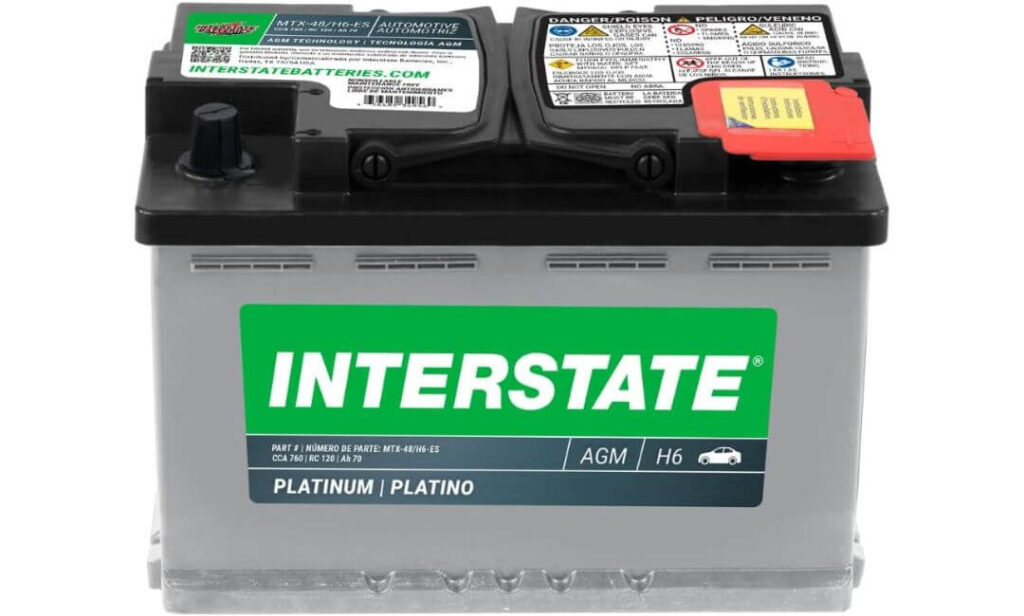
#1. Interstate Batteries MTX-48/H6 AGM Battery
Best Honda Passport H6 Battery Replacement With Reliable Cold Starts, Strong Reserve Capacity, and Long-Term AGM Durability for Everyday SUV Driving
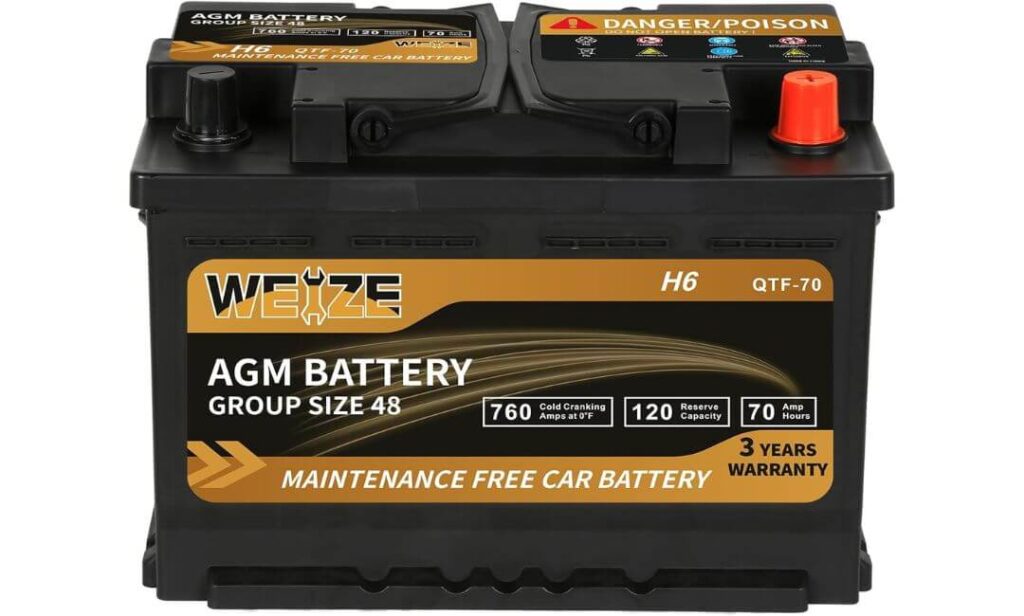
#2. Weize Platinum AGM Group 48 Battery
Top Group 48 AGM Battery for Honda Passport Owners Wanting Better Start-Stop Performance and Consistent Daily Reliability Without Overspending
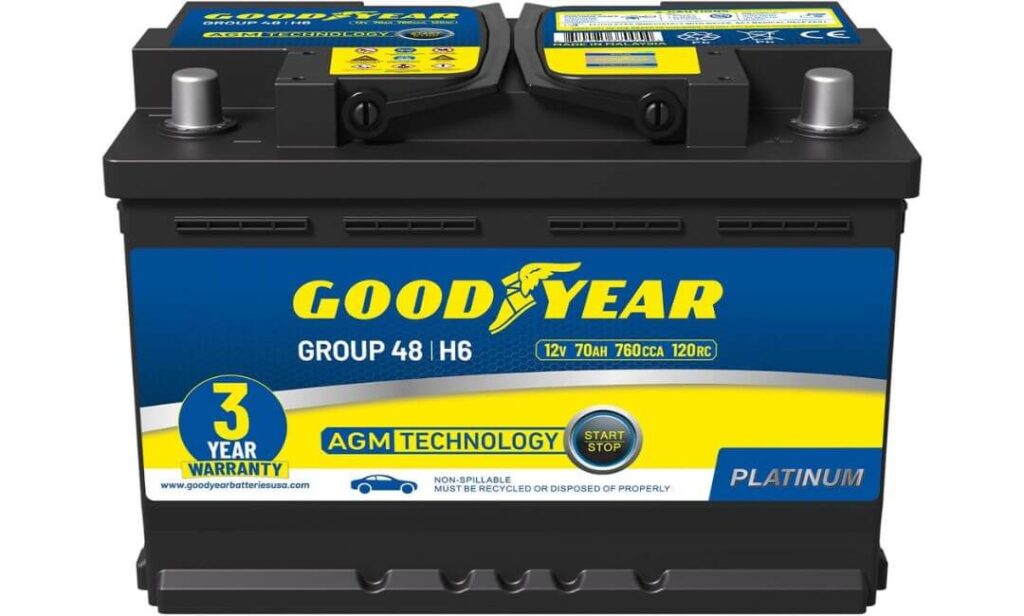
#3. Goodyear 48-H6-AGM Platinum Series Battery
Best AGM Battery for Honda Passport With 760 CCA Power, Stable Voltage Support, and Smooth Performance for Modern SUV Electronics
#4. UPLUS AGM-L70-M Group 48 Battery
Reliable Honda Passport Battery Replacement Designed for Heavy Electrical Loads, Frequent Short Trips, and Modern Start-Stop Systems
#5. Mighty Max MM-H6 AGM Battery
Affordable H6 AGM Battery for Honda Passport Drivers Looking for Strong Starting Power and Dependable Everyday SUV Performance
Expert Tip
One thing a lot of newer Honda Passport owners do not realize until later is that this SUV is far more sensitive to battery quality than older Honda models were. The Passport’s start-stop system, large infotainment display, safety tech, power tailgate, and constant background electronics all keep drawing power even when the vehicle is not doing much. That is exactly why a proper H6 AGM battery matters here.
A cheaper flooded battery may still “work” for a while, but the difference usually shows up during real ownership — slower morning starts, weak voltage during short trips, random warning lights, or stop-start systems acting inconsistent. A strong AGM battery with proper reserve capacity simply keeps the whole SUV feeling healthier and smoother long term. That is the part most spec sheets never explain clearly.
How We Chose These Honda Passport Batteries
There are hundreds of batteries online claiming to fit the 2026 Honda Passport, but most of them were ignored for one simple reason: they were built around outdated fitment data or generic crossover recommendations instead of how this SUV is actually used in the real world.
Every battery in this guide follows the newer H6 / Group 48 AGM configuration because that is the setup that makes the most sense for the Passport’s electrical demands. We did not choose random low-cost batteries just because they technically fit inside the tray. We focused on batteries that can handle repeated cold starts, heavy electronics, daily commuting, highway driving, and modern auto start-stop systems without constantly running near their limits.
Another thing we looked at closely was reserve capacity. Most buyers only focus on CCA numbers, but reserve capacity matters just as much on a modern SUV like this. A battery with weak reserve capacity may still crank the engine today, but voltage stability drops much faster when multiple systems are running together. That is often where touchscreen glitches, weak starts, and inconsistent stop-start behavior begin. The batteries selected here stay in the safer range with stronger reserve support for long-term use.
We also avoided filling this list with unknown “too-good-to-be-true” batteries that have almost no real-world history behind them. Since many H6 AGM products are still relatively new on the market, the goal here was not chasing hype or flashy marketing claims. Instead, the focus stayed on brands and models already showing solid consistency in AGM construction quality, charging stability, vibration resistance, and overall daily reliability.
Most importantly, these picks were chosen like someone was buying a battery for their own Passport — not like someone stuffing keywords into an article. The idea was simple: if a battery cannot confidently support a newer midsize SUV with modern electronics for the next several years, it did not belong on this list.
#1. Interstate Batteries MTX-48/H6 AGM Battery
Technical Specs:
- H6 / Group 48 AGM battery designed for modern midsize SUVs
- 760 Cold Cranking Amps with strong cold-weather startup performance
- 70Ah capacity with 120-minute reserve capacity support
- Pure lead AGM construction for improved cycle life and voltage stability
- Spill-proof, maintenance-free VRLA design
- Built for heavy electronics, start-stop systems, and frequent short trips
- Dimensions: 11 x 6.94 x 7.5 inches
- Weight: 45.4 lbs
- 36-month replacement coverage
Some batteries look impressive on paper, then start feeling weak the moment real SUV life begins — power liftgate cycling all day, navigation running nonstop, phone charging, short grocery trips, cold starts, traffic lights every two minutes. This one feels built for that exact kind of use. The first thing noticeable here is how stable the voltage delivery stays even when the vehicle is loaded with electronics.
The 760 CCA rating is strong, but honestly, the bigger advantage is the pure lead AGM construction. That design helps this battery recover better after repeated stop-start cycles instead of slowly feeling drained week after week. In SUVs that spend most of their time doing school runs, highway miles, or city traffic, that consistency matters more than flashy peak numbers most buyers never actually use.
Another reason this battery works well in a modern Honda Passport setup is the reserve capacity. A lot of cheaper AGM batteries technically fit, but once multiple electronics start running together, they begin dropping voltage faster than expected. This one feels calmer under load — smoother starts, steadier electronics, less strain during short trips where many batteries struggle to fully recharge.
(That “solid every single morning” feeling is exactly what separates a good AGM battery from one that only looks good in product photos.)
What Impressed Us Most
- Strong 760 CCA output without feeling overly aggressive on charging systems
- Pure lead AGM design helps improve long-term durability
- Excellent voltage stability during stop-and-go driving
- Spill-proof and vibration-resistant construction feels genuinely premium
- One of the better-balanced H6 batteries for electronics-heavy SUVs
Where It Could Be Better
- Slightly heavier than some competing Group 48 AGM options
Honda Passport Battery Compatibility
For drivers moving away from smaller older Honda battery setups, this H6 AGM configuration makes far more sense for the Passport’s modern electrical load. The dimensions line up properly for Group 48 applications, and the AGM construction works better with vehicles running auto start-stop systems and large infotainment displays.
It is also a smarter choice for owners who take frequent short trips. Many standard batteries slowly weaken in that kind of driving cycle because they rarely get enough time to recharge fully. AGM batteries like this handle repeated partial-charge driving much more confidently over time.
The Insider Pro-Tip
One thing experienced technicians quietly pay attention to with AGM batteries is not just starting power — it is how the battery behaves after several months of real use. Some batteries crank hard when brand new, then slowly lose consistency once heat, vibration, and repeated stop-start cycles build up.
This one earns attention because it stays composed under daily stress instead of chasing exaggerated numbers. For a Passport owner planning to keep the SUV several years, that steady long-term behavior usually matters more than having the absolute highest spec sheet on the screen.
#2. Weize Platinum AGM Group 48 Battery
Technical Specs:
- H6 / Group 48 AGM battery for modern SUVs and start-stop systems
- 70Ah capacity with 120-minute reserve capacity support
- 760 CCA for strong cold-weather starting performance
- Maintenance-free sealed AGM construction
- Faster recharge recovery than conventional flooded batteries
- Built for high-accessory electrical loads and daily commuting
- Operating range from -22°F to 158°F
- Dimensions: 10.94 x 6.89 x 7.48 inches
- Weight: 46 lbs
- 36-month warranty support
Right away, this battery feels aimed at the kind of SUV owner who deals with real-world driving instead of showroom conditions. Short trips, traffic lights every few minutes, phone charging nonstop, heated seats running, navigation active all day — that constant electrical demand is exactly where weaker batteries slowly start falling apart. This one feels built with those situations in mind instead of just chasing big marketing numbers.
The combination of 70Ah capacity, 120RC reserve support, and 760 CCA gives it a surprisingly balanced personality. Some AGM batteries focus heavily on cranking power but feel weaker once accessories begin stacking together. Here, the reserve stability is what stands out more. Electronics stay smoother, startup response feels consistent, and the battery does not seem stressed every time the SUV sits for a couple of days.
Another thing worth noticing is the recharge behavior. In modern SUVs running start-stop systems, batteries spend their life constantly charging and discharging in small cycles. This AGM setup handles that much better than standard flooded designs. The vibration resistance, sealed construction, and lower self-discharge rate also help the battery feel more composed during long-term daily use instead of only performing well during the first few months.
(This is the kind of battery that usually earns appreciation slowly — not because it looks flashy, but because it keeps doing its job quietly every single day.)
What Stood Out During Research
- Strong balance between reserve capacity and cold-start performance
- AGM construction works well for electronics-heavy SUVs
- Faster recharge recovery during stop-and-go driving
- Sealed leak-proof design feels safer and cleaner long term
- Very solid value for drivers wanting H6 AGM performance without overspending
A Small Thing to Keep in Mind
- Terminal placement should always be double-checked before ordering for exact fitment confidence
Honda Passport AGM Battery Compatibility
For Honda Passport owners moving toward a proper AGM upgrade, this Group 48 setup fits the direction newer electrical systems demand. The dimensions line up closely with modern H6 applications, while the AGM construction handles higher accessory loads far better than older-style batteries.
It is also a smart match for drivers who rarely do long uninterrupted highway drives. Frequent cold starts, quick errands, and daily commuting cycles can slowly wear down weaker batteries, but AGM systems like this are designed specifically to
#3. Goodyear 48-H6-AGM Platinum Series Battery
Technical Specs:
- H6 / Group 48 AGM battery for modern SUVs and start-stop systems
- 70Ah capacity with 120-minute reserve capacity
- 760 CCA for dependable cold-weather starting power
- Maintenance-free sealed AGM construction
- Shock-resistant and vibration-resistant internal design
- Wide operating temperature support for year-round driving
- Flexible mounting positions except upside down
- Dimensions: 10.75 x 6.87 x 7.50 inches
- Weight: 47.7 lbs
- 36-month manufacturer warranty
Oddly enough, what makes this battery stand out is not one flashy number — it is how balanced the entire setup feels together. A lot of modern AGM batteries either push aggressive cranking specs or cheap pricing, then quietly cut corners somewhere else. Here, the reserve capacity, AGM construction, vibration resistance, and temperature stability all feel properly matched for the kind of daily punishment midsize SUVs actually go through.
The 760 CCA output gives strong startup confidence during winter mornings, but the bigger advantage is how calm the battery feels once the vehicle is already running. Navigation screens, charging ports, driver-assist systems, heated accessories — everything modern SUVs constantly demand from a battery today — seem to stay more stable under load when reserve support is strong. The 120RC rating genuinely helps there.
Another thing worth appreciating is the physical toughness of the battery itself. SUVs naturally deal with more body movement, rougher pavement, highway vibration, and uneven roads than smaller cars do. The AGM spill-proof construction combined with the reinforced internal design helps this battery feel more durable in real-world driving instead of only testing well in ideal conditions.
(Sometimes the best battery upgrade is the one you stop thinking about completely because the SUV simply starts and behaves normally every day.)
What Makes It a Strong Pick
- Well-balanced combination of 760 CCA and 120RC reserve support
- AGM construction handles modern electrical loads confidently
- Excellent vibration resistance for daily SUV driving
- Wide temperature tolerance helps during extreme seasonal changes
- Stable accessory performance during stop-and-go driving
One Small Consideration
- Slightly heavier construction compared to some lighter AGM alternatives
Honda Passport H6 AGM Fitment
For Honda Passport owners searching for a proper Group 48 AGM replacement, this setup checks the important boxes modern SUVs actually need. The dimensions align correctly with H6 applications, while the AGM platform works better for vehicles carrying larger infotainment systems, driver-assistance tech, and automatic start-stop functions.
It also makes more sense for owners who use their SUV like an SUV — family hauling, short errands, long highway drives, winter mornings, cargo weight, electronics constantly active. That kind of mixed driving slowly exposes weak batteries, while stronger AGM systems tend to stay more consistent over time.
The Insider Pro-Tip
A lot of people assume battery upgrades are only about starting power, but experienced owners usually notice something different first — electrical smoothness. Better AGM batteries often make the entire vehicle feel healthier because voltage stays steadier during real-world use.
That matters more in newer Hondas than many people realize. Modern SUVs quietly rely on stable battery voltage for dozens of systems working together at once. When reserve capacity and AGM quality are strong, the difference shows up everywhere: smoother starts, calmer electronics, fewer strange electrical quirks, and a vehicle that simply feels less stressed day after day.
#4. UPLUS AGM-L70-M Group 48 Battery
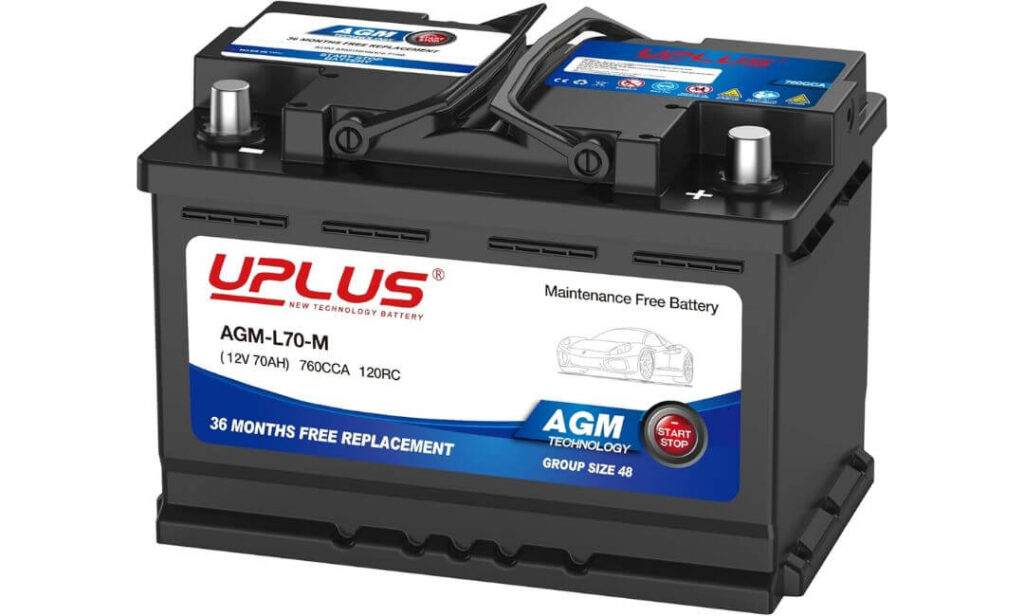
Technical Specs:
- H6 / Group 48 AGM battery for modern SUVs and start-stop systems
- 70Ah capacity with 120-minute reserve capacity
- 760 CCA cold-start performance with strong winter reliability
- AGM sealed maintenance-free construction
- Designed for high electrical loads and repeated stop-start cycles
- 4X higher cycling life than many standard flooded batteries
- 15X stronger vibration resistance than conventional battery designs
- SAE terminal layout (Left Negative, Right Positive)
- Dimensions: 10.98 x 6.81 x 7.51 inches
- Weight: 46.73 lbs
- 3-year warranty support
Interestingly, this is the kind of battery many owners probably overlook at first — until they actually compare the specs closely against how newer SUVs behave in daily traffic. Modern vehicles no longer just need “starting power.” They constantly pull energy for screens, sensors, heated features, safety systems, charging ports, and auto start-stop functions running silently in the background all day long. This battery feels designed around that reality instead of old-school battery expectations.
The first thing that stands out here is the focus on cycling durability. UPLUS specifically built this AGM platform around repeated charging and discharging cycles, which matters a lot more than most drivers realize. Short trips, school runs, grocery stops, traffic jams — these situations slowly wear down weaker batteries because they never fully recharge between starts. The enhanced alloy construction and higher-density internal materials help this setup tolerate that kind of abuse much more confidently.
Then there is the physical toughness. The reinforced AGM construction combined with the claimed 15X vibration resistance gives this battery a more heavy-duty personality than many entry-level AGM options. For SUVs spending time on rough pavement, highway expansion joints, uneven roads, or long-distance driving, that added structural stability genuinely matters over time. The battery feels engineered to stay consistent instead of slowly becoming unstable after months of vibration and heat exposure.
(Some AGM batteries impress for a few weeks. The better ones quietly keep the SUV feeling normal long after the “new battery excitement” disappears.)
What Makes It Worth Serious Attention
- Excellent cycle-life focus for stop-and-go driving conditions
- Strong 760 CCA output paired with stable reserve support
- Designed specifically for vehicles with heavy electrical demand
- Very high vibration resistance compared to standard batteries
- AGM platform handles repeated short-trip driving far better than flooded designs
One Thing Smart Buyers Should Still Check
- Exact terminal orientation should always be matched carefully before installation
Honda Passport AGM Battery Match
For Honda Passport owners wanting a battery that feels more prepared for modern SUV life, this Group 48 AGM setup fits naturally with the vehicle’s electrical demands. The H6 dimensions align properly, while the AGM design supports the type of daily driving these SUVs usually experience — frequent starts, electronics constantly active, and mixed city-highway use.
This battery especially makes sense for drivers who often leave the vehicle parked for a few days at a time or mostly drive shorter distances. AGM batteries with stronger cycling resistance generally recover more smoothly in those situations instead of gradually weakening from repeated partial charging.
The Insider Pro-Tip
One thing experienced battery installers quietly notice is that newer SUVs usually expose weak batteries much earlier than older vehicles did. Years ago, a battery mostly had one job: start the engine. Today, the battery supports dozens of systems before the engine even fires up.
That is why cycling stability matters just as much as cranking power now. A battery with stronger reserve support and better AGM durability often keeps the whole vehicle feeling more refined — smoother starts, steadier electronics, fewer strange voltage-related quirks, and less stress during everyday driving.
#5. Mighty Max MM-H6 AGM Battery
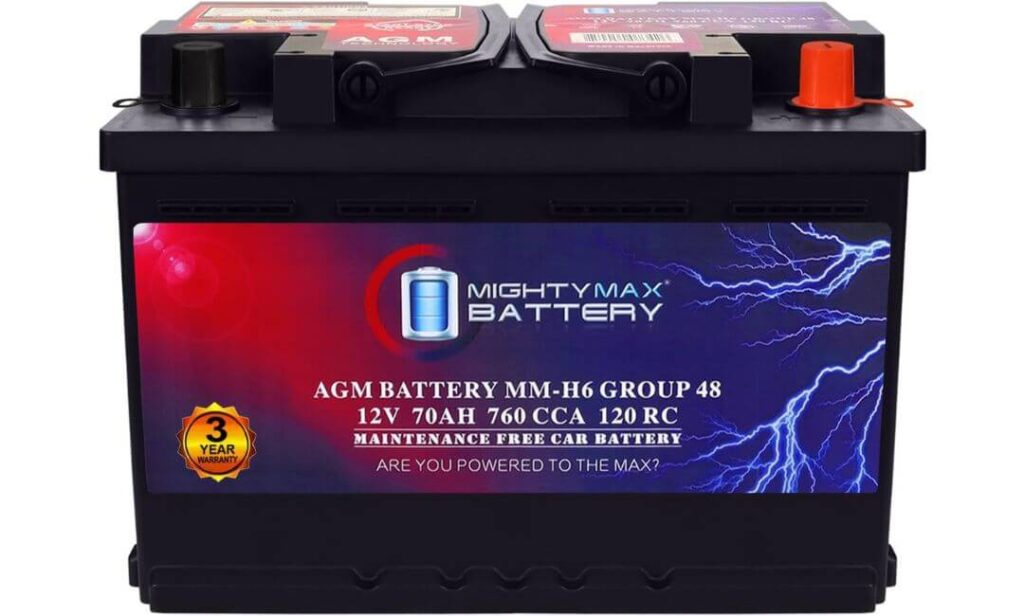
Technical Specs:
- H6 / Group 48 AGM battery for modern SUVs and start-stop systems
- 70Ah capacity with 120-minute reserve capacity support
- 760 CCA for dependable cold-weather starts
- Sealed maintenance-free AGM construction
- Deep discharge recovery support for repeated short-trip driving
- Shock-resistant and vibration-resistant internal design
- Flexible mounting positions except upside down
- Stud terminal layout with right positive and left negative
- Dimensions: 10.94 x 6.88 x 7.48 inches
- 3-year manufacturer warranty
Truthfully, this is the kind of battery many SUV owners end up appreciating more after a few months than they did on day one. It does not try to look overly premium or overloaded with marketing buzzwords, yet the core numbers are exactly where a modern H6 AGM battery should be — 70Ah capacity, 120RC reserve support, and 760 CCA packed into a maintenance-free AGM platform designed for newer electrical systems.
What really helps this battery stand out is the way it handles everyday inconsistency. Some SUVs live easy highway lives. Others spend most of their time stuck in traffic, making quick errands, sitting parked for days, then suddenly needing a strong cold start early in the morning. That repeated charge-and-drain cycle quietly destroys weaker batteries over time. The deep discharge recovery design here helps the battery stay more stable in those real-world situations instead of feeling exhausted after constant short-trip use.
Another thing worth mentioning is the overall practicality. The spill-proof AGM design, vibration resistance, flexible mounting options, and included hardware make the entire replacement process feel straightforward for drivers who simply want reliable power without overcomplicating the decision. The battery feels aimed at people who care more about daily dependability than chasing flashy branding.
(Sometimes the best upgrade is not the most expensive one — it is the one that quietly removes future headaches before they even start.)
What Makes This Battery Easy to Recommend
- Balanced combination of reserve capacity and cold-start strength
- AGM design handles stop-start systems better than standard flooded batteries
- Deep discharge recovery helps during repeated short-trip driving
- Vibration-resistant construction feels solid for SUV use
- Strong overall value for drivers wanting H6 AGM performance at a more approachable price
One Thing Worth Knowing Before Buying
- Long-term lifespan feedback still varies depending on charging habits and driving conditions
Honda Passport AGM Fitment
For Honda Passport owners upgrading to a proper H6 AGM setup, this battery fits naturally into the kind of driving these SUVs usually experience. The Group 48 dimensions align correctly for modern applications, while the AGM design supports larger infotainment systems, active safety tech, charging accessories, and automatic start-stop systems much more effectively than older battery styles.
It also makes sense for drivers who use their Passport in mixed conditions — cold mornings, short errands, weekend highway driving, family hauling, and electronics constantly running in the background. That kind of real-world usage demands more battery stability than many people initially expect.
The Insider Pro-Tip
One thing many buyers never realize until later is that modern SUVs often punish weak batteries silently before obvious failure ever happens. The engine may still start, but the vehicle slowly begins showing little signs of unstable voltage — slower cranking, inconsistent stop-start behavior, laggy electronics, or random warning messages appearing briefly.
That is exactly why a properly matched AGM battery matters more today than it did a decade ago. A stable H6 AGM setup with healthy reserve capacity does not just help start the SUV — it helps the entire electrical system feel calmer, smoother, and more dependable during everyday ownership.
Best Honda Passport Battery Comparison for H6 AGM Power, Cold Starts, and Daily SUV Reliability
Buying Guide: How to Choose the Right Honda Passport Battery Without Wasting Money
Finding a battery for the Honda Passport sounds simple until you actually start searching. Suddenly, dozens of random battery sizes appear online, older fitment charts conflict with newer AGM setups, and every listing claims to be “perfect.” The reality is, modern Honda SUVs have become far more sensitive to battery quality, reserve capacity, and electrical stability than most buyers expect.
That is exactly why choosing the correct battery is not only about getting the engine to start. The battery now supports touchscreen systems, auto start-stop functions, driver-assistance tech, power tailgates, heated accessories, charging ports, and multiple background electronics working constantly. A weak or mismatched battery might still crank the SUV today, but long-term ownership usually exposes the difference very quickly.
Understanding the Correct Battery Size for Honda Passport Models
One of the biggest mistakes buyers make is assuming every Honda SUV uses the same battery setup. Older Honda models commonly used smaller batteries like Group 35 or 51R, but newer Passport configurations are built around the larger H6 / Group 48 AGM platform.
That matters because physical dimensions, terminal placement, mounting brackets, and reserve capacity all change with battery size. Even if another battery technically “fits,” it may not deliver the electrical stability modern Passport systems expect during daily driving.
When checking compatibility, focus on these core fitment points:
- Group Size: H6 / Group 48
- Battery Type: AGM (Absorbent Glass Mat)
- Terminal Orientation: Positive on the right, negative on the left
- Dimensions: Around 10.9–11 inches long and 7.5 inches tall
- Vehicle Features: Auto start-stop systems, larger infotainment displays, heated accessories, and active safety systems
If the original battery label inside the vehicle already shows H6 or Group 48, staying within that specification is usually the safest and smartest decision.
Why AGM Batteries Make More Sense in Modern SUVs
Years ago, standard flooded batteries worked fine because vehicles had fewer electronics and simpler charging demands. That is no longer true with modern SUVs.
AGM batteries are designed differently internally. Instead of free-flowing liquid acid moving inside the battery, the electrolyte is absorbed into fiberglass mats. This allows the battery to handle vibration, repeated charging cycles, stop-start driving, and heavier electrical loads far more effectively.
In real-world driving, that usually translates into:
- More stable voltage delivery
- Better recovery after repeated short trips
- Stronger cold-weather starts
- Improved resistance to vibration and heat
- Longer cycle life compared to standard flooded batteries
- Better support for stop-start systems and modern electronics
For a vehicle like the Honda Passport, AGM batteries simply fit the way the SUV is actually used today.
Understanding Battery Specs Without Getting Confused
Battery listings throw around a lot of numbers, but only a few genuinely matter for daily SUV driving.
Cold Cranking Amps (CCA)
CCA measures how well the battery can start the engine in cold temperatures. Most quality H6 AGM batteries for the Passport sit around 760 CCA, which is a very solid range for reliable all-season starts.
Higher numbers are not automatically better if the battery sacrifices reserve stability elsewhere. Balanced performance matters more than chasing oversized specs.
Reserve Capacity (RC)
Reserve Capacity is one of the most overlooked specs, especially on modern SUVs packed with electronics. RC measures how long the battery can continue powering systems if the alternator temporarily stops charging correctly.
A stronger RC rating usually means:
- More stable electronics
- Better support during traffic-heavy driving
- Less voltage drop during accessory use
- Smoother performance during repeated short trips
That is why most strong H6 AGM batteries stay near the 120RC range.
Amp-Hours (Ah)
Amp-hours measure how much total energy the battery can store over time. Most quality Group 48 AGM batteries sit around 70Ah, which provides a healthy balance between starting power and long-term accessory support.
For SUVs carrying larger screens, charging devices, safety systems, and power features, that extra stored capacity genuinely helps daily usability.
Small Installation Details That Matter More Than Most Buyers Expect
Battery replacement itself is usually straightforward, but small mistakes during installation create a surprising number of problems later.
Before buying, always verify:
- Terminal position matches the factory battery
- Cable reach is comfortable without stretching
- Battery hold-down brackets align properly
- Hood clearance remains correct
- Venting and mounting areas stay unobstructed
A battery that barely fits or forces cable tension may still work temporarily, but long-term vibration and stress can slowly create electrical issues.
It is also smart to clean terminal corrosion before installing the new battery. Even the best AGM battery performs poorly if the electrical connection itself is dirty or unstable.
Real Signs Your Honda Passport Battery Is Starting to Fail
Most batteries do not fail instantly. They slowly begin showing warning signs weeks or months before complete failure happens.
Some of the most common symptoms include:
- Slower or hesitant engine cranking
- Auto start-stop system working inconsistently
- Flickering interior electronics or dim displays
- Random dashboard warning lights appearing briefly
- Longer startup delays during cold mornings
- Needing jump starts after sitting unused
- Voltage fluctuations while accessories are running
Modern SUVs especially tend to react early when battery voltage becomes unstable. Sometimes the engine still starts normally while other systems begin acting strange first.
The Real Difference Between a Cheap Battery and the Right Battery
A lot of batteries can technically start a Honda Passport. The bigger question is how the vehicle feels six months later.
The right AGM battery keeps voltage stable, handles repeated stop-start cycles smoothly, tolerates short-trip driving better, and supports the SUV’s electronics without constantly operating near its limits. That difference is difficult to notice in a product listing, but very easy to notice during daily ownership.
In the end, the smartest battery choice is usually not the one with the loudest marketing claims. It is the one that quietly keeps the entire SUV feeling healthy, stable, and dependable every single day.
Installation and Maintenance Tips for Getting the Most Out of Your Honda Passport Battery
Buying the right battery is only half the story. Even the best battery for Honda Passport can start feeling weak earlier than expected if installation is rushed, terminals are loose, or the charging system is ignored for months. Modern SUVs place much heavier electrical demand on batteries than older vehicles ever did, which means small maintenance habits now make a much bigger difference in long-term reliability.
The good news is that modern AGM batteries are far easier to live with than traditional flooded batteries. There is no watering, no messy acid maintenance, and far less day-to-day attention required. Still, a few smart habits can easily add months — sometimes years — to battery life.
Start With a Proper Installation Instead of a “Good Enough” Fit
A surprising number of battery problems begin during installation itself. The battery may technically fit inside the tray, but if cables feel stretched, terminals sit loosely, or hold-down brackets are not fully secured, vibration and unstable voltage slowly start creating problems over time.
Before installing a new Honda Passport H6 battery, double-check these areas carefully:
- Confirm the battery is truly H6 / Group 48 AGM
- Match terminal orientation exactly (positive right, negative left)
- Inspect battery cables for corrosion or cracked insulation
- Verify hold-down brackets tighten securely without movement
- Clean old corrosion from terminals before connecting the new battery
- Ensure terminals sit fully seated and tightened evenly
- Avoid over-tightening battery terminals, especially on AGM batteries
One thing experienced technicians quietly pay attention to is battery movement. If the battery shifts even slightly during driving, long-term vibration can slowly damage internal battery components and weaken electrical connections.
Why AGM Batteries Behave Differently Than Older Battery Designs
Many drivers still treat AGM batteries like traditional flooded batteries, but internally they operate very differently.
AGM batteries are sealed and maintenance-free because the electrolyte is absorbed into fiberglass mats instead of sloshing around as free liquid acid. That design allows the battery to handle:
- Frequent stop-start cycles
- Heavy accessory loads
- Rougher road vibration
- Faster charging recovery
- Repeated short-trip driving
more effectively than conventional batteries.
That is exactly why AGM batteries have become the preferred setup for newer Honda SUVs with larger infotainment systems, active safety features, and constant background electronics.
The important part is this: AGM batteries prefer stable charging conditions. Repeated deep discharge, poor alternator performance, or leaving the vehicle unused for long periods without driving can still shorten lifespan over time.
Small Maintenance Habits That Quietly Extend Battery Life
The nice thing about AGM batteries is that maintenance is simple, but consistency matters.
Every few weeks, it helps to:
- Check terminal connections for looseness
- Wipe away moisture or corrosion buildup
- Inspect battery cables for stress or cracking
- Make sure the hold-down bracket stays tight
- Look for swelling or unusual heat signs around the battery case
Even though AGM batteries are sealed, exterior cleanliness still matters more than people think. Dirt, moisture, and corrosion around terminals slowly increase resistance, which can affect charging efficiency and startup performance.
Another overlooked detail is charging behavior. Modern SUVs often spend their lives on short errands — grocery runs, school drop-offs, city traffic — where the alternator barely gets enough time to fully recharge the battery after startup. Over months, partial charging slowly weakens battery performance.
Longer highway drives occasionally help restore healthier charge levels naturally.
Extreme Heat Is Usually Harder on Batteries Than Winter
Most people blame cold weather when batteries fail, but extreme heat quietly causes more long-term battery damage in many climates.
Heat accelerates internal chemical wear, weakens battery materials faster, and increases water loss inside conventional batteries. AGM designs resist heat better than flooded batteries, but they still benefit from stable temperatures whenever possible.
During hot weather:
- Avoid leaving accessories running unnecessarily with the engine off
- Make sure the charging system is functioning correctly
- Keep terminal connections clean and tight
- Inspect for excessive under-hood heat buildup if electrical problems appear
During winter:
- Watch for slower cranking speed
- Reduce unnecessary accessory use before startup
- Drive longer occasionally after repeated cold starts
- Test battery voltage if the SUV sits unused frequently
A strong AGM battery usually handles seasonal temperature swings far more confidently than standard flooded batteries, which is exactly why H6 AGM setups work so well in the Honda Passport.
Why Short Trips Quietly Damage Batteries Faster
One of the biggest battery killers today is not age — it is modern driving habits.
Every startup pulls a heavy electrical load from the battery. If the SUV only drives for 5–10 minutes afterward, the alternator often never fully restores the lost charge. Repeat that cycle for weeks, and the battery slowly stays undercharged most of its life.
That constant partial-charge state creates:
- Weaker cold starts
- Reduced reserve capacity
- Voltage instability
- Faster AGM wear over time
For drivers who mostly do short city trips, choosing the best battery for Honda Passport becomes even more important because stronger AGM batteries tolerate repeated cycling much better than cheaper flooded designs.
A Healthy Charging System Matters Just as Much as the Battery Itself
A brand-new battery cannot fix a weak charging system. If alternator voltage is unstable or the vehicle has excessive parasitic drain, even premium AGM batteries begin struggling early.
Some warning signs worth paying attention to include:
- Repeated battery drain after sitting parked
- Flickering interior lights
- Stop-start systems disabling randomly
- Slower cranking despite a newer battery
- Dashboard charging warnings appearing intermittently
If any of those issues continue after battery replacement, testing the alternator and charging system becomes important before blaming the battery itself.
The Real Secret to Long AGM Battery Life
The batteries that usually last the longest are not always the most expensive ones. They are the ones paired with healthy charging systems, secure installation, clean terminals, and driving habits that allow proper recharge cycles.
That is why a properly installed Honda Passport H6 battery often feels dramatically better in daily driving. Starts become smoother, electronics feel more stable, voltage stays healthier under load, and the SUV simply behaves more consistently over time.
Modern AGM batteries are designed to support far more technology than batteries from even a decade ago. Treat them correctly, and they usually reward owners with quieter, smoother, and much more dependable everyday driving.
FAQs About Honda Passport Battery
Does the Honda Passport actually need an AGM battery, or is that just marketing hype?
Honestly, this is one of the biggest misconceptions around modern SUVs right now. Technically, a cheaper flooded battery may still start the Honda Passport for a while, which is exactly why many owners assume AGM batteries are unnecessary. The difference usually shows up later — not on day one.
Modern Passports quietly run far more electronics than older Hondas ever did. Auto start-stop systems, larger infotainment displays, radar sensors, charging ports, memory systems, power liftgates, heated features — all of that keeps demanding stable voltage constantly. AGM batteries handle repeated charge-and-discharge cycles much better under those conditions.
That is why owners often notice these problems first with weaker batteries:
- Random stop-start disable messages
- Slower cranking during mornings
- Flickering displays or voltage-sensitive electronics
- Battery drain after short-trip driving
- Weird intermittent warning lights
The battery is no longer just “starting the engine.” It has quietly become the foundation of the SUV’s entire electrical behavior.
Why do some Honda Passport batteries fail early even when the vehicle is still fairly new?
A lot of owners blame the battery itself, but modern driving habits are usually part of the problem too.
The Passport is the kind of SUV many people use for:
- school drop-offs
- grocery runs
- traffic-heavy commuting
- quick errands
- short cold starts multiple times daily
That driving style is extremely hard on batteries because the alternator often never gets enough time to fully recharge the battery after startup. Over months, the battery slowly lives in a partially discharged state almost every day.
What makes this tricky is that the engine may still start normally while the battery is already weakening internally. Many AGM batteries fail “suddenly” only because the electrical system had been slowly stressing them for months beforehand.
The owners who usually get the longest battery life tend to do three things consistently:
- use a proper H6 AGM battery
- avoid repeated deep discharge situations
- give the SUV occasional longer drives to recharge properly
That combination matters more than most spec sheets ever explain.
Is higher CCA always better for a Honda Passport battery upgrade?
Not necessarily — and this is where many buyers accidentally choose the wrong battery.
CCA numbers are important because they affect cold-weather starting power, but modern SUVs care about more than startup strength alone. A battery with huge CCA numbers but weak reserve stability can still create strange electrical behavior later.
For the Honda Passport, the “sweet spot” is usually balanced specs:
- around 760 CCA
- roughly 70Ah capacity
- near 120RC reserve capacity
- proper AGM construction
That balance matters because modern electronics need stable voltage over time, not just one aggressive engine crank during startup.
A lot of experienced installers quietly focus more on reserve capacity and AGM build quality than chasing the absolute highest CCA number online.
Why does my SUV still crank slowly even after installing a new battery?
This catches people off guard all the time because everyone assumes “new battery = problem solved.” Unfortunately, modern electrical systems are rarely that simple anymore.
If the SUV still cranks slowly after installing a proper AGM battery, there are usually a few hidden causes worth checking:
- weak alternator charging output
- dirty or loose ground connections
- parasitic battery drain while parked
- poor terminal contact
- battery sensor calibration issues
- excessive short-trip driving preventing full recharge
One thing many owners never realize is that modern SUVs monitor voltage constantly. If charging behavior looks unstable, systems may start protecting themselves before the battery actually dies completely.
That is why some vehicles show:
- disabled auto start-stop
- dim interior electronics
- delayed startup behavior
- random warning lights
weeks before complete battery failure ever happens.
What actually separates a “good” AGM battery from a cheap one that only looks good online?
Usually, the real difference appears six months later — not during installation day.
Most AGM batteries today advertise similar numbers on paper: 760 CCA, 70Ah, Group 48 sizing, maintenance-free design. But internal construction quality changes everything long term.
Better AGM batteries usually have:
- stronger internal plate design
- better vibration resistance
- healthier reserve stability
- more consistent recharge behavior
- improved cycling durability during stop-start driving
That matters because the Honda Passport is not a lightweight low-demand vehicle anymore. It constantly asks the battery to support multiple systems at once, often during short drives where the battery barely recovers between starts.
The batteries owners usually end up happiest with are not always the flashiest or most expensive ones. They are the ones that quietly keep the SUV feeling stable every single day — smoother starts, calmer electronics, fewer voltage quirks, and less stress during real-world driving.
Final Thoughts
At the end of the day, choosing the right battery for the Honda Passport is less about chasing the biggest marketing claims and more about understanding how modern SUVs actually behave in the real world. Today’s Passport is packed with electronics, start-stop technology, charging systems, safety features, and constant background power demand that older batteries were never designed to handle comfortably.
That is exactly why every battery in this guide focused on the same core things that genuinely matter long term: proper H6 / Group 48 AGM fitment, healthy reserve capacity, stable voltage delivery, reliable cold-start performance, and the ability to tolerate daily stop-and-go driving without feeling exhausted after a few months.
Some owners want the most refined premium feel. Others care more about value, stronger cycling durability, or stable everyday reliability during short trips and heavy accessory use. The good thing is that each battery here brings a slightly different personality while still staying inside the safe zone modern Passport electrical systems actually need.
The biggest mistake most buyers make is assuming all batteries perform the same once the engine starts. In reality, modern SUVs expose weak batteries quietly — unstable electronics, inconsistent stop-start systems, sluggish cold starts, strange voltage behavior, random warning lights. A properly matched AGM battery usually prevents those issues long before they ever become obvious.
If there is one real takeaway from this entire guide, it is this: the best battery is rarely the one with the loudest advertising. It is the one that keeps your Honda Passport feeling calm, dependable, and effortless every single morning without demanding attention afterward.
Also Check:

