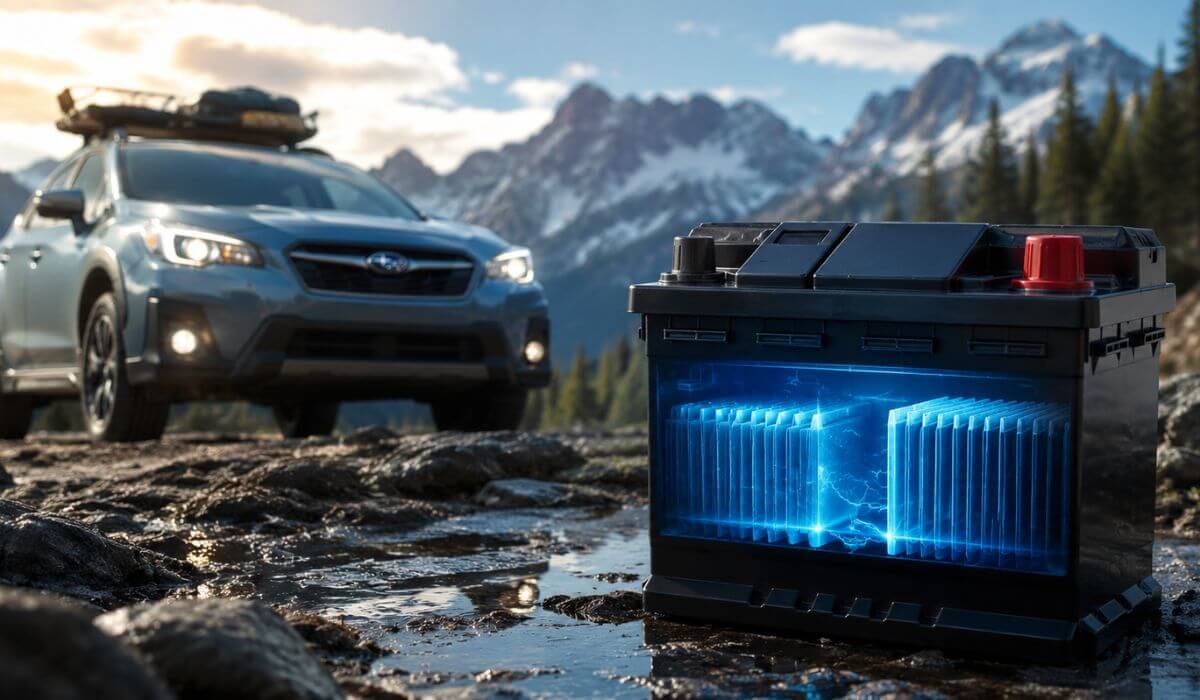
6 Best Batteries for Subaru Crosstrek in 2026: Faster Cold Starts and Stronger Performance
If you own a newer Subaru Crosstrek, there’s a good chance the factory battery already feels smaller than what the vehicle actually needs. That becomes obvious the first time winter hits, the car sits for a few days, or you start loading the Crosstrek with the things people actually buy these SUVs for—dash cams, camping gear, chargers, roof lighting, heated seats, and nonstop daily driving.
Most 2018–2026 Subaru Crosstrek models use a Group 35 battery, while some older XV Crosstrek trims still use a 51R setup. The problem is that not every battery labeled “compatible” actually feels right once it’s in the vehicle. Some struggle with cold starts. Some lose reserve power too quickly. Others simply don’t handle modern start-stop systems and heavy electronics very well long term.
That’s why the batteries in this guide weren’t picked just because they “fit.” They were chosen based on real things Crosstrek owners actually notice after installation: stronger morning starts, steadier voltage, better reserve capacity during road trips, and fewer headaches when temperatures drop. A few of these are ideal for newer start-stop models, while others make more sense if you just want a dependable replacement without overspending.
Best Subaru Crosstrek Battery: Top 2026 Picks for Stronger Cold Starts
#1. Weize Platinum AGM Battery Group 35
Best Battery for Subaru Crosstrek 2026 Models With Stronger Cold Starts and Reliable Daily Driving Performance
#2. OPTIMA D35 YellowTop AGM Battery
Best AGM Battery for Subaru Crosstrek Owners Running Extra Electronics and Heavy Daily Use
#3. UPLUS Group 35 AGM Automotive Battery
Best Subaru Crosstrek Start-Stop Battery With Higher Reserve Capacity and Stable Power Delivery
#4. Goodyear 35-AGM Platinum Battery
Best Maintenance-Free Subaru Crosstrek Battery Replacement for Long Highway Trips and Winter Driving
#5. Mighty Max MM-H5 Group 47 AGM Battery
Best High-Capacity Upgrade Battery for Subaru Crosstrek Drivers Wanting More Backup Power
#6. Interstate MTX-51R AGM Battery
Best Replacement Battery for Older Subaru XV Crosstrek Models Still Using Group Size 51R
Expert Tip Before You Buy a Subaru Crosstrek Battery
A lot of Crosstrek owners end up replacing their battery earlier than expected for one simple reason: they buy based on the lowest price instead of the way the vehicle is actually used.
If your Crosstrek sees short trips, cold mornings, camping weekends, heavy phone charging, dash cams, or even long idle times in traffic, a weak entry-level battery starts showing its limits surprisingly fast. The vehicle may still start for a while, but you begin noticing slower cranks, dimmer electronics, unstable auto start-stop behavior, and random warning lights that seem unrelated at first.
That’s why moving to a stronger AGM setup usually feels like a bigger upgrade than most people expect. The engine starts cleaner, voltage stays steadier, and the vehicle simply feels more consistent day to day—especially on newer 2018–2026 Crosstrek models that carry more electronics than older Subaru SUVs ever did.
One thing many buyers overlook is reserve capacity. Cold cranking amps matter, but reserve capacity is what keeps the battery stable when accessories, weather, and real-world driving conditions start adding up. That’s also why most of the batteries in this guide stay around the 620–680 CCA range with stronger reserve performance instead of chasing unrealistic spec-sheet numbers.
How We Chose These Subaru Crosstrek Batteries
There are hundreds of batteries online that technically “fit” the Subaru Crosstrek. That doesn’t mean they actually perform well once installed in a real daily-driven vehicle.
The first thing we focused on was proper Group 35 compatibility, because that’s what most 2018–2026 Subaru Crosstrek models use from the factory. We also included one proven 51R option because older XV Crosstrek owners still search for reliable replacements that fit correctly without terminal or tray issues.
After fitment, the biggest factor was real cold-start reliability. The Crosstrek is often used in places where temperatures swing hard overnight, and weaker batteries tend to show problems early in winter. That’s why every battery in this list delivers solid cranking power instead of just looking impressive on paper.
We also paid close attention to how these batteries handle modern electrical loads. Newer Crosstrek trims carry far more electronics than older models—heated seats, larger displays, start-stop systems, charging accessories, cameras, and constant background power draw. Some cheaper batteries work fine for a few months but start losing voltage consistency much faster under daily use.
That’s one reason AGM batteries dominate this list. They generally recover better from repeated short trips, maintain voltage more consistently, and handle accessory-heavy driving with less stress over time. But we still avoided stuffing the guide with overpriced options that only look premium because of branding.
Another thing we intentionally avoided was blindly recommending batteries with massive review counts but questionable long-term consistency. Since some of these products are newer to the market, we focused more on core specifications that actually matter in a Crosstrek: reserve capacity, stable CCA output, maintenance-free design, fitment accuracy, and overall value relative to performance.
The result is a list built around how Subaru Crosstrek owners genuinely use these vehicles in the real world—not just what looks good in a catalog table.
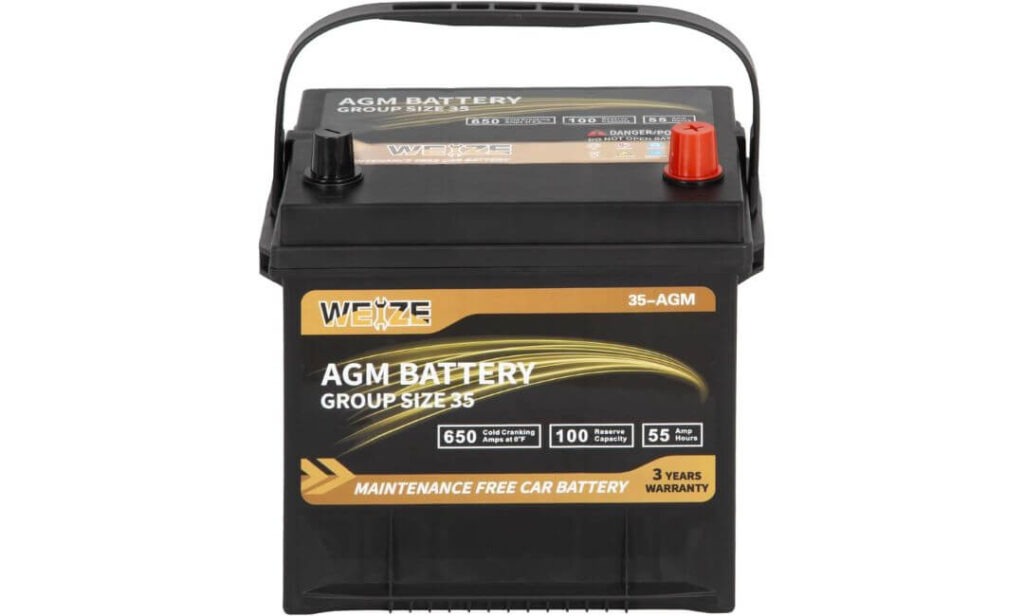
#1. Weize Platinum AGM Battery Group 35
Technical Specs:
- Group Size 35 fitment for most modern Subaru Crosstrek models
- 650 Cold Cranking Amps for stronger winter starts
- 100-minute reserve capacity for steadier accessory power
- AGM sealed construction with maintenance-free operation
- 55Ah capacity designed for heavier electrical loads
- Built for start-stop systems and modern electronics
- Heat and cold resistance from -22°F to 158°F
- Lower self-discharge during long parking periods
- Vibration-resistant internal design for rough-road durability
- 3-year warranty coverage
The first thing most Crosstrek owners notice after switching to this battery is how much more confident the vehicle feels during startup. Not louder, not dramatic — just cleaner, quicker, and far less strained. That matters more than people think, especially on newer Subaru models where the electrical system is constantly pulling power in the background.
What makes this one stand out is the balance. A lot of cheaper batteries either focus only on cranking power or only on price. This one quietly handles both. The 650 CCA output gives the Crosstrek stronger cold-weather starts, while the 100-minute reserve capacity helps stabilize electronics during short trips, traffic-heavy commutes, and accessory use. That becomes important once you start adding real-world things owners actually use every day — chargers, heated seats, cameras, navigation, wireless adapters, camping accessories.
Another reason this battery works so well in the Crosstrek is the AGM design itself. Subaru’s newer electrical systems generally behave better with AGM batteries because voltage stays more consistent under load. You don’t get that weak “almost tired” feeling some flooded batteries develop after a few months. The sealed construction also helps in extreme weather, which is probably why so many owners moving away from factory batteries end up preferring AGM replacements long term.
(If your original Crosstrek battery is already AGM from the factory, staying with AGM usually prevents a lot of annoying charging-system behavior later.)
Where This Battery Earned Our Respect
- Strong 650 CCA output without feeling overpriced
- Excellent reserve capacity for daily-driven Crosstrek models
- Handles cold mornings noticeably better than weaker factory batteries
- AGM setup works well for start-stop systems and heavy electronics
- Sealed maintenance-free design means less long-term hassle
- Holds voltage surprisingly well during short-trip driving
One Thing Buyers Should Know First
- The weight is higher than basic flooded batteries, so installation feels a bit heavier during DIY replacement.
Subaru Crosstrek Fitment Notes That Matter
This battery is one of the safest choices for most 2018–2026 Subaru Crosstrek models using a Group 35 setup. The dimensions and terminal layout line up properly for the majority of newer trims, including models carrying more electrical accessories and start-stop functions.
It also makes more sense than a basic flooded battery if your Crosstrek sees colder weather, frequent stop-and-go driving, camping trips, or long idle periods. The stronger reserve capacity helps the vehicle feel more stable during real-world daily use instead of only performing well on paper.
The Insider Pro-Tip
One thing experienced Subaru owners learn pretty quickly: the Crosstrek usually responds better to a battery with stronger reserve capacity than one that only advertises huge cranking numbers. Real daily driving stresses the battery far more through electronics and repeated short trips than through the actual engine start itself.
That’s why this battery feels surprisingly “OEM-plus” once installed. It doesn’t try to act like a race battery or an oversized truck setup. Instead, it gives the Crosstrek exactly what most owners actually need — stable voltage, dependable starts, stronger recovery after short drives, and less electrical weirdness over time.
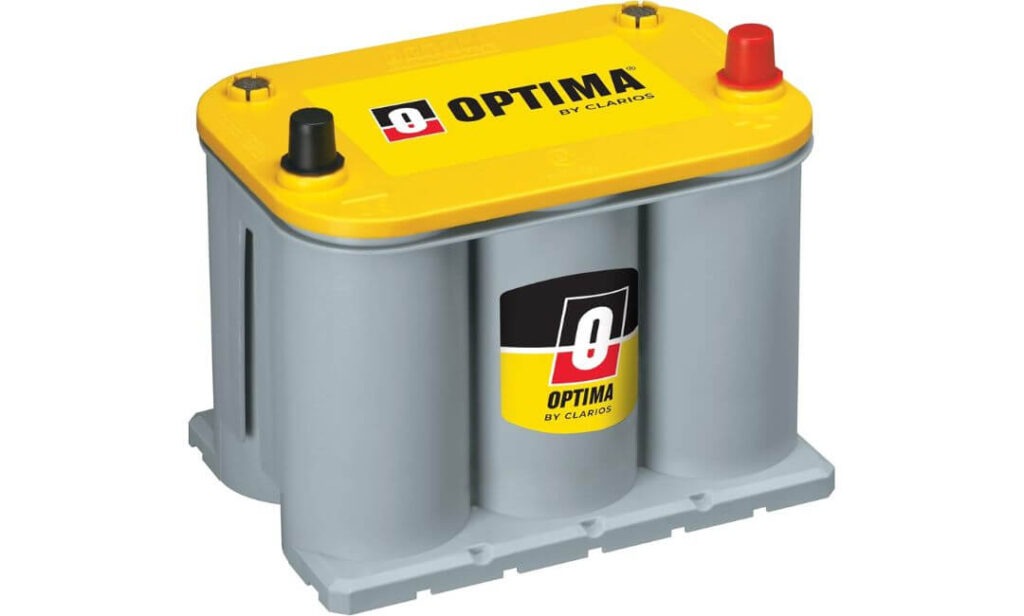
#2. OPTIMA D35 YellowTop AGM Battery
Technical Specs:
- Group 35 AGM battery designed for modern crossover electrical systems
- 620 Cold Cranking Amps for dependable winter starts
- 100-minute reserve capacity for stable accessory power
- SPIRALCELL pure lead internal construction
- Dual-purpose setup supporting both starting and repeated discharge recovery
- 15x stronger vibration resistance than standard flooded batteries
- Maintenance-free sealed AGM design
- Faster charging response compared to many traditional batteries
- SAE automotive terminal layout for proper Crosstrek compatibility
- Built for vehicles carrying heavier electrical loads
Some batteries simply start the vehicle. This one changes how the entire electrical system feels during daily driving.
The moment this battery goes into a Crosstrek, the startup feels sharper and more immediate — especially in colder weather where weaker batteries usually hesitate for a split second before turning over. That cleaner crank is largely due to OPTIMA’s SPIRALCELL design using ultra-pure lead construction instead of the typical flat-plate setup found in many ordinary AGM batteries.
But the bigger story here is consistency. Crosstrek owners who carry extra electronics, drive long highway miles, or constantly run accessories tend to notice voltage stability much faster with this battery. Heated seats, charging gear, infotainment screens, dash cams, camping accessories — everything feels less stressful on the system because the battery recovers quickly after repeated use instead of slowly draining itself day after day.
What also separates this battery from many “normal” AGM options is its dual-purpose capability. Most batteries are either strong starters or decent deep-cycle performers. This one blends both surprisingly well. That matters more than most people realize once the vehicle starts dealing with short trips, colder mornings, and real-world accessory loads instead of perfect laboratory conditions.
(For Crosstrek owners who regularly travel, camp, idle often, or use extra electronics, this battery usually feels more stable over time than many basic replacement options.)
What Stood Out During Our Evaluation
- SPIRALCELL construction delivers very steady starting power
- Excellent resistance to vibration and rough-road driving
- Holds voltage well during accessory-heavy use
- Faster recharge behavior compared to many standard AGM batteries
- Strong reserve capacity helps during traffic-heavy driving and winter weather
- Dual-purpose design adds extra flexibility for road-trip and outdoor setups
One Thing Buyers Should Know First
- The premium design and pure-lead construction usually make this battery more expensive than standard AGM replacements, but the difference becomes easier to justify once the vehicle starts handling heavier electrical loads daily.
Subaru Crosstrek Compatibility Insights
This battery works especially well in Subaru Crosstrek models using the standard Group 35 layout, particularly drivers who rely heavily on electronics or spend a lot of time in colder climates. The fitment dimensions remain very close to factory sizing, which helps avoid awkward tray or terminal issues during installation.
It’s also one of the better choices for Crosstrek owners who don’t want to think about battery performance again for a long time. The sealed AGM construction, vibration resistance, and faster recharge characteristics make it feel better suited for real-world crossover use than many entry-level replacements.
The Insider Pro-Tip
A lot of batteries advertise high CCA numbers, but very few maintain the same confidence once the vehicle starts dealing with repeated short trips, colder starts, and accessory-heavy driving every single day.
That’s where this battery quietly separates itself. The combination of reserve capacity, recharge speed, and SPIRALCELL construction gives the Crosstrek a noticeably more stable electrical feel over time — especially for owners who use the vehicle like an actual crossover instead of just a commuter car.
#3. UPLUS Group 35 AGM Automotive Battery
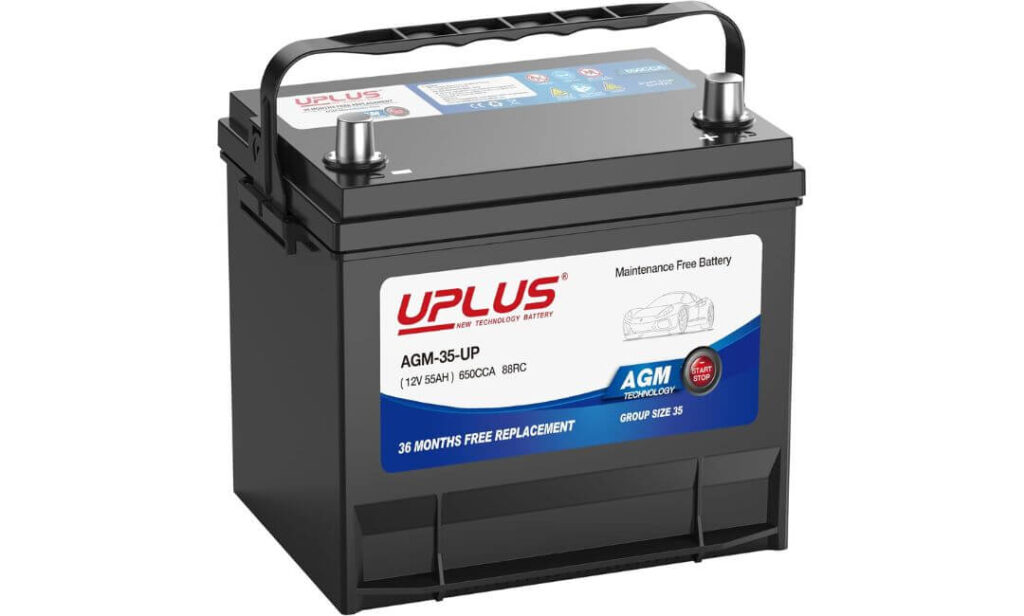
Technical Specs:
- Group 35 AGM battery for most Subaru Crosstrek models
- 650 Cold Cranking Amps for reliable winter startup performance
- 55Ah capacity built for heavier electrical demand
- 88-minute reserve capacity for steadier voltage support
- Maintenance-free sealed AGM construction
- Designed specifically for modern start-stop systems
- 4x longer cycle life compared to standard flooded batteries
- High-density negative paste with enhanced alloy composition
- 15x stronger vibration resistance than conventional batteries
- SAE terminal layout with factory-style positioning
Here’s the truth most buyers only realize after going through two or three weak replacements: modern Crosstrek models quietly demand more from a battery than people expect.
This battery feels built around that exact reality. The moment you look past the spec sheet, you notice how heavily it focuses on the kind of driving newer Subaru owners actually do — constant short trips, stop-and-go traffic, accessories always plugged in, heated seats running, screens active, chargers everywhere. That’s where weaker batteries slowly start losing consistency, even when they technically still “work.”
The biggest strength here is how balanced the electrical delivery feels during normal driving. The 650 CCA output gives the Crosstrek solid cold-start confidence, but the real advantage comes from the AGM setup and enhanced cycle-life design. The battery recovers well after repeated starts, repeated short drives, and daily accessory loads without feeling drained all the time. That becomes surprisingly noticeable after a few months compared to lower-end replacements.
Another reason this one stands out is that it doesn’t feel overly tuned toward one specific purpose. Some AGM batteries focus heavily on raw cranking power. Others mainly prioritize deep-cycle behavior. This one lands somewhere in the middle, which honestly fits the Crosstrek perfectly because most owners use these SUVs for everything — commuting, road trips, winter driving, outdoor gear, occasional long parking periods, and constant daily use.
(If your Crosstrek spends a lot of time in traffic, cold weather, or short-trip driving cycles, this type of AGM setup usually ages better than standard flooded batteries.)
What Made This Battery Easy to Recommend
- Strong 650 CCA output without sacrificing voltage stability
- AGM design handles modern Crosstrek electronics much better than basic batteries
- Excellent fit for stop-start driving conditions and repeated engine restarts
- Higher cycle-life design helps during frequent short-trip driving
- Vibration resistance is genuinely useful for rough roads and outdoor driving
- Maintenance-free setup keeps ownership simple long term
One Thing Worth Knowing Before Installation
- The battery is slightly heavier than many entry-level Group 35 options because of the reinforced AGM construction and thicker internal materials.
Subaru Crosstrek Fitment Insights
This battery works especially well for Subaru Crosstrek owners who drive daily in traffic-heavy conditions or regularly use electrical accessories. The Group 35 dimensions and terminal placement align properly with most modern Crosstrek battery trays, making installation straightforward for the majority of trims.
It’s also one of the more sensible choices for drivers who want AGM performance without jumping into ultra-premium pricing territory. The combination of reserve capacity, cycle-life improvements, and start-stop compatibility fits the Crosstrek’s real-world driving behavior surprisingly well.
The Insider Pro-Tip
A battery usually starts showing its true quality around six months after installation — not during the first week.
That’s where this one quietly earns trust. The AGM construction, stronger cycle durability, and stable voltage behavior help the Crosstrek avoid that gradual “electrical fatigue” feeling some cheaper batteries develop after repeated short trips and heavy daily use. Instead of only chasing huge headline numbers, this battery focuses on the kind of consistency owners actually notice every morning when they hit the start button.
#4. Goodyear 35-AGM Platinum Battery
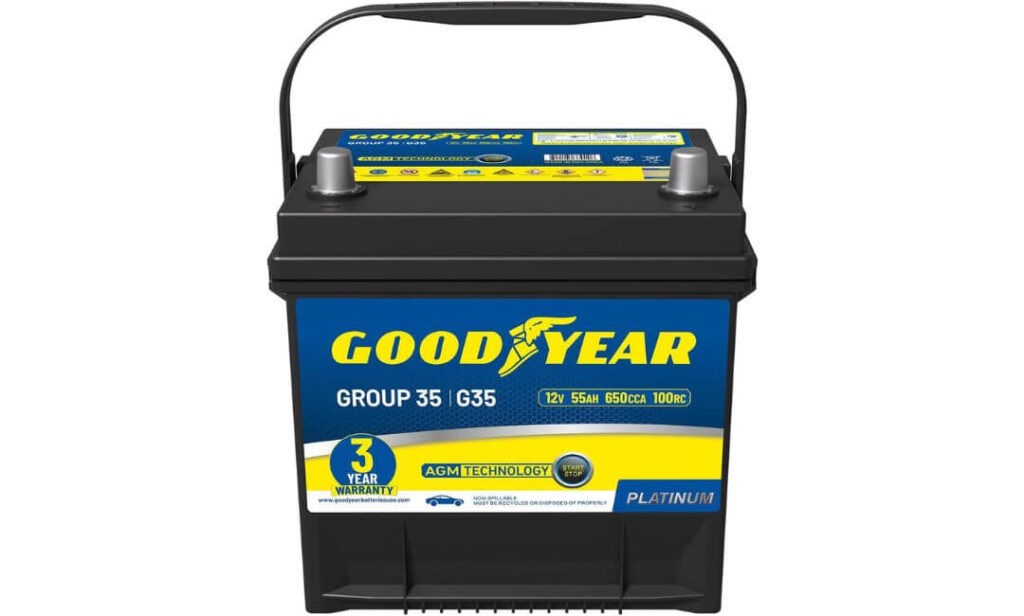
Technical Specs:
- Group 35 AGM battery configuration
- 650 Cold Cranking Amps for dependable cold-weather starts
- 55Ah capacity for modern electrical systems
- 100-minute reserve capacity for longer accessory support
- Maintenance-free sealed AGM construction
- Spill-proof and vibration-resistant internal design
- Flexible mounting capability for easier installation positioning
- Wide operating temperature stability for year-round driving
- Heavy-duty calcium-alloy internal structure
- 3-year warranty coverage
What immediately stands out about this battery is how calm and stable it feels under pressure.
Some batteries feel strong only during startup, then slowly struggle once electronics, traffic, weather, and repeated short drives start stacking up together. This one feels different because the reserve capacity and AGM setup keep the Crosstrek’s electrical system more balanced throughout the day instead of only during the first engine crank.
The 650 CCA output gives plenty of confidence during colder mornings, but honestly, the bigger advantage is how steady the battery behaves once the vehicle is already running. Heated seats, navigation, charging cables, wireless adapters, dash cams — the Crosstrek quietly pulls more power than many owners realize. That’s where the 100-minute reserve capacity starts becoming far more valuable than flashy marketing numbers.
Another thing worth appreciating is the durability focus. The sealed AGM construction combined with vibration resistance makes this battery feel properly suited for the way many Crosstrek owners actually drive — rough pavement, changing weather, outdoor trips, long commutes, occasional camping setups. It doesn’t feel like a fragile “light-duty” replacement trying to survive in a crossover environment.
(For drivers dealing with changing temperatures year-round, the stable voltage delivery becomes more noticeable over time than most spec sheets suggest.)
What Genuinely Impressed Us Here
- Strong reserve capacity keeps electronics stable during daily driving
- 650 CCA provides confident cold-weather startup behavior
- AGM construction handles rough roads and vibration very well
- Holds charge nicely during periods of lighter vehicle use
- Maintenance-free setup works well for owners wanting less hassle
- Feels balanced instead of overly tuned toward one single feature
One Thing Worth Keeping in Mind
- The casing dimensions run slightly larger than some compact Group 35 batteries, so checking tray clearance before ordering is a smart idea.
Subaru Crosstrek Fitment and Daily-Use Insight
This battery fits well within the needs of most Subaru Crosstrek owners looking for a stronger AGM replacement without jumping into extreme-performance territory. The Group 35 sizing and terminal layout align properly for most newer Crosstrek models, especially trims carrying additional electrical accessories.
It’s also a strong match for drivers who split their time between city commuting, highway driving, and outdoor use. The combination of reserve capacity, vibration resistance, and weather stability gives it a more “all-around capable” feel than many entry-level AGM replacements.
The Insider Pro-Tip
One thing experienced Subaru owners usually prioritize after their first battery replacement is consistency — not just startup power.
That’s exactly where this battery quietly earns trust. The Crosstrek tends to behave better long term when the battery can maintain stable voltage during repeated short trips and constant accessory usage, and the stronger reserve capacity here helps reduce that gradual electrical strain many cheaper batteries develop after a year or two of daily use.
#5. Mighty Max MM-H5 Group 47 AGM Battery
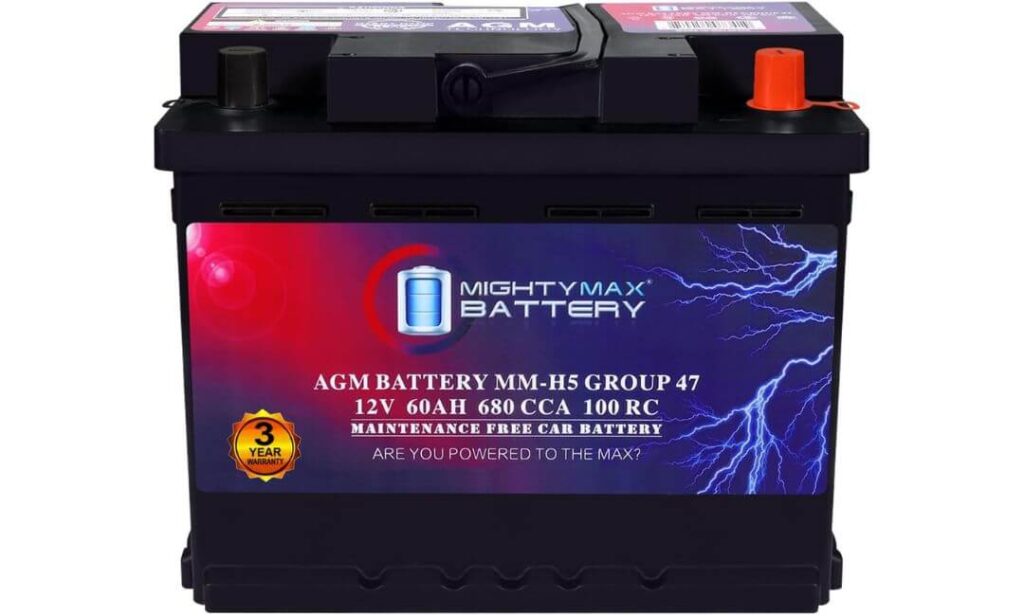
Technical Specs:
- Group 47 / H5 AGM battery upgrade configuration
- 680 Cold Cranking Amps for stronger startup performance
- 60Ah capacity for higher electrical demand
- 100-minute reserve capacity for extended accessory support
- AGM sealed maintenance-free construction
- Designed for modern start-stop vehicle systems
- Deep discharge recovery capability for repeated short-trip use
- Shock and vibration-resistant internal build
- Multi-position mounting flexibility
- ISO-certified manufacturing with CE safety compliance
There’s a noticeable difference between replacing a dead battery and upgrading the entire electrical feel of a Crosstrek. This battery leans heavily toward the second category.
The first thing that stands out is the added reserve strength. With 680 CCA and a larger 60Ah setup, the vehicle feels less strained during colder starts, accessory-heavy driving, and repeated short trips where smaller batteries slowly start losing stability. It doesn’t just crank harder — the electrical system feels calmer overall, especially once navigation, charging accessories, heated seats, cameras, and constant stop-and-go driving enter the picture.
What makes this battery especially interesting for Crosstrek owners is the move to the H5 / Group 47 platform. Compared to many standard Group 35 batteries, the larger capacity gives the vehicle more breathing room under real-world electrical demand. That becomes surprisingly valuable for drivers who camp, travel often, sit in traffic daily, or run multiple accessories without long highway charging cycles in between.
Another thing worth appreciating is the recovery behavior. Some batteries feel strong early on but slowly weaken once they repeatedly deal with short drives and heavier power draw. This AGM design recovers from deeper discharge situations much more confidently than many standard replacements, which helps the battery maintain steadier performance over time.
(For Crosstrek owners who constantly use electronics or spend time in colder climates, the larger reserve capacity often feels more important than the raw cranking number itself.)
What Earned This Battery a Spot on Our List
- Strong 680 CCA output gives excellent cold-start confidence
- Larger 60Ah capacity supports heavier electrical usage
- 100-minute reserve capacity helps during camping, travel, and daily accessory use
- AGM construction handles repeated short trips better than many flooded batteries
- Deep discharge recovery improves long-term usability
- Vibration resistance suits rough roads and outdoor driving conditions well
One Thing Worth Double-Checking Before Ordering
- This is a Group 47 / H5 battery, not a standard Group 35, so fitment clearance should always be verified before installation.
Subaru Crosstrek Fitment and Upgrade Perspective
This battery works best for Crosstrek owners intentionally looking for a higher-capacity AGM upgrade rather than a simple factory-size replacement. While many Subaru Crosstrek models primarily use Group 35 batteries, some owners successfully move to an H5 / Group 47 setup for the added reserve power and stronger overall electrical stability.
It’s particularly useful for drivers carrying heavier accessory loads or using the vehicle for outdoor travel, winter driving, camping setups, or long commutes with constant electronics active. The larger capacity gives the charging system noticeably more breathing room during demanding use.
The Insider Pro-Tip
A lot of crossover owners focus only on whether the engine starts. Experienced owners pay attention to how relaxed the entire vehicle feels electrically after months of daily use.
That’s where a higher-capacity AGM setup like this starts making sense. The added reserve power helps the Crosstrek handle modern electrical demand with less strain, less voltage fluctuation, and better recovery after repeated short drives — especially for drivers who treat the vehicle like a real adventure crossover instead of just a commuter.
#6. Interstate MTX-51R AGM Battery
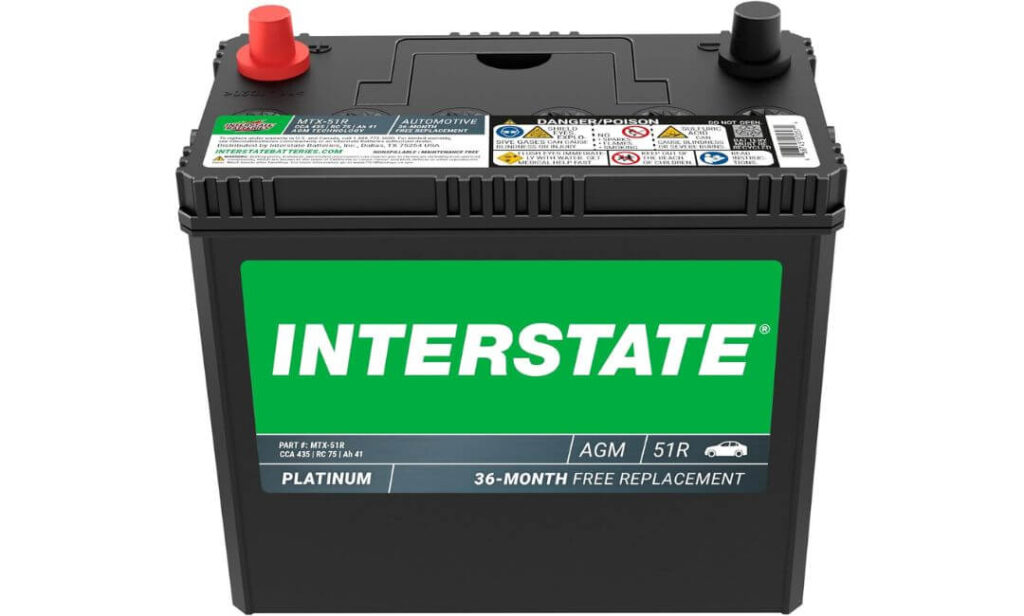
Technical Specs:
- Group 51R AGM battery configuration
- 435 Cold Cranking Amps for dependable everyday starts
- 41Ah capacity with AGM sealed construction
- 75-minute reserve capacity for stable accessory support
- Maintenance-free spill-proof battery design
- Faster recharge capability than standard flooded batteries
- 2x longer cycle-life compared to many conventional batteries
- Compact factory-style fitment for older battery trays
- Standard top-post terminal configuration
- 36-month replacement warranty coverage
Not every Subaru Crosstrek owner needs a massive oversized AGM upgrade.
For older XV Crosstrek models still running a factory-style 51R setup, this battery honestly makes more sense than trying to force larger battery sizes into the tray just to chase bigger numbers. The fit feels cleaner, installation stays simpler, and the vehicle behaves the way it was originally designed to.
What makes this battery easy to like is the balance between compact sizing and AGM reliability. A lot of older Crosstrek owners deal with shorter daily drives, occasional outdoor trips, cold mornings, and increasing electrical demand as the vehicle ages. That’s exactly where the AGM construction helps. The battery charges faster than many traditional flooded replacements and holds voltage more consistently during stop-and-go driving or longer parking periods.
The 435 CCA rating may not sound huge beside larger Group 35 batteries, but for properly matched 51R applications, the startup behavior still feels solid and dependable. More importantly, the battery doesn’t feel weak or unstable under normal daily driving conditions. Heated accessories, charging cables, infotainment systems, and routine commuting stay comfortably within what this battery was designed to handle.
(For older XV Crosstrek owners wanting factory-style fitment without downgrading to a cheaper flooded battery, this setup feels far more confidence-inspiring long term.)
What Helped This Battery Earn a Spot Here
- Compact 51R sizing fits older Crosstrek trays correctly
- AGM construction improves charging recovery and voltage stability
- Faster recharge behavior than many basic flooded batteries
- Spill-proof sealed design works well for long-term reliability
- Strong reputation for dependable daily-driver performance
- Easier installation compared to oversized battery conversions
One Thing Worth Knowing Before Buying
- The 435 CCA output is lower than larger Group 35 or H5 AGM batteries, so this option makes the most sense for proper 51R fitment applications rather than high-accessory upgrade builds.
Subaru XV Crosstrek Fitment Perspective
This battery is best suited for older Subaru XV Crosstrek models originally designed around the compact Group 51R format. The smaller footprint helps maintain proper tray fitment and terminal alignment without forcing unnecessary modifications or awkward bracket adjustments.
It’s also a smart choice for owners who simply want a dependable AGM replacement that behaves better than a traditional flooded battery while still preserving factory-style compatibility and installation simplicity.
The Insider Pro-Tip
A lot of older crossover owners accidentally create electrical problems by chasing the biggest battery possible instead of the battery the vehicle was actually engineered around.
That’s why this battery works so well in older XV Crosstrek applications. The compact AGM setup keeps installation straightforward while still delivering the improved recharge behavior, vibration resistance, and long-term consistency many older factory batteries struggle to maintain as the vehicle ages.
Best Subaru Crosstrek Battery Options Compared for Daily Driving
Buying Guide: How to Choose the Right Battery for a Subaru Crosstrek Without Wasting Money on the Wrong Fit
A Subaru Crosstrek usually doesn’t need the “most expensive” battery on the shelf. What it actually needs is the right combination of fitment, reserve capacity, charging behavior, and long-term stability for the way the vehicle is driven every day.
That’s where many owners accidentally make the wrong choice.
A battery can technically fit in the tray and still feel weak after a few months because the electrical demands of modern Crosstrek models are much higher than older compact SUVs. Heated seats, larger infotainment systems, wireless charging, stop-start systems, cameras, and constant short-trip driving all place continuous stress on the battery — even when the engine isn’t doing much work.
That’s why choosing the correct battery matters far beyond just “will the car start?”
Understanding Subaru Crosstrek Battery Group Sizes Before You Buy
Most modern Subaru Crosstrek models, especially 2018 and newer trims, commonly use a Group 35 battery. That’s the most common fitment you’ll see across newer Crosstrek replacements, including AGM upgrades and start-stop-compatible batteries.
However, some older XV Crosstrek models still use a Group 51R setup from the factory. That’s why battery size should always be verified before ordering, especially if the vehicle falls into the earlier generation years.
The easiest mistake buyers make is assuming all Crosstrek batteries are interchangeable simply because they physically “look close enough.” In reality, tray size, terminal orientation, battery height, and hold-down placement matter far more than people expect. A battery with the wrong dimensions can create loose fitment, poor terminal alignment, or long-term vibration problems.
Here’s the simplest breakdown:
- Group 35 → Most newer Subaru Crosstrek models
- Group 51R → Some older XV Crosstrek trims
- H5 / Group 47 → Larger-capacity AGM upgrade option for some owners
If there’s any uncertainty, checking the existing battery label or owner’s manual usually confirms the original factory size within seconds.
Why AGM Batteries Usually Make More Sense in a Modern Crosstrek
A few years ago, standard flooded batteries worked perfectly fine in compact SUVs. Modern Crosstrek models are different.
Today’s electrical systems demand steadier voltage, faster recharge behavior, and better recovery after repeated short drives. That’s exactly why AGM batteries now dominate most higher-quality Crosstrek replacements.
An AGM battery stores electrolyte inside absorbent glass mats instead of free-flowing liquid acid. In real-world driving, that creates several advantages owners genuinely notice over time:
- Better cold-weather starting consistency
- Stronger resistance to vibration and rough roads
- Faster recovery after repeated short trips
- Improved voltage stability for electronics
- Longer lifespan under heavier electrical loads
- Lower self-discharge when parked for longer periods
That doesn’t automatically mean every driver must buy the most expensive AGM battery available. But for newer Crosstrek models carrying stop-start systems, heated accessories, and constant electronics usage, AGM setups usually feel noticeably more stable long term than basic flooded replacements.
Start-Stop Systems Change Battery Requirements More Than Most Buyers Realize
One thing many Crosstrek owners overlook is how demanding modern start-stop systems can be on a battery.
Every time the engine shuts off at a light and restarts seconds later, the battery handles another discharge-and-recovery cycle. Over time, that repeated cycling wears out weaker batteries much faster than traditional driving ever did.
That’s why batteries designed specifically for start-stop systems typically use AGM construction, stronger internal materials, and improved cycle-life ratings.
If your Crosstrek has auto stop-start functionality, choosing a battery with:
- AGM construction
- Higher reserve capacity
- Strong cycle-life durability
- Stable charging behavior
usually prevents a lot of electrical frustration later.
One easy way to check is simply looking at the original battery label already installed in the vehicle. If the factory battery says AGM, staying with AGM is almost always the smarter move.
Why Reserve Capacity Often Matters More Than Huge CCA Numbers
A lot of buyers focus only on Cold Cranking Amps because it’s the easiest number to compare online. But reserve capacity often affects real-world daily driving even more.
CCA mainly matters during startup, especially in cold weather. Reserve capacity determines how long the battery can maintain stable voltage while electronics continue drawing power.
That becomes important in situations like:
- Traffic-heavy commuting
- Camping or outdoor travel
- Heated seats running constantly
- Navigation and charging accessories active together
- Short trips where the alternator has less recharge time
- Winter driving with multiple electrical loads active simultaneously
That’s why many of the strongest batteries for the Subaru Crosstrek stay around the 620–680 CCA range while also prioritizing reserve capacity near 100 minutes.
The combination usually feels more stable long term than chasing oversized cranking numbers alone.
Physical Fitment Still Matters More Than Most Online Listings Suggest
One reason battery shopping gets confusing online is because many listings show batteries as “compatible” even when fitment is not truly ideal.
Before buying, always verify:
- Group size
- Terminal orientation
- Tray dimensions
- Battery height
- Hold-down compatibility
This becomes especially important when upgrading from Group 35 to H5 / Group 47 batteries. Larger-capacity batteries can deliver stronger reserve performance, but they also require enough tray clearance to fit properly without forcing cables or brackets into awkward positions.
A properly fitted battery almost always lasts longer because vibration, terminal strain, and poor mounting pressure are reduced significantly.
The Real-World Approach Most Crosstrek Owners End Up Preferring
After enough ownership experience, most Crosstrek drivers stop chasing the cheapest battery possible and start prioritizing consistency instead.
The best battery usually isn’t the one with the flashiest marketing or the biggest number printed on the label. It’s the one that quietly handles winter mornings, electronics, short trips, traffic, road trips, and daily driving without constantly reminding you the electrical system is struggling.
That’s ultimately why AGM batteries, stronger reserve capacity, and proper fitment matter so much more in a Subaru Crosstrek than many buyers initially expect.
Subaru Crosstrek Battery Replacement Guide: What Actually Matters Before You Install a New Battery
Replacing the battery in a Subaru Crosstrek is usually straightforward, but modern Crosstrek models are far more sensitive to battery condition than many older compact SUVs. That’s why a proper replacement involves more than simply swapping terminals and hoping everything works afterward.
A weak or poorly fitted battery can trigger strange electrical behavior long before the vehicle completely fails to start. Flickering infotainment systems, unstable auto start-stop performance, delayed cranking, random warning lights, weak accessory power — these are often battery-related long before most owners realize it.
The good news is that replacing the battery properly usually restores the vehicle immediately, especially when upgrading from an aging factory battery to a stronger AGM setup.
Signs Your Subaru Crosstrek Battery Is Starting to Fail
One mistake many owners make is waiting until the vehicle completely refuses to start. In reality, the Crosstrek usually gives several warning signs before the battery fully dies.
Some of the most common symptoms include:
- Slower or weaker engine cranking during startup
- Auto start-stop behaving inconsistently or disabling itself
- Interior electronics dimming during ignition
- Battery warning lights appearing randomly
- Needing jump-starts after short parking periods
- Clicking sounds during startup attempts
- Infotainment resets or unstable display behavior
- Battery age reaching 3–5 years under daily use
Cold weather often exposes battery weakness first because the electrical load increases significantly while available cranking power drops at the same time.
If the battery repeatedly struggles after charging, replacement usually makes more sense than trying to extend the life of an already unstable unit.
Before Removing the Old Battery, Do These Things First
Modern vehicles remember a surprising amount of electrical information. Before disconnecting the battery, it helps to prepare the vehicle properly to avoid unnecessary headaches afterward.
A few smart steps make the process smoother:
- Park the Crosstrek on a flat surface with the engine fully off
- Remove the key or keep the push-button ignition fully powered down
- Turn off lights, climate control, charging accessories, and electronics
- Wear gloves and eye protection before touching terminals
- Check the replacement battery dimensions and terminal orientation first
- Keep a basic socket set and terminal brush nearby
If the battery tray area already shows corrosion buildup, cleaning it before installing the new battery helps improve long-term electrical contact and charging consistency.
The Correct Way to Remove a Subaru Crosstrek Battery
This part matters more than many people think.
Always disconnect the negative terminal first before touching the positive side. That reduces the risk of accidental electrical shorts while working around metal tools and brackets.
The safest order is:
- Disconnect the negative (-) terminal
- Disconnect the positive (+) terminal
- Remove the hold-down bracket
- Lift the old battery straight upward carefully
- Clean tray corrosion or terminal buildup if necessary
AGM batteries can feel surprisingly heavy compared to older flooded batteries, especially larger Group 35 or H5 upgrades, so lifting carefully helps avoid accidental terminal or fender damage.
Installing the New Battery the Right Way
Once the tray is clean and ready, installation is usually simple if the battery size matches correctly.
Position the new battery carefully so:
- The terminals match the factory orientation
- The battery sits flat inside the tray
- The hold-down bracket secures properly without excessive movement
After positioning:
- Connect the positive (+) terminal first
- Connect the negative (-) terminal second
- Tighten terminals securely without overtightening
- Double-check that cables are not stretched awkwardly
One thing many DIY installers overlook is terminal tightness. Loose terminals often cause more “bad battery” symptoms than the battery itself.
Why AGM Battery Installation Feels Different in a Crosstrek
If upgrading from a basic flooded battery to AGM, the difference often becomes noticeable immediately.
The vehicle typically starts cleaner, electronics feel steadier, and voltage recovery improves during short trips or colder weather. AGM batteries also handle repeated stop-start cycles much better, which matters heavily in newer Crosstrek models carrying more electrical demand than older Subarus ever did.
That’s one reason many owners who switch to AGM rarely go back to flooded batteries afterward.
What to Expect Right After Battery Replacement
After reconnecting power, a few temporary changes are completely normal.
The Crosstrek may need to:
- Relearn idle behavior briefly
- Reset radio presets or clock settings
- Recalibrate auto windows or infotainment preferences
- Reinitialize start-stop behavior for a short period
In most cases, the vehicle stabilizes quickly after a few normal drive cycles.
If warning lights remain active after installation, checking terminal tightness and battery voltage should always happen before assuming something major is wrong.
A Quick Multimeter Check Can Prevent Bigger Problems Later
One of the smartest things owners can do after installation is verify charging voltage using a multimeter.
A healthy resting battery typically reads:
- Around 12.6V when fully charged with the engine off
With the engine running:
- Most charging systems should show roughly 13.7V–14.7V
If voltage stays unusually low or fluctuates heavily, the issue may involve the alternator or charging system rather than the battery itself.
The Real Reason Many Crosstrek Owners Upgrade Early
A lot of Subaru owners replace the factory battery before complete failure for one simple reason: modern Crosstrek electrical systems expose weak batteries quickly.
Short drives, colder weather, outdoor travel, charging accessories, traffic-heavy commuting, and stop-start systems all stress the battery continuously. Once voltage stability begins dropping, the entire vehicle can start feeling inconsistent long before the battery officially “dies.”
That’s exactly why choosing a stronger AGM replacement with proper reserve capacity often makes the Crosstrek feel more stable, more reliable, and noticeably less stressed during everyday driving.
Subaru Crosstrek Battery Size and Group Size Guide: What Actually Fits Without Guesswork
One of the biggest reasons people end up buying the wrong battery for a Subaru Crosstrek is because online fitment charts often oversimplify everything. They’ll show multiple “compatible” battery sizes without explaining which one actually makes sense for the vehicle, the electrical load, or the factory tray layout.
That becomes even more confusing because Subaru used different battery configurations across various Crosstrek and XV Crosstrek generations. Some owners also upgrade from the factory size to a larger AGM setup for better reserve power and winter performance.
So instead of blindly trusting every online compatibility chart, it’s smarter to understand what each battery group actually means for the Crosstrek.
The Most Common Subaru Crosstrek Battery Sizes
For most modern Subaru Crosstrek models, especially newer trims, the standard fitment is usually Group 35.
That’s the size most battery manufacturers design specifically around modern Crosstrek replacement needs, including AGM upgrades and start-stop-compatible batteries.
Here’s the simplest real-world breakdown:
| Battery Group | Most Common Use | What Owners Usually Choose It For |
|---|---|---|
| Group 35 | Most 2018+ Crosstrek models | Best balance of fitment, AGM upgrades, reserve capacity |
| Group 51R | Older XV Crosstrek trims | Compact factory-style replacement setup |
| H5 / Group 47 | Optional upgrade size | Higher reserve power and heavier electrical demand |
The important thing many owners miss is that larger doesn’t automatically mean better. The battery still needs:
- Proper tray clearance
- Correct hold-down fitment
- Safe terminal positioning
- Stable mounting without vibration movement
That’s why Group 35 remains the sweet spot for most Crosstrek drivers.
Why Group 35 Became the Preferred Crosstrek Battery Size
Modern Crosstrek models carry far more electrical demand than older Subaru crossovers ever did.
Even basic daily driving now involves:
- Heated seats
- Larger infotainment systems
- Phone charging
- Navigation systems
- Wireless accessories
- Cameras and sensors
- Stop-start cycling
- Constant background electrical load
Group 35 batteries typically provide the best combination of:
- Reliable cold-start power
- Strong reserve capacity
- Proper fitment
- AGM availability
- Stable charging behavior
That’s also why nearly every serious AGM recommendation for the Crosstrek centers around Group 35 sizing.
When a Group 51R Battery Still Makes Sense
Some older XV Crosstrek models still use a Group 51R battery from the factory. In those situations, forcing a larger battery into the tray usually creates more problems than benefits unless the vehicle is specifically modified for it.
A properly matched 51R AGM battery still works very well for:
- Daily commuting
- Standard electrical loads
- Older factory charging systems
- Drivers wanting OEM-style fitment simplicity
The key advantage is cleaner installation and proper tray compatibility without stretching cables or forcing brackets into awkward positions.
Why Some Crosstrek Owners Upgrade to H5 / Group 47 Batteries
Drivers carrying heavier electrical demand sometimes move from Group 35 to an H5 / Group 47 setup for one main reason: reserve capacity.
A larger AGM battery can provide:
- More stable voltage under heavy accessory use
- Better recovery after repeated short trips
- Improved winter performance
- Longer support for camping and outdoor accessories
- Reduced electrical strain during traffic-heavy driving
But this upgrade only works properly if:
- Tray clearance is confirmed
- Terminal reach remains correct
- Hold-down pressure stays secure
- Hood clearance is verified safely
That’s why H5 upgrades make more sense for experienced owners intentionally upgrading electrical capacity — not for someone simply replacing a dead factory battery quickly.
The Fastest Way to Confirm Your Subaru Crosstrek Battery Group Size
Before buying any battery, the easiest thing you can do is check the label already installed in the vehicle.
Most batteries clearly print:
- Group size
- CCA rating
- Battery type
- Terminal orientation
The group size is usually shown as:
- “35”
- “51R”
- “H5”
- “47”
You’ll normally find it:
- On the top label
- Near the terminal area
- Printed on the side casing
If the current battery is factory-installed, that information alone usually prevents most fitment mistakes immediately.
Why Terminal Orientation Matters More Than People Think
One thing many buyers accidentally overlook is terminal placement.
Even if the battery physically fits, reversed terminal orientation can create:
- Stretched cables
- Unsafe wiring tension
- Loose electrical connections
- Installation frustration
- Long-term charging issues
That’s why checking:
- Positive terminal position
- Negative terminal position
- Cable reach
- Hold-down alignment
is just as important as checking group size itself.
Real-World Advice Most Crosstrek Owners Learn Eventually
After enough battery replacements, most owners stop chasing the “biggest” battery and start prioritizing the battery that fits the Crosstrek’s real-world needs correctly.
A properly fitted AGM battery with solid reserve capacity almost always performs better long term than an oversized battery forced awkwardly into the tray just because the numbers looked impressive online.
That’s exactly why most experienced Crosstrek owners eventually settle into one of three categories:
- Group 35 AGM for modern daily driving
- Group 51R AGM for older factory setups
- H5 / Group 47 AGM for intentional higher-capacity upgrades
Everything else usually creates more compromise than benefit.
FAQs About Subaru Crosstrek Battery
Does the Subaru Crosstrek actually benefit from upgrading to an AGM battery, or is it mostly marketing?
Honestly, this is one of those upgrades most owners don’t fully understand until after they install one.
A modern Subaru Crosstrek quietly puts a constant electrical load on the battery, even during completely normal driving. Heated seats, infotainment systems, wireless charging, start-stop cycling, cameras, sensors, short trips — the battery is working far harder than older compact SUVs ever demanded. That’s why weaker flooded batteries often start feeling inconsistent long before they fully fail.
An AGM battery usually changes three things owners notice almost immediately:
- Cleaner cold starts
- More stable electronics
- Better recovery after short trips
The biggest difference shows up six months later, not on day one. The vehicle simply feels less “electrically tired” over time, especially during winter or stop-and-go commuting. That’s why so many Crosstrek owners who move to AGM rarely go back to flooded replacements afterward.
Why do some Subaru Crosstrek batteries fail early even when the vehicle is still relatively new?
Because modern battery stress has less to do with mileage and more to do with driving patterns now.
A Crosstrek driven mostly on:
- Short trips
- Traffic-heavy commutes
- Frequent stop-start cycling
- Cold weather
- Constant accessory usage
can wear down a battery surprisingly fast, even if the vehicle itself is still fairly new.
What catches many owners off guard is that the battery may still technically “start” the vehicle while already losing voltage stability underneath. That’s when weird behavior begins:
- Flickering infotainment systems
- Weak auto stop-start operation
- Random warning lights
- Slower crank speed
- Charging inconsistency
A lot of factory batteries simply aren’t designed for years of repeated short-trip electrical demand. That’s one reason reserve capacity matters so much more in a Crosstrek than most people initially realize.
Is upgrading from Group 35 to an H5 / Group 47 battery actually worth it in a Subaru Crosstrek?
For some drivers, absolutely. For others, it’s unnecessary.
The real advantage of moving to an H5 / Group 47 battery isn’t just more CCA — it’s the added reserve capacity and electrical breathing room. Owners who regularly:
- camp,
- run multiple accessories,
- drive in freezing temperatures,
- sit in traffic daily,
- or use the Crosstrek for long outdoor trips
usually notice the benefit much faster.
But here’s the important part most articles never explain properly: bigger only helps when the fitment remains correct.
If the tray, hold-down bracket, terminal reach, and hood clearance are not properly checked first, a larger battery can create unnecessary installation problems. That’s why Group 35 remains the smarter “plug-and-play” choice for most Crosstrek owners, while H5 upgrades make more sense for drivers intentionally building around heavier electrical demand.
Why does my Subaru Crosstrek battery keep dying after sitting for only a few days?
This is becoming more common on newer vehicles than many owners realize.
Even when parked, the Crosstrek still keeps multiple background systems alive:
- security modules,
- sensors,
- memory functions,
- infotainment standby systems,
- and electronic monitoring features.
If the battery is already aging or has weaker reserve capacity, a few days of sitting can expose the problem quickly.
Cold weather makes it worse because battery efficiency drops while startup demand increases at the exact same time.
That’s also why some owners think the alternator is failing when the real issue is simply declining reserve capacity inside the battery itself. A battery can still show “acceptable voltage” and yet struggle badly once parked overnight or through a weekend.
What’s the biggest mistake people make when buying a Subaru Crosstrek battery online?
Chasing numbers without thinking about real-world fitment and driving behavior.
A lot of buyers compare only:
- CCA numbers,
- price,
- or star ratings.
But the Crosstrek responds far better to the right combination of:
- proper group size,
- stable reserve capacity,
- AGM compatibility,
- charging recovery,
- and correct terminal positioning.
That’s why some cheaper batteries look impressive online but start feeling inconsistent within months of real driving.
The best Crosstrek battery usually isn’t the one screaming the loudest in the marketing. It’s the one that quietly handles winter starts, short trips, traffic, electronics, outdoor use, and daily driving without constantly reminding you the electrical system is under stress.
Final Thoughts
The Subaru Crosstrek is one of those vehicles that quietly depends on a strong battery far more than most owners expect. It may look like a simple compact crossover on the surface, but once daily driving, winter mornings, short trips, stop-start traffic, outdoor gear, and modern electronics all enter the picture, the battery becomes one of the most important parts of how the vehicle actually feels every day.
That’s why choosing the right replacement matters so much more than simply buying the cheapest battery that physically fits.
For most drivers, a quality Group 35 AGM battery delivers the best overall balance of cold-start confidence, reserve capacity, charging stability, and long-term reliability. Older XV Crosstrek owners still running a Group 51R setup usually benefit most from staying with a properly matched AGM replacement instead of forcing oversized conversions. And for drivers carrying heavier electrical loads or using the Crosstrek more aggressively for travel and outdoor use, stepping up to an H5 / Group 47 setup can genuinely improve electrical consistency over time.
The biggest thing experienced Crosstrek owners eventually realize is this: battery performance is not only about whether the engine starts.
It’s about how stable the vehicle feels during real life — freezing mornings, traffic-heavy commutes, camping weekends, repeated short trips, charging accessories nonstop, and all the little electrical demands modern vehicles quietly place on the system every single day.
That’s exactly why the batteries in this guide were chosen the way they were. Not because they simply “fit,” but because they solve the kinds of problems Crosstrek owners actually deal with once the factory battery starts showing its limits.
Also Check:

