

5 Best Batteries for Honda Prologue in 2026: High-Performance AGM Picks With OEM Fit
The Honda Prologue may look like a clean-cut modern EV on the outside, but underneath, it still depends on a solid 12-volt auxiliary battery to keep everything alive — from startup systems and safety modules to screens, locks, charging communication, and over-the-air updates. That’s why choosing the right replacement battery matters a lot more than most owners realize, especially once these newer EVs start piling on software cycles and daily charging routines.
After digging through OEM parts data, battery tray dimensions, AGM requirements, and real-world fitment listings, one thing becomes clear: the newer 2024–2026 Honda Prologue models are built around an H5 / Group 47 AGM battery layout. That’s the sweet spot for proper terminal fitment, reserve capacity, and reliable cold-start support without throwing warning lights or electronic hiccups. Older Honda SUVs sometimes used larger H6 or H7 setups, but the Prologue’s newer EV platform is much happier with a properly matched H5 AGM auxiliary battery.
The tricky part is that many generic “fits your vehicle” listings online are all over the place right now because the Prologue is still relatively new. Some batteries technically fit the tray but miss the right balance of CCA, reserve capacity, or AGM durability needed for an EV-heavy electrical system. So instead of stuffing this list with random brands, the picks below focus on batteries that actually make sense for daily Prologue ownership — whether you drive in heavy heat, cold winters, short commutes, or rely on the SUV’s electronics every single day.
Best Honda Prologue Battery: Top 2026 Picks With Strong 680CCA Support
#1. Interstate Batteries Mega-Tron AGM H5 Battery
Best Overall Honda Prologue H5 Battery Replacement With Reliable AGM Performance and OEM-Style Daily EV Compatibility
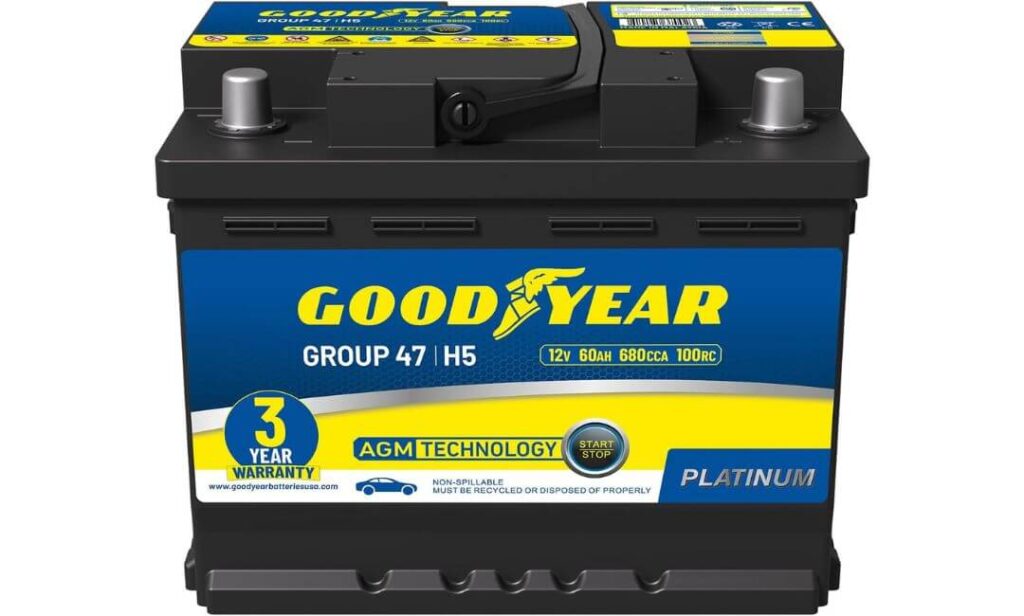
#2. Goodyear 47-H5-AGM Platinum Series Battery
High-Reserve Group 47 Battery for Honda Prologue Owners Wanting Strong Cold-Weather Starts and Long EV System Support
#3. Weize Platinum AGM H5 Automotive Battery
Best Value Honda Prologue AGM Battery for Drivers Wanting Premium 680CCA Power Without Overspending
#4. UPLUS AGM-L60-UP Group 47 Battery
Smart Honda Prologue 12V Battery Replacement Choice With Balanced Reserve Capacity for Modern EV Electronics
#5. Mighty Max MM-H5 AGM Battery
Budget-Friendly H5 AGM Battery for Honda Prologue Drivers Who Still Want Strong Starting Power and Maintenance-Free Reliability
Expert Tip Before You Buy a Honda Prologue Battery
One thing a lot of newer Honda Prologue owners are going to learn the hard way over the next couple of years is that EVs are actually pickier about 12-volt batteries than many gas SUVs. The Prologue’s main drive battery may handle propulsion, but the small auxiliary AGM battery is constantly waking up modules, syncing charging systems, powering sensors, handling remote functions, and supporting software-heavy electronics even when the SUV looks “off.”
That’s why going cheap on a random flooded battery usually ends up causing weird electrical behavior long before the battery fully dies. Slow screen wake-ups, charging communication glitches, warning messages, or inconsistent accessory behavior often start with the wrong battery spec — not a major EV problem. A properly matched H5 AGM battery with strong reserve capacity matters more here than simply chasing the highest CCA number on the box.
The safest move is sticking with a true Group 47 / H5 AGM replacement that closely matches the factory layout, terminal position, and electrical load handling. That’s exactly why every battery on this list follows the same core fitment philosophy instead of mixing random sizes just to make the list look bigger.
How We Chose These Honda Prologue Batteries
There’s a big difference between a battery that technically “fits” the Honda Prologue and one that actually feels right after six months of real ownership. For this list, we ignored generic recommendation engines and focused on what genuinely matters once people start daily driving these newer EVs through heat, cold weather, repeated charging cycles, and software-heavy use.
The first thing we locked in was the correct H5 / Group 47 AGM battery size. A lot of online fitment tools are still inconsistent because the Prologue is relatively new, and some stores continue throwing larger H6 or H7 options into the mix simply because they physically fit the tray. We intentionally avoided that approach. The batteries above stay close to the factory-style sizing because the Prologue’s electronics are clearly designed around an AGM-based H5 setup with balanced reserve capacity and proper terminal orientation.
From there, we paid close attention to the stuff owners actually notice over time — not marketing buzzwords. Batteries with weak reserve capacity were removed immediately because EVs constantly place small background demands on the auxiliary system. A battery can have flashy CCA numbers and still feel disappointing if the reserve side is weak. That’s why the final picks all sit in a healthier range for daily Honda Prologue electrical support, especially during short trips, repeated charging sessions, and heavy accessory use.
We also filtered out products with inconsistent AGM construction or unclear fitment dimensions. The newer Prologue platform is sensitive enough that buying the wrong shape or terminal layout can create installation headaches people never expect from a “simple” battery replacement. Every option here stays within the safer dimensions and specifications that make sense for the SUV’s OEM-style battery tray setup.
Brand reputation mattered too — but only when backed by real-world consistency. Interstate earned a top spot because their AGM batteries have a long history of stable performance in electronics-heavy vehicles. Goodyear and Weize stood out for offering unusually strong reserve capacity and cold-start performance for the price. UPLUS made the list because its spec balance feels surprisingly well suited to modern EV accessory loads, while Mighty Max earned its place by offering one of the better lower-cost AGM setups that still checks the important fitment boxes.
Most importantly, we built this list like actual owners would shop for the Prologue today — carefully, skeptically, and with the understanding that this SUV is still new enough that bad battery advice is everywhere right now. The goal wasn’t to recommend the most expensive battery on Amazon. It was to find the AGM options that make the most sense once you look past the marketing and focus on what the Honda Prologue actually needs.
#1. Interstate Batteries Mega-Tron AGM H5 Battery
Quick Specs:
- Correct H5 / Group 47 AGM fitment for newer Honda Prologue models
- 650 Cold Cranking Amps with strong morning startup consistency
- 100-minute reserve capacity for EV-heavy electronics and accessory loads
- True maintenance-free AGM construction with spill-proof VRLA design
- Compact OEM-style dimensions that sit properly inside the factory tray
- Built with a pure lead internal design, not a basic low-cost flooded layout
- Around 39 lbs of internal material density, which honestly tells you a lot about how seriously this battery was built
The first thing that stands out here isn’t the marketing — it’s the balance. A lot of cheaper AGM batteries chase one flashy number and quietly cut corners somewhere else. This one doesn’t. The 650CCA output feels properly matched for a Honda Prologue because the SUV doesn’t need some absurd oversized truck battery; it needs stable, consistent electrical support for an EV platform constantly running screens, sensors, charging communication, security modules, and background systems.
What makes this pick feel different in real-world use is the reserve side. That 100-minute reserve capacity matters more than many owners realize, especially if the Prologue spends time sitting between drives or constantly cycling electronics during charging sessions. Some batteries feel strong during the first few starts, then slowly become inconsistent once modern EV electronics begin stressing them daily. This one feels more composed under that kind of load, and that’s exactly why it landed at the top of this list.
Another reason this battery deserves attention is the actual construction quality. Interstate packed this AGM design with more lead than many lightweight alternatives floating around online right now, and you can usually feel that difference over time — not in ads, but during brutal weather swings, repeated charging cycles, and long-term voltage stability. The spill-proof VRLA setup also makes more sense for modern SUVs where reliability matters more than squeezing out the absolute cheapest replacement possible.
(Honestly, this feels much closer to what the Honda Prologue should have come with from the factory than many random “universal fit” AGM listings online today.)
Why This One Earned a Spot on Our List
- Strong balance between CCA, reserve capacity, and AGM durability
- Proper H5 battery size for Honda Prologue without oversized fitment games
- Pure lead design helps with long-term stability and repeated charge cycles
- Maintenance-free construction feels ideal for modern EV ownership
- One of the more trustworthy AGM options for electronics-heavy daily driving
Where Some Owners May Hesitate
- Heavier than some budget AGM batteries, though that added weight usually comes from the extra internal lead construction
Real-World Honda Prologue Compatibility Notes
For newer Honda Prologue models, this battery lands in a very comfortable zone spec-wise. The dimensions stay close to OEM expectations, the top-post layout works naturally, and the AGM construction fits the SUV’s electronics-heavy design philosophy much better than traditional flooded batteries.
It also avoids the common mistake many owners make right now — jumping to oversized H6 or H7 batteries just because an online fitment tool says they physically fit. The Prologue responds better to a properly matched H5 AGM setup with balanced reserve power rather than unnecessary bulk.
The Insider Pro-Tip
One thing experienced EV technicians quietly pay attention to is battery “weight honesty.” If two AGM batteries advertise similar specs but one weighs noticeably more, there’s usually a reason — more internal lead material, denser construction, and often better long-term stability. At nearly 40 pounds, this one doesn’t feel like a stripped-down budget AGM pretending to be premium.
Also, if your Honda Prologue starts showing odd little electrical quirks months down the road — delayed screen wakeups, random accessory behavior, charging communication hiccups — don’t automatically blame the SUV itself. In newer EVs, the small auxiliary battery is often the hidden weak link long before the main battery pack ever becomes an issue.
#2. Goodyear 47-H5-AGM Platinum Series Battery
Quick Specs:
- Proper H5 / Group 47 AGM configuration for newer Honda Prologue models
- Strong 680CCA output that feels confident during cold starts and heavy accessory loads
- Healthy 100-minute reserve capacity for EV electronics and charging-system support
- Fully sealed maintenance-free AGM construction with spill-proof protection
- Built to handle vibration, repeated charge cycles, and extreme temperature swings
- OEM-friendly dimensions with correct terminal orientation for cleaner installation
- Backed by a 36-month warranty, which honestly adds peace of mind on newer EV platforms
Here’s the interesting part about this battery: it doesn’t try too hard to look “high performance.” It just quietly checks nearly every box that matters for a Honda Prologue owner. The 680CCA rating gives it a little extra breathing room over some standard AGM options, but the bigger story is how balanced the whole package feels once you look deeper into the reserve capacity, AGM construction, and overall durability setup.
A lot of newer EV owners focus only on startup numbers because that’s what battery marketing pushes everywhere. But the Prologue is constantly drawing small amounts of power in the background — charging communication, security systems, software modules, remote access functions, sensor wakeups. That’s where this battery starts making sense. The 100RC setup helps it stay composed during repeated daily cycling instead of feeling drained or inconsistent after a few months of heavy electronic use.
The other thing worth appreciating is the overall toughness of the design. This isn’t some fragile lightweight AGM pretending to be premium. The spill-proof casing, vibration resistance, and wide temperature tolerance genuinely matter in real-world ownership, especially if the Prologue sees rough roads, summer heat, or colder climates. Even the ability to mount it in multiple positions tells you the construction quality is more serious than many generic replacements floating around online right now.
(There’s a reason batteries with balanced specs usually age better in EVs than ones chasing flashy numbers for marketing screenshots.)
What Made This Battery Stand Out to Us
- Excellent balance of 680CCA power and reserve capacity
- Strong fit for Honda Prologue 12V battery replacement needs
- AGM design feels well suited to software-heavy EV systems
- Tough outer construction handles vibration and temperature swings well
- One of the cleaner OEM-style H5 AGM setups currently available
A Small Thing Some Buyers Should Know
- Slightly heavier build than entry-level AGM batteries, though that usually contributes to the more durable internal construction
Honda Prologue Fitment and Real-World Compatibility
For the Honda Prologue, this battery lands right where most owners actually want to be — enough power for cold mornings, enough reserve for electronics-heavy driving habits, and dimensions that stay close to factory expectations without forcing oversized fitment compromises.
More importantly, it follows the correct Group 47 / H5 AGM philosophy that newer Prologue models respond well to. That matters because many online fitment systems are still recommending larger batteries simply because they physically squeeze into the tray. This one feels engineered for proper balance rather than brute size.
The Insider Pro-Tip
One thing experienced battery installers quietly watch for is how an AGM battery behaves after repeated short drives and charging cycles — not just the first week after installation. Some cheaper AGM batteries feel strong initially, then slowly become erratic once modern EV systems begin stressing them daily in the background.
This Goodyear setup stands out because the specs are unusually well-rounded for the price point. The combination of 680CCA, 100 reserve minutes, AGM sealing, and vibration resistance creates the kind of stability newer EVs genuinely appreciate over time. That’s often more valuable than chasing oversized batteries the Prologue never actually asked for.
#3. Weize Platinum AGM H5 Automotive Battery
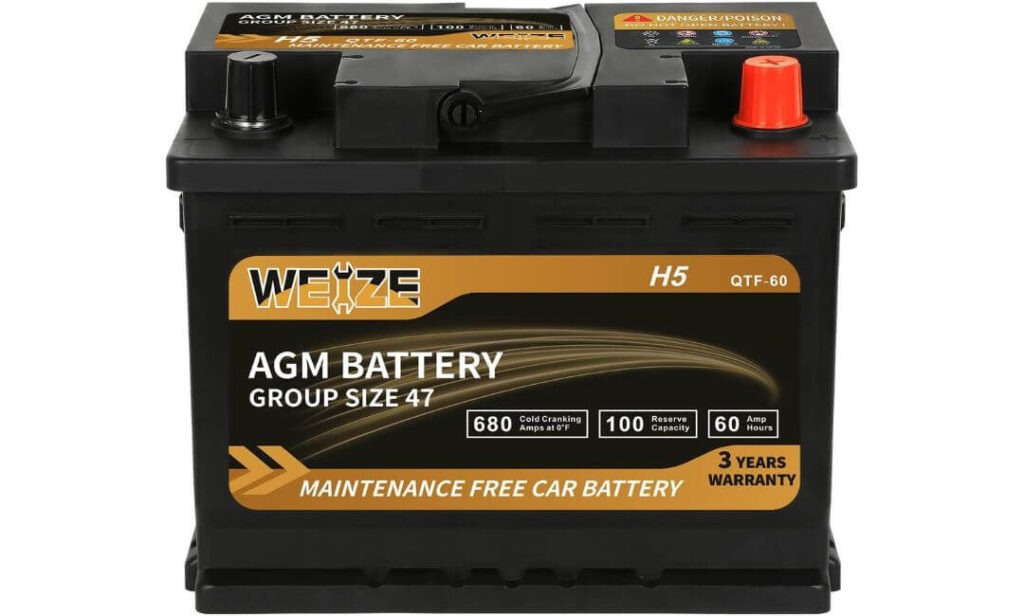
Quick Specs:
- Correct H5 / Group 47 AGM sizing for newer Honda Prologue models
- Strong 680CCA starting output for colder climates and electronics-heavy driving
- Healthy 100-minute reserve capacity for EV standby systems and accessory loads
- True 60Ah AGM construction designed for start-stop and high-demand electrical platforms
- Wide operating range from -22°F to 158°F, which honestly matters more than people think
- Maintenance-free, leak-proof sealed design with improved vibration resistance
- Proper OEM-style dimensions and terminal layout for cleaner fitment confidence
- Backed by a 36-month warranty with surprisingly solid long-term owner feedback for the price category
Here’s what makes this battery interesting: it doesn’t feel like it’s trying to fake premium status with flashy branding. Instead, it quietly delivers the exact combination many Honda Prologue owners actually need — proper H5 fitment, strong reserve capacity, healthy AGM construction, and enough cold-start muscle to stay reliable once the SUV’s electronics begin stacking daily demand on the auxiliary system.
The 680CCA figure obviously looks good on paper, but the real story is the balance between that output and the 100RC reserve setup. That combination matters in EVs because the Prologue constantly keeps modules awake in the background — charging communication, security systems, remote functions, infotainment syncing, software checks. Some batteries feel strong for the first few weeks, then start acting inconsistent once those repeated electronic cycles kick in. This one feels more stable than its price tag would suggest.
Another thing worth appreciating is the operating temperature tolerance. A battery rated to handle both freezing winters and brutal summer heat usually tells you the internal construction was designed with real-world abuse in mind, not just marketing screenshots. Add the heavier 41-pound build, AGM sealing, and start-stop compatibility, and this starts feeling less like a “budget replacement” and more like a genuinely smart buy for owners who care about long-term electrical stability without overspending.
(This is the kind of battery people usually discover after getting tired of overpriced OEM replacements that don’t actually perform any better.)
Why This Battery Earned Real Attention From Us
- Excellent balance of price, reserve capacity, and AGM durability
- Proper Honda Prologue H5 battery dimensions without oversized fitment nonsense
- Strong 680CCA output paired with solid long-term cycling support
- Wide temperature tolerance feels ideal for year-round EV ownership
- Surprisingly refined AGM construction for this pricing tier
A Small Reality Check Worth Knowing
- Brand recognition isn’t as established as Interstate or some legacy battery names, though the actual spec sheet is far more competitive than many people expect
Honda Prologue Compatibility and Fitment Perspective
For the Honda Prologue, this battery lands in a very comfortable middle ground between affordability and proper EV-ready specs. The dimensions stay close to factory expectations, terminal positioning is correct, and the AGM setup aligns naturally with the SUV’s electronics-heavy architecture.
More importantly, it avoids the common trap many owners fall into right now — buying oversized batteries just because online fitment tools say they “might fit.” The Prologue responds better to a balanced H5 AGM configuration with healthy reserve capacity than random oversized upgrades that add bulk without solving anything meaningful.
The Insider Pro-Tip
A lot of people shopping for AGM batteries only compare CCA numbers because they’re easy to market. But experienced installers usually pay closer attention to reserve capacity, operating temperature tolerance, and recharge behavior — especially on newer EV platforms like the Honda Prologue.
That’s exactly where this battery quietly becomes impressive. The combination of 680CCA, 100RC, AGM durability, fast recharge characteristics, and broad temperature resistance creates the kind of real-world stability modern EVs appreciate over time. In daily ownership, that usually matters a lot more than buying the loudest brand name on the shelf.
#4. UPLUS AGM-L60-UP Group 47 Battery
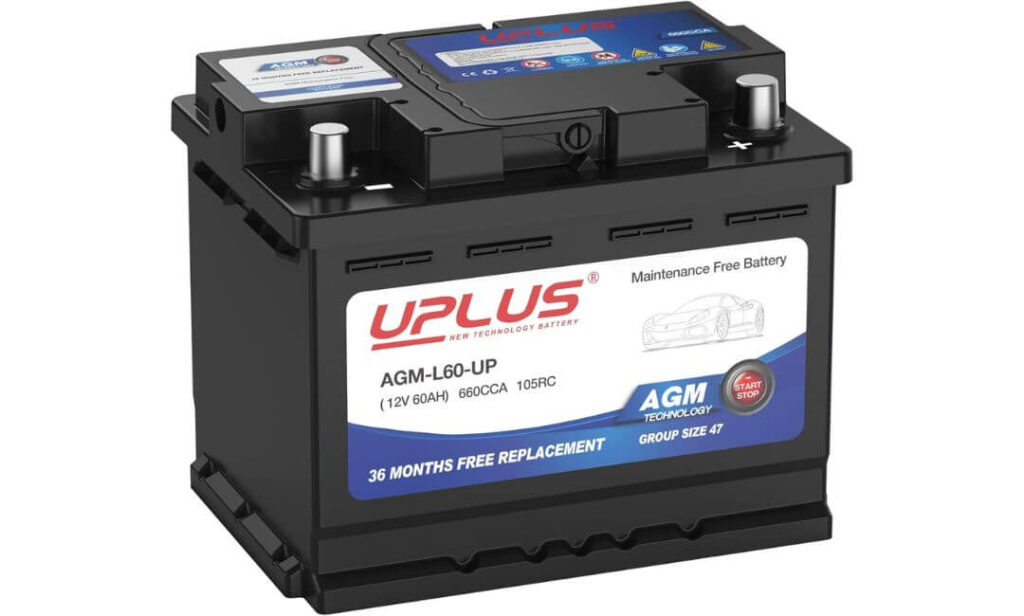
Quick Specs:
- Correct H5 / Group 47 AGM fitment for Honda Prologue models
- Strong 660CCA cold-start output with stable daily electrical support
- Impressive 105-minute reserve capacity, one of the healthiest in this lineup
- Built specifically for start-stop and electronics-heavy vehicles
- Enhanced AGM construction with 4x higher cycling capability than standard batteries
- SAE terminal layout with OEM-style positioning for easier installation confidence
- Heavy-duty vibration protection rated significantly higher than conventional designs
- Maintenance-free sealed AGM setup with leak-resistant safety construction
Oddly enough, this is the battery that quietly starts making more sense the deeper you look into the Honda Prologue’s real-world behavior. On paper, the 660CCA rating may not scream louder than some competitors, but once you notice the 105RC reserve capacity, the entire personality of this battery changes. That extra reserve support matters in newer EVs where background systems never fully “sleep” the way older vehicles used to.
The Prologue constantly keeps small electrical demands active — charging communication, sensor checks, security modules, remote functions, software syncing, infotainment wake cycles. Batteries with weak reserve depth often feel fine initially, then slowly begin acting inconsistent after repeated short drives and charging sessions. This setup feels engineered with that exact reality in mind. The higher cycling capability and silver-calcium alloy construction help it stay composed under repeated electrical stress instead of fading early under modern EV usage patterns.
Another thing that genuinely stands out here is the durability philosophy. UPLUS clearly leaned harder into long-term abuse resistance than flashy advertising numbers. The reinforced AGM structure, vibration resistance, leak-resistant vent design, and denser internal materials all point toward a battery built for owners who drive daily, deal with rough roads, or leave the vehicle parked for stretches at a time without wanting weird electrical surprises afterward.
(This is one of those batteries that starts looking smarter the more you understand how modern EV accessory systems actually behave behind the scenes.)
Why This Battery Quietly Impressed Us
- One of the strongest reserve capacity ratings in this entire comparison
- Designed specifically for modern start-stop and high-electrical-load vehicles
- AGM construction feels unusually robust for the pricing category
- Excellent fit for owners doing frequent short trips or daily charging cycles
- Strong balance between cycling durability and cold-weather reliability
One Small Thing Worth Keeping in Mind
- The brand isn’t as widely recognized as some legacy battery companies, although the actual engineering and reserve specs are stronger than many mainstream alternatives
Honda Prologue Fitment and Daily Driving Perspective
For the Honda Prologue, this battery feels unusually well matched to how the SUV actually gets used in the real world. The dimensions stay within proper H5 expectations, terminal orientation aligns correctly, and the AGM construction supports the Prologue’s constant electronic activity far better than a basic flooded battery ever could.
What really makes it stand out for EV ownership is the extra reserve depth. Many H5 batteries focus heavily on startup numbers, but the Prologue benefits more from balanced reserve support because so many systems remain active quietly in the background throughout the day.
The Insider Pro-Tip
Most people shopping for a replacement battery compare only CCA ratings, but experienced EV technicians often pay closer attention to cycling capability and reserve depth — especially on newer platforms loaded with software and accessory systems.
That’s where this battery becomes surprisingly interesting. The combination of 105RC reserve capacity, AGM durability, silver-calcium alloy construction, and enhanced cycling resistance creates the kind of electrical stability modern EVs genuinely appreciate long term. In everyday ownership, that usually translates into fewer weird voltage-related headaches months down the road.
#5. Mighty Max MM-H5 AGM Battery
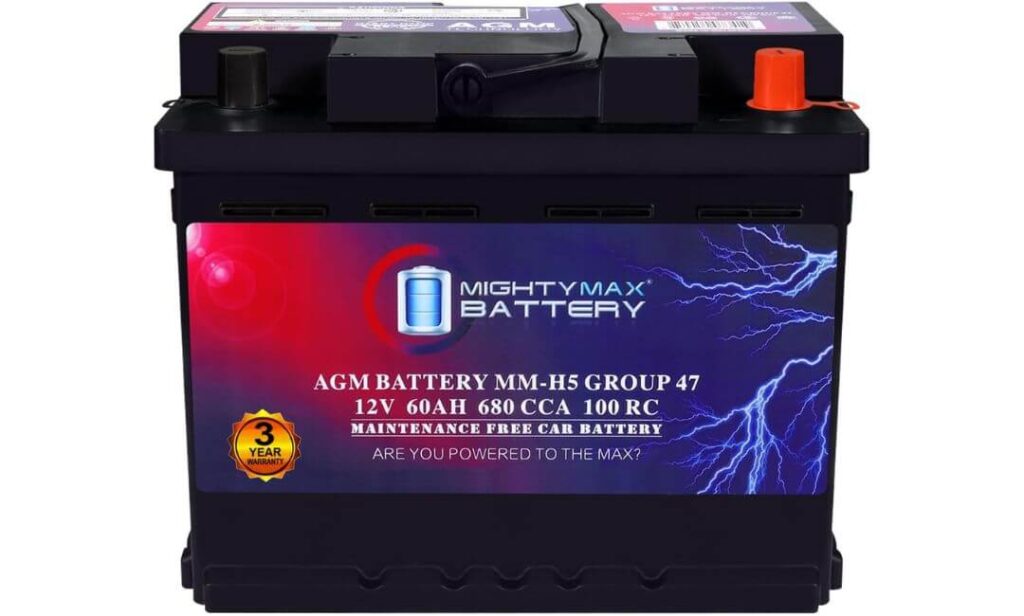
Quick Specs:
- Correct H5 / Group 47 AGM sizing for newer Honda Prologue models
- Strong 680CCA starting performance for cold mornings and electronics-heavy use
- Healthy 100-minute reserve capacity for charging systems, infotainment, and standby modules
- Fully sealed maintenance-free AGM construction with spill-proof protection
- Designed with deep discharge recovery capability, something many cheaper batteries struggle with
- Rugged internal structure built to resist vibration, heat, and repeated cycling stress
- Multi-position mounting flexibility with OEM-style polarity layout
- Includes installation hardware and backed by a 3-year warranty
Curiously, this is probably the battery in this lineup that surprises people the most once they actually start comparing specs side-by-side. At first glance, many shoppers assume it’s just another budget AGM option sitting in a crowded online marketplace. Then the numbers start telling a different story — 680CCA, 100RC, AGM sealing, deep discharge recovery, vibration resistance — and suddenly it begins looking far more serious than expected for the money.
What helps this battery stand out for the Honda Prologue is the way it handles repeated electrical demand. Modern EVs don’t simply “start and drive” anymore. They constantly wake modules, communicate with charging systems, sync software, and keep accessory systems alive in the background. Batteries without decent reserve support or recovery capability often begin acting inconsistent surprisingly early. This setup feels more stable under repeated short drives, charging sessions, and daily accessory loads than many entry-level AGM alternatives.
The deep discharge recovery side deserves extra attention too. That’s the kind of feature many people ignore until a vehicle sits for several days, temperatures swing hard, or the electrical system starts cycling heavily. A battery that recovers cleanly from those situations usually feels healthier long term than one relying purely on aggressive startup numbers for marketing purposes. Add the sealed AGM construction and reinforced casing, and this starts making genuine sense for owners wanting affordable reliability without gambling on a generic flooded replacement.
(Honestly, this feels less like a “cheap option” and more like a smart value-focused AGM setup that understands what newer vehicles actually need.)
Why This Battery Made Sense for Our Final Pick
- Strong combination of 680CCA power and 100RC reserve depth
- Deep discharge recovery support fits modern EV usage surprisingly well
- Proper Honda Prologue AGM battery sizing without oversized compromises
- Rugged construction handles vibration and harsh temperatures confidently
- One of the better value-focused AGM setups currently available in Group 47 sizing
One Small Thing Buyers Should Realistically Expect
- Long-term lifespan feedback is a little more mixed than premium-tier AGM brands, although many owners still report very solid daily reliability for the price
Honda Prologue Compatibility and Daily Use Reality
For the Honda Prologue, this battery stays inside the fitment zone that actually matters — proper H5 dimensions, correct polarity layout, AGM compatibility, and enough reserve support to handle the SUV’s constant electronic activity without feeling overwhelmed.
That balance becomes especially important because the Prologue relies heavily on background systems even while parked. A battery with decent recovery behavior and stable reserve capacity usually feels far more natural in this kind of vehicle than oversized replacements focused only on brute cranking power.
The Insider Pro-Tip
A surprising number of auxiliary battery problems in newer EVs happen after repeated short trips, not during long highway driving. That’s because the electrical system spends more time cycling accessories and less time fully stabilizing the battery charge.
This is exactly where batteries with deep discharge recovery and healthy reserve capacity quietly pull ahead. The Mighty Max setup isn’t trying to win a spec-sheet war with flashy gimmicks. Instead, it focuses on the kind of balanced AGM behavior modern EV owners usually appreciate more after six months of real ownership than they do during the first five minutes of shopping.
Best Honda Prologue AGM Battery Picks Compared Side by Side
Buying Guide: What Actually Matters When Choosing a Honda Prologue Battery
The Honda Prologue is one of those SUVs that can quietly punish the wrong battery choice without immediately making it obvious. Unlike older vehicles where almost any battery with enough cranking power could get the job done, modern EVs rely heavily on stable auxiliary power for software systems, charging communication, security modules, infotainment wake cycles, remote functions, and dozens of background electronics owners never even see.
That’s exactly why shopping for a Honda Prologue battery needs a slightly different mindset. The goal is not simply buying the battery with the biggest number on the label. It’s choosing a properly matched AGM setup that can handle modern electrical demand without creating long-term voltage instability, weird warning messages, or accessory problems months later.
Why AGM Batteries Make More Sense for the Honda Prologue
For newer EVs like the Honda Prologue, AGM batteries simply fit the platform better than traditional flooded batteries. AGM stands for Absorbent Glass Mat, which means the electrolyte is suspended inside fiberglass mats instead of moving freely like older battery designs. In real-world ownership, that translates into better vibration resistance, cleaner voltage stability, improved cycling durability, and far less maintenance.
That matters because the Prologue’s auxiliary battery works harder than many people realize. Even while parked, the SUV may continue running background communication systems, charging-related electronics, security monitoring, and software management functions. Standard flooded batteries usually dislike repeated cycling like this and tend to degrade faster under constant electronic load.
A quality AGM battery also handles short-trip driving much better. If the vehicle spends time doing quick errands, repeated charging sessions, or long periods parked between drives, AGM construction generally stays more stable and recovers more effectively than conventional designs.
Understanding the Correct Honda Prologue Battery Size
One of the biggest mistakes owners make right now is trusting random online fitment tools too quickly. Because the Honda Prologue is still relatively new, some systems continue recommending oversized battery groups simply because they physically fit inside the tray.
Based on OEM dimensions, AGM requirements, terminal layout, and real-world fitment data, the safer and more natural fit for the Honda Prologue is an H5 / Group 47 AGM battery. That’s the configuration all of the batteries in this guide were selected around.
Typical H5 battery dimensions usually land around:
- Length: roughly 9.5 inches
- Width: around 6.8 to 6.9 inches
- Height: approximately 7.4 to 7.5 inches
That sizing keeps the fitment closer to factory expectations while maintaining proper cable routing and terminal alignment.
H5 vs H6 vs H7 Batteries: What Honda Prologue Owners Should Know
This is where things get confusing online.
Some larger H6 or H7 batteries may physically squeeze into the battery area, but bigger does not automatically mean better for the Honda Prologue. Oversized batteries can sometimes create unnecessary installation pressure, cable tension, airflow issues, or awkward terminal positioning that simply wasn’t part of the original design philosophy.
The Prologue’s electrical system appears far happier with a properly balanced H5 AGM setup that combines healthy reserve capacity, stable voltage behavior, and correct physical dimensions. That’s why this guide intentionally avoided random oversized recommendations just to chase higher marketing numbers.
In other words, choosing the correct battery group matters just as much as choosing the correct brand.
The Specs That Actually Affect Real Ownership
Battery shopping gets messy because many listings focus only on one big number — usually CCA. But for a modern EV platform, several specs matter together.
Here’s what genuinely deserves attention:
- Cold Cranking Amps (CCA):
For the Honda Prologue, a healthy range around 650–680CCA is more than enough. Going massively beyond that usually adds cost and size without improving daily ownership much. - Reserve Capacity (RC):
Honestly, this is one of the most underrated specs for EVs. Reserve capacity affects how well the battery supports electronics, standby systems, and repeated accessory loads. Batteries around 100RC or higher generally feel more stable in electronics-heavy vehicles. - Amp-Hour Rating (Ah):
Most quality H5 AGM batteries for the Prologue stay around 60Ah, which provides a balanced mix of electrical support and physical fitment. - Cycle Durability:
EVs repeatedly cycle the auxiliary battery through small charging and discharge events. Batteries designed for higher cycle life usually age more gracefully under modern driving habits. - Warranty Coverage:
A genuine 3-year replacement warranty still matters, especially while long-term real-world data for newer EV battery behavior continues developing.
Why the Auxiliary Battery Matters More Than Most Owners Expect
Many people assume the Honda Prologue’s large traction battery handles everything. In reality, the small 12-volt auxiliary battery remains critically important because it powers the systems responsible for waking up the vehicle itself.
That includes:
- Infotainment systems
- Safety modules
- Door locks and remote access
- Charging communication systems
- Interior electronics
- Startup sequencing
- Sensor networks
- Software management systems
If the auxiliary battery becomes unstable, the vehicle can start showing strange behavior long before the main EV battery pack has any issue at all.
That’s why reserve capacity, AGM quality, and stable voltage delivery matter so much here.
What a Honda Prologue Battery Replacement Usually Costs
For a quality AGM replacement in the correct H5 / Group 47 size, most owners should realistically expect pricing somewhere between:
- Around $180–$320 for solid aftermarket AGM options
- Higher for premium dealer-installed OEM replacements
Pricing differences usually come down to AGM construction quality, reserve capacity, warranty coverage, and long-term cycling durability rather than simple startup power alone.
In many cases, spending slightly more upfront for a stronger AGM battery ends up feeling cheaper long term because modern EV electronics are far less forgiving toward weak auxiliary power systems.
Real Maintenance Advice Most Owners Don’t Hear Enough
Modern AGM batteries are technically maintenance-free, but that does not mean they should be ignored completely.
A few habits genuinely help long-term reliability:
- Avoid letting the vehicle sit for weeks with a weak state of charge
- Keep terminals clean and properly tightened
- Don’t mix flooded and AGM battery types
- Verify terminal orientation before buying
- Use the correct H5 / Group 47 dimensions instead of forcing oversized alternatives
- Pay attention to reserve capacity, not just CCA marketing
And honestly, one of the smartest things Honda Prologue owners can do is replace a weakening auxiliary battery early instead of waiting for total failure. Modern EVs often start showing subtle electrical weirdness long before the battery completely dies, and catching it early usually prevents much bigger frustration later.
Honda Prologue Battery Notes Every Owner Should Understand Before Buying
The Honda Prologue is still new enough that a lot of battery information online feels messy, rushed, or copied from generic fitment databases. That creates a problem because this SUV behaves differently than older gasoline Hondas once you start looking at the auxiliary electrical system, AGM requirements, and real-world battery behavior.
A battery that technically “fits” the tray is not always the battery that feels stable after months of charging cycles, software updates, cold mornings, and daily electronic demand. That’s why understanding a few Prologue-specific details before purchasing matters more than most people expect.
What a Honda Prologue Battery Replacement Usually Costs
Most Honda Prologue owners shopping for a proper AGM replacement battery will realistically land somewhere between $180 and $320 for the battery itself, depending on brand quality, reserve capacity, warranty coverage, and AGM construction.
Here’s where pricing usually separates:
- Entry-level AGM batteries typically sit closer to the lower end
- Premium AGM designs with stronger reserve capacity and longer cycling durability push pricing higher
- Dealer-installed OEM replacements often cost noticeably more because labor, diagnostics, and programming checks may be included
Installation costs can also vary depending on where the work is done. Some independent shops may charge very little because the physical installation itself is relatively straightforward, while dealership pricing can climb once inspections or battery registration procedures get involved.
What surprises many newer EV owners is that the cheapest battery is rarely the cheapest long-term solution. The Prologue relies heavily on stable low-voltage electrical behavior, so weak AGM construction or poor reserve capacity can sometimes create weird accessory issues, charging interruptions, or voltage-related warnings long before the battery completely fails.
Why Group 47 / H5 Compatibility Matters So Much
One of the biggest misconceptions floating around online right now is the idea that “bigger is automatically better” when replacing the Honda Prologue battery.
That’s not really how this vehicle behaves.
Based on OEM sizing patterns, tray dimensions, AGM requirements, and terminal orientation, the Honda Prologue is much more naturally aligned with an H5 / Group 47 AGM battery setup. That sizing keeps the fitment balanced while maintaining the correct relationship between terminal placement, cable routing, airflow space, and reserve power capacity.
Before buying any battery, owners should always verify:
- Group size compatibility
- AGM construction
- Terminal orientation
- Physical dimensions
- Reserve capacity
- Correct polarity layout
A battery can physically fit and still feel wrong once installed if the dimensions or terminal layout force awkward cable tension or improper positioning.
That’s exactly why every battery included in this guide follows the same H5 / Group 47 philosophy instead of randomly mixing oversized alternatives simply to chase larger marketing numbers.
Understanding the Honda Prologue Auxiliary Battery
This is probably the most misunderstood part of Prologue ownership right now.
Even though the vehicle runs on a large high-voltage EV battery pack, the Honda Prologue still depends heavily on a traditional 12-volt auxiliary battery to manage the systems that actually wake up and operate the vehicle’s electronics.
That includes:
- Startup communication systems
- Infotainment modules
- Safety electronics
- Door locks and remote access
- Charging communication hardware
- Software management systems
- Interior electronics
- Sensor networks and standby modules
In other words, if the small auxiliary battery becomes weak or unstable, the vehicle can start acting strangely even while the main EV battery remains perfectly healthy.
Most Prologue trims and configurations do not require owners to add a separate secondary battery setup beyond the factory auxiliary system. The real priority is simply choosing a properly matched AGM battery capable of handling repeated cycling and constant background electronic demand without unstable voltage behavior.
That’s why reserve capacity and AGM quality matter far more here than raw startup numbers alone.
Why AGM Batteries Simply Make More Sense for the Honda Prologue
For a vehicle like the Honda Prologue, AGM technology feels less like an upgrade and more like the correct baseline.
Traditional flooded batteries were designed around older vehicles with simpler electrical demands. Modern EVs are completely different. They constantly communicate, monitor systems, sync software, manage charging activity, and wake accessory modules even while parked.
AGM batteries handle that environment much better because they offer:
- Better cycling durability
- Stronger vibration resistance
- Improved voltage stability
- Faster recharge behavior
- Cleaner long-term electrical performance
- Maintenance-free sealed construction
That’s especially important for owners who:
- Take frequent short trips
- Leave the vehicle parked for days at a time
- Use heavy electronics regularly
- Drive in extreme heat or cold
- Rely heavily on charging-related systems and remote features
Flooded batteries may sometimes appear cheaper initially, but modern EV platforms usually expose their weaknesses much faster once repeated electronic cycling begins stacking up over time.
Honestly, the Honda Prologue feels like the kind of vehicle where battery quality quietly matters more than most owners realize — right up until the day the wrong battery starts creating strange electrical behavior nobody expected.
Quick Installation and Battery Care Tips for Honda Prologue Owners
Replacing the Honda Prologue’s auxiliary battery is not mechanically difficult, but modern EVs are far less forgiving about voltage stability and terminal quality than older vehicles used to be. Small installation mistakes that would barely matter on an older SUV can sometimes trigger warning messages, charging communication issues, or inconsistent accessory behavior on newer EV platforms.
That’s why taking a careful, clean approach during battery replacement matters more than rushing through the job.
Start With Safe Battery Handling Habits
Even though the Honda Prologue uses a smaller 12-volt auxiliary battery alongside the main EV battery pack, it should still be treated carefully during removal and installation.
A few simple habits make a big difference:
- Always power the vehicle down fully before disconnecting the battery
- Avoid placing tools across terminals or metal surfaces
- Wear gloves when handling AGM batteries because they are heavy and awkward to maneuver
- Lift from the battery base instead of pulling on terminals or cables
- Keep the replacement battery upright during installation, even with spill-proof AGM designs
One thing many owners underestimate is battery weight. Most quality H5 AGM batteries for the Prologue weigh close to 40 pounds because of their denser internal lead construction. Moving slowly and keeping the battery level usually prevents accidental cable strain or tray damage.
Pay Attention to Terminal Orientation and Connector Fitment
This part matters more than people think.
The Honda Prologue’s H5 / Group 47 layout depends on proper terminal positioning and cable routing. Before tightening anything down, always verify:
- Positive and negative terminals match the original orientation
- Cable routing feels natural without tension
- Connectors sit fully flush on the terminals
- Terminal clamps tighten securely without excessive force
- No wires are pinched underneath the battery or hold-down bracket
Many online fitment problems happen because people focus only on battery dimensions while ignoring terminal layout. A battery may physically fit the tray but still create awkward cable stress if the polarity orientation differs from the factory setup.
That’s one reason this guide focused heavily on proper H5 AGM configurations instead of oversized alternatives.
How to Check Voltage and Battery Health After Installation
A new battery should never feel “weak” immediately after installation. Once installed correctly, the Honda Prologue should wake smoothly, electronics should behave consistently, and charging communication should feel normal.
For owners who want extra peace of mind, a simple voltage check helps confirm everything is healthy.
Generally speaking:
- Around 12.6 volts or slightly higher with the vehicle off usually indicates a healthy fully charged AGM battery
- Voltage significantly below that may suggest the battery needs charging or wasn’t fully topped off before installation
CCA itself cannot realistically be verified without proper testing equipment, but a healthy AGM battery with correct reserve capacity should crank confidently and maintain stable electronic behavior without dimming screens, delayed wakeups, or random system glitches.
If weird electrical behavior starts immediately after replacement, the first thing worth checking is terminal tightness and connector seating — not the battery itself.
Simple Habits That Actually Extend Battery Life
Modern AGM batteries are marketed as maintenance-free, but that does not mean owners should completely ignore them after installation.
A few small habits genuinely help long-term reliability:
- Drive the vehicle regularly instead of letting it sit for weeks at low charge
- Keep battery terminals clean and dry
- Avoid repeatedly draining the battery with accessories while parked
- Pay attention to unusual electronic behavior early
- Replace weak batteries before complete failure occurs
- Use only properly sized AGM replacements with matching specifications
One thing experienced EV owners learn quickly is that auxiliary battery problems usually begin subtly. Slow infotainment wakeups, inconsistent remote access, charging communication delays, or random electronic warnings often appear before the battery outright dies.
Catching those signs early usually prevents much bigger frustration later.
The Small Detail Many Owners Overlook
The Honda Prologue’s auxiliary battery does far more behind the scenes than most people realize. Even while parked, the vehicle may continue communicating with charging systems, monitoring sensors, maintaining security functions, and supporting software modules in the background.
That means battery quality, reserve capacity, and voltage stability genuinely matter long term.
A properly matched AGM battery usually feels invisible during ownership — and honestly, that’s exactly what you want. The best auxiliary battery is the one you never have to think about because every screen, startup sequence, charging session, and electronic feature simply works the way it should every single day.
FAQs About Honda Prologue Battery
Does the Honda Prologue actually need a premium AGM battery, or will a cheaper flooded battery still work?
Technically, some flooded batteries may power the vehicle initially, and that’s exactly why so many owners get confused online. The problem usually doesn’t appear on day one. It shows up months later when the Honda Prologue starts stacking repeated charging cycles, software updates, standby electronics, remote-access activity, and background communication loads onto the auxiliary system.
That’s where cheaper flooded batteries usually begin struggling. You may notice slower screen wakeups, strange accessory behavior, charging interruptions, inconsistent startup sequences, or random warning messages long before the battery completely fails. Modern EVs simply stress auxiliary batteries differently than older vehicles ever did.
A quality AGM battery handles that environment much better because it offers:
- More stable voltage delivery
- Better cycling durability
- Improved reserve capacity behavior
- Stronger vibration resistance
- Faster recovery after repeated discharge events
Honestly, the Honda Prologue feels like the type of SUV where battery quality quietly affects ownership experience far more than most people expect.
Why are some websites recommending larger H6 or H7 batteries for the Honda Prologue?
Because many online fitment systems still prioritize “physical fit” over actual electrical balance.
Yes, some H6 or H7 batteries may physically squeeze into the tray area. But that does not automatically mean the Honda Prologue benefits from them. Larger batteries can sometimes create unnecessary cable tension, airflow limitations, awkward terminal positioning, or mounting pressure that simply was not part of the original design philosophy.
The Prologue appears much happier with a properly balanced H5 / Group 47 AGM setup, especially when reserve capacity and AGM construction are already strong. That’s why the batteries in this guide stay focused around the H5 platform instead of blindly chasing oversized specs for marketing purposes.
A lot of experienced EV owners eventually realize something important:
The “best fitting” battery is not always the physically biggest one. It’s usually the one that keeps the electrical system stable long term without introducing unnecessary compromises.
Why does reserve capacity matter so much on the Honda Prologue compared to older SUVs?
Because the Prologue never truly behaves like an “off” vehicle the way older SUVs used to.
Even while parked, the auxiliary battery may still support:
- Charging communication systems
- Security modules
- Remote-access functions
- Sensor monitoring
- Software syncing
- Infotainment standby systems
- Startup readiness checks
That constant background activity slowly drains weaker batteries over time, especially if the vehicle mainly does short trips or sits parked between drives.
This is exactly why reserve capacity becomes so important. A battery with healthy reserve depth generally feels more stable during real ownership because it handles repeated electronic demand without voltage dipping as aggressively. In many cases, reserve capacity ends up affecting long-term reliability more than raw cold-cranking numbers alone.
That’s also why several batteries in this guide prioritize 100RC to 105RC ratings instead of simply advertising giant CCA numbers.
Can a weak auxiliary battery make the Honda Prologue act like something major is wrong?
Absolutely — and this catches a lot of newer EV owners off guard.
One of the strange realities of modern EVs is that a small 12-volt battery problem can sometimes create symptoms that feel much larger than they really are. The main high-voltage battery may still be perfectly healthy while the vehicle starts behaving oddly because the auxiliary system is struggling to maintain stable voltage.
Common early signs can include:
- Delayed infotainment startup
- Random warning lights
- Charging communication issues
- Key fob inconsistencies
- Glitchy electronic behavior
- Slow screen wakeups
- Accessory instability
That’s why experienced EV technicians often check the auxiliary battery surprisingly early during diagnostics. In many cases, unstable low-voltage power creates a chain reaction of strange behavior modern software-heavy vehicles simply do not tolerate well.
Honestly, a healthy AGM battery in the Honda Prologue is less about “starting the vehicle” and more about keeping the entire electronic ecosystem calm and stable.
Is it worth replacing the Honda Prologue battery early before it completely fails?
In many cases, yes — especially if strange electrical behavior has already started appearing.
Older vehicles often gave obvious warning signs before battery failure. Modern EVs are different. The Honda Prologue can continue driving while the auxiliary battery slowly weakens in the background, creating subtle electronic instability long before a total failure happens.
That’s why waiting for the battery to die completely is not always the smartest move anymore.
If owners begin noticing things like:
- Slower startup behavior
- Inconsistent charging communication
- Random electronic quirks
- Weak voltage readings
- Increased system warnings
- Remote-access instability
…it usually makes more sense to replace the battery proactively rather than waiting for a full failure event.
A strong AGM battery tends to make the Prologue feel smoother, calmer, and more consistent overall. And honestly, that kind of invisible reliability is exactly what most EV owners end up appreciating the most after long-term ownership.
Final Thoughts
The Honda Prologue is still new enough that genuinely useful battery advice is surprisingly hard to find right now. Most pages online either push random oversized batteries, repeat generic fitment charts, or treat this EV like an older gasoline SUV where almost anything with enough cranking power will work. Real-world ownership is already proving that’s not how the Prologue behaves.
What actually matters here is balance — proper H5 / Group 47 AGM fitment, healthy reserve capacity, stable voltage behavior, and long-term cycling durability that can keep up with a modern EV constantly running software, charging communication, safety systems, and background electronics behind the scenes.
That’s why every battery in this guide was chosen around the same core philosophy instead of chasing marketing gimmicks. Some owners may prefer the long-term confidence of the Interstate setup, others may appreciate the stronger reserve-focused approach from UPLUS, while value-focused buyers will probably look hard at the Weize or Mighty Max options. The important thing is that all five batteries actually make sense for how the Honda Prologue is engineered — not just how online fitment tools randomly categorize it.
And honestly, that’s the biggest takeaway most owners eventually learn:
A good auxiliary battery in the Honda Prologue is not something you constantly notice. It’s something quietly working in the background every single day so the SUV simply behaves the way it should — smooth startups, stable electronics, reliable charging communication, clean software operation, and zero weird surprises when you least expect them.
That kind of reliability may not sound exciting on paper, but after months of real ownership, it becomes one of the most valuable upgrades you can make to the vehicle.
Also Check:


