

6 Best Batteries for Subaru Legacy in 2026: High-CCA Picks for Faster Starts and Better Reliability
If you’ve searched for the best battery for a Subaru Legacy lately, you’ve probably noticed one thing fast: half the internet still mixes older Group 25 batteries with the newer H5/Group 47 setup used in modern Legacy models. That’s exactly why so many owners end up buying the wrong size, dealing with weak cold starts, or replacing a battery again just a year or two later.
For newer Subaru Legacy models — especially 2020 and newer — the correct fit is usually an H5 / Group 47 AGM battery. Older models commonly used Group 25 or sometimes Group 35 replacements, which is why compatibility charts online can look all over the place. After digging through OEM fitment data, owner feedback, real-world cold weather performance, and reserve capacity numbers, these are the batteries that consistently make sense for daily driving, winter starts, stop-and-go traffic, and long-term reliability.
The goal here wasn’t to stuff this list with random high-CCA batteries. It was to find options that actually fit the Subaru Legacy properly, work well with modern electronics, and don’t leave you wondering why the car suddenly struggles after sitting for two days in cold weather.
Best Subaru Legacy Battery: Top 2026 Options for Longer Life and Faster Starts
#1. Interstate Batteries Mega-Tron MTX-47/H5 AGM Battery
Best H5 Battery for Subaru Legacy Owners Wanting OEM-Level Reliability and Strong Everyday Cold Starts
#2. Weize Platinum AGM Group 47 Battery
Best Value Group 47 Battery for Subaru Legacy With High CCA and Modern AGM Performance
#3. Goodyear 47-H5-AGM Platinum Battery
Best AGM Battery for Subaru Legacy Drivers Looking for Reliable Daily Starts and Low Maintenance
#4. Mighty Max MM-H6 Group 48 AGM Battery
Best High-Reserve Upgrade Battery for Subaru Legacy With Heavy Electronics and Winter Driving Needs
#5. OPTIMA RedTop Group 35 AGM Battery
Best Group 35 Battery for Older Subaru Legacy Models Needing Faster Starts and Higher Cranking Power
#6. UPLUS BCI Group 35 AGM Battery
Best Budget-Friendly Subaru Legacy Battery Replacement for Older Models With Start-Stop Systems
Expert Tip: Before replacing the battery in a Subaru Legacy, check the actual battery label sitting in the tray instead of trusting random compatibility charts online. Subaru changed battery sizing over the years, and a surprising number of owners end up installing a battery that technically “fits” but leaves less reserve power, weaker winter starts, or charging issues with newer electronics. On modern Legacy models, a properly sized H5/Group 47 AGM battery usually makes a noticeable difference the first cold morning you start the car.
How We Chose These Subaru Legacy Batteries
A lot of battery lists online are built around whichever product has the highest commission or the biggest brand name. That sounds harsh, but once you compare actual specs, fitment, reserve capacity, and owner feedback, it becomes obvious pretty quickly. We approached this list differently.
First, we focused on the real factory battery sizes used across Subaru Legacy generations instead of throwing random “compatible” batteries into the lineup. That’s why most of the recommendations here center around H5/Group 47 AGM batteries, because that’s the size newer Legacy models actually use. For older models, we included carefully selected Group 35 AGM options that have built a strong reputation for reliability and cold-start performance over time.
Then we looked beyond simple CCA numbers. A battery can advertise huge starting power and still perform poorly in real-world driving if the reserve capacity is weak or voltage stability drops after short trips. That’s why batteries like the Interstate Mega-Tron, Weize Platinum AGM, and Goodyear H5 AGM stood out. They balance cold-cranking power, reserve capacity, AGM durability, and proper fitment without pushing buyers toward oversized setups most drivers simply don’t need.
The Mighty Max H6 Group 48 earned its place because some Subaru Legacy owners run heavy electrical loads every day — dash cams, heated seats, upgraded audio systems, winter driving, constant stop-and-go traffic. In those situations, extra reserve capacity matters more than flashy marketing claims.
For older Legacy models, we avoided cheap no-name flooded batteries that tend to struggle after repeated short drives or colder mornings. Batteries like the OPTIMA RedTop Group 35 and UPLUS Group 35 AGM made this list because they’ve consistently handled higher cranking demands, vibration, and everyday reliability better than many bargain replacements that look good on paper but age quickly in real use.
We also paid close attention to something most lists completely ignore: long-term ownership frustration. Things like difficult terminal placement, weak warranty support, poor fitment inside Subaru trays, and inconsistent cold-weather performance were taken seriously during the selection process. A battery isn’t “best” just because it starts the car once. It has to keep doing it reliably months later when temperatures drop and the car sits overnight.
That’s ultimately what shaped this list — not just specs, but the kind of real-world reliability Subaru Legacy owners actually notice after living with the battery every day.
#1. Interstate Batteries Mega-Tron MTX-47/H5 AGM Battery
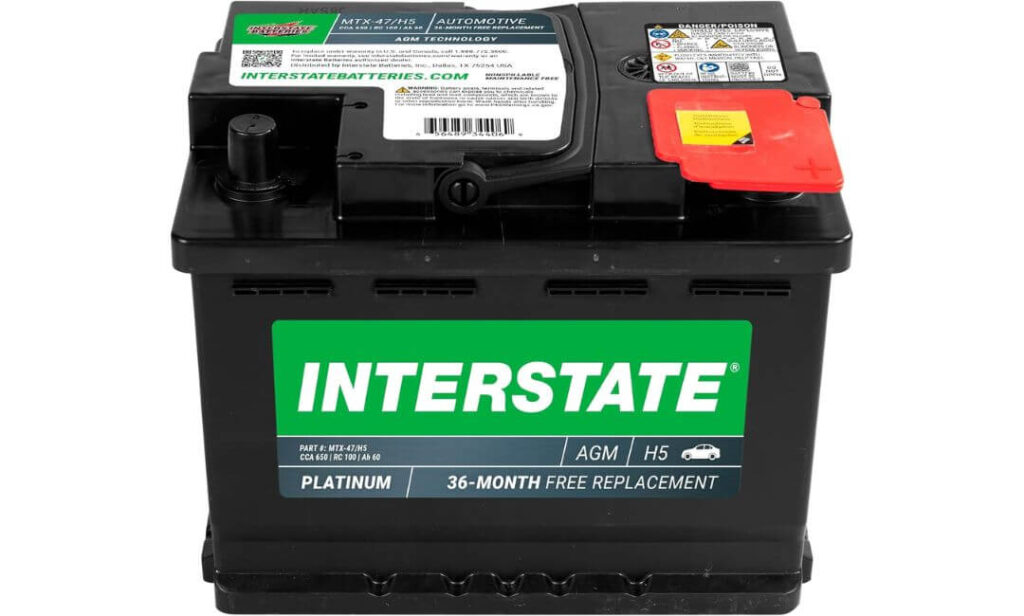
Technical Specs:
- Correct H5 / Group 47 fitment for most newer Subaru Legacy models
- 650 Cold Cranking Amps for dependable winter starts
- 60Ah AGM design with sealed spill-proof construction
- 100-minute reserve capacity for electronics and stop-and-go driving
- Pure lead AGM internal build designed for longer service life
- 39.2-pound heavy-duty construction that feels substantially built in hand
- Top-post terminal layout matching OEM-style configurations
- 36-month replacement coverage backed by Interstate’s nationwide support network
The first thing that stands out here isn’t the badge on the top cover — it’s the weight. Pick this battery up beside a cheap flooded replacement and the difference is immediate. Interstate packed more lead into this H5 design than most standard AGM batteries in the same class, and that usually translates into the thing Subaru Legacy owners actually care about after two winters: consistent starts when temperatures drop and electronics stop acting weird.
What makes this one genuinely interesting for Legacy owners is how balanced the setup feels. The 650 CCA output is strong enough for cold starts without going into exaggerated marketing territory, while the 100-minute reserve capacity helps stabilize voltage for modern Subaru electronics, heated seats, infotainment systems, dash cams, and constant short-trip driving. A lot of batteries look impressive on paper but start feeling weak once the car sits overnight for two days. This one was clearly built for modern start-stop traffic and daily-driver use instead of spec-sheet bragging rights.
The AGM construction also matters more than people realize in a Subaru. Between vibration, rough roads, weather swings, and heavy electrical demand, cheaper flooded batteries tend to age faster than expected. Here, the sealed VRLA AGM design keeps everything maintenance-free, spill-proof, and noticeably more stable during repeated starts. Even the terminal placement and dimensions feel properly thought out for newer Legacy battery trays, which sounds small until you deal with a battery that technically “fits” but turns installation into a headache.
(This feels less like a budget replacement battery and more like the kind of upgrade Subaru probably should’ve installed from the factory in the first place.)
Why This One Made the Cut
- Built around the correct H5 / Group 47 sizing newer Subaru Legacy models actually use
- Strong balance between CCA, reserve capacity, and long-term reliability
- AGM construction handles short trips and stop-and-go driving better than most flooded batteries
- Heavier internal lead construction gives it a more confidence-inspiring feel than many lightweight AGM rivals
- Interstate’s nationwide support network makes warranty situations far less painful than no-name online brands
A Few Things Worth Knowing Before Buying
- The heavier AGM construction adds durability and reserve power, though it can feel a little bulkier during installation compared to lighter batteries
Subaru Legacy Compatibility Notes
For most newer Subaru Legacy models, this is the kind of battery size owners should be looking at first before experimenting with oversized upgrades or random compatibility-chart recommendations. The H5 / Group 47 footprint matches what many modern Legacy trims were designed around, which helps avoid terminal tension issues and tray fitment headaches later.
Older Legacy models that originally used Group 25 batteries may need a different setup, so checking the original battery label before ordering still matters. Subaru changed battery sizing over the years more than many owners realize.
The Insider Pro-Tip
One thing experienced Subaru owners quietly pay attention to is how a battery behaves after repeated short drives, not just the first startup after installation. That’s where weaker batteries usually begin showing themselves — dimmer electronics, slower cranking after sitting overnight, inconsistent voltage during colder mornings. Heavier AGM batteries with stronger reserve capacity typically age more gracefully in those situations.
This is also one of the few batteries in this category that doesn’t feel like it was designed purely around marketing numbers. The combination of proper H5 fitment, AGM stability, reserve capacity, and Interstate’s long-standing support network gives it the kind of everyday confidence most Legacy owners are actually searching for when replacing a battery.
#2. Weize Platinum AGM Group 47 Battery
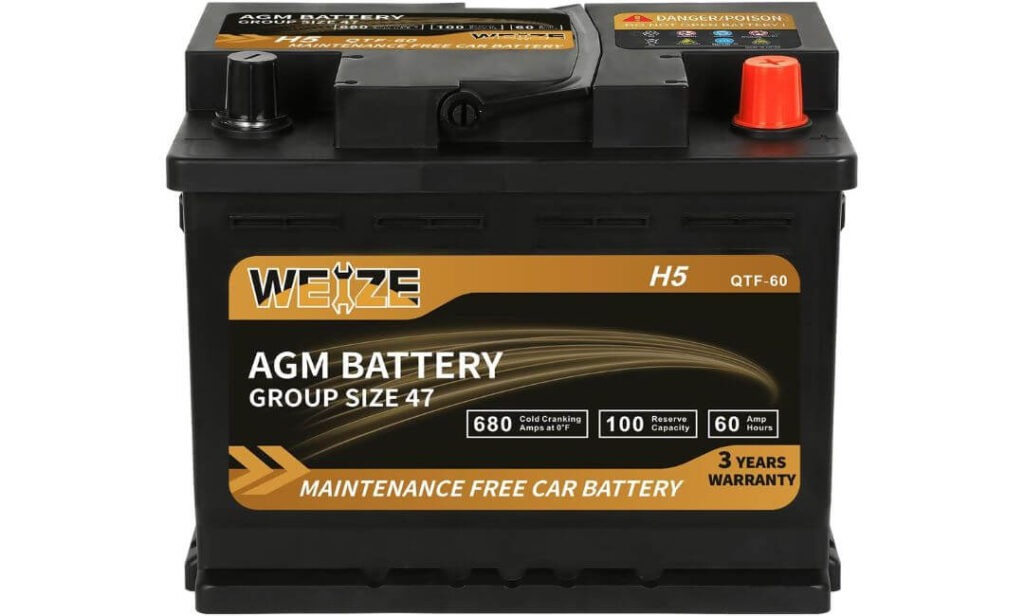
Technical Specs:
- Proper H5 / Group 47 sizing for most newer Subaru Legacy models
- 680 Cold Cranking Amps for stronger cold-weather starts
- 100-minute reserve capacity for electronics-heavy driving
- 60Ah AGM construction with sealed maintenance-free design
- Fast recharge capability compared to conventional flooded batteries
- Advanced vibration-resistant internal build for long-term durability
- Low self-discharge rate during storage or infrequent driving
- 36-month warranty coverage with modern AGM start-stop support
At first glance, this looks like another generic AGM battery trying to compete on numbers alone — then you notice the details. The 680 CCA output, full 100-minute reserve capacity, and heavier 41.6-pound build tell a different story. This battery was clearly designed for modern vehicles that constantly demand stable voltage from heated seats, infotainment systems, safety tech, short-trip driving, and repeated stop-start traffic.
What makes this one especially appealing for Subaru Legacy owners is the balance between everyday usability and electrical stability. Some batteries deliver impressive cold-cranking power but start feeling inconsistent after a few months of real commuting. Here, the AGM construction and higher cycle-life design help keep voltage more stable during repeated starts, especially in colder climates or city driving where the alternator rarely gets long charging periods. The extra reserve capacity also helps prevent that sluggish “half-second hesitation” many owners notice before a battery fully gives up.
Another thing worth appreciating is how straightforward the fitment feels for newer Legacy models using the H5 / Group 47 layout. The dimensions closely match OEM sizing, terminal placement feels natural, and the sealed AGM design removes the usual maintenance worries entirely. There’s also a reassuringly solid feel to the casing and internal construction that many cheaper lightweight batteries simply don’t have once you handle them side by side.
(This is the kind of battery that quietly earns trust over time instead of trying to impress people with oversized marketing claims.)
Why It Earned a Spot on This List
- Stronger 680 CCA output than many standard H5 batteries in this range
- AGM construction handles modern Subaru electrical loads more confidently than basic flooded options
- Excellent mix of reserve capacity, recharge speed, and voltage stability
- Correct H5 dimensions reduce fitment headaches in newer Subaru Legacy trims
- Vibration-resistant design feels better suited for long-term daily-driver use
A Few Things Worth Knowing Before Buying
- The heavier AGM construction improves durability and reserve power, though it can feel slightly more substantial to install compared to lighter batteries
Subaru Legacy Fitment Insights
For newer Subaru Legacy models using the factory H5 / Group 47 battery size, this feels much closer to an OEM-style replacement than many universal-fit batteries floating around online. The dimensions and terminal layout line up properly, which matters more than most buyers realize once installation day arrives.
Older Legacy models originally equipped with Group 25 batteries may require a different setup, so checking the battery label currently installed in the vehicle is still the smartest move before ordering.
The Insider Pro-Tip
A surprising number of Subaru electrical complaints — dim displays, slower remote starts, weak morning cranking, inconsistent auto start-stop behavior — often trace back to batteries with poor reserve capacity rather than outright dead batteries. That’s why experienced owners tend to pay attention to RC ratings and AGM stability, not just CCA numbers.
This battery stands out because it doesn’t chase one headline spec while ignoring everything else. The combination of 680 CCA, 100-minute reserve capacity, AGM durability, and proper H5 sizing makes it feel genuinely matched to the way modern Subaru Legacy owners actually drive every day.
#3. Goodyear 47-H5-AGM Platinum Battery
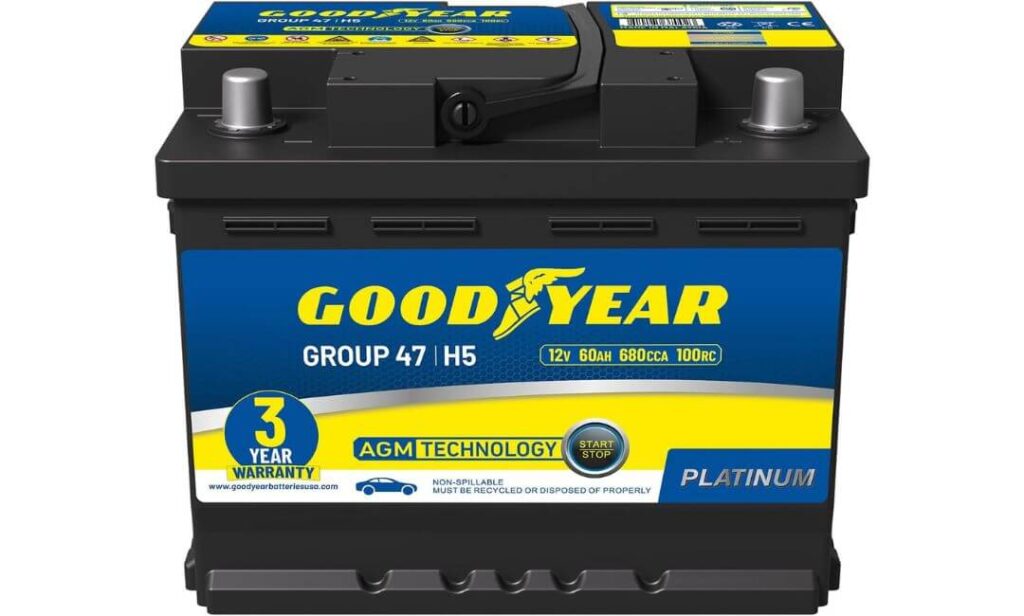
Technical Specs:
- Factory-style H5 / Group 47 sizing for newer Subaru Legacy models
- 680 CCA output for reliable cold-weather starting power
- 100-minute reserve capacity for electronics-heavy commuting
- 60Ah sealed AGM construction with maintenance-free operation
- Shock- and vibration-resistant internal design for rough-road durability
- Wide operating temperature support for extreme heat and winter climates
- Flexible mounting capability with spill-proof AGM build
- 36-month warranty coverage backed by Goodyear battery support
Oddly enough, this battery feels more “OEM-plus” than flashy aftermarket upgrade — and for a Subaru Legacy, that’s actually a good thing. The moment you look past the branding and into the numbers, the setup starts making sense: 680 CCA, a full 100-minute reserve capacity, AGM construction, proper Group 47 fitment, and a surprisingly solid internal build designed around long-term daily driving rather than exaggerated marketing claims.
Where this one quietly stands out is consistency. Some batteries crank hard for the first few weeks, then gradually start feeling weaker every cold morning afterward. This one was clearly designed with real-world commuting in mind — stop-and-go traffic, heated seats running nonstop, infotainment systems always active, short drives between errands, freezing mornings followed by summer heat waves. The AGM design helps keep voltage stable during repeated starts, while the reserve capacity gives newer Subaru electronics breathing room instead of forcing the alternator to constantly fight voltage drops.
Another underrated advantage is how durable the entire construction feels. The spill-proof AGM layout combined with vibration resistance makes a noticeable difference over time, especially for drivers dealing with rough pavement, potholes, temperature swings, or constant daily use. Even the dimensions and terminal layout line up properly for newer Legacy battery trays, which avoids the “universal-fit battery” nonsense that often turns simple replacements into frustrating install jobs.
(This feels like the kind of battery you stop thinking about completely after installation — which is honestly one of the best compliments a daily-driver battery can get.)
Why This Battery Stands Out in the Lineup
- Proper H5 / Group 47 dimensions for modern Subaru Legacy models
- Excellent mix of cold-start power and reserve capacity for daily driving
- AGM construction handles modern electronics and repeated short trips more confidently
- Better vibration resistance than many lightweight entry-level AGM batteries
- Consistent all-weather performance without pushing unnecessary oversized specs
A Few Things Worth Keeping in Mind
- The AGM casing and internal construction make it slightly more substantial than standard flooded batteries during installation
Subaru Legacy Battery Fitment Notes
For newer Subaru Legacy trims using the H5 / Group 47 battery platform, this lines up closely with the sizing and electrical demands Subaru owners actually need. The dimensions, polarity layout, and AGM configuration all feel much closer to factory-style fitment than many oversized “performance” batteries online.
If your Legacy still uses an older Group 25 setup, double-check the original battery label before ordering. Subaru changed battery sizing across generations more than many compatibility charts suggest.
The Insider Pro-Tip
One thing longtime Subaru owners learn quickly is that reserve capacity matters just as much as cold-cranking numbers once the car ages a little. Weak reserve power is usually what causes flickering electronics, sluggish restarts, and unstable voltage during colder mornings — even before the battery technically “dies.”
That’s where this battery quietly earns respect. The combination of 680 CCA, 100-minute reserve capacity, AGM durability, and proper H5 sizing makes it feel genuinely engineered for the way modern Subaru Legacy owners actually use their cars every single day.
#4. Mighty Max MM-H6 Group 48 AGM Battery
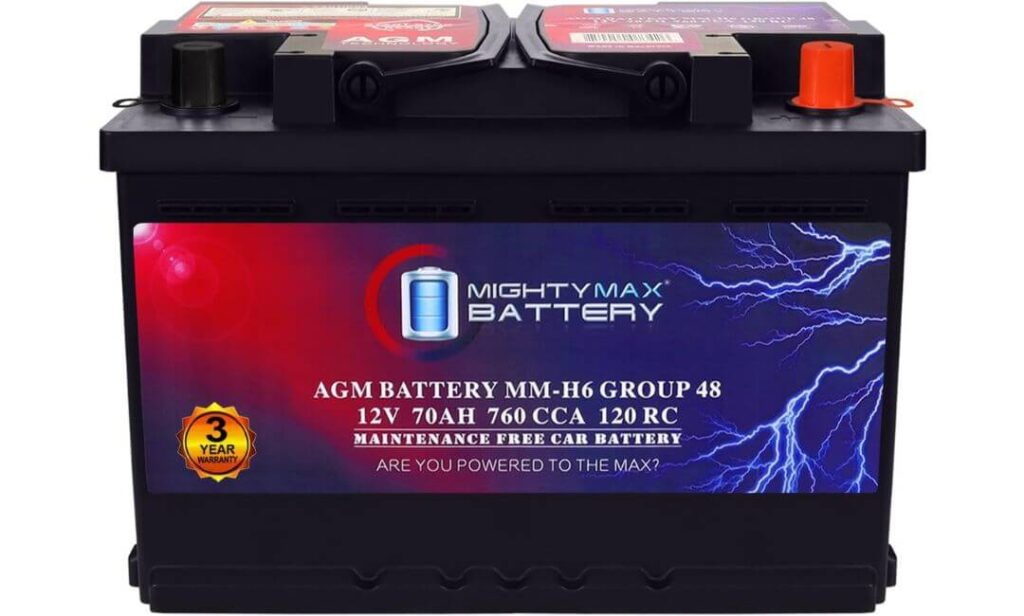
Technical Specs:
- Larger H6 / Group 48 battery platform for higher reserve power
- 760 Cold Cranking Amps for stronger starts in freezing weather
- 70Ah AGM capacity built for heavier electrical demand
- 120-minute reserve capacity for extended accessory support
- Sealed spill-proof AGM construction with deep-discharge recovery
- Shock- and vibration-resistant casing for long-term durability
- Wide-temperature performance support for harsh climates
- 3-year warranty coverage with start-stop compatibility built in
Here’s where things start getting interesting for Subaru Legacy owners who want more than just a basic replacement battery. The jump from a standard H5 / Group 47 battery to this larger H6 / Group 48 setup changes the feel of the car in ways spec sheets don’t fully explain. The extra 70Ah capacity, massive 120-minute reserve capacity, and stronger 760 CCA output give modern Subaru electronics noticeably more breathing room during cold starts, short trips, traffic-heavy commuting, and winter mornings when everything electrical is working overtime.
What really separates this battery from smaller AGM setups is how relaxed it feels under load. Heated seats, headlights, infotainment, charging cables, remote starts, stop-start traffic — the battery never feels like it’s working at the edge of its limit. That’s usually the hidden advantage of moving up to a properly sized Group 48 battery. The alternator isn’t constantly fighting voltage dips, and the car simply feels more stable electrically during everyday driving.
The AGM construction itself also deserves credit here. The sealed spill-proof design, vibration resistance, and deep-discharge recovery characteristics make this battery feel much better suited for long-term use than many budget flooded options pretending to be “premium.” Even after repeated starts and colder overnight temperatures, larger AGM batteries like this tend to hold their confidence better than smaller batteries that begin showing weakness early through slower cranking and unstable electronics.
(This feels less like a standard replacement and more like the kind of battery upgrade you notice every single morning without realizing why the car suddenly feels healthier.)
Why This Upgrade Option Earned Its Place
- Massive 120-minute reserve capacity compared to standard H5 batteries
- Higher 760 CCA output gives extra confidence during winter starts
- Excellent choice for Subaru Legacy owners running heavy electronics or frequent short trips
- AGM construction handles voltage stability and repeated starts far better than conventional flooded batteries
- Larger H6 platform delivers a more relaxed, less strained feel during daily driving
A Few Things Worth Checking First
- Since this is a larger Group 48 / H6 battery, measuring tray clearance before ordering is still important for perfect fitment
Subaru Legacy Battery Sizing Notes
This battery works best as an upgrade option for Subaru Legacy owners wanting more reserve capacity than a standard H5 / Group 47 battery provides. Drivers dealing with colder climates, heavy electrical usage, stop-and-go commuting, or long accessory use often appreciate the extra stability larger AGM batteries bring.
That said, not every Legacy tray was designed around the larger H6 footprint from the factory, so checking available battery space before upgrading is absolutely worth the extra minute.
The Insider Pro-Tip
A lot of drivers focus only on cold-cranking numbers because they’re easy to compare online. What experienced owners quietly care about, though, is how calm and stable the electrical system feels after six months of real-world driving — especially during winter mornings, short commutes, and constant stop-start traffic.
That’s exactly where a larger AGM battery like this starts making sense. The combination of 70Ah capacity, 120-minute reserve power, AGM durability, and higher cold-start output gives the Subaru Legacy a noticeably more confident electrical foundation than smaller batteries struggling near their limits every day.
#5. OPTIMA RedTop Group 35 AGM Battery
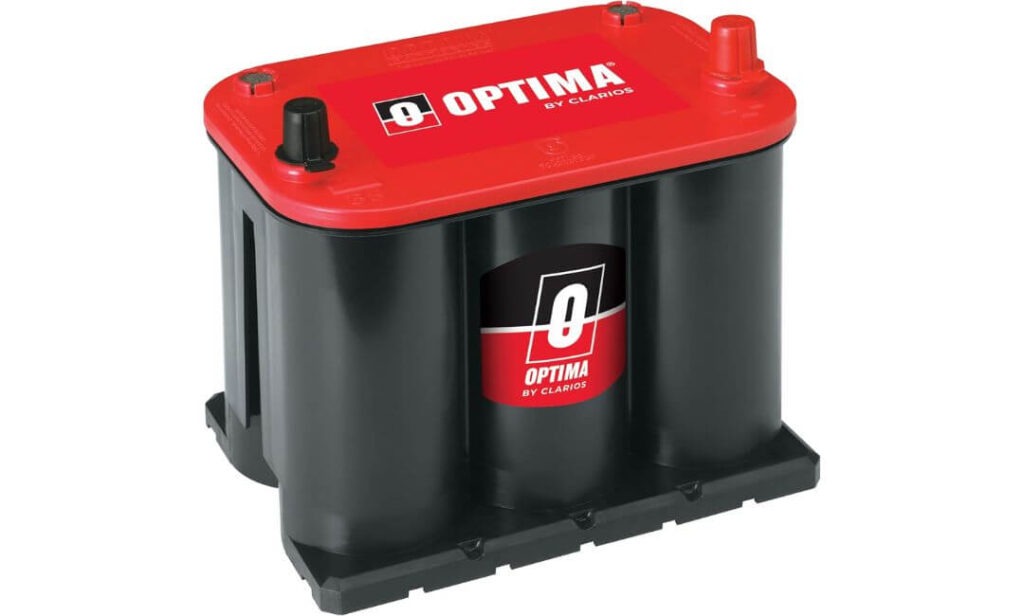
Technical Specs:
- Group 35 AGM sizing commonly used in older Subaru Legacy models
- 720 Cold Cranking Amps for aggressive cold-weather starts
- 90-minute reserve capacity for stable accessory support
- SPIRALCELL pure lead internal design instead of conventional flat plates
- 15x higher vibration resistance than standard flooded batteries
- Fast recharge characteristics for repeated short-trip driving
- 31.7-pound lightweight AGM construction compared to many heavier batteries
- Maintenance-free sealed design with versatile mounting flexibility
Some batteries feel engineered for commuting. This one feels engineered for starting authority. The moment the ignition turns over, the difference becomes obvious — the crank feels sharper, quicker, almost more mechanical in the best possible way. That’s been the reputation behind the OPTIMA RedTop for years, and even now, very few Group 35 batteries deliver the same immediate punch during cold starts or long periods of sitting.
The real reason people still chase this battery, though, is the SPIRALCELL technology. Instead of traditional flat lead plates, OPTIMA uses tightly wound pure-lead cells that react differently under load. The result is a battery that charges faster, handles vibration better, and delivers extremely strong starting bursts without feeling sluggish during repeated starts. For older Subaru Legacy models — especially cars seeing colder weather, spirited driving, rough roads, or occasional long parking periods — that stronger startup behavior becomes genuinely noticeable.
There’s also something refreshing about how compact and lightweight this battery feels compared to oversized AGM bricks trying to win purely through weight. At just over 31 pounds, it installs easier than many premium AGM batteries while still producing an impressive 720 CCA. The vibration resistance is another underrated advantage, especially in older Subarus where years of rough pavement and chassis vibration can slowly wear down conventional batteries faster than expected.
(This is one of those rare batteries where owners often remember how the car felt immediately after installation.)
Why This Battery Still Has a Loyal Following
- Extremely strong 720 CCA starting power for older Subaru Legacy models
- Unique SPIRALCELL pure-lead design delivers sharper startup response
- Faster recharge behavior compared to many conventional AGM batteries
- Lightweight construction makes installation noticeably easier
- Excellent vibration resistance for rough roads and long-term durability
A Few Things Smart Buyers Should Know
- Like many high-performance batteries, long-term lifespan can vary depending on charging system health and driving habits
Subaru Legacy Battery Fitment Notes
This battery makes the most sense for Subaru Legacy models using the Group 35 battery platform, especially older generations where owners want stronger startup performance without moving into oversized battery territory.
It’s also a popular option for drivers who prioritize cranking power and responsiveness over maximum reserve capacity. Before ordering, checking the existing battery label is still important since some older Legacy trims originally used Group 25 sizing instead.
The Insider Pro-Tip
One thing longtime Subaru owners eventually notice is that older boxer engines tend to respond differently to stronger starting batteries. A battery with sharper voltage delivery can actually make cold starts feel smoother, faster, and less strained — especially during winter mornings or after the car sits for several days.
That’s where the RedTop still earns respect. The combination of 720 CCA, SPIRALCELL pure-lead construction, fast recharge behavior, and lighter Group 35 sizing gives it a driving feel many conventional batteries simply don’t replicate once installed properly.
#6. UPLUS BCI Group 35 AGM Battery
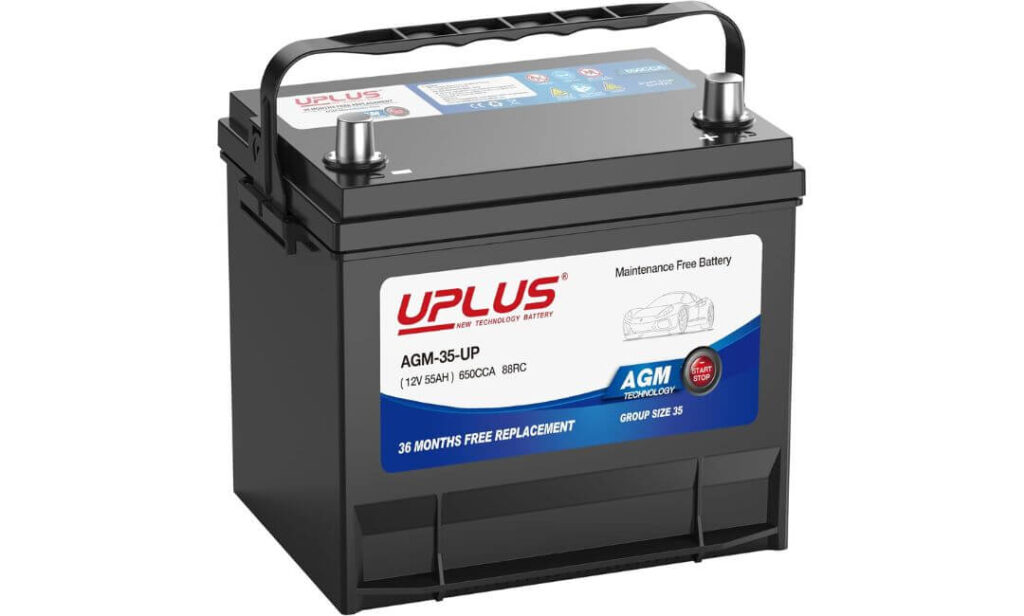
Technical Specs:
- Group 35 AGM sizing for many older Subaru Legacy models
- 650 Cold Cranking Amps for dependable winter starts
- 55Ah capacity with maintenance-free sealed AGM construction
- 88-minute reserve capacity for electronics and stop-and-go traffic
- 4x higher cycle life than many standard flooded batteries
- 15x vibration resistance for rough roads and daily driving abuse
- Calcium-lead grid technology for stronger conductivity and cranking response
- Heavy-duty 42.3-pound build designed around long-term durability
Sometimes the smartest battery choice isn’t the flashiest one — it’s the one that quietly handles daily abuse better than expected. That’s exactly the lane this Group 35 AGM battery falls into. The combination of 650 CCA, AGM construction, and reinforced internal design gives it a surprisingly solid feel for Subaru Legacy owners who deal with constant short trips, freezing mornings, heavy accessory use, or cars that occasionally sit unused for several days at a time.
Where this battery genuinely earns attention is durability under repeated daily stress. The upgraded internal alloy construction, high-density negative paste, and AGM design help it recover better from repeated starts than many standard flooded batteries that slowly weaken after months of stop-and-go driving. In real-world terms, that usually means fewer sluggish cold starts, fewer random voltage dips, and less strain on modern electronics over time. The 88-minute reserve capacity also helps keep systems stable when lights, infotainment, heated seats, and charging accessories are all running together.
Another thing worth appreciating is how substantial this battery feels physically. At over 42 pounds, it’s clearly built heavier than many lightweight budget replacements trying to compete only on price. That extra internal material often matters more long term than flashy advertising language. Combined with the 15x vibration resistance, this battery feels properly designed for rough pavement, temperature swings, and everyday commuter use where cheaper batteries tend to show weakness first.
(This feels like the kind of battery practical Subaru owners buy once after getting tired of replacing weaker batteries too often.)
Why It Deserves a Place on This List
- Strong balance between cold-start power, AGM durability, and affordability
- AGM design handles short trips and repeated stop-start driving better than standard flooded batteries
- Heavier internal construction gives it a more confidence-inspiring feel than many entry-level options
- Excellent fitment reputation for compatible Group 35 applications
- Vibration resistance and cycle-life improvements make sense for long-term daily driving
A Few Things Worth Knowing Before Ordering
- The reinforced AGM construction makes this battery noticeably heavier than many standard replacement batteries
Subaru Legacy Battery Fitment Notes
This battery makes the most sense for Subaru Legacy models using the Group 35 battery platform, especially older generations or owners upgrading from weaker flooded batteries to a more durable AGM setup.
As always, checking the dimensions and terminal layout on the original battery before ordering is still important because some older Legacy trims originally came with Group 25 batteries instead.
The Insider Pro-Tip
One thing experienced Subaru owners eventually figure out is that many battery problems don’t start with complete failure — they start with weaker reserve power. Electronics become inconsistent, cold starts feel slower, and the car gradually feels less stable electrically during daily driving.
That’s where heavier AGM batteries like this quietly make a difference. The combination of 650 CCA, upgraded cycle-life design, AGM stability, and strong vibration resistance gives older Subaru Legacy models the kind of dependable everyday behavior most owners actually notice after a few months behind the wheel.
Best Subaru Legacy Battery Options Compared: H5, Group 47, H6, and Group 35 Picks
| Battery | Best For | Battery Size | CCA | Reserve Capacity | AGM Type | Real-World Feel | Quick Verdict |
|---|---|---|---|---|---|---|---|
|
Interstate Mega-Tron MTX-47/H5
OEM-Style Favorite
|
Long-term reliability | H5 / Group 47 | 650 | 100 RC | Pure Lead AGM | Feels factory-upgraded | Best Overall Pick |
|
Weize Platinum AGM
Value Performance Choice
|
Balanced daily driving | H5 / Group 47 | 680 | 100 RC | Premium AGM | Strong cold-start feel | Best Value Buy |
|
Goodyear 47-H5-AGM
Daily Driver Favorite
|
Everyday commuting | H5 / Group 47 | 680 | 100 RC | Maintenance-Free AGM | Quietly dependable | Best Daily Option |
|
Mighty Max MM-H6 Group 48
Heavy Electronics Upgrade
|
Winter & accessory-heavy use | H6 / Group 48 | 760 | 120 RC | High-Capacity AGM | Feels electrically relaxed | Best Upgrade Pick |
|
OPTIMA RedTop Group 35
Performance Enthusiast Pick
|
Older Legacy performance builds | Group 35 | 720 | 90 RC | SPIRALCELL AGM | Sharp startup response | Fastest Starting Feel |
|
UPLUS Group 35 AGM
Budget AGM Favorite
|
Affordable long-term use | Group 35 | 650 | 88 RC | Start-Stop AGM | Built tougher than expected | Best Budget AGM |
Buying Guide: What Actually Matters Before Choosing a Subaru Legacy Battery
Buying a battery for a Subaru Legacy sounds simple until you realize how many owners accidentally install the wrong size, choose weak reserve capacity, or end up replacing a “cheap deal” battery again two winters later. Modern Subaru models place much heavier electrical demands on batteries than older cars did, especially during cold starts, stop-and-go traffic, short commutes, and constant accessory use.
That’s why choosing the right battery involves much more than matching a random compatibility chart online. The real difference usually comes down to fitment accuracy, reserve power, AGM quality, and how the battery behaves after months of real-world driving — not just the first startup after installation.
Understanding the Correct Subaru Legacy Battery Size
One of the biggest mistakes buyers make is assuming every Subaru Legacy uses the same battery size. It doesn’t.
Most newer Subaru Legacy models, especially newer-generation trims, commonly use an H5 / Group 47 AGM battery. That’s why most of the strongest recommendations in this guide focus around that platform. It provides the right balance of fitment, reserve capacity, and electrical stability modern Legacy models typically need.
Older Subaru Legacy models often used:
- Group 25 batteries
- Group 35 batteries
That’s also why Group 35 AGM batteries still appear in many replacement guides today. They remain popular for older Legacy trims because they offer strong cranking performance and easier aftermarket availability.
Before ordering any battery, check:
- the battery label currently installed in the car
- terminal orientation
- tray dimensions
- owner’s manual specifications
A battery that “almost fits” usually becomes a headache later.
Why AGM Batteries Make More Sense for Modern Subaru Legacy Models
AGM batteries cost more upfront, but in a Subaru Legacy, they usually make far more sense long term than conventional flooded batteries.
Modern Legacy models constantly draw power from:
- infotainment systems
- heated seats
- safety systems
- charging ports
- remote start systems
- stop-start driving conditions
- short-trip commuting
Traditional flooded batteries can struggle with repeated short drives because they recharge slower and handle voltage fluctuations less efficiently over time. AGM batteries are better at maintaining stable voltage, recovering from repeated starts, and resisting vibration from rough roads and daily commuting.
That’s exactly why every battery in this guide uses AGM construction instead of cheaper conventional flooded designs.
Cold Cranking Amps Matter More Than Most Drivers Realize
Cold Cranking Amps — usually called CCA — measure how effectively a battery starts the engine during cold weather.
For Subaru Legacy owners, especially in colder climates, weak CCA ratings usually reveal themselves fast:
- slower morning cranking
- dim electronics
- rough cold starts
- unstable voltage after sitting overnight
Most strong Subaru Legacy batteries today fall between:
- 650 CCA
- 760 CCA
The sweet spot for most daily drivers is around 650–680 CCA, while larger upgrade batteries like the H6/Group 48 options push even higher for heavier electrical demand and winter reliability.
Reserve Capacity Is the Hidden Number Smart Buyers Watch
A surprising number of battery buyers focus only on CCA and completely ignore Reserve Capacity (RC). In real-world driving, RC often matters just as much.
Reserve capacity affects how stable the electrical system feels when:
- using heated seats
- idling in traffic
- running headlights and infotainment together
- taking short drives repeatedly
- leaving accessories plugged in
- driving during winter conditions
Batteries with stronger reserve capacity usually feel healthier longer because the alternator isn’t constantly fighting voltage drops.
That’s one reason larger AGM batteries often feel noticeably smoother and more stable in modern Subaru vehicles.
Don’t Ignore Battery Weight
This sounds strange at first, but battery weight actually tells you a lot.
Heavier AGM batteries usually contain:
- more internal lead material
- thicker plate construction
- better reserve support
- stronger long-term durability
Lightweight batteries may feel easier to install, but they sometimes sacrifice long-term stability to save cost.
That’s why several batteries in this guide intentionally lean toward heavier AGM construction rather than ultra-light budget designs.
Warranty Matters, But Support Matters More
A long warranty sounds impressive until you actually need to use it.
One thing experienced buyers quietly pay attention to is how easy warranty support feels in real life:
- nationwide dealer access
- replacement availability
- customer support response
- shipping reliability
- installation compatibility
That’s one reason brands like Interstate still maintain strong reputations among many Subaru owners despite growing competition online.
Real-World Subaru Legacy Driving Changes Battery Needs
Not every Subaru Legacy owner drives the same way, and battery choice should reflect that.
Drivers doing mostly:
- highway commuting
- long drives
- mild climates
can usually stay perfectly happy with a standard H5 AGM battery.
But owners dealing with:
- freezing winters
- heavy electronics
- constant stop-and-go traffic
- short trips
- parked vehicles sitting several days
often benefit noticeably from stronger AGM batteries with higher reserve capacity.
That’s exactly why this guide includes both factory-style H5 options and larger H6 upgrade batteries instead of pretending one battery magically fits every driver equally well.
One Final Thing Most Battery Guides Never Mention
A battery doesn’t have to be completely dead to make a Subaru feel worse.
Many owners slowly adapt to:
- weaker startups
- slower crank speed
- dimmer electronics
- unstable idle voltage
- inconsistent auto start-stop behavior
without realizing the battery is already fading.
A properly matched AGM battery with correct fitment, strong reserve capacity, and stable cold-start performance often makes the entire car feel healthier again almost immediately.
Subaru Legacy Battery Installation and Replacement Tips That Actually Prevent Problems Later
Replacing a Subaru Legacy battery is not difficult, but a surprising number of electrical problems start right after installation because small details get ignored. Loose terminals, wrong battery sizing, reversed terminal orientation, poor grounding, or corrosion left inside the tray can quietly create charging issues that look like a bad alternator or failing electronics weeks later.
Modern Subaru Legacy models are also more sensitive to battery health than older cars. Features like infotainment systems, safety sensors, heated accessories, push-button start systems, and auto start-stop functions all depend on stable voltage. That means taking a few extra minutes during installation genuinely matters.
Start by Confirming the Correct Battery Size Before Removing Anything
Before disconnecting the old battery, verify:
- battery group size
- terminal orientation
- tray dimensions
- hold-down bracket placement
For most newer Subaru Legacy models, the correct setup is usually:
- H5 / Group 47 AGM
Older Legacy models may use:
- Group 25
- Group 35
This step sounds basic, but many buyers accidentally order batteries with reversed terminals or oversized dimensions that create installation headaches halfway through the job.
It’s also smart to compare:
- battery height
- terminal position
- vent layout
- hold-down location
before fully committing to installation.
Tools That Make the Job Easier
Most Subaru Legacy battery replacements only require a few basic tools, but using the right ones prevents stripped terminals and accidental damage.
A simple setup usually includes:
- 10mm wrench or socket
- ratchet extension
- battery terminal brush
- gloves
- safety glasses
- battery terminal protectant spray
- microfiber towel or shop rag
If corrosion is present around the tray or terminals, keeping:
- baking soda
- water
- a soft cleaning brush
nearby also helps.
Why Terminal Removal Order Matters
One of the easiest ways to accidentally create sparks or electrical problems is disconnecting terminals in the wrong order.
Always remove:
- Negative terminal first
- Positive terminal second
When installing the new battery:
- Positive terminal first
- Negative terminal last
That simple order reduces the risk of accidental grounding while working near metal tools and battery terminals.
Don’t Rush the Battery Tray Inspection
This is the step many people skip — and it matters more than expected.
Once the old battery is removed, inspect:
- tray corrosion
- moisture buildup
- loose hold-down brackets
- damaged cables
- cracked terminal ends
Subaru battery trays can collect dirt, salt, and moisture over time, especially in colder climates. Leaving corrosion underneath the new battery often shortens battery life faster than most owners realize.
If corrosion exists:
- mix baking soda with water
- gently scrub affected areas
- dry everything completely before installation
A clean tray helps the battery sit flat and reduces vibration over time.
AGM Batteries Need Proper Terminal Tightness
Modern AGM batteries deliver stronger, more stable electrical performance, but they’re also less forgiving of weak terminal connections.
After installing the new battery:
- terminals should feel secure
- cables should not twist by hand
- hold-down brackets should sit firmly without over-tightening
Over-tightening can damage battery posts, while loose terminals often cause:
- flickering electronics
- hard starts
- charging inconsistencies
- intermittent warning lights
A properly tightened AGM battery should feel completely stable once installed.
One Thing Many Subaru Owners Forget After Installation
After replacing the battery, some Subaru Legacy models may temporarily reset:
- clock settings
- auto window memory
- seat memory
- radio presets
- fuel economy tracking
This is completely normal after battery replacement and usually resolves quickly after a short drive cycle.
In some cases, the vehicle may also idle slightly differently for the first few minutes while the system recalibrates itself.
Why Corrosion Prevention Actually Matters
Battery corrosion doesn’t just look ugly — it slowly interferes with voltage flow and charging efficiency over time.
After installation, applying a light corrosion protectant around the terminals helps reduce:
- oxidation buildup
- moisture exposure
- terminal resistance
- charging inconsistencies later
This becomes especially important for drivers dealing with:
- road salt
- humidity
- freezing winters
- frequent short trips
A clean battery connection usually ages far better long term.
Post-Installation Checks Most People Skip
Before closing the hood, take a few minutes to confirm:
- terminals are fully tight
- battery sits level
- hold-down bracket is secure
- no cables are stretched tightly
- no tools remain near the tray
Then start the car and pay attention to:
- startup speed
- dashboard brightness
- idle smoothness
- warning lights
- infotainment stability
A healthy AGM battery usually creates noticeably faster, cleaner startups immediately after installation.
One Final Real-World Tip
If the old battery failed unexpectedly, don’t automatically blame the battery alone.
Repeated short trips, weak alternators, parasitic electrical drains, or extreme temperature swings can slowly destroy even premium AGM batteries earlier than expected. If a new battery begins acting weak unusually fast, checking the charging system is just as important as replacing the battery itself.
A properly installed AGM battery with correct fitment, clean terminals, and stable charging voltage should make the Subaru Legacy feel more consistent, smoother to start, and electrically healthier almost right away.
Subaru Legacy Battery Maintenance and Longevity Tips That Actually Make a Difference
A good battery usually doesn’t fail all at once. Most Subaru Legacy batteries give small warnings long before they completely die — slower cold starts, dimmer interior lights, weaker auto start-stop behavior, electronics acting slightly inconsistent, or the engine sounding more strained after sitting overnight. The problem is, many drivers slowly adapt to those changes and don’t realize the battery is already fading until the car suddenly refuses to start on a freezing morning.
The truth is, modern Subaru Legacy models place heavier stress on batteries than older cars ever did. Between safety systems, heated accessories, infotainment displays, remote start functions, charging ports, and constant short-trip driving, batteries work much harder now even when the vehicle is parked.
That’s exactly why proper maintenance matters more than most people realize.
Short Trips Quietly Destroy Batteries Faster Than Highway Driving
One of the biggest reasons Subaru batteries wear out early has nothing to do with battery quality. It’s repeated short-distance driving.
If the car regularly drives:
- 5–10 minutes at a time
- heavy city traffic
- frequent stop-and-go commuting
- cold-weather errands
the alternator often never gets enough time to fully recharge the battery after startup. Over time, the battery slowly remains undercharged, which weakens AGM and flooded batteries alike.
This is especially important for:
- H5 / Group 47 AGM batteries
- start-stop equipped Legacy models
- winter-driven vehicles
Longer highway drives every week help restore healthier charge levels far better than constant short trips alone.
AGM Batteries Prefer Stable Charging Habits
A lot of Subaru Legacy owners upgrade to AGM batteries expecting them to magically last forever. AGM batteries absolutely last longer in many situations, but they still depend heavily on proper charging behavior.
Things that help AGM batteries live longer:
- regular highway driving
- healthy alternator voltage
- tight terminal connections
- avoiding repeated deep discharges
- keeping the battery fully charged during storage
Things that shorten battery life:
- leaving the car parked for weeks
- weak charging systems
- constant accessory use with engine off
- repeated low-voltage starts
- excessive heat exposure
A premium AGM battery treated poorly can still die early.
Extreme Weather Changes Battery Behavior More Than Most Drivers Expect
Cold weather gets most of the attention because weak batteries fail dramatically in winter. But heat quietly damages batteries year-round.
Summer heat accelerates:
- internal chemical breakdown
- water evaporation
- plate wear
- voltage instability
Then winter arrives and suddenly the already weakened battery can’t produce enough cranking power.
That’s why batteries often “die in winter” even though the damage actually happened months earlier during hot weather.
For Subaru Legacy owners in:
- extreme heat
- freezing winters
- humid climates
AGM batteries usually handle seasonal stress far better than conventional flooded batteries.
Keep Battery Terminals Clean Even If the Car Starts Fine
Corrosion buildup around terminals doesn’t always stop the car immediately. Instead, it slowly increases resistance and charging inefficiency over time.
Every few months, check for:
- white or blue corrosion buildup
- loose terminals
- moisture around the tray
- swollen battery casing
- cracked terminal covers
Cleaning mild corrosion early is much easier than dealing with charging issues later.
A simple terminal cleaning and protectant spray can noticeably improve long-term reliability.
Signs a Subaru Legacy Battery Is Starting to Wear Out
A weak battery rarely fails without warning. Subaru owners usually notice small changes first.
Common warning signs include:
- slower morning cranking
- dimmer dashboard lighting
- infotainment glitches
- weaker remote-start response
- auto start-stop behaving inconsistently
- electrical systems resetting randomly
- battery age over 3–5 years
If multiple symptoms appear together, the battery is usually already near the end of its healthy life cycle.
Why Reserve Capacity Matters More As the Battery Ages
As batteries get older, reserve capacity becomes just as important as cold-cranking numbers.
A battery with weak reserve power may still technically start the car, but daily driving begins feeling less stable:
- headlights dim at idle
- electronics fluctuate
- voltage drops during cold mornings
- startup speed feels slower
That’s why batteries with stronger RC ratings — especially AGM models — usually feel healthier longer in modern Subaru vehicles.
Using a Smart Charger During Long Storage Helps More Than People Think
If the Subaru Legacy sits unused for:
- vacations
- winter storage
- second-car duty
- work-from-home schedules
a smart AGM-compatible maintainer can significantly extend battery life.
Modern vehicles still draw small amounts of power even while parked. Over time, that slow drain weakens the battery if it never fully recharges again.
A quality maintainer helps:
- stabilize voltage
- prevent sulfation
- reduce deep discharge stress
- maintain AGM battery health
Especially during colder months, this can make a noticeable difference.
One Habit That Quietly Helps Battery Life
After starting the car, avoid immediately loading every electrical accessory at once.
Turning on:
- heated seats
- defrosters
- charging cables
- headlights
- infotainment systems
all at the exact same moment during freezing weather places extra stress on the battery before charging stabilizes.
Letting the engine run briefly before maxing out electrical demand is a small habit, but it genuinely helps during colder conditions.
The Real Secret Behind Long Battery Life
Most long-lasting Subaru Legacy batteries share a few simple advantages:
- correct fitment
- strong reserve capacity
- stable charging voltage
- AGM construction
- clean terminals
- regular driving habits
That’s honestly more important than chasing the single highest CCA number online.
A properly maintained AGM battery in a Subaru Legacy often feels stronger, smoother, and more consistent every single day — not just during the first week after installation.
FAQs About Subaru Legacy Battery
Does upgrading a Subaru Legacy from an H5 battery to a larger H6 battery actually change how the car feels?
Surprisingly, yes — especially in real-world driving, not just on paper. A larger H6 / Group 48 AGM battery usually brings more reserve capacity, which means the electrical system feels less stressed during cold starts, stop-and-go traffic, winter mornings, and heavy accessory use. Most owners don’t notice it through horsepower or performance; they notice it through smoother startup behavior, steadier electronics, and fewer moments where the car feels electrically “tired.”
The difference becomes more noticeable if the Subaru Legacy regularly deals with:
- heated seats running constantly
- dash cams and charging accessories
- short-distance commuting
- freezing temperatures
- long idle periods
That’s why many longtime Subaru owners quietly upgrade to H6 batteries once the factory battery finally wears out — not because the original setup was bad, but because the larger reserve capacity simply feels healthier long term.
Why do some Subaru Legacy batteries fail early even when the car still drives perfectly fine?
Because modern vehicles can slowly weaken a battery long before obvious symptoms appear. Subaru Legacy models continuously pull small amounts of power for:
- infotainment memory
- security systems
- sensors
- remote access systems
- comfort electronics
If the car mostly takes short trips or sits parked frequently, the battery often remains slightly undercharged for months at a time. That gradual undercharging quietly shortens lifespan, especially during extreme temperatures.
What makes this tricky is that the engine can still start normally for a long time before the battery suddenly gives up one cold morning. That’s why battery health is often less about mileage and more about driving habits, climate, charging stability, and reserve capacity quality.
Is a high-CCA battery always better for a Subaru Legacy?
Not automatically — and this is where many online recommendations become misleading.
A huge CCA number looks impressive in product listings, but if the battery has:
- weak reserve capacity
- poor fitment
- unstable voltage delivery
- lower-quality AGM construction
the car can still feel inconsistent during daily driving.
For most Subaru Legacy owners, the better approach is balancing:
- proper battery size
- AGM quality
- reserve capacity
- cold-cranking performance
- long-term voltage stability
That’s why batteries around the 650–760 CCA range with strong AGM construction usually make the most sense instead of blindly chasing the single highest number available online.
Why do AGM batteries feel noticeably better in modern Subaru Legacy models?
Because modern Subarus place heavier and more constant electrical demand on the battery than older vehicles did. AGM batteries recover faster after startup, maintain voltage more consistently during repeated short drives, and handle stop-and-go traffic far better than traditional flooded batteries.
The difference usually appears in subtle ways first:
- faster startup response
- steadier idle voltage
- fewer infotainment glitches
- cleaner cold starts
- more stable electronics during winter
A good AGM battery also tends to age more gracefully in vehicles that see heavy daily use, rough weather, or accessory-heavy driving. Once many Subaru owners switch from a weak flooded battery to a quality AGM setup, they usually don’t want to go back.
What’s the biggest mistake people make when replacing a Subaru Legacy battery?
Trusting generic compatibility charts without physically checking the battery already installed in the car.
Subaru changed battery sizing across different Legacy generations more than many buyers realize. Some older models used:
- Group 25
- Group 35
while newer models commonly use:
- H5 / Group 47 AGM batteries
The problem is, many websites combine “compatible” sizes with true factory sizing, which creates confusion fast. A battery may technically fit the tray while still causing:
- terminal tension
- weak hold-down fitment
- reduced reserve capacity
- charging inconsistencies
The smartest move is always checking:
- battery label
- tray dimensions
- terminal orientation
- hold-down location
before ordering anything online. That extra two-minute check prevents most battery replacement headaches immediately.
Final Thoughts
Finding the best battery for a Subaru Legacy honestly comes down to something most generic battery guides completely miss: choosing a battery that matches the way the car is actually driven every day.
A Legacy used for short winter commutes, heavy traffic, heated seats, and constant electronics needs a very different kind of battery than a lightly driven highway commuter car. That’s exactly why this guide focused so heavily on real-world fitment, AGM quality, reserve capacity, cold-start behavior, and long-term electrical stability instead of throwing random “compatible” batteries into the list.
For most newer Subaru Legacy models, a properly sized H5 / Group 47 AGM battery remains the smartest overall choice because it balances:
- reliable cold starts
- modern electronic support
- proper tray fitment
- stable daily driving performance
At the same time, larger H6 / Group 48 upgrades genuinely make sense for drivers dealing with colder climates, heavier electrical demand, or stop-and-go commuting where extra reserve capacity becomes noticeable over time. Older Legacy owners still running Group 35 setups also have several strong AGM options available now that feel significantly more stable than many traditional flooded batteries.
The biggest takeaway after comparing all these batteries side by side is this: the right battery doesn’t just start the car. It changes how healthy the entire Subaru feels during daily driving — smoother cold starts, steadier electronics, fewer voltage fluctuations, and less strain during real-world use months down the road.
That’s ultimately why every battery included here earned its place. Not because of flashy marketing numbers, but because these are the kinds of AGM batteries Subaru Legacy owners are far more likely to appreciate long after the installation is finished.
Also Check:

