

6 Best Batteries for Honda CR-V in 2026: High-CCA AGM Picks With Longer Lifespan
If you own a newer Honda CR-V, you’ve probably already noticed something older CR-V owners never had to think about: these SUVs are a lot more demanding on batteries than they used to be. Between auto start-stop systems, larger infotainment screens, power liftgates, heated seats, and all the background electronics constantly running, the wrong battery can start feeling weak long before it actually dies.
That’s why battery size matters more on the latest CR-V models than many people realize. Most newer 2023–2026 Honda CR-V trims now use an H5/Group 47 battery, while many older CR-V generations commonly rely on the smaller 51R group size. Some owners also move to larger Group 24F or Group 35 batteries for stronger reserve capacity and better cold-weather starts, but fitment and terminal layout still matter if you want a clean, trouble-free install.
The problem is that a lot of “best battery” lists online still recommend outdated options without paying attention to the newer CR-V electrical system. Some batteries crank fine on day one but struggle after a few months of stop-and-go driving or short daily trips. Others simply don’t provide enough reserve capacity for modern Honda electronics.
So instead of stuffing this list with random big-brand batteries, these picks were chosen around the sizes CR-V owners are actually using right now — especially H5/Group 47 AGM batteries for newer models and 51R AGM replacements for older CR-Vs. The goal here is simple: batteries that fit properly, start reliably in bad weather, and don’t feel drained every time the SUV sits for a couple of days.
Best Honda CR-V Battery: Top 2026 Picks With Better Reserve Capacity and Fitment
#1. UPLUS BCI Group 47 AGM-L60-UP Maintenance Free Battery
Best H5 Battery for Honda CR-V Owners Wanting Strong Cold Starts and Longer AGM Lifespan in Newer 2023–2026 Models
#2. Mighty Max MM-H5 Group 47 AGM Battery
Reliable Group 47 Battery Replacement for Honda CR-V Drivers Looking for High CCA Power Without Overspending
#3. Interstate MTX-51R AGM Automotive Battery
Premium 51R AGM Battery for Older Honda CR-V Models That Need More Reliable Daily Starts and Better Reserve Capacity
#4. ACDelco Gold 51RAGM BCI Group 51R Battery
OEM-Style Honda CR-V Battery Replacement With AGM Durability for Older CR-V Generations and Hybrid-Friendly Use
#5. Goodyear 24F-AGM Platinum Series Battery
High-Reserve AGM Upgrade for Honda CR-V Owners Running Extra Electronics or Driving in Extreme Weather Conditions
#6. Weize Platinum AGM Group 35 Automotive Battery
Affordable AGM Battery Upgrade for Honda CR-V Drivers Wanting Better Starting Power and Longer Daily Driving Reliability
Expert Tip: One thing many Honda CR-V owners learn the hard way is that a battery can still “start” the SUV and already be on its way out. Modern CR-Vs — especially newer models with start-stop systems — are extremely sensitive to weak voltage. That’s why random cheap replacements often cause strange behavior long before the battery fully dies. Flickering screens, delayed start-stop response, sluggish remote start, and warning lights after sitting overnight are usually early signs the battery is struggling under load, not necessarily that the alternator is bad.
That’s also why most experienced CR-V owners eventually move toward a quality AGM battery with stronger reserve capacity, even if the factory battery technically still fits. A battery that can hold voltage consistently during short trips and cold starts simply makes the vehicle feel healthier overall.
How We Chose These Honda CR-V Batteries
There’s a reason this list leans heavily toward AGM batteries, especially in H5/Group 47 and 51R sizes. Modern Honda CR-V models put far more demand on the electrical system than older generations ever did. So instead of chasing the highest CCA number on paper, these batteries were selected based on how they actually match the way CR-V owners drive every day.
The first thing we looked at was real-world fitment. A surprising number of battery guides online recommend oversized batteries that technically work but require tray modifications, terminal stretching, or awkward hold-down setups. That may be fine for a project car, but most CR-V owners simply want a battery that installs cleanly and works without headaches. That’s why the core of this list focuses on proper H5/Group 47 batteries for newer 2023–2026 CR-V models and proven 51R replacements for older generations.
The second thing was reserve capacity, which matters far more in a CR-V than many people realize. Modern Hondas continue pulling power even when parked, especially with keyless systems, sensors, and infotainment modules running in the background. Some cheaper batteries start strong but lose stability after repeated short trips or long idle periods. The batteries chosen here consistently offer better reserve power, stronger voltage stability, and less stress during cold starts.
We also avoided stuffing the list with random premium brands just for the logo. Some newer batteries on this list don’t have decades of history behind them yet, but their actual specs tell a much more important story: higher reserve capacity, stronger AGM construction, better vibration resistance, and healthier cold-start performance for modern SUVs.
For example, the UPLUS H5 AGM and Mighty Max H5 stand out because they directly target what newer CR-V owners actually need right now — strong cold-start power combined with enough reserve capacity to handle modern electronics without feeling drained after short commutes. Meanwhile, the Interstate and ACDelco 51R AGM options remain excellent fits for older CR-V generations where long-term reliability and OEM-style compatibility still matter more than oversized upgrades.
The larger 24F and Group 35 batteries were included differently. These are not “must-have” upgrades for everyone. They make the most sense for drivers dealing with harsh winters, extra electrical accessories, frequent stop-and-go driving, or owners who simply want more breathing room from the battery during daily use.
At the end of the day, the goal wasn’t to build the longest battery list on the internet. It was to narrow things down to batteries that actually make sense for the Honda CR-V platform — batteries with the right balance of fitment, AGM durability, reserve power, and long-term reliability instead of just marketing numbers on a box.
#1. UPLUS BCI Group 47 AGM-L60-UP Maintenance Free Battery
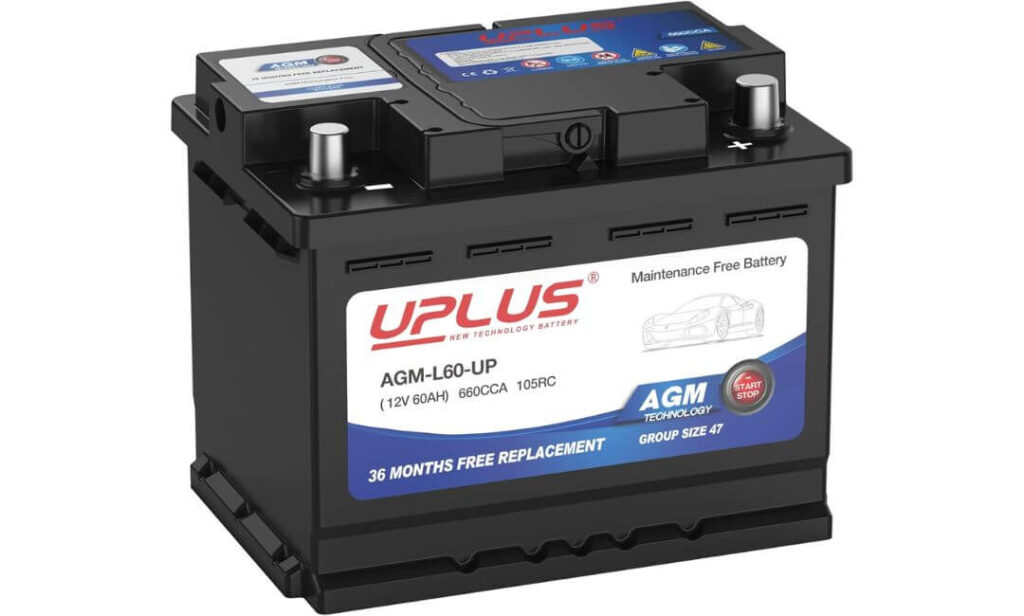
Quick Specs:
- Battery Group: H5 / Group 47 (direct-fit modern SUV size)
- Cold Cranking Power: 660CCA for dependable winter starts
- Reserve Capacity: 105 minutes before voltage drops hard
- Battery Type: Premium AGM, fully sealed and maintenance-free
- Capacity: 60Ah with strong short-trip recovery
- Built For: Start-stop systems, heavy electronics, frequent city driving
- Terminal Layout: Left negative / Right positive
- Vibration Resistance: Designed to handle rough roads and long-term daily use
- Real Advantage: Higher cycling durability than standard flooded batteries
The first thing that stands out here isn’t the badge or marketing language — it’s the balance. A lot of Group 47 batteries lean too hard in one direction: either strong starting power with weak reserve capacity, or decent reserve power with sluggish recovery during short drives. This one feels properly tuned for how modern Honda CR-V owners actually drive.
And honestly, that matters more than people think. Modern CR-Vs don’t just crank an engine anymore. They’re constantly feeding power to screens, sensors, remote systems, heated seats, power tailgates, and auto start-stop hardware. That’s where this AGM setup starts making sense. The 660CCA output gives it enough confidence during cold starts, but the bigger story is the 105-minute reserve capacity, because that’s what helps the vehicle feel stable after repeated short trips or long idle periods in traffic.
Another thing worth noticing is how calm this battery feels under electrical load. Some cheaper AGM batteries sound impressive on paper, then start acting weak after a few months of stop-and-go driving. This one was clearly designed around daily-use punishment — heavy traffic, frequent restarting, sitting unused for days, then immediately being expected to crank without hesitation. The stronger cycling design and vibration resistance help it feel more like a battery built for real-world SUV use instead of laboratory numbers.
(And yes — this is one of the few newer H5 batteries that actually feels correctly matched to modern Honda electrical systems instead of simply “fitting” the tray.)
Why This One Made the Cut
- Proper H5/Group 47 sizing for newer Honda CR-V fitment without awkward modifications
- Strong 660CCA cold-start power that doesn’t feel lazy during winter mornings
- The 105RC reserve capacity gives modern SUV electronics more breathing room
- AGM construction handles short-trip driving much better than standard flooded batteries
- Noticeably better resistance against vibration, heat, and repeated start-stop cycles
One Thing Worth Knowing Before Buying
- At nearly 40 pounds, this battery feels heavier than many budget Group 47 options during installation
Honda CR-V Compatibility Notes
This battery makes the most sense for newer Honda CR-V models using the H5/Group 47 platform, especially vehicles running start-stop systems and larger electronic loads. The dimensions and terminal layout line up correctly for modern CR-V configurations, which helps avoid the messy fitment issues some oversized upgrades create.
For older CR-V generations originally running smaller 51R batteries, this is not automatically a direct swap. Some owners upgrade successfully, but tray space and terminal routing should always be checked first before moving into a larger H5 footprint.
The Insider Pro-Tip
One thing experienced CR-V owners eventually realize is that modern Honda electronics punish weak reserve capacity far more than weak cranking power. A battery may still start the engine perfectly fine while silently struggling to maintain voltage stability underneath everything else running in the vehicle.
That’s why this particular AGM setup stands out. It isn’t trying to win with flashy numbers alone. The stronger reserve capacity, cycling durability, and stable voltage delivery make the entire SUV feel healthier during normal daily driving — especially if the vehicle spends most of its life in traffic, short commutes, school runs, or repeated stop-start conditions.
#2. Mighty Max MM-H5 Start and Stop AGM Battery
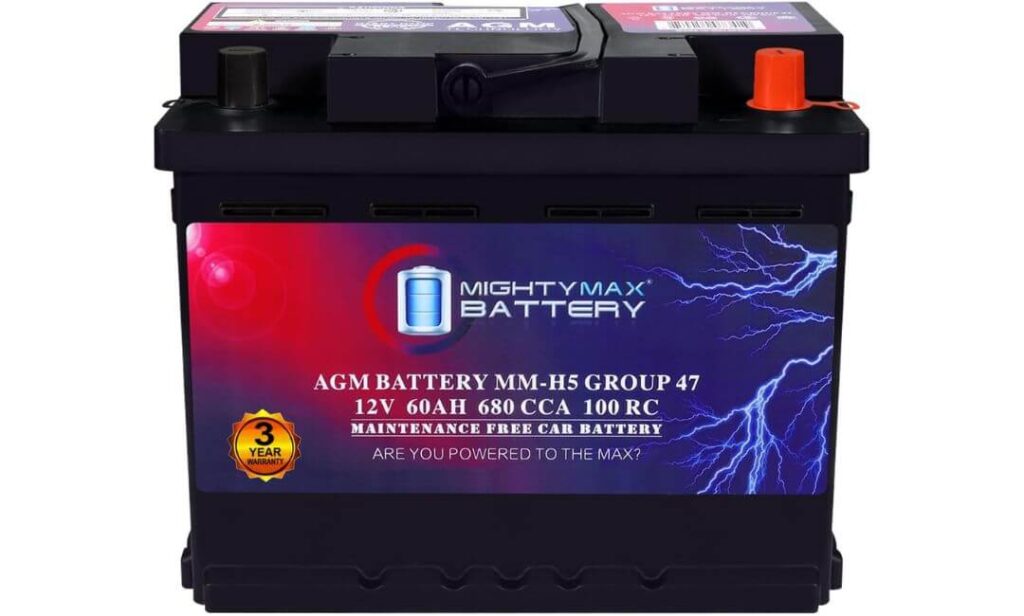
Quick Specs:
- Battery Group: H5 / Group 47
- Starting Power: 680CCA for stronger cold-weather ignition
- Reserve Capacity: 100RC for better voltage stability during traffic-heavy driving
- Battery Design: Fully sealed AGM construction with spill-proof housing
- Capacity: 60Ah optimized for modern SUV electrical demand
- Terminal Layout: Positive right / Negative left
- Built For: Start-stop systems, short commutes, electronic-heavy daily driving
- Installation Bonus: Includes mounting screws inside the box
- Durability Focus: Shock-resistant casing with deep discharge recovery support
Some batteries feel like they were built to survive a spec sheet. This one feels like it was built to survive actual commuting. That difference becomes obvious the moment you look past the headline numbers and start focusing on what modern Honda CR-V owners deal with every day — stop-and-go traffic, repeated restarts, short trips, cold mornings, and electronics constantly pulling power even after the engine shuts off.
The stronger 680CCA output immediately gives this battery a more confident personality during startup, especially compared to cheaper Group 47 options that feel strained once temperatures drop. But the bigger reason this one stands out is how balanced the overall setup feels. The 100-minute reserve capacity, AGM construction, and deep discharge recovery all work together in a way that suits newer CR-V electrical systems surprisingly well.
There’s also something refreshing about how straightforward this battery feels. No oversized dimensions pretending to be “upgrades,” no awkward fitment compromises, no unnecessary complexity. It stays within proper H5 sizing while still delivering enough reserve power for modern features like heated seats, infotainment systems, power liftgates, and auto start-stop operation. That combination is difficult to get right in this price range.
(For CR-V owners wanting a modern AGM battery without paying dealership-level pricing, this one quietly makes a very strong argument for itself.)
What Stood Out During Research
- Stronger-than-expected 680CCA output for winter starts and colder climates
- AGM design handles frequent stop-start driving far better than standard batteries
- Proper Group 47 sizing avoids messy fitment headaches in modern CR-V models
- Deep discharge recovery helps maintain stable performance after repeated short trips
- Rugged internal construction improves resistance against vibration and rough-road stress
One Thing Worth Knowing Before Buying
- The included hardware covers basic installation needs, but some owners may still prefer using factory mounting components for the cleanest OEM-style fit
Honda CR-V Compatibility Notes
This battery is best suited for Honda CR-V models using the modern H5/Group 47 battery platform, particularly vehicles equipped with start-stop technology and larger electrical loads. The dimensions and terminal orientation line up correctly for most newer CR-V setups, which helps keep installation simple and clean.
For older CR-V generations originally designed around smaller 51R batteries, fitment should always be checked carefully before upgrading into the larger H5 footprint. The additional reserve capacity is beneficial, but tray space and hold-down alignment still matter.
The Insider Pro-Tip
One thing many CR-V owners underestimate is how much repeated short-distance driving slowly punishes a battery over time. The vehicle may still start normally for months while the battery quietly loses recovery strength underneath daily traffic use.
That’s where this AGM setup starts making real sense. The stronger deep-cycle recovery and stable reserve capacity help modern CR-V electronics stay happier during normal daily driving — especially if the SUV spends most of its life handling school runs, grocery trips, office traffic, and frequent engine restarts instead of long highway drives.
#3. Interstate MTX-51R AGM Automotive Battery
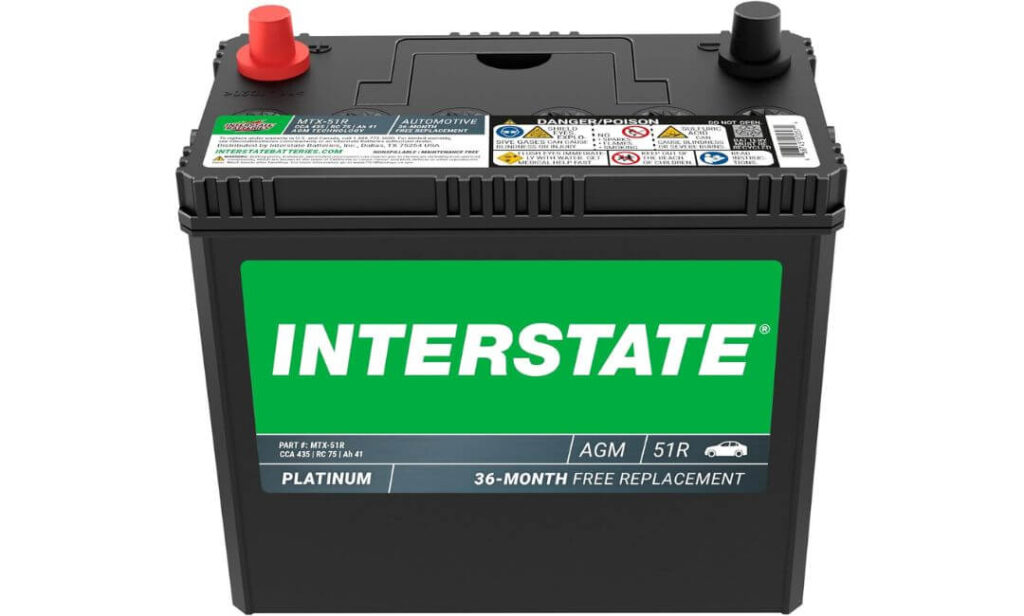
Quick Specs:
- Battery Group: 51R (common direct-fit size for many older Honda CR-V models)
- Cold Cranking Power: 435CCA with stable cold-weather starting behavior
- Reserve Capacity: 75RC for balanced accessory support and daily reliability
- Battery Chemistry: Sealed AGM construction with maintenance-free operation
- Capacity: 41Ah designed around compact OEM-style fitment
- Terminal Style: Standard top-post layout
- Built For: Daily commuting, factory-style replacement, stop-and-go driving
- Cycle Life: Designed for significantly longer cycling durability than flooded batteries
- Weight: Roughly 29 pounds with built-in carry handles for easier installation
There’s something different about batteries that don’t try too hard to impress you. This is one of them. Instead of chasing oversized specs or exaggerated marketing claims, this battery leans into something most Honda CR-V owners actually care about once the vehicle gets older: dependable daily behavior without electrical drama.
And honestly, that’s exactly where the MTX-51R starts making sense. Older CR-V models were designed around the compact 51R footprint, and this AGM version keeps that clean OEM-style fit while improving the areas factory batteries usually struggle with over time — cycling durability, vibration resistance, and voltage consistency during repeated daily starts.
The numbers may not look flashy beside larger H5 batteries, but context matters here. A properly built 435CCA AGM battery inside the correct 51R size often feels healthier in older CR-Vs than forcing oversized upgrades that weren’t originally designed for the platform. The 75-minute reserve capacity also helps support modern accessory use better than many aging flooded batteries, especially in vehicles dealing with short trips, cold mornings, or long idle periods with electronics running.
(This feels less like a “performance upgrade” and more like restoring the CR-V back to the smooth, reliable behavior it had when it was newer — which, for many owners, is honestly the smarter goal.)
Why It Earned a Spot on This List
- Proper 51R AGM sizing for many older Honda CR-V generations
- AGM construction delivers better cycling durability than conventional flooded batteries
- Compact OEM-style dimensions keep installation cleaner and less stressful
- Stable voltage delivery helps older CR-V electronics behave more consistently
- Trusted long-term reputation in the automotive battery world without overcomplicating the formula
One Thing Worth Knowing Before Buying
- Some vehicles may have slight variations in terminal clearance, so double-check terminal orientation before installation to avoid unnecessary frustration
Honda CR-V Compatibility Notes
This battery is one of the strongest fits for older Honda CR-V models originally designed around the 51R battery platform. The sizing, terminal layout, and overall design stay very close to factory expectations, which helps avoid the tray and cable complications that sometimes come with larger battery conversions.
For newer CR-V generations using H5/Group 47 batteries from the factory, this battery is generally too small to serve as the correct direct replacement. It’s much better suited to older CR-Vs where proper 51R fitment still matters more than oversized reserve capacity upgrades.
The Insider Pro-Tip
One mistake many owners make with older CR-Vs is assuming they need the biggest battery physically possible. In reality, older Honda charging systems often respond better to a properly matched AGM battery than an oversized unit the vehicle was never designed around.
That’s why this 51R setup works so well in aging CR-V platforms. It keeps the correct footprint and electrical balance while still upgrading the vehicle into modern AGM durability — which usually means steadier starts, fewer low-voltage quirks, and less stress during normal everyday driving.
#4. ACDelco Gold 51RAGM Battery
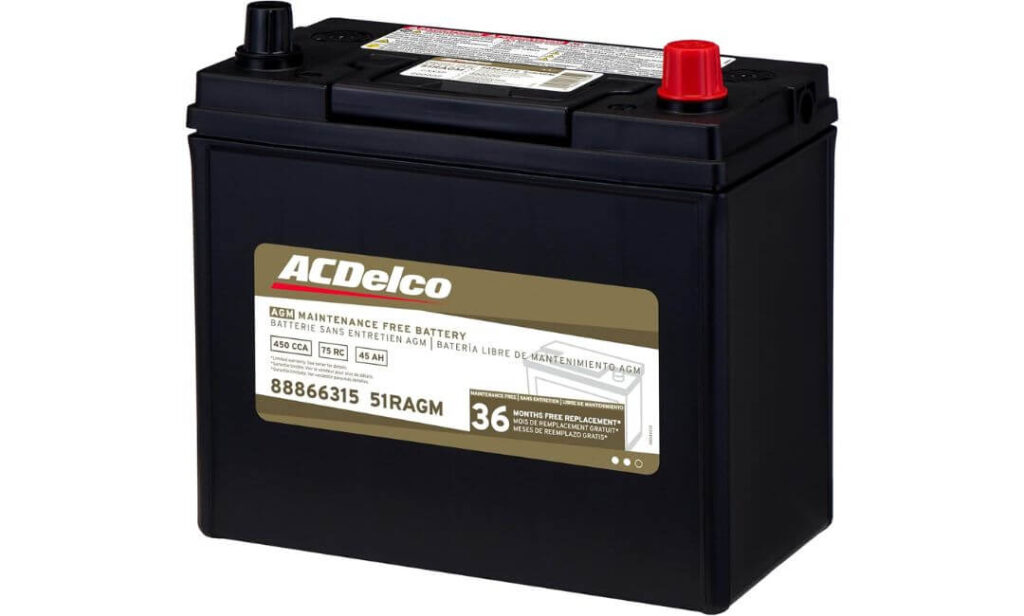
Quick Specs:
- Battery Group: 51R AGM
- Battery Type: Fully sealed AGM design with maintenance-free operation
- Voltage: 12V OEM-style electrical output
- Fitment Style: Direct-fit compact footprint for many older Honda CR-V models
- Construction Goal: OE-level fit, function, and long-term reliability
- Weight: Nearly 32 pounds with solid internal AGM construction
- Warranty Coverage: 36-month replacement support
- Designed Around: Vehicles originally equipped with AGM or start-stop-compatible systems
- Core Strength: Stable daily starting performance without oversized battery complications
Oddly enough, this battery’s biggest strength is that it doesn’t feel like it’s trying to reinvent anything. It simply focuses on doing the small things correctly — proper fitment, stable voltage delivery, reliable cold starts, and predictable long-term behavior. For older Honda CR-V owners, that approach usually matters far more than exaggerated performance claims.
The compact 51R AGM footprint is exactly why this battery works so naturally in many CR-V setups. Instead of forcing larger battery conversions or awkward tray modifications, it stays close to factory dimensions while still upgrading the vehicle into modern AGM durability. That means better resistance to vibration, stronger recovery after repeated short drives, and noticeably healthier behavior during colder weather.
Another thing that quietly helps this battery stand out is the overall electrical smoothness. Some aftermarket batteries crank hard at first, then slowly develop inconsistent behavior once real-world commuting starts wearing them down. This one feels much more balanced. The AGM construction helps maintain steadier voltage under load, which becomes increasingly important in aging CR-Vs running keyless entry systems, infotainment electronics, heated accessories, and constant stop-start traffic.
(It’s the kind of battery that doesn’t scream for attention — it just makes the vehicle feel calmer, more stable, and less “tired” during everyday driving.)
Why This AGM Setup Deserves Attention
- Proper 51R direct-fit sizing for many older Honda CR-V models
- AGM construction improves resistance against heat, vibration, and repeated cycling stress
- Strong OEM-style fitment keeps installation cleaner and simpler
- Excellent choice for CR-V owners upgrading from aging flooded batteries
- Backed by a long-established automotive parts brand with consistent replacement support
One Thing Worth Knowing Before Buying
- This battery focuses more on long-term stability and factory-style reliability than oversized high-performance specifications
Honda CR-V Compatibility Notes
This battery is especially well-suited for older Honda CR-V generations originally designed around the 51R battery platform, including many vehicles where maintaining clean OEM-style fitment still matters. The dimensions and terminal positioning stay very close to factory expectations, which helps avoid unnecessary installation headaches.
For newer CR-V models using larger H5/Group 47 batteries from the factory, this battery generally won’t provide the reserve capacity modern electrical systems expect. It performs best in CR-V platforms originally engineered around compact 51R dimensions.
The Insider Pro-Tip
One thing experienced Honda owners eventually notice is that older CR-Vs respond extremely well to batteries that deliver stable voltage consistently — not just aggressive startup power for the first few weeks.
That’s why AGM batteries like this tend to age more gracefully in daily-driven CR-Vs. The vehicle’s electronics stay happier, cold starts feel more predictable, and the battery doesn’t feel constantly stressed by short commutes or repeated traffic-heavy driving. In real-world ownership, that kind of consistency matters more than flashy numbers most people forget about after installation day.
#5. Goodyear 24F-AGM Platinum Series Battery
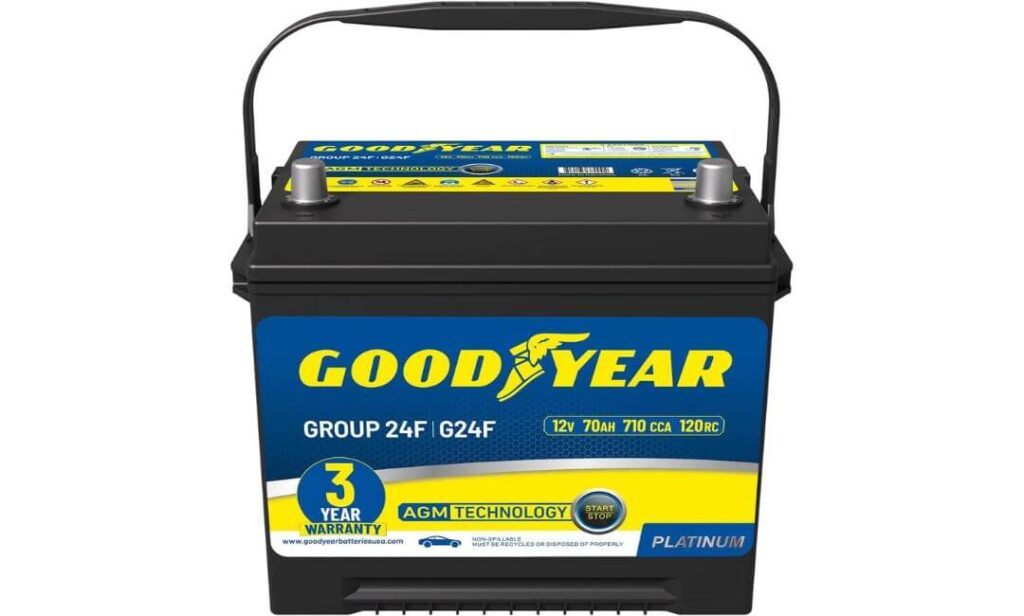
Quick Specs:
- Battery Group: 24F AGM
- Cold Cranking Power: 710CCA for stronger starts during extreme temperatures
- Reserve Capacity: Massive 120RC for longer accessory support and healthier voltage stability
- Battery Capacity: 70Ah built for higher electrical demand
- Battery Type: Premium sealed AGM construction with maintenance-free operation
- Terminal Layout: Positive right / Negative left
- Built For: Heavy electronics, harsh climates, repeated stop-and-go driving
- Durability Focus: Shock-resistant internal design with improved cycling lifespan
- Installation Flexibility: Multiple mounting positions supported (except upside down)
Here’s the truth most battery guides avoid saying: once a Honda CR-V starts carrying more electronics, more short-trip driving, and more years on the odometer, the factory-sized battery sometimes starts feeling “just enough” instead of genuinely comfortable. That’s exactly where a larger AGM setup like this begins making sense.
The first thing that jumps out is the reserve capacity. 120 minutes of reserve power is a serious number for a daily-driven SUV. And unlike flashy marketing claims, reserve capacity is something owners actually feel in real life. It helps during cold mornings, heavy traffic, repeated short commutes, long accessory use with the engine off, and those moments when the vehicle sits for several days before suddenly needing a clean start.
Then there’s the overall personality of this battery. The stronger 70Ah capacity and 710CCA output make it feel less stressed under heavy electrical demand compared to smaller OEM-style batteries. Heated seats, power liftgates, infotainment systems, dash cams, charging devices — modern SUVs quietly ask a lot from their batteries now. This setup feels built for owners who already know that and would rather overprepare once than deal with weak voltage behavior later.
(This is less of a “replacement battery” and more of a breathing-room upgrade for CR-V owners who are tired of batteries constantly feeling overworked.)
What Makes This AGM Setup Stand Out
- Huge 120RC reserve capacity for stronger voltage stability during daily driving
- Powerful 710CCA cold-start performance in harsh weather conditions
- Larger 70Ah capacity handles modern SUV electronics more comfortably
- AGM construction improves resistance against vibration, heat, and repeated cycling stress
- Excellent option for drivers wanting more long-term electrical breathing room
One Thing Worth Knowing Before Buying
- Because this is a larger 24F battery, fitment space should always be checked carefully before upgrading from smaller factory battery sizes
Honda CR-V Compatibility Notes
This battery works best as an upgrade-oriented option for Honda CR-V owners looking for more reserve power than standard factory battery sizes typically provide. It’s especially attractive for vehicles running extra electronics, colder climates, heavier daily use, or frequent short-distance commuting.
However, this is not a simple drop-in replacement for every CR-V generation. Older and newer CR-V models originally designed around compact 51R or H5 batteries may require tray and clearance verification before moving into the larger 24F footprint.
The Insider Pro-Tip
One thing experienced SUV owners eventually notice is that battery stress usually builds quietly over time. It doesn’t always show up as a sudden no-start situation first. More often, the vehicle slowly starts feeling electrically “tired” — weaker start-stop response, sluggish crank speed, dimmer behavior under load, or electronics acting inconsistent after sitting overnight.
That’s why higher reserve-capacity AGM batteries like this feel different in everyday use. The extra electrical headroom helps the entire vehicle operate with less strain underneath the surface, especially in real-world driving conditions where modern SUVs rarely get the long highway charging cycles batteries actually love.
#6. Weize Platinum AGM Group 35 Automotive Battery
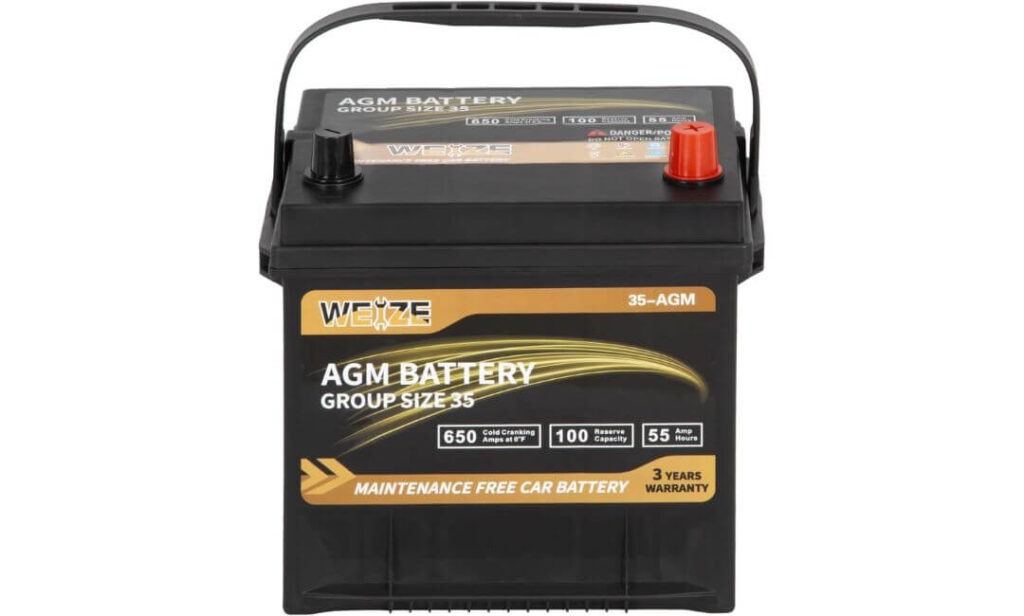
Quick Specs:
- Battery Group: BCI Group 35
- Cold Cranking Power: 650CCA for strong starts in freezing and hot conditions
- Reserve Capacity: 100RC for healthier accessory support and voltage consistency
- Battery Capacity: 55Ah AGM configuration
- Battery Type: Fully sealed AGM with maintenance-free construction
- Temperature Range: Designed to handle extreme heat and cold climates
- Terminal Layout: Left negative / Right positive tapered terminals
- Built For: Start-stop systems, electronics-heavy vehicles, daily commuting
- Core Advantage: Lower self-discharge and stronger cycle durability than flooded batteries
Sometimes the smartest battery upgrades are the ones that quietly solve problems before they start. That’s exactly the vibe this AGM setup gives off. It doesn’t try to overwhelm buyers with oversized dimensions or race-car-style marketing — instead, it focuses on the stuff modern Honda CR-V owners actually notice after living with a battery for six months straight.
The first thing that genuinely helps here is the balance between 650CCA, 100 reserve capacity, and the compact Group 35 sizing. That combination gives this battery enough startup confidence for harsh mornings while still offering healthier voltage support during traffic-heavy driving, repeated short trips, and accessory use. A lot of batteries can do one of those things well. Fewer manage to stay stable across all of them consistently.
Another underrated advantage is how AGM chemistry changes the ownership experience itself. The lower self-discharge behavior matters more than most people realize, especially for CR-V owners who don’t drive every single day. Vehicles sitting for longer periods often expose weak batteries quickly, but AGM setups like this usually recover better and maintain voltage more consistently underneath modern electronics.
The temperature resistance also deserves real attention here. Extreme heat quietly destroys more batteries than winter ever does, and this setup was clearly designed with long-term climate durability in mind. Whether the vehicle deals with freezing starts, summer traffic, or stop-and-go commuting, the battery feels engineered to stay composed instead of constantly operating near its limit.
(This feels like the kind of AGM battery people end up appreciating more after ownership — not because it’s flashy, but because the vehicle simply keeps starting without drama day after day.)
Why This Battery Earned a Place Here
- Excellent balance of 650CCA starting power and 100RC reserve capacity
- AGM construction improves durability during short trips and daily stop-start driving
- Strong resistance against both extreme heat and freezing temperatures
- Lower self-discharge rate helps vehicles sitting unused for longer periods
- Compact Group 35 sizing works well for owners wanting an AGM upgrade without oversized bulk
One Thing Worth Knowing Before Buying
- Group 35 batteries are often used as upgrade-style alternatives, so exact tray fitment and terminal clearance should always be verified before installation
Honda CR-V Compatibility Notes
This battery works best for Honda CR-V owners looking for a more performance-oriented AGM setup while still staying within a manageable physical size. The stronger reserve capacity and healthier voltage stability make it especially attractive for vehicles carrying extra electronics, dash cams, charging accessories, or heavier daily-use demands.
However, Group 35 is not the original factory battery size for every CR-V generation. Before upgrading, owners should always confirm tray dimensions, cable reach, and terminal positioning to ensure clean fitment without modification stress.
The Insider Pro-Tip
One thing experienced CR-V owners eventually learn is that battery quality becomes much more noticeable as the vehicle ages. Newer vehicles can hide weak batteries for a while because everything else is fresh. Older SUVs don’t hide electrical weakness nearly as well.
That’s why balanced AGM batteries like this tend to age more gracefully in real-world ownership. Stable reserve capacity, lower self-discharge behavior, and stronger recovery after short drives help the entire electrical system feel calmer over time — especially in daily-driven CR-Vs carrying modern accessories and constant background power demand.
Best Honda CR-V Battery Picks Compared Side by Side for Real-World Driving
| Battery | Battery Size | Power Specs | Best Real-World Use | Honda CR-V Fitment | What Actually Makes It Stand Out |
|---|---|---|---|---|---|
|
UPLUS AGM-L60-UP
BEST OVERALL H5 AGM PICK
Feels purpose-built for modern CR-V electrical systems instead of just “fitting” the tray.
|
H5 / Group 47
|
660CCA
105RC 60Ah AGM |
Excellent for start-stop driving, heavy electronics, short commutes, and cold-weather daily use.
|
Best match for newer CR-V models using H5 batteries from factory.
|
Balanced reserve capacity and cycling durability make the SUV feel electrically healthier during real commuting.
|
|
Mighty Max MM-H5 AGM
BEST VALUE GROUP 47 AGM
One of the few affordable AGM batteries that still feels properly stable under repeated stop-start traffic.
|
H5 / Group 47
|
680CCA
100RC 60Ah AGM |
Perfect for commuters dealing with traffic-heavy driving and repeated short-distance trips.
|
Designed around modern H5-equipped Honda CR-V fitment.
|
The stronger cold-start performance and AGM recovery behavior feel surprisingly refined for the price range.
|
|
Interstate MTX-51R AGM
MOST TRUSTED OEM-STYLE PICK
Focuses less on flashy specs and more on long-term everyday dependability.
|
51R AGM
|
435CCA
75RC 41Ah AGM |
Great for older CR-V owners wanting factory-style behavior with modern AGM durability.
|
Excellent direct-fit option for many older Honda CR-V generations.
|
Keeps the correct compact sizing while upgrading voltage stability and cycling lifespan.
|
|
ACDelco Gold 51RAGM
BEST FACTORY-FEEL AGM OPTION
Feels calm, stable, and properly matched to older CR-V charging systems.
|
51R AGM
|
AGM Construction
OEM-Style Fit 36-Month Warranty |
Ideal for owners wanting smoother daily reliability instead of oversized battery conversions.
|
Best suited for CR-V models originally designed around 51R sizing.
|
Maintains clean OEM-style installation while delivering healthier long-term AGM performance.
|
|
Goodyear 24F-AGM Platinum
BEST HIGH-RESERVE UPGRADE
Built for owners who are tired of batteries constantly feeling overworked.
|
24F AGM
|
710CCA
120RC 70Ah AGM |
Excellent for colder climates, extra accessories, and heavy daily electrical demand.
|
Upgrade-focused fitment option requiring tray-space verification.
|
Massive reserve capacity gives modern SUVs noticeably more electrical breathing room.
|
|
Weize Platinum AGM Group 35
BEST BUDGET AGM UPGRADE
Quietly solves many long-term voltage stability problems modern SUVs develop with age.
|
Group 35 AGM
|
650CCA
100RC 55Ah AGM |
Strong fit for drivers wanting better reserve stability without jumping into oversized batteries.
|
Works best as an AGM upgrade option after confirming tray dimensions.
|
Excellent heat resistance and lower self-discharge behavior help daily-driven CR-Vs age more gracefully.
|
Why AGM Batteries Make More Sense in Modern Honda CR-V Models
A few years ago, most Honda CR-V owners could get away with installing almost any decent battery and forget about it for the next four or five years. Modern CR-Vs don’t work like that anymore. The electrical system has changed completely — and honestly, many battery guides online still haven’t caught up to that reality.
Today’s CR-V models run far more electronics in the background than older generations ever did. Even when the SUV is parked, systems like keyless entry modules, safety sensors, infotainment memory, remote functions, and start-stop programming continue drawing power quietly. That’s exactly why AGM batteries have become far more important now than they were in older CR-V generations.
The difference usually doesn’t show up on day one. It shows up six months later, during winter mornings, repeated short commutes, stop-and-go traffic, or after the vehicle sits unused for several days. That’s when weaker flooded batteries often start feeling strained while a properly matched AGM battery still feels stable and confident.
AGM Batteries Handle Modern Honda Electronics Better
One thing many owners misunderstand is that modern CR-V batteries are no longer just responsible for starting the engine. They’re now supporting an entire network of electronics constantly communicating with each other underneath the surface.
Features like:
- Auto start-stop systems
- Heated seats and steering wheels
- Larger infotainment displays
- Power liftgates
- USB charging systems
- Safety sensors and driver-assist tech
- Remote start functions
- Parking monitoring systems
…all increase battery demand significantly compared to older CR-V generations.
That’s where AGM batteries start separating themselves from conventional flooded batteries. AGM construction allows the battery to recover faster after repeated starts, maintain voltage more consistently under load, and tolerate deeper discharge cycles without degrading as quickly.
In real-world driving, that translates into something owners actually notice:
- More stable cold starts
- Less sluggish start-stop behavior
- Fewer low-voltage warning quirks
- Better recovery during short trips
- Healthier electrical performance over time
And honestly, modern Honda charging systems tend to behave noticeably better with AGM batteries once the vehicle accumulates more mileage.
Why Reserve Capacity Matters More Than Most Buyers Realize
A lot of battery shoppers focus only on CCA numbers because they sound impressive. But for many Honda CR-V owners, reserve capacity is often the more important spec long-term.
Reserve capacity is basically the battery’s ability to continue supporting electronics and maintain stable voltage when the engine isn’t actively charging the system. That becomes extremely important in situations like:
- Heavy traffic
- Cold-weather commuting
- Short-distance daily driving
- Long idle periods
- Using accessories with the engine off
- Vehicles sitting parked for several days
This is one of the biggest reasons the batteries in this guide lean heavily toward higher-quality AGM options with stronger reserve capacity ratings. Modern CR-Vs simply feel healthier when the battery isn’t operating constantly near its limit.
That’s also why larger AGM upgrades like Group 24F or higher-capacity H5 batteries appeal to many owners. They provide extra electrical breathing room the factory battery sometimes lacks after years of daily use.
AGM Batteries Usually Last More Gracefully Over Time
One underrated thing about AGM batteries is not just lifespan — it’s how they age.
Traditional flooded batteries often feel fine… until they suddenly don’t. AGM batteries typically decline more gradually, which gives owners earlier warning signs instead of unexpected no-start situations.
They also resist:
- Internal vibration damage
- Heat-related wear
- Acid leakage
- Self-discharge during storage
- Cycling stress from repeated stop-start driving
That’s especially important in Honda CR-V models because many owners use these SUVs for daily commuting, family driving, grocery runs, school traffic, and constant short-distance travel — exactly the kind of driving pattern that quietly destroys weaker batteries over time.
The Wrong Battery Can Quietly Create Expensive Problems
One thing rarely discussed enough is how sensitive modern CR-V electronics have become to unstable voltage. A weak or incorrect battery doesn’t always cause an obvious starting problem first.
Instead, owners often notice strange behavior like:
- Delayed auto start-stop response
- Random dashboard warnings
- Flickering infotainment behavior
- Weak remote start performance
- Slow crank speed after sitting overnight
- Electronics acting inconsistent in cold weather
In many cases, the battery is already struggling underneath everything else before the owner even realizes it.
That’s one reason many experienced CR-V owners prefer staying with AGM once the vehicle originally came equipped with one. Downgrading to a cheaper flooded battery may save money upfront, but it can create a vehicle that feels electrically “off” long before the battery actually fails.
AGM Batteries Cost More Upfront — But Usually Make More Sense Long-Term
There’s no point pretending AGM batteries are cheap, because they aren’t. A quality AGM replacement for a Honda CR-V will almost always cost more than a standard flooded battery.
But context matters.
Modern CR-V owners are paying for:
- Better cycling durability
- More stable voltage delivery
- Stronger reserve capacity
- Improved cold-weather behavior
- Better support for start-stop systems
- Longer-term electrical consistency
And realistically, replacing a weak battery once is usually cheaper than dealing with repeated low-voltage problems, premature battery failure, or electrical troubleshooting later.
That’s why the best AGM batteries don’t simply make the SUV start better. They usually make the entire vehicle feel more stable, smoother, and less stressed during normal daily driving — especially in newer Honda CR-V models carrying far more electronics than people realize.
Buying Guide: What Actually Matters When Choosing a Honda CR-V Battery
Buying a battery for a Honda CR-V used to be simple. Today, it’s surprisingly easy to buy the wrong one — even if the battery technically “fits.” Modern CR-V models place far more stress on batteries than older generations, and that changes what owners should actually pay attention to before spending money.
A lot of people still shop by brand name alone. In reality, the smarter move is understanding how the battery matches the way the CR-V is actually driven. Daily traffic, short trips, winter starts, electronics running in the background, and start-stop systems all affect what kind of battery the SUV really needs long-term.
That’s why the best CR-V batteries usually aren’t the cheapest ones on the shelf. They’re the ones with the correct balance of:
- Proper battery group size
- Healthy reserve capacity
- Strong AGM durability
- Reliable cold-start performance
- Correct fitment for the vehicle’s charging system
And honestly, modern Honda electronics punish weak batteries much faster than many owners expect.
Why CCA Matters More in a Honda CR-V Than People Think
One of the first specs most buyers notice is CCA, or Cold Cranking Amps. That number measures how much power the battery can deliver during cold-weather starts.
Now technically, a CR-V doesn’t need race-car-level CCA numbers to start. But here’s the part many battery guides skip: modern SUVs demand stable voltage during startup because multiple systems wake up simultaneously the moment the ignition sequence begins.
That includes:
- Infotainment systems
- Safety sensors
- Fuel-management systems
- Remote-start hardware
- Auto start-stop programming
- Climate control electronics
If the battery struggles during that moment, the vehicle can start acting electrically inconsistent even if the engine still cranks successfully.
That’s why stronger AGM batteries with:
- 650CCA
- 660CCA
- 680CCA
- or higher reserve-capacity setups
…tend to feel noticeably healthier in daily CR-V use, especially in colder climates or stop-and-go driving conditions.
And honestly, winter is usually when weak batteries finally expose themselves.
Why AGM Construction Is Worth Paying Attention To
For modern Honda CR-V owners, AGM matters far more now than it did a decade ago.
AGM (Absorbed Glass Mat) batteries are designed differently from conventional flooded batteries. Instead of liquid acid freely moving inside the battery, AGM designs absorb the electrolyte into fiberglass mats. That improves durability, cycling behavior, vibration resistance, and voltage stability.
In real-world CR-V ownership, AGM batteries typically handle:
- Repeated short trips better
- Start-stop systems more comfortably
- Heavy accessory loads more consistently
- Long idle periods with less stress
- Cold-weather starts more confidently
- Daily stop-and-go traffic with healthier recovery behavior
That’s exactly why newer Honda CR-V models increasingly lean toward AGM-compatible setups from the factory.
Another thing owners rarely think about is self-discharge. AGM batteries lose charge more slowly while sitting parked, which matters a lot for vehicles that aren’t driven every single day.
Understanding Honda CR-V Battery Group Sizes
This is where many buyers accidentally make expensive mistakes.
Battery group size doesn’t just mean physical dimensions. It also affects:
- Terminal positioning
- Tray fitment
- Cable reach
- Hold-down alignment
- Electrical compatibility
And unfortunately, online fitment guides are often inconsistent.
For Honda CR-V models, these are the most commonly discussed battery sizes:
- 51R → Common on many older CR-V generations
- H5 / Group 47 → Extremely common on newer CR-V models
- 47R → Similar sizing variation sometimes referenced in aftermarket fitment discussions
- Group 35 → Popular AGM upgrade option in some setups
- 24F → Higher-capacity upgrade choice for owners wanting more reserve power
- 48 / 49 equivalents → Occasionally discussed for larger custom upgrade configurations, though not standard direct-fit options for most CR-Vs
This is exactly why checking the actual:
- terminal orientation
- battery tray size
- OEM group size
- hold-down compatibility
…matters more than blindly following a generic online recommendation.
A battery that physically “almost fits” usually becomes annoying very quickly.
Why Reserve Capacity Quietly Changes the Ownership Experience
A lot of buyers ignore reserve capacity because CCA sounds more exciting. In reality, reserve capacity often affects daily driving comfort much more.
Reserve capacity determines how long the battery can continue supporting electrical systems when the alternator isn’t actively charging.
That becomes extremely important during:
- Traffic-heavy commuting
- Winter mornings
- Short-distance driving
- Long accessory use
- Dash cam operation
- Frequent engine restarts
- Vehicles sitting unused for days
This is one reason higher-capacity AGM batteries often make modern CR-Vs feel smoother and more electrically stable overall.
The vehicle simply operates with less stress underneath the surface.
Honda CR-V Battery Replacement Costs and Installation Reality
Battery replacement costs vary more now than they used to.
A standard flooded battery may cost less upfront, but most quality AGM replacements for Honda CR-V models usually land somewhere between:
- $180 to $350+ depending on battery size, AGM construction, reserve capacity, and warranty coverage.
Larger AGM upgrades with higher reserve capacity naturally cost more.
Installation itself is usually straightforward for experienced DIY owners, but there are still things people overlook:
- Terminal orientation matters
- Start-stop systems may require reset procedures
- Incorrect battery registration can affect charging behavior in some vehicles
- Oversized batteries may interfere with factory hold-downs
- Some aftermarket trays don’t fit cleanly with larger upgrades
And one thing many owners forget entirely: old batteries should always be recycled properly. Most battery retailers and auto-parts stores accept used battery returns because AGM and lead-acid batteries contain recyclable materials.
Warranty Coverage Matters More Than Marketing
A long warranty doesn’t automatically mean the battery is amazing — but weak warranty support is usually a bad sign.
Most higher-quality AGM batteries for Honda CR-V models now offer:
- 3-year replacement coverage
- Longer cycle-life expectations
- Better support against premature failure
But there’s another part buyers should pay attention to:
replacement availability.
Because honestly, the best warranty in the world doesn’t help much if the replacement process becomes frustrating or the battery is difficult to find locally when something goes wrong.
That’s one reason well-supported AGM lines from established brands still matter, especially for owners relying on the vehicle every single day.
The Smartest Honda CR-V Battery Buyers Usually Focus on Balance
One thing experienced CR-V owners eventually realize is that the “best battery” is rarely the one with the biggest marketing numbers.
The smartest choices usually balance:
- Proper fitment
- AGM durability
- Strong reserve capacity
- Stable voltage delivery
- Reliable cold starts
- Long-term electrical consistency
Because modern Honda CR-Vs don’t just need a battery that starts the engine anymore.
They need one capable of supporting an entire electrical ecosystem without constantly operating at the edge of its limits.
Honda CR-V Battery Replacement Guide
Replacing a Honda CR-V battery is no longer just a five-minute swap like it used to be years ago. Modern CR-Vs rely heavily on stable voltage, smart charging behavior, and electronics that stay active even when the SUV is parked. That means choosing the correct battery — and installing it correctly — matters far more now than most owners realize.
The good news is that most Honda CR-V battery replacements are still completely manageable for DIY owners with basic tools and a little patience. The key is avoiding the small mistakes that quietly create electrical problems later, especially on newer CR-V models running AGM batteries and start-stop systems.
Start With the Correct Honda CR-V Battery Size
Before touching tools or disconnecting cables, the first thing to confirm is the actual battery group size your CR-V uses.
This matters because “close enough” fitment usually turns into problems later. A battery may physically sit inside the tray while still causing:
- Terminal cable strain
- Incorrect hold-down alignment
- Hood clearance problems
- Poor voltage behavior
- Vibration damage over time
For most Honda CR-V owners, these are the sizes that matter most:
- 51R → Common on many older CR-V generations
- H5 / Group 47 → Common on newer CR-V models
- 47R → Occasionally referenced aftermarket variation
- Group 35 or 24F → Upgrade-style fitments requiring careful tray verification
This is why checking:
- battery dimensions
- terminal orientation
- hold-down location
- positive and negative positioning
…is just as important as checking the brand itself.
A lot of online fitment tools still create confusion, especially around H5, Group 47, and 47R naming overlaps. Physically measuring the old battery before ordering is still one of the smartest things an owner can do.
Safety Comes First During Battery Replacement
Modern AGM batteries are safer than older flooded batteries in many ways, but basic battery safety still matters.
Before removing the old battery:
- Turn the vehicle completely off
- Remove the key fob from the vehicle area
- Wear gloves and eye protection
- Avoid metal tools touching both terminals simultaneously
- Make sure the replacement battery matches voltage and terminal orientation
One small mistake around battery terminals can create sparks instantly, especially in tighter CR-V engine bays.
And honestly, rushing battery installation is where most DIY problems begin.
The Correct Way to Remove the Old Battery
The safest removal order matters more than people think.
- Disconnect the negative terminal first
- Then disconnect the positive terminal
- Remove the battery hold-down bracket carefully
- Lift the battery straight upward without tilting aggressively
- Clean corrosion or dirt from the tray before installing the new battery
Older Honda CR-V batteries can become surprisingly heavy, especially AGM designs. Many modern AGM batteries weigh close to 30–50 pounds, so lifting carefully matters.
Another thing owners often skip is checking the battery tray itself. Dirt, moisture, or corrosion underneath the old battery can slowly damage the new one over time if ignored.
Installing the New Battery the Right Way
Once the tray is clean and the correct battery is confirmed, installation becomes much simpler.
During installation:
- Place the battery squarely into the tray
- Confirm terminal orientation before tightening anything
- Secure the hold-down bracket firmly without over-tightening
- Connect the positive terminal first
- Connect the negative terminal last
That connection order helps reduce accidental shorting risks during installation.
After startup, it’s completely normal for:
- idle speed to fluctuate briefly
- warning lights to appear temporarily
- auto start-stop to recalibrate
- windows or radio settings to reset
Modern Honda systems often need a short relearning period after battery replacement.
Why AGM Batteries Need Slightly Different Care
One mistake many owners make is treating AGM batteries exactly like older flooded batteries.
AGM batteries generally:
- Recover faster after starts
- Handle deeper discharge better
- Resist vibration more effectively
- Lose charge more slowly during storage
…but they still hate being repeatedly drained completely.
If a CR-V sits parked for long periods, using a quality battery maintainer becomes extremely helpful — especially during winter storage or low-mileage ownership.
And importantly:
if the CR-V originally came with an AGM battery, downgrading to a conventional flooded battery is usually not worth the savings long-term. Modern charging systems are often calibrated around AGM behavior.
The Biggest Mistake That Shortens Battery Life
Ironically, extreme cold isn’t usually what kills batteries first.
Heat and repeated short trips are often the real battery killers.
Daily driving patterns like:
- five-minute commutes
- constant stop-and-go traffic
- repeated engine restarts
- heavy accessory use
- long idle periods
…slowly wear batteries down because the charging system rarely gets enough uninterrupted time to fully recover the battery.
That’s one reason higher-quality AGM batteries tend to survive modern CR-V ownership more gracefully.
Expert Tips to Make a Honda CR-V Battery Last Longer
Battery lifespan usually depends more on driving habits than owners realize.
The healthiest battery habits include:
- Taking occasional longer highway drives
- Avoiding repeated deep discharges
- Keeping terminals clean and tight
- Turning accessories off before shutting down
- Using a battery maintainer during long storage periods
- Replacing weak batteries before complete failure
And honestly, the smartest CR-V owners usually replace aging batteries early instead of waiting for a complete no-start situation.
Because once modern Honda electronics start seeing unstable voltage regularly, strange behavior often follows long before the battery fully dies.
One Last Thing Most Battery Guides Never Mention
A battery that “still starts the SUV” isn’t always a healthy battery anymore.
Modern Honda CR-V systems are extremely sensitive to voltage consistency. Many weak batteries continue starting the engine while quietly causing:
- sluggish auto start-stop behavior
- flickering infotainment systems
- weak remote-start performance
- delayed electronic response
- random warning lights during cold weather
That’s why the best battery replacements don’t simply crank the engine harder.
They make the entire CR-V feel smoother, calmer, and more electrically stable during everyday driving — which is exactly what modern Honda owners usually notice most after upgrading to a properly matched AGM battery.
Honda CR-V Battery Replacement Cost Breakdown
One thing that surprises many Honda CR-V owners today is how much battery prices have changed compared to older vehicles. Years ago, replacing a CR-V battery was usually a quick, relatively cheap maintenance job. Modern CR-V models — especially those using AGM batteries and start-stop systems — changed that completely.
And honestly, a lot of the price shock comes from misunderstanding what modern batteries are actually doing now. They’re no longer just responsible for turning the starter motor. Today’s CR-V batteries are supporting an entire electrical ecosystem filled with sensors, infotainment systems, safety modules, charging ports, memory systems, remote functions, and start-stop programming running constantly underneath the surface.
That’s exactly why battery replacement costs vary so much now between different CR-V setups.
Typical AGM Battery Price Ranges for Honda CR-V Models
For most Honda CR-V owners shopping for a quality AGM replacement battery, realistic pricing usually falls into these ranges:
- Basic AGM replacements: roughly $180–$240
- Mid-range premium AGM batteries: roughly $240–$320
- High-reserve-capacity AGM upgrades: roughly $320–$400+
Smaller 51R AGM batteries for older CR-V generations usually sit closer to the lower end of the range, while larger H5, Group 47, or upgrade-focused AGM batteries naturally cost more because of increased reserve capacity and cycling durability.
And honestly, the batteries that feel expensive upfront are often the ones owners end up appreciating most later — especially once winter arrives or daily commuting starts exposing weak electrical performance.
Why Some Honda CR-V Batteries Cost Much More Than Others
At first glance, many batteries look almost identical. Same voltage, similar dimensions, similar labels. But internally, the quality differences can be massive.
The biggest things affecting Honda CR-V battery pricing are:
- AGM vs flooded battery construction
- Reserve capacity ratings
- Cold cranking performance
- Internal vibration resistance
- Warranty coverage
- Cycling durability
- Brand support and replacement availability
- Battery group size
This is one reason larger AGM batteries like:
- H5 / Group 47
- Group 24F
- premium AGM upgrades
…often cost noticeably more than compact OEM-style 51R batteries.
They simply contain more internal material, more reserve capacity, and are built to tolerate heavier electrical demand.
And modern Honda CR-Vs quietly place much heavier stress on batteries than older generations ever did.
Dealer Batteries vs Aftermarket AGM Options
This is where many CR-V owners get stuck.
Dealership batteries often cost more, sometimes significantly more, because owners are paying for:
- OEM branding
- dealer labor
- installation support
- warranty handling convenience
Meanwhile, aftermarket AGM batteries can often deliver:
- higher reserve capacity
- stronger cold-start performance
- longer cycling durability
- better value per dollar
…without dealership pricing attached to them.
That doesn’t automatically mean every aftermarket battery is better. Some cheaper AGM options look impressive online but quietly cut corners in:
- internal plate construction
- cycling durability
- heat resistance
- reserve stability
That’s exactly why fitment quality and real-world electrical behavior matter more than flashy marketing numbers.
The Hidden Cost of Buying the Wrong Battery
Ironically, the cheapest battery often becomes the most expensive long-term.
A weak or poorly matched battery can create:
- repeated replacement costs
- voltage-related electrical issues
- unreliable winter starts
- shortened lifespan
- charging-system stress
- inconsistent start-stop behavior
And modern Honda electronics are extremely sensitive to unstable voltage once batteries begin weakening.
That’s why many experienced CR-V owners eventually stop chasing the cheapest battery possible and instead focus on:
- proper AGM construction
- correct battery group size
- stable reserve capacity
- long-term durability
Because realistically, replacing one good AGM battery every several years is usually less frustrating than replacing weaker batteries repeatedly.
Why Reserve Capacity Quietly Affects Long-Term Value
A lot of buyers focus only on CCA because it sounds impressive in advertising.
But reserve capacity often determines how relaxed or stressed the battery feels during real ownership.
Higher reserve-capacity AGM batteries generally:
- tolerate stop-and-go traffic better
- recover more effectively after short trips
- support accessories more comfortably
- handle winter use more confidently
- experience less strain during daily driving
That’s one reason batteries like larger H5 or 24F AGM setups often feel noticeably healthier over time in modern CR-Vs carrying heavier electrical loads.
The vehicle simply spends less time operating near the battery’s limits.
Warranty Length Matters — But Not Always the Way People Think
Longer warranties absolutely matter, but warranty quality matters even more.
A battery offering:
- 3-year replacement coverage
- strong nationwide availability
- easier replacement support
…usually creates a much better ownership experience than a flashy warranty with complicated replacement terms.
And honestly, battery replacement convenience becomes surprisingly important once people actually need warranty support unexpectedly during winter or daily commuting.
That’s one reason trusted AGM battery lines still hold value even when cheaper alternatives exist.
The Real Long-Term Value Comes From Stability
One thing many Honda CR-V owners eventually realize is that the “best value” battery usually isn’t the cheapest one sitting on the shelf.
The real long-term value comes from:
- fewer voltage-related issues
- healthier cold starts
- longer lifespan
- stable electronics
- smoother daily behavior
- reduced replacement frequency
Because modern CR-Vs don’t just react to completely dead batteries anymore.
They react to weak batteries slowly, subtly, and sometimes frustratingly long before total failure happens.
That’s exactly why properly matched AGM batteries often feel expensive only once — while weak batteries tend to keep costing owners money, stress, and electrical headaches repeatedly over time.
FAQs About Honda CR-V Battery
Why do newer Honda CR-V models seem to kill batteries faster than older CR-V generations?
This is honestly one of the biggest complaints modern Honda CR-V owners quietly share once the vehicle crosses a few years of daily use. The SUV itself usually isn’t “bad” on batteries — it’s the amount of background electrical activity modern CR-Vs now carry compared to older generations.
Even when parked, many newer CR-V models still keep multiple systems awake in the background:
- keyless entry modules
- safety monitoring systems
- infotainment memory
- remote communication features
- charging management systems
- auto start-stop programming
That constant low-level power draw slowly punishes weaker batteries, especially in vehicles driven mostly on short trips where the charging system never fully recovers the battery properly.
This is exactly why AGM batteries feel noticeably better in modern CR-V ownership. They tolerate repeated short-trip driving, deeper cycling stress, and constant electronic demand much more gracefully than traditional flooded batteries. Owners usually notice the difference not just during startup, but in the overall electrical behavior of the SUV months later.
Is upgrading from a 51R battery to an H5/Group 47 battery worth it in a Honda CR-V?
In some CR-V setups, absolutely. In others, forcing the upgrade simply because “bigger sounds better” creates unnecessary headaches.
The real answer depends on:
- the CR-V generation
- tray space
- terminal clearance
- charging behavior
- how the vehicle is actually driven daily
For many newer CR-V models already designed around H5 batteries, staying with a quality H5 AGM setup usually makes the most sense long-term because the vehicle’s electrical system was designed expecting that reserve capacity.
But older CR-Vs originally built around compact 51R batteries often behave better with a properly matched 51R AGM battery instead of oversized conversions. Bigger batteries aren’t automatically healthier if the tray fitment becomes awkward or cable routing starts feeling strained.
Honestly, the smartest CR-V battery upgrades usually prioritize:
- stable voltage behavior
- correct fitment
- reserve capacity balance
- AGM durability
…instead of blindly chasing the physically largest battery possible.
Why does a Honda CR-V sometimes show weird electrical behavior before the battery actually dies?
Because modern Honda electronics react to unstable voltage long before the engine completely stops starting.
This is one of the most misunderstood things about modern CR-V battery problems. A weak battery can still crank the engine while quietly struggling underneath everything else the vehicle is trying to power simultaneously.
That’s why owners often notice strange symptoms first, like:
- sluggish auto start-stop response
- random warning lights
- flickering infotainment screens
- delayed remote start behavior
- weak cold-weather cranking
- unstable idle after startup
In many cases, the battery is already operating near its limit even though the SUV technically still “starts fine.”
And honestly, once modern AGM batteries begin weakening, the CR-V usually starts giving subtle electrical warnings weeks or months before complete failure happens. Paying attention to those early signs saves a lot of frustration later.
Do expensive AGM batteries actually last longer, or are you mostly paying for branding?
Realistically, both things exist in the market.
Some expensive batteries genuinely deliver:
- stronger reserve capacity
- better cycling durability
- healthier voltage stability
- longer lifespan under stop-start driving
- better heat resistance
…but there are also overpriced batteries relying heavily on branding alone.
The important thing most buyers miss is that long-term battery performance depends just as much on the owner’s driving habits as the battery itself. A premium AGM battery constantly subjected to:
- repeated short trips
- extreme heat
- low charging time
- long idle periods
- frequent accessory use
…can still wear down surprisingly quickly.
That’s why the smartest battery shoppers focus less on logos and more on:
- AGM construction quality
- reserve capacity
- correct group size
- warranty support
- real-world electrical stability
Because honestly, the battery that feels “best” after two years of commuting is usually the one owners remember most — not the one with the flashiest marketing page.
What’s the biggest mistake Honda CR-V owners make after installing a new battery?
Most people think the job is finished once the engine starts again. In reality, battery health is heavily affected by what happens during the next few weeks of driving.
One of the biggest mistakes owners make is installing a new AGM battery into a driving pattern that already destroyed the previous battery:
- repeated five-minute trips
- heavy stop-and-go traffic
- long periods parked unused
- constant accessory use with the engine off
Modern CR-V charging systems need enough uninterrupted driving time to properly recover AGM batteries. Without that recovery time, even excellent batteries slowly start operating in a partially discharged state most of their life.
That’s also why many experienced CR-V owners eventually start doing small things differently:
- occasional longer highway drives
- using battery maintainers during storage
- replacing weak batteries before total failure
- avoiding unnecessary deep discharges
Because modern Honda SUVs don’t just need strong starting power anymore.
They need batteries capable of surviving a constant electrical workload every single day without slowly becoming unstable underneath the surface.
Final Thoughts
Finding the best battery for a Honda CR-V is no longer as simple as grabbing the first battery that matches the tray size. Modern CR-Vs place real pressure on batteries now — not just during startup, but every single day through traffic, short trips, start-stop systems, background electronics, and constant accessory demand most owners never even think about.
That’s exactly why the difference between a “good enough” battery and a properly matched AGM battery becomes obvious over time.
The strongest options in this guide were chosen around how Honda CR-V owners actually use these SUVs in real life:
- daily commuting
- cold-weather starts
- heavy electronics
- stop-and-go driving
- vehicles sitting parked for days
- long-term reliability after the factory battery starts aging
And honestly, that matters far more than flashy advertising numbers.
For newer CR-V models, quality H5/Group 47 AGM batteries usually make the most sense because they match the electrical demands modern Hondas now carry. Meanwhile, older CR-V generations still respond extremely well to properly matched 51R AGM batteries that preserve clean OEM-style fitment while upgrading durability and voltage stability.
The bigger takeaway here is simple:
the best Honda CR-V battery is usually the one that makes the vehicle feel electrically calm again.
No weak cold starts.
No sluggish auto start-stop behavior.
No strange voltage quirks after sitting overnight.
No feeling like the SUV is constantly operating on the edge of a low battery.
Just stable daily performance that quietly works the way a Honda should.
And realistically, that’s what most CR-V owners are actually paying for when they move to a high-quality AGM battery — not just stronger starting power, but a vehicle that feels healthier, smoother, and more dependable every single day afterward.
Also Check:


