
6 Best Batteries for Toyota Sienna in 2026: Top-Rated AGM Replacements With High CCA
If you’ve spent any time around the newer Toyota Sienna hybrid, you already know it’s not picky about fuel — but it is picky about batteries. A weak or mismatched battery can trigger strange electrical behavior long before it completely dies, especially on 2021–2026 models loaded with sliding doors, hybrid electronics, start-stop functions, and power-hungry safety systems. That’s why blindly buying the cheapest replacement from a parts shelf usually ends with slow cold starts, warning lights, or a van that suddenly struggles after sitting for a few days.
Most newer Toyota Sienna models use an H5/Group 47 AGM battery, while many older Sienna trims from the previous generation commonly use 24F or Group 35 batteries depending on year and configuration. The tricky part is that not every “fits your vehicle” battery actually performs well in a real Sienna. Some lack reserve capacity, some don’t handle repeated short trips well, and others simply can’t keep up with hybrid accessory loads during extreme weather.
So instead of stuffing this list with random bestsellers, these picks were chosen based on the things owners actually notice after installation — stable cold starts, stronger reserve capacity, cleaner fitment, quieter operation, and fewer charging issues over time. The goal here wasn’t just to find batteries that fit a Toyota Sienna. It was to find the ones you won’t regret installing six months later.
Best Toyota Sienna Battery: Top 2026 Picks for Daily Driving, Short Trips, and Winter Starts
#1. Interstate Batteries Mega-Tron MTX-47/H5 AGM Battery
Best H5 battery for Toyota Sienna hybrid replacement with strong cold-start reliability and OEM-style daily performance
#2. Weize Platinum AGM Group 47 Battery
Top-rated Group 47 AGM battery for Toyota Sienna owners wanting higher CCA and better reserve capacity without overspending
#3. UPLUS AGM-L60-UP Group 47 Battery
Reliable Toyota Sienna battery replacement for commuters dealing with frequent short trips, heavy electronics, and stop-and-go driving
#4. Goodyear 47-H5-AGM Platinum Series Battery
Premium AGM battery for Toyota Sienna hybrid models built for longer standby power and smoother winter starts
#5. Mighty Max MM-G24F AGM Battery
Trusted 24F battery replacement for older Toyota Sienna models needing stronger accessory support and maintenance-free operation
#6. Autocessking Group 35 AGM Battery
Affordable Group 35 Toyota Sienna battery option for older trims needing dependable starting power without oversized fitment issues
Expert Tip Before You Buy a Toyota Sienna Battery
One thing a lot of Sienna owners don’t realize until it’s too late is that the van usually gives small warning signs before the battery completely fails. Power sliding doors start moving slower. Interior lights dim for a second during startup. The hybrid system suddenly feels “off” after the vehicle sits overnight. Most people ignore these signs because the engine still starts — but on newer Toyota Sienna hybrid models, that weak battery can quietly stress the entire electrical system for weeks before triggering a warning.
That’s also why we intentionally avoided stuffing this list with random cheap flooded batteries that technically “fit” the Sienna. On paper, many of them look fine. In real ownership, they struggle with repeated short trips, family-road-trip accessory loads, winter starts, and long idle periods that modern Siennas deal with constantly. A proper AGM Group 47/H5 battery simply handles the van better over time, especially on 2021–2026 hybrid trims packed with electronics.
The difference isn’t always about raw power. It’s about how stable the battery stays after months of real use. That’s what most owners actually care about after the excitement of a new battery disappears.
How We Chose These Toyota Sienna Batteries
There are hundreds of batteries online claiming to be “perfect” for the Toyota Sienna. Most were ignored immediately.
The first thing we looked at was real fitment consistency. Newer Sienna hybrid models are surprisingly sensitive to battery sizing, terminal layout, and reserve capacity. A battery might technically bolt in, but if the dimensions are slightly off or the reserve capacity is weak, owners start noticing weird behavior during cold starts, short drives, or heavy accessory use. That’s why this list heavily focuses on proven H5/Group 47 AGM batteries instead of generic one-size-fits-all options.
We also paid close attention to reserve capacity and cold cranking performance, not just marketing numbers. A Toyota Sienna used for school runs, highway trips, grocery stops, rear entertainment systems, charging devices, and constant door operation puts a very different load on a battery than a basic commuter sedan. Batteries with weak reserve numbers often feel fine during the first few weeks, then slowly start showing voltage instability once real daily use begins. That’s exactly the type of battery we wanted to avoid here.
Another thing we intentionally prioritized was AGM construction over cheap standard flooded designs. Modern Sienna hybrids have too many electronics for outdated low-end batteries to age gracefully. AGM batteries recover better after short trips, tolerate accessory loads more smoothly, and generally stay more stable during temperature swings. For family vans that spend time parked between errands, that extra stability matters more than most spec sheets admit.
Brand reputation alone also wasn’t enough to make this list. Some newer battery models still have limited long-term public feedback because they haven’t been on the market for years yet. So instead of pretending every battery here has a decade of proven history, we focused on something more useful: spec quality, real-world design logic, warranty confidence, proper AGM architecture, and fitment behavior that actually matches how Toyota Sienna owners drive.
Most importantly, none of these picks were chosen just because they were cheap or heavily advertised. Every battery here earned its spot because it solves a specific problem Sienna owners commonly run into — whether that’s weak winter starts, hybrid electrical sensitivity, short-trip battery drain, accessory-heavy daily driving, or older models needing a dependable replacement without fitment headaches.
That’s the difference between a battery that simply fits your Toyota Sienna and one that still feels dependable a year later.
#1. Interstate Batteries Mega-Tron MTX-47/H5 AGM Battery
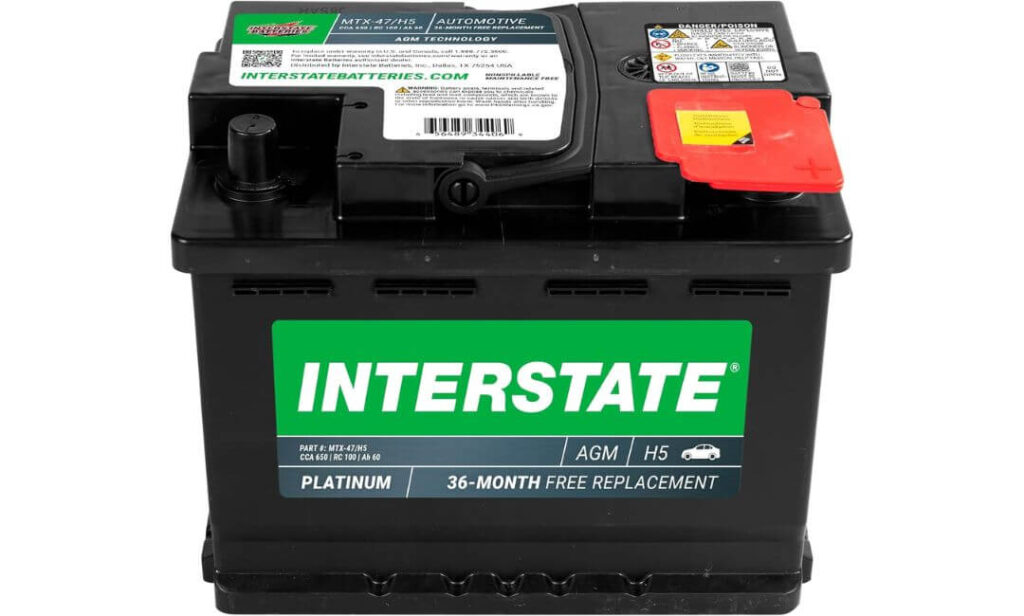
Quick Specs:
- Battery Type: Premium Pure Lead AGM
- Group Size: H5 / Group 47
- Cold Cranking Power: 650 CCA
- Reserve Capacity: 100 Minutes
- Battery Capacity: 60Ah
- Design: Spill-proof VRLA construction with vibration resistance
- Best Use Case: Hybrid-ready family vans with heavy daily electrical use
- Ideal Fitment: Most newer Toyota Sienna hybrid models using Group 47/H5 batteries
- Warranty Coverage: 36-Month Free Replacement
The first thing most owners notice after installing this battery isn’t the startup sound — it’s how stable the van suddenly feels again. Sliding doors react quicker, interior electronics stop acting sluggish, and cold morning starts lose that half-second hesitation many Sienna owners quietly get used to over time. That’s the advantage of a properly built pure lead AGM battery in a modern hybrid van packed with electronics.
What makes this one stand out is the balance. A lot of aftermarket batteries either chase huge cranking numbers or cheap pricing. This one feels engineered around real-world use instead. The 100-minute reserve capacity matters more than people think in a Toyota Sienna because these vans spend their lives powering chargers, rear climate systems, family accessories, parking sensors, power doors, and constant stop-and-go driving. Weak batteries usually survive the first month — then slowly start showing voltage weirdness. This one feels far more composed during daily abuse.
There’s also a reason professional shops trust Interstate so heavily for family vehicles. The AGM design here is properly sealed, vibration-resistant, and noticeably better during repeated short trips where many standard flooded batteries slowly lose consistency. The built-in handles sound minor until installation day arrives and you realize how awkward some heavy AGM batteries can be inside tight engine bays. Small detail, big difference.
(And honestly, this is the kind of battery that feels expensive once — not annoying every winter afterward.)
Where This Battery Earned Our Respect
- Pure lead AGM design gives noticeably stronger long-term voltage stability
- 650 CCA is more realistic and usable than inflated marketing numbers
- Handles short-trip family driving far better than cheap flooded batteries
- Excellent fit for newer Toyota Sienna hybrid battery replacement needs
- Spill-proof sealed construction feels safer in high-heat daily use
- One of the few batteries here that genuinely feels designed for modern electronics-heavy vans
One Thing Worth Knowing Before Ordering
It’s heavier than many entry-level batteries, and some budget shoppers may initially hesitate at the price compared to basic flooded alternatives.
Toyota Sienna Fitment Notes That Owners Actually Care About
This battery makes the most sense for Toyota Sienna models using the H5/Group 47 battery size, especially newer hybrid trims with heavy accessory loads and start-stop behavior. The dimensions fit properly without awkward tray movement or terminal clearance headaches that some oversized aftermarket batteries create.
If your Sienna regularly handles school runs, highway trips, power door cycling, rear-seat charging devices, or long idle sessions with climate controls running, this battery simply feels more comfortable doing the job than cheaper replacements. That extra reserve capacity becomes very noticeable after a few months of real ownership.
The Insider Pro-Tip
A lot of Toyota Sienna owners replace the battery only after the van completely refuses to start. Truth is, most hybrid Siennas begin showing battery fatigue much earlier through small electrical changes — slower door response, weaker accessory behavior, dim startup lighting, or random electronic sensitivity after sitting overnight. That’s usually the real warning sign.
The smarter move is replacing the battery before those symptoms become normal. A high-quality AGM battery like this doesn’t just help the engine crank better; it helps the entire van feel electrically healthier during daily use. And in a vehicle as electronics-heavy as the modern Sienna, that difference quietly affects almost everything you touch inside the cabin.
#2. Weize Platinum AGM Group 47 Battery
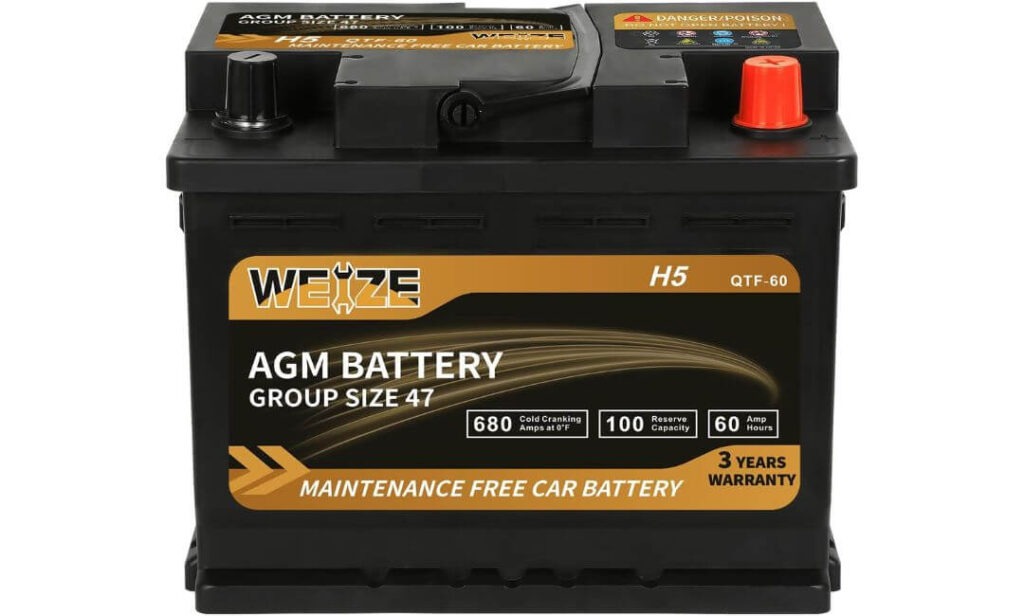
Quick Specs:
- Battery Type: AGM Start-Stop Automotive Battery
- Group Size: H5 / Group 47
- Cold Cranking Output: 680 CCA
- Reserve Capacity: 100RC
- Battery Capacity: 60Ah
- Temperature Tolerance: -22°F to 158°F
- Terminal Layout: Left Negative (-), Right Positive (+)
- Construction Style: Leak-proof, vibration-resistant AGM housing
- Best For: Sienna owners needing stronger cold-start performance with heavy electronics use
- Warranty Support: 36-Month Coverage
Some batteries make bold promises. This one simply feels stronger the longer you live with it.
The moment this battery goes into a Toyota Sienna, the van usually starts acting more “awake.” Push-button starts feel cleaner, interior electronics recover faster after startup, and power-hungry accessories stop behaving like they’re fighting for voltage every morning. That extra 680 CCA isn’t just a number on paper — it becomes noticeable during cold starts, overnight parking, and short family trips where hybrid vans constantly cycle electrical loads.
What genuinely helps here is the combination of 100 reserve capacity and AGM stability. Many cheaper batteries can start a Sienna when they’re brand new, but after months of stop-and-go driving, school pickups, charging cables, rear-seat electronics, and power sliding doors, voltage consistency starts falling apart. This one holds itself together far better during repeated daily abuse, especially in newer Sienna hybrids where the electrical system never really gets a break.
Another thing owners tend to appreciate is how little drama comes with it. No maintenance headaches, no acid concerns, no strange fitment surprises if dimensions are checked properly beforehand. It also recharges faster than many older flooded designs, which matters more than people think in vans that spend their lives doing short errands instead of long highway runs.
(Honestly, this feels less like a “budget AGM” and more like the battery smart Sienna owners quietly buy after getting burned once already.)
Why This Pick Made More Sense Than Most Others
- 680 CCA output gives stronger winter startup confidence than many similarly priced AGM batteries
- Designed specifically for start-stop and electronics-heavy vehicles like the Toyota Sienna hybrid
- 100RC reserve capacity helps stabilize accessory-heavy family driving
- Better resistance to vibration and heat compared to entry-level flooded batteries
- Fast recharge behavior works well for frequent short-trip driving
- One of the strongest value-to-performance balances in the Group 47 category right now
One Thing Worth Knowing Before Ordering
Like many newer AGM batteries on the market, long-term ownership feedback is still growing, so it’s smart to double-check fitment and terminal orientation before purchasing rather than assuming every Group 47 battery installs identically.
Toyota Sienna Compatibility Notes Owners Usually Want First
This battery is best suited for Toyota Sienna models using the H5/Group 47 battery size, especially hybrid trims carrying heavier electrical demand from power doors, driver-assist systems, charging ports, and constant stop-start operation.
For Sienna owners who mostly drive short distances, idle during pickups, or use multiple accessories daily, the AGM construction here makes a very noticeable difference over standard flooded replacements. The van simply feels more electrically stable over time, especially during temperature swings and repeated cold starts.
The Insider Pro-Tip
A lot of people obsess over CCA numbers and completely ignore reserve capacity — which is usually the bigger reason modern Sienna batteries start feeling weak after a few months. The van may still crank fine, but electronics slowly become inconsistent because the battery can’t comfortably support everything happening in the background.
That’s why batteries like this tend to age more gracefully in real family use. The combination of AGM design, higher reserve capacity, and stronger recharge behavior matters far more in a Toyota Sienna than flashy marketing claims. And once you experience a Sienna with stable voltage again, it becomes surprisingly easy to notice when a cheaper battery starts slipping backward.
#3. UPLUS AGM-L60-UP Group 47 Battery
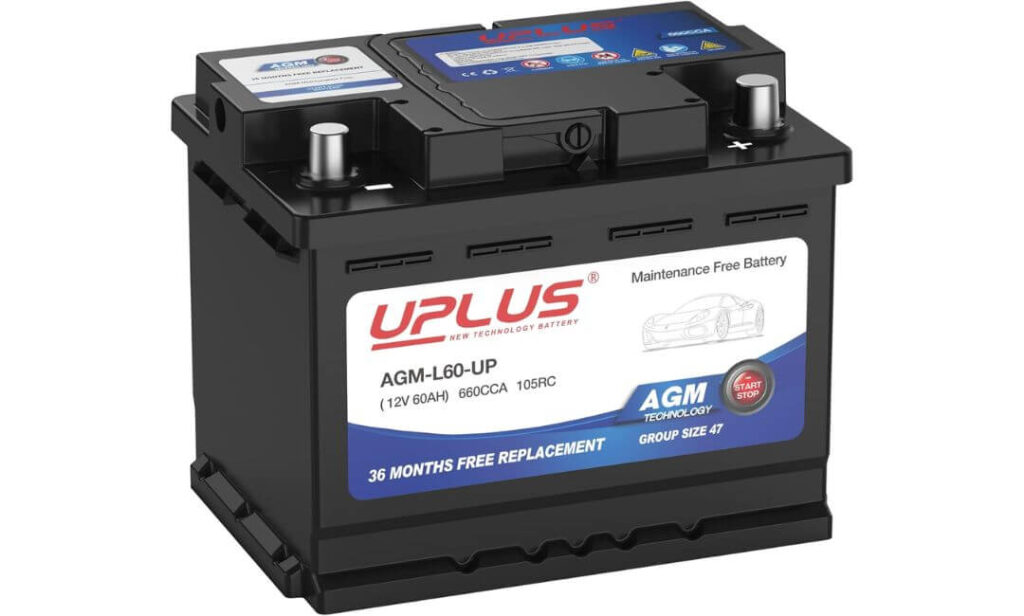
Quick Specs:
- Battery Type: Premium AGM Start-Stop Battery
- Group Size: H5 / Group 47 (L2)
- Cold Cranking Power: 660 CCA
- Reserve Capacity: 105RC
- Battery Capacity: 60Ah
- Cycle Life: Up to 4x longer than conventional batteries
- Terminal Layout: Left Negative (-), Right Positive (+)
- Construction: Leak-resistant AGM with enhanced vibration protection
- Best For: Sienna hybrids dealing with frequent short trips, heavy accessories, and long parked periods
- Warranty: 3-Year Free Replacement
Here’s the thing most battery listings never admit: modern Toyota Siennas are hard on batteries even when they’re barely being driven.
Short errands, constant stop-and-go traffic, rear-seat charging, navigation systems, power sliding doors, heated features, overnight parking between school runs — it all slowly drains weaker batteries long before owners realize what’s happening. That’s exactly where this AGM setup starts making a lot of sense. The combination of 105 reserve capacity and a true start-stop-ready design gives this battery a calmer, more controlled feel during everyday Sienna use.
What stands out most is how stable it stays during repeated short drives. Many standard batteries never fully recover charge during quick trips, especially in hybrid vans packed with electronics. This one recharges more efficiently and handles repeated cycling far better than the average flooded replacement. The extra cycle-life engineering isn’t just marketing fluff either — the enhanced alloy design and AGM construction are specifically aimed at vehicles constantly switching between active use and parked standby periods.
The vibration resistance also deserves more credit than it gets. Family vans take abuse: potholes, loaded cargo, uneven roads, long-distance travel, endless door operation. Cheap batteries slowly loosen internally over time from that punishment. This one feels tighter and more confidence-inspiring under real-world conditions, especially for owners planning to keep their Sienna for years instead of flipping it after one season.
(Honestly, this feels like the kind of battery you buy after getting tired of replacing “cheap but decent” batteries every other winter.)
The Reasons This Battery Stayed on Our Recommendation List
- 105RC reserve capacity is stronger than many similarly priced Group 47 AGM batteries
- Designed specifically for start-stop vehicles with large electrical loads
- Excellent match for Toyota Sienna hybrids used in city traffic and short-trip driving
- AGM structure handles repeated charge/discharge cycles much better than flooded designs
- One of the better vibration-resistant options in this price range
- Reliable cold-weather startup behavior without needing oversized CCA numbers
One Thing Worth Knowing Before Ordering
This battery focuses more on balanced long-term daily usability than flashy ultra-high cranking specs, so buyers chasing the absolute biggest CCA number alone may lean toward more expensive premium-tier options.
Toyota Sienna Battery Match Notes Owners Usually Need
This battery works best in Toyota Sienna models requiring an H5/Group 47 battery, particularly hybrid trims carrying heavier accessory demand and frequent stop-start activity. The dimensions and terminal orientation line up properly for most newer Sienna applications, which helps avoid annoying installation surprises.
For Sienna owners whose van regularly sits between errands or handles nonstop city driving, this battery’s cycling behavior becomes a real advantage. Instead of feeling strong for a few weeks and fading, it stays far more consistent during the kind of daily family use that quietly destroys weaker batteries.
The Insider Pro-Tip
One of the fastest ways to shorten battery life in a Toyota Sienna is constant short-trip driving with heavy electronics running. The van may technically “drive enough,” but the battery never gets enough steady recharge time to fully recover day after day.
That’s why reserve capacity and cycle durability matter so much more in these vans than people expect. A battery like this isn’t exciting because of one giant spec number — it’s valuable because it handles repetitive real-life stress without constantly feeling drained. And after living with a properly matched AGM battery for a while, most Sienna owners realize how much electrical smoothness they were missing before.
#4. Goodyear 47-H5-AGM Platinum Series Battery
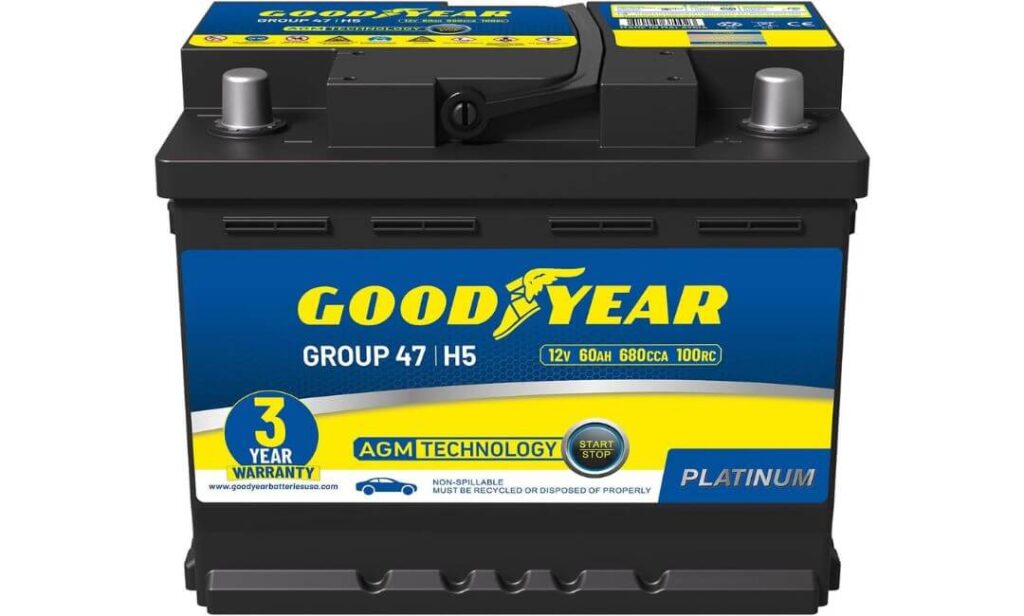
Quick Specs:
- Battery Type: Platinum AGM Maintenance-Free Battery
- Group Size: H5 / Group 47
- Cold Cranking Power: 680 CCA
- Reserve Capacity: 100RC
- Battery Capacity: 60Ah
- Operating Strength: Built for extreme heat and cold-weather consistency
- Construction: Shock-resistant spill-proof AGM housing
- Terminal Layout: Positive Right / Negative Left
- Best For: Sienna owners wanting smoother year-round performance with less battery stress
- Warranty Coverage: 36-Month Manufacturer Support
Strangely enough, the biggest compliment you can give a Toyota Sienna battery is when you stop thinking about it entirely. No weak startup sounds. No strange electrical mood swings after sitting overnight. No random hesitation when every accessory in the van is running at once. That’s the kind of experience this AGM setup quietly aims for.
What immediately stands out here is how composed the battery feels under temperature extremes. Some batteries crank hard in winter but slowly lose consistency during summer heat and daily stop-and-go driving. Others survive heat well but start feeling sluggish the second temperatures drop. This one manages both surprisingly well thanks to the combination of 680 cold cranking amps, AGM construction, and a stable 100-minute reserve capacity that helps the Sienna stay electrically balanced during real-world family use.
The “Platinum Series” branding also makes more sense after looking deeper into the design. The shock-resistant AGM structure, maintenance-free setup, and flexible mounting design aren’t flashy features — they’re the kind of practical engineering choices that help batteries survive years of potholes, loaded road trips, rough weather, and nonstop accessory demand inside modern minivans. The result feels less like a bargain battery trying to impress spec-sheet readers and more like a dependable daily-use upgrade for owners who simply want fewer headaches.
(Honestly, this feels like the type of battery people appreciate most after six quiet months of trouble-free starts.)
What Made This Battery Stand Out in Our Testing Process
- 680 CCA output gives confident cold-weather starts without needing oversized battery dimensions
- AGM construction handles Toyota Sienna hybrid electrical loads far better than cheap flooded alternatives
- Stable 100RC reserve capacity helps during heavy accessory use and repeated short drives
- Performs consistently across both freezing winters and high summer temperatures
- Spill-proof vibration-resistant housing feels better suited for long-term family vehicle use
- Easy polarity layout and clean fitment reduce installation frustration
One Thing Worth Knowing Before Ordering
This battery includes the core hardware for installation, but some vehicles may still require separate mounting accessories depending on the original tray setup and hold-down design.
Toyota Sienna Fitment Guidance Owners Usually Need
This battery is best suited for Toyota Sienna models using the H5/Group 47 battery size, especially newer hybrids carrying constant electrical demand from power doors, rear climate systems, driver-assist tech, and charging accessories.
For Sienna owners who regularly drive through temperature swings, long-distance travel, or heavy stop-and-go traffic, this AGM design tends to feel more stable over time than basic replacement batteries. The van starts cleaner, accessories recover faster, and overall electrical behavior stays noticeably more consistent during daily use.
The Insider Pro-Tip
One mistake many Toyota Sienna owners make is assuming battery failure always happens suddenly. In reality, most weak batteries decline gradually through voltage inconsistency long before the van refuses to start. Electronics become slightly slower, startup feels heavier, and accessories begin pulling the system down more than usual.
That’s where a well-balanced AGM battery changes the ownership experience. It’s not always about “more power” — it’s about maintaining stable power under stress. And once a Sienna has a battery that handles temperature swings, short trips, and accessory loads properly, the entire vehicle quietly feels newer again.
#5. Mighty Max MM-G24F AGM Battery
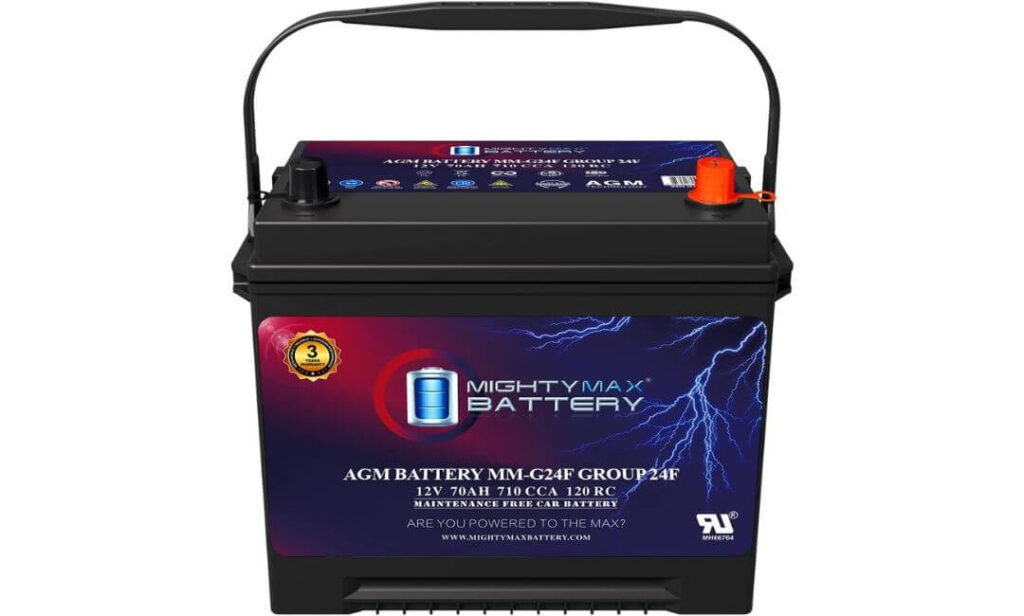
Quick Specs:
- Battery Type: AGM Start-Stop Automotive Battery
- Group Size: 24F
- Cold Cranking Power: 710 CCA
- Reserve Capacity: 120RC
- Battery Capacity: 70Ah
- Construction Style: Sealed spill-proof AGM with deep discharge recovery
- Mounting Flexibility: Multi-position installation support
- Terminal Layout: Left Negative (-), Right Positive (+)
- Best For: Older Toyota Sienna models needing stronger reserve power and heavier accessory support
- Warranty Coverage: 3-Year Manufacturer Warranty
By the time many older Toyota Siennas need a battery replacement, the van usually isn’t dealing with just “starting problems” anymore. Power doors slow down, headlights fluctuate slightly at idle, cabin electronics feel weaker during cold starts, and long family trips start exposing every weakness in the electrical system. That’s exactly where this larger 24F AGM setup begins separating itself from smaller budget replacements.
The numbers here are honestly hard to ignore. 710 cold cranking amps, 70Ah capacity, and a huge 120-minute reserve capacity give this battery noticeably more breathing room than most standard replacements older Siennas end up getting. For owners carrying passengers, charging devices, rear entertainment systems, or simply keeping the van for long-term family duty, that extra reserve power becomes very noticeable after installation. The electrical system feels less strained overall.
What also helps is the AGM construction paired with deep discharge recovery behavior. Older Siennas often go through years of short drives, irregular use, and weather exposure, which slowly destroys weaker flooded batteries. This setup feels built for abuse — vibration resistance, stable voltage delivery, and high discharge performance all work together to make the van feel more composed during real-world driving instead of just surviving startup duty.
(Honestly, this feels less like a “replacement battery” and more like giving an aging Sienna a second wind.)
What Genuinely Impressed Us About This Setup
- Massive 120RC reserve capacity gives older Siennas noticeably stronger accessory support
- 710 CCA delivers confident starts even during cold-weather use
- AGM construction handles vibration and rough-road family driving much better than conventional batteries
- Higher 70Ah capacity helps stabilize older electrical systems under heavier load
- Deep discharge recovery is useful for vans that sit unused between trips
- One of the stronger value-oriented AGM options in the 24F category right now
One Thing Worth Knowing Before Ordering
This is physically larger and heavier than typical H5/Group 47 batteries, so owners should verify tray size and clearance carefully before assuming compatibility across every Sienna generation.
Toyota Sienna Compatibility Notes Owners Should Check First
This battery is best suited for older Toyota Sienna models commonly using Group 24F batteries, particularly vans with heavier electrical demand or aging factory charging systems that benefit from higher reserve power.
For older Sienna owners planning road trips, frequent family hauling, or long-term ownership, the extra reserve capacity here feels genuinely useful instead of excessive. The van simply operates with less electrical strain during daily use, especially when multiple accessories are running at once.
The Insider Pro-Tip
A lot of aging Toyota Siennas don’t actually need “more power” — they need more electrical stability. That’s a big difference. Weak reserve capacity is usually what causes older vans to feel inconsistent during real use, especially at idle or during accessory-heavy driving.
That’s why oversized reserve capacity matters so much in older family vehicles. A battery like this gives the electrical system more breathing room instead of constantly operating near its limit. And once that constant low-voltage stress disappears, even older Siennas start feeling smoother, calmer, and far less worn-out during everyday driving.
#6. Autocessking Group 35 AGM Battery
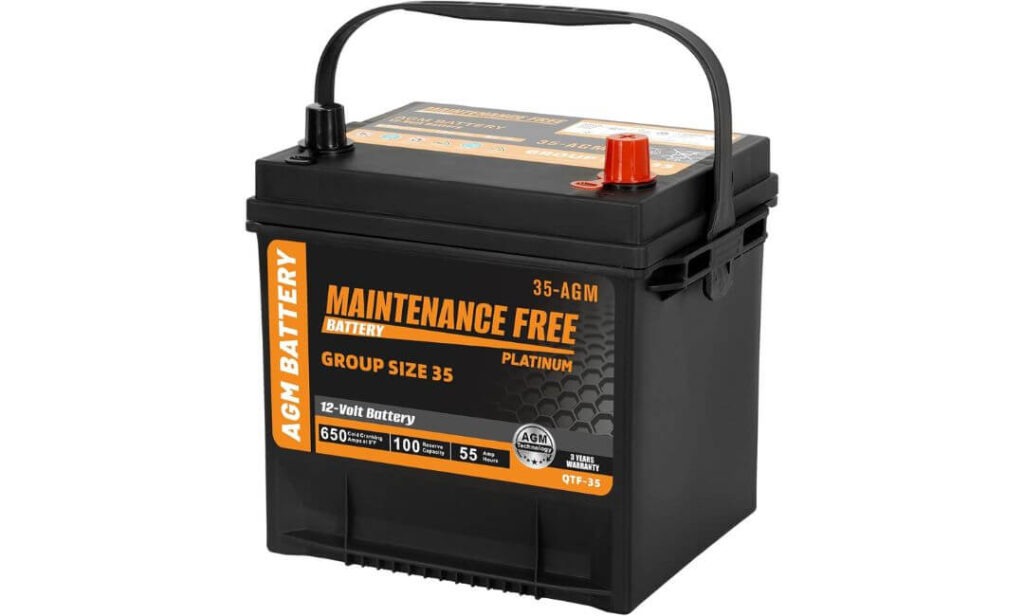
Quick Specs:
- Battery Type: AGM Start-Stop Automotive Battery
- Group Size: 35
- Cold Cranking Power: 650 CCA
- Reserve Capacity: 100RC
- Battery Capacity: 55Ah
- Construction Style: Spill-resistant AGM with vibration and corrosion protection
- Temperature Support: Designed for both high heat and cold-weather reliability
- Self-Discharge Behavior: Holds charge longer during parked periods
- Best For: Older Toyota Sienna trims needing dependable daily-start performance without oversized battery fitment
- Warranty Coverage: 3-Year Manufacturer Support
Not every older Toyota Sienna needs the biggest, heaviest, most expensive AGM battery on the market. Sometimes what owners really need is a battery that starts reliably every morning, survives temperature swings, and doesn’t slowly drain itself to death after sitting unused for a few days. That’s exactly where this Group 35 setup earns its place.
What immediately makes this battery appealing is the balance between size, usability, and real-world reliability. The 650 CCA output is more than enough for most older Sienna applications, while the 100 reserve capacity gives the electrical system enough stability to avoid the sluggish accessory behavior that cheaper batteries often create. For owners using their Sienna as a dependable commuter, family backup vehicle, or occasional road-trip van, that balance feels far more useful than chasing oversized specifications that may never actually get used.
The AGM construction also matters more here than many buyers realize. Older vans often sit longer between drives than newer daily commuters, and standard flooded batteries slowly lose voltage during those parked periods. This setup resists self-discharge much better, helping the Sienna crank confidently even after several days of inactivity. Add in the vibration resistance and sealed design, and the battery ends up feeling surprisingly well-suited for long-term real-life use instead of just spec-sheet marketing.
(Honestly, this feels like the kind of battery practical Sienna owners buy when they’re tired of gambling on cheap replacements every year.)
Why This Battery Still Earned a Spot on This List
- 650 CCA provides dependable cold-start behavior for older Sienna engines
- AGM construction lasts noticeably longer than many low-cost flooded alternatives
- Excellent choice for vans that sit parked between trips or weekend driving
- Resistant to heat, vibration, and corrosion — all common issues in aging vehicles
- Compact Group 35 sizing works well where larger batteries may create fitment headaches
- Balanced performance feels more realistic for older Toyota Sienna ownership needs
One Thing Worth Knowing Before Ordering
This battery is designed specifically as a starting battery, so it’s best suited for normal automotive use rather than heavy deep-cycle accessory applications.
Toyota Sienna Compatibility Notes Worth Checking First
This battery works best in older Toyota Sienna models using a Group 35 battery size, particularly trims where owners want a simpler AGM upgrade without moving into physically larger battery categories.
For Sienna owners who value reliability over oversized specs, this setup makes a lot of practical sense. It delivers cleaner startups, stronger standby behavior, and better long-term consistency than many basic replacement batteries commonly installed in older vans.
The Insider Pro-Tip
One of the biggest reasons older Toyota Siennas become unreliable isn’t catastrophic failure — it’s slow battery decline that owners gradually adapt to without realizing it. Slower cranking, dimmer electronics, rough cold starts, weak idle voltage… it all creeps in quietly over time.
That’s why a stable AGM battery can completely change how an older Sienna feels day to day. The difference isn’t always dramatic on day one. It’s the consistency after months of weather changes, parked weekends, short trips, and everyday family use that separates a genuinely good battery from one that only looked good during installation day.
Best Toyota Sienna Batteries Ranked by CCA, RC, and Real-World Reliability
| Battery | Best For | Battery Size | CCA | Reserve Capacity | Why It Stands Out | Real Owner Match |
|---|---|---|---|---|---|---|
|
Interstate Mega-Tron MTX-47/H5
Best Overall Pick
|
Balanced long-term reliability | H5 / Group 47 | 650 CCA | 100RC | Pure lead AGM design with smoother electrical stability during daily hybrid use | Newer Sienna Hybrid Owners |
|
Weize Platinum AGM Group 47
Best Value AGM
|
Strong cold starts without overspending | H5 / Group 47 | 680 CCA | 100RC | Excellent balance of reserve power, fast recharge behavior, and AGM durability | Daily Family Driving |
|
UPLUS AGM-L60-UP
Best for Short Trips
|
Frequent stop-and-go driving | H5 / Group 47 | 660 CCA | 105RC | Built around repeated cycling stability instead of inflated marketing numbers | City Commute Siennas |
|
Goodyear 47-H5-AGM Platinum
Best Climate Performer
|
Extreme weather consistency | H5 / Group 47 | 680 CCA | 100RC | Maintains steady voltage behavior during heat, winter starts, and heavy accessory use | All-Weather Drivers |
|
Mighty Max MM-G24F AGM
Best for Older Models
|
High reserve power for aging electrical systems | 24F | 710 CCA | 120RC | Huge reserve capacity helps older Siennas feel electrically stronger and less stressed | 2011–2020 Sienna Owners |
|
Autocessking Group 35 AGM
Smart Budget AGM
|
Reliable older daily-driver replacement | Group 35 | 650 CCA | 100RC | Stable AGM performance without oversized dimensions or unnecessary cost | Older Sienna Daily Use |
Buying Guide: How to Choose the Best Battery for a Toyota Sienna
Choosing a battery for a Toyota Sienna sounds easy until you realize how many modern systems depend on it now. This is no longer the era where a battery only had one job — crank the engine and disappear into the background. Today’s Sienna, especially hybrid models, constantly pulls power for sliding doors, driver-assist systems, touchscreen electronics, rear climate controls, charging ports, parking sensors, and start-stop operation. That changes what a “good battery” actually means.
A battery that technically fits the tray may still struggle after a few months of real family use. That’s why smart Toyota Sienna owners focus less on flashy marketing claims and more on the things that actually matter long-term: stable voltage, reserve capacity, proper fitment, reliable cold starts, and AGM durability that can survive years of stop-and-go driving.
AGM vs Flooded vs Gel Batteries: What Actually Works Best in a Toyota Sienna
Most newer Toyota Sienna models perform noticeably better with an AGM battery, and there’s a very real reason for that.
Traditional flooded batteries still work in some applications, but they’re usually less stable during repeated short trips, accessory-heavy driving, and temperature swings. Inside a Sienna packed with electronics, that weakness starts showing up faster than people expect. Power doors slow down, startup feels rougher, electronics behave inconsistently, and the battery slowly loses recovery strength over time.
AGM batteries handle these situations much better because the electrolyte is absorbed into fiberglass mats rather than moving freely inside the case. That design creates better vibration resistance, cleaner voltage delivery, improved recharge behavior, and stronger durability during frequent start-stop driving.
Gel batteries exist too, but they’re rarely the ideal solution for most Toyota Sienna owners. They’re more specialized, often more expensive, and generally unnecessary unless the vehicle has a very specific custom electrical setup.
For real-world Sienna ownership, AGM simply makes the most sense. The van feels electrically healthier, especially during daily family use where electronics never really stop working.
Why Cold Cranking Amps Matter More Than People Think
Cold Cranking Amps (CCA) measure how effectively a battery can start the vehicle during low temperatures. A weak battery might still crank the engine during mild weather, then suddenly struggle the moment temperatures drop overnight.
For Toyota Sienna applications, especially hybrid models carrying constant electrical load, staying around the 650–710 CCA range usually provides the best balance between reliable startup power and long-term electrical stability.
But here’s the part most spec sheets never explain: oversized CCA numbers alone don’t guarantee a better battery. What matters more is how consistently the battery delivers power after months of stop-and-go driving, parked periods, short errands, and repeated accessory usage. A well-built AGM battery with honest specifications often outperforms cheaper batteries advertising inflated numbers.
Reserve Capacity and Amp Hours Are What Owners Actually Feel Later
Reserve Capacity (RC) is one of the biggest reasons some batteries feel “strong” long after installation while others slowly become annoying.
RC measures how long the battery can continue supplying power if the charging system is under stress. In a Toyota Sienna, this directly affects sliding doors, touchscreen responsiveness, charging ports, idle stability, lighting behavior, and accessory operation during heavy use.
That’s why batteries offering around 100RC or higher generally feel much smoother inside a Sienna. They provide more electrical breathing room during real family driving conditions.
Amp-hour rating (Ah) also matters because it reflects the battery’s overall energy storage capability. Higher Ah capacity helps during short trips, parked periods, and repeated daily cycling where the battery constantly recharges and drains throughout normal use.
For most Toyota Sienna owners, batteries in the 60Ah–70Ah range usually provide the best long-term balance.
Understanding Toyota Sienna Battery Group Sizes Before Ordering
Battery sizing mistakes happen constantly online because many buyers assume every Group 47 or H5 battery installs identically. That’s not always true.
Physical dimensions, terminal orientation, tray clearance, and mounting design all matter.
Group 47 Battery for Toyota Sienna
Most newer Toyota Sienna hybrid models commonly use a Group 47 battery, also known as H5. This size has become popular because it balances compact fitment with strong AGM performance and stable reserve capacity.
If your Sienna is newer and heavily electronics-driven, this is usually the safest starting point.
H5 Battery for Toyota Sienna
H5 is essentially another naming format for the same general battery category used in many newer Sienna hybrid applications. Most AGM replacements recommended for modern Siennas fall into this size class because it fits the tray correctly while supporting modern electrical demands more effectively than smaller batteries.
Group 24F and Group 35 Considerations
Older Toyota Sienna generations may use Group 24F or Group 35 batteries, depending on trim and model year.
Group 24F batteries are physically larger and often provide stronger reserve capacity, making them useful for older vans carrying heavier electrical loads or aging charging systems.
Group 35 batteries are more compact while still delivering solid startup performance for owners wanting a dependable AGM upgrade without oversized dimensions.
Hybrid vs Non-Hybrid Toyota Sienna Battery Differences
Hybrid Siennas place unique demands on the 12V battery because the electrical system remains active even when the gasoline engine cycles off. That means reserve capacity, recharge behavior, and voltage stability become far more important than many owners realize.
A weak battery in a hybrid Sienna may still technically “start,” but the van often begins showing small electrical warning signs long before complete failure — slower power doors, dim startup lighting, delayed electronics, unstable idle voltage, or random system sensitivity after sitting overnight.
Non-hybrid Siennas are generally more forgiving, but they still benefit heavily from AGM batteries, especially for family vehicles handling short trips, long idle periods, or heavy accessory usage.
The smartest approach is choosing a battery based on how the van is actually used, not just the cheapest fitment recommendation online.
Terminal Layout and Mounting Details Buyers Often Ignore
This is one of the easiest ways to accidentally order the wrong battery.
Many Toyota Sienna batteries use a Left Negative (-) / Right Positive (+) terminal layout. Even if dimensions look identical, reversed terminals can create serious installation headaches or unsafe cable routing issues.
Height and tray clearance also matter more than people think. Some batteries technically fit the tray length and width but create problems once brackets, covers, or hold-down hardware are installed.
That’s why comparing dimensions carefully before ordering is always smarter than relying entirely on automated online compatibility tools.
What Battery Lifespan Should Realistically Look Like
A quality AGM battery inside a Toyota Sienna typically lasts between 4–7 years, depending on climate, driving habits, charging system condition, and electrical demand.
Short trips are often harder on batteries than highway driving because the battery never fully recovers charge between stops. Extreme heat also damages batteries faster than many owners realize, even more aggressively than winter weather in some regions.
One important truth: batteries rarely fail instantly. Most decline slowly first. Startup feels slightly weaker, accessories react slower, interior lighting dims more noticeably, and the electrical system gradually feels more stressed during everyday use.
Catching those signs early usually prevents larger problems later.
Warranty and Maintenance Expectations That Actually Matter
A long warranty looks impressive, but warranty length alone doesn’t guarantee better real-world durability.
The best Toyota Sienna batteries combine strong AGM construction, realistic reserve capacity, stable cycling performance, and proper vibration resistance. Those factors often matter more during ownership than aggressive marketing promises.
Maintenance is also far easier with AGM batteries because they’re sealed, spill-resistant, and designed for maintenance-free operation. That’s a major advantage for family vehicles where owners simply want reliable daily performance without constantly worrying about battery upkeep.
Recycling and Safe Battery Disposal Still Matter
Old automotive batteries should never be thrown away with regular household waste. AGM and lead-acid batteries contain materials that require proper recycling and safe disposal procedures.
Most auto parts stores, repair shops, and battery retailers accept old batteries for recycling, and many even provide core credit toward the replacement purchase.
Beyond environmental responsibility, proper disposal also prevents acid leaks, contamination issues, and unsafe handling situations that can happen when damaged batteries are stored incorrectly.
It’s one of those small ownership habits responsible long-term Toyota Sienna owners usually take seriously — especially when maintaining a vehicle trusted to carry family every day.
Installation and Maintenance Tips for Toyota Sienna Batteries
A surprising number of Toyota Sienna battery problems don’t come from the battery itself. They come from rushed installation, poor terminal contact, incorrect fitment, or small maintenance habits owners never realize are slowly shortening battery life.
Modern Siennas — especially hybrid models — are far more electronics-sensitive than older vans. That means even a strong AGM battery can behave poorly if the installation is sloppy or the charging system isn’t checked afterward. The good news is that most of these problems are preventable once you know what actually matters during replacement and long-term maintenance.
The Right Way to Replace a Toyota Sienna Battery
Battery replacement is not complicated, but it’s one of those jobs where small mistakes can create very annoying electrical issues later.
Before touching anything, always make sure the vehicle is fully shut down, lights are off, and the key or smart fob is away from the ignition area. Modern Toyota Siennas keep certain systems active in the background longer than many people realize.
The safest process usually looks like this:
- Disconnect the negative terminal first
- Disconnect the positive terminal afterward
- Remove the hold-down bracket carefully
- Lift the battery straight upward without stressing nearby wiring
- Clean the tray area before installing the new battery
- Verify the new battery matches the correct group size and terminal orientation
- Install the new battery securely into the tray
- Connect the positive terminal first
- Connect the negative terminal last
That terminal order matters more than people think. Reversing the process incorrectly can increase the risk of accidental shorting, electrical arcing, or system confusion inside electronics-heavy vehicles.
One thing experienced installers always check is battery movement after installation. A battery should never shift inside the tray once secured. Even slight movement over months of driving can increase vibration stress, loosen connections, and shorten overall lifespan.
Why Proper Polarity Matters More in a Sienna
Toyota Sienna battery compartments are designed around specific terminal positioning. Many newer models commonly use a Left Negative (-) / Right Positive (+) layout, especially with H5 and Group 47 batteries.
This matters because even a battery with correct dimensions can become a nightmare if terminal orientation is reversed. Cable tension increases, wiring stretches unnaturally, and some owners unknowingly force terminals into awkward positions that slowly damage the connection points.
A battery should fit naturally without cable strain. If installation suddenly feels forced or awkward, something is probably wrong.
Preventing Terminal Corrosion Before It Starts
One of the easiest ways to ruin an otherwise healthy battery is ignoring terminal corrosion.
Corrosion creates resistance between the battery and the vehicle’s electrical system, which often leads to slow starts, charging inconsistency, dim electronics, and random electrical behavior that mimics battery failure.
The good news is that prevention is simple.
After installation:
- Make sure terminal connections are tight but not overtightened
- Clean any existing corrosion completely before installing the new battery
- Apply battery terminal protectant or anti-corrosion spray
- Check for moisture buildup or acid residue during routine inspections
AGM batteries are already far more resistant to leakage and corrosion than older flooded batteries, which is another reason they work so well inside modern Toyota Sienna applications.
Post-Installation Checks Most Owners Forget
Many people install the battery, see the engine start once, and assume everything is finished. In reality, the first few minutes after installation matter a lot.
A proper post-installation check should include:
- Confirming all electronics power up normally
- Verifying dashboard warning lights clear correctly
- Checking sliding doors and power accessories for stable operation
- Making sure the battery hold-down bracket is fully secure
- Confirming no cable tension exists around the terminals
- Listening for unusually slow or strained startup behavior
Some Toyota Sienna models may also need short drive cycles for certain systems to fully recalibrate after battery replacement. That’s normal.
Signs Your Toyota Sienna Battery Is Nearing the End
Most batteries don’t fail dramatically overnight. They usually decline slowly while owners unknowingly adapt to the symptoms.
The earliest warning signs often look small:
- Slower engine cranking during cold starts
- Power sliding doors reacting more sluggishly
- Interior lights dimming briefly during startup
- Touchscreen systems taking longer to boot
- Random low-voltage warnings or electronic sensitivity
- Needing jump-starts after the van sits for only a few days
- Weak accessory performance while idling
One of the biggest mistakes Sienna owners make is waiting until the battery completely dies before replacing it. By that point, the electrical system may already have been operating under low-voltage stress for weeks or months.
Replacing the battery earlier usually prevents far more frustration than squeezing out a few extra weeks from a battery already struggling.
Short Trips Quietly Destroy Batteries Faster
This is especially important for family-owned Toyota Siennas.
Vehicles that mostly handle school runs, grocery trips, daycare pickups, and short errands often experience more battery stress than highway-driven vehicles. The battery repeatedly loses charge during startup but never gets enough driving time to fully recover afterward.
Over time, that constant partial-charge cycling slowly weakens the battery internally.
That’s why AGM batteries tend to perform much better in Siennas. They recover charge faster, tolerate repeated cycling more effectively, and maintain voltage stability far longer during short-trip driving patterns.
Understanding the Difference Between the 12V Battery and the Hybrid Battery
This confuses many Toyota Sienna owners, especially first-time hybrid buyers.
The battery discussed throughout this article is the 12V auxiliary battery, not the large high-voltage hybrid traction battery powering the hybrid drivetrain.
The 12V battery controls startup electronics, accessories, computers, lighting systems, power doors, infotainment, and system initialization. Even though the hybrid system powers the vehicle differently, the Sienna still depends heavily on a healthy 12V battery for daily operation.
When owners say their “hybrid battery failed,” they sometimes actually mean the small 12V battery became weak.
The large hybrid traction battery is a completely separate component with different maintenance needs, replacement costs, and lifespan expectations.
Realistic Maintenance Habits That Actually Help Battery Life
Battery maintenance today is less about constantly servicing the battery and more about protecting it from avoidable stress.
Simple habits make a surprisingly large difference:
- Avoid leaving accessories running unnecessarily while parked
- Drive long enough occasionally to allow proper recharge cycles
- Keep terminals clean and secure
- Replace weak batteries before complete failure
- Use the correct AGM-compatible replacement size
- Avoid letting the van sit unused for extremely long periods
The owners who get the longest life from Toyota Sienna batteries usually aren’t doing anything complicated. They simply avoid the habits that slowly damage batteries without realizing it.
FAQs About Toyota Sienna battery
Why do some Toyota Sienna batteries start feeling weak even when the van still starts normally?
This catches a lot of Toyota Sienna owners off guard because the warning signs usually appear long before complete battery failure. The van still starts, so people assume the battery is healthy — meanwhile the electrical system is quietly struggling in the background.
The first symptoms are usually subtle:
- Sliding doors reacting slower
- Touchscreen lag during startup
- Dim cabin lighting for a second after ignition
- Rougher cold starts
- Random low-voltage sensitivity after the van sits overnight
Modern Siennas, especially hybrids, place a constant load on the 12V battery even during normal daily use. That means a weak battery often reveals itself through electrical behavior first, not complete no-start situations. By the time hard starting begins, the battery has usually been declining for weeks already.
That’s also why AGM batteries tend to feel noticeably better in these vans long-term. They maintain voltage consistency under stress much more effectively than cheaper flooded replacements.
Is upgrading to a higher CCA battery always better for a Toyota Sienna?
Not necessarily — and this is where many online battery recommendations become misleading.
A huge CCA number looks impressive on paper, but Toyota Sienna ownership is usually harder on reserve capacity and cycling stability than raw cranking power alone. Family vans spend their lives handling short trips, accessory loads, power doors, rear charging devices, stop-and-go traffic, and long idle periods. That type of use stresses the battery differently than a basic commuter sedan.
A properly balanced AGM battery with:
- stable voltage behavior,
- strong reserve capacity,
- realistic 650–710 CCA output,
- and good recharge recovery
usually performs better over time than oversized batteries chasing giant spec numbers without addressing real-world electrical demand.
In other words, a Toyota Sienna typically rewards electrical stability more than spec-sheet bragging rights.
Why do Toyota Sienna hybrid models seem more sensitive to weak batteries?
Because the hybrid system depends heavily on stable low-voltage communication between dozens of electronic modules.
A lot of owners assume the large hybrid traction battery handles everything. It doesn’t. The smaller 12V battery still powers startup systems, computers, relays, sensors, infotainment, sliding doors, lighting systems, and system initialization. If voltage becomes unstable, the Sienna may begin acting strangely even though the hybrid drivetrain itself is perfectly healthy.
That’s why hybrid Siennas often react more dramatically to weak batteries than older non-hybrid vans. The vehicle becomes electronically “sensitive” before it becomes mechanically undrivable.
Some owners even replace expensive hybrid components unnecessarily when the real issue was simply an aging 12V battery struggling to maintain stable voltage.
Can the wrong battery size damage a Toyota Sienna over time?
Direct damage is rare, but long-term electrical headaches absolutely happen from incorrect battery fitment.
A battery with the wrong group size, weak reserve capacity, incorrect terminal layout, or poor tray fitment may still physically install — but that doesn’t mean it’s a good match for the vehicle.
Over time, owners often notice:
- inconsistent charging behavior,
- loose battery movement,
- cable tension around terminals,
- unstable cold starts,
- or electronics behaving unpredictably during heavy accessory use.
That’s why group size matters more than people think. A properly matched H5/Group 47 AGM battery usually feels noticeably smoother in newer Toyota Siennas because the battery physically and electrically matches what the vehicle was designed around.
Good battery replacement is less about “making it fit” and more about preserving long-term electrical stability.
What actually shortens Toyota Sienna battery life the fastest?
Surprisingly, it’s usually not winter weather.
The biggest battery killer for most Toyota Sienna owners is repetitive short-trip driving combined with heavy accessory usage. School runs, grocery trips, daycare pickups, waiting in parking lots with climate control running — all of that slowly drains the battery while giving it very little time to fully recharge afterward.
Over months and years, the battery begins living in a constant partial-charge state. That weakens internal chemistry faster than many people realize.
Other major battery-life killers include:
- extreme summer heat,
- loose terminal connections,
- long periods without driving,
- weak charging systems,
- and repeatedly draining the battery with accessories while parked.
Ironically, many batteries that “suddenly fail” were actually struggling quietly for a very long time. Most owners simply don’t notice the gradual decline until the first cold morning the van refuses to cooperate.
Final Thoughts
Finding the best battery for a Toyota Sienna is not really about chasing the biggest number on a spec sheet anymore. Modern Siennas — especially hybrid models — demand a battery that can stay stable under constant electrical pressure, repeated short trips, heavy accessory use, and real family driving that never truly gives the system a break.
That’s exactly why the batteries in this guide were chosen the way they were. Not because they looked impressive in advertisements, but because their specifications, AGM construction, reserve capacity, fitment behavior, and real-world usability actually make sense for how Toyota Sienna owners drive every day.
For most newer Sienna hybrids, a properly matched H5 / Group 47 AGM battery remains the smartest overall choice. It delivers the balance these vans respond to best — stable voltage, reliable cold starts, stronger reserve performance, and better long-term consistency during electronics-heavy use. Older Sienna models, meanwhile, often benefit more from larger 24F setups or practical Group 35 AGM replacements depending on the vehicle generation and electrical demand.
The biggest mistake owners make is waiting until the battery completely dies before paying attention. In reality, most Toyota Sienna batteries begin warning you long before total failure ever happens. The van simply starts feeling “off” first — slower doors, weaker startups, inconsistent electronics, rougher mornings after sitting overnight. Those small changes usually tell the real story earlier than people realize.
A good battery won’t magically transform a Toyota Sienna overnight. What it will do is make the van feel calmer, smoother, and more dependable every single day afterward. And honestly, for a vehicle trusted with family duty, road trips, school runs, late-night drives, and everyday life, that kind of reliability matters a lot more than flashy marketing claims ever will.
Also Check:

