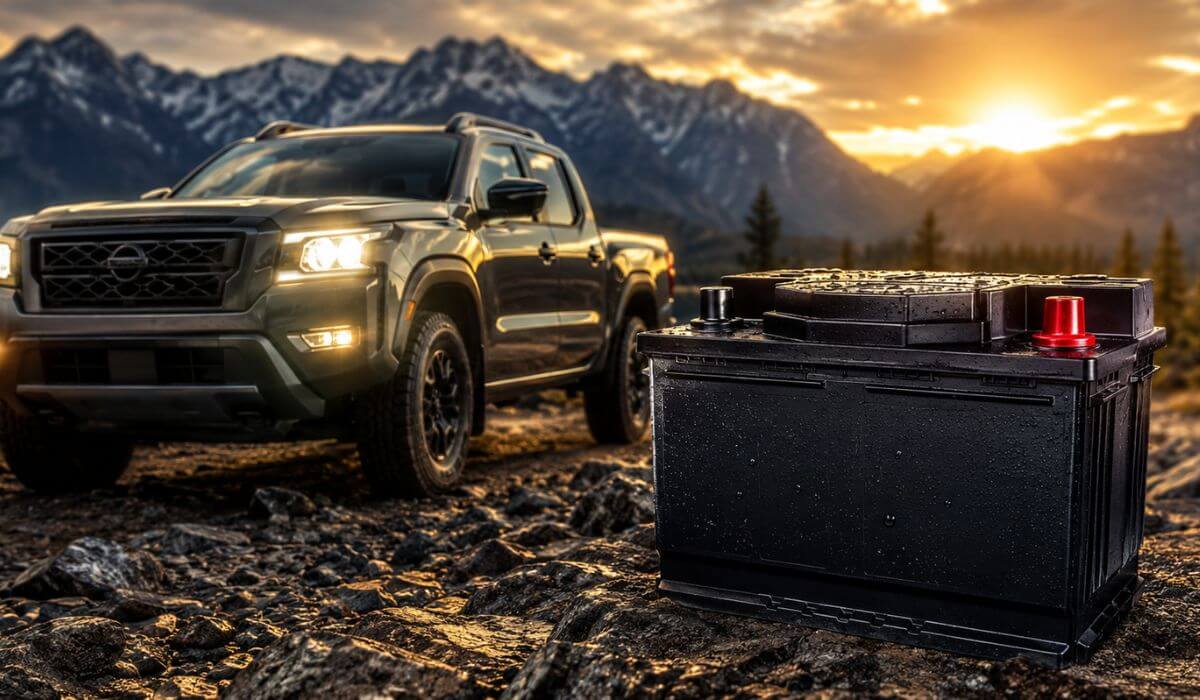
6 Best Batteries for Nissan Frontier in 2026: Group 35 AGM With 100–120RC
If you’ve been searching for the best battery for Nissan Frontier, you’ve probably already noticed how confusing things get once you start comparing AGM options, Group sizes, and cold-cranking numbers. The newer 2022–2026 Nissan Frontier models mostly use a Group 35 battery from the factory, and honestly, that’s where most owners should stay unless they’re running extra lighting, overlanding gear, winches, or heavy audio setups. Older Frontier models can sometimes use larger 24F upgrades, but for daily driving, towing, cold starts, and reliability, a quality Group 35 AGM is usually the sweet spot.
What makes the Frontier a little different from other midsize trucks is how sensitive it can feel once the battery starts getting weak. Slow morning starts, random electrical glitches, weak auto start-stop behavior, or dim interior electronics usually show up before the battery completely dies. That’s why we focused on AGM batteries with strong reserve capacity, reliable cold-cranking power, and real-world durability instead of just chasing the highest specs on paper.
Every battery below was chosen around what actually matters for Frontier owners: OEM fitment, stable starts in hot and cold weather, vibration resistance, reserve capacity, and long-term reliability for newer Nissan Frontier trucks. Some are better for stock daily driving, while others make more sense if your truck sees towing, camping, jobsite duty, or off-road weekends.
Best Nissan Frontier Battery: Top 2026 Group 35 & 24F AGM Options
#1. Interstate Batteries MTX-35 AGM
Best Overall Nissan Frontier Battery Replacement With OEM Group 35 Fitment, Reliable Cold Starts, And Long-Term AGM Durability For 2022–2026 Models
#2. OPTIMA 35 REDTOP AGM
Best High-CCA AGM Battery For Nissan Frontier Owners Wanting Strong Starting Power, Better Vibration Resistance, And Reliable Daily Truck Performance
#3. Mighty Max MM-G35 AGM
Best Value Group 35 AGM Battery For Nissan Frontier Drivers Looking For Affordable Reserve Capacity And Consistent Everyday Reliability
#4. Autocessking Group 35 AGM Battery
Best Budget AGM Replacement Battery For Nissan Frontier With Start-Stop Support, OEM-Sized Group 35 Fitment, And Maintenance-Free Performance
#5. UPLUS BCI Group 24F AGM Battery
Best Nissan Frontier Battery Upgrade For Towing, Off-Road Accessories, Camping Setups, And Higher Reserve Capacity Needs
#6. Weize Platinum AGM Battery Group 24F
Best Budget-Friendly Group 24F AGM Upgrade For Older Nissan Frontier Models Needing Higher CCA And Longer Reserve Capacity
Expert Tip: One thing a lot of Nissan Frontier owners don’t realize until it’s too late is that the truck usually gives small warning signs before the battery fully fails. If your Frontier suddenly starts cranking a little slower in the morning, the auto start-stop system acts strange, the infotainment screen flickers during startup, or the interior lights dip for a second when turning the key, the battery is already getting weak — even if the truck still starts. On newer Frontier models especially, a weak battery can make the truck feel inconsistent long before it actually dies. That’s why going with a quality AGM battery with strong reserve capacity matters more than simply buying the cheapest replacement that fits the tray.
How We Chose These Nissan Frontier Batteries
There are hundreds of batteries online claiming to fit the Nissan Frontier, but once you start looking closely, most of them either cut corners on reserve capacity, use lower-quality internal components, or simply don’t hold voltage consistently once real truck use starts getting involved. That becomes a problem fast on a Frontier because this truck tends to expose weak batteries earlier than many midsize pickups.
We built this list around what actually matters for real Frontier ownership — not marketing buzzwords. The first thing we looked at was proper Group 35 fitment for newer 2022–2026 Nissan Frontier models, because that’s the size most owners genuinely need for factory-level compatibility without modification headaches. Then we looked at a few larger 24F AGM upgrades for people running accessories, camping gear, towing setups, extra lighting, or off-road equipment where additional reserve capacity actually makes a noticeable difference.
Another thing we paid close attention to was cold-cranking performance under real-world load. A battery might look impressive on paper, but if voltage drops hard during cold starts, long idle periods, or repeated short trips, you start noticing electrical weirdness very quickly in modern trucks. That’s why every option here offers at least 650 CCA or higher, with several crossing into the 700+ CCA range for stronger and more stable starts.
We also avoided filling this list with random unknown brands just to make the article look bigger. Some newer AGM batteries still don’t have years of long-term ownership data behind them yet, so instead of pretending every battery is “perfect,” we focused on the ones that currently make the most sense based on fitment consistency, AGM construction quality, reserve capacity, warranty support, charging stability, and overall value for Frontier owners right now.
The reason you’ll notice several AGM batteries with 100RC to 120RC reserve capacity is simple: the Frontier responds really well to batteries that can hold steady voltage during heavy accessory use, stop-and-go driving, towing, and hot weather. Trucks that spend time on job sites, road trips, trails, or daily commuting benefit much more from extra reserve capacity than most people expect.
Most importantly, we selected batteries that make sense for how Nissan Frontier owners actually use their trucks. Some people just need a reliable OEM-style daily replacement that starts every morning without drama. Others need something that can handle camping weekends, off-road vibration, extra lighting, or towing loads without feeling stressed after a few months. This list was built to cover both sides honestly instead of pushing one-size-fits-all recommendations.
#1. Interstate Batteries MTX-35 AGM
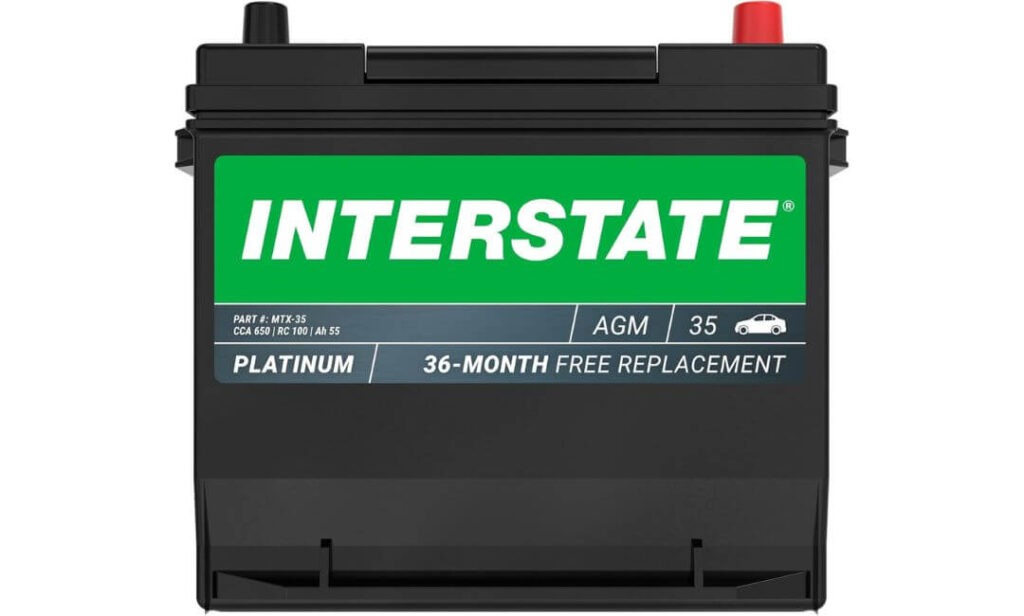
Quick Specs:
- Group Size 35 OEM-style fitment for most newer Nissan Frontier models
- 650 Cold Cranking Amps for reliable cold morning starts
- 100-minute Reserve Capacity for accessories, stop-and-go traffic, and long idle sessions
- 55Ah AGM internal design with spill-proof construction
- Pure lead AGM layout designed for longer service life under real truck use
- Maintenance-free VRLA construction with strong vibration resistance
- Around 42 lbs, which gives it a more solid and stable feel than many lightweight budget AGM batteries
- 36-month warranty support
The first thing that stands out here is how balanced this battery feels for the Nissan Frontier platform specifically. A lot of batteries either chase huge CCA numbers or ultra-low pricing, but this one quietly focuses on the stuff Frontier owners actually notice after months of driving — stable startups, consistent voltage, and fewer weird electrical moments during hot summers or cold mornings. The 100RC reserve capacity especially makes a real difference once the truck starts seeing traffic, towing, camping gear, or long idle periods with accessories running.
Another reason this battery keeps showing up in serious truck discussions is the pure lead AGM construction. Interstate packed more lead into the internal design instead of simply chasing lightweight marketing numbers, and you can genuinely feel it once installed. Startup response feels strong, the truck cranks confidently, and the battery doesn’t seem stressed during repeated short trips the way cheaper flooded batteries often do. For Frontier owners using dash cams, charging gear, aftermarket lighting, or factory tech packages daily, that added reserve stability matters more than most spec sheets make it sound.
What also helps this battery stand out is the overall refinement. The built-in handles make installation surprisingly easy, the AGM layout stays completely maintenance-free, and the vibration resistance works well for trucks that spend time on rough roads or job sites. It’s not trying to be flashy — it simply feels engineered for people who want their truck to start every single morning without drama.
(And honestly, that’s exactly what most Frontier owners care about once the original battery starts getting weak.)
Why This One Made Our Final Nissan Frontier Shortlist
- Strong balance between 650 CCA and usable 100RC reserve capacity
- Proper Group 35 AGM fitment without modification headaches
- Pure lead internal design feels noticeably more stable than many budget AGM options
- Excellent for daily driving, towing, commuting, and stop-and-go truck use
- Maintenance-free construction with strong vibration resistance for rough-road driving
One Thing Worth Knowing Before Buying
- Heavier than many entry-level AGM batteries, so installation feels a bit more substantial during replacement
Real-World Nissan Frontier Compatibility Notes
For most 2022+ Nissan Frontier owners, this battery lands right in the sweet spot because it keeps the factory Group 35 sizing while upgrading overall reliability and reserve power. There’s no weird oversized setup, no tray modifications, and no compromise with terminal layout. It feels like the kind of upgrade Nissan probably should have included from the factory in the first place.
Older Frontier owners moving from weaker flooded batteries will probably notice the biggest difference during cold starts and daily commuting. Voltage delivery feels steadier, electronics behave more consistently, and the truck simply feels less stressed overall during repeated startup cycles.
The Insider Pro-Tip
One thing experienced truck owners usually watch for isn’t just whether the engine starts — it’s how the truck starts. When a Frontier battery begins aging, the change often happens gradually: slightly slower crank speed, weaker startup sound, brief infotainment lag, or headlights dipping harder than usual during ignition. This AGM setup helps prevent a lot of that because the reserve capacity stays more stable under repeated daily use.
If your Frontier regularly sees short trips, traffic, towing, outdoor trips, or accessory use, a battery with stronger reserve capacity almost always feels better long term than simply buying the cheapest replacement that technically “fits.” That difference becomes very obvious about six months down the road when the truck still starts like it should without random electrical weirdness showing up.
#2. OPTIMA 35 REDTOP AGM
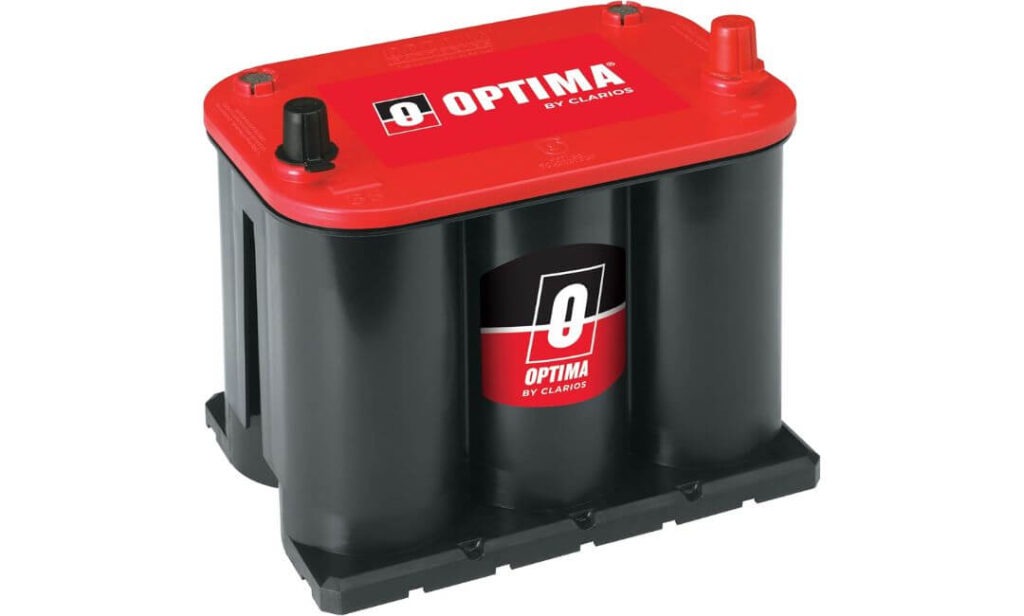
Quick Specs:
- Group 35 AGM battery with factory-style Nissan Frontier compatibility
- Massive 720 CCA starting power for cold mornings and heavy startup loads
- 90-minute reserve capacity for stable accessory support
- OPTIMA SpiralCell design using 99.99% pure lead
- Around 31.7 lbs, noticeably lighter than many heavy AGM batteries
- Fully sealed, maintenance-free AGM construction
- Charges faster than many conventional flooded batteries
- SAE top-post terminals with vibration-resistant internal layout
There’s a reason the REDTOP became one of the most recognized AGM truck batteries over the years — few batteries crank an engine with this much immediate confidence. The moment the Frontier fires up, you can tell this thing was built around starting power first. The 720 CCA output feels aggressive in the best possible way, especially during cold starts, long parking periods, or trucks that sit for days before being driven again. It gives the Frontier that “instant ignition” feel many factory batteries slowly lose after a year or two.
What makes this battery different from standard flat-plate AGM designs is the internal SpiralCell construction. Instead of focusing only on reserve numbers, OPTIMA built this around fast power delivery, charging speed, and vibration durability. For Frontier owners who spend time off-road, on rough pavement, gravel roads, job sites, or towing equipment regularly, that extra structural strength genuinely matters. The battery stays planted, stable, and less affected by repeated vibration cycles that quietly wear down cheaper batteries over time.
Another thing many Frontier owners appreciate is how lightweight the REDTOP feels compared to bulky traditional AGM batteries. Installation is easier, terminal access feels cleaner, and the sealed design gives you flexibility without worrying about leaks or maintenance. This isn’t the kind of battery people buy just because it “fits” — it’s usually chosen by drivers who want their truck to start hard, fast, and confidently every single time.
(And honestly, few AGM batteries still have this kind of instant-start reputation after all these years.)
Why This Battery Still Stands Out in the Nissan Frontier Market
- Excellent 720 CCA output for fast, confident starts
- SpiralCell AGM design delivers strong voltage stability under load
- Much stronger vibration resistance than standard flooded batteries
- Lightweight construction makes installation noticeably easier
- Great option for trucks used in rough weather, towing, or off-road driving
One Thing Worth Knowing Before Buying
- This battery focuses more on strong starting performance than ultra-high reserve capacity, so heavy accessory users may still prefer a larger-capacity AGM setup
Nissan Frontier Fitment & Daily Driving Reality
For newer Nissan Frontier models using the factory Group 35 tray, this battery installs cleanly and feels immediately stronger during startup compared to many stock batteries. It works especially well for drivers who prioritize reliable ignition, quick cranking response, and strong cold-weather performance without moving to oversized battery setups.
Frontier owners who mainly use their truck for commuting, highway driving, weekend trips, or occasional towing will probably appreciate this battery the most. The fast recharge behavior also helps if the truck sees lots of shorter drives where weaker batteries usually struggle to recover properly between starts.
The Insider Pro-Tip
One thing experienced truck owners eventually notice is that strong startup performance changes the entire feel of the vehicle. When voltage stays stable during ignition, the starter sounds healthier, electronics wake up cleaner, and the truck simply feels tighter overall — especially in colder weather or after sitting overnight.
The REDTOP works best for Frontier owners who care more about instant dependable starts than running huge accessory loads for hours with the engine off. If your truck’s biggest job is firing up confidently every morning without hesitation, this battery plays directly into that strength better than most standard AGM replacements.
#3. Mighty Max MM-G35 AGM
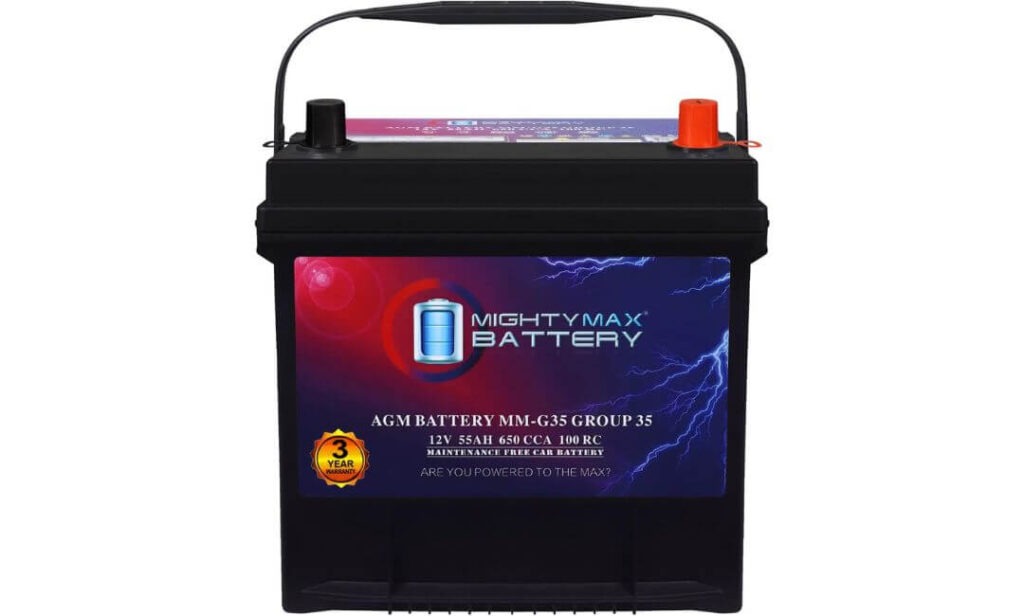
Quick Specs:
- Group 35 AGM battery designed for direct-fit Nissan Frontier compatibility
- 650 CCA for dependable startup power in hot and cold conditions
- 100-minute reserve capacity for stronger voltage stability during daily driving
- 55Ah capacity with sealed AGM construction
- Spill-proof and maintenance-free internal design
- Built for deep discharge recovery and repeated startup cycles
- Rugged vibration-resistant casing for rough roads and truck use
- Multi-position mounting capability (excluding upside down)
- Around 40 lbs with SAE terminal layout
- Includes mounting hardware for easier installation
Something interesting happens when a battery gets the basics right without trying too hard to look “premium.” That’s exactly the lane this AGM battery falls into. Instead of chasing oversized marketing claims, it quietly focuses on the things Nissan Frontier owners actually notice after living with the truck every day — consistent crank speed, stable voltage during stop-and-go traffic, and fewer weak-start moments after the vehicle sits overnight.
The combination of 650 CCA and 100RC reserve capacity gives this battery a surprisingly balanced personality for the price range. It starts confidently in cold weather, handles repeated short trips better than most entry-level flooded batteries, and doesn’t feel easily overwhelmed once accessories start pulling power. For Frontier owners using phone chargers, dash cams, light bars, factory tech packages, or daily commuting routes with constant restarting, that reserve capacity matters more than people realize at first.
Another reason this battery fits the Frontier platform so naturally is the rugged AGM construction. The sealed design keeps things maintenance-free, while the shock-resistant casing helps during rough pavement, jobsite driving, gravel roads, and weekend truck use. It doesn’t pretend to be the most expensive battery on the market — and honestly, that’s part of the appeal. It simply delivers solid real-world performance without forcing owners into ultra-premium pricing.
(And for a lot of Frontier drivers, that balance makes far more sense than chasing flashy specs alone.)
Why This AGM Battery Earned a Spot on Our Frontier List
- Strong mix of 650 CCA and 100-minute reserve capacity
- Proper OEM-style Group 35 fitment for newer Frontier models
- AGM construction handles vibration and rough driving better than standard flooded batteries
- Great value for owners wanting dependable daily performance without overspending
- Deep discharge recovery helps during repeated starts and short-trip driving
One Thing Worth Knowing Before Buying
- The casing sits slightly taller than some factory batteries, so checking clearance around tight battery covers is still a smart idea before installation
Nissan Frontier Compatibility & Real Driving Impressions
This battery makes the most sense for Frontier owners wanting a clean factory-style replacement that upgrades reliability without changing the truck’s original setup. The Group 35 sizing fits naturally into most newer Frontier battery trays, and the terminal layout keeps installation straightforward.
It also works surprisingly well for trucks that split time between commuting and weekend utility use. Whether the truck spends its life in traffic, hauling gear, sitting during the workweek, or seeing occasional rough-road driving, the AGM layout keeps voltage delivery steadier than many lower-cost conventional batteries.
The Insider Pro-Tip
One thing long-term truck owners eventually learn is that reserve capacity changes how a vehicle behaves long before the battery officially “fails.” Batteries with weak reserve power often cause subtle issues first — slower cranking, inconsistent electronics, dimmer startup lighting, or infotainment lag during ignition.
That’s where this AGM setup quietly punches above its price range. The 100RC reserve capacity helps the Frontier feel more stable during repeated daily starts and accessory use, especially if the truck spends lots of time in traffic, on short drives, or running electronics with the engine off for brief periods.
#4. Autocessking Group 35 AGM Battery
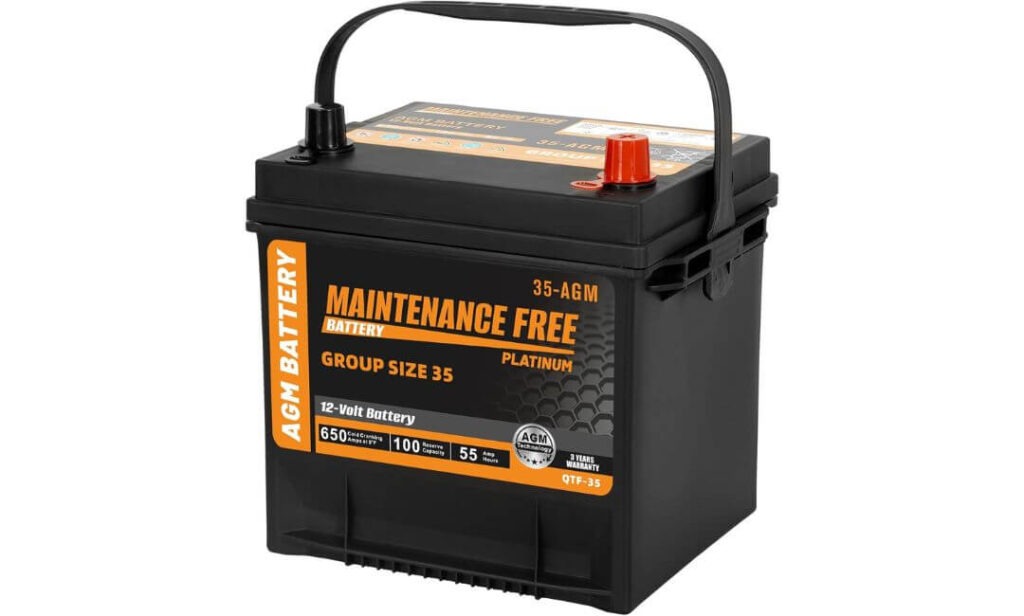
Quick Specs:
- Group 35 AGM battery with OEM-style Frontier fitment
- 650 CCA for dependable all-weather starting performance
- 100-minute reserve capacity for steadier daily voltage delivery
- 55Ah AGM internal design with maintenance-free operation
- Start-stop compatible construction for modern vehicle electronics
- Low self-discharge layout helps hold charge longer when parked
- Strong heat, vibration, and cold-weather resistance
- Spill-proof AGM structure using glass fiber mat technology
- Around 38 lbs with standard automotive sizing
- 3-year warranty coverage
Oddly enough, this is the kind of battery many Frontier owners end up appreciating more after a few months than they do on day one. On paper, the specs look familiar — 650 CCA, 100RC, AGM Group 35 fitment — but the real strength here is how stable and calm the battery feels during regular truck use. The Frontier starts smoothly, electronics behave consistently, and the battery doesn’t feel easily drained after sitting parked for several days.
One thing that genuinely helps this battery stand out is the low self-discharge AGM design. That matters more than people think, especially for Frontier owners who don’t drive their truck every single day. If the vehicle sits through workweeks, travel, weather changes, or weekend-only use, weaker batteries slowly lose voltage and feel sluggish during startup. This AGM setup holds charge noticeably better over time, which helps the truck crank more confidently even after sitting unused longer than usual.
The other major advantage is temperature stability. Some batteries feel strong during moderate weather, then immediately struggle once heat waves or winter mornings show up. This one was clearly designed around wider temperature consistency. The glass mat AGM construction helps protect against heat stress, vibration fatigue, and cold-weather startup issues without needing constant maintenance or charging attention.
(And honestly, that kind of quiet reliability is usually what truck owners end up valuing most long term.)
Why This Battery Earned a Place in Our Frontier Recommendations
- Balanced combination of 650 CCA and 100RC reserve capacity
- AGM construction handles hot weather and rough-road vibration very well
- Low self-discharge design helps preserve startup power during longer parking periods
- Works nicely for daily commuting, weekend driving, and occasional towing use
- Factory-style Group 35 sizing keeps installation simple and frustration-free
One Thing Worth Knowing Before Buying
- This battery is designed primarily for starting performance and vehicle electronics support, not for heavy deep-cycle applications like long off-grid accessory usage with the engine off
Nissan Frontier Fitment & Everyday Driving Feel
For most newer Nissan Frontier models using the factory Group 35 setup, this battery fits naturally without tray modifications or terminal headaches. The dimensions stay close to OEM sizing, which helps installation feel straightforward even for first-time battery replacements.
It’s also a surprisingly good match for Frontier owners who don’t drive every single day. Trucks that spend time parked between drives often expose weak batteries quickly, but the low self-discharge AGM design helps maintain stronger voltage consistency over longer periods.
The Insider Pro-Tip
A lot of battery problems don’t actually start during driving — they start while the truck is parked. Slow voltage loss is what quietly weakens many batteries over time, especially in vehicles loaded with modern electronics, keyless systems, charging ports, and background power draw.
That’s why AGM batteries with stronger charge retention often feel noticeably healthier months later than cheaper flooded replacements. For Frontier owners who leave their truck sitting between work shifts, travel days, or weekend use, stable standby voltage can honestly matter just as much as cold-cranking power itself.
#5. UPLUS BCI Group 24F AGM Battery
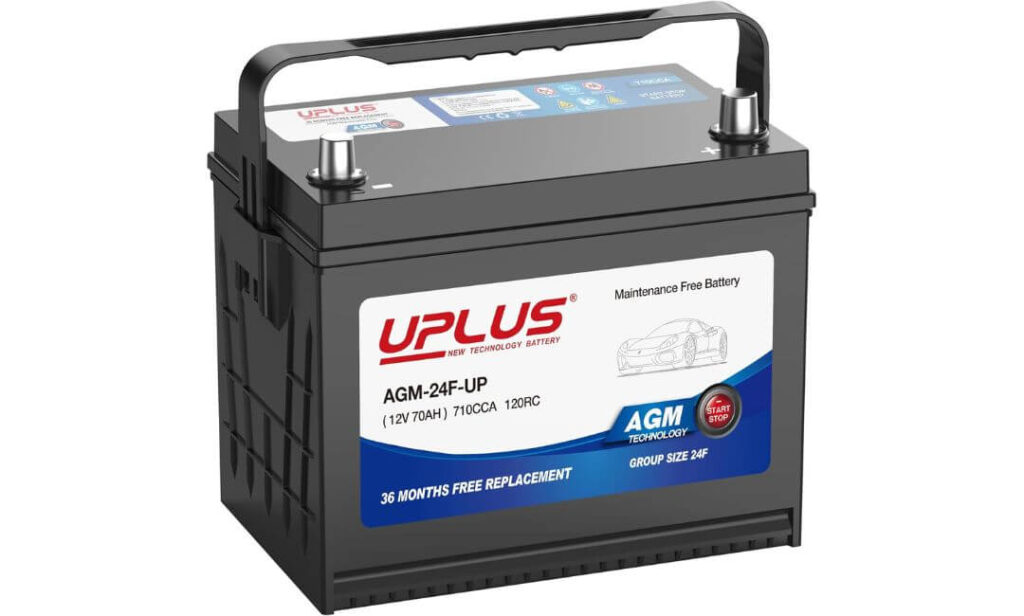
Quick Specs:
- Group 24F AGM battery designed for larger-capacity upgrade setups
- Strong 710 CCA output for confident cold-weather starting
- Massive 120-minute reserve capacity for accessories and long idle use
- 12V AGM construction with maintenance-free sealed design
- Built for start-stop systems and modern electrical loads
- High-density negative paste with enhanced cycling durability
- Around 46.8 lbs with heavy-duty internal construction
- 15X stronger vibration resistance than many standard flooded batteries
- Left negative / right positive terminal layout
- 3-year warranty support
Eventually, some Nissan Frontier owners outgrow standard Group 35 batteries — especially once the truck starts handling camping gear, off-road lights, power inverters, tool charging, audio upgrades, or long hours with electronics running. That’s where a larger-capacity AGM battery like this starts making real sense. The jump to 710 CCA and 120RC reserve capacity immediately changes how much electrical breathing room the truck has during demanding use.
What makes this battery genuinely interesting is that it doesn’t just increase starting power — it increases endurance. The 120-minute reserve capacity is the kind of number you actually feel during real truck ownership. Long traffic sessions with AC running, repeated short trips, towing weekends, overnight camping stops, or accessory-heavy setups become much easier on the electrical system because the battery isn’t constantly operating near its limits.
The heavier AGM construction also gives this battery a more serious feel compared to lighter entry-level replacements. The internal calcium-lead grid design improves conductivity while the reinforced AGM structure handles vibration extremely well. For Frontier owners who regularly hit rough roads, trails, construction zones, or uneven terrain, that extra durability matters more over time than flashy marketing claims.
(Honestly, this feels less like a basic replacement battery and more like a real truck-use upgrade.)
Why This Battery Became One of Our Favorite Upgrade Picks
- Huge 120RC reserve capacity for accessory-heavy truck setups
- Strong 710 CCA output for confident startup performance
- Excellent option for towing, camping, lighting, and off-road electrical demands
- AGM construction feels extremely stable under vibration and rough-road use
- Better cycling durability than many standard replacement batteries
One Thing Worth Knowing Before Buying
- This is a larger Group 24F battery, so Frontier owners should always verify tray space and terminal clearance before upgrading from the factory Group 35 setup
Nissan Frontier Upgrade Fitment Reality
This battery makes the most sense for Frontier owners intentionally moving beyond a standard OEM-style replacement. If the truck regularly powers accessories, sees off-grid travel, handles towing duty, or spends time idling with electronics running, the larger reserve capacity becomes genuinely useful.
For stock daily drivers with minimal electrical demand, a normal Group 35 AGM is usually enough. But for Frontier owners building a more capable truck setup long term, the added reserve power here feels much more future-proof than smaller factory-style batteries.
The Insider Pro-Tip
A lot of truck owners focus only on CCA numbers, but once accessories and real-world usage enter the picture, reserve capacity quietly becomes the spec that changes everything. Trucks running lighting, charging equipment, coolers, compressors, navigation gear, or frequent stop-and-go driving can slowly drain weaker batteries without the owner realizing it.
That’s why larger AGM upgrades like this tend to feel noticeably more relaxed under load. The battery simply has more electrical overhead to work with, so the Frontier feels less strained during heavy-use situations where smaller batteries start showing voltage drops, dimming lights, or sluggish restarts.
#6. Weize Platinum AGM Battery Group 24F
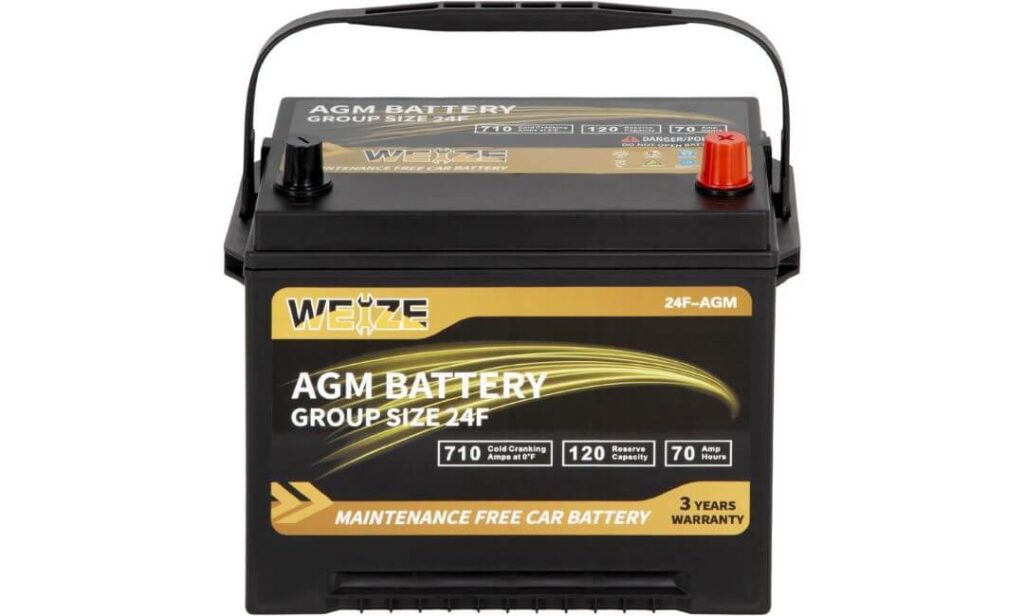
Quick Specs:
- Larger Group 24F AGM battery for higher-capacity Nissan Frontier setups
- Strong 710 CCA output for dependable cold-weather cranking
- Massive 120-minute reserve capacity for accessory-heavy truck use
- 70Ah capacity with maintenance-free AGM construction
- Sealed spill-proof design with tapered terminal layout
- Built for stop/start systems and modern electrical loads
- Handles temperatures from -22°F to 158°F
- Low self-discharge design helps preserve voltage during long parking periods
- Around 46 lbs with reinforced vibration-resistant construction
- 3-year warranty coverage
Here’s the thing most people don’t realize until they upgrade their truck battery: once reserve capacity gets genuinely strong, the entire vehicle starts feeling calmer electrically. That’s the first impression this AGM battery gives in a Nissan Frontier. The combination of 710 CCA, 70Ah capacity, and 120RC reserve power creates the kind of setup that feels noticeably more relaxed under heavy daily use instead of constantly operating near its limit.
What makes this battery especially interesting for Frontier owners is how well it handles mixed-use driving. Trucks that see short commutes during the week, accessory use on weekends, towing trips, outdoor gear, charging equipment, or long idle periods tend to expose weak batteries quickly. This AGM design feels much more comfortable in those situations because the reserve power overhead is simply larger than what standard factory-style batteries usually offer.
Another area where this battery quietly shines is temperature stability. Extreme heat, freezing mornings, rough roads, and long sitting periods slowly destroy weaker batteries over time. The reinforced AGM construction, glass fiber mat layout, and low self-discharge behavior help this battery maintain voltage much more consistently during those conditions. It feels built less like a cheap replacement and more like something intended for owners planning to keep their truck long term.
(And honestly, the stronger reserve capacity becomes addictive once you get used to how stable the truck feels with it installed.)
Why This Battery Stood Out in Our Frontier Research
- Excellent 120RC reserve capacity for high electrical demand setups
- Strong 710 CCA startup performance even during cold weather
- Great choice for trucks running accessories, towing gear, or off-road equipment
- AGM design handles vibration, heat, and rough driving conditions extremely well
- 70Ah capacity provides noticeably stronger long-term electrical stability
One Thing Worth Knowing Before Buying
- Because this is a larger Group 24F battery, some Nissan Frontier owners may need to double-check tray clearance and hold-down spacing before upgrading from a factory Group 35 setup
Nissan Frontier Upgrade Compatibility & Real-World Use
This battery fits best for Frontier owners intentionally moving toward a larger-capacity AGM setup rather than staying fully OEM-sized. Trucks with added lighting, power inverters, camping accessories, audio upgrades, or repeated towing demands benefit the most from the added reserve power.
For lighter daily driving, a normal Group 35 AGM battery is usually enough. But if the Frontier already lives a heavier-duty lifestyle, this larger AGM setup simply gives the electrical system more breathing room during demanding use.
The Insider Pro-Tip
One of the easiest ways to tell whether a truck battery is genuinely strong isn’t the startup itself — it’s how the vehicle behaves afterward. Weak reserve capacity often shows up through dimmer idle lighting, sluggish accessory response, unstable voltage during stop-and-go driving, or electronics acting inconsistent after repeated short trips.
That’s where higher-capacity AGM batteries quietly separate themselves from standard replacements. The Frontier simply feels more composed electrically because the battery isn’t constantly fighting to recover from every startup cycle or accessory load the truck throws at it.
Best Nissan Frontier Battery Comparison Chart for AGM, Group 35 & 24F Options
How to Make Sure You’re Buying the Right Battery for Your Nissan Frontier
A surprising number of Nissan Frontier battery problems start before the new battery is even installed. A lot of owners focus only on price or CCA numbers, then end up dealing with loose hold-downs, terminal issues, warning lights, weak voltage behavior, or batteries that technically “fit” but never feel completely right in the truck. Modern Frontier models are much more sensitive to battery quality and fitment than older pickups used to be, especially once AGM batteries, start-stop systems, and accessory-heavy driving enter the picture.
The good news is that verifying the correct battery is actually pretty straightforward once you know what to check before ordering.
Start With the Factory Battery Group Size
For most newer Nissan Frontier trucks, especially 2022+ models, the factory setup usually revolves around a Group 35 battery. That’s the safest direct-fit option for the majority of owners because it matches the original tray dimensions, terminal positioning, and cable reach without forcing modifications.
Some Frontier owners intentionally move to a larger Group 24F AGM battery for higher reserve capacity, stronger accessory support, camping setups, towing gear, light bars, compressors, or off-road equipment. Those upgrades can work extremely well, but they should be treated as true upgrades — not blind replacements.
Before buying anything, check:
- The battery label currently installed in the truck
- Owner’s manual battery specifications
- Terminal orientation
- Battery tray dimensions
- Hold-down bracket clearance
Even a battery with excellent specs becomes frustrating if the terminals sit too close to the hood insulation or the hold-down clamp no longer lines up properly.
Why Terminal Position Matters More Than Most People Think
One of the easiest mistakes people make is buying the correct battery size with the wrong terminal orientation. The Frontier’s battery cables are not designed with unlimited flexibility, so if the positive and negative posts sit reversed, installation quickly becomes messy.
A proper Nissan Frontier battery should allow:
- Clean cable routing without stretching
- Natural terminal reach
- Secure clamp connection
- No cable tension against the battery case
If the cables feel tight, twisted, or forced during installation, something is wrong — even if the battery technically fits the tray.
This becomes especially important when moving from a standard Group 35 battery to a larger Group 24F AGM upgrade because physical dimensions and terminal spacing change slightly.
Understanding Why CCA and Reserve Capacity Both Matter
A lot of battery buyers chase the highest CCA number they can find, but Frontier owners usually benefit more from balancing cold cranking power with reserve capacity.
CCA mainly affects:
- Cold-weather starts
- Fast engine cranking
- Startup confidence after sitting overnight
Reserve Capacity (RC) affects:
- Accessory usage
- Voltage stability
- Traffic driving
- Repeated short trips
- Electronics staying stable under load
That’s why several batteries in this guide focus heavily on the 100RC to 120RC range, not just raw cranking numbers. A Frontier with strong reserve capacity usually feels healthier electrically during daily driving because the battery isn’t constantly operating near its limit.
For most owners:
- 650–720 CCA is already excellent
- 100RC+ becomes extremely valuable for trucks with accessories or stop-and-go use
Measuring the Battery Tray Before Ordering
This step sounds simple, but it prevents most installation headaches immediately.
Before ordering:
- Measure the current battery length, width, and height
- Check hood clearance above the terminals
- Verify hold-down bracket location
- Compare tray shape with the replacement battery dimensions
- Look at cable length near both terminals
Group 35 batteries usually install easily in the Frontier because they follow the factory footprint closely. Larger Group 24F AGM batteries may require more careful tray verification because of their added length and height.
Some upgraded AGM batteries also weigh over 45 lbs, which changes how firmly they sit inside the tray during rough-road driving. That extra weight is normal for larger-capacity AGM construction, but it makes proper hold-down support more important.
Why AGM Batteries Make More Sense for Modern Frontier Trucks
Most newer Nissan Frontier owners are better off staying with an AGM battery instead of dropping back to a conventional flooded design. AGM batteries handle:
- Vibration better
- Heat better
- Repeated startup cycles better
- Modern electronics more consistently
- Longer parking periods with less voltage loss
They also recover faster after startup and maintain steadier voltage during accessory usage, which becomes noticeable once the truck starts carrying more electrical demand.
If the Frontier already came with an AGM battery from factory, sticking with AGM is usually the smarter long-term decision.
Don’t Skip the Initial Charging Check
Even if a new battery arrives “ready to install,” experienced installers still check voltage before putting it into the truck. Shipping, warehouse storage, weather changes, and shelf time can all affect battery charge level slightly.
Before installation:
- Check resting voltage if possible
- Make sure terminals are clean
- Tighten clamps fully
- Avoid over-tightening side pressure on AGM cases
- Confirm the battery feels securely mounted
A properly charged AGM battery should crank the Frontier confidently almost immediately. If the startup feels weak right after installation, it’s worth rechecking voltage and terminal connection quality before assuming something else is wrong.
The Real Difference Between a Battery That Fits and One That Feels Right
A battery can technically fit inside the Nissan Frontier and still feel wrong during actual ownership. The best batteries are the ones that make the truck feel consistently healthy — smooth startups, stable electronics, confident cold-weather cranking, strong voltage during traffic, and no strange electrical behavior after sitting parked.
That’s ultimately why every battery in this guide was selected around real-world Frontier behavior instead of random marketing claims or oversized spec-sheet numbers alone.
Buying Guide: Choosing the Right Battery for Your Nissan Frontier Without Regretting It Later
Buying a battery for a Nissan Frontier sounds simple until you actually start comparing real options. Suddenly every battery claims to be “heavy-duty,” every listing promises longer life, and every spec sheet starts looking identical after a while. But once you spend enough time around Frontier trucks, one thing becomes obvious very quickly — this truck reacts differently depending on the quality of the battery sitting under the hood.
A weak or poorly matched battery doesn’t just affect startup power. It slowly changes the way the Frontier behaves overall. Slower cranking, unstable voltage, weak accessory response, random electronic glitches, dim startup lighting, sluggish infotainment wakeups, or stop-start systems acting inconsistent usually start appearing long before the battery completely fails. That’s why choosing the right battery matters far more than most owners expect.
Don’t Buy a Battery Based on CCA Alone
This is probably the biggest mistake people make when shopping for truck batteries.
A lot of buyers see a huge CCA number and immediately assume it’s automatically better. Strong cold-cranking power absolutely matters, especially during winter starts or after the truck sits overnight, but CCA is only part of the picture.
What actually separates a “good” Nissan Frontier battery from an average one is how well it balances:
- Cold-cranking performance
- Reserve capacity
- Voltage stability
- Heat resistance
- Repeated startup recovery
- Accessory load handling
- Long-term reliability
That’s why many of the best batteries in this guide sit in the sweet spot between 650 and 720 CCA while also offering 100RC to 120RC reserve capacity. The Frontier tends to respond extremely well to batteries that maintain stable voltage under real daily use, not just impressive startup numbers on paper.
Understand How You Actually Use Your Frontier
The right battery for one Frontier owner can be completely wrong for another.
If your truck mostly handles:
- Daily commuting
- Highway driving
- Light weekend use
- Normal weather conditions
then a quality Group 35 AGM battery is usually perfect. It keeps factory fitment simple while delivering enough reserve power for modern electronics and everyday reliability.
But if your Frontier regularly handles:
- Towing
- Camping setups
- Off-road accessories
- Long idle periods
- Power inverters
- Light bars
- Air compressors
- Heavy stop-and-go driving
then a larger-capacity Group 24F AGM upgrade starts making much more sense because the truck simply has more electrical demand to support.
The biggest mistake is buying too small for your actual usage just because it saves a little money upfront.
Why AGM Batteries Are Worth Paying Extra For
There’s a reason nearly every serious recommendation in this guide uses AGM construction.
Compared to traditional flooded batteries, AGM batteries:
- Handle vibration far better
- Recover faster after startup
- Lose charge more slowly when parked
- Deliver steadier voltage
- Resist heat damage more effectively
- Require zero maintenance
- Work better with modern vehicle electronics
The Nissan Frontier especially benefits from AGM batteries because modern trucks constantly draw small amounts of power even while parked. Keyless entry systems, infotainment memory, sensors, charging systems, and background electronics slowly drain weaker batteries over time.
AGM batteries simply tolerate this type of usage better.
Reserve Capacity Quietly Changes Everything
Most people never think about reserve capacity until they experience a battery that actually has enough of it.
Reserve Capacity (RC) determines how long the battery can continue delivering stable power when the alternator isn’t carrying the full load. That matters during:
- Traffic driving
- Multiple short trips
- Heavy accessory use
- Idling with electronics running
- Extreme weather
- Camping or tailgating situations
A Frontier with stronger reserve capacity usually feels noticeably healthier electrically. Headlights stay brighter, startup voltage stays steadier, electronics behave more consistently, and the truck simply feels less strained overall.
That’s why batteries with 100RC or higher tend to feel much better long term than cheaper low-reserve replacements.
Weight Actually Tells You Something Important
This is one detail experienced truck owners quietly pay attention to.
High-quality AGM batteries often weigh more because they contain:
- More internal lead
- Stronger plate construction
- Better separators
- Reinforced internal support structures
That extra weight usually translates into:
- Better durability
- Improved reserve capacity
- More stable voltage delivery
- Longer cycle life
For example, several batteries in this guide push beyond 40–46 lbs, which sounds heavy until you realize that weight often reflects stronger internal construction rather than cheap lightweight materials.
Battery Fitment Is More Than Just “Will It Fit?”
A battery can physically sit inside the tray and still be the wrong choice.
Before buying, always verify:
- Group size
- Tray dimensions
- Terminal orientation
- Hood clearance
- Hold-down alignment
- Cable reach
This becomes especially important when upgrading from a standard Group 35 battery to a larger Group 24F AGM setup. The added reserve power is excellent, but physical sizing matters.
A properly fitted battery should look factory-installed, not forced into place.
Heat Is the Silent Battery Killer Most Owners Ignore
Cold weather gets most of the attention, but extreme heat usually kills batteries faster.
Long summers, engine bay heat soak, towing loads, and stop-and-go traffic slowly damage weaker batteries over time. AGM batteries resist heat stress much better because the electrolyte is absorbed into fiberglass mats instead of sloshing around freely like conventional flooded designs.
That’s one reason AGM batteries tend to hold up better in trucks used heavily year-round.
The Cheapest Battery Usually Costs More Long Term
Most budget batteries work fine during the first few months. The real difference shows up later.
Cheaper batteries usually start showing:
- Slower crank speed
- Faster voltage drop
- Weak reserve power
- Reduced charge retention
- Electrical inconsistency
much earlier than stronger AGM designs.
That’s why paying slightly more upfront for a battery with better reserve capacity, stronger AGM construction, and proven durability usually saves money — and frustration — later.
The Best Frontier Battery Is the One That Matches Your Real Truck Use
At the end of the day, there isn’t one “perfect” battery for every Nissan Frontier owner. The right choice depends on how the truck is actually used.
Some owners simply need a reliable OEM-style AGM replacement that starts every morning without issues. Others need larger reserve capacity for towing, camping, accessories, or off-road builds.
The smartest approach is choosing a battery that fits both:
- the truck itself
- and the way you genuinely use it every week
That’s exactly why the batteries in this guide were selected around real-world Frontier ownership instead of generic marketing promises.
Nissan Frontier Battery Installation & Maintenance Tips Most Owners Learn Too Late
A surprisingly high number of battery problems are not caused by the battery itself — they come from poor installation, weak terminal contact, corrosion buildup, loose mounting, or charging mistakes made right after replacement. The Nissan Frontier is generally very straightforward to work on, but modern trucks are much less forgiving when voltage becomes unstable. Even a strong AGM battery can feel disappointing if the installation isn’t done correctly from the start.
The good news is that replacing and maintaining a Frontier battery is not difficult once you understand the small details that actually matter long term.
Step-by-Step Nissan Frontier Battery Replacement Checklist
Before touching anything, make sure the truck is parked safely with the engine completely off. If the battery has recently been driven hard or charged, give it a little time to cool down first because AGM batteries can hold surface charge right after driving.
A clean replacement process usually looks like this:
- Open the hood and inspect the current battery setup carefully before disconnecting anything
- Take a quick picture of terminal orientation and cable routing
- Remove the negative terminal first to avoid accidental shorting
- Disconnect the positive terminal afterward
- Remove the hold-down bracket slowly instead of forcing it loose
- Lift the old battery straight upward carefully, especially larger AGM units weighing over 40 lbs
- Clean the tray area completely before installing the new battery
- Inspect terminal clamps for corrosion, looseness, or cracking
- Place the new battery securely into the tray with correct terminal orientation
- Tighten the hold-down bracket evenly so the battery cannot shift during driving
- Connect the positive terminal first
- Connect the negative terminal last
- Start the truck and let it idle briefly while checking for stable startup behavior
One thing experienced installers always watch for is battery movement. If the battery shifts even slightly inside the tray after installation, vibration damage can slowly shorten battery life over time, especially in trucks that see rough roads or off-road driving.
Why Clean Battery Terminals Matter More Than Most Owners Expect
A battery can test perfectly healthy and still perform badly if the terminal connection quality is poor.
Even small amounts of corrosion create electrical resistance, and modern trucks notice that resistance immediately. Weak startup behavior, flickering electronics, charging inconsistencies, slow crank speed, and random warning lights can sometimes come from dirty terminals rather than the battery itself.
Before installing a new battery:
- Clean both cable clamps thoroughly
- Remove white or green corrosion buildup completely
- Inspect cables for cracking or stiffness
- Make sure clamps tighten firmly without excessive force
A thin layer of dielectric grease or anti-corrosion protectant around the terminals can also help slow future buildup, especially in humid climates or trucks exposed to winter road conditions.
Secure Mounting Is Not Optional on AGM Batteries
This gets overlooked constantly.
AGM batteries are much more vibration-resistant than traditional flooded batteries, but they still need to be mounted securely. Heavy AGM units bouncing around inside the tray eventually stress the internal plates, cable connections, and hold-down system over time.
This becomes even more important with larger Group 24F upgrades because many of them weigh:
- 45 lbs or more
- have taller casing designs
- carry more internal lead mass
A properly mounted battery should:
- sit completely flat in the tray
- not rock side to side
- not shift during braking or cornering
- keep terminal cables naturally relaxed without tension
If installation feels forced, something is wrong.
Why AGM Batteries Sometimes Need Charging After Installation
A lot of AGM batteries arrive mostly charged, but not always fully conditioned for immediate heavy use.
Shipping time, storage conditions, temperature changes, and warehouse shelf life can all slowly reduce charge level before installation. That’s why many experienced installers still check battery voltage before starting the truck for the first time.
Healthy AGM batteries typically show:
- around 12.6V–12.8V at rest
- strong stable startup voltage
- quick recovery after cranking
If the battery arrives slightly lower than expected, topping it off with a proper AGM-compatible charger before heavy use can help long-term performance significantly.
This matters even more for:
- trucks driven mostly on short trips
- cold-weather climates
- accessory-heavy setups
- larger AGM upgrades with high reserve capacity
Smart Charging Habits That Actually Extend Battery Life
One thing many truck owners accidentally do is slowly damage AGM batteries through weak charging habits.
AGM batteries prefer:
- consistent charging cycles
- healthy alternator output
- avoiding deep discharge whenever possible
Repeatedly draining the battery heavily without giving it enough time to recover shortens lifespan faster than most people realize.
If the Frontier sits parked for long periods:
- use a smart AGM-compatible maintainer occasionally
- avoid leaving accessories running unnecessarily
- drive long enough for full recharge after cold starts
Short five-minute drives every few days are often worse for battery health than people expect because the truck never fully replaces the power lost during startup.
The Early Signs Your Nissan Frontier Battery Is Starting to Fail
Most batteries rarely die instantly without warning. The Frontier usually gives small clues first if you know what to watch for.
Common warning signs include:
- slower crank speed in the morning
- dim headlights during startup
- infotainment lag during ignition
- stop/start systems behaving inconsistently
- power windows moving slower than usual
- dashboard flickering briefly during startup
- battery voltage fluctuating more than normal
- needing jump starts after sitting only briefly
Many owners ignore these signs because the truck still technically starts. But once those symptoms begin appearing consistently, the battery is usually already weakening internally.
Heat Damages Batteries Faster Than Cold in Many Cases
Cold weather exposes weak batteries, but heat quietly kills them over time.
Long highway drives, engine bay heat, towing, traffic, and summer temperatures slowly break down internal battery components. AGM batteries resist heat better than flooded designs, but no battery is immune forever.
That’s one reason stronger AGM batteries with better internal construction tend to survive truck use longer:
- thicker internal plates
- improved separators
- stronger vibration resistance
- better thermal stability
This becomes especially important for Frontier owners living in hotter climates or towing regularly.
The Small Details Usually Decide Long-Term Battery Performance
Most Nissan Frontier owners don’t actually regret buying a strong AGM battery. What they regret is:
- choosing the wrong size
- rushing installation
- ignoring terminal corrosion
- using weak charging habits
- buying the cheapest option available
The difference between a battery lasting two years versus five years often comes down to installation quality, reserve capacity, charging consistency, and how the truck is actually used day to day.
That’s why proper fitment, clean installation, secure mounting, and realistic battery selection matter just as much as the brand printed on the label itself.
Budget, Warranty & Long-Term Value: What Actually Matters When Buying a Nissan Frontier Battery
One thing a lot of Nissan Frontier owners realize after replacing a battery the first time is that the cheapest option almost never stays the cheapest long term. Battery pricing has changed a lot over the last few years, especially in the AGM category, and modern truck electrical systems are simply harder on batteries than older vehicles used to be. Between start-stop technology, infotainment systems, charging demands, keyless access modules, and accessory-heavy truck setups, weaker batteries usually show their limitations much faster now.
That’s why looking only at upfront price is usually the wrong way to shop for a Frontier battery. The better question is:
How well will this battery still perform after real truck use, repeated starts, rough weather, and months of daily driving?
What Realistically Affects AGM Battery Pricing Today
Most quality AGM batteries for the Nissan Frontier now sit in a very different category than older flooded batteries. The stronger internal construction, additional lead content, reinforced separators, vibration resistance, and reserve capacity all increase manufacturing cost.
For most Frontier owners shopping today, pricing usually breaks down like this:
- Entry-level AGM replacements typically sit around the lower end of the market
- Mid-range premium AGM batteries usually land in the sweet spot for daily truck use
- High-reserve-capacity upgrades and premium-name AGM batteries move into the higher price tier quickly
The biggest reason prices rise dramatically once you move into larger 100RC to 120RC AGM batteries is simple: there’s physically more battery inside them. More lead, larger plates, stronger casing support, and higher reserve power all increase production cost and overall weight.
That extra reserve capacity is also why many heavier AGM batteries weigh:
- 40 lbs
- 45 lbs
- sometimes even more
In most cases, that weight reflects stronger internal construction rather than wasted bulk.
Why Warranty Terms Matter More Than the Number on the Box
A long warranty sounds impressive until you actually need to use it.
One thing experienced truck owners pay close attention to is not just warranty length, but:
- how the replacement process works
- whether coverage is prorated
- how easy support actually is
- whether the manufacturer has a real reputation behind it
Some batteries advertise aggressive warranty coverage but make the replacement process frustrating once problems appear. Others quietly offer smoother support even with slightly shorter coverage periods.
For most AGM batteries in this guide, the realistic sweet spot is:
- around 3 years of warranty support
- reliable replacement handling
- strong retailer availability
That combination usually matters more than giant warranty promises that become difficult to claim later.
Why Reserve Capacity Often Predicts Long-Term Satisfaction Better Than CCA
Most people remember the CCA number because it sounds important, but long-term satisfaction with a Nissan Frontier battery usually comes from reserve capacity instead.
This becomes very obvious once trucks start handling:
- stop-and-go traffic
- short trips
- accessory use
- towing
- outdoor equipment
- charging devices
- long idle periods
A battery with stronger reserve power simply feels less stressed during daily use.
That’s exactly why the batteries in this guide heavily focused on:
- 100RC AGM batteries
- 120RC larger-capacity upgrades
Those reserve numbers directly affect how stable the truck feels electrically over time.
Higher reserve capacity usually means:
- steadier startup voltage
- fewer weak-start symptoms
- better accessory support
- less electrical strain during repeated starts
- improved tolerance to daily truck abuse
What Real AGM Battery Lifespan Looks Like in a Nissan Frontier
Battery lifespan discussions online often become unrealistic because driving habits change everything.
A Nissan Frontier battery used for:
- short trips only
- extreme temperatures
- towing
- off-road vibration
- heavy accessory use
- infrequent driving
will age differently than one used mainly for highway commuting.
That said, quality AGM batteries typically last noticeably longer than standard flooded batteries because they:
- resist vibration better
- recover faster after cranking
- handle deeper cycling more effectively
- lose charge more slowly when parked
- tolerate heat more consistently
In real-world Frontier ownership, a properly installed AGM battery with good charging habits often feels healthier much longer than cheaper conventional replacements.
The batteries with stronger internal construction and larger reserve capacity also tend to maintain startup confidence better as they age instead of suddenly feeling weak overnight.
The Difference Between Budget AGM Batteries and Premium Options
Not every truck owner needs the most expensive AGM battery available.
Some Frontier owners simply need:
- reliable starts
- factory-style fitment
- decent reserve capacity
- stable daily driving performance
For that type of use, balanced-value AGM batteries often make perfect sense.
But premium AGM batteries usually justify their pricing through:
- stronger reserve capacity
- faster recharge behavior
- thicker internal plate construction
- improved vibration resistance
- better voltage stability under load
- more consistent long-term performance
That’s why batteries like the OPTIMA REDTOP or larger 24F AGM upgrades tend to appeal more to:
- towing setups
- off-road builds
- camping rigs
- accessory-heavy trucks
- owners planning to keep the vehicle long term
Why “Best Value” Doesn’t Always Mean Cheapest
The best value battery is usually the one that solves your actual usage needs without creating future headaches.
For example:
- a commuter truck may never need a huge 24F upgrade
- an off-road or camping build may quickly overwhelm a smaller entry-level AGM battery
That’s why this guide intentionally included:
- balanced OEM-style Group 35 AGM batteries
- premium high-CCA options
- larger-capacity 24F upgrades
- value-focused AGM replacements
because different Frontier owners genuinely need different types of battery setups.
Aftermarket Upgrades Only Make Sense If They Match Your Truck
Bigger is not automatically better.
Some owners upgrade immediately to oversized AGM batteries without actually needing the additional reserve power, while others keep undersized batteries despite running heavy electrical loads constantly.
The smartest aftermarket upgrade is the one that:
- fits correctly
- matches your electrical demand
- keeps voltage stable
- supports future truck use realistically
That’s exactly why Group 24F AGM upgrades were included in this guide carefully instead of blindly recommending oversized batteries for every Frontier owner.
The Battery You Barely Think About Is Usually the Right One
The best Nissan Frontier battery is usually the one you stop noticing completely after installation.
No slow cranking.
No electrical weirdness.
No unstable startup behavior.
No hesitation after sitting parked.
No random voltage concerns during heavy use.
That kind of quiet reliability is what separates genuinely good AGM batteries from the endless list of average replacements flooding the market right now.
FAQs About Nissan Frontier Battery
Does the Nissan Frontier actually benefit from upgrading beyond the factory Group 35 battery?
Yes — but only if the truck’s real-world usage actually demands it. This is where a lot of Frontier owners either overspend or undersize their setup. A stock daily-driven Frontier with minimal accessories usually performs perfectly fine with a strong Group 35 AGM battery, especially one offering around 100RC reserve capacity and healthy cold-cranking power.
Where things change is when the truck starts carrying extra electrical load regularly. Once you add:
- off-road lighting
- camping setups
- power inverters
- towing equipment
- air compressors
- upgraded audio
- long idle periods
the factory-sized battery starts operating much closer to its limits. That’s when larger Group 24F AGM upgrades begin making real sense because the additional reserve capacity reduces electrical strain noticeably.
The biggest difference most owners feel after upgrading is not necessarily stronger startup power — it’s how much calmer and more stable the truck feels electrically during everyday use.
Why do some Nissan Frontier batteries feel weak even when they still technically start the truck?
Because battery failure usually happens gradually, not instantly.
Modern Nissan Frontier models are extremely sensitive to voltage stability. A battery can still crank the engine while already struggling internally. Most owners first notice small behavioral changes instead of a complete no-start situation.
Common early signs include:
- slightly slower crank speed
- infotainment lag during startup
- dimmer startup lighting
- inconsistent stop/start behavior
- voltage dips during accessory use
- sluggish electronic response after sitting parked
This happens because modern trucks rely heavily on stable electrical supply even before the engine fully starts. Once reserve capacity weakens, the truck starts feeling inconsistent long before the battery officially “dies.”
That’s exactly why AGM batteries with stronger reserve capacity tend to feel healthier much longer than cheaper flooded replacements, especially in newer Frontier models loaded with electronics.
Is higher CCA always better for a Nissan Frontier battery upgrade?
Not necessarily — and this is honestly one of the most misunderstood parts of battery shopping.
A lot of owners focus only on CCA because it sounds like the most important number, but once you move past basic startup performance, reserve capacity often matters more for overall truck behavior.
For example:
- 720 CCA sounds impressive
- but weak reserve capacity can still create voltage instability later
Meanwhile:
- a balanced AGM battery with solid CCA and strong RC
- usually feels much more stable long term
That’s why many experienced Frontier owners eventually prioritize:
- stable reserve power
- AGM construction quality
- vibration resistance
- charge retention
- long-term voltage behavior
instead of simply chasing the biggest startup number available.
The sweet spot for most Frontier trucks honestly sits around:
- 650–720 CCA
- paired with 100RC or higher
That combination usually delivers the most balanced real-world experience.
Why do AGM batteries feel noticeably different in a truck compared to conventional flooded batteries?
Because AGM batteries recover and maintain voltage differently under load.
Traditional flooded batteries can still work fine in basic vehicles, but modern trucks place much heavier electrical demand on the battery system now than older vehicles ever did. The Nissan Frontier especially tends to expose weak voltage behavior quickly once the battery starts aging.
AGM batteries handle:
- repeated startup cycles
- vibration
- heat
- accessory loads
- stop-and-go driving
- long parking periods
far more consistently than standard flooded batteries.
One thing many owners notice immediately after switching to AGM is how much cleaner startup behavior feels overall:
- faster cranking
- steadier dashboard lighting
- fewer electrical hiccups
- better accessory response
- more stable voltage during idle
That difference becomes even more noticeable once the truck starts handling towing, camping gear, off-road driving, or heavy traffic regularly.
How long should a quality Nissan Frontier AGM battery realistically last?
Realistically, it depends less on the calendar and more on how the truck is actually used.
A Frontier driven mostly on highways with healthy charging habits may keep a strong AGM battery feeling solid for years. Meanwhile, trucks exposed constantly to:
- short trips
- extreme heat
- repeated cold starts
- accessory-heavy use
- off-road vibration
- long idle sessions
will naturally wear batteries faster.
That said, high-quality AGM batteries usually age much more gracefully than conventional flooded designs. Instead of suddenly collapsing, they often maintain stronger startup confidence and steadier voltage deeper into their lifespan.
The owners who usually get the best lifespan out of AGM batteries tend to:
- avoid deep discharge repeatedly
- keep terminals clean
- maintain proper charging habits
- use the correct group size
- avoid cheap undersized replacements
Ironically, the battery setups that often last longest are the ones slightly “overbuilt” for the truck’s actual usage rather than barely meeting minimum requirements.
Final Thoughts
Finding the best battery for a Nissan Frontier honestly comes down to understanding how the truck is actually used, not just picking the highest number on a product page. The Frontier is one of those trucks that quickly exposes weak batteries through small everyday behavior changes — slower cranking, unstable voltage, dim startup lighting, electronics acting inconsistent, or the truck simply feeling less “tight” electrically over time.
That’s exactly why every battery in this guide was chosen around real-world Frontier ownership instead of generic marketing claims. Some owners simply need a dependable Group 35 AGM replacement that fits perfectly, starts confidently every morning, and handles daily driving without drama. Others need the added reserve capacity of a 24F AGM upgrade because their truck regularly handles towing, camping gear, off-road accessories, long idle periods, or heavier electrical demand.
The important thing is choosing a battery that matches both:
- the Nissan Frontier itself
- and the way the truck actually lives day to day
For most owners, a strong AGM battery with healthy reserve capacity ends up making a bigger long-term difference than people expect at first. The truck starts cleaner, electronics behave more consistently, voltage stays steadier under load, and the entire driving experience simply feels more reliable over time.
And honestly, that’s the real goal here. Not chasing the flashiest specs. Not buying the most expensive battery just because it sounds impressive. Just installing something that makes the Frontier feel strong, dependable, and ready every single time you hit the ignition button — whether it’s a freezing morning, a long road trip, a workday commute, or a weekend deep off the pavement.
Also Check:

