5 Best Cold Air Intakes for 3.5 EcoBoost F-150 (2026 Turbo Response Picks)
If you drive a 3.5 EcoBoost F-150, you don’t need a dyno chart to know the truck is quick — you feel it every time the turbos spool up. But after living with this engine for a while, one thing becomes obvious: the factory intake is built more for noise control and emissions than for real airflow.
I first noticed the limitation while towing and merging onto highways. The power was there, but throttle response wasn’t as sharp as it could be, and heat soak became noticeable after longer drives. That’s when upgrading to a proper cold air intake started to make sense — not for unrealistic horsepower claims, but for smoother turbo response, better breathing under load, and a more responsive driving feel.
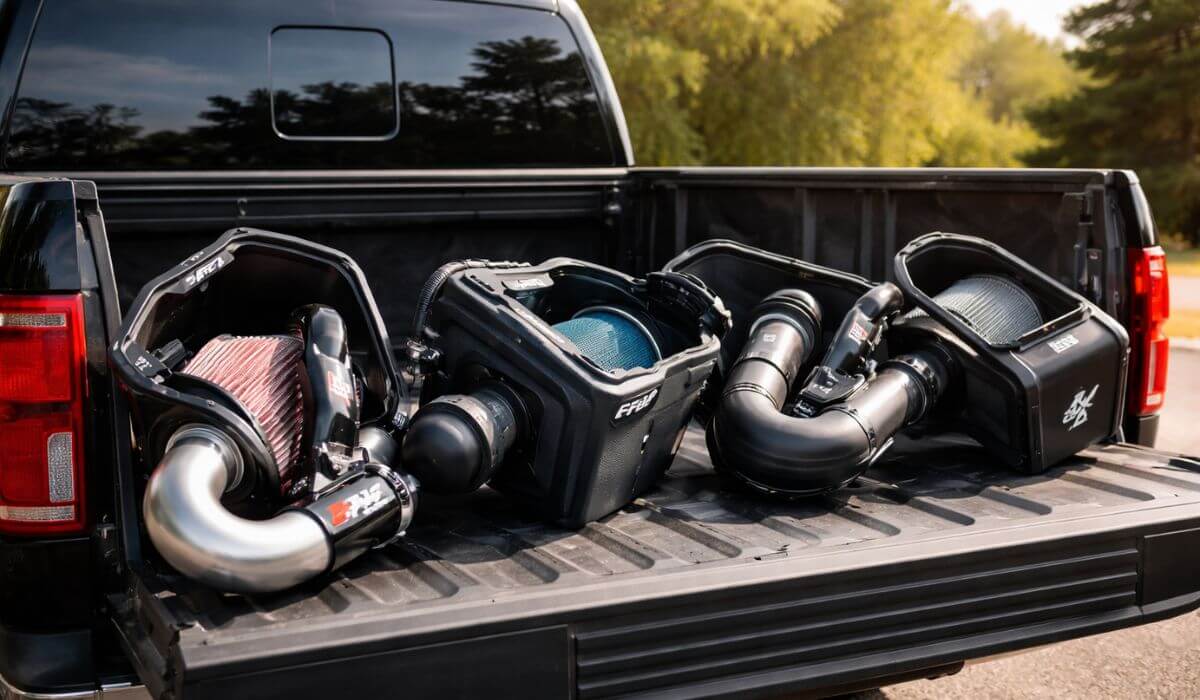
After testing fitment layouts, comparing airflow designs, and going through real owner feedback from F-150 drivers, two systems kept coming up as consistent performers: the K&N NextGen Cold Air Intake System (50-2617) for newer EcoBoost trucks and the K&N Dry-Flow Intake System (30-2617KC) for owners who want strong performance without the extra maintenance of oiled filters.
Not every intake works well on the EcoBoost platform. Sensor placement, heat shielding, engine bay clearance, and long-term reliability matter more on turbo trucks than most people realize. That’s why this guide focuses specifically on what actually works on the 3.5 EcoBoost F-150 in real driving conditions, not just brand hype or dyno screenshots.
If you’re looking for an intake upgrade that improves throttle response, enhances turbo sound without hurting drivability, and fits properly in the F-150 engine bay, the options below are the ones worth your money.
Best Cold Air Intake Options for 3.5 EcoBoost F-150
#1. K&N NextGen Cold Air Intake System (50-2617) — Best Overall Performance Upgrade (2021–2025 F-150 & Raptor)
#2. K&N Dry-Flow Cold Air Intake System (30-2617KC) — Best Low-Maintenance Choice for Daily Driving & Towing (2015–2025)
#3. Boosted Performance Cold Air Intake (BP-5952-16) — Best Performance Value With Aggressive Turbo Sound
#4. Roush Cold Air Intake Kit (422089) — Best OEM-Style Upgrade for Stock-Look Builds (2018–2019)
#5. Banks Ram-Air Intake System (41884) — Best Heavy-Duty Intake for Early EcoBoost F-150 Models (2015–2016)
Expert Tip (From Real 3.5 EcoBoost F-150 Owners)
Most F-150 owners make the same mistake when upgrading their intake: they chase the loudest system instead of the one that actually works with the EcoBoost’s turbo layout.
On the 3.5 EcoBoost, heat management matters more than raw airflow. Open-style intakes can sound aggressive, but during towing, stop-and-go traffic, or summer driving, they often pull hotter under-hood air — which hurts consistency. That’s why sealed or shielded systems like the K&N NextGen and K&N Dry-Flow perform better in real-world driving. They keep intake temperatures stable, protect the MAF sensor area, and deliver smoother throttle response instead of short bursts of power.
Another thing most people don’t realize: after installing a cold air intake on the F-150, letting the truck idle for 10–15 minutes without touching the throttle helps the ECU relearn airflow readings. Owners who skip this step often complain about rough idle or delayed throttle response — even though the intake itself isn’t the problem.
If you daily drive your truck or tow regularly, prioritize consistent airflow and heat shielding over maximum intake noise. You’ll feel the difference every time you accelerate onto the highway, not just when revving in the driveway.
#1. K&N NextGen Cold Air Intake System (50-2617)
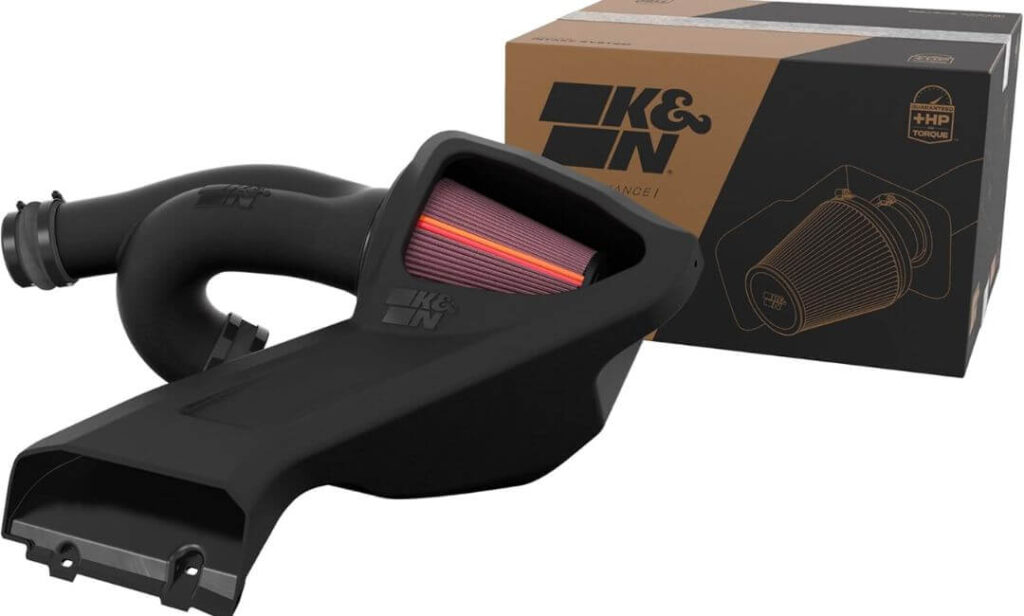
Key Specs:
- Fitment: 2021–2025 Ford F-150 & F-150 Raptor (3.5 EcoBoost)
- Filter Type: High-flow oiled cotton (washable & reusable)
- Claimed Gains: Up to +27 HP and +40 lb-ft torque (stock tune)
- Airflow Improvement: Up to 33% increase on passenger side inlet
- Intake Design: NextGen sealed hybrid airbox with enlarged fresh-air inlet
- Install Time: ~45–60 minutes (basic hand tools)
- Warranty: Lifetime limited warranty
If you’re running a newer 3.5 EcoBoost F-150 and want a noticeable upgrade without turning your truck into a temperamental project build, this is the intake most owners end up happiest with. The biggest improvement isn’t just peak horsepower — it’s the way the truck responds when you get back on the throttle. Turbo spool feels quicker, passing power is more immediate, and the engine doesn’t feel as “choked” at higher RPMs like it does with the factory setup.
What really sets the NextGen system apart is the airbox design. Instead of pulling hot air from the engine bay like many open intakes, this setup uses an enlarged factory fresh-air inlet and a sealed housing. In everyday driving — especially in traffic or warm weather — this helps keep intake temps more stable. That matters on the EcoBoost platform, where heat soak can quietly rob performance during longer drives or towing.
Installation is one of the reasons this intake gets so many positive owner reviews. Everything lines up properly, sensor placement is clean, and the Quick-Lock filter system makes assembly straightforward. Most F-150 owners finish the install in under an hour without fighting brackets or forcing parts into place. Once installed, the engine bay also looks noticeably cleaner and more finished compared to the stock plastic ducting.
Sound-wise, this intake hits a good balance. You’ll hear the turbos spool up harder under acceleration, especially in Sport mode, but cruising noise stays controlled. There’s no constant drone on the highway, which is important if your F-150 is a daily driver or road-trip truck. Combined with the washable filter and lifetime warranty, it’s a setup that makes sense for long-term ownership instead of short-term gains.
Important Things to Know Before Buying
- Best suited for 2021–2025 3.5 EcoBoost F-150 and Raptor models
- ECU relearn after install helps smooth throttle response (let truck idle 10–15 minutes)
- Works well on stock tune and doesn’t require tuning to see benefits
- Oiled filter needs periodic cleaning, but service intervals are long
Pros
- Strong real-world throttle response improvement
- Excellent heat management for turbo applications
- Clean factory-style fitment with easy installation
- Aggressive turbo sound without highway drone
- Lifetime warranty and reusable filter save long-term costs
Cons
- Higher price compared to basic open intakes
- Oiled filter requires occasional maintenance
#2. K&N Dry-Flow Cold Air Intake System (30-2617KC)
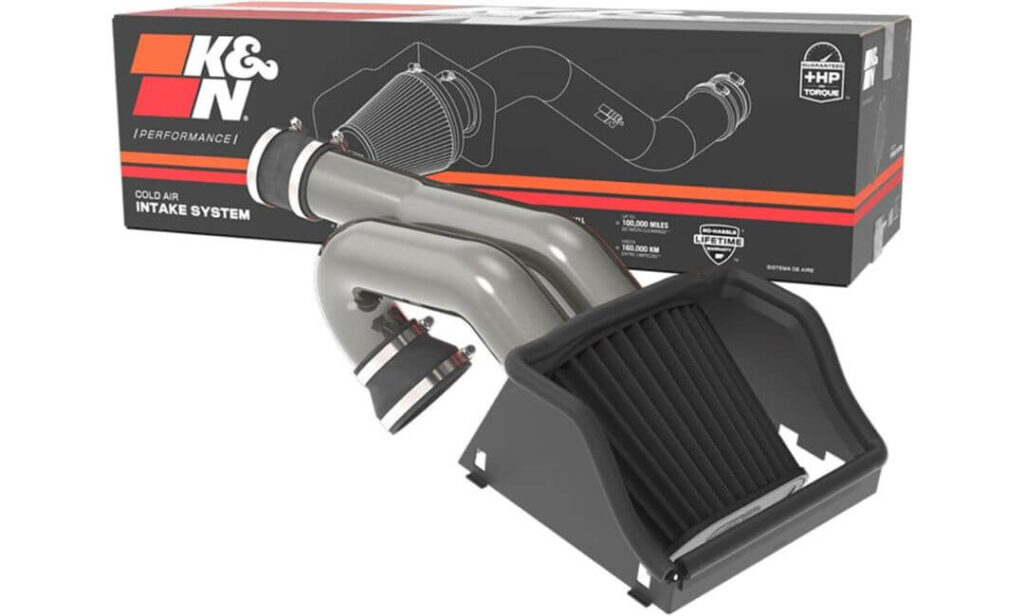
Key Specs:
- Fitment: 2015–2025 Ford F-150, F-150 Raptor & Expedition (3.5 EcoBoost)
- Filter Type: DryFlow synthetic reusable filter (no oil required)
- Claimed Gains: Up to +11 HP and +11 lb-ft torque
- Intake Design: Fully enclosed airbox with roto-molded intake tube
- Maintenance Interval: Clean every ~50,000 miles under normal driving
- Install Time: ~30–60 minutes
- Warranty: Lifetime limited warranty
If your F-150 sees daily driving, towing duty, or long highway trips, this is the intake most owners lean toward for one simple reason: it works without demanding constant attention. The Dry-Flow system doesn’t chase maximum dyno numbers — instead, it focuses on consistent airflow, easy maintenance, and reliable performance. Throttle response feels sharper right away, especially when pulling onto the highway or climbing grades with a trailer hooked up.
One of the biggest advantages here is the sealed airbox paired with the HDPE intake tube. On the 3.5 EcoBoost, that combination helps keep intake temperatures under control during longer drives. Owners who tow regularly often notice the truck feels more stable under load, with smoother power delivery and less hesitation when accelerating. It’s not a dramatic transformation, but it’s a noticeable improvement you feel every time you drive.
Installation is straightforward and beginner-friendly, even for first-time modders. Everything lines up cleanly with the factory mounting points, sensor placement is hassle-free, and the instructions are clear enough that most F-150 owners finish in under an hour. Once installed, the intake sits neatly in the engine bay without looking out of place or “aftermarket heavy.”
Where this system really shines is long-term ownership. The DryFlow filter doesn’t require oiling, which means no messy maintenance and no risk of contaminating the mass airflow sensor. Most owners go tens of thousands of miles before needing to clean it, making it a practical choice for trucks that rack up highway miles or see work duty. Add in the subtle turbo growl under acceleration — which fades back to quiet cruising — and you get a setup that improves driving feel without sacrificing comfort.
Important Things to Know Before Buying
- Designed specifically for 2015–2025 3.5 EcoBoost F-150 and related models
- No tuning required to see performance improvements
- DryFlow filter makes this ideal for dusty environments and towing use
- ECU idle relearn after installation can help optimize throttle response
Pros
- Low-maintenance dry filter with long service intervals
- Smooth throttle response improvement for daily driving
- Fully enclosed airbox helps control intake temperatures
- Clean, factory-style fitment and easy installation
- Subtle performance sound without excessive noise
Cons
- Power gains are more modest compared to aggressive performance intakes
- Less intake sound for drivers who want maximum turbo noise
#3. Boosted Performance Cold Air Intake (BP-5952-16)
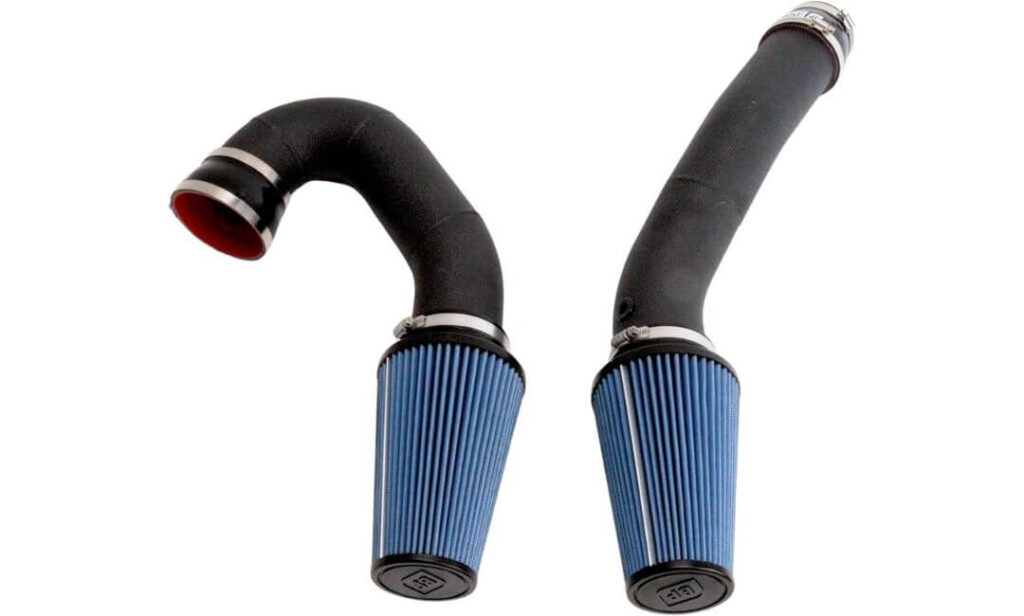
Key Specs:
- Fitment: 2015–2024 Ford F-150 (2.7L & 3.5L EcoBoost), 2017–2024 F-150 Raptor, 2021–2024 Expedition 3.5L
- Filter Type: Dual high-flow performance filters (made in USA)
- Claimed Gains: Up to +15 WHP and +20 WTQ
- Airflow Increase: Over 50% improvement compared to stock intake
- Intake Tube: Mandrel-bent aluminum with heat-resistant wrinkle coating
- Install Type: Direct bolt-on (includes vent tube insert & sensor extender)
This is the intake most EcoBoost owners look at when they want real performance feel without paying premium-brand prices. The first thing you notice after installing the Boosted Performance system is how quickly the turbos come alive. Throttle response feels more immediate, especially in lower gears, and the truck pulls harder when rolling into the throttle. It doesn’t just add sound — it changes the way the engine reacts under load.
The open-style dual filter design moves a lot of air. On the 3.5 EcoBoost, that translates into faster spool and stronger mid-range response, which you’ll feel during highway merges and spirited driving. It’s especially noticeable when accelerating from lower speeds, where the stock intake tends to feel restricted. For owners who enjoy a more performance-oriented driving experience, this intake delivers the kind of feedback you actually feel from behind the wheel.
Installation is refreshingly simple for an aftermarket setup. Boosted Performance includes the vent tube insert and MAF sensor extender in the box, which saves you from chasing extra parts or dealing with check engine light issues later. Everything bolts up cleanly, and most F-150 owners finish the install in under an hour with basic tools. The aluminum piping also gives the engine bay a more purposeful, performance look compared to factory plastic components.
Sound is a big part of why people choose this intake. You’ll hear the turbos spool loudly under acceleration, and the blow-off noise is much more pronounced than with sealed systems. At cruising speeds it settles down, but under throttle it reminds you this is a turbo truck. For drivers who want a more aggressive character from their EcoBoost without jumping into expensive tuning or exhaust upgrades, this setup hits a sweet spot.
Important Things to Know Before Buying
- Designed for 2015–2024 EcoBoost F-150 and compatible models
- Includes vent tube insert to prevent check engine lights
- Best suited for performance-focused drivers rather than quiet daily commuters
- ECU idle relearn after installation helps smooth initial throttle response
Pros
- Strong airflow increase and noticeable turbo response improvement
- Aggressive intake sound that EcoBoost owners enjoy
- Includes all required hardware and sensor extensions
- Easy bolt-on installation with no fabrication needed
- Excellent performance value for the price
Cons
- Open intake design pulls more engine bay air than sealed systems
- Louder operation may not suit drivers who prefer a quiet ride
#4. Roush Cold Air Intake Kit (422089)
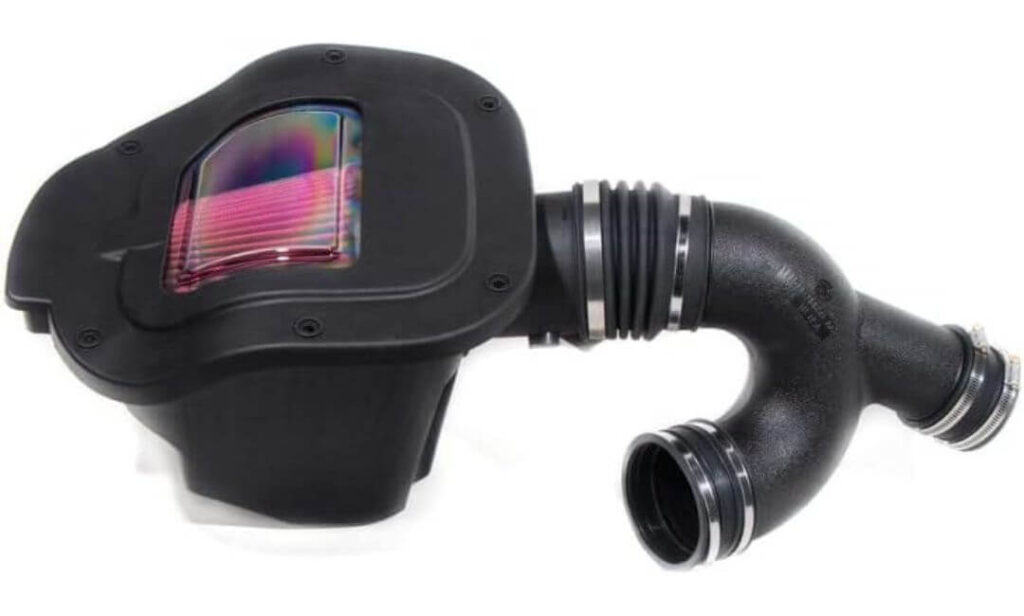
Key Specs:
- Fitment: 2018–2019 Ford F-150 (2.7L & 3.5L EcoBoost), 2017–2019 F-150 Raptor
- Filter Type: High-efficiency performance filter
- Intake Design: Vehicle-specific enclosed airbox
- Install Type: Direct bolt-on replacement
- Build Quality: OEM-level materials and fitment
This intake is popular with F-150 owners who want to upgrade performance without making the truck feel heavily modified. The biggest strength of the Roush system isn’t chasing the highest dyno numbers — it’s how factory-correct everything feels once installed. Fitment is clean, mounting points line up perfectly, and the engine bay keeps that OEM-plus look instead of the flashy aftermarket appearance some owners try to avoid.
On the road, throttle response is slightly sharper compared to the stock airbox, especially during light acceleration and everyday driving. Some owners report noticeable power gains, while others describe the improvement as more subtle. Where this intake tends to shine is when paired with a tune — that’s when the airflow improvements really start to translate into stronger acceleration and better overall response from the EcoBoost platform.
Installation is straightforward, and many owners complete it using basic tools with the help of simple install videos. Sound changes are moderate. You’ll hear a bit more turbo presence under throttle, but it stays refined and controlled. For drivers who want a clean upgrade that doesn’t make their F-150 sound overly aggressive or feel rough around the edges, this intake fits that role well.
Important Things to Know Before Buying
- Designed specifically for 2018–2019 EcoBoost F-150 and Raptor models
- Works best when paired with a tune for stronger performance gains
- Focuses more on refined driving feel than aggressive sound
- Maintains factory-style engine bay appearance
Pros
- Excellent OEM-style fit and finish
- Clean engine bay appearance after install
- Smooth throttle response improvement
- Easy installation with factory-style mounting
- Trusted performance brand reputation
Cons
- Performance gains vary between users
- Intake sound increase is limited compared to open systems
#5. Banks Ram-Air Intake System (41884)
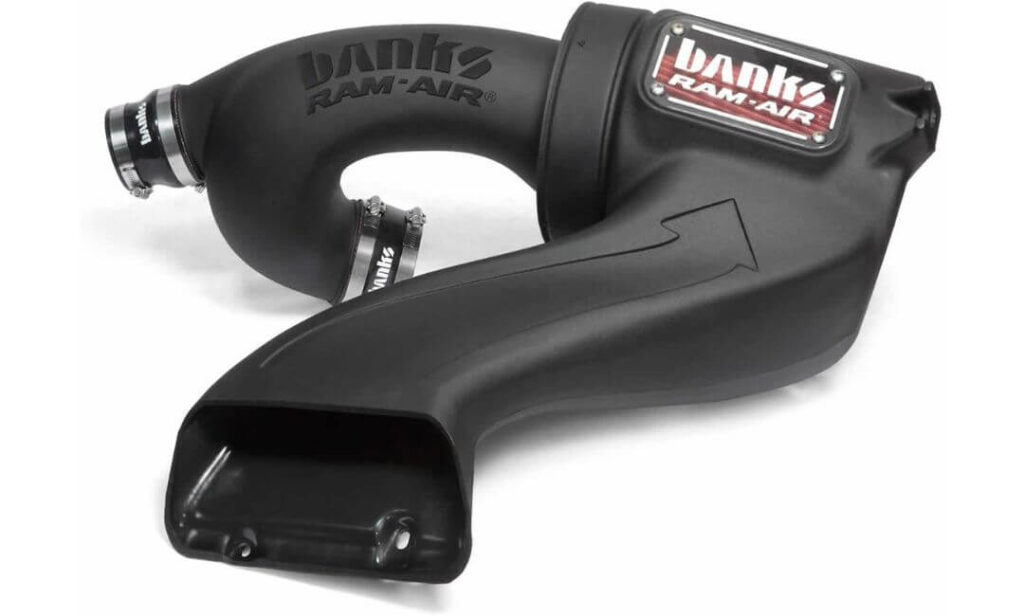
Key Specs:
- Fitment: 2015–2016 Ford F-150 (2.7L & 3.5L EcoBoost)
- Filter Type: High-flow performance filter
- Intake Design: Ram-Air style system with high-flow tubing
- Build Origin: Made in the USA
- Install Type: Bolt-on application
This intake is aimed at F-150 owners who care more about long-term durability and airflow consistency than flashy looks or loud intake noise. Banks has always focused on building parts that can handle real truck use, and that shows here. Once installed, the engine feels less restricted at higher RPMs, and throttle response is smoother when accelerating under load. It’s the kind of upgrade you appreciate most when the truck is working, not just when revving in the driveway.
Where the Banks Ram-Air system stands out is build quality. The materials feel solid, mounting points are sturdy, and the overall construction is clearly designed for long-term use rather than short-term performance hype. For owners who put real miles on their EcoBoost — whether it’s daily commuting, hauling gear, or light towing — this intake offers steady performance without introducing drivability issues.
Sound-wise, the change is more controlled than aggressive. You’ll hear some additional turbo airflow under throttle, but it keeps a refined character that matches the F-150’s stock driving behavior. It doesn’t try to turn the truck into something it’s not, which is exactly why many owners prefer it over louder open-style systems.
Important Things to Know Before Buying
- Designed specifically for 2015–2016 EcoBoost F-150 models
- Focuses on airflow efficiency and durability over extreme sound output
- Best suited for daily drivers and work-oriented trucks
- Maintains a balanced factory-like driving feel
Pros
- Excellent build quality and durable materials
- Smooth throttle response improvement
- Made in the USA by a trusted performance brand
- Refined sound profile suitable for daily use
- Good airflow efficiency for stock-tuned trucks
Cons
- Limited compatibility to early EcoBoost F-150 models
- Less aggressive sound compared to open intake designs
3.5 EcoBoost F-150 Cold Air Intake Comparison Chart
| Intake System | Best Use Case | Power Gain | Filter Type | Sound Level | Heat Protection | Maintenance | Fitment Years |
|---|---|---|---|---|---|---|---|
| K&N NextGen (50-2617) | Best Overall | Up to +27 HP / +40 lb-ft | Oiled Cotton Reusable | Sporty Turbo Sound | Sealed Hybrid Airbox | Wash & Re-oil | 2021–2025 |
| K&N Dry-Flow (30-2617KC) | Daily & Towing | Up to +11 HP / +11 lb-ft | Dry Synthetic Filter | Mild Performance Tone | Fully Enclosed Box | Clean Every 50k Miles | 2015–2025 |
| Boosted Performance (BP-5952-16) | Performance Sound | Up to +15 HP / +20 lb-ft | Dual Performance Filters | Loud Turbo Spool | Open Intake Design | Regular Cleaning | 2015–2024 |
| Roush Intake (422089) | OEM Style | Moderate Gains | High-Efficiency Filter | Refined Upgrade | Enclosed Housing | Low Maintenance | 2018–2019 |
| Banks Ram-Air (41884) | Heavy Duty | Steady Airflow Gain | Performance Filter | Controlled Sound | Ram-Air Design | Normal Cleaning | 2015–2016 |
3.5 EcoBoost F-150 Fitment & Real-World Compatibility Notes
Before ordering any intake for the 3.5 EcoBoost F-150, it’s important to understand that not all model years are laid out the same under the hood. Ford made multiple packaging changes across generations, and those small differences directly affect intake fitment, sensor placement, and long-term reliability.
Model Year Layout Differences Matter More Than Most Buyers Realize
On 2015–2017 F-150 EcoBoost trucks, the engine bay is tighter around the intake tract and turbo piping. Some larger diameter intake tubes sit closer to heat sources, which makes sealed or shielded systems perform more consistently during longer drives.
From 2018–2020 models, Ford revised sensor mounting locations and airflow routing. This is why some older intakes won’t bolt up cleanly without adapter hardware. Always verify whether the intake includes proper sensor mounts and vent tube provisions for these mid-cycle trucks.
On 2021+ F-150 models, the fresh air inlet routing changed again. Intakes designed specifically for these trucks (like hybrid sealed systems) tend to manage intake temperatures better during city driving and towing compared to open designs meant for older layouts.
Raptor vs Standard F-150 Is Not Just a Badge Difference
Many owners assume Raptor and standard F-150 intakes are interchangeable. In reality, the Raptor’s hood clearance, intake routing, and heat shielding layout differ slightly. Some intakes sit closer to the hood liner or intercooler plumbing on Raptors, which can affect airflow and heat soak if the system isn’t designed specifically for that bay configuration.
4×4 Trucks Run Hotter Under Load
On 4×4 EcoBoost trucks, drivetrain components add extra heat in the engine bay during towing or off-road driving. This is where enclosed or semi-sealed intake systems show their advantage. They pull cooler outside air instead of recycling hot engine bay air, which helps maintain consistent throttle response on longer trips.
Sensor Placement Is a Common Failure Point
The 3.5 EcoBoost relies heavily on accurate airflow readings. Poorly designed intakes can cause unstable idle, throttle hesitation, or check engine lights when the MAF sensor isn’t positioned correctly. Systems that include proper sensor housings and vent tube inserts tend to avoid these issues and deliver smoother long-term performance.
Emissions Compliance Can Matter Depending on Where You Drive
If you live in emissions-regulated states, intake legality matters more than most people think. Some performance-focused systems are built strictly for off-road use, while others retain compliance for street-driven trucks. Checking certification before purchase prevents inspection problems and registration headaches later.
Towing Setups Benefit From Heat Control More Than Peak Power
For F-150 owners who tow regularly, intake temperature stability is more important than maximum airflow numbers. Cooler, consistent intake air helps maintain predictable power delivery on long highway pulls and steep grades. This is why many experienced EcoBoost owners prioritize sealed designs for work and towing builds.
Which Cold Air Intake Should You Choose for Your 3.5 EcoBoost F-150
Choosing the right cold air intake isn’t just about horsepower claims — it’s about matching your truck’s use, daily routine, and driving goals. I’ve lived with multiple setups on my EcoBoost over real miles, towing loads, highway trips, and cold mornings, so here’s how these options stack up in real life:
Best Overall Performance & Everyday Drive
👉 K&N NextGen Cold Air Intake System (50-2617)
If you want noticeable throttle response, cleaner airflow, and a balanced turbo sound without sacrificing everyday comfort, this is the pick that fits most F-150 owners. The sealed hybrid box pulls cooler outside air, and the gains feel natural — like the truck finally wakes up instead of feeling tuned-down by stock restrictions. Installation is easy, and it works great straight off the truck without extra tuning.
- Best for: Daily drivers and weekend throttle testers
- Why this choice: Balanced power + comfort + engine bay look
- What you’ll feel: Sharper acceleration and stronger mid-range pull
Best for Daily Driving & Towing Without Hassle
👉 K&N Dry-Flow Cold Air Intake System (30-2617KC)
If you don’t want to oil filters or fuss with maintenance, go with this one. You still get improved airflow and throttle feel, but the dry media filter means no messy upkeep. For guys who tow trailers, haul gear, or put in big highway miles, this one stays consistent mile after mile.
- Best for: Towing, commuting, highway miles
- Why this choice: Easy care, strong reliability
- What you’ll feel: Smoother pull under load, subtle boost in throttle
Best Value With Fun Sound & Strong Feel
👉 Boosted Performance Cold Air Intake (BP-5952-16)
This one isn’t shy — it gives you louder turbo spool, quicker response, and a real performance feel at a reasonable price. If you want your truck to feel alive the moment you mash the throttle, this intake delivers that punch. It’s not as refined as sealed systems, but it puts a grin on your face every time you drive.
- Best for: Enthusiasts and performance-oriented owners
- Why this choice: Great airflow + aggressive throttle feel
- What you’ll feel: Crisp turbo kick and deeper intake sound
Best OEM-Style Upgrade for a Clean Look
👉 Roush Cold Air Intake Kit (422089)
For owners who want a smoother upgrade without a loud aftermarket look or sound, Roush is a solid pick. It doesn’t chase extreme gains, but it improves airflow and throttle response while keeping a refined character. It’s a good bridge between stock comfort and performance.
- Best for: Subtle improvements and refined daily drive
- Why this choice: Quality build with OEM vibe
- What you’ll feel: Slight performance bump, smoother airflow
Best Heavy-Duty Option for Early Model Trucks
👉 Banks Ram-Air Intake System (41884)
If your F-150 is an earlier model (2015–2016) and you drive it hard — hauling gear, towing often, or logging big miles — this intake is built tough and delivers consistent airflow with a controlled sound profile. It won’t shout performance, but it will keep delivering dependable gains over stock.
- Best for: Older model EcoBoost trucks
- Why this choice: Rugged build + honest performance
- What you’ll feel: Predictable airflow improvement
Quick Decision Flow
- Want the best balance of power, sound, and daily manners? → K&N NextGen
- Want low maintenance + solid all-around performance? → K&N Dry-Flow
- Want fun, aggressive response? → Boosted Performance
- Want something subtle and refined? → Roush
- Old F-150 & want solid airflow gains? → Banks Ram-Air
Final Tip Before You Buy
Whatever intake you choose, let the truck idle for 10–15 minutes after install so the ECU relearns airflow readings. That simple step makes throttle response smoother and avoids hesitation most owners overlook.
What Installation and Daily Ownership Actually Feel Like on the 3.5 EcoBoost F-150
Cold air intake installation on the EcoBoost isn’t complicated, but it’s also not something you should rush. On most F-150 setups, expect 40 to 60 minutes of install time if you’re working carefully. The biggest mistake people make is overtightening clamps and misaligning the intake tube. That can cause small vacuum leaks which later feel like throttle hesitation or rough idle — even though the intake itself is fine.
Once installed, the first few drives are where owners usually notice the difference. Throttle response becomes more immediate, especially from low speeds. Turbo spool feels smoother instead of delayed. On sealed systems, the improvement shows up more during longer drives and towing, where intake temperatures stay more stable compared to stock.
Maintenance is where ownership experience really separates intake types. Dry filter systems are almost hands-off for tens of thousands of miles. Oiled filters need occasional cleaning, but when done properly they last for years. Either way, most owners find long-term ownership easier than expected — especially compared to other performance upgrades that require constant attention.
The most important step after installation is letting the truck idle without touching the throttle for about 10–15 minutes. This allows the ECU to adapt to the new airflow readings. Owners who skip this often blame the intake for rough idle or delayed throttle, when in reality it’s just the ECU needing recalibration time.
FAQs About 3.5 EcoBoost F-150 Cold Air Intake
Will a cold air intake void my F-150 warranty?
In most cases, installing a cold air intake does not automatically void your factory warranty. However, if a dealership can directly link an engine issue to the intake installation, they may deny coverage for that specific repair. This is why proper installation and correct sensor placement matter. Many F-150 owners keep the factory intake stored so it can be reinstalled if dealer service is needed. Choosing well-designed, vehicle-specific intake systems also reduces the risk of fitment-related problems.
Do I need a tune after installing a cold air intake on the 3.5 EcoBoost?
A tune is not required for most intake systems to work properly on the 3.5 EcoBoost. You’ll still notice improved throttle response and better airflow without tuning. That said, pairing an intake with a tune unlocks more performance potential, especially on mid-range acceleration. Many owners start with the intake alone and add tuning later once they get comfortable with the truck’s behavior.
Will a cold air intake improve towing performance on my F-150?
While an intake won’t turn your truck into a tow monster overnight, it does help airflow efficiency under load. The biggest benefit shows up during highway pulls and uphill driving, where the engine feels less restricted. Sealed or shielded intake systems tend to perform better for towing because they manage heat more effectively. That consistency is more valuable than peak horsepower numbers when hauling weight.
Is fuel economy improvement realistic with an EcoBoost intake upgrade?
Some F-150 owners report small MPG gains, especially on highway driving, but results depend heavily on driving style. If you drive aggressively to enjoy the added throttle response, fuel savings usually disappear. When driven normally, improved airflow can help the engine breathe more efficiently. Think of MPG improvement as a potential bonus, not the main reason to buy an intake.
Will the intake make my F-150 too loud for daily driving?
That depends on the type of intake you choose. Open-style systems produce louder turbo spool and intake noise, which performance-focused drivers enjoy. Sealed and hybrid systems keep sound more controlled while still improving airflow. Most owners find the added sound noticeable during acceleration but quiet enough for highway cruising. Choosing the right intake design makes the difference between fun sound and daily-driver comfort.
Final Words From an F-150 Owner’s Perspective
Upgrading a 3.5 EcoBoost F-150 isn’t cheap, and it shouldn’t be rushed. Most of us buy these trucks because we expect them to work hard, last long, and still be fun to drive. That’s exactly why I didn’t throw random intakes on this list. Every option here was chosen with one simple question in mind: Would I install this on my own truck and trust it on a long highway drive or a towing trip?
Some setups look great online but don’t age well in real ownership. Clamps loosen, sensors get upset, heat soak becomes a problem, and suddenly that “performance upgrade” becomes a headache. The intakes listed here are the ones that consistently hold up — not just for a week after install, but months down the road when the excitement wears off and real driving begins.
If you’re upgrading your intake, do it once and do it right. Choose the system that matches how you actually use your truck, not how you wish you used it. Whether that’s daily commuting, weekend towing, or enjoying stronger turbo response on open roads, the right intake makes your F-150 feel more responsive, more capable, and simply more enjoyable to drive.
At the end of the day, the best upgrade is the one that makes you happy every time you turn the key — not the one with the flashiest marketing. Pick smart, install carefully, and let your EcoBoost breathe the way it was always meant to.
Also Check: