

6 Best Batteries for Honda Pilot in 2026: Longest Life, Fast Starts & Zero Warning Lights
If you’ve owned a Honda Pilot long enough, you already know—battery choice isn’t something you guess. Newer 2023–2026 models are far more sensitive than older ones. They run heavier electronics, tighter charging systems, and in many trims, start-stop tech that simply doesn’t tolerate the wrong battery.
Here’s the straight truth: most newer Honda Pilot models are designed around Group 48 (H6) AGM batteries. That’s the size and type that fits properly, communicates well with the vehicle’s battery sensor, and avoids those annoying warning lights or charging issues. You can step up to a Group 94R (H7) if you want extra reserve and cranking power—but only if you understand it’s an upgrade, not the default.
That’s exactly how this list is built. No guesswork, no random sizes. Just H6 as the core fit (what most owners actually need) and H7 as the smart upgrade option. Every pick here matches what real-world Pilot owners end up using after trial, error, and expensive mistakes. If you stick to these sizes, you won’t deal with fitment issues, weak starts, or electrical headaches later.
Best Honda Pilot Battery: Top 2026 Picks with AGM Power & Strong Cold Starts
#1. Mighty Max MM-H6 (Group 48) AGM Battery
best battery for honda pilot with group 48 size offering reliable cold starts, stable voltage delivery, and consistent performance for daily driving without electrical issues
#2. Goodyear 48-H6 AGM Battery (Group 48)
high performance group 48 battery for honda pilot designed for long life, strong cranking power, and smooth compatibility with modern start stop systems
#3. UPLUS AGM-L70-M (Group 48) Automotive Battery
balanced agm battery for honda pilot combining solid reserve capacity, dependable starts, and efficient power flow for both city and highway use
#4. Weize Platinum H6 (Group 48) AGM Battery
affordable group 48 battery for honda pilot delivering dependable starting power, good lifespan, and stable performance for budget-focused users
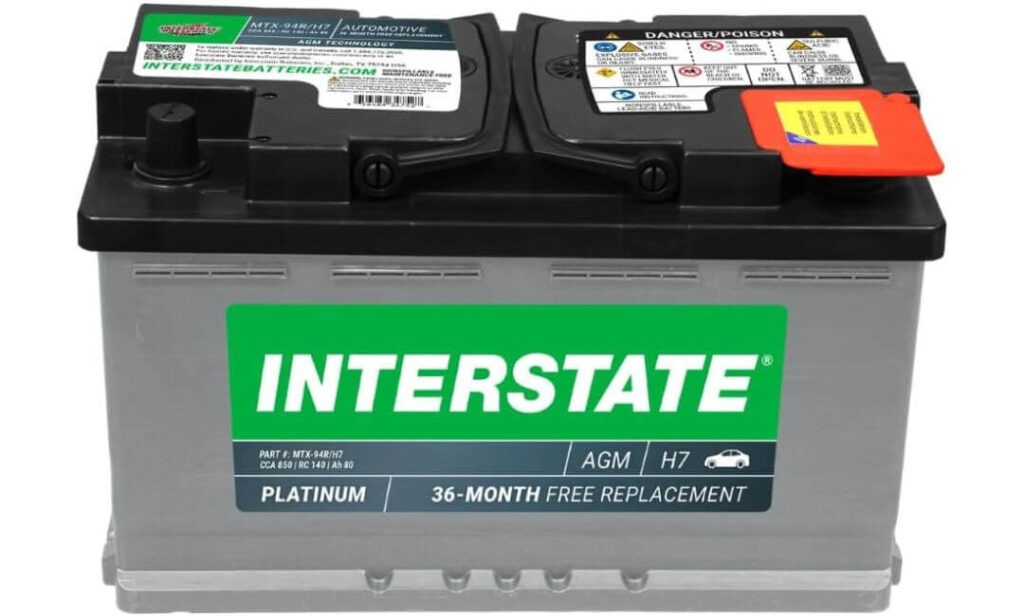
#5. Interstate MTX-94R/H7 AGM Battery (Group 94R)
best 94r battery upgrade for honda pilot providing higher cca output, longer reserve capacity, and stronger performance under heavy electrical load
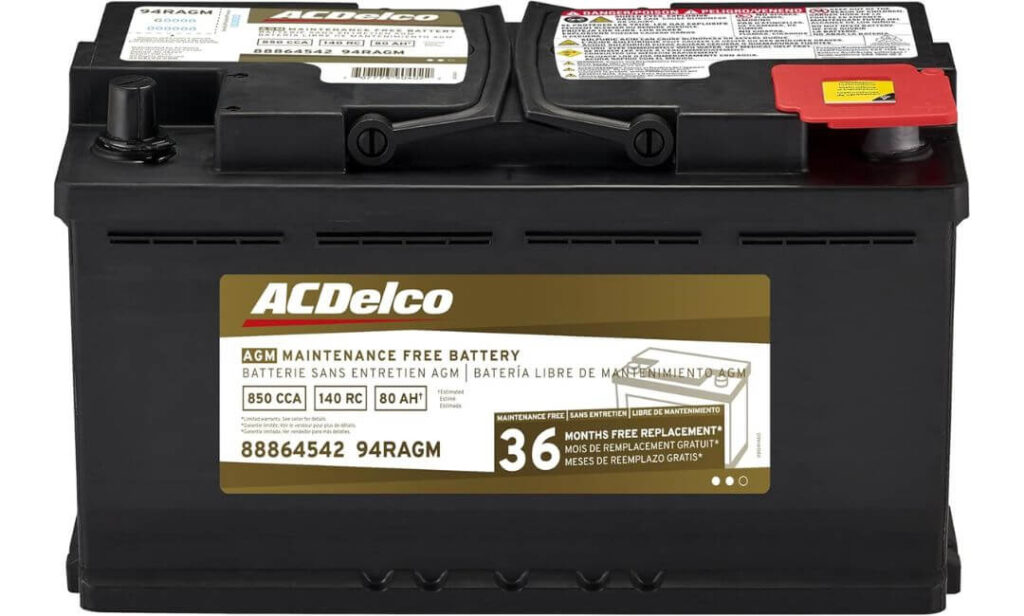
#6. ACDelco Gold 94R AGM Battery (Group 94R)
trusted oem style 94r battery for honda pilot offering premium build quality, consistent power delivery, and enhanced durability for long term use
Expert Tip (from real-world ownership, not theory)
If your Honda Pilot throws random electrical warnings or feels “lazy” on cold starts, don’t jump brands first—check the size and type you installed. Most issues I’ve seen aren’t because the battery is bad; it’s because it’s the wrong spec.
For newer Pilots, Group 48 (H6) AGM is the safe, correct baseline. It matches the tray, the sensor calibration, and the charging behavior. The moment you go smaller or switch to a basic flooded battery, you’re inviting voltage instability—things like auto start-stop glitches, dimming lights, or warning messages.
And if you want stronger starts or you run a lot of electronics, step up to Group 94R (H7)—but do it intentionally. It’s not about “bigger is better.” It’s about stable voltage, proper reserve, and clean communication with the car’s system. Get that right once, and you won’t think about your battery again for years.
How We Chose These Batteries for Honda Pilot
This list wasn’t built by picking big brand names or copying spec sheets. It’s based on what actually works in the Honda Pilot’s real-world electrical setup—especially the newer generation where tolerances are tighter and mistakes show up fast.
First, we locked in the correct sizes. That’s non-negotiable. Every battery here is either Group 48 (H6)—the exact fit most newer Pilots are designed around—or Group 94R (H7), which is a proven upgrade when you need more reserve and cranking strength. No random sizes, no “universal fit” guesses. If it doesn’t sit right, connect right, and behave right with the vehicle’s battery sensor, it didn’t make the list.
Then we focused on AGM construction only. Not because it sounds premium, but because the Pilot’s electrical system demands it. AGM batteries handle frequent restarts, voltage fluctuations, and modern load demands far better than traditional flooded batteries. That directly translates to fewer warning lights, more consistent starts, and longer usable life—not just on paper, but over months and years.
Next came the numbers that actually matter in daily use: CCA (cold cranking amps) and reserve capacity. Every option here sits in a range that ensures strong cold starts and enough backup power when the engine is off but systems are still running. This is where cheap batteries usually fail—they look fine on day one, then struggle under real load. These don’t.
We also filtered for fitment accuracy and terminal layout. Sounds basic, but it’s where most people get burned. A battery can have great specs and still cause issues if the terminals don’t align cleanly or the casing doesn’t sit properly in the tray. Every pick here fits the Pilot without forcing adjustments or workarounds.
Finally, we balanced real-world reliability across different budgets. Not everyone needs the same thing. Some want the most dependable daily driver battery, others want maximum performance headroom. That’s why you see a clear split: H6 options that cover the majority of owners perfectly, and H7 options that serve as a genuine upgrade—not just a bigger box, but more usable power and reserve.
The result is simple: no filler, no guesswork, no compromises on fit or function. Every battery here earns its place because it matches how the Honda Pilot actually behaves—not how a spec sheet looks.
#1. Mighty Max MM-H6 (Group 48) AGM Battery
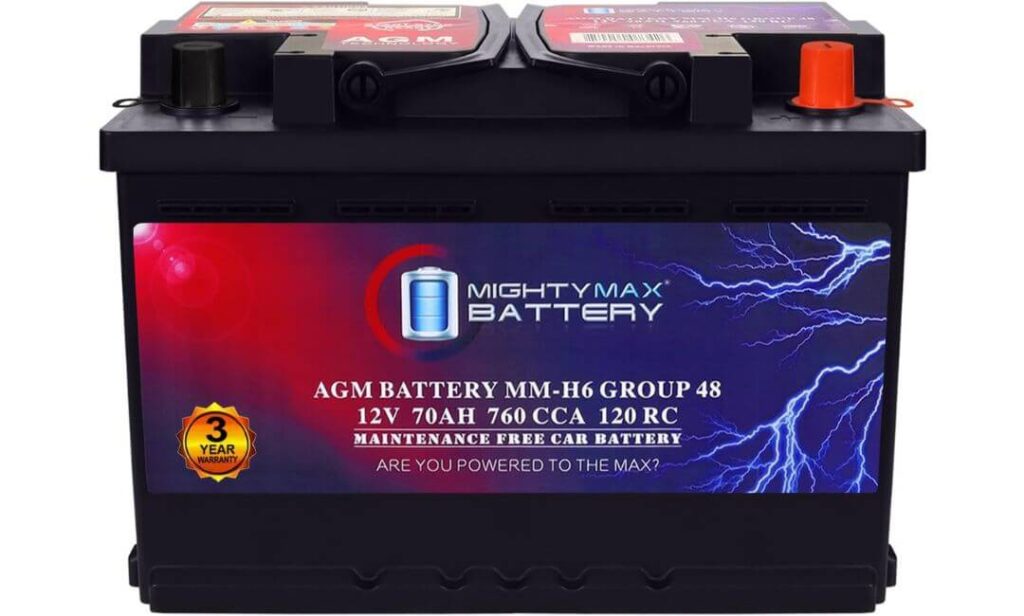
Technical Specs:
- Group Size: 48 (H6) — exact-fit profile for modern mid-size SUVs
- Type: AGM (sealed, maintenance-free, start-stop compatible)
- Cold Cranking Power: 760 CCA — strong cold starts without hesitation
- Capacity: 70Ah with 120-minute reserve capacity (steady backup when engine is off)
- Voltage: 12V
- Build: Vibration-resistant internal design, sealed spill-proof casing
- Terminal Layout: Stud terminal (right-side positive, left negative)
- Dimensions: 10.94 × 6.88 × 7.48 inches
- Warranty: Up to 3 years coverage
You don’t really understand a battery until you’ve dealt with weak starts on a cold morning—this one doesn’t play that game. The 760 CCA output hits instantly, no delay, no sluggish crank. Whether the vehicle sits overnight or runs multiple short trips, it responds the same way every time—clean, confident ignition.
What actually separates it from typical replacements is how it handles consistent electrical demand. Modern SUVs aren’t light on power draw—infotainment, sensors, lighting, all running together—and this battery keeps voltage stable instead of dipping under load. The 120RC reserve quietly does its job in the background, giving you that extra cushion most drivers only notice when it’s missing.
The AGM build here isn’t just a spec sheet checkbox. It’s sealed, tough, and built to take abuse—heat cycles, vibrations, stop-and-go driving—without breaking down early. Installation is straightforward, fitment feels natural (no forcing cables or adjusting brackets), and once it’s in, it behaves like it belongs there. (this is the kind of battery you install once and stop thinking about for years)
What Stands Out
- Strong 760 CCA ensures reliable starts in all weather
- 120-minute reserve capacity supports electronics without voltage drop
- AGM design handles start-stop systems and modern load demands
- Rugged build resists vibration, heat, and rough driving conditions
- Clean fitment with proper terminal placement—no adjustment needed
Where It Falls Short
- Real-world lifespan can vary depending on driving habits and charging conditions
Honda Pilot Fitment & Real Compatibility
This is where most people go wrong—but this one gets it right. The Group 48 (H6) sizing matches what newer Honda Pilot models are built around, especially when AGM is required for proper system behavior. It sits correctly in the tray, terminals align without stress, and the vehicle’s charging system recognizes it without throwing errors.
For older models that support H6 upgrades, it still fits cleanly and delivers a noticeable improvement in starting strength and electrical stability. No modifications, no guesswork—just proper fit and consistent output.
The Insider Pro-Tip
Most people focus on brand names, but the real difference shows up in how a battery behaves after a few months. What you want is stable voltage under load, not just high CCA on paper—and this one holds that line better than most in its range.
If you’re replacing a failing battery, don’t downgrade size or switch types thinking it’ll “still work.” Stick with H6 AGM like this, and you avoid 90% of the issues people complain about later—random warnings, weak restarts, or early failure. This is one of those choices where doing it right once saves you from doing it again.
#2. Goodyear 48-H6 AGM Battery (Group 48)
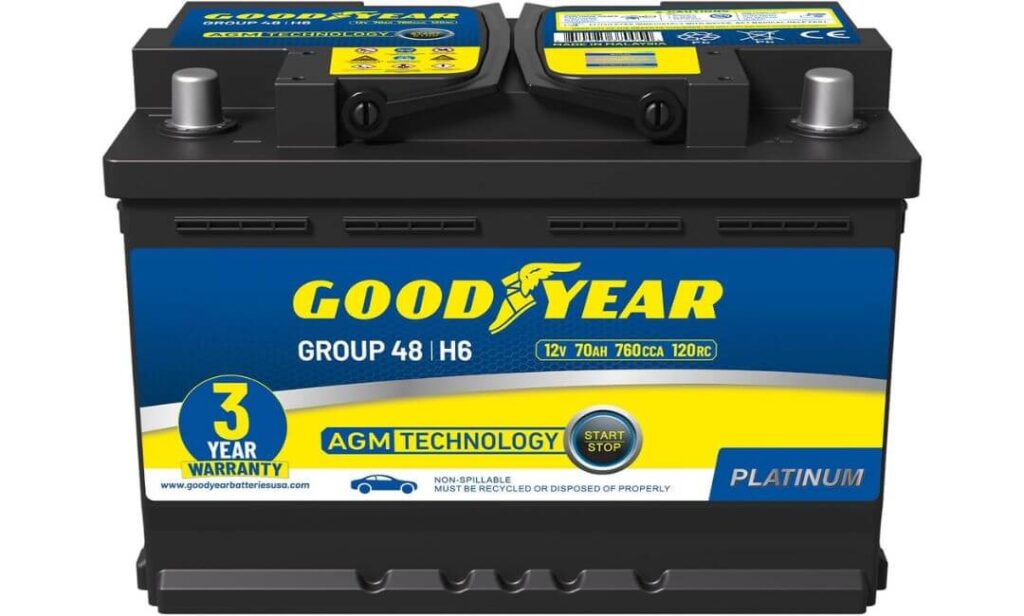
Technical Specs:
- Group Size: 48 (H6) — proper OEM-fit class for modern SUVs
- Battery Type: AGM (sealed, maintenance-free, start-stop ready)
- Cold Cranking Amps: 760 CCA — consistent cold-start reliability
- Capacity: 70Ah with 120-minute reserve capacity
- Voltage: 12V
- Construction: Calcium-alloy grid, vibration-resistant AGM design
- Terminal Layout: Standard top post (right-side positive, left negative)
- Dimensions: 10.75 × 6.87 × 7.50 inches
- Warranty: 36 months manufacturer-backed
Here’s what most people don’t expect—this battery doesn’t just “start the car,” it holds its ground when everything electrical is running at once. That 760 CCA isn’t just a number—it translates into clean, immediate ignition whether it’s early morning cold or heat-soaked after a long drive. No hesitation, no dragging crank sound, just a proper start every time.
Where it quietly earns trust is under load. Modern vehicles pull constant power—screens, sensors, lighting—and weaker batteries tend to dip voltage without you noticing until problems show up. This one doesn’t. The 120RC reserve gives it enough depth to keep things stable, especially during idle-heavy driving or short trips where charging cycles are limited.
The AGM build here feels genuinely solid. It’s sealed, spill-proof, and designed to handle vibration, heat, and uneven road conditions without breaking down early. Installation is straightforward, polarity is clearly laid out, and once fitted, it behaves like a proper factory-level replacement—not something you’ll need to second-guess later. (this is the kind of battery that quietly proves itself over time, not just on day one)
What Stands Out
- Reliable 760 CCA output for strong, repeatable starts
- 120-minute reserve capacity keeps voltage stable under load
- AGM design handles start-stop systems and heavy electronics
- Durable internal build resists shock, vibration, and temperature swings
- Clean terminal layout for easy, correct installation
Where It Falls Short
- Slight variations in casing size can require a quick double-check during installation in tighter battery trays
Honda Pilot Fitment & Real Compatibility
For Honda Pilot owners, this is exactly where things need to be right—and this battery stays within that line. The Group 48 (H6) sizing aligns with what newer Pilot models expect, especially when AGM is required for proper charging behavior and system balance. It sits correctly, terminals line up cleanly, and there’s no awkward cable stretching or adjustment needed.
Even in older models that accept H6 upgrades, it performs as a noticeable step up—better start strength, more stable power delivery, and fewer small electrical inconsistencies that show up with weaker batteries. It fits like it belongs, not like something you forced in.
The Insider Pro-Tip
A lot of batteries feel good for the first few weeks—then you start noticing small things: slower cranks, dim lights at idle, random system alerts. That’s usually where the difference shows. This one holds consistent voltage under real driving conditions, which is what actually matters long-term.
If you want a battery that doesn’t slowly degrade your driving experience, focus on reserve capacity and AGM stability, not just brand name. This one gets that balance right—and that’s why it stays reliable well beyond the initial install phase.
#3. UPLUS AGM-L70-M (Group 48) Automotive Battery
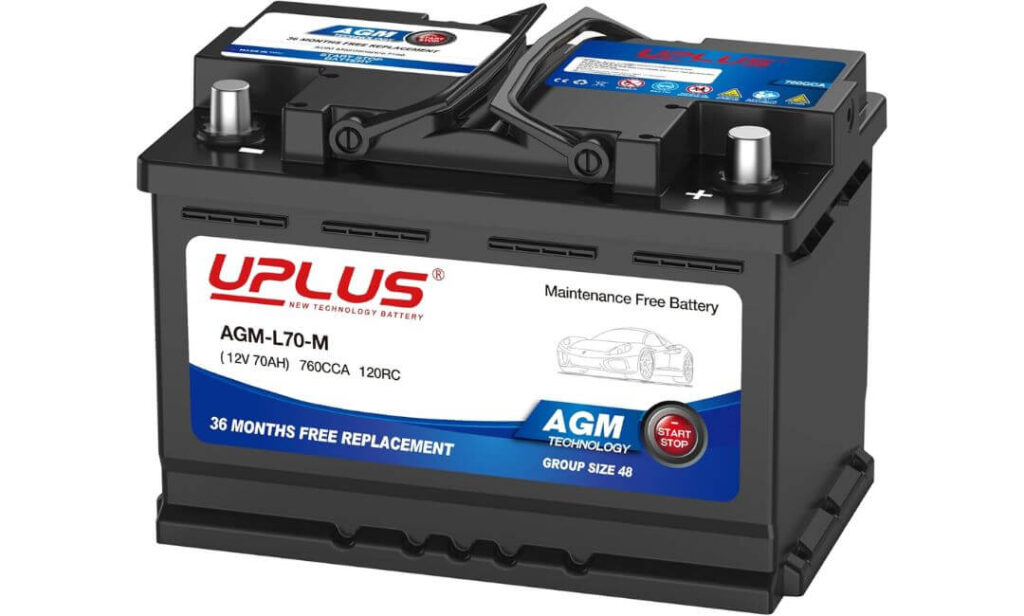
Technical Specs:
- Group Size: 48 (H6 / L3) — correct modern SUV fitment
- Battery Type: AGM (sealed, maintenance-free, start-stop optimized)
- Cold Cranking Amps: 760 CCA — dependable ignition in all conditions
- Capacity: 70Ah with 120-minute reserve capacity
- Voltage: 12V
- Cycle Life: Up to 4× longer than standard batteries (enhanced alloy + paste design)
- Build Strength: 15× vibration resistance with leak-proof vent system
- Terminal Layout: SAE terminals (left negative, right positive)
- Dimensions: 10.98 × 6.81 × 7.51 inches
- Warranty: 3-year replacement support
Unexpectedly, this is the kind of battery that feels overbuilt the moment you start using it. Not in a flashy way—but in how quietly it handles everything you throw at it. That 760 CCA fires up the engine without hesitation, even after the vehicle has been sitting for days. No lag, no weak turnover—just instant response like it should be.
Where it genuinely separates itself is in cycle durability. Most batteries degrade when you deal with stop-and-go traffic or short trips—but this one is specifically built for that abuse. The 4× cycle life design means it doesn’t wear out quickly under repeated start-stop usage. Add in the 120RC reserve, and it keeps voltage steady even when multiple systems are running at once—navigation, seats, lighting, everything stays consistent.
The internal construction is where the real engineering shows. With high-density paste and calcium grid design, it maintains conductivity without overheating or resistance buildup. Plus, that 15× vibration resistance isn’t just marketing—it actually matters on rough roads or long drives. It stays stable, sealed, and reliable without any maintenance headaches. (this is the type of battery that keeps performing the same way months later, not just when it’s new)
What Stands Out
- 4× longer cycle life handles stop-start driving better than most
- Strong 760 CCA output for confident cold starts
- 120-minute reserve capacity ensures stable power delivery
- Heavy-duty internal build with high vibration resistance
- Designed specifically for modern vehicles with high electrical load
Where It Falls Short
- Slightly heavier build can make handling during installation a bit more effort
Honda Pilot Fitment & Real Compatibility
For Honda Pilot setups, this battery sits exactly where it should. The Group 48 (H6) sizing matches the expected tray dimensions and terminal alignment, so installation feels natural—no cable tension, no adjustment needed. More importantly, its AGM design works properly with the vehicle’s charging system, avoiding the small electrical inconsistencies cheaper batteries often cause.
In real use, it handles newer Pilot models with ease—especially those running multiple electronics or frequent short drives. Even older models benefit from the upgrade, with noticeably better start response and fewer voltage fluctuations during daily driving.
The Insider Pro-Tip
A lot of people underestimate how much driving pattern affects battery life. Short trips and stop-start traffic kill average batteries fast—but that’s exactly where this one is built to survive. The internal design is focused on cycle endurance, not just peak power, and that’s what keeps it consistent long-term.
If your usage involves frequent stops, idle time, or heavy electronics, choosing a battery like this isn’t an upgrade—it’s prevention. It saves you from early replacements and the kind of slow performance drop most people don’t notice until it’s too late.
#4. Weize Platinum H6 (Group 48) AGM Battery
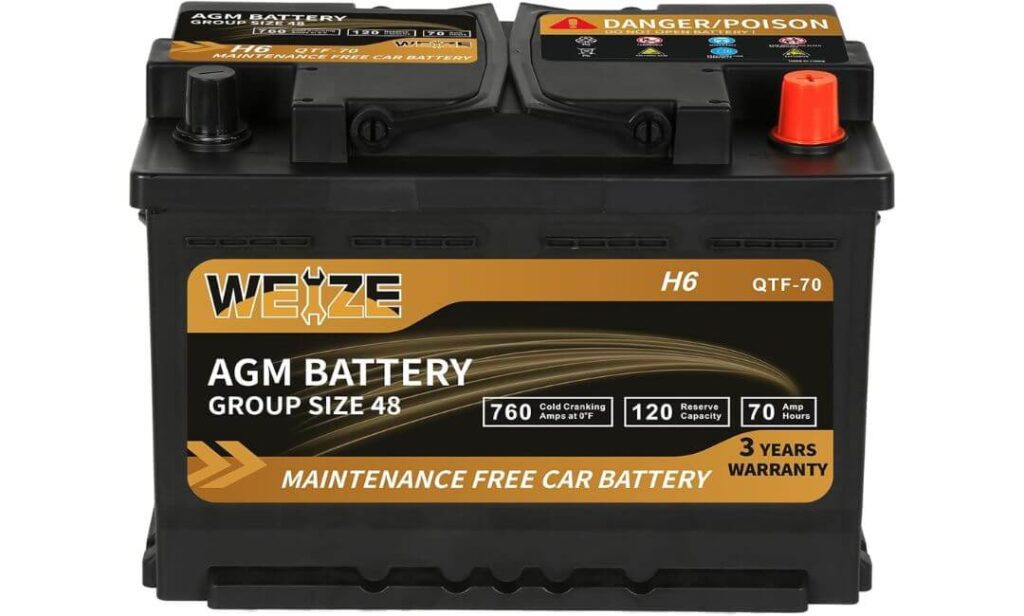
Technical Specs:
- Group Size: 48 (H6) — correct fit for modern SUV battery trays
- Battery Type: AGM (sealed, maintenance-free, start-stop compatible)
- Cold Cranking Amps: 760 CCA — reliable ignition in cold and heat
- Capacity: 70Ah with 120-minute reserve capacity
- Voltage: 12V
- Cycle Life: Up to 2× longer than conventional batteries
- Operating Range: -22°F to 158°F (handles extreme climates)
- Terminal Layout: Tapered terminals (left negative, right positive)
- Dimensions: 10.94 × 6.89 × 7.48 inches
- Weight: ~46 lbs
- Warranty: 36 months
Most people don’t expect a battery in this range to feel this stable—but once it’s in, the difference shows up immediately. The 760 CCA delivers a clean, confident start every time, whether the vehicle has been sitting overnight or dealing with temperature swings. There’s no sluggish turnover or hesitation—it just fires up the way a proper AGM battery should.
Where it earns real respect is in how it holds power over time. The 120RC reserve and 70Ah capacity work together to keep everything steady when the engine isn’t doing the work—infotainment, lighting, sensors—no sudden dips or weak responses. Even after days of sitting, it doesn’t feel drained or inconsistent, which is exactly what most drivers notice first with lower-grade batteries.
The AGM construction here is built for real conditions, not just specs. It’s sealed, vibration-resistant, and designed to survive heat cycles, rough roads, and daily stop-start usage without breaking down early. Add in the wide temperature tolerance (-22°F to 158°F), and it keeps performing where average batteries start struggling. (this is the kind of battery that quietly proves its value over months, not just the first few starts)
What Stands Out
- Strong 760 CCA output for quick, reliable starts
- 120-minute reserve capacity keeps systems stable under load
- AGM design supports start-stop and high electrical demand
- Wide temperature range handles extreme climates without drop-off
- Solid build quality with good long-term durability for the price
Where It Falls Short
- Real-world lifespan can vary depending on driving conditions and charging habits
Honda Pilot Fitment & Real Compatibility
For Honda Pilot owners, this battery fits exactly how it should. The Group 48 (H6) sizing matches the expected tray dimensions, and the terminal layout aligns cleanly, so installation doesn’t turn into a workaround job. It sits properly, connects naturally, and works with the vehicle’s electrical system without triggering unnecessary issues.
In newer Pilot models, especially those with higher electrical demand, it delivers stable voltage and consistent starting behavior. Even in older models that accept H6 upgrades, it feels like a proper step up—stronger starts, fewer small electrical inconsistencies, and overall smoother daily performance.
The Insider Pro-Tip
A lot of batteries feel powerful when they’re new—but the real test is how they behave after weeks of regular driving. What matters isn’t just CCA, it’s how well the battery holds charge and resists internal wear over time—and that’s where AGM builds like this stand out.
If you want to avoid early replacements and small performance issues creeping in, focus on reserve capacity and temperature tolerance, not just price. This one strikes that balance well, which is why it stays consistent long after installation.
#5. Interstate MTX-94R/H7 AGM Battery (Group 94R)
Technical Specs:
- Group Size: 94R (H7) — larger upgrade class for high-demand setups
- Battery Type: AGM (pure lead, VRLA sealed, maintenance-free)
- Cold Cranking Amps: 850 CCA — higher output for stronger starts
- Capacity: 80Ah with ~140-minute reserve capacity
- Voltage: 12V
- Construction: Pure lead AGM design for higher energy density
- Terminal Layout: Top post (standard automotive layout)
- Dimensions: 12.44 × 6.94 × 7.50 inches
- Weight: ~52 lbs
- Lifespan Claim: Up to 2–3× longer than conventional batteries
- Warranty: 3-year replacement
Step up from standard H6 batteries and this is where things start to feel different. The moment you turn the key, that 850 CCA hits harder—quicker ignition, smoother crank, and zero hesitation even when the engine is cold or the vehicle hasn’t moved in days. It doesn’t just start the engine, it does it with authority.
But raw starting power isn’t the real story here. The difference shows when the vehicle is under load—multiple systems running, longer idle times, heavy accessory use. That’s where the 80Ah capacity and ~140RC reserve quietly take over. Instead of voltage dips or sluggish electronics, everything stays stable. Lights don’t flicker, systems don’t lag—power delivery stays consistent even when demand spikes.
The pure lead AGM design is what gives it that edge. More lead packed inside means better conductivity and longer usable life, especially under repeated charge cycles. It’s sealed, vibration-resistant, and built for real-world abuse—heat, rough roads, stop-and-go driving. (this is the kind of battery that feels overbuilt in the best way possible—you notice the difference every time you drive)
What Stands Out
- Higher 850 CCA output for stronger, faster starts
- 80Ah + 140RC reserve handles heavy electrical demand easily
- Pure lead AGM build delivers longer lifespan and better stability
- Excellent for vehicles with start-stop systems and high load usage
- Durable, sealed design resists vibration, heat, and wear over time
Where It Falls Short
- Larger size means it’s not a direct fit for setups designed strictly around H6 without checking space
Honda Pilot Fitment & Real Compatibility
For Honda Pilot owners, this is where you move from standard to upgrade territory. The 94R (H7) size isn’t the default—but when it fits, it delivers a noticeable jump in performance. More reserve, stronger starts, and better handling of electrical load make it ideal for higher trims or heavily used vehicles.
In newer Pilot models that can accommodate H7, the difference shows immediately—less strain on the system, smoother operation, and more consistent power delivery during daily driving. It’s not about forcing a bigger battery in—it’s about using the extra capacity where it actually benefits the vehicle.
The Insider Pro-Tip
Most people upgrade to a bigger battery thinking only about power—but the real benefit is stability over time. A battery like this doesn’t just start stronger, it ages slower under load, which means fewer small issues creeping in months later.
If your driving involves heavy electronics, short trips, or frequent stop-start cycles, stepping up to H7 with higher reserve capacity isn’t overkill—it’s what keeps the system running smoothly long-term. This is one of those upgrades you feel every day, not just when the battery is new.
#6. ACDelco Gold 94R AGM Battery (Group 94R)
Technical Specs:
- Group Size: 94R (H7) — upgrade-size battery for higher-demand setups
- Battery Type: AGM (sealed, maintenance-free, VRLA design)
- Cold Cranking Amps: 850 CCA — strong, consistent ignition power
- Capacity: ~80Ah with high reserve performance
- Voltage: 12V
- Internal Build: Silver-Calcium alloy grid + high-density paste
- Construction: Puncture-resistant separators, pressure-tested casing
- Terminal Layout: Top post / marine-style terminals
- Dimensions: 12.4 × 6.9 × 7.5 inches
- Weight: ~51.6 lbs
- Warranty: 36 months
You can tell this one isn’t built to cut corners the moment it’s installed. The 850 CCA output delivers a sharp, immediate crank—no slow turnover, no hesitation—just a clean start whether the engine is cold or heat-soaked after a long drive. It feels controlled, not forced, which is something you only notice after using weaker batteries.
What really sets it apart is the internal engineering. The Silver-Calcium alloy grid and high-density paste aren’t just technical terms—they directly affect how the battery holds power and resists wear. It maintains low internal resistance, which means more efficient energy flow and less stress on the system over time. Pair that with its AGM structure, and you get stable voltage even when multiple systems are pulling power together.
Then there’s durability. The reinforced case, puncture-resistant separators, and controlled acid circulation design keep the battery cooler and more stable under load. This isn’t just about performance on day one—it’s about how it behaves after months of real driving. (this is the kind of battery that feels engineered to last, not just to meet specs)
What Stands Out
- Strong 850 CCA for fast, confident engine starts
- Silver-Calcium build improves cycle life and efficiency
- AGM design delivers stable voltage under heavy load
- Reinforced internal structure resists heat, vibration, and wear
- Reliable long-term performance with consistent power delivery
Where It Falls Short
- Larger size means it requires proper space confirmation before installation in tighter battery compartments
Honda Pilot Fitment & Real Compatibility
For Honda Pilot owners, this sits firmly in the upgrade category. The 94R (H7) size isn’t the standard factory fit for most trims, but when the space allows, it delivers a clear step up in performance—more reserve, stronger starts, and better handling of electrical load.
In real-world use, it suits drivers who push their vehicles harder—long drives, heavy accessory use, or frequent stop-start conditions. When installed correctly, it doesn’t just fit physically—it improves how the system behaves overall, especially in maintaining steady power delivery.
The Insider Pro-Tip
Most batteries fail gradually, not suddenly—you just don’t notice until performance drops. What makes this one different is how well it maintains efficiency over time, thanks to its internal design. That’s what keeps starts strong even months down the line.
If you’re upgrading to H7, don’t do it just for higher numbers—do it for long-term stability and reduced stress on the electrical system. A battery like this doesn’t just power the vehicle—it keeps everything running the way it should, day after day.
Best Honda Pilot Battery Comparison: Group 48 vs 94R Power, Fit & Performance
| Battery | Fit Size | Power Output | Reserve Strength | Real Usage Advantage |
|---|---|---|---|---|
|
Mighty Max MM-H6
daily stable performer
Best Overall
|
Group 48 (H6) | 760 CCA clean cold starts |
120 RC steady backup |
Perfect for smooth daily driving, no warning lights, stable voltage behavior |
|
Goodyear H6 AGM
premium smooth power
Premium Pick
|
Group 48 (H6) | 760 CCA fast ignition |
120 RC balanced load |
Best for refined performance, consistent power delivery |
|
UPLUS AGM-L70-M
cycle life focused
Heavy Use
|
Group 48 (H6) | 760 CCA strong start-stop |
120 RC long cycles |
Ideal for traffic driving and heavy electrical usage |
|
Weize Platinum H6
value performance build
Budget Smart
|
Group 48 (H6) | 760 CCA reliable starts |
120 RC good backup |
Affordable with stable everyday performance |
|
Interstate MTX-94R
high capacity upgrade
Power Upgrade
|
Group 94R (H7) | 850 CCA strong crank |
140 RC extra reserve |
Best for heavy electronics and maximum stability |
|
ACDelco Gold 94R
oem style durability
OEM Choice
|
Group 94R (H7) | 850 CCA consistent starts |
high RC stable output |
Long-term reliability and smooth performance |
Buying Guide: How to Choose the Best Battery for Honda Pilot
Choosing the right battery for a Honda Pilot isn’t about picking the biggest number or the most expensive option—it’s about matching the battery to how the vehicle actually works. Newer Pilot models, especially post-2023, are far more sensitive to battery type, voltage stability, and fitment than older SUVs. If you get the size or type wrong, the car will let you know—slow starts, warning lights, or inconsistent electrical behavior.
This guide breaks it down the way real owners figure it out over time—what actually matters, what to ignore, and how to choose once so you don’t have to deal with it again.
Battery Type: AGM vs Flooded Lead-Acid
This is the first decision—and honestly, the most important one.
AGM (Absorbent Glass Mat) batteries are what modern Honda Pilot systems are designed around. They hold voltage better, recover faster after starting, and handle repeated start-stop cycles without wearing out quickly. If your vehicle has start-stop technology or a heavy electrical load, AGM isn’t optional—it’s the correct choice.
Flooded lead-acid batteries are cheaper, but they’re built for simpler systems. In a modern Pilot, they tend to drop voltage under load, which leads to subtle issues—flickering electronics, weak restarts, or system warnings over time.
Real talk: if you’re driving a newer Pilot, AGM is the baseline, not an upgrade.
Cold Cranking Amps (CCA) and Reserve Capacity (RC)
These two numbers matter more than most people realize—but only when you understand how they work together.
CCA (Cold Cranking Amps) tells you how strong the battery is at starting the engine, especially in cold conditions. For Honda Pilot, anything around 760–850 CCA is the sweet spot. Lower than that, and you’ll feel it in slower starts.
Reserve Capacity (RC) is what keeps everything running when the engine isn’t doing the work—lights, infotainment, sensors. A higher RC (120–140 minutes) means more stable power, especially in traffic, short trips, or when the engine is off.
A battery with good CCA but low RC might start strong—but won’t stay consistent. The best options balance both.
Start-Stop Compatibility and AGM Benefits
If your Honda Pilot uses automatic start-stop, the battery is working harder than you think. Every red light means another restart cycle, and that adds up fast.
AGM batteries are built for this. They handle frequent charge-discharge cycles, recover quickly, and maintain voltage without dropping performance over time.
Without AGM, start-stop systems become unreliable—either they stop working altogether or start causing small electrical inconsistencies.
Even if you don’t rely on start-stop, AGM still benefits you through:
- More stable voltage delivery
- Better lifespan under real driving conditions
- Reduced chance of early failure
Size & Fit: Honda Pilot Battery Size Explained
This is where most mistakes happen.
For newer Honda Pilot models, the correct and most common size is Group 48 (H6). It fits properly in the tray, aligns with the terminals, and works with the vehicle’s battery monitoring system.
If the size is off—even slightly—you may deal with:
- Loose or tight cable connections
- Improper fit in the tray
- Charging system inconsistencies
Older models had more flexibility, but newer ones are stricter. Fitment isn’t just physical anymore—it’s also electrical.
Battery Group Size Options: Group 48 vs 94R (Upgrade Choice)
Here’s the real difference, without the confusion:
Group 48 (H6)
This is the standard, correct size for most Honda Pilot setups. It delivers the right balance of power, fitment, and system compatibility. For most drivers, this is exactly what you need—no upgrades required.
Group 94R (H7)
This is the upgrade option. Bigger capacity, higher CCA, and more reserve power. It’s useful if:
- You run more electronics
- You drive in extreme conditions
- You want longer-lasting performance under load
But it only works if your battery tray has enough space. It’s not a default replacement—it’s a calculated upgrade.
Warranty and Expected Lifespan
Warranty tells you how much confidence the manufacturer has—but lifespan depends on how the battery is used.
Most AGM batteries come with 3-year coverage, but real-world lifespan varies:
- Normal driving: 3–5 years
- Heavy load / short trips: 2–4 years
- Ideal conditions: sometimes longer
What actually affects lifespan:
- Driving habits (short trips vs long drives)
- Climate (heat is harder on batteries than cold)
- Electrical load (more features = more demand)
A better-built battery doesn’t just last longer—it maintains performance longer before it starts dropping off.
Honda Pilot Battery Replacement Cost (Real Expectation)
Battery cost depends on size and quality, but here’s a realistic range (battery only, no labor):
- Group 48 AGM: typically mid-range pricing
- Group 94R AGM: higher cost due to larger capacity
Installation is usually straightforward, but some newer models may require system reset or battery registration depending on trim.
Real talk: paying a bit more upfront for the right AGM battery is cheaper than replacing a weak one early or dealing with electrical issues later.
Final Thought That Actually Matters
The biggest mistake people make is treating a battery like a simple replacement part. In a Honda Pilot, it’s part of the electrical system—not just a power source.
Get the size right (H6 or H7), choose AGM, and focus on balanced specs (CCA + RC). Do that once, and you won’t have to think about it again every winter morning or every time the car sits for a few days.
Honda Pilot Battery Sizes and Fitment Nuances
If there’s one place where most owners go wrong, it’s here. Battery fitment in the Honda Pilot isn’t just about “what fits in the tray.” It’s about how the battery communicates with the vehicle’s charging system, sensor calibration, and electrical load behavior. Newer models are far less forgiving—get the size or type wrong, and you’ll feel it almost immediately.
Honda Pilot Battery Size Considerations: Group 48 and Alternatives
For modern Honda Pilot models, especially the newer generation, Group 48 (H6) is the baseline. It’s not just common—it’s what the vehicle is designed around in terms of space, terminal alignment, and electrical balance.
Why H6 works so well:
- Matches battery tray dimensions perfectly
- Correct terminal positioning (no cable strain or awkward routing)
- Designed capacity range (around 70Ah, 760 CCA, 120 RC) aligns with system demand
- Works smoothly with the battery monitoring sensor
That’s why most owners who stick with H6 don’t face issues—it’s the safe, correct choice.
Now, there are alternatives—but they need context:
- Group 94R (H7)
Larger, more powerful option. Higher CCA and reserve capacity. Works as an upgrade only if space allows. Not every trim supports it physically. - Group 51R or smaller sizes
You might see these mentioned for older setups, but in newer Pilots, they’re usually underpowered. They may “fit,” but they don’t support the electrical load properly.
Real talk:
Just because a battery fits physically doesn’t mean it fits electrically. That’s the difference most people learn the hard way.
Compatibility Notes for the Honda Pilot Start-Stop System
Start-stop systems change everything about how a battery behaves. Instead of a few starts per day, the battery now handles dozens of restart cycles in traffic. That’s a completely different workload.
This is why AGM batteries are critical:
- They handle frequent charge and discharge cycles without degrading quickly
- Maintain stable voltage during restarts, preventing system glitches
- Recover faster after each ignition cycle
If you install a non-AGM battery in a start-stop equipped Pilot, you may notice:
- Start-stop stops working altogether
- Random warning messages
- Slower restarts after a few weeks
Even if the car runs, it won’t run the way it was designed to.
How to Verify Fit Properly (What Actually Matters)
Before choosing a battery, don’t rely on assumptions. Fitment should be verified in a structured way—not guesswork.
Here’s how experienced owners and technicians check:
- Vehicle Year and Trim
Newer models (especially post-2023) are stricter. Higher trims often have more electrical demand, which affects battery requirements. - OEM Battery Group Size
Check what came from the factory. If it’s H6, stay there unless you’re intentionally upgrading. - Battery Tray Dimensions
Measure the available space. H7 (94R) is longer—if the tray or bracket is tight, it won’t sit properly. - Terminal Orientation
Positive and negative positions must match exactly. Crossing cables or stretching them creates long-term issues. - Battery Sensor Compatibility
The Pilot uses a battery monitoring system. It expects a certain voltage behavior—wrong battery types confuse it. - Electrical Load Consideration
If your vehicle runs heated seats, multiple screens, charging ports, and accessories regularly, you need a battery that can sustain that load without voltage drop.
Quick Reference: Group 48 vs 94R for Honda Pilot
Here’s the difference in real-world terms, not just specs:
Group 48 (H6)
This is the correct, no-risk choice. Balanced performance, proper fitment, and full compatibility with the vehicle’s system. Ideal for most drivers and daily usage.
Group 94R (H7)
This is the upgrade path. More power, more reserve, and better performance under heavy load—but only if your vehicle can physically accommodate it.
Simple breakdown:
- If you want plug-and-play reliability → choose H6
- If you want extra power and longer endurance → consider H7 (after checking space)
What Most People Miss (And Why It Matters)
A battery isn’t just a power source anymore—it’s part of the vehicle’s electronics. The Honda Pilot actively monitors battery performance, and small mismatches can lead to long-term issues that don’t show up immediately.
Things that quietly affect fitment and performance:
- Heat cycles under the hood (affects battery lifespan more than cold)
- Driving pattern (short trips vs long drives)
- Idle usage (AC, infotainment, charging devices running together)
- Charging system behavior (alternator + sensor working together)
Ignoring these doesn’t break the car instantly—but it reduces reliability over time.
Final Fitment Insight
If you want zero complications, stick with Group 48 AGM—it’s what the Honda Pilot is built around. If you understand your vehicle’s space and usage needs, then stepping up to Group 94R can genuinely improve performance.
But the key is this:
fitment isn’t just about size—it’s about how well the battery integrates with the vehicle’s system.
Get that right, and everything else—starting, electronics, long-term reliability—falls into place without effort.
Installation Tips and Maintenance for Honda Pilot Battery
A battery swap on the Honda Pilot looks simple on the surface—but newer models don’t behave like older cars. There’s a battery monitoring sensor, tighter voltage tolerances, and more electronics pulling power at all times. Install it carelessly, or ignore maintenance basics, and you won’t get the performance you paid for.
Safe Installation Steps (Do It the Right Way Once)
Before touching anything, understand this: you’re not just replacing a battery—you’re reconnecting the heart of the vehicle’s electrical system. A rushed install is where most problems begin.
Follow a clean, controlled process:
- Turn off the engine, remove the key, and wait a few minutes so systems fully power down
- Always disconnect the negative terminal first (this prevents accidental short circuits)
- Then remove the positive terminal and any hold-down bracket
- Lift the old battery out carefully—these are heavy and awkward
- Clean the tray and check for corrosion or loose mounts
- Place the new battery in position—make sure it sits flat and secure
- Connect the positive terminal first, then the negative
- Tighten connections properly—not loose, not over-tightened
Once installed:
- Start the vehicle and let it idle for a few minutes
- Check for any warning lights or irregular behavior
- If your trim uses a battery sensor, allow the system time to recalibrate
Real talk: most “bad battery” complaints come from poor installation—loose terminals, incorrect order, or rushed setup.
When to Replace vs Upgrade (What Actually Makes Sense)
Not every battery replacement should be a direct swap. Sometimes upgrading makes more sense—but only if you understand why.
You should replace with the same size (H6 / Group 48) if:
- Your current battery lasted a reasonable lifespan
- You don’t run heavy electronics
- You want a straightforward, no-risk solution
You should consider upgrading to H7 (94R) if:
- You notice voltage drops during idle or heavy use
- You run multiple accessories regularly (charging devices, screens, etc.)
- Your driving includes short trips or stop-start traffic, which stresses batteries more
- You want longer reserve capacity and stronger cold starts
But don’t upgrade blindly. Check tray space and terminal clearance first—forcing a larger battery creates more problems than it solves.
AGM-Specific Care (This Is Where Most People Slip)
AGM batteries are tougher—but they’re not careless-proof. They need the right conditions to perform long-term.
Key things to understand:
- AGM batteries prefer a controlled charging profile (typically around 14.4–14.8V)
- Overcharging or unstable alternator output shortens lifespan quickly
- They don’t need water refills—but they do need consistent voltage stability
What helps them last longer:
- Regular driving that allows the battery to fully recharge
- Avoiding long periods of inactivity without charging
- Using a smart charger designed for AGM if the vehicle sits unused
What hurts them:
- Frequent short trips with no full recharge cycle
- Leaving electronics running with the engine off
- Ignoring early signs of voltage instability
AGM batteries don’t fail suddenly—they degrade slowly if conditions aren’t right.
Visual and Real-World Signs of a Failing Battery
Most batteries give warning signs—you just have to notice them early.
Physical signs:
- Swollen or bulging case
- Cracks or leakage around the casing
- Corrosion buildup on terminals
Performance signs:
- Slower crank when starting
- Lights dimming slightly during ignition
- Infotainment system resetting or lagging
- Start-stop system not engaging properly
Behavioral signs (often ignored):
- Battery dying after short periods of inactivity
- Inconsistent electrical performance (works fine one day, weak the next)
- Random dashboard warnings that disappear after restart
If you notice more than one of these, the battery isn’t “about to fail”—it’s already losing performance.
What Most Owners Miss About Battery Life
Battery life isn’t just about the battery—it’s about how the vehicle is used.
Things that quietly shorten lifespan:
- Extreme heat (more damaging than cold)
- Constant short drives without full recharge
- High electrical demand at idle
- Loose or slightly corroded connections
Things that extend it:
- Occasional longer drives to fully recharge the battery
- Clean, tight terminal connections
- Using the correct battery size and type from the start
Final Practical Insight
If you install the right battery correctly and use the vehicle the way it’s meant to be used, you won’t think about it again for years.
But if you rush the install, ignore fitment, or mismatch the battery type, the problems won’t show up immediately—they’ll build slowly, and by the time you notice, you’ll be replacing it again.
Do it right once: correct size (H6 or H7), AGM type, proper installation, and basic awareness of how you drive. That’s all it takes to avoid 90% of battery issues in a Honda Pilot.
Costs and Replacement Planning for Honda Pilot Battery
Battery replacement on a Honda Pilot isn’t just a one-time expense—it’s something you plan right so you don’t end up paying twice. The mistake most people make is focusing only on the upfront price, not the real cost over time—performance drop, early failure, or electrical issues that come from choosing the wrong battery.
Typical Honda Pilot Battery Replacement Cost (Parts + Basic Labor)
Let’s break this down in real-world terms, not vague estimates.
For most Honda Pilot setups:
- Group 48 (H6) AGM battery:
Mid-range pricing depending on brand and build quality - Group 94R (H7) AGM battery:
Higher cost due to larger capacity and stronger specs
If you’re getting it installed at a shop:
- Basic labor is usually minimal because access is straightforward
- Some newer trims may include battery system reset or sensor recalibration, which can slightly increase cost
So your total cost typically includes:
- Battery price (major portion)
- Installation (small portion)
- Optional system reset (depends on model/garage)
Real talk:
The price difference between a cheap battery and a solid AGM isn’t huge—but the difference in performance and lifespan is.
Budgeting for AGM Upgrade vs OEM Spec
Here’s where you decide whether you’re just replacing—or actually improving.
OEM-style replacement (Group 48 / H6 AGM):
- Balanced cost
- Direct fit, no changes needed
- Reliable for most driving conditions
Upgrade option (Group 94R / H7 AGM):
- Higher upfront cost
- More capacity, stronger cranking power
- Better suited for heavy usage or long-term stability
When upgrading makes sense:
- You drive in extreme heat or cold conditions
- Your usage includes short trips, stop-start traffic, or idle time
- You rely heavily on electronics, charging devices, or accessories
When sticking with OEM size is smarter:
- Normal daily driving
- No electrical load issues
- You want a simple, proven setup
Think of it like this:
H6 is “correct and complete.”
H7 is “extra headroom when you actually need it.”
Warranties: What to Expect and How to Use Them Properly
Most AGM batteries in this category come with around 3 years of warranty, but not all warranties are equal in real use.
What matters more than the number:
- Is it full replacement or prorated?
- Are there conditions tied to usage or installation?
- How easy is the claim process if something goes wrong?
Typical structure:
- First phase: full replacement coverage
- Later phase: partial credit (depends on brand)
How to Actually Maximize Battery Value
A battery doesn’t fail randomly—most failures come from usage patterns or overlooked details.
To get full value from your purchase:
- Choose the correct size and type from the start (H6 AGM or H7 AGM)
- Avoid constant short trips without full recharge cycles
- Keep terminals clean and properly tightened
- Don’t leave the vehicle unused for long periods without charging support
- If needed, use a smart AGM-compatible charger during inactivity
Small habits make a big difference over 2–4 years of use.
Hidden Costs Most People Ignore
These don’t show up on the receipt—but they affect your wallet:
- Replacing a battery early because it was underpowered
- Electrical issues caused by unstable voltage
- Repeated installations because of wrong fitment
- Time lost dealing with avoidable problems
Spending slightly more on the right AGM battery upfront often prevents all of this.
What Smart Buyers Do Differently
They don’t chase the lowest price—they match the battery to how they actually drive.
- If they want no issues and clean performance, they go with H6 AGM
- If they want extra reliability under load, they step up to H7
- They treat the battery as part of the system, not just a replaceable part
That’s the difference between replacing a battery every couple of years—and installing one that just works without reminding you it’s there.
FAQs About Honda Pilot Battery
Can I use a Group 94R (H7) battery in a Honda Pilot that originally came with Group 48 (H6)?
Short answer—yes, but only if your vehicle actually has the physical room and proper clearance. This isn’t just about squeezing in a bigger battery; it’s about whether the tray, hold-down bracket, and cable reach all line up without stress. If anything feels forced during installation, it’s already the wrong move.
Where H7 makes sense is when you want more reserve capacity and stronger voltage stability, especially if your Honda Pilot is running multiple electronics or sees a lot of stop-start driving. But here’s the real catch: if your driving pattern doesn’t demand that extra capacity, you won’t feel a dramatic difference.
The smarter approach is this—
- If your current H6 setup works fine → stay with it
- If you’ve noticed voltage drops, weak idle performance, or heavy load → then H7 becomes a logical upgrade
It’s not about “bigger is better.” It’s about whether your usage actually needs that extra headroom.
Why do some Honda Pilot owners face battery issues even after installing a new AGM battery?
This is where most people get confused—they think “new battery = problem solved.” But with the Honda Pilot, especially newer models, the battery is part of a managed electrical system, not just a standalone component.
The issue usually isn’t the battery itself. It’s one of these:
- The battery wasn’t fully charged before installation
- The system wasn’t given time to recalibrate after replacement
- The alternator or charging pattern isn’t completing full cycles (common in short trips)
- The battery size/type doesn’t match what the system expects
Here’s the real truth:
A battery can be perfectly fine, but if the vehicle never gets a proper charging cycle, it will behave like it’s weak. That’s why people see issues within weeks and assume the battery is bad.
What actually fixes it isn’t replacing again—it’s correcting usage and ensuring stable charging behavior over time.
Does upgrading to a higher CCA battery actually improve performance in a Honda Pilot?
Not in the way most people think. Higher CCA gives you stronger initial cranking, but once the engine is running, it doesn’t magically improve overall performance.
Where higher CCA (like 850 vs 760) actually helps:
- Cold starts in extreme weather
- Engines that sit unused for days
- Vehicles under higher strain (aging engines, heavy load)
Where it doesn’t matter much:
- Normal daily driving in moderate conditions
- Already healthy electrical systems
What matters more than CCA alone is the balance between:
- CCA (starting strength)
- Reserve capacity (sustained power)
A battery with slightly lower CCA but better reserve capacity often feels more stable in real driving. That’s something most spec sheets don’t tell you—but you feel it over time.
How does driving pattern affect battery life more than the battery brand itself?
This is something most buyers completely overlook. Two people can install the same battery—one gets 4 years, the other barely gets 2.
The difference isn’t the battery. It’s how the vehicle is used.
Driving patterns that reduce battery life:
- Frequent short trips where the battery never fully recharges
- Heavy traffic with constant stop-start cycles
- Long idle times with AC, infotainment, and charging devices running
Driving patterns that extend battery life:
- Occasional longer drives that allow full recharge
- Consistent usage instead of long inactive periods
- Balanced electrical load (not everything running at once all the time)
Real talk—battery lifespan is less about “which brand you bought” and more about whether your driving allows the battery to recover properly.
Is there a way to tell early that your Honda Pilot battery is degrading before it actually fails?
Yes—but the signs are subtle, and most people ignore them until the battery is already too weak.
Early indicators usually show up as behavior changes, not outright failure:
- The engine still starts—but takes slightly longer than usual
- Electrical systems feel just a bit slower during startup
- Start-stop feature becomes inconsistent or stops activating
- After sitting for a day or two, the car feels “less eager” to start
If you want a clearer way to judge, pay attention to patterns:
- Is performance consistent every day, or does it vary?
- Does the vehicle feel weaker after sitting idle?
- Are small electrical quirks becoming more frequent?
A healthy battery behaves predictably. The moment you notice inconsistency, that’s the early stage of decline—not the end, but definitely the signal to start planning replacement rather than waiting for a complete failure.
Closing Thoughts — What Actually Matters in the Long Run
If you’ve read this far, you already understand something most buyers don’t—the Honda Pilot isn’t picky for no reason. It’s built around a specific electrical balance, and the battery plays a bigger role in that than people expect.
This isn’t about chasing brands or specs on paper. It’s about getting three things right at the same time:
- Correct size (H6 as the baseline, H7 if you truly need more capacity)
- AGM technology for stable voltage and long-term reliability
- Balanced performance (not just high CCA, but real reserve and consistency)
Once those are aligned, everything else becomes simple. The vehicle starts the way it should, electronics behave normally, and you stop thinking about the battery altogether—which is exactly how it’s supposed to be.
What separates a good decision from a frustrating one isn’t price or brand—it’s whether the battery matches how you actually use the vehicle. Daily short trips, heavy electronics, long idle time… these aren’t small details, they directly decide how long your battery will last and how well it performs over time.
The reality most people learn late is this:
a battery doesn’t fail overnight—it slowly shows you signs when it’s not the right fit. Weak starts, small electrical inconsistencies, reduced confidence every morning—that’s not “normal aging,” that’s mismatch.
Choose right once, and the Honda Pilot becomes what it’s meant to be—reliable, predictable, and effortless to live with. Ignore the details, and you’ll keep replacing batteries without ever fixing the actual problem.
At the end of the day, the best battery isn’t the one with the biggest numbers—it’s the one that fits perfectly, delivers stable power, and quietly does its job for years without reminding you it exists.
Also Check:

