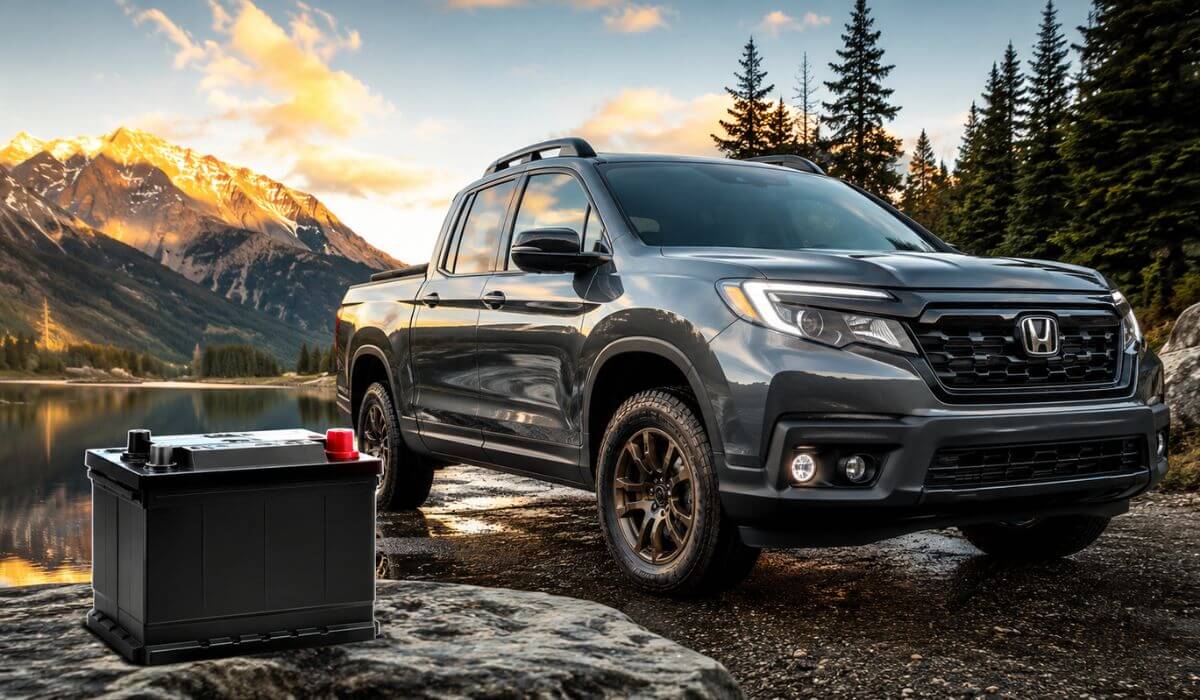
6 Best Batteries for Honda Ridgeline in 2026: Powerful AGM, High CCA, Long Reserve Capacity
If you’ve started noticing more weak starts, slower cranking in cold mornings, or random electrical glitches in your Honda Ridgeline, there’s a good chance the factory battery is already on borrowed time. The newer Ridgeline models — especially 2017 through 2026 trucks with start-stop systems and heavier electronics — are much more sensitive to battery quality than older pickups. A cheap replacement might work for a few weeks, but it usually shows its limits fast once temperatures drop or accessories start pulling power every day.
One thing a lot of owners miss is that most newer Honda Ridgeline models use an H6 / Group 48 AGM battery, not the older 24F setup found in earlier trucks. That matters because the wrong size can create fitment headaches, weaker cold starts, charging issues, or shorter battery life. For older 2006–2014 Ridgeline models, Group 24F batteries are still the safer fit, which is why this list covers both generations without mixing them together.
To put this guide together, we focused on batteries that actually make sense for real Ridgeline owners — strong cold cranking amps, reliable reserve capacity for daily driving, proper AGM compatibility for modern electronics, and sizes that fit without modification. Some of these batteries are better for newer start-stop trucks, while others are smarter picks for older Ridgelines that still need dependable all-weather starting power.
Best Honda Ridgeline Battery: Top 2026 Picks for Group 48, 24F & Start-Stop Performance
#1. Interstate Batteries MTX-48/H6 AGM
Best Honda Ridgeline H6 Battery Replacement With 760 CCA and Long Reserve Capacity for 2017–2026 Models
#2. MARXON Group 48 H6 AGM
Affordable Honda Ridgeline AGM Battery With High CCA Output for Daily Driving and Start-Stop Systems
#3. Weize Platinum AGM Group 48 H6
Top Group 48 Battery for Honda Ridgeline Owners Wanting Reliable AGM Performance and Strong Cold Starts
#4. Mighty Max MM-H6 AGM
Reliable H6 AGM Battery for Honda Ridgeline Trucks Needing Maintenance-Free Power and Fast Starting
#5. Goodyear 24F-AGM Platinum
Best 24F AGM Battery for Older Honda Ridgeline Models With Excellent Cold Weather Starting Power
#6. UPLUS Group 24F AGM
Budget-Friendly Honda Ridgeline 24F Battery Replacement With AGM Design and Long-Life Performance
Expert Tip
One mistake Ridgeline owners make all the time is buying a battery based only on price or brand familiarity without checking the actual group size and AGM compatibility their truck needs. The newer Ridgeline isn’t a basic old-school pickup anymore. Between the start-stop system, touchscreen electronics, heated features, safety sensors, and daily accessory load, these trucks put far more stress on a battery than most people realize.
That’s exactly why most 2017–2026 Ridgeline models perform noticeably better with a proper H6 AGM battery in the 700–760 CCA range. You get stronger cold starts, more stable voltage during stop-start traffic, and less strain when running lights, charging devices, or sitting in idle with climate controls on. A weak or undersized battery may still start the truck today, but it usually becomes obvious during winter mornings or long daily commutes when voltage starts dropping faster than expected.
How We Chose These Honda Ridgeline Batteries
There are hundreds of batteries online that technically “fit” the Honda Ridgeline. We ignored most of them.
The goal of this list was not to stuff random batteries together or chase the cheapest option available. We focused on batteries that actually make sense for real Ridgeline owners dealing with daily driving, cold starts, stop-and-go traffic, weekend hauling, and long-term reliability. That immediately ruled out a lot of low-quality flooded batteries with weak reserve capacity and inconsistent starting power.
The first thing we checked was proper fitment. Most newer Honda Ridgeline models use an H6 / Group 48 AGM battery, while older 2006–2014 trucks commonly use 24F sizes. Mixing those sizes carelessly is one of the biggest reasons owners end up with terminal issues, hold-down problems, or batteries that never seem to last as long as expected. Every battery on this list matches real-world Ridgeline fitment without forcing modifications or risky compromises.
We also paid close attention to cold cranking amps and reserve capacity, because those two numbers tell you far more about real-world performance than marketing claims ever will. Ridgelines with remote start, start-stop systems, heated seats, or heavy daily electronics demand stable power delivery. That’s why most of the batteries we selected stay around the 700–760 CCA range with solid reserve capacity ratings instead of barely meeting minimum specs.
Another thing we intentionally avoided was choosing batteries that only look impressive on paper. Some newer AGM batteries still have very limited real-world owner feedback because they’re relatively new to the market. So instead of blindly trusting advertising claims, we focused on specifications that consistently matter over time — AGM construction, stable voltage output, maintenance-free design, stronger internal durability, and compatibility with modern charging systems used in newer Honda trucks.
You’ll also notice we didn’t fill this guide with ultra-expensive premium batteries that most Ridgeline owners realistically won’t buy. The goal was balance. Some people want the strongest AGM battery possible for newer trucks, while others simply need a dependable replacement that won’t struggle every winter morning. That’s why this list includes both premium H6 AGM options for modern Ridgelines and reliable 24F choices for older models still running strong today.
At the end of the day, a battery is one of those parts you only think about when the truck refuses to start. The batteries in this guide were chosen to avoid that exact situation — not just for a few weeks after installation, but for the kind of daily use Ridgeline owners actually put their trucks through year-round.
#1. Interstate Batteries MTX-48/H6 AGM
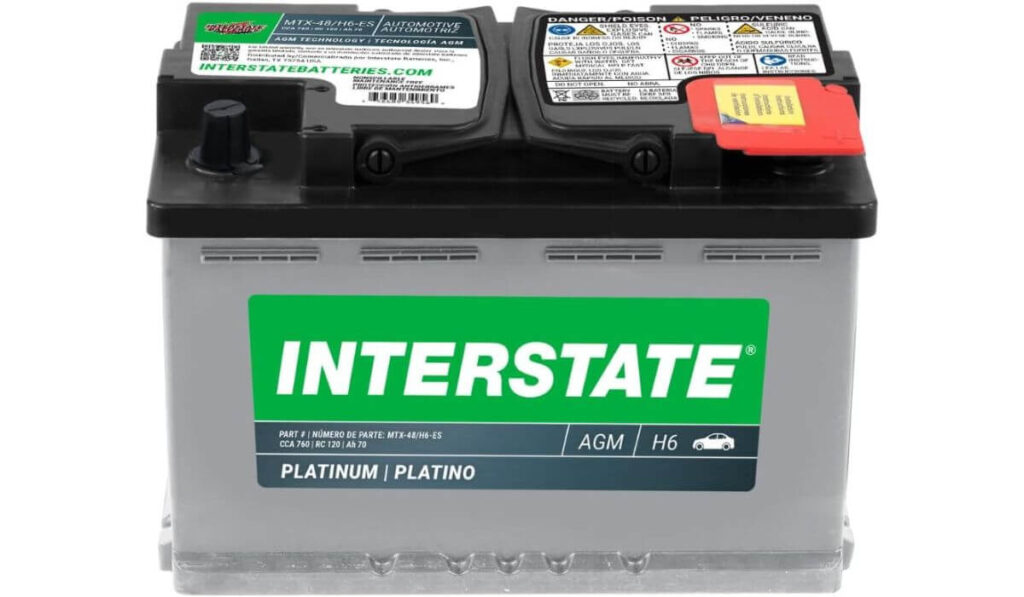
Technical Specs:
- Group Size: H6 / 48
- Battery Type: Premium Pure Lead AGM
- Cold Cranking Amps: 760 CCA
- Reserve Capacity: 120 Minutes
- Capacity: 70Ah
- Voltage: 12V
- Design: Maintenance-Free VRLA Spill-Proof Construction
- Weight: 45.4 lbs
- Best Use: Start-Stop Trucks, Daily Driving, Cold Weather Starts, Heavy Electronics
The first thing you notice with this one isn’t some flashy marketing claim — it’s how effortlessly the truck starts, especially on colder mornings when weaker batteries suddenly expose themselves. A lot of Group 48 AGM batteries technically “fit” the Honda Ridgeline, but very few feel this stable once the truck’s electronics, remote start, climate controls, charging ports, and stop-start system all begin pulling power together. That’s where the extra lead content inside this battery quietly separates it from cheaper H6 options.
Interstate built this model around a pure lead AGM design, and that matters more than most buyers realize. More lead inside the casing usually means more stable voltage delivery, stronger reserve power, and less stress during repeated starts in traffic. In a modern Ridgeline — especially newer trims loaded with safety tech and infotainment systems — that extra stability becomes noticeable fast. The truck feels more consistent instead of acting “slightly weak” after sitting overnight or during winter temperature swings.
The 760 CCA output also puts this battery near the top of the H6 category for real-world starting power. It doesn’t just help in freezing weather; it helps the Ridgeline crank faster and recover quicker after heavy accessory use. Then you add the 120-minute reserve capacity, which is honestly one of the strongest parts of this battery. If you spend time parked with lights, music, chargers, or climate controls running, that extra reserve makes a genuine difference over time instead of the battery feeling drained halfway through ownership.
(Honestly, this is one of the few AGM batteries that actually feels engineered for modern trucks instead of simply “made to fit” them.)
What Makes This One Easier to Trust Long-Term
- The pure lead AGM construction feels noticeably stronger than entry-level H6 batteries
- 760 CCA gives the Ridgeline fast, confident starts without hesitation
- Excellent reserve capacity for trucks running multiple electronics daily
- Spill-proof VRLA design handles vibration and rough roads far better than flooded batteries
- Built specifically for modern start-stop systems instead of older low-demand vehicles
Where Some Buyers May Hesitate
- The heavier design can make installation slightly more awkward compared to lighter budget batteries
Real Ridgeline Fitment Notes Before You Buy
For most newer Honda Ridgeline models, this H6 / Group 48 size fits exactly the way it should without awkward hold-down issues or terminal alignment problems. That’s important because some cheaper “universal fit” batteries technically install, but never feel fully correct once secured inside the tray.
This battery especially makes sense for Ridgeline owners using remote start, heated features, phone charging, navigation, or stop-and-go commuting every day. The truck simply feels happier with a stronger AGM battery underneath it.
The Insider Pro-Tip
A lot of battery failures blamed on “bad AGM batteries” are actually charging-system issues that owners never catch early enough. If your old Ridgeline battery died unusually fast, check alternator voltage before installing a new premium AGM. A weak charging system can silently shorten the lifespan of even the best H6 battery in months.
One more thing most people never think about: reserve capacity matters just as much as CCA in a Ridgeline. Anyone can advertise high starting amps, but once you start using climate controls, charging accessories, idle time, or nighttime driving regularly, the batteries with stronger reserve power are usually the ones that still feel healthy years later.
#2. MARXON Group 48 H6 AGM
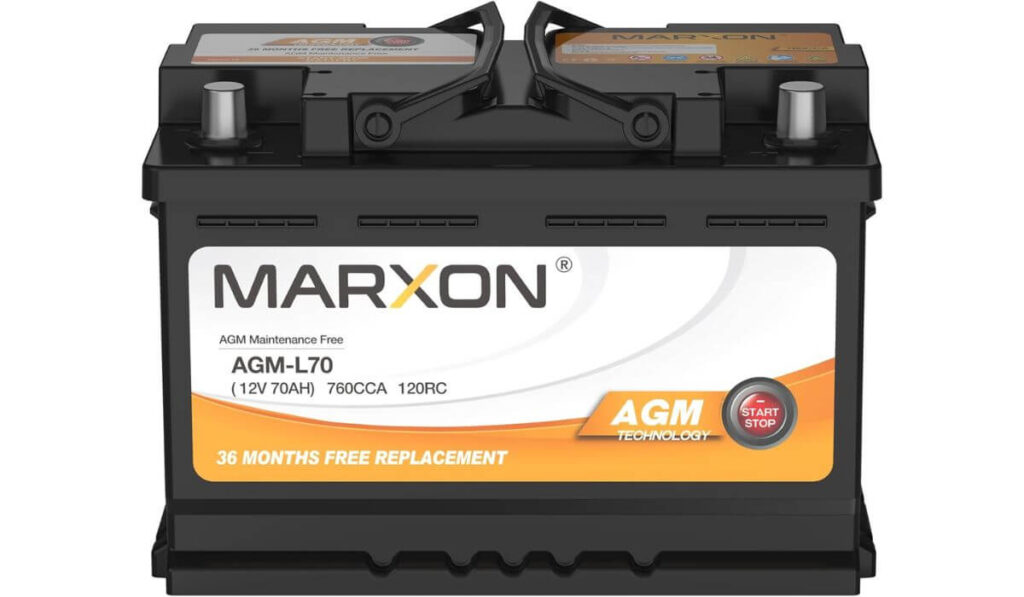
Technical Specs:
- Group Size: H6 / Group 48 / L3
- Battery Type: AGM Maintenance-Free Battery
- Cold Cranking Amps: 760 CCA
- Reserve Capacity: 95 Minutes
- Capacity: 70Ah
- Voltage: 12V
- Weight: 46.5 lbs
- Operating Range: -22°F to 140°F
- Best Use: Daily Driving, Start-Stop Systems, Fast Charging Performance
Here’s the interesting thing about this battery — it doesn’t try too hard to look premium, yet the real-world specs are surprisingly close to batteries costing noticeably more. Once installed in a Honda Ridgeline, the first thing many owners notice is how quickly the truck settles into normal operation. No sluggish crank, no weak restart during stop-start traffic, and no “barely alive” feeling after sitting overnight with accessories running.
The 760 CCA rating plays a big role here because modern Ridgelines are far more power-hungry than older midsize trucks. Between infotainment screens, charging ports, driver-assist systems, remote start, and climate electronics, weak batteries start showing cracks much faster now. This AGM setup feels built for that newer electrical demand instead of simply being another basic replacement battery trying to survive modern workloads.
Another underrated advantage is the fast charging capability. MARXON uses newer internal materials that improve charging acceptance, meaning the battery recovers energy quicker while driving compared to many older SLA-style designs. For Ridgeline owners constantly doing shorter commutes, city traffic, grocery runs, or repeated engine restarts, that faster recovery actually helps maintain battery health over time instead of constantly leaving the battery partially drained.
(It’s honestly one of those batteries that surprises people after installation because expectations start low, but the day-to-day performance ends up feeling much stronger than expected.)
What Makes This Battery Worth Considering
- Strong 760 CCA output for confident cold starts and stop-start driving
- AGM construction handles vibration and electrical load better than flooded batteries
- Faster charging acceptance helps during short trips and heavy city driving
- Leak-resistant maintenance-free design keeps ownership simple
- Good balance between price, modern features, and real-world Ridgeline compatibility
Where Some Buyers May Pause Before Ordering
- Reserve capacity is slightly lower than some higher-end premium AGM competitors
Real Honda Ridgeline Fitment Insight
This H6 / Group 48 battery fits newer Honda Ridgeline models very naturally, especially trucks equipped with automatic start-stop systems and heavier daily electronics. Terminal placement and dimensions line up properly without needing awkward tray adjustments or forcing cables into tight positions.
It especially makes sense for owners wanting a true AGM upgrade without jumping into extremely expensive premium-tier pricing. For everyday commuting, cold starts, remote start usage, and accessory-heavy driving, it covers the core needs most Ridgeline owners actually care about.
The Insider Pro-Tip
One thing experienced truck owners learn quickly: batteries that recharge efficiently usually age better in real-world city driving. A battery can have huge cranking numbers on paper, but if it struggles to recover during repeated short trips, performance slowly drops month after month without owners noticing at first.
That’s where this battery’s faster charging behavior quietly helps. If your Ridgeline spends most of its life in traffic, school runs, work commutes, or quick errands instead of long highway drives, charging efficiency becomes far more important than most online spec sheets ever explain.
#3. Weize Platinum AGM Group 48 H6
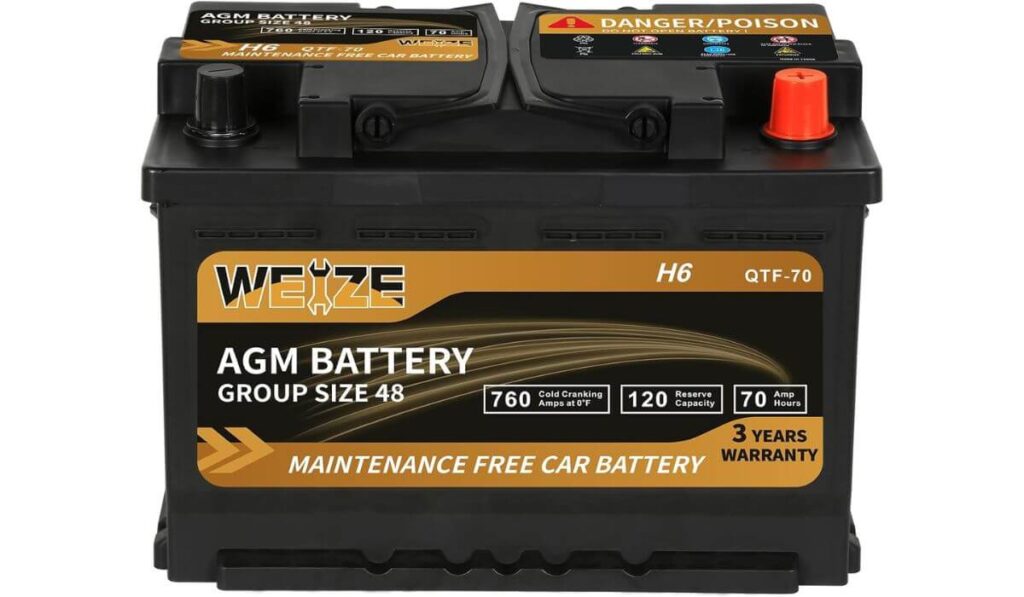
Technical Specs:
- Group Size: H6 / Group 48
- Battery Type: AGM Maintenance-Free Starter Battery
- Cold Cranking Amps: 760 CCA
- Reserve Capacity: 120 Minutes
- Capacity: 70Ah
- Voltage: 12V
- Operating Temperature: -22°F to 158°F
- Weight: 46 lbs
- Terminal Layout: Left Negative (-), Right Positive (+)
- Best Use: Start-Stop Systems, Cold Weather Starts, Heavy Accessory Load
Strangely enough, this is one of those batteries many Ridgeline owners buy with “average expectations” — and then end up talking about far more positively a few weeks later. On paper, the specs already look strong, but what really stands out is how balanced the overall performance feels once installed in a modern Honda Ridgeline. Nothing feels strained, delayed, or underpowered, even when the truck is loaded with electronics and daily stop-start driving.
The combination of 760 CCA and a full 120-minute reserve capacity gives this battery a much more stable feel than many budget AGM competitors in the H6 category. Newer Ridgelines demand consistent voltage because modern trucks constantly pull power for infotainment, charging ports, driver-assist systems, heated features, and automatic engine restart functions. A weak battery may still start the truck, but over time the electronics begin acting “slightly off” long before complete failure happens. This battery avoids that weak-link feeling surprisingly well.
Another thing worth mentioning is the temperature tolerance range. A lot of AGM batteries claim strong cold-weather performance, but this one is designed to operate from -22°F up to 158°F, which matters for Ridgeline owners dealing with freezing winters, summer heat, or trucks parked outside year-round. Combined with the leak-proof AGM construction and vibration resistance, it feels genuinely built around real daily driving conditions instead of controlled lab numbers only.
(It honestly gives off the kind of “quietly dependable” vibe most truck owners appreciate after living with it for a while.)
Why This Battery Earned a Spot on This List
- Strong 760 CCA output handles cold starts confidently
- Excellent 120-minute reserve capacity for accessory-heavy driving
- AGM construction resists vibration and internal corrosion better than flooded batteries
- Fast recharge behavior works well for short commutes and city driving
- Start-stop compatibility makes it a natural fit for newer Ridgeline models
Where Some Buyers May Think Twice
- Long-term lifespan feedback still varies depending on charging-system condition and driving habits
Real Ridgeline Compatibility Notes
For newer Honda Ridgeline models using an H6 / Group 48 battery, this one checks the important boxes correctly — proper dimensions, proper terminal orientation, and enough reserve power for modern truck electronics. That matters more than many buyers realize because incorrect terminal positioning can quickly turn a “cheap deal” into a frustrating install.
It’s especially well-suited for Ridgeline owners who use navigation, wireless charging, heated features, remote start, or multiple accessories daily. The truck simply feels more electrically stable with a stronger AGM battery supporting those systems.
The Insider Pro-Tip
One thing experienced mechanics quietly pay attention to is how a battery behaves after repeated short trips. Some batteries start strong on day one but slowly weaken because they never fully recover charge during everyday commuting. That’s why charging acceptance matters almost as much as raw CCA numbers now.
This battery’s AGM design and recharge efficiency help it recover faster during normal driving, which is a major advantage for Ridgelines spending most of their lives in traffic, school runs, work commutes, and quick errands instead of long highway miles.
#4. Mighty Max MM-H6 AGM
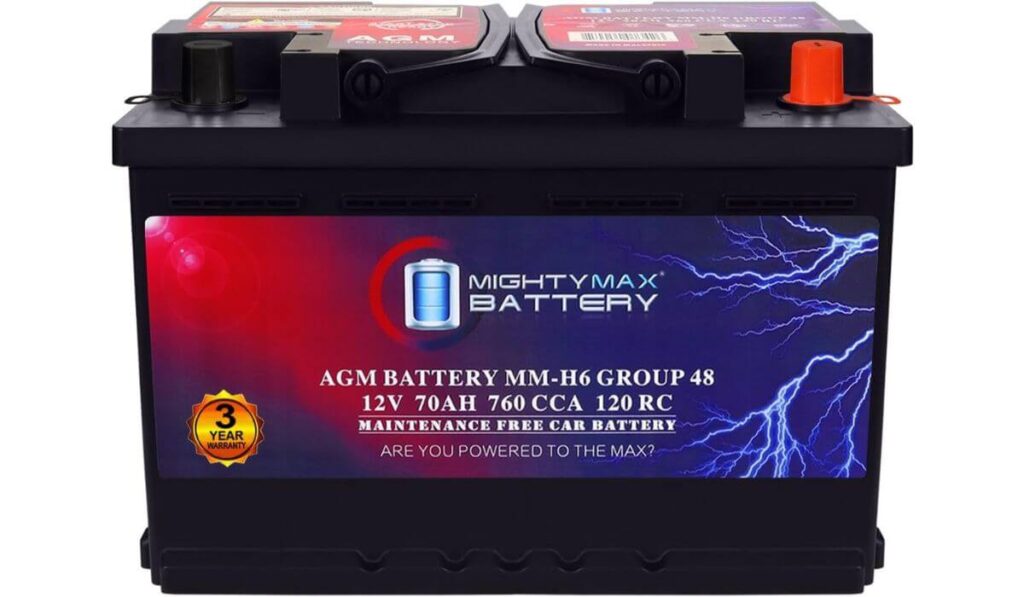
Technical Specs:
- Group Size: H6 / Group 48
- Battery Type: AGM Sealed Maintenance-Free Battery
- Cold Cranking Amps: 760 CCA
- Reserve Capacity: 120 Minutes
- Capacity: 70Ah
- Voltage: 12V
- Temperature Range: -22°F to 158°F
- Terminal Layout: Left Negative (-), Right Positive (+)
- Best Use: Daily Commuting, Start-Stop Driving, Budget-Friendly AGM Upgrade
Oddly enough, this is one of the few budget-friendlier AGM batteries that doesn’t immediately feel “cheap” once it’s inside the truck. A lot of lower-priced H6 batteries look fine on paper but start showing weaknesses the moment a Ridgeline’s electronics, remote start system, and stop-start traffic begin putting real pressure on them. This one feels much more composed than most people expect at this price level.
The 760 CCA starting power gives the Ridgeline a quick, confident crank even after colder nights or longer parking periods. That matters because modern Honda trucks rarely sit electrically “idle” anymore. Between safety systems, charging ports, infotainment displays, and background electronics, the battery is constantly doing something — even when the truck appears off. The AGM construction helps this battery handle those modern demands without the unstable behavior cheaper flooded batteries sometimes develop after a few months.
One thing that quietly makes this battery appealing is the balance between reserve capacity and recharge recovery. The full 120-minute reserve capacity gives the truck extra breathing room during accessory use, while the AGM design helps the battery recharge more efficiently during everyday driving. For Ridgeline owners doing school runs, work commutes, grocery stops, or heavy traffic driving, that balance usually matters more than extreme “racing-style” cranking numbers most people never fully use anyway.
(This feels less like a flashy premium battery and more like a genuinely practical AGM upgrade that fits the way most Ridgelines are actually driven every day.)
What Makes This Battery a Smart Real-World Pick
- Strong 760 CCA output for reliable cold-weather starts
- 120-minute reserve capacity supports heavy accessory use well
- AGM construction improves vibration resistance and leak protection
- Easy fitment for most newer Ridgeline H6 battery trays
- Good balance between affordability and modern electrical performance
Where Some Buyers May Want to Keep Expectations Realistic
- Long-term lifespan consistency can vary more compared to ultra-premium AGM brands
Real Honda Ridgeline Fitment Insight
This H6 / Group 48 battery fits naturally in newer Honda Ridgeline models without requiring unusual modifications or cable stretching. The terminal positioning lines up correctly, and the included mounting hardware makes installation smoother than many buyers expect at this price point.
For owners upgrading from an aging factory battery, the improvement in startup behavior and electrical stability is usually noticeable immediately — especially if the truck runs multiple accessories daily or spends time in stop-and-go traffic.
The Insider Pro-Tip
A battery’s real personality usually shows up during repeated short trips, not during the first startup after installation. Some batteries feel powerful for a week and then slowly become inconsistent once daily commuting patterns start stressing them.
That’s why AGM recharge efficiency matters so much in modern Ridgelines. If your truck spends most of its life doing short city drives instead of long highway miles, a battery that recovers charge quickly after each restart often feels healthier much longer than one relying only on raw cranking power numbers.
#5. Goodyear 24F-AGM Platinum
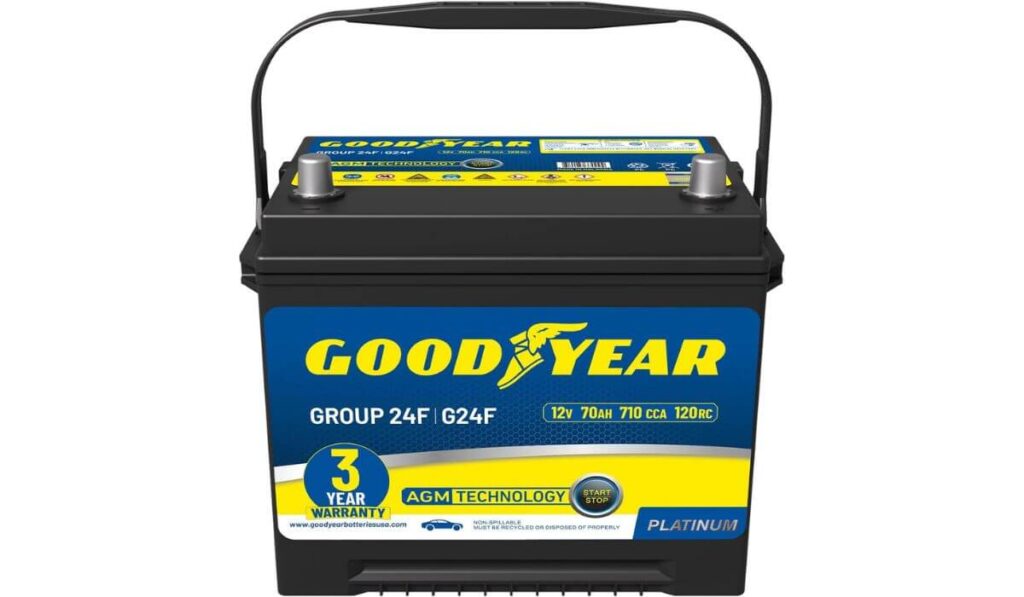
Technical Specs:
- Group Size: 24F
- Battery Type: AGM Maintenance-Free Platinum Series
- Cold Cranking Amps: 710 CCA
- Reserve Capacity: 120 Minutes
- Capacity: 70Ah
- Voltage: 12V
- Dimensions: 10.5″ L × 6.75″ W × 9″ H
- Terminal Layout: Left Negative (-), Right Positive (+)
- Best Use: Older Ridgeline Models, Cold Weather Starts, Long Daily Driving
Here’s something many newer battery guides completely ignore: older Honda Ridgeline models still need a properly matched battery size to feel right electrically. Throwing a random universal battery into a first-generation truck might technically work, but the truck rarely feels as stable long-term. This 24F AGM setup keeps things much closer to the way older Ridgelines were originally designed to operate — just with noticeably stronger AGM technology underneath.
The first thing that stands out here is the balance between 710 CCA and the full 120-minute reserve capacity. Older Ridgelines may not have aggressive modern stop-start systems, but they still rely heavily on stable voltage for lighting, ignition reliability, climate systems, charging accessories, and everyday driving comfort. A weak battery in these trucks usually reveals itself slowly — dimmer starts, slower cranking, and electronics acting slightly inconsistent over time. This battery avoids that tired feeling surprisingly well.
Another thing working in its favor is the heavy-duty AGM construction. Older Ridgelines are known for long-term ownership, rougher roads, hauling, and high-mileage use. The spill-proof AGM design and vibration resistance simply make more sense for trucks living real pickup-truck lives instead of sitting parked in perfect conditions all week. Add in the wide temperature durability and it becomes a very practical upgrade over conventional flooded batteries many older trucks still run today.
(It honestly feels like one of the cleaner AGM upgrade paths for Ridgeline owners who want reliability without overcomplicating the truck.)
Why This Battery Earned a Place in This Guide
- Proper 24F sizing for older Honda Ridgeline models
- Strong 710 CCA output handles cold starts confidently
- Excellent 120-minute reserve capacity for daily accessory use
- AGM construction improves durability and vibration resistance
- Reliable all-weather performance for year-round driving conditions
Where Some Buyers May Want to Double-Check First
- Fitment should always be verified carefully because Group 24F dimensions differ from newer H6 batteries
Real Honda Ridgeline Fitment Notes
This battery makes the most sense for first-generation Honda Ridgeline models that originally used the 24F size. The dimensions and terminal layout align naturally for older battery trays, which helps avoid unnecessary installation frustration or cable tension issues.
For older Ridgelines still used as dependable daily trucks, this AGM upgrade feels noticeably more stable during cold starts, long drives, and accessory-heavy use compared to aging flooded batteries that struggle with modern electrical demands.
The Insider Pro-Tip
A lot of older Ridgeline owners replace batteries only after complete failure, but AGM batteries tend to reward proactive replacement much more. Once an old flooded battery begins weakening, alternators often work harder trying to compensate — and many owners never notice until other electrical issues start appearing.
That’s one reason a properly sized AGM battery can make an older Ridgeline feel healthier overall. The stronger voltage stability usually improves startup behavior, idle smoothness, lighting consistency, and general electrical confidence in ways spec sheets rarely explain clearly.
#6. UPLUS Group 24F AGM
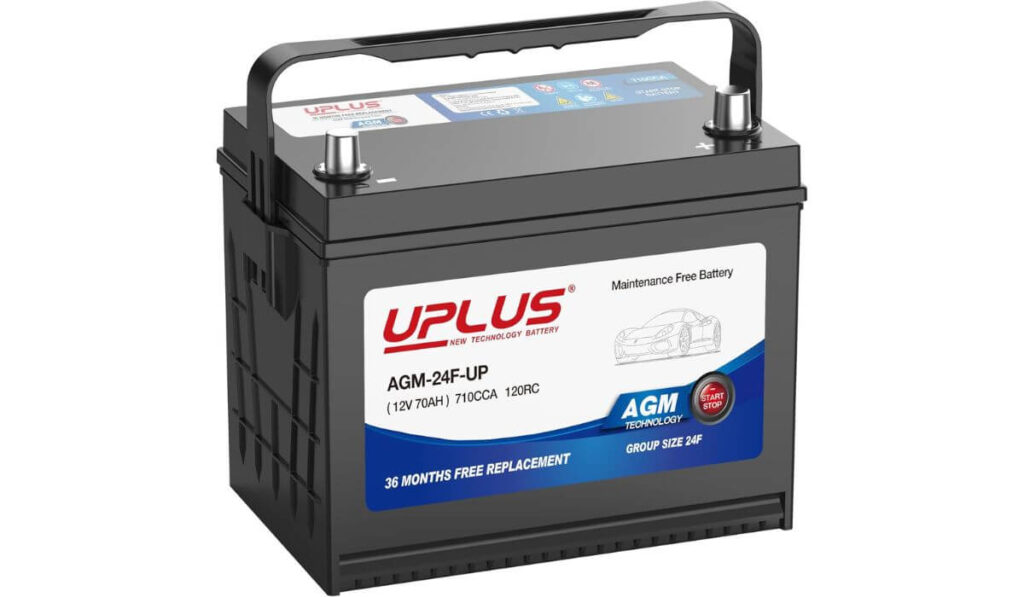
Technical Specs:
- Group Size: 24F
- Battery Type: Premium AGM Maintenance-Free Battery
- Cold Cranking Amps: 710 CCA
- Reserve Capacity: 120 Minutes
- Capacity: 70Ah
- Voltage: 12V
- Dimensions: 10.7″ L × 6.77″ W × 8.98″ H
- Terminal Layout: Left Negative (-), Right Positive (+)
- Weight: 46.8 lbs
- Best Use: Older Ridgeline Models, Heavy Electrical Loads, Frequent Short Trips
There’s a certain type of battery that immediately feels “entry-level” the moment you look deeper into the specs — and this honestly isn’t one of them. The first thing that stands out with this 24F AGM setup is how aggressively it was designed around real-world electrical stress instead of just basic startup duty. Older Honda Ridgeline models may not have giant infotainment screens like newer trucks, but many are still running navigation systems, heated accessories, aftermarket electronics, charging devices, and years of daily wear on the charging system. Weak batteries show their age fast in those conditions.
The 710 CCA output paired with a full 120-minute reserve capacity gives this battery a much more stable feel during cold starts and long accessory use than many standard flooded 24F replacements. Even more interesting is the internal construction. UPLUS uses a high-density negative paste and enhanced alloy design that’s built for significantly higher cycling durability compared to conventional batteries. In simple terms, it’s designed to handle repeated discharge-and-recharge stress better — something older Ridgelines experience constantly during short drives, traffic, winter starts, and years of ownership.
Another underrated detail here is the 15-times stronger vibration resistance. That sounds like marketing until you remember how many older pickups spend years dealing with rough pavement, potholes, job sites, towing, and uneven roads. AGM batteries already resist vibration better than flooded designs, but this one leans especially hard into durability-focused construction. For long-term Ridgeline owners who plan on keeping the truck for years, that honestly matters more than flashy advertising buzzwords.
(This feels like one of those batteries designed by people who understand older trucks stay on the road far longer than manufacturers ever expected.)
Why This Battery Quietly Makes a Lot of Sense
- Proper 24F sizing for older Honda Ridgeline battery trays
- Strong 710 CCA output handles winter starts confidently
- 120-minute reserve capacity supports heavy accessory usage well
- AGM construction improves vibration durability and leak resistance
- Enhanced cycle-life design helps with frequent short-trip driving
Where Some Buyers May Want to Keep Expectations Balanced
- Warranty support experiences appear to vary depending on the seller and installation conditions
Real Honda Ridgeline Fitment Notes
This battery is designed around the traditional 24F footprint many first-generation Honda Ridgeline models originally used, so installation generally feels straightforward when the truck already calls for a 24F battery size. The terminal orientation also lines up correctly, which helps avoid cable routing headaches during installation.
For older Ridgelines still used as reliable daily trucks, this battery especially makes sense for owners dealing with colder climates, frequent stop-and-go driving, or heavier accessory usage that pushes weaker flooded batteries beyond their comfort zone.
The Insider Pro-Tip
One thing many older truck owners underestimate is how much repeated short-trip driving slowly destroys conventional batteries. The engine starts, accessories run, but the alternator often never gets enough time to fully recharge the battery before the next shutdown.
That’s exactly where AGM batteries with stronger cycle durability quietly separate themselves over time. A battery built to tolerate repeated discharge-and-recharge stress usually stays healthier much longer in real-world Ridgeline ownership — especially for trucks spending most of their lives doing errands, commuting, towing, or daily utility work instead of long highway drives.
Best Honda Ridgeline Battery Comparison Chart for AGM, H6 & 24F Fitment
| Battery | Group Size | Starting Power | Reserve Capacity | Best For | Ridgeline Fitment | Why It Stands Out |
|---|---|---|---|---|---|---|
|
Interstate Batteries MTX-48/H6 AGM
Premium H6 AGM Pick
|
H6 / Group 48 Pure Lead AGM Design | 760 CCA Excellent cold-weather starts | 120 Minutes Strong accessory backup power | Start-stop systems, remote start, heavy electronics, long-term ownership | Best match for newer Honda Ridgeline models using H6 AGM batteries | Feels more stable than most H6 batteries under real daily electrical load. Strong reserve power and premium AGM construction stand out immediately. |
|
MARXON Group 48 H6 AGM
Best Budget AGM Value
|
H6 / Group 48 Maintenance-Free AGM | 760 CCA Reliable all-season starts | 95 Minutes Good daily driving support | Short commutes, city driving, stop-and-go traffic | Strong fit for modern Ridgeline trucks needing AGM compatibility | Fast charging behavior helps a lot during repeated short trips where weaker batteries slowly lose stability over time. |
|
Weize Platinum AGM Group 48 H6
Balanced Daily Driver Choice
|
H6 / Group 48 Leak-Proof AGM Build | 760 CCA Strong startup consistency | 120 Minutes Excellent reserve performance | Daily commuting, heated features, accessory-heavy driving | Excellent for newer Ridgelines with modern electronics and start-stop systems | One of the most balanced AGM batteries here. Stable voltage delivery makes the truck feel electrically healthier overall. |
|
Mighty Max MM-H6 AGM
Affordable AGM Upgrade
|
H6 / Group 48 Sealed AGM Construction | 760 CCA Fast confident cranking | 120 Minutes Long runtime support | Budget-friendly AGM replacement with strong everyday usability | Fits most newer Ridgeline H6 battery trays naturally | Feels noticeably better than most entry-level AGM batteries once installed. Great value-to-performance balance for daily driving. |
|
Goodyear 24F-AGM Platinum
Best Older Ridgeline AGM
|
24F Platinum AGM Design | 710 CCA Strong winter reliability | 120 Minutes Extended backup runtime | Older Ridgeline trucks needing reliable AGM power | Designed for first-generation Honda Ridgeline models using 24F sizing | Keeps older Ridgelines feeling electrically stable without overcomplicating the setup or sacrificing durability. |
|
UPLUS Group 24F AGM
Heavy-Duty 24F Choice
|
24F Premium AGM Construction | 710 CCA Reliable cold-weather starts | 120 Minutes Excellent accessory support | Older trucks with heavier electrical loads and frequent short trips | Strong fitment choice for first-generation Ridgeline owners | Enhanced cycle durability and stronger vibration resistance make it feel built for long-term truck ownership. |
Buying Guide: How to Choose the Right Battery for Your Honda Ridgeline
A Honda Ridgeline is surprisingly sensitive to battery quality compared to many older midsize trucks. Once you start dealing with start-stop systems, heated seats, infotainment screens, driver-assist tech, remote start, phone charging, and daily stop-and-go traffic, the battery becomes much more than a simple “starter.” Choosing the wrong one may still crank the engine for a while, but over time you usually start noticing slower starts, unstable electronics, weak idle voltage, or batteries that simply do not last as long as expected.
That is exactly why picking the right battery for your Ridgeline should go beyond brand names alone. Group size, reserve capacity, AGM compatibility, charging behavior, and cold-weather performance all matter far more than most owners realize at first.
Matching CCA to Your Climate and Driving Style
Cold Cranking Amps, usually shortened to CCA, measure how well a battery can start the truck during cold temperatures. In simple terms, higher CCA generally means stronger and more confident starts, especially during winter mornings or after the truck has been sitting overnight.
For most Honda Ridgeline owners, the sweet spot is usually between 700 and 760 CCA, especially on newer trucks using H6 AGM batteries. That range gives the starter enough reserve power to crank confidently while still supporting modern electrical systems without strain.
If you live in colder climates, frequently use remote start, drive early mornings, or leave accessories running often, higher CCA becomes even more important. Weak batteries usually reveal themselves first during cold starts because thicker engine oil and lower temperatures put extra stress on the starting system.
On the other hand, owners in warmer climates with lighter daily driving may not need the absolute highest CCA number available. But going too low usually becomes noticeable faster than expected once the truck ages or electrical demands increase.
Why Reserve Capacity Matters More Than Most Owners Think
A lot of buyers focus only on starting power and completely ignore reserve capacity, even though it affects daily usability just as much.
Reserve capacity tells you how long the battery can continue supplying power if the alternator is not fully charging or if multiple electronics are running at once. In a Ridgeline, that matters constantly — navigation, heated seats, charging ports, music systems, lighting, driver-assist features, and climate controls all pull power throughout the day.
That is one reason most of the batteries in this guide stay near the 120-minute reserve capacity range. Batteries with stronger reserve capacity usually feel healthier longer because they handle accessory load more comfortably instead of constantly operating near their limits.
This becomes especially noticeable for owners who:
- Drive in heavy traffic regularly
- Take frequent short trips
- Use remote start daily
- Tow occasionally
- Run accessories while parked
- Leave the truck unused for several days at a time
A battery with weak reserve power may still “start the truck,” but the overall electrical behavior often feels less stable over time.
Understanding Group 48, H6, and 24F Battery Sizes
This is where many Ridgeline owners accidentally buy the wrong battery.
Newer Honda Ridgeline models typically use an H6 battery, which is also commonly called Group 48. Those two names usually refer to the same physical battery size. Most newer Ridgeline trucks — especially models with start-stop systems — work best with an H6 AGM battery in the 70Ah range.
Older first-generation Ridgeline models commonly use Group 24F batteries instead. These batteries have different dimensions and terminal positioning compared to H6 batteries, which is why mixing them carelessly can create installation headaches or improper cable alignment.
Before buying any battery, always verify:
- Group size
- Terminal orientation
- Physical dimensions
- AGM vs flooded design
- Minimum CCA requirements
Even batteries that look “close enough” online can fit poorly once installed in the tray.
AGM vs Conventional Flooded Batteries
For most modern Ridgeline owners, AGM batteries simply make more sense now.
AGM, short for Absorbent Glass Mat, uses a sealed spill-proof design that handles vibration, repeated starts, and modern electrical loads much better than older flooded batteries. They also recharge faster, resist corrosion better, and generally tolerate stop-start systems more effectively.
Flooded batteries still work in many older trucks, but they usually struggle more with repeated short trips, accessory-heavy driving, and modern charging demands. That is why nearly every strong Ridgeline battery upgrade today revolves around AGM technology.
Why Battery Weight Can Quietly Tell You a Lot
This is something many people never notice until experienced mechanics point it out.
In AGM batteries, extra weight often means more internal lead content. More lead usually helps improve reserve power, voltage stability, durability, and long-term performance under heavy electrical load.
That does not mean every heavier battery is automatically better, but extremely light AGM batteries sometimes achieve lower pricing by reducing internal material quality. In real-world Ridgeline ownership, that difference often becomes noticeable after a year or two instead of immediately after installation.
Warranty and Real-World Support Matter More Than Marketing Claims
Almost every battery brand promises huge lifespan numbers online. Real ownership is usually more complicated.
Things like driving habits, alternator condition, climate, electrical load, and charging behavior affect battery life just as much as the battery itself. A strong warranty helps, but responsive customer support and easy replacement availability matter too.
For Ridgeline owners planning long-term ownership, it is smarter to choose a battery with:
- Proven AGM construction
- Proper fitment
- Strong reserve capacity
- Reliable cold-start performance
- Good replacement support if problems happen later
That usually matters far more than chasing the absolute cheapest price.
What Honda Ridgeline Battery Replacement Usually Costs
Battery replacement cost varies heavily depending on battery type and installation.
Standard flooded batteries are usually cheaper upfront, but premium AGM batteries cost more because they are designed for heavier electrical loads and modern vehicle systems.
For most Ridgeline owners, expect roughly:
- Basic flooded battery: lower upfront cost, shorter lifespan
- Premium AGM battery: higher initial price, better long-term performance
- Professional installation: additional labor cost depending on shop rates
A lot of owners try saving money with the cheapest possible replacement, but modern Ridgelines generally respond much better to properly matched AGM batteries — especially if the truck has start-stop technology or heavy daily electrical use.
The Real Truth Most Owners Learn Too Late
Most batteries do not fail overnight. They slowly become weaker month after month while the truck still technically “starts.” That is why many owners ignore the warning signs until they suddenly end up stranded.
If your Ridgeline already shows slower starts, dimming lights, weak idle voltage, stop-start issues, or electronics acting inconsistent, the battery is usually telling you something long before complete failure happens.
Choosing the right battery early often prevents far more frustration later — especially on trucks owners plan to keep for years.
Honda Ridgeline Battery Replacement Cost: What Owners Should Realistically Expect
One thing many Honda Ridgeline owners notice quickly is that battery replacement prices are no longer as simple as they used to be. Older trucks could get away with basic flooded batteries for relatively low cost, but newer Ridgeline models — especially those using start-stop systems and heavier onboard electronics — generally perform much better with AGM batteries. That naturally pushes replacement pricing higher, but there is usually a reason behind it.
The good news is that Ridgeline battery replacement still costs far less than dealing with repeated electrical problems, weak cold starts, or prematurely replacing cheap batteries every couple of years.
AGM vs Flooded Battery Pricing: Why the Cost Difference Exists
The biggest factor affecting replacement cost is the type of battery you choose.
Standard flooded batteries are usually cheaper upfront because the internal construction is simpler. AGM batteries, on the other hand, use sealed absorbent glass mat technology designed for:
- Better vibration resistance
- Faster recharge recovery
- Higher reserve capacity
- Improved cold-weather performance
- Stronger support for start-stop systems and electronics
That extra durability and electrical stability usually comes at a higher purchase price.
For most Honda Ridgeline owners, typical pricing usually falls somewhere around this range:
- Basic flooded battery: lower-cost option with simpler construction
- Mid-range AGM battery: balanced pricing with stronger daily performance
- Premium AGM battery: highest upfront cost, stronger reserve power, longer expected durability
In real-world ownership, many newer Ridgelines simply feel more stable with a properly matched AGM battery installed. Electronics behave more consistently, stop-start systems work smoother, and voltage stays healthier during daily use.
Why Newer Ridgeline Models Usually Cost More to Replace
This catches a lot of owners off guard.
Newer Honda Ridgeline trucks place much heavier demand on the battery than older pickups ever did. Features like:
- Remote start
- Heated seats
- Driver-assist systems
- Infotainment displays
- Phone charging
- Stop-start technology
- Navigation systems
- Multiple onboard control modules
all continue drawing power throughout daily driving.
That is one reason modern H6 / Group 48 AGM batteries often cost more than older 24F flooded setups. The battery is no longer just starting the engine — it is supporting an entire network of electronics every time the truck is driven.
Labor Cost vs DIY Installation
The actual battery itself is usually the biggest expense, but installation cost can still vary depending on where the work is done.
Most Ridgeline battery replacements are fairly straightforward, especially for owners comfortable using basic hand tools. Many auto parts stores even offer free installation with battery purchase if fitment is simple.
Professional installation may cost extra depending on:
- Local labor rates
- Battery location access
- Battery registration procedures
- Electrical system testing
- Corrosion cleanup or terminal replacement
Some shops also perform charging-system checks during installation, which honestly is not a bad idea. A weak alternator or charging issue can destroy even an expensive AGM battery much faster than expected.
The Hidden Cost of Cheap Batteries
This is the part many buyers do not think about initially.
Cheap batteries often look attractive because the upfront price feels easier to justify. But once weak reserve capacity, poor recharge recovery, and inconsistent voltage behavior start showing up, the “cheap” battery sometimes becomes more expensive long-term.
A lower-quality battery may lead to:
- Earlier replacement cycles
- Weak winter starts
- Stop-start system issues
- Electrical glitches
- Faster wear on the charging system
- Reduced battery lifespan during short-trip driving
That is why many experienced Ridgeline owners eventually move toward AGM batteries even if the initial price feels higher.
Why AGM Batteries Usually Save More Money Over Time
A good AGM battery often costs more on day one, but many owners end up spending less long-term because they are not replacing batteries as frequently.
Higher-quality AGM batteries usually provide:
- Better cycle durability
- More stable voltage delivery
- Stronger reserve power
- Better tolerance for short-trip driving
- Improved vibration resistance
- Faster recharge acceptance
That matters especially for Ridgeline owners who:
- Drive daily in traffic
- Use remote start frequently
- Take short commutes
- Leave electronics running often
- Keep their trucks for many years
Over time, stronger AGM construction usually handles those conditions far better than standard flooded designs.
What Most Owners Forget to Budget For
The battery itself is not always the only thing needing attention.
If the old battery leaked acid or suffered repeated weak-charge cycles, you may also need:
- Terminal cleaning
- New battery terminals
- Corrosion repair
- Charging-system inspection
- Alternator testing
Ignoring those issues can shorten the life of the replacement battery almost immediately, even if the new battery itself is high quality.
The Real-World Truth About Battery Replacement
Most Ridgeline owners only think about the battery after the truck struggles to start one morning. But by that point, the battery has usually been weakening for months already.
The smartest approach is replacing the battery before complete failure happens — especially if:
- Starts feel slower than normal
- Stop-start behaves inconsistently
- Headlights dim during idle
- Electronics randomly reset
- The truck sits unused often
- Winters are especially harsh in your area
A properly matched AGM battery may cost more upfront, but in a modern Honda Ridgeline, it usually feels like money spent preventing future headaches instead of simply buying another part.
Honda Ridgeline Battery Maintenance Tips That Actually Help Batteries Last Longer
A surprising number of Honda Ridgeline batteries fail early for reasons that have nothing to do with the battery itself. Modern trucks constantly pull power, even while parked, and once daily short trips, weather changes, accessories, and stop-start systems enter the picture, battery health becomes much more sensitive than most owners expect.
The good news is that a few small habits genuinely make a noticeable difference in how long a Ridgeline battery stays healthy — especially AGM batteries that owners plan on keeping for several years.
Avoid Repeated Short Trips Whenever Possible
This is probably the biggest hidden battery killer in modern trucks.
If the Ridgeline is mostly used for:
- School runs
- Grocery stops
- Short work commutes
- Quick errands
- Heavy stop-and-go traffic
the alternator often never gets enough time to fully recharge the battery after startup. Over time, the battery slowly stays undercharged more often than it should, which quietly shortens lifespan month after month.
Even one longer highway drive occasionally can help the charging system recover battery health more effectively.
Keep Battery Terminals Clean Before Corrosion Starts
Many owners ignore battery terminals until the truck suddenly struggles to start.
Small amounts of corrosion create extra resistance, which forces the battery and alternator to work harder than necessary. That extra strain becomes more noticeable during:
- Cold weather
- Morning starts
- Heavy accessory use
- Older battery age
If you notice white or bluish buildup around the terminals, cleaning it early is far better than waiting until startup problems begin.
AGM Batteries Hate Deep Discharge More Than People Think
AGM batteries are extremely good at handling modern electronics and repeated starts, but they still dislike being completely drained repeatedly.
Leaving:
- Interior lights on
- Dash cameras running continuously
- Chargers plugged in for days
- Accessories active while parked
can slowly damage battery health faster than many owners realize.
A battery that repeatedly drops too low often loses long-term capacity even if it still technically starts the truck afterward.
Check Charging Voltage Before Blaming the Battery
One of the most common mistakes owners make is replacing the battery without checking the charging system first.
If the alternator is:
- Undercharging
- Overcharging
- Delivering unstable voltage
even a brand-new AGM battery can weaken much earlier than expected.
A healthy charging system matters just as much as buying a quality battery in the first place.
Cold Weather Changes Everything
Winter puts far more stress on batteries than most people expect.
Cold temperatures:
- Thicken engine oil
- Reduce battery efficiency
- Increase startup resistance
- Slow recharge performance
That is why weak batteries often seem “fine” during summer but suddenly fail the first cold morning of the year.
If your Ridgeline already cranks slower during cooler temperatures, the battery is usually warning you early.
Let the Truck Sit Too Long? Use a Smart Maintainer
Ridgelines that sit unused for long periods often experience battery drain because modern electronics continue pulling small amounts of power even while parked.
If the truck stays parked for:
- Several weeks
- Seasonal storage
- Occasional-use driving
- Long travel periods
a smart battery maintainer can help preserve AGM battery health far better than repeatedly jump-starting a weak battery later.
Heat Can Damage Batteries Just as Fast as Winter
A lot of people only worry about cold weather, but extreme summer heat is brutal on battery internals too.
High temperatures speed up:
- Internal corrosion
- Water loss in conventional batteries
- Chemical wear
- Capacity degradation
That is one reason batteries in hotter climates often fail earlier even if winter conditions are mild.
The Real Secret to Longer Battery Life
The batteries that usually last the longest are not always the most expensive ones — they are the batteries installed in trucks with healthy charging systems and good daily driving habits.
Things that quietly help battery longevity the most:
- Keeping terminals clean
- Avoiding repeated deep discharge
- Driving long enough for proper recharge
- Replacing weak batteries early
- Using the correct AGM group size
- Checking alternator health periodically
Most batteries do not suddenly “die.” They slowly weaken over time while the truck keeps giving small warning signs most owners ignore until one morning the engine simply refuses to start.
FAQs About Honda Ridgeline Battery
Does the Honda Ridgeline actually benefit from a premium AGM battery, or is it mostly marketing?
Honestly, this is one of those things many owners only understand after switching from a weak conventional battery to a proper AGM setup. The Ridgeline may not look like a “heavy-duty electrical truck” at first glance, but modern models quietly run a huge amount of electronics in the background every single day. Remote start, infotainment systems, driver-assist tech, heated seats, charging ports, stop-start functions — all of it constantly pulls power.
That is why a strong AGM battery usually makes the truck feel more stable overall, not just during startup. Owners often notice:
- Faster cold starts
- Smoother stop-start behavior
- More consistent idle voltage
- Fewer random electronic glitches
- Better performance after sitting overnight
A cheap flooded battery might still crank the engine initially, but over time the electrical system usually feels less “happy” compared to a properly matched AGM battery with stronger reserve capacity.
Why do some Honda Ridgeline batteries fail early even when the battery itself is supposedly high quality?
This catches a lot of owners off guard because the battery often gets blamed for problems caused somewhere else.
Modern Ridgelines are extremely sensitive to charging-system behavior. If the alternator slightly undercharges, overcharges, or struggles during repeated short trips, even expensive AGM batteries can weaken much faster than expected. Add cold weather, stop-and-go traffic, remote start usage, and heavy accessory load into the mix, and the battery experiences stress almost daily.
One thing experienced mechanics quietly notice is that many “bad battery” situations actually involve:
- Weak alternators
- Corroded terminals
- Poor grounding connections
- Repeated short-trip driving
- Trucks sitting unused too long
That is why some owners get six or seven years from an AGM battery while others struggle much sooner with the exact same model.
Is upgrading from a 24F battery to an H6 AGM battery worth it in a Honda Ridgeline?
Only if the truck is designed for it.
This is where online battery advice becomes dangerously oversimplified. Many newer Honda Ridgeline models are built around the H6 / Group 48 battery platform, while older first-generation trucks commonly use 24F sizing. The physical dimensions, terminal positions, and tray fitment are different enough that forcing the wrong battery size into the truck usually creates more problems than benefits.
What actually matters more than “upgrading sizes” is upgrading battery quality within the correct group size. A properly fitted AGM battery with:
- Strong reserve capacity
- Correct terminal orientation
- Stable voltage delivery
- Good recharge behavior
will almost always outperform a poorly matched battery simply chosen because the numbers looked bigger online.
Why do AGM batteries feel stronger during daily driving even when the CCA numbers look similar?
This is one of the biggest things spec sheets fail to explain properly.
Two batteries may both advertise 760 CCA, yet one feels noticeably healthier in real-world driving. That usually comes down to:
- Reserve capacity
- Internal lead content
- Voltage stability
- Recharge efficiency
- Cycle durability
Modern Ridgelines constantly drain and recover battery power throughout the day. Batteries with stronger AGM construction tend to recover faster after starts, maintain voltage more consistently, and tolerate repeated electrical stress much better over time.
That is why some batteries still feel “fresh” years later while others slowly develop weak starts and inconsistent electronics even though the CCA rating looked impressive on paper.
What is the biggest mistake Honda Ridgeline owners make when replacing a battery?
Waiting too long.
Most batteries do not suddenly fail overnight. The truck usually gives subtle warning signs for months first:
- Slightly slower cranking
- Stop-start acting inconsistent
- Headlights dimming during idle
- Electronics randomly resetting
- Weak cold-weather starts
- Slower accessory response
A lot of owners ignore those signs because the truck technically still starts. But by that point, the battery is often already operating below healthy voltage levels regularly, which quietly stresses the alternator and other electrical components too.
Replacing the battery before complete failure usually saves far more frustration than squeezing out “one more winter” from a battery already showing warning signs.
Final Thoughts
Finding the best battery for a Honda Ridgeline is honestly less about chasing the biggest brand name and more about choosing a battery that actually matches the way these trucks are used today. Modern Ridgelines put far more demand on batteries than most owners expect, especially once daily commuting, stop-start traffic, cold mornings, remote start systems, heated features, and accessory-heavy driving become part of normal life.
That is exactly why the batteries in this guide were chosen so carefully. The newer H6 / Group 48 AGM options make far more sense for modern Ridgelines needing stronger reserve power and stable voltage delivery, while the 24F AGM batteries still remain excellent choices for older first-generation trucks that deserve dependable long-term reliability without fitment compromises.
What matters most long-term is not just getting the truck started tomorrow morning. It is choosing a battery that still feels strong months and years later when temperatures drop, electronics age, and daily driving stress slowly increases. That is usually where better AGM construction, proper reserve capacity, and correct fitment quietly separate themselves from cheaper replacements that only look good initially.
If there is one thing longtime Ridgeline owners learn eventually, it is this: the truck almost always tells you when the battery is starting to weaken — slower cranks, inconsistent stop-start behavior, dimmer idle lighting, electronics acting slightly “off.” Paying attention to those small signs early usually prevents the bigger headaches later.
A properly matched AGM battery will not magically transform a Ridgeline overnight, but it absolutely changes how confidently the truck feels during real daily ownership. And honestly, that peace of mind matters a lot more than most people realize until the morning the engine refuses to start.
Also Check:

