
6 Best Rooftop Tents for Toyota Hilux in 2026: Hard Shell, 4-Season Insulation & Quick Setup
The Toyota Hilux makes rooftop camping look almost effortless, but choosing the right tent is where things become considerably more complicated. A Hilux can differ by generation, cab configuration, market and rack setup, so a tent that suits one truck may not be the right match for another. Weight should be your first filter, followed by mounting compatibility, crossbar spacing, clearance and the dynamic load rating of the complete setup. The six hard-shell options in this guide range from roughly 160 lb to nearly 198 lb, with sleeping capacity from 2 to 4 people, so there are meaningful differences in what each setup asks from the truck.
The feature gap is just as important. Depending on the design, you will find aluminum or ABS hard shells, 3- and 4-season construction, thermal liners, insulated panels, anti-condensation mats, waterproof fabrics, hydraulic-assisted opening, fast setup systems, LED lighting, USB power, storage pockets and integrated crossbars. Some models advertise water resistance up to 5,000 mm, while setup claims range from around 30 seconds to as little as five seconds. Those numbers are useful for comparing products, but they are manufacturer specifications rather than guarantees of identical performance in real rain, wind, cold weather or repeated use.
For this list, we looked beyond impressive feature lists and focused on what actually matters once the tent is mounted on a Hilux: weight, usable sleeping space, weather protection, insulation, condensation management, setup practicality, mounting flexibility and everyday truck compatibility. We also considered the reality that a rooftop tent affects more than camping—it adds height, weight and aerodynamic load to the vehicle. If you are using the cab roof, check your specific Hilux’s owner information and rack limits; if you are using a bed rack, evaluate that rack’s load rating separately. The right choice is not simply the biggest or most feature-packed tent, but the one that gives your Hilux the camping capability you genuinely need without creating unnecessary compromises.
Best Toyota Hilux Rooftop Tent: Top 2026 Picks for Comfort & Truck Fitment
#1. Smittybilt Aluminum Side Opening Roof Top Tent RTT – SB2985
Best Toyota Hilux rooftop tent for a low-profile aluminum shell, quick deployment and simple 3-season camping
#2. HEYFUN Adventurer Pro Rooftop Tent Hard Shell
Best rooftop tent for Hilux owners prioritizing lighter weight, 4-season protection and rapid setup
#3. Bayati Naturnest Sirius 1 Plus XL Rooftop Tent
Best roof tent for Toyota Hilux owners who want maximum sleeping space, insulation and four-season comfort
#4. Jiadrooe Hard Shell Roof Top Tent
Best Hilux camping tent for flexible mounting, thermal insulation and useful built-in camping electronics
#5. JOYINRUTE Rooftop Tent Hard Shell with Winter Insulation
Best rooftop tent for Hilux campers focused on cold-weather insulation, moisture control and four-season use
#6. WildFinder Rooftop Tent Hard Shell
Best Toyota Hilux roof tent for straightforward hard-shell construction, weather protection and practical campsite storage
Expert Tip
Before you spend money on a rooftop tent for your Hilux, do not start with the tent—start with the truck and rack. That one change in thinking can save you from buying a tent that technically fits but makes a poor real-world setup.
A Hilux can handle rooftop camping extremely well, but the correct setup depends on whether the tent is going on the cab roof or a bed rack, which rack system you have, and how much weight that system is designed to carry. Remember that the load while driving is different from the load when the tent is open and occupied. The tent itself, mounting hardware and rack all count before you even climb inside.
That is why we have not treated large sleeping capacity as an automatic advantage here. A bigger tent can be wonderful for comfort, but it can also add unnecessary weight and bulk. For a Hilux, a well-matched tent that opens quickly, seals properly and works with your existing rack can be a far better purchase than a larger model with impressive numbers on the box.
How We Choose These Rooftop Tents
We did not rank these tents simply by their star ratings, advertised capacity or the number of features listed on a product page. The more useful question for a Hilux owner is: does this tent make sense once it is actually mounted on the truck?
Our first filter was vehicle and mounting practicality. Because Hilux trucks vary by cab configuration, generation and rack setup, we looked for designs that give owners a realistic path to installation rather than assuming one mounting arrangement fits every truck. Adjustable mounting hardware, usable rail layouts and sensible shell dimensions can matter more than a flashy feature list.
Next came construction and weather protection. The aluminum hard-shell designs stand out because they offer a rigid exterior and quick deployment, while insulated models become more interesting for campers who expect colder nights or genuine four-season use. We paid attention to the features that affect everyday camping—not just specifications that look impressive on a comparison chart.
We also considered sleeping space against practicality. The larger Bayati model, for example, earns its place because extra room can genuinely improve a multi-person camping setup. But we did not automatically put it first simply because it offers more space. On a Hilux, extra size only becomes an advantage when the truck, rack and intended use can comfortably support it.
The same thinking applies to the smaller 2–3 person options. A more compact hard shell can be the smarter choice for a couple who wants less bulk, faster setup and easier day-to-day use. That is why the list is not arranged as “largest tent first.”
Finally, we looked at what each tent is actually good at. Smittybilt’s aluminum side-opening format brings a different advantage from HEYFUN’s compact 2–3 person design. Bayati focuses more heavily on interior space, while Jiadrooe adds adjustable mounting and thermal features. JOYINRUTE makes more sense for buyers putting greater emphasis on winter insulation, while WildFinder remains a straightforward hard-shell option.
Because several of these models have limited long-term owner feedback, we have deliberately avoided pretending that a few product-page reviews prove years of durability. Where real-world evidence is still limited, we say so. Our rankings are based on the design, stated specifications, intended use and Hilux-specific practicality rather than manufactured certainty.
That is ultimately what this list is designed to do: narrow your choices without hiding the trade-offs. The best rooftop tent for your Hilux is not necessarily the most expensive, biggest or most feature-packed one. It is the one whose weight, mounting system, size and camping features make sense for your particular truck and the way you actually camp.
#1. Smittybilt Aluminum Side Opening ROOF TOP Tent RTT – SB2985
Quick Specs:
- Weight: 174 lb
- Sleeping capacity: 2–3 people
- Closed height: 7.1 in
- Open dimensions: 84.7 × 55.3 × 37.8 in
- Floor width: 55.3 in
- Shell: Aluminum hard shell
- Ladder: 90.5-in telescoping ladder
- Season rating: 3-season
- Weather protection: Water-resistant construction
- Opening style: Side-opening
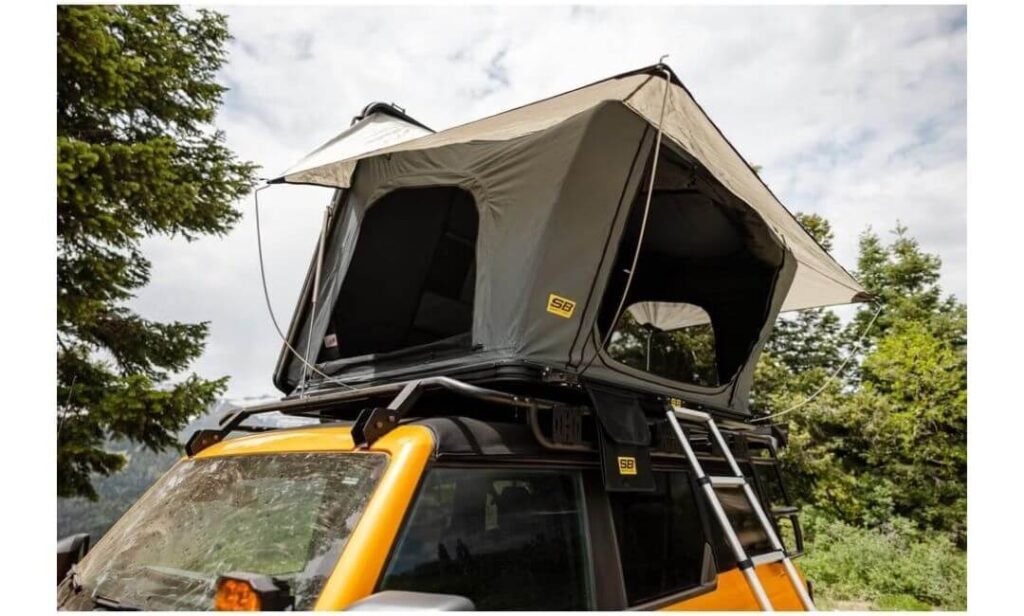
Some rooftop tents look impressive until you actually have to live with one on a pickup. This one takes a more sensible approach: the aluminum shell stays only 7.1 inches tall when closed, while the 84.7-inch length gives you a proper sleeping platform rather than a cramped overnight box. For a Hilux, that low-profile shape is useful because you are already adding considerable height to the truck; keeping the tent compact when packed makes everyday driving and storage much less awkward.
The 174-pound tent weight is the number I would pay closest attention to before buying. It is not something I would casually describe as featherweight, especially once the rack and mounting hardware are included. The good news is that you get a rigid aluminum shell, a 2–3 person layout and a genuinely useful 90.5-inch telescoping ladder in return. That combination makes much more sense for a Hilux owner who wants a proper hard-shell setup rather than chasing the lowest possible tent weight.
Then there is the detail that changes how the tent feels at camp: it opens from the side. Entry is straightforward, the footprint is already long enough for most sleepers, and the hydraulic-assisted opening means you are not turning camp setup into a job of its own. The 3-season rating and water-resistant construction also make it a sensible choice for normal spring, summer and fall trips, although I would not buy it specifically for deep-winter camping when a dedicated insulated 4-season design is the better match.
What We Like
- Low 7.1-inch closed profile makes a big difference when the tent stays on the truck between trips.
- 84.7-inch length gives the sleeping area useful real-world room instead of prioritizing a tiny packed footprint.
- 90.5-inch ladder is a particularly practical touch for a pickup that sits higher off the ground.
- The aluminum hard shell gives the setup a more substantial, protective feel than a basic fabric rooftop tent.
- The side-opening layout keeps getting in and out simple, especially when the truck is parked close to other gear.
What We Would Keep in Mind
The 174-lb weight deserves a proper compatibility check before installation. The tent may be suitable for the truck, but that conclusion depends on the specific Hilux, rack system and mounting arrangement rather than the tent alone.
Hilux Rooftop Setup: What You Need to Check
For a Toyota Hilux, I would treat this as a rack-and-load calculation, not a simple “will it fit?” question. If you are mounting it above the cab, check your specific Hilux’s permitted dynamic roof load and make sure the rack and crossbars are rated for the tent’s 174 lb weight plus their own hardware. If you are using a bed rack, use the rack manufacturer’s load rating instead; that is a different installation from putting the tent directly over the cab.
The other thing worth checking is mounting-bar spacing and available mounting hardware before ordering. The 55.3-inch floor width and long 84.7-inch footprint give you a substantial platform, so you want the rack to support it securely at the intended mounting points rather than improvising after delivery.
The Insider Pro-Tip
Here is the part I would not skip: do the weight calculation before you fall in love with the tent. At 174 lb, this is a serious piece of equipment, and the real installed weight will be higher once the rack and hardware are included. If your Hilux setup comfortably clears those limits, the low-profile aluminum shell becomes a genuine advantage; if it does not, no amount of extra features makes the combination worth forcing.
And for a Hilux that will spend most of its life as a daily driver, I particularly like the 7.1-inch closed height. That is the kind of specification that sounds minor on a product page but becomes surprisingly important after weeks of driving with a rooftop tent attached. Keep it compact on the road, open it when you reach camp—that is the right philosophy for this particular design.
#2. HEYFUN Adventurer Pro Rooftop Tent Hard Shell, 2–3 Person Aluminum Roof Top Tent
Quick Specs:
- Weight: 160 lb
- Sleeping capacity: 2 adults + 1 child
- Closed size: 83.86 × 51.57 × 7.0 in
- Open size: 83.86 × 51.57 × 62.99 in
- Shell: Aircraft-grade aluminum
- Waterproof rating: Up to 5,000 mm
- Season rating: 4-season
- Maximum internal load: 660 lb
- Opening: Hydraulic pop-up
- Setup time: Advertised 5 seconds
- Included: Sleeping mat, condensation mat, ladder, side awning, shoe-storage bags and universal mounting hardware
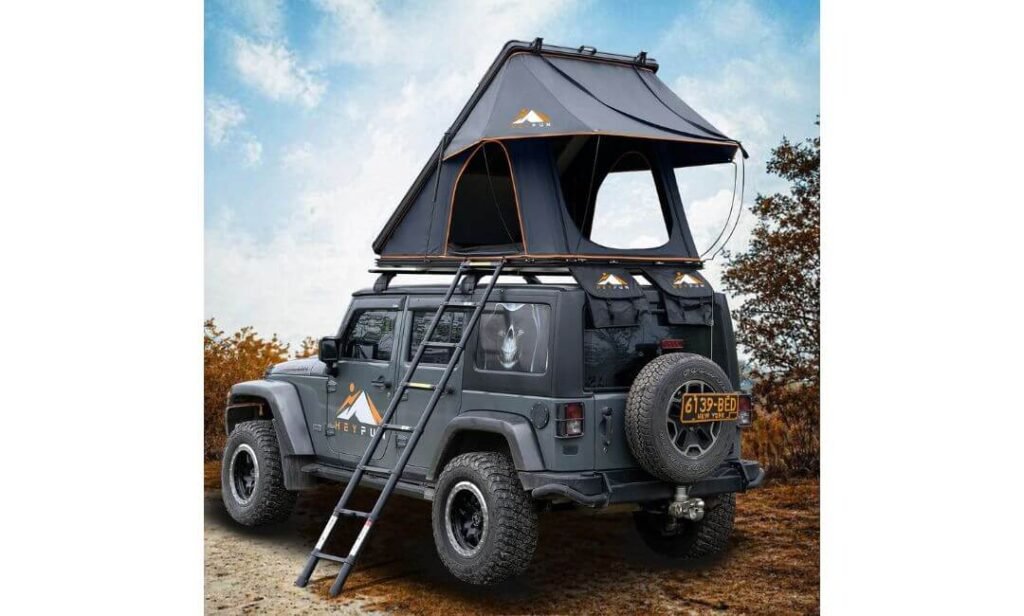
The first thing that stands out here is not the LED strip or the awning—it is the 160-pound overall weight paired with an aluminum hard shell. That puts it 14 pounds below the Smittybilt above, while still giving you an 83.86-inch-long sleeping platform. For a Hilux owner who wants a rigid rooftop tent but is conscious of the total rack load, that difference is genuinely useful. It still needs to be checked against your specific rack and vehicle limits, but the starting point is sensible.
Then there is the setup. The hydraulic pop-up system is designed to open and close in roughly five seconds, so this is the sort of tent that makes spontaneous overnight stops much easier. The 7-inch closed height is also worth noticing: once packed down, it stays relatively slim on the truck. Open it and you get a 62.99-inch interior height, plus a side awning that gives you somewhere to stand outside the sleeping area when the weather is less cooperative.
For year-round campers, the specification sheet has some genuinely useful details rather than just calling it “all-season.” There is a condensation mat, flocked floor lining, sleeping mat, rubber sealing and 5,000 mm water-resistance rating, while the ventilation openings combine mesh with wind-protection layers. Add the built-in LED strip and 13 storage pockets, and the interior is clearly designed around actually spending time inside—not merely sleeping there for one night.
What We Like
- 160-lb weight is a meaningful advantage when calculating the complete Hilux rack load.
- The 7-inch closed profile keeps the packed setup neat and relatively low.
- 5-second hydraulic opening is exactly the kind of convenience that matters after a long drive.
- The condensation mat and ventilation design are useful touches for changing temperatures.
- The included side awning and storage accessories make the package more complete straight out of the box.
What We Would Keep in Mind
The advertised 660-lb maximum load refers to the tent’s internal load capacity, not the amount your Hilux roof or rack can safely carry while driving. Those are separate limits, so do not use the 660-lb figure to determine vehicle compatibility.
A Better Match for the Right Hilux Setup
At 83.86 inches long and 51.57 inches wide, this is a substantial sleeping platform, but the important number for installation is still 160 lb before you add the rack and mounting hardware. The manufacturer also recommends crossbars capable of supporting at least 165 lb, so your particular rack system should be checked rather than assuming factory bars will automatically be suitable.
For a Hilux using a bed rack, the calculation changes again: the rack’s own static and dynamic ratings become central to the decision. In other words, this tent has a strong specification sheet, but fitment is a system question, not something a product title can settle by itself.
The Insider Pro-Tip
If you regularly arrive at camp tired, wet or after dark, the five-second deployment is more valuable than it sounds. A tent that takes almost no effort to open is one you are actually likely to use more often. That is a much better reason to choose this design than buying it simply because it has a long list of accessories.
One more thing I would check before pressing the buy button: calculate 160 lb + rack + mounting hardware, then compare that real installed weight with your Hilux setup’s permitted load. If the numbers work, the combination of a 7-inch packed height, aluminum shell, condensation management and genuinely fast setup makes this one of the more convincing options in the list.
#3. Bayati Naturnest Rooftop Tent Hard Shell – Sirius 1 Plus XL
Quick Specs:
- Weight: 197.2 lb
- Sleeping capacity: 3–4 people
- Closed/open dimensions: 82.6 × 74.8 × 47.2 in listed product dimensions
- Floor width: 74.8 in
- Shell: High-strength ABS hard shell
- Frame: Aluminum
- Season rating: 4-season
- Mattress: 1.97-inch thick
- Setup: About 30 seconds
- Insulation: Honeycomb sound and thermal panels
- Fabric: Weather-resistant, replaceable fabric
- Hardware: 316 stainless-steel gas struts and YKK zippers
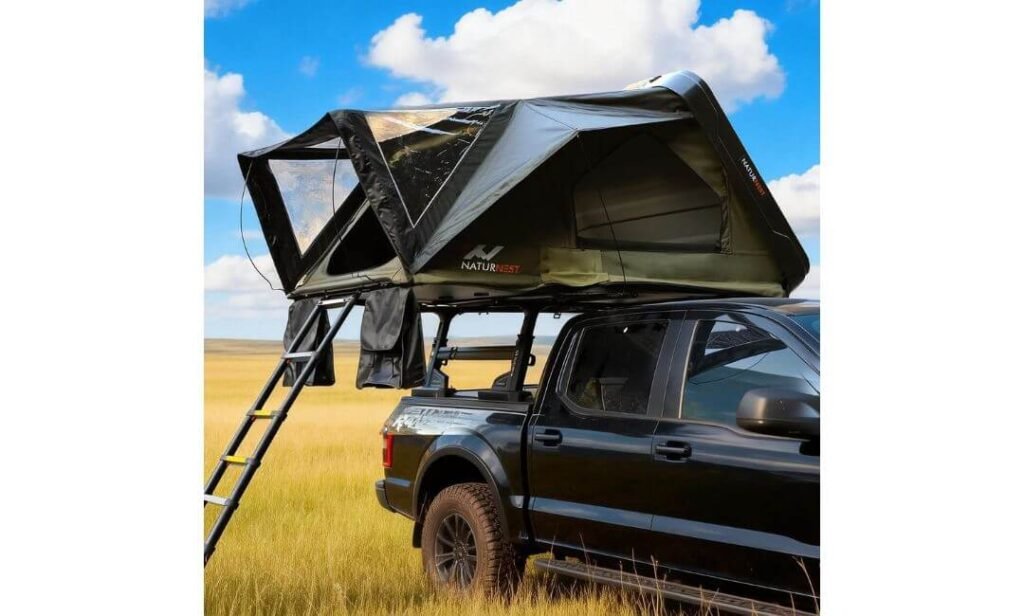
Space is the reason this tent earns the #3 position rather than being treated like just another hard shell. The 74.8-inch floor width is genuinely generous, and with an interior around 82.7 × 74.8 inches, it gives three people considerably more freedom to move around than the narrower 2–3 person designs above. If your Hilux is being used for family trips or longer stays where everyone spends more time inside the tent, that extra width is something you will notice every night—not just on the specification sheet.
The trade-off is equally real: 197.2 pounds is a substantial load. That does not make it a bad choice for a Hilux, but it does mean the rack and vehicle limits deserve more attention here than with a lighter tent. The reward is a much more substantial shelter, with a high-strength ABS shell, aluminum frame and honeycomb panels designed to provide both thermal and noise insulation. There is also a 1.97-inch mattress and blackout fabric, which makes the interior feel much closer to a proper sleeping room than a basic rooftop shelter.
What makes the design particularly interesting for serious four-season campers is how the small details work together. The 30-second setup, 316 stainless-steel gas struts and replaceable tear-resistant fabric all point toward long-term use rather than a tent intended for occasional fair-weather weekends. A dedicated vent can also be used with a heater or cooler, while the included roof crossbars give you another place to carry lightweight equipment without filling the sleeping area with gear.
What We Like
- 74.8-inch floor width is the standout feature for families and campers who dislike cramped rooftop tents.
- The 1.97-inch mattress gives the sleeping area a more substantial, permanent-bed feel.
- Honeycomb insulation panels add useful thermal and noise-control benefits beyond a basic fabric enclosure.
- 30-second setup keeps a large tent from becoming a chore every time you stop.
- Replaceable fabric and 316 stainless-steel hardware are reassuring details for owners planning to keep the setup for years.
What We Would Keep in Mind
The 197.2-lb weight is the one number I would take seriously before buying. Once the rack and mounting hardware are added, you need to check the complete installed weight against the specific Hilux/rack configuration rather than relying on the tent’s own capacity claims.
Getting the Fit Right on a Hilux
This is where the Sirius 1 Plus XL needs a little more planning than a compact rooftop tent. Its 74.8-inch width gives you fantastic interior space, but your rack needs to provide suitable support and mounting positions for that footprint. Bayati says it is designed to work with most factory and aftermarket roof racks, but that does not replace checking the actual rack specifications on your Hilux.
The supplied roof crossbars are useful for carrying lightweight items such as solar equipment, skis or bikes, but I would not interpret them as permission to load heavy equipment overhead. For a Hilux, the sensible approach is to keep the roof cargo light and make sure the tent, rack and any additional load remain within the relevant limits.
The Insider Pro-Tip
There is a simple reason I would choose this over a smaller tent: when you camp for several nights, floor space stops being a luxury. That 74.8-inch width can mean the difference between everyone having a comfortable sleeping position and constantly working around each other’s gear. The blackout fabric and thick mattress make that advantage even more noticeable when the weather keeps you inside.
But I would make the purchase decision in the opposite order from most shoppers: confirm the Hilux rack and load limits first, then decide whether you need this much room. If your setup can comfortably support 197.2 pounds plus the mounting system, the combination of four-season construction, insulation, a substantial mattress and genuinely quick deployment makes the extra size much easier to justify.
#4. Jiadrooe Hard Shell Roof Top Tent with Adjustable Crossbars
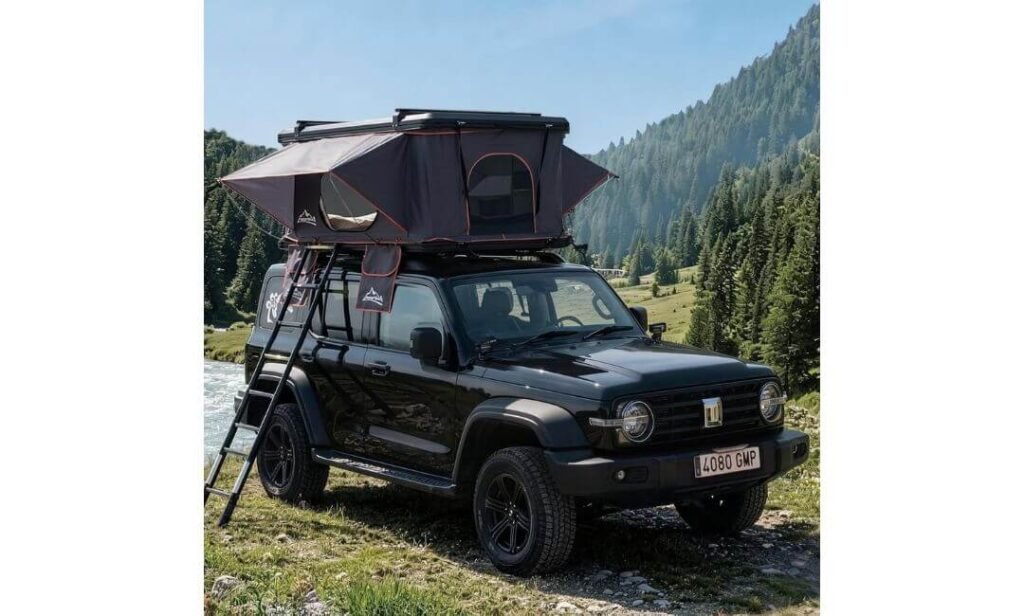
Quick Specs:
- Weight: 176 lb
- Sleeping capacity: 3 people
- Size: 77 × 64 × 40 in
- Floor width: 132 cm
- Shell: ABS hard shell
- Fabric: Triple-coated 600D Oxford
- Waterproofing: Up to 5,000 mm hydrostatic rating
- Season rating: 4-season
- Setup: About 60 seconds
- Mattress: High-density two-layer design
- Insulation: Detachable thermal liner
- Cargo system: 2 adjustable aluminum crossbars
- Power: Integrated USB power hub
- Lighting: Dual-mode LED strips
- Included: Telescoping aluminum ladder and universal mounting hardware
A rooftop tent becomes much more useful when it does not force you to give up the rest of your camping gear. That is where this design takes an interesting route: the two adjustable aluminum crossbars sit above the shell, giving you a dedicated place for lightweight equipment such as solar panels or other adventure gear. For a Hilux owner already trying to make limited truck space work harder, that is a genuinely practical idea rather than another decorative feature.
The 176-pound weight puts it in the middle of this list, but the real attraction is what you get around that number. Inside, there is room for three people across a 77 × 64-inch footprint, together with a two-layer mattress and an anti-condensation mat. The detachable thermal liner is particularly useful because you can remove it when the weather is warm instead of carrying a permanently insulated interior through summer. That makes the design more adaptable than a tent built around one climate.
Then there is the everyday convenience. The hydraulic hard shell is designed to pop up in about a minute, while the integrated USB power hub and dual cool/warm LED strips take care of two small problems that become surprisingly annoying on longer trips. Add the ABS shell and triple-coated 600D Oxford fabric with a stated 5,000 mm hydrostatic waterproof rating, and the overall package is clearly aimed at campers who want a more self-contained setup without turning the Hilux into a permanent expedition vehicle.
What We Like
- Adjustable roof crossbars add genuinely useful cargo flexibility above the tent.
- The detachable thermal liner lets you adapt the interior to different seasons.
- Anti-condensation mat is a worthwhile feature for humid nights and temperature changes.
- USB power hub and dual-mode LEDs make the interior more practical after dark.
- The 77 × 64-inch footprint gives three occupants useful room without reaching the size of the 4-person model above.
What We Would Keep in Mind
The crossbars are advertised with a 150-lb capacity, but that is their own cargo rating—not permission to exceed your Hilux’s roof or rack limits. Keep the complete system within the lowest applicable rating.
Making It Work on Your Hilux
The supplied universal mounting hardware gives you a starting point, but I would still check your particular Hilux rack before ordering. The 176-lb tent weight, rack, mounting hardware and any cargo placed on the upper crossbars all need to be considered as part of the overall setup.
The 77-inch length is relatively easy to work with on a pickup, but the 64-inch width and mounting position still need to line up properly with your rack. If you are using a bed rack, follow that rack’s load specifications rather than treating the truck’s cab-roof rating as the relevant number.
The Insider Pro-Tip
The smartest part of this tent may actually be the feature most people will overlook: the insulation is detachable. A four-season label sounds great, but permanent insulation can become unnecessary bulk when you are camping through hot weather. Being able to change the interior for the conditions gives this setup a more practical long-trip personality.
And I would use those top crossbars carefully. They are excellent for keeping lightweight adventure equipment out of the sleeping area, but they are not a reason to load the roof heavily. If your Hilux rack passes the weight check, this is a particularly appealing middle ground: more versatile than a basic hard shell, but without the footprint of a full-size family tent.
#5. JOYINRUTE Rooftop Tent Hard Shell with Winter Insulation
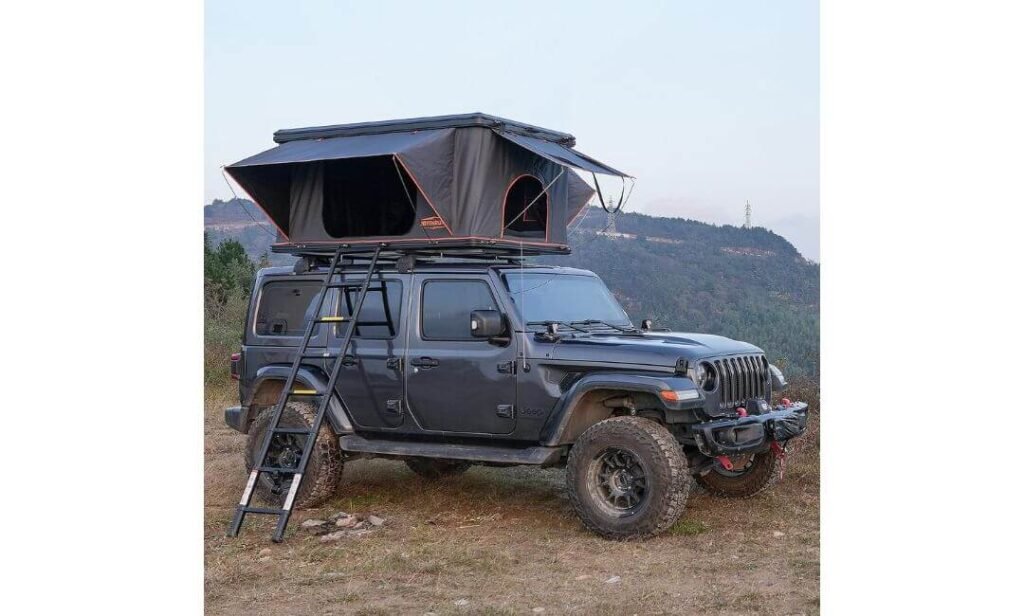
Quick Specs:
- Weight: 178 lb
- Sleeping capacity: 2 people
- Size: 83 × 51.8 × 39.4 in
- Floor width: 47.29 in
- Shell: Aircraft-grade aluminum
- Season rating: 4-season
- Water resistance: Up to 5,000 mm
- UV protection: Up to 99%
- Wind rating: Up to Grade 6
- Insulation: Removable winter thermal liner
- Ventilation: 4 windows with mesh and windproof layers
- Opening system: 4 hydraulic support rods
- Ladder: 7.5-ft telescoping
- Included: Mattress, condensation pad, LED strip, storage bags, shoe organizers and installation tools
Cold-weather camping is where this design starts making sense. The removable thermal liner is the feature I would focus on because it gives the tent a different personality depending on the season. Keep the insulation in when temperatures drop, then remove it when summer arrives. That is a much more useful arrangement than having a tent that is permanently optimized for one type of weather.
At 178 pounds, it is not the lightest option here, but the weight comes with a rigid aluminum shell and a fairly substantial 83-inch length. Inside, the 47.29-inch floor width makes it more naturally suited to two people than a family group. That narrower sleeping area is worth knowing before buying, but for a couple who values weather protection over maximum interior space, the proportions are perfectly reasonable.
The weather specification is also unusually clear. The 320G polyester fabric has a stated 5,000 mm water-resistance rating, blackout coating and up to 99% UV protection, while the four windows combine mesh with windproof layers. The flocked floor and condensation pad are practical touches too; condensation is one of those rooftop-tent problems that sounds minor until you wake up to a damp sleeping area. Here, the design at least addresses it directly.
What We Like
- Removable winter thermal liner makes the tent adaptable instead of permanently winter-focused.
- 83-inch length gives two sleepers a useful amount of bed space.
- Four ventilated windows help balance warmth with airflow in changing conditions.
- Flocked floor and condensation pad target a real comfort issue rather than adding another gimmicky feature.
- The included 7.5-ft telescoping ladder and storage accessories make the package ready for actual camping.
What We Would Keep in Mind
The 47.29-inch floor width is the main compromise. It is a comfortable two-person proposition, but I would not choose this model if your priority is spreading out or accommodating more than two sleepers.
A Sensible Hilux Installation
For the Hilux, the 178-lb tent weight needs to be considered together with the rack and mounting hardware. Do not use the tent’s weather or internal-load claims as a substitute for checking the dynamic rating of your specific roof-rack system.
Its 83-inch length is manageable for many pickup configurations, but installation still comes down to your rack’s bar spacing, mounting points and rated capacity. If you are using a bed rack, check that rack independently. A universal mounting kit can make installation easier, but it cannot make an unsuitable rack suitable.
The Insider Pro-Tip
This is the one I would look at if your camping calendar genuinely includes cold nights, not simply because the listing says “4-season.” The removable liner gives you something tangible to work with when temperatures fall, while the ability to take it out later keeps the tent from becoming unnecessarily insulated in warmer weather.
One practical detail is worth remembering: the hydraulic system makes opening easy, but closing can require a little more effort. That is not a deal-breaker; it is simply the kind of ownership detail worth knowing before your first trip. Once the Hilux rack is correctly matched to the 178-lb tent, this becomes a very sensible weather-focused option for two people who would rather stay warm and dry than chase maximum sleeping capacity.
#6. WildFinder Rooftop Tent Hard Shell for Truck, SUV & Van
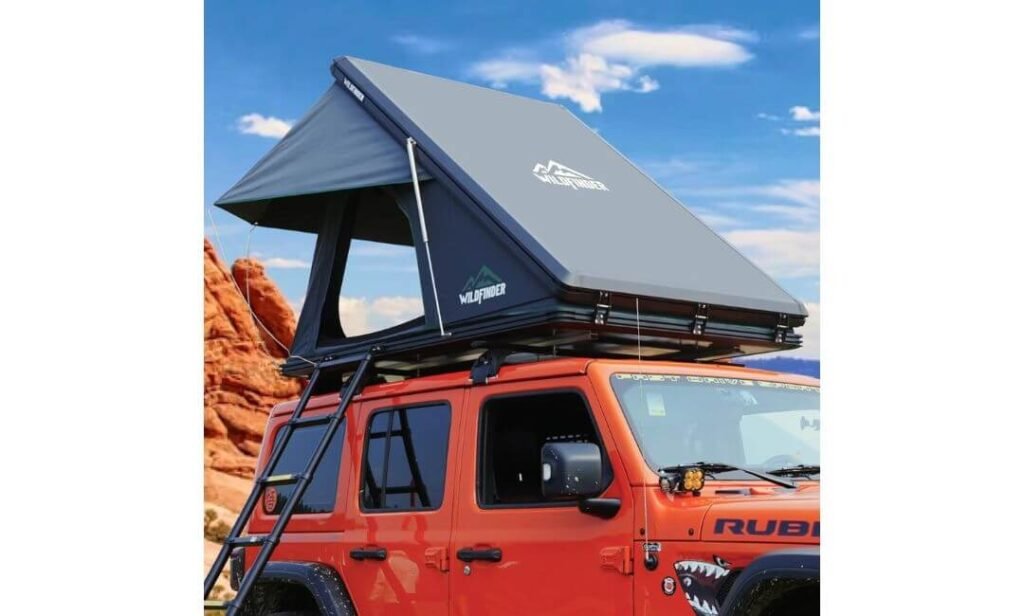
Quick Specs:
- Weight: 197.6 lb
- Sleeping capacity: 3 people
- Size: 83 × 52 × 9 in
- Shell: Aircraft-grade aluminum alloy
- Season rating: 4-season
- Rain protection: Up to 5,000 mm
- Sun protection: Up to 99.99%
- Wind rating: Level 6
- Snow protection: Level 4
- Mattress: 5 cm non-deforming mattress
- Ventilation: 3 mesh windows
- Ladder: 7.5-ft telescoping
- Included: Condensation pad, marine pad, LED strip, organizer bags and shoe organizers
There is something refreshing about a rooftop tent that does not try to win you over with a dozen complicated systems. The WildFinder keeps the core idea simple: a rigid aluminum shell, weather-resistant fabric, proper condensation control and a comfortable sleeping platform. At 83 inches long and 52 inches wide, it is shaped more like a practical two-to-three-person shelter than an oversized family room, which makes the design easier to understand from the start.
The interesting part is how much attention has gone into the weather side. The fabric is advertised with 5,000 mm rain protection, Level 6 wind resistance, Level 4 heavy-snow protection and up to 99.99% UV protection. Those are manufacturer ratings rather than guarantees that every storm will be comfortable, but they do tell you what this tent is designed around. The aluminum shell also avoids the aging concerns associated with some plastic constructions, while the stainless-steel pressure hardware is built for repeated opening and closing.
Inside, the setup is more thoughtful than the basic exterior suggests. A 5 cm mattress, recessed marine pad and condensation pad work together to make moisture less of an afterthought. Three mesh windows provide airflow, while blackout fabric helps with privacy and light control. The 7.5-ft ladder, ten organizer bags, shoe organizers and LED strip are also the sort of accessories that become useful after a few nights—not just features that look good in a listing.
What We Like
- Aircraft-grade aluminum construction gives the shell a substantial, long-term feel.
- The combination of marine and condensation pads directly addresses moisture management.
- 5,000 mm rain protection and Level 6 wind resistance make it appealing for rougher-weather trips.
- 83 × 52-inch sleeping dimensions provide a sensible footprint for two adults.
- The 7.5-ft ladder and extensive storage accessories make the interior easier to live with.
What We Would Keep in Mind
At 197.6 pounds, this is one of the heavier tents in the lineup. That makes the rack and vehicle load check especially important before installation, particularly if you plan to carry anything else on the truck’s roof.
Setting It Up on a Hilux
The product is marketed for trucks and standard crossbars, but I would still treat the mounting hardware as the beginning of the fitment check—not the end. Your Hilux rack needs suitable bar spacing, secure mounting points and enough dynamic load capacity for the complete installed system.
Also, the product information provided here is inconsistent about the exact packed dimensions and net weight in different claims. The core listing gives 197.6 pounds and 83 × 52 × 9 inches, so those are the figures I would use for initial planning rather than relying on the lower weight mentioned elsewhere.
The Insider Pro-Tip
The best reason to consider this one is not the impressive weather numbers by themselves. It is the combination of a rigid aluminum shell and moisture-focused sleeping system. Anyone who has woken up inside a rooftop tent with condensation on the wrong side of the setup knows why that matters.
For a Hilux, though, I would make one decision before anything else: weigh the complete installation on paper. At nearly 200 pounds before you account for the rack and hardware, this is not the tent I would choose casually. If your rack system comfortably supports the finished setup, its aluminum construction, weather protection and simple camping layout make it a legitimate choice for owners who want a durable four-season shelter rather than a feature-heavy gadget.
Best Toyota Hilux Rooftop Tent Comparison (2026): Specs & Features at a Glance
| Rooftop Tent | Weight | Sleeping Space | Weather & Season | Setup | Standout Feature | Hilux Reality Check |
|---|---|---|---|---|---|---|
|
Smittybilt SB2985
Side-opening aluminum hard shell
Best balanced setup
|
174 lb |
2–3 people 84.7 × 55.3 in |
3-season Water-resistant construction |
Hydraulic-assisted opening |
7.1-in closed height 90.5-in telescoping ladder |
A strong all-round choice when you want a rigid shell without moving into the larger, heavier designs. |
|
HEYFUN Adventurer Pro
2–3 person aluminum hard shell
Fastest setup focus
|
160 lb |
2 adults + 1 child 83.86 × 51.57 in |
4-season Up to 5,000 mm water resistance |
Advertised 5-second pop-up | Side awning + built-in LED + condensation mat | The lightest option here, but the complete rack-and-tent weight still needs to stay within your specific Hilux setup. |
|
Bayati Sirius 1 Plus XL
Large 4-person ABS hard shell
Most interior room
|
197.2 lb |
3–4 people 82.7 × 74.8 in |
4-season Weather-resistant coated fabric |
About 30 seconds | 1.97-in mattress + honeycomb thermal insulation | Exceptional space, but the 197.2-lb tent weight makes rack and vehicle-load verification especially important. |
|
Jiadrooe Hard Shell RTT
3-person pop-up design
Most versatile features
|
176 lb |
3 people 77 × 64 in |
4-season Up to 5,000 mm stated waterproofing |
About 60 seconds | Adjustable roof crossbars + thermal liner + USB power hub | Particularly interesting when you want the tent to provide extra cargo utility, but roof-mounted gear must remain lightweight. |
|
JOYINRUTE Hard Shell
2-person aluminum hard shell
Cold-weather pick
|
178 lb |
2 people 83 × 51.8 in |
4-season Up to 5,000 mm water resistance |
Hydraulic-assisted opening | Removable winter thermal liner + condensation pad | A sensible match for two-person cold-weather trips, provided the Hilux rack can comfortably handle the 178-lb tent. |
|
WildFinder Hard Shell RTT
Aluminum 3-person design
Weather-focused option
|
197.6 lb |
3 people 83 × 52 in |
4-season 5,000 mm rain protection claimed |
Stainless-steel pressure hardware | Marine pad + condensation pad + 5-cm mattress | Strong weather-oriented specification, but its near-198-lb weight makes load planning a must on a Hilux. |
Toyota Hilux Rooftop Tent Buying Guide: The Details That Matter Before You Mount One
A good rooftop tent is not just a sleeping box bolted to a pickup. With a Hilux, the vehicle, rack, tent and camping conditions all become one system, so the smartest purchase is the one that works properly as a whole. The six tents above cover very different priorities, from lightweight hard shells and rapid deployment to larger family layouts and dedicated cold-weather insulation. Here is what I would check before spending money.
Hard Shell vs. Fabric: Choose for the Way You Actually Camp
For this Hilux lineup, hard-shell tents make the most sense if you value fast setup, a rigid outer structure and a compact packed profile. Aluminum or ABS shells protect the folded tent and can make the whole setup feel more substantial on the road. The Smittybilt, HEYFUN, Jiadrooe, JOYINRUTE and WildFinder options all use rigid shell construction, although their weights and layouts are quite different.
A fabric-style rooftop tent can still be excellent, particularly when packed size and interior flexibility matter more than opening speed. But if your priority is arriving at camp, releasing the latches and being ready quickly, a hydraulic pop-up or assisted hard shell has a real advantage. Do not confuse “hard shell” with automatically being better in every situation; the shell adds structure, but it can also add weight, and that weight matters on a Hilux.
Four-Season Protection: Look Beyond the Label
“4-season” is useful, but it is not a magic weather guarantee. What matters is how the tent deals with rain, wind, condensation, temperature changes and ventilation.
For genuine cold-weather use, look for features such as:
- Detachable thermal insulation, which lets you add warmth when temperatures fall without making the tent permanently hot in summer.
- Condensation mats or moisture-management layers, particularly useful when warm sleepers meet a cold tent floor.
- Blackout fabric, useful for controlling early-morning light and improving privacy.
- Multiple ventilated windows, ideally with both mesh and weather-protection layers.
- Proper shell and fabric sealing, because a high waterproofing number is only one part of staying dry.
- A practical vent arrangement if you intend to use a heater or cooling equipment where the manufacturer permits it.
For the Hilux, I would rather see a tent with sensible insulation and ventilation than simply chase the largest waterproofing figure on the listing.
Setup Speed: Seconds Matter More Than You Think
A rooftop tent that takes several minutes to assemble is still perfectly usable, but fast deployment changes how often you will actually use it. That matters if you make frequent overnight stops or move camps every day.
Hydraulic struts and pop-up systems are particularly convenient because they do most of the lifting for you. The HEYFUN is advertised at around five seconds, the Bayati at about 30 seconds, while the Jiadrooe is designed to open in roughly a minute. Those numbers are useful for comparison, but treat them as manufacturer claims rather than stopwatch guarantees; loading conditions, temperature and how the tent is packed can affect the real setup time.
Also look at the closing process. A tent that opens effortlessly but needs more effort to compress and latch is still fine, but it is better to know that before your first trip.
Sleeping Space: Capacity Numbers Do Not Tell the Whole Story
“3-person” or “4-person” does not tell you whether three people will actually enjoy spending a night inside. Floor width is particularly important.
The Bayati Sirius 1 Plus XL is the clear space specialist here, with a 74.8-inch-wide floor and room for three to four people. That is a major comfort advantage for families, but it also comes with a 197.2-pound tent weight.
The narrower designs make a different argument. A 2-person tent around 47–52 inches wide can be a very good setup for a couple, particularly when the truck is used daily and you do not need a large sleeping chamber. Think about who will sleep inside, how many nights you normally stay out, whether camping gear will be stored indoors, and whether one person needs more room to turn over or sit up.
Mattress and Condensation: The Stuff You Notice at 2 A.M.
This is one area where product pages can become misleading. A mattress being described as “comfortable” tells you very little. Thickness, construction and the way it sits above the tent floor are more useful clues.
A thicker mattress can make a noticeable difference on longer trips, while an anti-condensation layer can help reduce moisture beneath the mattress. The Bayati uses a 1.97-inch mattress with honeycomb insulation, while the Jiadrooe and JOYINRUTE add condensation-focused layers. WildFinder also includes a 5-cm mattress alongside marine and condensation pads.
None of these features eliminates condensation completely. Sleeping two people inside a small enclosed space naturally introduces moisture, so ventilation still matters even when a condensation mat is included.
Weight: The Number Hilux Owners Should Check First
This is the buying-guide section I would take most seriously.
The tents in this comparison range from 160 lb to 197.6 lb before you account for the rack and mounting hardware. That is a meaningful difference. Once installed, you are not carrying just a tent—you are carrying the tent, rack system, brackets and potentially other rooftop equipment.
Do not use the tent’s internal static load rating to decide whether your Hilux can carry it while driving. These are different calculations.
Before buying, check:
- Your specific Hilux’s dynamic roof-load limit, if mounting over the cab.
- The rack or crossbar dynamic rating.
- The rack’s static capacity when the tent is occupied.
- The tent’s actual weight, not a marketing description such as “lightweight.”
- The weight of mounting hardware and any rooftop accessories.
- Whether your intended mounting position is approved by the rack manufacturer.
That is why I would not call a 178- or 197-pound tent “light” simply because it is made from aluminum. Aluminum improves the structure, but it does not make the installed system weight disappear.
Mounting Compatibility: “Fits Most Vehicles” Is Not Your Final Answer
Universal mounting hardware is convenient, but it does not mean every Hilux configuration will accept a particular tent without checking the rack.
Look at crossbar spacing, bar dimensions, mounting channels, available attachment points and the rack’s rated capacity. The tent should sit securely across the intended support points without forcing you to improvise brackets or position it in a way the rack was not designed to handle.
The same applies if you are using a bed rack. A bed-rack installation is not the same thing as mounting a tent directly to the cab roof, so use the bed rack manufacturer’s load specifications for that setup.
Rooftop Accessories: Useful Until They Become Too Much
Accessories can make a rooftop tent considerably nicer to live with, but they should support the camping setup rather than become the reason you exceed your load limits.
The six options here offer useful differences:
- Side awning: creates quick shade or sheltered outdoor space.
- LED lighting: useful for getting settled after dark without carrying another light inside.
- USB power hub: convenient for phones and small electronics.
- Storage pockets and shoe bags: help keep a compact sleeping area organized.
- Roof crossbars: useful for lightweight equipment, provided the complete system remains within its limits.
- Long telescoping ladders: particularly helpful on taller pickup installations.
The Jiadrooe’s adjustable crossbars are especially interesting, while the HEYFUN includes a side awning and LED lighting. But I would always treat additional roof cargo as extra weight, not as free storage.
Installation: Get the Rack Right Before the Tent Arrives
The best time to discover a mounting problem is before the tent is sitting in your driveway.
Measure the available rack space, confirm the crossbar arrangement, check the mounting hardware, and verify that the rack manufacturer permits rooftop-tent use. The tent should be positioned so that its weight is properly supported and the ladder can deploy without interfering with the truck, doors or surrounding equipment.
It is also worth checking the finished height. A low-profile tent such as the Smittybilt or HEYFUN can be much easier to live with when the truck is used every day. Once you add the tent to the Hilux, remember the new overall vehicle height when entering garages, parking structures, trails with low branches and other restricted-clearance areas.
Safety, Warranty and After-Sales Support
A rooftop tent is carrying people several feet above the ground, so hardware quality and installation matter more than a polished product page.
Check whether the manufacturer provides clear installation instructions, replacement parts, warranty coverage and a reliable way to contact support. Pay attention to what the warranty actually covers; a long warranty period is less useful if common wear items, fabric damage or installation-related issues are excluded.
Before the first overnight trip, inspect the mounting points, tighten everything to the manufacturer’s specified requirements, open and close the tent completely, check the ladder and make sure the shell and fabric operate normally. A ten-minute inspection at home is much better than discovering a loose bracket at the campsite.
Which Features Deserve Your Money?
If you are narrowing this list down, I would prioritize features in this order:
1. Correct vehicle and rack compatibility — nothing else matters if the installation is wrong.
2. Sensible weight — especially important with the heavier hard-shell designs.
3. Sleeping dimensions — choose based on the actual number of people and nights you camp.
4. Weather and condensation management — particularly if you camp outside summer.
5. Setup and teardown — worth paying for if you move camps frequently.
6. Mattress and interior usability — these determine whether the tent feels good after several nights.
7. Accessories — useful, but they should come after the fundamentals.
That is the real buying logic behind this lineup. The best Toyota Hilux rooftop tent is not the one with the longest feature list; it is the one whose weight, dimensions, rack requirements and weather features fit the way you actually use your truck.
Toyota Hilux Rooftop Tent Installation & Fitment: Get the Foundation Right Before Camping
A rooftop tent can be an excellent addition to a Hilux, but fitment is a system issue, not a tent-size issue. The truck, rack, crossbars, mounting hardware and tent all have to work together. Before lifting anything onto the vehicle, confirm the specifications for your particular Hilux and the rack you actually intend to use.
Start With the Rack, Not the Tent
Before installation, confirm these points:
- Check the dynamic roof-load rating for the exact Hilux configuration if the tent is being mounted over the cab.
- Check the rack or crossbar manufacturer’s dynamic and static load ratings separately.
- Add the weight of the tent, rack, mounting brackets and hardware when calculating the travelling load.
- Confirm that the rack is specifically suitable for rooftop-tent use, rather than assuming a normal cargo rack is sufficient.
- Check the crossbar dimensions and spacing against the supplied mounting system.
- If using a bed rack, use the bed rack’s own specifications for the installation rather than applying the cab-roof rating.
This is particularly important with the heavier tents in this comparison. A product weighing around 175–198 pounds can become a noticeably heavier installed system once the rack and hardware are included.
Use the Correct Mounting Hardware
Universal hardware is convenient, but it does not eliminate the need to check compatibility.
Before tightening anything, make sure the brackets sit flat and square against the rack mounting channels or crossbars. Avoid forcing a bracket into a position where the tent is supported unevenly. The mounting points should distribute the load across the rack as intended by the manufacturer.
Use the supplied hardware where specified, and follow the manufacturer’s torque requirements rather than tightening bolts based on feel. If a torque specification is not provided, contact the manufacturer rather than guessing.
Position the Tent for Balanced Clearance
On a Hilux, placement should give you a sensible balance between weight distribution, wind exposure, ladder access and clearance around the truck.
For a cab-roof installation, keep the tent positioned within the rack’s intended support area and avoid unnecessary overhang. For a bed-rack setup, make sure the tent does not interfere with the cab, tailgate, bed accessories or other equipment.
A lower-profile position can also help reduce the practical disadvantages of carrying a rooftop tent every day. Check the final vehicle height after installation, especially if you regularly use parking garages, covered storage areas or trails with low branches.
Tighten, Inspect, Then Recheck
Once the tent is positioned correctly, tighten every mounting point according to the manufacturer’s instructions. Do not stop at “it feels tight.”
Before your first trip:
- Check every mounting bracket and fastener.
- Confirm the tent is sitting evenly on the rack.
- Open and close the shell completely.
- Check that the mounting hardware does not interfere with the tent mechanism.
- Deploy the ladder on level ground.
- Put realistic weight on the ladder and check for movement.
- Check clearance around the cab, bed, doors and tailgate.
- Inspect the setup again after the first drive and re-torque where the manufacturer specifies.
That final inspection is worth doing even when installation appears perfect. Vibration and normal road movement can reveal issues that are not obvious while the truck is parked in your driveway.
Check Ladder and Access Clearance Before the First Trip
The ladder is easy to overlook when the tent is still folded down. Once deployed, it needs enough room to sit securely without landing on an awkward surface or interfering with the truck.
Park on level ground whenever possible, extend the ladder according to the manufacturer’s instructions, and make sure its feet have a stable, non-slippery contact point. If your bed contains drawers, coolers, recovery equipment or other camping gear, check that the ladder and access route remain clear.
For bed-rack installations, also test tailgate and bed access with the tent both closed and open. It is much better to discover an access problem at home than after driving several hours into camp.
Do One Real-World Test Before Leaving Home
The smartest installation check is not simply standing back and admiring the finished setup. Load the truck as you would for an actual trip, including the equipment you normally carry, then inspect the complete arrangement.
Take a short local drive, listen for unusual movement or contact, and inspect the mounting points afterward. Check the ladder, shell, brackets and rack again. If anything has shifted, rattled or contacted another part of the vehicle, fix it before heading out.
A properly fitted rooftop tent should feel like part of the truck, not something you are constantly worrying about while driving. That is the standard worth aiming for with any Hilux setup.
Toyota Hilux Rooftop Tent Considerations: Clearance, Fuel Use & Everyday Truck Practicality
A rooftop tent changes more than where you sleep. Once it stays on a Hilux, it becomes part of the truck’s overall height, weight, aerodynamics and usable cargo space. These details rarely matter during a product-page comparison, but they become very obvious after a few weeks of actually driving with the tent installed.
Roof Height Can Become the First Everyday Problem
Measure the Hilux with the tent installed, not just the truck itself. The tent, rack and mounting system can add considerably to the vehicle’s overall height, and low-profile designs are especially useful if the truck is also your daily driver.
Before leaving the setup permanently installed, check:
- Garage and carport clearance, including the lowest point of the entrance.
- Parking structures and covered fuel stations.
- Low branches and trail obstacles.
- Whether the ladder or open tent can contact nearby walls, vehicles or other objects.
- Clearance when the suspension is loaded with passengers and camping equipment.
Also think about entry and exit at camp. A taller truck combined with a rooftop tent can make ladder positioning awkward on uneven ground, so having a little extra space around the vehicle is genuinely useful.
Truck Bed Height Changes How the Tent Feels
A Hilux already sits higher than a typical passenger vehicle, and adding a rooftop tent increases the distance between the sleeping platform and the ground. That is not necessarily a problem, but ladder length and placement become important.
A longer telescoping ladder can be an advantage on taller configurations, particularly when the truck is carrying additional equipment or has a bed rack. Always deploy it on stable ground and follow the manufacturer’s instructions for positioning.
The bed itself also matters. If you use a bed-rack installation, check how the tent affects access to the tailgate, tonneau cover, bed drawers, recovery equipment and other storage systems. A tent that technically fits can still be inconvenient if it prevents you from using half of the truck’s practical storage space.
Fuel Economy: Expect Aerodynamic Changes, Not Miracles
There is no honest way to promise that a particular rooftop tent will have “no effect” on fuel economy. You are adding a large object above the truck, and additional weight plus aerodynamic drag can affect fuel consumption.
A low-profile closed shell can reduce the aerodynamic penalty compared with a tall setup, which is one reason the packed height is worth considering. But actual fuel use depends on speed, wind, payload, tires, terrain and how the truck is driven.
If fuel economy matters to you, compare the tent’s closed height and overall profile, rather than relying on vague claims about being aerodynamic.
Keep the Spare Tire and Recovery Gear Accessible
Rooftop camping often encourages people to move equipment around until everything fits. That is fine until the item you need most is buried underneath three other pieces of gear.
Keep the spare tire, jack, recovery equipment and essential roadside tools accessible. If the spare is mounted underneath the truck, make sure the rooftop setup and bed cargo do not prevent you from lowering or accessing it when necessary.
The same principle applies to auxiliary equipment. Recovery boards, compressors, tools, water containers and electrical gear should have designated positions rather than being scattered around the bed simply because the tent occupies some of your normal storage area.
Think About Weight Across the Whole Truck
A rooftop tent does not exist in isolation. Add passengers, fuel, camping equipment, recovery gear, water and luggage, and the Hilux can accumulate weight surprisingly quickly.
For that reason, consider the complete travelling setup, not just the tent’s advertised weight. A 160-pound tent and a nearly 200-pound tent may look similar in photographs, but the difference becomes meaningful once the rack, passengers and camping equipment are included.
This is particularly important if you frequently carry heavy bed cargo. Keeping unnecessary weight off the roof and distributing equipment sensibly through the truck can make the finished setup easier to live with.
The Daily-Driver Test
Here is the simplest test I would use before committing to a permanent rooftop setup: drive the Hilux exactly as you normally would for a week.
Park it where you normally park, fill the truck with your usual equipment, open the tailgate, access the spare, visit your regular fuel station and drive the roads you use every day. If the tent creates a clearance problem, blocks useful storage or makes access unnecessarily awkward, you will discover it quickly.
A rooftop tent should make camping easier without turning the rest of your Hilux into a compromise. That balance—camping capability without sacrificing everyday usability—is what separates a good truck setup from one that only looks good in photographs.
Practical Ways to Make Your Toyota Hilux Rooftop Tent More Comfortable at Camp
A good rooftop tent does not automatically make a good campsite. The difference usually comes from how you manage airflow, moisture, temperature and gear once the tent is actually in use. A few simple habits can make a hard-shell setup noticeably more comfortable, especially when the weather changes overnight.
Ventilation Is the First Defense Against Condensation
Two people sleeping inside a closed tent produce a surprising amount of moisture overnight. Even a well-insulated four-season tent can develop condensation if there is nowhere for humid air to escape.
Use the ventilation openings whenever weather conditions allow, particularly when sleeping. Keep mesh screens open while maintaining the weather layer if the tent design allows it. Do not completely seal every opening simply because the temperature drops; controlled airflow can be more comfortable than waking up to moisture on the walls, windows or underside of the mattress.
If the tent includes a dedicated condensation mat, use it correctly rather than treating it as a replacement for ventilation. The mat helps manage moisture underneath the mattress, but it cannot remove humid air from the sleeping compartment.
Insulation Should Match the Weather
Four-season camping does not mean keeping every insulating layer installed all year.
A removable thermal liner is particularly useful because you can add insulation during cold-weather trips and remove it when summer temperatures make the interior warmer. On colder nights, keep the sleeping area properly insulated and avoid unnecessarily opening large ventilation panels.
During warmer weather, reverse the approach. Increase airflow, use the mesh sections of the windows and take advantage of the tent’s ventilation design. A tent that can adapt to the season is much easier to live with than one that is permanently optimized for cold conditions.
And if you use a heater, follow the heater and tent manufacturers’ instructions carefully. Never improvise combustion-heater ventilation or operate equipment in a way the manufacturer does not permit.
Use the Awning as Outdoor Living Space
A side awning or similar shelter can make a surprisingly large difference to a Hilux campsite. It gives you somewhere to sit, change footwear, prepare simple camp items or escape direct sun without filling the sleeping area with gear.
It also keeps the interior cleaner. Wet shoes, muddy equipment and cooking-related items are better kept outside the sleeping compartment whenever practical.
If your setup does not include an annex, you can still create a functional campsite with an awning, compact ground mat and organized storage. The goal is not to recreate a hotel room on top of the truck; it is to keep the sleeping area dry, uncluttered and comfortable.
Keep Wet Gear Away From the Mattress
This sounds obvious until you arrive at camp during bad weather.
Use the supplied shoe bags, organizer pockets and external storage areas where available. Keep wet footwear and rain-soaked clothing away from bedding, because introducing moisture into the sleeping area makes condensation management much harder.
For longer trips, divide equipment into simple categories, such as sleeping gear, clothing, cooking equipment and recovery equipment. That way, you are not repeatedly opening the tent and moving everything around just to find one small item.
Give the Mattress and Floor Room to Breathe
After a damp or cold night, do not immediately pack everything away while the interior is still wet if you can avoid it.
Open the tent and allow the mattress, condensation layer and interior fabric to dry properly. Even a few minutes of additional airflow can help. If the weather is poor and you have to pack up wet, make drying the tent one of the first jobs when you reach your next suitable stop.
This is particularly important for longer trips. Repeatedly trapping moisture inside a folded tent is a much bigger concern than one wet night.
Store Gear Without Turning the Tent Into a Closet
Interior storage pockets are useful, but they should not become an excuse to overload the sleeping area.
Keep lightweight items such as phones, headlamps, glasses, small clothing items and personal essentials inside the tent. Heavier equipment belongs in the truck bed or designated storage system whenever possible.
If your rooftop setup includes crossbars, use them intelligently. Lightweight items can free up valuable bed and interior space, but always account for their weight and follow the crossbar manufacturer’s load limit. Do not turn a useful cargo feature into an overloaded roof.
Clean the Tent Before Dirt Becomes a Problem
After each trip, remove loose dirt, leaves, sand and mud before storing the tent.
A simple routine works well:
- Brush or wipe away loose debris from the shell, ladder and mounting areas.
- Clean fabric using the manufacturer’s recommended method.
- Allow wet fabric and the mattress area to dry completely.
- Check zippers, seams, windows and seals for dirt or damage.
- Inspect the mounting hardware for movement or obvious wear.
- Check the ladder and opening mechanism before the next trip.
Avoid aggressive household cleaners unless the manufacturer specifically permits them. Strong chemicals can damage waterproof coatings, fabric treatments, seals or finishes.
Check Seals and Protective Coatings Periodically
Waterproofing is not a permanent promise. Fabric treatments and protective coatings can deteriorate through sun exposure, repeated washing, abrasion and years of use.
Inspect seams and exposed areas occasionally, especially after a season of heavy camping. If the manufacturer recommends a particular waterproofing treatment or protective coating, follow that product’s maintenance instructions rather than applying a random sealant.
The same applies to the hard shell. Keep drainage channels and seals clean, and look for cracks, loose hardware or areas where the shell is no longer closing evenly.
Do a Five-Minute Post-Trip Inspection
You do not need a complicated maintenance schedule. A quick inspection after a trip catches most problems before they become expensive ones.
Check:
- Mounting brackets and fasteners
- Ladder attachment and stability
- Shell latches and hinges
- Hydraulic or gas struts
- Fabric seams and zipper operation
- Window mesh and weather layers
- Mattress and condensation mat
- Waterproof seals
- Any roof-rack contact points
If something feels different from the previous trip—an unusual rattle, stiff hinge, loose bracket or damaged seam—deal with it before the next journey.
The Small Habit That Pays Off Long-Term
The best rooftop-tent maintenance is mostly boring, and that is exactly why it works. Keep it dry, keep the seals clean, do not overload the storage areas, and inspect the mounting system regularly.
Treat the tent as part of the Hilux rather than a piece of camping equipment you only think about on departure day. That mindset will do more for its lifespan, comfort and reliability than another accessory ever will.
FAQs About Rooftop Tents for Toyota Hilux
Is a rooftop tent actually a sensible load for a Toyota Hilux, or does the rack make more difference than the tent?
With a Toyota Hilux, the tent itself is only half of the equation. The rack, mounting hardware, passengers, and anything else carried on the roof or rack all become part of the real load picture. This is where many rooftop-tent buying guides oversimplify things: a tent can be within its own advertised limits and still be a poor choice if the particular Hilux and rack combination is not rated for it.
The important distinction is dynamic versus static load. Dynamic load applies while the Hilux is moving and is the figure you need to take seriously for the complete rack-and-tent installation. Static capacity while parked can be considerably higher, but it does not give you permission to ignore the driving load rating. Check the specific Hilux owner’s manual for your market and configuration, then check the rack manufacturer’s dynamic rating and mounting requirements. There is no honest single roof-load number that applies to every Hilux.
Does a Toyota Hilux need a lightweight rooftop tent, or is a heavier hard shell worth carrying?
A Toyota Hilux does not automatically need the lightest rooftop tent available, but weight becomes increasingly important once you add the rack and camping equipment. A roughly 175–200 lb hard shell may look manageable when viewed on its own; add the rack, mounting hardware and roof cargo, and the number that matters to the truck is the complete installed system.
There is also a practical trade-off. A heavier hard shell may give you:
- Better structural protection for the folded tent
- Faster deployment
- More useful insulation options
- A larger sleeping platform
- Better integration of storage or roof accessories
The real question is whether those benefits justify the additional weight for the way you actually travel. If the Hilux is your daily driver and you regularly carry tools, recovery equipment, passengers and a loaded bed, choosing a tent solely because it has the largest sleeping area can be the wrong upgrade.
What is the biggest mistake people make when fitting a rooftop tent to a Hilux?
The biggest mistake is usually checking whether the tent physically fits before checking whether the entire system is appropriate for the truck.
“Fits pickup trucks” is not a meaningful final compatibility test. A proper check should cover:
- Hilux roof or bed-rack configuration
- Rack dynamic and static load ratings
- Tent weight plus rack and mounting hardware
- Crossbar spacing and mounting-track compatibility
- Tent width and overhang
- Cab, bed and tailgate clearance
- Ladder position and ground clearance
- Clearance from garages, branches and other overhead obstacles
There is another detail that rarely gets enough attention: where the weight sits matters. A tent positioned correctly on a suitable rack is one thing; a poorly positioned load that creates clearance issues, interferes with the bed or places unnecessary stress on the mounting arrangement is another. The Hilux may be physically capable of carrying a rooftop tent, but the installation still has to be engineered around the specific rack and configuration.
Are four-season rooftop tents genuinely useful for Hilux camping, or is “4-season” mostly a marketing label?
“Four-season” is useful as a starting point, but it is not a weather-performance guarantee. The construction details matter much more than the label. Look for insulated panels or a removable thermal liner, properly protected windows, good seals, adequate ventilation, a condensation-management layer and fabric designed for repeated exposure to rain and wind.
The uncomfortable truth is that even a well-built four-season rooftop tent can become unpleasant if it is used incorrectly. Two people sleeping inside create moisture, and sealing every opening because it is cold outside can leave that moisture trapped inside the tent. In winter, insulation matters, but so does controlled ventilation.
For serious cold-weather use, I would prioritize:
- Thermal insulation that can be adapted to the season
- Mattress ventilation or an anti-condensation system
- Weatherproof window construction
- Strong shell and hardware
- Reliable seals and zippers
- Practical ventilation that can remain open during bad weather
That combination tells you far more than a product title saying “4-season.”
Is a rooftop tent still worth it on a Hilux if the truck is used as a daily driver?
Yes, but this is where you should be brutally honest about how often you will actually camp. A rooftop tent makes the most sense when the Hilux is regularly used for weekend trips, overlanding or multi-day travel. If it spends most of its life commuting and rarely leaves the pavement, the extra height, aerodynamic drag, weight and parking limitations may become more noticeable than the camping benefits.
Before committing, live with the complete setup mentally—and ideally physically—for everyday use. Check your normal parking areas, garage or carport height, fuel stops, bed access and whether the tent interferes with the way you use the truck.
The best setup is not necessarily the biggest or most expensive one. It is the one you can leave installed without constantly regretting it, while still giving you the sleeping space, weather protection and setup speed you actually need when the Hilux finally heads into the outdoors.
Final Verdict: Choosing the Right Rooftop Tent for Your Toyota Hilux
A Toyota Hilux rooftop tent is one of those upgrades that looks straightforward until you actually start adding up everything involved. The tent is only one part of the equation. Your rack, mounting system, vehicle configuration, total payload, sleeping capacity, weather conditions and even how often the truck serves as a daily driver all influence whether the setup makes sense.
The biggest takeaway from this guide is simple: do not choose a rooftop tent by size or feature count alone. A nearly 200-pound hard shell with a huge sleeping platform may sound impressive, but it is not automatically a better choice than a lighter, more compact design. Likewise, a “four-season” label means very little if ventilation, condensation control, insulation and weather sealing have not been properly considered.
For most Hilux owners, the smartest buying process looks more like this:
- Confirm the vehicle and rack limits first.
- Calculate the real installed weight, not just the tent’s advertised weight.
- Decide whether you genuinely need a 2-, 3- or 4-person sleeping platform.
- Prioritize weather protection and condensation management over flashy accessories.
- Consider how the tent will affect everyday height, fuel consumption and bed access.
- Choose the mounting system as carefully as the tent itself.
- Treat manufacturer load and performance claims as specifications to verify, not guarantees.
There is also no universal “best” rooftop tent for every Hilux. A couple travelling on weekends may value a compact hard shell and rapid deployment, while a family or long-distance camper may be better served by additional interior width and more substantial weather protection. The right tent is the one that fits the Hilux you actually own and the trips you actually take.
And that is the real test. Once the tent is mounted, loaded and exposed to a cold night, heavy rain, wind, repeated setup and the realities of everyday driving, marketing specifications become much less important than a sound vehicle-and-rack match, sensible weight management and good campsite habits.
If you get those fundamentals right, a rooftop tent can turn the Hilux into a genuinely capable mobile camping platform without turning the truck into a compromise every time you drive it to work.
Also Check: