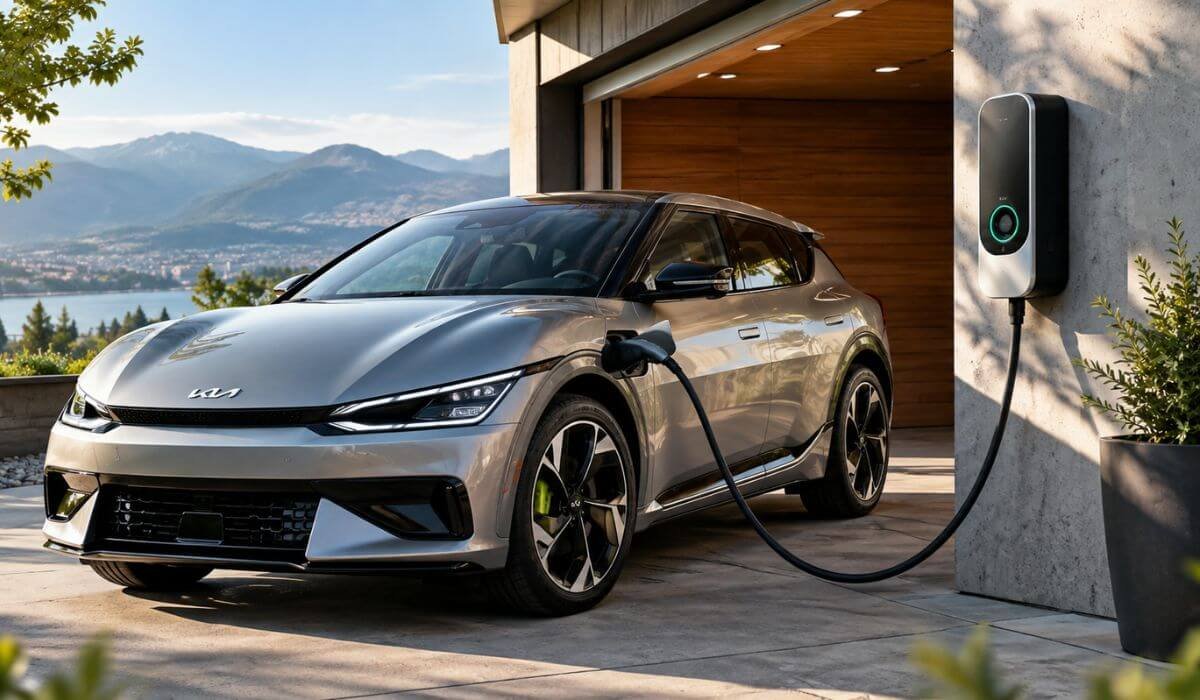
5 Best Home Chargers for Kia EV6 in 2026: 50A, 9.6kW & WiFi Level 2 Charging
If you own a Kia EV6, choosing a home charger is less about buying the biggest number on the box and more about matching the charger to the car, your electrical setup and the way you actually charge. Earlier EV6 versions were offered with 58-kWh and 77.4-kWh batteries, while newer versions moved to 63-kWh and 84-kWh packs, depending on model year, trim and market. Kia’s charging information shows that AC charging times can vary considerably with battery size, temperature and charger capability, which is why a properly installed Level 2 setup makes far more sense for regular home use than simply chasing maximum amperage.
There is another detail EV6 shoppers should not overlook: the charging connector depends on the vehicle version and market. The 2025 U.S.-market EV6 introduced a NACS charging port, while earlier U.S. versions used CCS1. Kia also documents adapter compatibility for NACS-equipped vehicles, so a J1772 home charger can still be part of the picture when the correct adapter is used. In other words, do not buy a charger purely from an online product title—check the actual charging inlet on your EV6 first.
For this list, I focused on chargers that make practical sense for everyday EV6 ownership: 40A to 50A-class Level 2 output, 240V charging, useful cable reach, smart controls, flexible installation and solid safety protection. A charger rated at 48A or 50A does not force the EV6 to accept that entire output; the vehicle manages its own AC charging current, and the available power is also limited by the electrical installation. That is why a well-installed 40A charger can be a completely sensible choice, while a higher-output hardwired unit may make more sense for someone who wants additional charging capacity and has the electrical service to support it.
Best Kia EV6 Home Charger: Top 2026 Picks for 40A–50A Level 2 Charging
We looked beyond the advertised amperage to compare how each charger fits a real EV6 home setup, including electrical requirements, charging flexibility, cable length and long-term usability.
#1. Autel 50A Level 2 EV Charger
Best Kia EV6 50 Amp Charger with 240V Hardwired Power, J1772 Connection, WiFi Control and 25-Foot Cable
#2. EMPORIA Level 2 EV Charger
Best Kia EV6 48 Amp Charger with 240V Level 2 Charging, WiFi Energy Monitoring, J1772 Connector and 25-Foot Cable
#3. ChargePoint HomeFlex Level 2 EV Charger
Best Kia EV6 Home Charging Station with Adjustable Amperage, J1772 Connection, NEMA 14-50 Plug and Smart WiFi Controls
#4. Grizzl-E Level 2 240V / 40A EV Charger
Best Kia EV6 240V Charger for Indoor and Outdoor Charging with 40A Output, NEMA 14-50 Connection and Rugged Protection
#5. J+ Booster 2 Portable Level 2 EV Charger
Best Kia EV6 Portable Charger with 40A Level 2 Power, 9.6kW Output, J1772 Connector, 25-Foot Cable and Dual-Voltage Flexibility
Expert Tip
Don’t buy a home charger simply because its label says 48A or 50A. Your EV6 controls how much AC power it actually accepts, while your home’s wiring and breaker determine how much current the charger can safely deliver. For most owners, a properly installed 240V Level 2 charger is far more important than chasing the highest number on the box. And if you have a newer NACS-equipped EV6, check the connector before ordering a J1772 unit—you may need the appropriate adapter.
How We Choose These Kia EV6 Home Chargers
We did not put these chargers together by simply sorting them from the highest amperage to the lowest. That approach looks impressive on paper but tells an EV6 owner very little about what living with the charger will actually be like.
First, we looked at charging output. The list covers 40A to 50A-class Level 2 chargers, giving owners practical choices from 9.6kW charging up to higher-output hardwired equipment. We also checked the installation requirements rather than treating every 48A or 50A label as equivalent. For example, Emporia’s NEMA 14-50 configuration supports up to 40A, while its hardwired setup can reach 48A.
Installation flexibility came next. Some EV6 owners already have a properly installed 240V outlet and want a plug-in solution. Others are building the charger into the home’s electrical system and would rather hardwire it. That is why the list includes both approaches instead of pretending there is one correct installation for everyone. ChargePoint Home Flex, for example, supports NEMA 14-50 plug-in charging at the appropriate settings as well as hardwired operation up to 50A.
Cable length and everyday usability also mattered. A charger can have excellent electrical specifications and still be annoying if the cable barely reaches the charge port. The products here offer long 23- to 25-foot cables, giving more flexibility when the parking position is not directly beside the wall unit. Emporia lists a 25-foot J1772 cable, while ChargePoint lists a 23-foot cable.
We also gave real weight to smart charging and monitoring. Wi-Fi is useful when you want to check charging remotely, schedule sessions or keep an eye on energy use instead of walking into the garage every time. Emporia provides app-based monitoring and scheduling, while ChargePoint provides Wi-Fi connectivity and adjustable charging settings.
Safety and certification were not optional filters. We looked for equipment with meaningful electrical protection and recognized certification rather than relying on marketing claims. Emporia lists UL certification and GFCI protection, while Grizzl-E states that its chargers are UL/cUL certified and Energy Star certified.
Finally, we considered the different ways EV6 owners actually charge at home. A homeowner wanting a permanent high-output installation has different needs from someone who values portability. That is why the list deliberately includes hardwired, plug-in, outdoor-capable and portable options rather than five nearly identical wall chargers.
The result is a list built around how the charger fits the EV6 and the home, not around whichever product has the biggest number in its headline. Before installation, the charger’s required breaker, outlet and wiring should always be confirmed with a qualified electrician and checked against local electrical requirements.
#1. Autel 50A Level 2 EV Charger
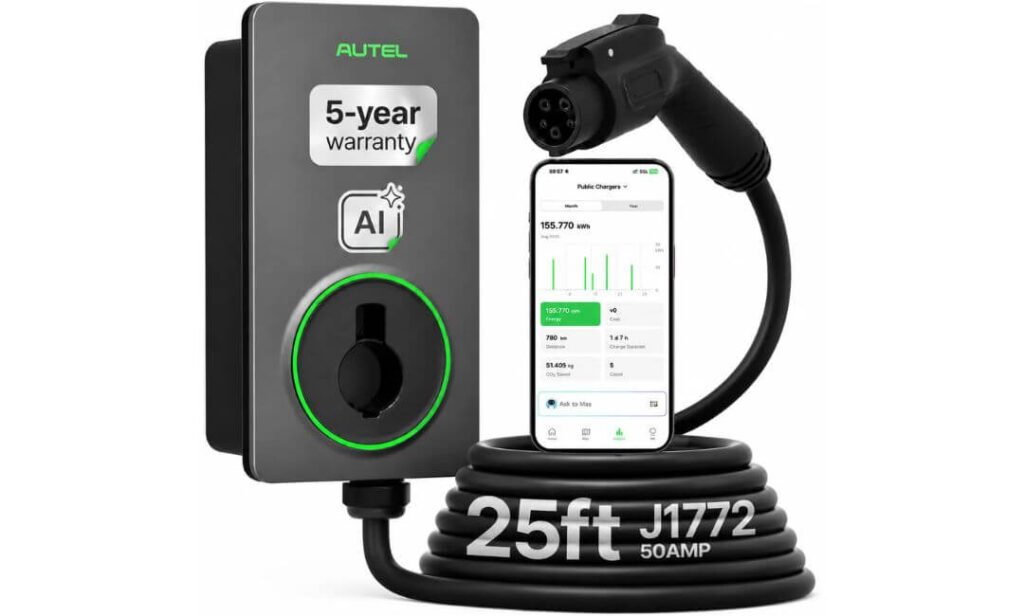
Quick Specs:
- Charging Type: Level 2 AC
- Maximum Output: 50A / 12kW at 240V
- Connector: SAE J1772
- Installation: Hardwired
- Cable Length: 25 feet
- Adjustable Current: 6A–50A
- Connectivity: WiFi, Bluetooth and Ethernet
- Outdoor Protection: NEMA 4X
- Safety: Overcurrent, overvoltage, undervoltage and surge protection
- Warranty: 3 years
- Weight: About 15.4 lb
The appeal here is not simply the 50A number. It is the combination of high capacity and control. At its maximum setting, the charger is rated for 50A and 12kW at 240V, but you can reduce the current from 6A to 50A when your home’s electrical setup or charging requirements call for it. The EV6 ultimately controls how much power it accepts, so the charger’s maximum rating should be viewed as available capacity rather than a guaranteed charging rate.
The 25-foot cable is another genuinely useful detail. It gives you more freedom when the EV6 cannot be parked directly beside the wall unit, which can make a noticeable difference in a real garage or driveway. Because the charger is hardwired, it also makes sense as a dedicated long-term installation rather than a portable setup.
Then there is the smart side. Through the Autel Charge app, you can schedule charging, monitor sessions and control the charger remotely. WiFi, Bluetooth and Ethernet connectivity give you several ways to keep the unit connected, while Autel also includes electrical protection and NEMA 4X enclosure protection for suitable indoor or outdoor installations.
(The simple takeaway: it is built more like a permanent home charging system than a basic plug-in EVSE.)
What We Like
- 50A / 12kW capability gives the EV6 a high-capacity Level 2 charging supply.
- 6A–50A adjustment makes it easier to match charging to the home’s electrical capacity.
- The 25-foot cable is genuinely convenient for different parking positions.
- WiFi, Bluetooth and Ethernet provide flexible connectivity and remote control.
- NEMA 4X protection makes the enclosure suitable for appropriately installed indoor or outdoor charging locations.
One Thing to Know Before Buying
This is a hardwired charger, so installation is more permanent than a NEMA 14-50 plug-in model. Have a qualified electrician confirm the required circuit, breaker, wiring and local electrical requirements before installation.
Why It Fits the EV6 Home-Charging Job
For an EV6 owner looking for a permanent high-output home charger, this configuration brings together the things that matter most: 240V operation, up to 50A, adjustable current, a long 25-foot cable and smart controls. It gives you substantial charging capacity without forcing you to operate at the maximum setting every time.
It also leaves some useful flexibility for the future. If your charging routine changes or you need to reduce the current because of your home’s electrical load, the adjustable output gives you room to adapt. The important distinction is that 12kW is the charger’s maximum capability, not a promise that every EV6 charging session will reach that figure.
The Insider Pro-Tip
For an EV6, I would focus less on getting the biggest amperage number and more on getting the electrical installation right. A properly sized 240V circuit, sensible current setting and a good cable layout will give you a much better ownership experience than simply running the charger at its maximum because it can.
Also check the charging-port configuration on your specific EV6 before ordering. Earlier U.S.-market EV6 models used CCS1/J1772-based charging hardware, while newer U.S. models use NACS. If your EV6 has NACS, make sure you have the appropriate J1772-to-NACS solution rather than assuming the connector will fit directly.
#2. EMPORIA Level 2 EV Charger
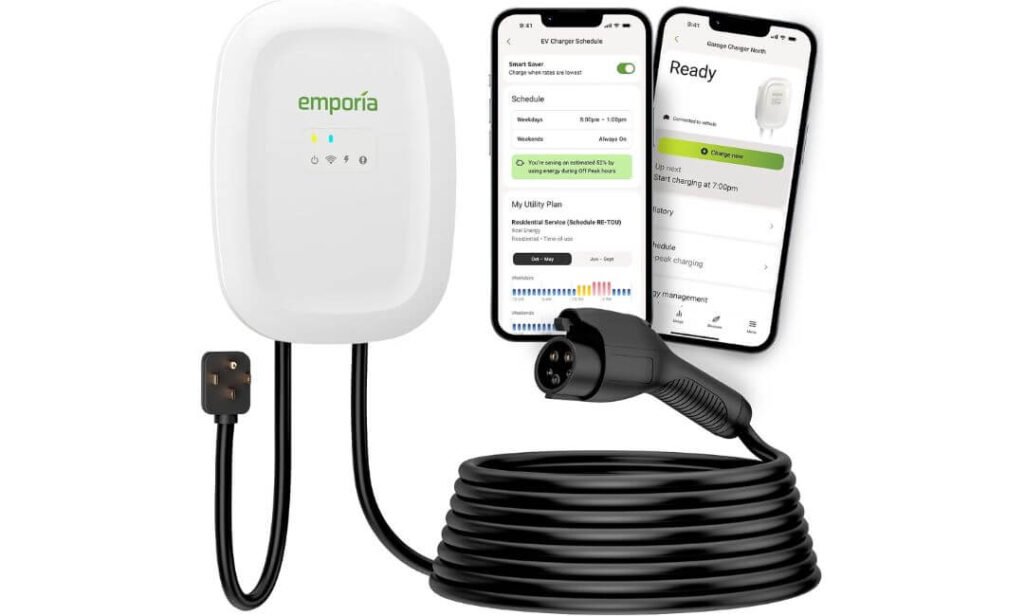
Quick Specs:
- Charging Type: Level 2 AC
- Maximum Output: 48A / 11.5kW hardwired
- NEMA 14-50 Output: 40A / 9.6kW
- Connector: SAE J1772
- Installation: NEMA 14-50 plug-in or hardwired
- Cable Length: 25 feet
- Current Adjustment: Up to 48A
- Connectivity: 2.4GHz WiFi
- Smart Features: Charging schedules, energy monitoring and cost tracking
- Certification: UL Listed and ENERGY STAR
- Dimensions: 3.39 × 9.06 × 12.6 inches
- Weight: 16.59 lb
What I like about this unit is that it gives an EV6 owner two genuinely useful installation paths instead of forcing one setup. Leave it on the NEMA 14-50 configuration and it can deliver up to 40A / 9.6kW; have it hardwired and the charger can support up to 48A / 11.5kW. That distinction is important because the 48A figure applies to the hardwired configuration—not the standard plug-in setup.
That makes this a particularly sensible choice if your home already has a properly installed 240V NEMA 14-50 outlet. You get a substantial Level 2 setup without immediately committing to a hardwired installation. Later, if your electrical setup changes, the hardware can be converted for the higher-output configuration by a qualified installer.
The other reason it earns a place this high is the energy data. The 2.4GHz WiFi connection lets you see charging information from your phone, schedule charging and keep track of electricity use. That is more useful than a flashy “smart” label because it answers the questions EV owners actually have: How much did tonight’s charge cost? When did it run? How much energy did the car use?
The 25-foot cable also deserves attention. It gives you considerably more freedom when the EV6 is parked farther from the charger, while the UL listing, ENERGY STAR certification and built-in protection add the kind of reassurance you want from equipment that will be handling high electrical loads for hours at a time.
(The real appeal here is flexibility: plug it in at 40A when that suits your home, or use the hardwired configuration when you genuinely need the additional capacity.)
What We Like
- Two installation options make it easier to match the charger to an existing garage or a new electrical installation.
- The 40A NEMA 14-50 setup is already substantial for overnight EV6 charging.
- 48A hardwired capability gives you additional headroom when the home’s electrical installation supports it.
- WiFi energy monitoring makes electricity use much easier to understand.
- A 25-foot cable gives useful reach without requiring the EV6 to be parked directly beside the charger.
- UL Listed and ENERGY STAR certified is a meaningful combination for a permanently installed home charging product.
One Small Consideration
The important detail is simply knowing which installation you are getting: NEMA 14-50 means up to 40A, while the 48A rating is for the hardwired configuration. Once that is clear, the setup is straightforward.
Why It Makes Sense for an EV6
This is the charger I would look at when the priority is flexibility rather than chasing a maximum number. The EV6 gets a capable 240V Level 2 supply, while the owner gets the choice between a 40A plug-in arrangement and a higher-output hardwired setup.
It also brings something the basic chargers often miss: useful information after installation. Being able to see energy consumption, monitor sessions and schedule charging from your phone turns home charging into something you can actually manage around your electricity plan rather than simply plugging the car in and forgetting about it.
The Insider Pro-Tip
If you already have a properly installed NEMA 14-50 outlet, don’t assume you need to hardwire this just because the box says 48A. The plug-in configuration can deliver 40A / 9.6kW, which is already a serious Level 2 charging setup. For many EV6 owners, the extra complexity of a hardwired installation may not add much to the everyday experience.
And if you do choose the 48A route, think about the whole electrical circuit, not just the charger. The breaker, wiring, continuous-load calculation and local requirements all need to agree with the installation. Getting that foundation right is what makes a high-power home charger feel effortless for years afterward.
#3. ChargePoint Home Flex Level 2 EV Charger
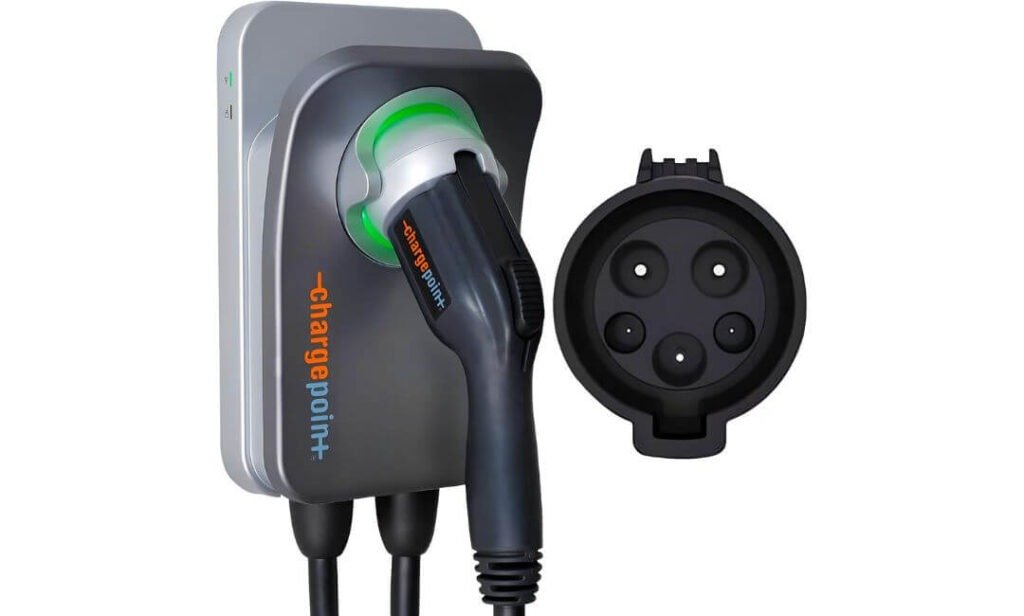
Quick Specs:
- Charging Type: Level 2 AC
- Voltage: 240V
- Maximum Output: Up to 50A / 12kW depending on installation
- NEMA 14-50 Configuration: Up to 40A
- Connector: SAE J1772
- Cable Length: 23 feet
- Current Adjustment: 16A–50A
- Connectivity: WiFi / ChargePoint app
- Installation: NEMA 14-50 or hardwired configuration
- Certification: UL Listed
- Indoor/Outdoor: Yes, with appropriate installation
Some chargers are impressive because their specification sheet is packed with big numbers. Home Flex is interesting for a different reason: it feels designed around how people actually live with an EV. The adjustable charging current lets you configure the unit around the electrical circuit rather than simply running maximum power all the time.
With the NEMA 14-50 version, you have a straightforward 240V plug-in setup when the appropriate outlet and circuit are already in place. The charger can also be installed at higher current levels when hardwired and when the home’s electrical system is designed for it. That flexibility is useful because an EV6 does not need you to force the maximum available amperage every night.
Then there is the 23-foot cable. It sounds like a small specification until the charger is mounted on one side of a garage and the EV6 is parked somewhere else. That extra reach can save you from awkward parking or cable stretching, and it gives the installation a little more freedom from day one.
The ChargePoint app is where this unit becomes more than a box on the wall. You can check charging activity, manage sessions, schedule charging and view charging information from your phone. If your utility offers managed-charging programmes, the ecosystem can also make those options easier to use.
(The attraction is simple: good hardware, sensible adjustability and an established charging ecosystem that continues to be useful after installation.)
What We Like
- Adjustable current lets you configure charging around the electrical installation rather than using a fixed output.
- The 23-foot cable gives excellent freedom when the EV6 is not parked directly beside the charger.
- NEMA 14-50 plug-in capability makes it convenient for homes that already have the correct 240V setup.
- The ChargePoint app adds scheduling, charging information and remote management.
- UL certification and indoor/outdoor installation capability provide useful reassurance for a permanent home charger.
One Small Consideration
The charging output depends on how the unit is installed. The NEMA 14-50 configuration and a hardwired installation do not provide the same maximum current, so choose the electrical setup first and then configure the charger accordingly.
Why It Fits the EV6 So Well
For an EV6 owner who wants smart home charging without overcomplicating the daily routine, Home Flex has a very sensible balance. You get adjustable Level 2 power, a long cable and an app that lets you manage charging rather than treating the charger as a completely hands-off appliance.
The other advantage is flexibility. A homeowner with an existing 240V outlet can approach it differently from someone doing a new hardwired installation. That makes the charger easier to fit into different garages, driveways and electrical setups without changing the basic charging experience.
The Insider Pro-Tip
Don’t automatically select the highest amperage available in the app. Set the charger according to the circuit it is actually connected to, and let the EV6 handle the vehicle-side charging demand. There is no practical benefit in configuring a charger beyond what the electrical installation is designed to support.
And take the 23-foot cable seriously when deciding where to mount it. A slightly more thoughtful mounting position can make every charging session easier—especially if the EV6 sometimes parks nose-in and sometimes backs into the same space. That is the kind of small installation decision you notice every single day.
#4. Grizzl-E Level 2 40A EV Charger
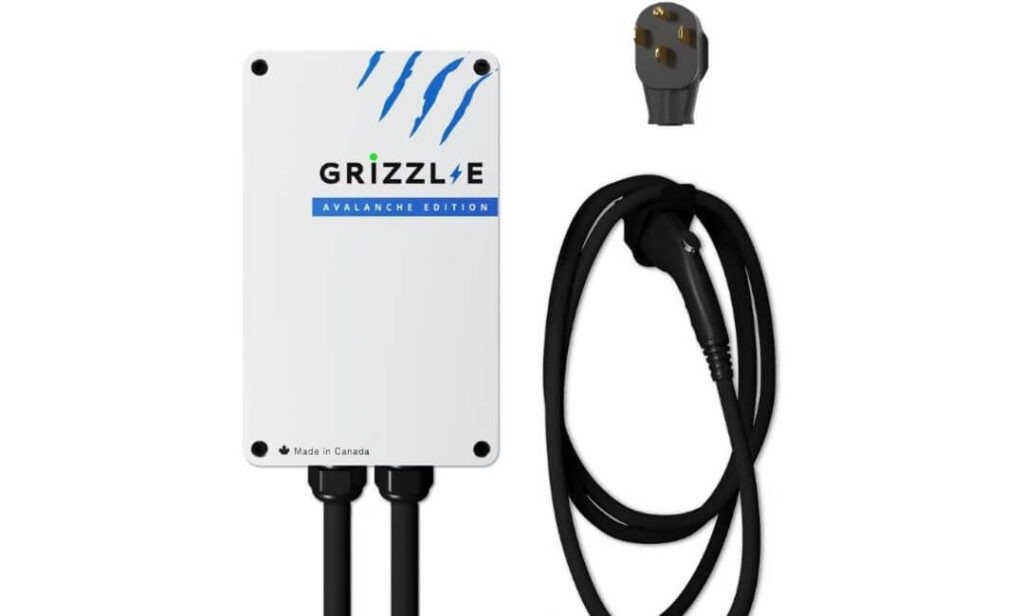
Quick Specs:
- Charging Type: Level 2 AC
- Maximum Output: 40A
- Charging Power: Up to 9.6kW
- Connector: SAE J1772
- Plug: NEMA 14-50
- Adjustable Current: 16A, 24A, 32A or 40A
- Cable Length: 24 feet
- Enclosure: Metal
- Weather Protection: IP67
- Safety: Built-in GFCI, ground-fault, overcurrent, overvoltage and over-temperature protection
- Recovery: Self-monitoring and power-outage recovery
- Certification: UL Listed and ENERGY STAR certified
There is something refreshing about a charger that doesn’t try to turn home charging into another app you have to manage. Grizzl-E takes the straightforward route: connect it to the appropriate 240V outlet, select the current your electrical circuit supports and let the EV6 charge.
The 40A maximum output provides up to 9.6kW of Level 2 charging, while the four selectable settings—16A, 24A, 32A and 40A—make it easy to back the charger down when your electrical setup calls for less. That is particularly useful in a busy garage where the EV6 may be charging alongside other equipment.
Then comes the part that separates this unit from many conventional indoor-focused chargers: the IP67 enclosure and metal construction. If your charging point is in an exposed garage, carport or other location where rain, dust and temperature swings are part of normal life, ruggedness becomes much more than a marketing extra.
The 24-foot premium cable is another practical win. It gives you enough reach to position the EV6 without having to mount the charger directly beside the car’s charge port, while the wall-mounted design keeps the setup tidy when the cable is not in use.
(This is the “plug it in, set the right current and get on with your day” option—and for plenty of EV6 owners, that simplicity is exactly the point.)
What We Like
- 40A / 9.6kW capability gives the EV6 a strong Level 2 home-charging supply.
- Four current settings make it easier to match charging to different circuit capacities.
- The 24-foot cable provides useful reach for garages and outdoor parking areas.
- IP67 protection and the metal enclosure make it a particularly practical choice for tougher environments.
- Built-in GFCI and multiple protection systems add another layer of reassurance during long charging sessions.
- No app dependency keeps everyday operation wonderfully simple.
One Small Consideration
The charger is deliberately less connected than the smart models above it. There is no need to manage another WiFi app, but you also won’t get the same remote energy monitoring or scheduling features built into those chargers.
Why It Works for an EV6
For an EV6 owner who values durability and simplicity over smart-home features, this is where the Grizzl-E makes its case. The 40A output is more than capable of handling regular overnight Level 2 charging, while the adjustable settings give you control over how much electrical load the charger places on the circuit.
The bigger story is its physical design. IP67 protection, a metal enclosure, built-in GFCI and automatic recovery features make this feel like equipment designed to live through real-world conditions rather than something intended only for a perfectly sheltered garage wall.
And because it uses a NEMA 14-50 plug, owners with the correct 240V outlet can keep the installation comparatively straightforward. The outlet and circuit still need to be properly installed and rated for the selected charging current, but there is no reason to turn a simple setup into a complicated one.
The Insider Pro-Tip
The smartest thing you can do with this charger is choose the current based on your home’s actual electrical setup, not simply the maximum 40A setting. If other heavy loads are running in the garage, dropping to 32A or 24A can be a perfectly sensible trade-off while still giving the EV6 useful overnight charging.
And if your charger will live somewhere exposed to weather, the rugged enclosure is one of the reasons to consider this model—but IP67 does not mean the electrical installation itself can be casual. The outlet, circuit, grounding and mounting location still deserve proper attention. Get those fundamentals right and the whole setup becomes pleasantly boring—which is exactly what you want from something charging your EV while you sleep.
#5. J+ Booster 2 Portable Level 2 EV Charger
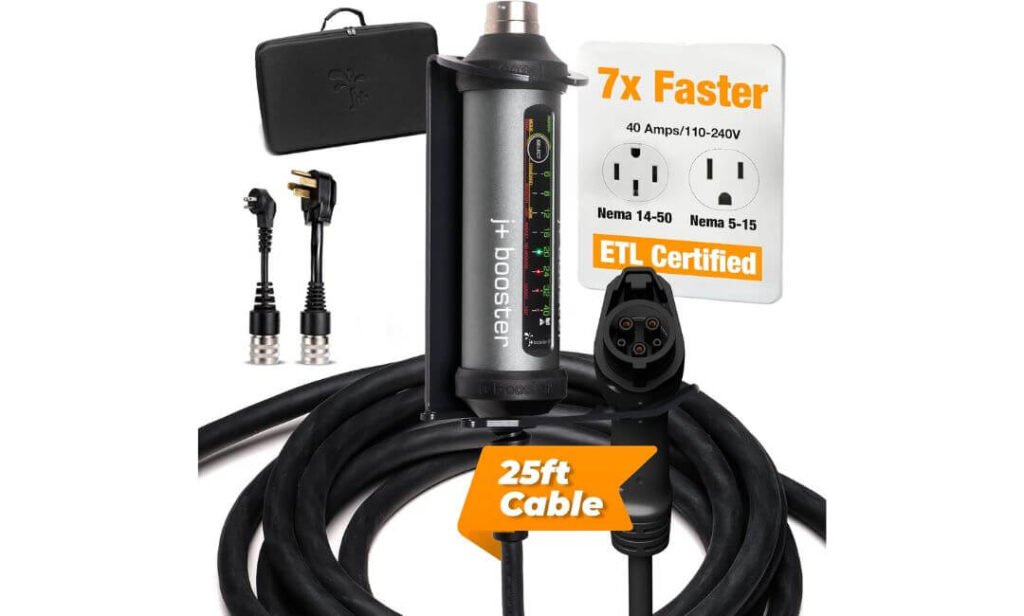
Quick Specs:
- Charging Type: Portable Level 2 EVSE
- Maximum Output: 40A / 9.6kW
- Voltage: 120V / 240V
- Connector: SAE J1772
- Current Settings: 6A, 8A, 12A, 16A, 20A, 24A, 32A and 40A
- Adapters: NEMA 14-50 and 5-15 included
- Cable Length: 25 feet
- Enclosure: Aluminum
- Weather Protection: IP67
- Impact/Load Rating: Designed to withstand up to 6,600-lb wheel load
- Weight: About 7.7 lb
- Extras: Wall bracket and carrying case
- Warranty: 2 years
If the first four chargers are mainly about building a charging point at home, this one is about not being tied to one charging point at all. The J+ Booster 2 can operate from 120V or 240V, with the included NEMA 5-15 and NEMA 14-50 adapters, so the same EVSE can move between a home garage, another property or a trip where a suitable outlet is available.
At 240V, the unit can deliver up to 40A / 9.6kW, while the current can be selected across eight settings from 6A to 40A. That is useful because the outlet available to you may not always support the same current. You can simply choose a lower setting rather than treating every electrical connection as if it were a 40A circuit.
The really unusual part is the physical construction. This is a 7.7-pound aluminum portable charger with an IP67 rating and a stated 6,600-lb wheel-load resistance. That is not a specification I would ignore if you actually intend to carry the charger around. A normal wall-mounted EVSE is rarely designed around the possibility of being packed into a car, exposed to weather and accidentally subjected to that kind of abuse.
The 25-foot cable, carrying case and wall bracket make the concept even more practical. Keep it mounted at home when you want a dedicated charging setup, then remove it and take it with the EV6 when portability becomes more important.
(This is the choice for the owner who sees a home charger as something that should travel with the car—not something permanently attached to one wall.)
What We Like
- 120V and 240V capability gives it unusual flexibility for a portable EV charger.
- 40A / 9.6kW maximum output makes it a serious Level 2 option when connected to an appropriate 240V circuit.
- The 8 selectable current settings make it easier to adapt to different electrical connections.
- Aluminum construction and IP67 protection make it unusually rugged for something designed to travel.
- The carrying case and wall bracket let you use it as either a portable charger or a semi-permanent home setup.
- At about 7.7 pounds, it is considerably easier to move than many heavy-duty home charging units.
One Small Consideration
Its biggest strength—portability—is also why it may not be the first choice for someone who only wants a permanently mounted smart charger with WiFi monitoring and energy reports.
Why It Makes Sense for an EV6
The J+ Booster 2 earns its place because it solves a different problem. An EV6 owner who moves between homes, travels frequently or simply wants a backup charging solution in the vehicle gets considerably more flexibility than with a conventional wall-mounted unit.
At home, 240V operation can provide up to 9.6kW, while the 120V option gives you a lower-power fallback when a suitable Level 2 outlet is unavailable. Add the 25-foot cable and adjustable current, and it becomes a surprisingly versatile piece of equipment rather than just another 40A charger.
The rugged housing is the other reason to take it seriously. IP67 protection, aluminum construction and the stated 6,600-lb wheel-load resistance are unusually specific design choices for a portable EVSE. You are paying for that durability and flexibility, not simply for another charger with a 40A number on the label.
The Insider Pro-Tip
If you’re buying this primarily for home use, use the 240V NEMA 14-50 setup as your main charging configuration and treat the 120V adapter as the backup that happens to travel with you. That gives the EV6 the much more useful Level 2 charging capability at home while keeping the lower-voltage option available when you genuinely need it.
And because this charger can move between different outlets, the adjustable current is more important than it first appears. Never assume an unfamiliar outlet can safely deliver 40A just because the adapter fits. Check the circuit and outlet rating first, then select the appropriate current. That small habit is what turns the J+ Booster 2 from a clever portable gadget into a genuinely useful EV6 charging tool.
Best Kia EV6 Home Charger: How the Top Level 2 Options Compare
| What Matters for an EV6 | Autel 50A | EMPORIA | ChargePoint Home Flex | Grizzl-E 40A | J+ Booster 2 |
|---|---|---|---|---|---|
| Best Fit |
High-output home setup
Permanent 240V charging
Built around a hardwired installation
|
Flexible setup
Plug-in or hardwired
Useful if your installation may change
|
Smart everyday use
Connected home charging
Strong app and charging ecosystem
|
Simple & rugged
Straightforward Level 2
No app dependency
|
Travel-friendly
Portable home + backup
120V and 240V flexibility
|
| Maximum charging capability | 50A / 12kW At 240V |
48A / 11.5kW Hardwired |
Up to 50A Installation dependent |
40A / 9.6kW At maximum setting |
40A / 9.6kW At 240V |
| Plug-in charging | No Hardwired |
Yes NEMA 14-50 up to 40A |
Yes NEMA 14-50 configuration |
Yes NEMA 14-50 |
Yes NEMA 14-50 & 5-15 adapters |
| Current adjustment | 6A–50A | Up to 48A | 16A–50A | 16A / 24A / 32A / 40A | 6A–40A 8 selectable settings |
| Cable reach | 25 ft | 25 ft | 23 ft | 24 ft | 25 ft |
| Smart charging & monitoring |
Yes WiFi, app control, scheduling |
Yes WiFi, energy data, scheduling |
Yes App, scheduling, charging data |
No Simple plug-and-charge operation |
No Focused on portability |
| Weather / enclosure focus |
NEMA 4X Suitable for appropriate outdoor installation |
NEMA Type 4 Designed for indoor/outdoor use |
Indoor / outdoor Cold-resistant cable |
IP67 Metal enclosure |
IP67 Aluminum housing |
| Safety / certification |
UL Multiple electrical protection systems |
UL + ENERGY STAR Built-in protection |
UL Designed for permanent home use |
UL + ENERGY STAR GFCI + multi-layer protection |
ETL Thermal and electrical protection |
| What separates it |
50A capacity Hardwired power + extensive smart control |
Installation choice Strong energy-use visibility |
Charging ecosystem Long cable + connected controls |
Rugged simplicity No app required for daily charging |
True portability 120V/240V + carry case |
| Best reason to choose it | You want a permanent high-capacity charger with smart control. | You want plug-in convenience now with a higher-output hardwired path later. | You want a polished smart-charging experience and long cable reach. | You want a tough, uncomplicated charger that simply does its job. | You want one charger that can stay home or travel with the EV6. |
Buying Guide: What Actually Matters When Choosing a Home Charger for the Kia EV6
The EV6 is one of those cars where a home charger can look much more complicated than it really is. The important part is not simply finding the charger with the biggest amperage number. You need to match the 240V supply, available circuit capacity, charging output, connector, installation method and features you will actually use. A good setup should make overnight charging boring and predictable, not something you have to think about every evening.
240V Level 2 Power: Why 40A to 50A Makes Sense
For home charging, 240V Level 2 power is the practical sweet spot for the EV6. Compared with a standard 120V outlet, the higher-voltage supply can put substantially more energy into the battery during the same overnight window.
A 40A charger at 240V is rated around 9.6kW, while a 48A charger is around 11.5kW, and a 50A charger reaches approximately 12kW. Those numbers describe the charger’s available output; they do not mean the EV6 will necessarily pull that exact amount during every session. The vehicle controls its own charging rate.
That distinction is worth understanding before spending extra money on a higher-rated charger.
| Charger rating | Approx. maximum power at 240V | What it means in practice |
|---|---|---|
| 32A | 7.7kW | Plenty for many overnight charging routines |
| 40A | 9.6kW | Strong Level 2 home charging |
| 48A | 11.5kW | More available AC charging capacity |
| 50A | 12kW | High-capacity Level 2 setup |
For most EV6 owners, 40A is already serious home charging power. Moving to 48A or 50A can make sense when the electrical installation supports it and you want the additional charging headroom, but it should not be treated as a requirement.
One more point often missed in buying guides: the battery size and state of charge matter. A larger battery naturally takes more energy to refill, while charging speed can also change as the battery approaches a high state of charge. So a charger advertised with a particular “miles per hour” figure should never be treated as a guaranteed EV6 charging rate.
Plug-In NEMA 14-50 vs. Hardwired Installation
This is one of the decisions that can make a bigger difference than choosing between two similarly rated chargers.
A NEMA 14-50 plug-in charger can be convenient if your garage already has a properly installed 240V receptacle on an appropriate dedicated circuit. You can connect the EVSE without making the charger itself a permanent part of the electrical installation.
The trade-off is that the plug-in configuration may have a lower maximum current than the same charger’s hardwired version. The EMPORIA in this list is a good example: its NEMA 14-50 setup supports up to 40A, while the hardwired configuration can reach 48A.
A hardwired charger, on the other hand, is permanently connected to the home’s electrical system. That makes more sense when you are building the installation from scratch, want higher available current, or simply prefer a clean permanent setup.
Before choosing either option, look at the complete electrical installation rather than only the charger:
- Is there a dedicated circuit for the EV charger?
- Is the breaker correctly sized for the intended continuous charging load?
- Are the conductors sized appropriately?
- Is the receptacle itself rated and installed correctly?
- Does the installation meet applicable local electrical requirements?
- Will another large electrical load be operating on the same system?
A charger that can handle 50A is not a reason to install a 50A circuit without checking the complete electrical design. Have a qualified electrician verify the installation.
Smart WiFi Features: Useful or Just Another App?
Smart charging is one area where personal preference genuinely matters.
If you like being able to check charging from your phone, WiFi connectivity can be genuinely useful. Depending on the charger, you may be able to:
- Schedule charging for particular hours.
- Monitor charging sessions.
- View energy consumption.
- Track charging costs.
- Start or stop charging remotely.
- Take advantage of utility time-of-use rates.
- Receive charger status information.
The EMPORIA and ChargePoint options in this roundup put more emphasis on connected charging, while the Grizzl-E and J+ Booster 2 take a much simpler approach.
That does not make a non-smart charger inferior. If your routine is simply plug in at night and unplug in the morning, an app may add very little to your life. In that situation, reliability, cable reach, electrical protection and ease of use are arguably more important.
Also, do not confuse WiFi connectivity with the car’s own software. The charger and the EV6 have separate responsibilities. Your vehicle manages the battery-side charging process, while the EVSE manages the electrical supply and, on smart models, provides additional controls and monitoring.
Cable Length Matters More Than It Looks on Paper
Cable length is easy to ignore when comparing specifications, but it becomes very obvious once the charger is installed.
The chargers in this roundup offer roughly 23 to 25 feet of cable, which gives considerably more freedom when the charging unit cannot be mounted directly beside the EV6’s charge port.
A longer cable can help when:
- The EV6 parks nose-in on some days and backs in on others.
- The charger is mounted toward one side of the garage.
- More than one parking position is possible.
- The charging point is outside but the vehicle is parked a little farther away.
There is no need to buy the longest cable available simply because it is longer. Extra cable also means more weight and more cable to manage. The sensible choice is enough reach to comfortably connect the car without stretching the cable or routing it where it can become a trip or vehicle hazard.
Safety, Certification and Outdoor Protection
A home EV charger is handling a substantial electrical load for extended periods, so safety specifications deserve more attention than flashy app features.
Look for meaningful certification such as UL or ETL listing, along with appropriate electrical protection. Depending on the charger, this can include:
- Overcurrent protection.
- Overvoltage and undervoltage protection.
- Ground-fault protection.
- Over-temperature monitoring.
- Surge protection.
- GFCI protection.
- Thermal monitoring.
- Power-outage recovery.
The enclosure rating matters as well. If the charger is going into a garage, protection against dust and moisture is still useful. If it will be installed outdoors, pay much closer attention to the manufacturer’s stated weather and enclosure rating and the installation requirements.
The Grizzl-E and J+ Booster 2 are particularly interesting here because their IP67-rated designs put more emphasis on harsh-environment use. Autel’s configuration uses a NEMA 4X enclosure, while other models take a different approach to weather protection.
Certification does not mean you can install the charger anywhere or ignore electrical requirements. It means the equipment has been evaluated against the applicable safety standards. The installation itself still matters.
J1772 Compatibility and the EV6 Model-Year Detail
Connector compatibility deserves a separate check before buying.
The J1772 chargers in this roundup are designed around SAE J1772 AC charging, which is the connector standard used on earlier North American EV6 configurations. That is why these units can make excellent choices for those vehicles.
However, there is an important model-year distinction for U.S.-market EV6s: newer EV6 versions use the NACS charging port. If your vehicle has NACS, a J1772 charger does not simply become compatible because both are Level 2 AC equipment. You need the appropriate J1772-to-NACS adapter or charging solution.
So before clicking Buy, check the actual charging port on your EV6 and the model-year specification for your market.
That one-minute check can save you from ordering a charger that has excellent specifications but the wrong connector for your particular vehicle.
Do You Actually Need 48A or 50A?
This is where I would keep the decision simple.
If your priority is a straightforward overnight charging setup, a 40A / 9.6kW Level 2 charger is already a substantial upgrade from 120V charging. If you want more available AC capacity and your home’s electrical installation supports it, stepping up to 48A or 50A can be worthwhile.
But do not buy the larger number just because it sounds faster.
The charger is only one part of the system. Your EV6, electrical circuit, breaker, wiring, installation method and charging conditions all influence what actually happens during a charging session.
The best home setup is therefore the one where those pieces agree with each other. A correctly installed 40A charger can be a much more sensible choice than a 50A unit connected to an unsuitable electrical setup.
A Simple Way to Narrow Down the Choice
If you are still between several options, think about your actual home rather than the specification sheet:
| Your priority | What to look for |
|---|---|
| Maximum home charging capacity | 48A–50A hardwired option |
| Existing NEMA 14-50 outlet | 40A plug-in Level 2 charger |
| Energy monitoring | WiFi + charging data |
| Remote scheduling | Smart app control |
| Outdoor installation | Strong enclosure/weather rating |
| Simple operation | Non-smart plug-and-charge design |
| Frequent travel | Portable 120V/240V charger |
| Difficult parking position | 23–25 ft cable |
| Future flexibility | Adjustable current |
The important thing is that there is no single specification that automatically makes a home charger right for every EV6 owner. The right combination depends on the car’s connector, your electrical installation, where you park and whether you actually want smart charging features.
Before You Buy: The Questions That Can Save You From the Wrong EV6 Charger
Buying an EV charger is one of those purchases where the charger itself is only half the decision. The other half is your home’s electrical system, the EV6 version sitting in your driveway, and how you actually plan to charge. Getting those details right before ordering is far easier than changing an outlet, rewiring a circuit, or returning a charger later.
Can Your Home Electrical System Handle the Charger?
Start with the electrical panel, not the charger listing.
A 40A, 48A or 50A charger can place a significant continuous load on a home’s electrical system. That does not mean every EV6 owner needs a new electrical panel, but it does mean the existing installation should be checked before selecting the maximum charging current.
Ask an electrician to look at:
- The home’s available electrical capacity.
- Existing loads on the panel.
- The proposed dedicated EV charging circuit.
- Breaker and conductor requirements.
- Whether the desired charging current is practical for the property.
- Local electrical-code requirements.
- Whether a panel upgrade or load-management solution is necessary.
A useful point here is that a 40A charger does not automatically require the same installation as a 50A charger. The intended continuous load, circuit design and equipment instructions all matter.
If the electrical system comfortably supports a lower current, there is nothing wrong with choosing it. The EV6 can still receive useful overnight Level 2 charging without forcing the house to operate at the charger’s maximum rating.
NEMA 14-50 or Hardwired: Which Installation Fits Your Home?
There are two sensible routes in this roundup.
A NEMA 14-50 charger makes sense when you already have, or plan to install, a properly rated 240V receptacle. It gives you a plug-in setup and can also make future replacement or removal easier.
A hardwired charger is more permanent. The charger connects directly to the electrical circuit, which can allow certain models to operate at their higher current settings and gives the installation a clean, dedicated appearance.
Think about the decision this way:
- Already have a properly installed NEMA 14-50? A compatible plug-in charger may be the simplest route.
- Building a new charging circuit? Compare hardwired and plug-in costs before deciding.
- Want the highest supported output? Check whether the particular charger requires hardwiring for that setting.
- Want the charger to be easily removable? A plug-in configuration has an obvious advantage.
- Installing outdoors? Consider the enclosure, mounting method and weather exposure alongside the electrical connection.
One important detail from this list is the EMPORIA. Its NEMA 14-50 configuration supports up to 40A, while its hardwired configuration supports up to 48A. That is exactly why reading the installation specifications matters more than simply seeing “48A” in a product title.
Check the EV6’s Charging Port Before Ordering
Do not rely on an old article—or even a product listing that says “compatible with Kia EV6”—without checking your actual vehicle.
For earlier North American EV6 configurations, J1772 is the relevant AC charging connector, making the J1772 chargers in this article a direct match for those vehicles.
Newer U.S.-market EV6 versions use NACS, however. If your EV6 has a NACS port, a J1772 charger requires the appropriate J1772-to-NACS adapter or compatible charging arrangement.
This is especially important if you are buying an older charger for a newer EV6 or comparing listings written for different model years.
Also remember that this article is about AC Level 2 home charging. A home Level 2 charger is not the same thing as a DC fast charger you would use on a road trip. At home, the goal is usually to add a useful amount of energy while the car is parked for several hours.
Which Smart Features Are Actually Worth Paying For?
Smart features are useful when they solve a real problem.
Energy monitoring is one of the better examples. If the charger can show how much electricity a charging session consumed, you can get a clearer picture of what the EV6 is costing you to charge at home.
Time-of-use scheduling can also be valuable if your utility charges different rates during different parts of the day. Instead of charging immediately whenever the car is plugged in, you can schedule charging for the cheaper period.
Look for features such as:
- Charging schedules.
- Energy consumption data.
- Charging-session history.
- Remote start and stop.
- Electricity-cost tracking.
- Utility programme support.
- Load management where supported.
OTA, or over-the-air software updates, can also be useful on connected chargers because the manufacturer can improve software functionality without requiring you to replace the hardware. But I would not make OTA support the deciding factor. A charger with excellent electrical hardware, good protection and dependable basic operation is more important than having the longest feature list.
And if you rarely use phone apps, paying extra for smart functionality may not improve your charging experience at all.
What Safety Details Should You Check?
This is the part of the specification sheet I would read before looking at decorative features.
Look for recognized certification such as UL or ETL, depending on the product and market, and check what electrical protections are built into the charger.
Useful protection can include:
- Ground-fault protection.
- Overcurrent protection.
- Overvoltage and undervoltage protection.
- Over-temperature monitoring.
- Surge protection.
- GFCI protection.
- Automatic recovery after a power interruption.
- Appropriate enclosure protection for the installation location.
The cable and enclosure matter as well. A 23- to 25-foot cable can be extremely useful in a garage, while an IP-rated enclosure can become important when the charger is exposed to rain, dust or temperature changes.
Do not interpret an IP rating as permission to install the charger anywhere. The manufacturer’s mounting instructions and the electrical installation requirements still need to be followed.
What Warranty Should You Expect?
Warranty length is useful, but warranty quality matters just as much.
Check what the manufacturer actually covers, how long the coverage lasts, and whether support is available if the charger develops a connectivity or hardware problem.
For a permanently installed charger, I would pay attention to:
- Warranty duration.
- Manufacturer support availability.
- Replacement procedure.
- Whether the warranty covers the complete unit.
- Installation-related exclusions.
- Availability of firmware or software support for connected models.
A longer warranty can provide useful peace of mind, but it should not override better electrical specifications or a more suitable installation.
Will You Need an Electrician or Permit?
For a new 240V EV charging circuit, assume that professional electrical work may be necessary unless you already have a correctly installed circuit and receptacle that meets the charger’s requirements.
A new installation may involve:
- Checking the home’s electrical capacity.
- Selecting the correct circuit and breaker.
- Running appropriately sized conductors.
- Installing the receptacle or hardwired connection.
- Mounting the EV charger correctly.
- Testing the circuit and charger.
- Obtaining an electrical permit or inspection if required by the local authority.
Permit requirements vary by location, so do not assume that an installation is permit-free simply because the charger itself is plug-in.
This is also where the phrase “plug-and-play” can be misleading. Plugging a charger into an already compliant outlet is simple. Creating that outlet safely and legally is an electrical installation, not a shortcut around one.
A Final Check Before You Click Buy
Before placing the order, I would verify these six things in this order:
- Your EV6’s actual charging-port type and model year.
- Whether your home can support the desired charging current.
- NEMA 14-50 or hardwired installation.
- The charger’s actual output in that specific configuration.
- Safety certification, protection and warranty.
- Cable length and whether smart features are genuinely useful to you.
If all six line up, you are no longer choosing a charger because its product page has the biggest number. You are choosing equipment that actually fits the car, the house and the way you charge. That is the difference between buying an EV charger and buying the right EV charger.
Installing a Kia EV6 Home Charger Without Making the Setup Complicated
A good charger can only perform as well as the electrical installation behind it. For an EV6, the goal is not simply to get a 240V charger onto the wall; it is to create a dedicated, correctly sized and properly protected charging circuit that can handle several hours of continuous load without becoming the weak point in the system.
The exact electrical requirements depend on the charger, selected amperage, home wiring and local code, so the manufacturer’s installation instructions and a qualified electrician should always have the final say.
Start With the Electrical Panel, Not the Charger
Before ordering a Kia EV6 240V charger, have the electrician inspect the home’s electrical service and panel.
They should establish:
- Available electrical capacity.
- Existing major loads.
- Available breaker spaces.
- Proposed charging current.
- Required breaker rating.
- Appropriate conductor sizing.
- Grounding and protection requirements.
- Whether load management or a service upgrade is necessary.
- Whether the installation requires a permit or inspection.
This is particularly important when moving from a 40A charger to a 48A or 50A model. The charger may support the higher current, but the home’s electrical system still has to support the installation safely.
Choose the Installation Method
Once the electrical capacity is understood, decide whether the charger will be plug-in or hardwired.
NEMA 14-50 installation
This is the straightforward option when a suitable 240V NEMA 14-50 receptacle is already installed or is being added specifically for the charger. The EVSE plugs into the receptacle, which makes the charger easier to remove or replace later.
The important part is that the receptacle itself needs to be correctly installed and rated for the intended continuous EV charging load. A random existing 14-50 outlet should not automatically be assumed to be suitable.
Hardwired installation
A Kia EV6 hardwired charger is permanently connected to the dedicated electrical circuit. This can be useful when you want a clean permanent installation or when the particular charger supports a higher current in its hardwired configuration.
For example, the EMPORIA included in this article supports up to 40A in its NEMA 14-50 configuration and up to 48A when hardwired. That is why the installation method needs to be considered alongside the charger rating.
What the Installation Process Usually Looks Like
A professional installation generally follows a fairly straightforward sequence.
1. Check the electrical service
The electrician confirms the home’s available capacity and determines whether the planned charging load is practical.
2. Choose the charger location
The mounting position should allow the EV6 to connect comfortably without putting unnecessary strain on the cable. Think about how the car is normally parked, not just where the nearest wall outlet happens to be.
3. Plan the dedicated circuit
The electrician determines the appropriate breaker, conductors, grounding and protection based on the charger’s installation instructions and the applicable electrical requirements.
4. Install the receptacle or hardwired connection
For a plug-in charger, this means installing the appropriate 240V receptacle. For a hardwired unit, the charger is connected directly to the dedicated circuit according to the manufacturer’s instructions.
5. Mount the EVSE
The charger should be securely mounted at a practical height and location, with enough room for the cable to hang naturally when it is not connected.
6. Test the installation
Before the EV6 is connected for normal charging, the electrician should verify the circuit, connections, grounding and charger operation.
7. Complete any required inspection
Where local rules require a permit or inspection, the installation should go through that process before being treated as finished.
The result you want is simple: plug in the EV6, start charging and never have to wonder whether the electrical installation is keeping up.
How Much Can Installation Cost?
There is no single reliable nationwide price because installation cost depends heavily on the home.
A plug-in installation can be relatively inexpensive when a compliant 240V circuit and NEMA 14-50 receptacle already exist in the right location. If the electrician needs to run a new circuit, install a receptacle, route wiring a long distance or work through finished walls, the cost can increase substantially.
Hardwired installations can also vary widely. A short, accessible run from the electrical panel to the charger is a very different job from installing a charger on the opposite side of a large garage.
Common factors affecting the final price include:
- Distance between the panel and charger.
- Accessibility of the wiring route.
- Existing panel capacity.
- Breaker and conductor requirements.
- Garage or outdoor mounting location.
- Trenching or conduit requirements.
- Panel modifications.
- Load-management equipment.
- Permit and inspection requirements.
- Whether a service or panel upgrade is needed.
For that reason, treat online installation-price estimates as rough planning numbers, not a quote. Getting two or three local electrician estimates is usually far more useful.
How Long Does Installation Take?
A straightforward installation can often be completed relatively quickly when the panel is suitable and the charger is close to it.
A simple existing-circuit or short-run installation may take only a few hours. A new circuit with longer cable runs, conduit, difficult access or additional electrical work can take considerably longer.
The timeline can also depend on whether a permit, inspection or utility-related work is required.
The fastest installation is not automatically the best installation. If an electrician takes additional time to route the cable cleanly, protect it properly and verify the circuit, that is time well spent.
Outdoor Installation Needs Extra Attention
An outdoor Kia EV6 charger has to deal with conditions that an indoor garage charger may never see.
Look for a charger specifically rated for the intended environment, then consider the installation itself.
Pay attention to:
- Direct rain and water exposure.
- Snow and ice accumulation.
- Direct sunlight and heat.
- Drainage around the charger.
- Cable routing.
- Protection of the electrical connection.
- Mounting surface strength.
- Clearance around the charger.
- Whether the enclosure rating matches the manufacturer’s installation requirements.
An IP67 or NEMA-rated enclosure can provide useful protection, but the rating belongs to the equipment—not automatically to every part of the electrical installation.
Keep the connector and cable connection positioned as recommended by the manufacturer, and avoid leaving the charging cable lying in places where vehicles can repeatedly drive over it unless the specific product is designed for that kind of load.
Don’t Make These Electrical Mistakes
A few mistakes are worth avoiding completely.
Do not install a charger on an unsuitable shared circuit. EV charging is a continuous load, so the circuit needs to be designed accordingly.
Do not choose the breaker simply because the charger says “50A.” The complete circuit has to be designed for the intended charging current.
Do not assume every NEMA 14-50 outlet is EV-ready. The receptacle, wiring, breaker and installation all need to be appropriate.
Do not use an extension cord as a permanent EV charging solution. Use the charger according to its intended installation method.
Do not hide a cable under rugs or route it where people or vehicles can repeatedly damage it.
Do not skip the electrical inspection where one is required.
And perhaps the most important one: do not let the charger determine what your electrical system can handle. The home should be assessed first, and the charging current should be selected from what that installation can safely support.
The Practical EV6 Setup
For most owners, the installation decision comes down to a simple question: do you already have a suitable 240V circuit, or are you creating one specifically for the EV6?
If you already have a properly installed NEMA 14-50 circuit, a compatible plug-in Level 2 charger can keep things straightforward. If you are building a new dedicated charging circuit and want a permanent installation, a hardwired charger may give you a cleaner setup and, depending on the model, access to a higher charging-current configuration.
Either way, the charger should be the final piece of the puzzle—not the thing you use to decide what the house can safely provide. A properly planned Kia EV6 240V charger installation should feel almost uneventful once it is finished: the car comes home, you connect it, and by morning the charging is simply done.
Safety, Maintenance and Long-Term Care for Your Kia EV6 Charger
A home charger is easy to forget once it has been installed and is working properly, but it is still a piece of high-power electrical equipment that may run for hours at a time. The good news is that it does not need complicated maintenance. A few sensible checks throughout the year can catch damaged cables, loose connections, overheating, water exposure or software problems before they become bigger issues.
The best approach is simple: keep the charging equipment clean and dry where required, inspect the parts you actually touch, pay attention to unusual behaviour, and do not ignore a warning simply because the EV6 is still charging.
Give the Cable and Connector a Quick Check
The charging cable gets handled far more often than the charger itself, so it deserves the most attention.
Every few weeks, particularly if the charger is outdoors, look over the cable from end to end. You are not looking for microscopic defects; you are checking for anything obviously different from how it looked when new.
Look for:
- Cuts, deep abrasions or damaged insulation.
- Flattened sections from repeated vehicle contact.
- Exposed wiring or damaged connector housing.
- Cracks around the J1772 or other vehicle-side connector.
- Bent, loose or damaged connector components.
- Unusual heat marks or discoloration.
- Dirt or moisture inside the connector area.
A little normal flexibility in the cable is expected. What you do not want is visible physical damage or a connector that suddenly feels different when plugged into the vehicle.
When you’re finished charging, use the supplied holder or wall mount rather than leaving the cable on the ground. Keeping it off the floor reduces unnecessary wear and helps prevent someone from driving over it.
Keep the Charging Connector Clean
The connector is one of those parts where a little common sense goes a long way.
Keep the vehicle-side connector away from:
- Standing water.
- Mud and road debris.
- Snow buildup.
- Oil and other automotive fluids.
- Excessive dust or grit.
If the connector becomes dirty, follow the manufacturer’s cleaning instructions rather than improvising with aggressive chemicals or excessive water.
Do not force a connector into the vehicle. If it suddenly becomes difficult to insert or release, stop and investigate the reason rather than treating resistance as normal.
Outdoor Chargers Need Seasonal Attention
An outdoor charger has a tougher life than one mounted inside a dry garage.
Before periods of heavy rain, snow or extreme heat, check that the charger is still firmly mounted and that the cable is not sitting in a location where water can collect around the connection.
Pay particular attention to:
- Water pooling around the charging equipment.
- Snow or ice accumulating around the connector.
- Cracked mounting hardware.
- Damaged conduit or cable protection.
- Direct sunlight hitting the charger for long periods.
- Dirt blocking ventilation or cooling areas, where applicable.
An enclosure rating such as IP67 or NEMA 4X provides useful protection, but it does not make the installation indestructible. Weather protection works best when the equipment is mounted and used exactly as the manufacturer specifies.
Check for Heat, Odours or Unexpected Behaviour
One of the easiest maintenance checks is also one of the most useful: pay attention to anything that feels or behaves differently from normal.
During a charging session, an EV charger and cable can become warm. That alone is not necessarily a problem.
What deserves attention is a sudden change, such as:
- A connector becoming unusually hot.
- A persistent burning or electrical smell.
- Repeated charging interruptions.
- Unexpected power reduction.
- Repeated fault messages.
- Discoloration around the plug or receptacle.
- A breaker repeatedly tripping.
If you notice a burning smell, visible melting, damaged wiring or significant overheating, stop using the equipment and have it inspected rather than repeatedly resetting the system.
Keep Firmware and Apps Updated
Smart chargers are partly electrical equipment and partly software products.
If your charger uses WiFi and a mobile application, periodically check for firmware updates and app updates. Manufacturers can use software updates to improve connectivity, correct bugs, improve charging controls or add supported functionality.
It is worth keeping the charger connected to a stable network if you rely on remote scheduling or monitoring.
At the same time, do not update firmware in the middle of an important charging session unless the manufacturer specifically instructs you to do so. Let the charger complete its normal process when practical, then update it according to the manufacturer’s instructions.
A Little Privacy Common Sense Goes a Long Way
Smart charging apps can contain useful information about your charging habits, including charging times, energy consumption, vehicle activity and account details.
You do not need to be paranoid about this, but basic account hygiene is sensible.
Use:
- A strong, unique password.
- Two-factor authentication when the manufacturer offers it.
- The official manufacturer application.
- Current phone and app software.
- A secure home WiFi network.
Also review the permissions the application requests. If a particular permission is not necessary for the feature you use, there is no reason to grant it automatically.
And if you sell the charger, change ownership, or stop using the associated account, remove the charger from your account and reset it according to the manufacturer’s instructions.
What to Check Before Calling Customer Support
A charger that suddenly stops charging does not always have a failed charger.
Before contacting support, work through the basics.
1. Check the EV6
Look at the vehicle’s charging screen and dashboard messages first. Make sure the vehicle itself is not displaying a charging restriction, scheduled-charging setting or other warning.
2. Check the physical connection
Disconnect and reconnect the charging connector properly. Make sure it is fully seated and that there is no obvious dirt or damage around the connection.
3. Check the charger status
Look at the charger indicators or application for a fault message. The exact light pattern varies by manufacturer, so use the manual for your particular unit.
4. Check the circuit
If the charger has lost power, check whether the dedicated breaker has tripped. Do not repeatedly reset a breaker that continues to trip.
5. Check the outlet if using NEMA 14-50
For a plug-in charger, make sure the connection is secure and there is no visible discoloration, looseness or heat damage around the receptacle.
6. Check WiFi separately
If charging still works but the app cannot connect, you may have a network problem rather than a charging problem. Confirm the home’s internet connection before assuming the EV charger has failed.
7. Restart only when appropriate
Some chargers allow a controlled restart through their app or installation procedure. Follow the manufacturer’s instructions rather than repeatedly switching electrical equipment on and off without knowing what the fault is.
When You Should Stop Troubleshooting
There is a point where troubleshooting should end and professional help should begin.
Stop using the charger and seek qualified assistance if you see:
- Melted plastic.
- Burn marks.
- Exposed conductors.
- A persistent burning smell.
- Water intrusion into electrical components.
- Repeated breaker trips.
- A connector that becomes unusually hot.
- Repeated fault conditions that do not clear after following the manufacturer’s procedure.
Do not open the charger enclosure yourself simply to see what is inside. Internal electrical components can remain hazardous even when the vehicle is not connected.
Long-Term Care Is Mostly About Consistency
You do not need a complicated maintenance calendar for a Kia EV6 home charger. A quick visual inspection, sensible cable storage, clean connectors, occasional firmware updates and attention to unusual behaviour cover most of what an owner can reasonably do.
The electrical installation itself deserves more serious attention. If the charger develops a loose connection, repeated overheating or another electrical problem, that is electrician territory—not a DIY maintenance task.
A well-installed charger that is treated properly should become one of those pieces of equipment you barely notice. That is the real goal of long-term care: not constantly maintaining the charger, but making sure small problems never get the chance to become big ones.
FAQs About Kia EV6 Home Charger
Can a 48A or 50A home charger actually make a Kia EV6 charge faster than a 40A charger?
Yes, but not simply because the number on the charger is higher. A 48A or 50A Level 2 EVSE can provide more available AC charging capacity than a 40A unit, but the Kia EV6 ultimately controls how much power it accepts. The electrical installation also has to be designed for the selected charging current.
For an EV6 owner, the practical difference is therefore more nuanced. A 40A charger at 240V is roughly 9.6kW, while 48A is about 11.5kW and 50A is about 12kW under ideal electrical conditions. That additional capacity can shorten charging time when the vehicle can use it, but it does not turn the EV6 into a 12kW charger just because the wall unit is rated for it.
The bigger mistake is buying the highest-rated charger and then discovering the home’s electrical system cannot sensibly support that configuration. In many homes, a properly installed 40A charger is already an excellent overnight solution.
Is a NEMA 14-50 Kia EV6 charger better than a hardwired charger for everyday home use?
Neither installation is automatically better; the right choice depends on the electrical setup you already have and how permanent you want the installation to be.
A properly installed NEMA 14-50 setup is attractive when you want a plug-in charger that can be removed or replaced relatively easily. It can also be convenient if the garage already has a suitable 240V receptacle. Hardwiring becomes more interesting when you are creating a dedicated charging circuit from scratch, want a cleaner permanent installation, or the particular charger offers a higher current when hardwired.
There is an important detail hiding behind the product names in this article: the same charger can have different maximum outputs depending on how it is installed. The EMPORIA, for example, can operate at up to 40A in its NEMA 14-50 configuration and up to 48A when hardwired.
Before choosing, I would ask the electrician these questions:
- Can my panel support the intended continuous charging load?
- What circuit and breaker does the charger require?
- Is the existing NEMA 14-50 outlet actually suitable for EV charging?
- Would hardwiring materially change the charging capability?
- Are permits or inspection required locally?
That conversation is much more valuable than simply comparing “plug-in” and “hardwired” labels on shopping pages.
My EV6 is parked outside all night. What should I care about besides the charger being advertised as weatherproof?
This is where the installation matters just as much as the charger’s enclosure rating. An outdoor-rated charger is designed to tolerate the environment within its specified conditions, but the surrounding electrical installation still has to be done correctly.
For an outdoor EV6 setup, look closely at the enclosure rating, mounting position, cable routing and how the connector is stored when the vehicle is not charging. A charger with IP67 or NEMA-rated protection can be a strong choice, but that rating does not mean you can leave every part of the electrical connection exposed to standing water.
I would pay particular attention to these real-world details:
- Keep the connector positioned as the manufacturer recommends.
- Prevent the cable from sitting in standing water or vehicle traffic.
- Avoid locations where snow or ice can accumulate around the connection.
- Check the mounting hardware periodically.
- Keep the cable away from sharp edges and repeated crushing.
- Look for unusual heat, discoloration or physical damage.
If you live somewhere with serious seasonal weather, a robust enclosure plus a sensible mounting location is more valuable than simply finding the highest IP number.
What is the smartest way to use WiFi and time-of-use charging with a Kia EV6 without overcomplicating the routine?
The useful part of a smart charger is not that it has WiFi; it is that WiFi can let you charge when electricity is cheaper and understand how much energy the vehicle is actually using.
If your utility has time-of-use pricing, set the charging schedule around the cheaper period rather than manually starting and stopping the session every night. Once the schedule is working, the best routine is usually to plug the EV6 in when you get home and let the charger handle the timing.
Energy monitoring can also reveal something that a basic charger cannot: your actual charging consumption over time. You can use that information to compare charging sessions, estimate running costs and see whether your charging habits have changed.
The trick is not to make the system unnecessarily clever. If you never look at energy reports or schedules, a reliable non-smart charger may actually be the better ownership experience. Smart features should remove work from your routine, not create another app you feel obligated to check.
What should I do if my Kia EV6 suddenly starts charging slower even though the home charger has always worked normally?
First, do not assume the charger has failed. Charging power can change for perfectly normal reasons, and the EV6 itself controls the vehicle-side charging process.
Start by checking the vehicle’s charging screen for a reduced-current setting, scheduled charging behaviour or a warning. Then look at the charger’s status indicators or app, if it has one. If the charger reports a fault, follow the manufacturer’s specific troubleshooting procedure rather than repeatedly resetting the breaker.
It is also worth checking whether anything has changed in the electrical environment. For example:
- The charger may have been configured to a lower current.
- The vehicle may be approaching a high state of charge.
- The charger may have reduced output because of temperature.
- A smart charging schedule may be active.
- The home’s electrical system may be experiencing a protection event.
- A plug, connector or receptacle may have developed an abnormal connection.
If you notice burning odour, melted plastic, unusual heat, repeated breaker trips or visible electrical damage, stop charging and have the equipment inspected. Do not keep resetting a tripping breaker just to get another charging session.
The useful mindset is this: a slower charging session is information, not automatically a failure. Check what the car and charger are reporting first. If the behaviour is genuinely abnormal or keeps returning, then involve the manufacturer’s support team or a qualified electrician.
The Bottom Line for Kia EV6 Home Charging
The best home charger for a Kia EV6 is not necessarily the one with the highest amperage, longest feature list or smartest app. It is the one that makes sense for the car you actually own and the electrical system you actually have. That means checking the charging-port configuration first, then matching the charger to your home’s available capacity, installation method and daily routine.
If you want maximum permanent charging capacity, a 50A-class hardwired charger gives you plenty of headroom. If you already have a suitable 240V outlet, a 40A NEMA 14-50 charger can deliver strong overnight charging without turning the installation into a major project. And if you travel frequently or want a charger that can leave the garage with you, a portable 120V/240V unit solves a completely different problem.
One thing I would not compromise on is the electrical installation. A beautifully rated charger connected to the wrong circuit is still the wrong setup. Get the breaker, wiring, receptacle or hardwired connection and mounting location checked properly, then choose the charging current that the entire system can comfortably support.
The EV6 does the complicated part on the vehicle side. Your job is simply to give it a safe, reliable and appropriately sized source of Level 2 power. Once that is done, the ideal home-charging experience is almost invisible: come home, plug in, let the system do its work, and start the next day with the battery ready to go.
Also Check:

