
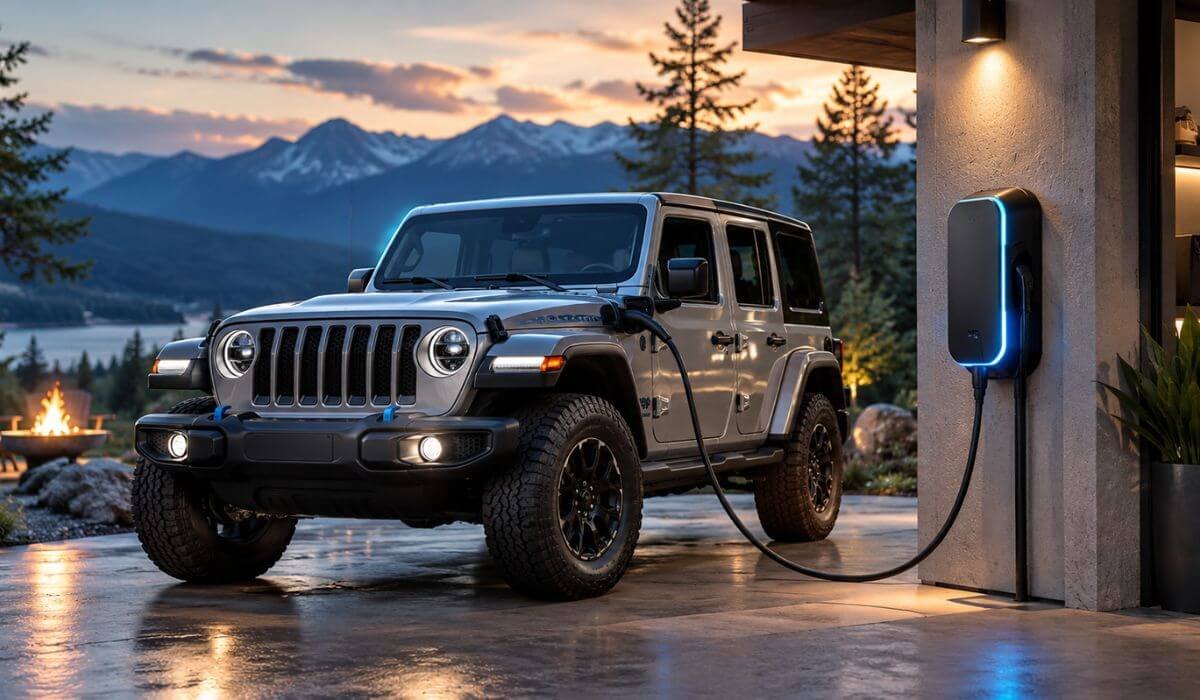
Best Level 2 Chargers for Jeep 4xe in 2026: 240V J1772, 48A Power & Smart Controls
If you own a Jeep Wrangler 4xe or Grand Cherokee 4xe, the right home charger is not simply the one with the biggest amp number on the box. These plug-in hybrids are designed to use Level 2 AC charging, and Jeep quotes roughly a 2-hour full charge for the Wrangler 4xe with a 240-volt Level 2 charger. The Grand Cherokee 4xe is also limited by its onboard AC charging hardware, so installing a 48A or 50A EV charger does not mean the Jeep will suddenly charge at 48 or 50 amps.
That is exactly why I focused this list on J1772 240V home chargers that make sense for the 4xe rather than chasing headline wattage. The five models below cover different real-world needs—from hardwired installation and outdoor durability to smart controls, energy monitoring and load balancing. They can suit existing Wrangler 4xe and Grand Cherokee 4xe owners across recent model years, but your home’s electrical setup still matters just as much as the charger itself.
There is also a detail that gets overlooked in a lot of Jeep 4xe charging guides: a more powerful EVSE is not automatically a better charger for this vehicle. If your Jeep cannot accept the charger’s maximum output, the extra amperage simply sits unused. What you are really paying for is the quality of the installation, cable reach, current adjustment, weather protection, scheduling and electrical-management features around that charging hardware. For a 4xe owner, a properly installed 240V J1772 charger that fits the home’s electrical capacity can be far more useful than an oversized unit chosen only because its box says 48A or 50A.
Best Jeep 4xe Level 2 Charger: Top 2026 Picks for Smart Charging & Adjustable Amps
#1. EMPORIA Pro Level 2 EV Charger with PowerSmart
48A J1772 Jeep 4xe Level 2 Charger with 240V Home Charging, PowerSmart Energy Management, Adjustable Output, Hardwired or NEMA 14-50 Installation and 25-Foot Cable
#2. ChargePoint HomeFlex Level 2 EV Charger
50A J1772 Jeep Wrangler 4xe Level 2 Charger with 240V Home Charging, Adjustable Amperage, Smart Charging Controls and Hardwired Installation
#3. IYILO Level 2 EV Charger with Energy Meter
48A 240V Jeep 4xe Home Charger with 11.5kW Level 2 Charging, Wi-Fi Energy Monitoring, RFID Access, Dynamic Load Balancing and Adjustable Current
#4. EVIQO Level 2 EV Charger J1772 48A
48A J1772 Level 2 EV Charger for Jeep Wrangler 4xe with 240V Hardwired Home Charging, Adjustable 6A–48A Output, 25-Foot Cable and Outdoor-Ready Protection
#5. Grizzl-E Level 2 EV Charger
40A J1772 240V Jeep 4xe Home Charger with NEMA 14-50 Plug, Adjustable Charging Output, Indoor/Outdoor Protection and Rugged Metal Enclosure
Expert Tip
Do not buy a 48A or 50A charger just because the number looks better. Your Jeep 4xe has its own limit for AC charging, so a higher-rated EVSE will not make the Jeep pull more power than its onboard charger allows. What matters more is whether the charger gives you a reliable 240V connection, the right J1772 plug, sensible cable reach and the installation flexibility your home actually needs.
There is also a practical reason I included several higher-rated chargers here. A 48A or 50A unit can still be perfectly sensible when you are installing it permanently, particularly if you may own a different EV later. Just don’t confuse charger capacity with vehicle charging speed. For today’s 4xe, paying extra for headline amperage alone is difficult to justify; features such as load management, energy monitoring, smart controls, cable length and outdoor durability can be far more useful.
How We Chose These Jeep 4xe Level 2 Chargers
I did not build this list by simply sorting chargers by their advertised amperage. That approach looks impressive on a product page but does not tell a 4xe owner which charger will actually make sense at home.
First, J1772 compatibility was non-negotiable. The charger has to match the charging connection used by the Jeep 4xe, because there is little value in recommending an otherwise excellent EVSE that creates an unnecessary compatibility problem.
Next came the 240V Level 2 setup. A 4xe owner buying a home charger is usually trying to move beyond slower portable charging and make overnight charging predictable. That’s why the list concentrates on 240V units rather than mixing in lower-power chargers simply to increase the number of options.
Then I looked at what each charger actually adds beyond its headline amperage. EMPORIA brings PowerSmart energy management and flexible installation options. ChargePoint HomeFlex adds a mature smart-charging approach and hardwired installation. IYILO is unusual in this group because it combines energy monitoring, Wi-Fi, RFID and CT-clamp load balancing. EVIQO keeps the setup focused around a powerful hardwired 240V connection, while Grizzl-E takes a different route with its rugged metal enclosure and indoor/outdoor flexibility.
I also considered the things that become important after the charger is installed. Cable reach, plug configuration, hardwired versus NEMA 14-50 installation, electrical-load management and where the charger can physically be mounted can make a bigger difference to daily ownership than another few amps on the specification sheet.
Most importantly, I did not treat a higher advertised output as automatically better for the Jeep. A 48A or 50A EVSE can have value, but the 4xe remains the limiting side of that charging equation. That distinction matters because it keeps this list focused on what the owner actually gets, rather than turning the article into a race for the biggest number.
The result is five chargers with genuinely different reasons to consider them. Some are built around smart energy control, some around connected features, some around straightforward hardwired installation, and one puts more emphasis on rugged physical construction. That gives a Jeep 4xe owner a way to choose according to the garage, electrical setup and daily charging habits, rather than simply buying the charger with the loudest specification.
#1. EMPORIA Pro Level 2 EV Charger with PowerSmart
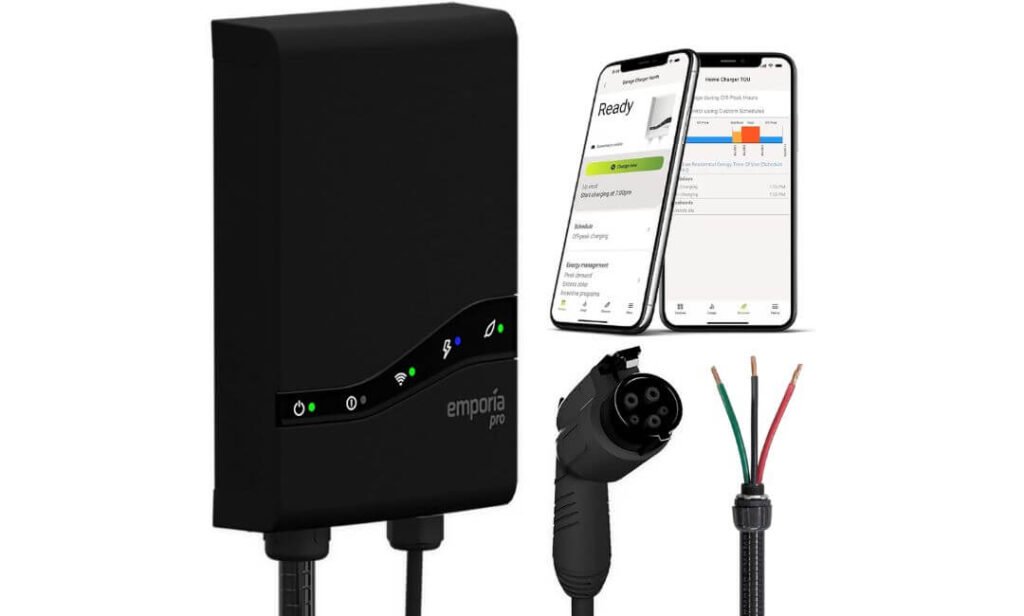
Quick Specs:
- 48A maximum output with up to 11.5kW EVSE capacity
- J1772 connector for Jeep 4xe home charging
- 240V Level 2 charging
- PowerSmart load management for homes with limited electrical capacity
- Hardwired or NEMA 14-50 installation
- 25-foot charging cable
- Wi-Fi and Bluetooth connectivity
- Energy monitoring through the included Emporia energy system
- UL and ENERGY STAR certified
- Indoor/outdoor weather-resistant design
This is the kind of charger that makes more sense once you stop looking only at the number printed beside “amps.” For a Jeep 4xe, the interesting part of this setup is PowerSmart. If your house is already busy electrically—air conditioner running, oven on, washing machine going—the charger can work around the home’s demand instead of blindly pulling its maximum. That is a much more useful feature for a real garage than simply saying “48A fast charger” and leaving it there.
The J1772 connector makes the connection straightforward for a 4xe, while the 240V design gives you the proper Level 2 home-charging setup these plug-in hybrids are built to use. I also like the 25-foot cable here because cable reach sounds boring until your driveway or garage outlet is positioned in exactly the wrong place. You can choose a hardwired installation for a permanent setup or use the NEMA 14-50 configuration where that installation makes sense, although the plug-in configuration has a lower charging-current limit than the hardwired setup.
Then there is the part most basic charger reviews skip: energy visibility. The included Emporia energy-monitoring hardware lets you see what the home is actually consuming instead of guessing why the electricity bill changed. Add scheduled charging and app control, and this becomes less of a simple power box on the wall and more of a home-energy tool. (A particularly sensible choice when the 4xe shares the electrical service with other high-draw appliances.)
What Makes This One Easy to Live With
- PowerSmart load management is the standout feature because it addresses the electrical reality of charging at home rather than chasing maximum output.
- The 25-foot cable gives you useful freedom when the parking position and electrical connection are not close together.
- Hardwired and NEMA 14-50 options make the installation easier to match to the house you already have.
- The energy-monitoring ecosystem adds something genuinely useful after installation: you can see when and how much the home is consuming.
- Wi-Fi app control and scheduling are valuable for owners who prefer charging around utility-rate periods rather than plugging in and forgetting about it.
One Thing to Know Before Installation
The 48A figure should not be interpreted as the Jeep 4xe’s actual charging rate. The vehicle controls how much AC power it accepts. If you want the full 48A capability from the charger, the electrical installation also needs to be sized appropriately; the NEMA 14-50 configuration operates at a lower current. That is something to settle with your electrician before installation, not after the charger is hanging on the wall.
Why It Makes Sense for a Jeep 4xe Home Charging Setup
For the 4xe owner, the strongest argument here is not “48A.” It is the combination of J1772 compatibility, 240V Level 2 charging and intelligent load management. If your electrical panel has limited spare capacity, PowerSmart can be considerably more meaningful than buying a conventional high-amperage charger and then discovering that your home cannot comfortably support its maximum setting.
It also gives you room to build a better charging routine. Scheduling, energy tracking, Wi-Fi control and a long cable all solve little annoyances that tend to show up after the first few weeks of ownership. The charger is capable of more than the Jeep needs today, but that extra capacity becomes useful if your household eventually adds another EV or you replace the 4xe with a vehicle capable of accepting more AC power.
The Insider Pro-Tip
Here is the part I would check before spending money on installation: look at your home’s actual electrical load, not just the spare spaces in the breaker panel. A panel can have an empty breaker position and still have limited usable capacity. That is exactly where PowerSmart becomes interesting. Have the electrician confirm your service capacity and choose the installation method around that reality.
And if your electrician says you can comfortably support the required circuit, I would still avoid treating 48A as a target you must hit. The Jeep 4xe does not become faster simply because the EVSE has a bigger number on its label. What you are really buying here is a smarter electrical relationship between the charger, your house and the Jeep—and for daily home charging, that is the feature I would pay attention to first.
#2. ChargePoint HomeFlex Level 2 EV Charger
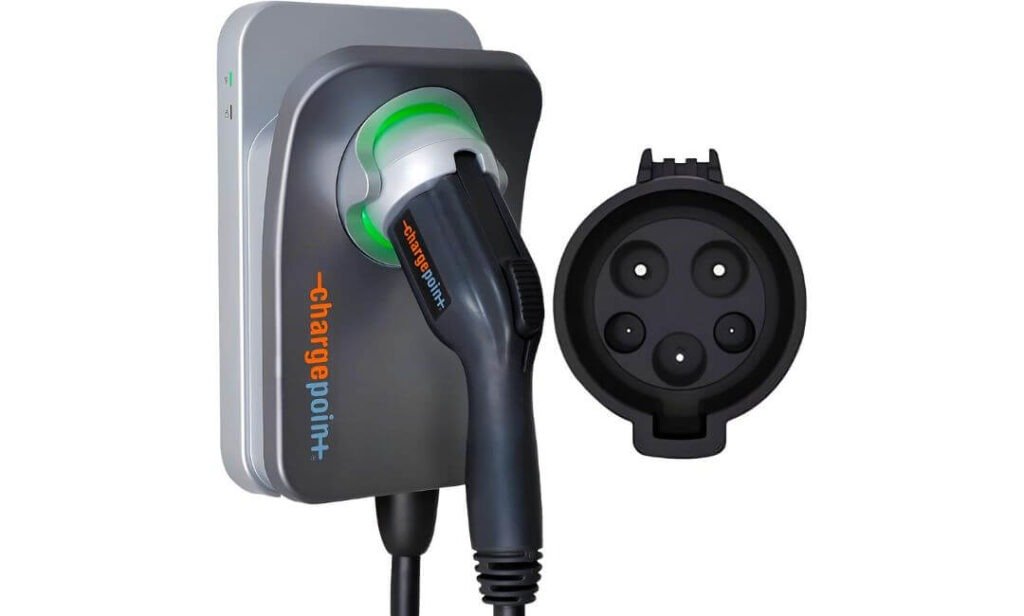
Quick Specs:
- 50A maximum output with adjustable current settings
- J1772 connector for Jeep 4xe charging
- 240V AC Level 2 home charging
- Hardwired installation
- 23-foot charging cable
- Indoor/outdoor installation
- Wi-Fi-connected smart controls through the ChargePoint app
- UL certified
- Cold-resistant cable
- 13.8 lb unit weight
There is a reason the HomeFlex feels different from a basic wall-mounted EV charger: the hardware is only half the story. The useful part for a Jeep 4xe owner is being able to set up the charging routine around the car and the home rather than treating every charging session the same. Its adjustable output can be configured to suit the electrical installation, while the J1772 connector keeps the physical connection simple for the 4xe.
The 240V hardwired setup is particularly suited to a permanent home installation. You are not dealing with a loose portable unit every time you charge, and the 23-foot cable gives you enough reach for many garages and driveways without needing an extension cable. ChargePoint also rates the unit for indoor or outdoor use, so the installation does not have to be confined to a perfectly sheltered garage.
What I particularly like here is the app-controlled side of the charger. You can schedule charging, check charging information and manage reminders from your phone. That is useful for a plug-in hybrid because you do not need to think about charging as a separate task every evening; plug in when you get home and let the charging schedule handle the routine. (Wi-Fi is required for certain connected features.)
What Works Especially Well Here
- Adjustable charging output makes it easier to match the charger to the home’s electrical setup instead of forcing one fixed current.
- The 23-foot cable is long enough to make awkward parking positions much less annoying.
- Hardwired 240V installation gives this charger a clean permanent place in a garage or suitable outdoor location.
- ChargePoint app control adds scheduling, reminders and charging information without requiring you to stand beside the vehicle.
- The cold-resistant cable and indoor/outdoor rating make it a practical option for owners who do not have a fully enclosed garage.
One Practical Detail Worth Knowing
The 50A rating is the charger’s capability, not the amount of power your Jeep 4xe will necessarily draw. The vehicle’s onboard AC charger remains the limiting factor. So I would choose the electrical circuit and charger setting based on the installation and your future needs, rather than paying more simply because “50A” sounds faster.
Where HomeFlex Fits the 4xe
For a Jeep 4xe, the real attraction is the combination of adjustable output, hardwired 240V charging and connected controls. It gives you a straightforward permanent charging point today without boxing you into one fixed amperage setting.
It also makes sense if you want your charger to remain useful beyond the current Jeep. The 4xe does not need the full 50A capability, but having an EVSE with adjustable output gives the installation some future flexibility if another EV eventually joins the household. That is a more practical reason to choose this unit than claiming the Jeep itself will charge at 50A.
The Insider Pro-Tip
Before installation, tell the electrician exactly how you intend to use the charger and ask them to size the circuit around the actual continuous load, not just the charger’s maximum specification. A properly configured HomeFlex is more useful than an unnecessarily oversized installation.
And for the 4xe specifically, I would put the app and adjustable-current capability ahead of the 50A headline number. You already have a vehicle that controls its own AC intake; what you can control is how intelligently that electricity reaches it. That is where this charger earns its place in the list.
#3. IYILO Level 2 EV Charger with Energy Meter
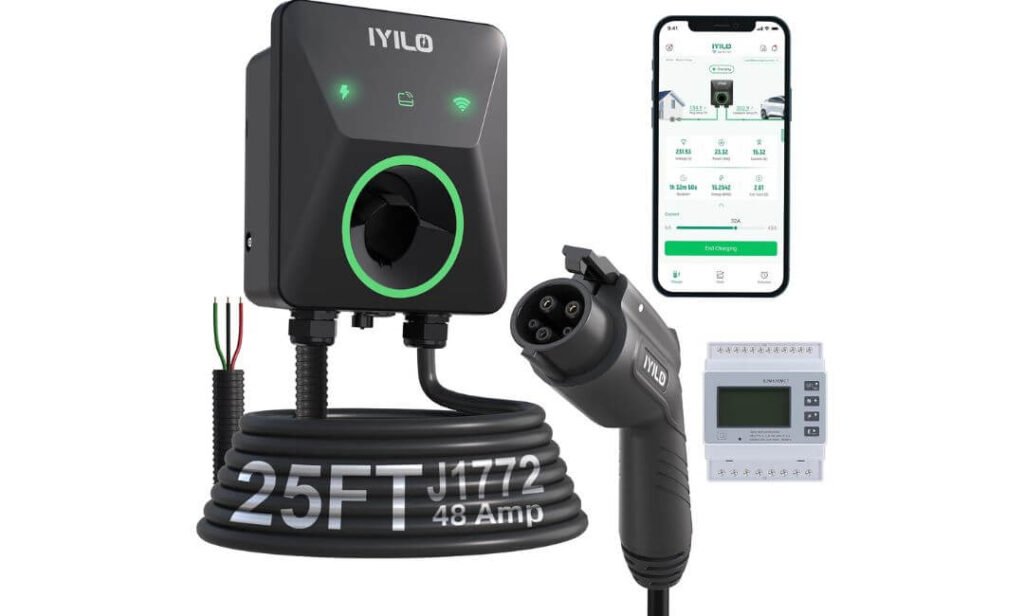
Quick Specs:
- 48A / 11.5kW maximum EVSE capacity
- J1772 connector for Jeep 4xe charging
- 240V Level 2 home charging
- 6A–48A adjustment in 1A steps
- Dynamic load balancing with included energy meter and CT clamps
- Dual temperature monitoring at the charger and vehicle-side connector
- Wi-Fi smart app with 2.4GHz support
- RFID access control
- NEMA 4 weather-resistant enclosure
- Built-in GFCI protection
- ETL and ENERGY STAR certified
- 3-year warranty
The interesting thing about this charger is that it does not stop at telling you how much electricity is being used—it actually gives you tools to manage that electricity. The included energy meter and CT clamps monitor the home’s electrical demand, allowing the charger to automatically reduce its output when other heavy appliances are using the service. For a Jeep 4xe owner, that is a far more meaningful feature than simply seeing “48A” printed on the front of the box.
There is another detail here that deserves attention: temperature monitoring on the charging connection. The J1772 connector uses an NTC temperature sensor, and the system can monitor temperature through the app and stop charging if excessive heat is detected. It is the sort of protection you probably will not think about during normal charging—and that is exactly why I like seeing it built into a home EVSE.
The charging controls are unusually flexible for this price class as well. You can adjust current in 1A increments from 6A to 48A, schedule charging, monitor energy use and review charging costs through the app. The RFID function is a nice extra for a shared household or semi-public setup, while the NEMA 4 enclosure and flexible cable make the unit suitable for indoor or outdoor installation. (One small detail to remember: the Wi-Fi connection is 2.4GHz only, so a 5GHz-only network will not connect to it.)
What We Like About This Charger
- Dynamic load balancing is the standout feature because the charger responds to the home’s actual electrical demand instead of treating the available power as unlimited.
- Dual temperature sensing adds another layer of protection around the charging connection and lets you see temperature information through the app.
- 1A current adjustment from 6A to 48A gives you unusually fine control when your electrical setup or daily charging needs change.
- The combination of energy monitoring, scheduling and cost tracking makes the charger genuinely useful after installation.
- NEMA 4 protection and GFCI make it a convincing option when the charger needs to live somewhere exposed rather than inside a perfectly sheltered garage.
One Small Detail to Plan Around
The only thing I would check before buying is your home’s Wi-Fi setup. The connected functions use 2.4GHz Wi-Fi, not 5GHz. That is not a charging limitation—the charger will still perform its basic function—but smart controls and monitoring depend on having a suitable network signal where the unit is installed.
Why It Stands Out for Jeep 4xe Home Charging
For the 4xe, this is less about squeezing every possible amp from a charger and more about controlling the charging environment intelligently. The Jeep decides how much AC power it can accept; the IYILO gives the home a way to manage when and how that power is supplied.
That makes the included energy meter, CT-clamp load balancing and adjustable current control particularly relevant. If your home already has several large electrical loads, you can let the system react to them rather than assuming the charger should always run at its maximum setting. That is a much more practical approach to home charging.
The Insider Pro-Tip
If you have ever been told that installing a high-output EV charger automatically means upgrading the electrical service, this is exactly the situation where I would investigate load management first. Have an electrician look at the home’s real electrical demand and confirm whether dynamic load balancing can make the existing service work comfortably.
And there is no prize for running a 4xe charger at 48A when the Jeep does not need that much. The useful feature here is the ability to dial the charger to the situation—perhaps 32A today, something different later, or automatic reduction when the house gets busy. That flexibility is what makes this one genuinely interesting for a 4xe rather than just another 48A J1772 charger.
#4. EVIQO Level 2 EV Charger J1772 48A
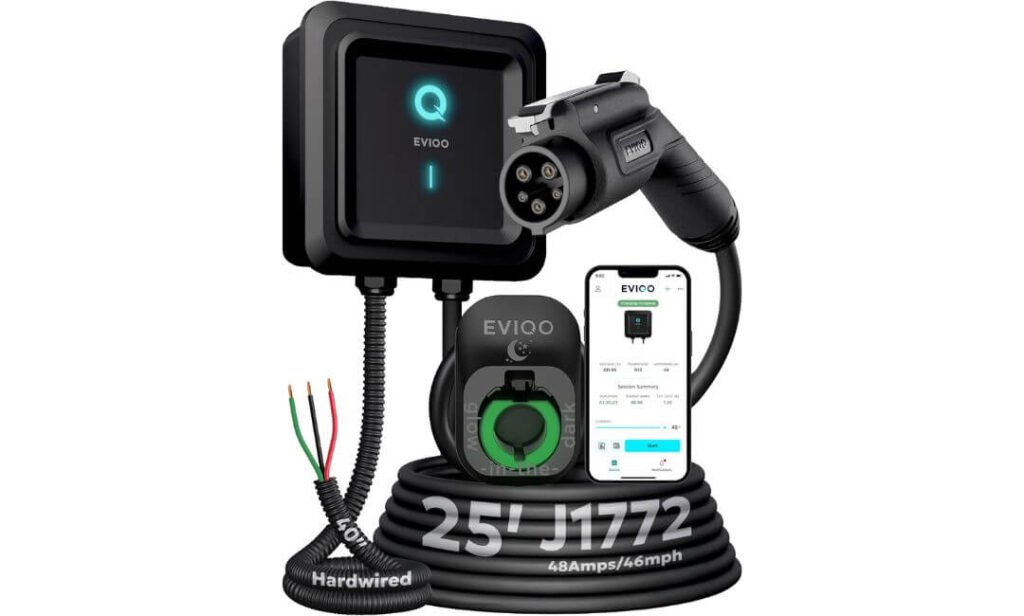
Quick Specs:
- 48A maximum output with selectable charging current
- J1772 connector for Jeep 4xe home charging
- 240V hardwired Level 2 installation
- 6A–48A current adjustment
- 25-foot cold-resistant charging cable
- IP66 / NEMA 4 weather-resistant enclosure
- 2.4GHz Wi-Fi with app controls
- Off-peak scheduling and energy-cost tracking
- Plug-and-charge operation without Wi-Fi
- UL, ETL, FCC and ENERGY STAR certifications
- 3-year manufacturer warranty
- Glow-in-the-dark connector holster
The first thing that stands out here is how deliberately simple the charging experience can be. Yes, there is a Wi-Fi app with scheduling, current adjustment and energy tracking, but you are not forced to depend on the app every time you want to charge. Plug the J1772 connector into the Jeep and the charger can operate normally even without an internet connection. For a garage where Wi-Fi is unreliable, that small distinction can become surprisingly important.
The hardwired 240V design also makes this a proper permanent home installation rather than a charger you move around. The current can be configured from 6A to 48A, allowing the electrician to match the EVSE to the dedicated circuit rather than treating maximum output as the only setting worth using. And because the cable stretches 25 feet, you get considerably more freedom when the charging point and the Jeep do not line up perfectly.
Then there is the part I genuinely find fun: the glow-in-the-dark holster. It sounds like a tiny feature until you park in a dark garage at night and try to find the connector. It is not going to make your Jeep charge faster, but it solves a real little annoyance that most charger specifications completely ignore. Add the IP66/NEMA 4 enclosure, cold-resistant cable and internal protection, and this is clearly designed with everyday garage and outdoor use in mind. (The hardwired installation does require a properly sized dedicated circuit and a licensed electrician.)
What We Like About This Setup
- Plug-and-charge operation without Wi-Fi is a genuinely useful fallback rather than just another connectivity checkbox.
- The 25-foot cable gives the 4xe considerably more parking flexibility, especially in a larger garage or driveway.
- 6A–48A adjustment lets the installation be configured around the home’s electrical capacity.
- IP66/NEMA 4 protection and a cold-resistant cable make outdoor placement much less concerning.
- The little glow-in-the-dark holster is one of those practical touches you appreciate every time you charge after dark.
The One Installation Detail to Get Right
This is a hardwired-only charger, so there is no NEMA 14-50 plug option to fall back on. Your electrician needs to confirm the appropriate dedicated 240V circuit and wiring before installation. That is not a drawback for a permanent setup—it simply means this charger should be planned as part of the home’s electrical installation rather than treated like a portable accessory.
Why It Fits a Jeep 4xe So Well
The appeal here is the combination of J1772 compatibility, permanent 240V installation and independent charging operation. The 4xe does not need a charger to advertise the biggest possible output; it needs a dependable way to receive the AC power its onboard charging system can use.
That is where the adjustable current and offline operation become useful. You can have the electrician configure the installation sensibly, use the app when you want scheduling or energy information, and still have a straightforward charging experience if the Wi-Fi decides to misbehave. It is a practical balance between smart charging and old-fashioned reliability.
The Insider Pro-Tip
If this charger is going outside, don’t let the IP66 rating make you forget about the installation itself. The charger may be weather-resistant, but the electrical connection, conduit, breaker and mounting location still need to be installed correctly for the environment. Get that part right and the weatherproof enclosure becomes genuinely useful rather than just another specification on the box.
For the Jeep 4xe, I would also resist the temptation to configure the charger at its maximum simply because it can do it. Set the EVSE around the electrical installation and the vehicle’s actual requirement. The Jeep will control its own charging intake anyway. In daily use, the 25-foot cable, offline charging and weather-ready construction are likely to matter far more than seeing “48A” on the app.
#5. Grizzl-E Level 2 240V / 40A EV Charger
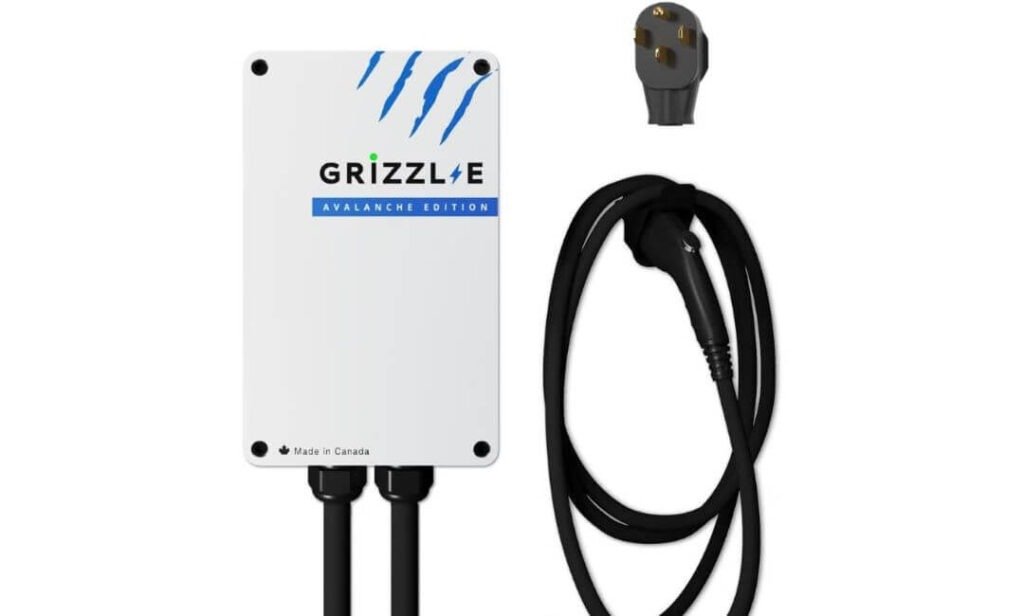
Quick Specs:
- 40A maximum output / 9.6kW EVSE capacity
- J1772 connector for Jeep 4xe charging
- 240V Level 2 charging
- 16A, 24A, 32A and 40A selectable settings
- NEMA 14-50 plug-in installation
- 24-foot premium charging cable
- IP67-rated weather-resistant enclosure
- Built-in GFCI and multiple electrical protections
- Indoor/outdoor installation
- UL tested and ENERGY STAR certified
- 5-year warranty
- Aluminum enclosure
If the other chargers on this list are trying to make your home charger smarter, this one takes almost the opposite approach: keep the charging straightforward and make the hardware do the work. The NEMA 14-50 plug means that if you already have the right 240V outlet, there is no need to hardwire the unit just to start charging. For a Jeep 4xe owner who prefers a simple setup, that can be a genuine advantage.
The adjustable 16A, 24A, 32A and 40A settings are also more useful than they initially look. You can match the charger to the circuit rather than automatically running at its maximum. For example, a properly configured 40A setting requires a 50A circuit, while a 32A setting corresponds to a 40A circuit. That makes it easier to use the charger sensibly in homes with different electrical capacities.
Then there is the physical design. The IP67 enclosure, aluminum construction, 24-foot cable and built-in GFCI give this charger a very different personality from the app-heavy models above it. There is no Wi-Fi account to create, no charging schedule to configure and no phone required just to begin charging. (If your Jeep is already set up to manage charging schedules, the vehicle itself can handle that side of the routine.)
What We Like About It
- NEMA 14-50 plug-in installation keeps the setup simple when the correct outlet already exists.
- Four selectable current levels make it easier to match charging to the home’s available circuit.
- The IP67 enclosure and aluminum housing make this a serious option for outdoor or less-protected installations.
- The 24-foot cable gives plenty of reach without adding an extension cable to the setup.
- Built-in GFCI and multiple protection systems add useful safety layers without requiring a complicated smart system.
The One Thing to Get Right
The important detail is the NEMA 14-50 outlet. This is not a hardwired charger, so if you do not already have a properly installed 240V NEMA 14-50 receptacle, you will still need an electrician to install one. And the amperage setting must match the circuit correctly—never select 40A simply because the charger supports it.
Why It Makes Sense for Jeep 4xe Charging
For the 4xe, this is a refreshingly uncomplicated option. You get the J1772 connection, 240V Level 2 charging and adjustable current without paying for smart features you may never use. The Jeep controls how much AC power it accepts, so the value here is really in having a dependable EVSE that can be configured sensibly around your home’s electrical setup.
It is also the option I would look at if the charger needs to live somewhere exposed. IP67 protection, a rugged enclosure and a long cable matter much more when the charging station is mounted outside or in a garage that gets cold, dusty or wet than another phone-app feature would.
The Insider Pro-Tip
If you already have a proper NEMA 14-50 outlet, this is where the Grizzl-E’s simple design becomes genuinely attractive. You can avoid turning a straightforward charger installation into a larger electrical project—but still have the outlet inspected if you are unsure how it was originally installed.
For a 4xe, I would pay particular attention to the 32A setting when paired with a correctly sized 40A circuit rather than automatically selecting 40A. The Jeep does not need the charger to advertise the biggest possible number, and running the EVSE at an appropriate setting gives you a clean, sensible charging setup without complicating something that should really be very simple: park, plug in, and let the Jeep take care of the rest.
Best Level 2 Charger for Jeep 4xe: 240V J1772 Options Compared for Home Charging
| Charger | 4xe Connection | EVSE Output | Installation | Smart Features | Load Management | Cable | Outdoor Protection | Best Fit |
|---|---|---|---|---|---|---|---|---|
|
EMPORIA Pro Level 2
Energy Management
|
J1772 Native fit for Jeep 4xe |
48A / 11.5kW max 240V Level 2 |
Hardwired NEMA 14-50 option at lower output |
Yes App, scheduling, usage tracking |
PowerSmart Automatically responds to household demand |
25 ft Long reach for larger garages |
Weather-resistant Indoor/outdoor capable |
Homes with limited electrical capacity Especially useful when other appliances compete for power. |
|
ChargePoint HomeFlex
Connected Charging
|
J1772 Native fit for Jeep 4xe |
Up to 50A 240V AC |
Hardwired Permanent home installation |
Yes App, reminders, scheduling |
Adjustable output Set according to electrical installation |
23 ft Good garage coverage |
Indoor/outdoor Cold-resistant cable |
Smart-home users A strong fit if app control matters more than extra hardware features. |
|
IYILO Level 2 EV Charger
Load Balancing
|
J1772 Native fit for Jeep 4xe |
48A / 11.5kW max 240V Level 2 |
Hardwired Plug-in configuration also available |
Yes Wi-Fi, app, RFID, scheduling |
CT clamps + energy meter Dynamic load balancing |
25 ft Flexible charging cable |
NEMA 4 Weather-resistant enclosure |
Feature-focused homeowners Best suited to owners who actually want energy data and load control. |
|
EVIQO Level 2 EV Charger
Smart + Offline
|
J1772 Native fit for Jeep 4xe |
48A max 240V Level 2 |
Hardwired only Dedicated 240V circuit |
Yes App, scheduling, energy tracking |
Adjustable 6A–48A DIP switches + app control |
25 ft Cold-resistant cable |
IP66 / NEMA 4 Indoor/outdoor use |
Permanent installations Especially useful where offline plug-and-charge reliability matters. |
|
Grizzl-E 40A
Rugged Build
|
J1772 Native fit for Jeep 4xe |
40A / 9.6kW max 240V Level 2 |
NEMA 14-50 plug Plug-in setup |
No app required Simple LED-based operation |
16A / 24A / 32A / 40A Manual current selection |
24 ft Heavy-duty cable |
IP67 Rugged aluminum enclosure |
No-fuss charging A practical choice when rugged hardware matters more than connected features. |
Buying Guide: What Actually Matters When Choosing a Level 2 Charger for a Jeep 4xe
A good home charger for a Jeep 4xe is not necessarily the one with the highest amperage, the longest feature list, or the most expensive price tag. The important question is simpler: does the charger work properly with the 4xe, fit your home’s electrical system, and make daily charging easier? Once you look at it that way, the choice becomes much less confusing.
Start With What the Jeep 4xe Can Actually Use
This is the part worth getting right before comparing chargers.
The Jeep 4xe uses a J1772 AC charging connection, and its onboard charging system determines how much AC power the vehicle can actually accept. A Level 2 EVSE rated at 48A or 50A does not force the Jeep to charge at 48A or 50A.
For the charger itself, the numbers generally mean:
| EVSE Rating | Typical Electrical Setup | What It Means for a 4xe |
|---|---|---|
| 32A | 240V, 40A circuit | Plenty for the vehicle’s normal AC charging needs |
| 40A | 240V, 50A circuit | More EVSE capacity than the Jeep needs, with useful headroom |
| 48A | 240V, 60A circuit | Mainly valuable for future EVs or additional flexibility |
| 50A | 240V, appropriately sized circuit | Similar story — the vehicle remains the limiting factor |
So if you are buying specifically for a 4xe, don’t let a 48A or 50A badge convince you that the Jeep will charge proportionally faster. The extra capacity can still be useful, especially if you plan to keep the charger after changing vehicles, but it should not be the main reason you buy one.
240V Installation Is More Important Than Maximum Amperage
A proper 240V Level 2 installation is what separates these chargers from the basic 120V charging equipment supplied with or used by many PHEV owners.
Before buying, look at how the charger connects to your home:
- NEMA 14-50 plug: Convenient when a properly installed 240V receptacle already exists. Grizzl-E is the clearest example in this list.
- Hardwired: A permanent connection directly to the electrical system. This is used by the EMPORIA, ChargePoint HomeFlex and EVIQO configurations listed above.
- Hardwired with load management: Particularly useful when the home’s electrical service has limited spare capacity. EMPORIA and IYILO take this approach in different ways.
Don’t assume an unused breaker slot means your panel can automatically support a high-output EV charger. The electrician needs to consider the overall electrical load, service capacity, breaker size, wire size and installation distance.
And remember that EV charging is a continuous electrical load. This is one area where having the circuit sized correctly matters much more than trying to save a little money on installation.
J1772 Compatibility Should Be Non-Negotiable
For this article, J1772 is the important connector standard.
The five chargers selected here use J1772 connectors, which directly match the charging port used by the Jeep 4xe. That means you do not need to turn a simple home charging setup into an adapter chain.
This is also why I would be cautious with generic “universal EV charger” claims. A charger can support a huge range of vehicles and still have the wrong connector or require an adapter for your particular car. For a 4xe, checking the actual connector on the charger is much more useful than relying on a broad compatibility list.
Adjustable Amperage Is More Useful Than It Sounds
This is one of those features that looks technical on the specification sheet but becomes very practical once the charger is installed.
Suppose your home can comfortably support a 32A charging setup today, but you later upgrade the electrical service. A charger with adjustable output can potentially be configured differently without replacing the entire EVSE.
The chargers in this list approach adjustment differently:
- ChargePoint HomeFlex: Adjustable output through its charging controls.
- IYILO: Fine adjustment from 6A to 48A in 1A increments.
- EVIQO: Adjustable current with configuration controls and app-based adjustment.
- Grizzl-E: Fixed selectable levels of 16A, 24A, 32A and 40A.
- EMPORIA: Installation and load-management flexibility rather than simply chasing maximum output.
The important rule is simple: the charger setting must match the electrical installation. Never increase the current just because the charger gives you the option.
Load Management Can Be More Valuable Than Another 10 Amps
This is where the list gets more interesting.
If your home already has an electric oven, HVAC system, dryer, water heater or another EV, the charger is competing with other substantial electrical loads. In that situation, intelligent load management can be far more useful than buying a charger with the largest possible output.
EMPORIA’s PowerSmart and IYILO’s energy meter with CT-clamp load balancing are good examples of this idea. Instead of assuming the home always has unlimited capacity, these systems can respond to the home’s current electrical demand.
That does not mean every 4xe owner needs dynamic load management. If your electrical service has plenty of capacity and the charger has its own properly sized circuit, a conventional installation may be perfectly adequate.
But if an electrician tells you that your service is close to its practical limit, ask about load management before automatically budgeting for a panel upgrade.
Plug-In or Hardwired: Choose Based on the Home, Not the Marketing
There is no universal winner between the two.
A plug-in NEMA 14-50 charger makes sense when you already have a correctly installed receptacle and value easier removal or future portability. It is also convenient for owners who do not want the charger permanently connected to the house.
A hardwired charger makes more sense when you are building a permanent charging station and want a clean installation with no external plug connection.
For the products in this article:
- Grizzl-E is the straightforward NEMA 14-50 option.
- EMPORIA gives you hardwired and NEMA 14-50 flexibility, depending on configuration.
- IYILO offers installation flexibility as well.
- ChargePoint HomeFlex and EVIQO are more oriented toward permanent hardwired installations in the configurations covered here.
If you don’t already have the correct 240V outlet, don’t assume installing one is a five-minute job. The outlet, wiring, breaker and panel capacity all need to be appropriate for continuous EV charging.
Cable Length Matters More Than People Expect
A charger can have perfect specifications and still be annoying if the cable barely reaches the Jeep.
The products here offer roughly 23 to 25 feet of cable, with Grizzl-E at about 24 feet. That extra reach can make a meaningful difference if you have a long garage, multiple parking positions, or an outdoor mounting point.
I would rather have a properly placed 23–25-foot cable than install the charger in a theoretically convenient location and then discover that the connector only reaches one corner of the vehicle.
Also, avoid using an extension cable as a workaround for a permanently installed EV charger unless the manufacturer and electrical professional specifically approve the arrangement. The cleaner solution is usually putting the EVSE in the right location in the first place.
Weather Protection Matters If the Charger Lives Outside
If the charger will be installed outdoors, look beyond the words “weather resistant.”
An enclosure rating gives you a better idea of how the hardware is designed to handle exposure:
- IP66: Strong protection against dust and powerful water jets.
- IP67: Adds protection against temporary immersion under specified test conditions.
- NEMA 4: Indicates protection against rain, splashing water and similar outdoor exposure.
That does not mean you can install the charger carelessly. The mounting surface, electrical conduit, receptacle or hardwired connection and cable routing still need to be suitable for the environment.
For an outdoor Jeep 4xe setup, I would pay particular attention to enclosure protection, cable flexibility in cold weather and connector storage. Those details become much more noticeable in winter than another app feature ever will.
Smart Features: Useful, But Only If You Will Actually Use Them
Smart charging can be genuinely helpful, but it should not become a box-ticking exercise.
Features such as:
- charging schedules,
- electricity-cost tracking,
- remote start/stop,
- energy monitoring,
- Wi-Fi connectivity,
- RFID access,
- multiple-user control,
can make sense for the right household.
IYILO goes particularly deep with energy monitoring, RFID and load balancing. EMPORIA brings its home-energy ecosystem and PowerSmart management. ChargePoint HomeFlex focuses heavily on app-based charging control, while EVIQO gives you connected features without making Wi-Fi mandatory for basic charging. Grizzl-E deliberately keeps things simpler.
That last difference is important. If you know you will never open an EV charging app after installation, paying extra for a long list of connected functions may not improve your ownership experience.
Don’t Forget the Electrical Installation
This is the part I would never treat as an afterthought.
For a high-output Level 2 charger, you may need:
- a dedicated 240V circuit,
- the correct breaker,
- appropriately sized conductors,
- suitable conduit,
- a compatible receptacle if using plug-in charging,
- proper grounding,
- sufficient panel/service capacity.
The exact requirements depend on the charger configuration and local electrical code, so the safest route is to have a qualified electrician confirm the installation before ordering hardware around a particular amperage.
A charger that costs a little more but fits your existing electrical system can ultimately be a much simpler purchase than a cheaper unit that creates an unexpected installation project.
The Simple Way to Narrow Down Your Choice
If you are still looking at five chargers and thinking, “Which one actually makes sense for my garage?”, use the home first, charger second approach.
If electrical capacity is your concern, look closely at load management.
If you want connected control and charging data, focus on smart-app features.
If you already have a suitable 240V NEMA 14-50 outlet, a plug-in charger can keep things simple.
If you are creating a permanent charging station, hardwired installation may make more sense.
If the charger will sit outside, prioritise weather protection, cable durability and proper mounting.
And if this charger is likely to stay with you after the 4xe, then buying some additional EVSE capacity can make sense for future vehicle flexibility—just don’t mistake that extra capacity for extra charging speed from the Jeep itself.
Installation Spotlight: Setting Up a Jeep 4xe Level 2 Charger the Right Way
A good charger can still become a bad charging setup if the electrical installation is treated as an afterthought. For a Jeep 4xe, the goal is not simply to get 240 volts to the wall. The circuit, breaker, conductor size, charger configuration, grounding, mounting location and continuous-load calculation all need to work together.
Because this is 240V high-current electrical work, I would treat the installation itself as professional electrical work rather than a casual DIY project. You can absolutely do the planning, choose the mounting location and understand the requirements yourself, but the final wiring and verification should be handled by a qualified electrician where required by local code.
Pre-Install Checklist: Know What Your Home Can Actually Support
Before ordering the charger, start at the electrical panel rather than at the Amazon product page.
Check these points first:
- Panel capacity: Find out the home’s service rating and whether the existing service has enough capacity for an EV charging circuit.
- Available breaker space: An empty slot is useful, but it does not by itself prove that the panel can support the additional continuous load.
- Existing electrical loads: Electric HVAC, water heaters, dryers, ovens, pools and other large loads can materially affect the available capacity.
- Charger configuration: Determine whether you are installing it hardwired or using a NEMA 14-50 receptacle.
- Charging location: Measure the distance from the electrical panel to the proposed charger position and consider the Jeep’s normal parking position.
- Cable reach: The 23–25-foot cables used by several chargers here can provide plenty of flexibility, but mounting location still matters.
- Indoor or outdoor placement: Confirm the charger’s enclosure and cable are appropriate for the location.
- Wi-Fi signal: If you are buying a smart charger, check the signal where the charger will actually be mounted. IYILO and EVIQO, for example, rely on 2.4GHz Wi-Fi for connected functions.
- Local electrical requirements: Local code, permits and inspection requirements can vary, so check these before work begins.
One particularly useful step is to take a photo of your electrical panel and have the electrician review the main service rating, existing breakers and major loads before you purchase around a specific amperage.
Breaker Size and Charging Current: The Numbers Need to Agree
This is where many EV-charger articles become unnecessarily confusing.
The charger’s advertised amperage is not the same thing as the breaker size. EV charging is treated as a continuous load, so the electrical circuit has to be designed accordingly.
For example, a charger configured for 48A continuous charging generally requires a circuit sized appropriately for that continuous load, commonly involving a 60A breaker under the applicable electrical rules. A 40A charging setting commonly pairs with a 50A circuit, while a 32A setting can commonly be used on a 40A circuit.
That is why the adjustable chargers in this article are useful. If your home’s electrical installation is designed for 32A charging, you do not need to force a 48A-capable charger to run at 48A. Set the EVSE appropriately and let the vehicle take the power it is designed to accept.
The exact breaker, conductor and installation requirements must be confirmed by your electrician and applicable local code. Do not select a breaker or wire size from a generic internet chart and treat that as an installation specification.
Hardwired vs. NEMA 14-50: Decide Before the Wiring Starts
The installation path changes depending on the charger.
Hardwired setup
A hardwired EVSE connects directly to the dedicated electrical circuit. This gives you a clean permanent installation and is the approach used by several chargers in this comparison.
It is particularly attractive when:
- the charger will stay in one location,
- the electrical panel is relatively close,
- you want a clean wall installation,
- you are installing the charger outdoors,
- or you want the EVSE permanently integrated into the home’s electrical system.
NEMA 14-50 setup
A plug-in charger connects to a properly installed 240V NEMA 14-50 receptacle. This can be convenient if the outlet already exists and is correctly rated for continuous EV charging.
The Grizzl-E is the clearest example from this list because its plug-in design is part of the product’s appeal.
But do not assume that an old garage NEMA 14-50 outlet is automatically suitable. The electrician should verify the receptacle, wiring, breaker and installation condition before using it for regular EV charging.
Load Calculation: The Part That Can Save You From an Unnecessary Upgrade
If your home is already electrically busy, ask about a load calculation before assuming you need a service or panel upgrade.
The electrician should consider the home’s existing loads together with the proposed EV charging load. This is especially important when the home has several large electric appliances.
This is also where chargers such as EMPORIA and IYILO become particularly interesting. Their load-management capabilities can monitor household demand and adjust charging accordingly, subject to the manufacturer’s installation requirements.
The idea is simple: rather than assuming your house has unlimited spare capacity, the charging system can respond to what the house is actually using.
That does not mean load management automatically eliminates the need for an electrical upgrade. The electrician still needs to determine whether the proposed system is permitted and adequate for your home’s service and local code.
Mount the Charger Where the Jeep Actually Lives
This sounds obvious, but it is one of the easiest things to get wrong.
Park the Jeep where you normally charge it and physically think through:
- where the connector will sit,
- where the cable will run,
- whether the cable reaches the charging port comfortably,
- whether it crosses a walking path,
- whether a garage door can close safely,
- whether rain or snow can reach the equipment,
- and where the connector will be stored between charging sessions.
A 25-foot cable gives you considerable flexibility, but it should not be used as an excuse to mount the charger in an awkward location.
For an outdoor installation, keep the charger positioned so water does not continuously collect around the mounting hardware or electrical entry point. The enclosure’s weather rating is helpful, but it does not replace sensible installation.
Configure the Charger Before You Start Charging
Once the electrical installation is complete, the charger needs to be configured according to the circuit that was installed.
For adjustable models, confirm:
- maximum charging current,
- circuit rating,
- hardwired or plug-in configuration,
- Wi-Fi connection if smart features are required,
- load-management settings if supported,
- and any manufacturer-specific commissioning settings.
This is particularly important with chargers that allow multiple current levels. If an electrician installs a circuit for 32A continuous charging, the EVSE should not simply be switched to a higher setting because the hardware happens to support it.
Post-Installation Testing: Don’t Skip the Boring Part
The first charging session is not the time to discover an installation problem.
A proper commissioning process should include checking that:
- the charger powers up correctly,
- the J1772 connection locks and communicates properly with the Jeep,
- charging begins normally,
- the selected current matches the installed circuit,
- there are no fault indicators,
- the electrical connection remains stable under load,
- smart features connect correctly if applicable,
- load management responds correctly where installed,
- and the charger can stop and restart charging normally.
During the first substantial charging session, it is sensible for the electrician to verify that the installation is behaving as expected under load. Unusual heat, repeated fault messages, tripped protection or abnormal electrical behaviour should be investigated rather than ignored.
What About Certification and Inspection?
A charger being UL, ETL or ENERGY STAR certified refers to the product and its applicable testing or efficiency requirements; it does not mean your particular home installation has automatically been inspected or approved.
That distinction matters.
Your local authority may require a permit or electrical inspection, depending on where you live. If an inspection is required, keep the permit and final approval documentation with your home records.
For the charger itself, retain:
- the purchase information,
- model and serial number,
- installation documentation,
- electrician’s invoice,
- warranty information,
- and any inspection or permit records.
This is especially useful if you ever need warranty service or sell the home.
The Final 4xe Check
Once everything is installed and verified, connect the J1772 plug to the Jeep and allow the vehicle to begin charging. Check the vehicle’s charging display rather than judging performance from the EVSE’s maximum advertised amperage.
That is the final piece of the puzzle: the charger supplies the available AC power, but the Jeep decides how much it actually accepts.
For a 4xe owner, a properly installed 32A-capable circuit can therefore be a perfectly sensible setup even when the charger on the wall is rated for 40A, 48A or 50A. The best installation is the one where the electrical system, EVSE and Jeep all agree with each other—not the one with the biggest number printed on the charger.
Real-World Charging Scenarios for a Jeep Wrangler 4xe at Home
The easiest way to understand a home Level 2 charger is to stop thinking about the charger’s maximum output and look at how you actually use the Jeep. A Wrangler 4xe that drives 20–30 miles a day does not need the same charging routine as one that sits outside all week and then gets taken on a long weekend trip.
The good news is that Level 2 charging makes both situations fairly simple. Once the charger is correctly installed, you can usually plug in when you get home, let the Jeep manage the battery, and use the charger’s scheduling features only when they solve a real problem.
Daily Commuting: Keep the Routine Simple
For a typical daily commute, there is little reason to chase the highest available amperage.
If you return home with the battery partially depleted, a properly installed 240V Level 2 charger can replenish the usable battery energy during an ordinary evening or overnight window. The Wrangler 4xe’s onboard charging system remains the limiting factor, so moving from a 32A-capable EVSE to a 48A or 50A EVSE does not make the Jeep suddenly accept that higher current.
A sensible daily routine looks something like this:
| Driving Pattern | Practical Approach |
|---|---|
| Short daily commute | Plug in after returning home and let Level 2 charging handle the recovery |
| Moderate daily mileage | Use scheduled overnight charging if your electricity rate varies by time |
| Frequent short trips | Keep the Jeep connected when parked at home rather than repeatedly waiting for a low battery |
| Occasional longer commute | Plug in earlier in the evening or use the vehicle’s charging schedule |
| Multiple large home loads | Consider a charger with dynamic load management |
The important part is consistency. You do not need to completely drain the battery before charging it again. Plugging in after a normal commute and allowing the vehicle to recharge is a much more practical ownership habit.
Weekend Adventures: Change the Schedule, Not the Charger
Weekend use is where a little planning becomes worthwhile.
If Friday evening means loading the Wrangler with camping equipment, heading out of town or simply driving considerably farther than usual, plug the vehicle in when you return home and give it the longest practical charging window.
There is no reason to change the charger itself. The same J1772 Level 2 setup can handle normal commuting and heavier weekend preparation.
For a smart charger, you can also move the charging window to suit your electricity tariff. If your utility offers cheaper overnight rates, scheduling the vehicle to charge during that period can make more sense than starting immediately after every drive.
And if your home has solar, the calculation changes again. Depending on your utility arrangement and solar production, charging during periods of excess generation may be more useful than blindly following an overnight schedule.
What Current Setting Should You Actually Use?
This is where many owners overthink the numbers.
If your electrician installs the charger on a circuit intended for 32A continuous charging, use the appropriate 32A setting. If the installation is designed for a higher continuous current, the EVSE can be configured accordingly.
But don’t set a charger to 48A simply because the unit says 48A on the specification sheet.
For a Wrangler 4xe, the vehicle’s onboard AC charging system controls the actual current it accepts. The charger is essentially saying, “this is how much I can safely make available,” while the Jeep decides what it wants to take.
That means a properly installed 32A EVSE can already be a very sensible daily charging solution for this PHEV.
Overnight Charging: Think in Charging Windows, Not Stopwatch Numbers
For most owners, overnight charging is the easiest routine because you have several hours available rather than trying to squeeze every minute out of the charging session.
Jeep’s published information for the Wrangler 4xe indicates roughly two hours for a full charge using a 240V Level 2 charger under stated conditions. Actual time can vary with battery state of charge, temperature, charging conditions and the vehicle’s own charging controls.
So don’t treat “two hours” as a promise that every 4xe will go from any starting percentage to full in exactly two hours.
A more realistic way to think about it is:
- Arrive home with a partially depleted battery.
- Plug in.
- Allow the Level 2 charger and vehicle to communicate normally.
- Use a charging schedule if your electricity rate makes timing worthwhile.
- Let the Jeep stop charging when the requested target is reached.
That approach is much less stressful than repeatedly checking the percentage and trying to calculate the exact minute the battery will reach full.
What State of Charge Should You Target?
For normal daily use, there is rarely a reason to make battery percentage a daily obsession.
If you need the Jeep ready for the next morning, charging to the vehicle’s normal recommended target is the practical approach. If the vehicle’s manual or charging interface provides a specific battery-management recommendation, follow that rather than applying a generic EV battery rule from another vehicle.
For a weekend trip, you may naturally want the battery fully charged before leaving simply because you want the maximum available electric driving range.
The important distinction is between daily convenience and long-term storage. If the Jeep is going to sit unused for an extended period, follow Jeep’s storage guidance rather than leaving it connected indefinitely just because the charger makes that possible.
Use Timers for Electricity Costs, Not Because the Jeep Needs Special Treatment
A charging schedule is most useful when it solves a real household problem.
For example, if your electricity is cheaper overnight, you can set the charger or vehicle to begin charging later in the evening. That can reduce charging cost without changing anything about the Jeep itself.
Smart chargers in this comparison can make this easier:
- EMPORIA: Scheduling plus broader home-energy monitoring.
- ChargePoint HomeFlex: App-based scheduling and charging controls.
- IYILO: Time-of-use scheduling, energy and cost monitoring.
- EVIQO: App scheduling with offline charging as a fallback.
- Grizzl-E: No connected scheduling system; the Jeep can handle its own charging schedule.
That last option is worth remembering. You do not need a smart charger to have a smart charging routine. The vehicle itself can handle certain scheduling functions.
Common Misconfiguration #1: Setting the EVSE Higher Than the Circuit Allows
This is the one configuration mistake that should never happen.
If the circuit is designed for a particular continuous charging current, the EVSE must be configured accordingly. A charger supporting 48A does not mean you can simply select 48A on any 240V circuit.
Fix: Have the electrician confirm the circuit and set the charger to the appropriate current.
Common Misconfiguration #2: Assuming 48A Means the Jeep Charges at 48A
This is probably the most common misunderstanding in EV charger shopping.
The 48A number belongs to the EVSE’s capability, not necessarily to the vehicle’s charging intake.
Fix: Look at the Jeep’s onboard AC charging specification. Choose the charger based on installation quality, features and future flexibility rather than assuming a higher EVSE rating automatically produces faster charging.
Common Misconfiguration #3: Using a High-Power Charger on an Old Outlet Without Checking It
A garage may already have a NEMA 14-50 receptacle, but that does not automatically mean it is ideal for continuous EV charging.
Older receptacles, loose connections, undersized wiring or questionable installation work deserve attention before you connect a high-current EVSE.
Fix: Have the existing outlet and circuit inspected if you are unsure of its history or rating.
Common Misconfiguration #4: Putting the Charger Where the Cable Barely Reaches
This is not an electrical mistake, but it becomes a daily annoyance.
If the Jeep normally parks nose-in and the charger is mounted behind the driver’s side, a short cable can force you to reposition the vehicle or route the cable awkwardly every evening.
Fix: Park the Wrangler where it normally lives, measure the real distance and choose a mounting position around that measurement. The 23–25-foot cables offered by several chargers here provide useful flexibility.
Common Misconfiguration #5: Assuming Weatherproof Means “Install Anywhere”
Outdoor-rated does not mean installation becomes irrelevant.
Rain, snow, direct sunlight, standing water, cable routing and the electrical connection itself still matter.
Fix: Follow the manufacturer’s mounting requirements and have the electrical connection installed appropriately for outdoor exposure.
A Simple Routine That Works for Most 4xe Owners
For a Wrangler 4xe used as a normal daily vehicle, I would keep the routine boring:
Come home → plug in → charge during your preferred window → unplug when you need the Jeep.
If electricity is cheaper overnight, schedule it. If your home’s electrical service is tight, use appropriate load management. If the Jeep is going on a long weekend trip, make sure it has enough time to reach your desired charge level before departure.
That’s really the advantage of having a proper Level 2 charger at home. You stop managing charging like a special event. It simply becomes part of parking the Jeep.
FAQs About Level 2 Charger for Jeep 4xe
Does a 48A or 50A Level 2 charger actually charge a Jeep Wrangler 4xe faster than a 32A charger?
Not necessarily. This is one of the easiest things to misunderstand when shopping for a home EV charger. The Jeep Wrangler 4xe’s onboard AC charging system controls how much electricity the vehicle accepts, so putting a 48A or 50A EVSE on the wall does not make the Jeep pull 48A or 50A simply because the charger is capable of supplying it.
The higher-rated charger can still be useful. You are buying the extra EVSE capacity, not necessarily extra charging speed for today’s Jeep. It can give you more installation flexibility and may become useful if you eventually replace the 4xe with an EV that accepts more AC power.
For a 4xe owner, I would therefore compare these things before the headline amperage:
- Electrical installation requirements
- Adjustable current settings
- Load management
- Cable length
- Smart scheduling
- Outdoor protection
- J1772 compatibility
That is a much more realistic way to judge a home charger than assuming more amps automatically means a faster Jeep.
Is it worth installing a 48A Level 2 charger for a Jeep Grand Cherokee 4xe if the Jeep cannot use all of its capacity?
It can be, but the reason should be future flexibility or the electrical-management features, not the expectation of dramatically faster 4xe charging.
A 48A EVSE can make sense if you are already installing a permanent 240V circuit and expect that the charger may eventually be used by another EV. It can also make sense when the particular charger offers something genuinely useful alongside its higher rating. In this comparison, for example, EMPORIA brings PowerSmart load management, while IYILO adds an energy meter, CT-clamp load balancing and detailed charging controls.
There is another way to look at it. If an electrician tells you that a properly configured lower-current installation comfortably handles your 4xe, there is no technical prize for installing the largest charger available. A well-installed EVSE operating at an appropriate current is preferable to an unnecessarily complicated electrical project built around a number the vehicle cannot fully use.
So if you are choosing between a 32A setup that fits your house perfectly and a 48A setup that requires expensive electrical work solely for the Jeep, I would look very carefully at the actual benefit before spending the extra money.
Can I use a 240V NEMA 14-50 outlet for a Jeep Wrangler 4xe instead of hardwiring the charger?
Yes, provided the charger supports a NEMA 14-50 connection and the receptacle and circuit are properly installed for continuous EV charging.
This is one reason the plug-in approach can be attractive. You get a Level 2 charging setup without permanently wiring the EVSE into the wall, and the charger can potentially be removed or replaced more easily later.
But there is an important detail people often skip: having a NEMA 14-50 outlet does not automatically mean it is suitable for an EV charger at the charger’s maximum setting. The receptacle, wiring, breaker and panel capacity all matter.
If you already have one, have an electrician verify:
- The circuit rating and conductor sizing.
- The condition and quality of the receptacle.
- The available capacity of the electrical service.
- The correct EVSE current setting.
For the chargers in this article, the Grizzl-E is the most straightforward plug-in option, while several of the other models are designed around hardwired installation or offer multiple installation configurations.
What should I do if my home’s electrical panel cannot comfortably support a high-amperage Jeep 4xe charger?
Don’t immediately assume that a panel upgrade is your only option.
First, have a qualified electrician perform a proper load assessment. The important question is not simply whether there is an empty breaker position; it is whether the home’s electrical service can safely accommodate the additional continuous EV charging load alongside everything else.
If capacity is tight, a charger with dynamic load management can be worth investigating. EMPORIA’s PowerSmart system and IYILO’s energy meter with CT-clamp load balancing are examples of chargers designed to respond to changing household demand.
For example, imagine the Jeep is charging while the home’s electric dryer, oven and HVAC system are running. A load-managed system can reduce the EV charging load when household demand rises rather than treating the EV charger as if nothing else exists.
That does not guarantee that load management will eliminate the need for an electrical upgrade. The electrician still has to determine whether the specific system is suitable for the service and permitted under local requirements.
The useful takeaway is this: don’t spend thousands on an electrical upgrade before asking whether your chosen charger can intelligently work with the capacity you already have.
How should I set up overnight charging for a Jeep 4xe if I want the battery ready every morning without wasting electricity?
For most owners, the simplest strategy is to make charging boring and automatic.
If you arrive home every evening with enough time before the next departure, plug the Jeep into the Level 2 charger and use a charging schedule if your electricity tariff makes overnight charging cheaper. The exact charging time will depend on the starting state of charge, temperature and the vehicle’s charging behaviour, so I would not build your routine around a stopwatch.
A sensible setup is:
- Come home and plug in.
- Use the vehicle or charger schedule if off-peak electricity is available.
- Let the Jeep manage the charging session.
- Set the vehicle to your normal desired charge target.
- Check the charging status if you are leaving unusually early the next morning.
For an occasional long trip, you can simply give the Jeep a longer charging window beforehand. You do not need to deliberately run the battery down to empty before charging it, either.
And one final point that is easy to miss: if the Jeep will sit unused for an extended period, follow Jeep’s own storage and battery guidance rather than assuming that leaving it connected indefinitely is the best approach. Daily charging and long-term storage are two different situations.
Final Thoughts: Choose the Charger Around Your Jeep, Not the Number on the Box
A Jeep 4xe does not need a complicated charging setup. What it needs is a properly installed 240V J1772 Level 2 charger that works comfortably with the electrical system in your home and fits the way you actually use the vehicle.
After looking at these five chargers side by side, the biggest lesson is that 48A or 50A is not automatically better for a 4xe. The Jeep’s onboard charging system ultimately determines how much AC power it accepts. That makes features such as load management, adjustable current, cable reach, installation flexibility and dependable everyday operation much more meaningful than simply chasing the largest number.
If your home has limited electrical capacity, a charger with dynamic load management deserves serious attention. If you want charging data and scheduling, a connected model can make the routine easier. If you already have a suitable NEMA 14-50 outlet, a simpler plug-in setup may be all you need. And if the charger is going outdoors, physical durability and weather protection should move higher on your list.
The right choice is therefore the one that makes sense after you look at the whole charging system, not just the charger sitting on the wall. Your Jeep, your electrical panel, your parking position and your daily routine all matter.
And that is ultimately what a good home charging setup should feel like: nothing complicated, nothing to babysit, and no reason to think about charging every time you park the Jeep. Plug it in when you get home, let the vehicle and charger do their jobs, and get on with your day.
Also Check:


