
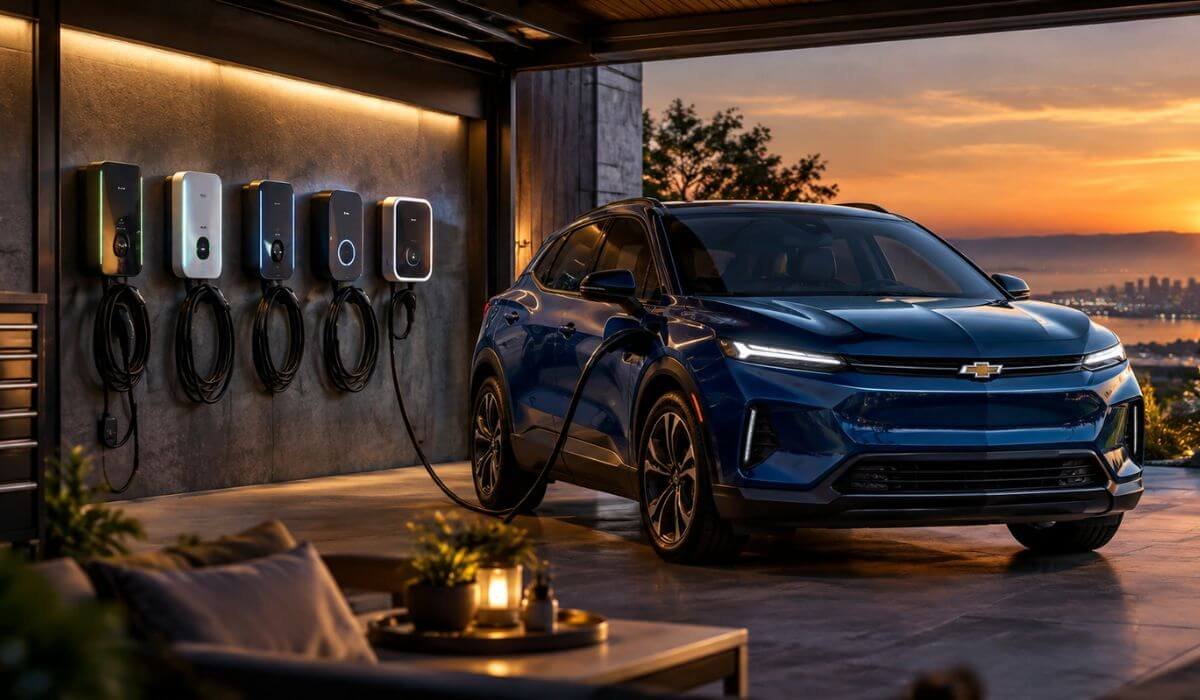
Best Level 2 Chargers for Chevy Equinox EV in 2026: 11.5kW Home Charging
If you drive a Chevy Equinox EV, the home charger you choose should match the vehicle’s actual AC charging capability—not simply have the biggest amp number printed on the box. The Equinox EV supports up to 11.5 kW of Level 2 AC charging, so a properly installed 240V charger in the 40A–48A range makes sense for most home charging setups. Chevrolet estimates up to roughly 34–36 miles of range per hour under suitable conditions, but real-world charging speed can vary with temperature, battery condition, state of charge, vehicle settings and the electrical supply.
This guide covers 2024, 2025 and 2026 Chevy Equinox EV models, including LT and RS versions. For Level 2 AC charging, the Equinox EV uses a J1772-compatible connection, while GM vehicles equipped with NACS may require a suitable GM-approved J1772 AC adapter for charging equipment with a different connector.
The five chargers below were selected around the things that actually matter in a garage or driveway: usable charging output, J1772 compatibility, installation method, cable reach, smart features, weather protection and everyday practicality. A 48A charger is not automatically the right choice simply because it offers more power. Your vehicle, charger, circuit, wiring and home’s available electrical capacity all need to work together, so have the installation evaluated by a qualified electrician before choosing a 48A setup.
Best Home EV Chargers for Chevy Equinox EV: Top 2026 Picks for 11.5kW and 48A Charging
#1. ChargePoint Home Flex Level 2 EV Charger
The smart 48A level 2 home charging upgrade for Chevy Equinox EV owners who want 11.5kW Level 2 power, hardwired reliability and effortless app-based control.
#2. EVIQO Level 2 EV Charger J1772 48A
A serious 11.5kW home charging setup for the Equinox EV, pairing 48A 240V power with adjustable output and a useful 25-foot cable.
#3. EMPORIA Level 2 EV Charger With J1772 Connector
The flexible 240V home charger for Equinox EV owners who want smart energy tracking, WiFi controls and the choice between plug-in and hardwired installation.
#4. Grizzl-E Level 2 EV Charger
The no-nonsense 40A charging choice for Equinox EV owners who value rugged construction, 9.6kW home charging and dependable indoor or outdoor use over app extras.
#5. NexCyber Level 2 EV Charger
A flexible J1772 home charging option that brings 48A 11.5kW capability, WiFi controls, adjustable output and a long 25-foot cable into one practical setup.
Expert Tip
The 11.5 kW figure is the number that matters here, not the biggest amp rating on a charger’s label. If your Equinox EV is parked at home for hours overnight, a properly installed 240V Level 2 charger can make daily charging almost effortless. I’d choose the charger around your electrical setup first, then cable reach and features. There is no prize for buying a 48A charger if your home cannot safely support it.
How We Choose These Chargers
We chose these five with one simple question in mind: Would we actually want this charger beside an Equinox EV every day?
The first filter was J1772 compatibility and useful Level 2 output. Since the Equinox EV can accept up to 11.5 kW, we looked for chargers that can make good use of that capability rather than filling the list with low-output units.
Then we looked at how each charger behaves in the real world. Hardwired 48A models such as ChargePoint and EVIQO make sense for owners building a dedicated home charging setup. The EMPORIA adds WiFi and energy-management controls for people who want more visibility over their electricity use. The Grizzl-E 40A takes the simpler route, with a rugged enclosure and NEMA 14-50 connection. NexCyber brings a longer 25-foot cable and connected features for buyers who want flexibility without moving into a more expensive setup.
We also paid attention to the details that are easy to ignore before installation but matter every single night: cable length, plug versus hardwire installation, charging output, smart controls, weather resistance and everyday usability.
Most importantly, we did not treat 48A as an automatic winner. Your Equinox EV, circuit, breaker, wiring and charger all have to work together. That is why this list includes different charging approaches rather than five chargers that look identical on paper.
The result is a shortlist built around how an Equinox EV owner will actually charge at home, not simply which product has the longest feature list.
#1. ChargePoint Home Flex Level 2 EV Fast Charger
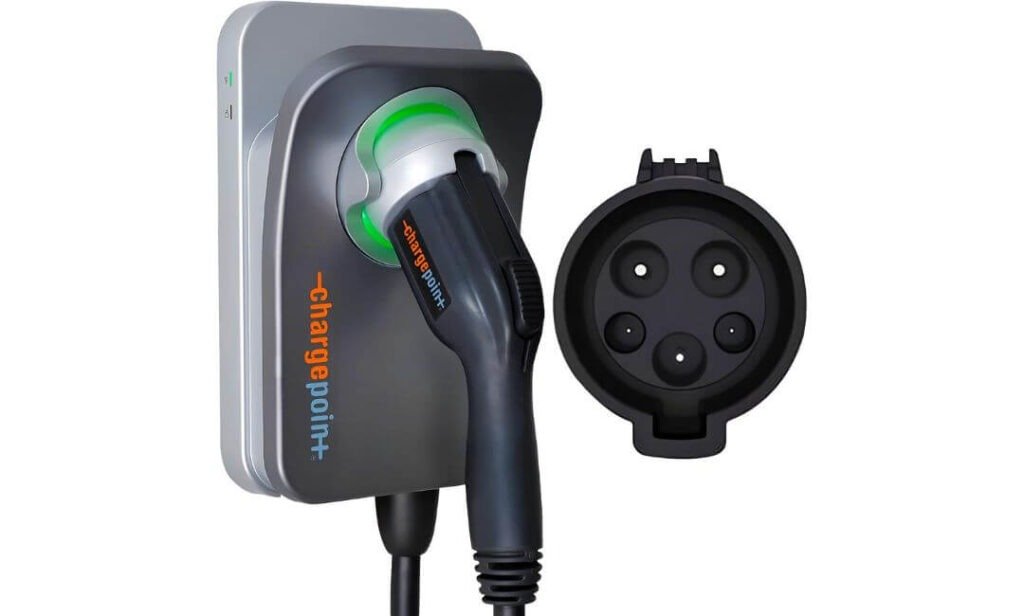
Quick Specs:
- Charging output: Up to 50A / 12 kW; adjustable from 16A to 50A
- Equinox-friendly setting: 48A delivers 11.5 kW, closely matching the Equinox EV’s maximum Level 2 capability
- Connection: J1772
- Power: 240V AC
- Installation: Hardwired; 48A requires a 60A circuit, while 50A requires a 70A/80A circuit
- Cable: 23 feet
- Connectivity: 2.4/5 GHz Wi-Fi + ChargePoint app
- Build: Indoor/outdoor installation with weather-resistant construction
- Warranty: 3 years
There is something reassuring about a charger that doesn’t force you to build your entire electrical setup around one fixed charging speed. Home Flex can be set to 16A, 24A, 32A, 40A, 48A or 50A, so your electrician can match the charger to what your panel can realistically support. For an Equinox EV, the 48A setting is particularly interesting because it produces 11.5 kW, essentially lining up with the vehicle’s Level 2 ceiling.
The 23-foot cable is another detail you appreciate after installation, not while reading a specification sheet. It gives you considerably more freedom over where the Equinox EV sits in the garage or driveway. The charger also works with the ChargePoint app for scheduling, charging data and remote management, while the unit itself continues charging if Wi-Fi happens to disappear.
For a permanent setup, the hardwired version is especially practical. It can accommodate different circuit capacities rather than locking you into one electrical configuration, and ChargePoint recommends hardwiring when there isn’t already a suitable 240V outlet—or for many outdoor installations. This is a charger you can size around the house and the car together, which is far more useful than simply chasing the highest number on the box.
What We Like
- 11.5 kW at 48A makes excellent sense for an Equinox EV.
- Six selectable amperage levels make it easier to work around different electrical setups.
- The 23-foot cable gives you genuine parking-position flexibility.
- ChargePoint’s app adds useful scheduling and charging-history controls rather than being connectivity for the sake of it.
- Indoor/outdoor capability and a 3-year warranty make it suitable for a permanent home installation.
What We Don’t
The only thing to plan carefully is the electrical installation. If you want the full 48A output, you’re looking at a dedicated 60A circuit; pushing all the way to 50A requires a larger circuit rating. That’s not a flaw with the charger—it’s simply the electrical reality of running a continuous high-power load.
Why It Fits the Equinox EV So Well
For this particular vehicle, the appeal is not really the headline 50A number. The smarter match is 48A / 11.5 kW, because that gets the Home Flex right into the Equinox EV’s Level 2 charging range without buying into power the vehicle cannot use.
And if your electrical situation changes later, the charger does not become useless. Its adjustable output lets an electrician configure it around the available circuit capacity. That makes it a particularly sensible long-term home charging station for an Equinox EV rather than a charger chosen purely for today’s numbers.
The Insider Pro-Tip
If you’re installing this specifically for an Equinox EV, don’t automatically ask the electrician to configure it at 50A. Ask them to check whether a dedicated 60A circuit and 48A setting make sense for your panel and installation. That gives the Equinox EV the full 11.5 kW its onboard charging system can use while avoiding the extra electrical capacity needed to run the Home Flex at its full 50A output.
The other small detail I’d plan before the electrician arrives is the 23-foot cable path. Position the charger so the cable reaches the Equinox’s charge port naturally, without stretching it across a walking path. It sounds minor on installation day; after months of plugging in, it is exactly the sort of detail you’ll be glad you got right.
#2. EVIQO Level 2 EV Charger J1772 48A
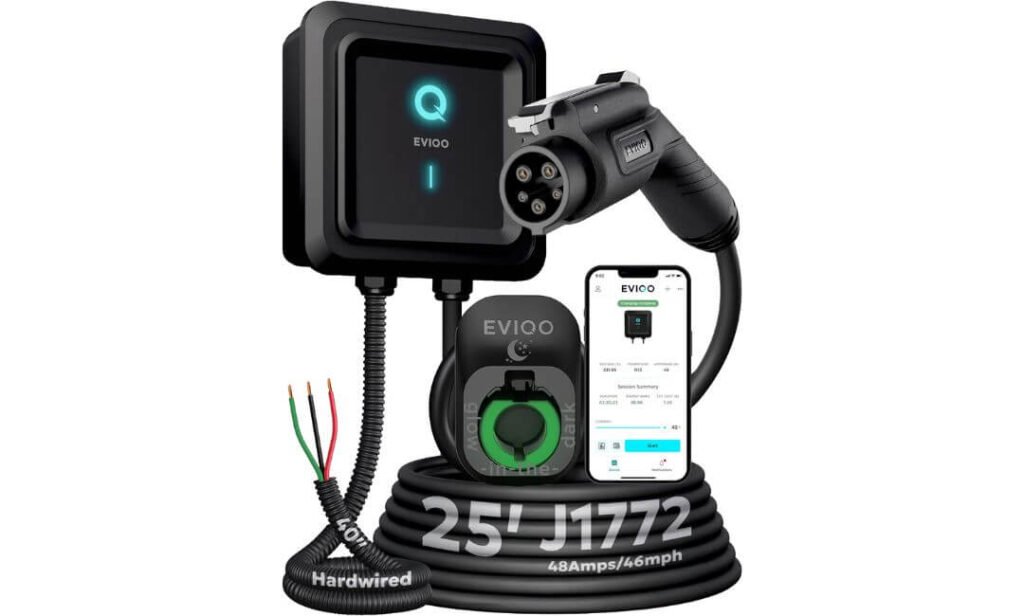
Quick Specs:
- Charging output: Up to 48A / 11.5 kW
- Charging adjustment: 6A–48A
- Connection: J1772
- Power: 240V AC
- Installation: Hardwired; 48A requires a dedicated 60A circuit
- Cable: 25 feet
- Connectivity: 2.4 GHz Wi-Fi + mobile app
- Protection: IP66 / NEMA 4 weather-resistant enclosure
- Certifications: UL, ETL, FCC and ENERGY STAR
- Warranty: 3 years
Some chargers give you a high amp number and leave the rest for you to figure out. This one takes a more practical approach. The 48A output delivers 11.5 kW, which lines up neatly with the Equinox EV’s maximum Level 2 AC charging capability. If your electrical installation supports a dedicated 60A circuit, there is very little wasted capability between the charger and the car.
The 25-foot cable is one of those features that sounds ordinary until you actually park in a garage where the charging port isn’t directly beside the wall. It gives you considerably more freedom with vehicle positioning, while the IP66/NEMA 4 enclosure makes the unit suitable for indoor or outdoor mounting. That combination makes this more than a spec-sheet charger; it is designed around the awkward little realities of home charging.
What I particularly like is that the smart features aren’t required just to make the charger function. With Wi-Fi unavailable, you can still plug in and charge normally. When connected, the app adds 6A–48A adjustment, scheduling, energy tracking and charging information. The glow-in-the-dark holster and side reset button are similarly small touches, but they are the sort of details that become useful after months of ownership.
What We Like
- 48A / 11.5 kW is an excellent output match for the Equinox EV.
- The 25-foot cable makes garage and driveway positioning much easier.
- Plug-and-charge operation means basic charging does not depend on Wi-Fi.
- IP66/NEMA 4 protection gives it genuine flexibility for covered outdoor installations.
- The 6A–48A adjustment provides useful control when your electrical requirements change.
What We Don’t
The only thing to know before buying is that this is a hardwired charger, so it isn’t the choice for someone who simply wants to plug into an existing NEMA 14-50 outlet. You’ll need a qualified electrician and a properly sized 240V circuit.
Why It Makes Sense for the Equinox EV
The strongest reason to consider this charger is the unusually clean match between its 48A / 11.5 kW output and the Equinox EV’s Level 2 capability. You’re not buying a charger dramatically beyond what the vehicle can use, nor are you settling for a lower-output unit simply because it is easier to install.
It also gives you room to make the charging setup work around your home. The adjustable current, long cable and indoor/outdoor construction mean the installation can be planned around where you park and what your electrical panel can support, rather than forcing your daily routine around the charger.
The Insider Pro-Tip
If you’re buying this for an Equinox EV, I’d treat the 25-foot cable as a planning advantage, not just a headline feature. Before installation, park the car exactly where you normally leave it and work out the cleanest cable path to the charge port. A good installation should let you plug in without pulling the cable diagonally across a walkway or keeping it under unnecessary tension.
And there is no reason to chase the optional 50A setting simply because it exists. For the Equinox EV, 48A already reaches 11.5 kW, so that is the setting worth discussing with your electrician. Spend the extra attention on getting the circuit, mounting position and cable route right—that is what you’ll appreciate every night you come home and plug in.
#3. EMPORIA Level 2 EV Charger With J1772 Connector
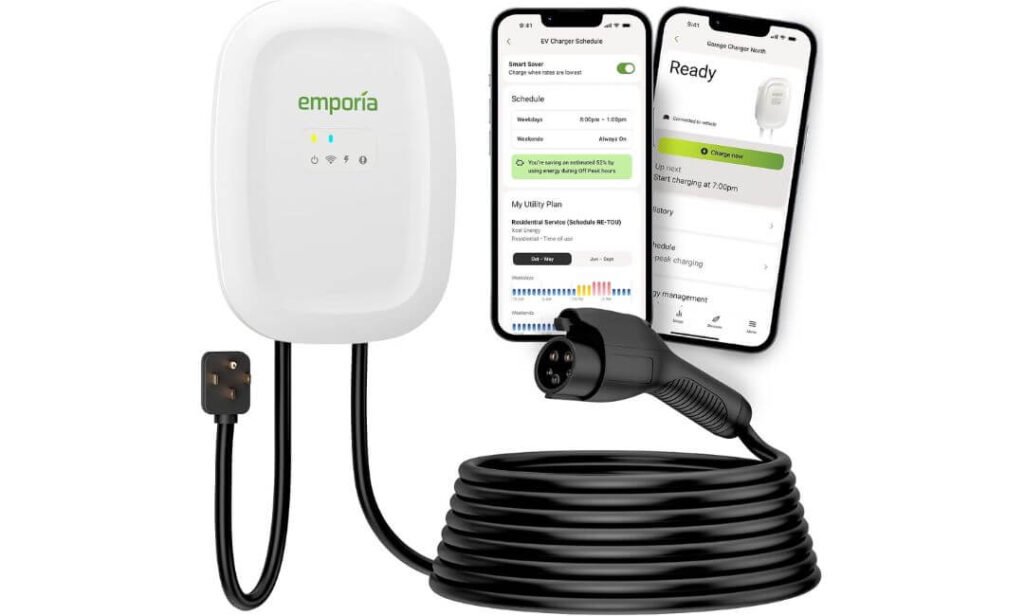
Quick Specs:
- Charging output: Up to 48A / 11.5 kW hardwired; up to 40A plug-in
- Connection: J1772
- Power: 240V AC
- Installation: NEMA 14-50 plug-in or hardwired
- Cable: 25 feet
- Connectivity: 2.4 GHz Wi-Fi + EMPORIA app
- Controls: Adjustable charging current and charging schedules
- Build: NEMA Type 4 weather-resistant enclosure
- Certifications: UL listed and ENERGY STAR certified
- Warranty: 3 years
The useful thing about this charger is that you are not locked into one installation style. With an existing NEMA 14-50 outlet, it can run at up to 40A; if you want the full 48A output, it can be hardwired. For an Equinox EV, that distinction matters because 48A at 240V reaches approximately 11.5 kW, matching the vehicle’s maximum Level 2 charging capability.
That makes this a particularly interesting choice for someone who already has a suitable 240V outlet. You can start with the plug-in setup rather than automatically paying for a hardwired installation. Later, if your charging needs or electrical setup change, the same charger can be configured for hardwired operation. That kind of flexibility is genuinely useful, especially when you’re planning a charger around an existing garage rather than building everything from scratch.
Then there is the smart side. The EMPORIA app lets you monitor charging energy, manage schedules and adjust charging settings over Wi-Fi. The 25-foot cable is equally practical—it gives you room to position the Equinox EV without having to park unnaturally close to the charger. Add the NEMA Type 4 enclosure and this becomes a fairly complete home-charging package rather than simply another 48A EVSE.
What We Like
- 48A / 11.5 kW hardwired output is an excellent match for the Equinox EV.
- The NEMA 14-50 option makes sense for homes that already have a suitable 240V outlet.
- 25-foot cable gives you considerably more freedom when parking.
- The app provides genuinely useful energy monitoring and scheduling rather than just remote-start gimmicks.
- NEMA Type 4, UL-listed and ENERGY STAR-certified construction gives the installation a reassuring safety foundation.
What We Don’t
The one detail worth understanding is that the NEMA 14-50 configuration is limited to 40A. If you specifically want the charger’s full 48A output, you’ll need the hardwired installation and the appropriate electrical circuit.
Why It Works So Well for the Equinox EV
The real attraction here is the combination of 11.5 kW capability and installation flexibility. The Equinox EV does not need an exotic charging system; it needs a properly matched Level 2 setup that can deliver what its onboard charger can accept. This unit can do exactly that when hardwired, while still giving you a lower-output plug-in route if that better suits your home.
It is also a good fit for owners who care about seeing what their vehicle is actually consuming. With Wi-Fi energy monitoring, charging schedules and adjustable current, you can make the charger fit your routine instead of changing your routine around it.
The Insider Pro-Tip
If you already have a properly installed NEMA 14-50 outlet, don’t feel pressured into hardwiring this charger just because 48A sounds better. The 40A plug-in configuration is still a very capable Level 2 setup for an Equinox EV. The extra 8A only becomes meaningful if your electrical system is ready for the hardwired configuration.
One more thing: let the outlet and circuit determine the charger setting, not the other way around. If you’re starting from scratch, have an electrician size the circuit specifically for the output you want. Once that’s done, the long cable, adjustable charging and app controls are the features you’ll actually appreciate every time you plug in.
#4. Grizzl-E Level 2 240V 40A EV Charger — Avalanche Edition
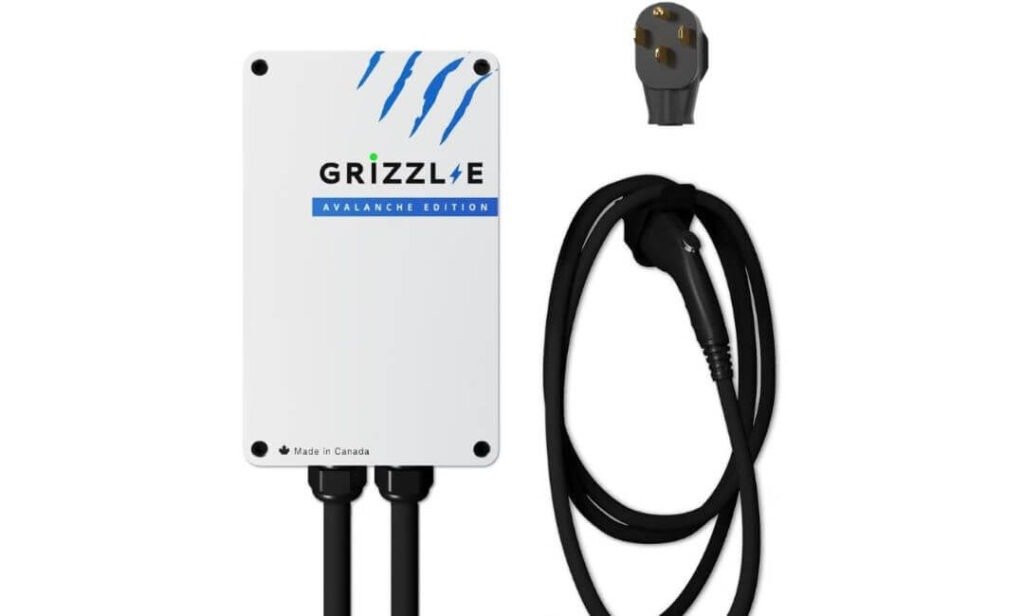
Quick Specs:
- Charging output: Up to 40A / 9.6 kW
- Charging adjustment: 16A, 24A, 32A or 40A
- Connection: J1772
- Power: 240V AC
- Installation: NEMA 14-50 plug-in
- Cable: 24 feet
- Protection: IP67 weather resistance + built-in GFCI
- Safety: Overcurrent, overvoltage, ground-fault and overtemperature protection
- Operation: Plug-and-charge, no Wi-Fi or app required
- Warranty: 5 years
Not every Equinox EV owner needs to turn home charging into a smart-home project. This charger takes the opposite approach: plug it in, connect the J1772 handle and let the car charge. At 40A, it delivers 9.6 kW, which is below the Equinox EV’s 11.5 kW maximum but still provides a strong Level 2 charging setup for overnight use.
The useful part is the adjustable output. You can select 40A, 32A, 24A or 16A depending on the circuit you’re working with. That gives you some breathing room if the available electrical setup isn’t designed for the maximum 40A load. The 24-foot cable also deserves attention; it is long enough to make a difference when the outlet isn’t positioned exactly where you’d ideally want it.
Then there is the construction. The IP67 enclosure, built-in GFCI and multiple electrical protection systems make this a charger you can realistically consider for an outdoor installation when properly mounted. It has no Wi-Fi, no subscription and no app to learn. For some owners, that isn’t a missing feature at all—it is exactly why this charger is appealing.
What We Like
- 40A / 9.6 kW gives the Equinox EV plenty of useful overnight charging power.
- Four selectable current levels make it easier to match different electrical circuits.
- 24-foot cable provides excellent everyday reach.
- IP67 protection and built-in GFCI make the hardware well suited to demanding installations.
- Five-year warranty gives this simple charger unusually strong long-term coverage.
What We Don’t
The only limitation is straightforward: 9.6 kW isn’t the Equinox EV’s full 11.5 kW Level 2 capability. If squeezing every available kilowatt out of the vehicle is your priority, a 48A charger makes more sense. For normal overnight charging, however, the difference may not matter much to your routine.
Why It Makes Sense for the Equinox EV
The appeal here is its simplicity. You don’t need to maintain a Wi-Fi connection or open an app just to start charging. If you already have a properly installed NEMA 14-50 outlet, this is a straightforward way to add Level 2 charging without choosing a hardwired system.
It also gives you a useful amount of electrical flexibility. Being able to step down from 40A to 32A, 24A or 16A means the charger can work with different circuit configurations when installed correctly. That makes it a practical choice for an owner who values durability and uncomplicated charging over maximum output or connected features.
The Insider Pro-Tip
If you’re considering this for an Equinox EV, don’t look at the 40A versus 48A difference in isolation. Ask yourself how you actually charge. If the vehicle sits in the garage overnight, 40A can already put a substantial amount of energy back into the battery while you sleep. In that situation, the Grizzl-E’s rugged construction and simple operation may matter more than chasing the last few kilowatts.
And if you’re installing a new NEMA 14-50 outlet, make sure the outlet, wiring and breaker are properly rated for continuous EV charging. The charger being plug-in doesn’t mean the electrical installation is a DIY detail. Get that part right, and the rest of this setup is refreshingly uncomplicated.
#5. NexCyber Level 2 EV Charger
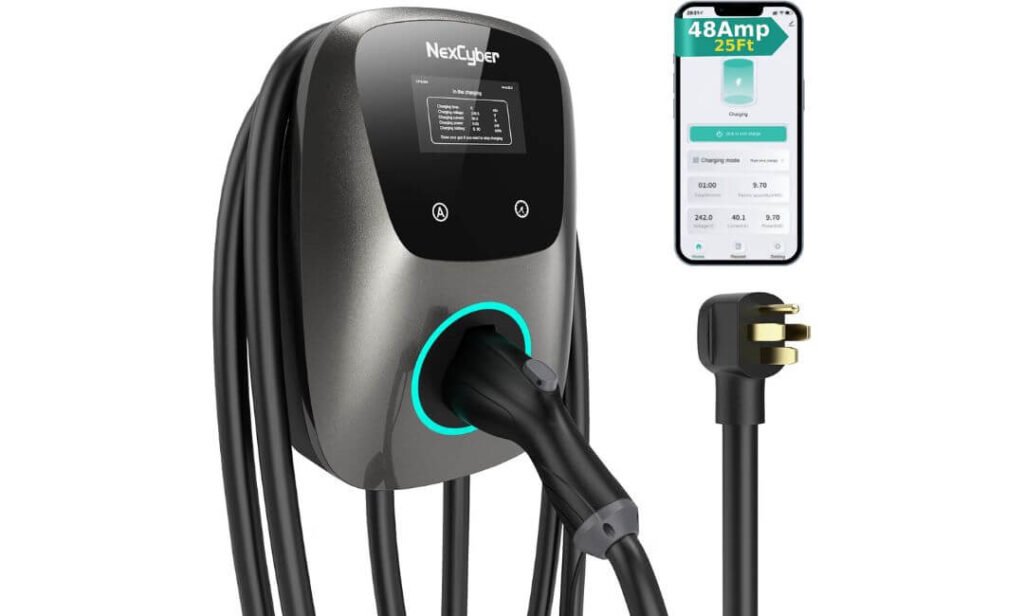
Quick Specs:
- Charging output: Up to 48A / 11.5 kW hardwired; up to 40A plug-in
- Connection: J1772
- Power: 240V AC
- Installation: NEMA 14-50 plug-in or hardwired
- Cable: 25 feet
- Controls: Wi-Fi app + built-in touchscreen
- Current adjustment: 16A–48A
- Protection: NEMA Type 3 / IP65-rated enclosure
- Certifications: ETL, FCC and ENERGY STAR
- Warranty: 3 years
The interesting thing about this charger isn’t simply the 48A rating. It gives you two different ways to use it. With a suitable NEMA 14-50 connection, it can operate at up to 40A, while a properly installed hardwired setup opens the door to 48A / 11.5 kW. For an Equinox EV owner, that makes the hardwired configuration a very close match to the vehicle’s maximum Level 2 charging capability.
There is also a nice bit of practicality built into the front of the unit. You don’t have to reach for your phone every time you want to check the charger. The touchscreen displays charging information and lets you adjust the current from 16A to 48A or set a charging delay, while the Wi-Fi app adds remote monitoring, charging history, cost tracking and scheduling. That combination is useful because you can keep things simple when you’re standing beside the car and use the app when you’re away.
The 25-foot cable is another genuine everyday advantage. It gives you more freedom when the Equinox EV is parked on the opposite side of the garage, while the NEMA Type 3/IP65-rated enclosure provides protection for suitable indoor or sheltered outdoor installations. The important distinction is that the manufacturer does not recommend leaving it exposed to direct sunlight or heavy rain, so mounting location matters.
What We Like
- 48A / 11.5 kW hardwired capability lines up neatly with the Equinox EV’s maximum Level 2 input.
- Touchscreen + app controls give you two genuinely useful ways to manage charging.
- 25-foot cable makes awkward parking positions much easier.
- Adjustable 16A–48A output gives the installation more flexibility.
- Plug-in or hardwired operation lets you choose between convenience and maximum output.
What We Don’t
The one thing we’d plan around is the outdoor mounting location. Although the enclosure has NEMA Type 3/IP65 protection, the supplied guidance recommends avoiding direct sunlight and exposed rainy locations. A covered garage or protected exterior wall is a much better home for it.
Why It Makes Sense for the Equinox EV
For the Equinox EV, this is mainly about getting useful flexibility without giving up charging performance. Hardwired at 48A, it can deliver approximately 11.5 kW, while the plug-in configuration provides a simpler route when a suitable NEMA 14-50 outlet is already available.
The dual-control setup also makes sense for everyday ownership. You can glance at the touchscreen for the basics, then use the app when you want scheduling, charging history or energy information. It feels more practical than a charger that makes every small adjustment dependent on a phone.
The Insider Pro-Tip
If you are choosing between the plug-in and hardwired setup, decide based on how you actually use the garage, not just the advertised charging speed. If a properly installed NEMA 14-50 outlet is already there, 40A can be perfectly useful for overnight Equinox EV charging. If you’re installing a new circuit anyway, having an electrician configure the unit for 48A / 11.5 kW makes more sense because you’re already doing the electrical work.
And don’t overlook the touchscreen. Before mounting the charger, put it somewhere you can comfortably see and reach it while standing beside the vehicle. You may use the app for scheduling, but being able to walk up, check the charging information and change the setting without opening your phone is the kind of small convenience that becomes surprisingly valuable over time.
Best Home EV Chargers for Chevy Equinox EV Compared for 240V and J1772 Charging
| Charger | Equinox EV Output Match | Installation | Connection & Cable | Smart Features | Protection & Build | Best Fit |
|---|---|---|---|---|---|---|
| ChargePoint Home Flex 50A hardwired J1772 Best Overall | 48A / 11.5 kW Excellent match for the Equinox EV’s Level 2 ceiling |
Hardwired 48A requires a dedicated 60A circuit |
J1772 23-ft cable |
ChargePoint app Charging schedules Energy & session data Wi-Fi connectivity |
Indoor/outdoor capable UL certified Cold-resistant cable 3-year warranty |
A permanent home setup where adjustable output and smart controls matter as much as charging speed. |
| EVIQO Level 2 48A hardwired J1772 Best Hardwired Match | 48A / 11.5 kW Directly aligned with the Equinox EV’s maximum Level 2 capability |
Hardwired Dedicated 60A circuit for 48A operation |
J1772 25-ft cable |
Mobile app 6A–48A adjustment Charging schedules Energy tracking Basic charging works without Wi-Fi |
IP66 / NEMA 4 UL & ETL certified Overcurrent & ground-fault protection 3-year warranty |
Owners wanting full 11.5 kW capability, long reach and weather protection in one permanent installation. |
| EMPORIA Level 2 48A / 40A J1772 Most Flexible Setup |
48A / 11.5 kW hardwired Up to 40A plug-in Lets the installation determine the charging configuration |
NEMA 14-50 plug-in or hardwired 40A plug-in / 48A hardwired |
J1772 25-ft cable |
EMPORIA app Wi-Fi monitoring Energy tracking Scheduling Adjustable current |
NEMA Type 4 UL listed ENERGY STAR 3-year warranty |
Buyers who want plug-in convenience today or 48A hardwired charging later. |
| Grizzl-E Avalanche Edition 40A NEMA 14-50 J1772 Rugged & Simple | 40A / 9.6 kW Below the Equinox EV’s 11.5 kW ceiling, but strong for overnight charging |
NEMA 14-50 plug-in 16A / 24A / 32A / 40A settings |
J1772 24-ft cable |
No Wi-Fi No app Simple plug-and-charge operation |
IP67 Built-in GFCI Overcurrent & overtemperature protection UL certified ENERGY STAR 5-year warranty |
Owners who value rugged hardware and simple charging over connected features. |
| NexCyber Level 2 48A / 40A J1772 Feature-Rich Value |
48A / 11.5 kW hardwired Up to 40A plug-in |
NEMA 14-50 plug-in or hardwired 48A requires dedicated hardwired installation |
J1772 25-ft cable |
Wi-Fi app Built-in touchscreen 16A–48A adjustment Scheduling Cost & charging history |
NEMA Type 3 / IP65 ETL & FCC certified ENERGY STAR 3-year warranty |
Buyers who want app control and physical charger controls without giving up 48A capability. |
Buying Guide for the Best Level 2 Charger for Chevy Equinox EV
Buying a home charger for the Equinox EV is less about finding the charger with the biggest number on the box and more about matching the charger, vehicle and electrical system as one setup. The vehicle can accept up to 11.5 kW of Level 2 AC power, so a properly installed 240V charger capable of 48A can make full use of that capability. But if your panel, circuit or installation is not designed for 48A continuous charging, buying a 48A unit does not magically create more usable power.
The good news is that you do not need an overly complicated setup. A suitable J1772 Level 2 EVSE, the right 240V circuit and a sensible installation are the foundation. Everything else—Wi-Fi, energy tracking, charging schedules and touchscreen controls—should improve the experience rather than distract from those basics.
Start With the 11.5 kW Charging Target
For the Equinox EV, 11.5 kW is the important ceiling to understand. At 240V, a 48A charger can supply approximately 11.5 kW:
240V × 48A = 11,520 watts
That does not mean the vehicle will always draw exactly 48A. The car controls how much power it accepts, and actual charging can vary with battery temperature, state of charge, electrical conditions and other vehicle limits.
This is why a 48A Level 2 charger makes sense for owners who want to match the vehicle’s maximum AC charging capability. A 40A charger, meanwhile, delivers about 9.6 kW, which is still substantial for overnight charging.
The practical difference is simple:
| Charger Output | Approx. Power at 240V | Equinox EV Use |
|---|---|---|
| 32A | 7.7 kW | Good for overnight charging |
| 40A | 9.6 kW | Strong everyday Level 2 option |
| 48A | 11.5 kW | Matches the vehicle’s maximum Level 2 capability |
So don’t assume that anything below 48A is inadequate. If your daily driving is modest and the car sits at home overnight, 40A can already be more than enough for many owners.
Understand J1772 Compatibility Before Looking at Features
The charging connector deserves attention before you compare apps or cable lengths.
For Level 2 AC charging, the Equinox EV uses the SAE J1772 connection, so the charger should have a compatible J1772 connector for a direct connection. That is why all five chargers in this guide were selected around this requirement.
You may see manufacturers describe J1772 as a “universal” connector for North American EVs. That is useful, but don’t interpret universal as meaning every EV charges at the same speed. The vehicle’s onboard charger ultimately determines how much AC power it can accept.
There is also an important distinction between AC charging and DC fast charging. A home Level 2 charger supplies AC power to the vehicle’s onboard charging system; it is not a replacement for a DC fast charger.
Match the Charger to Your Electrical Panel
This is the part buyers should take seriously.
A charger advertised as 48A does not mean you can connect it to whatever 240V circuit happens to be available. EV charging is a continuous electrical load, so the circuit needs to be appropriately sized for the selected charging current.
For example, a 48A charging load generally requires a 60A dedicated circuit when installed according to the applicable electrical requirements. If you configure a compatible charger for 40A, the circuit requirements are different. The exact installation should be determined by a qualified electrician based on your home’s wiring, panel capacity, local code and charger instructions.
Before buying, check:
- Available capacity in the main electrical panel
- Distance between the panel and charger location
- Existing 240V circuits
- Wire size and routing requirements
- Breaker capacity
- Whether the charger will be indoors or outdoors
- Whether the installation needs trenching or additional conduit
- Local electrical-code requirements
A short electrical inspection before buying can save you from ordering a charger and discovering later that your panel needs an expensive upgrade.
Hardwired or NEMA 14-50: Which Setup Makes More Sense?
There isn’t one answer for every Equinox EV owner.
A hardwired charger connects directly to the home’s electrical system. This is generally the route to consider when you want the higher 48A charging output and a permanent installation.
A NEMA 14-50 charger plugs into a properly installed 240V receptacle. It can be convenient if the outlet already exists and is correctly rated for EV charging.
The difference becomes particularly important with the chargers covered in this article:
- ChargePoint Home Flex — hardwired and highly adjustable.
- EVIQO 48A — hardwired, with 48A / 11.5 kW capability.
- EMPORIA — can operate as a 40A NEMA 14-50 unit or up to 48A when hardwired.
- Grizzl-E — straightforward NEMA 14-50 charging up to 40A.
- NexCyber — offers both plug-in and hardwired configurations, depending on the setup.
If you already have a suitable NEMA 14-50 outlet, a plug-in charger can be the simpler route. If you’re starting from zero and want 48A / 11.5 kW, having a qualified electrician install a hardwired unit is usually the cleaner approach.
Don’t Confuse a NEMA 14-50 Outlet With a Regular Wall Outlet
A NEMA 14-50 receptacle is not simply a larger household socket that you should install yourself without considering the electrical load.
The circuit, breaker, wiring, receptacle quality and installation all matter. EV charging can run for several hours continuously, so a properly installed outlet is especially important.
If you’re having one installed specifically for an EV charger, tell the electrician what charger and charging current you intend to use. That allows the entire circuit to be designed around the actual load instead of guessing.
Smart Features: Which Ones Are Actually Worth Paying For?
Smart charging can be genuinely useful, but not every connected feature deserves extra money.
The features I would actually look for are:
- Charging schedules — useful if your utility has cheaper off-peak electricity rates.
- Energy monitoring — helps you understand how much electricity the Equinox EV is using.
- Remote charging status — useful when you want to check whether the vehicle is still charging without walking into the garage.
- Adjustable amperage — valuable when the electrical setup requires a lower charging current.
- Charging history — useful for tracking household EV energy consumption.
An app should be considered a convenience, not a requirement for basic charging. That’s one reason a simpler unit such as the Grizzl-E can still make sense for someone who prefers plug in and forget about it operation.
Cable Length Matters More Than It Looks on Paper
A charger can have excellent electrical specifications and still be annoying if the cable doesn’t comfortably reach the Equinox EV.
For a typical garage, 23 to 25 feet gives considerably more freedom than a short cable. It can allow you to park on either side of the garage or position the charger farther from the electrical panel.
Before installation, physically picture where the Equinox EV will normally sit and where the charger will be mounted.
You want the cable to:
- Reach the charge port without stretching
- Avoid crossing a walking path unnecessarily
- Stay clear of vehicle tyres
- Have enough slack for normal parking variations
- Return neatly to the holster when charging is finished
This is a small detail, but it’s something you’ll interact with almost every time you charge.
Think About Weather Protection If the Charger Will Be Outside
Not every charger with an outdoor rating should simply be mounted anywhere outdoors.
Look at the actual enclosure rating, cable construction and manufacturer’s installation guidance. A charger with IP66, IP67 or NEMA-rated protection can offer much better resistance to water and dust, but the mounting location still matters.
A covered garage or protected exterior wall is generally a more forgiving environment than an exposed location receiving direct sun, rain and snow all day.
For an outdoor Equinox EV charging setup, pay attention to:
- Enclosure protection rating
- Cable flexibility in cold weather
- Proper mounting
- Weather exposure
- Connector storage
- Electrical conduit and connection protection
Safety Should Come Before Charging Speed
A home EV charger is a high-power electrical appliance, so safety certification matters.
Look for recognised certification such as UL or ETL, along with the protection systems appropriate to the charger. Depending on the model, these can include:
- Ground-fault protection
- Overcurrent protection
- Overvoltage and undervoltage protection
- Overtemperature protection
- Power-outage recovery
- Built-in GFCI protection
Certification alone doesn’t make an installation safe. The charger still needs to be installed correctly, on the appropriate circuit, according to the manufacturer’s instructions and local electrical requirements.
Warranty Is Part of the Charger, Too
A home charger is something you may use several times every week for years, so warranty coverage is worth considering alongside the purchase price.
The five chargers here offer different ownership propositions. Some lean toward long-term hardware coverage, while others place more emphasis on connected features and software.
When comparing warranty terms, look beyond the number of years. Check what the warranty actually covers, how support is handled and whether replacement or repair procedures are clearly explained.
For an expensive hardwired installation, good support becomes even more valuable because replacing a failed unit can involve more than simply unplugging one charger and plugging in another.
Budget for the Complete Charging Setup
The price on the charger listing is only part of the cost.
Your real installation budget can include:
- Charger
- 240V circuit
- Breaker
- Wiring
- Conduit
- NEMA 14-50 receptacle, if applicable
- Electrical-panel work
- Labour
- Permits where required
- Additional work if the panel is far from the parking location
If you already have a properly installed and suitable 240V receptacle, a plug-in charger can significantly simplify the project. If you’re starting from scratch, hardwired 48A charging may make more sense, but the electrical installation can add substantially to the total cost.
This is why comparing a $500 charger with a $700 charger without considering installation can give you the wrong picture. The cheapest charger is not necessarily the cheapest complete charging setup.
What I Would Check Before Ordering
Before clicking buy, I’d run through this short checklist:
- Does it use J1772?
- Can it deliver the charging output I actually want?
- Can my electrical panel support that output?
- Do I need hardwired or NEMA 14-50?
- Is the cable long enough for my parking position?
- Will it be installed indoors or outdoors?
- Are the safety certifications and protection features suitable?
- Do I actually need Wi-Fi, scheduling and energy monitoring?
- What will the complete installation cost, not just the charger?
- Does the warranty and support make sense for a charger I’ll use for years?
The best Level 2 charger for your Equinox EV is ultimately the one that fits the vehicle’s charging capability and your home’s electrical reality at the same time. Once those two pieces are right, choosing between smart features, cable length, installation style and price becomes much easier.
What 11.5 kW and 48A Mean for Equinox EV Home Charging
The 11.5 kW figure is worth understanding before you spend extra money on a home charger. It represents the maximum AC charging power the Equinox EV can accept through its Level 2 charging system under suitable conditions. In simple terms, a charger capable of supplying 48 amps at 240 volts can provide about 11.5 kW, so the charger and vehicle are closely matched rather than one dramatically exceeding the other’s capability.
That does not mean every charging session will sit at 11.5 kW from beginning to end. The vehicle manages the charging process, and actual power can change with battery state, temperature and other operating conditions. Think of 11.5 kW as the upper charging capability, not a promise that the car will continuously pull that number.
What 11.5 kW Looks Like in Everyday Use
For a home charger, 11.5 kW is already a substantial amount of AC power. If you arrive home with a partially depleted battery and leave the Equinox EV connected overnight, you have several hours for the vehicle to put energy back into the battery.
The useful question is therefore not, “How quickly can it charge from empty to full?” Most owners rarely charge from completely empty. A better question is:
How much range can I comfortably put back into the car while it is parked at home?
For daily driving, that distinction matters. Someone who drives 30–50 miles during the day and plugs in every evening may have no practical reason to chase charging power beyond what the vehicle can already accept.
The actual range added per hour will vary, so claims such as a fixed number of miles per hour should be treated as estimates rather than guarantees. Battery temperature, charging conditions, vehicle configuration and the state of charge can all change the result.
Why 48A Is the Sweet Spot for Maximum AC Output
At 240 volts:
240V × 48A = 11,520W
That is approximately 11.5 kW.
This is why 48A appears repeatedly in the charger recommendations above. It is not because “48A” simply sounds better. It is because that electrical combination lines up closely with the Equinox EV’s maximum Level 2 AC charging capability.
A 50A charger can be perfectly fine, but the vehicle does not suddenly become a 50A car because the charger says 50A. Likewise, buying a charger rated for substantially more power does not automatically make the Equinox EV charge faster.
For this vehicle, the useful comparison looks more like this:
| Level 2 Output | Approx. Power at 240V | Practical Meaning |
|---|---|---|
| 32A | 7.7 kW | Plenty for many overnight routines |
| 40A | 9.6 kW | Strong everyday home charging |
| 48A | 11.5 kW | Matches the Equinox EV’s maximum Level 2 capability |
| 50A+ | 12 kW+ | Extra charger capacity the vehicle may not fully use |
So if your goal is to extract the maximum AC charging power the Equinox EV can use, 48A is the important number.
The 240V Connection Behind the Charger Matters
There is a common misconception that any 240V connection automatically means 11.5 kW charging. It doesn’t.
You need the appropriate circuit, breaker, wiring and charging equipment to support the selected current. A 48A continuous EV charging load generally calls for a properly designed 60A dedicated circuit, subject to the applicable electrical code and the charger’s installation requirements.
A NEMA 14-50 setup is different. The receptacle itself is capable of handling substantial electrical loads, but an EV charger connected through it may be configured below 48A. That’s why several chargers in this guide provide 40A through NEMA 14-50 while reaching 48A only when hardwired.
For example:
- NEMA 14-50 plug-in at 40A: approximately 9.6 kW
- Hardwired at 48A: approximately 11.5 kW
That distinction is more important than the name of the plug.
NEMA 14-50 vs Hardwired 48A Charging
If you already have a suitable NEMA 14-50 outlet, a plug-in charger can be extremely convenient. You can connect the charger without turning the installation into a larger electrical project, provided the existing circuit and receptacle are correctly designed and rated for EV charging.
The trade-off is that many plug-in configurations are limited to 40A, which means approximately 9.6 kW.
A hardwired installation removes the plug and connects the charger directly to the home’s electrical system. That’s the route used by the 48A chargers in this guide when configured for their maximum output.
| Setup | Typical Equinox EV Charging Output | Main Advantage |
|---|---|---|
| NEMA 14-50 at 40A | ~9.6 kW | Easier plug-in approach |
| Hardwired at 48A | ~11.5 kW | Maximum usable AC output |
| Lower-current Level 2 | Depends on setting | Lower electrical demand |
Neither approach is automatically right for everyone. If you already have a good 240V installation, 40A may be all you need. If you are installing a new circuit and want the vehicle’s full Level 2 capability, hardwired 48A is the more direct match.
When 40A Is Actually Enough
This is where real-world use matters more than specification-sheet competition.
A 40A charger supplies about 9.6 kW, which is still a serious home charging rate. If your Equinox EV is normally parked overnight for eight or more hours, that can provide a substantial amount of energy without requiring the additional electrical capacity associated with 48A charging.
There is little value in spending significantly more on an electrical upgrade purely to gain the final few kilowatts if your daily driving never requires them.
A 40A setup can be especially sensible when:
- You already have a suitable NEMA 14-50 circuit.
- Your daily mileage is relatively modest.
- The vehicle stays parked overnight.
- Your electrical panel has limited spare capacity.
- You prefer simpler installation.
- You don’t want to pay for an electrical upgrade just for maximum charging speed.
When 48A Makes More Sense
The extra output becomes more attractive when you’re installing the charging system from scratch and want the fastest Level 2 charging the Equinox EV can actually use.
It can also make sense for households where the vehicle has higher daily mileage, shorter charging windows or frequent back-to-back driving.
The important part is to have the electrical work designed around the desired charging current from the beginning. Don’t install a smaller circuit and assume the charger can simply be turned up later.
The Real Trade-Off: Installation Today vs Convenience for Years
The difference between 40A and 48A is not only about charging speed. It can change the installation itself.
A plug-in NEMA 14-50 charger can be attractive when the electrical infrastructure is already in place. You avoid turning a relatively simple purchase into a larger project.
A hardwired 48A installation can cost more initially because you may need:
- A dedicated higher-capacity circuit
- Appropriate breaker
- Larger-gauge wiring
- Conduit
- Professional electrical labour
- Possible panel work
- Permits or inspections where required
But once installed correctly, you have a permanent charging setup capable of delivering the full 11.5 kW the Equinox EV can accept from Level 2 AC.
That’s why I would not call 48A automatically “better.” It is more capable, but whether that capability is worth the additional installation work depends on how you drive and what your home electrical system can comfortably support.
One Important Detail About Charging Power
The charger does not force 11.5 kW into the vehicle.
The vehicle controls the actual charging current. The charger communicates what it can safely provide, and the Equinox EV takes what its charging system requests within its limits.
That is why buying a properly configured 48A charger is different from claiming that every charging session will deliver 11.5 kW continuously.
It is better to think of the setup this way:
Electrical system → EV charger → Equinox EV onboard charger → Battery
Every part has to be capable of supporting the intended charging level.
The Bottom Line for Equinox EV Owners
If you want the cleanest match between the vehicle and a new home charging installation, 48A at 240V / approximately 11.5 kW is the target to understand.
If simplicity matters more, a properly installed 40A NEMA 14-50 setup can still be an excellent everyday solution. You may give up some peak charging capability, but you can still add substantial energy while the vehicle sits overnight.
The smart decision is not to buy the charger with the biggest number. It is to choose the highest useful output your Equinox EV can accept and your home’s electrical system can safely support. That is where the extra money starts making sense—and where it doesn’t.
Practical Chevy Equinox EV Home Charging Setup Ideas
A good home charging installation should feel almost invisible once it is finished. You park the Equinox EV, plug it in, and walk away. The charger should not force you to park in an awkward position, drag a heavy cable across a walkway, or constantly think about whether another appliance running in the house is going to push the electrical system too hard.
That is why the location of the charger can matter almost as much as the charger itself. Before buying hardware, decide where the car normally sits, where the electrical panel is, how the cable will travel, and whether the same space may need to accommodate another EV later.
Wall-Mounted Charging Is Usually the Cleanest Home Setup
For a typical garage or driveway, a wall-mounted Level 2 charger is usually the most straightforward arrangement.
Mounting the unit close to the vehicle’s normal parking position keeps the cable route short and predictable. It also keeps the charger off the floor, protects the equipment from being knocked over and gives you a natural place to return the connector after charging.
A sensible wall location should allow you to:
- Reach the Equinox EV’s charging port without stretching the cable.
- Keep the cable away from tyres and walking areas.
- See the charger display or status indicators easily.
- Remove and replace the connector without fighting the cable.
- Leave enough room around the charger for servicing.
- Keep the cable holster at a comfortable height.
Do not automatically put the charger directly beside the electrical panel. The panel may be the easiest place electrically, but it may be a poor place for everyday charging. The best location is where the car actually parks, provided the electrical installation can be routed there safely.
When a Pedestal Makes More Sense
A free-standing pedestal can be useful when the vehicle is normally parked outside and there is no practical wall nearby.
This arrangement can work particularly well for:
- Detached garages
- Open driveways
- Parking spaces away from the house
- Two-car households
- Future two-EV charging layouts
The downside is that a pedestal usually means more installation work. You may need underground conduit, trenching, a suitable foundation and weather-rated electrical connections.
If you are already planning a driveway renovation or new electrical trench, however, a pedestal can be worth considering because you can place the charging point exactly where the vehicle will sit instead of designing the parking arrangement around an existing wall.
Indoor vs Outdoor Installation
Indoor garage charging is generally the easier environment. The charger has less exposure to rain, direct sunlight and temperature swings, and the cable is easier to keep clean.
Outdoor installation can work perfectly well, but you need to pay closer attention to the charger’s weather protection rating and the manufacturer’s installation instructions.
The five chargers in this article are not identical in this respect. For example, the Grizzl-E’s IP67-rated construction gives it a particularly rugged weather-protection profile, while the NexCyber’s NEMA Type 3/IP65 design is better suited to a protected installation rather than an exposed location.
For an outdoor Equinox EV charger, I would look for:
- A suitable weather-rated enclosure.
- A protected mounting position where possible.
- Proper conduit and weatherproof electrical connections.
- Cable storage that keeps the connector off the ground.
- Protection from direct vehicle impact.
- Adequate drainage around the installation.
- A location away from areas where snow, standing water or lawn equipment can become a problem.
A weather-resistant charger is not an invitation to mount it anywhere outdoors. Good placement still matters.
Think About the Cable Before You Drill the First Hole
Cable management is one of those things that seems unimportant until you have used the charger for a few months.
The Equinox EV’s charge port location, your normal parking position and the charger’s mounting point should all be considered together.
A 23-, 24- or 25-foot cable can provide excellent flexibility, but extra length is only useful if you have somewhere sensible to store it.
Ideally, the connector should:
- Sit securely in its holster.
- Stay off the garage floor.
- Avoid sharp bends.
- Remain clear of vehicle tyres.
- Avoid crossing a pedestrian route.
- Have enough slack to reach the charge port naturally.
Do not use an extension cord to make an EV charger reach farther. If the proposed location does not work with the supplied cable, move the charger or have the electrical installation designed properly around the parking position.
Plan for the Car, Not Just the Charger
One of the easiest mistakes is installing a charger around the vehicle’s current parking position and then discovering that another family member parks differently.
If you have a two-car garage, think about both spaces before deciding where the charger goes.
A longer cable can sometimes allow one wall-mounted charger to serve the intended parking area without requiring the car to be perfectly aligned. But don’t assume that a long cable automatically means one charger can conveniently serve two vehicles.
If you expect to add another EV later, leave room in your planning for:
- A second charging circuit.
- Additional conduit.
- Electrical-panel capacity.
- A second mounting position.
- Future load management.
- A cable route that won’t need to be completely rebuilt.
This is what future-proofing should mean in practice. You do not need to buy an oversized charger today. You want to avoid making tomorrow’s installation unnecessarily difficult.
Leave Yourself an Upgrade Path
A charger may last for years, while your vehicle ownership can change much sooner.
You might eventually replace the Equinox EV with another EV, add a second vehicle or need a different charging connector. The smartest preparation is not necessarily buying the most expensive charger available today.
Instead, consider the infrastructure around it.
If an electrician is running conduit through a garage wall, for example, it may be worth discussing whether the conduit and electrical route can accommodate a future change without opening the wall again. The exact solution depends on the property and local electrical requirements, but planning the route once can be much easier than rebuilding it later.
The same applies to panel capacity. If the electrical service is already close to its limit, tell the electrician about your future EV plans, not just the vehicle sitting in the driveway today.
Think About the Whole House When Choosing 48A Charging
This is where a 48A charger becomes more than an EV-specific decision.
Your house may already have large electrical loads such as:
- Central air conditioning
- Electric heating
- Electric water heater
- Electric range
- Clothes dryer
- Pool or spa equipment
- Workshop equipment
- Another EV charger
The fact that your panel is rated for a particular service size does not mean all connected loads should simply be switched on at maximum capacity simultaneously.
A qualified electrician should evaluate the home’s electrical load and determine whether the proposed EV charging circuit fits comfortably within the service capacity and applicable code requirements.
Simultaneous Loads Can Change the Equation
Imagine charging the Equinox EV at 48A while an electric dryer, water heater and air-conditioning system are also operating. The charger is not necessarily the problem; the question is whether the home’s overall electrical system was designed for that combination of loads.
This is why a proper load assessment is much more useful than simply looking at the charger’s maximum amperage.
If the electrical system is constrained, there may be several possible solutions depending on the property and equipment, such as:
- Selecting a lower charging current.
- Charging during periods of lower household demand.
- Using scheduled charging.
- Upgrading the electrical service where appropriate.
- Installing a suitable energy-management or load-management system.
The right answer depends on the actual electrical installation, so this is an area where a qualified electrician should make the call.
A Lower Charging Setting Can Be a Smart Choice
You do not have to run the charger at its maximum setting every night.
If your Equinox EV is sitting in the garage for eight or ten hours, 40A may already provide more than enough overnight charging for your driving routine. Running at a lower current can also reduce the electrical demand placed on the home.
This is one reason adjustable chargers are useful. The ability to select a lower current gives you another tool if your household load changes.
For example, you might normally use 48A when the house has little other electrical demand, but choose a lower setting or schedule charging overnight when other major loads are expected.
Where the Five Chargers Fit Into a Real Home
The products in this guide approach home installation differently:
- ChargePoint Home Flex makes sense for a permanent installation where adjustable current and smart controls are important.
- EVIQO 48A is particularly suited to an owner who wants a dedicated hardwired 11.5 kW setup with a long cable.
- EMPORIA offers flexibility between a NEMA 14-50 installation and a hardwired configuration.
- Grizzl-E suits owners who want a rugged, straightforward NEMA 14-50 setup without app dependence.
- NexCyber gives buyers both plug-in and hardwired possibilities, along with touchscreen and app controls.
That variety is useful because the best physical setup depends on the home, not just the vehicle.
The Setup I Would Aim For
For a typical single-EV household with a garage, I would focus on four things before worrying about cosmetic details:
- Mount the charger where the Equinox EV normally parks, rather than automatically beside the electrical panel.
- Use a cable long enough to reach comfortably, but give it a proper holster so excess cable does not become a floor hazard.
- Have the electrical system evaluated for the chosen charging current, particularly if you want 48A / 11.5 kW.
- Leave a sensible upgrade path if another EV or major electrical load could be added later.
That approach usually produces a charging setup that feels much better in daily use than simply buying the highest-rated charger and putting it wherever the electrician finds the easiest connection.
The best home charging installation is the one you stop noticing after the first week. The Equinox EV should be able to come home, plug in cleanly, charge while you’re sleeping, and be ready when you need it again.
FAQs About Chevy Equinox EV Home Charging
Is 48A charging actually worth paying more for on a Chevy Equinox EV?
For the Chevy Equinox EV, 48A makes sense when you are installing a new Level 2 charging circuit and want to use the vehicle’s full available AC charging capability. At 240 volts, 48 amps works out to roughly 11.5 kW, which closely matches the Equinox EV’s maximum Level 2 charging capability. The important part, however, is that 48A is a ceiling, not a guarantee that the vehicle will continuously pull 48 amps throughout an entire charging session.
The more interesting question is whether your driving routine benefits from that extra capacity. If the Equinox EV comes home every evening and stays parked until the next morning, a 40A charger producing around 9.6 kW may already replenish more than enough energy for normal daily driving. Paying for a higher-capacity circuit makes more sense when you regularly drive long distances, have shorter charging windows, or are installing the electrical infrastructure from scratch.
There is also a practical middle ground: buying a charger capable of 48A does not mean you have to operate it at 48A all the time. An adjustable charger lets you reduce the current when household electrical demand is high and use the higher setting when the home’s electrical system has more available capacity.
Can I install a 48A charger for the Equinox EV on a NEMA 14-50 outlet?
Not necessarily at its full 48A output. This is one of those details that gets glossed over in charger listings.
A NEMA 14-50 connection is commonly used for plug-in EV chargers, but many portable or plug-in configurations are limited to 40A, which provides approximately 9.6 kW at 240 volts. A charger may advertise “48A” while requiring a hardwired installation to actually deliver that output.
Before buying, check these three things together:
- The charger’s maximum current in plug-in configuration
- The maximum current in hardwired configuration
- The circuit and breaker requirements for the selected current
If your existing garage already has a properly installed NEMA 14-50 circuit, a 40A setup may be the simplest answer. If you’re paying an electrician to install a completely new circuit anyway, discussing a hardwired 48A installation may make more sense.
The important distinction is this: NEMA 14-50 describes the connection, not the charging speed by itself.
Will the Chevy Equinox EV always charge at 11.5 kW when I use a 48A home charger?
No, and this is probably the most important expectation to set before buying an expensive Level 2 charger.
A 48A charger can make approximately 11.5 kW available at 240 volts, but the Equinox EV controls how much power it actually takes. Charging power can change during a session as the battery’s state of charge changes, and conditions such as battery temperature and the vehicle’s charging management can also affect the actual rate.
So don’t read an 11.5 kW specification as:
“The car will receive 11.5 kW continuously until the battery reaches 100%.”
That is not how EV charging works.
For home charging, the bigger advantage of an 11.5 kW-capable setup is having enough charging headroom while the vehicle is parked. If the car only needs a relatively small amount of energy after your daily driving, the difference between 40A and 48A may barely matter in practical terms. If you routinely arrive home with a much lower battery level and have limited time before the next trip, the additional available power becomes more useful.
What should I check in my electrical panel before installing an 11.5 kW Equinox EV charger?
Don’t start with the charger. Start with the house.
An 11.5 kW Level 2 setup is a substantial continuous electrical load, so the electrician should look at the existing service, panel capacity, available breaker spaces, wiring route and the home’s other major electrical loads before deciding how the charger should be connected.
This becomes particularly important in an older home or a house that already has several high-demand appliances.
Ask the electrician to consider the loads created by things such as:
- Air conditioning or heat pumps
- Electric water heating
- Electric cooking appliances
- Clothes dryer
- Pool or spa equipment
- Workshop equipment
- Existing EV charging equipment
A 60A circuit is commonly associated with a 48A continuous EV charging load, but the panel and service still need to be suitable for the overall installation. Simply finding an empty breaker position does not prove that the house has enough capacity.
If the panel is already heavily loaded, don’t assume the answer is automatically a costly service upgrade. Depending on the installation, reducing the charging current, scheduling charging for lower-demand periods, or using suitable load-management equipment may provide a better solution.
Is it smarter to install the Equinox EV charger inside the garage or outside near the driveway?
The better location is usually the one that makes everyday charging easiest without compromising the electrical installation or equipment protection.
A garage installation has obvious advantages: the charger is protected from direct weather exposure, the cable is easier to manage, and the equipment is generally easier to inspect. But an outdoor charger can be perfectly reasonable when the Equinox EV normally lives on a driveway and running the cable into the garage would create an awkward or unsafe arrangement.
If you are installing outside, look beyond a simple “waterproof” claim. Consider the enclosure rating, mounting position, direct sunlight, drainage, snow or standing water, vehicle impact and how the connector will be stored between charging sessions.
And here’s the part many buying guides miss: the charger should be positioned around the car’s real parking behaviour, not around the electrician’s preferred cable route. A technically perfect installation that forces you to stretch the cable around the vehicle every night is not a particularly good home charging setup.
Should I choose a 25-foot cable for the Chevy Equinox EV, or is that unnecessarily long?
A 25-foot cable can be extremely useful if the charger cannot be mounted directly beside the Equinox EV’s normal charge-port position. It gives you more freedom to park slightly differently and can make a wall-mounted installation work across more than one practical parking position.
But longer is not automatically better.
Extra cable has to go somewhere when the vehicle is unplugged. If there is no proper holster or cable-management point, it can end up on the floor where it gets driven over, stepped on or exposed to unnecessary wear.
Before deciding, physically visualise the route:
charger → cable storage → vehicle → charge port
If a 23- or 24-foot cable comfortably reaches the port without crossing a walking path, there may be no reason to add more length. If the charger sits at the front of a long garage or the parking position changes regularly, the additional reach of a 25-foot cable can be genuinely useful.
For a permanent installation, good cable routing is worth more than a bigger number on the specification sheet.
Final Verdict: Choosing the Right Home Charger for the Chevy Equinox EV
The best Level 2 charger for the Chevy Equinox EV is not necessarily the one with the highest amperage, the longest feature list, or the most expensive installation. The real decision comes down to how the car is used, how much electrical capacity your home can comfortably provide, and whether you actually need the vehicle’s full 11.5 kW AC charging capability.
If you are installing a charger from scratch and want maximum Level 2 output, a properly installed 48A hardwired charger at 240V is the natural match. It gives the Equinox EV access to roughly 11.5 kW when conditions allow, while an adjustable model gives you the option to reduce the current when household demand or electrical limitations make that more sensible.
But there is nothing wrong with choosing 40A and around 9.6 kW. For an owner who plugs in every evening and leaves the Equinox EV parked overnight, that lower output can already be more than adequate. In that situation, spending substantially more to gain the final step up in charging power may not change everyday ownership very much.
The part that matters after you buy it
Think about the entire charging system, not just the box hanging on the wall.
A good installation should have:
- A properly sized dedicated circuit
- Correct breaker and wiring for the selected charging current
- A charger compatible with the Equinox EV’s AC charging system
- Enough cable reach for your actual parking position
- Sensible cable storage
- Appropriate indoor or outdoor protection
- Enough electrical capacity for the rest of the house
- A realistic plan for future EVs or additional electrical loads
And if the charger is going outside, don’t treat an enclosure rating as a substitute for good placement. Likewise, don’t assume a NEMA 14-50 outlet automatically gives you 11.5 kW. The charger configuration, circuit and installation method all matter.
What I would prioritise before buying
If I were narrowing these five chargers down for an Equinox EV, I would first decide whether I genuinely need 48A hardwired charging. If yes, the ChargePoint Home Flex and EVIQO make the most sense within this guide’s full-output group, while EMPORIA and NexCyber offer additional installation flexibility.
If simplicity is more important than maximum output, the Grizzl-E’s 40A approach is a perfectly reasonable direction. And if you already have a suitable NEMA 14-50 installation, a plug-in configuration can save you from turning a straightforward charging requirement into a much larger electrical project.
That is the real takeaway from this comparison: buy around your driving routine and your home’s electrical reality, not around the biggest number printed on the charger.
For most Equinox EV owners, getting the installation right will matter far more over the next several years than squeezing a little more theoretical charging power out of the equipment. A correctly sized, properly installed charger that you can use every night without thinking about it is exactly what a good home charging setup should deliver.
Also Check:


