
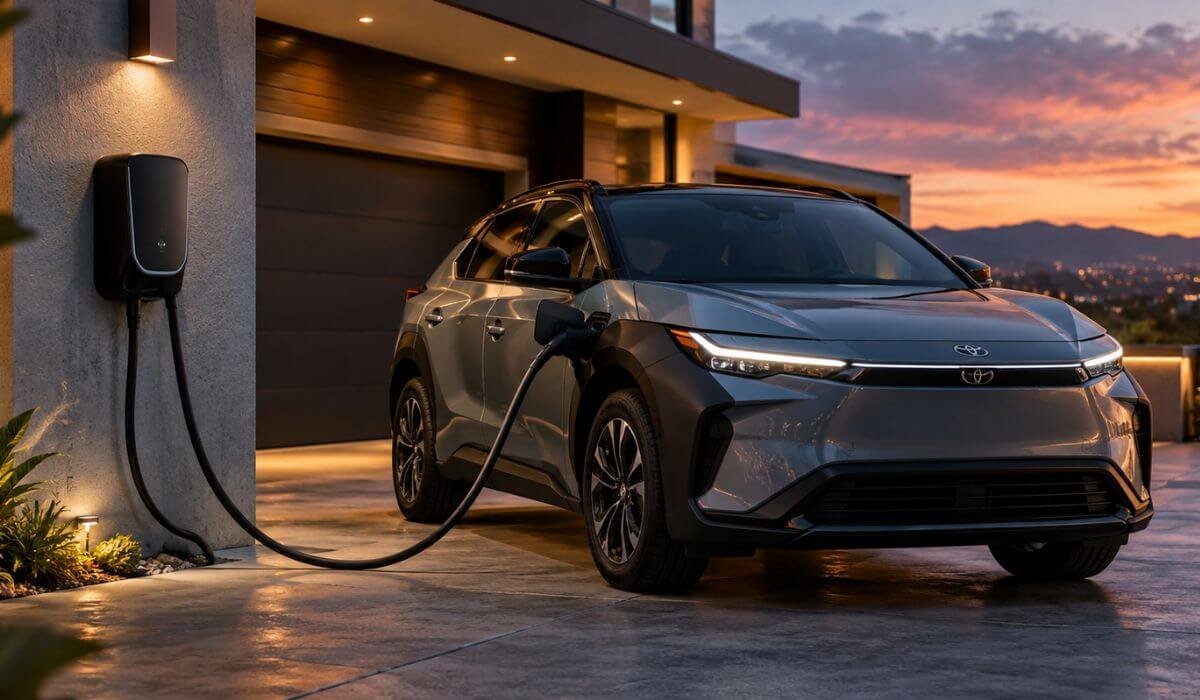
5 Best Home Chargers for Toyota bZ / bZ4X in 2026: Level 2 Charging Made Easy
Buying a home charger for a Toyota bZ or bZ4X becomes much easier once you know what your particular model can actually accept. The 2023–2025 bZ4X uses a J1772/CCS1 inlet for AC charging and has a 7.6-kW onboard AC charger. Under ideal 240V Level 2 conditions, Toyota estimates roughly 9.5 hours for a low-battery-to-full charge, although real charging time can vary with battery level, temperature and other conditions.
The 2026 Toyota bZ, which replaces the bZ4X name in the newer model range, changes the charging setup with a NACS port and an 11-kW onboard AC charger. That does not automatically make J1772 home chargers irrelevant. With the appropriate compatible adapter, a J1772 Level 2 charger can still be used, but the physical connection is different from the earlier bZ4X.
For this list, I focused on what actually matters when you charge at home: reliable Level 2 performance, sensible cable reach, installation flexibility, safety features and useful everyday controls. A higher amp rating alone does not make a charger better for the bZ4X. The smarter choice is the one that works properly with the vehicle’s charging hardware, fits your electrical setup and makes your normal overnight charging routine easier.
Best Home EV Chargers for Toyota bZ / bZ4X: Top 2026 Picks for Smart Level 2 Charging
#1. ChargePoint HomeFlex Level 2 EV Charger J1772
Best Toyota bZ4X Home Charger for 240V Level 2 Charging, Reliable J1772 Connection and Convenient Overnight Charging
#2. EMPORIA Level 2 EV Charger J1772
Smart Toyota bZ4X Charging Station with WiFi Energy Monitoring, 240V Home Charging and Flexible Scheduling
#3. Grizzl-E Level 2 EV Charger 40A
Durable Toyota bZ4X Level 2 EV Charger for Indoor and Outdoor Use with 40A Charging and Long-Reach Cable
#4. Leviton Level 2 Smart EV Charger
Toyota bZ4X Home Charging Station with 48A Capability, WiFi Control, Hardwired Installation and Smart AC Charging
#5. Lectron J1772 Level 2 EV Charger
Toyota bZ4X J1772 Home Charger with 240V Level 2 Charging, 23-Foot Cable and Permanent Hardwired Installation
Expert Tip
A 48A label can look impressive, but it is not the number I would use to choose a charger for a bZ4X. The car ultimately decides how much AC power it can take. For a 2023–2025 bZ4X, a dependable J1772 Level 2 charger with the right installation is more useful than paying extra simply for a higher-rated EVSE. If you have the newer 2026 bZ, check the NACS connection and J1772 adapter before buying. That small detail can save you from buying a charger that looks perfect on paper but does not connect the way you expected.
How We Chose These Toyota bZ / bZ4X Home Chargers
We did not put these five chargers together by copying a list of popular EV chargers and changing the vehicle name. The bZ4X’s actual charging hardware was the starting point.
First, we looked at connector compatibility. The 2023–2025 bZ4X uses J1772 for AC Level 2 charging, which is why every charger here provides a J1772 connection. The 2026 Toyota bZ uses NACS, but Toyota’s J1772 adapter keeps these chargers useful for owners who want to use existing J1772 equipment.
Then we looked at what actually matters once the charger is sitting in your garage. ChargePoint HomeFlex gives you a familiar plug-in setup and a well-established charging ecosystem. EMPORIA brings Wi-Fi connectivity and a long cable, which can be genuinely useful when the parking position is not right beside the electrical outlet. Grizzl-E takes a different approach with its rugged construction and indoor/outdoor design, making it a sensible choice when durability matters more than connected features.
The last two earned their place for different reasons. Leviton’s hardwired design makes sense for an owner who wants a permanent installation and smart-home connectivity. Lectron gives you a straightforward J1772 setup with a long 23-foot cable, which can solve a surprisingly common problem: the car is parked farther from the charger than the installer originally expected.
We also avoided treating maximum amperage as a ranking system. A charger rated at 48A is not automatically a better match for the bZ4X than a 40A unit. The vehicle’s onboard charger, your home’s electrical circuit and the installation method all matter. That is why this list includes different types of Level 2 chargers rather than five versions of the same high-amperage box.
Most importantly, these are not five identical recommendations wearing different brand names. Each one has a reason to be here, whether that is installation flexibility, smart monitoring, cable reach, ruggedness or a permanent hardwired setup. That is the difference we wanted this list to capture: which charger fits the way you actually use your bZ or bZ4X at home, not which specification looks biggest in an advertisement.
#1. ChargePoint HomeFlex Level 2 EV Charger J1772
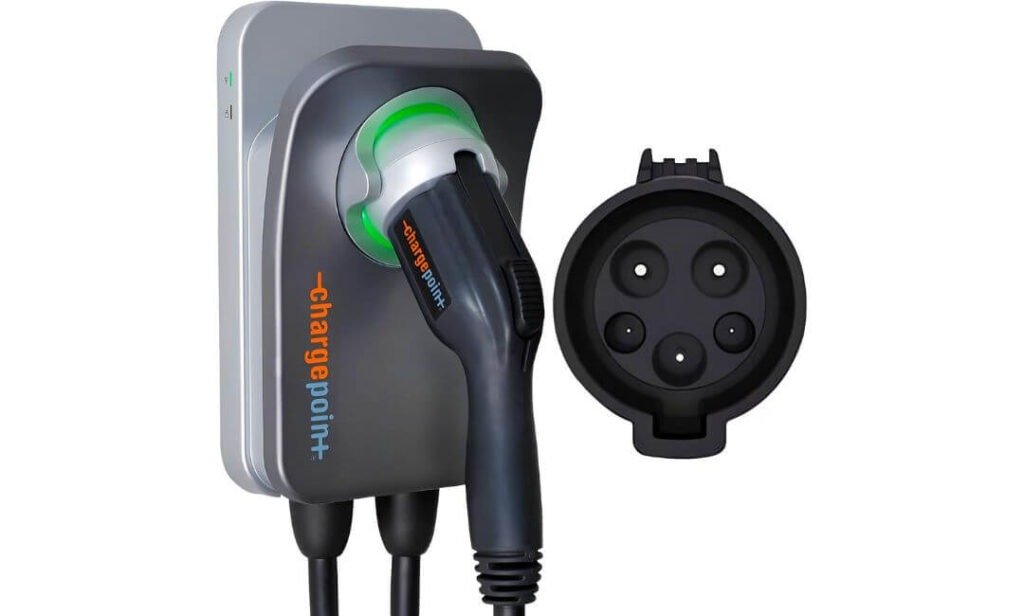
Quick Specs:
- Connector: J1772
- Plug: NEMA 14-50
- Output: Up to 40A with plug-in setup
- Voltage: 208/240V AC
- Cable: 23 feet
- Connectivity: Wi-Fi and ChargePoint app
- Certification: UL listed, ENERGY STAR certified
- Warranty: 3 years
- Installation: Plug-in or hardwired options
The first thing that stands out here is simple: the J1772 connector matches the AC charging setup used by the earlier bZ4X, so there is no adapter to hunt for before plugging in. The 23-foot cable is equally practical. In a real garage, that extra reach can mean the difference between parking normally and having to position the car almost perfectly beside the charger.
The NEMA 14-50 version also strikes a sensible balance for everyday home charging. It can deliver up to 40A, while the ChargePoint app lets you schedule charging, monitor sessions and manage the charger remotely. If your home does not already have a suitable 240V outlet, you will need an electrician to install the circuit and receptacle correctly rather than treating this like an ordinary household plug-in device.
What We Like
- 23-foot cable gives you useful reach when the bZ4X is not parked directly beside the charger.
- J1772 connector makes it a straightforward match for the bZ4X’s AC Level 2 charging.
- The ChargePoint app adds genuinely useful scheduling and charging controls.
- Adjustable charging settings make it easier to match the charger to your home’s electrical capacity.
- UL listing, ENERGY STAR certification and a 3-year warranty add confidence for long-term home use.
One Thing to Know Before Buying
The NEMA 14-50 plug-in version is limited to 40A. The higher 48A/50A charging configurations apply to the hardwired version, so don’t confuse the two when comparing listings.
Why We Put It First for the bZ4X
This charger earns the first position because it gets the important things right without turning the purchase into a specification contest. You get J1772 compatibility, long cable reach, adjustable charging, app control and flexible installation in one package.
More importantly, the 40A plug-in configuration makes sense for the bZ4X because the vehicle ultimately controls how much AC power it accepts. A higher-rated EVSE does not automatically make the car charge faster. For an owner who wants dependable overnight Level 2 charging and an easier garage setup, this is a well-rounded combination.
The Insider Pro-Tip
If you are buying the NEMA 14-50 version, pay attention to the electrical installation rather than the biggest amperage number shown in a listing. Have the circuit and receptacle installed correctly for the charging level you plan to use; ChargePoint specifies a 50A circuit for 40A charging with its plug-in setup.
And before mounting anything permanently, take the 23-foot cable and mentally trace its path from the charger to your bZ4X’s charge port. That small bit of planning can make everyday charging dramatically easier—and it is one of the reasons this particular configuration makes so much sense for a home garage.
#2. EMPORIA Level 2 EV Charger J1772
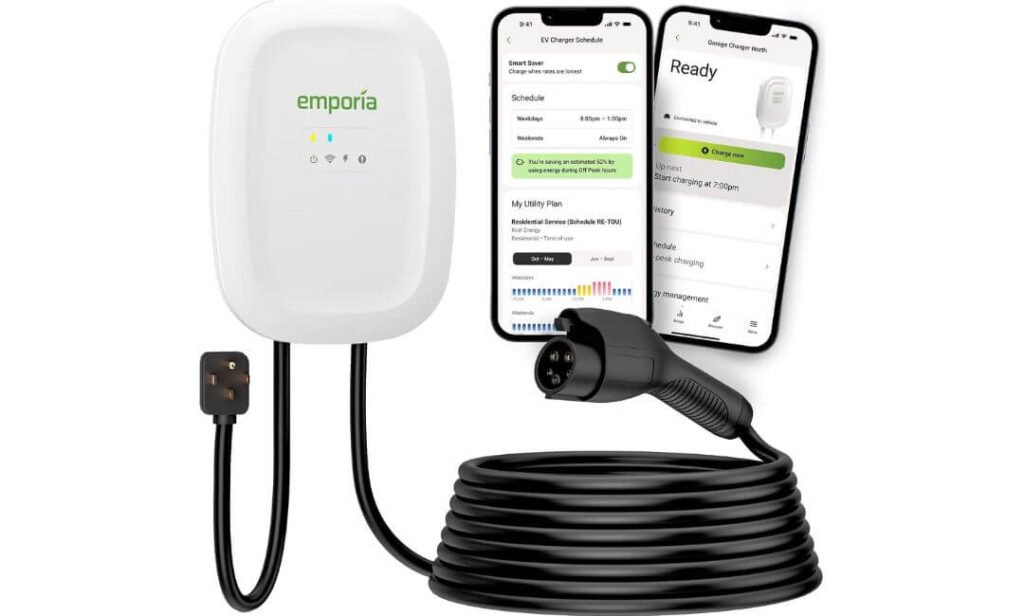
Quick Specs:
- Connector: SAE J1772
- Plug: NEMA 14-50
- Output: Up to 40A plug-in or 48A hardwired
- Voltage: 240V AC
- Cable: 25 feet
- Connectivity: 2.4 GHz Wi-Fi
- Enclosure: NEMA 4 weather-resistant
- Certification: UL listed and ENERGY STAR certified
- Installation: NEMA 14-50 plug-in or hardwired
- Warranty: 3 years
What makes this one interesting is that the 48A number is not really the reason to buy it for a bZ4X. The earlier bZ4X’s 7.6-kW onboard AC charger means the vehicle cannot simply take whatever maximum amperage the EVSE advertises. In other words, buying the 48A-capable version does not magically turn the bZ4X into a 48A-charging vehicle.
Where EMPORIA becomes genuinely useful is everything around that limitation. With the NEMA 14-50 setup, it can deliver up to 40A, while the charger can be hardwired for up to 48A if your electrical installation supports it. The bZ4X will communicate with the charger and draw what it is designed to accept. That makes this a particularly sensible choice if the charger may eventually be used with another EV that can actually take advantage of its higher output.
Then there is the part you notice after installation: 25 feet of cable. That is longer than many home setups need, but when the parking position is awkward, that extra reach suddenly stops feeling excessive. The 2.4-GHz Wi-Fi connection also gives you access to charging information and scheduling through the EMPORIA app, which is useful if you prefer charging to happen around your electricity rate rather than simply plugging in whenever you get home.
What We Like
- 25-foot cable gives the bZ4X plenty of reach without relying on an extension cable.
- 40A plug-in or 48A hardwired operation gives you a genuine choice in how you install it.
- Wi-Fi monitoring and scheduling are useful for owners who want to keep an eye on energy use rather than treating the charger as a simple wall box.
- NEMA 4 weather-resistant construction makes it suitable for garages as well as appropriately installed outdoor locations.
- UL listing and ENERGY STAR certification add meaningful reassurance for a permanently installed high-power electrical device.
One Detail Worth Knowing
The NEMA 14-50 version is limited to 40A, while the 48A setting requires hardwiring. For a bZ4X, the higher hardwired rating is mainly about giving the charger headroom for other compatible EVs in the future rather than making the bZ4X itself charge at 48A.
Why It Earns a Place Near the Top
EMPORIA stands out because it is more than a charger with a long cable. It gives you useful control over how charging happens, including scheduling and energy monitoring, while still keeping the physical installation straightforward.
For a bZ4X owner, I particularly like the combination of J1772 compatibility, 25-foot reach and adjustable output. You can install it around the needs of the car you own today without completely boxing yourself in if your next EV has a different charging requirement. That is a more practical kind of future-proofing than simply buying the highest amperage available.
The Insider Pro-Tip
If your bZ4X is the only EV you own, I would not pay extra or rewire your garage just to unlock the 48A hardwired rating. The vehicle’s onboard charger remains the limiting factor.
Instead, put that attention into getting the electrical work right and positioning the charger where the 25-foot cable naturally reaches the charge port without being stretched across a walking path. The long cable is one of EMPORIA’s genuinely useful advantages; use it to make charging easier, not just to advertise that the charger has a longer lead.
#3. Grizzl-E Level 2 EV Charger 40A
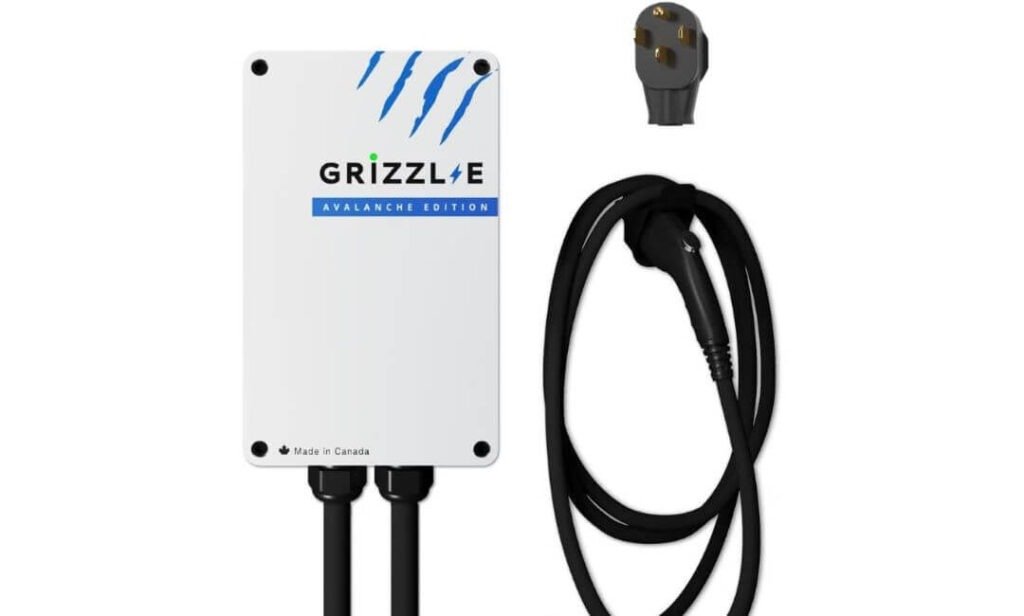
Quick Specs:
- Connector: J1772
- Plug: NEMA 14-50
- Output: Up to 40A / 9.6 kW
- Adjustable Current: 40A, 32A, 24A or 16A
- Cable: 24 feet
- Protection: Built-in GFCI, ground-fault, overcurrent, overvoltage and temperature protection
- Weather Rating: IP67
- Installation: NEMA 14-50 plug-in
- Certification: UL certified and ENERGY STAR certified
- Warranty: 5 years
Some home chargers try to win you over with apps and screens. This one takes the opposite route. The Grizzl-E Avalanche Edition is a heavy-duty 40A Level 2 charger with a metal enclosure, a 24-foot cable and IP67 protection. If your priority is having something on the wall that you can plug into every night without thinking about another app, account or Wi-Fi connection, that simplicity is actually the feature.
For the bZ4X, the 40A maximum output is more than enough capacity for its AC charging system, while the selectable 40A, 32A, 24A and 16A settings give you room to match the charger to the electrical circuit available at your home. That matters if your garage wiring is not set up for the highest setting. You are not locked into one charging level simply because the charger is capable of more.
The other standout is its 24-foot cable and IP67 protection. That combination makes much more sense once you think about where people actually park: outside the garage, at the far end of a driveway or on the opposite side of a two-car garage. The built-in protection against overcurrent, voltage problems, ground faults and overheating also gives this unit a more serious safety profile than a basic portable charging box.
What We Like
- 24-foot cable gives the bZ4X excellent reach without making you reposition the car every evening.
- 40A, 32A, 24A and 16A settings let you work around different circuit capacities.
- IP67 protection makes this a particularly practical option for exposed or outdoor installations.
- The metal enclosure feels purpose-built for long-term use rather than occasional portable charging.
- No Wi-Fi or app dependency means charging remains simple even if your home network is unavailable.
One Detail Worth Knowing
The charger is plug-in, but that does not mean every home is installation-free. If you do not already have a correctly installed NEMA 14-50 outlet and suitable circuit, an electrician will still be needed. The advantage is that once the proper outlet is there, the charger itself can simply be plugged in.
Why It Fits the bZ4X So Well
The Grizzl-E makes sense for the bZ4X owner who cares more about durability and straightforward charging than connected features. There is no need to open an app to start a charging session, and there is no dependence on Wi-Fi for the basic job the charger was bought to do.
Its adjustable current and 40A ceiling are also a good match for a bZ4X. Rather than paying attention to an oversized headline specification, you can select an appropriate setting for the home’s electrical circuit and leave the charger to do its job. Add the long cable, weather-resistant construction and extensive electrical protection, and you get a setup that feels particularly well suited to everyday garage use.
The Insider Pro-Tip
If your bZ4X will live in a garage with an existing NEMA 14-50 outlet, check the circuit rating before selecting 40A. The charger provides different current settings for a reason: 40A charging calls for a 50A circuit, while lower settings can be used with appropriately sized circuits.
And if you are deciding between this and a Wi-Fi charger, ask yourself one honest question: will you actually use the smart features? If the answer is no, the Grizzl-E’s lack of an app is not something you are missing—it is one less thing to manage. For an owner who simply wants to plug in the bZ4X, walk away and know the charger is built to handle the job, that can be a surprisingly valuable advantage.
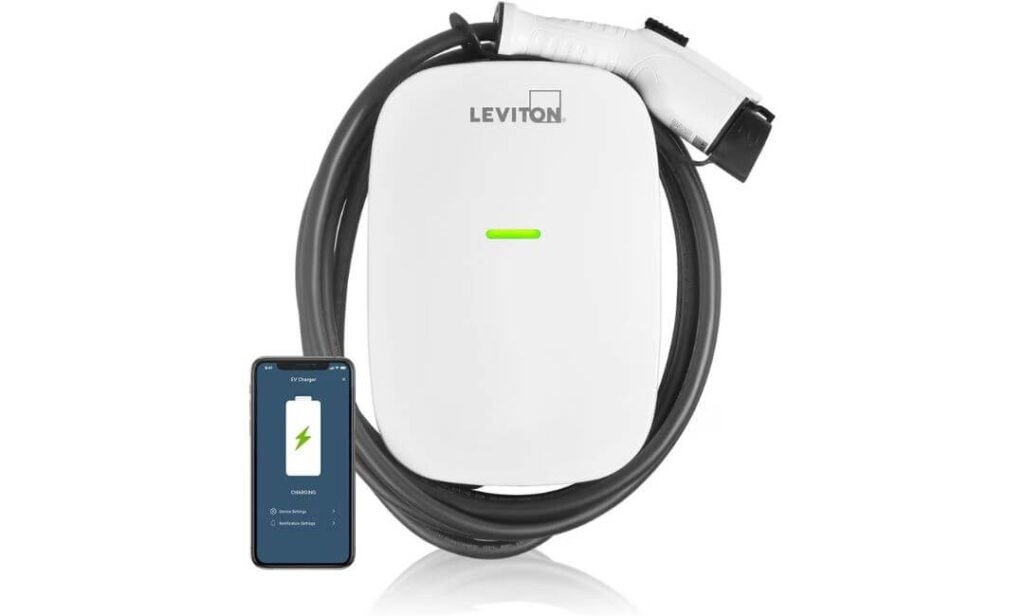
#4. Leviton Level 2 Smart EV Charger
Quick Specs:
- Connector: J1772
- Output: Up to 48A / 11.6 kW
- Voltage: 208/240V AC
- Cable: 18 feet
- Connectivity: Wi-Fi with My Leviton app
- Enclosure: NEMA 3R water-resistant
- Installation: Hardwired
- Electrical Requirement: 60A circuit
- Certification: UL and ENERGY STAR certified
- Access Control: Optional RFID
There is a point where a home charger stops being a simple plug-in accessory and becomes part of the house’s electrical system. That is where this Leviton model fits. It is a permanently hardwired 48A EVSE with an 18-foot cable, Wi-Fi connectivity and My Leviton integration, so the appeal is less about simply getting electricity into the bZ4X and more about having a polished, permanent charging setup.
For the bZ4X, though, I would keep the 11.6-kW figure in perspective. That is the charger’s maximum output, not what an earlier bZ4X can necessarily consume. The vehicle’s onboard AC charging hardware remains the limiting factor. What you are really buying here is a robust installation with plenty of capacity, smart controls and room for a future EV that may accept more AC power.
The outdoor capability is another genuine advantage. The NEMA 3R enclosure and cable designed to resist freezing and cracking make it suitable for an exposed installation when mounted correctly. And if your home already uses Leviton equipment, the My Leviton ecosystem can make this considerably more convenient than adding another standalone smart-home app.
What We Like
- My Leviton Wi-Fi control gives you scheduling and remote management without needing to interact with the charger physically.
- 48A capability provides useful headroom for a future EV with a higher AC charging limit.
- NEMA 3R enclosure makes indoor or suitable outdoor installation practical.
- The 18-foot cable provides good reach without becoming unnecessarily bulky.
- Optional RFID access control is a thoughtful feature if the charger is installed somewhere other people can access.
One Thing to Know Before Buying
This is a hardwired charger, so it is not the right choice if you simply want to use an existing NEMA 14-50 outlet. Installation requires a properly sized 60A circuit and professional electrical work.
Why It Earns a Spot on This bZ4X List
The reason to choose this one is not that the bZ4X needs 48A. It doesn’t. The attraction is the complete permanent setup: hardwired power, weather-resistant construction, Wi-Fi control and integration with the rest of a Leviton smart home.
That makes it particularly interesting for someone who is treating home charging as a long-term installation rather than a temporary solution. You can charge the bZ4X today while keeping a higher-capacity EVSE in place for whatever comes next.
The Insider Pro-Tip
Before ordering, look at your electrical panel, not just the charger. A 48A EVSE requires a substantial dedicated circuit, and the electrician needs to confirm that your service and panel have the capacity for the installation.
For a bZ4X owner, I would think of the extra capacity as future flexibility rather than extra charging speed today. If you already know you want a permanent wall-mounted charger and you value smart-home control, that distinction makes this model much easier to justify.
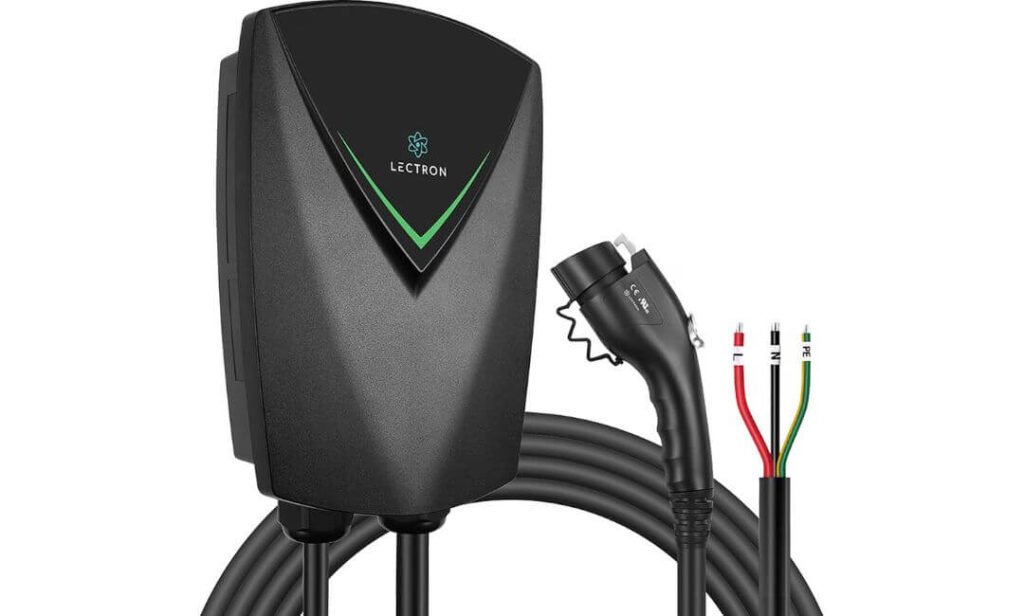
#5. Lectron NEXUS 48A Level 2 EV Charger
Quick Specs:
- Connector: J1772
- Output: Up to 48A / 11.5 kW
- Voltage: 240V AC
- Cable: 23 feet
- Installation: Hardwired only
- Weather Rating: IP66
- Safety: UL 2594, UL 2231 and UL 2251 certified, ETL listed
- Protection: Overcurrent, overvoltage, overheating and ground-fault protection
- Connectivity: No Wi-Fi or app
- Warranty: 3 years
There is something refreshingly simple about this one. It is built to charge the car, not to turn your garage into another smart-home dashboard. The J1772 connector makes it a direct match for the earlier bZ4X, while the 23-foot cable gives you enough freedom to park without worrying about whether the charge port will end up on the wrong side of the installation.
The 48A rating deserves some context, though. That is the maximum capability of the EVSE, not the amount a bZ4X will necessarily draw. The vehicle’s onboard AC charger decides its actual charging rate. So I would not buy this specifically because the box says 11.5 kW. I would buy it because you want a permanent hardwired installation, substantial electrical capacity and a charger that stays out of the way once it is installed.
Then there is the construction. IP66 weather protection, a heavy-duty cable and multiple electrical safety protections make it suitable for an indoor garage or a properly installed outdoor location. There is no app to configure, no Wi-Fi signal to troubleshoot and no subscription-style ecosystem to learn. You connect the car, and the charger gets on with the job.
What We Like
- 23-foot cable gives the bZ4X plenty of freedom when the parking position is not ideal.
- J1772 connector provides straightforward AC charging for compatible bZ4X model years.
- IP66 protection makes it a practical choice when the charger needs to live outside as well as inside.
- ETL-listed safety certifications and built-in fault protections provide reassurance for a permanently connected EV charger.
- No app or Wi-Fi requirement keeps everyday charging simple and independent of your home network.
One Detail Worth Knowing
This is hardwired only. There is no NEMA 14-50 plug to move between outlets, so you need a suitable dedicated circuit and professional installation. That makes it a permanent home-charging decision rather than a portable one.
Why It Still Makes Sense for the bZ4X
The appeal here is simplicity with serious electrical capacity. You are not paying for features you may never use, and you are not depending on Wi-Fi just to start a charging session. Once properly installed, it is essentially there whenever your bZ4X comes home.
The 48A capability also gives the installation some future headroom. Your bZ4X does not need to consume all of that capacity, but another EV you own later might. For someone planning to keep a permanent charger in the same garage for years, that is a more meaningful advantage than chasing a higher charging number for the current vehicle.
The Insider Pro-Tip
Because this is hardwired, decide where you want the charger before the electrician runs the circuit. The 23-foot cable gives you plenty of flexibility, but the smartest installation is still the one that keeps the cable off the main walking path and lets the connector rest naturally in its holder.
And don’t let the lack of an app put you off if you already use the bZ4X’s own charging controls. If your goal is simply come home, plug in, wake up charged, removing another app and another Wi-Fi dependency can actually make the ownership experience easier.
Best Toyota bZ4X Home Charger: Level 2 Charging Compared
Buying Guide for Toyota bZ4X Home Charging: What Actually Matters Before You Install a Level 2 Charger
A good home charger should make owning the bZ4X easier, not turn charging into another technical project. The important part is matching the vehicle’s AC charging capability, connector, electrical circuit and parking setup rather than buying the highest-rated EVSE you can find.
For the 2023–2025 bZ4X, the situation is fairly straightforward: it uses a J1772 connector for AC charging and has a 7.6-kW onboard charger. The newer 2026 Toyota bZ changes to NACS and has a higher-capacity onboard AC system, so owners of that model need to pay attention to the connector and the included J1772 adapter when considering a J1772 home charger.
Why Level 2 Charging Makes Sense for Everyday bZ4X Use
Level 2 is the point where home charging becomes genuinely practical for a daily-driven EV. Instead of relying on a standard 120V outlet and waiting much longer to recover the energy used during the day, a properly installed 240V Level 2 charger can put considerably more energy back into the battery while the car is sitting at home.
For most owners, that means you can arrive home, plug in and let the car charge overnight. You do not need to reach 100% every evening either. If your normal routine only uses part of the battery, a scheduled overnight session can replace that energy without requiring a trip to a public charging station.
There is also a useful distinction between the charger and the vehicle here. The EVSE may advertise 40A, 48A or even higher capability, but that does not mean the bZ4X will automatically draw that amount. The vehicle’s onboard charger determines how much AC power it can accept.
That is why a well-matched 32A or 40A Level 2 setup can make much more sense than buying a significantly higher-rated charger simply because its specification looks impressive.
Check the Connector Before You Buy
For the earlier bZ4X, J1772 is the key connector to look for when shopping for an AC home charger.
The five chargers in this guide use J1772, which makes them directly relevant to the 2023–2025 bZ4X. The charging cable plugs into the vehicle’s AC inlet, while the charger itself handles the electrical communication and safety checks required before charging begins.
The 2026 Toyota bZ is different because Toyota moved to NACS. That does not automatically make a J1772 charger useless, but it does mean the connection requires the appropriate J1772-to-NACS adapter.
Before ordering, check:
- Your exact model year
- The connector fitted to your vehicle
- Whether a compatible adapter is included or required
- The maximum AC charging power your vehicle can accept
- Whether the charger you are considering is J1772 or NACS
This is one of those checks that takes less than a minute but can prevent an expensive compatibility mistake.
Choose Power Based on Your Electrical Setup, Not the Advertisement
Amperage is useful, but it needs context.
A charger may offer several settings, and the right setting depends on both the vehicle and the home’s electrical circuit. You should never select an amperage simply because the charger supports it.
| Charger Setting | Typical Circuit Requirement | Where It Makes Sense |
|---|---|---|
| 16A | 20A circuit | Lower-capacity electrical setups |
| 24A | 30A circuit | Moderate charging requirements |
| 32A | 40A circuit | Very practical Level 2 setup |
| 40A | 50A circuit | Higher-capacity home charging |
| 48A | 60A circuit | Hardwired higher-output EVSEs |
These circuit relationships assume the continuous-load requirements applicable to EV charging are being followed. Your electrician should determine the final circuit, breaker, wire size and installation method for your home.
For a bZ4X, there is little reason to obsess over a 48A or 50A label. If the vehicle cannot use all that available AC power, the extra capability belongs to the charger, not the car.
Where a higher-rated unit can still be worthwhile is future flexibility. If you replace the bZ4X with another EV later that can accept more AC power, a higher-capacity hardwired EVSE may already be in place.
Cable Length Can Matter More Than You Expect
Cable length looks like a minor specification until you actually park the car.
A charger mounted near the front of a garage might work perfectly with an 18-foot cable. Move the charging station to the side wall, park the bZ4X nose-in instead of backing in, or use the other parking space, and suddenly those extra few feet become very useful.
The chargers in this roundup range from 18 to 25 feet, which gives you several approaches:
- 18 feet: sensible for a well-positioned permanent installation.
- 23 feet: useful for larger garages and less predictable parking positions.
- 24 feet: particularly helpful when the charger may sit farther from the vehicle.
- 25 feet: maximum flexibility in this group, especially for awkward layouts.
Do not automatically buy the longest cable available, though. Extra cable takes up space and needs somewhere sensible to hang. The best length is the one that reaches the charge port without stretching across a walkway or leaving a large loop on the garage floor.
Think About Where the Charger Will Live
If the charger is going inside a dry garage, weather protection may not be your biggest concern. For a driveway or partially exposed installation, it becomes much more important.
Look at the enclosure rating and the manufacturer’s installation instructions rather than assuming that every charger advertised as “outdoor” can simply be mounted anywhere.
In this lineup, the rugged Grizzl-E with its IP67 rating takes a particularly durability-focused approach, while the Leviton and Lectron options also provide weather-resistant designs for suitable installations.
For an outdoor setup, pay attention to:
- Water and dust protection
- Temperature range
- Cable flexibility in cold weather
- Proper mounting height
- Protection from standing water
- How the connector is stored when not charging
- Whether the electrical connection itself is protected correctly
The enclosure rating protects the equipment; it does not replace proper electrical installation.
Decide Whether You Actually Need Smart Charging
Wi-Fi can be genuinely useful, but it is not automatically better.
A smart charger can let you schedule charging, monitor energy consumption, check charging sessions and control the unit remotely. That is valuable if your utility has time-of-use rates or if you simply like keeping track of household energy use.
The ChargePoint and EMPORIA options, for example, make connected charging a central part of their experience. The Leviton option goes a step further for households already using the My Leviton ecosystem.
But there is another perfectly reasonable approach: keep it simple.
The Grizzl-E and Lectron models do not depend on an app for everyday charging. If your routine is simply “plug in when I get home and unplug in the morning,” you may actually prefer having fewer connected devices in your life.
Before paying more for smart features, ask yourself:
- Do I have time-of-use electricity pricing?
- Do I want to monitor kWh consumption?
- Will I actually use scheduled charging?
- Do I already use a compatible smart-home ecosystem?
- Is reliable charging more important to me than remote controls?
If the answers are mostly no, a well-built non-smart charger can be the more sensible choice.
Do Not Ignore Electrical Panel Capacity
This is the part I would take most seriously before purchasing any 40A or 48A home charger.
A Level 2 EV charger is a large continuous electrical load. Your home needs a suitable dedicated circuit, and the electrical panel must have enough capacity to support the installation alongside everything else already running in the house.
An electrician should evaluate:
- Existing main service capacity
- Available breaker space
- Existing electrical loads
- Required circuit amperage
- Appropriate conductor size
- Breaker compatibility
- Charger installation location
- Grounding and protection requirements
- Whether local permits or inspection are required
A house having an empty breaker position does not automatically mean it has enough electrical capacity for an EV charger. Those are two different questions.
This is also where plug-in and hardwired chargers differ. A NEMA 14-50 charger still requires the correct 240V circuit and receptacle. “Plug-in” means the EVSE connects to the installed receptacle; it does not mean the electrical work can be skipped if the outlet does not already exist.
Plug-In or Hardwired: Which Setup Fits Better?
There is no universal winner here.
A NEMA 14-50 plug-in charger makes sense if you already have a properly installed receptacle in the right location. It can also make future replacement or removal easier.
A hardwired charger is more permanent and can support higher charging configurations. It is particularly attractive if you are building a dedicated charging point and do not need the ability to move the EVSE later.
For the chargers in this article:
- ChargePoint: flexible plug-in/hardwired configurations.
- EMPORIA: NEMA 14-50 plug-in or hardwired.
- Grizzl-E: straightforward NEMA 14-50 plug-in setup.
- Leviton: hardwired.
- Lectron NEXUS: hardwired only.
If you are starting from an empty wall with no suitable 240V circuit, let the electrician determine the installation method before you order the charger. That can save you from buying a unit that does not fit the electrical plan you ultimately need.
What About Surge Protection and Built-In Safety?
A quality EVSE should have appropriate protection against electrical faults, but it is important to understand what that means.
The chargers in this roundup provide different combinations of protections such as ground-fault, overcurrent, overvoltage and over-temperature protection. These are meaningful safety features because EV charging involves a high continuous electrical load for potentially several hours.
Smart controls are not a substitute for electrical protection, and an app cannot compensate for an incorrectly installed circuit.
For that reason, I would put proper certification, correct circuit sizing and professional installation ahead of flashy software features when comparing home chargers.
Do You Need a 32A, 40A or 48A Charger for a bZ4X?
For an earlier bZ4X, the answer is simpler than many charger listings make it sound.
The vehicle’s 7.6-kW onboard AC charger is the limiting factor, so moving from a properly installed 32A setup to a 48A-capable EVSE does not make the vehicle suddenly accept 48A.
That does not make higher-rated chargers pointless. A 48A unit can provide future-proofing, especially if you expect another EV to use the same installation later.
But if your only goal is to charge the bZ4X reliably overnight, focus on:
correct connector + suitable 240V circuit + sensible cable length + safe installation
rather than paying extra simply for the largest amperage printed on the charger.
Installation, Permits and the Part You Should Not DIY
Even when a charger is marketed as easy to install, the electrical circuit is the serious part of the job.
If a suitable 240V circuit and receptacle already exist, plugging in a compatible portable or NEMA 14-50 EVSE may be straightforward. Creating that circuit, upgrading a panel, running new conductors or installing a hardwired 48A charger is different.
Local electrical requirements vary, so check with a qualified electrician and your local authority about permits, inspections and code requirements.
A proper installation should leave you with:
- A correctly sized dedicated circuit
- Appropriate breaker protection
- Correct wire and termination sizing
- Proper grounding
- A receptacle rated for the intended continuous EV load, where applicable
- Charger mounting that follows the manufacturer’s instructions
- Cable storage that prevents damage and trip hazards
That is not the glamorous part of buying an EV charger, but it is the part that determines whether the setup remains dependable years after the excitement of the new bZ4X wears off.
Installation Considerations and Practical Tips for a Toyota bZ4X Home Charger
Installing a Level 2 charger is not difficult in principle, but the electrical work behind it deserves more attention than the charger itself. The bZ4X may simply plug into the finished installation, yet the circuit supplying that charger can carry a substantial continuous load for several hours at a time.
The safest approach is to treat the charger as part of your home’s electrical system, not as an ordinary appliance. Whether you choose a plug-in NEMA 14-50 model or a hardwired unit, the installation should match the charger’s required amperage, your home’s available electrical capacity and local electrical requirements.
Do You Need an Electrician or Can You Install It Yourself?
The answer depends on what is already installed at your home.
If you already have a correctly installed, suitable 240V NEMA 14-50 receptacle, and the charger is designed for plug-in use, connecting the EVSE itself may be as simple as mounting it and plugging it in. That does not mean you should assume the existing outlet is automatically suitable for continuous EV charging. Its wiring, breaker, grounding and circuit capacity still need to be appropriate.
Call a qualified electrician when you need to:
- Install a new 240V circuit.
- Add or replace a NEMA 14-50 receptacle.
- Install a hardwired charger.
- Run new cable from the electrical panel to the garage or driveway.
- Upgrade the electrical panel or main service.
- Determine whether the existing service can handle the additional continuous load.
- Install charging equipment in a location requiring new outdoor electrical work.
- Confirm local permit and inspection requirements.
For the Leviton and Lectron NEXUS, professional installation is particularly important because both are hardwired configurations. The Leviton requires a 60A circuit for its 48A configuration, while the Lectron is also designed as a permanent hardwired installation.
The Most Common Installation Mistakes
Most charging problems are not caused by the bZ4X. They come from treating EV charging like an ordinary plug-in appliance.
One common mistake is choosing the charger first and thinking about the circuit afterward. The better order is to understand your electrical capacity, decide where the charger will be mounted, then choose the appropriate charging configuration.
Another is assuming that a NEMA 14-50 outlet automatically means 40A charging is available. The outlet, wiring, breaker and installation all need to be rated appropriately for the intended continuous EV load.
Other mistakes worth avoiding include:
- Using an extension cord between the charger and the vehicle.
- Using an undersized or unsuitable receptacle.
- Selecting the maximum amperage without checking the circuit.
- Installing the charger where the cable becomes a trip hazard.
- Running the cable through a location where vehicles can repeatedly drive over it.
- Mounting an outdoor charger without following its weather-protection requirements.
- Ignoring the electrical panel’s existing loads.
- Assuming an available breaker slot means the panel has sufficient capacity.
- Leaving the connector lying on the ground where dirt and moisture can accumulate.
The simple rule is do not make the charger compensate for an electrical installation that was never designed for it.
Check the Electrical Panel Before Buying a High-Output Charger
A panel assessment is especially important if you are considering a 40A or 48A charger.
An electrician should look beyond whether there is physical room for another breaker. They need to consider the home’s overall electrical load, including air conditioning, electric heating, water heating, cooking equipment, dryers and other large loads that may already be using the service.
A 48A EV charger can represent a substantial continuous load. If the existing service does not have enough capacity, the solution may involve load management, a different charging setting, a panel upgrade or, in some cases, a larger service upgrade.
That is why I would not put a specific upgrade cost into a buying decision before the electrician has inspected the property. Every installation is different. The distance from the panel, wall construction, conduit requirements, existing service capacity and local code can all change the final work involved.
Permits and Local Electrical Requirements
Electrical requirements vary by location, so do not assume that an installation that worked for a neighbour automatically follows the same rules at your property.
Depending on where you live, installing a new EV charging circuit may require a permit, inspection or both. Your electrician should be able to tell you what applies locally and whether the utility or local authority has additional requirements.
This is particularly important for:
- New 240V circuits
- Hardwired EV chargers
- Panel modifications
- Service upgrades
- Outdoor installations
- Detached garages
- Long underground cable runs
Keeping the paperwork and inspection records can also be useful later if you sell the property or need to troubleshoot the electrical installation.
Indoor Installation: Small Details Make a Big Difference
A garage is usually the simplest location, but placement still matters.
Mount the charger where the cable can reach the bZ4X’s charge port without being stretched tightly or crossing the normal walking route. The connector should have a dedicated holder or dock so it is not left hanging from the vehicle or sitting on the floor.
Before drilling holes, actually park the bZ4X in the position you expect to use most often. Then imagine the cable running from the charger to the charge port.
That quick test can reveal problems that look invisible on a wall-mounted installation plan.
Also leave enough room around the charger for ventilation, inspection and maintenance, and follow the manufacturer’s mounting clearances rather than improvising the installation.
Outdoor Installation: Protect the Equipment and the Connection
Outdoor charging is completely practical when the equipment and electrical installation are designed for it. The important distinction is that weather-resistant does not mean weather-proof under every possible installation condition.
Look at the charger’s enclosure rating and follow its mounting instructions. The Grizzl-E’s IP67 enclosure, for example, gives it a particularly strong weather-protection specification, while other models in this guide use different enclosure ratings.
For an outdoor bZ4X charger:
- Mount it where water cannot collect around the electrical connection.
- Keep the connector in its supplied holder when it is not plugged into the vehicle.
- Avoid locations where the cable can sit in standing water.
- Protect the charger from repeated vehicle impact.
- Keep the cable away from sharp edges and areas where it can be driven over.
- Follow the manufacturer’s instructions for mounting height and orientation.
- Make sure the electrical circuit and outdoor components meet local requirements.
And don’t overlook winter conditions. A cable that becomes excessively stiff in cold weather can be frustrating even if the charger itself continues to work. Models that specifically account for cold-weather cable performance can be worth considering if the charger will spend much of its life outdoors.
Plug-In Versus Hardwired Installation
The choice is more than a matter of convenience.
A plug-in charger gives you flexibility. If you move homes, replace the EVSE or want to remove the charger later, the installation can be easier to adapt. But you still need a properly installed receptacle and circuit.
A hardwired charger creates a cleaner permanent installation and can support higher-output configurations. It is often the better approach when the charger has a dedicated location and you expect to keep it there for years.
For this particular roundup, that difference is significant:
- ChargePoint HomeFlex: available in plug-in and hardwired configurations.
- EMPORIA: can be used with a NEMA 14-50 setup or hardwired.
- Grizzl-E: designed around a NEMA 14-50 plug-in setup.
- Leviton: hardwired installation.
- Lectron NEXUS: hardwired installation.
There is no reason to hardwire simply because it sounds more “professional.” Choose it because your electrical plan, location and long-term ownership plans actually benefit from it.
A Final Installation Check Before You Plug In
Before the first charging session, make sure the installation has been completed according to the manufacturer’s instructions and applicable electrical requirements.
A sensible final check includes:
- Correct breaker and circuit configuration.
- Proper grounding.
- Secure electrical connections.
- Charger mounted firmly.
- Cable routed safely.
- Connector stored correctly.
- No signs of heat, damage or loose connections.
- Charging current set appropriately for the circuit.
- Outdoor equipment mounted according to its weather rating.
- Any required inspection or permit process completed.
Then start with a normal charging session and pay attention to how the setup behaves.
A good installation should feel almost boringly uneventful. You plug in the bZ4X, the charger starts, the vehicle charges, and the next morning everything is exactly where you left it. That’s what you want from home charging—not a complicated electrical project that demands your attention every night.
Real-World Toyota bZ4X Charging Tips for Easier Overnight Charging and Lower Energy Waste
Once the charger is installed correctly, the experience should become almost invisible. You should not have to think about charging every time you drive home. A sensible routine is to plug in when you normally park, let the vehicle charge during the hours that make sense for your household, and leave with the amount of energy you actually need.
The biggest gains usually come from good habits rather than buying the most powerful charger. A correctly timed overnight session, sensible charge targets and occasional monitoring can make home charging both easier and more predictable.
Set Up an Overnight Charging Routine
Overnight charging is one of the simplest ways to make Level 2 home charging work around your life.
If you normally arrive home in the evening, connect the bZ4X and use either the vehicle’s charging schedule or the charger’s scheduling system, depending on the equipment you choose. The idea is not to keep the vehicle connected and actively charging for no reason; it is to let charging happen during the window that suits your driving schedule and electricity rate.
A practical routine looks like this:
- Plug in when you get home rather than waiting until bedtime.
- Set the charging schedule if your utility offers cheaper off-peak electricity.
- Let the car remain connected while the scheduled session runs.
- Check the expected departure time rather than obsessing over the charging percentage every few hours.
- Unplug when you leave, or leave the vehicle connected if your normal charging routine and manufacturer’s guidance support it.
For many owners, this becomes a simple plug-in-and-forget routine.
Use the bZ4X’s Charging Schedule Before Paying for More Hardware
One thing that gets overlooked in charger comparisons is the vehicle itself.
You do not necessarily need an expensive smart charger just to schedule charging. Depending on the model year and vehicle settings, the bZ4X can provide its own charging controls, so it is worth learning what your particular vehicle can already do before paying extra for features you may duplicate.
This is especially relevant with the Grizzl-E and Lectron options in this article. Neither depends on Wi-Fi or an app for basic operation, so the vehicle can remain responsible for the timing while the charger simply supplies power safely.
That can actually be a very clean setup: the car handles the schedule, the EVSE handles the electricity.
Make Smart Charging Features Work for You
If you choose a connected charger such as ChargePoint, EMPORIA or Leviton, there is more you can do than simply start and stop charging.
Useful features can include:
- Scheduled charging during lower-cost electricity periods.
- Monitoring how much energy a charging session uses.
- Checking whether the vehicle is actively charging.
- Reviewing charging history.
- Adjusting available charging current where supported.
- Managing the charger remotely.
- Connecting charging behavior with your household energy routine.
The important part is not to turn every feature on just because it exists.
If your electricity rate is the same throughout the day, scheduling may offer little financial benefit. If your utility uses time-of-use pricing, however, shifting charging away from expensive periods can make a meaningful difference over many months.
Watch Energy Use Instead of Chasing Charging Speed
The most useful number to monitor is often energy consumed, not the advertised miles per hour on the charger.
A charger may tell you how much electricity was delivered during a session, while the vehicle can help you understand how that energy relates to your driving. Over time, those numbers give you a much better picture of your actual charging habits.
For example, you might notice that your typical weekday driving only uses a modest portion of the battery. In that situation, there is little reason to maximize every charging session. You can simply replace the energy you used and leave the car ready for the next day.
Smart charger apps can make this easier by showing:
- Energy delivered in kWh
- Charging duration
- Charging session history
- Current charging status
- Estimated charging cost, where supported
- Scheduled charging activity
Treat those numbers as household energy information, not as laboratory measurements. Actual energy drawn from the wall can differ from the energy that ultimately reaches the battery because charging involves conversion losses.
Learn How Long Your Normal Charging Sessions Actually Take
You do not need to calculate charging time from scratch every night.
After a few weeks, you will know roughly how much energy your normal driving consumes and how long the vehicle typically needs to replace it. That is far more useful than relying on a generic claim such as “X miles per hour.”
Charging time depends on several things:
- Starting battery level.
- Battery temperature.
- Vehicle charging limits.
- Available AC power.
- Electrical circuit capacity.
- Charging losses.
- Whether the vehicle is already close to full.
For the earlier bZ4X, Toyota’s 7.6-kW onboard AC charger is an important limitation to remember. Installing an EVSE capable of 48A does not make the vehicle accept 48A. The vehicle determines the actual AC charging rate.
That is why two chargers with very different headline ratings can produce a very similar real-world result when connected to the same bZ4X.
Use the Long Cable Properly
The 23-, 24- and 25-foot cables in this roundup are there for a reason, but longer does not automatically mean better.
Position the charger so the cable reaches the charge port with a gentle path and minimal tension. Avoid leaving a large coil directly beneath the vehicle, especially where the tires could run over it.
When charging is finished:
- Return the connector to its holder.
- Keep the cable away from standing water.
- Avoid sharp bends.
- Do not drag the connector across concrete unnecessarily.
- Keep it away from vehicle tires and normal foot traffic.
This sounds basic, but these little habits can make a noticeable difference to the condition of a charging cable over years of daily use.
Don’t Charge at Maximum Power Just Because You Can
This is one of the easiest habits to get wrong.
If a charger supports several current settings, there is no requirement to use the highest one every time. If your normal overnight window is long enough, a lower setting may comfortably replace the energy you used during the day.
For example, if the bZ4X has most of the night available to charge, there is little practical benefit in pushing the electrical system harder simply to finish earlier—unless you actually need that faster turnaround.
The charger should be set according to the circuit and installation requirements, and any adjustable current setting should be used within the limits established by the manufacturer and electrician.
Keep an Eye on the First Few Charging Sessions
The first week is a good time to pay attention.
You are looking for a boring, repeatable pattern:
plug in → charging starts → expected power is delivered → session finishes normally → vehicle is ready when you need it.
If you notice repeated interruptions, unexpected charging stops, unusually warm electrical components, error messages or a receptacle that appears damaged or overheated, stop treating it as a software problem. Electrical issues deserve an electrician’s attention.
Likewise, if Wi-Fi drops on a smart charger but the vehicle continues charging normally, that is a very different problem from the charger repeatedly stopping the electrical session.
Build the Routine Around Your Actual Driving
There is no prize for keeping the bZ4X at a particular percentage every night if your driving routine does not require it.
If you drive a short distance on weekdays, you may only need occasional overnight charging. If you regularly travel long distances, your routine may naturally involve longer charging sessions.
The best home-charging routine is therefore the one that matches your real mileage, your electricity plan and your parking schedule.
That is also why I would not judge these five chargers purely by maximum output. For everyday bZ4X ownership, reliable overnight charging, convenient cable reach, correct electrical installation and sensible scheduling are often much more valuable than a specification you rarely use.
FAQs About Toyota bZ / bZ4X Home Charging
Can I use a J1772 home charger with a 2026 Toyota bZ, or do I need to replace my charger because it uses NACS?
Yes. You do not automatically need to replace a J1772 home charger. The important change is that the 2026 Toyota bZ uses a NACS vehicle inlet, whereas the earlier bZ4X uses J1772 for AC charging. Toyota provides a J1772 adapter for using J1772 charging equipment with the newer bZ.
That makes the five chargers in this article particularly interesting for owners who may already have J1772 equipment. The connection is different, but the charger itself does not suddenly become obsolete. The sensible approach is to confirm that you have the correct Toyota-approved adapter for your model year and then follow the vehicle and adapter’s charging instructions.
The bigger mistake would be buying a new charger purely because you saw “NACS” on the 2026 specification sheet without checking what charging equipment you already have. Connector compatibility and charging capability are two separate questions.
Is a 48A home charger actually better for a Toyota bZ4X than a 32A or 40A charger?
Not necessarily, and this is one of the easiest things to misunderstand when comparing EV chargers.
The earlier Toyota bZ4X has a 7.6-kW onboard AC charger, so the vehicle determines how much AC power it can actually accept. A 48A EVSE can be perfectly useful, but the extra capacity belongs to the charger—it does not force the bZ4X to charge at 48A.
For most owners, the better question is:
- Is the charger J1772 compatible?
- Is the electrical circuit correctly sized?
- Does the cable comfortably reach the car?
- Will you use the smart features?
- Is the charger going to remain useful if you change EVs later?
A 40A charger can therefore be a completely sensible choice for a bZ4X. A 48A hardwired unit may make more sense if you are installing the equipment for the next EV as well as the current one.
Why would someone choose a simple Grizzl-E or Lectron charger instead of a Wi-Fi model for the bZ4X?
Because not every useful charging feature needs an internet connection.
A smart charger is valuable when you genuinely want remote control, charging history, energy monitoring or scheduled charging through an app. But if your routine is simply to plug the bZ4X in when you get home and let it charge overnight, Wi-Fi may not improve your everyday experience very much.
There is also a nice bit of simplicity here: the vehicle itself can handle charging-related scheduling, depending on model and settings. That means a straightforward EVSE can supply the power while the car controls when it actually charges.
For someone who does not care about energy dashboards, the absence of an app is not necessarily a weakness. It can mean one fewer device, account and Wi-Fi connection to troubleshoot.
Does installing a 48A or 40A Level 2 charger mean I need to upgrade my home’s electrical panel?
Not automatically. The panel needs to be assessed, not guessed.
A charger is a continuous electrical load, so an electrician needs to look at the home’s existing service, panel capacity, other major loads and the proposed charging circuit. Having an empty breaker position does not by itself prove that the home has enough electrical capacity.
Depending on the property, the answer could be:
- Existing service is sufficient.
- A dedicated circuit can be added without a major upgrade.
- A lower charging setting is more appropriate.
- Load management may be useful.
- A panel or service upgrade may be necessary.
This is also why I would not put a fixed installation cost into your budget before an electrician sees the property. A charger installed 10 feet from the panel is a very different job from one requiring a long run through a finished garage, exterior wall or detached structure.
What is the smartest way to use a Toyota bZ4X home charger if I want lower electricity costs without constantly managing it?
Set up the charging routine once, then stop thinking about it.
If your utility offers time-of-use pricing, schedule charging for the cheaper period using the vehicle or a compatible smart charger. With ChargePoint, EMPORIA or Leviton, you can use connected features to monitor sessions and schedule charging; with simpler chargers, the vehicle can handle the timing where supported.
The useful part is knowing your actual routine rather than blindly charging at maximum power every night. If you normally use only a portion of the battery during the day, you do not need to force the charger to deliver its maximum capability just because it can.
After a few weeks, look at your charging history and ask a much more useful question than “How fast is my charger?”
How much electricity does my normal driving actually require?
That number tells you far more about your real ownership costs. It also makes it easier to decide whether smart charging, off-peak scheduling or a higher-capacity EVSE is genuinely worth paying for.
Final Thoughts: Choosing the Right Home Charger for Your Toyota bZ or bZ4X
The right home charger for a Toyota bZ or bZ4X is not necessarily the one with the highest amperage, the longest list of app features, or the biggest number printed on the box. After looking at the actual charging hardware, installation requirements and everyday use, the more useful question is much simpler: which charger fits the way you park, drive and charge at home?
For the 2023–2025 bZ4X, a dependable J1772 Level 2 charger paired with a properly installed 240V circuit is already a very practical setup. The vehicle’s 7.6-kW onboard AC charging capability means there is little reason to buy a higher-output EVSE purely in the hope of making the bZ4X charge dramatically faster. With the 2026 Toyota bZ, the situation changes because of the NACS inlet and higher onboard AC capability, but that does not make existing J1772 equipment useless when the appropriate adapter is used.
The bigger decision is therefore about the charger around the car, not just the number on its specification sheet. A long cable can make daily parking much easier. Weather protection matters if the unit is outside. Wi-Fi can be genuinely useful if you want charging history and scheduling, but it is unnecessary if you prefer a simple plug-in routine. And if you are installing a permanent hardwired charger, it is worth thinking beyond today’s bZ4X and considering whether the equipment will still make sense with your next EV.
What Matters Most After Installation
A good home-charging setup should eventually become boring.
You park, connect the car, charging starts when you want it to, and the vehicle is ready when you leave. There should be no need to constantly watch charging speeds, restart the charger, move cables around or wonder whether the electrical circuit can handle the load.
That is why I would put these things ahead of headline amperage:
- Correct connector and model-year compatibility
- A properly sized electrical circuit
- Cable length that genuinely suits your parking position
- Weather and safety protection appropriate for the installation
- Smart features only if you will actually use them
- Enough charging capacity for your current vehicle and likely future EV
The most expensive charger is not automatically the most sensible one. A properly installed 40A charger that you use effortlessly every night can be a better ownership experience than a 48A unit whose extra capability you never need.
The Bottom Line for bZ and bZ4X Owners
If your priority is easy everyday charging, focus on reliability and installation first. If you want charging data and scheduled charging, a smart model adds useful control. If your garage or driveway is exposed to weather, give proper attention to enclosure protection and cable storage. And if you are already planning a new electrical circuit, considering future EVs before the electrician starts work can save you from doing the same installation twice.
Most importantly, do not let a 32A, 40A or 48A label make the decision for you. The car, electrical installation and your driving routine all matter.
Once those three pieces line up, home charging becomes exactly what it should be: something you set up once and barely have to think about again.
Also Check:


