Best Double DIN Head Units (2026): Car Stereo With Big Screens & Wireless CarPlay
If you are replacing a factory radio, the first thing to check is not the screen size—it is what your dashboard can actually accept. A traditional double-DIN opening is roughly 7 inches wide by 4 inches high, but that measurement only tells part of the story. The dash kit, mounting depth, wiring, factory amplifier, steering-wheel controls and backup camera can all change the installation from one vehicle to another. An older truck may need little more than a proper harness and dash kit, while a newer vehicle can require an integration interface to keep the factory features working.
The five units below take very different approaches to the upgrade. The Pioneer DMH-WT8600NEX, for example, pairs a 1-DIN chassis with a 10.1-inch HD floating touchscreen, wireless Apple CarPlay and Android Auto, a 13-band EQ and 6-channel 4V preamp outputs. That combination makes it interesting for someone who wants a much larger display without giving up serious audio control. The other receivers take more conventional routes, with different priorities around screen size, phone connectivity, sound tuning and installation.
That distinction matters more than most product lists admit. A large screen is not automatically a better upgrade if it sits too high, catches glare, blocks a vent or makes the dashboard feel awkward. We therefore looked beyond the feature sheet and considered how each receiver fits, how it works with your phone, what control it gives you over the audio system, how well it handles cameras and factory integration, and what the installation is likely to involve in the real world.
Best Double DIN Head Units in 2026 for Wireless CarPlay, Cameras and Sound Tuning
#1. Pioneer DMH-WT8600NEX 10.1-Inch Car Stereo
Best Double DIN Head Unit With Wireless CarPlay, Android Auto, a 10.1-Inch Floating Display and 4V Audio Outputs
#2. Sony XAV-AX8500 10.1-Inch Media Receiver
Best Double DIN Car Stereo With Wireless Apple CarPlay, Android Auto, HD Touchscreen, HDMI and 5V Preamp Outputs
#3. Alpine iLX-W770 Digital Multimedia Receiver
Best Double DIN Touchscreen Stereo With Wireless CarPlay, Android Auto, 13-Band EQ, Time Correction and 4V Preamp Outputs
#4. KENWOOD DMX709S eXcelon 6.95-Inch Car Stereo
Best Double DIN Stereo for Car With Advanced EQ, Time Alignment, Wired CarPlay, Android Auto and Multiple Camera Support
#5. JVC KW-M780BT Digital Multimedia Receiver
Best Double DIN Radio With Parametric EQ, Time Alignment, 4V 6-Channel Outputs, Wired CarPlay and Camera Support
Must Check: Best Single DIN Head Unit
Expert Tip
A double-DIN radio is not automatically the right radio for every double-DIN dashboard. Measure the opening, check the depth behind the factory unit, identify whether the vehicle has a factory amplifier or integrated controls, and then choose the receiver. A 10.1-inch floating screen can look spectacular in a truck or SUV, but in a smaller dashboard the screen position and access to vents or controls can matter more than the extra display area.
There is also a reason I would not choose these five simply by counting features. The Pioneer and Sony are aimed at buyers who specifically want a large-screen experience, while the Alpine and Kenwood make more sense when sound adjustment and aftermarket audio expansion matter more. The JVC earns its place for a different reason: its shorter chassis can make installation considerably easier in vehicles where space behind the factory radio is limited.
That distinction is more useful than saying one receiver is “best” because it has the longest feature list.
How We Choose These Double DIN Head Units
We did not choose these receivers by simply looking for the most expensive models or copying the products that appear repeatedly on other car-audio lists. Each unit had to have a clear reason to be here.
First, we looked at fitment and physical design. This is particularly important with large-screen receivers. The Pioneer DMH-WT8600NEX uses a 1-DIN chassis underneath its 10.1-inch floating display, while the Alpine iLX-W770 follows a more conventional double-DIN format. Sony also takes the large-screen route with its 10.1-inch XAV-AX8500. That difference can completely change which receiver makes sense for a particular dashboard.
We then looked at what happens after the installation, because that is where a head unit either proves its value or becomes an expensive disappointment. Wireless Apple CarPlay and Android Auto matter for daily use, but they were not enough on their own. We considered audio adjustment, preamp outputs, equalization, camera connectivity, Bluetooth performance, screen usability and factory-system integration.
For audio upgrades, the Alpine iLX-W770 and Kenwood DMX709S stood out because their EQ, time-alignment and preamp capabilities give an owner considerably more room to build around upgraded speakers or amplifiers. The Kenwood’s 13-band EQ and three 4V pre-outs are particularly useful when the head unit is going to become the control center of a larger system.
For buyers who care most about the screen, we gave more weight to the Pioneer DMH-WT8600NEX and Sony XAV-AX8500. Their 10.1-inch displays fundamentally change the experience compared with a conventional 6.8- or 6.95-inch receiver. But we did not treat the bigger screen as an automatic advantage. A large display only helps when it fits the vehicle properly and remains comfortable to use.
Finally, we considered the less glamorous details that are easy to overlook before buying. Camera inputs, chassis depth, factory-control compatibility, amplifier integration and expansion options can determine whether an installation feels factory-finished or turns into a wiring project. That is why the JVC KW-M780BT remains in this list even though its screen is smaller: its short chassis and useful integration features can solve a problem that a larger receiver simply cannot.
So these are not five versions of the same recommendation. They represent five different reasons to upgrade your factory radio—large-screen usability, premium phone integration, audio control, system expansion and installation practicality. That is the standard we used to build the list.
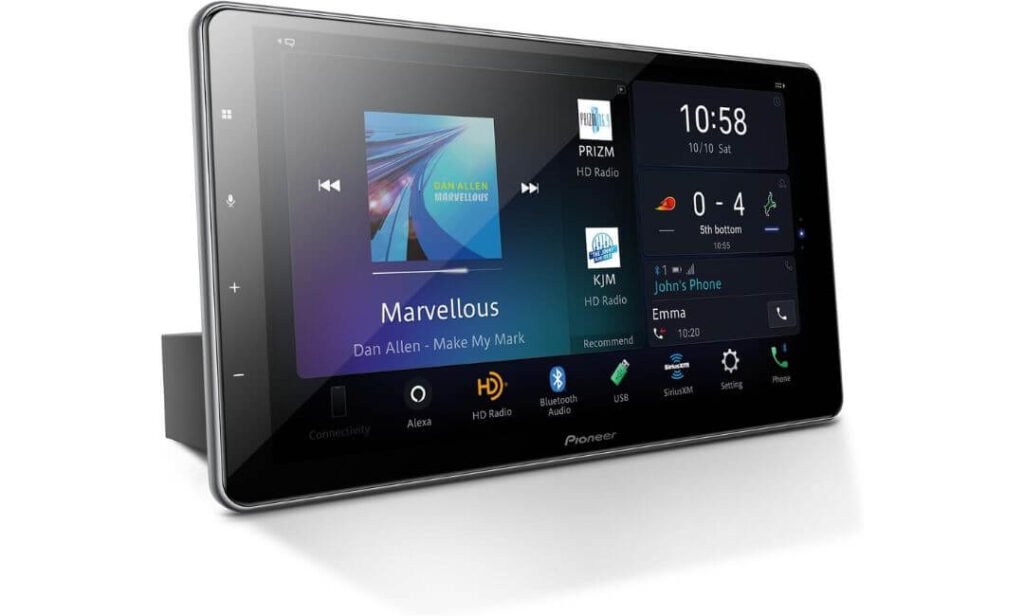
#1. Pioneer DMH-WT8600NEX 10.1-Inch HD Touchscreen Floating Display Car Stereo
Quick Specs:
- Display: 10.1-inch floating capacitive touchscreen
- Resolution: 1280 × 720 HD
- Chassis: 1-DIN with adjustable floating display
- Phone Integration: Wireless and wired Apple CarPlay and Android Auto
- Audio Control: 13-band EQ, DSP, crossover controls and manual time alignment
- Preamp Outputs: 6-channel, 4V
- Amplification: 50W × 4 maximum
- Cameras: Dedicated backup-camera input plus second camera input
- Wireless Features: Bluetooth, dual-phone connection and built-in Wi-Fi
- Extra: HD Radio, SiriusXM-ready, Amazon Alexa and OTA firmware updates
The first thing that changes with this receiver is the way the dashboard feels. The 10.1-inch 1280 × 720 display sits above a compact 1-DIN chassis, giving you considerably more room for maps, album artwork and on-screen controls than a conventional 6.8- or 7-inch receiver. The screen is also adjustable, which matters more than it sounds—getting the display into a comfortable position can make a large floating screen feel integrated rather than simply stuck on top of the dash. Pioneer specifically lists the unit as a 1-DIN floating receiver, so don’t order it assuming that the screen size alone makes it a standard double-DIN replacement.
The wireless Apple CarPlay and Android Auto support is probably what most daily drivers will use first. Once paired, you can leave the phone in your pocket and use navigation, calls, messages and music through the receiver. There is also built-in Bluetooth with dual-phone connectivity, while Amazon Alexa adds another hands-free option. It is the sort of feature combination that makes sense once you stop thinking of the head unit as a radio and start treating it as the vehicle’s main interface.
Where this model becomes more interesting for a serious car-audio build is behind the screen. You get a 13-band graphic EQ, built-in DSP, crossover controls, subwoofer control and manual time alignment, plus six 4V RCA preamp outputs. That gives an amplifier-heavy system much more to work with than a basic factory replacement receiver. The built-in amplifier is rated at 50W × 4 maximum, but the real attraction here is the signal flexibility for an external amplifier and subwoofer setup.
What Stands Out in Real Use
- The 10.1-inch screen is genuinely useful, especially for navigation and camera views—not just a specification designed to look impressive on a product page.
- Wireless CarPlay and Android Auto remove one of the most annoying parts of using an aftermarket receiver: constantly reaching for a USB cable.
- Six 4V preamp outputs make this a much more serious starting point for a multi-amplifier system.
- 13-band EQ and time alignment give you meaningful control when factory speakers are replaced with better components.
- Two camera-capable inputs are useful if you want more than a basic rear-view camera setup.
One Thing to Know Before Buying
The only real catch is that the impressive 10.1-inch display should not make you forget the installation side. This is a 1-DIN chassis with a floating monitor, not a conventional double-DIN body, and Pioneer itself recommends checking vehicle dimensions and fitment rather than assuming compatibility from the screen size. Steering-wheel controls may also require an adapter, depending on the vehicle.
Why This Floating Double DIN-Style Setup Makes Sense
For someone shopping for a large-screen double-DIN-style upgrade, this is really a choice between screen experience and conventional chassis design. The WT8600NEX gives you the visual impact of a 10.1-inch display while keeping the electronics in a compact 1-DIN chassis. That can open up installation possibilities in vehicles where a conventional large-screen receiver would be difficult to position.
The other reason it earns the top spot is balance. You are not paying for a giant screen and then getting entry-level audio controls underneath it. Wireless phone integration, 13-band EQ, 6-channel 4V pre-outs, DSP, time alignment and camera support give the unit enough depth to remain useful after the novelty of the screen wears off.
The Insider Pro-Tip
If you’re installing this into an older truck or SUV, do the fitment homework before buying the receiver—not after it arrives. The opening, dash depth, mounting kit and factory amplifier interface can matter more than the radio itself. A vehicle with a shallow dash can actually benefit from the 1-DIN chassis, but the floating screen still needs enough physical clearance to sit where you can see it without interfering with vents or factory controls.
And if you already know you’re going to add an external amplifier, don’t judge this unit by its 50W × 4 headline number. The more important specification is the six 4V RCA preamp outputs. That’s the part that gives you room to build the system properly later, instead of replacing the head unit again when your audio upgrade grows.
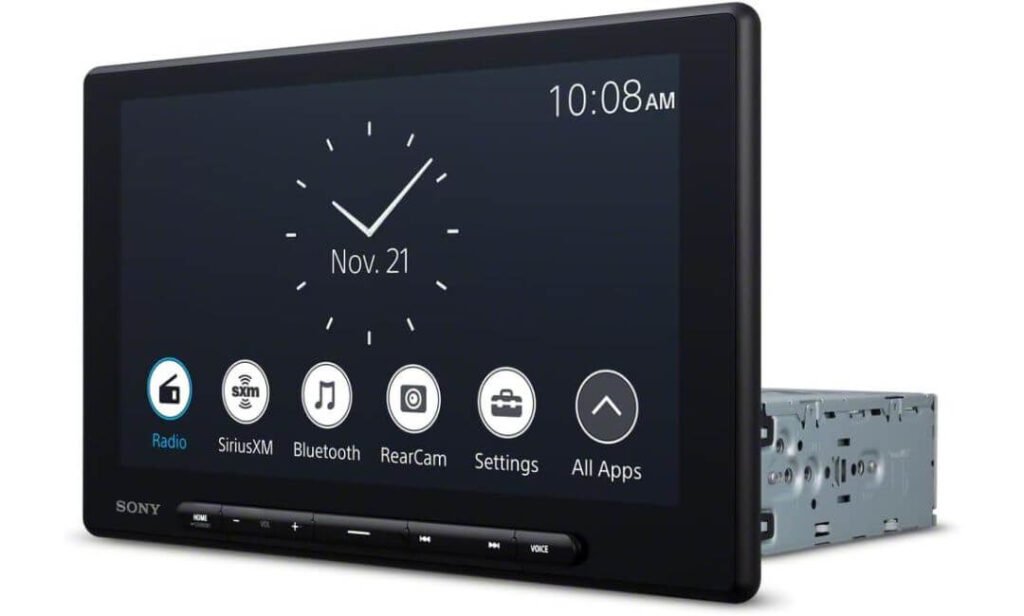
#2. Sony XAV-AX8500 10.1-Inch Wireless Apple CarPlay/Android Auto Media Receiver
Quick Specs:
- Display: 10.1-inch HD capacitive touchscreen
- Resolution: 1280 × 720
- Screen Adjustment: ±15° tilt and ±15° swivel
- Phone Integration: Wireless Apple CarPlay and Android Auto
- Audio: 14-band EQ, DSP, 1 cm time alignment and 3-zone crossover
- Preamp Outputs: 5V, 3-preout — front, rear and subwoofer
- Amplifier: 55W × 4 maximum
- Camera Support: 3 camera inputs with individual triggers
- Wireless Audio: Bluetooth with LDAC
- Wired Connectivity: Rear USB-C and HDMI input
- Audio Formats: FLAC, ALAC, WAV and DSD playback
- Integration: iDatalink Maestro Ready
- Warranty: 3 years
A 10.1-inch screen sounds impressive on a specification sheet, but the adjustable joint is what makes this receiver genuinely useful. The panel can be tilted and swiveled by up to 15 degrees, so you can angle it toward the driver, reduce reflections or make the display easier for a passenger to see. That is a much more meaningful advantage than simply adding another inch or two to the screen. Sony pairs it with a 1280 × 720 capacitive display, so maps, album artwork and camera views have plenty of room without making the interface feel cramped.
The other big reason to consider it is that the oversized display has not come at the expense of wireless Apple CarPlay and Android Auto. Your phone can stay in your pocket while navigation, calls, messages and music are handled through the receiver. HDMI is also available for compatible external video sources, although Sony specifies that video viewing through the HDMI connection is intended for when the vehicle is parked.
For an upgraded sound system, this is where the XAV-AX8500 becomes more than a large-screen car stereo. Its 14-band EQ, built-in DSP, 1 cm time alignment and three-zone crossover give you real control over front, rear and subwoofer channels. The three 5V pre-outs are also useful when you plan to run external amplifiers, while LDAC support gives compatible phones a higher-quality Bluetooth streaming option.
What We Like About It
- 10.1-inch adjustable screen — the tilt-and-swivel mechanism gives you control over the viewing angle instead of forcing you to accept whatever position the installation leaves you with.
- Wireless CarPlay and Android Auto — exactly what most people expect from a premium modern receiver, without making the USB cable part of every drive.
- 14-band EQ with DSP — enough adjustment to actually tune an aftermarket speaker system rather than relying on basic bass and treble controls.
- Three 5V pre-outs — a sensible foundation for separate front, rear and subwoofer amplification.
- Three camera inputs — particularly useful for trucks and larger SUVs where rear, front or side cameras can all have a practical purpose.
The One Compromise Worth Knowing
The XAV-AX8500 is packed with adjustment and integration features, but its biggest attraction is the display rather than a built-in amplifier that can replace a serious external system. Sony rates the internal output at 55W × 4 maximum, so if you’re building a high-output system with upgraded components and a dedicated subwoofer, plan around the 5V pre-outs and external amplification rather than treating the receiver’s internal power rating as the main selling point.
Why This Double DIN Car Stereo Earns a High Spot
The smart part of this receiver is the balance between large-screen usability and proper audio control. You get the visual impact people normally shop for in a floating-screen unit, but underneath it is a receiver with time alignment, 14-band EQ, three-zone crossover control and 5V pre-outs. That means the screen can still be the star of the dashboard without the audio side feeling like an afterthought.
The three camera inputs also make more sense on a large vehicle than they do on paper. If you’re fitting the receiver into a pickup or SUV, having individual camera triggers gives you room to build a more useful view system instead of being limited to a single reversing camera. Just remember that camera compatibility and vehicle integration depend on the installation interface, not simply on having three inputs on the receiver
The Insider Pro-Tip
If your dashboard gets hit by strong sunlight, do not choose this receiver solely because the 10.1-inch screen looks spectacular in product photos. The ability to tilt and swivel the panel is one of its most useful features, so use that adjustment to put the screen in the best real-world viewing position rather than leaving it perfectly flat just because it looks cleaner.
And if you’re upgrading the speakers later, this is one of those head units where the pre-outs matter more than the 55W × 4 headline. The three 5V outputs, 14-band EQ and time alignment give an installer the tools to properly build around external amplification. In other words, you are buying a receiver that can grow with the system rather than one that becomes the limiting component after the first audio upgrade.
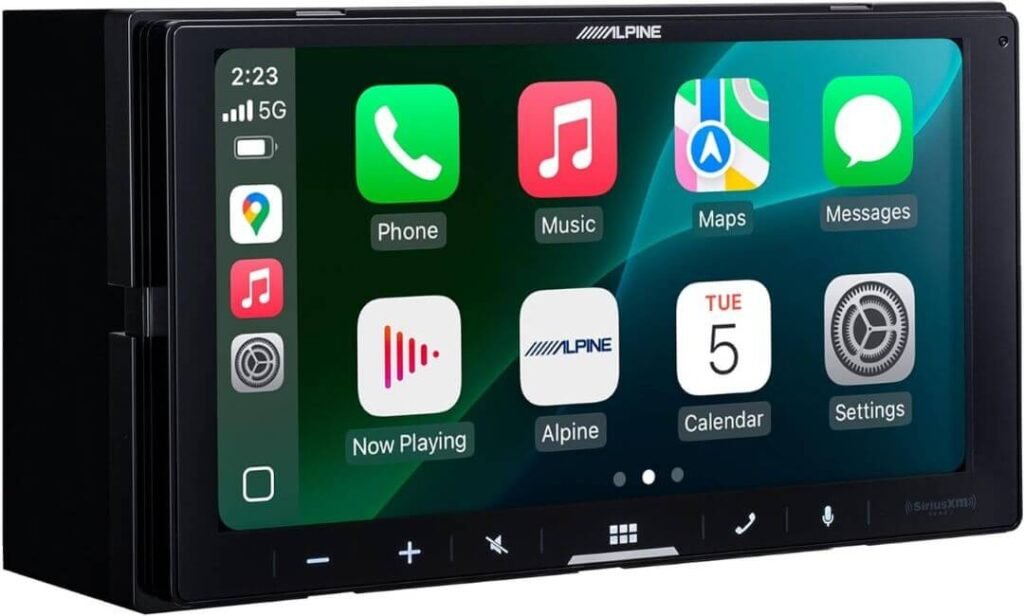
#3. Alpine iLX-W770 Digital Multimedia Receiver
Quick Specs:
- Display: 6.75-inch capacitive touchscreen
- Fitment: Standard double-DIN chassis
- Phone Integration: Wireless Apple CarPlay and Android Auto
- Audio: 13-band graphic EQ, 6-channel time correction and adjustable crossovers
- Preamp Outputs: 4V front, rear and subwoofer
- Amplifier: 50W × 4 maximum
- Camera Support: Dual camera inputs
- Audio Playback: FLAC, WAV, WMA, MP3 and AAC
- Connectivity: Bluetooth, USB and 3.5mm auxiliary input
- Expansion: PowerStack and PrismaLink compatible
- Display Customization: Customizable home screen and five-color key illumination
The iLX-W770 does not try to compete with the 10.1-inch Pioneer and Sony on screen size, and that is actually part of its appeal. You get a proper 6.75-inch double-DIN touchscreen in a conventional chassis, which makes it a much more straightforward choice when you want the dashboard to retain a factory-like appearance. The shallow chassis is another practical advantage, particularly when there is not much room behind the factory radio.
What makes this Alpine more interesting is what happens once you start building around it. The receiver gives you wireless Apple CarPlay and Android Auto, but the more important numbers for an audio upgrade are the 4V preamp outputs, 13-band EQ and six-channel time correction. Those are the features that let an installer properly balance upgraded speakers and an external amplifier instead of simply making the factory system louder.
Then there is the Alpine-specific side of the equation. PowerStack compatibility allows compatible compact Alpine amplifiers to be mounted with the receiver, while PrismaLink compatibility lets supported Alpine subwoofer systems communicate with the receiver. If you are already building an Alpine-based system, those ecosystem connections can make more sense than chasing the biggest touchscreen available.
What We Like About It
- True double-DIN format — a sensible choice when you want a conventional installation rather than a floating display.
- 4V preamp outputs — gives external amplifiers a strong signal path for a more serious audio system.
- 13-band EQ and six-channel time correction — useful tools for actually tuning speakers rather than relying on basic tone controls.
- PowerStack compatibility — one of the most practical reasons to choose this Alpine when installation space is tight.
- Dual camera inputs — gives the receiver more flexibility for front and rear camera setups.
The One Thing We Would Not Ignore
The 6.75-inch screen is noticeably less spacious than the 10.1-inch displays on the Pioneer and Sony, particularly when using navigation or camera views. If your priority is a huge modern-looking dashboard display, this is not the model to buy. It makes more sense when clean fitment, audio tuning and Alpine expansion matter more than screen size.
Why This Double DIN Head Unit Makes Sense for an Audio Build
There is a temptation to judge a receiver by its screen and smartphone features, but the iLX-W770 is a good example of why that can be misleading. Once the receiver is installed, the features you may appreciate most are the ones you rarely see in an advertisement: 4V pre-outs, time correction, EQ control and proper crossover adjustment.
The shallow design also deserves attention. In an older car, pickup or SUV with limited space behind the radio opening, a compact chassis can save you from fighting the wiring and factory components behind the dash. Add the PowerStack ecosystem and the result is a receiver that can form the center of a clean, compact aftermarket audio system without requiring a giant floating screen.
The Insider Pro-Tip
If you are choosing between this and a 10.1-inch floating receiver, look behind your dashboard before looking at the screen. If the vehicle has limited clearance, a conventional shallow double-DIN receiver can be the smarter installation—even if the larger unit looks better in photographs.
And if your plan already includes Alpine speakers, an amplifier or a supported subwoofer, the PowerStack compatibility deserves serious consideration. You are not simply buying a head unit; you are choosing how easily the rest of the system can fit around it. That is where this Alpine can make more sense than a technically flashier receiver.
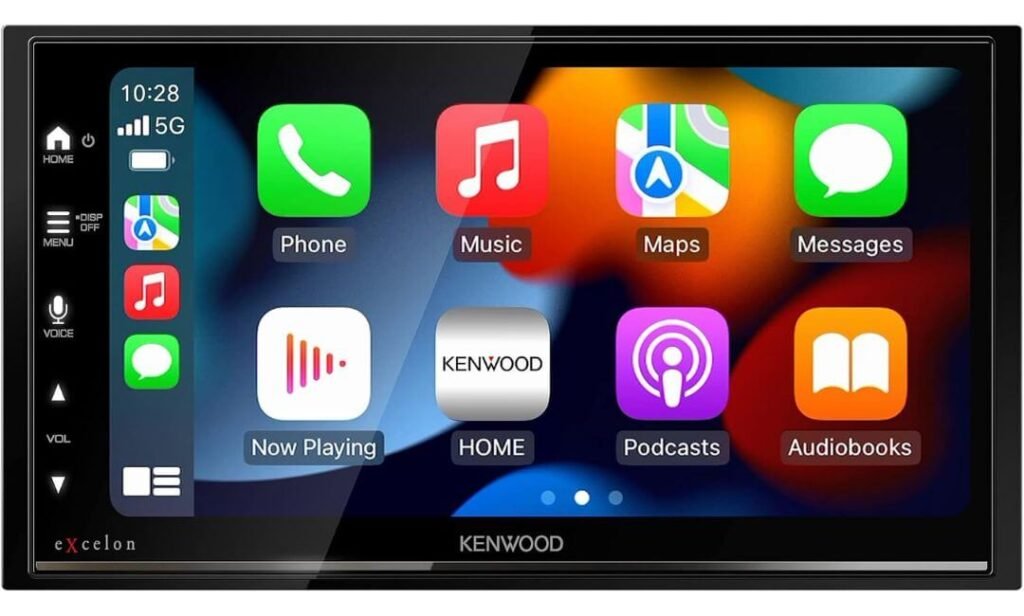
#4. KENWOOD DMX709S eXcelon 6.95-Inch Car Stereo
Quick Specs:
- Display: 6.95-inch capacitive touchscreen
- Fitment: Standard double-DIN chassis
- Phone Integration: Wired Apple CarPlay and Android Auto
- Audio: 13-band graphic EQ, time alignment and adjustable crossover controls
- Amplifier: 22W × 4 RMS, 50W × 4 maximum
- Camera Support: 3 camera inputs with parking guidelines
- Audio Playback: FLAC, WAV, WMA, MP3 and AAC
- Radio: AM/FM with HD Radio
- Satellite: SiriusXM-ready
- Connectivity: USB and Bluetooth
- Expansion: RCA preamp outputs for external amplifiers
- Installation: External microphone and standard double-DIN mounting
The DMX709S is not trying to win the dashboard-size contest, and that is actually where its appeal starts. Its 6.95-inch capacitive display fits into a conventional double-DIN opening and keeps the installation looking much closer to a traditional factory-style radio. The screen is large enough for navigation, music and camera views without turning the dashboard into a giant display panel.
The biggest thing to understand before buying it is wired Apple CarPlay and Android Auto. You connect your phone through USB rather than simply getting into the vehicle and letting it connect wirelessly. For some drivers, that is a dealbreaker; for others, keeping the phone connected and charging at the same time is perfectly reasonable. It is better to know that before installation than to discover it after the factory radio is already out.
Where this model earns its place is the audio side. The 13-band EQ, time alignment and crossover controls give you considerably more control than a basic replacement receiver. Add the RCA outputs and three camera inputs, and it becomes a practical foundation for someone who wants to upgrade speakers, add an amplifier or run multiple camera angles without jumping into a much more expensive flagship receiver.
What We Like About It
- 6.95-inch capacitive display — a sensible size for a conventional dashboard without sacrificing everyday usability.
- 13-band EQ and time alignment — genuinely useful if you care about speaker positioning and tonal balance.
- Three camera inputs — gives trucks and SUVs more flexibility than a basic rear-camera-only receiver.
- HD Radio and SiriusXM readiness — useful if you still rely on broadcast or satellite radio alongside streaming.
- Standard double-DIN installation — straightforward physical fitment when the vehicle already has the correct opening and integration hardware.
The One Compromise Worth Knowing
The biggest limitation is simple: CarPlay and Android Auto are wired. If your priority is getting into the vehicle with your phone still in your pocket, the Pioneer, Sony and other wireless-capable receivers in this list make more sense. Here, the USB connection is part of the normal CarPlay/Android Auto experience.
Why This Double DIN Head Unit Still Deserves a Place
There is a reason not every good car stereo needs a 10.1-inch display. For many older cars, pickups and SUVs, the goal is simply to replace an aging factory radio with something that works properly, sounds better and leaves room for the rest of the audio system. That is exactly where this Kenwood makes sense.
The combination of 13-band EQ, time alignment, crossover adjustment and multiple camera inputs gives it a useful amount of depth without pushing the receiver into flagship pricing. If you already know that your phone will stay connected by USB, the lack of wireless CarPlay becomes much less important—and the money can instead go toward speakers, an amplifier or installation.
The Insider Pro-Tip
If you’re building an audio system in stages, don’t overlook the value of the tuning controls. A new head unit can make the system sound different, but proper time alignment and EQ can make the speakers sound like they belong in the vehicle rather than simply being louder.
And before ordering, check the actual installation depth and factory integration requirements for your vehicle. The double-DIN opening tells you the basic radio size, not whether the factory amplifier, steering-wheel controls, USB ports or backup camera will work without an additional interface. That small bit of homework can save considerably more money than choosing a receiver based only on its feature list.
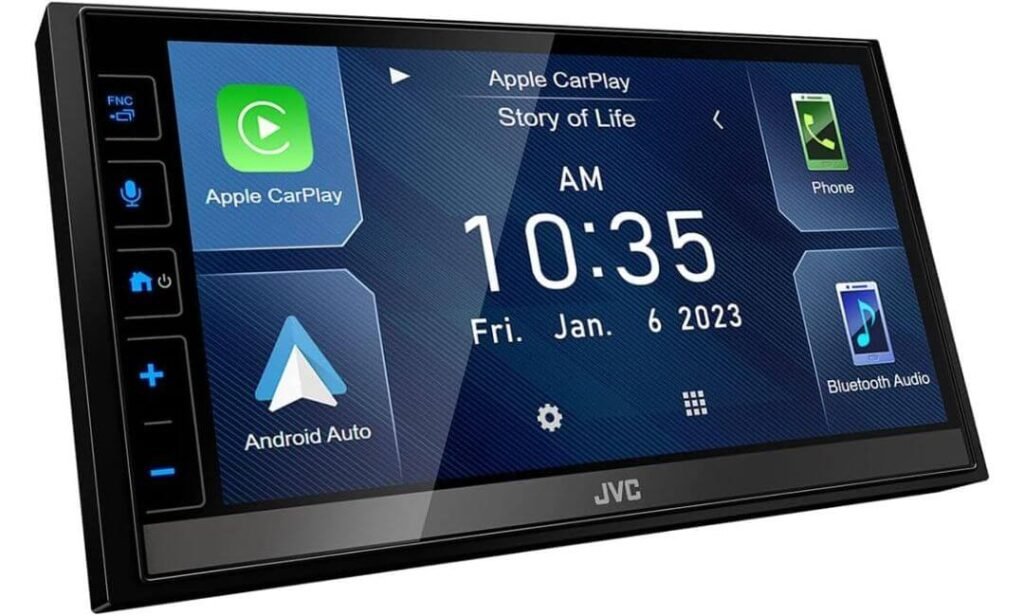
#5. JVC KW-M780BT Digital Multimedia Receiver
Quick Specs:
- Display: 6.8-inch capacitive touchscreen
- Fitment: Standard double-DIN chassis
- Phone Integration: Wired Apple CarPlay and Android Auto
- Audio: 13-band parametric EQ, digital time alignment and K2 sound processing
- Preamp Outputs: 4V, 6-channel front/rear/subwoofer
- Amplifier: 50W × 4 maximum
- Camera Support: 3 camera inputs with parking guidelines
- Audio Playback: FLAC, WAV, MP3 and other common formats
- Radio: AM/FM with HD Radio
- Expansion: iDatalink Maestro and SiriusXM ready
- Video: HDMI input and video output
- Extra: Customizable wallpaper and variable key illumination
The KW-M780BT is easy to overlook beside the 10.1-inch receivers higher up this list, but that would miss the point of this model. Its 6.8-inch capacitive touchscreen keeps the dashboard relatively conventional, while the real attention goes toward the audio hardware behind it. The receiver gives you six 4V preamp outputs, a 13-band parametric EQ and digital time alignment, which is a much more serious combination if you are planning to add amplifiers or a subwoofer later.
The phone experience is more straightforward. Apple CarPlay and Android Auto are wired, so this is not the receiver for someone who wants to leave the phone in their pocket every time they start the vehicle. For a driver who already keeps a phone mounted or plugged in, however, that may not be a major issue. Bluetooth handles wireless music and calls separately, while Siri and Google Assistant keep voice commands available without needing to reach for the handset.
There is also useful flexibility around the dashboard itself. Three camera inputs, adjustable parking guidelines, HDMI, video output and iDatalink Maestro compatibility give the receiver more potential than its smaller screen suggests. That makes it particularly interesting in a truck, SUV or older vehicle where camera integration and aftermarket audio expansion can be more important than having the largest possible display.
What We Like About It
- Six 4V preamp outputs — an unusually useful foundation for an external amplifier and DSP-focused system.
- 13-band parametric EQ with time alignment — gives an installer meaningful control over speaker response and staging.
- Three camera inputs — useful when a vehicle needs more than a basic reverse camera.
- iDatalink Maestro compatibility — helps retain selected factory controls and vehicle information with the appropriate interface.
- K2 sound processing — a useful touch for people who listen heavily to compressed music from streaming services or USB sources.
The One Compromise Worth Knowing
The main trade-off is wired smartphone integration. There is no wireless Apple CarPlay or Android Auto, and the 6.8-inch display also looks modest next to the 10.1-inch screens available in this category. If your priority is a modern, oversized dashboard display, the JVC is not the obvious choice.
Why This Double DIN Car Stereo Is Worth Considering
The KW-M780BT is one of those receivers where the specification sheet tells a better story once you look past the screen. A 6.8-inch display is perfectly usable for navigation, music and camera views, but six 4V pre-outs, parametric EQ and time alignment are features that can still matter years after the novelty of a large touchscreen has disappeared.
That makes it a particularly sensible choice for someone who already knows where the system is going. Add better speakers today, an amplifier later, and perhaps a subwoofer after that—the receiver has enough control and output flexibility to remain useful as the system grows. You are essentially spending less on the display and more on the signal path and tuning capability.
The Insider Pro-Tip
If your end goal is a serious aftermarket audio system, count the preamp channels before you count the screen inches. A large display looks impressive on day one; having enough clean, usable outputs and proper tuning controls can save you from replacing the head unit when you upgrade the rest of the system.
Also, do not assume the standard double-DIN dimensions guarantee a painless installation. Your vehicle may still need a dash kit, wiring/interface harness and steering-wheel-control adapter, particularly if the factory radio communicates with other vehicle systems. Getting those pieces right is what turns a good receiver into a clean installation rather than a box of expensive electronics behind the dashboard.
Best Double DIN Head Unit in 2026 Compared for Screen Size, CarPlay, Audio and Fitment
| Head Unit | Screen | Phone Integration | Audio Tuning | Preamp Outputs | Camera Inputs | Best Fit |
|---|---|---|---|---|---|---|
| Pioneer DMH-WT8600NEX Large floating-display setup |
10.1″ 1280 × 720 HD |
Wireless Apple CarPlay + Android Auto |
13-band EQ Time alignment DSP |
6-channel / 4V | 2 | Large-screen upgrade |
| Sony XAV-AX8500 Adjustable 10.1-inch display |
10.1″ HD capacitive |
Wireless Apple CarPlay + Android Auto |
14-band EQ Time alignment 3-zone crossover |
3-channel / 5V | 3 | Premium display |
| Alpine iLX-W770 Conventional double-DIN |
6.75″ Capacitive touchscreen |
Wireless Apple CarPlay + Android Auto |
13-band EQ 6-channel time correction Crossovers |
4V Front / rear / sub |
2 | Alpine system build |
| KENWOOD DMX709S eXcelon Traditional double-DIN |
6.95″ Capacitive touchscreen |
Wired Apple CarPlay + Android Auto |
13-band EQ Time alignment Crossover control |
RCA outputs External amp ready |
3 | Audio-focused build |
| JVC KW-M780BT Conventional double-DIN |
6.8″ Capacitive touchscreen |
Wired Apple CarPlay + Android Auto |
13-band parametric EQ Time alignment K2 processing |
6-channel / 4V | 3 | DSP-oriented upgrade |
Buying Guide: How to Choose the Right Double DIN Head Unit for Your Car
Choosing a double-DIN receiver is less about finding the longest feature list and more about matching the radio to the vehicle, the way you use your phone, and the audio system you actually plan to build. A 10.1-inch screen can look fantastic, but it is not automatically a better choice than a well-tuned 6.8-inch receiver. Likewise, wireless CarPlay is convenient, but it should not outweigh poor fitment or limited audio outputs if you are building a serious sound system.
Start With the Dashboard, Not the Feature List
A traditional double-DIN opening is roughly 7 inches wide by 4 inches high, but that does not tell you whether a particular receiver will install cleanly. The space behind the opening, factory brackets, dash shape and surrounding controls all matter.
There is another important distinction in this category: a large display does not always mean a large chassis. The Pioneer DMH-WT8600NEX uses a 1-DIN chassis with a 10.1-inch floating display, while receivers such as the Alpine iLX-W770 use a conventional double-DIN format.
Before ordering, check:
- The actual dash opening and available depth
- Whether the vehicle needs a vehicle-specific dash kit
- Factory amplifier compatibility
- Steering-wheel control integration
- Factory USB retention
- Backup-camera compatibility
- Antenna and wiring adapters
- Whether climate controls or other dashboard functions are integrated into the original radio
This becomes especially important with older cars and trucks, where replacing the radio can involve more than simply removing one unit and plugging another in.
Decide Whether You Want Wireless or Wired CarPlay
For most modern drivers, Apple CarPlay and Android Auto will be used more often than almost anything else on the receiver.
Wireless is the more convenient setup. Once the phone and receiver are properly paired, you can normally get in, start the vehicle and use navigation, calls and music without physically connecting the phone.
Wired connectivity still has one practical advantage: your phone charges while you use CarPlay or Android Auto. So wired is not automatically bad; it simply requires you to be comfortable keeping a cable available.
For this list, the distinction is straightforward:
| Your priority | Better direction |
|---|---|
| Wireless Apple CarPlay | Pioneer, Sony, Alpine |
| Wireless Android Auto | Pioneer, Sony, Alpine |
| Wired CarPlay is fine | Kenwood, JVC |
| Phone charging while using CarPlay | Wired connection |
| Minimal cable clutter | Wireless connection |
Do not confuse Bluetooth with wireless CarPlay or Android Auto. Bluetooth can handle calls and music, but it does not necessarily mean the receiver supports the full wireless smartphone interface.
Choose the Screen Size Around Your Vehicle
A bigger screen is useful, but only when the dashboard can accommodate it properly.
The 10.1-inch Pioneer and Sony models make navigation, album artwork and camera views considerably easier to see. The Sony adds something particularly useful: its screen can tilt and swivel, allowing you to adjust the viewing angle instead of accepting a fixed position.
A conventional 6.75- to 6.95-inch display, like those used by Alpine and Kenwood, can make more sense when you want a factory-style appearance or have a dashboard where a floating screen would look oversized.
Look at these four things rather than screen size alone:
- Resolution: higher resolution makes maps, text and camera images cleaner.
- Brightness: important if the screen receives direct sunlight.
- Touch response: capacitive screens should respond naturally to taps and swipes.
- Viewing angle: particularly important with floating displays.
A large screen that sits directly in the driver’s glare can be less useful than a smaller screen positioned correctly.
Think About Audio Before You Buy
This is where head units start separating themselves.
If you are only replacing a factory radio and keeping the original speakers, basic amplification may be enough. But if you expect to add component speakers, a four-channel amplifier, DSP or subwoofer, pay close attention to the receiver’s audio architecture.
The useful specifications are:
- Preamp output count
- Preamp voltage
- Equalizer adjustment
- Time alignment
- Crossover control
- Subwoofer level and phase control
- Built-in DSP
- External amplifier compatibility
For example, the Pioneer gives you 13-band EQ, DSP, time alignment and six 4V preamp channels. Sony takes a different approach with a 14-band EQ, time alignment, three-zone crossover and 5V pre-outs.
The Alpine, Kenwood and JVC also give you meaningful tuning controls, but their strengths are different. That is why simply saying one receiver has “better sound” would be misleading. The installation and speakers ultimately determine how much of those controls you can actually take advantage of.
Don’t Ignore Preamp Outputs
If you think an amplifier might be added later, buy with that future system in mind.
A receiver with appropriate RCA outputs lets you send a cleaner, dedicated signal to external amplifiers instead of relying on speaker-level connections and adding equipment later to work around limitations.
A useful rule is:
Factory speakers only → built-in amplification can be enough.
Upgraded speakers + amplifier → pay attention to preamp outputs and tuning.
Full system with subwoofer → look closely at dedicated front, rear and subwoofer outputs, crossover control and time alignment.
This is one reason the JVC and Alpine remain interesting despite having smaller screens. Their audio capabilities can be more valuable to the person who is building the system behind the dashboard.
Check Camera Support Before Ordering
A receiver can be a useful upgrade for more than music and navigation.
If you want a double DIN head unit with backup camera support, check whether it has the number and type of camera inputs you actually need.
A basic installation may only require one rear camera. A pickup or SUV owner might eventually want:
- Rear camera
- Front camera
- Side camera
- Individual camera triggers
- Adjustable parking guidelines
The Sony provides three camera inputs with individual triggers, while the Kenwood and JVC also provide multiple camera inputs. That can be considerably more useful on a large vehicle than it sounds on a specification sheet.
One important point: the receiver having a camera input does not mean your existing factory camera will automatically work. Factory camera voltage, connectors and video interfaces can vary, so an adapter or integration module may still be required.
Look Beyond Bluetooth When Comparing Wireless Features
Bluetooth is almost universal in this class, but it is only one part of the connectivity picture.
For a modern setup, look at:
- Wireless Apple CarPlay
- Wireless Android Auto
- Bluetooth calling
- Bluetooth audio
- USB connectivity
- Wi-Fi where applicable
- HDMI
- Camera inputs
- SiriusXM compatibility
- Smartphone voice control
The distinction matters because a receiver can have Bluetooth and still require a USB cable for CarPlay and Android Auto. The Kenwood DMX709S and JVC KW-M780BT are good examples of why you should read the actual smartphone-integration specification rather than assuming “Bluetooth” means everything is wireless.
Check Software Support Before You Commit
A head unit is not a completely static piece of hardware.
Firmware updates can improve compatibility, fix connection problems and add or refine functionality. Smartphone operating systems also change, so a receiver that works well today should ideally have a manufacturer that continues to support it.
Before buying, check:
- Manufacturer firmware-update availability
- Current CarPlay and Android Auto compatibility
- Smartphone compatibility
- App support
- SiriusXM compatibility if required
- Whether updates require USB, Wi-Fi or another method
This is particularly worth checking with an older receiver design. A cheaper unit is not necessarily better value if it becomes difficult to maintain after a few years.
Understand What You Are Actually Paying For
There is a surprisingly wide difference in what these receivers spend their budget on.
Lower-cost double-DIN receivers generally focus on the essentials: touchscreen control, smartphone integration, Bluetooth, camera support and basic audio adjustment.
Mid-range models start adding stronger EQ systems, more camera inputs, better preamp connectivity, HD Radio and broader vehicle-integration support.
Premium large-screen receivers put much more money into the display, wireless connectivity, advanced processing and installation flexibility.
The right question is therefore not “Which one has the most features?”
It is:
“Which features will I still be using after the installation is finished?”
If you mainly use navigation and music, spending heavily for advanced audio processing may be unnecessary. If you are building a multi-amplifier system, paying extra for a better screen while ignoring the preamp section can be the wrong trade.
Plan the Installation Before the Receiver Arrives
This is the part many online buying guides gloss over.
A double-DIN receiver may physically fit the opening while still requiring several additional parts to make the vehicle function properly.
Depending on the vehicle, you may need:
- Vehicle-specific dash kit
- Wiring harness
- Antenna adapter
- Steering-wheel-control interface
- Factory amplifier integration module
- Backup-camera adapter
- USB retention adapter
- Microphone mounting
- Additional RCA cables
- Mounting brackets
For a straightforward older vehicle with no factory amplifier or integrated controls, a confident DIY installer may be able to handle much of the work.
For newer vehicles with factory amplifiers, steering-wheel controls, integrated cameras or complex dashboard electronics, professional installation can be worth the money. The expensive part is not always mounting the receiver; it is retaining the functions you already have.
The Best Choice Depends on What You Want the Dashboard to Become
If the priority is a large-screen experience, the Pioneer and Sony are the obvious directions.
If the priority is a traditional double-DIN installation with serious audio control, Alpine, Kenwood and JVC make more sense.
If your next step is adding amplifiers and a subwoofer, focus heavily on preamp outputs, EQ, time alignment and crossover control.
And if you are replacing a factory system in an older vehicle, put fitment and integration ahead of flashy specifications. A receiver that installs cleanly and keeps the controls you actually use will feel like a better upgrade every day than one that looked better on the product page.
Setup & Installation Tips for a Double DIN Head Unit
Installing a new receiver is not simply a matter of removing the factory radio and sliding the replacement into the opening. The physical fit, wiring, factory electronics and camera system all have to agree with each other. On an older car, the job can be relatively straightforward; on a newer vehicle, the factory radio may also communicate with steering-wheel controls, an amplifier, USB ports, parking sensors or other vehicle functions.
That is why it is worth planning the installation before buying the receiver. A good installation should leave the dashboard looking intentional, the controls working as expected and the new system behaving like part of the vehicle rather than an aftermarket add-on.
Start by Confirming the Exact Vehicle Fitment
Before removing anything, confirm the year, make, model and trim of the vehicle against the receiver and installation-kit requirements.
Pay particular attention to:
- Factory radio dimensions and mounting style
- Available depth behind the dashboard
- Factory amplifier presence
- Steering-wheel audio controls
- Factory backup camera
- USB and auxiliary connections
- Antenna connector
- Factory navigation or integrated display
- Vehicle-specific dash trim
A standard double-DIN opening does not guarantee that every double-DIN receiver will be a direct replacement. Some vehicles require a specific dash kit, while others need an integration module to keep factory functions working.
The Pioneer DMH-WT8600NEX deserves extra attention here because its 1-DIN chassis and 10.1-inch floating display are physically different from a conventional double-DIN receiver. The screen may be large, but installation still depends on the chassis, mounting location and available dashboard space.
Get the Dash Kit and Wiring Before You Remove the Factory Radio
For most installations, the receiver itself is only one part of the purchase.
A typical installation can require:
- Vehicle-specific dash kit
- Wiring harness
- Antenna adapter
- Steering-wheel-control interface
- Factory amplifier interface
- Backup-camera adapter
- USB retention adapter
- Mounting brackets
- External microphone
- RCA cables for amplifiers
The best approach is to have these parts ready before the dashboard comes apart. It is frustrating to remove the factory radio only to discover that the antenna connector does not match or the factory amplifier needs a separate interface.
For vehicles with an existing amplifier or advanced factory system, do not assume that matching the speaker wires will be enough. The factory amplifier may require a dedicated interface or the correct signal-level connection.
Connect the Wiring Harness Outside the Dashboard First
If you are doing the installation yourself, one of the easiest ways to make the job cleaner is to prepare the receiver harness before putting your hands inside the dashboard.
Match the aftermarket harness to the vehicle-specific harness according to the supplied wiring documentation. Typical connections include:
- Constant power
- Accessory power
- Ground
- Speaker outputs
- Illumination
- Reverse trigger
- Parking-brake connection where required
- Steering-wheel-control interface
- Amplifier turn-on lead
Do not guess based solely on wire colour. Vehicle wiring can vary between trims and model years, so the supplied wiring diagram and vehicle-specific harness documentation should take priority.
If the vehicle has an external amplifier, subwoofer amplifier or factory audio system, confirm how the new receiver should provide the signal before connecting everything.
Mount the Receiver Only After Testing the System
This small step can save a lot of unnecessary work.
Before fully securing the receiver and reinstalling the trim, temporarily connect the system and test the functions you intend to keep.
Check:
- Receiver powers on correctly.
- Speakers play from every channel.
- Apple CarPlay or Android Auto connects.
- Bluetooth calling works.
- Steering-wheel controls respond.
- Backup camera appears when Reverse is selected.
- Additional camera inputs work if installed.
- Radio reception is normal.
- External amplifier turns on correctly.
- USB and other required inputs work.
Only after these checks pass should you finish mounting the receiver and reinstalling the dashboard.
DIY Installation or Professional Installation?
A DIY installation can make sense when the vehicle has a simple factory radio, no complicated amplifier integration and readily available vehicle-specific wiring adapters.
It becomes a different proposition when the vehicle has multiple factory systems connected to the original radio.
Consider professional installation if you are dealing with:
- Factory amplified audio
- Multiple cameras
- Steering-wheel controls
- Factory navigation
- Integrated climate or vehicle controls
- Premium OEM audio systems
- Complex alarm or security integration
- A dashboard requiring substantial trim modification
The receiver may be easy to understand, but the vehicle around it may not be.
A professional installer can also identify problems before they become expensive mistakes, particularly when a new receiver needs to communicate with an existing factory amplifier or vehicle network.
If the Display Does Not Power On
Do not immediately assume the receiver is defective.
Start with the basics:
- Check the vehicle fuse.
- Check the receiver fuse.
- Confirm the ground connection.
- Verify constant and switched power.
- Check the wiring harness connections.
- Make sure the vehicle’s factory wiring adapter is correctly connected.
- Confirm that any required amplifier or interface module is receiving power.
If the receiver worked on the bench or initially powered on and then stopped, look carefully at the ground, accessory connection and fuse before removing the entire installation.
For a floating-screen receiver, also make sure the display and main chassis connections are properly seated.
When Apple CarPlay or Android Auto Will Not Connect
This is one of the most common frustrations with modern receivers, and the solution depends on whether the receiver uses wired or wireless connectivity.
For a wired connection:
- Try another known-good USB cable.
- Connect directly to the receiver rather than through a hub.
- Check whether the vehicle’s USB port is actually connected to the new receiver.
- Restart the phone and receiver.
- Confirm the phone’s operating system is supported.
- Check the manufacturer’s firmware information.
For wireless CarPlay or Android Auto:
- Make sure Bluetooth and Wi-Fi are enabled on the phone.
- Remove the old pairing from the receiver and phone.
- Pair the devices again from the beginning.
- Keep other previously paired phones away during initial setup.
- Check for receiver firmware updates.
Do not assume a Bluetooth connection means wireless CarPlay or Android Auto should work. Bluetooth audio and wireless smartphone projection are separate functions.
If the Backup Camera Does Not Appear
First check whether the receiver detects the camera at all.
Then verify:
- Camera power supply
- Video connector
- Reverse-trigger wire
- Camera input selection
- Correct camera format
- Ground connection
- Vehicle-specific camera adapter, if required
If the screen changes when you select Reverse but the camera image is black, the problem is likely on the camera power, video signal or adapter side rather than the receiver’s display.
If the receiver never switches to the camera view, investigate the reverse-trigger connection first.
This is especially important with receivers such as the Sony XAV-AX8500, Kenwood DMX709S and JVC KW-M780BT, which provide multiple camera inputs. Having several inputs does not mean the vehicle’s original camera wiring will automatically be compatible.
Keep Factory Controls in Mind
Replacing the radio can affect more than audio.
If you want to retain:
- Steering-wheel volume controls
- Track-selection buttons
- Voice-command buttons
- Factory backup camera
- USB ports
- Factory amplifier
- Vehicle information displays
you may need an integration interface designed for that specific vehicle.
This is also where iDatalink Maestro-compatible receivers can be useful in supported vehicles. The receiver is only one part of the communication chain; the correct interface and vehicle-specific programming still matter.
Finish the Installation With a Real-World Test
Once everything is installed, do not judge the job while sitting in the driveway for two minutes.
Take the vehicle for a short drive and test the things you will actually use:
- Navigation visibility in daylight
- Touchscreen response
- Wireless or wired phone connection
- Bluetooth call quality
- Steering-wheel buttons
- Radio reception
- Speaker balance
- Subwoofer operation
- Backup camera visibility
- Screen position and glare
A receiver can look perfect while parked and reveal a completely different issue once sunlight hits the screen or the vehicle starts moving.
The goal of a good installation is not simply “the radio turns on.” It is that the receiver fits properly, the factory functions you care about remain usable, the audio system receives the correct signal, and nothing feels like it was added as an afterthought.
Real-World Use Cases and User Experience With a Double DIN Head Unit
A head unit can look exceptional in a specification sheet and still become annoying after a few weeks. The real test is what happens after the installation becomes routine—how quickly the phone connects, whether the screen remains easy to read, how naturally you can control music while driving, and whether the receiver continues working properly as phones and software change.
That is why the experience with these receivers should be judged beyond screen size and feature count. A good upgrade should make everyday driving simpler, not give you another piece of technology to manage.
What Daily Use Actually Feels Like
For everyday driving, wireless Apple CarPlay and Android Auto are among the most useful upgrades in this category. You can leave the phone in your pocket or charging area and use navigation, music, calls and messages through the dashboard.
The Pioneer, Sony and Alpine are particularly convenient here because wireless smartphone integration reduces the need to connect a cable every time you start the vehicle. The Kenwood and JVC take the more traditional wired approach, which is not necessarily a disadvantage if your phone normally stays connected and charging.
The bigger difference appears over time. Once the initial excitement of a new touchscreen disappears, small things become important:
- How quickly the receiver becomes usable after starting the vehicle
- Whether your phone reconnects consistently
- How easy it is to change audio sources
- Whether the screen remains readable in different lighting
- How quickly the camera appears when reversing
- Whether steering-wheel controls continue working properly
- How easy it is to adjust volume without taking attention away from the road
Those are the details that determine whether an aftermarket receiver still feels like a worthwhile upgrade six months later.
Software Support Matters More Than It Used To
Modern head units are no longer isolated radios. They depend on smartphones, operating systems, wireless connections and manufacturer firmware.
That means software support deserves attention before buying. A receiver can have excellent hardware and still become frustrating if compatibility problems appear after a phone operating-system update.
Keep an eye on:
- Manufacturer firmware updates
- Apple CarPlay compatibility
- Android Auto compatibility
- Bluetooth updates or fixes
- USB compatibility
- Smartphone operating-system changes
- Manufacturer support documentation
This is one reason I would not judge these receivers solely by the number of features they have today. The better long-term purchase is the one that remains compatible with the devices you actually use.
Voice Control Is More Useful Than Touchscreen Control While Moving
A large touchscreen makes a receiver easier to operate, but you should not be using the display for everything while driving.
Apple CarPlay and Android Auto allow Siri and Google Assistant to handle many common tasks through voice commands, including navigation destinations, calls, messages and music.
That matters because reaching toward a touchscreen to type an address or search for a song is exactly the type of interaction that should be avoided once the vehicle is moving.
A sensible setup is:
Touchscreen while parked → voice control while driving → physical volume control whenever possible.
The screen size helps you see information, but the safest benefit of a modern head unit is being able to interact with that information without constantly looking down.
Wireless CarPlay Does Not Mean Your Phone Uses No Battery
Wireless CarPlay and Android Auto are convenient, but there is a practical trade-off that is rarely mentioned in product descriptions.
A wireless connection typically uses Bluetooth for initial communication and Wi-Fi for the higher-bandwidth smartphone projection, so the phone can use more battery than it would during a simple Bluetooth music connection.
The effect varies with the phone, signal conditions, screen usage and how long you drive, but long trips can make the difference noticeable.
If you regularly drive for several hours, keeping a USB charging option available is still a good idea. Wireless projection removes the need for a cable to use CarPlay; it does not remove the need to charge the phone.
This is also why wired CarPlay can remain perfectly practical. The Kenwood and JVC require the cable for smartphone projection, but that same cable is charging the phone at the same time.
Your Phone’s Data Plan Still Matters
The head unit itself does not magically provide unlimited mobile data.
When you use navigation, music streaming, podcasts or other connected services through CarPlay or Android Auto, much of that information is still coming from the phone’s cellular connection.
Typical data-heavy activities include:
- Streaming high-quality music
- Online navigation
- Music or podcast downloads
- Cloud-based voice services
- Streaming video when supported and legally usable while parked
If you drive frequently, downloading offline maps, playlists and podcasts can reduce data usage and make the system more dependable in areas with weak cellular coverage.
The receiver is essentially acting as the interface. Your phone is still doing much of the actual online work.
Large Screens Are Especially Useful in Trucks and SUVs
The 10.1-inch displays on the Pioneer and Sony make the most sense when the vehicle has a large dashboard and you regularly use navigation or camera views.
The benefit is not simply that the screen looks impressive. A larger display gives you more physical space for:
- Navigation maps
- Route information
- Album artwork
- Camera images
- On-screen controls
The Sony’s tilt-and-swivel mechanism can make an even bigger difference because the screen can be positioned toward the driver’s normal viewing angle.
In a smaller car, however, a 6.75- or 6.95-inch receiver can be the more natural choice. You gain a cleaner installation and avoid placing an oversized panel where it may interfere with the dashboard or become visually distracting.
Different Drivers Will Prefer Different Receivers
There is no single user experience that makes one of these receivers universally better.
Choose the Pioneer if the large floating display and extensive audio expansion are central to what you want.
Choose the Sony if you want a huge screen but also value the ability to adjust its viewing position and build a capable audio system underneath it.
Choose the Alpine if conventional double-DIN fitment and Alpine’s amplifier ecosystem matter more than screen size.
Choose the Kenwood if you want strong audio tuning and multiple camera options and do not mind wired smartphone projection.
Choose the JVC if your priority is a practical double-DIN installation with strong audio controls, multiple camera inputs and 4V outputs for a future amplifier or DSP system.
That is ultimately the most useful way to compare them. The best head unit is not necessarily the one with the most impressive specification—it is the one whose strengths match the way you actually drive.
FAQs About Choosing and Using a Double DIN Head Unit
Is the Pioneer DMH-WT8600NEX actually a double DIN head unit if its chassis is only 1-DIN?
Not technically, and this is an important distinction when you are checking fitment. The Pioneer DMH-WT8600NEX uses a 1-DIN chassis with a 10.1-inch floating display, so calling the entire unit a conventional double-DIN chassis would be misleading.
The reason it still appears in a double-DIN buying guide is that it can be an upgrade option for vehicles where the dashboard can accommodate its mounting arrangement. The physical installation is different from something like the Alpine iLX-W770, which uses a conventional double-DIN receiver body.
Before ordering, check the actual dashboard opening, mounting depth and display clearance rather than relying on the phrase “double DIN” alone. With floating-screen receivers, you also need to make sure the display does not interfere with vents, climate controls or other dashboard functions.
Is a 10.1-inch screen actually better than a 6.8- or 6.95-inch double DIN stereo in everyday driving?
Not automatically. A larger screen is useful when you genuinely need more visual information, particularly for navigation and camera views, but bigger is not the same thing as better.
The Sony XAV-AX8500 and Pioneer DMH-WT8600NEX make sense for drivers who specifically want a large display. In a smaller dashboard, however, a conventional 6.75- or 6.95-inch receiver can look more integrated and may be easier to position correctly.
What matters more than the headline screen size is:
- Daylight readability
- Touch response
- Viewing angle
- Glare resistance
- Physical screen positioning
- Whether the display blocks anything behind it
A 10.1-inch screen positioned badly can be more irritating than a smaller screen that sits naturally within your line of sight.
If wireless Apple CarPlay and Android Auto are convenient, why would anyone still choose a wired double DIN head unit?
Because wireless is a convenience feature, not automatically an upgrade in every situation.
A wired connection gives your phone a charging path while it is connected and can be preferable for drivers who spend long periods in the car. It also removes one more wireless connection that has to reconnect correctly every time you start the vehicle.
Wireless projection is excellent for short daily journeys because you can get in, start the car and leave the phone alone. But there is a practical compromise: your phone is using its wireless radios and may lose battery faster, particularly during navigation and music streaming.
For a buyer choosing between the Kenwood or JVC and a wireless model, I would make the decision based on how you actually use the car, not simply because “wireless” sounds newer.
Do I need a double DIN head unit with a built-in amplifier if I plan to add an external amplifier later?
Usually, no. In fact, if you already know that a serious amplifier upgrade is coming, I would pay more attention to the receiver’s preamp outputs, voltage, channel count, DSP controls and crossover flexibility than to its advertised internal amplifier wattage.
The familiar “50W × 4” figure on many receivers is a maximum rating and does not tell you how well the unit will integrate into a larger audio system.
For an aftermarket amplifier build, look for things such as:
- Front, rear and dedicated subwoofer preamp outputs
- Higher-voltage RCA outputs
- Independent crossover controls
- Time alignment
- Equalisation flexibility
- Separate subwoofer level control
That is why the Alpine, Pioneer and JVC are interesting beyond their screens. Their preamp architecture and audio-processing controls can matter much more once you stop relying on the receiver’s internal power.
Real talk: if you are spending hundreds on speakers, amplifiers and a subwoofer, buying a head unit purely because it has a bigger touchscreen can be the wrong place to save money.
What is the most overlooked issue when upgrading to a modern double DIN head unit in an older car?
The factory system around the radio.
The physical radio opening is often the easy part. The complications usually appear when you try to retain the things the original vehicle was designed around—factory amplifiers, steering-wheel controls, OEM cameras, USB connections, antenna systems and other integrated functions.
An older vehicle may need little more than a dash kit and wiring harness. A newer or higher-spec vehicle can require several interfaces before everything works properly.
Before buying, I would make a simple compatibility checklist:
- Exact vehicle year and trim
- Factory amplifier or premium audio system
- Original backup camera
- Steering-wheel controls
- Factory USB ports
- Antenna connection
- Required dash kit
- Required integration or steering-control interface
The best double DIN head unit is therefore not necessarily the one with the longest feature list. It is the one that fits the dashboard, works with the vehicle’s electronics, supports the phone features you actually use and gives you enough audio flexibility for where your system is going next. That is the difference between an aftermarket radio that looks impressive on day one and an upgrade you are still happy with years later.
Final Verdict: Choose the Double DIN Head Unit Around Your Car, Not the Spec Sheet
A good aftermarket receiver should solve problems you actually have. If your priority is a large, easy-to-see display and wireless smartphone integration, the Pioneer and Sony make the strongest case. If you care more about building a properly tuned sound system, Alpine, Kenwood and JVC deserve closer attention because their audio controls and preamp architecture can matter far more than another inch of screen.
There is also a less glamorous truth worth remembering: fitment comes before features. A receiver with outstanding specifications is not a good upgrade if the dash kit is wrong, the factory amplifier cannot be integrated properly, the steering-wheel controls stop working or the floating display sits awkwardly in your line of sight.
For most buyers, I would narrow the decision down to three questions:
- Do I want the convenience of wireless CarPlay or Android Auto?
- Do I need advanced audio controls for amplifiers, speakers or a subwoofer?
- Will this receiver genuinely fit my vehicle and retain the factory functions I care about?
Answer those honestly and the shortlist usually becomes much smaller.
And one final bit of real-world advice: do not buy the biggest screen simply because it looks impressive in a product photo. Buy the receiver that makes sense for your dashboard today and gives you enough capability for the system you may build tomorrow. A well-integrated 6.8-inch receiver with good DSP, useful preamp outputs and reliable phone connectivity can be a far better ownership experience than a giant screen with features you never use.
That is what separates a genuinely good double DIN car stereo from one that merely looks impressive on the box.
Also Check:


