5 Best Bull Bars for Ford F-150 in 2026: Heavy-Duty Protection, Clean Fit & Trail-Ready Builds
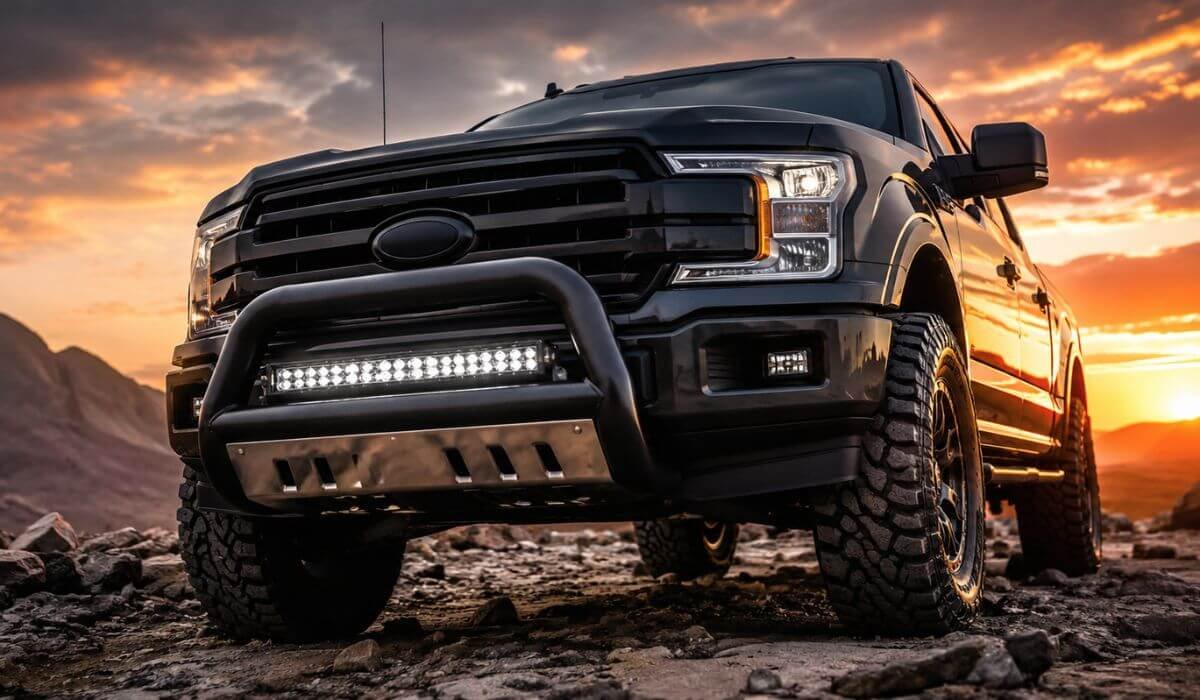
A bull bar for an F-150 is not something to buy by looking at the shape alone. Generation, trim, front-end equipment, and even the powertrain can affect fitment, which is why a product claiming wide year coverage deserves a closer look before it goes on the truck. The Westin 31-5490 stands out here because Westin currently lists it for 2004–2026 Ford F-150 models, including the 2022–2026 F-150 Lightning.
The construction is also more substantial than a basic appearance-only guard: it uses 3-inch 304 stainless-steel tubing, includes a skid plate, and provides mounting points for two auxiliary lights. Installation is designed around existing mounting points rather than drilling the vehicle frame.
That said, the year range should not be treated as a blanket guarantee. Westin’s vehicle selector includes application notes such as Adaptive Cruise Control exclusions on certain configurations, while some installations can require air-dam/bumper-valance trimming. Check the exact F-150 year and equipment before ordering—that small step matters far more than the product’s headline fitment range.
Bilkul, names ko professional but complete rakhenge—na unnecessarily long, na too short. Years product name se hata diye hain:
Best Ford F-150 Bull Bars: Top 2026 Picks for 3-Inch Tubing & Front-End Protection
#1. Maxzina Carbon Steel Bull Bar
Best Bull Bar for Ford F-150 With Vehicle-Specific Fitment, No-Drill Installation and Rugged Front-End Protection
#2. TAC 3-Inch Alloy Steel Bull Bar
Best Bull Bar for Ford F-150 With Integrated Skid Plate, Auxiliary-Light Mounts and Broad Model Coverage
#3. PARTREE 3-Inch Carbon Steel Bull Bar
Best Bull Bar for Ford F-150 With Integrated LED Lighting, License Plate Bracket and Bolt-On Fitment
#4. Westin 31-5490 E-Series Stainless Steel Bull Bar
Best Stainless Steel Bull Bar for Ford F-150 With 3-Inch Tubing, Brushed Skid Plate, Welded Cross Tube and Auxiliary-Light Mounts
#5. TrailFX B0028B 3-Inch Steel Bull Bar
Best Bull Bar for Ford F-150 With Mandrel-Bent Steel Tubing, Integrated Skid Plate, Lighting Mounts and Trail-Ready Protection
Must Check: Best Grille Guard for Ford F-150
Expert Tip
A bull bar should fit the F-150 you actually own, not just the year range printed on a listing. That is especially important with this group because the five products cover very different F-150 generations and applications. A newer 2021–2026 truck should not be judged by the same standard as a 2004 model, and the F-150 Lightning, Raptor, Heritage, diesel configurations and front-mounted sensors can change what will actually work.
The smartest approach is simple: verify the exact year and configuration first, then judge the bar itself. A wide fitment claim is useful, but it is not a substitute for application-specific compatibility. That is why this list gives more weight to genuine fitment information, construction and practical features than to flashy product photos or inflated marketplace claims.
How We Chose These Ford F-150 Bull Bars
This list was built around one question: which bull bars make the most sense for a real F-150 owner at the time of purchase?
1. Fitment came first.
The five products were not treated as interchangeable. Maxzina is aimed specifically at 2021–2026 F-150 models, while TAC and PARTREE offer much wider year coverage. Westin’s 31-5490 is particularly interesting because its listed application extends across 2004–2026 F-150 models and 2022–2026 F-150 Lightning, giving it a different position from a typical single-generation bar. TrailFX was included as another established option rather than forcing every product into the same category.
2. Construction matters more than aggressive styling.
A bull bar can look tough in a listing photo and still offer little that matters in actual use. We looked for details such as tubing size, steel or stainless-steel construction, skid-plate coverage, mounting design and overall front-end protection. Westin’s 31-5490, for example, uses 3-inch 304 stainless-steel tubing and includes a skid plate, which gives it a clear reason to be on the list beyond appearance.
3. Broad fitment was not automatically treated as a benefit.
A product advertised for 2004–2026 F-150s sounds impressive, but that range needs context. TAC, for example, has specific exclusions including Heritage Edition, F-150 Raptor models and certain diesel applications. That does not make it a bad bull bar—it simply means the buyer needs to check the truck before ordering. That kind of limitation is exactly the information worth knowing before spending money.
4. Newer products were not given fake credibility.
Some of these listings do not have the enormous review history you might see on older aftermarket parts. Instead of pretending otherwise, the selection focuses on stated compatibility, useful specifications and the actual purpose of each design. A product does not become better simply because a marketplace displays more stars.
5. Different F-150 owners need different answers.
Someone driving a 2021–2026 F-150 may want a clean, generation-specific installation. Someone with an older 2004–2014 truck may care more about traditional protection and proven aftermarket compatibility. An F-150 Lightning owner has another layer of fitment to consider altogether. The list therefore deliberately includes products with different strengths instead of naming five versions of essentially the same bull bar.
Most importantly, these recommendations are not ranked simply by price, appearance or the number of marketing claims on a product page. The goal is to give each bar a clear reason for being here—and to make the fitment limitations visible before the purchase decision, not after the package arrives.
#1. Maxzina Bull Bar Compatible with 2021–2026 Ford F-150
Quick Specs:
- Fitment: 2021–2026 Ford F-150
- Construction: Carbon steel
- Finish: Black powder coating
- Weight: 46.3 lb
- Installation: Bolt-on, no drilling required
- Front Position: Designed for the front bumper area
- Design: Multi-point welded bull bar with grille and front-end coverage
- Fit Type: Vehicle-specific
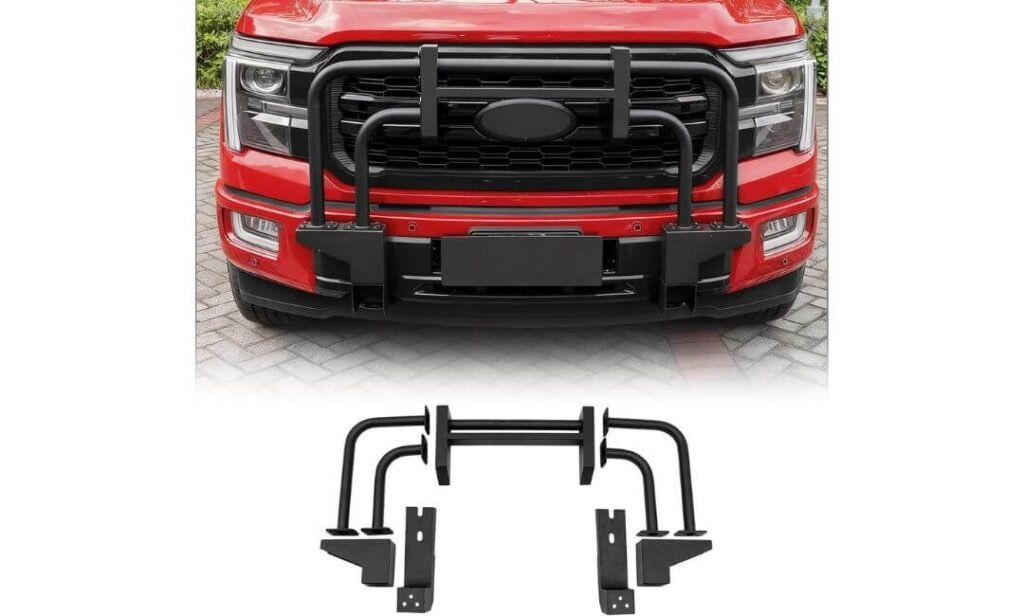
Some F-150 bull bars are sold mainly on appearance; this one has a more practical starting point: it is built specifically around the 2021–2026 F-150 shape. The 46.3-pound carbon-steel construction gives it the substantial feel expected from a proper front-end guard, while the black powder-coated finish keeps the truck looking clean rather than overly accessorized.
The construction is where this option starts to make sense for a daily-driven F-150. Multi-point welds, carbon steel and a corrosion-resistant black coating give the bar a solid combination of strength and everyday usability. It is intended to help shield the grille, headlights and other exposed front-end areas from road debris and lighter impacts—not pretend to be a replacement for a heavy-duty off-road bumper.
Installation is another reason this bar deserves consideration. The design is bolt-on with no drilling required, so the original vehicle mounting points can be used instead of cutting into the truck. The supplied instructions also include access to an installation video, which is a small detail that can save a lot of guesswork when the truck is sitting in the driveway with the parts spread out.
(A 46-pound carbon-steel guard with vehicle-specific mounting is a very different proposition from a lightweight decorative grille accessory.)
What We Like About It
- Generation-specific design makes it a much more sensible starting point for 2021–2026 F-150 owners than a generic universal guard.
- 46.3-pound carbon-steel construction gives the bar genuine substance without turning the truck into a full bumper-build project.
- No-drill installation keeps the installation approach straightforward and avoids unnecessary modification to the truck.
- Black powder coating works especially well on an F-150 because it adds a tougher appearance while providing protection against rust and corrosion.
- Multi-point welded construction gives the guard a more purposeful, finished feel than a simple tubular styling piece.
One Thing to Check Before Ordering
The important detail is BlueCruise-equipped trucks. The manufacturer specifically warns that the bar can obstruct the relevant sensor, so anyone running BlueCruise should confirm the exact configuration before purchasing. That is not a reason to dismiss the product; it is simply the kind of fitment check worth doing before installation.
Ford F-150 Fitment
This bar is listed specifically for 2021, 2022, 2023, 2024, 2025 and 2026 Ford F-150 models. That makes it a particularly straightforward choice for owners of the newer F-150 generation who want a vehicle-specific bull bar rather than trying to make an older-generation design work.
The bigger point is that the year range should be read together with the truck’s equipment. BlueCruise and its sensor arrangement matter, so checking the exact F-150 configuration before checkout is the smart move. The fitment claim is broad within this generation, but the truck’s technology package still deserves a final check.
The Insider Pro-Tip
The best time to discover a sensor-clearance issue is before the bull bar is sitting in the shipping box, not halfway through installation. If the F-150 uses BlueCruise, check that configuration first; for other trucks, the no-drill design makes this a much cleaner installation proposition.
And one practical detail often gets overlooked: do not judge a bull bar only by how much of the grille it covers. The mounting method, vehicle-specific fit and the quality of the steel underneath that finish are what determine whether it feels like a properly matched F-150 accessory or simply something bolted onto the front of the truck.
#2. TAC Bull Bar Fits 2004–2026 Ford F-150
Quick Specs:
- Fitment: 2004–2026 Ford F-150; 2022–2026 F-150 Lightning EV
- Exclusions: Heritage Edition, all F-150 Raptor models, and 2020–2022 diesel F-150 models
- Construction: Alloy steel
- Tubing: 3-inch bull bar design
- Finish: Dual-stage gloss black powder coating
- Weight: 28 lb
- Installation: Direct bolt-on
- Light Mounting: Pre-drilled mounting points for auxiliary lighting
- Warranty: 3 years against manufacturing defects
- Front Position: Front bumper / grille area
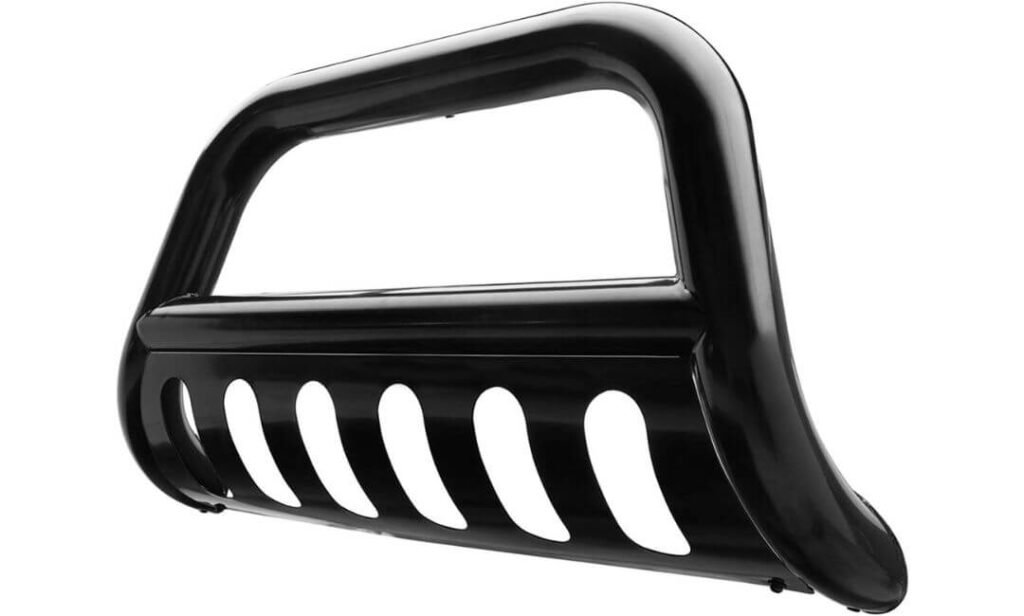
What makes this option interesting is not simply the 2004–2026 fitment claim. It is the amount of ground that one design covers while still keeping the construction fairly straightforward: 3-inch alloy-steel tubing, a dual-stage gloss black coating and a direct bolt-on mounting system. For an F-150 owner who wants a tougher front-end presence without moving into a complete replacement bumper, that combination makes practical sense.
At 28 pounds, it is noticeably lighter than some of the heavier steel guards on the market, but the design is still built around substantial 3-inch tubing rather than a thin decorative hoop. The gloss black powder coating also does more than change the appearance; it gives the steel a protective finish against everyday exposure to moisture, road grime and corrosion while keeping the truck’s front end looking properly finished.
Then there is the useful stuff that tends to get overlooked in product photos. The bar includes pre-drilled light-mounting points, so auxiliary lighting can be added without treating the bull bar like a blank piece of metal. Everything needed for the stated bolt-on installation is included, and the manufacturer backs the product with a 3-year warranty against manufacturing defects.
(The real advantage here is versatility: one compact front-end upgrade can cover a surprisingly wide range of F-150 applications without turning the installation into a fabrication project.)
What We Like About It
- Exceptionally broad F-150 coverage makes it useful for owners across multiple generations, rather than limiting the product to one narrow model range.
- 3-inch alloy-steel tubing gives the design a substantial appearance without making the guard unnecessarily bulky.
- Pre-drilled light mounts are a genuinely useful touch for owners planning auxiliary lighting later.
- Direct bolt-on construction keeps the installation much more approachable than products requiring welding or permanent modification.
- Three-year manufacturer warranty adds worthwhile reassurance for a product intended for regular outdoor use.
One Thing Worth Checking
The manufacturer notes that the bar may interfere with front-mounted sensors, particularly on newer F-150 configurations. That does not automatically rule it out; it simply makes exact year-and-trim confirmation important before ordering, especially when the truck relies on front parking, collision or other sensor-based systems.
Ford F-150 Fitment
The listed range is unusually broad: 2004–2026 Ford F-150, plus 2022–2026 F-150 Lightning EV. However, the exclusions matter just as much as the headline range. Heritage Edition, all F-150 Raptor models and 2020–2022 diesel F-150 models are excluded, so those trucks should not be treated as compatible simply because their model year falls inside the advertised range.
For the Lightning, the manufacturer specifically lists 2022–2026 F-150 Lightning EV compatibility. Because front-end electronics and sensor placement can vary between configurations, checking the exact truck before purchase is still the sensible final step.
The Insider Pro-Tip
The smartest way to shop a wide-fitment bull bar is to read the exceptions before the years. A 2004–2026 label gets attention, but the real value is knowing exactly where that range starts and stops for your particular F-150.
One more thing worth planning ahead: the built-in auxiliary-light mounting points give this guard some room to grow. If the truck eventually gets a pair of trail lights, the bar is already prepared for that upgrade—so there is no need to replace the whole setup just because the owner’s needs change later.
#3. PARTREE Bull Bar Fit for Ford F-150 2004–2026
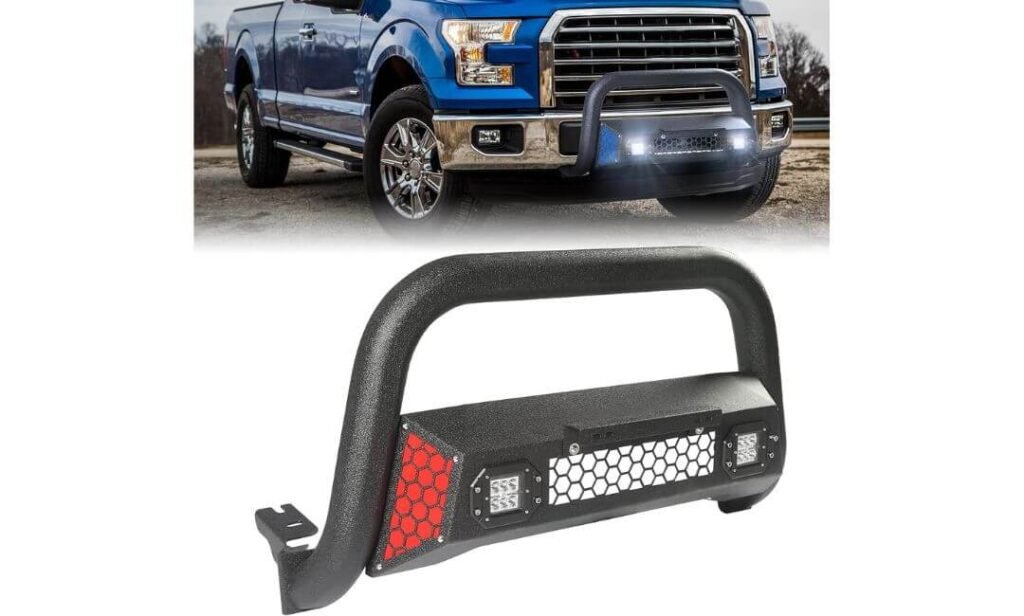
Quick Specs:
- Fitment: 2004–2026 Ford F-150
- Construction: Thickened carbon steel
- Tubing: 3-inch tube design
- Finish: Black powder coating
- Installation: Bolt-on, no drilling required
- Lighting: Integrated LED lighting
- Plate Support: Included license plate bracket
- Customization: Paintable trim panel
- Fit Type: Vehicle-specific
- Important Fitment Note: Not supported on F-150s equipped with a front radar system
A useful thing about this design is that it does not stop at being a black steel hoop across the front of the truck. It combines 3-inch carbon-steel tubing, integrated LED lighting and a license-plate bracket in one setup, which makes it particularly appealing to an F-150 owner who wants the bull bar to do more than change the truck’s appearance.
The thickened carbon-steel construction gives the guard a substantial feel, while the powder-coated surface is there for a very practical reason: the front of a truck sees plenty of water, dirt, road salt and debris. The finish helps protect the steel against rust and corrosion while keeping the whole assembly looking uniform. The paintable trim panel is another nice touch for owners who want the accessory to blend into the truck rather than leave it looking completely off-the-shelf.
Then comes the part that makes this option different from a basic bull bar: the LED lighting is built into the setup. For someone who spends time on unlit roads, trails or rural routes, having the lighting already integrated can make the front-end arrangement much cleaner than adding separate brackets later. The included license-plate bracket also keeps the plate placement accounted for rather than leaving the owner to improvise after installation.
(It is the kind of setup that makes more sense when the goal is one practical front-end upgrade instead of buying the bar today and adding every useful accessory separately later.)
What We Like About It
- Integrated LED lighting gives the front end a more complete setup straight out of the box.
- 3-inch carbon-steel tubing provides the rugged appearance F-150 owners generally want from a bull bar.
- Paintable trim panel leaves room for a more personalized finish instead of locking the truck into one visual style.
- License plate bracket included is a small but genuinely useful detail for trucks used away from paved roads.
- No-drill bolt-on installation keeps the installation approach simple, with mounting hardware and instructions supplied.
One Thing Worth Checking
The main fitment checkpoint is front radar equipment. The manufacturer specifically states that vehicles equipped with a front radar system are not supported, so that equipment should be confirmed before ordering. It is a much better five-minute check than discovering a clearance issue after the guard has been installed.
Ford F-150 Fitment
The listed application covers 2004 through 2026 Ford F-150 models, giving this design unusually broad model-year coverage. That makes it relevant to owners of both older and newer trucks, but the broad range should always be matched against the actual front-end configuration.
The important exception is front radar-equipped F-150s, which are specifically excluded. If the truck uses radar-based driver-assistance hardware, verify compatibility first; for configurations without that system, the vehicle-specific bolt-on design offers a much more straightforward path.
The Insider Pro-Tip
The smartest reason to choose this setup is not simply the wide year range. It is the fact that lighting, plate mounting and the guard are planned as one package. That matters when the goal is a clean-looking front end without turning the truck into a collection of separately mounted accessories.
And if the truck has a front radar system, do not try to “make it work” just because the model year appears on the listing. Technology fitment beats year-range fitment every time. Confirm that one detail first, then the rest of the decision becomes considerably easier.
#4. Westin 31-5490 E-Series Bull Bar
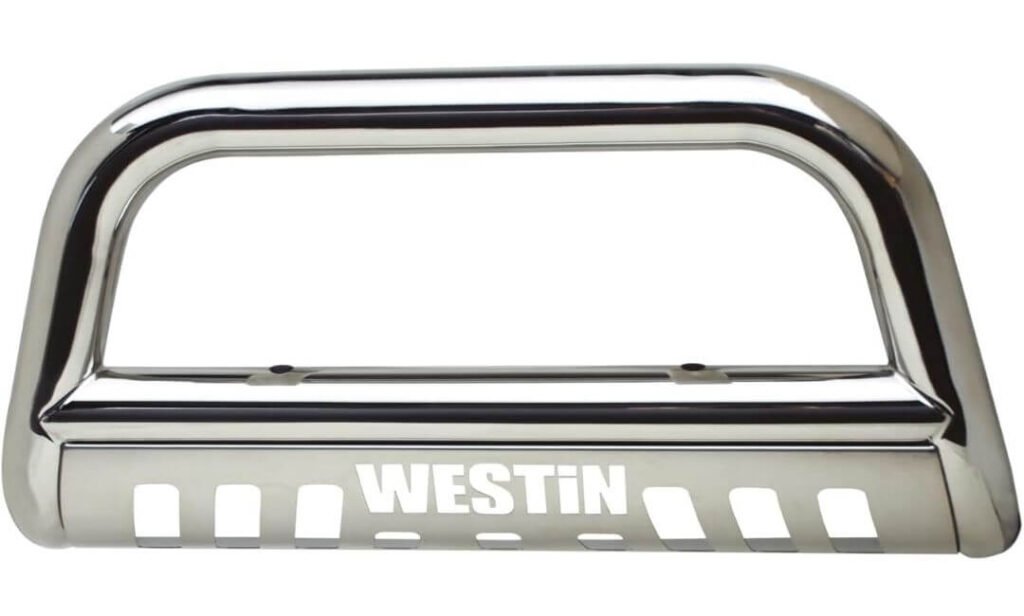
Quick Specs:
- Fitment: 2004–2026 Ford F-150; 2022–2026 F-150 Lightning
- Construction: 3-inch diameter stainless-steel tubing
- Finish: Polished stainless steel
- Skid Plate: Brushed stainless-steel skid plate
- Cross Tube: Fully welded
- Light Mounts: 2 mounting points on the center bar
- Installation: Bolt-on with included mounting kit
- Dimensions: 43 × 22 × 13 inches
- Front Position: Front
- Optional Accessories: 20-inch LED light mounting brackets and license-plate relocation bracket sold separately
There is a noticeable difference between a bull bar that simply looks substantial and one that has the kind of stainless-steel construction you can live with for years. This Westin design takes the latter approach. Its 3-inch tubing gives the F-150 a strong front-end profile, while the polished stainless finish brings a cleaner look than the usual all-black setup.
The brushed stainless-steel skid plate is another reason this one earns its place here. It adds protection below the center section while tying into the tubular design instead of looking like an afterthought. The fully welded cross tube also gives the assembly a more finished, solid construction, which is exactly what you want when a front-end accessory is going to stay on the truck year after year.
The practical side is equally convincing. The included mounting kit uses a bolt-on installation, so there is no need to turn this into a fabrication job. Two light-mounting points are already built into the center bar, giving the truck an easy path to auxiliary lighting later. The important detail is that the lights and their dedicated mounting brackets are optional, so the bar can remain clean if lighting is not part of the plan.
(This is a good example of buying the main hardware once and leaving yourself room to personalize it later.)
What We Like About It
- 3-inch stainless-steel tubing gives the bar a premium, substantial construction without the maintenance concerns associated with ordinary unfinished steel.
- Brushed stainless skid plate adds useful lower-front coverage while keeping the design visually clean.
- Fully welded cross tube gives the assembly a properly integrated feel rather than looking like several separate pieces joined together.
- Two light-mounting points make future auxiliary-light upgrades straightforward.
- Complete mounting kit included keeps the initial installation much simpler, with optional accessories available only if they are actually needed.
One Thing Worth Knowing
The LED light bar is not included, and the dedicated 20-inch light mounting brackets are optional. That is actually useful to know upfront because the main bull bar can be installed as-is, then lighting can be added later if the truck’s use calls for it.
Ford F-150 Fitment
Westin lists this E-Series application for 2004–2026 Ford F-150 models, along with 2022–2026 F-150 Lightning applications. That gives it unusually broad coverage for owners comparing a single bull bar across different F-150 generations.
Because F-150 equipment can vary by trim and year, the exact truck should still be checked before ordering. Westin’s application information is the right starting point, while details such as parking-sensor placement and factory tow-hook configuration can affect the final installation.
The Insider Pro-Tip
If the goal is a bull bar that still looks right several years from now, stainless steel is worth paying attention to. The polished finish gives this one a more refined appearance than a basic black guard, while the skid plate keeps it from becoming purely a styling accessory.
And there is no reason to buy the lighting hardware simply because the bar can carry it. Install the guard first, see how the truck is actually used, then add auxiliary lighting only if you need it. That keeps the build cleaner and prevents spending money on accessories that may never leave the garage.
#5. TrailFX Trail FX B0028B Bull Bar
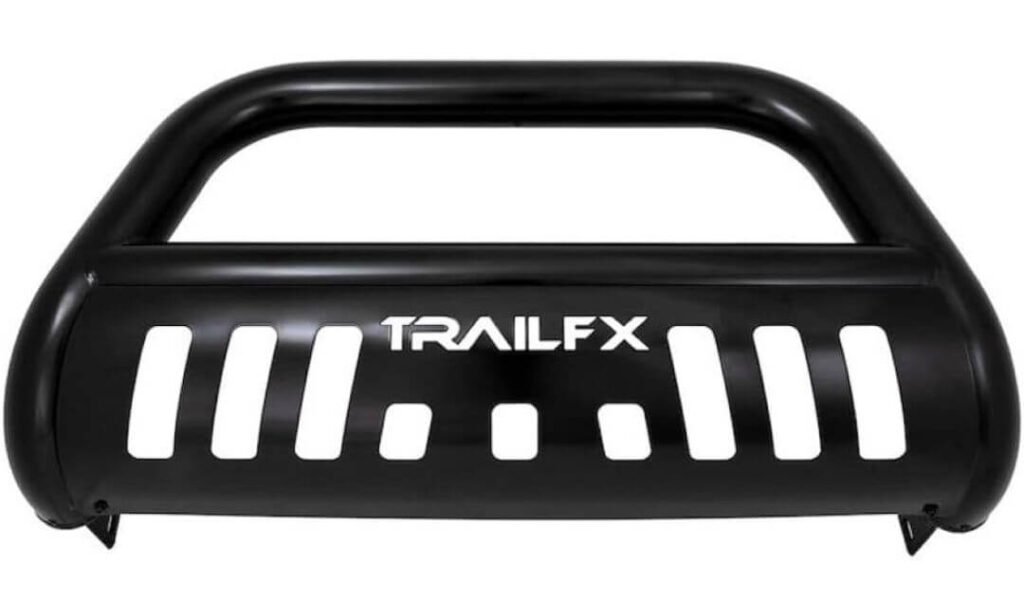
Quick Specs:
- Fitment: Ford F-150 applications across 2004–2026
- Construction: Alloy steel
- Tubing: 3-inch mandrel-bent steel tubing
- Finish: Black powder coating
- Weight: 28.2 lb
- Skid Plate: Integrated
- Lighting: Pre-drilled mounting points for auxiliary lights
- Installation: Bolt-on design with mounting hardware and brackets
- Dimensions: 40.56 × 26.38 × 13.39 inches
- Vehicle Type: Truck
A good bull bar should not need a complicated explanation to make sense. The B0028B gets the basics right with 3-inch mandrel-bent alloy-steel tubing, an integrated skid plate and a powder-coated finish, giving the F-150 a properly built front-end accessory rather than something that exists only for visual effect.
The mandrel-bent tubing is particularly worth noting. Smooth bends keep the shape clean while maintaining the continuous tubular construction, and the 28.2-pound weight keeps the overall setup reasonably manageable. The black powder coating then gives the steel a practical layer of protection against the moisture and grime that a truck’s front end naturally collects.
There is also some room to build around it later. The pre-drilled lighting points allow auxiliary lights to be added when needed, while the integrated skid plate extends protection below the main bar. Installation follows the familiar bolt-on approach with supplied brackets and hardware, although the exact bumper configuration can determine whether a small amount of trimming is necessary.
(That combination makes it a sensible choice for an F-150 that sees a mixture of normal roads, work duty and occasional trail use.)
What We Like About It
- 3-inch mandrel-bent tubing gives the bar a clean shape without sacrificing the substantial look expected from a truck accessory.
- Integrated skid plate adds protection below the main tubular section rather than leaving the lower front exposed.
- 28.2-pound construction keeps the guard relatively manageable while still using steel throughout the main structure.
- Pre-drilled lighting points provide a simple upgrade path for round auxiliary lights or a larger LED setup.
- Vehicle-specific design makes it a more appropriate choice for F-150 applications than a generic universal bull bar.
One Thing Worth Knowing
The exact installation can vary with the F-150 generation and bumper configuration. Minor cutting may be required on certain applications, so it is worth checking the instructions and vehicle-specific mounting details before starting the installation.
Ford F-150 Fitment
The B0028B is listed across a broad range of 2004–2026 Ford F-150 applications, making it relevant to both older trucks and newer-generation owners looking for a traditional tubular bull-bar setup. The listing also identifies applications for the 2022–2025 F-150 Lightning.
With such a wide model-year span, the safest approach is still to match the exact F-150 year and front-end configuration before ordering. Front sensors, adaptive-cruise equipment and bumper design can vary between trucks, so those details deserve a quick compatibility check rather than relying only on the headline year range.
The Insider Pro-Tip
The useful thing about this design is its upgrade path. You can run the bull bar by itself and keep the front end clean, then add lighting later if the truck actually needs it. That is a better approach than buying every possible accessory on day one.
For an F-150 that works during the week and occasionally leaves the pavement on weekends, the combination of mandrel-bent steel, integrated lower protection and optional lighting gives the B0028B a practical middle ground. It looks ready for the trail without forcing the truck into a full off-road build.
Best Ford F-150 Bull Bar Comparison (2004–2026)
Ford F-150 Bull Bar Buying Guide
Choosing a bull bar for an F-150 is less about finding the biggest-looking piece of steel and more about matching the guard to the truck’s actual front end, equipment and intended use. The products in this comparison make that especially clear: one is focused on newer-generation F-150s, several cover a much wider year range, and some add skid plates or lighting while others keep the design much simpler.
Material and Finish: What You Are Actually Paying For
Material affects more than appearance. Carbon steel and alloy steel are common choices for tubular bull bars because they provide the rigidity and substantial construction most truck owners expect. The Maxzina uses carbon steel, while TAC and TrailFX use alloy-steel construction. Westin takes a different route with 3-inch stainless-steel tubing, which brings better natural corrosion resistance and a more refined appearance.
The finish matters because a bull bar lives directly in the weather. A powder-coated surface helps protect steel against moisture, road grime and corrosion, while polished or brushed stainless steel offers its own corrosion resistance and a different visual character. For a truck that sees winter roads, mud or frequent off-road use, finish quality is not just a styling decision.
Fitment Comes Before Everything Else
The F-150 has gone through multiple generations, so 2004–2026 should never be treated as one identical vehicle platform. A product can legitimately cover a wide range while still having exclusions or configuration-specific requirements.
Check the exact model year, cab configuration where applicable, trim, front bumper design and factory equipment before ordering. This becomes even more important with newer trucks that use advanced driver-assistance hardware.
The products here illustrate the point well. Maxzina is aimed at 2021–2026 F-150s, while TAC, PARTREE, Westin and TrailFX offer much broader ranges. TAC specifically excludes Heritage Edition, all F-150 Raptor models and 2020–2022 diesel F-150 models, while PARTREE does not support F-150s equipped with a front radar system.
Front-End Coverage: More Metal Does Not Automatically Mean More Protection
A traditional bull bar primarily concentrates protection around the center grille and bumper area. That can be useful against road debris, brush and lighter impacts, while also giving the truck a stronger front-end appearance.
A grille guard generally extends farther around the front end and can provide more perimeter coverage. A full-width replacement bumper goes much further again, often incorporating recovery points, winch mounting and substantially different structural protection.
For most owners choosing a tubular bull bar, the sensible expectation is additional front-end protection, not collision-proof armor. It should complement the truck’s factory bumper rather than be treated as a substitute for a purpose-built off-road bumper.
Mounting Style and Installation
A good installation starts with the mounting system. The five products here use bolt-on approaches, which is a major advantage for owners who want to avoid welding or extensive fabrication.
Still, “bolt-on” does not mean every F-150 will install identically. Some configurations can involve factory tow-hook removal, bumper-area clearance or minor trimming, depending on the generation and bumper design. TrailFX, for example, notes that minor cutting may be required on certain applications, while TAC’s installation uses supplied mounting hardware.
Before buying, check whether the product uses the truck’s existing mounting points, whether tow hooks need to be removed, and whether any bumper or air-dam modification is mentioned for your specific application.
Skid Plate and Lighting: Useful Features or Just Extra Hardware?
A bull bar with a skid plate makes sense when the truck regularly encounters gravel, brush, uneven trails or other conditions where the lower front area can take abuse. TAC, Westin and TrailFX include integrated skid-plate protection, while the other designs focus more heavily on the tubular guard itself.
Lighting is another practical consideration. TAC and TrailFX provide pre-drilled lighting points, while Westin offers two mounting points for auxiliary lights. PARTREE goes a step further by integrating LED lighting into its setup.
The important distinction is whether you actually need the lighting. If the truck spends most of its life on paved roads, buying a lighting-ready bull bar may simply give you an upgrade option for later. If you regularly drive unlit trails or rural roads, those mounting provisions become considerably more useful.
Sensors, Radar and Driver-Assistance Systems
This is one area where older bull-bar buying advice can be dangerously outdated. Modern F-150s can use front radar, parking sensors, cameras and other driver-assistance hardware, and a metal guard placed in front of those systems can affect their operation.
The listings in this comparison make that clear. Maxzina specifically warns about BlueCruise sensor obstruction, while PARTREE states that vehicles equipped with a front radar system are not supported. TAC also warns that its bar may interfere with front-mounted sensors.
Do not assume that a bull bar is compatible simply because the model year matches. If the truck has radar, BlueCruise, adaptive cruise, parking sensors or other front-facing technology, verify the exact configuration before installation.
Weight and Front-End Geometry
Weight is worth considering, but it should be looked at in context. The products here range from roughly 28 pounds to 46.3 pounds, depending on the design and construction.
A heavier steel guard can feel substantial, but added weight is still added weight. It can matter if the truck is already carrying a winch, heavy bumper, recovery equipment or other front-end accessories. The guard’s physical shape also matters because a poorly positioned accessory can reduce practical clearance even when its weight is reasonable.
For normal street use, the bigger concern is usually clearance and proper mounting, not obsessing over a small difference in listed weight.
Ford F-150 Bull Bar vs. Grille Guard: What Is the Real Difference?
A bull bar is generally a smaller tubular guard concentrated around the center of the front end. It is lighter and less visually dominant than a full grille guard and is usually chosen for a balance of appearance, modest protection and straightforward installation.
A grille guard typically extends farther upward and outward, surrounding more of the grille and sometimes the headlights. That gives broader physical coverage but also adds more material, weight and visual bulk.
For an F-150 used mainly for commuting, towing and everyday driving, a bull bar can be the more sensible middle ground. If the truck regularly works around heavy brush, wildlife or demanding off-road terrain, the additional coverage of a proper grille guard may justify the extra size.
Is a Front Bull Bar Compatible With Your Bumper?
It can be, but the exact application is what decides it. A bull bar should mount to the vehicle using the brackets and mounting points intended for that specific F-150 application.
Check the product’s fitment information against your model year, trim, bumper configuration and factory equipment. Also look for notes about tow hooks, air dams, bumper trimming and sensor clearance.
This is particularly important when buying a wide-fitment product. The phrase “fits 2004–2026 F-150” tells you the broad application range; the installation notes tell you whether your particular truck is actually a good match.
Do You Need a Bull Bar With a Skid Plate?
Not necessarily. A skid plate becomes much more valuable when the truck regularly travels over rocks, rough trails, deep gravel, brush or uneven terrain where the lower front section can contact obstacles.
For primarily highway or city driving, the tubular bull bar itself may provide all the additional front-end coverage the owner actually needs. For mixed-use F-150s, however, an integrated skid plate is a useful feature because it extends protection below the main bar without requiring a separate front-end accessory.
The best choice is therefore not the bull bar with the longest feature list. It is the one whose fitment, construction, coverage, sensor compatibility and useful extras match the way the F-150 is actually driven.
Installation Spotlight: Ford F-150 Bull Bar Installation
A bolt-on bull bar is usually a manageable weekend installation, but the word “bolt-on” should not be confused with “fit it and forget it.” The bar needs to sit squarely, the mounting hardware needs to be tightened correctly, and every sensor, tow hook, skid plate and electrical connection needs to be checked before the truck goes back on the road.
The exact procedure varies between F-150 generations and the five products in this guide, so the manufacturer’s instructions should always take priority over a generic installation sequence.
Tools and Preparation
Before starting, have the complete hardware kit, installation instructions, a socket and ratchet set, appropriate wrenches, torque wrench, trim-removal tools if required, a work light and protective gloves ready.
For a heavier bar such as the 46.3-pound Maxzina, having another person help hold the assembly in position makes alignment considerably easier. A second set of hands is also useful for preventing the bar from resting against the bumper while the mounting bolts are still loose.
Before removing anything, park the F-150 on a level surface, engage the parking brake and make sure the engine is off. Open the packaging and compare the brackets, bolts, washers and spacers with the supplied instructions. This simple check can prevent discovering halfway through the job that a mounting component has been installed on the wrong side.
Align the Bull Bar Before Tightening Anything
The most important part of the physical installation is getting the mounting brackets correctly aligned before final tightening.
Start by identifying the vehicle’s intended mounting points and loosely attach the supplied brackets. Do not fully tighten the hardware yet. With the brackets still able to move slightly, position the bull bar and install the remaining bolts.
Now step back and check the bar from several angles. It should sit centered relative to the grille, bumper and headlights, with reasonably even spacing on both sides. If one side looks noticeably higher or closer to the bumper, correct the alignment before tightening.
This is where rushing creates problems. Tightening one side completely while the other side is still loose can pull the assembly out of alignment and make the remaining holes unnecessarily difficult to match.
Torque and Hardware Checks
Once the bar is sitting correctly, tighten the mounting hardware progressively rather than immediately forcing everything to maximum tightness.
Use the torque specification supplied by the manufacturer for your particular product. Do not substitute a guessed torque value simply because another bull bar uses similar-looking bolts. Fastener size, grade, bracket design and vehicle mounting points can differ.
After reaching the specified torque, inspect every accessible fastener again. Make sure washers and spacers are seated correctly, the brackets are not twisted, and the bar is not touching the bumper, grille or other bodywork.
After the first few drives, perform another hardware inspection. A quick check for loose fasteners, unusual movement or new contact marks is inexpensive insurance.
If the Bull Bar Includes or Supports LED Lighting
Lighting needs more attention than simply attaching wires to the nearest power source.
For products such as the PARTREE with integrated LED lighting, follow the supplied wiring instructions exactly. For lighting-ready designs such as TAC, Westin and TrailFX, the lights and wiring arrangement may be separate from the bull bar itself.
A proper auxiliary-light installation normally involves an appropriately rated fuse, relay or switching system where required, secure wiring and weather-resistant connections. Keep wiring away from hot engine components, sharp edges and moving parts.
Route the harness so it cannot rub against the bull bar or suspension components. Use suitable automotive wire protection and secure loose sections with proper fasteners. Any connection exposed to water, mud or road spray should be protected against moisture rather than simply wrapped in ordinary tape.
Do not assume that an integrated light means the electrical side is automatically complete. The physical mounting and the wiring installation are two separate jobs.
Installing a Bull Bar With a Skid Plate
If the design includes an integrated skid plate, pay attention to the manufacturer’s intended mounting sequence.
Generally, the skid plate and bull-bar assembly need to remain slightly loose during initial positioning so the complete structure can settle into its mounting points. Once the bar and plate are aligned, tighten the hardware in the sequence specified by the manufacturer.
Check the clearance underneath before finishing. The skid plate should not sit against the bumper, exhaust components, wiring, suspension parts or other vehicle hardware.
A few extra minutes checking clearance is far better than discovering a metal-on-metal contact after the first rough road.
Check Sensors and Cameras Before Driving
This is one of the most important checks on a modern F-150.
Bull bars place metal directly in front of areas that may contain parking sensors, front radar, cameras or other driver-assistance equipment. The products in this article have different compatibility notes, so there is no universal answer.
The Maxzina listing specifically warns about BlueCruise sensor obstruction, while PARTREE states that front-radar-equipped vehicles are not supported. TAC also warns that its design may interfere with front-mounted sensors.
After installation, inspect the entire front area and make sure no sensor or camera has been unintentionally covered, repositioned or placed behind a metal component. If the vehicle displays a driver-assistance warning, do not simply ignore it and continue driving normally. Follow the vehicle and accessory manufacturer’s guidance.
Check Tow Hooks, Winch Clearance and the Lower Front End
Some bull-bar installations can affect the factory tow-hook arrangement. This is particularly important because tow hooks are not decorative equipment; they are recovery hardware designed for specific loads.
If the installation instructions require removing or repositioning factory tow hooks, understand that before beginning the job. Do not improvise a replacement mounting method.
The same applies to a winch. A bull bar should not be assumed to be winch-compatible simply because it is strong or uses steel tubing. If the F-150 already has a winch bumper, recovery system or aftermarket front-end equipment, verify physical clearance and mounting compatibility before installation.
Final Clearance Check
Before the first road test, turn the steering fully from side to side and inspect the front assembly for anything that could contact the tires, suspension or bodywork.
Check the following:
- The bar is centered and level.
- No part of the bar touches the bumper or grille.
- Mounting bolts are tightened to the manufacturer’s specified torque.
- Tow hooks remain correctly positioned if retained.
- Skid-plate clearance is adequate.
- Wiring is secured away from heat and moving components.
- Auxiliary lights are firmly mounted.
- Sensors and cameras have the clearance required by the vehicle and accessory manufacturer.
- The license plate remains securely mounted and legally positioned.
Then take a short, slow test drive before returning to normal driving.
Maintenance After Installation
A bull bar lives in one of the dirtiest areas of the truck, so maintenance is mostly about keeping contamination from sitting on the finish.
Wash off mud, salt and road grime rather than allowing them to remain trapped around mounting brackets and welds. After driving through winter salt or muddy trails, pay particular attention to the underside and areas around the mounting hardware.
For powder-coated steel bars, inspect the finish occasionally for stone chips or exposed metal. A small damaged area is much easier to address early than a larger corrosion spot that has been left untreated.
Stainless-steel designs such as the Westin can still benefit from regular cleaning, especially around the skid plate and mounting hardware. Avoid harsh products that are inappropriate for the specific finish.
Most importantly, after rough trail use or any noticeable impact, inspect the tubing, welds, brackets and mounting points before continuing to rely on the bull bar. A clean-looking accessory can still have hidden damage after a hard hit.
Ford F-150 Front-End Protection: Grille Guard vs. Bull Bar
The two products are often grouped together because both sit at the front of the truck, but they are not doing the same job. A bull bar is usually a more compact tubular guard focused around the center of the front bumper and grille area. A grille guard extends farther upward and outward, giving the truck considerably more physical coverage.
That difference matters on an F-150. The right choice depends on whether the truck spends most of its time commuting, working around brush and job sites, towing, or exploring rougher terrain.
What a Grille Guard Actually Protects
A traditional grille guard generally uses a wider framework that rises in front of the grille and can extend toward the headlights. Depending on the design, it may provide protection around a much larger portion of the front grille, headlights and upper front fascia than a conventional bull bar.
That additional coverage is useful for trucks regularly exposed to brush, branches, livestock areas or wildlife. A work truck that spends its days around construction sites or rural roads may benefit from having more of the front end physically shielded.
The trade-off is size. A larger guard adds more material to the front of the F-150 and can make access to the grille, headlights and other components less convenient. Some designs also require more involved mounting hardware and may affect the appearance of the truck substantially.
What a Bull Bar Actually Protects
A bull bar takes a more restrained approach. Instead of surrounding most of the grille, it generally uses tubular steel or stainless-steel construction across the central front area, providing an additional barrier in front of the bumper and lower grille region.
That makes it attractive for owners who want additional front-end protection without the bulk of a full grille guard. The products in this article demonstrate the range: some concentrate almost entirely on the tubular bar, while others add a skid plate, lighting provisions or integrated lighting.
The important expectation is realistic: a bull bar can help with minor impacts, road debris and brush contact, but it should not be considered equivalent to a heavy-duty replacement bumper or a professionally engineered collision structure.
Weight, Airflow and Front-End Balance
A full grille guard generally uses more material, so it can add more weight to the front of the truck. That matters when the F-150 already carries a winch, heavy bumper, recovery equipment or other front-mounted accessories.
Bull bars are usually more compact, which can make them a better fit for an owner who wants protection without substantially changing the truck’s front-end setup. The five options reviewed here range from roughly 28 pounds to 46.3 pounds, depending on construction and design.
Airflow is another consideration, although it should not be exaggerated. A properly designed tubular accessory normally leaves substantial openings around the front of the truck. A larger grille guard can place more material in front of the grille, so its design and the truck’s cooling requirements deserve attention, particularly on vehicles used for heavy towing or demanding work.
Accessory Compatibility Is Where Designs Start to Differ
A grille guard can provide mounting opportunities for auxiliary lights, but its larger structure can also make the front end more crowded.
Bull bars can be surprisingly versatile here. TAC and TrailFX provide lighting-ready mounting points, Westin offers two light-mounting points, and PARTREE takes the integrated approach with LED lighting included in its setup.
Skid plates are another useful distinction. TAC, Westin and TrailFX include integrated lower protection, which can make more sense for an F-150 that regularly leaves paved roads.
A winch is different. Do not assume that a bull bar or grille guard is winch-compatible simply because it is made from steel. A winch needs a properly engineered mounting system capable of handling its intended loads. If a winch is part of the plan, a dedicated winch bumper or winch-compatible front-end system is usually the more appropriate starting point.
What About Factory Sensors and Driver-Assistance Systems?
This is one of the biggest differences between buying front-end accessories for an older F-150 and buying one for a newer truck.
Modern F-150s can have front radar, parking sensors, cameras, adaptive cruise and BlueCruise-related equipment. A metal accessory positioned in front of those systems can interfere with their field of view or operation.
The products in this guide show why this cannot be answered with a simple “yes” or “no.” Maxzina warns about BlueCruise sensor obstruction. PARTREE specifically does not support front-radar-equipped vehicles. TAC also warns that front-mounted sensors may be affected.
A grille guard can create the same issue. The correct approach is not to assume that one style is automatically sensor-safe. Check the exact accessory application against the exact equipment on the F-150.
Warranty and OEM Equipment Considerations
Installing a bull bar or grille guard does not automatically mean the entire truck warranty disappears. However, an aftermarket accessory can create a problem if its installation or modification causes damage to an original vehicle component.
That is why no-drill, vehicle-specific mounting is attractive. It generally avoids unnecessary structural modification, provided the installation is performed exactly as specified.
The same principle applies to sensors and cameras. If an accessory causes a driver-assistance system to malfunction, the solution is not to disable the warning and continue driving. The accessory and vehicle documentation should be checked, and any required calibration should be handled appropriately.
Everyday F-150 Driver: Bull Bar Usually Makes More Sense
For an F-150 that spends most of its time on city streets, highways, commuting routes and normal towing duties, a bull bar is usually the more balanced option.
It adds front-end protection and changes the truck’s appearance without surrounding the entire grille with a large steel framework. A design with a skid plate or lighting provisions can also provide useful extras without turning the truck into a dedicated off-road build.
For this type of owner, the smaller footprint and simpler installation are often more valuable than maximum physical coverage.
Overlanding and Trail Use: Look Beyond the Bar
For an overlanding F-150, the decision becomes more demanding. A bull bar with an integrated skid plate and auxiliary-light mounting points can be useful because it combines several front-end functions into one accessory.
TAC, Westin and TrailFX are particularly relevant here because their designs incorporate lower protection or lighting provisions. PARTREE is also interesting for owners who want integrated lighting rather than adding a separate light-mounting system.
But serious trail use can eventually expose the limits of a basic bull bar. If the truck needs recovery points, a winch, high-clearance protection or stronger approach-angle optimization, a dedicated off-road bumper becomes a more appropriate upgrade.
Work Truck: Choose Protection Around the Actual Risk
A work truck does not necessarily need the largest guard available. The useful question is what the truck encounters.
A contractor working mainly on paved construction sites may benefit from a compact bull bar that protects the central front end and remains relatively easy to live with. A truck constantly moving through brush, rural properties or areas with frequent wildlife exposure may have a stronger case for a full grille guard.
For either setup, mounting strength, sensor compatibility and clearance should come before appearance.
The Bottom Line
A bull bar is the better middle ground when the goal is modest front-end protection, a cleaner installation and a less bulky appearance.
A grille guard makes more sense when maximum front-end coverage is the priority and the truck regularly encounters brush, wildlife or demanding work environments.
Neither should be chosen purely because it looks tougher. On a modern F-150, fitment, sensor clearance, mounting integrity and the truck’s actual use matter more than the amount of steel visible in a product photo.
Real-World Fitment: Clean Fit and Trail-Ready Builds
The best-looking bull bar is not necessarily the best match for an F-150. A truck built for long highway miles has different needs from one carrying camping equipment into rough terrain, and a work truck that regularly tows or handles recovery equipment has another set of priorities again.
The five products in this guide cover those different use cases surprisingly well. The key is to build around the truck’s actual job, rather than adding every accessory that happens to look good in a product photo.
Matching a Bull Bar to an Overlanding F-150
An overlanding build usually benefits from equipment that performs more than one job without creating unnecessary weight or clutter.
A bull bar with an integrated skid plate and lighting provisions can make particular sense because the front of the truck can gain lower protection and a place for auxiliary lighting in one installation. TAC, Westin and TrailFX all bring skid-plate coverage into the equation, while PARTREE takes a more integrated approach with built-in LED lighting.
Think about the rest of the build, too. If the F-150 already carries a roof rack, tent, recovery boards, auxiliary fuel, camping equipment and other gear, there is little value in adding a huge front-end accessory simply because it looks aggressive. Weight accumulates quickly on an overlanding truck.
A clean tubular bull bar can therefore be the smarter choice when the truck needs some additional front-end protection without becoming overloaded with steel.
Towing and Recovery: Do Not Confuse Protection With Recovery Hardware
An F-150 used for towing can benefit from a bull bar, but towing and recovery should not be treated as the same job.
A bull bar protects and accessorizes the front end. A winch mount or recovery point is engineered for pulling loads. If the truck regularly performs vehicle recovery, the front-end system needs to be designed specifically around those forces.
Before choosing a bar for a towing or recovery-oriented build, check whether it interferes with factory tow hooks, recovery points, the receiver of another front-mounted accessory or the routing of recovery equipment.
This is particularly relevant with some of the products in this guide. Installation can require factory tow-hook removal or repositioning, so that should be understood before purchasing rather than discovered when the truck is already on the driveway.
Daily Driver With Mild Off-Road Use
For the F-150 that spends Monday through Friday on pavement and occasionally heads down a gravel road or easy trail, a compact bull bar is usually the most sensible middle ground.
There is no reason to build a full expedition front end when the truck’s real life consists of commuting, errands, towing a trailer and occasional weekend exploring.
In this situation, focus on a vehicle-specific fit, sensible weight, corrosion-resistant finish and an installation that does not require unnecessary modification. Lighting provisions are useful if night driving on rural roads is common, while a skid plate becomes worthwhile if the truck regularly encounters rougher surfaces.
Building Around the Existing F-150, Not Against It
Before ordering, look at what is already installed on the truck.
Check the front bumper, tow hooks, fog lights, parking sensors, radar equipment, cameras, skid plates and any aftermarket recovery hardware. A bull bar should complement those components rather than force the owner into a chain of additional modifications.
This matters particularly on newer F-150s. A design that looks perfect on a truck without front radar may not be appropriate for one equipped with radar or BlueCruise hardware.
The cleanest build is usually the one where the accessory appears as though it belongs there from the beginning.
Skid Plate and Roof-Rack Builds
A roof rack does not directly determine bull-bar fitment, but it does change how the complete truck should be thought about.
An F-150 carrying substantial gear up top and adding a heavy steel guard down front is building weight in two places. That does not automatically make the setup wrong, but it makes overall payload and vehicle loading worth keeping in mind.
If the roof rack is already heavily loaded, a relatively compact bull bar can provide the front-end protection you want without adding unnecessary bulk. If the truck spends serious time on rocky trails, an integrated skid plate can be a more valuable upgrade than simply choosing the heaviest available tubular guard.
Appearance and Protection Should Work Together
There is nothing wrong with wanting an F-150 to look tougher. A bull bar is one of the easiest ways to change the truck’s visual character without replacing the entire front bumper.
The trick is keeping the appearance consistent with the truck.
A polished stainless-steel bar, such as the Westin, gives the F-150 a cleaner and more refined appearance. Black powder-coated designs from Maxzina, TAC, PARTREE and TrailFX take the truck in a more traditional rugged direction.
Neither approach is automatically better. The right finish depends on the rest of the build, including wheels, running boards, grille, bumper finish and other exterior accessories.
Protection That Matches the Way You Drive
A bull bar should solve a real problem, even if that problem is simply wanting a little more protection around the front end.
For daily driving, prioritize clean fitment and manageable size.
For mixed road and trail use, skid-plate coverage and lighting provisions become more useful.
For overlanding, consider total vehicle weight and how the bull bar works with the rest of the recovery and camping equipment.
For work and towing, pay close attention to tow-hook clearance, front-end access and the equipment already mounted to the truck.
And for any modern F-150, put sensor compatibility ahead of appearance. A beautifully fitted bull bar is not a good fit if it interferes with equipment the truck relies on every day.
The strongest build is not the one with the most accessories. It is the one where every piece has a reason to be there, fits the truck properly, and still makes sense when the novelty of the new look wears off.
FAQs About Ford F-150 Bull Bars
Will a bull bar interfere with BlueCruise, front radar, or parking sensors on a Ford F-150?
It can, and this is one of the most important fitment questions on a newer Ford F-150. A bull bar places metal directly in front of the truck, so the exact position of radar and other sensors matters more than the product’s advertised model-year range. The Maxzina listing specifically warns about BlueCruise sensor obstruction, while PARTREE states that vehicles equipped with a front radar system are not supported.
The right approach is not to assume that every 2021–2026 F-150 will behave the same way. Before ordering, check the truck’s exact driver-assistance equipment and compare it with the bull bar’s application notes. If the manufacturer recommends confirming fitment, actually do it. That five-minute check is far more valuable than discovering a sensor problem after installation.
Is a 2004–2026 Ford F-150 bull bar really compatible with every F-150 in that range?
No, and this is where broad marketplace fitment claims need to be read carefully. “2004–2026 F-150” describes the advertised application range, not a guarantee that every trim and configuration is identical.
The TAC example makes this especially clear. Its advertised range excludes Heritage Edition, all F-150 Raptor models and 2020–2022 diesel F-150 models, while separately listing 2022–2026 F-150 Lightning compatibility. PARTREE also excludes vehicles with front radar systems. In other words, the exceptions are not small print to ignore; they are part of the actual fitment.
For an older F-150, check the year and bumper configuration. For a newer truck, also check sensors, radar, BlueCruise and other front-end equipment. A wide year range is useful, but the exact truck still gets the final vote.
Does a bull bar with a skid plate actually make a noticeable difference on an F-150?
It can, particularly when the truck regularly leaves paved roads. The skid plate extends protection below the tubular section, where gravel, brush and trail obstacles can reach parts of the lower front end that a basic center bar does not cover.
That is why the skid-plate-equipped options in this guide have a different appeal from a simple tubular guard. TAC, Westin and TrailFX add lower protection, giving them more relevance for mixed road-and-trail use.
Still, there is an important distinction: a skid plate does not turn a bull bar into a full off-road bumper. If the F-150 is being driven through serious rock terrain or used for hard recovery work, a purpose-built off-road bumper with properly engineered recovery and winch provisions is the more appropriate direction.
Can I install an F-150 bull bar myself, or is professional installation actually worth it?
Many of the products covered here are designed around bolt-on installation, so an experienced owner with normal hand tools can often handle the physical installation. Maxzina, TAC, PARTREE and Westin all use approaches intended to avoid extensive fabrication, although the exact procedure varies by truck and product.
The part that deserves more attention is everything around the mounting bolts. Before calling the job finished, check:
- The bar is centered and level.
- Every mounting point is seated correctly.
- Hardware is tightened to the manufacturer’s specified torque.
- Tow hooks and other factory components have the required clearance.
- The skid plate does not contact other vehicle components.
- Sensors and cameras remain properly positioned.
- Auxiliary-light wiring is secured away from heat, sharp edges and moving parts.
For a straightforward truck with a compatible configuration, DIY installation can be perfectly reasonable. For a newer F-150 with radar, BlueCruise, parking sensors or complicated aftermarket equipment, professional installation can be worthwhile simply because the cost of getting the fitment wrong is higher than the installation bill.
Should I choose a heavier steel bull bar for better protection on my Ford F-150?
Not automatically. More weight is not the same thing as more useful protection. The Maxzina is listed at 46.3 pounds, while TAC is around 28 pounds and TrailFX is about 28.2 pounds. Those numbers tell you something about construction, but they do not tell you which bar is best for every F-150.
A heavier guard may make sense when substantial construction and front-end presence are priorities. But if the truck already carries a winch, heavy bumper, recovery equipment or a large amount of overlanding gear, adding more weight to the nose should be a conscious decision.
The better question is what the truck actually needs:
- Daily driver: prioritize clean fitment, reasonable weight and sensor compatibility.
- Weekend trail truck: skid-plate coverage and lighting provisions become more valuable.
- Overlanding build: consider the bull bar as part of the truck’s total weight and recovery setup.
- Work or recovery truck: mounting strength, tow-hook access and dedicated recovery equipment matter more than appearance.
A bull bar should ultimately fit the way the F-150 is used, not simply win a weight or “heavy-duty” contest on a product page.
Final Take
After looking closely at these five F-150 bull bars, the biggest takeaway is simple: there is no single winner for every truck. The right choice changes with the F-150’s generation, factory equipment, how much time it spends off-road, and whether the owner actually needs a skid plate or auxiliary lighting.
For a newer 2021–2026 F-150, Maxzina makes the most sense when a generation-specific carbon-steel guard and straightforward bolt-on installation are the priority. TAC is the more interesting option for buyers who want very broad model-year coverage, provided the truck does not fall into its listed exclusions or sensor-compatibility issues. PARTREE stands apart by combining the guard with integrated LED lighting and a license-plate bracket, making it appealing when an all-in-one setup is the goal.
Westin takes a different route. Its 3-inch stainless-steel construction and skid plate give it a more refined, long-term feel, while the built-in light-mounting points leave room for a future upgrade. TrailFX sits comfortably in the middle, combining mandrel-bent steel tubing, an integrated skid plate and lighting provisions without making the front end unnecessarily complicated.
The honest part is that none of these products should be bought from the headline fitment alone. Check the exact F-150 year, trim, front bumper, sensor package and factory equipment before ordering. That matters especially on newer trucks, where radar and driver-assistance hardware can turn an apparently correct fit into the wrong choice.
And that is really what separates a good bull bar purchase from an expensive styling experiment: buy for the truck you actually drive, not the truck shown in the product photograph. If the fitment is right, the mounting is sound and the features match the way the F-150 is used, a bull bar can be a genuinely worthwhile front-end upgrade rather than just another accessory bolted onto the grille.
Also Check:


