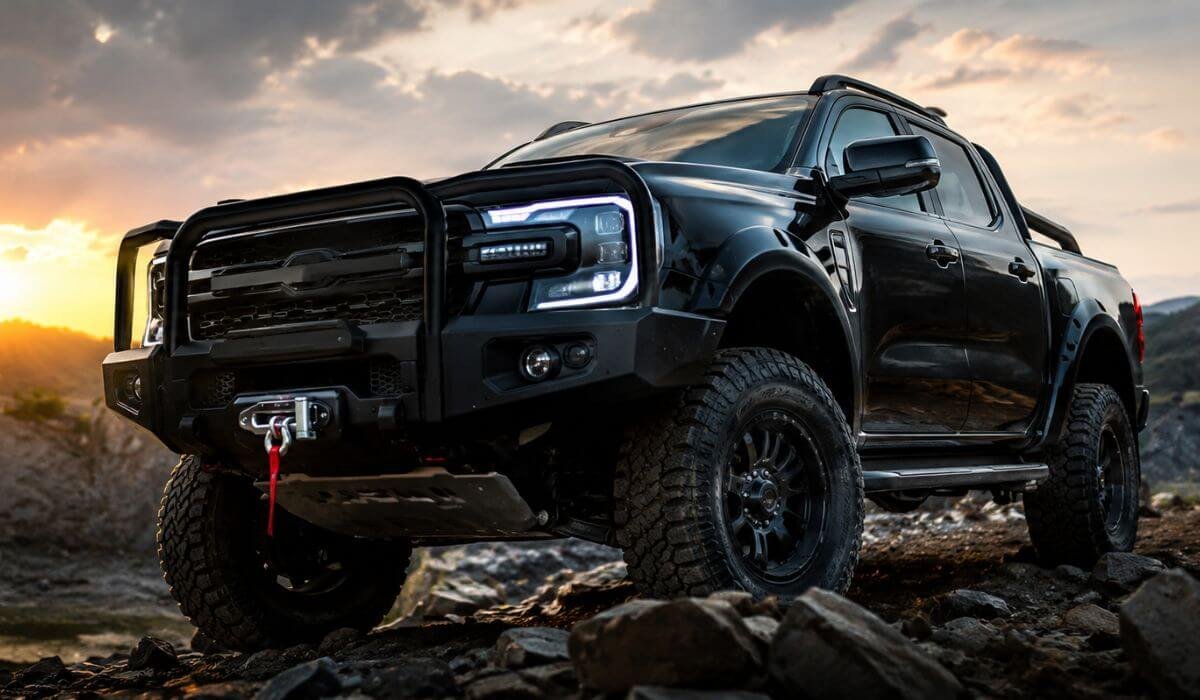
5 Best Bull Bars for Ford Ranger in 2026: Heavy-Duty Steel, Off-Road Protection & Smart Fitment Picks
The 2023–2026 Ford Ranger uses the newer-generation body and front-end design, so bull bar fitment needs more attention than simply matching the “Ranger” name. Older Ranger bars are not automatically compatible with these models because mounting points, bumper design, and front-end equipment can differ. That makes exact year and generation fitment the first thing to check before buying.
This selection focuses on steel construction, front-end coverage, practical mounting, off-road use, and useful accessories rather than appearance alone. Several options are newer products with limited long-term review history, so the list avoids treating a small number of ratings as proof of durability. For Rangers equipped with parking sensors, cameras, or driver-assistance hardware, the product’s stated compatibility should also be checked before installation.
For 2022 and older Rangers, these recommendations should not be treated as universal fits. Older generations can require completely different bull bars and mounting systems, making a year-specific product the safer choice.
Best Ford Ranger Bull Bar: Top 2026 Picks for Front Protection & Rugged Builds
#1. Junberoy Black Steel Bull Bar
Best Ford Ranger Bull Bar for 2023–2026 Models With Steel Construction, License Plate Mounting and Spotlight Compatibility
#2. TINIANHHCT Front Bumper Bull Guard Bar
Best Ford Ranger Front Bull Bar for 2023–2026 Models With Heavy-Duty Tube Construction and Rugged Front-End Coverage
#3. VULIXYUAN Steel Bull Bar
Best Steel Bull Bar for 2023–2026 Ford Ranger Models With Off-Road Styling, Black Finish and Practical Bumper Protection
#4. HAYRC Front Bumper Grille Bull Guard Bar
Best Ford Ranger Bumper Bull Bar for 2023–2026 Models Seeking Nudge-Bar Protection and a Tougher Front-End Setup
#5. VANGUARD Bull Bar
Best Ford Ranger Bull Bar for 2024–2026 Models With Newer-Generation Fitment and a Clean, Rugged Front-End Design
Must Check: Best Grille Guard for Ford Ranger
Expert Tip
A bull bar should solve a problem before it becomes a styling upgrade. On a Ranger, the smartest purchase is not necessarily the thickest-looking bar. Check the exact model year, confirm that the mounting system matches the truck, and then look at what the bar actually adds to your setup. If the truck is mainly used on the road, a simple steel bar can make more sense than paying extra for features that will never be used. If it sees trails, rough access roads, or regular night driving, spotlight compatibility and stronger tube construction become much more useful.
One detail deserves extra attention with these products: they are relatively new listings, so long-term owner feedback is naturally limited. That does not automatically make them bad choices, but it does mean the product description, stated fitment and construction deserve more weight than a handful of early reviews. That is also why this list does not pretend every option is equally proven.
How We Chose These Ford Ranger Bull Bars
This list was built around the things that actually separate a useful Ranger bull bar from one that simply looks aggressive in product photos.
1. Exact-generation fitment came first.
The main focus is the 2023–2026 Ford Ranger, because these trucks use the newer Ranger platform and should not be treated as interchangeable with older-generation models. VANGUARD is the exception here, with its listed fitment starting at 2024, so it has been treated accordingly rather than stretching its compatibility to 2023 models.
2. Steel construction mattered.
Every option was looked at for its stated construction and intended role. A steel bull bar can provide a more substantial front-end barrier than a lightweight cosmetic accessory, but construction alone does not guarantee strength. Mounting quality and vehicle-specific fitment still matter just as much.
3. Useful features counted more than decoration.
Junberoy stands out because it combines a black steel construction, license plate frame and spotlight compatibility. Those are features that can actually change how the Ranger is equipped, rather than simply changing its appearance.
4. Protection style was considered separately.
TINIANHHCT brings a heavy-duty tube and push/brush-bar design, making it a logical choice for someone looking for a more substantial front-end setup. HAYRC takes a simpler nudge-bar/bull-guard approach, which is more appropriate for buyers who do not need the same level of hardware.
5. Off-road usefulness was part of the comparison.
VULIXYUAN was included for its steel construction and off-road-oriented design, while the overall ranking avoids assuming that every Ranger owner needs a full-on trail build. A daily-driven Ranger has different priorities from one that regularly leaves the pavement.
6. Review history was not ignored.
Because these are newer products with limited review history, a product was not pushed to the top simply because its name or appearance suggested premium quality. Where real-world feedback is still developing, the honest approach is to acknowledge that limitation instead of manufacturing confidence that the available evidence does not support.
7. The final ranking reflects actual buyer priorities.
That is why Junberoy leads this group: it offers the most balanced combination of steel construction, Ranger-specific fitment, practical accessory compatibility and useful features. TINIANHHCT follows for its heavier tube-style protection, while VULIXYUAN and HAYRC offer simpler alternatives for different builds. VANGUARD remains last not because its design is unusable, but because its 2024–2026 fitment is narrower and its current review history gives less confidence for a top overall recommendation.
The result is not a list built around whichever bull bar looks toughest in a thumbnail. It is a shortlist built around fitment, construction, functionality and how much confidence the available information actually supports. For a relatively new product category, that distinction matters.
#1. Junberoy Black Steel Bull Bar
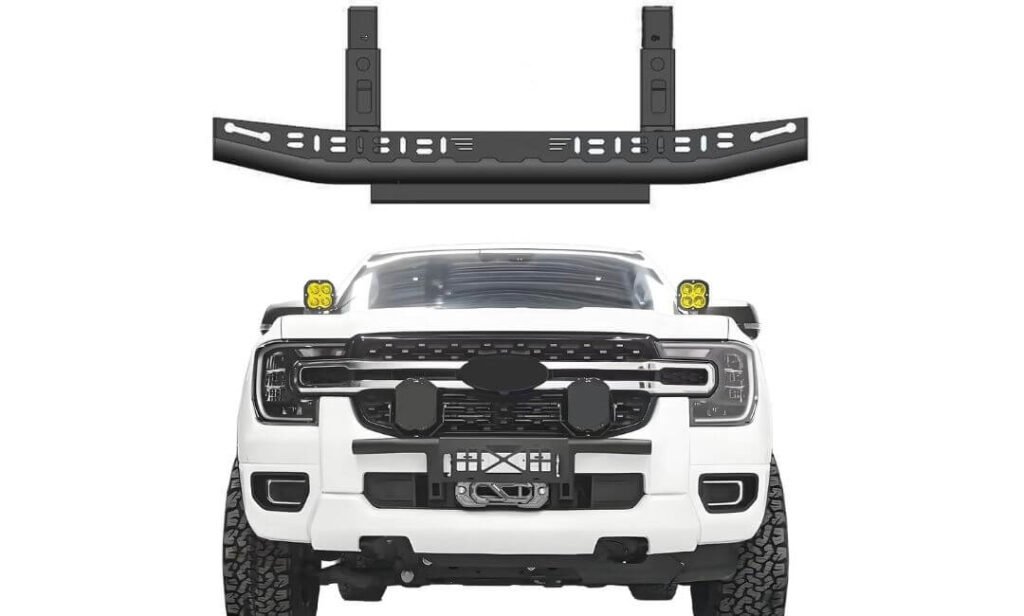
Quick Specs:
- Fitment: 2023–2026 Ford Ranger
- Material: Stainless steel listed; product description also states thickened steel/aluminum alloy construction
- Finish: Black high-temperature baked/powder-coated finish
- Fit Type: Vehicle-specific
- License Plate: Integrated license plate frame
- Mounting Provision: Reserved mounting holes
- Accessory Compatibility: Winch, LED spotlights and trailer-hitch accessories
- Vehicle Type: Truck
- Warranty: 1-year manufacturer warranty
This is the kind of bull bar that makes sense when the goal is more than just a tougher-looking Ranger. The listing describes a thickened steel/aluminum alloy structure and identifies stainless steel in the material specifications, giving it a more substantial construction than a basic cosmetic nudge bar. The real attraction is the combination of front-end coverage and future accessory options.
The reserved mounting holes are particularly useful. They give the setup room for LED spotlights, winch-related equipment and other accessories, so the bar can grow with the truck instead of becoming something that gets replaced when the Ranger starts seeing more off-road use. The included license plate frame is another small but practical detail that keeps the front end from looking improvised after installation.
The black baked/powder-coated finish is also well suited to an exposed truck accessory. The manufacturer claims corrosion and wear resistance for conditions involving rain, mud and outdoor use. That does not make the coating indestructible, but it is the right type of finish for something expected to live at the front of a pickup.
What We Like
- 2023–2026 Ranger-specific fitment keeps the choice focused on the correct generation.
- Reserved mounting points give genuine flexibility for future accessories.
- The included license plate frame makes the finished installation more practical.
- Winch and spotlight compatibility gives it more purpose than a purely cosmetic bar.
- The powder-coated finish is a sensible choice for an accessory exposed to weather, mud and road debris.
What We Don’t
- The listing does not state a specific tube diameter, weight capacity or recovery rating, so those figures should not be assumed. Anyone needing a formally rated recovery setup should verify those specifications with the seller before purchase.
Ford Ranger Fitment
The stated vehicle range is 2023, 2024, 2025 and 2026 Ford Ranger, with the product described as vehicle-specific. The manufacturer also recommends providing the exact vehicle information and a picture before purchase to help confirm fitment. That is worth doing, particularly if the truck has additional front-end equipment or a non-standard configuration.
Installation should be approached as a proper vehicle-mounted accessory installation, with the supplied brackets and hardware checked against the Ranger before final tightening. If the truck has parking sensors, a front camera or other equipment around the bumper area, clearance should be confirmed before installation rather than discovering an interference problem afterward.
The Insider Pro-Tip
The best reason to choose this bar is its room to build around it. If the Ranger may eventually get auxiliary lighting or other off-road equipment, those reserved mounting provisions can save the hassle of replacing the bar later. For a purely road-going Ranger, however, there is no need to buy accessories simply because the bar can accommodate them.
And because this is a relatively newer product with a limited long-term review history, the smartest final check is surprisingly simple: send the seller the exact Ranger details and a vehicle photo before ordering, just as the listing recommends. That small step can prevent the most frustrating aftermarket-accessory problem of all — receiving a product that technically says “Ranger” but does not line up properly with the truck sitting in your driveway.
#2. TINIANHHCT Front Bumper Bull Guard Bar
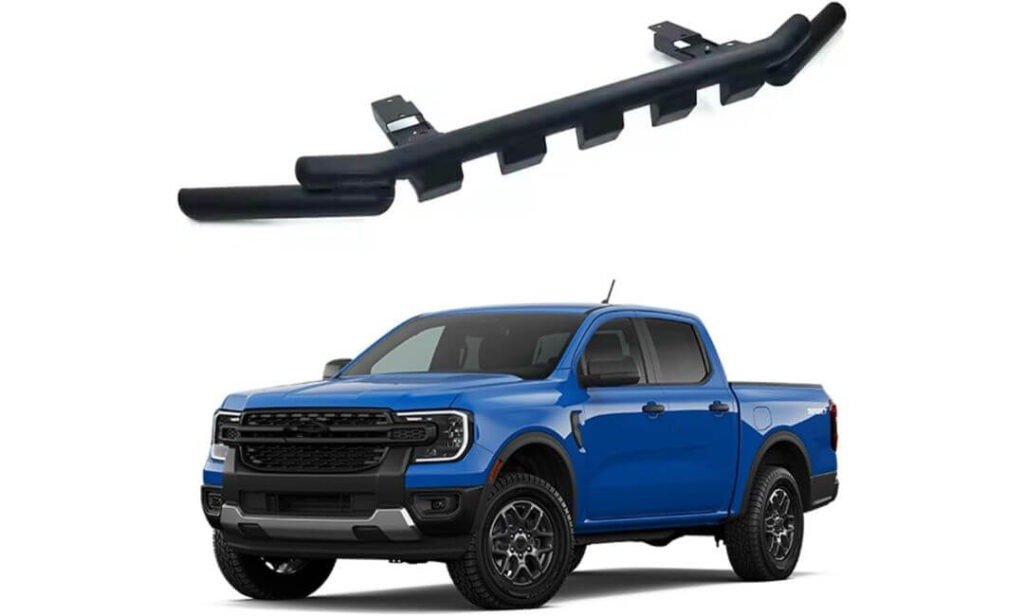
Quick Specs:
- Fitment: 2023–2026 Ford Ranger — XL, XLT, Lariat and Raptor
- Construction: Thickened heavy-duty alloy steel
- Finish: Black high-temperature baked/powder-coated finish
- Fit Type: Vehicle-specific
- Mounting: Uses the Ranger’s original vehicle mounting holes
- Design: Heavy-duty tube, brush and push-bar configuration
- Coverage: Front bumper and grille area
- Installation: Instructions included; professional installation recommended
- Vehicle Type: Truck
Some bull bars are mainly about giving a truck a tougher face. This one is aimed at owners who want the front bumper to have a more substantial layer of steel in front of it. The construction is listed as alloy steel, with the product description specifically calling out thickened heavy steel, making its protection-focused design much clearer than a lightweight styling accessory.
The tube, brush and push-bar layout gives the front end a more serious presence while adding coverage around the bumper and grille area. That can be useful when a Ranger regularly deals with rough tracks, loose debris, brush or the occasional low-speed contact that is simply more likely away from smooth pavement. It should not be mistaken for a replacement bumper or a formally recovery-rated system, though; the listing does not provide a recovery or impact rating.
Another detail worth paying attention to is the mounting method. This bar is designed around the Ranger’s original mounting holes, rather than asking the owner to improvise a completely different mounting arrangement. The black powder-coated finish is also designed for exposure to rain, snow, mud and road grime, giving the steel a practical layer of corrosion and wear resistance for the kind of environment this accessory is intended to see.
What We Like
- Wide trim coverage across XL, XLT, Lariat and Raptor gives this option unusually broad Ranger compatibility.
- The thickened alloy-steel construction suits buyers looking for a more substantial protection-focused bar.
- Original mounting-hole installation is a meaningful advantage because the setup is designed around the vehicle rather than a generic universal fit.
- The tube/brush/push configuration provides more than a simple center nudge bar.
- The powder-coated finish is appropriate for a front-mounted accessory exposed to weather and off-road grime.
What We Don’t
- The listing does not give a specific load, recovery or impact rating, so it should not be treated as a substitute for a properly engineered recovery bumper or recovery point.
Ranger Fitment & Installation Notes
The stated fitment covers 2023–2026 Ford Ranger XL, XLT, Lariat and Raptor models. That broad trim coverage is one of the stronger points here, but exact vehicle configuration should still be checked before ordering, particularly when the truck has factory parking sensors, adaptive-cruise hardware or other equipment around the front bumper.
Installation instructions are included and the bar uses the original vehicle mounting holes, but professional installation is recommended by the manufacturer. That advice is reasonable for a steel accessory sitting directly on the front of the truck: proper alignment, hardware torque and clearance matter far more than saving a little installation time.
The Insider Pro-Tip
The real appeal here is not simply that the bar looks heavy-duty. It is that the product combines thickened steel construction, original-hole mounting and broad trim fitment in one package. For a Ranger that spends time on rough roads, that combination makes considerably more sense than choosing a bar based only on how aggressive it looks in a product photograph.
One thing should still be checked before purchase: front-end electronics. A bar can fit the bumper physically and still create a problem if its tubing sits where a sensor needs a clear field of view. Checking your exact trim and equipment before ordering is a much smarter move than discovering after installation that a parking sensor or driver-assistance feature needs attention.
#3. VULIXYUAN Steel Front Bumper Guard Bull Bar
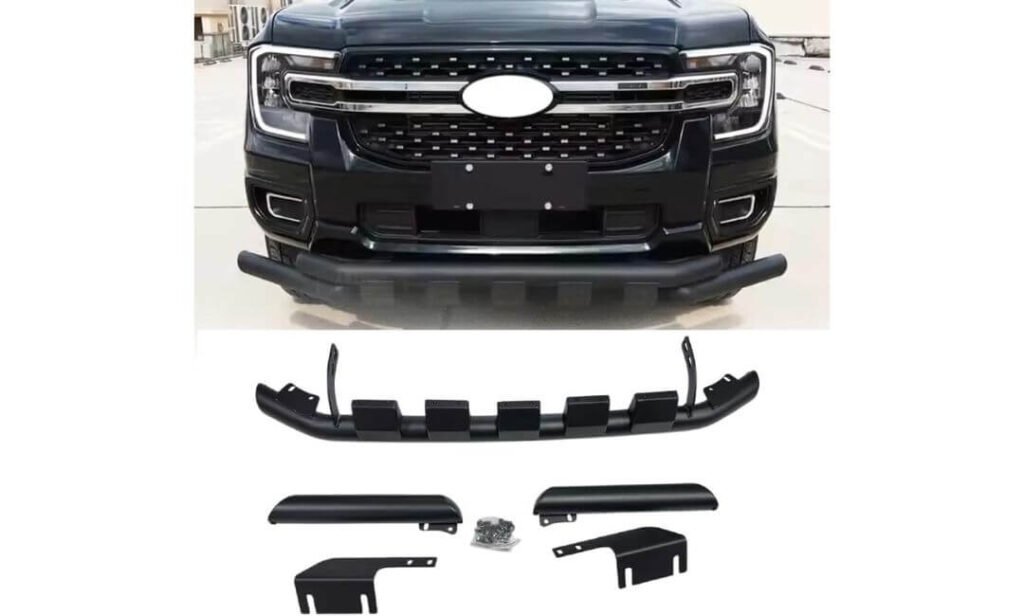
Quick Specs:
- Fitment: 2023–2026 Ford Ranger
- Construction: Heavy-duty thickened steel
- Finish: Black high-temperature baked/powder-coated finish
- Fit Type: Vehicle-specific
- Protection Design: Three-piece modular front bumper guard
- Coverage: Front bumper and grille area
- Installation: Instructions included; professional installation recommended
- Vehicle Type: Off-road pickup truck
- Quantity: 1 complete guard
The interesting part of this setup is the three-piece construction. Instead of presenting the bar as one oversized piece of metal simply meant to make the Ranger look tougher, the design is built around multiple sections working across the front bumper area. The product description specifically positions those sections as protection for key front-end components, which gives the design a more functional reason for being there.
The construction is listed as heavy-duty thickened steel, followed by a high-temperature baked/powder-coated finish. That combination makes sense for an accessory sitting directly in the path of road debris, mud and weather. The coating is advertised for corrosion and wear resistance, but it should still be treated like any exposed steel component: scratches or damaged coating should not simply be ignored if the truck regularly sees wet or muddy conditions.
For an off-road Ranger, the appeal is straightforward. The guard adds a substantial physical layer around the front bumper and grille area while keeping the vehicle’s existing front-end rather than turning it into a complete replacement bumper project. It is a practical middle ground for someone who wants more protection and a stronger appearance without going all the way to a heavy custom build.
What We Like
- Three-piece modular design gives the front-end protection a more deliberate structure.
- Thickened steel construction suits a truck expected to deal with rougher roads and off-road conditions.
- The vehicle-specific 2023–2026 fitment is much preferable to a universal bar when front-end geometry matters.
- Black powder-coated protection is practical for an accessory exposed to mud, rain and road debris.
- The product includes installation instructions, giving the installer a clear starting point rather than leaving the mounting process completely open-ended.
What We Don’t
- There is no stated recovery rating, impact rating or specific load capacity in the supplied specifications, so it should be viewed as front-end protection rather than a rated recovery system.
Ford Ranger Fitment & Installation
The stated application covers 2023, 2024, 2025 and 2026 Ford Ranger models. The product is described as vehicle-specific, which is important because the mounting geometry of the newer Ranger should not be assumed to match older generations simply because they share the same name.
Installation instructions are included, but professional installation is recommended. That is particularly sensible with a three-piece front-end assembly, where alignment between sections and correct hardware installation can affect how cleanly everything sits. Trucks equipped with parking sensors, cameras or other front-end electronics should also have clearance checked before installation.
The Insider Pro-Tip
This is the option to look at when front-end coverage matters more than adding a long list of accessories. Its three-piece design and thickened steel construction give it a more protection-oriented identity, while the black finish keeps the Ranger from looking like the accessory was added as an afterthought.
The honest point is that the listing gives plenty of information about construction and intended use, but not about formal impact or recovery ratings. That is exactly where a careful buyer should draw the line. Use the bar for the protection role it is actually advertised for, verify the fitment and sensor clearance on the specific Ranger, and do not assume an unstated rating just because the steel looks substantial.
#4. HAYRC Steel Front Bumper Grille Bull Guard Bar
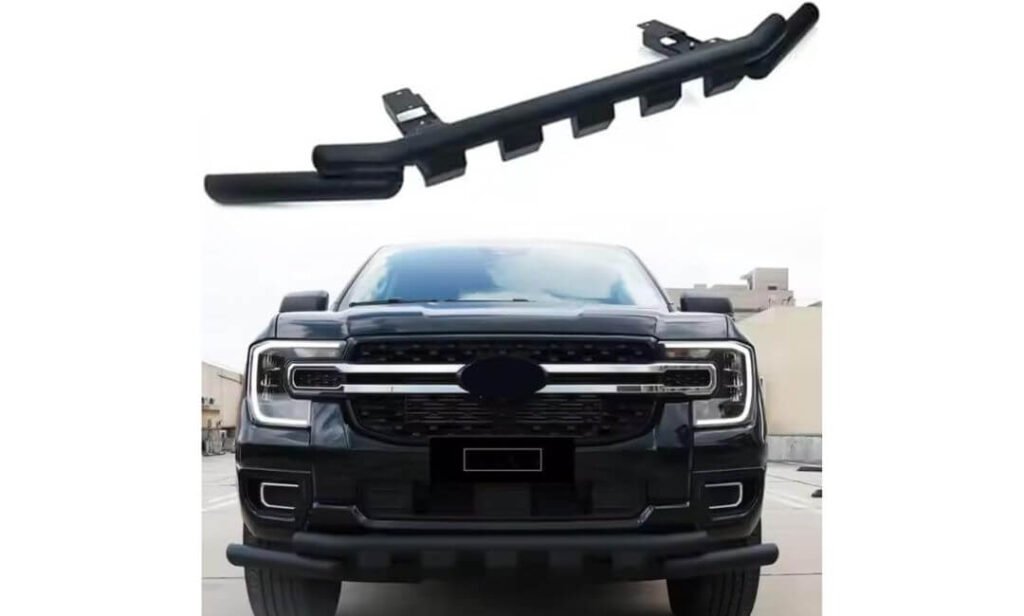
Quick Specs:
- Fitment: 2023–2026 Ford Ranger
- Construction: Alloy steel
- Exterior: High-impact ABS with glossy black finish
- Fit Type: Vehicle-specific
- Position: Front bumper/grille area
- Dimensions: 35.43 × 9.84 × 3.94 inches
- Design: Bull guard / nudge-bar style
- Installation: Instructions included; professional installation recommended
- Quantity: 1
- Manufacturer: YICHIJUNKLSQZ
Not every Ranger needs a massive-looking front bar. The HAYRC takes a more compact bull-guard approach, combining an alloy-steel structure with a glossy black exterior treatment. That makes it interesting for owners who want some added presence around the front bumper and grille without turning the truck into a full-on heavy-duty build.
The supplied dimensions — 35.43 inches long, 9.84 inches wide and 3.94 inches deep — are useful because they give a much better idea of the bar’s physical footprint than vague phrases such as “full protection.” The listing also describes the exterior as high-impact ABS with a glossy black finish, so the visible outer treatment should not be confused with the underlying alloy-steel construction.
There is also a practical fitment advantage here: the product is specifically listed for the 2023+ Ranger, with the supplied information covering the 2023–2026 models in this article. That makes it a generation-specific option rather than an older Ranger accessory being stretched across multiple generations. The manufacturer still recommends checking the vehicle configuration before purchase, which is a sensible step for any front-end accessory.
What We Like
- The 35.43-inch overall length gives a useful reference for buyers checking the available space on the Ranger.
- Alloy-steel construction provides a more substantial base than a purely plastic guard.
- The glossy black ABS exterior gives the front end a cleaner, more finished appearance.
- Vehicle-specific fitment keeps the product focused on the newer Ranger generation.
- Its less bulky profile can appeal to daily drivers who want protection without an oversized bumper setup.
What We Don’t
- The supplied information does not provide a formal impact, recovery or load rating, so this should be treated as a front bumper/grille guard rather than a recovery-rated bumper.
Ford Ranger Fitment
The listing identifies the application as Ford Ranger 2023+, while the product information supplied for this article covers 2023–2026 Rangers. Older 2019–2022 Ranger models should not be assumed to fit. The manufacturer specifically recommends checking the vehicle through its fitment system before purchasing, which is worth doing if the Ranger has a less-common configuration.
Installation instructions are supplied, but professional installation is recommended. Before fitting, it is also worth checking the relationship between the guard and any parking sensors, cameras or other equipment positioned around the front bumper, particularly if the truck has additional factory or aftermarket hardware.
The Insider Pro-Tip
The biggest advantage here is actually its restraint. A bull guard does not have to dominate the entire front of a Ranger to be useful. For a truck that spends most of its time commuting but still sees rough roads, this smaller-format approach can make more sense than installing a much larger off-road bar that adds bulk the owner may never use.
The important buying check is the actual physical footprint. At 35.43 inches long and 3.94 inches deep, the dimensions tell more of the story than the product photos do. Compare that footprint with the Ranger’s front-end layout and confirm the exact configuration before ordering. A clean, properly aligned installation will always look and function better than choosing a larger bar simply because it appears more aggressive online.
#5. VANGUARD 2.5-Inch T304 Stainless Steel Bull Bar
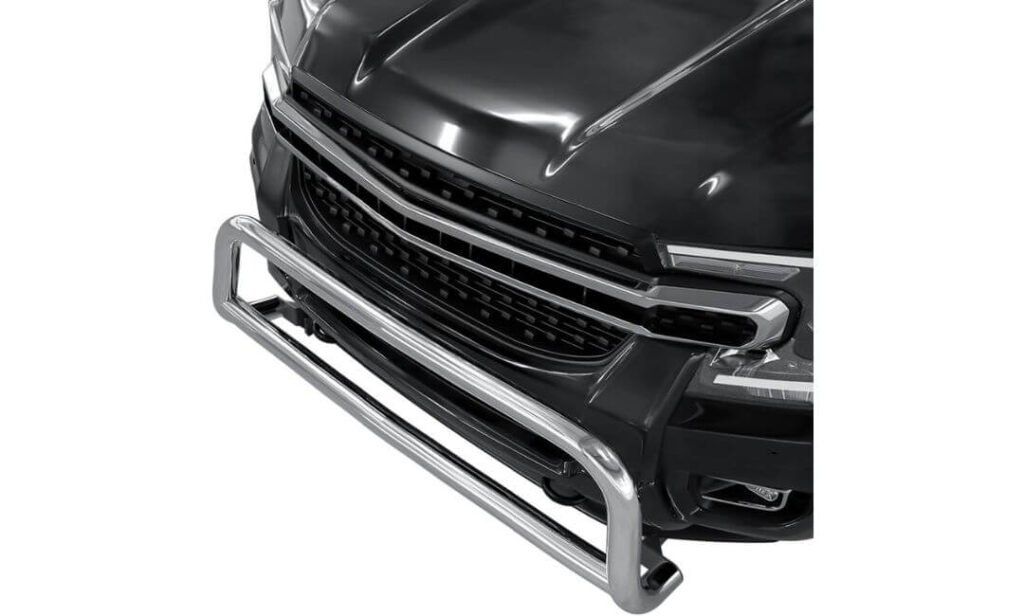
Quick Specs:
- Fitment Listed: 2024–2026 Ford Ranger
- Tubing: 2.5-inch T304 stainless steel
- Finish: Mirror-polished chrome
- Design: Sleek, minimal front-end protection
- Mounting: Includes assembly and mounting hardware
- Installation: Bolt-on design; undercarriage-cover trimming required on most vehicles
- Skid Plate: Not included
- Intended Style: Clean street-oriented front-end protection
On paper, this is the most polished-looking option in the group. 2.5-inch T304 stainless-steel tubing and a mirror-polished chrome finish give it a distinctly cleaner appearance than a conventional black powder-coated bar. For a Ranger that mainly lives on the road, the minimal design can be appealing because it follows the truck’s front-end contour without adding a large skid plate or unnecessary hardware.
The construction itself is a genuine strength. T304 stainless steel is well suited to an exposed exterior accessory because corrosion resistance is one of its biggest advantages. The 2.5-inch tube also gives the bar a substantial visual presence without turning it into a full-width bumper replacement. Assembly and mounting hardware are included, so the basic package is intended to be installed as a bolt-on accessory.
But this is where the honest part matters more than the shiny finish. Fitment and installation feedback is mixed, including reports of mounting stability, incomplete hardware, unclear instructions and interference with front parking sensors. There are also reports questioning compatibility with certain 2025 Rangers despite the advertised year range. Those reports do not automatically mean every installation will have the same problem, but they are significant enough that this bar should not be purchased purely because the specification sheet looks premium.
What We Like
- 2.5-inch T304 stainless steel is a genuinely good material choice for long-term exterior exposure.
- The mirror-polished chrome finish gives the Ranger a noticeably more upscale appearance.
- The minimal design avoids adding unnecessary bulk to the front end.
- Assembly and mounting hardware are included, making the package more complete.
- Its contour-following shape works particularly well for owners who want protection without a heavily modified off-road look.
What We Don’t
- Fitment and installation feedback is the weak point. Reports of shaky mounting, sensor interference, unclear instructions and inconsistent parts make this one worth verifying carefully before purchase.
Ford Ranger Fitment & Installation
The product is advertised for 2024–2026 Ford Ranger models, but the supplied customer feedback creates enough uncertainty that exact-year verification should happen before ordering. In particular, reports concerning 2025 Ranger compatibility should not be brushed aside simply because the product title includes 2025.
Most installations also require trimming of the undercarriage cover, so this is not necessarily a completely tool-free bolt-on job. The parking-sensor reports are another important consideration. If the Ranger has front parking sensors or similar driver-assistance equipment, confirm that the bar will not obstruct their operating area before installation.
The Insider Pro-Tip
This is the bull bar where the product looks more convincing than the available ownership evidence. The T304 stainless construction and polished finish are genuinely attractive, but neither one fixes a fitment problem. If appearance and corrosion resistance are the priority and the exact Ranger configuration has been confirmed, it can make sense. If dependable heavy-duty protection is the priority, the other options in this list are easier recommendations.
Before spending money here, get the exact model-year fitment confirmed in writing, and do not ignore any warning about parking-sensor clearance. A premium-looking stainless bar is only a good upgrade when it sits firmly, clears the truck’s electronics and arrives with the correct hardware.
Best Ford Ranger Bull Bar (2023–2026): Compare Fitment, Construction & Off-Road Features
Buyer’s Guide: Choosing the Right Ford Ranger Bull Bar
A good bull bar should make sense for the way the Ford Ranger is actually used, not simply look impressive in a product photo. The five options above are quite different: some prioritize heavier steel construction, some leave room for lighting or other accessories, while VANGUARD takes a cleaner stainless-steel approach. The right choice depends on the truck, the terrain, and how much front-end hardware you genuinely need.
Start With Exact Ranger Fitment
For this article, the primary fitment is the 2023–2026 Ford Ranger, but that does not mean every bar is interchangeable across every Ranger configuration.
The newer Ranger generation has its own bumper structure and mounting arrangement. Older Rangers should not be treated as automatic matches simply because the product title says “Ford Ranger.” A bar designed around the previous generation can require completely different brackets or mounting points.
The safest approach is simple:
- Match the exact model year before looking at appearance or price.
- Check the listed trim compatibility, especially if the truck is an XL, XLT, Lariat or Raptor.
- Prefer a vehicle-specific fit over a generic universal bar when available.
- Check whether the manufacturer uses the Ranger’s original mounting holes or supplies dedicated brackets.
- If the seller asks for a vehicle photo or exact model information, provide it. That extra confirmation is worth the few minutes it takes.
Steel Construction Matters, But Thickness Is Not Everything
Most buyers naturally focus on steel because a bull bar is supposed to provide meaningful front-end protection. That is reasonable, but “heavy-duty steel” by itself does not tell the whole story.
The TINIANHHCT and VULIXYUAN options specifically emphasize thickened steel construction, while Junberoy describes thickened steel/aluminum alloy construction and lists stainless steel in its material information. VANGUARD takes a different route with 2.5-inch T304 stainless-steel tubing, prioritizing corrosion resistance and a polished appearance.
What matters is how that material is incorporated into the complete bar:
- Construction: Look at the actual material being advertised, not just marketing language.
- Mounting: A strong bar is only useful when it is securely attached to the vehicle.
- Coverage: More metal does not automatically mean better protection if important areas remain exposed.
- Weight: A substantially heavier bar can affect the front of the truck, suspension behavior and overall balance.
- Finish: A good coating or stainless construction helps protect the accessory from the weather, but damaged coating should still be repaired rather than ignored.
None of the products in this comparison provides a formal recovery rating or impact rating in the supplied specifications. That is important. A bull bar should not automatically be treated as a rated recovery point simply because it is made from thick steel.
Think About Weight Before Chasing Maximum Protection
More steel sounds better until the extra weight starts working against the truck.
A heavy front accessory can influence front-end weight, approach characteristics and suspension load, particularly when combined with a winch, auxiliary lighting, recovery equipment or other accessories. For a Ranger used mostly on paved roads, an enormous setup may offer little practical advantage.
For trail use, the calculation changes. Protection around vulnerable front-end areas becomes more valuable, and the additional hardware can make sense if it supports the way the truck is actually driven.
That is why there is no universal “heaviest is best” answer here. Junberoy offers a balanced accessory-ready setup, TINIANHHCT leans toward heavier tube-style protection, VULIXYUAN focuses on substantial three-piece steel coverage, while HAYRC provides a more compact approach.
Consider Approach Angles and Front-End Clearance
A bull bar should not become the reason the Ranger loses capability it already had.
A large front-mounted structure can alter the way the truck meets steep transitions, ruts, rocks and uneven terrain. The shape and position of the bar matter just as much as its overall size.
Before buying, look beyond the front-facing photograph and consider:
- How far the bar extends forward from the bumper.
- Whether its lower sections sit close to the ground.
- Whether the design interferes with the truck’s approach path.
- Whether a skid plate or additional hardware will make the setup even lower.
- Whether the vehicle will carry a winch or lights later, adding more weight and hardware.
For a Ranger that sees genuine off-road use, clearance is part of protection. A bar that survives contact but constantly catches on terrain is not necessarily the better setup.
Mounting Style Deserves More Attention Than It Gets
This is one of the easiest things to overlook when comparing products online.
TINIANHHCT specifically states that it uses the original vehicle mounting holes, while the other products describe vehicle-specific installation or supplied mounting hardware. That is useful information because mounting is where a bull bar changes from an accessory sitting on the truck to an accessory properly attached to it.
A buyer should want to know:
- Are the mounting points designed specifically for the Ranger?
- Are the original mounting holes being used?
- Are dedicated brackets supplied?
- Does installation require cutting or trimming?
- Is drilling required?
- Are the supplied instructions clear enough for the installation?
- Does the manufacturer recommend professional installation?
VANGUARD is the clearest example of why this matters. Its installation requires undercarriage-cover trimming on most vehicles, and customer feedback supplied for this article also raises concerns about mounting stability and inconsistent installation documentation. That does not automatically make the product unusable, but it makes fitment verification much more important.
Check Accessories Before Buying the Bar
A bull bar can become the foundation for a larger Ranger setup, so think one step ahead.
Junberoy is particularly flexible here because it has reserved mounting holes and is described as compatible with winches, LED spotlights and trailer-hitch accessories. If auxiliary lighting is part of the plan, that can save the headache of replacing the bar later.
But accessory compatibility should never be interpreted as a guaranteed load rating. A product saying it can accommodate a winch-related accessory is not the same thing as the bar being a rated recovery system.
The same rule applies to lighting. Check the actual mounting location, available clearance and wiring route before assuming every spotlight will fit neatly.
Do Not Ignore Parking Sensors and Driver-Assistance Equipment
Modern Rangers can have considerably more equipment around the front bumper than older trucks, which makes this a genuine fitment issue rather than a minor detail.
If the truck has parking sensors, cameras, adaptive-cruise hardware or other driver-assistance equipment, check whether the bull bar changes the sensor’s field of view or creates physical interference.
This is particularly important with VANGUARD because the supplied customer feedback includes reports of parking-sensor warnings after installation. Those reports are not proof that every Ranger will experience the same issue, but they are enough reason to verify compatibility before purchasing.
A physically correct mounting fit is not necessarily the same thing as an electronically trouble-free installation.
Finish and Corrosion Protection
A bull bar spends its entire life at the worst possible location for road grime: the very front of the vehicle.
Rain, mud, salt, dust, stones and cleaning chemicals can all attack the finish over time. The black options in this comparison use baked or powder-coated finishes, while VANGUARD uses polished T304 stainless steel.
The practical difference is straightforward:
- Powder-coated steel: Gives a protective surface and a darker, more understated appearance.
- T304 stainless steel: Naturally offers strong corrosion resistance and can provide a more premium appearance.
- Glossy or polished finishes: Can look excellent but may show scratches and surface marks more visibly.
Regardless of material, inspect the bar occasionally. If a stone chip exposes the underlying metal, dealing with it early is much easier than waiting for corrosion to spread.
Warranty Is Useful, But It Is Not a Substitute for Fitment
A warranty can provide reassurance, particularly with newer aftermarket products, but it should never be the main reason to buy a bull bar.
First establish that the product actually fits the Ranger, then look at construction, mounting and intended use. After that, warranty coverage becomes a useful extra layer of protection.
This matters even more with newer products that have a smaller review history. A warranty cannot compensate for a bar that requires unexpected trimming, interferes with sensors or does not align correctly with the truck.
Off-Road Use, Road Use and Legal Considerations
A bull bar can be perfectly reasonable for off-road use while still requiring additional consideration when the vehicle is driven on public roads.
Before installation, check the local vehicle regulations that apply where the Ranger is registered and driven. Requirements can vary around front-end projections, number-plate visibility, lighting, pedestrian-safety considerations and modifications to factory safety equipment.
For off-road driving, also remember that a bull bar is not permission to use the front structure as a recovery point unless the manufacturer explicitly provides an appropriate rated recovery provision. Recovery equipment should always be attached to properly rated points.
Which Type Makes the Most Sense?
For this particular selection, the choice becomes easier when the buying priorities are clear:
- Junberoy: The strongest all-around choice for owners wanting steel construction plus useful accessory expansion.
- TINIANHHCT: Better suited to buyers prioritizing a heavier tube, brush and push-bar setup.
- VULIXYUAN: A strong choice for substantial three-piece steel front-end coverage.
- HAYRC: More appropriate for daily-driven Rangers wanting a less bulky bull-guard profile.
- VANGUARD: Attractive for its T304 stainless construction and polished appearance, but exact fitment and sensor clearance deserve extra verification.
The best bull bar is ultimately the one that fits the exact Ranger, supports the way it is used, and adds useful capability without creating new problems. That is a much better buying rule than choosing purely by appearance, price or the biggest-looking piece of steel.
Smart Fitment & Installation Tips for a Ford Ranger Bull Bar
A bull bar can look like a straightforward bolt-on accessory, but the quality of the installation matters just as much as the bar itself. A bar that is slightly out of alignment can create clearance problems, sit unevenly across the bumper, or put unnecessary stress on the mounting hardware. With the 2023–2026 Ranger, it is also important to account for factory sensors and other equipment around the front end before any hardware is tightened permanently.
Confirm the Ranger Before Touching the Hardware
Start with the basics, because this is where many aftermarket installations go wrong.
- Confirm the exact model year and trim.
- Compare the supplied brackets with the product’s fitment information.
- Check whether the bar is designed around original mounting holes or requires additional brackets.
- Read the complete installation instructions before removing factory hardware.
- Check the front bumper for parking sensors, cameras and driver-assistance equipment.
- Lay out every bracket, bolt, washer and spacer before beginning.
For this group, the fitment ranges are not identical. Most products cover 2023–2026, while VANGUARD is listed for 2024–2026 and has received mixed fitment feedback. Never treat a broad product title as a substitute for checking the exact Ranger configuration.
Decide Whether Factory Mounting Is Enough
The cleanest installation is generally the one that follows the manufacturer’s intended mounting method.
TINIANHHCT specifically states that its bar uses the Ranger’s original vehicle mounting holes, which is a useful sign that the product was designed around the truck’s existing structure. Other vehicle-specific bars may use supplied brackets or hardware to achieve the same result.
Do not drill new holes, bend brackets or modify factory mounting points simply to make an aftermarket bar fit. If the supplied parts do not line up as expected, stop and verify the application rather than forcing the installation.
Do a Dry Fit Before Final Tightening
This is one of the easiest ways to avoid an ugly installation.
Position the bar with the hardware installed but not fully tightened. Check the spacing from side to side, bumper clearance, grille clearance and the position of every mounting bracket.
At this stage, look from several angles rather than standing directly in front of the Ranger. A small height difference can be surprisingly obvious once viewed from the side.
Check:
- Equal spacing from both sides of the bumper.
- Clearance between the bar and painted bodywork.
- Clearance around sensors and cameras.
- Clearance for the number plate.
- Clearance underneath the bumper.
- Whether any bracket is sitting under unnecessary tension.
- Whether the bar remains aligned when the hardware is loosely tightened.
Only after everything sits correctly should the final tightening begin.
Alignment Should Come Before Torque
It is tempting to tighten the first accessible bolt immediately, but that can make the rest of the installation harder.
Keep the mounting hardware loosely assembled while the bar is being positioned. Once the bar is centered and the brackets are sitting naturally, tighten the fasteners progressively rather than locking down one side completely before touching the other.
This helps prevent the bar from being pulled off-center by the mounting hardware.
Use the Manufacturer’s Torque Specifications
There is no responsible universal torque number for every bull bar installation.
The correct torque depends on the specific fastener, bracket design, mounting point and vehicle application. Use the torque values supplied by the manufacturer or the applicable vehicle installation documentation. If the supplied instructions do not provide a torque value, ask the manufacturer rather than guessing.
A torque wrench is particularly useful here because “tight enough by feel” is not a reliable measurement for structural aftermarket hardware.
After the first installation and initial driving period, inspect the mounting hardware again for any sign of movement or settling, following the manufacturer’s maintenance guidance.
Handle Lighting Wiring Separately
If the bull bar will carry LED spotlights, keep the electrical installation just as organized as the physical installation.
The basic process should be:
- Position the lights and confirm that they do not interfere with the bar, grille, sensors or bonnet.
- Plan the wiring route before securing the lights permanently.
- Keep wiring away from exhaust heat, sharp edges and moving suspension components.
- Use suitable protection where wiring passes near metal brackets.
- Secure loose wiring so vibration cannot turn it into a rubbing or snagging problem.
- Connect the lighting system according to the manufacturer’s wiring instructions and applicable vehicle requirements.
- Test the lights before hiding or permanently securing the final section of wiring.
Junberoy is particularly relevant here because its mounting provisions are advertised as supporting LED spotlights and other accessories. That does not mean every light or wiring configuration will fit automatically, so the physical clearance should still be checked before installation.
Be Careful With Front Sensors
A bull bar can physically fit and still cause an electronic problem.
Before final tightening, check the position of any parking sensors, front cameras or driver-assistance hardware around the bumper. Make sure the bar, brackets and accessories are not sitting directly in their operating area.
This deserves particular attention with VANGUARD because the supplied customer feedback includes reports of parking-sensor warnings. That is exactly the kind of issue that is easier to prevent before installation than diagnose afterward.
If a sensor begins producing warnings after the bar is installed, do not simply assume the sensor has failed. First inspect whether the new hardware is obstructing or reflecting around its sensing area.
Trimming Is Not the Same as Forcing a Fit
Some aftermarket bars require minor vehicle-specific modification.
VANGUARD, for example, states that undercarriage-cover trimming is required for most vehicles. That is very different from cutting brackets, drilling structural components or modifying mounting points because the parts do not align.
Only perform modifications that are explicitly covered by the installation instructions. If something needs substantially more cutting or fabrication than described, stop and confirm the installation with the manufacturer.
Common Installation Mistakes to Avoid
A few avoidable mistakes cause most aftermarket front-end headaches:
- Buying by vehicle name alone: “Ford Ranger” is not enough; verify the year and trim.
- Fully tightening one side first: This can pull the bar out of alignment.
- Guessing torque: Use the manufacturer’s specified values.
- Ignoring sensor clearance: Physical fit does not guarantee electronic compatibility.
- Routing light wiring against metal: Vibration can eventually damage the insulation.
- Forcing mismatched brackets: A wrong bracket is a fitment problem, not an installation challenge.
- Skipping a dry fit: Small alignment issues become much harder to correct after everything is tight.
- Assuming a bull bar is a recovery point: Unless specifically rated, do not attach recovery equipment to it.
- Ignoring damaged coating: Repair exposed metal early, especially on steel bars used in wet or muddy environments.
Tools Worth Having Before Installation
A sensible tool setup is more useful than a giant toolbox.
- Metric socket and wrench set appropriate for the supplied hardware
- Torque wrench with the correct range for the manufacturer’s specifications
- Ratchet and suitable extensions
- Hex or Allen keys if required by the supplied fasteners
- Screwdrivers and trim-removal tools for applicable factory panels
- Jack and suitable stands or a workshop lift when required by the installation procedure
- Work light
- Protective gloves and eye protection
- Electrical crimping and wiring tools if auxiliary lights are being installed
- Cable protection and fasteners for securing lighting wiring
The exact tools can vary by product, so the installation instructions should be treated as the final authority rather than assuming every Ranger bull bar uses the same hardware.
The Final Check Before Driving
Once the installation is complete, do not make the first drive immediately.
Step back and inspect the bar from the front, both sides and underneath. Confirm that all visible hardware is seated correctly, the bar is centered, the number plate remains visible, wiring is secure, and nothing is touching the bumper where it should not.
Then check the vehicle’s parking sensors, cameras and other front-end systems before heading onto the road. If auxiliary lights were installed, test them separately.
A short, careful inspection after installation can catch a loose bracket or clearance problem while the fix is still simple. That is far better than discovering the same problem after several days of vibration, mud and road use.
Accessories, Compatibility, and Aesthetics for a Ford Ranger Bull Bar
A bull bar rarely stays completely alone once a Ranger starts getting used for off-road driving, camping, work or long-distance travel. Lights get added, recovery equipment may come later, and some owners eventually add additional front-end protection. The important part is making sure those upgrades work together instead of turning the front of the truck into a collection of brackets that interfere with each other.
Match the Bull Bar With Other Front-End Protection
A bull bar and a separate Ford Ranger brush guard can serve related purposes, but adding both is not automatically better.
Before combining front-end protection pieces, check whether they share mounting locations, overlap physically, or require different brackets. A bull bar already occupies valuable space around the bumper and grille, so another guard can create interference around the headlights, grille, number plate or factory sensors.
The better approach is to decide what area actually needs protection:
- A bull bar generally adds a substantial protective structure around the front bumper area.
- A brush guard can provide additional coverage around vulnerable areas, depending on its design.
- A nudge-style bar is generally a more compact solution for owners who do not want a large front-end structure.
- A full replacement bumper is a much larger modification and should not be treated as simply another version of a bull bar.
If two products were not designed to work together, do not assume they can safely share mounting points. Vehicle-specific compatibility beats a bigger-looking front end.
Plan Lighting Before Buying the Bar
Auxiliary lighting is one of the most common reasons people choose a bull bar with accessory provisions.
Junberoy is particularly useful in this respect because its design includes reserved mounting holes for LED spotlights and other accessories. That gives the owner somewhere to start, but the physical size of the light still matters.
Before purchasing lights, check:
- Available mounting space.
- Light housing width and depth.
- Bracket orientation.
- Clearance from the grille and bumper.
- Bonnet and panel clearance.
- Wiring access.
- Sensor and camera locations.
- Whether the light position is legal for road use in the vehicle’s jurisdiction.
A light that technically bolts onto a mounting hole is not necessarily a good installation. The beam should have a clear path, the housing should not contact the bar under vibration, and the wiring should have enough protection to survive mud, water and repeated movement.
Winch Compatibility Needs a Careful Reading
This is where product descriptions can easily create unrealistic expectations.
Junberoy’s listing describes reserved mounting holes and compatibility with a winch, but that should not be interpreted as a stated winch capacity or recovery rating. None of the supplied specifications for the five products provides a formal recovery rating.
That distinction is extremely important.
A bull bar can provide mounting space for a winch-related accessory without being a rated recovery structure. If the Ranger will actually be used for vehicle recovery, the recovery point, mounting structure and winch system should have clearly stated ratings appropriate for the intended load.
Never attach recovery equipment to a convenient-looking section of the bar simply because it appears strong enough.
Think About Debris and Off-Road Exposure
One of the genuine advantages of a properly designed front bar is the additional physical separation between the truck’s vulnerable front-end components and the environment.
On rough tracks, the Ranger can encounter:
- Loose stones and gravel.
- Thick brush and branches.
- Mud and standing water.
- Road debris.
- Uneven terrain that brings the front bumper closer to obstacles.
TINIANHHCT’s tube, brush and push-bar configuration is more clearly aimed at this type of use, while VULIXYUAN uses a three-piece steel design around the front bumper and grille area.
That does not mean either bar makes the Ranger immune to damage. A bull bar should be viewed as an additional layer of protection, not permission to drive into obstacles that would otherwise be avoided.
Powder Coat vs. Stainless Steel
The finish is not just an aesthetic decision when the accessory is mounted at the front of a truck.
Most of the black bars in this comparison use a baked or powder-coated finish, while VANGUARD uses 2.5-inch T304 stainless steel with a mirror-polished chrome finish.
Each approach has a different character.
Powder-Coated Steel
Powder coating gives steel a clean, durable exterior surface and works particularly well for the black, rugged appearance most Ranger owners expect from an off-road accessory.
Its advantages include:
- Good resistance to everyday weather exposure.
- A uniform, factory-like appearance.
- Easy visual integration with black trim.
- Good resistance to ordinary wear when the coating remains intact.
The weakness is straightforward: a deep scratch or stone chip can expose the underlying steel. Once that happens, the damaged area should be cleaned and repaired rather than left exposed to moisture.
T304 Stainless Steel
VANGUARD takes the alternative route with T304 stainless steel, which is naturally more resistant to corrosion than ordinary carbon steel.
Its mirror-polished finish also creates a completely different appearance — cleaner, brighter and more premium than a black powder-coated bar.
The trade-off is that polished stainless can show scratches, marks and surface contamination more readily. It also does not solve fitment problems; material quality cannot compensate for poor mounting or sensor interference.
Zinc and Corrosion Protection
Zinc-based corrosion protection is another approach commonly used on steel components, particularly brackets and hardware. Zinc coatings work by providing a protective barrier and, in suitable conditions, sacrificial protection to the underlying steel.
However, buyers should distinguish between zinc-coated mounting hardware and the visible finish of the bull bar itself. A product having zinc-coated bolts does not mean the entire bar has a zinc finish.
For the products in this comparison, the clearly stated visible finishes are primarily black powder/baked coatings or polished stainless steel. There is no reason to assume a zinc coating where the manufacturer has not specified one.
Keep the Front End Visually Balanced
A good Ranger build does not need every available accessory installed at once.
A large steel bull bar, brush guard, winch, four auxiliary lights and additional skid hardware can quickly make the front end look crowded. It can also add considerable weight and make maintenance more difficult.
A cleaner combination is usually more convincing:
- Daily driver: compact bull bar with restrained lighting.
- Weekend off-roader: heavier bull bar with properly mounted auxiliary lights.
- Overland setup: bull bar, carefully planned lighting and appropriately rated recovery equipment.
- Work truck: practical protection with minimal unnecessary accessories.
The best-looking Ranger is often the one where every accessory has a reason to be there.
Make Sure Accessories Do Not Create New Problems
Every additional accessory adds another possible point of interference.
Before final installation, check that:
- Lights do not obstruct sensors.
- Winch equipment does not interfere with the grille or cooling airflow.
- Brush guards do not conflict with the bull bar.
- Number plates remain properly mounted and visible.
- Wiring cannot rub against steel brackets.
- Accessories do not reduce required ground or approach clearance.
- Added weight is appropriate for the vehicle’s suspension setup.
- Nothing interferes with bonnet, grille or bumper movement.
This is particularly important on modern Rangers because the front end can contain more technology than the simple bumper appearance suggests.
The Smartest Accessory Is the One That Still Works Six Months Later
The goal should not be to build the most complicated front end possible. It should be to create a setup where the bull bar, lights, recovery equipment and other protection work together without compromising the truck.
For this group, Junberoy has the clearest accessory-friendly approach, TINIANHHCT makes more sense for a heavier protection-focused build, and VULIXYUAN keeps the emphasis on substantial steel front-end coverage. HAYRC is better suited to a cleaner, less bulky setup, while VANGUARD’s stainless construction gives it a distinct appearance but makes careful fitment and sensor checking especially important.
That is the real difference between an accessory-heavy Ranger and a well-planned Ranger: every part should earn its place.
Maintenance, Care, and Longevity
A bull bar sits directly in the path of everything the Ranger encounters — rain, road salt, mud, gravel, insects, pressure washing and off-road debris. Even a well-finished bar can deteriorate if dirt stays trapped around its mounting points or a coating chip is left exposed for months. A few minutes of inspection and cleaning can do far more for long-term condition than an occasional deep clean after the damage has already started.
Clean It Like a Working Truck Accessory
Routine cleaning does not need to be complicated. The important part is removing contaminants before they have time to sit against the finish.
After muddy trails, winter roads or extended exposure to road grime:
- Rinse loose dirt away with clean water before wiping the surface.
- Use a mild automotive soap rather than aggressive household cleaners.
- Clean around brackets, seams, tubing and areas where mud can collect.
- Use a soft brush for difficult-to-reach sections, but avoid anything abrasive that can scratch the coating.
- Rinse thoroughly so soap residue does not remain around joints and mounting hardware.
- Dry the bar, particularly around bolts and areas where water can remain trapped.
Pressure washing can be useful, but avoid holding a high-pressure nozzle extremely close to seams, electrical connections, sensor areas or damaged coating. Excessive pressure can force water into places where it has no business being.
Watch the Finish, Not Just the Surface Shine
The most important maintenance check is not whether the bar still looks glossy. It is whether the protective surface remains intact.
Inspect for:
- Deep scratches through the coating.
- Stone chips exposing bare metal.
- Bubbling or lifting paint.
- Rust-colored marks around fasteners.
- Corrosion beginning inside seams or difficult-to-see areas.
- Scratches caused by accessories or mounting brackets.
- Damage underneath the bar from rocks or uneven terrain.
A small coating chip is easy to deal with. Leaving exposed steel wet and dirty for months is how a small cosmetic defect becomes a corrosion problem.
For stainless steel, keep an eye out for surface contamination, staining and scratches rather than assuming stainless means maintenance-free. T304 stainless has strong corrosion resistance, but it can still become marked or contaminated in harsh environments.
Give the Mounting Hardware Its Own Inspection
The bar itself may look perfect while the mounting hardware slowly develops a problem.
After the first few drives, particularly following off-road use, inspect the mounting area for movement, unusual gaps, loose hardware or changes in alignment. Do not simply tighten everything as hard as possible. Fasteners should be checked against the manufacturer’s specified torque requirements.
Look underneath the Ranger as well. Mud and road debris can hide around brackets and mounting points, making problems difficult to spot from above.
If the bar suddenly develops a rattle, changes position or begins touching the bumper, treat that as a reason to investigate rather than as a harmless noise.
Keep Seams, Gaps and Mounting Areas Clean
Water itself is not necessarily the problem. Trapped moisture mixed with dirt and road salt is.
Mud can remain inside small gaps around mounting brackets and tubing long after the visible surface looks clean. If the Ranger is regularly driven through mud, rinse those areas thoroughly and allow them to dry.
Pay particular attention to:
- Mounting brackets.
- Bolt heads and washers.
- Tube intersections.
- Lower sections exposed to road spray.
- Areas behind the number plate.
- Any location where another accessory is attached.
This is especially worthwhile on steel construction because corrosion often starts in places that are difficult to see.
Check Auxiliary Accessories at the Same Time
If the bull bar carries LED lights or other accessories, inspect those mounting points whenever the bar is cleaned.
Check for:
- Loose light brackets.
- Damaged wiring insulation.
- Cable rubbing against metal.
- Water entering electrical connections.
- Cracked mounting hardware.
- Changes in light alignment.
A cable that looks perfectly fine while parked can slowly wear through if it is touching a sharp bracket and vibrating every time the truck moves.
When Should a Bull Bar Be Replaced?
There is no universal replacement interval for a Ford Ranger bull bar. Its service life depends heavily on how the truck is used.
A bar used primarily on paved roads may remain serviceable for many years with relatively little stress. A Ranger that regularly travels through rocks, brush, mud and rough terrain should be inspected much more closely.
Replacement becomes worth considering when there is:
- Structural cracking or deformation.
- Severely bent mounting brackets.
- Significant corrosion affecting structural areas.
- Damaged or compromised mounting hardware.
- A major impact that has visibly changed the bar’s position.
- Persistent interference with the bumper or sensors.
- Damage that cannot be confidently repaired without compromising the structure.
After a serious collision or heavy off-road impact, do not judge the bar purely by appearance. A structure can be distorted internally or at its mounting points while still looking acceptable from the front.
When an Upgrade Makes More Sense
Sometimes the bar is not damaged at all — the Ranger’s use has simply changed.
For example, a daily driver may start with a simple front guard and later become an overland or trail vehicle requiring auxiliary lighting and properly engineered recovery equipment. In that situation, replacing the existing setup can make more sense than continually attaching additional hardware to a design that was never intended for it.
Likewise, if added equipment creates excessive weight, poor clearance or sensor problems, an upgrade should be considered before adding even more accessories.
The goal is not to keep the same setup forever. The goal is to make sure the front-end protection continues to match the truck’s actual job.
Protect the Finish During Off-Road Season
A little preparation before extended off-road use can prevent unnecessary wear.
Apply appropriate automotive protection to compatible painted surfaces, inspect vulnerable areas before heading out, and clean the underside after particularly muddy trips. Avoid harsh chemicals that can attack the coating, and never use abrasive pads simply to remove stubborn marks.
If the coating has been damaged down to bare steel, address it rather than waiting for visible rust. Corrosion prevention is much easier than corrosion repair.
A Practical Long-Term Routine
A simple maintenance schedule is enough for most owners:
- After heavy off-road use: rinse mud and debris from the bar and mounting areas.
- Every few weeks: inspect the finish, fasteners and accessory mounts.
- After a hard impact: inspect alignment and mounting points before further use.
- Before long trips: check the bar, lighting mounts, wiring and visible hardware.
- At routine vehicle servicing: include the bull bar in the general front-end inspection.
This is also a good habit for anyone searching for the best bull bar for Ford Ranger but thinking only about the purchase itself. The best choice is not simply the one that looks strongest on day one; it is the one that remains properly mounted, corrosion-controlled and compatible with the truck as the years go by.
The Real Longevity Test
A quality Ford Ranger bull bar should eventually become something that rarely gets noticed because it is simply doing its job. It should remain aligned, free from serious corrosion, securely mounted and clear of the truck’s sensors and other equipment.
Keep it clean, inspect the mounting points, repair coating damage early and reassess the setup whenever the Ranger’s use changes. Those habits are far more valuable than chasing a new bar every few years simply because the finish has lost some shine.
FAQs About Ford Ranger Bull Bar
Will a 2023–2026 Ford Ranger bull bar affect parking sensors or driver-assistance systems?
It can, depending on the bar’s shape, mounting position and the equipment fitted to the Ranger. A bull bar may physically fit the bumper while still sitting close enough to a parking sensor or camera to interfere with its operation. This is not something that can be judged reliably from a product photograph.
The safest approach is to check sensor clearance before final installation and test the systems afterward. This matters particularly with newer Rangers because the front end can carry more electronic equipment than an older pickup. If a sensor begins producing warnings immediately after installation, the new bar should be checked before assuming the vehicle’s sensor itself has failed.
Is a 2023–2026 Ford Ranger bull bar actually useful if the truck is mostly driven on pavement?
Yes, but the benefit depends heavily on why it is being installed. A daily-driven Ranger does not necessarily need the largest or heaviest bar available. A more compact design can provide some additional front-end protection and a tougher appearance without adding unnecessary bulk and weight.
For mostly paved driving, consider:
- Front-end coverage you will realistically use.
- Overall weight.
- Sensor and camera clearance.
- Number-plate visibility.
- Whether auxiliary lights are genuinely needed.
- How much the bar changes the truck’s original front-end profile.
A common mistake is buying an aggressive off-road setup for a truck that never leaves the highway. More metal is not automatically more useful.
Can a Ford Ranger bull bar be used as a recovery point for winching or vehicle recovery?
Not unless the product is specifically engineered and rated for that purpose. A bull bar can be extremely substantial and still not be a certified recovery point. The products compared in this article do not provide a stated recovery rating in the supplied specifications, so attaching a recovery strap or winch load to an arbitrary section of the bar would be a bad assumption.
This distinction is particularly important with accessory-ready designs. A product may advertise mounting provisions for a winch or other equipment, but that does not automatically mean the bar itself is rated to withstand a recovery load.
For genuine recovery work, use properly rated recovery points and equipment designed for the Ranger and the load involved. That is one area where “it looks strong enough” is not an acceptable engineering standard.
Why do two bull bars advertised for the same Ford Ranger sometimes require different installation work?
Because “fits Ford Ranger” does not mean every product uses the same mounting architecture. Aftermarket manufacturers can design different brackets, mounting plates and support structures around the same vehicle.
One bar may use the Ranger’s original mounting holes, while another may require dedicated brackets or limited trimming. VANGUARD, for example, states that undercarriage-cover trimming is required on most vehicles, while another design in this comparison specifically uses the original vehicle mounting holes.
That is why the installation description matters almost as much as the product title. Before ordering, check:
- Exact model year and trim.
- Mounting method.
- Whether trimming or drilling is required.
- Supplied brackets and hardware.
- Sensor and camera clearance.
- Whether professional installation is recommended.
A small amount of planned trimming described in the instructions is very different from forcing brackets into alignment because the wrong product was ordered.
How can a Ranger owner tell whether a bull bar is genuinely a better choice rather than simply a better-looking one?
Look past the front photograph and ask what the product actually contributes to the truck. Material, mounting, coverage, accessory compatibility and fitment tell a much more useful story than aggressive styling alone.
A sensible comparison should consider:
- Construction: What material is actually specified?
- Mounting: Is it designed specifically for the Ranger?
- Coverage: Which part of the front end does it protect?
- Weight: Is the added mass appropriate for the truck’s use?
- Accessories: Can lights or other equipment be added without creating interference?
- Finish: How is the exposed metal protected against corrosion?
- Electronics: Could the design interfere with sensors or cameras?
- Evidence: Does the product have enough real-world feedback to support a confident recommendation?
That last point matters with this particular group because several products are relatively new and have limited long-term owner feedback. A responsible recommendation should acknowledge that instead of turning a small number of early reviews into a guarantee of durability.
The strongest buying decision is therefore not “Which bull bar looks toughest?” It is “Which one fits this exact Ranger, suits the way it is driven, and adds useful protection without creating another problem?” That is the standard worth using when choosing a bull bar in 2026.
Final Thoughts
Choosing a bull bar for a 2023–2026 Ford Ranger is less about finding the biggest piece of steel and more about finding the one that makes sense for the truck sitting in your driveway. Fitment, mounting, sensor clearance, construction and intended use all matter more than an aggressive photograph or a product title promising “heavy duty” protection.
This comparison also shows why there is no single bull bar that is perfect for every Ranger. A driver wanting one balanced setup with room for future accessories has different priorities from someone building a truck for rough trails. A daily driver may prefer a cleaner, more compact profile, while an off-road owner may value heavier tube construction and broader front-end coverage.
The other important takeaway is honesty about what is not known. Several of these are newer aftermarket products with limited long-term feedback, and some listings provide impressive construction claims without publishing formal recovery or impact ratings. That does not make them poor choices, but it does mean those claims should not be turned into promises they never made.
Before ordering, verify the exact Ranger year and trim, check the mounting arrangement, confirm clearance around sensors and cameras, and think about whether accessories such as auxiliary lighting or recovery equipment are genuinely part of the plan. If a product requires trimming or fitment confirmation, treat that information seriously rather than assuming every Ranger installation will be identical.
For this particular lineup, Junberoy is the most balanced overall option, TINIANHHCT makes more sense for a heavier protection-focused build, VULIXYUAN offers substantial three-piece steel coverage, HAYRC suits buyers wanting a less bulky front-end setup, and VANGUARD is the appearance-led choice that deserves the most careful fitment verification.
The best bull bar is ultimately the one that fits correctly, stays securely mounted, works with the Ranger’s electronics, survives the environment it will actually see, and gives the owner a useful reason to have it there. When those boxes are checked, the bull bar stops being just another aftermarket accessory and becomes a genuinely considered part of the truck.
Also Check:


