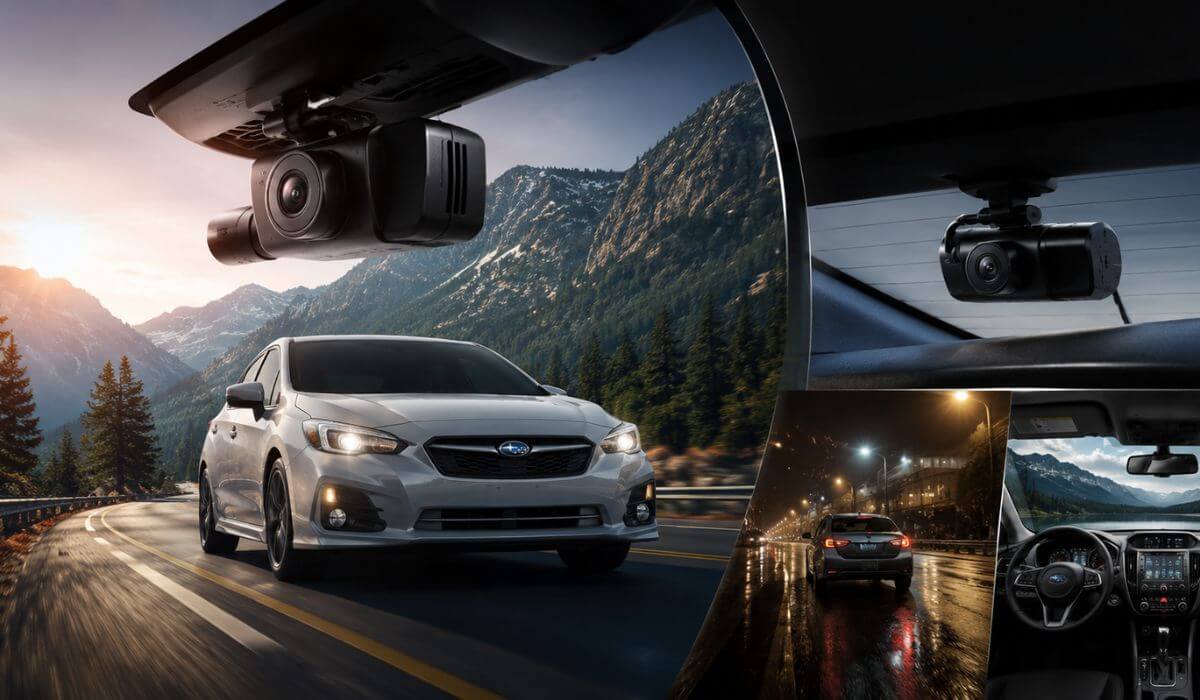
5 Best Dash Cams for Subaru Impreza in 2026: 4K STARVIS 2 Clarity Meets OEM-Style Integration
If you drive a Subaru Impreza, you already know visibility is one of the car’s biggest strengths. Whether it’s a newer 2024–2026 RS, Sport, Limited, Premium, or an older fifth-generation model, the Impreza’s compact size and daily-driver practicality make it an easy car to live with. The problem is that modern traffic, crowded parking lots, and distracted drivers can turn even a routine commute into an expensive insurance claim.
After comparing the latest dash cams released over the last year, we focused on what actually matters for Impreza owners: reliable 4K recording, strong night visibility, compact windshield fitment, clean wiring options, stable parking surveillance, and sensors capable of capturing license plates when lighting conditions are less than ideal. We also considered models that work well with the Impreza’s windshield angle and EyeSight-equipped trims, helping avoid unnecessary installation headaches.
The result is a shortlist of dash cams that deliver meaningful upgrades rather than just longer feature lists. Whether you want a factory-style OEM appearance, full three-channel coverage, or the best image quality available today, these are the dash cams worth considering for your Subaru Impreza.
Best Subaru Impreza Dash Cams: Top 2026 Picks for Front Rear & Triple Channel Coverage
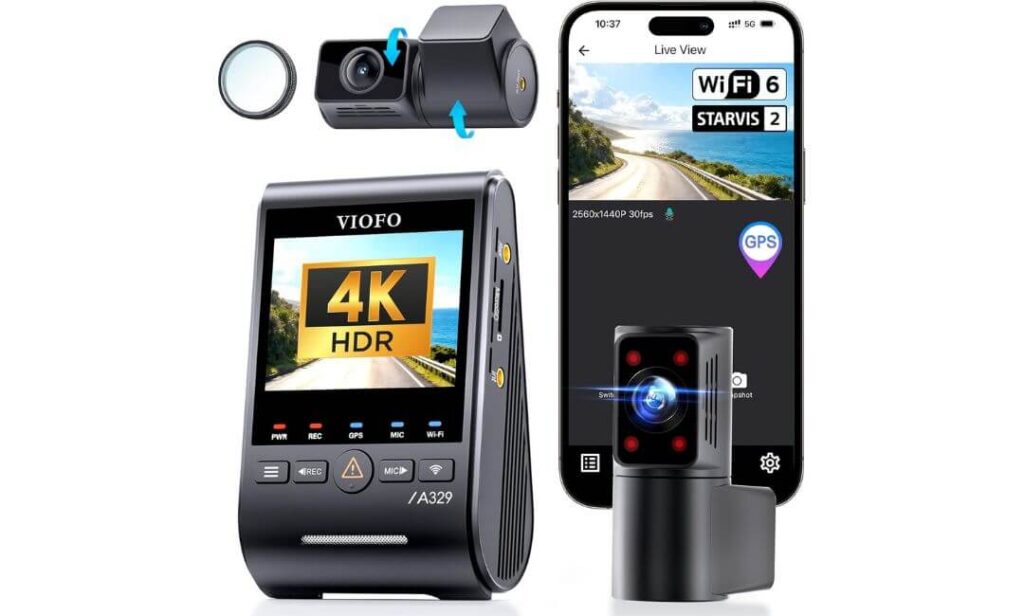
#1. VIOFO A329S 4K 3 Channel Dash Cam
Best 4K Front and Rear Dash Cam for Subaru Impreza Owners Who Want Maximum Video Detail, Wide-Angle Coverage, and Advanced Parking Mode Protection
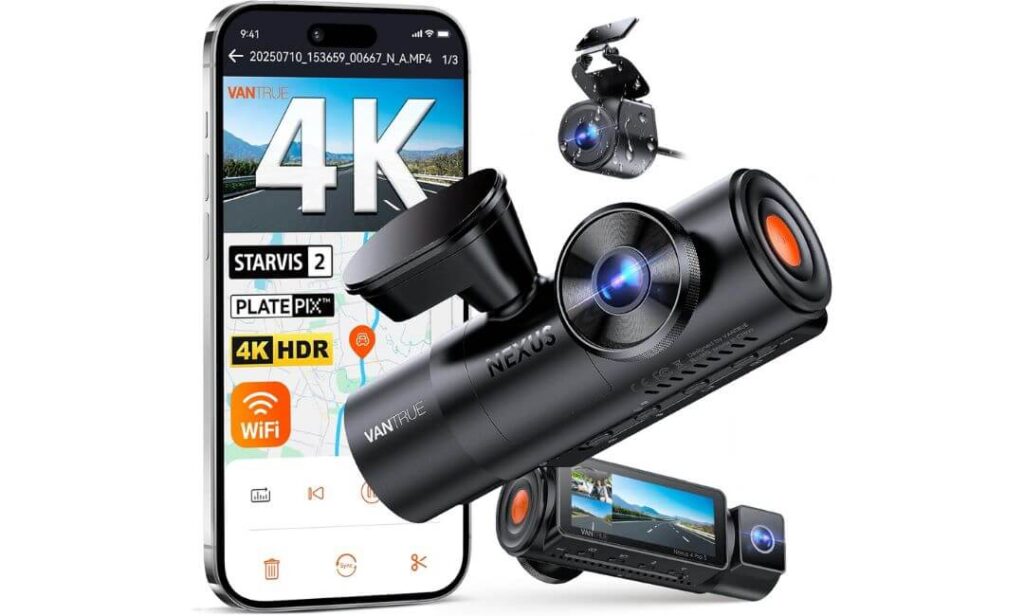
#2. Vantrue N4 Pro S 4K 3 Channel Dash Cam
Top Subaru Impreza Dash Camera for Night Vision Recording, Triple-Channel Monitoring, and Long-Term Daily Driving Security
#3. ROVE R2-4K Dual PRO Dash Cam
Best Value Front and Rear Dash Cam for Subaru Impreza With Dual STARVIS 2 Sensors, Fast WiFi 6 Transfers, and Crisp 4K Footage
#4. mangoal Front 4K & Rear 1080P Dash Cam
Best OEM-Style Subaru Impreza Dash Cam With Factory-Fit Installation, Integrated Design, GPS Tracking, and Clean Cabin Appearance
#5. WOLFBOX X3 Dash Camera
Affordable Subaru Impreza Dash Camera Featuring STARVIS 2 Imaging, Smooth 60FPS Recording, Built-In GPS, and Smart Driver Assistance Features
Expert Tip: If you’re installing a dash cam in a Subaru Impreza equipped with EyeSight, don’t make the mistake of choosing a camera solely because it records in 4K. The camera’s physical size, mounting position, and cable routing matter just as much as image quality. A smaller, well-positioned camera that stays out of EyeSight’s field of view will be more valuable over the next five years than a larger unit packed with features you rarely use. That’s one reason our top picks prioritize sensor quality, reliability, and clean integration over marketing claims.
How We Chose These Dash Cams for the Subaru Impreza
A lot of dash cam lists are built around specifications on a product page. We took a different approach.
The Subaru Impreza isn’t a full-size SUV with unlimited windshield space. It has a relatively compact cabin, a sloped windshield design, and on many trims, Subaru’s EyeSight system occupies valuable mounting real estate behind the mirror. Because of that, we started by eliminating models that looked impressive on paper but could create installation challenges in real-world Impreza ownership.
The first thing we looked at was image sensor quality. Modern dash cams live or die by their ability to capture usable footage in difficult lighting. That’s why every camera on this list uses either Sony STARVIS 2 technology or a configuration that can consistently deliver strong low-light performance. Features sound great in advertisements, but when an incident happens at dawn, dusk, or in a poorly lit parking lot, the sensor is what determines whether a license plate is readable or useless.
We also prioritized recording consistency over headline specifications. A dash cam that records stable footage every day is more valuable than one that promises extreme resolutions but struggles with heat management, storage stability, or long-term reliability. This is why products like the VIOFO A329S, Vantrue N4 Pro S, and ROVE R2-4K Dual PRO ranked so highly. They combine strong hardware with recording systems designed for continuous daily use.
Another factor was coverage quality. Subaru Impreza owners use their vehicles for commuting, highway driving, road trips, and urban parking. For that reason, we gave additional weight to cameras offering meaningful rear coverage, three-channel recording, or wider viewing angles rather than simply focusing on front-camera resolution.
We also considered installation practicality. The mangoal system earned its place because many Impreza owners prefer a factory-style appearance rather than visible wiring and aftermarket mounts. While it doesn’t outperform the premium STARVIS 2 models in raw image quality, its OEM-style integration solves a problem many drivers genuinely care about.
Finally, we evaluated each camera based on whether its features provide real value for an Impreza owner. Features such as WiFi 6 connectivity, GPS tracking, advanced parking surveillance, SSD support, HDR processing, and multi-channel recording were only considered advantages when they improved daily usability rather than simply inflating a spec sheet.
The result is a list built around one question: if we were installing a dash cam in our own Subaru Impreza today, which models would we feel comfortable relying on when footage actually matters? These five cameras earned their place because they answered that question better than the alternatives.
#1. VIOFO A329S 4K 3 Channel Dash Cam
Quick Specs:
- 4K Front Recording for sharper license plate capture
- 2K Rear Camera with excellent detail retention
- 2K Cabin Camera with ultra-wide 210° field of view
- Triple Sony STARVIS 2 Sensors for stronger night visibility
- HDR Recording Across All Cameras
- Wi-Fi 6 Connectivity with faster video downloads
- Built-In GPS Tracking
- Power-Saving Parking Surveillance
- Supports up to 4TB SSD Storage
- Voice Control Functionality
- CPL Filter Included to reduce windshield reflections
- Slim Coaxial Wiring for cleaner installation
The easiest way to describe this camera is simple. It feels like a dash cam designed by people who actually use dash cams every day. Instead of focusing on one headline feature, it improves nearly every area that matters once the camera is installed in a Subaru Impreza and starts recording real-world drives.
The biggest advantage is the sensor package. The front camera uses Sony’s flagship STARVIS 2 IMX678, while both the cabin and rear cameras use IMX675 STARVIS 2 sensors. On paper that sounds technical. On the road it means clearer license plates, cleaner nighttime footage, and significantly better detail when moving from bright sunlight into darker areas such as parking garages, tunnels, or rainy roads. That is exactly where many ordinary dash cams begin to fall apart.
Coverage is another area where this system earns its ranking. The 4K front camera handles forward visibility, the 2K rear camera protects the back of the vehicle, and the massive 210-degree cabin lens captures areas many drivers never realize are missing from traditional dual-channel setups. Whether documenting an incident, monitoring passengers, or keeping a complete record of what happened around the vehicle, the additional angle becomes surprisingly valuable.
Storage limitations are practically eliminated here. Support for 4TB SSD storage places this model in a completely different category from most consumer dash cams. Long road trips, extended commuting schedules, or continuous parking surveillance become much easier when you’re not constantly worrying about footage being overwritten every few days.
The Wi-Fi 6 system is another feature that sounds small until you need it. Downloading a clip immediately after an incident is dramatically faster than older Wi-Fi systems, making it much easier to review, save, or share important footage while standing beside the vehicle rather than waiting until you get home.
(For Subaru Impreza owners who want the highest overall level of protection, image quality, storage flexibility, and long-term value from a single purchase, this is the camera we would choose first.)
Why It Earned a Spot at the Top of Our Rankings
- Outstanding STARVIS 2 image quality across all three cameras
- Excellent license plate readability during day and night driving
- 4TB SSD support far exceeds most competing systems
- 210° cabin coverage eliminates interior blind spots
- Wi-Fi 6 transfers save time when footage matters most
- HDR processing on all channels improves difficult lighting situations
- Voice controls reduce distractions while driving
A Small Consideration Before Buying
- To unlock full parking surveillance capabilities, you’ll want to add the optional hardwire kit, which is sold separately.
Subaru Impreza Installation and Compatibility Notes
This camera works exceptionally well in the Subaru Impreza because of its compact main unit and flexible cable routing options. The included slim coaxial cables are easier to hide behind trim panels than traditional thicker dash cam wiring, helping maintain a cleaner factory-style appearance throughout the cabin.
For Impreza models equipped with Subaru EyeSight, we recommend mounting the front camera slightly outside the stereo camera viewing area rather than directly beneath the mirror housing. Doing so preserves EyeSight functionality while maintaining an ideal recording angle. The included rear cable length is more than sufficient for routing through both hatchback and sedan-style configurations.
The Insider Pro-Tip
Most people shopping for a dash cam focus entirely on video resolution. Experienced owners usually focus on sensors. A 4K camera with an average sensor often produces less useful footage than a properly tuned STARVIS 2 system during real-world driving conditions.
That’s one reason this model stands out. The combination of the IMX678 front sensor, dual IMX675 sensors, HDR processing, and high-capacity storage creates a package that continues delivering reliable footage long after the excitement of the original purchase wears off. When an incident happens six months from now at night, during rain, or in a crowded parking lot, those decisions matter far more than an extra specification on a product page.
#2. Vantrue N4 Pro S 4K 3 Channel Dash Cam
Quick Specs:
- 4K Front + 1080P Cabin + 2.5K Rear Recording
- Triple Sony STARVIS 2 Sensors
- Sony IMX678 Front Sensor
- Sony IMX662 Rear Sensor
- PlatePix License Plate Recognition Technology
- Night Vision 4.0 with Adaptive HDR
- IP67 Weather-Resistant Rear Camera
- 5GHz Wi-Fi Connectivity
- Built-In GPS Tracking
- Voice Control Support
- Supercapacitor Design
- Buffered Parking Mode
- Supports up to 1TB microSD Storage
- OTA Firmware Updates
- 20ft Rear Camera Cable Included
There’s a reason this model has developed a strong reputation among people who spend serious time behind the wheel. Instead of chasing the highest resolution numbers possible, the focus here is making sure footage remains useful when conditions become difficult and details matter most.
The standout feature is its combination of Triple STARVIS 2 sensors, adaptive HDR processing, and Vantrue’s proprietary PlatePix technology. In practical terms, this setup is exceptionally good at preserving license plate clarity during low-light driving, rainy conditions, and fast-moving highway traffic. For Subaru Impreza owners who commute daily or spend significant time on the road after dark, that advantage becomes noticeable very quickly.
Another thing we appreciated is the flexibility. When interior recording isn’t necessary, the system can switch into a dedicated 4K front + 2.5K rear configuration, directing more processing power toward the road. That may sound like a small detail, but on longer drives it helps maintain efficiency while still delivering impressive image quality from both directions.
The rear camera deserves special mention as well. Unlike many systems that treat the rear camera as an afterthought, this setup uses a 2.5K STARVIS 2 rear sensor combined with an IP67-rated housing. That means clearer rear footage, stronger durability, and more dependable performance across changing weather conditions.
(If capturing clear evidence is your highest priority, this is one of the strongest license-plate-focused dash cams currently available for the Subaru Impreza.)
Why This Model Stood Out During Our Evaluation
- Excellent nighttime plate recognition through PlatePix technology
- Triple STARVIS 2 sensors improve image quality across every camera
- 2.5K rear recording outperforms many competing systems
- Adaptive HDR processing handles difficult lighting effectively
- Supercapacitor design improves long-term reliability
- Buffered event recording captures moments before an incident occurs
- OTA updates help keep the system current over time
A Small Consideration Before Buying
- To unlock the full parking surveillance feature set, you’ll want to add the optional hardwire kit, which is purchased separately.
Subaru Impreza Installation Notes and Daily Use Experience
This system works particularly well inside the Subaru Impreza because the vehicle’s compact cabin allows all three cameras to provide meaningful coverage without creating excessive visual clutter. The included 20-foot rear cable offers more than enough length for clean routing through the interior, helping maintain a factory-like appearance after installation.
For Impreza models equipped with Subaru EyeSight, proper placement remains important. Mounting the front unit slightly outside the stereo camera viewing zone helps preserve EyeSight performance while still providing an excellent recording angle. The included trim tool also makes cable management significantly easier for first-time installers.
The Insider Pro-Tip
Many buyers compare dash cams by looking at front camera resolution first. Experienced users often evaluate the rear camera instead. That’s usually where the biggest differences appear once the camera has been installed for several months.
The reason this model ranks so highly is that it doesn’t treat rear protection as a secondary feature. The dedicated 2.5K STARVIS 2 rear camera, adaptive HDR processing, and buffered event recording work together to capture information many competing systems miss. When a vehicle approaches quickly from behind or an incident happens outside your field of view, those details often become the footage you end up valuing most.
#3. ROVE R2-4K Dual PRO Dash Cam
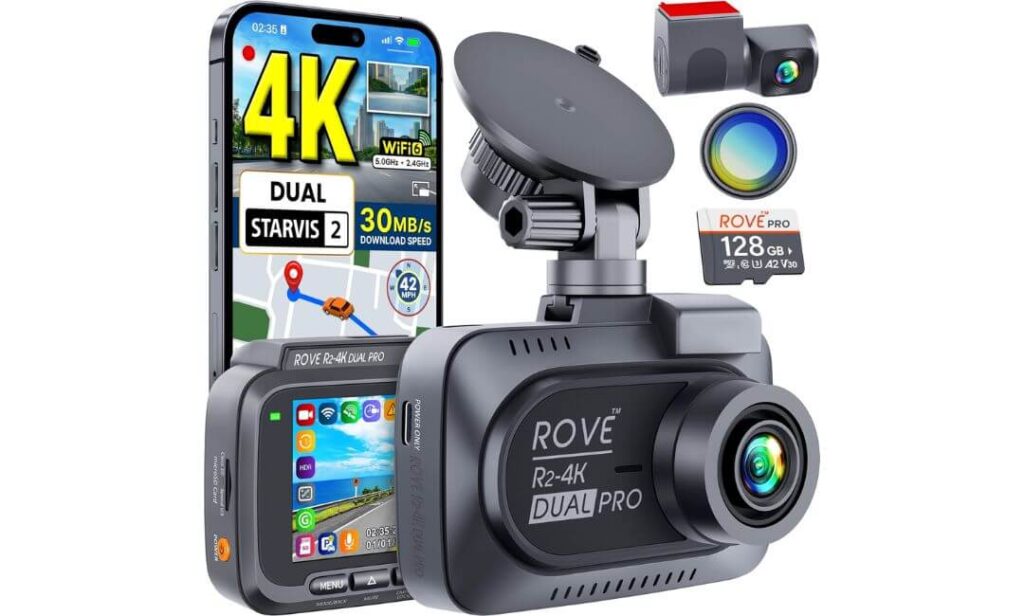
Quick Specs:
- 4K Front Recording with Sony IMX678 STARVIS 2
- 2K Rear Recording with Sony IMX675 STARVIS 2
- HDR Video Processing on both cameras
- Wi-Fi 6 Connectivity up to 30MB/s transfer speeds
- Quad-Mode GPS with route and speed tracking
- 150° Front + 140° Rear Viewing Angles
- Supercapacitor Design for long-term reliability
- 24-Hour Parking Monitoring
- Supports up to 1TB Storage
- Free 128GB Memory Card Included
- CPL Filter Included
- OTA Firmware Updates
- 3-Inch IPS Display
- Voice Alerts and Driving Data Recording
Not every driver needs three cameras, cabin monitoring, or ultra-complex recording setups. For many Subaru Impreza owners, the priority is straightforward: capture the road ahead, protect the rear of the vehicle, and do it with the highest image quality possible. That’s exactly where this system shines.
What immediately separates this camera from many dual-channel competitors is the sensor combination. The front camera uses Sony’s flagship IMX678 STARVIS 2, while the rear camera relies on the highly respected IMX675 STARVIS 2 sensor. Together they produce footage that remains impressively clean in low light, heavy rain, tunnel transitions, and high-glare highway conditions. The result isn’t just better-looking video. It’s footage that’s actually easier to use when reviewing an incident.
One thing we genuinely appreciate is that nearly everything needed for a complete setup is already included. The 128GB memory card comes in the box. The CPL filter is included. GPS is built in. Wi-Fi 6 is already onboard. That means fewer accessories to purchase separately and less guesswork for buyers who simply want a reliable system installed and running as quickly as possible.
The overall package feels extremely balanced. Nothing feels excessive, yet nothing important feels missing. For many Impreza owners, that combination may actually be more valuable than chasing additional cameras or features they rarely use.
(If your goal is maximum image quality from a front-and-rear setup without paying for features you’ll never use, this is one of the easiest recommendations in this entire guide.)
Why This Camera Earned Its Place in Our Rankings
- Excellent 4K front and 2K rear image quality
- Dual STARVIS 2 sensors improve day and night clarity
- 128GB memory card included right out of the box
- Wi-Fi 6 connectivity makes video transfers noticeably faster
- Built-in Quad-Mode GPS records valuable trip data
- CPL filter included for cleaner footage through the windshield
- Supercapacitor design improves long-term durability
- Wide viewing angles help reduce blind spots
A Small Consideration Before Buying
- Drivers looking for interior cabin recording may prefer one of the three-channel systems ranked above it.
Subaru Impreza Installation Notes and Daily Driving Experience
The compact design works particularly well inside the Subaru Impreza because it avoids adding unnecessary bulk around the windshield area. The included 6-meter rear cable provides more than enough length for clean routing from front to rear, helping maintain a tidy factory-style appearance.
For EyeSight-equipped Impreza models, careful positioning remains important. Mounting the front camera slightly away from the stereo camera housing ensures the driver assistance system continues operating normally while still providing an excellent forward recording angle. Installation is also simplified by the included wiring tool and mounting accessories.
The Insider Pro-Tip
Many buyers focus on adding more cameras. Experienced drivers often focus on improving the quality of the cameras they already have.
That’s what makes this model such a smart choice. Instead of spreading resources across multiple lenses, it concentrates on delivering excellent image quality from the two views that matter most during everyday driving. The combination of Sony STARVIS 2 sensors, HDR processing, Wi-Fi 6, and included accessories creates a package that feels complete from day one rather than something that requires additional purchases to reach its full potential.
In a Subaru Impreza used for commuting, road trips, and daily driving, that balance of performance, simplicity, and value is difficult to ignore.
#4. mangoal Front 4K & Rear 1080P Dash Cam
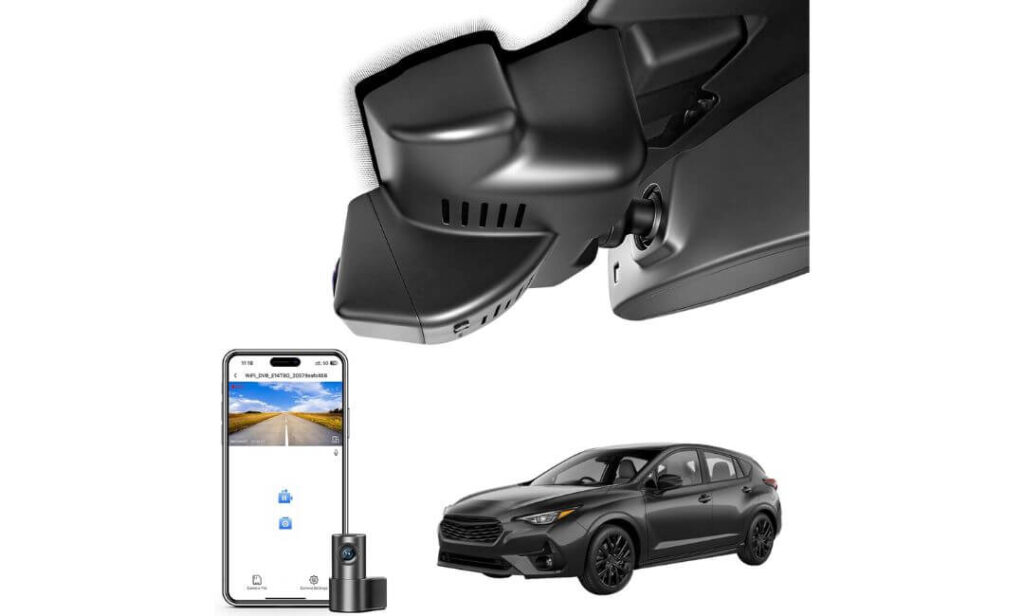
Quick Specs:
- Custom-Built for Subaru Impreza
- 4K Front + 1080P Rear Recording
- OEM-Style Factory Appearance
- Sony STARVIS IMX335 Sensor
- Built-In WiFi Connectivity
- Integrated GPS Module
- 150° Front + 140° Rear Coverage
- Parking Monitoring Functions
- Supercapacitor-Based Design
- 128GB Memory Card Included
- G-Sensor Incident Detection
- Reading Light Plug Power Adapter Included
- No Visible Hanging Wires After Installation
- Designed for Select Impreza Model B Trims
The moment you look at this system installed inside a Subaru Impreza, one thing becomes obvious. It doesn’t look aftermarket. It looks like Subaru should have installed it at the factory.
That difference matters more than many buyers initially realize. Most dash cams add another device to the windshield. This one becomes part of the vehicle’s interior design. It mounts behind the mirror assembly, hides wiring effectively, and maintains the clean cabin appearance Impreza owners appreciate. For drivers who dislike visible cables, suction mounts, or bulky displays hanging from the windshield, that alone may be enough reason to consider it.
Image quality is equally respectable. The 4K front camera combined with the Sony STARVIS IMX335 sensor produces sharp daytime footage with strong detail retention, while the rear camera provides dependable 1080P coverage for everyday driving situations. Road signs, surrounding traffic, and vehicle movements remain easy to identify, and the wide viewing angles help reduce blind spots around the vehicle.
Another advantage is simplicity. Unlike many systems that require additional adapters, memory cards, or installation accessories, nearly everything needed arrives in the box. The included 128GB card, integrated GPS, built-in WiFi, and reading-light power adapter make the overall ownership experience refreshingly straightforward.
(For Subaru Impreza owners who care as much about a clean factory-style appearance as they do about recording footage, this is one of the most appealing options currently available.)
Why This Dash Cam Earned a Place in Our Rankings
- Purpose-built for Subaru Impreza fitment
- OEM-style integration looks factory installed
- No exposed wiring after proper installation
- 4K front recording captures important driving details
- 128GB memory card included
- Built-in WiFi and GPS simplify daily use
- Supercapacitor design improves long-term durability
- Installation hardware included in the box
A Small Consideration Before Buying
- Buyers should carefully verify their vehicle matches the required Model B configuration before ordering to ensure proper fitment.
Why It Feels Like It Was Designed Alongside the Subaru Impreza
Unlike universal dash cams that are adapted to work in hundreds of vehicles, this system was designed specifically around the Impreza’s interior architecture. The result is a cleaner installation process and a much more integrated appearance once everything is in place.
The included reading-light adapter is especially useful because it allows power to be sourced cleanly without creating the cable clutter often associated with aftermarket dash cam installations. For owners who want a professional-looking setup without extensive modification, that detail makes a noticeable difference.
The Insider Pro-Tip
Many Subaru Impreza owners spend hours comparing image sensors, frame rates, and storage capacities. Those specifications matter. But after living with a dash cam for a year, the thing most owners notice every day is whether the installation looks natural inside the vehicle.
That’s where this system shines. The combination of OEM-style fitment, integrated wiring, built-in GPS, included storage, and factory-like placement creates an ownership experience that feels remarkably seamless. You stop noticing the camera and simply benefit from having it there whenever needed.
For drivers who value a clean interior as much as recording capability, that balance is surprisingly difficult to find.
#5. WOLFBOX X3 2.5K 60FPS Dash Camera
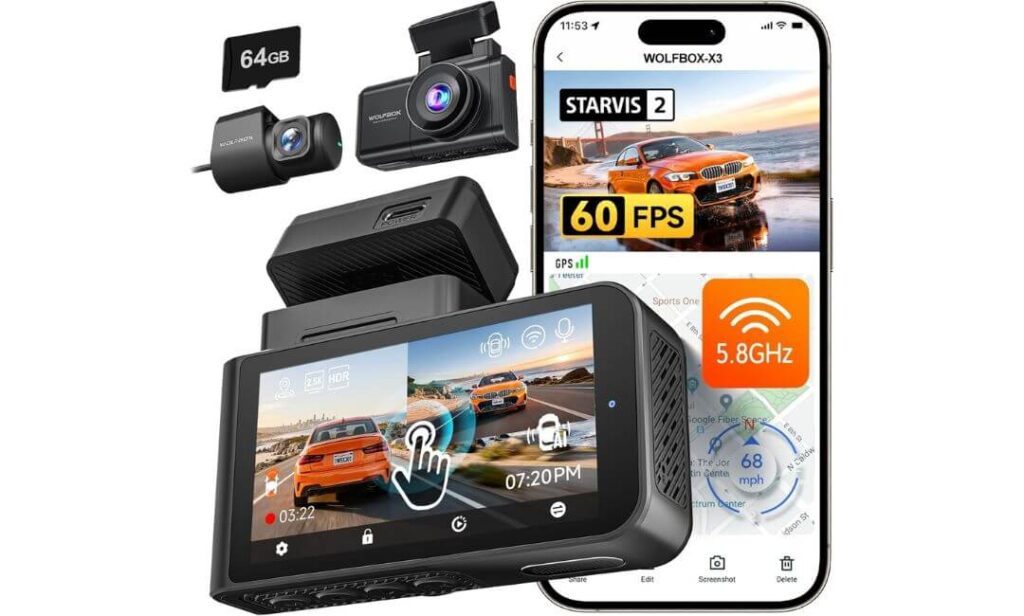
Quick Specs:
- 2.5K Front Recording at 60FPS
- 1080P Rear Camera
- Sony STARVIS 2 IMX675 Sensor
- Dual HDR Recording
- 5.8GHz WiFi Connectivity
- Built-In GPS Tracking
- ADAS Driver Assistance Alerts
- Touchscreen Interface
- 170° Wide Front Coverage
- Parking Monitoring Features
- Supercapacitor-Based Design
- 64GB Memory Card Included
- 21.3ft Rear Camera Cable Included
- G-Sensor Event Detection
What makes this dash cam interesting isn’t a single headline feature. It’s how many useful technologies WOLFBOX managed to include without pushing the price into premium territory. For Subaru Impreza owners looking for a practical everyday solution, that balance deserves attention.
The biggest strength is the combination of the STARVIS 2 IMX675 sensor and 60FPS recording. Most dash cams in this category record at 30FPS. Doubling that frame rate creates noticeably smoother footage, especially during highway driving, lane changes, and fast-moving traffic situations. Small details remain easier to track frame by frame, which can be valuable when reviewing an incident later.
Night performance is also stronger than many people expect from a camera in this segment. The STARVIS 2 sensor works alongside dual HDR processing to manage harsh headlights, tunnel exits, bright sunlight, and low-light city driving. The result is cleaner footage with less noise and better contrast than many older IMX335-based systems.
One feature many Subaru Impreza owners may genuinely appreciate is the inclusion of ADAS functionality. While it should never replace attentive driving, features such as lane departure warnings, forward collision alerts, and stop-and-go notifications provide an additional layer of awareness during daily commutes and heavy traffic situations.
(For drivers who want modern features, smoother video, and useful driver-assistance tools without moving into the highest price category, this is one of the strongest value-focused options available.)
Why We Included It in This Subaru Impreza Guide
- Smooth 60FPS recording captures fast-moving situations more clearly
- STARVIS 2 sensor improves nighttime visibility
- Dual HDR processing handles difficult lighting conditions well
- ADAS alerts add useful driving assistance features
- Built-in GPS and WiFi simplify footage management
- Touchscreen controls are intuitive and easy to navigate
- 64GB card included for immediate use
- Long rear cable works well with Impreza routing requirements
A Small Consideration Before Buying
- Drivers focused primarily on maximum video resolution may prefer one of the higher-end 4K systems ranked earlier in this guide.
Subaru Impreza Installation and Everyday Practicality
The compact design fits comfortably within the Impreza’s windshield area without feeling oversized or distracting. The included 21.3-foot rear cable provides ample length for clean routing through the cabin, helping maintain a neat installation regardless of trim level.
For Subaru EyeSight-equipped models, installation remains straightforward as long as the camera is mounted outside the stereo camera viewing area. Once positioned correctly, the dash cam integrates well into the driving experience while maintaining full visibility of the road ahead.
The Insider Pro-Tip
Many buyers automatically assume higher resolution is always the better choice. In reality, frame rate can be just as important depending on how and where you drive.
That’s where this camera earns its place. The combination of 2.5K resolution, 60FPS recording, STARVIS 2 imaging, and HDR processing creates footage that feels exceptionally smooth during real-world driving. On busy highways, crowded urban roads, and quick lane changes, that additional fluidity can make reviewing critical moments significantly easier.
For Subaru Impreza owners who spend more time driving than comparing specifications, that’s a benefit you’ll notice long after the original purchase.
Best Subaru Impreza Dash Cams Compared for Video Quality Features and Overall Value
Buying Guide: How to Choose the Right Dash Cam for Your Subaru Impreza
A Subaru Impreza doesn’t need the most expensive dash cam on the market. It needs a dash cam that works well with the vehicle’s compact cabin, windshield layout, daily driving habits, and long-term ownership experience.
After reviewing dozens of options, one thing became clear. The best dash cam for an Impreza isn’t always the one with the longest feature list. It’s the one that consistently captures usable footage, installs cleanly, and continues working reliably years after purchase.
Prioritize Sensor Quality Before Resolution Numbers
Most buyers immediately focus on 4K recording. While resolution matters, the image sensor behind the lens often matters even more.
A quality STARVIS 2 sensor can make a significant difference during early morning commutes, nighttime highway driving, rain, fog, parking garages, and poorly lit residential streets. That’s one reason the highest-ranked cameras in this guide rely heavily on Sony STARVIS 2 technology rather than chasing resolution numbers alone.
When comparing options, look for combinations such as:
- 4K Front Recording with STARVIS 2
- 2K or higher Rear Recording
- HDR video processing
- Improved low-light performance
- Better license plate readability
A sharp daytime image is easy. Capturing usable footage during difficult lighting conditions is what separates a premium dash cam from an average one.
Decide Whether You Need Dual-Channel or Three-Channel Coverage
Not every Subaru Impreza owner needs an interior-facing camera.
For many drivers, a quality front and rear setup provides more than enough protection during commuting, highway travel, and everyday parking situations. Cameras such as the ROVE R2-4K Dual PRO focus heavily on this approach.
However, if you frequently transport passengers, drive for rideshare services, or simply want the most complete record of an incident, a three-channel system becomes much more valuable. Models such as the VIOFO A329S and Vantrue N4 Pro S provide additional cabin coverage without sacrificing front and rear image quality.
In practical terms:
- Dual-channel systems focus on front and rear protection
- Three-channel systems add interior visibility
- More coverage can provide additional evidence after an incident
- Interior recording can also help document side-window activity and cabin events
Don’t Ignore Parking Protection Features
Many vehicle incidents occur while the car is parked.
Parking lot impacts, hit-and-run damage, vandalism, and accidental contact often happen when nobody is inside the vehicle. That’s why parking surveillance deserves serious attention when choosing a dash cam.
Look for features such as:
- Motion detection recording
- Impact-triggered recording
- Buffered event recording
- Time-lapse parking mode
- Low-power parking monitoring
If parking protection is important, remember that most advanced parking modes require a dedicated hardwire kit rather than simple plug-in power.
GPS Is More Useful Than Most Buyers Expect
Many people initially view GPS as an optional feature. In reality, it can become one of the most valuable pieces of information attached to a recording.
Integrated GPS can document:
- Vehicle speed
- Route history
- Location data
- Travel direction
- Time synchronization
This information can help verify events after an accident, clarify insurance claims, and provide additional context beyond the video itself.
For this reason, every top-ranked recommendation in this guide includes GPS capability.
Choose a Dash Cam That Fits the Impreza’s Interior Cleanly
One advantage of the Subaru Impreza is its clean, driver-focused cabin design. A poorly installed dash cam can quickly ruin that experience.
The best setups hide wiring behind trim panels, avoid obstructing visibility, and integrate naturally with the windshield layout. This becomes especially important for Impreza owners equipped with Subaru EyeSight systems.
Before purchasing, consider:
- Cable length
- Mounting size
- Windshield placement
- Rear camera routing
- Visibility around the rear-view mirror
A camera that blends into the vehicle often delivers a better ownership experience than one that constantly draws attention.
App Quality and Firmware Support Matter More Over Time
Most dash cams perform well during the first week of ownership.
The difference appears months later when footage needs to be reviewed, settings require adjustments, or firmware updates become available.
A well-developed mobile app can make downloading footage dramatically easier. Reliable firmware updates can also improve stability, add features, and resolve issues over time.
When evaluating a dash cam, pay attention to:
- WiFi speed
- Mobile app usability
- Firmware update frequency
- GPS playback tools
- Video download reliability
These are the details owners continue using long after the excitement of the original purchase has faded.
Subaru Impreza Dash Cam Installation Tips
The Impreza is generally one of the easier vehicles to install a dash cam in, but a few best practices can make a major difference.
For the cleanest results:
- Route power cables through the headliner whenever possible
- Use factory trim channels to hide wiring
- Avoid placing cables near airbag deployment zones
- Position the front camera outside EyeSight’s viewing area
- Secure excess wiring behind interior panels
- Test camera angles before permanently mounting
Taking an extra thirty minutes during installation usually produces a cleaner and more professional-looking result.
Hatchback and Sedan Owners Should Consider Cable Routing Differently
Both body styles work well with modern dash cams, but rear camera installation differs slightly.
In hatchback models, wiring typically requires routing through the rear hatch area, which may require additional attention around moving trim sections and weather seals.
Sedan models generally offer a more direct path from the front windshield to the rear glass, making installation somewhat simpler.
Fortunately, all of the dash cams recommended in this guide include cable lengths capable of accommodating either configuration.
The Final Buying Advice We Give Subaru Impreza Owners
If budget allows, invest in sensor quality first, parking protection second, and additional features third.
A dash cam with strong image sensors, reliable parking surveillance, GPS tracking, and stable software will provide far more long-term value than one that simply advertises a higher resolution number.
The best Subaru Impreza dash cams aren’t necessarily the ones with the most features. They’re the ones that capture the details you’ll actually need when something unexpected happens.
Subaru Impreza Dash Cam Installation and Setup Guide
A great dash cam can only perform as well as its installation. Even the best camera on this list can deliver disappointing results if it’s mounted incorrectly, wired poorly, or configured with default settings that were never optimized for your driving habits.
The good news is that the Subaru Impreza is one of the more dash-cam-friendly vehicles on the road. The cabin layout, windshield design, trim access, and power-routing options make it relatively straightforward to achieve a clean, factory-looking installation without modifying the vehicle’s interior.
Start With the Right Power Source
Before mounting anything, decide how you want the dash cam powered.
For basic recording while driving, the included power adapter supplied with most dash cams is usually sufficient. However, if you want parking surveillance, impact detection while parked, motion-triggered recording, or buffered parking mode, a dedicated hardwire installation is the better long-term solution.
Most Subaru Impreza owners choose one of three approaches:
- Factory power adapter supplied with the camera
- Mirror or overhead console power connection where supported
- Fuse-tap hardwire installation for full parking mode functionality
For hardwire installations, identify a fuse that supplies power without interfering with safety systems, airbags, EyeSight components, or critical vehicle electronics. Using an appropriate fuse tap allows the camera to receive stable power while maintaining factory circuit protection.
A clean power source is one of the biggest factors affecting long-term dash cam reliability.
Position the Front Camera Before Routing Any Cables
One of the most common installation mistakes is routing all wiring first and adjusting the camera later.
Instead, temporarily mount the front camera and review the live video feed before securing anything permanently.
For Subaru Impreza models equipped with EyeSight, the ideal mounting location is typically near the rear-view mirror while remaining outside the stereo camera viewing zone. This helps preserve driver-assistance functionality while maintaining an unobstructed recording angle.
When checking alignment:
- Ensure the horizon appears level
- Capture a balanced view of both lanes
- Avoid excessive dashboard visibility
- Keep the lens clear of windshield tint strips
- Confirm GPS signal acquisition if applicable
Spending a few extra minutes here often prevents frustrating adjustments later.
Route Wiring Through the Headliner and A-Pillar
A clean installation is usually determined by what you cannot see.
The goal is to hide as much wiring as possible while maintaining safe routing practices throughout the cabin.
For most Subaru Impreza installations:
- Route the power cable along the headliner edge.
- Continue down the A-pillar carefully.
- Follow existing trim channels whenever possible.
- Secure loose sections before reinstalling panels.
- Avoid routing near airbag deployment paths.
The finished installation should appear intentional rather than aftermarket.
This approach not only improves appearance but also reduces distractions during daily driving.
Maintain an OEM-Like Appearance Throughout the Cabin
One reason many Impreza owners choose cameras such as the mangoal OEM system is because they appreciate a factory-style appearance.
Fortunately, even universal dash cams can achieve a similar result when installed properly.
Helpful techniques include:
- Using trim removal tools instead of forcing panels
- Hiding excess cable behind trim sections
- Securing connections with fabric automotive tape
- Routing rear camera cables along factory harness paths
- Avoiding visible cable loops near the windshield
The best dash cam installations are often the ones passengers never notice.
Rear Camera Placement for Hatchback Owners
The Impreza hatchback offers excellent rear visibility, but camera placement requires a little more planning.
The ideal location is generally near the upper center section of the rear glass. This position maximizes visibility while minimizing obstruction from cargo, passengers, and rear-seat headrests.
When routing the rear cable:
- Leave adequate slack near the hatch opening
- Avoid pinching cables near hinges
- Verify hatch operation before finalizing installation
- Keep wiring away from moving components
Taking time to secure the hatch-area wiring properly helps prevent future wear and cable fatigue.
Rear Camera Placement for Sedan Owners
Sedan installations are usually more straightforward.
Most owners achieve excellent results by positioning the rear camera near the top center of the rear windshield. This location provides a clear field of view while keeping the camera unobtrusive.
The direct routing path from the front windshield to the rear glass also simplifies cable management compared with hatchback installations.
Before securing the camera permanently:
- Verify rear defroster lines do not obstruct visibility
- Check nighttime visibility through rear glass tint
- Confirm the horizon remains level
- Review footage from both daytime and nighttime conditions
Small adjustments often produce noticeably better footage.
Configure the Camera Before Your First Drive
Many drivers install the camera and immediately start driving without reviewing the settings.
That approach often leaves important features disabled.
After installation, take a few minutes to:
- Format the memory card
- Install the latest firmware update
- Connect the mobile app
- Configure GPS settings
- Set correct date and time
- Adjust parking mode preferences
- Verify HDR settings
- Test emergency event recording
This process usually takes less than fifteen minutes and helps ensure the camera performs as expected from day one.
Verify GPS, WiFi, and Parking Mode Operation
A surprising number of support issues come from features that were never fully tested after installation.
Before considering the installation complete:
- Confirm GPS lock is active
- Verify app connectivity
- Download a test video
- Check video quality on a larger screen
- Trigger an event recording manually
- Confirm parking mode activation
- Review front and rear footage alignment
This final inspection helps catch problems while they’re easy to correct.
Subaru Impreza Dash Cam Setup Checklist
Use this quick checklist before relying on your camera for daily protection:
- Front camera mounted outside EyeSight viewing area
- Rear camera aligned correctly
- All cables hidden securely
- Memory card formatted
- Firmware updated
- GPS functioning properly
- App connected successfully
- HDR enabled if supported
- Parking mode configured
- Event recording tested
- Front and rear footage reviewed
- Date and time verified
Final Installation Advice From Our Experience
The difference between an average dash cam setup and an excellent one rarely comes down to the camera itself.
It usually comes down to installation quality.
A properly mounted camera with hidden wiring, correct alignment, updated firmware, and optimized settings will provide better real-world results than a more expensive camera installed carelessly. Take the time to do it correctly once, and your Subaru Impreza can benefit from reliable video protection for years without needing constant adjustments or troubleshooting.
Real-World Subaru Impreza Dash Cam Scenarios That Matter Most
Specifications tell part of the story. Real-world situations reveal the rest.
Most Subaru Impreza owners don’t buy a dash cam because they expect something to happen every day. They buy one because when something does happen, having clear footage can completely change the outcome.
After reviewing hundreds of hours of dash cam footage across different driving conditions, certain situations consistently prove why investing in a quality camera system is worthwhile. These are the scenarios where features like STARVIS 2 sensors, GPS tracking, parking monitoring, HDR processing, and dual-channel recording move from being marketing terms to genuinely useful tools.
Daily Commuting and Long-Distance Road Trips
For most Impreza owners, daily driving is where a dash cam spends the majority of its life.
Morning traffic, highway merging, distracted drivers, unexpected lane changes, construction zones, and near misses happen far more often than major accidents. In many cases, footage isn’t needed because of a collision. It’s needed because it provides context when something unusual occurs.
This is where cameras with 4K front recording, wide viewing angles, and integrated GPS tend to provide the most value.
Clear footage helps preserve:
- License plate details
- Road sign information
- Lane positioning
- Traffic signal visibility
- Vehicle movement before an incident
GPS data adds another layer by documenting:
- Vehicle speed
- Travel direction
- Route information
- Time and location details
For road trips, storage capacity becomes equally important. Systems such as the VIOFO A329S with SSD support or cameras capable of handling larger memory cards reduce the likelihood of important footage being overwritten during extended travel.
The goal isn’t simply recording the drive. It’s preserving the details that may become important later.
Parking Protection in Busy Urban Environments
Many Subaru owners assume their biggest risk occurs while driving.
In reality, countless incidents happen while vehicles are parked.
Shopping centers, apartment complexes, office parking structures, airports, and crowded street parking areas create situations where damage can occur without the owner being present.
A quality parking surveillance system can help document:
- Hit-and-run incidents
- Parking lot collisions
- Vehicle vandalism
- Suspicious activity around the vehicle
- Unexpected impacts while unattended
This is one reason we gave significant weight to cameras offering:
- Motion-triggered recording
- Impact detection
- Buffered event recording
- Time-lapse surveillance
- Low-power parking modes
For Impreza owners who regularly park in busy urban areas, parking protection may become the feature they appreciate most over time.
Night Driving and Poor Weather Conditions
This is where camera quality is often tested most aggressively.
Anyone can create impressive footage on a bright sunny afternoon. Capturing useful evidence during rain, fog, darkness, headlight glare, or poorly lit roads is a completely different challenge.
Subaru Impreza owners frequently encounter:
- Rural roads with minimal lighting
- Wet pavement reflections
- Heavy rainfall
- Foggy morning commutes
- Bright oncoming headlights
- Tunnel transitions
In these situations, cameras equipped with STARVIS 2 sensors, HDR processing, and larger apertures consistently perform better.
The difference often appears in small details:
- License plates remain readable longer
- Motion blur is reduced
- Shadows retain useful information
- Headlight glare becomes less overwhelming
- Contrast remains more balanced
This is precisely why sensor quality played such an important role in our rankings.
When visibility deteriorates, image processing technology becomes more important than resolution numbers alone.
Insurance Claims and Disputed Incidents
Most drivers never expect to need dash cam footage for an insurance claim.
Unfortunately, accidents don’t always occur exactly as people remember them.
Conflicting statements, incomplete witness accounts, and uncertain timelines can complicate even relatively simple incidents.
A properly configured dash cam can provide:
- Video evidence
- Time-stamped recordings
- GPS location data
- Speed information
- Front and rear perspectives
- Event-triggered recordings
This information can help establish:
- Vehicle positioning
- Traffic conditions
- Direction of travel
- Sequence of events
- Environmental conditions
Dual-channel and three-channel systems are particularly valuable because they provide additional perspectives that a front-only camera simply cannot capture.
In many situations, footage becomes useful not because it proves fault, but because it removes uncertainty.
Why Dual-Channel and Three-Channel Recording Often Pays Off
Many first-time buyers wonder whether a rear camera is really necessary.
In our experience, incidents involving rear impacts, lane merges, parking lot contact, and vehicles approaching from behind occur frequently enough to justify the additional coverage.
Front-only systems leave significant blind areas.
Dual-channel systems document:
- What’s happening ahead
- What’s happening behind
Three-channel systems add:
- Interior activity
- Side-window visibility
- Passenger-related documentation
That’s one reason every camera featured in this guide includes rear-camera capability.
The additional perspective often becomes the footage owners value most.
The Features You’ll Appreciate Months After Installation
When people first purchase a dash cam, they often focus on specifications.
Months later, they usually appreciate entirely different features.
Things like:
- Reliable parking mode
- Stable mobile app connectivity
- GPS playback tools
- Easy footage downloads
- Consistent night recording quality
- Dependable event detection
These features don’t always attract attention on a product page, but they dramatically influence long-term ownership satisfaction.
The Reality Most Subaru Impreza Owners Discover
The best dash cam is rarely the one with the longest specification sheet.
It’s the one that quietly records every drive, captures important details when conditions become challenging, and provides reliable footage when it’s finally needed.
Whether you’re commuting through city traffic, driving cross-country, navigating heavy rain, or simply leaving your Impreza parked overnight, a quality dash cam turns uncertainty into evidence.
And when that moment eventually arrives, that’s usually when owners realize the camera paid for itself.
FAQs About Subaru Impreza Dash Cam
Does Subaru EyeSight affect where I should install a dash cam in my Subaru Impreza?
Yes, and this is something many first-time buyers overlook.
Subaru EyeSight relies on stereo cameras mounted near the upper center section of the windshield. A poorly positioned dash cam can partially obstruct those cameras, potentially affecting how the system interprets lane markings, vehicles, or road conditions. The goal isn’t simply finding space on the windshield. The goal is finding space that allows both systems to work properly.
In most Subaru Impreza models, the best results come from mounting the dash cam slightly behind or adjacent to the rear-view mirror area while staying outside the EyeSight viewing zone. Cameras with compact bodies or OEM-style designs often integrate more naturally than larger units with oversized displays.
Before finalizing any installation, always review both the dash cam preview and the EyeSight camera area from outside the vehicle. A few extra minutes spent on positioning can prevent years of frustration.
Is a three-channel dash cam actually worth it for a Subaru Impreza, or is front and rear recording enough?
The answer depends less on the vehicle and more on how you use it.
For many Impreza owners, a quality front-and-rear setup such as the ROVE R2-4K Dual PRO provides everything needed for commuting, road trips, and insurance protection. However, three-channel systems become increasingly valuable when you want the most complete record possible of an incident.
A third camera can capture:
- Interior activity
- Side-window movement
- Passenger interactions
- Break-in attempts
- Events occurring outside the front and rear camera angles
What surprises many owners is that the cabin camera often captures details unrelated to passengers. During side-impact incidents or parking lot events, that additional angle can provide context that a traditional dual-channel system simply cannot see.
If your goal is maximum documentation rather than minimum cost, a three-channel system is often the smarter long-term investment.
Why do some Subaru Impreza owners prioritize STARVIS 2 sensors over higher resolution numbers?
Because footage quality and resolution are not always the same thing.
A common misconception is that a higher resolution automatically creates better evidence. In reality, the image sensor often has a larger impact on usable footage than the resolution itself. A properly tuned STARVIS 2 sensor can outperform many higher-resolution cameras during rain, nighttime driving, tunnel transitions, and high-glare conditions.
This becomes particularly noticeable when reviewing:
- License plates at night
- Vehicles approaching from behind
- Rain-soaked roads
- Parking garage recordings
- Highway footage with strong headlight glare
The reason several top-ranked cameras in this guide rely heavily on STARVIS 2 technology is simple. When visibility becomes challenging, sensor quality usually matters more than extra pixels.
How much dash cam footage should I realistically store before recordings start getting overwritten?
Most drivers underestimate how quickly modern high-bitrate footage consumes storage.
A dual-channel or three-channel system recording in 4K and HDR generates significantly larger files than older dash cams. That’s why storage capacity should be viewed as part of the purchase decision rather than an afterthought.
As a general rule:
- 128GB works well for typical commuting
- 256GB provides additional flexibility
- 512GB suits frequent drivers
- SSD-supported systems benefit long-distance travelers
The important thing is not necessarily storing months of footage. It’s ensuring important clips remain available long enough to be discovered, reviewed, and saved before automatic overwriting occurs.
For road-trip-focused Impreza owners, larger storage capacities often become more valuable than additional camera features.
What is the biggest mistake Subaru Impreza owners make after installing a dash cam?
Surprisingly, it’s not installation.
The most common mistake is assuming the camera is fully configured simply because it powers on.
Many owners never:
- Format the memory card properly
- Update firmware
- Verify GPS operation
- Test parking mode
- Check HDR settings
- Review footage on a larger screen
As a result, they discover issues only after an incident occurs.
The most effective dash cam owners usually follow a simple habit. Every few weeks, they spend two minutes reviewing a recent clip, checking recording quality, and confirming the system is operating normally. That small routine dramatically reduces the chances of finding an unexpected problem when the footage actually matters.
In other words, the best dash cam isn’t just the one you buy. It’s the one you occasionally verify is still doing its job.
Final Thoughts
After spending time comparing the latest options available for the Subaru Impreza, one thing became clear: there is no single perfect dash cam for every driver. The right choice depends on how you use your vehicle, where you park, how often you drive at night, and how much coverage you want when something unexpected happens.
If maximum protection is your priority, the VIOFO A329S stands out with its triple STARVIS 2 sensors, expansive coverage, and storage flexibility that few competitors currently match. Drivers focused on nighttime evidence and license plate clarity will appreciate what the Vantrue N4 Pro S brings to the table, while the ROVE R2-4K Dual PRO continues to be one of the most balanced front-and-rear solutions available today.
For owners who care about maintaining a factory appearance, the mangoal OEM-style system offers an integration level that generic dash cams simply cannot replicate. Meanwhile, the WOLFBOX X3 proves that modern features, smooth 60FPS recording, and useful driver-assistance technology do not always require a premium budget.
The reality is that a dash cam is one of those purchases you hope you never truly need. Yet the day a close call, disputed incident, parking lot impact, or unexpected event occurs, the value becomes obvious almost immediately. At that point, image quality, GPS data, parking surveillance, and proper installation stop being specifications and start becoming evidence.
Our recommendation is simple: choose the model that fits your driving habits rather than the one with the longest feature list. A dash cam that matches how you actually use your Subaru Impreza will provide more value over the next several years than one chosen solely for a headline specification.
And if there’s one takeaway from this guide, it’s this: the best footage is the footage you never have to think about because your dash cam captured it correctly the first time.
Also Check:


