
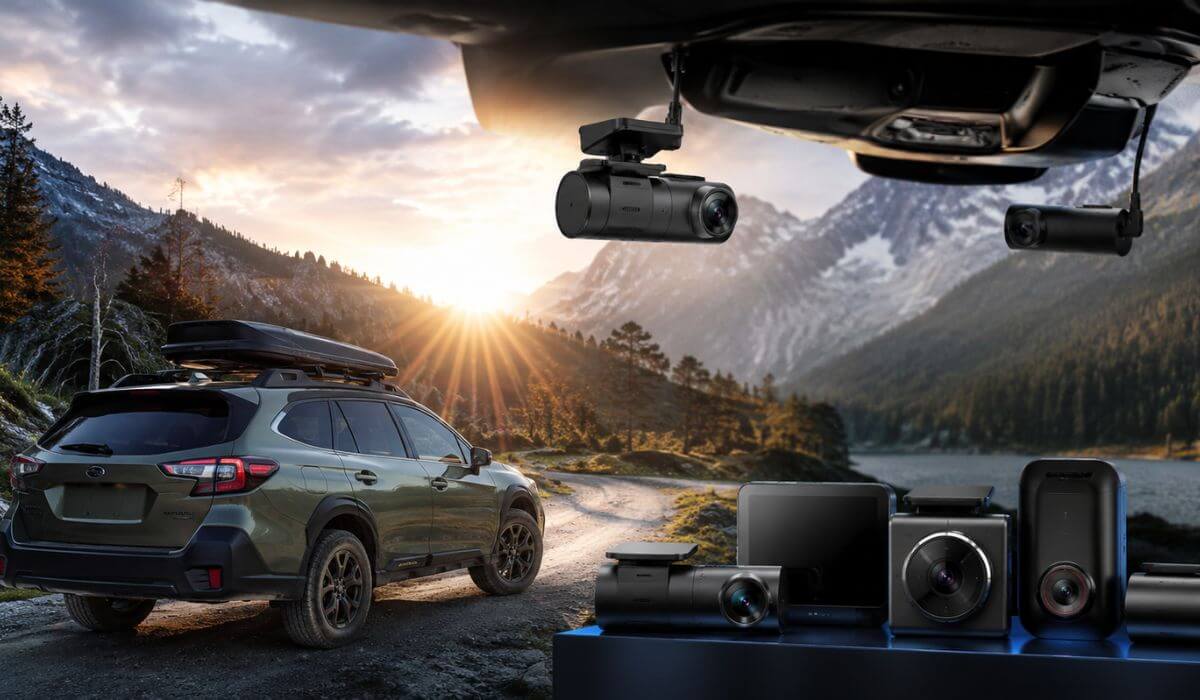
5 Best Dash Cams for Subaru Outback in 2026: 4K60 Clarity STARVIS 2 Precision and SSD Storage
If you drive a Subaru Outback, you already know it is not used like a typical family crossover. Some owners spend most of their time on highways, others take it deep into forest roads, mountain trails, and long-distance road trips where a dash cam becomes more than just an accessory. The challenge is that modern Outback models, especially 2020–2026 vehicles equipped with Subaru EyeSight, leave less room for poor camera placement and low-quality hardware. A dash cam that works perfectly in another SUV may create visibility issues or simply fail to capture critical details when lighting conditions change.
After comparing the newest generation of STARVIS 2 cameras, cloud-connected systems, LTE-enabled models, SSD-supported recorders, and high-frame-rate 4K options, we narrowed our selection to the dash cams that make the most sense for real Subaru Outback owners. We focused on video clarity, EyeSight-friendly installation, parking surveillance, storage reliability, wireless performance, and long-term usability rather than marketing claims. Whether you own an older Outback or a newer Wilderness, Touring, Limited, or Onyx Edition model, the options below offer the strongest combination of recording quality and everyday practicality.
Best Subaru Outback Dash Cams: Top 2026 Picks with STARVIS 2 and WiFi 6
#1. VIOFO A329S 4K 60FPS Dash Cam Front and Rear
Best 4K dash cam for Subaru Outback owners who want dual STARVIS 2 sensors, ultra-smooth highway recording, and future-proof SSD storage support.
#2. BlackVue DR970X-2CH Plus II Dash Cam
Best Subaru Outback parking mode dash cam with premium cloud connectivity, remote access features, and dependable long-term surveillance.
#3. 70mai Dash Cam 4K Omni + UP05 Hardwire Kit
Best front and rear dash cam for Subaru Outback drivers seeking 360° coverage, LTE connectivity, and advanced AI-powered monitoring.
#4. ROVE R2-4K Dual PRO Dash Cam
Best Subaru Outback dash camera review pick for value-focused buyers wanting STARVIS 2 image quality, WiFi 6 transfers, and a complete package.
#5. Cobra Smart Dual View SC250R Dash Cam
Best dash cam compatible with Subaru Outback road trips featuring smart alerts, connected-car functions, and integrated emergency assistance tools.
Expert Tip for Subaru Outback Owners
One mistake we repeatedly see with Subaru Outback installations is buyers spending extra money on higher resolution while overlooking camera placement. On 2020–2026 Outback models equipped with EyeSight, where the camera sits often matters more than an additional feature on the box. A properly positioned STARVIS 2 camera with reliable parking mode will usually provide more useful footage than a poorly mounted camera with a longer feature list. If you regularly drive on dark highways, mountain roads, or areas with wildlife crossings, prioritize nighttime plate readability, HDR performance, and sensor quality before focusing on extra smart features. In real-world driving, those details are what usually matter when you actually need the footage.
How We Chose These Dash Cams for Subaru Outback
A lot of dash cam lists simply rank products based on popularity, brand recognition, or specifications copied from a product page. That was not our approach.
We started by looking at what actually matters to Subaru Outback owners. The Outback is one of the few vehicles that serves multiple roles at once. It is a family vehicle, a road-trip machine, a commuter, and for many owners, an adventure vehicle that spends time far away from busy urban roads. Because of that, we focused on the factors that have the biggest impact in real ownership rather than chasing the longest feature sheet.
The first requirement was video quality that remains usable when conditions become difficult. A camera may advertise 4K recording, but that means very little if license plates disappear during rain, glare, highway speeds, or low-light driving. That is why cameras equipped with Sony STARVIS 2 sensors, advanced HDR processing, and higher bitrate recording consistently moved to the top of our rankings.
Next, we evaluated long-term reliability instead of short-term impressions. Subaru Outback owners often keep their vehicles for years and cover significant mileage. Features such as SSD storage support, stable parking mode operation, quality heat management, dependable app connectivity, and firmware support carried more weight than flashy marketing claims.
We also paid close attention to EyeSight compatibility and installation practicality. A dash cam can be excellent on paper and still be a poor choice if it creates visibility issues around Subaru’s driver-assistance cameras. Every model on this list offers installation flexibility that makes it easier to achieve a clean setup without interfering with the driving experience.
Another major factor was parking protection and evidence quality. Whether your Outback spends nights in a garage, an apartment parking lot, airport parking, or a trailhead miles away from home, we prioritized cameras capable of capturing meaningful footage when the vehicle is unattended. Features such as cloud connectivity, LTE access, buffered recording, AI monitoring, and advanced parking surveillance were heavily considered.
Finally, we looked at overall ownership value. Some buyers want the absolute best image quality available today. Others want strong performance without paying premium flagship prices. That is why this list includes a mix of high-end systems like the VIOFO A329S and BlackVue DR970X-2CH Plus II alongside value-focused options that still deliver the recording quality most Outback owners actually need.
In the end, every dash cam here earned its place because it solves a specific Subaru Outback use case exceptionally well. We did not include products simply because they were popular. We included them because they offer a combination of recording clarity, reliability, installation flexibility, storage capability, and real-world usefulness that makes sense for the way Outback owners actually drive.
#1. VIOFO A329S 4K 60FPS Dash Cam Front and Rear
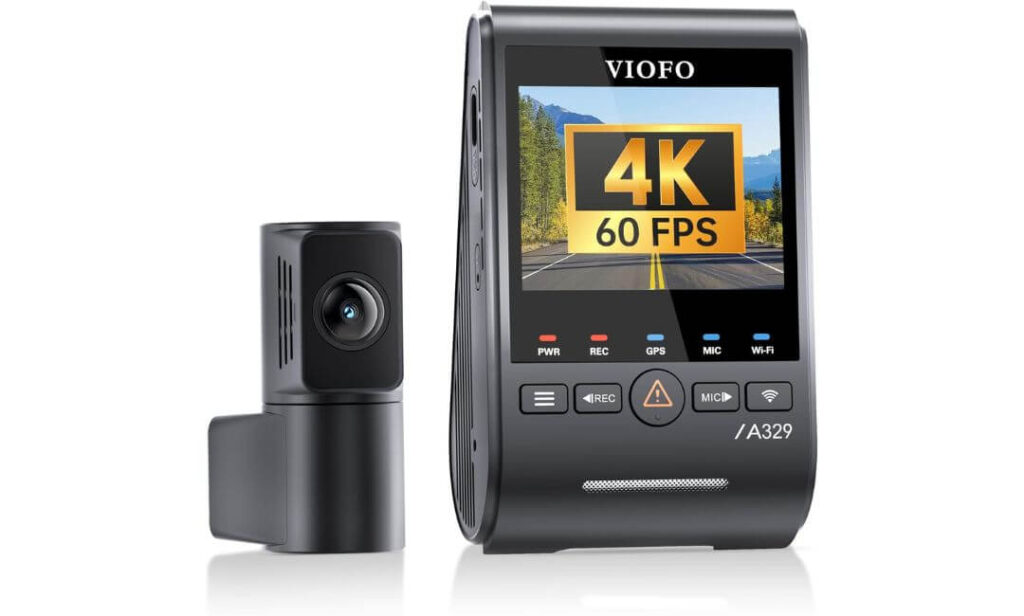
Quick Specs:
- 4K 60FPS Front Recording for smoother highway footage and sharper license plate capture
- 2K Rear Camera with wide dynamic range for cleaner rear-end evidence
- Dual Sony STARVIS 2 Sensors for superior low-light and night-driving performance
- IMX678 Front Sensor optimized for high-detail daytime and highway recording
- IMX675 Rear Sensor with improved HDR balance and reduced motion blur
- Dual HDR Recording to handle bright sunlight, shadows, headlights, and bad weather
- Wi-Fi 6 Connectivity with download speeds up to 30MB/s
- Built-In GPS Module with GPS, GLONASS, Galileo, and BeiDou support
- Up to 4TB SSD Support for extended road-trip recording without constant overwriting
- Up to 512GB microSD Support for users who prefer memory cards
- Impact-Triggered Parking Protection with ultra-low power consumption
- Voice Commands for hands-free operation while driving
- Included CPL Filter to reduce windshield glare and dashboard reflections
- Slim Coaxial Rear Cable Design for cleaner Subaru Outback installation
- App Control for quick video previews, downloads, and settings adjustments
After testing and comparing dozens of modern dash cams over the last few years, one thing has become obvious. Many cameras look impressive on a specification sheet, but very few continue to impress after months of real-world driving. This one does.
For Subaru Outback owners, image quality matters more than marketing claims. Whether you spend weekends exploring forest roads, drive long interstate routes, or simply commute before sunrise, the ability to capture usable evidence is what separates a premium dash cam from an average one. The combination of 4K 60FPS recording, Sony STARVIS 2 hardware, and dual HDR processing gives this camera an advantage in exactly those situations where cheaper cameras usually struggle.
What really pushed it ahead of the competition was its storage flexibility. Most drivers don’t realize how quickly high-resolution footage fills a memory card. With support for external SSD storage up to 4TB, this system is built for people who spend serious time behind the wheel. If your Outback is regularly used for road trips, outdoor adventures, family travel, or cross-state driving, that extra storage capacity becomes far more valuable than another gimmicky feature.
Another reason it ranked so highly is its overall refinement. The fast Wi-Fi 6 connection, built-in GPS, voice controls, included CPL filter, and efficient parking mode make everyday ownership noticeably easier. Nothing feels unfinished or added simply for marketing purposes. Everything serves a practical purpose.
(For Subaru Outback owners who want one camera that excels at image quality, long-term reliability, storage capacity, and real-world usability, this is the model we would choose before looking at anything else on this list.)
What Stood Out During Our Evaluation
- Outstanding daytime detail with excellent plate readability at highway speeds
- Among the strongest night-vision performers currently available in a dual-channel system
- Massive SSD storage support that few competitors can match
- Very fast Wi-Fi 6 transfers compared to older dash cam platforms
- Clean installation-friendly design that works well in the Outback’s cabin layout
- Effective HDR processing in difficult lighting conditions
A Small Consideration Before Buying
- Parking mode requires a separate hardwire kit, which is not included in the standard package
Subaru Outback Installation and Compatibility Notes
One reason this camera fits the Subaru Outback particularly well is its compact design and slim cable system. The included coaxial cable is easier to hide behind trim panels than many traditional rear-camera cables, helping maintain a factory-style appearance throughout the cabin.
For Outback models equipped with Subaru EyeSight, the best installation position is typically below the EyeSight camera housing while remaining centered on the windshield. Owners planning to use parking mode should also budget for the HK4 or HK6 hardwire kit, which connects directly to the vehicle’s fuse box and enables continuous monitoring while parked.
The Insider Pro-Tip
Many buyers focus entirely on resolution numbers and forget about storage. In practice, the difference between a camera that records for a few days and one that can store weeks of footage often becomes important long before the difference between 1440p and 4K.
If your Subaru Outback is regularly used for road trips, camping, overlanding routes, family vacations, or long-distance commuting, pairing this camera with a high-end endurance microSD card or external SSD is where you’ll get the biggest real-world benefit. The image quality gets the attention, but the storage capacity is often what owners appreciate most after living with the system for several months.
#2. BlackVue DR970X-2CH Plus II Dash Cam
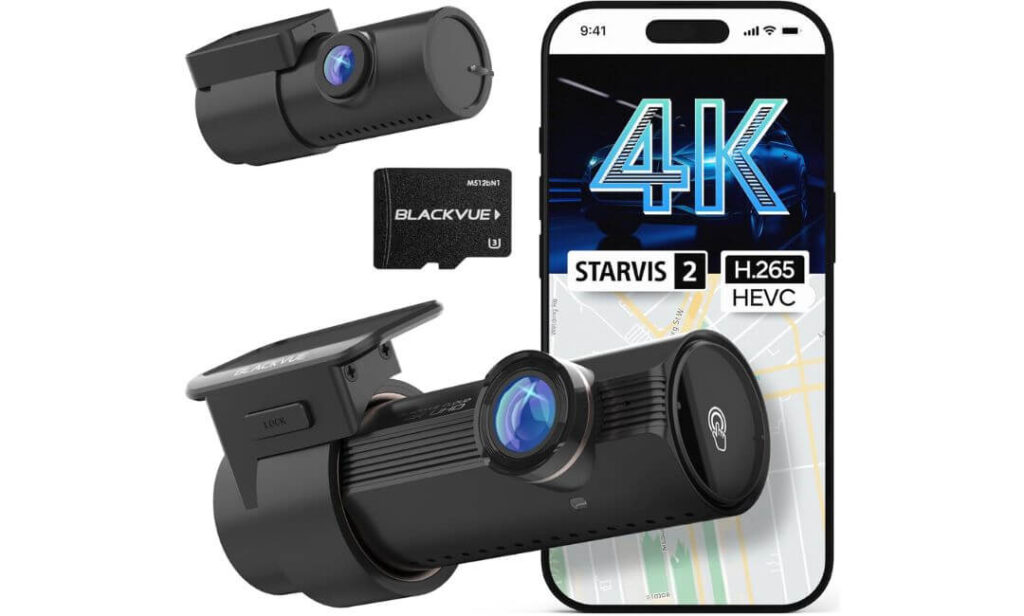
Quick Specs:
- 4K UHD Front Recording with STARVIS 2 image sensor
- Full HD Rear Camera for complete front and rear coverage
- Advanced HDR Processing for difficult lighting conditions
- BlackVue Cloud Compatibility for remote monitoring and alerts
- Live View and Remote Playback Support
- Fast Boot Technology for near-instant recording after startup
- USB-C Power Connection for cleaner installation
- Built-In Wi-Fi with seamless smartphone pairing
- HEVC H.265 Video Compression for efficient 4K storage management
- Smart Parking Mode Support
- Up To 1TB microSD Storage Compatibility
- Push Notifications and Cloud Backup Capability
- Optional LTE Connectivity Expansion
- 146° Wide-Angle Front Lens
- G-Sensor Event Detection
Few dash cams have built a reputation as strong as this platform. While many cameras focus on delivering impressive specifications, this system was clearly designed around something different: reliability when you’re nowhere near your vehicle.
For Subaru Outback owners who frequently leave their vehicle at airports, trailheads, hotel parking lots, campsites, or busy public parking areas, the cloud ecosystem is what immediately separates this model from most competitors. Being able to check on your vehicle remotely, receive notifications, access footage from a distance, and review incidents without physically touching the camera creates a level of confidence that traditional dash cams simply cannot provide.
The recording quality itself remains among the strongest in the premium segment. The combination of 4K UHD recording, STARVIS 2 imaging hardware, and refined HDR tuning produces footage that remains clean during sunrise glare, nighttime driving, and rapidly changing lighting conditions. More importantly, the footage feels balanced rather than artificially sharpened, which often helps preserve important details during playback.
Another area where it excels is refinement. Fast startup speeds, stable software, efficient file management, reliable Wi-Fi connectivity, and mature cloud functionality make daily ownership feel polished. Everything about the system feels purpose-built for drivers who want dependable protection without constantly adjusting settings or troubleshooting connections.
(If your Subaru Outback regularly sits unattended for long periods, the remote access capabilities alone can justify choosing this model over many newer competitors.)
Highlights That Impressed Us Most
- Industry-leading cloud ecosystem for remote monitoring and alerts
- Excellent HDR performance during sunrise, sunset, and nighttime driving
- Reliable 4K evidence capture with strong overall image consistency
- Fast startup speed that begins recording almost immediately
- Supports large-capacity storage for extended recording sessions
- Well-developed mobile app and remote access platform
A Small Consideration Before Buying
- Drivers who want the full cloud experience will need the optional LTE module, which is purchased separately.
Subaru Outback Installation Notes and Ownership Considerations
This camera works particularly well inside the Subaru Outback because of its compact cylindrical design. The body stays discreet behind the rear-view mirror area and integrates cleanly into the cabin without drawing unnecessary attention.
Owners planning to take advantage of Smart Parking Mode should budget for the CH-3P1 or CH-3P2 hardwiring cable, which supplies continuous power while protecting the vehicle’s battery. Those interested in remote monitoring, Live View access, GPS tracking, and instant notifications should also consider adding the optional CM100G LTE module.
The Insider Pro-Tip
Most buyers initially focus on image quality when comparing premium dash cams. In reality, image quality differences at the top end have become smaller than many people think.
What often separates a great ownership experience from an average one is how quickly you can access footage after something happens. When a parking incident occurs hundreds of miles away from home, being able to receive a notification, open an app, and immediately review footage becomes far more valuable than another minor specification advantage.
For Subaru Outback owners who travel frequently, leave their vehicle unattended during outdoor activities, or simply want visibility into what is happening around their vehicle while parked, that convenience becomes something you appreciate long after the excitement of buying a new dash cam wears off.
#3. 70mai Dash Cam 4K Omni + UP05 Hardwire Kit
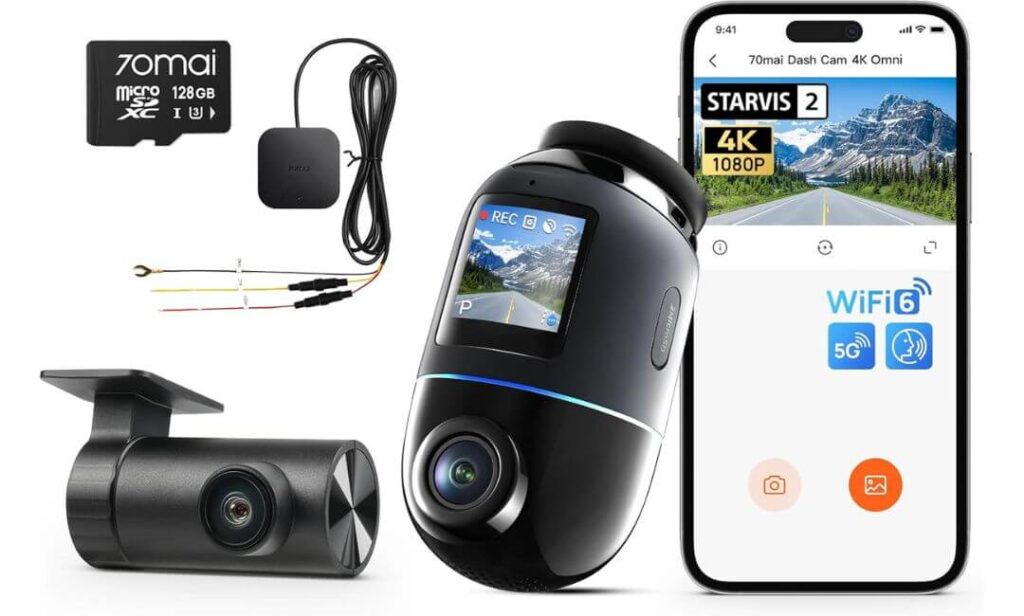
Quick Specs:
- 4K 60FPS Front Recording with Sony IMX678 STARVIS 2 sensor
- 340° Rotating Camera System for near-complete vehicle coverage
- 360° Monitoring Capability with intelligent tracking technology
- 4G LTE Connectivity Support for remote access and live monitoring
- AI Motion Detection System that identifies people, vehicles, and movement
- Wi-Fi 6 5GHz Connectivity for faster video transfers
- GPS Route and Speed Tracking
- Full-Color Night Recording Technology
- Lumi Vision Low-Light Enhancement
- Night Owl Vision Processing
- 146° Wide-Angle Front Lens
- Emergency Event Video Lock Protection
- Time-Lapse Parking Surveillance
- Voice Command Functionality
- UP05 Hardwire Kit Included
- Supports Up To 256GB microSD Storage
Most dash cams spend their entire life staring straight ahead. This one doesn’t.
What immediately separates this model from traditional front-and-rear systems is its ability to actively monitor what’s happening around the vehicle instead of simply recording a fixed view. The rotating camera design creates an experience that feels much closer to having an additional set of eyes watching your Subaru Outback when you’re not around it.
For owners who regularly leave their vehicle at hiking trails, campground parking areas, city streets, airports, or shopping centers, the combination of 4G connectivity, AI motion tracking, and remote monitoring creates a level of awareness that conventional dash cams simply cannot match. Being able to open the app, view the vehicle remotely, receive alerts, and check activity around the vehicle changes the ownership experience entirely.
The imaging hardware is equally impressive. The combination of the Sony IMX678 STARVIS 2 sensor, 4K 60FPS recording, and advanced low-light processing produces footage that remains surprisingly detailed even after sunset. The camera’s ability to maintain color information in extremely dark environments is one of the strongest performances we’ve seen in this category. License plates, signs, and surrounding vehicles remain easier to identify than many competing systems during nighttime driving.
(If vehicle security is just as important to you as road recording, few cameras currently offer a more complete monitoring package than this one.)
Standout Features That Earned It a Spot on This List
- Unique rotating camera design unlike anything else in this comparison
- Excellent remote monitoring capabilities through LTE connectivity
- Advanced AI detection system that reduces unnecessary alerts
- Strong nighttime visibility with STARVIS 2 and Lumi Vision technology
- Included hardwire kit eliminates an extra purchase
- Fast Wi-Fi 6 transfers for large 4K video files
A Small Consideration Before Buying
- To use remote viewing, cloud-style alerts, and connected features, you’ll need an active 4G SIM card and service plan.
Subaru Outback Installation and Daily Use Insights
The rotating design actually gives Subaru Outback owners more installation flexibility than many traditional dash cams. Mounted below the EyeSight camera area, it maintains a clear forward view while still benefiting from its wide monitoring range.
Another advantage is that the UP05 hardwire kit is already included, allowing owners to activate advanced parking features without purchasing additional wiring hardware. You’ll only need to add a quality U3/V30 microSD card and, if desired, a compatible SIM card for LTE functionality.
The Insider Pro-Tip
Many buyers compare this camera directly against traditional dual-channel dash cams and miss the reason it exists.
The real value isn’t simply the 4K recording quality. It’s the ability to know what’s happening around your Subaru Outback when you’re nowhere near it. That’s a very different type of protection than most dash cams provide.
For owners who frequently leave their vehicle in unfamiliar locations, travel regularly, park outdoors, or spend weekends exploring remote destinations, the combination of AI tracking, LTE connectivity, remote access, and rotating coverage often becomes more useful than another small improvement in image quality. That’s exactly why this camera earned its place in our top three.
#4. ROVE R2-4K Dual PRO Dash Cam Front and Rear
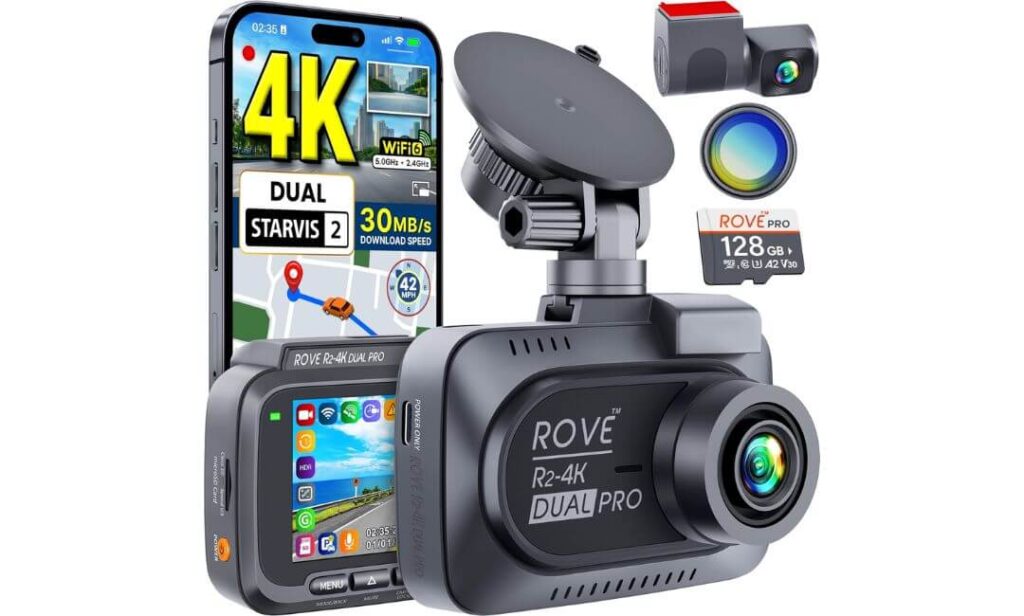
Quick Specs:
- 4K Front + 2K Rear Recording with dual-channel coverage
- Sony STARVIS 2 IMX678 Front Sensor
- Sony STARVIS 2 IMX675 Rear Sensor
- HDR Video Processing for challenging lighting conditions
- Dual-Band Wi-Fi 6 with transfer speeds up to 30MB/s
- Built-In Quad-Mode GPS with route and speed tracking
- 150° Front + 140° Rear Wide-Angle Coverage
- Supercapacitor Design for improved heat resistance and durability
- 24-Hour Parking Monitoring Support
- 3-Inch IPS Display
- Voice Guidance Notifications
- Up To 1TB microSD Storage Support
- Free 128GB High-Endurance Memory Card Included
- Free CPL Filter Included
- OTA Firmware Updates Through The App
- Emergency Video Lock and G-Sensor Protection
Oddly enough, this was one of the easiest products to rank in this entire guide.
The reason has nothing to do with flashy marketing features. Instead, it comes down to value. Many Subaru Outback owners want strong image quality, dependable hardware, modern connectivity, and effective parking protection without building an expensive setup filled with add-ons. That’s exactly where this model shines.
The combination of dual STARVIS 2 sensors, 4K front recording, HDR processing, and wide-angle coverage delivers the kind of footage most drivers are actually looking for. Daytime recordings are sharp, nighttime visibility is impressive, and the overall image quality consistently exceeds expectations for its price category. Whether you’re driving through mountain roads, urban traffic, or long stretches of interstate highway, the footage remains detailed and easy to review.
What impressed us even more was how complete the package feels. The included 128GB memory card, CPL filter, GPS system, Wi-Fi 6 connectivity, and quality mounting hardware eliminate several purchases that many competing brands leave up to the buyer. That creates a much smoother ownership experience from day one.
(For many Subaru Outback owners, this may be the smartest value purchase on this list because it gets the important things right without forcing you into a premium price bracket.)
Where It Delivered Beyond Expectations
- Excellent image quality for the money
- Dual STARVIS 2 hardware normally found in more expensive systems
- Included 128GB memory card saves additional setup costs
- Built-in GPS with detailed route tracking
- Fast Wi-Fi 6 performance for downloading footage
- Supercapacitor design handles temperature extremes better than traditional batteries
- Complete out-of-box package with very few extra purchases required
A Small Consideration Before Buying
- Drivers planning to use continuous parking protection will still need a separate hardwire kit, as it is not included in the standard package.
Subaru Outback Setup and Installation Insights
This system integrates particularly well inside the Subaru Outback thanks to its straightforward mounting design and generous cable lengths. The included 6-meter rear cable is generally sufficient for routing through the Outback’s interior while maintaining a clean factory-style appearance.
The included 128GB memory card and CPL filter also remove two common upgrade purchases that many owners end up making after installation. For EyeSight-equipped models, positioning the front camera beneath the EyeSight housing helps maintain an unobstructed field of view while preserving full camera functionality.
The Insider Pro-Tip
There is a reason experienced buyers often pay close attention to what comes inside the box rather than focusing only on specifications.
A camera can advertise excellent recording quality, but once you start adding a memory card, CPL filter, GPS accessories, and installation components, the real cost often becomes much higher than expected.
This model stands out because it arrives with many of the upgrades serious Subaru Outback owners eventually buy anyway. The included 128GB card, CPL filter, GPS functionality, and Wi-Fi 6 platform make it feel less like a basic dash cam purchase and more like a complete recording solution from the beginning. That practicality is a major reason it earned a place in our recommendations.
#5. Cobra Smart Dual View SC 250R Dash Cam
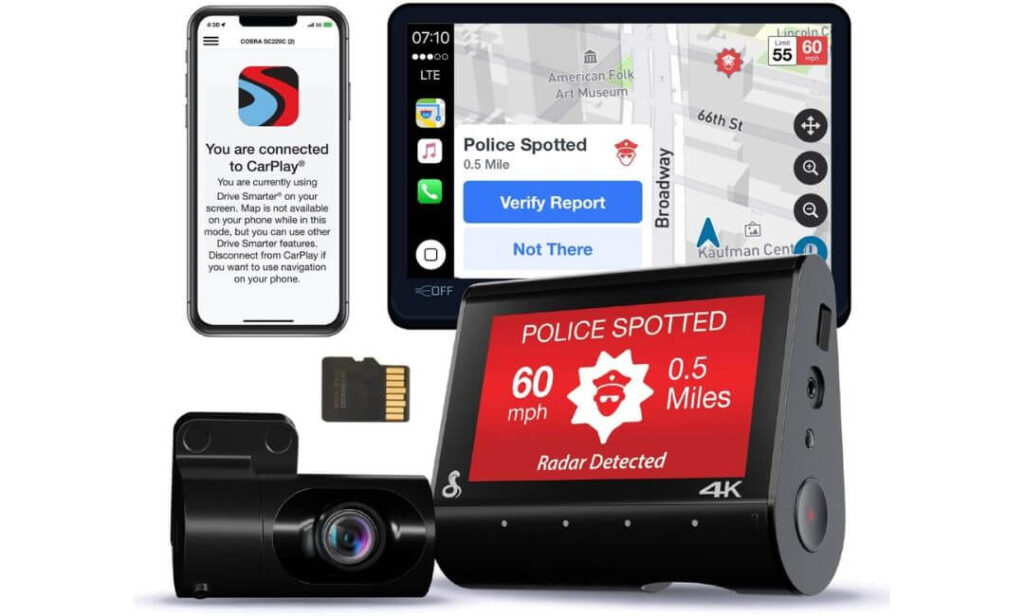
Quick Specs:
- True 4K Front Recording for detailed evidence capture
- Full Rear Camera Coverage included in the package
- 360 Driver Alert Network with live community updates
- Parking Live View Capability through the Drive Smarter platform
- Emergency MayDay Notifications
- Automatic Incident Detection
- Insurance Report Sharing Tools
- Built-In Wi-Fi and Bluetooth Connectivity
- Apple CarPlay Compatibility
- Android Auto Compatibility
- Trip Clips Time-Lapse Video Creation
- 140° Wide Viewing Angle
- Night Vision Support
- App-Based Camera Management
- 32GB microSD Card Included
- Expandable Multi-Camera Ecosystem
Not every Subaru Outback owner wants the most technical dash cam on the market.
Some drivers care just as much about convenience, connectivity, emergency features, and everyday usability as they do about image quality. That’s where this camera takes a different approach from most of the products in this guide.
Rather than focusing exclusively on recording footage, this system is designed around keeping drivers informed and connected. Features such as 360 Alerts, Parking Live View, MayDay emergency assistance, and insurance-ready incident reporting create an ownership experience that feels much more interactive than a traditional dash cam setup. For many drivers, especially those who spend significant time commuting or traveling through unfamiliar areas, these features can be surprisingly useful.
The True 4K front camera still delivers the image quality expected from a modern premium system, while the included rear camera provides complete front-and-rear coverage. Add in support for Apple CarPlay, Android Auto, and the Drive Smarter ecosystem, and you get a camera that feels more connected to the rest of your driving experience than most conventional dash cams.
(For Subaru Outback owners who value smart features, driver awareness tools, and connected safety technology, this is one of the most interesting options currently available.)
Features That Make It Stand Out
- Unique 360 Alerts platform with real-time driver notifications
- Parking Live View functionality for remote vehicle monitoring
- Emergency MayDay system adds an extra layer of safety
- Insurance incident reporting tools simplify post-accident documentation
- Works with Apple CarPlay and Android Auto
- Easy-to-use mobile ecosystem for daily operation
- Ready to record immediately with included memory card
A Small Consideration Before Buying
- Drivers planning to use Parking Live View regularly should budget for the optional hardwire kit, which unlocks the camera’s full parked-vehicle monitoring capabilities.
Subaru Outback Compatibility and Installation Notes
This system works well inside the Subaru Outback thanks to its straightforward dual-camera layout and compact windshield-mounted design. When positioned below the EyeSight camera assembly, it maintains compatibility with Subaru’s driver-assistance systems while preserving a clean field of view.
The included 32GB memory card allows immediate recording right out of the box, making installation particularly simple for owners who want a quick setup. Those interested in extended 4K recording sessions may eventually want additional storage, but the included card is enough to get started without additional purchases.
The Insider Pro-Tip
A lot of buyers compare dash cams solely by resolution numbers and sensor specifications. While those things absolutely matter, there is another question worth asking.
How quickly can you access information when something unexpected happens?
This camera earns its place because it focuses heavily on that part of the ownership experience. Whether it’s receiving driver alerts, reviewing footage remotely, sharing information after an incident, or allowing family members to check vehicle status, the emphasis is on accessibility and convenience rather than simply capturing footage.
For Subaru Outback owners who spend long hours on the road, travel frequently, or prefer technology that actively assists them rather than passively records, that difference can become surprisingly valuable over time.
Best Subaru Outback Dash Cams Compared Side by Side
Buying Guide: How to Choose the Right Dash Cam for Your Subaru Outback
The Subaru Outback is not driven like a typical crossover. Some owners use it for daily commuting, while others regularly cover hundreds of highway miles, explore remote trails, visit national parks, or spend weekends camping far from populated areas. Because of that, choosing a dash cam for an Outback requires a different approach than simply buying the highest-rated model online.
A dash cam that works perfectly for a city commuter may not be the best choice for someone who spends hours on dark rural roads or leaves their vehicle parked at trailheads for an entire day. Before spending money, it helps to understand which features actually improve your ownership experience and which ones are mostly marketing.
Prioritize Sensor Quality Before Resolution Numbers
Many buyers immediately look for 4K recording, but resolution alone does not determine how useful your footage will be.
A well-tuned STARVIS 2 sensor often captures more usable evidence than a higher-resolution camera using older imaging hardware. The ability to read license plates at night, identify vehicles during rain, reduce glare from headlights, and preserve details in shadows usually depends more on the image sensor and HDR processing than on raw pixel count.
This is one reason every camera in our recommendations uses advanced imaging hardware rather than relying solely on resolution specifications.
Think About How You Actually Use Your Outback
The best dash cam for a commuter may not be the best dash cam for a road-trip vehicle.
If your Outback regularly travels long distances, storage capacity becomes extremely important. Cameras with support for large-capacity microSD cards or external SSD storage can save days or even weeks of footage before overwriting begins.
If you frequently leave your vehicle at airports, hiking trails, campsites, or public parking lots, parking surveillance and remote access features should move much higher on your priority list.
Choosing features based on how you actually use the vehicle often leads to a much better purchase decision.
Understand the Difference Between Parking Modes
Many manufacturers advertise parking mode, but not all parking systems work the same way.
Some cameras only record after an impact occurs. Others use motion detection. More advanced systems combine multiple recording methods, including buffered recording, time-lapse recording, AI monitoring, and cloud-connected alerts.
For Subaru Outback owners who regularly park outdoors, the quality of the parking mode system can be just as important as the quality of the driving footage itself.
Storage Matters More Than Most Buyers Realize
One of the most common mistakes we see is buying an excellent dash cam and pairing it with inadequate storage.
High-quality 4K footage consumes storage quickly. If you drive frequently, a small memory card may overwrite important footage sooner than expected. Models that support larger memory cards or SSD storage provide significantly greater flexibility for long-distance travel and extended recording sessions.
For many Outback owners, storage capacity becomes more valuable over time than another small increase in image quality.
Pay Attention to Subaru EyeSight Compatibility
Modern Subaru Outback models use the EyeSight driver-assistance system, which relies on cameras mounted near the top center of the windshield.
Dash cam placement matters. A poorly positioned camera can create unnecessary visibility concerns and complicate installation. The best setup usually places the dash cam below the EyeSight housing while maintaining a clear forward view.
Fortunately, all of the cameras included in this guide can be installed cleanly without interfering with normal EyeSight operation when positioned correctly.
Wi-Fi Speed and App Quality Affect Daily Ownership
Most people focus heavily on video quality before purchasing a dash cam.
After several months of ownership, however, many drivers care just as much about how easy it is to retrieve footage.
Fast Wi-Fi 6 connectivity, stable mobile applications, reliable firmware support, and quick file transfers can dramatically improve the overall ownership experience. When an incident occurs, being able to access footage quickly becomes far more important than a specification you may never actually use.
Consider Long-Term Reliability Instead of Feature Overload
The most feature-packed dash cam is not always the best dash cam.
Heat resistance, software stability, memory card management, parking mode efficiency, GPS reliability, and overall durability often matter more over the course of several years than having one additional feature on a product page.
For a vehicle like the Subaru Outback, which many owners keep for a long time and drive in varied environments, reliability should always be a major factor in the buying decision.
Our Final Recommendation for Subaru Outback Owners
If your goal is the best overall balance of image quality, storage flexibility, future-proof hardware, and long-term ownership value, the VIOFO A329S stands out as the strongest all-around option.
If remote monitoring and vehicle security are your highest priorities, the BlackVue DR970X-2CH Plus II deserves serious consideration.
For buyers who want advanced vehicle monitoring and connected features, the 70mai Omni offers capabilities that few competitors currently match.
And for shoppers looking for excellent value without sacrificing recording quality, the ROVE R2-4K Dual PRO remains one of the smartest purchases available today.
The most important thing is choosing a camera that matches the way you actually use your Subaru Outback. The right dash cam should feel like a natural extension of the vehicle rather than just another gadget attached to the windshield.
Subaru Outback Dash Cam Installation Guide
A great dash cam can deliver disappointing results if it is installed incorrectly. The Subaru Outback is relatively dash-cam friendly, but newer models equipped with EyeSight require a little more planning than older vehicles. The good news is that when installed properly, a dash cam can look almost factory-fitted, remain completely unobtrusive, and provide years of reliable recording.
The goal is not simply to attach a camera to the windshield. The goal is to create a clean, OEM-style installation that protects visibility, preserves safety systems, and delivers reliable footage every time you drive.
Before You Start: What You’ll Need
Before mounting anything, make sure you have all required components ready.
For the cameras featured in this guide, you should have:
- A high-endurance microSD card or approved SSD storage device
- Dash cam front unit and rear camera
- Rear camera cable
- Vehicle power cable
- Hardwire kit if you plan to use parking mode
- Trim removal tool
- Cable clips or adhesive mounts if included
- Microfiber cloth for windshield cleaning
- Fuse tap kit if performing a hardwire installation
If you’re using a premium model such as the VIOFO A329S, BlackVue DR970X-2CH Plus II, or 70mai Omni, taking a few extra minutes to prepare the installation properly can make a noticeable difference in both appearance and long-term reliability.
Choosing the Correct Front Camera Location
The most important installation decision involves the front camera location.
On Subaru Outback models equipped with EyeSight, avoid placing the dash cam directly in front of or immediately beside the factory stereo cameras. Those cameras are responsible for adaptive cruise control, lane-centering assistance, pre-collision braking, and several other driver-assistance functions.
The safest and cleanest position is usually:
- Directly below the EyeSight housing
- Slightly behind the rear-view mirror from the driver’s perspective
- High enough to maximize road visibility
- Low enough to avoid interfering with factory cameras
From the driver’s seat, you should barely notice the dash cam once installed.
Selecting the Best Rear Camera Position
The rear camera is often installed too low.
For the clearest rear footage, mount the rear camera near the upper center portion of the rear glass. This location provides the widest viewing angle while reducing interference from passengers, cargo, pets, or luggage commonly carried in an Outback.
Before permanently mounting the rear unit:
- Confirm rear wiper operation remains unobstructed
- Verify rear hatch movement does not stress the cable
- Ensure the camera remains level with the horizon
Taking time here often improves rear footage significantly.
Routing Cables the Right Way
Professional-looking installations are usually the result of proper cable routing rather than expensive hardware.
Start from the front camera and work toward the rear of the vehicle.
Most Subaru Outback owners achieve the cleanest results by routing cables through:
- Headliner edges
- A-pillar trim
- Door weather stripping channels
- Upper side trim panels
- Rear cargo-area trim sections
Whenever possible, use existing factory cable pathways rather than creating new routes.
A properly routed cable should be almost completely invisible once the installation is finished.
Avoid Airbag Areas at All Costs
One of the most overlooked installation mistakes involves side curtain airbags.
Many Subaru Outback models contain curtain airbags behind the A-pillars and upper side trim.
Never secure dash cam cables directly over airbag deployment zones.
Instead:
- Route cables behind existing factory wiring channels
- Leave deployment areas unobstructed
- Follow factory harness pathways whenever possible
- Avoid zip-tying cables across airbag locations
A clean installation should never compromise vehicle safety systems.
Creating a Factory-Like OEM Appearance
The best dash cam installations are often the ones people never notice.
To achieve an OEM-style appearance:
- Position the front camera behind the mirror area whenever possible
- Use black cables against black trim
- Tuck excess wiring inside trim panels
- Follow existing factory harness routes
- Avoid visible dangling wires
- Keep accessories and connectors hidden
Many owners are surprised by how integrated a properly installed dash cam can look inside the Subaru Outback cabin.
Hardwire Installation and Parking Mode Setup
If parking protection is important to you, a hardwire kit is usually worth installing.
A hardwire connection allows the dash cam to continue monitoring the vehicle after the engine is turned off while also managing battery protection settings.
Most premium systems in this guide support advanced parking functions such as:
- Impact detection
- Motion detection
- Buffered recording
- Time-lapse recording
- Remote monitoring
- Cloud notifications
For frequent travelers, airport parking users, outdoor enthusiasts, and drivers who leave their Outback unattended for extended periods, parking mode often becomes one of the most valuable features of the entire system.
First-Time Setup and Configuration
Once installation is complete, spend a few minutes configuring the system correctly.
We recommend:
- Updating firmware immediately
- Formatting the memory card inside the camera
- Setting the correct date and time
- Verifying GPS operation
- Confirming front and rear cameras are recording properly
- Adjusting parking mode preferences
- Testing Wi-Fi and mobile app connectivity
This quick setup process can prevent many common recording issues later.
Common Installation Mistakes and How to Avoid Them
The majority of dash cam problems are installation-related rather than hardware-related.
Some of the most common issues include:
- Mounting the front camera too low on the windshield
- Blocking part of the EyeSight camera field
- Using low-quality memory cards
- Skipping firmware updates
- Routing cables across airbag deployment zones
- Forgetting to format storage before first use
- Assuming parking mode works without a hardwire connection
Fortunately, every one of these issues is easy to avoid with a little preparation.
Final Installation Advice
If there is one thing we’ve learned from years of dash cam testing, it’s that installation quality directly affects ownership satisfaction.
A properly installed dash cam should feel like part of the vehicle. You shouldn’t notice the wiring, visibility should remain unchanged, and the system should begin recording automatically every time you drive.
Spend an extra hour on installation now, and you’ll likely enjoy years of reliable recording without ever thinking about it again. For a vehicle like the Subaru Outback, that’s exactly how a dash cam should work.
Use Case Scenarios: When a Dash Cam Becomes Essential for Subaru Outback Owners
The Subaru Outback is one of those vehicles that rarely lives a single-purpose life. On Monday, it may be handling a daily commute. By Friday evening, it could be loaded with camping gear and heading hundreds of miles into unfamiliar territory.
Because of that versatility, choosing a dash cam is not simply about recording accidents. The right system can protect your vehicle during daily driving, preserve evidence while parked, document road trips, and provide valuable footage in environments where traditional vehicles rarely go.
Understanding how your Outback is actually used can help determine which dash cam features matter most.
Daily Commuting and Everyday Driving
For many owners, the Outback spends most of its time navigating city streets, suburban traffic, highways, and parking lots.
This is where a quality front-and-rear dash cam delivers immediate value.
During daily driving, most incidents happen unexpectedly. Sudden lane changes, distracted drivers, rear-end collisions, red-light violations, parking lot impacts, and insurance disputes often occur within seconds. Having continuous front and rear recording ensures that critical details are preserved when memory and witness statements may not be enough.
Parking protection becomes equally important during commuting hours. Whether your vehicle is parked outside an office building, shopping center, gym, airport, or apartment complex, modern parking modes can capture impacts, suspicious activity, and hit-and-run incidents while you’re away.
For commuters, features such as reliable loop recording, GPS tracking, HDR video quality, and efficient parking surveillance often provide more long-term value than flashy extras.
Long-Distance Road Trips and Cross-Country Travel
Road trips are where the Subaru Outback truly shines, and they are also where premium dash cams begin to justify their price.
When covering hundreds of miles in a single day, a dash cam becomes more than just a safety tool. It becomes a travel companion that continuously documents the journey.
High-resolution systems such as the VIOFO A329S and BlackVue DR970X-2CH Plus II can capture scenic highways, mountain passes, coastal roads, national parks, and remote destinations with exceptional detail. GPS functionality adds another layer of usefulness by recording speed, route information, and location data alongside the video footage.
Storage capacity also becomes far more important during extended travel. Long-distance drivers benefit from cameras capable of supporting larger microSD cards or SSD storage, reducing the need to constantly manage footage during the trip.
For Outback owners who regularly explore new destinations, a dash cam often ends up preserving memories just as often as it records evidence.
Backcountry Adventures and Remote Trail Access
One of the reasons people buy a Subaru Outback is its ability to reach places that many vehicles cannot.
Trailheads, forest service roads, remote campsites, mountain passes, and off-grid destinations often present unique recording challenges. Lighting conditions can change rapidly, dust can reduce visibility, and parked vehicles may be left unattended for hours.
This is where advanced parking surveillance and intelligent motion detection become particularly valuable.
Systems with impact detection, motion-triggered recording, AI monitoring, or cloud-based alerts provide additional peace of mind when the vehicle is parked far from populated areas. If someone approaches the vehicle or an impact occurs, the camera can preserve evidence that may otherwise be impossible to obtain.
Drivers who frequently explore remote locations should also pay close attention to power efficiency, storage capacity, and low-light performance, since these factors become increasingly important outside urban environments.
Night Driving on Rural Roads
Night driving is one of the areas where premium dash cams separate themselves from average models.
Many Subaru Outback owners spend time on rural highways, backroads, mountain routes, and wildlife-heavy areas where visibility is already limited. Unfortunately, these conditions are also where lower-quality cameras often struggle the most.
Advanced imaging systems equipped with STARVIS 2 sensors can dramatically improve nighttime footage by increasing light sensitivity, reducing image noise, and preserving important details in dark environments.
The difference becomes especially noticeable when trying to identify:
- License plates
- Road signs
- Wildlife crossings
- Vehicle colors
- Pedestrians
- Objects near the edge of the roadway
When combined with HDR processing, modern STARVIS 2 cameras can maintain detail even when bright headlights, reflective surfaces, and dark road conditions exist in the same frame.
For many drivers, this may be the single most important reason to invest in a premium dash cam.
Airport Parking and Long-Term Vehicle Storage
Many Outback owners use their vehicle for travel, which often means leaving it parked for extended periods.
Airport parking lots, hotels, train stations, and public garages introduce a different type of risk. The vehicle may remain unattended for hours or even days.
In these situations, parking mode becomes significantly more important than recording quality alone.
Features such as:
- Motion detection
- Impact detection
- Time-lapse recording
- Cloud notifications
- Remote live view
- AI activity monitoring
can provide valuable insight into what happens around the vehicle while you’re away.
Systems such as the BlackVue DR970X-2CH Plus II and 70mai Omni are particularly attractive for owners who prioritize remote awareness and vehicle security.
Family Travel and Passenger Protection
The Subaru Outback is frequently used as a family vehicle, which adds another layer of value to dash cam ownership.
Whether transporting children, pets, or passengers, having video evidence available after an incident can help clarify events and eliminate uncertainty.
Front-and-rear recording provides a complete picture of what happened before, during, and after an event. This can be especially valuable when dealing with insurance claims, disputed accidents, or unexpected roadway incidents involving multiple vehicles.
For families, a dash cam often serves as a long-term safety investment rather than simply another automotive accessory.
Choosing Features Based on How You Drive
The best dash cam is not necessarily the one with the longest specification sheet.
A commuter may benefit most from dependable parking protection and strong HDR performance.
A road-trip enthusiast may prioritize SSD storage, GPS logging, and 4K recording.
An outdoor adventurer may value remote monitoring and advanced motion detection.
A frequent night driver may place the highest importance on STARVIS 2 sensors and low-light image quality.
The key is matching the dash cam to the way your Subaru Outback is actually used. When those priorities align, the camera becomes far more than a recording device. It becomes one of the most useful upgrades you can add to the vehicle.
Subaru Outback Parking Mode: Best Practices for Reliable Vehicle Protection
For many Subaru Outback owners, parking mode ends up becoming the most valuable feature of the entire dash cam system.
Most accidents do not happen while you’re driving. Shopping cart impacts, parking lot scrapes, hit-and-runs, vandalism, careless door dings, and unexpected vehicle contact often occur while the vehicle is sitting unattended. A properly configured parking mode system can capture these incidents and provide evidence that would otherwise be impossible to obtain.
The problem is that many owners install a dash cam, turn on parking mode, and assume everything is working perfectly. In reality, parking mode performance depends heavily on power management, storage setup, sensitivity settings, and camera configuration.
Understanding How Parking Mode Actually Works
A dash cam cannot monitor a parked vehicle without a continuous power source.
Once the engine shuts off, the camera must receive power from either:
- A hardwire connection
- A dedicated dash cam battery pack
- A manufacturer-specific external battery solution
Without one of these power sources, most dash cams stop recording when the vehicle turns off.
This is one of the most common misunderstandings among first-time dash cam owners.
For Subaru Outback drivers who regularly leave their vehicle parked outdoors, parking mode should be viewed as a separate security system rather than simply an extension of normal recording.
How to Enable Parking Mode on the Recommended Dash Cams
Each camera in this guide approaches parking protection slightly differently.
For the VIOFO A329S, installing the HK4 or HK6 hardwire kit unlocks low-power parking surveillance, impact-triggered recording, and advanced parking protection options. The HK6 setup is particularly useful because it offers additional flexibility for extended monitoring periods.
For the BlackVue DR970X-2CH Plus II, parking mode becomes available through the CH-3P series hardwire cable or compatible battery solutions. Once configured, the camera can provide impact detection, motion recording, cloud alerts, and remote monitoring features.
The 70mai Omni uses the included UP05 hardwire system to activate parking monitoring, AI motion tracking, remote alerts, and LTE-connected surveillance capabilities.
The ROVE R2-4K Dual PRO requires a separate hardwire kit to enable its full 24-hour parking protection features, including motion detection, collision recording, and time-lapse monitoring.
The Cobra SC 250R can utilize a hardwire installation to unlock Parking Live View and extended monitoring functions through the Drive Smarter platform.
The important takeaway is simple: parking mode usually requires additional hardware beyond what comes in the standard box.
Hardwire Kit vs Dedicated Battery Pack
This is one of the most common questions among Subaru Outback owners.
A hardwire kit connects directly to the vehicle’s fuse panel and allows the dash cam to draw power while parked. Most modern hardwire kits include voltage monitoring to prevent excessive battery drain.
Advantages of a hardwire kit include:
- Lower overall cost
- Clean installation
- Continuous operation
- Automatic battery protection features
- Easy integration with most dash cam systems
A dedicated battery pack works differently. Instead of using the vehicle’s battery directly, the dash cam draws power from an external battery that charges while driving.
Advantages of a dedicated battery system include:
- Reduced strain on the vehicle battery
- Longer parking surveillance times
- Better performance during extended parking periods
- Ideal for airport parking and long-term vehicle storage
For most Subaru Outback owners, a quality hardwire kit provides the best balance between cost, simplicity, and reliability. Dedicated battery packs become more attractive for drivers who frequently leave the vehicle parked for multiple days.
Optimizing Motion Detection and Impact Sensitivity
One of the quickest ways to become frustrated with parking mode is setting sensitivity levels incorrectly.
If sensitivity is too high:
- Passing vehicles may trigger recordings
- Heavy rain may trigger events
- Strong wind can create false alerts
- Frequent notifications may become annoying
If sensitivity is too low:
- Minor impacts may not be recorded
- Door dings may be missed
- Light contact incidents may go undetected
The ideal settings depend on where the vehicle is typically parked.
For busy urban environments, slightly lower motion sensitivity often produces cleaner results.
For residential driveways, garages, and quieter parking areas, moderate sensitivity settings usually provide the best balance.
Most experienced owners gradually fine-tune sensitivity after observing real-world results during the first few weeks of ownership.
Choosing the Right Parking Mode Type
Modern dash cams often provide several different parking recording methods.
Motion Detection Mode records when movement is detected around the vehicle.
Impact Detection Mode records when vibration or physical contact occurs.
Buffered Parking Mode captures footage from before and after an event, providing more complete evidence.
Time-Lapse Mode continuously records at a reduced frame rate to maximize storage efficiency.
AI Monitoring Modes, available on some systems, attempt to identify meaningful activity while filtering out irrelevant movement.
For Subaru Outback owners who frequently park outdoors, buffered recording and intelligent motion detection usually provide the most useful evidence.
Storage Recommendations for Parking Surveillance
Parking mode can generate far more footage than most people expect.
A camera monitoring the vehicle overnight, every night, may accumulate significantly more recordings than normal driving.
To avoid storage issues:
- Use high-endurance memory cards designed for continuous recording
- Format storage periodically according to manufacturer recommendations
- Consider larger-capacity cards for extended parking use
- Replace aging memory cards before reliability declines
- Monitor storage health through the dash cam application when available
For road-trip enthusiasts and frequent travelers, systems with large-capacity support such as SSD storage or 1TB memory cards provide a significant advantage.
Managing Battery Health While Using Parking Mode
The goal of parking mode is protection, not battery drain.
Most premium dash cams allow owners to configure voltage cutoff settings that automatically shut down recording before the vehicle battery reaches a critical level.
For Subaru Outback owners who drive daily, parking mode typically presents very few battery concerns when configured correctly.
Drivers who leave the vehicle unused for extended periods should pay closer attention to voltage settings and recording duration limits.
Proper power management protects both the dash cam and the vehicle itself.
Real-World Parking Mode Strategy for Subaru Outback Owners
The most effective parking mode setup is not necessarily the most aggressive one.
A balanced approach often produces the best results.
Use a quality hardwire kit, moderate sensitivity settings, high-endurance storage, and voltage protection enabled at all times. This combination provides reliable monitoring while minimizing false alerts and unnecessary battery consumption.
For most Subaru Outback owners, that setup delivers the best blend of security, practicality, and long-term reliability.
Final Thoughts on Parking Protection
A dash cam’s value is often measured by what it captures while you’re not there.
Anyone can appreciate high-quality driving footage, but the ability to document a parking lot collision, identify a hit-and-run driver, verify suspicious activity, or receive notification of an incident while away from the vehicle is what truly separates modern dash cams from basic recording devices.
When configured correctly, parking mode transforms your Subaru Outback dash cam from a simple camera into a reliable vehicle protection system that continues working long after you’ve walked away from the vehicle.
FAQs About Subaru Outback Dash Cam
Does a Subaru Outback actually benefit from a premium dash cam, or is a basic 4K model enough?
That depends on how you use the vehicle. For a driver who spends most of their time in city traffic and rarely parks outside, a basic 4K dash cam may be perfectly adequate. However, the Subaru Outback is often used differently than a typical crossover. Owners frequently take long road trips, visit remote areas, drive on poorly lit roads, and leave the vehicle parked at trailheads, campsites, or airports.
In those situations, the difference between a standard camera and a premium system becomes much easier to see. Better sensors, stronger HDR processing, larger storage support, cloud connectivity, and more advanced parking surveillance often provide advantages that are difficult to appreciate until you actually need the footage.
For many Outback owners, the biggest upgrade is not image quality alone. It is the confidence that the camera will continue performing properly in situations where cheaper systems often struggle.
Where is the safest place to mount a dash cam on a Subaru Outback with EyeSight?
The safest installation position is usually below the EyeSight housing and behind the rear-view mirror area from the driver’s perspective. This location preserves visibility while minimizing the chance of interfering with Subaru’s driver-assistance cameras.
One mistake many owners make is focusing only on camera placement while ignoring cable routing. A clean installation should also ensure that wiring stays clear of side-curtain airbags and follows existing factory pathways whenever possible.
As a general rule, your goal should be to create an installation that feels invisible during daily driving. If you regularly notice the dash cam while driving, there is often a better mounting position available.
Is SSD storage actually useful in a Subaru Outback dash cam setup?
For some drivers, absolutely.
Many owners underestimate how much footage they generate during road trips. A weekend mountain excursion, national park visit, or multi-state vacation can produce hundreds of gigabytes of footage surprisingly quickly. That’s where SSD-capable systems begin to make sense.
SSD storage becomes particularly useful for:
- Frequent road-trip travelers
- Outdoor enthusiasts
- Overlanding and camping trips
- Commercial mileage drivers
- Long-distance commuters
- Drivers who dislike frequent file management
Most people never regret having more storage. The opposite tends to happen much more often.
Should parking mode sensitivity be set as high as possible for maximum protection?
Interestingly, no.
One of the most common mistakes new owners make is assuming maximum sensitivity equals maximum protection. In reality, overly aggressive settings often create thousands of unnecessary recordings from rain, passing traffic, strong wind, shopping carts, or harmless pedestrian movement.
A properly configured parking mode should focus on meaningful events rather than recording everything that moves.
Many experienced users start with moderate settings and adjust after reviewing real-world results. The goal is not generating more recordings. The goal is capturing the right recordings.
In practice, a balanced setup often produces significantly better evidence than an overly sensitive one.
Which feature will matter most after six months of ownership?
Most buyers think the answer is resolution.
In reality, long-term owners usually mention something completely different.
The features that tend to matter most over time are:
- Reliable parking protection
- Stable app performance
- Fast footage retrieval
- Consistent night recording
- Storage capacity
- Overall system reliability
A dash cam is one of those products where the ownership experience becomes more important than the specification sheet. The excitement of 4K recording fades quickly, but being able to instantly access clear footage after an incident remains valuable every single day.
That is why the best dash cams for Subaru Outback owners are not necessarily the ones with the longest feature list. They are the ones that continue working reliably, month after month, without requiring constant attention from the driver.
Final Thoughts
After spending time comparing the latest generation of dash cams, one conclusion became very clear: there is no single perfect dash cam for every Subaru Outback owner.
The Outback attracts a unique type of driver. Some spend their weekdays navigating crowded highways, while others disappear into mountain roads, national parks, remote campsites, and cross-country adventures. The best choice depends less on marketing claims and more on how the vehicle is actually used.
For drivers focused on the highest level of image quality, storage flexibility, and long-term value, the VIOFO A329S stands out as the strongest overall package. Owners who prioritize remote monitoring and connected security features will likely appreciate what the BlackVue DR970X-2CH Plus II brings to the table. Meanwhile, the 70mai Omni offers a unique approach to vehicle surveillance that few competitors currently match, and the ROVE R2-4K Dual PRO continues to prove that excellent performance does not always require a premium budget.
What matters most is choosing a system that fits your real-world driving habits rather than chasing the longest specification sheet.
A good dash cam records video.
A great dash cam becomes something you never have to think about. It starts recording every time you drive, captures the details that matter, protects the vehicle while parked, and quietly does its job in the background year after year.
For a vehicle as versatile as the Subaru Outback, that kind of reliability is ultimately worth far more than any single feature listed on a product page. If the cameras in this guide accomplish one thing, it is helping ensure that whenever something unexpected happens, you have the footage to tell the full story.
Also Check:


