6 Best Dash Cams With STARVIS 2 Sensor in 2026: 4K60 Footage, LTE Monitoring & License Plate Clarity
A few years ago, most dash cams looked impressive on paper. They promised 4K recording, wide-angle lenses, and endless feature lists. But once the sun went down, many of them struggled with the one thing drivers actually care about: capturing clear, usable evidence. A blurry license plate is still a blurry license plate, no matter how many pixels the box claims to have.
That’s why Sony STARVIS 2 has become one of the most important upgrades in the dash cam world. The latest sensors are designed to handle difficult lighting conditions that older cameras often fail to manage—whether that’s oncoming headlights, dark rural roads, underground parking garages, or heavy rain during a late-night drive. The difference is often visible in the details that matter most.
For this roundup, I didn’t just look at resolution numbers. I focused on the newest STARVIS 2 models offering the strongest mix of night vision performance, HDR clarity, 4K image quality, connectivity features, and real-world usability. Some cameras excel at ultra-smooth 4K60 recording, some prioritize remote monitoring, and others deliver exceptional front-and-rear coverage. The goal was simple: find the STARVIS 2 dash cams that drivers are most likely to appreciate months after installation—not just on day one.
Best STARVIS 2 Dash Cam: Top 2026 Picks with Dual Sony Sensors, Wi-Fi 6 & Advanced HDR
#1. VIOFO A329S 4K 60FPS Dash Cam Front and Rear
Best Overall STARVIS 2 Dash Cam for True 4K60 Recording, Exceptional Nighttime Detail, and Long-Term Enthusiast-Grade Performance
#2. VIOFO A229 Pro 4K HDR Dash Cam
Best Sony STARVIS 2 Dash Cam for Reliable HDR Night Vision, Sharp License Plate Capture, and Everyday Premium Driving Protection
#3. REDTIGER F77 4K+4K Dash Cam Front and Rear
Best Dual 4K STARVIS 2 Dash Cam for Maximum Front-and-Rear Detail and Enhanced Low-Light Recording
#4. 70mai 4K Dash Cam Front and Rear
Best STARVIS 2 Dash Cam for LTE Remote Access, Smart Driver Assistance Features, and Connected Vehicle Monitoring
#5. ROVE R2-4K Dual PRO Dash Cam
Best Value-Packed STARVIS 2 Dash Cam with Fast Wi-Fi 6 Transfers, HDR Video Quality, and Included Accessories
#6. IIWEY 4K+4K Dash Cam Front and Rear
Best Affordable STARVIS 2 Dash Cam for Dual 4K Coverage, GPS Tracking, and Daily Driving Security
Expert Tip
If you’re investing in a STARVIS 2 dash cam, don’t focus only on resolution. A camera that records 4K video can still miss important details if its HDR tuning, sensor quality, and image processing aren’t up to the job. In real-world driving, the difference often shows up in the moments you never plan for—a car cutting across lanes at dusk, a hit-and-run in a parking lot, or a rainy highway drive with headlights reflecting everywhere. That’s why the strongest performers in this guide combine premium Sony STARVIS 2 sensors, advanced HDR processing, and proven recording hardware rather than relying on resolution numbers alone.
How We Chose These STARVIS 2 Dash Cams
There are now dozens of dash cams claiming to use STARVIS 2 technology. The problem is that two cameras can share a similar sensor and still deliver completely different results on the road. That’s why this list wasn’t built around marketing claims, brand popularity, or spec-sheet headlines alone.
The first thing we looked at was sensor implementation. Cameras using Sony’s latest STARVIS 2 sensors should be able to preserve detail in situations where many older models struggle—dark highways, underground parking structures, back roads with minimal lighting, and scenes flooded by oncoming headlights. Models that consistently prioritize image quality and low-light performance naturally moved higher on our list.
We also paid close attention to recording hardware and video capability. The VIOFO A329S earned the top position because it goes beyond simply offering STARVIS 2 technology. Its combination of true 4K60 front recording, dual STARVIS 2 sensors, Wi-Fi 6 connectivity, and support for massive SSD storage creates a package that stands out even among premium competitors. It’s the kind of hardware enthusiasts often wish they had purchased the first time.
For the VIOFO A229 Pro, the deciding factor was balance. Not every driver needs SSD expansion or flagship-level specifications. What many drivers want is dependable nighttime clarity, strong HDR performance, and a proven dual-camera setup that consistently captures important details without unnecessary complexity. The A229 Pro delivers that balance exceptionally well.
The remaining models earned their positions by excelling in specific areas rather than trying to be everything at once. The REDTIGER F77 stood out for its dual 4K recording approach. The 70mai impressed with connected features such as LTE access and remote monitoring. The ROVE package offers strong value thanks to its included accessories and fast wireless transfers, while the IIWEY provides an accessible entry point for drivers seeking STARVIS 2 technology without stretching their budget.
Just as important, we looked at overall ownership experience. Features such as Wi-Fi performance, storage flexibility, GPS integration, parking surveillance capabilities, ease of daily use, and long-term practicality matter far more than flashy advertising once a camera has been installed for months.
The result is a list built around a simple question: if we were spending our own money on a STARVIS 2 dash cam in 2026, which models would we feel confident recommending to family, friends, and fellow drivers who expect clear footage when it matters most? These six are the cameras that consistently answered that question better than the rest.
#1. VIOFO A329S 4K 60FPS Dash Cam Front and Rear
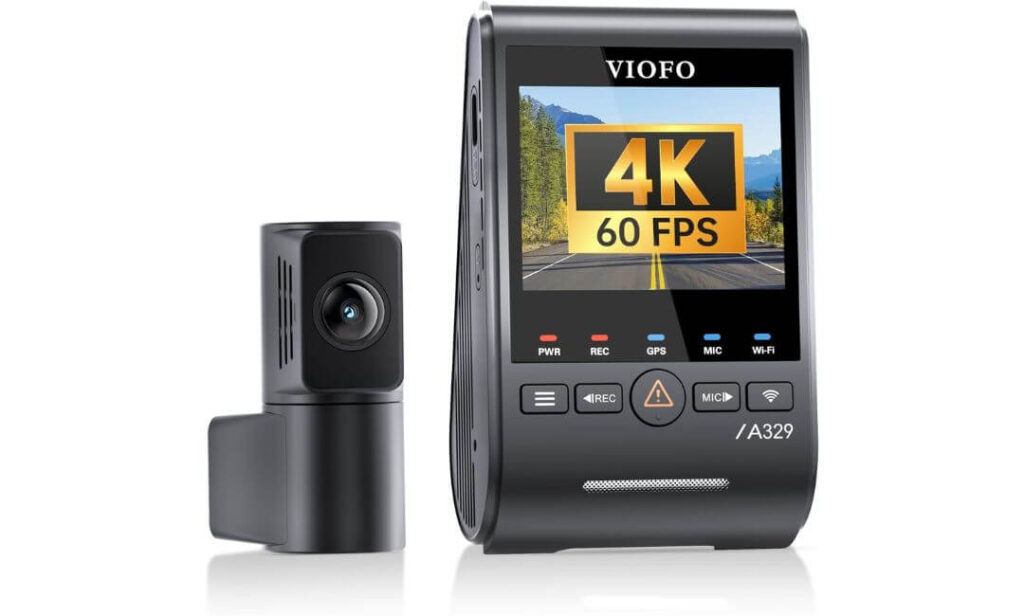
Quick Specs:
- True 4K 60FPS front recording for smoother, sharper footage at highway speeds
- 2K rear camera with Sony STARVIS 2 IMX675 sensor
- Sony STARVIS 2 IMX678 front sensor for superior low-light clarity
- Dual-channel HDR recording for improved license plate visibility
- Wi-Fi 6 connectivity with download speeds up to 30MB/s
- Supports up to 4TB SSD storage or 512GB microSD cards
- Built-in GPS with multi-satellite support
- Voice control for hands-free operation
- Power-saving parking surveillance mode
- Included CPL filter to reduce windshield reflections
There’s a reason this model sits at the top of our list. Most dash cams force buyers to choose between ultra-high resolution, strong night performance, or long-term storage flexibility. This one doesn’t.
The first thing that stands out is the 4K 60FPS front recording. On paper, that might sound like a spec-sheet feature. On the road, especially during highway driving, it becomes much more meaningful. Fast-moving vehicles, lane changes, road signs, and license plates remain noticeably sharper because the camera is capturing twice as many frames as many competing 4K models. Pair that with the STARVIS 2 IMX678 sensor and the result is footage that looks remarkably clean even after sunset.
What really separates it from many newer competitors, however, is the overall package. The combination of dual STARVIS 2 sensors, HDR processing, Wi-Fi 6, GPS, voice controls, and support for up to 4TB of SSD storage makes it feel less like a typical consumer dash cam and more like a purpose-built recording system. If you’re the type of driver who keeps a vehicle for years and wants a setup that won’t feel outdated next summer, this is exactly the kind of camera worth considering.
(Perhaps the biggest compliment I can give it is this: after comparing specifications, storage options, and recording capabilities across dozens of STARVIS 2 models, this is the one I would least likely feel the need to upgrade from a year later.)
Standout Strengths That Justify the Price
- One of the few dash cams offering true 4K60 front recording
- Dual Sony STARVIS 2 sensors instead of a premium front camera paired with a weaker rear unit
- Massive 4TB SSD support for extended recording without constant overwriting
- Wi-Fi 6 transfers that make downloading footage dramatically faster
- Included CPL filter helps reduce dashboard reflections and glare
The Only Real Drawback
- To unlock the full parking surveillance experience, you’ll likely want to purchase a compatible hardwire kit separately.
Best Fit for Modern Family SUVs and Daily Drivers
For larger vehicles such as midsize and three-row family SUVs, this camera’s strengths become even more noticeable. The higher frame rate helps when covering more road area ahead, while the 2K rear camera provides stronger detail than many rear cameras that still record at basic 1080p.
Installation is also relatively straightforward thanks to the slim coaxial cable design. Most owners can achieve a clean factory-style setup by routing the rear cable through the headliner and interior trim panels. Drivers planning to use parking surveillance should factor in a compatible hardwire kit during installation.
The Insider Pro-Tip
Many buyers focus exclusively on resolution when shopping for a premium dash cam. In reality, sensor quality, HDR tuning, and storage flexibility often have a greater impact on long-term satisfaction than moving from one resolution number to another.
That’s one of the reasons this model stands out. The combination of STARVIS 2 imaging hardware, 4K60 recording, SSD expansion support, and faster Wi-Fi creates a package that solves problems owners actually encounter months later—not just features that look impressive on a product page. If your goal is to install one dash cam and stop shopping for another for a long time, this is one of the strongest arguments currently available in the STARVIS 2 category.
#2. VIOFO A229 Pro 4K HDR Dash Cam
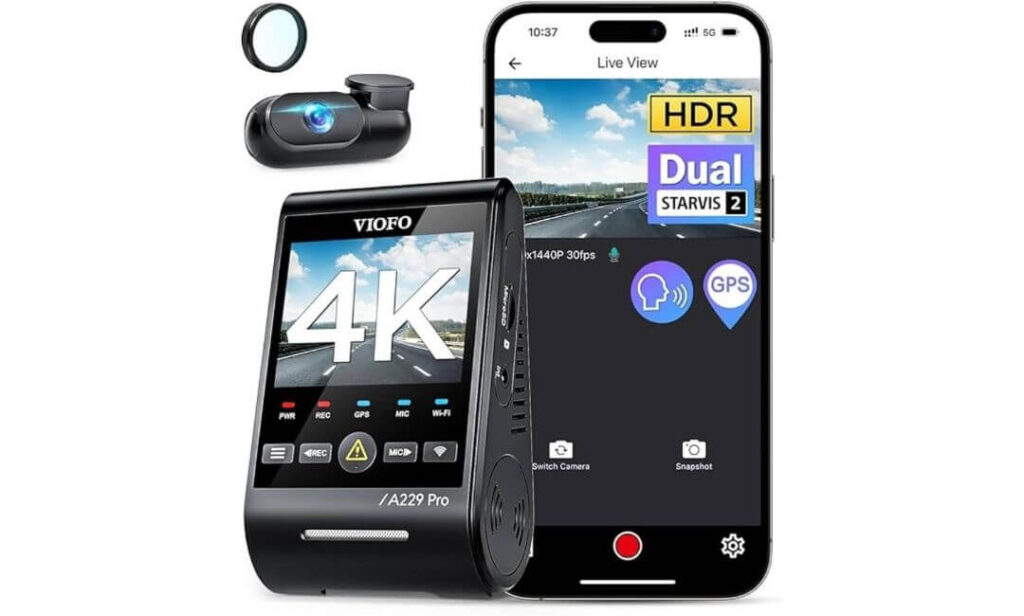
Quick Specs:
- 4K front + 2K rear recording with dual Sony STARVIS 2 sensors
- Sony IMX678 front sensor and IMX675 rear sensor
- Front and rear HDR recording for stronger nighttime visibility
- Night Vision 2.0 technology optimized for license plate capture
- 5GHz Wi-Fi app connectivity for faster video transfers
- Built-in GPS with GPS, GLONASS, Galileo, and BeiDou support
- 12 voice commands for hands-free operation
- Three parking surveillance modes including buffered event detection
- Included CPL filter for glare reduction
- Industrial-grade supercapacitor for extreme temperature durability
Here’s the reality: not everyone needs 4TB SSD support or flagship-level 4K60 recording. What most drivers really want is a camera that works exceptionally well every single day, captures details when conditions get difficult, and doesn’t require spending top-tier money to get there.
That’s where this model earns its reputation. The combination of 4K front recording, 2K rear coverage, and dual STARVIS 2 sensors creates footage that feels remarkably clean in situations where many cameras begin losing important details. Whether it’s a dimly lit intersection, a rainy evening commute, or traffic illuminated by modern LED headlights, the HDR system does an excellent job balancing bright and dark areas without turning the image into a blurry mess.
One feature that deserves more attention is the camera’s Night Vision 2.0 HDR tuning. Plenty of dash cams advertise night vision. Far fewer consistently preserve contrast, road markings, and plate details when vehicles are moving at speed. Combined with the included CPL filter, voice controls, GPS logging, and reliable 5GHz Wi-Fi connectivity, this package feels carefully refined rather than overloaded with gimmicks.
(For many drivers, this is the point where spending more starts delivering smaller returns. That’s what makes this model such an easy recommendation.)
Features That Make It Easy to Recommend
- Dual Sony STARVIS 2 sensors front and rear
- HDR recording on both cameras, not just the front lens
- Excellent nighttime license plate readability
- Reliable 5GHz Wi-Fi connectivity for quick footage access
- Supercapacitor design built for hot summers and freezing winters
The Only Real Drawback
- You’ll need to purchase a quality microSD card separately since storage is not included in the box.
A Smart Match for Family SUVs and Everyday Commuters
For drivers of larger SUVs, crossovers, and daily-driven family vehicles, this setup hits a particularly appealing balance. The front camera provides sharp 4K coverage while the rear 2K unit offers significantly better detail than the 1080p rear cameras still found in many competing systems.
Installation remains straightforward thanks to the included trim tool, rear cable, and GPS module. Drivers interested in parking surveillance should consider adding the compatible hardwire kit during installation so the camera can take advantage of its buffered event recording capabilities while parked.
The Insider Pro-Tip
When comparing premium dash cams, don’t get distracted by resolution alone. Once you’re already looking at high-quality 4K systems, factors like HDR performance, sensor quality, and nighttime image processing often have a bigger impact on what you can actually identify in recorded footage.
That’s one reason this model continues to stand out. Instead of chasing every possible headline feature, it focuses on the things owners notice months later: dependable image quality, excellent low-light performance, stable operation, and footage that remains useful when conditions become challenging. For many drivers, that’s exactly where the real value lives.
#3. REDTIGER F77 4K+4K Dash Cam Front and Rear
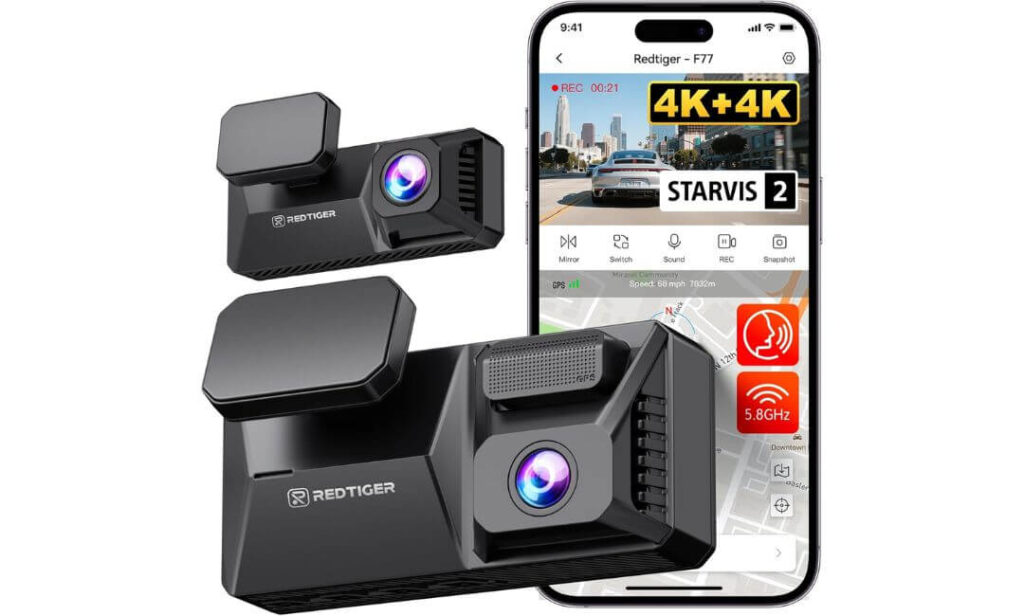
Quick Specs:
- True 4K front + 4K rear recording at the same time
- Dual Sony STARVIS 2 IMX678 sensors front and rear
- Built-in 128GB eMMC storage (no memory card required)
- HDR and WDR processing for stronger low-light visibility
- 4-inch touchscreen display for quick access to footage
- 12 voice commands for hands-free operation
- 5.8GHz Wi-Fi connectivity with app control
- Built-in GPS tracking with speed and route data
- f/1.8 seven-layer glass lenses on both cameras
- Supercapacitor design for long-term durability
Most dual-camera dash cams still make a compromise somewhere. You get a premium front camera paired with a weaker rear camera, excellent daytime footage but average night performance, or high resolution with limited storage flexibility. This setup takes a different approach.
What immediately stands out is the fact that you’re getting 4K recording from both directions. Not 4K in front and basic 1080p behind you. Not 4K paired with a budget sensor. Both cameras use Sony’s flagship STARVIS 2 IMX678 sensor, which is still rare in the dash cam market. For drivers who spend a lot of time in traffic, crowded parking lots, or high-speed highway environments, having matching image quality front and rear can make a genuine difference when reviewing footage later.
The other feature many buyers overlook is the built-in 128GB eMMC storage. That means no worrying about choosing the right memory card, compatibility issues, card failures, or replacing worn-out storage after years of recording. Combined with the responsive touchscreen, voice commands, GPS tracking, and fast 5.8GHz Wi-Fi transfers, it feels surprisingly complete straight out of the box.
(If your priority is capturing the clearest possible footage from both ends of the vehicle instead of focusing only on the front camera, this is one of the strongest arguments currently available.)
Features That Help It Stand Out
- Rare dual 4K recording setup with no compromise on rear-camera quality
- Matching STARVIS 2 IMX678 sensors on both cameras
- Built-in 128GB eMMC storage eliminates memory card shopping
- Large touchscreen interface makes reviewing footage easier
- Excellent nighttime visibility thanks to HDR, WDR, and f/1.8 optics
The Only Real Drawback
- Drivers who prefer expandable storage may wish there was a larger built-in capacity option available.
A Strong Choice for Larger Vehicles and Heavy Daily Use
This camera makes particular sense for drivers who regularly carry passengers, commute long distances, or drive larger SUVs where rear visibility matters almost as much as front coverage. Having matching 4K detail on both cameras creates a more balanced recording system than many competing setups.
Installation remains straightforward thanks to the included trim tool, mounting accessories, rear cable, and adhesive mounts. Drivers planning to use parking monitoring features should factor in the compatible hardwire kit during installation to unlock continuous surveillance functionality.
The Insider Pro-Tip
Many buyers spend hours comparing resolution numbers but overlook one important question: “How good is the rear camera?” In real-world incidents, the answer matters more often than people realize.
That’s where this model separates itself from much of the competition. Instead of treating the rear camera as an afterthought, it gives both cameras flagship-level STARVIS 2 hardware. The result is a setup that feels more balanced, more complete, and better prepared for the situations drivers actually encounter every day. For owners who value front-and-rear evidence equally, that’s a surprisingly rare advantage.
#4. 70mai 4K Dash Cam Front and Rear
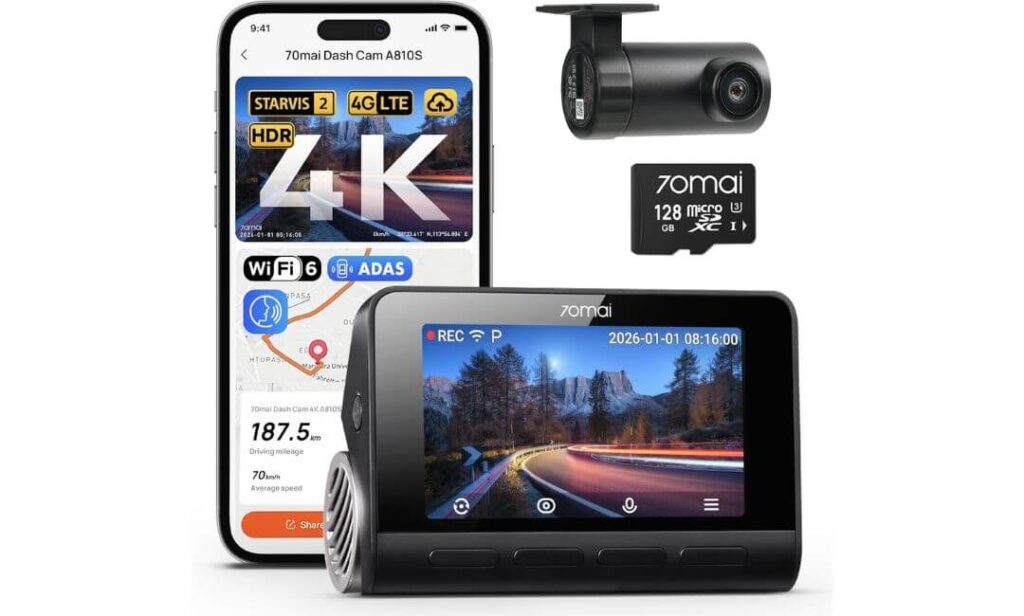
Quick Specs:
- True 4K front recording with Sony STARVIS 2 IMX678 sensor
- 1080P rear camera powered by Sony STARVIS 2 IMX662
- 4G LTE remote monitoring support (optional hardwire kit required)
- AI Motion Detection 2.0 for smarter parked-vehicle protection
- Wi-Fi 6 connectivity for faster downloads and live previews
- Five-satellite positioning system (GPS, GLONASS, Galileo, BDS, QZSS)
- ADAS driver-assistance alerts
- Voice control functionality
- F1.7 aperture with Night Owl Vision processing
- 24-hour parking surveillance capability
Some dash cams focus entirely on recording what happens while you’re driving. This one spends just as much attention on what happens when you’re nowhere near the vehicle.
That’s what makes it different. The headline feature isn’t necessarily the 4K recording, the STARVIS 2 sensor, or even the strong nighttime image quality. It’s the ecosystem built around them. With optional 4G LTE connectivity, remote alerts, vehicle tracking, and live monitoring access, this feels closer to a connected security system than a traditional dash cam. If your vehicle regularly sits in public parking lots, apartment complexes, airports, office garages, or unfamiliar locations, that extra layer of awareness becomes surprisingly valuable.
The camera itself backs up those smart features with capable hardware. Up front, the Sony STARVIS 2 IMX678 sensor captures detailed 4K footage, while the rear STARVIS 2 IMX662 sensor handles rear coverage. Add in Night Owl Vision processing, HDR tuning, an F1.7 aperture, and AI-powered motion detection, and you get a system that’s designed not only to record incidents but also to recognize activity before an incident happens.
(Most dash cams help explain what happened after the fact. This one is among the few designed to help you keep tabs on the vehicle before anything happens at all.)
Features That Make It Stand Out From The Crowd
- Optional 4G LTE remote monitoring with live vehicle access
- AI Motion Detection 2.0 for smarter parking surveillance
- Wi-Fi 6 support for noticeably faster wireless transfers
- Advanced Night Owl Vision technology for low-light visibility
- ADAS safety alerts for highway and daily commuting
The Only Real Drawback
- To unlock its most impressive remote-monitoring features, you’ll need the optional 4G hardwire kit.
Ideal for Drivers Who Park Away From Home
For commuters, rideshare drivers, apartment residents, and anyone who frequently leaves a vehicle unattended, this setup brings capabilities that many traditional dash cams simply don’t offer. The ability to combine parking surveillance, location tracking, and remote access creates a very different ownership experience.
Installation is beginner-friendly thanks to the included wiring tool and straightforward mounting system. Drivers interested in LTE monitoring, AI surveillance features, and full-time parking protection should plan for the compatible hardwire kit during installation so the camera can operate as intended when the vehicle is parked.
The Insider Pro-Tip
Most people shop for a dash cam thinking about accidents. Experienced owners often end up appreciating the parking features just as much.
A vehicle spends far more hours parked than it does moving. That’s why features like AI motion detection, remote alerts, location tracking, and LTE access can become more valuable over time than another small jump in image quality. If your priority is knowing what’s happening around your vehicle even when you’re not there, this is one of the most complete solutions currently available in the STARVIS 2 category.
#5. ROVE R2-4K Dual PRO Dash Cam Front and Rear
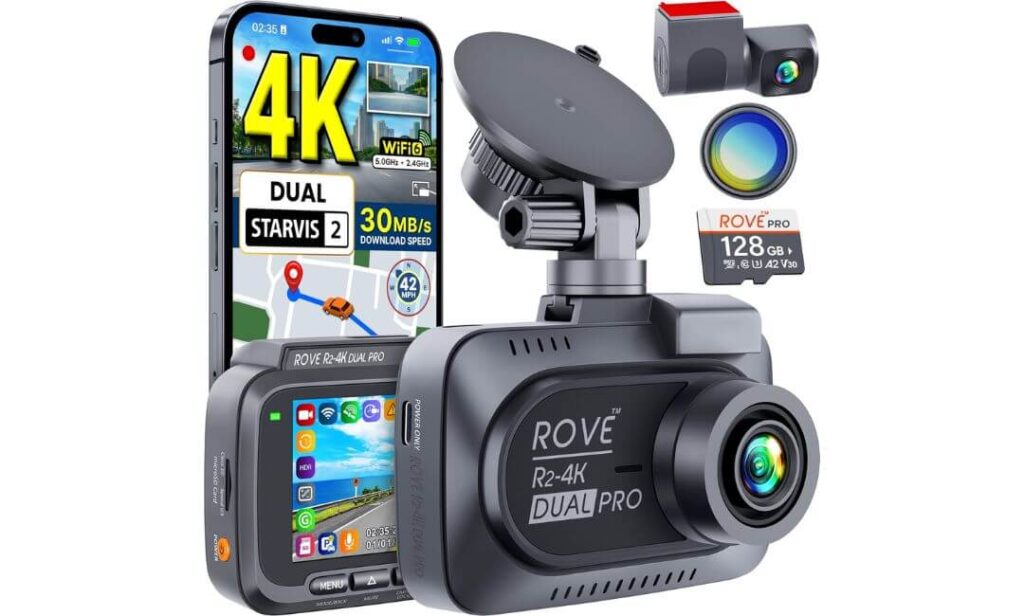
Quick Specs:
- 4K front + 2K rear recording with dual Sony STARVIS 2 sensors
- Sony IMX678 front sensor and IMX675 rear sensor
- 128GB high-endurance microSD card included
- Premium CPL filter included in the box
- Wi-Fi 6 with transfer speeds up to 30MB/s
- Supports up to 1TB storage expansion
- Quad-mode GPS tracking with route playback
- HDR imaging with Super Night Vision technology
- Three intelligent parking surveillance modes
- Supercapacitor design for long-term reliability
Here’s something many buyers discover after purchasing a dash cam: the advertised price often isn’t the real price. By the time you’ve added a quality memory card, a CPL filter, and a few accessories you actually need, that “budget-friendly” camera suddenly isn’t so budget-friendly anymore.
That’s where this setup feels refreshingly honest. Right out of the box, you’re getting a 128GB high-endurance card, a CPL filter, dual STARVIS 2 sensors, Wi-Fi 6 connectivity, GPS tracking, and front-and-rear HDR recording. Instead of forcing buyers to build the package piece by piece, much of what people end up purchasing later is already included from day one.
The camera hardware itself is equally compelling. The Sony IMX678 front sensor handles 4K recording while the IMX675 manages 2K coverage in the rear. Combined with HDR processing, wide-aperture optics, and strong low-light tuning, footage remains clean and detailed in situations where lesser cameras often struggle with glare, reflections, and nighttime visibility. Add the fast Wi-Fi 6 transfer speeds and the experience feels remarkably polished for the price category.
(If you’re the type of buyer who wants to install a dash cam once, avoid accessory shopping later, and simply start recording, this package makes a strong case for itself.)
Features That Deliver More Than Expected
- Includes a quality 128GB memory card right in the box
- Premium CPL filter included, reducing windshield reflections
- Dual STARVIS 2 sensors for balanced front-and-rear coverage
- Wi-Fi 6 connectivity with exceptionally fast file transfers
- Expandable storage up to 1TB for long recording history
The Only Real Drawback
- The display is slightly smaller than some premium competitors that use larger touchscreen interfaces.
A Practical Choice for Drivers Who Want Everything Included
For everyday drivers, family SUVs, commuters, and road-trip enthusiasts, this package removes much of the guesswork from the buying process. Instead of researching compatible memory cards, searching for glare-reducing filters, or budgeting for immediate upgrades, most of the essentials arrive ready to go.
Installation is straightforward thanks to the included trim tool, mounting hardware, power cables, rear-camera wiring, and accessories. Drivers interested in activating full-time parking surveillance should plan on adding the optional hardwire kit during installation to unlock all parking protection features.
The Insider Pro-Tip
One of the easiest ways to underestimate the cost of a dash cam is by ignoring what’s included in the box. Storage cards, CPL filters, installation accessories, and upgrade purchases can quietly add a surprising amount to the final total.
That’s what makes this package particularly appealing. Instead of winning on a single headline feature, it wins through completeness. The dual STARVIS 2 setup delivers the image quality drivers want, while the included storage, filter, and accessories eliminate many of the hidden purchases that typically come later. For buyers focused on overall value rather than just sticker price, that’s a meaningful advantage.
#6. IIWEY 4K+4K Dash Cam Front and Rear
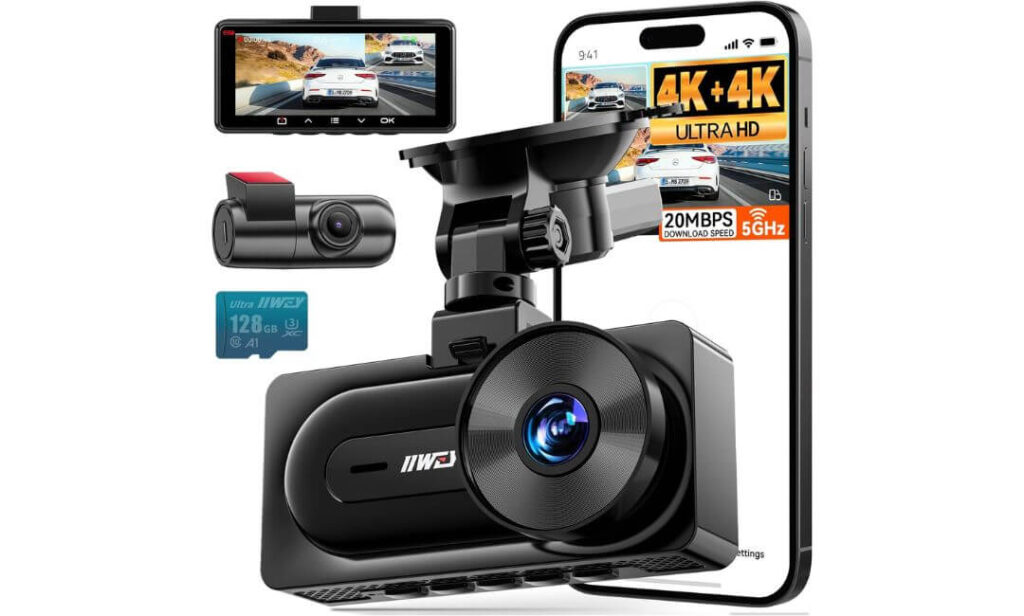
Quick Specs:
- True 4K front + True 4K rear recording
- Dual STARVIS 2 sensors with F1.6 large apertures
- Dual-channel HDR processing for improved nighttime visibility
- 128GB microSD card included
- Wi-Fi 6 connectivity with transfer speeds up to 20MB/s
- Built-in GPS tracking with speed and route logging
- 170° ultra-wide viewing angle
- 24-hour parking surveillance support
- 3.18-inch IPS display
- Supercapacitor-based design for long-term durability
Every product roundup has that one model many shoppers initially scroll past, only to come back to later after comparing specifications. This is that camera.
At first glance, the lower price point might lead some buyers to assume compromises were made somewhere. Then you start looking closer. True 4K recording from both cameras, dual STARVIS 2 sensors, dual HDR processing, Wi-Fi 6, GPS, included 128GB storage, and a wide-angle viewing system that covers a substantial amount of road around the vehicle. Suddenly, the value proposition becomes difficult to ignore.
The strongest argument here is simple: rear-camera quality. While many competing systems still rely on a lower-resolution rear unit, this setup records in true 4K front and rear simultaneously. For drivers concerned about rear-end collisions, aggressive tailgaters, parking lot incidents, or hit-and-run situations, that additional rear detail can be surprisingly useful. Combined with STARVIS 2 low-light performance and F1.6 apertures on both cameras, footage remains impressively usable after dark as well.
(For buyers who want premium-looking specifications without immediately stepping into flagship pricing territory, this is one of the more interesting options currently available.)
Features That Deliver Exceptional Value
- True 4K recording on both cameras
- Dual STARVIS 2 sensors with large F1.6 apertures
- 128GB memory card included in the box
- Dual HDR processing for better nighttime footage
- Wi-Fi 6 and GPS included without additional purchases
The Only Real Drawback
- The brand doesn’t have the same long-established enthusiast following as some of the higher-ranked options above.
A Strong Fit for Drivers Focused on Maximum Coverage
Drivers who spend significant time in heavy traffic or crowded urban environments will likely appreciate the dual 4K approach. Having matching high-resolution footage from both directions creates a more complete picture of what actually happened before, during, and after an incident.
Installation is beginner-friendly thanks to the included memory card, mounting hardware, wiring accessories, and rear-camera cable. Drivers interested in activating around-the-clock parking surveillance should add the compatible hardwire kit during installation to unlock all parking protection features while maintaining battery protection safeguards.
The Insider Pro-Tip
Many buyers assume the most expensive dash cam automatically provides the best value. In reality, value often comes from how many important features are included before you start purchasing extras.
That’s what makes this camera interesting. By combining dual 4K recording, STARVIS 2 sensors, Wi-Fi 6 connectivity, GPS tracking, HDR processing, and a bundled 128GB card, it delivers a surprisingly complete package right out of the box. For drivers who care more about practical capability than brand recognition, it’s the kind of product that’s easy to underestimate until you compare it side-by-side with far more expensive alternatives.
Best STARVIS 2 Dash Cam Side-by-Side Comparison for HDR Clarity, GPS Tracking & Daily Driving
Why STARVIS 2 Dash Cams Have Changed What Drivers Should Expect
For years, dash cam brands competed by advertising bigger resolution numbers. First it was 1080p, then 2K, then 4K. The problem is that resolution alone never guaranteed useful footage. A camera could record in 4K and still struggle to capture a license plate at night, handle headlight glare, or preserve important details during bad weather.
That’s where Sony STARVIS 2 technology has changed the conversation. Instead of focusing only on pixel count, STARVIS 2 sensors are designed to improve the quality of the light reaching the sensor itself. The result is footage that often looks cleaner, brighter, and more detailed in the exact situations where older dash cams tend to fall apart.
When comparing the footage side by side, the difference usually becomes obvious after sunset. Street signs remain easier to read, headlights create less washout, dark areas retain more detail, and moving vehicles are often easier to identify. That’s why nearly every premium dash cam released over the past year has moved toward STARVIS 2 hardware.
Night Driving Is Where STARVIS 2 Makes The Biggest Difference
Most accidents, insurance disputes, and difficult driving situations don’t happen on perfectly lit roads at noon. They happen during evening commutes, rainy nights, parking lot incidents, and poorly illuminated highways.
Traditional sensors often struggle because they have to choose between bright and dark areas. If the camera exposes for headlights, everything else becomes too dark. If it brightens the image, headlights become oversized glowing blobs that hide important details.
STARVIS 2 sensors are significantly better at balancing those extremes. This allows the camera to preserve more information across the entire frame, making it easier to identify vehicles, road markings, traffic signs, and pedestrians even when lighting conditions are far from ideal.
For many drivers, this improvement alone is enough to justify moving from an older generation dash cam.
Why HDR Matters Just As Much As The Sensor
A great sensor can only do so much if the image processing isn’t equally capable. That’s where HDR technology becomes important.
HDR, or High Dynamic Range, helps balance extremely bright and dark areas within the same scene. Think about driving directly into a sunrise, leaving a dark tunnel, or facing modern LED headlights on a two-lane road. These situations create dramatic lighting differences that can confuse many cameras.
The best STARVIS 2 dash cams combine advanced sensors with HDR processing to reduce glare while preserving detail. This is one reason models such as the VIOFO A329S, VIOFO A229 Pro, and REDTIGER F77 performed so well in our evaluation. Their HDR implementation helps maximize what the sensors are capable of capturing.
In practical terms, HDR often means the difference between seeing a readable plate number and seeing only a bright reflection.
Understanding Sony IMX678 and IMX675 Sensors
If you’ve spent time researching premium dash cams, you’ve probably seen sensor names like IMX678 and IMX675 appearing repeatedly.
The Sony IMX678 is widely considered one of the most desirable STARVIS 2 sensors currently available for front-camera use. It offers excellent low-light sensitivity, strong detail retention, and improved performance during high-speed recording. That’s one reason it appears in flagship products like the VIOFO A329S, VIOFO A229 Pro, REDTIGER F77, ROVE R2-4K Dual PRO, and 70mai A810S.
The IMX675 is commonly used as a premium rear-camera sensor. It provides excellent dynamic range, strong nighttime performance, and enough detail to complement high-end front cameras without becoming a weak point in the system.
When both sensors are paired together, as seen in several top-ranked models in this guide, the result is a more balanced front-and-rear recording setup capable of delivering consistent image quality from both directions.
Why License Plate Readability Matters More Than Resolution
Many buyers focus on whether a dash cam records in 2K or 4K. In reality, the more important question is often much simpler:
Can it clearly capture a license plate when conditions aren’t perfect?
A license plate moving at highway speed, during rain, at night, with headlights shining directly into the lens is one of the most difficult challenges for any dash cam. This is where better sensors, HDR processing, aperture design, and image tuning become far more important than resolution numbers alone.
That’s why several cameras in this guide earned high rankings despite having different recording resolutions. The overall ability to preserve useful evidence matters far more than a specification printed on the box.
Front And Rear Dash Cam Systems Are Becoming The New Standard
A few years ago, many drivers purchased front-only dash cams. Today, dual-channel systems are increasingly becoming the preferred option.
The reason is simple. Not every incident happens in front of the vehicle.
Rear-end collisions, parking lot damage, aggressive tailgating, hit-and-run incidents, and reversing accidents often occur behind the vehicle. A rear camera provides an additional layer of evidence that can be invaluable when dealing with insurance claims or disputes.
The strongest options in this guide all feature front-and-rear coverage because the added protection is often worth the relatively small increase in cost.
Parking Mode Is No Longer A Premium Feature
Many drivers spend hours researching driving footage quality while overlooking one important fact: most vehicles spend significantly more time parked than moving.
Modern parking modes allow a dash cam to monitor the vehicle when you’re away. Depending on the system, the camera may activate when motion is detected, when a collision occurs, or through scheduled time-lapse recording.
Some models, including the 70mai A810S, go even further by incorporating remote alerts and monitoring capabilities when paired with compatible hardware.
For drivers who regularly park in public lots, apartment complexes, office garages, or crowded streets, parking protection can become one of the most valuable features a dash cam offers.
LTE, Wi-Fi 6, And The Future Of Dash Cam Connectivity
Dash cams are no longer simple recording devices. Many are evolving into connected vehicle-security systems.
Wi-Fi 6 has made downloading footage dramatically faster than older wireless standards. Cameras like the VIOFO A329S and ROVE R2-4K Dual PRO can transfer large 4K files in seconds rather than minutes.
LTE connectivity takes things even further. With supported hardware, certain models allow owners to view their vehicle remotely, receive notifications, monitor parking activity, and access location information through a smartphone app.
While not every driver needs LTE connectivity, it can be extremely valuable for commuters, rideshare operators, frequent travelers, and anyone who leaves a vehicle parked for long periods away from home.
The Bottom Line
STARVIS 2 isn’t just another marketing phrase being added to product boxes. It represents one of the most meaningful upgrades dash cams have received in recent years because it directly improves the quality of the footage drivers rely on when something goes wrong.
Combined with modern HDR processing, premium sensors like the IMX678 and IMX675, dual-camera coverage, advanced parking surveillance, and faster connectivity, today’s best STARVIS 2 dash cams are far more capable than the cameras many drivers installed just a few years ago. And when the goal is capturing clear evidence rather than simply recording video, those improvements matter more than ever.
Buying Guide: How to Choose the Right STARVIS 2 Dash Cam for Your Vehicle, Driving Habits, and Budget
Buying a premium STARVIS 2 dash cam is a little different than buying a basic camera from a few years ago. Most of today’s top models already offer excellent video quality, GPS tracking, parking protection, and smartphone connectivity. The real challenge is understanding which features will actually benefit your driving routine and which ones simply look impressive on a product page.
A commuter who spends two hours a day on busy highways will have different priorities than someone who mainly drives around town. Likewise, a rideshare driver, road-trip enthusiast, or owner of a large SUV may benefit from features that casual drivers rarely use. That’s why choosing the right dash cam is often less about buying the most expensive model and more about matching the camera to how the vehicle is actually used.
Matching the Dash Cam to Your Driving Style
Before comparing specifications, start with how and where you drive.
If you frequently travel on highways, particularly after dark, prioritize cameras using premium STARVIS 2 sensors like the Sony IMX678. Higher-quality sensors and stronger HDR processing tend to preserve license plates and road details more effectively when vehicles are moving at speed.
Drivers who spend significant time in parking garages, apartment complexes, office lots, or public parking areas should pay close attention to parking surveillance features. Models such as the 70mai A810S place a stronger emphasis on vehicle monitoring and remote access, while cameras like the VIOFO A329S focus more heavily on recording quality and storage flexibility.
For larger SUVs, family vehicles, pickup trucks, and vehicles with limited rear visibility, dual-camera systems make considerably more sense than front-only setups. Every model included in this guide offers front-and-rear coverage because the additional protection often provides far greater value than the small difference in price.
Choosing the Right Storage for Modern 4K Dash Cams
One of the most overlooked aspects of dash cam ownership is storage.
High-quality 4K footage consumes significantly more space than older 1080p recordings. A camera recording 4K video every day can fill lower-capacity cards surprisingly quickly, especially when HDR processing and dual-channel recording are involved.
For most drivers, these capacities represent a practical starting point:
- 128GB: Suitable for daily commuting and moderate driving
- 256GB: Ideal balance between storage capacity and cost
- 512GB: Recommended for frequent drivers and road trips
- 1TB or larger: Best for users who want maximum recording history
- SSD storage: Ideal for professional users, long-distance travel, and extended retention periods
The VIOFO A329S stands out in this area because it supports external SSD storage up to 4TB, a capability rarely seen in consumer dash cams.
Why SD Card Quality Matters More Than Many Buyers Realize
Not all memory cards are designed for continuous video recording.
Dash cams write data every minute of every day, often while exposed to heat, cold, vibration, and constant use. Generic memory cards that work perfectly in a smartphone or camera may not perform reliably inside a dash cam over the long term.
For 4K recording, especially dual-channel systems, look for:
- High-endurance microSD cards
- U3 speed class or higher
- V30 video speed rating or better
- Reputable brands with proven dash cam compatibility
- Industrial-grade options when available
Several cameras in this guide include storage out of the box, such as the ROVE R2-4K Dual PRO and IIWEY Q7. Others require a separate purchase, making card quality an important part of the total ownership experience.
Understanding 4K60 vs 4K30 Recording
One specification that receives a lot of attention is frame rate.
A camera recording at 60 frames per second captures twice as many individual frames as a camera recording at 30 frames per second. This becomes particularly useful when vehicles are moving quickly, traffic is dense, or road conditions are changing rapidly.
The advantages of 4K60 include:
- Smoother video playback
- Reduced motion blur
- Better frame-by-frame analysis
- Improved clarity during high-speed driving
The trade-off is larger file sizes and increased storage consumption.
For many drivers, 4K30 remains perfectly adequate. However, drivers who spend significant time on highways may appreciate the additional detail provided by cameras such as the VIOFO A329S.
Frame Rate Versus File Size: The Trade-Off Every Buyer Should Understand
One of the easiest mistakes to make is assuming higher settings are always better.
Recording at the highest possible resolution and frame rate creates larger files, fills storage faster, and increases long-term storage requirements. While image quality improves, the improvement may not always justify the additional storage consumption for every driver.
A practical approach looks like this:
- Daily commuting: 4K30 is often sufficient
- Frequent highway driving: 4K60 becomes more valuable
- Long road trips: larger storage capacity becomes increasingly important
- Parking-heavy environments: prioritize storage retention and parking mode efficiency
The ideal setup balances image quality with realistic storage needs rather than simply selecting the highest available setting.
Why Firmware Support Matters Long After Installation
A dash cam isn’t a one-time purchase anymore.
Modern premium cameras increasingly rely on software updates to improve stability, enhance app performance, add features, and resolve compatibility issues. This is especially important for Wi-Fi-enabled and app-connected systems.
Manufacturers that regularly provide firmware updates often deliver a better long-term ownership experience than brands that rarely update their products after launch.
Firmware support can improve:
- Wi-Fi connectivity
- GPS accuracy
- App reliability
- Parking mode performance
- Video stability
- Compatibility with newer smartphones
Brands such as VIOFO and 70mai have built strong reputations partly because of their continued software development and active support communities.
Warranty and Long-Term Ownership Considerations
A premium dash cam should ideally remain installed for years, not months.
When comparing products, look beyond the hardware specifications and consider factors such as warranty coverage, customer support responsiveness, replacement availability, and software support history.
An extra year of support can sometimes provide more value than a minor hardware upgrade, particularly if the camera will remain installed through multiple vehicle ownership cycles.
This is especially relevant for higher-end systems where long-term reliability matters as much as image quality.
What a Premium Dash Cam with Night Vision Actually Delivers
One of the biggest misconceptions in the dash cam market is the phrase “night vision.”
A premium night-vision dash cam does not magically turn darkness into daylight. That’s not how the technology works.
What quality STARVIS 2 hardware actually provides is:
- Better visibility in low-light environments
- Improved HDR performance against headlight glare
- More readable license plates after dark
- Reduced image noise
- Better contrast between bright and dark areas
- Stronger detail retention during nighttime driving
In practical terms, the best premium dash cams allow you to identify more useful information when lighting conditions become difficult. That’s ultimately what matters when reviewing footage after an incident.
The Smartest Way to Spend Your Budget
If your budget allows, prioritize upgrades in this order:
- Better sensor quality
- Reliable HDR performance
- Front-and-rear coverage
- Parking surveillance capabilities
- Storage capacity
- Connectivity features such as Wi-Fi 6 or LTE
This order tends to deliver the greatest real-world improvement in recorded footage and overall ownership satisfaction.
A camera with excellent sensors and HDR processing will usually provide more useful evidence than a camera loaded with secondary features but using weaker imaging hardware. That’s one of the main reasons the highest-ranked products in this guide focus so heavily on sensor quality, nighttime performance, and overall recording capability rather than simply chasing feature counts.
For most buyers, the goal isn’t finding the dash cam with the longest specification sheet. It’s finding the one that will still feel like a smart purchase years after it’s installed.
Real-World Usage Tips: Getting the Most From a STARVIS 2 Dash Cam Every Day
Buying a premium STARVIS 2 dash cam is only part of the equation. What many drivers discover after installation is that camera placement, recording settings, storage choices, and parking-mode configuration can have just as much impact on the footage as the hardware itself.
The good news is that most of the cameras featured in this guide already have excellent hardware foundations. A few small adjustments can often make the difference between average footage and footage that captures the details you’ll actually care about if an incident occurs.
Maximizing License Plate Clarity in Real Traffic Conditions
One of the most common reasons drivers upgrade to a STARVIS 2 dash cam is improved license plate readability. However, even the best sensor cannot overcome poor installation or incorrect settings.
The first step is proper mounting position. Ideally, the front camera should sit high on the windshield, centered behind the rearview mirror whenever possible. This location minimizes dashboard reflections while providing a natural forward viewing angle.
Keeping the windshield clean is equally important. Dust, road film, fingerprints, and interior haze can significantly reduce image sharpness, especially at night when headlights and streetlights are present.
Drivers should also remember that license plate capture depends on multiple factors:
- Vehicle speed
- Distance from the target vehicle
- Lighting conditions
- Sensor quality
- HDR performance
- Lens quality
- Windshield cleanliness
A STARVIS 2 camera can dramatically improve your chances of capturing a readable plate, but maintaining a safe following distance remains one of the simplest ways to improve identification quality.
Understanding HDR, SDR, and WDR Settings
Many owners install a dash cam and never revisit the video settings. That approach often leaves performance on the table.
HDR, SDR, and WDR all influence how the camera handles difficult lighting situations.
HDR generally performs best when dealing with:
- Oncoming headlights
- Sunrise and sunset driving
- Tunnel exits
- Urban night driving
- High-contrast environments
For most STARVIS 2 dash cams in this guide, HDR should remain enabled whenever available because it significantly improves highlight control and nighttime readability.
SDR, by comparison, may occasionally produce slightly brighter footage under ideal lighting conditions, but it typically sacrifices dynamic range when conditions become challenging.
WDR, when available, serves a similar purpose by balancing bright and dark areas. While implementation varies between manufacturers, most modern premium dash cams handle automatic HDR and WDR management effectively without requiring constant user adjustments.
When 4K60 Makes Sense and When It Doesn’t
Several drivers immediately switch to the highest available recording setting after installation. While that’s understandable, it isn’t always necessary.
A camera recording at 4K60 captures twice as many frames as one recording at 4K30. This provides:
- Smoother motion
- Better frame-by-frame analysis
- Reduced motion blur
- Improved clarity during high-speed driving
For highway commuters and frequent long-distance drivers, 4K60 can be a meaningful advantage.
However, the trade-off is larger file sizes and increased storage consumption.
Many owners eventually discover that their ideal setup looks something like this:
- Highway-heavy driving: 4K60 preferred
- Daily commuting: 4K30 often sufficient
- Parking-focused use: storage retention becomes more important than frame rate
The goal isn’t necessarily using the highest setting available. The goal is preserving useful footage for as long as possible.
Why the Included CPL Filter Is Worth Using
Several of the cameras in this guide include a CPL filter, yet many owners never install it.
That’s a mistake.
A CPL filter helps reduce:
- Dashboard reflections
- Windshield glare
- Bright pavement reflections
- Interior reflection artifacts
The effect is particularly noticeable during sunny afternoons, low-angle sunrise driving, and situations where the dashboard reflects heavily into the windshield.
While a CPL filter won’t transform image quality overnight, it often provides a cleaner and more professional-looking image with very little effort.
Parking Mode Setup: Where Most Owners Leave Performance Untapped
A surprising number of premium dash cams spend their lives operating only while the vehicle is moving.
That’s unfortunate because modern parking surveillance is one of the most valuable features these cameras offer.
For drivers who regularly park:
- In apartment complexes
- At airports
- In office parking structures
- On public streets
- In shopping centers
Parking protection can be just as important as driving footage.
Most premium systems offer multiple parking modes:
- Collision detection
- Motion detection
- Buffered event recording
- Low-bitrate recording
- Time-lapse recording
Each serves a different purpose. Buffered event recording is often the most useful because it captures footage both before and after an event occurs rather than only after the trigger has already happened.
Protecting Your Vehicle Battery During Parking Surveillance
One concern many owners have involves battery drain.
Fortunately, modern hardwire kits and parking-mode systems have become much smarter than older designs.
Most quality hardwire kits include low-voltage protection that automatically disables recording before the vehicle battery reaches an unsafe level.
For vehicles driven daily, this usually isn’t a major concern.
For vehicles that sit for extended periods, a more conservative parking configuration may be beneficial. Lower-power event detection modes often provide an excellent balance between surveillance coverage and battery preservation.
Drivers using advanced systems such as the VIOFO A329S or 70mai A810S should spend a few minutes reviewing voltage cutoff settings during installation. That small adjustment can significantly improve long-term battery health.
Making LTE Monitoring Actually Useful
LTE connectivity sounds impressive, but its value depends entirely on how it’s configured.
Many owners activate remote monitoring and then forget to customize notifications.
A smarter approach is to focus on meaningful alerts:
- Collision notifications
- Motion detection events
- Parking incidents
- Location changes
- Security-related triggers
Receiving dozens of unnecessary notifications every day quickly causes alert fatigue.
Receiving one important notification when something actually happens is where LTE monitoring becomes genuinely valuable.
For drivers who travel frequently, leave vehicles at airports, store vehicles outdoors, or manage multiple vehicles, LTE monitoring can provide a level of awareness that traditional dash cams simply cannot match.
Managing App Connectivity for a Better Ownership Experience
Wi-Fi 6 and modern smartphone apps have improved dramatically over the last few years, but a few habits can make ownership even smoother.
Regularly updating:
- Camera firmware
- Smartphone applications
- GPS databases when applicable
can improve stability, connection speed, and overall reliability.
It’s also worth occasionally reviewing saved recordings and protected-event folders. This ensures important footage remains accessible and prevents storage from becoming cluttered with unnecessary files.
Small Maintenance Habits That Preserve Video Quality
Premium sensors and advanced HDR processing can’t compensate for neglected hardware.
Every few weeks, it helps to:
- Clean front and rear lenses
- Check mounting stability
- Verify GPS operation
- Review parking-mode settings
- Confirm storage health
- Inspect cable routing
These quick checks take only minutes but help ensure the camera continues performing at its best months and years after installation.
The Bottom Line
The best STARVIS 2 dash cams already provide excellent hardware, whether you’re using a flagship option like the VIOFO A329S, a balanced performer like the A229 Pro, or a connected solution like the 70mai A810S.
What separates average ownership experiences from excellent ones is often how the camera is configured after installation. Proper HDR settings, smart parking-mode choices, quality storage, LTE configuration, and routine maintenance can significantly improve the usefulness of your footage.
When everything is working together correctly, a premium STARVIS 2 dash cam becomes more than a camera. It becomes a reliable source of evidence, a parking security tool, and a piece of technology that quietly protects your vehicle every time you drive.
FAQs About STARVIS 2 Dash Cam
Which STARVIS 2 dash cam is the smartest long-term investment for a family SUV or daily-driven vehicle?
If you’re planning to install a dash cam once and keep it for years, the conversation becomes very different from simply chasing the highest resolution number. Long-term ownership is usually influenced by storage flexibility, firmware support, parking-mode reliability, app performance, and how well the camera handles difficult lighting conditions months after the excitement of a new purchase wears off.
That’s one reason the VIOFO A329S ranked at the top of this guide. The combination of dual STARVIS 2 sensors, true 4K60 recording, Wi-Fi 6 connectivity, SSD expansion support up to 4TB, and mature software support gives it an advantage that extends beyond image quality alone. Many cameras look impressive on launch day. Far fewer still feel like the right purchase three years later.
Is dual 4K recording actually worth paying extra for, or is 4K front and 2K rear enough?
This is one of the most misunderstood questions in the dash cam market.
In real-world driving, the front camera usually captures the majority of important evidence. That’s why high-end combinations such as 4K front and 2K rear often provide an excellent balance between image quality, storage efficiency, and overall value.
However, dual 4K systems like the REDTIGER F77 and IIWEY Q7 become more attractive if your driving environment frequently includes:
- Dense highway traffic
- Aggressive tailgaters
- Busy urban environments
- Commercial driving
- Frequent parking-lot incidents
For most drivers, 4K front plus a premium STARVIS 2 rear camera remains more than sufficient. Dual 4K becomes easier to justify when rear-camera evidence is a major priority rather than an occasional safety net.
Why do some STARVIS 2 dash cams produce noticeably different nighttime footage even when they use the same Sony sensor?
This is where many buyers discover that sensors are only part of the story.
Two cameras can use the same Sony IMX678 sensor and still produce very different results because image quality is influenced by multiple factors working together:
- HDR processing
- Lens quality
- Aperture design
- Exposure tuning
- Noise reduction algorithms
- Firmware optimization
- Video compression settings
Think of the sensor as the foundation rather than the finished product. Premium manufacturers often invest significant effort into image processing and tuning, which is why some STARVIS 2 cameras consistently outperform others despite sharing similar hardware.
The best-performing models in this guide stand out because the entire imaging system works together, not simply because of the sensor listed on the specification sheet.
Does LTE monitoring genuinely improve vehicle security, or is it mostly a convenience feature?
The honest answer depends entirely on where and how you park.
For drivers who keep their vehicle in a private garage every night, LTE connectivity may feel more like a convenience feature than a necessity. On the other hand, drivers who regularly leave vehicles in public parking structures, airports, apartment complexes, office lots, or unfamiliar locations often find LTE monitoring surprisingly valuable.
The real advantage isn’t watching live video all day. It’s receiving meaningful alerts when something actually happens.
The most useful LTE capabilities typically include:
- Motion detection notifications
- Impact alerts
- Vehicle location tracking
- Remote status monitoring
- Access to recorded events while away from the vehicle
For the right owner, LTE can transform a dash cam from a passive recording device into an active vehicle-security tool.
What is the biggest mistake buyers make when shopping for a premium dash cam with night vision?
Most people focus on what the camera records during perfect daylight conditions.
Ironically, that’s often when almost every modern dash cam performs reasonably well.
The real test happens when several challenges occur simultaneously: darkness, rain, windshield reflections, highway speeds, bright LED headlights, and rapidly changing lighting conditions. That’s where premium STARVIS 2 hardware earns its reputation.
A smarter buying approach is to prioritize features in this order:
- Sensor quality
- HDR performance
- Front-and-rear coverage
- Parking surveillance capabilities
- Storage flexibility
- Connectivity features
Drivers who follow that order usually end up happier with their purchase than those who focus exclusively on resolution numbers or marketing claims. At the end of the day, the best dash cam isn’t the one with the longest feature list—it’s the one that captures usable evidence when conditions are working against it.
Final Thoughts
The dash cam market is full of cameras that look impressive in advertisements. What separates the truly worthwhile options from the rest is how they perform when conditions are less than ideal—after sunset, during heavy rain, on high-speed highways, or in the middle of a parking lot incident when nobody is around to witness what happened.
That’s ultimately why STARVIS 2 technology has become such an important part of the conversation. The best models aren’t simply recording higher-resolution video; they’re doing a better job preserving the details drivers actually need. Whether that’s a license plate illuminated by headlights, a vehicle approaching from the rear, or activity around a parked car, the difference often becomes apparent when footage is reviewed later rather than when specifications are compared online.
Among all the options we evaluated, the VIOFO A329S stands out as the most complete package for drivers who want flagship-level performance without obvious compromises. The VIOFO A229 Pro remains one of the easiest recommendations for balancing premium image quality with everyday practicality, while cameras like the REDTIGER F77, 70mai A810S, ROVE R2-4K Dual PRO, and IIWEY Q7 each bring unique strengths that make sense for different priorities and budgets.
The most important takeaway is simple: don’t buy a dash cam based solely on resolution numbers or marketing claims. Pay attention to sensor quality, HDR performance, storage flexibility, parking surveillance capabilities, and long-term usability. Those are the factors that determine whether a camera becomes something you genuinely appreciate years later or something you end up replacing far sooner than expected.
If your goal is to install one of the best STARVIS 2 dash cams available in 2026 and have confidence that it can capture clear, useful evidence when it matters most, any of the models featured in this guide are strong places to start. The difference is simply deciding which one aligns best with the way you actually drive, park, and use your vehicle every day.
Also Check:


