
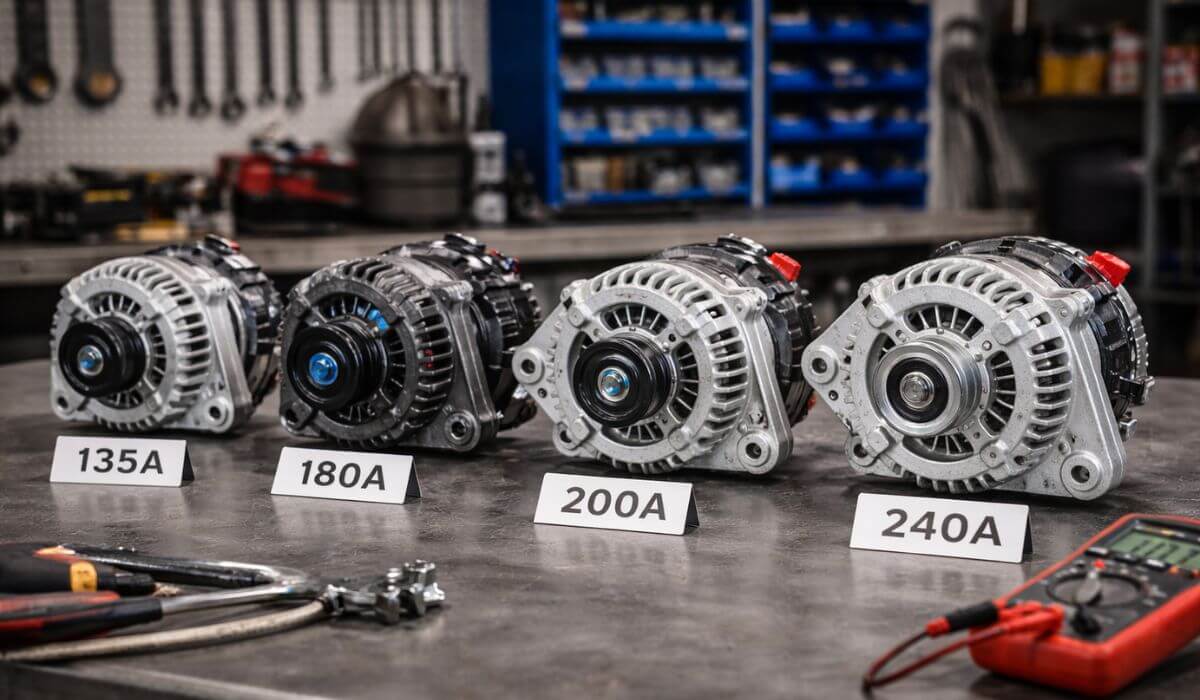
5 Best Alternators for 2003–2007 6.0 Powerstroke (2026 High Output Upgrades)
If you’ve owned a 2003–2007 6.0 Powerstroke long enough, you already know the alternator isn’t just another bolt-on part — it’s the backbone of the truck’s entire electrical system.
Between dual batteries, glow plug cycling, FICM voltage demand, cold starts, and whatever electrical mods you’ve added — light bars, winch, plow, audio — the factory charging system gets pushed hard. And once the alternator starts dropping voltage, everything else follows. Slow cranks. Flickering lights. Dead batteries. Even FICM issues if voltage gets unstable.
That’s exactly why we didn’t throw together some generic list.
We dug through real fitment data, output ratings, rebuild quality, idle charging performance, and long-term durability feedback from diesel techs and fleet owners who run these trucks daily — not garage queens. After comparing dozens of units, these five stood out as the most reliable replacements and upgrades for the 6.0 platform.
If you want stock-plus output without breaking the bank, the DB Electrical 400-14178 180-Amp Alternator has proven to be one of the most consistent direct-fit upgrades for 2005–2007 trucks — higher output than OEM, solid internal regulation, and dependable charging under diesel load.
On the OEM-grade side, the Bosch AL7606N Premium Alternator remains one of the cleanest factory-quality replacements available — built with new internals, stable voltage delivery, and the kind of reliability you expect from a Tier-1 supplier.
But not everyone is staying stock — and that’s where high-output units like Mechman and other heavy-duty builds come into play, especially if your truck runs accessories the factory system was never designed to support. So whether you’re fixing a failing alternator, preventing battery drain, or upgrading to handle serious electrical demand — these are the five alternators that actually hold up on a working 6.0 Powerstroke.
No fluff. No recycled catalog specs. Just units that make sense for how these trucks are really used.
Best Alternator for 6.0 Powerstroke Diesel Trucks (High-Output & OEM Replacements Tested)
#1. DB Electrical 400-14178 — Best Direct-Fit High-Output Upgrade (180 Amp)
#2. Bosch AL7606N — Best OEM-Quality Replacement (135 Amp)
#3. Mechman 240 Amp — Best High-Output Performance Alternator
#4. SCITOO 8478 — Best Budget Replacement Alternator
#5. BDFHYK Alternator — Best Stock Replacement Option
Expert Mechanic Tip Before You Buy
If you’re replacing the alternator on a 6.0 Powerstroke, don’t judge the job by amperage alone — judge it by idle output and voltage stability under glow plug load.
On these trucks, the alternator does its hardest work at idle — not cruising down the highway.
Cold starts cycle the glow plugs hard, dual batteries pull heavy recovery current, and the FICM is extremely sensitive to voltage drop. I’ve seen brand-new alternators rated at 200+ amps that still caused rough starts and low FICM voltage simply because their idle output was weak.
Before installing any new unit, always do three things most owners skip:
- Load test both batteries — a weak battery will kill a new alternator fast.
- Check the FICM voltage — you want consistent 47–48 volts.
- Inspect charge cables & grounds — corrosion creates resistance that mimics alternator failure.
And here’s the part most parts stores won’t tell you:
If your truck runs light bars, a winch, plow, or aftermarket audio — anything above stock electrical demand — skip OEM amperage entirely and move straight to a high-output alternator. Running a stock-amp unit in a modified diesel truck keeps it at 90–100% duty cycle all the time, which is exactly why so many “new” alternators fail within a year.
Match the alternator to how the truck is actually used — not how it left the factory.
Do that once, and you won’t be chasing charging problems again six months later.
Must Check:
#1. DB Electrical 400-14178
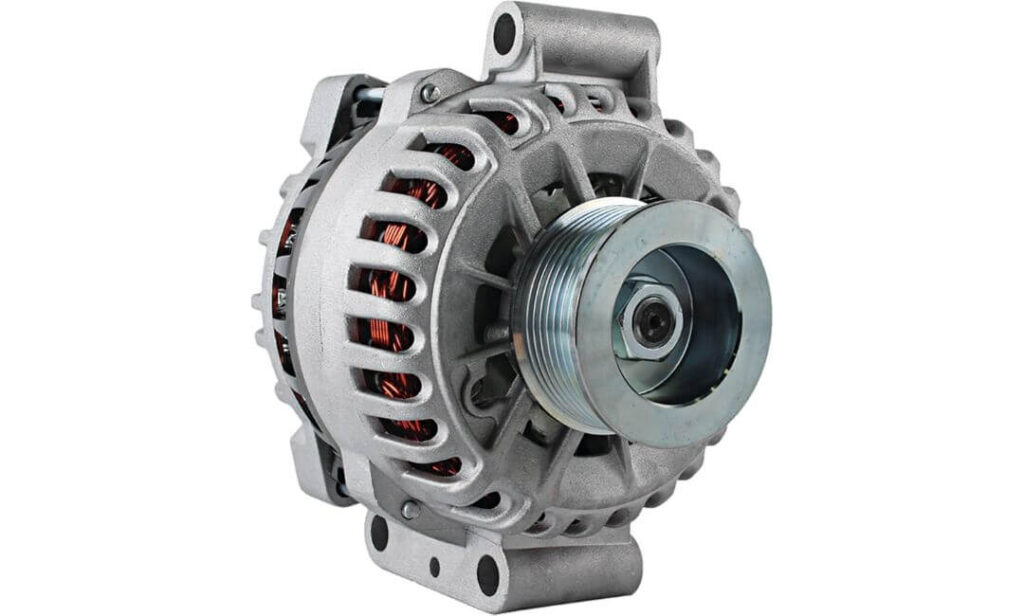
Key Specs:
- Output: 180 Amps
- Voltage: 12V
- Rotation: CW
- Pulley Class: S8
- Regulator: Internal (IR)
- Fan Type: Internal (IF)
- Clock Position: 10
- Fitment: 2003–2007 6.0 Powerstroke Super Duty / E-Series
- Position: Top alternator (dual-alt setups)
If you’re still running the factory 110–135 amp unit on a working 6.0, stepping up to this 180-amp DB Electrical isn’t just an upgrade — it’s relief for the entire charging system. On paper, it looks like a simple direct replacement… but once installed, the difference shows up where these trucks struggle most: cold starts, dual-battery recovery, and idle voltage stability.
Under glow plug cycling (especially winter mornings), this unit holds voltage far more consistently than stock. Headlights don’t dip the same way, blower motors don’t drag RPM, and battery recharge time shortens noticeably. For trucks running mild accessories — light bars, backup lighting, onboard air — the extra amperage gives breathing room without jumping into expensive high-output territory.
Fitment is where this alternator wins trust. It’s built to OEM dimensions, same mounting geometry, same plug, same belt alignment — no spacer tricks or wiring mods. On 2005–2007 F-250/F-350 trucks, installs are straightforward if access is clear. Just verify one thing before ordering: if your truck runs dual alternators, this unit is for the top position — a detail that gets missed more often than you’d think.
Why It Stands Out for 6.0 Owners
- Stronger idle charging under glow plug cycling & cold starts
- Faster dual-battery recovery after cranking
- Higher amp headroom for light electrical mods
- OEM-spec casing, pulley alignment & plug fitment (true bolt-on install)
Pro Tip Before Installing
On 6.0 trucks, alternator life depends heavily on battery condition. If either battery is weak or sulfated, the new alternator will run at near-max duty cycle constantly — heat builds up, regulators fail early, and output drops within months. Load-test both batteries first, clean grounds, and check charge cables before firing up the new unit… it’s the difference between a 5-year alternator and a 1-year one.
#2. Bosch AL7606N Premium
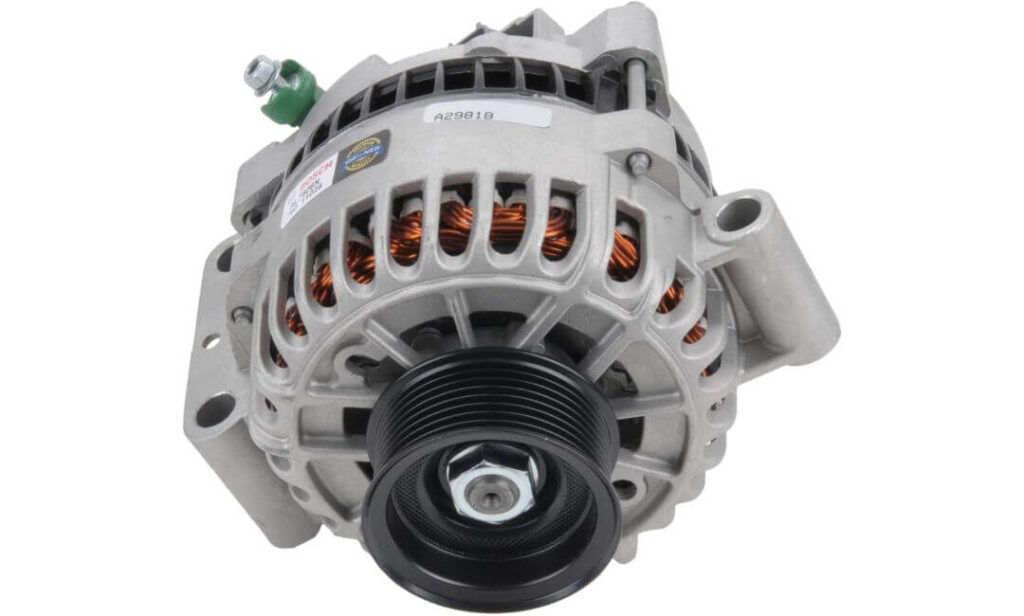
Key Specs:
- Output: 135 Amps
- Voltage: 12V
- Condition: 100% New (Not Remanufactured)
- Regulator: Internal
- Fitment: 2003–2005 6.0 Powerstroke Super Duty / 2004+ E-Series
- Warranty: Lifetime (varies by seller)
When a 6.0 owner says, “I just want it back to factory reliability — nothing fancy,” this is usually the direction experienced techs point them in. The Bosch AL7606N isn’t built to chase big amp numbers — it’s built to deliver stable, OE-grade charging the way these trucks were originally engineered to run.
Where it earns respect is internal build quality. This isn’t a reman unit with reused casings or recycled regulators — it’s fully new, built with OE-spec windings, bearings, and rectifiers designed to survive high-heat diesel engine bays. Voltage delivery stays clean and consistent, which matters more than people realize on a 6.0 — especially for FICM health and battery longevity.
Fitment is exactly what you’d expect from a Tier-1 supplier. Mounting ears line up perfectly, pulley alignment stays true, and wiring connections seat without resistance. No grinding, no bracket persuasion — it installs the way a factory alternator should. For stock trucks or work fleets that prioritize reliability over electrical upgrades, this unit brings the charging system back to baseline without introducing unnecessary stress on belts or wiring.
And while 135 amps may sound “average” on paper, it’s more than enough for unmodified trucks running factory electrical loads — provided batteries and cables are healthy.
Why It Stands Out for 6.0 Owners
- True OEM-grade voltage stability (ideal for FICM-sensitive trucks)
- 100% new internals — no reman wear components
- Built for high-heat diesel engine bay durability
- Factory-correct output for stock electrical systems
Pro Tip — When OEM Output Is the Smarter Choice
If your 6.0 is bone stock — no plow, no winch, no auxiliary lighting — jumping to high-output amperage can actually shorten belt life and add unnecessary load to the charging circuit. A properly built OEM-amp alternator like this keeps system balance intact, charges batteries efficiently, and runs cooler under normal duty cycles. Sometimes “stock output, built better” is the longer-lasting fix.
#3. Mechman 240 Amp
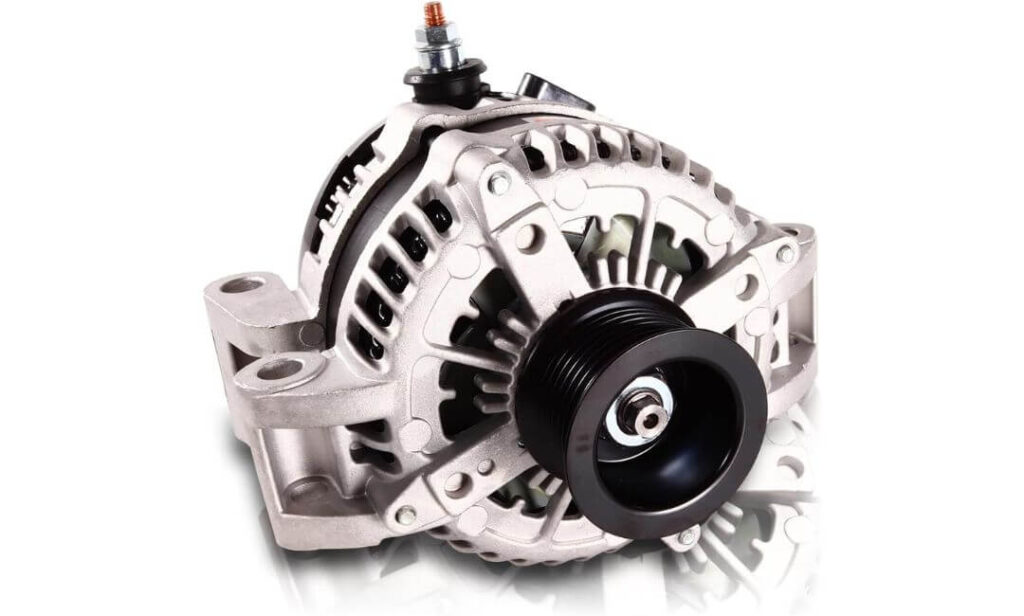
Key Specs:
- Output: 240 Amps (180+ Amps at Idle)
- Voltage: 12V
- Stator Design: 6-Phase Hairpin
- Rectification: Twin Rectifier Plates / 12 Diodes
- Belt Compatibility: Uses OEM Belt Length
- Wiring: Plug-and-Play Harness Adapter Included
- Fitment: 2003–2007 6.0 Powerstroke F-250 / F-350 (Also fits select 7.3L)
If your 6.0 Powerstroke runs more electrical load than Ford ever planned for, this is where you stop thinking “replacement” and start thinking “charging system upgrade.” The Mechman 240-amp unit is built for trucks that live on accessories — plow rigs, tow builds, service trucks, audio setups — the kind of electrical demand that cooks factory alternators in a year.
The difference shows up instantly at idle, which is exactly where diesel trucks struggle most. With 180+ amps available without revving the engine, voltage stays steady even when glow plugs cycle, batteries recover, and multiple accessories are pulling simultaneously. Internally, this alternator is a different animal — 6-phase hairpin stator, oversized rectifiers, and heavy-duty diodes designed to survive sustained heat and load, not just short bursts. And despite the output jump, it still runs the stock belt length — no pulley math or tensioner stress.
Why It Stands Out for 6.0 Owners
- Massive idle output (critical for diesel charging stability)
- Handles plows, winches, lighting, and onboard equipment effortlessly
- Heavy-duty internal architecture built for heat & sustained load
- OEM belt compatibility keeps install simple
Pro Tip — Unlock Its Real Output
High-output alternators are only as strong as the wiring behind them. If you install a 240-amp unit on factory charge cables, you’re bottlenecking its performance. Run 0-gauge power and ground from alternator to batteries — voltage drop disappears, idle charging improves, and the alternator runs cooler under load. It’s the upgrade that makes the upgrade actually work.
#4. SCITOO 8478
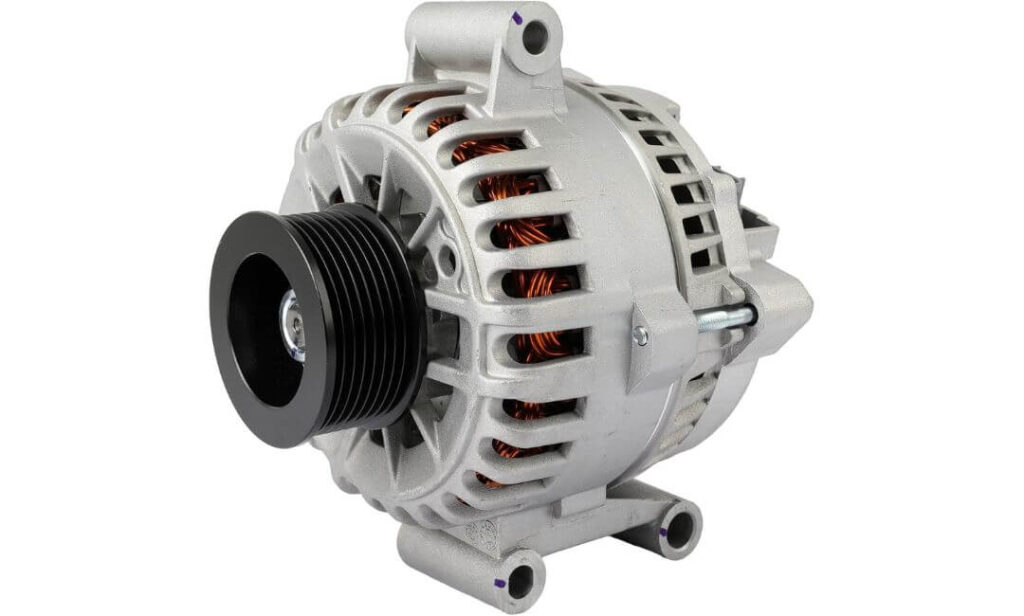
Key Specs:
- Output: 135 Amps
- Voltage: 12V
- Rotation: CW
- Pulley Class: S8
- Regulator: Internal (IR)
- Fan Type: Internal (IF)
- Condition: 100% New
- Fitment: 2005–2007 6.0 Powerstroke F-250 / F-350 / F-450 / F-550
If your factory alternator just gave up and you need something that gets the truck charging again without draining the wallet, the SCITOO 8478 sits right in that practical middle ground — stock output, direct fit, no unnecessary extras… just a clean replacement that does the job it’s supposed to do.
Output stays right in the factory range at 135 amps, which means it works exactly the way Ford designed the system to operate. Voltage regulation is stable, startup charging is consistent, and once installed, trucks typically settle into the 14.2–14.4V range under normal load — right where a healthy 6.0 charging system should live. For daily drivers, work commuters, or trucks running factory electrical demand, that’s all you really need.
Installation is straightforward — OEM pulley class, internal regulator, factory plug orientation — so there’s no wiring adaptation or belt alignment guesswork. As long as belt tension is set correctly and battery condition is solid, it behaves like a stock alternator should. It’s compact, lightweight, and fully compatible with the truck’s electronics, which keeps PCM and FICM voltage signals clean.
Why It Stands Out for 6.0 Owners
- Factory-correct 135A output for stock electrical systems
- Stable 14V+ charging range once installed
- Direct OEM replacement (no wiring or pulley changes)
- Budget-friendly option that restores charging reliability
Pro Tip — Make Budget Alternators Last Longer
Most early alternator failures on 6.0 trucks aren’t build quality — they’re belt tension and battery load issues. If the serpentine belt is even slightly loose, it slips under glow plug load and overheats the alternator pulley and bearings. Set proper belt tension, verify both batteries are balanced, and a stock-amp unit like this will last far longer than most expect.
#5. BDFHYK Alternator
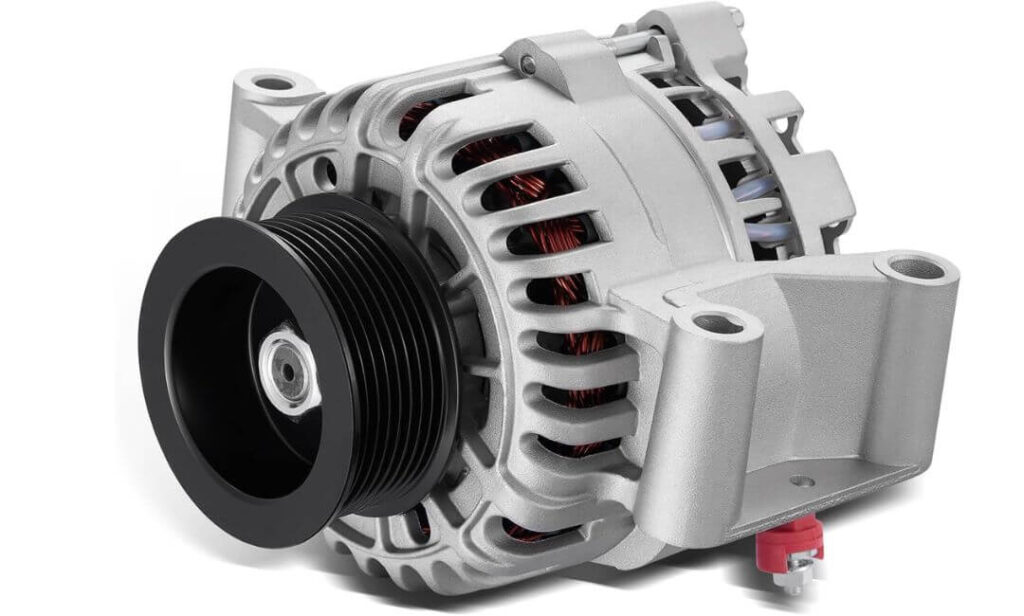
Key Specs:
- Output: 110 Amps
- Voltage: 12V
- Rotation: CW
- Pulley Class: S8
- Clock Position: 2:30
- Regulator: Internal (IR)
- Fan Type: Internal (IF)
- Fitment: 2003–2007 6.0 Powerstroke Super Duty / Excursion / E-Series
If your goal isn’t upgrading output but simply getting your 6.0 back to factory charging condition, this BDFHYK unit fits that role cleanly. Rated at 110 amps, it mirrors early OEM alternator output — which makes it ideal for stock trucks that haven’t added electrical load beyond factory systems.
Where this alternator earns its place is basic reliability under normal diesel duty cycles. It delivers steady battery charging, maintains consistent voltage to engine electronics, and handles daily start-run-charge routines without stressing the belt system. Internally regulated, internally cooled, and built with OE-style housings, it installs without pulley swaps or wiring changes. For work trucks, fleet units, or budget-conscious repairs, it restores charging function without overcomplicating the system.
Why It Stands Out for 6.0 Owners
- Factory-correct 110A output for early OEM charging systems
- Wide Super Duty + Excursion + E-Series compatibility
- Stable voltage delivery for stock electronics & batteries
- Direct OE replacement with no install modifications
Pro Tip — When Stock Output Is All You Need
If your truck runs zero aftermarket accessories and spends most of its life commuting, towing light, or job-site idling, higher amperage won’t improve reliability — it just adds heat and load. A properly built stock-amp alternator paired with healthy dual batteries often lasts longer because it operates within its designed duty cycle instead of being pushed constantly.
Best Alternator for 6.0 Powerstroke — Side-by-Side Specs & Output Breakdown
| Alternator | Output | Idle Performance | Fitment Years | Electrical Load Handling | Install Type | Best Use Case |
|---|---|---|---|---|---|---|
| DB Electrical 400-14178 | 180A | Strong | 2003–2007 | Moderate Upgrades | Plug & Play | Daily + Light Mods |
| Bosch AL7606N | 135A | OEM Stable | 2003–2005 | Stock Only | Direct Fit | Factory Reliability |
| Mechman 240A | 240A | Extreme (180A Idle) | 2003–2007 | Heavy Accessories | Harness Included | Plow / Winch / Audio |
| SCITOO 8478 | 135A | Good | 2005–2007 | Stock / Light Load | OEM Replacement | Budget Repair |
| BDFHYK 8306 | 110A | Factory Level | 2003–2007 | Stock Only | Direct Fit | OEM Restore |
Which Alternator Is Right for Your 6.0 Powerstroke? (Stock vs High-Output Charging Needs Explained)
Here’s the part most buyers get wrong — they shop amperage numbers instead of shopping their truck’s actual electrical demand.
A 6.0 Powerstroke doesn’t kill alternators because they’re “bad”… it kills them because they’re undersized for how the truck is being used. Dual batteries, glow plug cycling, FICM voltage sensitivity — that’s baseline load before you’ve added a single accessory. So choosing the right unit isn’t about buying the biggest alternator you can afford — it’s about matching output to real-world usage.
Let’s break it down the same way a diesel shop would when a truck rolls in with charging issues.
If Your Alternator Simply Failed (Stock Truck, No Mods)
If the truck is electrically factory — no auxiliary lighting, no plow, no winch, no inverter — you don’t need high-output amperage. You need stable, OE-level charging that keeps batteries healthy and electronics supplied without overworking the belt system.
This is where stock-output replacements make the most sense:
- 110–135 amp range is sufficient
- Voltage stays consistent under factory load
- Less heat stress on internal components
- Longer service life in daily driving conditions
Units like the Bosch, SCITOO, and BDFHYK replacements fall into this category — they restore the charging system to how Ford originally engineered it to operate.
For commuters, fleet trucks, or work rigs running factory equipment only, staying near OEM amperage is the smarter long-term move.
If You’ve Added Light Electrical Mods
The moment you add auxiliary lighting, upgraded audio, onboard air, or bed power systems, the factory alternator starts living at high duty cycle — meaning it’s working near maximum output most of the time.
That’s when stepping into the 180-amp range makes sense.
You’re not overbuilding — you’re adding charging headroom so the alternator isn’t constantly maxed out. Voltage recovers faster after starts, batteries recharge quicker, and idle charging stays more stable when accessories are running.
This is exactly where a unit like the DB Electrical 180A upgrade fits — stronger than stock, but still plug-and-play without requiring wiring overhauls.
If Your Truck Runs Heavy Electrical Equipment
Snow plows, winches, service bodies, tow lighting, inverters, compressors — these aren’t “accessories”… they’re continuous electrical loads.
And continuous load is what destroys factory alternators fastest.
At that point, a stock or mid-output unit will survive — but it’ll run hot, stay near peak output, and wear prematurely. High-output systems are built specifically to prevent that by producing large amperage at idle, where diesel trucks spend most of their working life.
That’s where 240-amp class alternators come in.
They don’t just produce more peak output — they produce usable output at low RPM, which keeps voltage stable even when multiple systems are drawing power simultaneously.
The One Factor Most Owners Overlook
Battery condition.
A new alternator connected to weak or unbalanced dual batteries will operate at maximum recovery load constantly. That heat and stress shortens regulator and diode life fast — even on premium units.
Before installing any alternator upgrade:
- Load test both batteries
- Check ground integrity
- Inspect charge cables for resistance
Because charging system performance is never just the alternator — it’s the entire circuit working together.
Real-World Rule of Thumb
- Stock truck → Stay OEM amperage
- Mild mods → Step to ~180A
- Heavy equipment → Go 240A+
- Weak batteries → Fix first, upgrade second
Match the alternator to the truck’s workload, not the marketing label — and you’ll fix the charging problem once instead of chasing it every year.
Signs Your 6.0 Powerstroke Alternator Is Failing (Before It Leaves You Stranded)
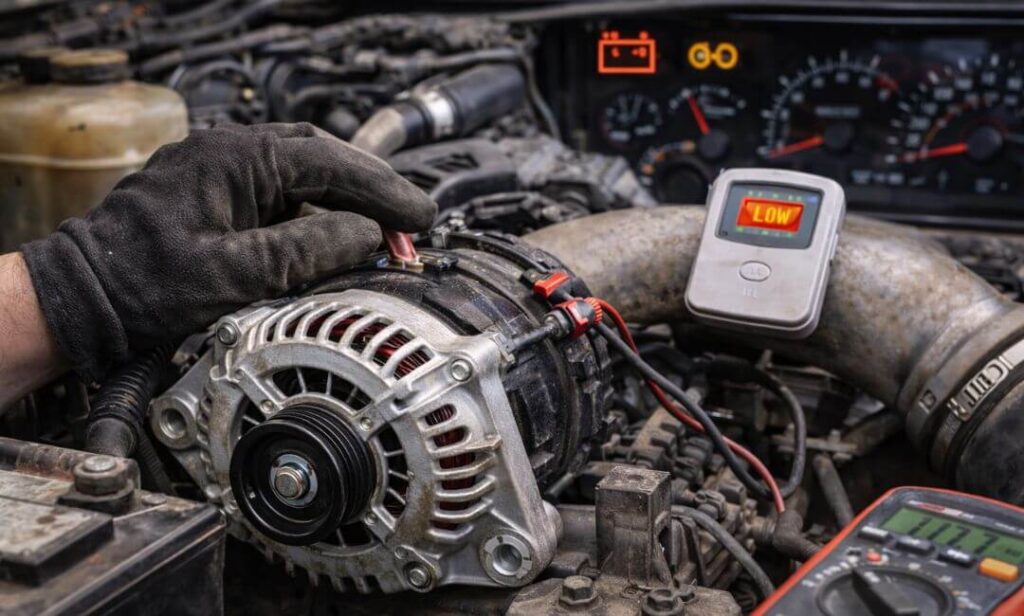
Alternators on the 6.0 rarely fail without warning — the problem is, most owners miss the signs because the truck still starts… until the day it doesn’t.
Charging issues on these diesels show up subtly first, then escalate fast once voltage drops below what the FICM and dual-battery system need to stay stable. And unlike gas trucks, low voltage here doesn’t just mean a dead battery — it can trigger rough starts, injector misfires, and electronic faults that feel unrelated until you trace them back to charging output.
Here’s what experienced diesel techs look for before the alternator completely gives up.
Slow or Dragging Cold Starts
If the truck cranks slower in the morning but batteries test “okay,” the alternator may not be fully recharging them after each drive.
On a 6.0, glow plugs pull heavy amperage during cold starts. If the alternator isn’t restoring that draw efficiently, batteries slowly weaken day by day — until cranking speed drops noticeably.
It’s one of the earliest warning signs.
Headlights Dimming at Idle
Watch your headlights or cab lighting while idling with accessories on.
If brightness dips when the blower motor kicks on or when you turn the wheel (hydroboost load), that’s voltage fluctuation — usually caused by weak idle output.
Healthy alternators keep lighting stable even under accessory load.
Battery Light or Charging System Warning
This one sounds obvious, but on 6.0 trucks it often comes late — sometimes only after voltage has already dropped enough to affect electronics.
If the battery light flickers intermittently instead of staying solid, that usually points to regulator instability or diode failure inside the alternator.
Electrical Accessories Acting “Lazy”
Power windows slow down. Radio cuts out at idle. HVAC speed fluctuates.
None of these feel like alternator problems at first — but they’re all voltage-dependent systems reacting to inconsistent charging output.
Diesel trucks demand stable voltage more than high voltage.
FICM Voltage Drop (Advanced Sign)
For owners monitoring with a scan tool or Edge monitor — FICM voltage should hold in the 47–48V range.
If it dips during cranking or idle, charging instability is often the root cause. Alternator output directly affects how well the FICM maintains injector firing voltage.
This is where charging issues start turning into drivability problems.
Batteries Dying Prematurely
If you’ve replaced batteries more than once within a short period, stop blaming the batteries.
An underperforming alternator forces them to handle electrical demand alone — meaning deeper discharge cycles and shorter lifespan.
Repeated battery failure is often the alternator’s fault upstream.
Real Shop Insight
By the time most 6.0 trucks come in for alternator replacement, they’ve already been running low-voltage conditions for weeks — sometimes months.
The alternator didn’t fail overnight… it stopped keeping up, and everything downstream absorbed the damage.
Catching these signs early saves batteries, FICM stress, and a roadside tow.
How Many Amps Does a 6.0 Powerstroke Actually Need? (Charging Demand Explained)
This is where a lot of alternator upgrades go wrong — not because the part is bad, but because the amp rating was chosen blindly.
Bigger isn’t always better on a charging system. And smaller definitely isn’t safer. The right amperage depends entirely on how your 6.0 is used day to day — because electrical demand on these trucks varies wildly between a stock commuter and a fully equipped work rig.
Factory engineers sized the original alternator to handle baseline diesel load: dual batteries, glow plug cycles, FICM voltage demand, PCM systems, and standard lighting. That’s your starting point — not your upgrade ceiling.
Let’s break real amp needs down the way charging systems are evaluated in diesel shops.
Stock Electrical Load (Factory Truck)
If your truck is electrically untouched — factory lighting, stock stereo, no power inverters, no plow prep — the charging demand stays within OEM design limits.
Typical load includes:
- Dual battery recharge after start
- Glow plug cycling
- HVAC system
- Factory electronics
- Standard towing lights
For this setup, 110–135 amps is fully sufficient.
The alternator isn’t working at peak capacity constantly, which keeps heat down and extends internal component life. OEM-amp units survive longest in this environment because they’re operating within intended duty cycle.
Moderate Electrical Load (Lightly Modified Trucks)
Now add real-world upgrades most 6.0 owners eventually install:
- LED light bars
- Auxiliary reverse lighting
- Upgraded audio systems
- Bed power outlets
- Onboard air compressors
None of these are extreme individually — but together, they increase continuous draw on the charging system.
That’s when stepping into the 160–180 amp range becomes practical.
The alternator gains enough overhead to recharge batteries faster, stabilize idle voltage, and prevent the system from operating near maximum output constantly.
This is the sweet spot for daily-driven trucks with functional upgrades.
Heavy Electrical Load (Work & Equipment Trucks)
This is where factory amperage simply stops being realistic.
Examples:
- Snow plows
- Hydraulic salt spreaders
- Electric winches
- Service body inverters
- Emergency lighting
- Tow rigs with trailer power demand
These accessories pull sustained amperage — not momentary spikes. And sustained load is what overheats regulators, stators, and rectifiers inside stock alternators.
For trucks operating in this category, 240 amps or higher isn’t overkill — it’s preventive reliability.
High-output units produce large amperage at idle, where work trucks spend most of their time running equipment.
Idle Output Matters More Than Peak Output
Here’s the spec most buyers overlook:
Peak amperage is measured at higher RPM — but diesel trucks do most electrical work at idle.
Plow trucks, tow rigs, service vehicles — they sit running.
So an alternator that produces:
- 240A peak but only 90A at idle → struggles
- 240A peak with 180A at idle → stays stable
Idle output is what keeps lights bright, batteries charging, and electronics stable while the truck isn’t moving.
Quick Real-World Amp Guide
- Stock truck: 110–135A
- Light accessories: ~180A
- Heavy equipment: 240A+
- Dual alternators: Extreme load setups
Choosing amperage based on actual electrical demand — not marketing numbers — is what prevents repeat failures and charging instability.
Because on a 6.0 Powerstroke, the alternator isn’t just maintaining batteries… it’s supporting the entire electronic backbone of the engine.
Alternator Buying Guide for 6.0 Powerstroke (What Actually Matters Before You Order)
By the time most owners reach this point, they’ve already decided they need an alternator — the real question now is whether the one they buy will last… or put them right back under the hood six months later.
Because on a 6.0 Powerstroke, alternator lifespan isn’t just brand-dependent — it’s spec, build quality, and system compatibility working together.
Here’s what experienced diesel techs look at before recommending any unit.
1. Amperage vs Actual Electrical Load
Don’t size the alternator to the truck’s badge — size it to the truck’s workload.
A stock commuter running factory electronics doesn’t benefit from extreme output. But a plow truck or tow rig running auxiliary power will burn through OEM amperage fast.
Match output to use:
- Stock truck → 110–135A
- Light upgrades → ~180A
- Heavy equipment → 240A+
Right-sizing output keeps the alternator operating below max duty cycle — which is what extends regulator and diode life.
2. Idle Charging Performance
Peak amp ratings look good on paper, but idle output is what keeps voltage stable in real diesel use.
These trucks idle while:
- Glow plugs cycle
- Batteries recover
- Accessories run
- Equipment operates
A high-output alternator with weak idle amperage defeats its own purpose. Look for units known to maintain strong output at low RPM — especially if the truck works, tows, or idles frequently.
3. Internal Build Quality
This is where longevity is decided.
Better alternators use:
- Heavy-duty rectifier plates
- Heat-resistant regulators
- High-temp windings
- Oversized bearings
Cheap units may match amperage ratings but fail earlier because internal components can’t survive sustained diesel heat and electrical load.
Build quality matters more than branding.
4. Wiring & Cable Capacity
Upgrading amperage without upgrading wiring is like installing a larger fuel pump through a restricted line.
Factory charge cables weren’t designed for 200+ amp output. High-output alternators perform best when paired with heavier-gauge power and ground wiring — reducing voltage drop and heat buildup.
It’s not mandatory for mid-output upgrades, but critical for 240A+ systems.
5. Fitment & Pulley Alignment
Direct-fit units save install time and prevent belt wear issues.
Always verify:
- Pulley class (S8 on most 6.0 setups)
- Clock position
- Mount ear spacing
- Dual alternator position (top vs bottom)
Misalignment leads to belt noise, premature bearing wear, and charging inefficiency — even if the alternator itself is new.
Real-World Bottom Line
Alternators don’t fail early because they’re defective — they fail because they’re undersized, overheated, or electrically overworked.
Choose output based on demand.
Support it with healthy batteries.
Install it on a solid charging circuit.
Do that once, and you won’t be replacing the same part again next winter.
FAQs — 6.0 Powerstroke Alternator Upgrades & Replacement
How long does an alternator typically last on a 6.0 Powerstroke?
On average, factory alternators last somewhere between 80K–120K miles — but lifespan depends heavily on electrical load and battery health. Trucks running plows, winches, or auxiliary lighting usually see shorter alternator life because the unit operates under constant high demand. Heat and sustained output wear down internal regulators and diodes faster than mileage alone.
Is upgrading to a high-output alternator safe for a stock truck?
Yes — but it isn’t always necessary. A high-output unit won’t harm the truck’s electrical system because voltage is still regulator-controlled. However, if the truck runs factory electronics only, the upgrade mainly adds unused capacity. High-output systems make more sense when accessories or equipment increase charging demand.
Do I need to upgrade batteries when installing a new alternator?
If the batteries are more than a few years old, load testing them is strongly recommended before installing a new alternator. Weak or sulfated batteries force the alternator to work harder during recharge cycles, which increases heat and shortens component life. Healthy batteries allow the alternator to operate within normal duty range.
How long does alternator replacement take on a 6.0 Powerstroke?
For single-alternator trucks, replacement usually takes 1–2 hours with standard tools. Dual-alternator setups may take longer depending on which unit is being replaced and how much front-end access is available. Belt routing and upper fan shroud clearance are typically the only time-consuming parts of the job.
Can a failing alternator cause injector or starting issues?
Indirectly, yes. The 6.0’s FICM relies on stable voltage to fire injectors correctly. If alternator output drops and battery voltage falls with it, injector performance can suffer — leading to rough starts, misfires, or hard cranking. Charging stability plays a bigger role in drivability than many owners realize.
Should I replace both alternators on a dual-alternator setup?
Not always — but it depends on mileage and wear balance. If one alternator fails significantly earlier than the other, replacing just the failed unit is fine. However, on high-mileage trucks where both units have seen equal load, replacing them as a pair prevents uneven charging performance and repeat labor later.
Final Thoughts — Fix It Once, Charge Right Thereafter
If there’s one thing long-time 6.0 owners learn the hard way, it’s this — charging problems don’t stay isolated. What starts as a weak alternator slowly turns into dead batteries, rough cold starts, voltage-sensitive injector issues, and electronics that never seem to behave the same twice.
And most of the time, the alternator didn’t “fail suddenly”… it just stopped keeping up.
That’s why choosing the right replacement isn’t about brand hype or the highest amp number on the box — it’s about how the truck actually lives. A stock daily driver doesn’t need extreme output, but a plow rig or tow truck absolutely does. Matching amperage to workload is what keeps regulators cool, batteries healthy, and voltage stable where the 6.0 needs it most.
Every unit in this guide was chosen around that real-world logic — from factory-level replacements that restore baseline charging reliability to high-output builds that handle sustained electrical demand without breaking a sweat.
So before you order, think about how your truck works:
- How much idle time it sees
- What accessories draw power
- How often batteries recover from deep starts
Size the alternator to that reality — not guesswork — and you’ll solve the problem once instead of revisiting it every winter.
Because when the charging system is right on a 6.0 Powerstroke, everything else — starting, voltage stability, injector performance — tends to fall back into place exactly the way it should.


