
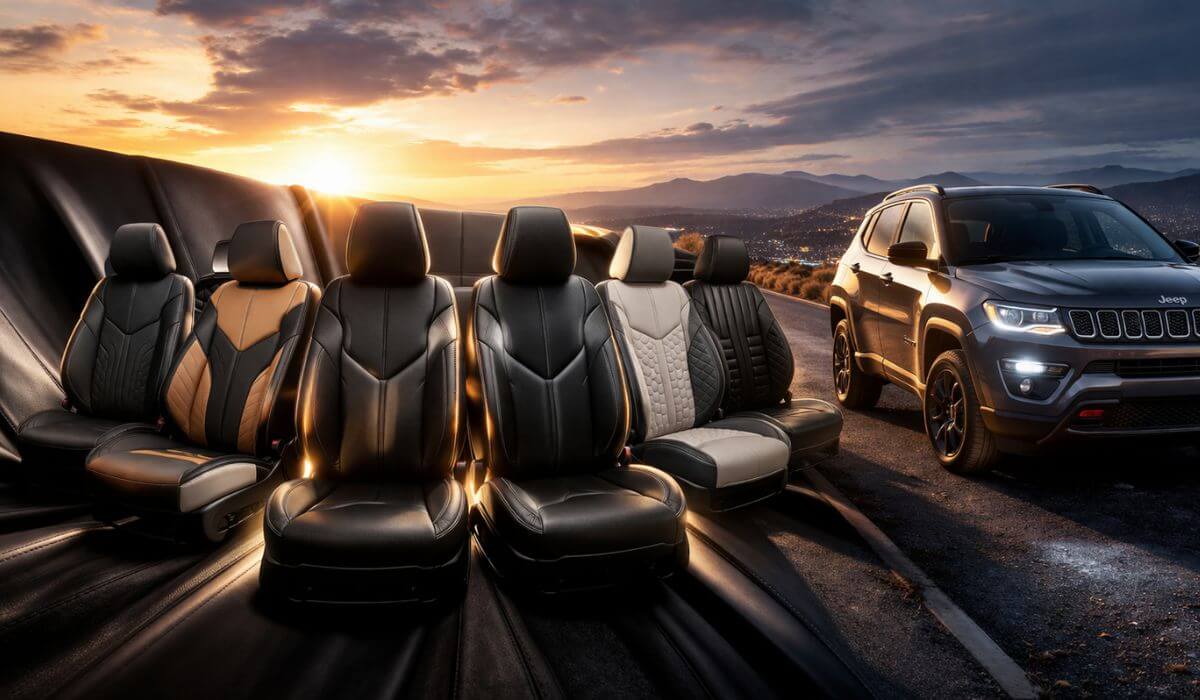
6 Best Seat Covers for Jeep Compass in 2026: Custom-Fit Luxury, Airbag-Safe Stitching & Sweat-Proof Comfort
If you drive a Jeep Compass, you already know—this isn’t just another compact SUV you forget in a parking lot. It’s the one you take on long highway runs, dusty village roads, late-night drives when the cabin matters more than the destination. And that’s exactly where most stock interiors start to fall apart—creases show up early, fabric traps heat, and one careless spill turns into a permanent mark.
I’ve spent time around Compass interiors long enough to know this: the wrong seat cover ruins the experience just as fast as the right one elevates it. Loose fits slide around, cheap leather cracks in months, and many “universal” covers simply don’t respect the Compass’ seat shape or airbag placement. What actually works here is simple—tight bucket-style fit, breathable layers for Indian heat, and stitching that doesn’t interfere with safety.
The six options below aren’t random picks. They’re chosen around what Compass owners actually deal with daily—heat, dust, long drives, and the need for a cabin that still feels premium after a year. Some are newer in the market, yes—but the materials, fit design, and construction tell you more than early reviews ever will. If you care about how your Compass looks and feels every single day, this list will make sense the moment you read it.
Best Jeep Compass Seat Covers: Top 2026 Picks That Actually Fit, Last & Feel Right Daily
#1. JIAMAOXIN Full Set Seat Covers — custom-fit faux leather waterproof seat covers for Jeep Compass
#2. Banklif Full Set Seat Covers — breathable leather seat covers for Jeep Compass with airbag compatibility
#3. AOMSAZTO Custom Fit Seat Covers — two-tone waterproof seat covers for Jeep Compass with tailored bucket fit
#4. CTDS Nappa Leather Seat Covers — premium nappa leather seat covers for Jeep Compass (sport style front set)
#5. Conjie Full Set Leather Covers — all-weather leather seat covers for Jeep Compass with breathable layers
#6. FQFZYMX Upgraded Seat Covers — waterproof breathable leather seat covers for Jeep Compass full set (2026 ready)
Expert Tip Before You Pick
Most people get this wrong—they shop by look first, fit later. That’s exactly how you end up with covers that look great in photos but start shifting, creasing, and heating up within weeks.
On the Jeep Compass, the seat contour is not forgiving. If the cover isn’t shaped right, you’ll feel it every single time you take a corner or adjust your posture on a long drive. The smarter move is to prioritize fit and layer quality first, then worry about color and finish.
Also, don’t ignore heat. A lot of “leather” options trap warmth and feel fine for the first 10 minutes—after that, you start adjusting yourself every few minutes. What actually works in real conditions is a slightly breathable build with tight stitching, not overly thick padding.
And one more thing most people overlook—installation decides 50% of the result. Even a good cover looks cheap if it’s loosely installed. Take the extra time or get it fitted properly once, and it will feel like it came with the car.
How We Chose These Seat Covers for Jeep Compass
There’s a reason this list looks the way it does. It’s not built on hype, brand names, or early reviews—it’s built on what actually holds up inside a Compass over time.
First, we filtered out anything that didn’t offer a true Compass-compatible fit. This SUV has distinct seat bolstering and airbag placement, and most generic covers simply don’t sit right. Every option here either follows a bucket-style pattern or a close custom fit approach, which means it stays in place without constant adjustment.
Next came material honesty. Instead of chasing “premium” labels, we looked at how each material behaves in real use. Faux leather, Nappa-style finishes, and layered leatherette builds were only considered if they showed balanced durability and day-to-day usability—not just showroom appeal. That’s why you’ll notice a mix here: some covers lean toward a cleaner luxury finish, while others focus on all-weather practicality and breathability.
We also paid close attention to stitching and safety alignment. Airbag compatibility isn’t just a checkbox—it depends on how the side seams are constructed. The selections here avoid heavy, rigid stitching in critical zones and instead use controlled seam release designs, which matter more than most listings explain.
Another factor that shaped this list is real driving conditions. Dust, heat, long highway hours—these aren’t edge cases, they’re everyday reality. So covers that felt overly thick, heat-trapping, or prone to surface wear didn’t make it. What stayed were options that could handle daily use without constant maintenance or early fatigue.
And finally, we didn’t ignore the fact that many of these are newer entries with limited long-term reviews. Instead of guessing, we focused on build logic—how the material is layered, how the panels are cut, and how the finish is done. These details tell you more about longevity than early feedback ever can.
The result is a list that doesn’t chase trends—it respects how the Jeep Compass is actually used. And when you look at it that way, the choices start to make sense immediately.
#1. JIAMAOXIN Full Set Seat Covers
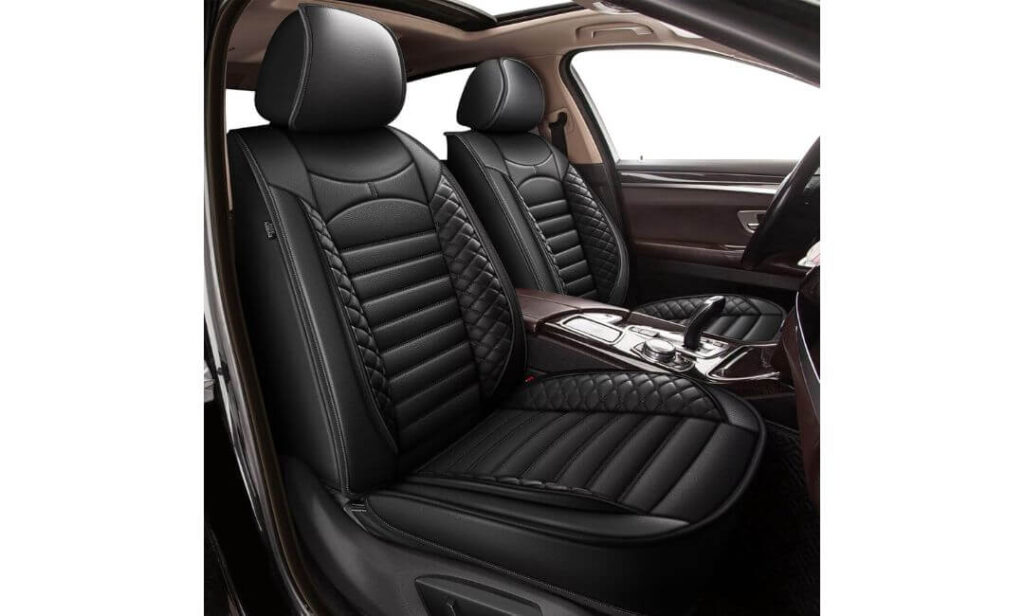
Quick Specs:
- True custom fit for Jeep Compass (2012–2026) — not a loose universal throw-on
- 360° full-wrap design with tight edge finishing (no exposed seat corners)
- High-grade faux leather — waterproof, dustproof, UV-resistant surface
- 3D flank support panels — holds your body in place on turns
- Airbag-safe stitching with controlled seam release
- Full set (2 rows / 5 seats) — consistent cabin look front to rear
- 10–20 min install — no seat removal needed
You notice it the moment you sit down—this isn’t that loose, sliding cover most people regret after a week. The wrap sits tight, almost like it was stitched around the seat itself. No bunching near the thighs, no awkward folds near the backrest—just a clean, planted feel that actually matches the Jeep Compass cabin instead of fighting it.
The material choice makes more sense the longer you use it. The faux leather here isn’t trying to be overly soft or flashy—it’s built to handle daily abuse. Spills don’t soak in, dust doesn’t stick, and even after a long, sweaty drive, it wipes clean with almost no effort. That matters more than anything when you’re using the car every day, not just admiring it on weekends.
Where it quietly stands out is support. That 3D flank design isn’t marketing fluff—you feel it when the road curves or when you’re driving longer than usual. Your body stays centered instead of shifting around, which most flat covers fail at. Add the 360° wrap, and you get protection that actually covers the parts that wear out first—edges, corners, and side bolsters. (It’s one of those setups that doesn’t try too hard—but ends up doing everything right once you live with it.)
What Stood Out in Real Use
- Tight, no-slide fit — stays in place even after weeks of daily driving
- Easy-clean surface — wipe-and-go practicality (no deep cleaning stress)
- Edge protection done right — corners don’t crack or fade early
- Balanced feel — not too soft, not heat-trapping thick
- Full cabin consistency — rear seats don’t feel like an afterthought
Where It Could Be Better
- Faux leather finish leans more practical than ultra-premium luxury feel
Jeep Compass Fitment & Compatibility
This setup is clearly built with the Compass seat shape in mind. The way it hugs the bolsters, aligns with the headrests (removable required), and doesn’t interfere with seatbelt slots—it all feels intentional. Not once do you get that “adjust it again” irritation that comes with generic covers.
The airbag compatibility is handled properly through controlled stitching, not just claims. That’s important, because poorly designed seams are where most covers fail in real scenarios. Here, the structure respects both safety zones and seat geometry, which is exactly what you want in a daily-driven Compass.
The Insider Pro-Tip:
If you want this to feel like a factory upgrade instead of an add-on, don’t rush the install. Take an extra 5–10 minutes to pull the wrap tight around the seat base and lock the edges properly—that’s where most people get lazy. Do it once, do it right, and this won’t just look better… it’ll stay that way every time you get in.
#2. Banklif Full Set Seat Covers
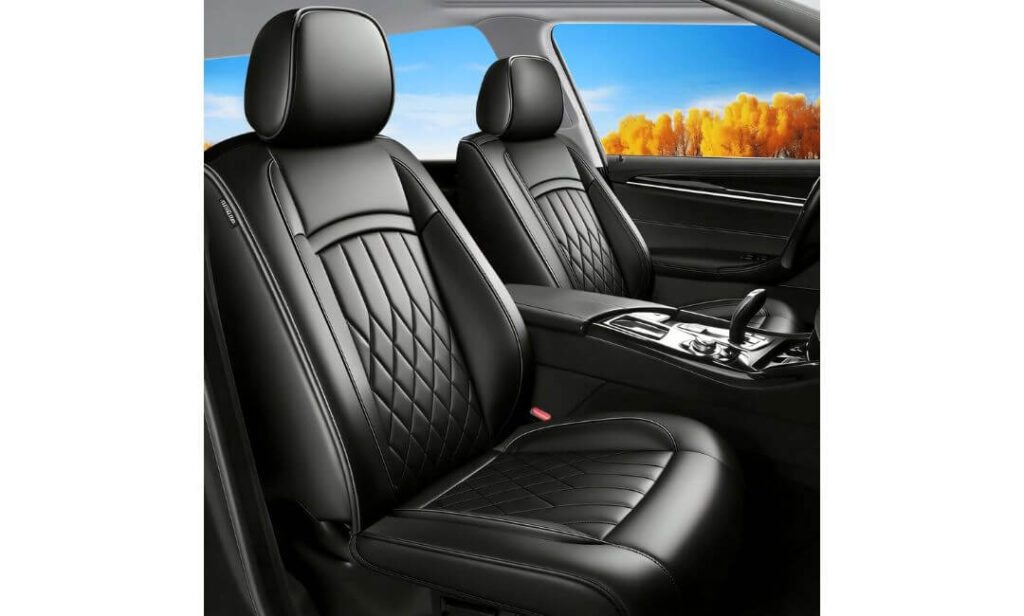
Quick Specs:
- Vehicle-specific custom fit (Jeep Compass 2012–2026) — no loose universal gaps
- Premium synthetic leather surface — temperature-resistant, soft year-round
- Waterproof + anti-slip base — stays planted, handles spills easily
- Breathable layer build — avoids that sticky, heat-trap feel
- Reinforced stitching — built for daily wear (kids, pets, long drives)
- Airbag & seatbelt compatible design — no function interference
- Full set (5 seats) — complete cabin coverage
- Quick install (10–15 min) with guided steps
This is the kind of seat cover you notice after a few drives, not just the first impression. It doesn’t scream luxury the moment you install it—but once you start using your Jeep Compass daily, you realize how balanced everything feels. No sliding when you get in, no constant adjustments, no awkward pulling at the edges—it just sits where it’s supposed to.
The real strength here is in the material behavior. That synthetic leather layer is designed to handle temperature swings better than most budget covers. It doesn’t turn stiff in the morning or overly sticky in the afternoon. Add the breathable structure underneath, and you avoid that trapped heat feeling that ruins long drives. It’s subtle, but once you experience it, you won’t go back to basic leatherette.
Where it quietly wins is durability. The reinforced stitching and anti-slip base make a difference when the car is actually being used—kids climbing in, bags sliding around, daily commutes that don’t care about “premium feel.” It holds up without looking tired too quickly, and the waterproof surface keeps maintenance simple. (It’s not trying to impress in photos—it’s built to survive real ownership without becoming a headache.)
What Stood Out in Real Use
- No-gap custom fit — sits clean without constant readjustment
- Breathable comfort layer — noticeably better on longer drives
- Stable anti-slip base — doesn’t shift when getting in/out
- Handles rough use well — kids, pets, daily wear included
- Low-maintenance finish — quick wipe, no deep cleaning needed
Where It Could Be Better
- Finish is more understated than premium-luxury styled
Jeep Compass Fitment & Compatibility
This setup respects how the Compass seats are actually shaped. The covers align well with the bolsters, headrest layout, and seatbelt slots—so nothing feels forced or stretched into place. Once installed properly, it blends in instead of looking like an add-on.
Safety-wise, the airbag zones are kept clear through smart stitching placement, not bulky padding. That matters more than anything because a poorly designed seam can interfere in real situations. Here, everything feels thought-through for actual driving conditions, not just product listings.
The Insider Pro-Tip:
If your daily driving includes heat, traffic, and long hours behind the wheel, don’t fall for overly thick or flashy covers. What you want is exactly this kind of breathable, stable setup—something that disappears under you while driving instead of constantly reminding you it’s there. Install it tight once, and you’ll stop thinking about seat covers altogether… which is exactly how it should be.
#3. AOMSAZTO Custom Fit Seat Covers
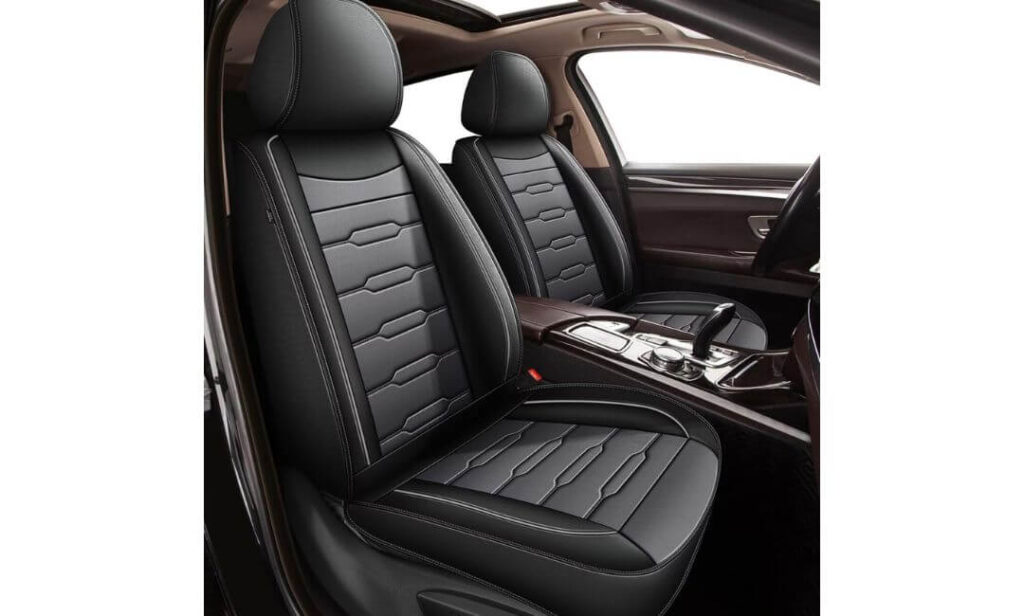
Quick Specs:
- Precision fit for Jeep Compass (2018–2026) — tighter contour match for newer-gen seats
- Multi-layer build — faux leather + high-elastic sponge + non-woven + anti-slip base
- Waterproof leatherette surface — handles spills, sweat, and daily wear
- Airbag reserve ports — clean deployment path, no obstruction
- Split rear design (Velcro adjustable) — adapts to rear seat configuration
- Non-slip bottom + hook system — stays fixed after install
- Front + rear full set (5 seats) — consistent dual-tone finish
This is where things start feeling a bit more “designed” rather than just covered. The moment you look at it inside a Jeep Compass, that black-and-grey dual tone changes the whole cabin mood—it doesn’t just protect the seat, it gives it a sharper, more finished identity. And surprisingly, it doesn’t feel overdone. It blends in like it belongs there.
Underneath that clean look is a layered structure that actually works for long drives. The high-elastic sponge + multi-layer base isn’t about softness alone—it’s about reducing fatigue when you’re sitting for hours. You don’t sink into it, you stay supported. Combine that with the non-slip base, and you don’t get that annoying shift every time you brake or take a turn.
Where this setup gets practical is flexibility. The split rear design with Velcro adjustment means it adapts instead of forcing a one-size fit on your rear seats. Add the airbag reserve ports and clean seatbelt access, and nothing feels blocked or compromised. Maintenance stays easy too—quick wipe, done. (It’s one of those setups that quietly upgrades both look and daily comfort without demanding attention.)
What Stood Out in Real Use
- Dual-tone finish — instantly upgrades interior without looking flashy
- Layered comfort — noticeable support on longer drives
- Stable fit system — hooks + anti-slip base actually hold position
- Adjustable rear section — better fit across different seat splits
- Easy upkeep — handles spills and dust without effort
Where It Could Be Better
- Installation may need a bit more time and patience for a perfect fit
Jeep Compass Fitment & Compatibility
This one is clearly shaped for the newer Compass seats. The way it follows the seat lines, especially around the bolsters and backrest, feels more aligned than generic full sets. Once tightened properly, it doesn’t shift or wrinkle easily, which is exactly what you want in daily use.
Safety and usability are handled cleanly. The airbag reserve ports are properly placed, not just cut-outs added later. Rear seat flexibility with the Velcro system ensures you don’t lose functionality while chasing a better fit. It’s built around how the Compass is actually used—not just how it looks parked.
The Insider Pro-Tip:
When installing this one, don’t rush the rear section. Spend those extra few minutes aligning the Velcro-adjusted split properly with your seat layout—that’s what gives it that tight, factory-like finish. Get that right, and the whole cabin suddenly feels more “put together” every time you open the door.
#4. CTDS Nappa Leather Seat Covers
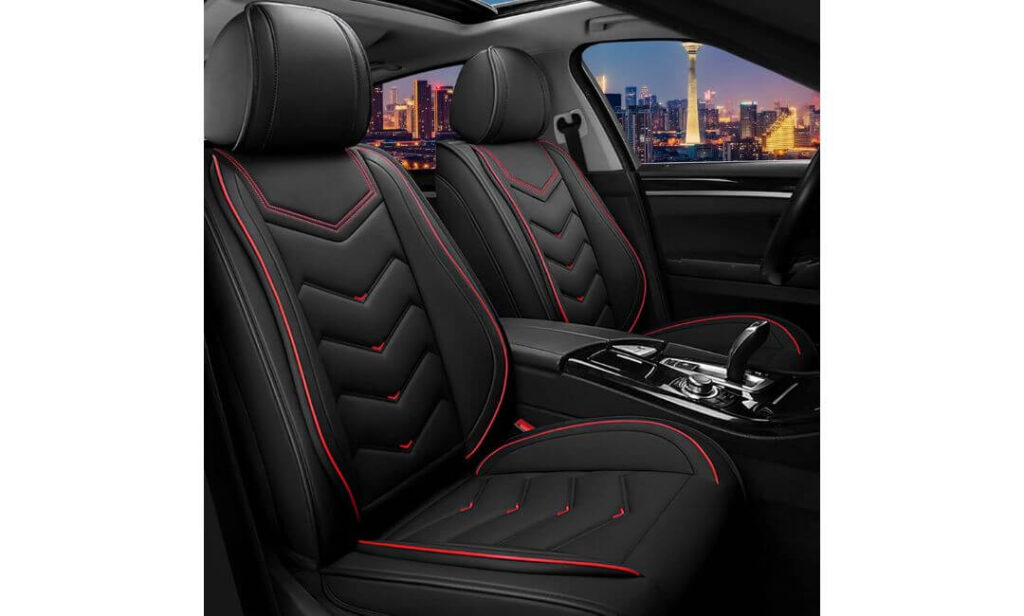
Quick Specs:
- Custom fit for Jeep Compass (2007–2026) — wide compatibility across generations
- Premium Nappa-style leather surface — smoother feel with higher wear resistance
- Double-layer rebound sponge — maintains shape, doesn’t flatten quickly
- Sport-style front set (2 seats) — focused upgrade for driver & passenger
- Airbag-compatible side exposure — no interference with deployment
- Water-resistant finish — quick wipe cleaning, no stain hold
- Scratch-resistant surface — handles pets, keys, daily friction
This is the one you pick when you care more about how the front seats feel every single day than covering the entire cabin just for the sake of it. Because let’s be honest—on a Jeep Compass, it’s the driver and co-driver seats that take the real hit. And this setup focuses exactly there, without spreading itself thin.
The first thing you’ll notice is the Nappa-style finish. It’s smoother, slightly richer to the touch, and doesn’t have that artificial shine most budget leather covers carry. But more importantly, it’s backed by a double-thick rebound sponge, which means it doesn’t collapse or lose structure after a few weeks. You sit on it, not into it—and that difference shows up on longer drives.
Durability is where it quietly proves its worth. The surface resists scratches better than expected (even with rough use), and the water-resistant layer makes everyday mess a non-issue. Add the sport-style contour fit, and it holds its position instead of shifting around like loose covers. (It’s not trying to cover everything—it’s built to get the most-used seats absolutely right.)
What Stood Out in Real Use
- Focused front-seat upgrade — improves the seats you use the most
- Better surface feel — smoother, less artificial than basic faux leather
- Shape retention — doesn’t sag or flatten quickly
- Handles rough use — scratches and daily wear don’t show easily
- Clean sport look — simple, not overdesigned
Where It Could Be Better
- Covers front seats only, not a full cabin solution
Jeep Compass Fitment & Compatibility
This one is designed to sit tight on the front seats without interfering with how they function. The contours follow the seat lines properly, especially around the backrest and base, so it doesn’t feel like an added layer—it feels integrated.
The airbag compatibility through side exposure is handled smartly. Instead of forcing full coverage everywhere, it leaves the necessary zones free so safety isn’t compromised. Seatbelt access and adjustments remain completely normal, which is exactly how it should be in a daily-driven Compass.
The Insider Pro-Tip:
If your front seats already show early wear—or you just want them to feel new again—start here instead of going full set immediately. A solid front-seat upgrade changes your driving experience instantly, and honestly, that’s where you’ll feel the difference every single day without overcomplicating the rest of the cabin.
#5. Conjie Full Set Leather Covers
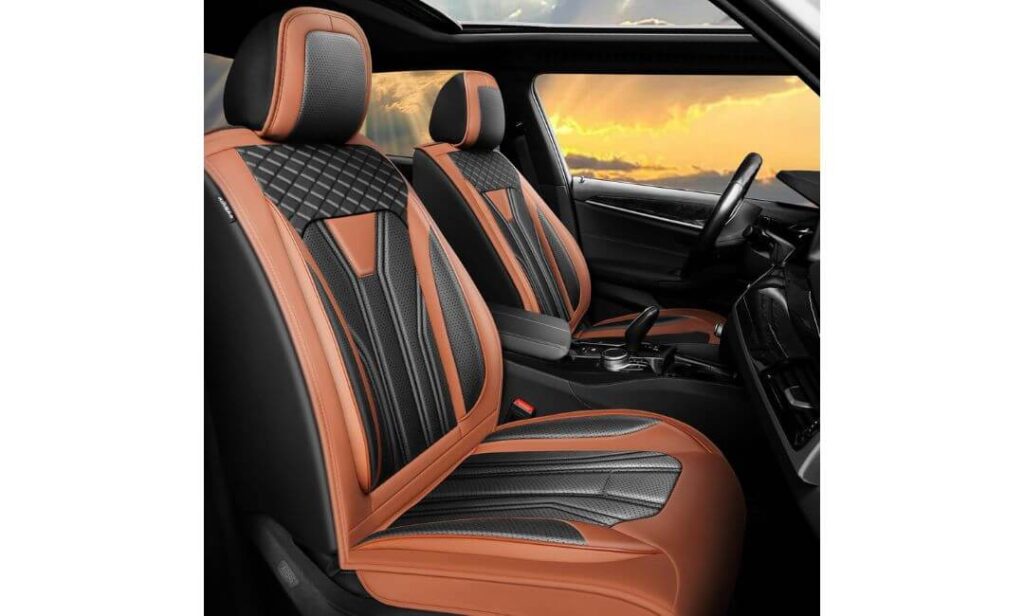
Quick Specs:
- Custom-fit for Jeep Compass (2007–2026) — full coverage with no loose sections
- Premium faux leather + stretch side panels — flexible fit with 360° protection
- Breathable + waterproof build — balanced for heat, spills, and daily use
- Scratch & wear-resistant surface — handles pets, bags, rough use
- Full functionality retained — airbags, armrests, seat controls, child seat locks
- Anti-hair adhesion surface — reduces pet hair sticking
- Full set (5 seats) — consistent dual-tone (brown & black) interior upgrade
- Tool-free install — straps + hooks for secure fit
If you’ve been looking at your Jeep Compass interior and thinking it needs a proper refresh—not just protection—this is where things start making sense. The brown and black dual-tone isn’t loud, but it adds that layered, premium look that stock interiors usually miss. It feels more like an upgrade than an add-on.
The build itself is where it earns trust. Instead of stiff, one-layer covers, this uses a faux leather surface with stretchable side panels, which means it wraps better around the seat instead of fighting its shape. That’s why it looks tighter once installed. The breathable + waterproof balance also matters—you don’t get that suffocating feel on longer drives, and at the same time, spills or dust don’t become a problem.
Daily use is clearly part of the design here. The surface resists scratches, doesn’t attract pet hair the way fabric does, and stays manageable even when the car sees real-life usage—kids, luggage, constant in-and-out. And importantly, nothing feels blocked. Armrests, seat adjustments, airbags—all stay functional without compromise. (It’s the kind of setup that quietly upgrades your cabin while handling everything you throw at it.)
What Stood Out in Real Use
- Full cabin transformation — not just protection, proper interior upgrade
- Flexible side panels — better wrap, less tension on seat edges
- Balanced comfort — breathable enough for long drives, tough enough for daily use
- Low-maintenance surface — less pet hair sticking, easy wipe cleaning
- Function-friendly design — nothing feels restricted or forced
Where It Could Be Better
- Dual-tone style may not suit those who prefer an all-black minimal look
Jeep Compass Fitment & Compatibility
This one is built to work across multiple Compass generations, and you can feel that adaptability in the way it installs. The stretch panels allow it to settle into the seat shape instead of sitting on top awkwardly, which is where most full sets fail.
Functionality is fully preserved. The design keeps airbag zones clear, seatbelt access open, and controls usable, without forcing awkward cutouts or compromises. Once fitted properly, it feels integrated into the seat rather than layered over it—which is exactly what you want in a daily-driven Compass.
The Insider Pro-Tip:
If your goal is both protection and a visible interior upgrade, don’t go for flat single-tone covers. A well-done dual-tone like this adds depth to the cabin without looking flashy—and once it’s installed right, your Compass interior stops feeling “used” and starts feeling intentional again.
#6. FQFZYMX Upgraded Seat Covers
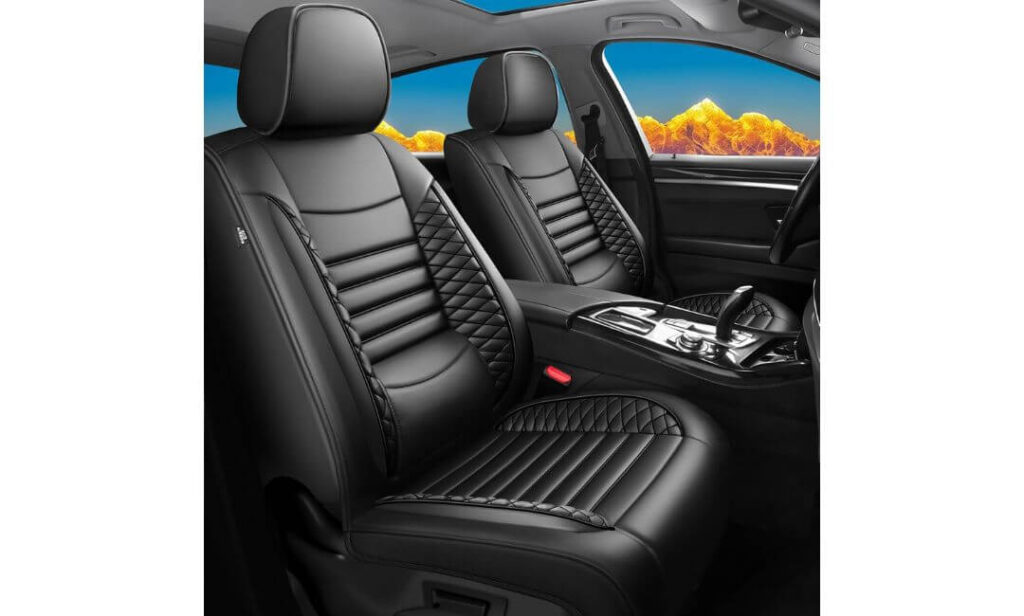
Quick Specs:
- Vehicle-specific custom fit (Jeep Compass 2007–2026) — zero-gap full coverage
- Upgraded faux leather surface — abrasion-resistant, heat-resistant, stain-proof
- High-rebound sponge layer — reduces fatigue on long drives
- 360° wrap + 3D wing protection — shields edges, bolsters, high-wear zones
- Double-layer construction with embroidery finish — added durability + premium touch
- Airbag-safe + seat function compatible — heating, belts, adjustments all preserved
- Non-slip base — stays stable even on rough roads
- Full set (5 seats) — consistent all-black interior finish
- Tool-free install (10–20 min) — beginner-friendly setup
If you’ve made it this far, you’re not just looking for covers—you want something that actually locks in and protects every inch of your Jeep Compass seats. This is exactly that kind of setup. Once installed, it doesn’t look like something added later—it feels like the seats were designed this way from the start.
The build is where it separates itself. The upgraded faux leather surface handles heat, stains, and scratches without showing early fatigue, while the high-rebound sponge layer underneath takes the pressure off during long drives. You don’t feel that flat, lifeless seating most covers give after a few weeks—it holds its structure and comfort consistently.
What really stands out is the 360° protection approach. This isn’t just top-layer coverage—the edges, side bolsters, and high-contact zones are reinforced through 3D wing protection and double-layer construction. Even the embroidery isn’t just for looks—it adds strength to the surface over time. And with the non-slip base, everything stays exactly where it should, even on uneven roads. (It’s built for people who don’t want to think about seat wear ever again once it’s installed.)
What Stood Out in Real Use
- True full coverage — no exposed edges or weak zones
- Long-drive comfort — sponge layer actually reduces fatigue
- Stays locked in place — no shifting, even with constant use
- Strong surface durability — handles scratches, heat, daily abuse
- Clean all-black finish — blends seamlessly with Compass interior
Where It Could Be Better
- Slightly more time needed to align perfectly during installation
Jeep Compass Fitment & Compatibility
This one is clearly engineered around the Compass seat layout. The zero-gap design means it wraps tightly across both front and rear seats without leaving loose sections or awkward folds. Once tightened properly, it feels integrated—not layered.
Safety and usability are fully respected. The airbag zones are kept clear, seatbelt slots align properly, and even seat heating/cooling functions remain usable. That balance between protection and functionality is what makes it reliable for daily driving.
The Insider Pro-Tip:
If you want your seats to stay “new” for years, this is the kind of full-coverage setup you install once and forget about. Just make sure you tighten the lower anchors and side wings properly during install—that’s what gives it that locked-in, factory-level finish most people miss on the first try.
Best Jeep Compass Seat Covers Compared: Real Fit, Comfort & Protection Guide
| Seat Cover | Best For | Material Feel | Fit Quality | Comfort Level | Protection | Why It Stands Out |
|---|---|---|---|---|---|---|
|
JIAMAOXIN Full Set
Tight Fit
|
Daily use + clean interior | Balanced faux leather (practical) | Snug 360° wrap | Stable, supportive | Water + dust + UV safe | Doesn’t shift, doesn’t crease easily |
|
Banklif Full Set
Breathable
|
Long drives + heat comfort | Soft synthetic leather | No-gap custom fit | Cooler, less sticky | Waterproof + anti-slip | Feels better over time, not just day one |
|
AOMSAZTO Dual Tone
Stylish
|
Interior upgrade + comfort | Layered leatherette | Tight with adjustability | Better cushioning | Spill + wear resistant | Dual-tone instantly upgrades cabin look |
|
CTDS Nappa (Front)
Front Focus
|
Driver comfort upgrade | Smooth Nappa-style | Front seats only | Firm, fatigue-free | Scratch + water resistant | Best for fixing worn-out front seats |
|
Conjie Full Set
All-Weather
|
Family + rough usage | Soft leather + stretch sides | Flexible tight fit | Breathable daily use | Pet hair + scratch safe | Handles real-life mess without stress |
|
FQFZYMX Full Set
Max Coverage
|
Full protection + long-term use | Thick upgraded leather | Zero-gap coverage | Fatigue-reducing | 360° full protection | Most complete protection setup here |
The Real Buyer’s Blueprint: Choosing Seat Covers That Actually Work on a Jeep Compass
Most buying guides will tell you what sounds good. This one is about what holds up after months of real driving—heat, dust, long hours behind the wheel, people getting in and out all day. Because on a Jeep Compass, the difference between a “good-looking cover” and a right choice shows up very quickly.
Start With Fit — Because Everything Else Depends on It
If the fit isn’t right, nothing else matters. Not the material, not the design, not even the price. The Compass has defined bolsters and seat curves, and a loose or semi-fit cover will shift, wrinkle, and wear out faster.
What actually works:
- True custom or near-custom fit
- Tight wrapping around seat edges and base
- No visible gaps near headrest or seat joints
Avoid anything that claims “universal fit” with stretch promises. It might look okay for a day—but over time, it starts moving, bunching, and ruining the driving feel.
Material Isn’t About Luxury — It’s About Behavior Over Time
People chase “premium leather” labels. But the real question is: how does it behave after 2–3 months of use?
Here’s what matters in real conditions:
- Faux leather (good quality) → best balance of durability, easy cleaning, and cost
- Layered builds (with sponge + base) → reduce fatigue on long drives
- Breathable backing → prevents that sticky, uncomfortable feel
Avoid overly thick or overly glossy materials. They either trap heat or start cracking early, especially in Indian weather.
Breathability Is Not Optional — It’s Daily Comfort
This is where most people compromise—and regret it later.
A seat cover that looks great but traps heat will make every long drive uncomfortable. You’ll keep adjusting your position without realizing why.
Look for:
- Slightly textured or layered surfaces
- Not overly padded, not overly flat
- Materials that don’t feel sticky after 20–30 minutes
The goal is simple: you forget the seat is even covered while driving.
Safety Design Should Be Invisible — But Perfectly Done
A lot of listings throw around “airbag compatible” without explaining how.
What actually matters:
- Side stitching design that allows controlled tear during deployment
- No heavy padding blocking airbag zones
- Proper alignment with seatbelt slots
If this isn’t done right, the cover becomes a risk—not an upgrade. The good ones handle this so cleanly that you don’t even notice it.
Full Set vs Front-Only — Know What You Actually Need
Not everyone needs a full set.
- If your front seats are worn or uncomfortable → start with front covers
- If you want a complete interior refresh → go full set
- If you have family, pets, or heavy use → full coverage makes more sense
Buying more than you need doesn’t improve experience—it just adds cost.
Daily Use Reality Check — Think Beyond “First Impression”
Ask yourself honestly:
- Will kids sit here?
- Will you carry bags, gear, pets?
- Do you clean your car often or not?
If your usage is rough, go for:
- Scratch-resistant surface
- Easy wipe cleaning
- Strong stitching
If your usage is clean and minimal, you can lean more toward finish and aesthetics.
Installation Decides the Final Look — Not Just the Product
Even the best seat cover can look average if installed poorly.
What most people miss:
- Not tightening lower hooks properly
- Leaving side flaps loose
- Rushing rear seat alignment
Take your time once, and the cover will look factory-fitted every day after that. Rush it, and it’ll always feel slightly “off.”
The Truth Most Guides Won’t Tell You
There’s no perfect seat cover. Only the one that matches how you actually use your Jeep Compass.
Some are better for comfort, some for protection, some for looks. The mistake people make is trying to get everything in one product—and ending up satisfied with none.
The smarter approach is simple:
- Prioritize what matters most to your daily driving
- Choose accordingly
- Install it properly
Do that, and you won’t just “like” your seat covers—you’ll stop thinking about them completely… which is exactly how a good upgrade should feel.
Installation & Care Mastery: Make Your Seat Covers Feel Factory, Not Fitted Later
Most people think buying the right seat cover is the job done. It’s not. On a Jeep Compass, installation and care decide whether your seats look premium for years—or start looking tired in weeks. The difference isn’t in the product anymore, it’s in how you handle it from day one.
Installation Is Not a Step — It’s the Outcome You Live With Daily
Rushed installs are the biggest reason even good seat covers feel average. When done right, the cover doesn’t look like an accessory—it looks like it came with the car.
Start with positioning, not fastening. Lay the cover over the seat and align it with the natural seat curves—especially the shoulder bolsters and seat base edges. If this step is off, no amount of tightening will fix it later.
Once aligned, work from top to bottom, not randomly:
- Secure headrest and upper backrest first
- Pull the cover down evenly, removing slack as you go
- Lock the base tightly using hooks and anchors
The key is tension. Not too tight that it stresses stitching, not too loose that it creates folds. A properly installed cover will feel firm, clean, and stable even when you shift your weight.
Rear seats need more patience than most expect. Split seats, armrests, and seatbelt slots require alignment before tightening. If you rush here, you’ll keep noticing it every time someone sits in the back.
The Fit Test Most People Skip (But Shouldn’t)
After installation, don’t just look at it—use it.
Sit, adjust, lean, take a short drive. Notice:
- Does it move when you enter or exit?
- Do you feel bunching under your thighs?
- Does the backrest stay aligned when you shift?
If something feels off now, it won’t fix itself later. Small adjustments at this stage make a huge difference in long-term feel.
Heat, Dust, and Daily Use — The Reality Check
Jeep Compass interiors don’t live in controlled conditions. They deal with sunlight, dust, sweat, and constant use. So care isn’t about making it “look new”—it’s about keeping it from aging badly.
For leather and leatherette covers:
- Wipe with a slightly damp cloth regularly instead of waiting for buildup
- Avoid harsh cleaners—they dry out the surface faster than dirt does
- Parking in shade when possible slows down fading and hardening
Dust is more damaging than it looks. It settles into stitching and edges, slowly dulling the finish. Regular light cleaning keeps the surface consistent, not just clean.
Don’t Over-Clean — That’s Where Damage Starts
A common mistake is over-maintenance. Scrubbing too hard, using strong chemicals, or cleaning too frequently can wear down the protective layer faster than normal use.
What actually works:
- Light wipe every few days
- Slightly deeper clean once in a while
- No aggressive rubbing unless absolutely needed
Seat covers don’t need to shine—they need to stay stable and intact.
Handling Real-Life Use (Kids, Pets, Long Drives)
If your Compass sees real usage, your approach should be practical.
For pet owners:
- Brush off hair instead of rubbing it in
- Don’t let sharp claws drag across the same area repeatedly
For daily commuters:
- Avoid sitting with sharp objects (keys, tools in pockets)
- Small habits prevent long-term surface damage
For long drives:
- Breathable covers help, but occasional adjustment and airflow matter too
Good covers are durable—but consistent rough use without small precautions will show over time.
Re-Tightening Is Normal — Ignoring It Isn’t
Even the best-installed covers may loosen slightly after initial use. That’s normal. What matters is catching it early.
After a week or two:
- Check lower hooks and straps
- Re-align any slight shifts
- Smooth out minor creases
This 5-minute adjustment keeps the covers looking fresh for months instead of weeks.
The Truth Most Owners Realize Late
Seat covers don’t fail suddenly—they fade, loosen, and lose shape slowly. And most of that comes down to installation quality and daily habits, not the product itself.
Do it right once:
- Install with patience
- Clean with balance
- Adjust when needed
And your Jeep Compass interior won’t just stay protected—it will keep feeling like a space you actually enjoy sitting in, every single day.
Owner’s Verdicts: What It Actually Feels Like After Living With These on a Jeep Compass
You can read specs all day, but the real story starts after a few weeks of daily use—morning commutes, dusty roads, passengers sliding in and out, and those long drives where comfort either holds up… or quietly starts to fail. These are not “reviews.” This is what these setups feel like once the novelty wears off.
“Finally stopped adjusting my seat every 5 minutes.”
Switched from a loose universal cover to a tighter wrap (JIAMAOXIN), and the biggest change wasn’t the look—it was stability. No more pulling the cover back into place after getting in. It just stays put, and that alone makes the drive feel more sorted.
“Didn’t expect breathability to matter this much.”
With the Banklif setup, the difference shows up on longer drives. It doesn’t feel cold or soft in a flashy way—it just avoids that sticky, trapped heat feeling after 30–40 minutes. You don’t notice it at first, but you definitely notice when it’s missing.
“Interior suddenly feels more ‘put together’.”
The AOMSAZTO dual-tone isn’t loud, but it changes how the cabin feels. It looks intentional. Friends notice it, but more importantly, you notice it every time you open the door. And surprisingly, it still holds up well under daily use.
“Front seats feel new again without overdoing it.”
CTDS front covers make sense if your driver seat is starting to show wear. The surface feels smoother, and the cushioning doesn’t collapse. It’s not about full cabin change—it’s about fixing what you actually use the most.
“Handles real-life mess better than expected.”
Conjie covers shine when the car isn’t treated gently. Kids, bags, occasional spills—it doesn’t feel like you have to be careful all the time. Cleaning is quick, and the surface doesn’t start looking tired early.
“Set it once, stopped thinking about it.”
With FQFZYMX, the biggest takeaway is peace of mind. Once installed properly, there’s nothing to fix, nothing to adjust. It just stays the same—no shifting, no exposed edges, no gradual annoyance building up.
What All of This Comes Down To
No one here is talking about “luxury feel” in isolation. What stands out is how each setup behaves after real use kicks in:
- The right fit removes daily irritation
- The right material avoids long-drive discomfort
- The right build saves you from constant maintenance
And once those three things come together, something interesting happens—you stop noticing the seat covers completely.
Which, honestly, is the best outcome you can get.
FAQs About Jeep Compass Seat Covers
Do seat covers affect the driving feel on a Jeep Compass, or is that just in my head?
It’s not in your head—and anyone who drives regularly will notice it within days. The Jeep Compass has slightly contoured seats, so when a cover doesn’t follow that shape, you start feeling small shifts while braking, cornering, even when adjusting posture.
A proper tight-fit or bucket-style cover actually improves the feel because it keeps your body more planted. But a loose or poorly installed one does the opposite—it creates micro-movements that make the seat feel less supportive than stock.
The truth is simple:
If the cover is right, you forget it exists.
If it’s wrong, you keep adjusting yourself without realizing why.
For Jeep Compass in Indian conditions, what matters more—breathability or thickness?
Most people assume thicker = better. In reality, thickness is where problems start.
In Indian conditions (heat, humidity, long drives), breathability matters more than padding. Thick covers trap heat and feel good for the first 10 minutes, then slowly become uncomfortable. You’ll notice it especially in traffic or long highway runs.
What actually works:
- Medium-density padding
- Slight airflow or breathable backing
- Surface that doesn’t stick to your skin
The goal isn’t softness—it’s consistency over time.
Will custom-fit seat covers damage or stretch Jeep Compass seats over time?
No—if they’re designed properly and installed correctly.
In fact, the opposite is true. A good custom-fit cover protects high-wear zones like seat edges, bolsters, and base areas where most Compass seats start aging early.
Damage usually comes from:
- Over-tightening cheap covers
- Poor stitching that cuts into edges
- Covers that shift and create friction
A well-built cover with balanced tension and proper anchoring doesn’t stress the seat—it stabilizes it.
How do you actually judge quality when most of these seat covers are new and don’t have many reviews?
This is where most people get stuck—and end up guessing.
Instead of reviews, look at build logic:
- Does it follow seat contours or look flat?
- Are stitching lines clean and placed away from stress points?
- Is the material layered or just a single sheet?
- Does it mention airbag zones clearly (not vaguely)?
Reviews tell you early impressions.
Build quality tells you how it will age.
Once you start looking at it this way, it becomes very easy to separate serious products from surface-level ones.
Why do some seat covers look perfect on day one but start feeling off after a few weeks?
Because most covers are designed to impress quickly, not last quietly.
Day one:
- Everything is tight
- Material looks fresh
- No visible issues
After a few weeks:
- Slight loosening starts
- Heat and usage affect the material
- Small misalignments become noticeable
What separates good from average is how they handle this phase.
The better ones:
- Hold their shape
- Stay aligned
- Don’t develop pressure points
The others slowly turn into something you keep adjusting… until you stop caring.
Final Word: What Actually Stays With You After All This
By now, you’ve probably realized this isn’t about picking “the best seat cover.” It’s about choosing what your Jeep Compass will feel like every single day after this decision.
Because once these go on, they’re not just protecting your seats—they become part of your driving experience. The way you sit, the way the cabin looks when you open the door, the way it holds up after weeks of real use… all of that comes down to this one choice.
Some of these options lean toward clean, no-nonsense practicality. Some focus on comfort over long hours. Others quietly transform the interior without shouting for attention. None of them are trying to do everything—and that’s exactly why they work.
The mistake most people make is chasing perfection on paper.
The smarter move is choosing what fits your actual usage, not ideal expectations.
If your Compass is a daily machine—go for stability and easy maintenance.
If it’s your long-drive partner—prioritize comfort and breathability.
If you just want that cabin to feel right again—focus on fit and finish.
Everything else is secondary.
And here’s the honest truth most guides won’t say:
Once you pick the right one and install it properly, you stop thinking about seat covers completely.
No adjusting.
No second-guessing.
No “maybe I should’ve chosen something else.”
Just get in, drive, and enjoy the cabin the way it was supposed to feel.
That’s when you know you got it right.
Also Check:


