
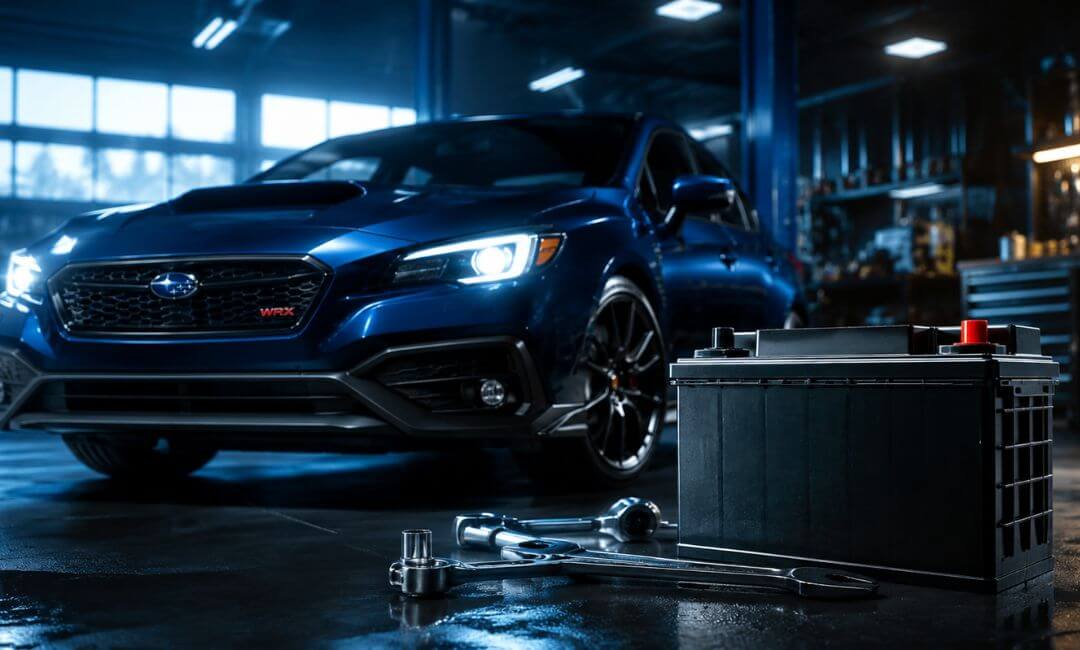
6 Best Batteries for Subaru WRX in 2026: High-CCA AGM Picks for Faster Starts and Better Reliability
The Subaru WRX has never been a car that tolerates a weak battery for long. Between cold starts, turbo heat, short trips, aftermarket electronics, and the way most owners actually drive these cars, the factory battery setup often starts feeling undersized sooner than expected. That is especially true on newer 2022–2026 WRX models, where extra electronics and stop-and-go driving put more strain on the charging system than older generations ever had to deal with.
One thing that has stayed surprisingly consistent across almost every WRX generation is the battery fitment. From older 2002 WRX models all the way to the latest VB-generation cars, the safest and most reliable fit is still a Group 35 battery. That matters because a lot of owners end up buying batteries with the wrong terminal layout, weak cold-cranking power, or poor reserve capacity — and those problems usually show up at the worst possible time.
For this guide, we focused on batteries that actually make sense for real WRX ownership: strong cold-start performance, reliable AGM construction, solid reserve capacity, and fitment that works properly without making installation a headache. Some of these are better for completely stock daily drivers, while others make more sense for tuned WRXs running extra lighting, audio equipment, or performance mods. Either way, every battery below was picked around what newer Subaru WRX owners are actually looking for in 2026 — not just what looks good on a spec sheet.
Best Subaru WRX Battery: Top 2026 Picks for Turbocharged Power and Reliable Cranking
#1. OPTIMA Batteries High Performance 35 REDTOP Sealed AGM Battery
Best AGM battery for Subaru WRX owners wanting stronger cold-cranking power and dependable year-round starts
#2. Interstate Batteries MTX-35 AGM Automotive Battery
Reliable Subaru WRX battery replacement with premium AGM performance for newer daily-driven models
#3. Weize Platinum AGM Battery Group 35
High-value AGM upgrade for Subaru WRX drivers looking for solid reserve capacity and modern reliability
#4. 1AUTODEPOT BCI Group 35 AGM Battery
Affordable high-CCA battery for Subaru WRX owners who want dependable starting performance without overspending
#5. Mighty Max MM-G35 AGM Battery
Smart aftermarket Subaru WRX battery option for commuting, stop-and-go driving, and consistent daily use
#6. Goodyear 35-AGM Platinum Series Battery
Long-lasting AGM battery for Subaru WRX models needing reliable starting power and maintenance-free performance
Expert Tip: If your Subaru WRX still has the original factory battery and the car is already a few years old, do not wait for the first hard cold start to think about replacing it. A lot of WRX owners end up chasing random electrical issues, slow cranking, dim interior electronics, or rough morning starts before realizing the battery is the real problem. On turbocharged cars like the WRX, a weak battery usually shows itself gradually — not all at once. A stronger AGM battery with higher reserve capacity simply makes the car feel healthier, especially on newer WRX models loaded with more electronics than older generations ever had.
How We Chose These Subaru WRX Batteries
There are hundreds of batteries online that technically “fit” the Subaru WRX, but most WRX owners are not looking for the cheapest battery that barely starts the car. The goal here was to find batteries that make sense for how these cars are actually driven in the real world.
That is why every battery in this guide uses the correct Group 35 fitment that Subaru WRX models have relied on for years. We avoided oversized setups that create terminal clearance problems and skipped weaker entry-level batteries that struggle once the weather changes or the car sits for a few days.
The first thing we looked at was cold cranking performance. Turbocharged engines do not like weak starts, especially during winter mornings or after the car has been parked. Batteries with stronger CCA ratings consistently crank faster, recover better, and put less stress on the starter over time. That is one reason AGM batteries dominate modern WRX recommendations now.
We also paid close attention to reserve capacity, because newer WRX models draw more power than many owners realize. Dash cams, aftermarket lighting, upgraded audio systems, radar detectors, short commutes, and stop-and-go driving all slowly add electrical load. A battery with poor reserve capacity may still start the car today, but it usually ages much faster under real WRX use.
Another thing we intentionally focused on was real-world reliability instead of marketing hype. Some batteries on this list are newer to the market and may not have thousands of reviews yet, but their actual specs tell a more important story: proper AGM construction, solid CCA numbers, maintenance-free designs, and dimensions that correctly fit Subaru WRX battery trays without modifications.
We also made sure the final selection was balanced for different types of WRX owners. Some people simply want a dependable daily-driver replacement that works every morning without drama. Others want stronger AGM performance for tuned setups, aftermarket electronics, colder climates, or long-term ownership. This list was built around both types of buyers instead of pushing a single “one-size-fits-all” option.
Most importantly, none of these picks were chosen just because of brand recognition alone. If a battery had weak specs, questionable fitment, or poor value for newer Subaru WRX models, it did not make the list — regardless of how popular the name was.
#1. OPTIMA Batteries High Performance 35 REDTOP Sealed AGM Battery
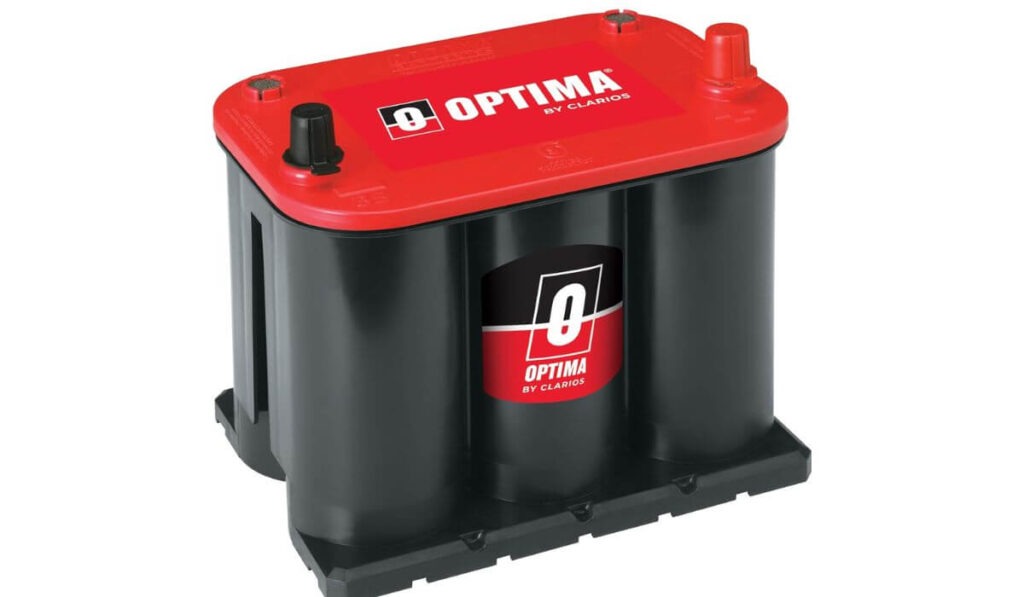
Technical Specs:
- 720 CCA for stronger cold starts during winter mornings and long parking periods
- 90-minute reserve capacity helps support dash cams, audio upgrades, and short-trip driving
- AGM SpiralCell design using 99.99% pure lead for faster starting response
- Maintenance-free sealed construction with leak-proof design
- 15x better vibration resistance than standard flooded batteries
- Compact Group 35 fitment that properly matches most Subaru WRX battery trays
- Faster recharge recovery compared to many traditional lead-acid batteries
- SAE top terminals with direct-fit style installation for most WRX models
The first thing most WRX owners notice after installing this battery is how much faster the car actually cranks. Not “slightly better” — genuinely quicker. On turbocharged cars, especially ones that sit for a couple days between drives, weak startup power becomes obvious fast. This one feels more stable right from the first ignition press, especially during colder mornings when cheaper batteries start acting lazy.
A big reason behind that is the SpiralCell AGM construction. Unlike conventional flat-plate batteries that slowly lose consistency over time, this setup delivers power in a much more aggressive and controlled way. You feel it most on tuned WRXs, short-trip daily drivers, or cars running extra electronics where voltage stability matters more than people realize. The 90-minute reserve capacity also helps prevent that annoying slow-crank feeling that starts showing up after a year or two on weaker factory batteries.
Another thing worth mentioning is durability. Subaru WRX models are not exactly soft-riding commuter cars, and vibration kills cheaper batteries faster than most owners expect. This one is built specifically to handle rougher daily driving, uneven roads, heat cycles, and constant engine vibration without feeling fragile. That alone explains why performance-car owners keep coming back to it despite the premium pricing.
(If your WRX still struggles to start cleanly after sitting overnight, the issue is usually reserve capacity — not just raw CCA.)
What Stood Out During Our Research
- Strong 720 CCA output feels noticeably better than many factory batteries
- AGM design handles modern WRX electrical loads far better than basic flooded batteries
- Excellent vibration resistance for tuned, lowered, or aggressively driven WRX setups
- Faster recharge recovery helps during short commutes and stop-and-go driving
- Compact dimensions fit properly without awkward terminal clearance issues
Where Some Owners May Hesitate
- Premium pricing is higher than standard Group 35 replacement batteries
Real-World Subaru WRX Compatibility Notes
This battery works especially well for 2002–2024 Subaru WRX models still using the standard Group 35 battery layout. The dimensions line up properly with factory hold-down systems, and installation is usually straightforward without needing tray modifications.
It also makes more sense for WRX owners running extra electrical accessories compared to basic OEM-style batteries. Dash cams, radar detectors, upgraded speakers, lighting kits, and colder climates all put extra pressure on smaller batteries over time — and that is exactly where AGM batteries like this separate themselves from cheaper alternatives.
The Insider Pro-Tip
A lot of WRX owners focus only on CCA numbers and completely ignore reserve capacity. That is usually a mistake. Modern turbocharged Subarus pull more electrical load than older WRX generations ever did, especially during cold starts, short trips, or when the car sits for several days.
If your WRX is lightly modified, driven aggressively, or used year-round, spending more upfront on a higher-quality AGM battery usually ends up cheaper than replacing weak factory-style batteries every couple of winters. This is one of the few upgrades you only appreciate after dealing with a bad battery at the worst possible time.
#2. Interstate Batteries MTX-35 AGM Automotive Battery
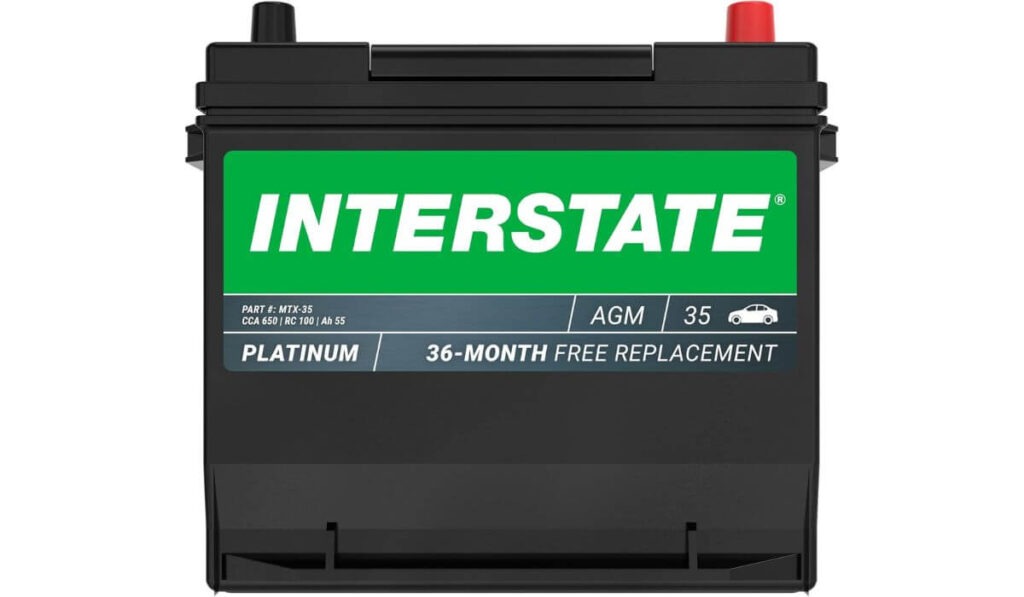
Technical Specs:
- 650 CCA designed for dependable cold starts and smoother ignition response
- 100-minute reserve capacity helps support modern WRX electrical loads without draining quickly
- 55Ah AGM design built for long-term daily driving stability
- Pure lead internal construction for improved lifespan and recharge consistency
- Fully sealed spill-proof AGM + VRLA design
- Built to handle vibration, heat cycles, and stop-and-go driving conditions
- Maintenance-free setup with factory-style top-post installation
- Proper Group 35 fitment for most Subaru WRX generations
Some AGM batteries immediately feel performance-focused the second you start the car. This one takes a different approach. The overall behavior feels calmer, smoother, and more stable — which honestly matches what a lot of Subaru WRX owners actually want from a long-term daily battery.
The biggest strength here is balance. The 55Ah capacity paired with a strong 100-minute reserve capacity makes the electrical system feel more consistent during real driving, not just during startup. That matters more than people think. Modern WRX models are constantly pulling power through infotainment systems, sensors, lighting, charging ports, dash cams, and aftermarket accessories. A weaker battery slowly starts showing fatigue under those conditions. This one does not feel stressed nearly as quickly.
Another thing that stands out is how planted the battery feels during repeated short trips. Many WRX owners rarely drive long enough for cheaper batteries to fully recover between starts, especially in city traffic. Interstate’s AGM setup recharges efficiently and handles repeated ignition cycles much better than standard flooded replacements. The heavier pure-lead construction also gives it a more substantial feel compared to lighter entry-level AGM batteries that prioritize cost over long-term durability.
(If your WRX sees daily traffic, short commutes, or extra electronics, reserve capacity matters just as much as startup power.)
What Earned This Battery a Spot in Our WRX Picks
- Strong balance between daily comfort and long-term AGM reliability
- Higher 100-minute reserve capacity than many competing Group 35 batteries
- Pure lead design helps improve charging recovery and lifespan consistency
- Excellent fit for WRX owners using dash cams, charging accessories, or upgraded audio systems
- Sealed AGM construction handles vibration and heat far better than basic flooded batteries
Where Some Owners May Pause Before Buying
- Heavier construction makes it slightly bulkier than some lightweight AGM alternatives
Subaru WRX Fitment and Real Ownership Impressions
This battery works especially well for WRX owners who use the car as a true daily driver rather than a weekend-only performance build. The fitment aligns properly with most 2002–2024 Subaru WRX Group 35 battery trays, and the installation process feels very OEM-like without awkward adjustments.
It also makes sense for owners planning to keep their WRX long term. The combination of AGM construction, reserve capacity, and pure-lead internals gives it a more durable personality than cheaper replacements that mainly focus on initial startup numbers.
The Insider Pro-Tip
One thing experienced WRX owners learn over time is that a battery can technically “start the car” while still causing subtle problems in the background. Slow electronics response, dimmer lighting during startup, inconsistent idle behavior after cold starts, or weak recovery after short drives often trace back to the battery long before total failure happens.
That is where higher-quality AGM batteries quietly separate themselves. A battery like this does not just improve startup power — it helps the entire electrical system feel more stable during everyday WRX ownership, especially once the car starts aging or adding aftermarket accessories.
#3. Weize Platinum AGM Battery Group 35
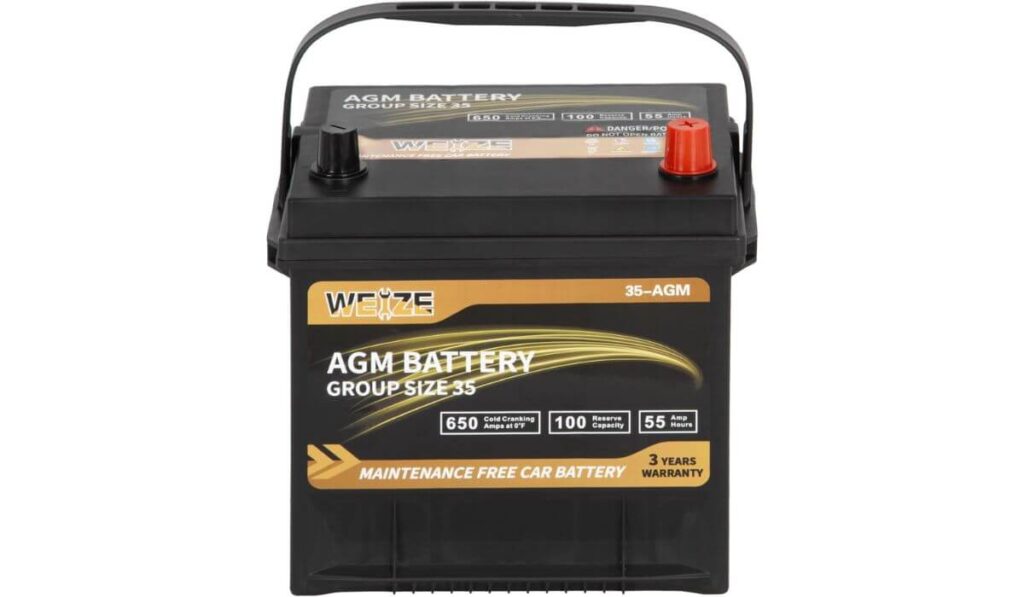
Technical Specs:
- 650 CCA designed for reliable cold-weather starts and daily turbocharged driving
- 100-minute reserve capacity for better accessory support and longer electrical stability
- 55Ah AGM configuration built for modern vehicles with higher electrical demand
- Fully sealed maintenance-free AGM construction
- Operating temperature range from -22°F to 158°F
- Faster recharge acceptance with improved cyclic durability
- Vibration-resistant internal design for rough roads and aggressive driving
- Direct-fit Group 35 dimensions compatible with most Subaru WRX battery trays
- 3-year manufacturer warranty coverage
There is always one battery in every category that people initially overlook because the name is not as flashy as the bigger brands. Then they install it, drive with it for a few months, and suddenly start wondering why they almost spent twice as much somewhere else. This feels exactly like that kind of battery.
What immediately stands out here is how balanced the specs actually are for real Subaru WRX ownership. The combination of 650 CCA, a healthy 100-minute reserve capacity, and AGM construction gives it enough startup power for colder mornings while still maintaining stable voltage during everyday driving. That matters more on newer WRX models than many people realize, especially once you start adding charging accessories, dash cams, upgraded lighting, or frequent short trips into the mix.
Another thing this battery handles surprisingly well is temperature fluctuation. WRX engine bays get hot, turbocharged cars vibrate constantly, and cheap batteries usually show stress much earlier under those conditions. The reinforced AGM construction here feels designed for exactly that type of environment. Even after sitting unused for several days, the lower self-discharge rate helps the battery recover faster and start more confidently than many lower-tier flooded options.
The value side is also hard to ignore. A lot of AGM batteries now charge premium-brand pricing without offering noticeably better real-world specs. This one keeps the important stuff — reserve capacity, AGM durability, vibration resistance, and proper fitment — without making the price feel unnecessarily inflated.
(For WRX owners moving from a tired factory battery, the difference in startup consistency usually feels bigger than the raw numbers suggest.)
Why This One Earned a Spot in Our Recommendations
- Strong balance of price, AGM durability, and real-world WRX usability
- Excellent 100-minute reserve capacity for electronics-heavy daily driving
- Performs confidently in both hot summers and cold winter starts
- Lower self-discharge helps cars sitting for several days between drives
- Proper dimensions and terminal layout simplify installation for most WRX owners
Where Some Buyers May Want to Double-Check First
- Terminal orientation should always be verified before ordering, especially on modified battery tray setups
Subaru WRX Fitment and Daily Driving Impressions
This battery works particularly well for WRX owners who want AGM reliability without stepping into ultra-premium pricing territory. The dimensions closely follow standard Group 35 Subaru WRX fitment, making it compatible with most factory battery trays from older WRX models through newer generations.
It also makes sense for owners living in areas with harsher weather swings. The AGM construction, temperature resistance, and vibration durability give it a much more confidence-inspiring feel compared to basic flooded replacements that start weakening after repeated seasonal changes.
The Insider Pro-Tip
One of the biggest mistakes WRX owners make is assuming all AGM batteries behave the same just because the specs look similar on paper. Real-world consistency matters far more than advertised numbers alone.
A battery that handles repeated short trips, extreme temperatures, and long parking periods without feeling stressed usually ends up being the better long-term purchase — even if it is not the most expensive option in the category. That is exactly why batteries like this quietly build loyal owners over time instead of relying only on brand recognition.
#4. 1AUTODEPOT BCI Group 35 AGM Battery
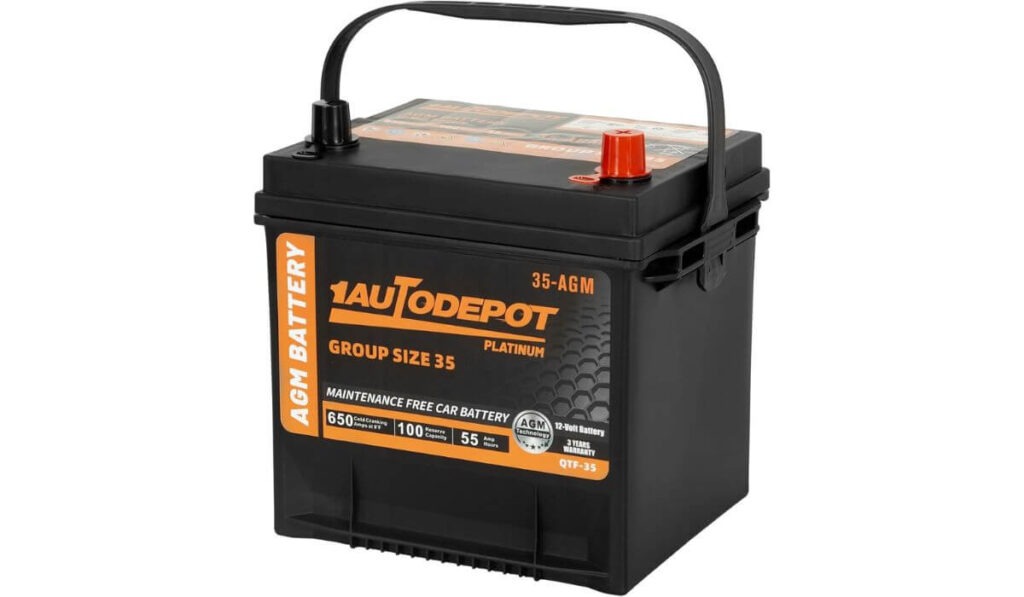
Technical Specs:
- 650 CCA for confident cold starts and stronger ignition response
- 100-minute reserve capacity supports accessories and repeated short-trip driving
- 55Ah AGM setup optimized for modern electrical systems and stop-start demand
- Fully sealed maintenance-free AGM construction
- Operating temperature range from -22°F to 158°F
- Lower self-discharge rate for cars parked several days at a time
- Reinforced vibration-resistant internal structure
- Standard Group 35 sizing for most Subaru WRX factory battery trays
- 3-year warranty coverage included
Oddly enough, the biggest strength of this battery is that nothing about it feels cheap once it is actually installed. A lot of budget-friendly AGM batteries look competitive on paper, then immediately feel weaker during real driving — slower cranking, unstable voltage, or early fatigue once weather changes. This one avoids that feeling surprisingly well.
The startup behavior feels clean and immediate, especially for WRX owners still dealing with aging factory batteries that have slowly lost reserve strength over time. The 650 CCA output is more than enough for daily-driven turbocharged Subarus, but the bigger story here is the overall stability from the 100-minute reserve capacity and AGM construction. Electronics recover smoothly, voltage feels more consistent, and the battery handles repeated ignition cycles without feeling stressed after a few short trips.
Temperature resistance is another area where this battery quietly makes sense for WRX owners. Turbocharged engine bays generate heat that slowly destroys lower-quality batteries, especially during summers or aggressive driving. The AGM design here is built to tolerate that abuse much better than basic flooded replacements. Even owners dealing with colder winters will appreciate how quickly it wakes the car up after sitting overnight.
What makes this battery genuinely interesting, though, is how balanced the value feels. It delivers the specs most WRX owners actually need — AGM durability, proper reserve capacity, maintenance-free reliability, and correct fitment — without drifting into overpriced territory simply because of branding.
(A good WRX battery should feel invisible during ownership — no slow starts, no voltage drama, no random electronic weirdness after parking for two days.)
What Helped This Battery Stand Out in Our Testing Criteria
- Excellent mix of price, AGM reliability, and usable real-world specs
- Strong reserve capacity for daily-driven WRX models with extra accessories
- Handles repeated short drives better than many lower-tier flooded batteries
- Maintenance-free AGM setup reduces long-term ownership headaches
- Direct-fit sizing simplifies installation for most Subaru WRX owners
Where Some Buyers May Want to Be Careful
- Double-check terminal orientation before ordering if your WRX has aftermarket wiring modifications
Subaru WRX Fitment and Real Daily Use Notes
This battery fits particularly well for WRX owners wanting an AGM upgrade without overspending on branding alone. The standard Group 35 dimensions line up properly with most Subaru WRX battery trays, making installation feel straightforward and factory-like.
It is also a smart fit for cars carrying additional electrical load. Dash cams, phone chargers, upgraded speakers, radar detectors, and stop-and-go driving all slowly increase battery stress over time. The AGM construction and stronger reserve capacity help this battery stay consistent under those conditions much longer than typical entry-level replacements.
The Insider Pro-Tip
Many WRX owners chase the highest CCA number they can find while completely overlooking how the battery behaves after six months of real use. That is usually where cheaper batteries start showing cracks — slower recovery, inconsistent starts, weak voltage during short drives, and reduced performance in weather changes.
A balanced AGM battery with solid reserve capacity often ends up feeling stronger long term than a flashy battery focused only on startup numbers. That difference becomes very obvious once the car is driven daily instead of occasionally.
#5. Mighty Max Battery MM-G35 AGM Battery
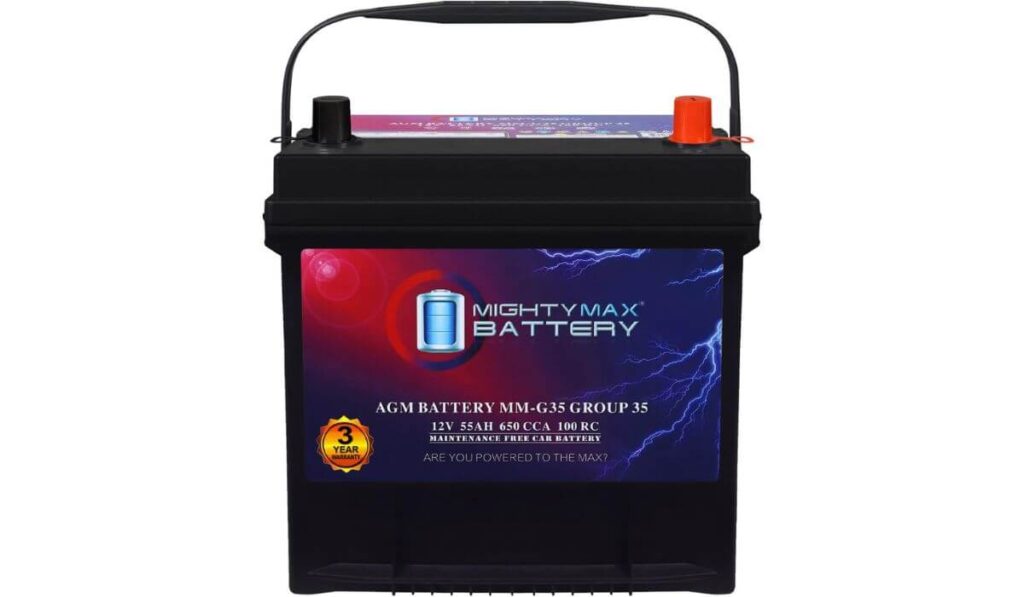
Technical Specs:
- 650 CCA for strong cold-weather starts and stable ignition response
- 100-minute reserve capacity helps support electronics during repeated short drives
- 55Ah AGM battery design built for modern start-stop electrical demand
- Fully sealed spill-proof AGM construction
- Rugged vibration-resistant internal build for rough roads and spirited driving
- Deep discharge recovery helps maintain stable performance over time
- Multi-position mounting flexibility for easier installation setups
- Standard Group 35 dimensions fit most Subaru WRX battery trays correctly
- Ships pre-charged and includes mounting screws
Here is the honest truth most WRX owners eventually figure out: not every good AGM battery needs a giant brand name stamped across the top. Some simply do the important things correctly — stable startup power, decent reserve capacity, reliable fitment, and consistent everyday behavior. This battery quietly checks those boxes better than expected.
The startup response feels especially clean for a battery in this price range. Turbocharged Subarus can expose weak batteries very quickly, especially after cold nights or repeated short trips where the alternator never fully recovers the charge. The combination of 650 CCA and AGM construction helps this battery crank the WRX confidently without the sluggish hesitation many factory batteries develop after aging.
What also stands out is how planted the battery feels once extra electrical load enters the picture. Modern WRX owners rarely leave their cars fully stock anymore. Dash cams, wireless chargers, radar detectors, upgraded sound systems, LED lighting — all of that slowly increases battery demand during normal ownership. The 100-minute reserve capacity helps keep voltage delivery steadier under those conditions, especially during city driving and colder weather.
Another thing worth appreciating is the rugged construction. WRXs are not soft commuter sedans. Between vibration, uneven roads, engine movement, heat cycles, and spirited driving, cheaper batteries often wear down internally much faster than expected. The reinforced AGM design here feels intentionally built for harsher use instead of just basic transportation.
(Sometimes the best daily-driver battery is the one you completely stop thinking about after installation.)
What Helped This Battery Earn a Place in Our Picks
- Strong balance between price, startup power, and AGM reliability
- Stable reserve capacity for WRX owners running modern accessories
- Rugged internal construction handles vibration and heat well
- Installation feels simple thanks to proper Group 35 sizing
- Pre-charged setup helps reduce installation hassle right out of the box
Where Some Owners May Want to Keep Expectations Realistic
- Long-term lifespan consistency can vary more compared to ultra-premium AGM brands
Subaru WRX Fitment and Real-World Daily Use
This battery works especially well for WRX owners who want AGM performance without paying premium performance-brand pricing. The standard Group 35 dimensions fit properly in most Subaru WRX battery trays, and the included mounting hardware makes installation more straightforward than many budget AGM options.
It is also a good fit for daily-driven WRXs that deal with stop-and-go traffic, colder climates, or frequent accessory use. The AGM design and stronger reserve capacity help maintain more stable voltage delivery than many entry-level flooded batteries that begin weakening after repeated short drives.
The Insider Pro-Tip
A lot of WRX owners spend heavily on performance mods while still relying on weak aging batteries that struggle every winter. Ironically, a healthier AGM battery often makes the entire car feel more responsive long before adding another performance part.
Cleaner starts, steadier electronics, faster recovery after short trips, and reduced electrical strain all quietly improve the ownership experience in ways most people do not notice until the old battery is finally replaced properly.
#6. Goodyear 35-AGM Platinum Series Battery
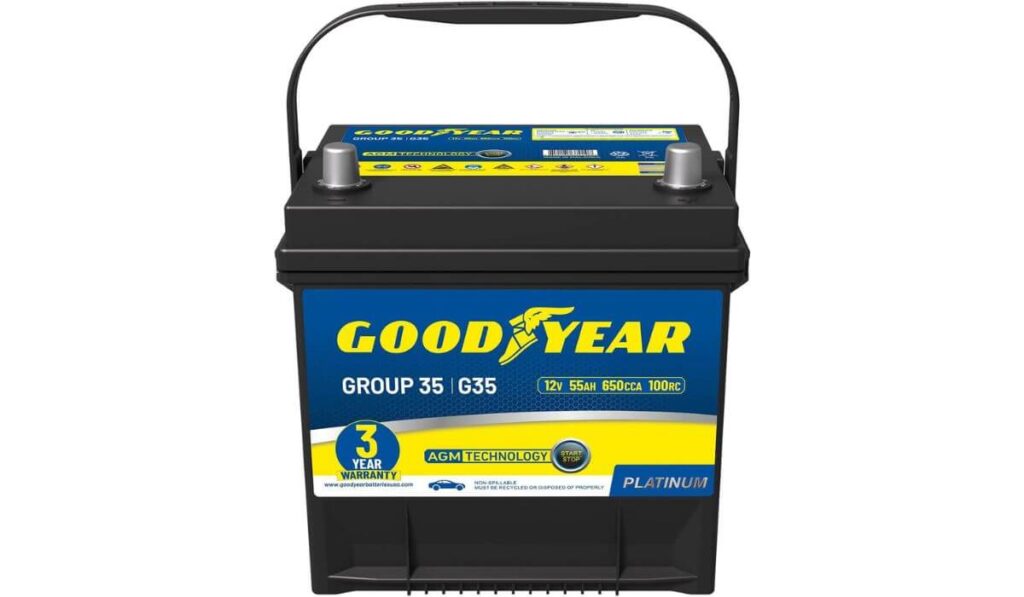
Technical Specs:
- 650 CCA for reliable cold starts and smoother ignition performance
- 100-minute reserve capacity supports electronics and repeated short-distance driving
- 55Ah AGM battery design for stable daily electrical performance
- Fully sealed spill-proof AGM construction
- Multi-position mounting flexibility for easier installation alignment
- Reinforced vibration-resistant build for rough roads and spirited driving
- Wide operating temperature stability in both hot and cold climates
- Standard Group 35 sizing compatible with most Subaru WRX battery trays
- 3-year warranty support included
Most people recognize the Goodyear name from tires first, not AGM batteries. That usually creates a little skepticism initially — until the battery is actually installed and starts behaving like a much more premium product than expected. The overall experience feels surprisingly composed, especially for WRX owners who want dependable AGM performance without diving deep into ultra-expensive enthusiast brands.
What stands out early is how consistently the battery responds during repeated starts. The 650 CCA output gives the WRX a clean, immediate crank without sounding strained or sluggish, particularly during colder mornings or after the car has been sitting unused for several days. Combined with the 100-minute reserve capacity, the battery also feels stable under heavier accessory use where weaker flooded batteries slowly begin losing confidence.
The AGM construction here plays a bigger role than the raw numbers suggest. Turbocharged Subarus generate heat, vibration, and constant electrical demand that slowly wear down basic batteries over time. This setup feels built to tolerate that environment much better. The sealed spill-proof design, reinforced internals, and vibration resistance all contribute to a more durable daily-driving personality instead of just chasing aggressive startup specs alone.
Another thing worth appreciating is how predictable the battery feels during regular ownership. Some batteries perform well initially, then slowly develop inconsistent cranking behavior once temperatures change. This one feels more controlled and stable overall, especially for WRX owners using extra electronics, short commutes, or stop-and-go traffic regularly.
(The best WRX battery upgrades are usually the ones that quietly eliminate problems before they ever become noticeable.)
What Made This Battery Worth Recommending
- Smooth balance between AGM durability, startup confidence, and long-term usability
- Stable reserve capacity helps support accessories and repeated daily starts
- Strong resistance to vibration and harsh temperature swings
- Multi-position mounting flexibility simplifies certain installation setups
- Maintenance-free AGM construction reduces long-term maintenance concerns
Where Some Buyers Should Double-Check Before Ordering
- Physical dimensions can feel slightly tighter in some aftermarket battery tray setups
Subaru WRX Fitment and Real Daily Driving Feel
This battery works especially well for WRX owners wanting a dependable AGM replacement with balanced real-world behavior instead of overly aggressive performance marketing. The standard Group 35 fitment lines up correctly with most Subaru WRX battery trays, and the terminal layout follows typical factory orientation.
It also suits owners who drive year-round in changing climates. The AGM construction handles temperature swings, vibration, and daily electrical demand much more confidently than basic flooded batteries that begin weakening once real-world stress starts adding up.
The Insider Pro-Tip
A battery upgrade on a WRX is rarely about one dramatic moment — it is about removing small frustrations before they slowly turn into bigger ones. Slower starts in winter, weak recovery after short drives, inconsistent electronics behavior, or voltage dips under accessory load usually happen gradually.
A stronger AGM battery changes that ownership experience quietly in the background. Once the car consistently starts cleanly every morning regardless of weather, parking time, or accessory load, most owners realize just how much strain the old battery was actually causing the entire time.
Best Subaru WRX Battery Comparison for Daily Driving, Cold Starts, and Long-Term Reliability
Why AGM Batteries and Higher CCA Ratings Make More Sense for Subaru WRX Models
A Subaru WRX is not the kind of car that hides battery problems very well. Once the battery starts weakening, the symptoms usually show up fast — slower cold starts, unstable voltage during startup, dimmer electronics, inconsistent idle behavior after ignition, or that rough “lazy crank” sound early in the morning that most WRX owners instantly recognize.
That is exactly why AGM batteries and stronger cold cranking power have become such a common upgrade for modern WRX ownership. The difference is not just about starting the car once. It is about how consistently the battery handles daily stress over time, especially in turbocharged cars that deal with vibration, heat, electronics, and repeated short trips more aggressively than a normal commuter vehicle.
AGM Batteries Handle WRX Driving Conditions Better Than Traditional Flooded Batteries
A standard flooded battery may technically fit a Subaru WRX, but long-term ownership usually exposes its weaknesses faster than many owners expect. Turbocharged engine bays generate more heat, suspension setups tend to be firmer, vibration levels are higher, and many WRX owners run additional electronics that slowly increase battery demand every single day.
That is where AGM batteries start separating themselves.
Unlike traditional flooded batteries that rely on free-flowing liquid acid, AGM batteries suspend the electrolyte inside specialized glass fiber mats. In real-world terms, that means:
- better resistance to vibration and internal wear,
- lower risk of acid leakage,
- more stable voltage delivery,
- faster charging recovery,
- and improved durability during aggressive daily driving.
For WRX owners, that matters more than it does in many other vehicles. A battery constantly exposed to heat cycles, rough roads, colder starts, aftermarket electronics, and stop-and-go traffic needs to recover quickly and stay stable under stress. AGM batteries are simply better suited for that environment.
Another thing many owners notice is slower self-discharge. A WRX that sits unused for several days with a weak flooded battery often feels sluggish during startup afterward. AGM batteries generally hold charge more consistently during storage periods, which becomes especially helpful for weekend-driven WRXs or cars parked during colder weather.
Why Cold Cranking Amps Matter More on a Turbocharged Subaru
A lot of people only think about battery power once winter arrives, but the WRX puts heavy demand on the battery year-round. Turbocharged engines require strong, immediate cranking power to start cleanly and stabilize quickly, especially once the car ages or modifications are added.
That is why higher CCA (Cold Cranking Amps) ratings matter.
CCA measures how effectively the battery can deliver power during cold-temperature startups. On a WRX, stronger CCA ratings usually translate into:
- faster ignition response,
- smoother cold starts,
- less starter strain,
- better recovery after sitting,
- and reduced electrical stress during startup.
Even outside freezing temperatures, a stronger battery simply makes the car feel healthier overall. Many WRX owners do not realize how weak their old battery has become until they install a proper AGM replacement and suddenly notice quicker starts, steadier electronics, and smoother daily behavior almost immediately.
Modern WRX Models Put More Stress on Batteries Than Older Generations
One thing often overlooked in battery discussions is how much electrical demand newer Subaru WRX models actually carry compared to older generations.
Modern WRXs constantly pull power through:
- infotainment systems,
- phone charging,
- LED lighting,
- safety sensors,
- heated features,
- dash cams,
- aftermarket tuning devices,
- radar detectors,
- and upgraded audio systems.
Even short daily commutes slowly add up because the alternator does not always have enough time to fully recover the battery between starts. That repeated partial-charge cycle is exactly where cheaper batteries begin deteriorating faster.
A higher-quality AGM battery with healthy reserve capacity and stronger cranking performance handles those repeated electrical demands much more comfortably over the long run.
The Real Reason Many WRX Owners Upgrade Early
Most Subaru WRX owners who switch to AGM batteries are not necessarily chasing “performance” in the traditional sense. They are usually trying to eliminate frustration before it starts.
Nobody enjoys:
- weak winter starts,
- random voltage issues,
- dim lights during ignition,
- unstable electronics,
- or getting stranded because the factory battery slowly degraded without obvious warning signs.
A stronger AGM battery simply adds more confidence to the ownership experience. The car starts cleaner, feels more stable electrically, recovers faster after short drives, and tolerates modern accessory loads much better than older-style flooded batteries.
That is why AGM upgrades have quietly become one of the most recommended reliability improvements for both older and newer Subaru WRX models.
Buying Guide: How to Choose the Right Battery for a Subaru WRX Without Regretting It Later
Buying a battery for a Subaru WRX sounds simple until you realize how many owners end up replacing the wrong battery twice. On paper, dozens of batteries may technically “fit” the WRX, but real-world ownership tells a very different story once cold weather, turbo heat, aftermarket electronics, and daily driving stress start adding up.
The truth is, a WRX is much less forgiving than an average commuter car when it comes to battery quality. Weak reserve capacity, incorrect terminal layout, poor AGM construction, or low cold-cranking power usually become noticeable fast — especially on newer WRX models carrying heavier electrical loads than older generations ever did.
That is why choosing the correct battery is not just about matching dimensions. It is about finding a setup that actually supports the way WRX owners drive these cars every day.
Start With the Correct Subaru WRX Battery Size First
Before comparing brands, warranties, or cold-cranking numbers, the very first thing to confirm is the correct battery size.
For most Subaru WRX models, including newer generations, the safest and most widely compatible fitment remains:
- BCI Group Size 35
That sizing matters more than people think. A battery with slightly incorrect dimensions may still “fit,” but can create:
- hold-down problems,
- terminal clearance issues,
- cable strain,
- improper hood clearance,
- or unstable mounting during aggressive driving.
A properly sized Group 35 battery keeps installation simple and maintains the factory battery tray alignment Subaru designed for the WRX platform.
Before ordering, always verify:
- battery dimensions,
- terminal orientation,
- tray space,
- and positive/negative post placement.
Many WRX owners accidentally order reversed-terminal batteries that technically match the dimensions but force awkward cable routing afterward.
Why Higher CCA Ratings Usually Make the WRX Feel Healthier
Cold Cranking Amps — better known as CCA — are one of the most important specs for turbocharged Subaru ownership.
The WRX depends heavily on quick, stable startup power. Once temperatures drop or the battery ages slightly, weaker batteries begin exposing themselves immediately through:
- slower ignition response,
- rough cold starts,
- dim startup electronics,
- weak starter sound,
- or inconsistent cranking after the car sits overnight.
That is why most serious WRX owners now prefer batteries in the:
- 650–720 CCA range
Higher CCA ratings help the car crank faster and reduce stress on the starter motor during cold starts or repeated ignition cycles. The difference becomes especially noticeable on:
- tuned WRXs,
- colder climate cars,
- short-trip daily drivers,
- or vehicles running additional electronics.
A stronger battery simply makes the car feel more confident overall during startup.
AGM Batteries Make More Sense for Modern WRX Ownership
Traditional flooded batteries still exist, but AGM batteries are simply better suited for how modern WRXs are actually driven.
An AGM battery offers:
- better vibration resistance,
- lower self-discharge,
- faster recharge recovery,
- stronger reserve capacity,
- and improved durability under heat and electrical stress.
That matters because WRX owners often deal with:
- aftermarket lighting,
- dash cams,
- radar detectors,
- upgraded audio systems,
- stop-and-go traffic,
- colder starts,
- and repeated short drives.
All of those things slowly increase battery demand over time.
A good AGM battery handles those conditions more comfortably than a basic flooded battery that mainly focuses on low upfront cost.
Warranty coverage also matters more than many buyers realize. AGM batteries cost more initially, so a strong warranty helps protect against rare manufacturing issues or premature failures. Most quality AGM batteries now offer around:
- 3-year coverage
for added long-term confidence.
Should WRX Owners Consider Lithium or Non-Lead-Acid Batteries?
Some WRX owners eventually look toward lithium or lightweight racing batteries, especially for track-focused builds or aggressive weight reduction projects.
Those setups can work well in very specific situations, but they are not always ideal for everyday street-driven WRXs.
A lightweight lithium battery may:
- reduce weight,
- improve packaging flexibility,
- and recover quickly under performance driving conditions.
But daily-driven WRX owners should also understand the trade-offs:
- higher cost,
- cold-weather sensitivity,
- charging compatibility concerns,
- and reduced practicality for long-term street use.
For most people, a high-quality AGM battery remains the smarter balance between:
- reliability,
- startup performance,
- reserve capacity,
- lifespan,
- and year-round usability.
Installation Tips That Actually Prevent Problems Later
A surprisingly large number of WRX battery issues happen after installation, not before.
One of the most common mistakes is overtightening the battery terminals. Excessive force can damage terminal posts, weaken connections, or create voltage inconsistencies later. Tighten connections firmly, but do not crush them.
It is also important to:
- disconnect the negative terminal first,
- clean corrosion from cable ends,
- secure the battery hold-down properly,
- and confirm the battery cannot shift during driving.
Loose batteries create vibration damage much faster, especially in performance-oriented cars like the WRX.
After installation, many owners forget to check charging voltage. A healthy charging system should usually maintain:
- roughly 13.7V–14.7V
while the engine is running.
If the voltage remains inconsistent after installing a new battery, the issue may actually involve:
- the alternator,
- poor grounding,
- or parasitic electrical drain.
The Biggest Mistake Most WRX Owners Make
Many owners wait until the battery completely dies before replacing it. The problem is, WRX batteries usually weaken gradually long before total failure happens.
By the time the car:
- struggles during cold starts,
- dims electronics,
- cranks inconsistently,
- or feels electrically unstable,
the battery has often been declining for months already.
Replacing the battery before those symptoms become severe usually saves far more frustration than waiting for the inevitable no-start situation at the worst possible time.
Maintenance and Long-Term Care Tips for Subaru WRX Batteries
A good Subaru WRX AGM battery can easily last several years, but the truth is, battery lifespan depends just as much on maintenance habits as the battery itself. A lot of WRX owners assume AGM batteries are completely “install and forget,” then end up surprised when a perfectly good battery starts weakening early because of heat, short trips, poor charging habits, or neglected terminals.
The WRX places more stress on batteries than many people realize. Turbo heat, vibration, colder starts, aftermarket electronics, repeated short drives, and inconsistent charging cycles slowly wear batteries down over time, especially once the car gets older or modified.
That is why proper battery care matters just as much as buying the right battery in the first place.
Why Subaru WRX Batteries Usually Age Faster Than Expected
One thing many WRX owners notice is that the battery often starts showing signs of weakness before complete failure actually happens. The car may still start, but small electrical behaviors begin changing gradually:
- slower morning cranks,
- flickering interior lighting during startup,
- weaker ignition response,
- infotainment resets,
- dimmer headlights at idle,
- or inconsistent accessory behavior.
Most of those symptoms happen because the battery is slowly losing reserve capacity, not necessarily because it is fully dead yet.
Turbocharged Subaru engines also create significant under-hood heat, especially during summer driving or spirited use. Heat is one of the biggest battery killers long term. Even high-quality AGM batteries slowly degrade faster when constantly exposed to repeated heat cycles without enough recovery time.
Short-trip driving makes the problem worse. If the alternator never gets enough time to fully recharge the battery between starts, the WRX battery stays in a partially discharged state more often than it should. Over time, that slowly reduces lifespan and overall performance.
Simple Maintenance Habits That Actually Extend Battery Life
The good news is that keeping a WRX battery healthy usually does not require complicated maintenance. Small habits make a surprisingly big difference long term.
One of the easiest things owners can do is periodically inspect the battery terminals. Even AGM batteries can develop light corrosion around the connections over time, especially in humid climates or during winter driving. Dirty terminals create resistance that affects charging consistency and startup performance.
A quick inspection every couple months helps catch:
- loose terminal connections,
- corrosion buildup,
- cable damage,
- or hold-down movement
before they create larger electrical issues.
Keeping the battery securely mounted is also important. Subaru WRX suspension setups tend to transfer more vibration than softer commuter cars, and excessive vibration slowly damages battery internals over time if the hold-down bracket loosens.
For owners who do not drive daily, using a quality battery maintainer occasionally can dramatically improve lifespan. AGM batteries dislike sitting partially discharged for long periods. A maintainer helps keep the charge stable during:
- winter storage,
- weekend-only driving,
- project builds,
- or seasonal downtime.
Seasonal Battery Checks Matter More Than Most People Think
Weather changes expose weak batteries very quickly on the WRX platform.
During winter, cold temperatures thicken engine oil and increase startup resistance. That means the battery suddenly has to work much harder during ignition. A weak battery that seemed “fine” during warmer months often struggles immediately once temperatures drop.
Before winter arrives, it is smart to:
- check voltage,
- inspect terminals,
- test charging performance,
- and confirm the battery still holds a healthy charge after sitting overnight.
Summer creates different problems. Excessive heat accelerates internal chemical wear inside all batteries, including AGM designs. Long drives, turbo heat, traffic, and engine-bay temperatures slowly shorten battery lifespan even if the car still starts normally every day.
That is why many WRX battery failures happen during seasonal transitions rather than randomly.
When It Is Time to Replace a Subaru WRX Battery
A battery rarely fails without warning signs first. Most WRX owners simply ignore the symptoms until the car finally refuses to start.
Common signs your Subaru WRX AGM battery may be reaching the end of its lifespan include:
- noticeably slower cranking,
- inconsistent startup behavior,
- weak cold-weather starts,
- voltage dropping below normal range,
- electrical accessories acting unstable,
- repeated jump starts,
- or the battery struggling after sitting unused for a few days.
If the battery is already several years old and showing those symptoms consistently, replacement usually makes more sense than waiting for complete failure.
A proper load test can also reveal hidden battery weakness long before the car becomes unreliable. Many batteries still show normal resting voltage while failing badly under actual startup load.
That is why professional load testing matters more than simply checking voltage alone.
Why AGM Batteries Still Need Attention Despite Being Maintenance-Free
The phrase “maintenance-free” often confuses people. AGM batteries do not require water refills like older flooded batteries, but they still benefit from proper care and charging habits.
Things that slowly shorten AGM battery lifespan include:
- frequent deep discharges,
- constant short trips,
- poor alternator health,
- parasitic drains,
- loose grounds,
- extreme heat,
- or letting the battery sit dead for extended periods.
Even the best WRX battery cannot compensate forever for an unhealthy charging system.
If a brand-new AGM battery starts weakening unusually fast, it is often worth checking:
- alternator voltage,
- parasitic drain,
- grounding connections,
- and aftermarket electrical accessories
before blaming the battery itself.
The Real Secret to Longer WRX Battery Life
The WRX owners who get the longest battery lifespan usually are not doing anything complicated. They simply pay attention earlier.
They notice slower starts before they become severe, keep terminals clean, avoid letting the battery stay discharged for long periods, and replace aging batteries before electrical problems begin snowballing into larger reliability issues.
That approach matters even more on modern WRX models loaded with additional electronics and heavier daily electrical demand.
A healthy battery does more than start the engine. It keeps the entire car feeling stable, responsive, and predictable every single day — which is exactly what most Subaru WRX owners want in the first place.
FAQs About Subaru WRX Battery
Does the Subaru WRX actually benefit from upgrading to an AGM battery, or is it mostly marketing?
For a completely stock WRX driven casually, a standard flooded battery may still start the car for a while. The problem is that most WRX ownership stops being “basic” very quickly. Short trips, colder weather, aftermarket electronics, tuned ECUs, dash cams, upgraded lighting, radar detectors, and heavier startup demand slowly expose the limits of cheaper batteries faster than many owners expect.
That is why AGM batteries feel noticeably different in real WRX use. The car usually cranks faster, voltage stays more stable during startup, and the battery recovers better after repeated short drives where the alternator never fully catches up. It is not about chasing hype — it is about giving the WRX electrical system a battery that actually matches how these cars are driven today.
A lot of owners only realize how weak the old battery had become after installing a proper AGM replacement and suddenly noticing:
and fewer electrical quirks overall.
cleaner cold starts,
steadier idle behavior,
faster accessory response,
Why do some Subaru WRX batteries fail surprisingly early even when the car still drives fine?
This catches many owners off guard because WRX batteries often decline gradually instead of failing instantly. The car may continue starting normally for weeks or even months while the battery slowly loses reserve capacity in the background.
Usually, the early warning signs are subtle:
- slower morning cranks,
- weaker startup sound,
- dimmer electronics during ignition,
- or voltage instability after sitting overnight.
Turbocharged Subarus also create more heat and vibration than many daily-driver cars, which accelerates battery wear over time. Add repeated short trips, stop-and-go traffic, and aftermarket electronics into the mix, and the battery spends much of its life under heavier stress than people realize.
Ironically, many “battery problems” on WRXs are actually charging-cycle problems. If the car rarely gets long enough drives to fully recharge the battery, lifespan drops much faster even when the battery itself is technically healthy.
Is higher CCA always better for a Subaru WRX battery?
Up to a certain point, yes — especially for colder climates and turbocharged engines like the WRX. Stronger cold-cranking power helps the car start faster and reduces strain during ignition, particularly after the battery begins aging.
But there is also a difference between useful CCA and meaningless marketing numbers.
For most WRX owners, the sweet spot usually falls around:
- 650–720 CCA
That range provides strong startup performance without sacrificing fitment, reserve capacity, or overall balance. Extremely oversized batteries with huge CCA numbers sometimes create unnecessary installation compromises while offering little real-world improvement for daily driving.
The better question is not “What battery has the biggest number?” but rather:
- Does the battery maintain stable voltage?
- Does it recover properly after short drives?
- Can it tolerate heat and vibration long term?
- Does it fit the WRX tray correctly without stressing terminals?
That combination matters far more than chasing maximum cranking power alone.
Why do WRX owners talk so much about reserve capacity compared to other cars?
Because reserve capacity quietly affects almost everything people complain about during daily WRX ownership.
A weak reserve capacity battery may still start the engine, but the electrical system begins feeling strained once:
- accessories stay active,
- temperatures drop,
- the car sits parked,
- or repeated short drives prevent full recharging.
Modern WRXs carry significantly more electrical load than older generations. Heated features, infotainment systems, charging ports, dash cams, LED lighting, tuning devices, and upgraded audio systems all slowly consume battery reserve throughout the day.
That is why batteries with stronger reserve capacity usually feel healthier long term. The car simply behaves more consistently under real-world conditions instead of feeling borderline every cold morning or after sitting for two days.
Is it worth replacing the WRX battery before it completely dies?
Honestly, this is one of the smartest things a WRX owner can do.
Waiting until the battery fully fails usually means:
- getting stranded unexpectedly,
- stressing the starter repeatedly,
- risking voltage-related electronic issues,
- or dealing with a no-start situation during bad weather.
The problem is that most WRX batteries give warning signs long before total failure happens, but owners often ignore them because the car still technically starts.
If the battery:
- cranks slower than it used to,
- struggles more during cold weather,
- loses charge after sitting,
- or starts feeling electrically inconsistent,
replacement usually makes more sense earlier rather than later.
A fresh AGM battery often restores a level of startup confidence and electrical stability that many owners forgot the car originally had.
Final Thoughts
Finding the best battery for a Subaru WRX is not really about chasing the most expensive option or the highest advertised numbers. It is about choosing a battery that still feels dependable six months later during a freezing morning start, after a week of short commutes, or when the car has been sitting longer than expected with accessories constantly pulling power in the background.
That is exactly why AGM batteries have become the smarter long-term choice for modern WRX ownership. The difference is not only startup speed — it is the overall stability the car gains once the electrical system stops fighting a weak battery every day. Faster cranking, steadier voltage, stronger recovery after short trips, better tolerance to vibration and heat… all of those small improvements quietly change how the WRX feels to live with over time.
The good news is that there is no single “perfect” battery for every WRX owner. Some people simply want the strongest cold-start performance possible. Others care more about long-term reliability, daily commuting, reserve capacity, or overall value. That is why every battery in this guide was chosen around a different type of real-world WRX ownership instead of forcing one generic recommendation onto everyone.
If pure performance and aggressive startup response matter most, the OPTIMA REDTOP still feels like one of the strongest enthusiast-focused choices here. For owners wanting the most balanced daily-driver experience with premium AGM stability, the Interstate MTX-35 makes a strong argument. And for buyers wanting solid AGM reliability without overspending, batteries like the Weize Platinum and 1AUTODEPOT options quietly deliver far more real-world value than many people expect.
At the end of the day, the best WRX battery is usually the one you stop thinking about completely — because the car simply starts cleanly every single time, regardless of weather, driving habits, or how long it has been sitting. That kind of reliability matters a lot more in real ownership than flashy marketing numbers ever will.
Also Check:

