
5 Best Batteries for Nissan Murano in 2026: Maintenance-Free AGM Picks With OEM-Level Fit
If you own a newer Nissan Murano, especially the redesigned 2025–2026 models, choosing the right battery is not as simple as grabbing the first Group 35 unit sitting on a store shelf. Nissan has quietly increased the electrical load in modern Murano trims with larger infotainment screens, more driver-assist tech, power accessories, and in some versions, start-stop functionality that puts extra stress on the battery every single day.
That is exactly why most newer Murano owners are now moving toward AGM batteries instead of older flooded designs. A standard battery may still work in some trims, but if you want stronger cold starts, smoother voltage delivery, and fewer replacement headaches two winters from now, AGM is the smarter long-term choice.
For most 2009–2026 Nissan Murano models, a Group 35 battery remains the safest and most common fitment. However, some newer trims can also support an H6/Group 48 AGM battery, especially if the vehicle has heavier electronics or start-stop systems. That difference matters more than most buyers realize. A battery with the wrong reserve capacity can lead to weak starts, random warning lights, or short lifespan issues that many owners mistakenly blame on the vehicle itself.
The batteries below were selected after comparing real-world fitment, AGM reliability, cold-cranking power, reserve capacity, and compatibility with modern Murano electrical systems — not just review counts. Some of these products are newer to the market, but their specs, construction, and sizing make far more sense for today’s Nissan Murano than many outdated batteries still dominating search results.
Best Nissan Murano Battery: Top 2026 Picks for Start-Stop Stability and Long Battery Life
#1. Mighty Max Battery MM-G35 Start and Stop Car Battery
Best Group 35 AGM Battery for Nissan Murano Owners Wanting Reliable Cold Starts and Modern Start-Stop Compatibility
#2. Goodyear 35-AGM Platinum Series Automotive Battery
Best Maintenance-Free AGM Battery Replacement for Nissan Murano With OEM-Style Group 35 Fitment
#3. Autocessking Group Size 35 AGM Automotive Battery
Best Budget-Friendly Group 35 Battery for Nissan Murano Drivers Needing Strong Daily Reliability
#4. Weize Platinum AGM Battery Group 48 H6
Best H6 AGM Battery for Newer Nissan Murano Models With Higher Electrical Demand and Longer Reserve Capacity
#5. UPLUS AGM-L70-M Group 48 Car Battery
Best Long-Life H6 AGM Upgrade for Nissan Murano Drivers Looking for High CCA and Extended Battery Performance
Expert Tip: Most Nissan Murano battery problems do not start because the battery is “bad.” They start because the battery installed in the vehicle was never designed for the way modern Murano models actually use power. A lot of owners still install cheaper standard batteries with low reserve capacity, then wonder why the SUV suddenly struggles during cold mornings, throws random electronic warnings, or feels weak after sitting for a couple of days. On newer Murano trims packed with screens, sensors, driver-assist tech, and power accessories, a strong AGM battery with proper reserve capacity and stable voltage delivery matters far more than people think. Spending a little more on the right battery today usually saves far more than dealing with electrical headaches six months later.
How We Chose These Nissan Murano Batteries
There are hundreds of batteries online claiming to fit the Nissan Murano. Most were not included here for one simple reason: fitment alone does not make a battery good enough for a modern Murano.
We focused first on the battery sizes that actually make sense for today’s Murano models. For most 2009–2026 trims, that means Group 35 AGM, while some newer higher-load versions work better with an H6/Group 48 AGM battery because of the added reserve capacity and stronger electrical stability. A lot of outdated recommendation lists still push older low-capacity flooded batteries simply because they technically fit the tray. That was not the approach here.
The biggest thing we looked at was real-world electrical demand. Modern Nissan Murano models place far more stress on a battery than older crossovers did a decade ago. Between start-stop systems, large infotainment displays, powered tailgates, heated seats, driver-assistance features, and constant background electronics, weak batteries tend to fail early even if the vehicle itself is perfectly fine. That is why every battery selected here uses AGM construction, stronger cold-cranking output, and reserve capacity numbers that actually support modern daily driving.
We also avoided choosing batteries based only on massive review counts. Some newer AGM models simply have not been on the market long enough to collect thousands of ratings yet, but their specifications, internal design, charging stability, and Group 35 or H6 fitment make far more sense for the newer Nissan Murano than older legacy batteries still dominating search results.
Another thing that mattered was cold-start consistency. Murano owners often notice battery weakness first during winter starts or after the SUV sits unused for a few days. That is why the batteries listed here generally stay around the 650–760 CCA range, which is a much safer zone for a midsize SUV with modern electronics than lower-output budget batteries.
Finally, we prioritized batteries that feel like a genuine long-term upgrade instead of a temporary fix. A Nissan Murano is not a lightweight economy car anymore. The newer models are heavier, quieter, more technology-focused, and constantly pulling power in the background. The right battery should match that reality instead of barely surviving it.
#1. Mighty Max Battery MM-G35 Start and Stop Car Battery
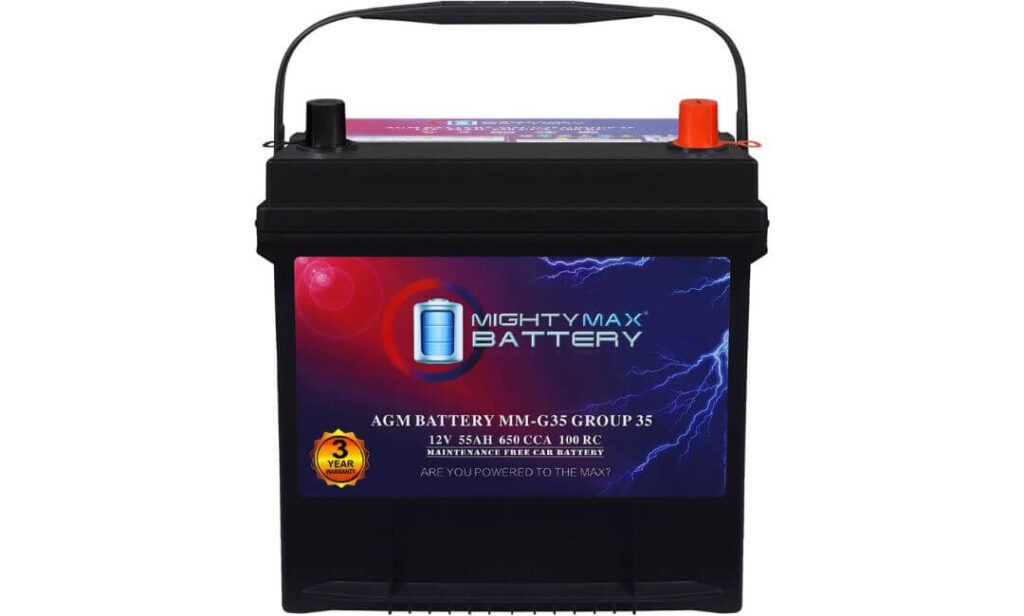
Quick Specs:
- Group Size 35 AGM fitment for most modern Nissan Murano models
- 650 Cold Cranking Amps for stronger winter starts and stable ignition response
- 100-Minute Reserve Capacity helps support Murano’s electronics during stop-and-go driving
- 55Ah Capacity designed for balanced daily power delivery
- Sealed AGM Construction with spill-proof, maintenance-free operation
- Built to handle heat, vibration, rough roads, and repeated start cycles
- Compact OEM-style sizing with easy terminal access for cleaner installation
The first thing you notice here is that this battery was clearly designed for vehicles that constantly pull power in the background — and that matters more in a Nissan Murano than most owners realize. Between the infotainment system, powered tailgate, safety tech, climate controls, and all the electronics quietly running even while parked, weaker batteries usually start showing signs early. This one feels built for that exact kind of workload instead of barely surviving it.
That 650 CCA output paired with a 100-minute reserve capacity is honestly the sweet spot for Murano owners who want reliable daily starts without overspending on oversized commercial-grade batteries they do not actually need. During colder mornings, the startup feels more immediate and stable, especially compared to older flooded batteries that tend to hesitate once temperatures drop. The AGM design also helps keep voltage delivery smoother when multiple electronics are running together — something Murano owners with newer trims will appreciate quickly.
Another thing that genuinely makes this battery interesting is the way it balances durability with simplicity. The sealed AGM construction means no maintenance headaches, no acid mess, and far better resistance against vibration and rough road shock. A lot of cheaper batteries look good on paper, then slowly lose consistency after repeated discharge cycles. This one was clearly engineered to recover better from modern daily driving habits where vehicles sit unused, handle short trips, or constantly restart in traffic.
(For Murano owners wanting a true OEM-style AGM upgrade without jumping into oversized premium battery pricing, this setup honestly makes a lot of sense.)
What Makes It a Smarter Choice Than Most Basic Group 35 Batteries
- AGM construction handles modern Murano electrical demand far better than standard flooded batteries
- Strong 650 CCA output gives more confidence during cold starts and winter mornings
- 100RC reserve capacity helps support accessories, screens, and powered features without voltage dips
- Sealed spill-proof design means cleaner long-term ownership with less maintenance stress
- Rugged internal construction helps resist vibration, rough roads, and repeated start-stop use
Where Some Owners May Want Something Bigger
- Certain heavily loaded Murano trims with higher electrical demand may benefit more from an H6/Group 48 AGM upgrade for extra reserve capacity
Nissan Murano Compatibility and Real-World Fitment Notes
For most 2009–2026 Nissan Murano models, this Group 35 AGM battery sits right in the sweet spot for factory-style fitment. The sizing works especially well for owners wanting a direct replacement without modifying trays, terminals, or surrounding covers.
It also makes more sense than many oversized battery upgrades for drivers who mainly use their Murano for commuting, family travel, highway driving, and everyday errands. You still get strong AGM performance without adding unnecessary bulk or weight under the hood.
The Insider Pro-Tip
A lot of Murano owners replace their battery only after the vehicle already starts acting strange — slower cranks, flickering electronics, weak remote start performance, random warning messages. By that point, the battery has usually been struggling for weeks. The smarter move is upgrading before those symptoms appear, especially once the original battery crosses the 3–4 year mark.
The reason this particular AGM setup works so well is because it does not try to impress with inflated marketing numbers alone. The balance between Group 35 fitment, reserve capacity, AGM stability, and real cold-start performance feels properly matched to how modern Nissan Murano models are actually driven every day. That balance is exactly what many cheaper replacement batteries still fail to get right.
#2. Goodyear 35-AGM Platinum Series Rechargeable AGM Automotive Battery
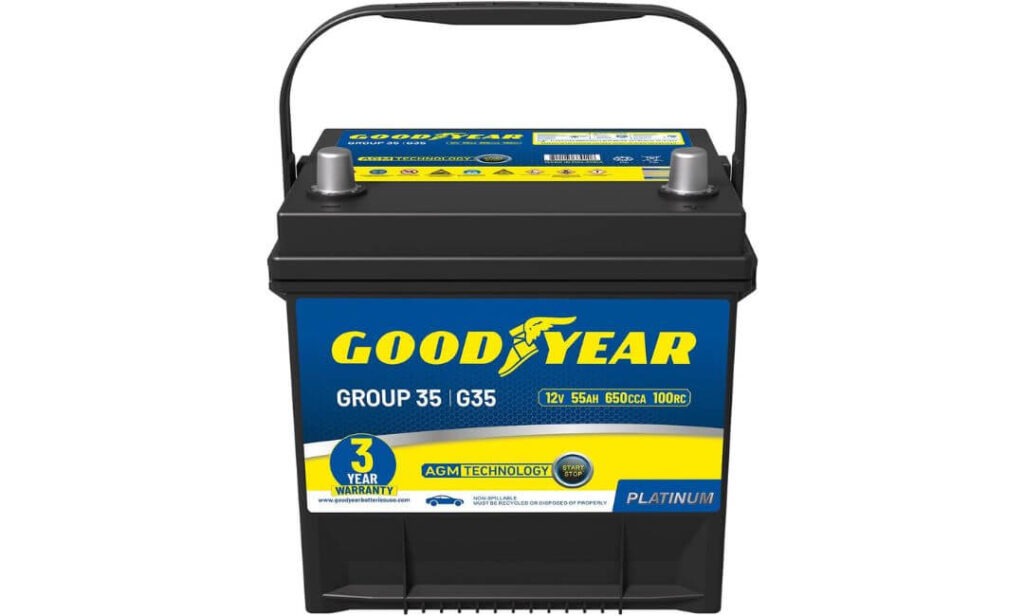
Quick Specs:
- Group 35 AGM battery built for modern midsize SUV electrical demand
- 650 Cold Cranking Amps for dependable starts during cold mornings and temperature swings
- 100-Minute Reserve Capacity helps support Murano electronics during traffic, short trips, and parked power draw
- 55Ah capacity with high discharge efficiency for smoother daily voltage delivery
- Spill-proof VRLA AGM design with maintenance-free operation
- Heavy-duty calcium-alloy internal grid for improved charging stability and cycle durability
- Multi-position mounting flexibility with strong vibration resistance for rougher road conditions
- Backed by a 36-month warranty for longer-term ownership confidence
What immediately separates this battery from a lot of ordinary Group 35 replacements is how composed it feels under electrical load. A modern Nissan Murano quietly uses power almost nonstop — even when parked. Remote entry systems, background modules, infotainment memory, powered accessories, driver-assist sensors… they all keep drawing energy in ways older SUVs never did. This battery feels designed with that reality in mind instead of pretending a basic low-capacity flooded battery is still enough.
The combination of 650 CCA, AGM construction, and a 100-minute reserve capacity gives the Murano a more confident startup feel, especially during colder weather or after the vehicle sits unused for a couple of days. There is less hesitation during ignition and far better consistency once multiple systems begin pulling power together. That matters more than most owners expect because unstable voltage delivery is usually where strange electrical behavior begins.
Another genuinely impressive part here is the internal construction. The AGM layout combined with the heavy-duty calcium-alloy grid helps this battery recover better from repeated discharge cycles, stop-and-go driving, and modern daily commuting patterns. It also resists vibration and rough road shock much better than cheaper batteries that slowly weaken internally over time.
(For Murano owners wanting a cleaner OEM-style AGM upgrade that feels stable, refined, and properly matched to modern SUV electronics, this battery honestly punches above its category.)
What Makes This AGM Setup Stand Out for Murano Owners
- Strong 650 CCA output delivers reliable cold-weather starting confidence
- AGM construction helps support modern Murano electronics more smoothly than conventional batteries
- 100RC reserve capacity gives extra breathing room during traffic, short trips, and accessory use
- Heavy-duty internal grid design improves long-term charging consistency and durability
- Maintenance-free spill-proof build feels cleaner and more modern for long-term ownership
- 36-month warranty adds extra confidence for drivers planning to keep their Murano several years
Why Some Drivers May Still Prefer an H6 Upgrade
- Owners running heavier electronics, frequent short-trip driving, or higher-demand trims may appreciate the extra reserve capacity available from larger H6 AGM batteries
Nissan Murano Fitment and Daily Driving Impressions
For most Nissan Murano models using a Group 35 battery, this setup feels very close to what owners actually want from a modern replacement — clean installation, stable starts, and enough reserve capacity to support the SUV without feeling undersized.
It especially makes sense for Murano drivers who deal with daily commuting, colder climates, family travel, or vehicles that spend a lot of time in traffic with electronics constantly active. The AGM stability becomes noticeable much faster than many people expect.
The Insider Pro-Tip
One thing many Murano owners overlook is how much battery strain comes from short-distance driving. Even if the SUV starts normally today, repeated short trips slowly reduce charging efficiency over time — especially with modern electronics always active in the background. AGM batteries like this handle that lifestyle far better than older flooded designs.
The reason this particular setup works so naturally in the Murano is because the specs feel balanced instead of exaggerated. The Group 35 sizing, 650 CCA output, reserve capacity, and AGM durability all line up well with how the Murano actually behaves in real-world driving. That balance is usually what separates a battery that still feels strong years later from one that simply looked good on a product page.
#3. Autocessking Group Size 35 Start and Stop AGM Automotive Battery
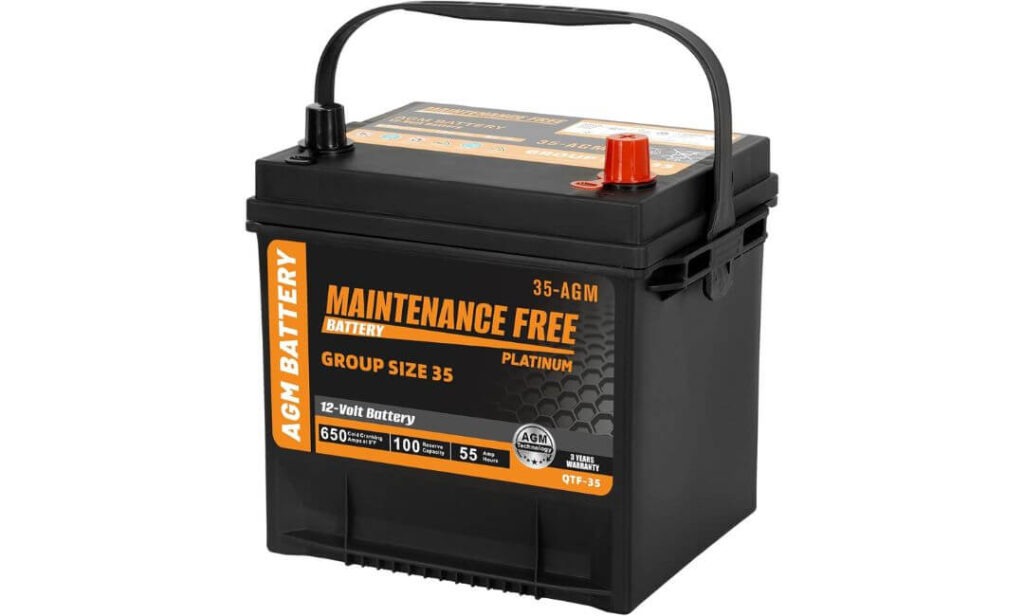
Quick Specs:
- Group Size 35 AGM fitment for most Nissan Murano models using factory-style battery sizing
- 650 Cold Cranking Amps for dependable starts in cold mornings and changing climates
- 100-Minute Reserve Capacity helps modern Murano electronics stay stable during daily driving
- 55Ah capacity designed for balanced electrical support without unnecessary bulk
- AGM construction with spill-proof sealed design and maintenance-free ownership
- Engineered for start-stop driving conditions and repeated ignition cycles
- Low self-discharge design helps retain voltage during long parking periods
- Resistant to heat, vibration, corrosion, and rough-road stress
Sometimes the best battery choice is not the one with the loudest branding — it is the one that simply matches how the vehicle is actually used. That is exactly the feeling this AGM setup gives in a Nissan Murano. Modern Murano models constantly draw small amounts of power in the background, whether owners notice it or not, and weaker batteries slowly lose stability under that kind of daily electrical demand.
What stands out here is how intelligently the specs are balanced. The combination of 650 CCA, AGM construction, low self-discharge behavior, and a 100-minute reserve capacity feels properly tuned for real Murano ownership instead of just chasing oversized numbers for marketing. Vehicles that sit parked for several days, handle short commutes, or spend hours in stop-and-go traffic usually expose battery weaknesses very quickly. This setup was clearly built with those modern driving habits in mind.
The AGM construction also deserves more attention than it usually gets. Traditional flooded batteries tend to degrade faster once heat, vibration, repeated starts, and partial charging cycles become part of everyday driving. This battery handles those stress points much more confidently thanks to its sealed glass mat design and stronger internal durability. The result is a battery that feels calmer, more stable, and more predictable over time instead of slowly becoming inconsistent without warning.
(For Murano owners wanting dependable AGM performance without paying purely for branding, this battery genuinely feels like one of the smarter value-focused picks in the lineup.)
Where This Battery Earns Real Respect in Daily Murano Driving
- AGM construction supports modern Murano electronics more reliably than standard flooded batteries
- Low self-discharge design helps the battery hold voltage better during long parking periods
- Strong resistance against heat, vibration, and harsh road conditions improves long-term consistency
- 650 CCA output delivers confident startup performance across changing seasons
- Start-stop optimized design handles repeated ignition cycles more naturally than basic batteries
- Balanced sizing and reserve capacity feel properly matched to real-world Murano driving habits
Why Some Drivers May Still Lean Toward a Larger AGM Upgrade
- Murano owners running heavier accessory loads or higher-demand trims may appreciate the additional reserve capacity offered by larger H6 AGM batteries over longer ownership periods
Nissan Murano Fitment and Everyday Usability
For most Nissan Murano models using a Group 35 battery, this AGM setup fits naturally into the kind of daily driving many owners actually deal with — commuting, short errands, family use, highway trips, and occasional long parking periods between drives.
It especially makes sense for drivers who want AGM reliability without moving into oversized battery territory unnecessarily. The dimensions stay close to factory expectations while still delivering stronger reserve performance than many standard replacement batteries in the same size category.
The Insider Pro-Tip
One of the biggest reasons AGM batteries fail early is not the battery itself — it is repeated undercharging from constant short trips. Modern SUVs like the Nissan Murano use far more background electrical power than most people realize, which means the battery rarely gets a full recovery during quick drives across town.
That is why batteries like this tend to perform better long term. The combination of AGM durability, low self-discharge behavior, vibration resistance, and balanced reserve capacity gives the Murano a much healthier electrical foundation for real everyday driving instead of ideal laboratory conditions. In real ownership, that difference becomes noticeable faster than most drivers expect.
#4. Weize Platinum AGM Battery BCI Group 48 H6 Automotive Battery
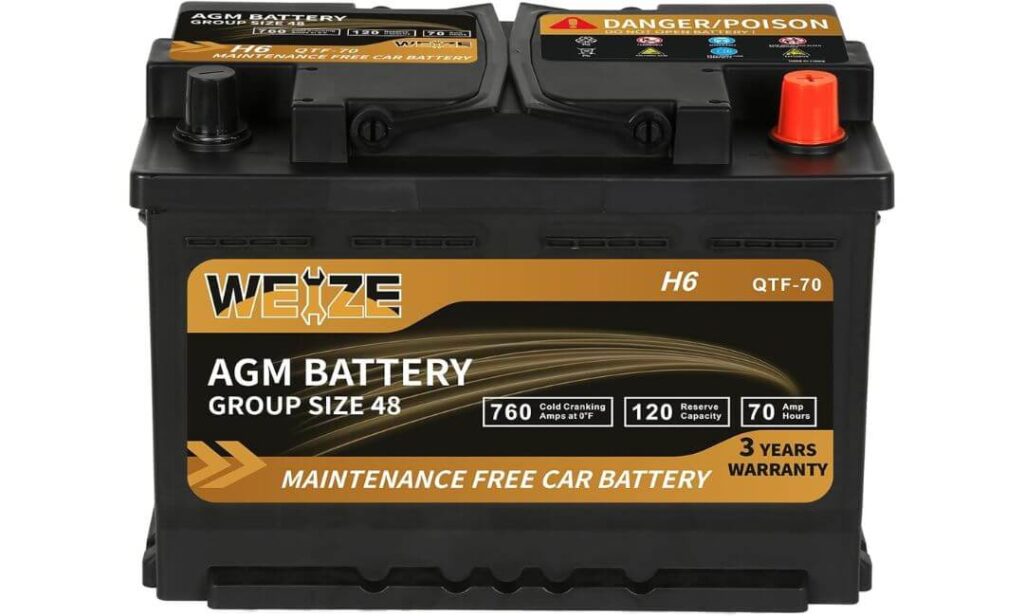
Quick Specs:
- H6 / Group 48 AGM battery designed for newer SUVs with heavier electrical demand
- 760 Cold Cranking Amps for stronger cold-weather startup performance
- Massive 120-Minute Reserve Capacity helps support larger infotainment systems, sensors, and powered accessories
- 70Ah capacity for more sustained electrical stability during daily driving
- Advanced AGM construction with leak-proof, maintenance-free operation
- Designed specifically for start-stop systems and modern accessory-heavy vehicles
- Low self-discharge behavior helps preserve voltage during long parking periods
- Reinforced vibration-resistant internal construction for long-term durability
There is a noticeable difference between a battery that simply fits the tray and a battery that genuinely feels engineered for how newer Nissan Murano models operate every day. This H6 AGM setup lands firmly in the second category. The moment you look at the combination of 760 CCA, 120RC reserve capacity, and 70Ah output, it becomes obvious this battery was built for vehicles carrying serious electrical demand — not just occasional engine starts.
Modern Murano trims quietly place far more pressure on the battery than many owners expect. Large touchscreens, driver-assistance systems, powered seating, liftgates, climate tech, stop-start functionality, background modules… all of it adds up. Smaller batteries can technically work for a while, but over time they often begin showing weakness through slower cranks, unstable voltage behavior, or electronics acting inconsistent after the vehicle sits. This AGM setup feels designed to prevent those problems before they start.
What really makes this battery stand apart is the extra breathing room it gives the Murano electrically. That 120-minute reserve capacity is not just a number on a product page — it changes how stable the SUV feels under heavy accessory use, colder starts, traffic-heavy commuting, and repeated short trips. Combined with AGM durability and stronger cycle resistance, the overall experience feels much closer to what owners expect from a premium modern SUV.
(For Murano owners wanting a serious long-term AGM upgrade instead of just another replacement battery, this is where the lineup starts feeling genuinely premium.)
Why This H6 AGM Setup Feels More Future-Proof
- Higher 760 CCA output delivers stronger startup confidence during winter and colder climates
- Massive 120RC reserve capacity supports modern Murano electronics far more comfortably than smaller batteries
- AGM construction handles start-stop systems and repeated discharge cycles more naturally
- Larger 70Ah capacity improves electrical stability during accessory-heavy driving
- Strong vibration resistance and low self-discharge behavior support longer-term consistency
- Maintenance-free sealed construction keeps ownership cleaner and easier over time
Why Some Murano Owners May Still Prefer a Group 35 AGM
- Drivers using base trims or wanting a lighter direct OEM-style replacement may feel more comfortable sticking with traditional Group 35 sizing instead of moving into a larger H6 platform
Nissan Murano Fitment and Real-World Upgrade Value
This battery makes the most sense for newer Nissan Murano models carrying heavier electrical demand or owners planning to keep the SUV long term. The H6 sizing provides noticeably more reserve support without stepping into oversized commercial battery territory.
It is especially attractive for Murano drivers dealing with cold weather, frequent stop-and-go driving, short commuting cycles, or SUVs loaded with accessories that constantly draw background power. In those situations, the larger reserve capacity becomes a genuine long-term advantage instead of marketing filler.
The Insider Pro-Tip
Many Murano owners only focus on cold cranking amps when buying a replacement battery, but on modern SUVs, reserve capacity often matters even more. A vehicle packed with electronics can slowly drain weaker batteries long before startup power becomes the obvious problem.
That is exactly why larger AGM setups like this tend to age more gracefully in real ownership. The combination of 760 CCA, 120RC reserve support, AGM durability, and start-stop optimization gives the Murano a much healthier electrical buffer during everyday driving. That extra breathing room is usually what keeps a battery feeling strong years later instead of merely surviving month to month.
#5. UPLUS BCI Group 48 AGM-L70-M Premium AGM Automotive Battery
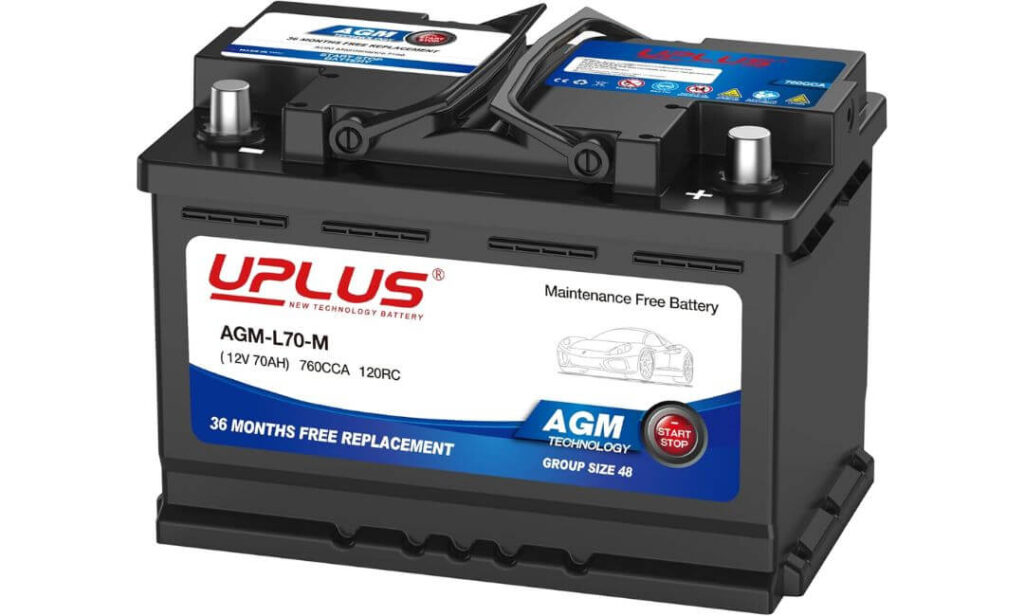
Quick Specs:
- H6 / Group 48 AGM battery for higher-demand Nissan Murano setups
- Strong 760 Cold Cranking Amps for dependable starts in extreme temperatures
- Massive 120-Minute Reserve Capacity for longer accessory support and electrical stability
- 70Ah capacity built for modern SUVs with larger power demands
- Advanced AGM start-stop technology with 4X extra cycle life over standard flooded batteries
- Designed for vehicles with heated seats, navigation systems, power doors, and heavy electronics
- Heavy-duty calcium lead grid for stronger conductivity and lower internal resistance
- Sealed maintenance-free AGM design with acid leak protection and enhanced vibration resistance
At some point, modern SUVs stopped behaving like simple vehicles and started acting more like rolling electronic systems. The Nissan Murano is one of them. Between driver-assist features, large displays, constant background modules, power accessories, and stop-and-go commuting, today’s Murano quietly asks far more from a battery than most owners realize. This AGM setup feels like it fully understands that reality.
The first thing that stands out is how much electrical breathing room this battery creates. With 760 CCA, 70Ah capacity, and a huge 120RC reserve capacity, the Murano feels more stable during cold starts, traffic-heavy commuting, accessory use, and repeated short trips where weaker batteries slowly lose consistency. You are not just getting startup power here — you are getting sustained electrical confidence for the entire vehicle.
What genuinely makes this battery interesting though is the durability philosophy behind it. The enhanced alloy construction, denser internal paste design, and claimed 4X cycle life improvement all point toward a battery engineered for long-term stress instead of occasional use. That becomes especially important in SUVs that sit parked for days, handle frequent restart cycles, or carry heavy electrical loads daily. Add in the extreme vibration resistance and low-resistance AGM design, and this starts feeling much closer to a premium long-haul upgrade than a basic replacement battery.
(For Murano owners wanting maximum reserve support and stronger long-term AGM durability without dealer-level pricing, this battery honestly feels like one of the most complete upgrades in the entire lineup.)
Why This AGM Upgrade Feels Exceptionally Well Matched to Modern SUVs
- Massive 120RC reserve capacity helps support modern Murano electronics more comfortably during real-world driving
- 760 CCA output delivers powerful startup performance even during harsh winters
- AGM start-stop design handles repeated ignition cycles and traffic-heavy commuting more naturally
- Enhanced alloy construction helps improve long-term cycle durability and charging consistency
- Strong vibration resistance makes it better suited for rough roads and long-term SUV use
- Excellent choice for Murano models carrying larger infotainment systems and power accessories
Why Some Owners May Still Prefer Staying With Group 35
- Drivers prioritizing direct factory-style sizing, lighter weight, or simpler installation may feel more comfortable with a traditional Group 35 AGM replacement instead of moving to the larger H6 platform
Nissan Murano Fitment and Long-Term Ownership Value
This H6 AGM setup makes the most sense for Murano owners who plan to keep their SUV several years and want stronger reserve support from the start instead of waiting for electrical issues to appear later. The larger capacity becomes especially useful in colder climates, stop-and-go traffic, and vehicles loaded with modern electronics.
It is also a smart fit for drivers whose Murano sits unused for periods of time. The AGM design combined with lower self-discharge behavior helps preserve voltage stability better than many standard batteries that slowly weaken during parking periods.
The Insider Pro-Tip
Most battery buyers focus only on whether the engine starts today. Long-term Murano ownership is about something different — how stable the battery still feels after thousands of starts, repeated short trips, heavy accessory use, winter mornings, and months of real driving stress.
That is where larger AGM batteries like this separate themselves. The combination of 760 CCA, 120RC reserve support, AGM cycle durability, and stronger vibration resistance gives the Murano a much healthier electrical cushion over time. In real-world ownership, that extra reserve often becomes the difference between a battery that simply survives and one that still feels strong years later.
Best Nissan Murano Battery Picks Compared for Group 35 and H6 AGM Fitment
Buying Guide: What Actually Matters When Choosing a Battery for a Nissan Murano
A Nissan Murano is not the kind of SUV that responds well to cheap “good enough” batteries anymore. Older Murano models were already fairly electronics-heavy for their time, but newer versions push things even further with larger infotainment systems, driver-assistance tech, powered accessories, electronic safety modules, and in some trims, start-stop functionality constantly cycling the engine on and off in traffic.
That changes the entire conversation when choosing a replacement battery.
The biggest mistake many owners make is focusing only on whether the engine starts today. A battery can technically start the vehicle and still be completely wrong for the way a modern Murano actually uses electrical power every day. The better approach is understanding how AGM technology, reserve capacity, battery sizing, electrical stability, and long-term cycling durability all work together inside a modern SUV.
Why AGM Batteries Make More Sense in a Modern Nissan Murano
For most Murano owners, AGM technology is no longer just a premium upgrade — it is honestly the smarter long-term choice.
AGM stands for Absorbent Glass Mat, a battery design where the electrolyte is absorbed into fiberglass mats instead of freely moving around like traditional flooded batteries. That may sound technical, but in real driving, the difference becomes obvious pretty quickly.
AGM batteries handle repeated starts better, recover from discharge cycles faster, resist vibration more effectively, and maintain voltage stability more consistently when multiple electronics are running together. That matters in the Murano because the SUV is constantly pulling electrical power in the background, even while parked.
Another major advantage is that AGM batteries are completely sealed and maintenance-free. There is no acid spill risk during normal use, no water topping-off, and far less internal degradation from vibration and heat over time. In SUVs dealing with rough roads, stop-and-go traffic, short commuting cycles, or colder winters, AGM batteries simply tend to age more gracefully.
That is exactly why every battery recommended in this guide uses AGM construction instead of older flooded technology.
Understanding the Battery Specs That Truly Affect Daily Driving
A lot of battery listings overwhelm buyers with technical numbers, but only a handful actually matter for a Nissan Murano owner in real-world driving.
The first number most people notice is CCA (Cold Cranking Amps). This measures how much starting power the battery can deliver during cold weather. For a Murano, staying around the 650–760 CCA range is usually the sweet spot. Lower-output batteries may still work initially, but they tend to feel weaker during winter starts or after sitting parked for several days.
The next spec that deserves far more attention is Reserve Capacity (RC). Modern SUVs rely heavily on reserve capacity because electronics continue drawing power even when the engine is not running. A battery with higher RC can support infotainment systems, climate controls, power liftgates, driver-assist sensors, and background modules more comfortably without voltage instability.
That is why the difference between a 100RC Group 35 AGM and a 120RC H6 AGM matters more than many buyers realize. The larger reserve buffer helps newer Murano trims feel more electrically stable during heavy daily use.
Another important factor is Amp Hour (Ah) rating, which reflects the battery’s overall energy storage capability. Higher Ah ratings generally support better sustained power delivery and improved cycling durability during repeated stop-and-go driving.
Finally, pay attention to whether the battery is designed specifically for SLI applications — meaning Starting, Lighting, and Ignition. A Nissan Murano needs a true automotive starting battery, not a deep-cycle solar or marine-style battery that happens to fit physically.
Nissan Murano Battery Group Size Explained
This is where many online battery recommendations become misleading.
For most 2009–2026 Nissan Murano models, the most common factory-style fitment remains Group 35. It offers the right balance of dimensions, terminal positioning, startup power, and installation simplicity for most trims.
However, some newer Murano configurations — especially models carrying heavier electronics or start-stop systems — can also benefit from an H6 / Group 48 AGM battery. These batteries are physically larger and usually provide higher reserve capacity along with stronger overall electrical stability.
Some older Murano discussions online may mention Group 51 or 51R, but those sizes are generally not the ideal modern recommendation for newer Murano applications focused on AGM performance and long-term reliability.
The most important thing is matching:
- Battery dimensions
- Terminal layout
- Group size
- Electrical output
- Hold-down compatibility
A battery can have impressive specs on paper and still become a headache if the fitment is slightly wrong.
Why Start-Stop Compatibility Changes Battery Requirements
If your Nissan Murano uses start-stop technology, the battery works much harder than in a traditional vehicle.
Every traffic light restart counts as another ignition cycle, and over time that repeated stress destroys weaker conventional batteries much faster than many owners expect. Start-stop systems demand stronger cycle durability, quicker recharge recovery, and more stable voltage delivery.
That is why AGM batteries designed specifically for start-stop applications perform so much better in these situations. They recover from repeated discharge cycles more naturally and maintain consistent performance under heavy urban driving conditions.
Even Murano owners without active start-stop systems still benefit from AGM technology because modern SUVs now carry enough electronics to create similar electrical demands anyway.
Why Proper Fitment Matters More Than Many Buyers Realize
One of the easiest ways to create battery problems is choosing a unit that technically “fits,” but was never truly designed around the Murano’s tray dimensions, hold-down setup, or terminal positioning.
Always verify:
- Battery width and height
- Positive and negative terminal orientation
- Group size compatibility
- Hood clearance
- Hold-down alignment
This becomes especially important when moving from a traditional Group 35 battery into a larger H6/Group 48 setup. Many H6 AGM batteries fit beautifully in newer Murano trims, but dimensions still need to be checked carefully before purchasing.
The best replacement battery is not always the one with the biggest numbers. It is the one that fits the vehicle naturally while delivering enough reserve support for the way the SUV is actually driven.
What to Expect From a Long-Lasting Nissan Murano Battery
Battery lifespan depends less on branding and more on driving habits than most people realize.
Short trips, frequent stop-and-go traffic, extreme temperatures, and long parking periods all increase battery stress significantly. Modern Murano models are especially demanding because electronics continue pulling background power even after the engine shuts off.
That is one reason AGM batteries tend to last longer in these SUVs. Their lower self-discharge behavior, stronger internal construction, and improved cycle durability help them tolerate real-world driving conditions far better than conventional flooded batteries.
A high-quality AGM battery in a properly maintained Nissan Murano can often provide several years of stable service, especially when the vehicle is driven regularly and the charging system remains healthy.
The key is choosing a battery that matches how the Murano actually lives day to day — not just one that looks impressive in a product listing.
Practical Nissan Murano Battery Installation and Fitment Tips That Actually Prevent Problems
A surprising number of Nissan Murano battery issues start after the installation, not before it. The battery itself may be perfectly fine, but one small fitment mistake, loose terminal connection, incorrect polarity layout, or poorly matched group size can create problems that look much bigger than they really are.
Modern Murano models are especially sensitive because the SUV depends heavily on stable voltage communication between dozens of electronic systems. One weak connection or incorrect fitment can trigger slow starts, warning lights, unstable idle behavior, random electronic glitches, or charging inconsistencies that many owners mistakenly blame on the vehicle.
That is why proper installation matters just as much as choosing the right AGM battery in the first place.
How to Verify OEM-Level Battery Fit Before Installing Anything
Before ordering any replacement battery, the smartest thing you can do is compare the new battery directly against the original one already sitting in the Murano. Do not rely only on online compatibility tools because many generic listings overlook trim-level differences, upgraded electrical packages, or slight dimensional variations.
The first thing to confirm is the group size. For most Murano models, that usually means either:
- Group 35 AGM
- H6 / Group 48 AGM
Once the group size is confirmed, check the actual physical dimensions carefully:
- Length
- Width
- Height
- Terminal position
- Hold-down alignment
Even small sizing differences matter more than people expect. A battery that sits slightly too tall can interfere with hood clearance or factory battery covers. A battery that is too long may place pressure against cables or tray walls over time.
Terminal orientation is another area many buyers overlook. Most Murano-compatible AGM batteries use:
- Positive terminal on the right
- Negative terminal on the left
If the polarity layout is reversed, the cables may stretch unnaturally or fail to reach correctly altogether.
For larger H6/Group 48 upgrades, it is also smart to inspect:
- Battery tray clearance
- Hold-down bracket reach
- Cable length flexibility
- Ventilation space around the battery
Modern AGM batteries are sealed and safer than traditional flooded batteries, but proper airflow and secure mounting still matter for long-term durability.
Why Secure Hold-Down Fitment Is More Important Than Most Owners Think
A battery should never shift inside the tray while driving.
Even small amounts of movement create vibration stress over time, and vibration is one of the fastest ways to shorten battery lifespan internally. Modern AGM batteries resist vibration better than older flooded designs, but they still need proper hold-down support to stay healthy long term.
Always verify:
- Hold-down clamps sit flush
- Battery does not rock side to side
- Cables are not under tension
- Tray surface is clean and stable
A properly secured battery not only lasts longer, it also protects sensitive Murano electronics from unstable voltage caused by loose internal connections during rough-road driving.
Installation Steps That Actually Matter in Real Ownership
Battery installation itself is straightforward, but rushing through the process creates many avoidable problems later.
Before removing the old battery:
- Turn the vehicle completely off
- Remove the key or key fob from the immediate area
- Let electronics fully power down for several minutes
When disconnecting cables:
- Always disconnect the negative terminal first
- Disconnect the positive terminal second
This reduces the risk of accidental electrical shorting while working around the battery.
Before installing the new AGM battery:
- Clean terminal clamps thoroughly
- Remove corrosion buildup completely
- Inspect cables for cracks or looseness
- Check tray condition underneath the old battery
Even a high-quality AGM battery performs poorly if the terminal connection itself is dirty or unstable.
When installing the new battery:
- Place the battery fully flat into the tray
- Secure the hold-down bracket first
- Connect the positive terminal
- Connect the negative terminal last
Avoid overtightening terminal clamps. Excessive torque can damage battery posts or weaken clamp integrity over time. The goal is secure contact, not excessive force.
Signs You May Have Chosen the Wrong Nissan Murano Battery Size
One of the biggest mistakes people make is assuming a battery is correct simply because the engine starts once after installation. Real fitment problems often appear slowly over days or weeks.
Common warning signs include:
- Battery shifting inside the tray
- Hood cover sitting unevenly
- Terminal cables stretched tightly
- Hold-down bracket not aligning correctly
- Difficulty reconnecting factory covers
- Electronics behaving inconsistently
- Weak cold starts despite a new battery
- Battery draining unusually fast during parking periods
If any of those issues appear immediately after installation, the problem is often incorrect battery sizing or poor fitment rather than a defective battery itself.
This becomes especially common when moving between:
- Group 35 batteries
- H6 / Group 48 AGM batteries
Both can work beautifully in the right Murano setup, but the tray dimensions and surrounding clearance still need to be verified carefully.
Why AGM Batteries Change the Installation Experience
One thing many Murano owners notice immediately after switching to AGM is how much cleaner and more stable the setup feels long term.
Because AGM batteries are:
- Sealed
- Spill-proof
- More vibration resistant
- Better at handling repeated charge cycles
…they usually create fewer long-term maintenance headaches than older flooded batteries.
There is less corrosion buildup around terminals, better recovery after repeated starts, and more stable electrical behavior during heavy accessory use. In a modern Nissan Murano filled with sensitive electronics, that extra stability matters far more than many people realize at first.
The installation itself may only take 15–30 minutes, but choosing the correct AGM battery and fitting it properly can affect how confidently the Murano starts and behaves for years afterward.
Nissan Murano Start-Stop Battery Considerations Most Owners Do Not Realize Until Problems Begin
The moment a Nissan Murano uses start-stop technology, the battery stops behaving like a simple “starter battery” and becomes part of the vehicle’s entire electrical management system. That changes everything about what kind of battery the SUV actually needs.
Older vehicles might start once, drive for an hour, then shut off for the day. A modern Murano with start-stop functionality can restart the engine dozens of times during a single commute. Every traffic light, parking maneuver, slow-moving intersection, or stop-and-go situation adds another ignition cycle to the battery’s workload.
That repeated stress is exactly why standard flooded batteries struggle in these systems over time.
A battery may still crank the engine initially, but once repeated start-stop cycles combine with infotainment systems, climate controls, safety sensors, power accessories, and constant background electrical demand, weaker batteries usually begin fading much faster than many owners expect.
Why AGM Batteries Are Strongly Preferred for Start-Stop Murano Models
This is where AGM technology becomes far more than just a “premium upgrade.”
AGM batteries are specifically designed to handle:
- Repeated restart cycles
- Faster recharge recovery
- Higher electrical loads
- Longer idle accessory use
- More stable voltage delivery
In a start-stop Murano, the battery constantly experiences partial discharge and recharge cycles throughout daily driving. Conventional flooded batteries do not tolerate that kind of stress nearly as well because they are designed around more traditional driving patterns with fewer restart demands.
AGM batteries respond differently.
Their internal glass mat design keeps the electrolyte stable, improves conductivity, reduces internal resistance, and allows the battery to recover more naturally after repeated ignition events. That is why modern start-stop systems almost always perform better long term with AGM construction instead of conventional flooded batteries.
Another major difference is voltage consistency. Modern Nissan Murano electronics are extremely sensitive to unstable voltage. Once battery health begins dropping, owners may notice:
- Delayed auto start-stop operation
- Random warning messages
- Weak remote start behavior
- Slower infotainment startup
- Flickering interior electronics
- Start-stop system disabling itself unexpectedly
In many cases, the issue is not the vehicle itself — it is simply the battery struggling to maintain stable voltage under constant demand.
Understanding What “Nissan Murano Start-Stop Battery” Really Means
A lot of online battery searches now include phrases like:
- Nissan Murano start-stop battery
- AGM battery for Nissan Murano
- Best start-stop battery replacement for Murano
What many buyers do not realize is that these searches are not only about whether the engine turns on. They are really about finding a battery capable of supporting the Murano’s entire electrical behavior under repeated cycling conditions.
A proper start-stop compatible AGM battery should offer:
- Strong reserve capacity
- High cycle durability
- Faster recharge recovery
- Stable voltage delivery
- Correct OEM-level fitment
- Proper terminal layout
- Sufficient cold-cranking performance
That is why batteries with stronger specifications like:
- 650–760 CCA
- 100–120RC reserve capacity
- AGM construction
- Group 35 or H6 sizing
…consistently make more sense in modern Murano applications than lower-capacity budget replacements.
The goal is not simply “more power.” The goal is electrical stability over years of repeated daily use.
Why Reserve Capacity Matters So Much in Start-Stop Driving
One of the most overlooked battery specs in start-stop vehicles is Reserve Capacity (RC).
Every time the Murano shuts off at a stoplight, the battery temporarily becomes the primary electrical source for:
- Displays
- Climate systems
- Safety modules
- Audio systems
- Sensors
- Lighting
- Navigation systems
A battery with weak reserve support drains faster and experiences more internal stress during those repeated transitions.
That is why larger AGM batteries with:
- 100RC
- 120RC
- Higher Ah capacity
…usually feel more stable in real-world Murano driving.
The difference becomes especially noticeable:
- During winter
- In traffic-heavy cities
- During short trips
- With frequent stop-and-go commuting
- In Murano trims loaded with accessories
How Long a Nissan Murano Start-Stop Battery Usually Lasts
Battery lifespan depends heavily on driving conditions, climate, and charging habits, but start-stop systems naturally increase battery wear compared to older non-start-stop vehicles.
Many Murano owners begin noticing early battery fatigue through small warning signs:
- Start-stop system activating less often
- Slower cranking during mornings
- Electronics feeling inconsistent
- Auto stop becoming unavailable randomly
- Battery warning notifications
These symptoms often appear before complete battery failure.
In real-world ownership, AGM batteries generally last longer than flooded designs because they tolerate cycling stress more effectively. However, even AGM batteries wear faster when:
- The vehicle only takes short trips
- The SUV sits parked for long periods
- Temperatures become extremely hot or cold
- Heavy accessories stay active frequently
For many Murano owners, replacing the battery proactively before complete failure becomes the smarter move, especially once the battery approaches the later years of service.
Real Maintenance Expectations for AGM Batteries in a Murano
One of the best things about AGM ownership is how little day-to-day maintenance the batteries actually require.
Because AGM batteries are:
- Sealed
- Spill-proof
- More vibration resistant
- Less prone to acid leakage
- Better at retaining charge
…they generally feel cleaner and more stable over time compared to older flooded batteries.
That said, “maintenance-free” does not mean completely ignore the battery forever.
Smart Murano owners still:
- Inspect terminal cleanliness occasionally
- Watch for slow starts during seasonal changes
- Avoid leaving electronics running unnecessarily
- Drive long enough for proper charging recovery
- Check charging system health during service visits
The reality is simple: modern Nissan Murano models ask a lot from their batteries every single day. Choosing the right AGM battery early — especially one properly designed for start-stop behavior — usually prevents far more headaches than waiting until the SUV begins showing electrical warning signs later.
The Truth About “Maintenance-Free” AGM Batteries in a Nissan Murano
The phrase “maintenance-free” gets thrown around constantly in battery marketing, but very few explanations actually tell Murano owners what that means in real-world ownership. A lot of people hear maintenance-free and assume the battery can simply be ignored for years without consequence. Modern AGM batteries absolutely reduce maintenance headaches, but they still remain one of the most important electrical components in the entire vehicle.
The good news is that AGM batteries genuinely are a major improvement over older flooded designs, especially in a Nissan Murano where electronics, start-stop systems, infotainment features, and background modules place continuous demand on the battery every single day.
The difference is that AGM ownership feels cleaner, more stable, and far less stressful long term — not magically maintenance-proof forever.
What “Maintenance-Free” Actually Means on an AGM Battery
Traditional flooded batteries required periodic inspection because the electrolyte inside could evaporate, shift, or degrade over time. Some older batteries even needed fluid top-offs to maintain proper internal operation.
Modern AGM batteries work differently.
Inside an AGM battery, the electrolyte is absorbed into tightly packed fiberglass mats instead of freely moving around in liquid form. That sealed internal design creates several real-world advantages for Murano owners:
- No regular fluid checks
- No topping off water
- Reduced acid leakage risk
- Better vibration resistance
- More stable charging behavior
- Cleaner long-term terminal condition
That is why AGM batteries feel much more refined during ownership compared to conventional batteries that slowly develop corrosion, inconsistent voltage behavior, or fluid-related degradation.
For a Nissan Murano specifically, AGM construction also helps stabilize the SUV’s increasingly sensitive electronics. Modern Murano models depend heavily on consistent voltage communication between dozens of systems at once, and AGM batteries usually maintain that stability far better over time.
Why Charging Habits Matter More Than Many Murano Owners Realize
One of the biggest misconceptions about AGM batteries is that they automatically stay healthy no matter how the vehicle is driven. In reality, charging habits still play a massive role in battery lifespan.
Modern Murano models often experience:
- Short daily commutes
- Stop-and-go traffic
- Long parking periods
- Heavy accessory use
- Frequent start-stop cycling
Those driving conditions place enormous stress on the charging system because the battery rarely gets enough uninterrupted time to fully recover.
That is especially important with AGM batteries because they are designed around:
- Faster recharge acceptance
- Higher cycling durability
- Stable voltage delivery
…but they still need proper charging support from the alternator to stay healthy long term.
A Murano driven only for short trips repeatedly may slowly undercharge the battery over time even if the vehicle appears completely normal initially. That partial-state charging behavior is one reason many owners experience premature battery aging without realizing what caused it.
AGM Charger Compatibility Matters More Than Generic Chargers
Another thing many buyers overlook is charger compatibility.
If a Nissan Murano AGM battery ever needs external charging, using a charger specifically designed for AGM chemistry is the safer long-term choice. AGM batteries charge differently than older flooded batteries because they:
- Accept charge faster
- Operate with lower internal resistance
- Require more controlled charging voltage behavior
A cheap generic charger without AGM support can:
- Overcharge the battery
- Create excessive internal heat
- Reduce long-term cycle life
- Accelerate internal degradation
Most quality modern battery maintainers now include:
- AGM charging mode
- Smart voltage regulation
- Automatic float maintenance
- Temperature compensation
For Murano owners who:
- Store the vehicle for long periods
- Drive infrequently
- Use many accessories
- Experience cold winters
…a smart AGM-compatible maintainer can genuinely extend battery life noticeably.
Why Alternator Health Still Matters With a New AGM Battery
A surprisingly common mistake is replacing the battery without checking the charging system itself.
If the alternator is:
- Undercharging
- Overcharging
- Producing unstable voltage
…even the best AGM battery will eventually begin struggling.
Modern Nissan Murano electrical systems rely heavily on proper voltage regulation because the SUV constantly balances:
- Engine management
- Safety systems
- Infotainment
- Climate control
- Start-stop functionality
- Background electronic modules
An AGM battery may temporarily mask charging issues because of its stronger reserve capacity, but over time the symptoms usually return if the alternator is not performing correctly.
That is why a healthy charging system matters just as much as the battery itself.
The Biggest AGM Battery Myths Nissan Murano Owners Still Believe
One of the oldest myths is:
“If the battery starts the vehicle, it must be healthy.”
That is no longer true with modern SUVs.
Many AGM batteries begin weakening long before total failure appears. The Murano may still crank normally while:
- Reserve capacity drops
- Voltage stability weakens
- Electronics behave inconsistently
- Start-stop systems stop functioning correctly
Another common myth is:
“Maintenance-free means maintenance never matters.”
In reality, AGM batteries still benefit from:
- Clean terminals
- Proper charging habits
- Healthy alternator output
- Regular driving cycles
- Occasional voltage inspection
The difference is simply that AGM batteries require far less physical maintenance than older flooded designs.
There is also a misconception that bigger batteries automatically solve everything. Larger H6 AGM batteries absolutely provide stronger reserve support in many Murano trims, but only when:
- Fitment is correct
- Charging system health is stable
- Electrical demand justifies the upgrade
The best battery is not necessarily the biggest one — it is the one properly matched to the Murano’s real-world electrical behavior.
What Long-Term AGM Ownership Actually Feels Like in a Murano
When the correct AGM battery is properly installed in a healthy Nissan Murano, the ownership experience usually feels noticeably calmer over time.
Starts feel:
- More immediate
- More consistent
- Less strained during winter
- More stable after parking periods
Electronics also tend to behave more predictably because AGM batteries maintain voltage more evenly under load.
That stability becomes especially valuable in modern Murano trims carrying:
- Large displays
- Driver-assistance systems
- Power accessories
- Heated seating
- Start-stop systems
- Continuous background modules
The biggest advantage of AGM ownership is not just raw startup power — it is long-term electrical confidence. And in a modern Nissan Murano, that difference becomes more noticeable every year.
Budgeting and Smart Battery Replacement Planning for a Nissan Murano
One of the biggest mistakes Nissan Murano owners make is treating a battery like a short-term emergency purchase instead of part of the SUV’s long-term electrical health. Modern Murano models rely heavily on stable battery performance, and choosing the cheapest replacement often becomes more expensive later through shorter lifespan, unstable electronics, repeated replacements, or cold-weather starting issues.
The smarter approach is thinking about battery value over years of ownership instead of only the purchase price sitting on the product page today.
A slightly more expensive AGM battery that lasts longer, handles Murano electronics better, and maintains stronger reserve capacity usually delivers a far better ownership experience than replacing weaker batteries repeatedly every couple of years.
That is especially true in modern Murano trims carrying:
- Start-stop systems
- Large infotainment displays
- Driver-assistance electronics
- Heated accessories
- Power liftgates
- Continuous background electrical demand
Looking Beyond Price: Understanding Real Cost-Per-Year Value
The actual value of a battery is not just what it costs upfront — it is how confidently it performs over time.
For example, a cheaper flooded battery may initially save money, but if it begins weakening after repeated stop-and-go commuting, colder winters, or short-trip driving, the long-term cost becomes much higher once:
- Early replacement
- Installation labor
- Electrical issues
- Emergency failures
- Lost reliability
…start entering the picture.
That is why AGM batteries often make stronger financial sense for a Nissan Murano even when the purchase price is higher initially.
Batteries like:
- Mighty Max MM-G35
- Goodyear 35-AGM
- Autocessking Group 35 AGM
…offer strong value for Murano owners wanting OEM-style AGM performance without stepping into larger premium battery pricing.
Meanwhile, higher-capacity H6 AGM setups like:
- Weize Platinum H6
- UPLUS AGM-L70-M
…usually make more sense for drivers carrying heavier electrical loads, using frequent stop-and-go driving patterns, or planning long-term ownership where additional reserve capacity pays off over time.
The key is understanding that the “best value” battery is not always the cheapest battery — it is the one least likely to create ownership headaches later.
Choosing the Right Nissan Murano Battery for Your Climate
Climate changes battery behavior more than many people expect.
In colder regions, startup resistance increases dramatically, which means weak batteries begin struggling much sooner during winter mornings. That is where higher-output AGM batteries with:
- 650–760 CCA
- Strong reserve capacity
- Better low-temperature stability
…become extremely valuable.
Murano owners regularly dealing with freezing temperatures usually benefit more from:
- Higher CCA ratings
- AGM construction
- Larger reserve capacity
In hotter climates, the challenge changes completely.
Heat slowly damages internal battery chemistry over time and accelerates electrolyte breakdown in weaker batteries. AGM batteries generally handle heat better than traditional flooded designs because their sealed internal construction is more stable under temperature stress.
Drivers living in:
- Desert regions
- High summer heat areas
- Heavy traffic environments
…usually benefit from AGM durability much faster than they expect.
Matching Battery Choice to Driving Style Matters More Than Branding
The way a Nissan Murano is driven daily often matters more than the logo printed on the battery itself.
For example:
If the SUV mainly handles:
- Highway commuting
- Longer drives
- Regular weekly mileage
…a quality Group 35 AGM battery is often more than enough for stable long-term ownership.
But if the Murano deals with:
- Short daily trips
- Stop-and-go traffic
- Long idle periods
- Heavy accessory use
- Frequent parking periods
- Start-stop driving conditions
…larger reserve-support batteries usually make more sense.
That is exactly where H6 / Group 48 AGM batteries become attractive because they provide:
- More reserve capacity
- Better cycling durability
- Stronger electrical stability
- More breathing room during repeated discharge cycles
The goal is matching the battery to the vehicle’s real lifestyle instead of simply chasing the biggest number available online.
Understanding Electrical Load Before Buying a Replacement Battery
Modern Murano models quietly carry far more electrical demand than older SUVs ever did.
Many owners underestimate how much power is constantly being used by:
- Touchscreens
- Cameras
- Driver-assistance systems
- Heated seats
- Climate control modules
- Power liftgates
- Phone charging systems
- Navigation systems
- Remote access modules
Even while parked, many of these systems continue drawing background power.
That is why reserve capacity and AGM stability matter so much now. A battery that feels perfectly fine in a simpler vehicle may struggle much faster inside a heavily optioned Murano.
If your SUV regularly uses:
- Multiple accessories
- Heavy audio systems
- Remote start
- Heated features
- Stop-start systems
…investing in a higher-capacity AGM battery usually becomes the smarter long-term decision.
Quick Nissan Murano Battery Shopping Checklist
Before purchasing any replacement battery for a Nissan Murano, always verify these details carefully:
Battery Group Size
Most Murano models commonly use:
- Group 35 AGM
- H6 / Group 48 AGM
Always confirm fitment against the original battery.
Cold Cranking Amps (CCA)
For stable Murano performance:
- Aim for roughly 650–760 CCA
- Higher-output trims benefit from stronger cold-start support
Reserve Capacity (RC)
Reserve capacity matters heavily in modern SUVs.
Look for:
- 100RC minimum for Group 35 AGM
- 120RC preferred for larger H6 AGM setups
AGM Compatibility
Modern Murano models respond much better to:
- AGM batteries
- Start-stop compatible construction
- Stable voltage delivery
Terminal Layout
Verify:
- Positive terminal position
- Negative terminal position
- Cable reach
- OEM-style orientation
Physical Dimensions
Always compare:
- Length
- Width
- Height
- Hold-down alignment
- Hood clearance
Especially important when upgrading from Group 35 to H6 sizing.
Warranty and Long-Term Support
A longer warranty does not guarantee perfection, but stronger warranty coverage often reflects more confidence in long-term durability.
The Real Goal Is Long-Term Electrical Confidence
The best replacement battery for a Nissan Murano is not necessarily the most expensive one or the most heavily marketed one.
It is the battery that:
- Fits correctly
- Supports the Murano’s electrical demand naturally
- Matches the owner’s climate and driving habits
- Maintains stable voltage over time
- Handles repeated cycling without early fatigue
That is exactly why AGM batteries dominate modern Murano recommendations now. The SUV simply asks too much electrically from older conventional battery designs to ignore the long-term advantages anymore.
A properly matched AGM battery does more than start the engine — it helps the entire Murano feel healthier, more stable, and more predictable every single day.
FAQs About Nissan Murano Battery
Does the Nissan Murano actually benefit from upgrading to an H6 AGM battery, or is Group 35 still enough?
For many Murano owners, a quality Group 35 AGM battery is still the sweet spot because it matches factory sizing cleanly while providing enough reserve support for everyday driving. But once you move into newer Murano trims packed with larger displays, power accessories, safety systems, remote features, and start-stop behavior, the conversation changes completely.
That is where H6 / Group 48 AGM batteries begin making real sense. The extra reserve capacity is not just “extra power” sitting unused — it creates more electrical breathing room for the SUV during:
- Cold starts
- Stop-and-go traffic
- Short-trip driving
- Heavy accessory use
- Long parking periods
A lot of Murano owners only notice how undersized their old battery felt after switching to a stronger AGM setup. The vehicle simply behaves more stable overall when the battery is no longer operating near its limit constantly.
Why do some Nissan Murano batteries fail early even when the battery itself is technically new?
This catches a surprising number of owners off guard because the battery itself is often not defective at all.
Modern Murano models place heavy continuous demand on the charging system. If the SUV mainly handles:
- Short commutes
- Heavy traffic
- Long idle periods
- Repeated stop-start cycles
- Infrequent driving
…the battery may never fully recover its charge consistently. Over time, that repeated partial-state charging slowly weakens even good AGM batteries.
Another issue many people overlook is reserve capacity mismatch. A battery may physically fit the Murano and still feel electrically overwhelmed months later because the reserve support is too small for the vehicle’s real-world electronics load.
The truth is that modern SUVs quietly stress batteries much harder than older vehicles ever did. Battery lifespan now depends just as much on driving habits and electrical demand as the battery brand itself.
Is it normal for the Nissan Murano start-stop system to stop working before the battery completely dies?
Yes — and honestly, that is usually one of the earliest warning signs that the battery is beginning to weaken internally.
The start-stop system in a Murano constantly monitors:
- Battery voltage
- Charge level
- Temperature
- Electrical load
- Restart capability
If the system senses the battery no longer has enough stable reserve support, it may quietly disable auto start-stop functionality to protect the vehicle from unstable restarting behavior.
Many owners assume the feature itself is malfunctioning when the real issue is actually declining battery health.
Other early warning signs often appear around the same time:
- Slower cranking
- Dimmer startup electronics
- Delayed infotainment response
- Random electrical quirks
- Weaker remote-start consistency
That is why AGM battery health matters so much in modern Murano models. Electrical stability now affects far more than just engine startup.
Can a Nissan Murano battery test “good” and still be causing electrical problems?
Absolutely — and this is one of the most misunderstood parts of modern battery diagnostics.
A battery can still technically pass a simple startup test while already losing:
- Reserve capacity
- Voltage stability
- Cycling durability
- Accessory support strength
That matters because the Murano depends heavily on stable voltage communication between dozens of electronic systems simultaneously.
In real-world driving, weak reserve support often shows up first through strange behavior instead of complete battery failure:
- Flickering screens
- Hesitation during startup
- Inconsistent auto stop-start behavior
- Random warning messages
- Electronics acting “off” intermittently
A quick parts-store test may only confirm the battery can still crank the engine at that moment. It does not always reveal how well the battery handles sustained modern SUV electrical demand over time.
What is the smartest long-term battery strategy for a Nissan Murano owner planning to keep the SUV several years?
The smartest approach is usually buying slightly more battery than the Murano strictly needs today instead of buying the absolute minimum fitment possible.
That does not mean blindly installing the physically biggest battery available. It means choosing:
- AGM construction
- Strong reserve capacity
- Proper OEM-level fitment
- Healthy CCA range
- Start-stop compatibility if equipped
Murano owners planning long-term ownership usually benefit most from batteries that prioritize stability and cycling durability instead of only startup power.
In real ownership, the battery affects far more than ignition:
- Electronics behavior
- Winter reliability
- Start-stop consistency
- Charging stability
- Accessory performance
- Long-term electrical confidence
That is exactly why many experienced Murano owners eventually move toward higher-quality AGM setups even after initially trying cheaper conventional replacements. Once the SUV experiences stable reserve support consistently, the difference becomes surprisingly noticeable day to day.
Final Thoughts
A Nissan Murano does not need the most expensive battery on the market. What it really needs is a battery that understands how modern SUVs actually live now — constant background electronics, heavier electrical loads, colder starts, stop-and-go traffic, short trips, powered accessories, and in many trims, start-stop cycling happening all day long.
That is exactly why AGM batteries make so much sense in the Murano today.
The difference is not always dramatic on day one. In fact, many weaker batteries feel “fine” initially. The real difference usually shows up months later, when temperatures drop, electronics begin acting inconsistent, startup feels slower, or the SUV suddenly struggles after sitting parked for a couple of days. That is where stronger AGM construction, healthier reserve capacity, and proper fitment quietly separate themselves from ordinary replacement batteries.
For most Murano owners, a quality Group 35 AGM battery remains the smartest balance of OEM-style fitment, reliable cold-start performance, and long-term daily stability. Meanwhile, drivers carrying heavier electrical demand, newer technology-heavy trims, or aggressive stop-and-go driving habits may genuinely benefit from stepping into a larger H6 / Group 48 AGM setup for the extra reserve support and electrical breathing room.
The important thing is choosing a battery based on how the Murano is actually driven — not simply chasing the cheapest listing or the biggest marketing claim online.
Every battery recommended in this guide was selected around that exact idea:
- Real-world electrical stability
- AGM durability
- Proper Murano fitment
- Cold-weather confidence
- Reserve capacity that actually supports modern SUV use
- Long-term ownership value instead of short-term shortcuts
Because at the end of the day, the best battery for a Nissan Murano is not the one that barely starts the engine today. It is the one that still makes the SUV feel confident, stable, and electrically healthy years from now.
Also Check:

