
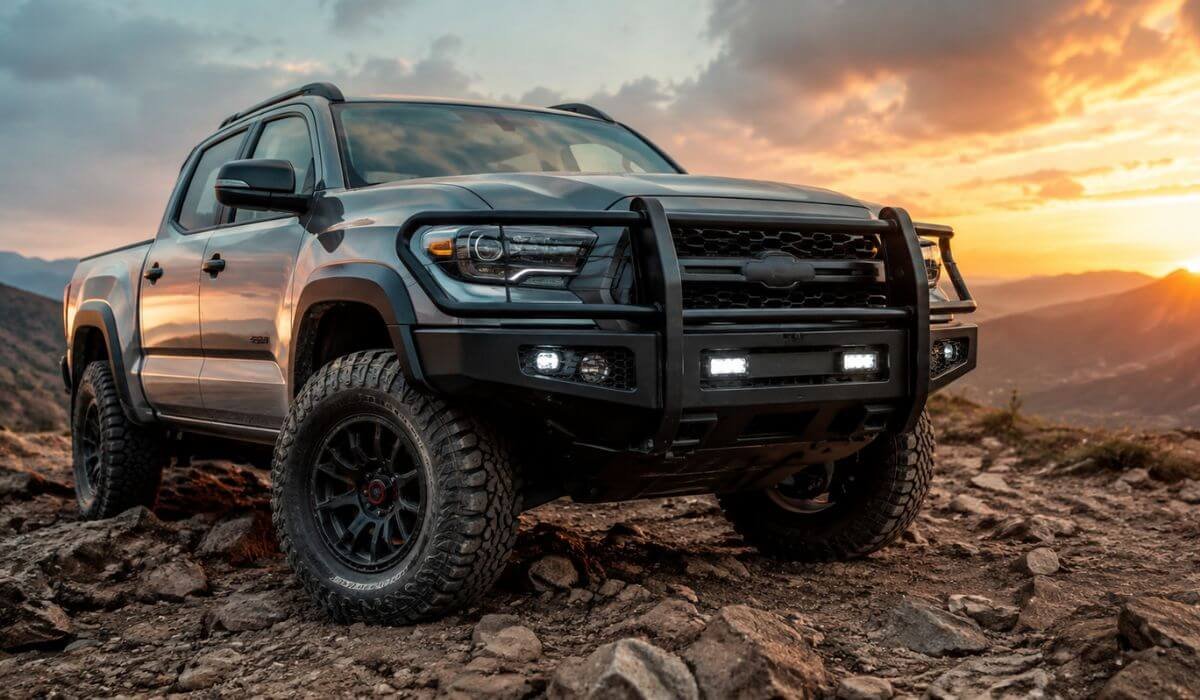
5 Best Grille Guards for Toyota Tacoma in 2026: HD Protection, Modular Builds & Aggressive Off-Road Style
The 2024–2026 Toyota Tacoma deserves a grille guard that actually matches the truck, not a universal bar that happens to fit the front end. This is the fourth-generation Tacoma, and its newer front-end design means older Tacoma guards should not automatically be treated as compatible. For this list, I stayed with products specifically made around the 2024–2026 Tacoma fitment, while also separating full grille guards from smaller bull-bar designs.
There is another detail worth paying attention to: a grille guard can change the truck’s entire front-end character, so construction and layout matter just as much as appearance. A modular stainless-steel guard gives you a different ownership experience from a heavy-duty black guard, while a bull bar makes sense when you want protection without covering as much of the grille. I picked these five with those real-world differences in mind, so you can choose based on how you actually use your Tacoma rather than simply buying the biggest-looking option.
Best Toyota Tacoma Grille Guard: Top 2026 Picks for Grille Protection & Rugged Truck Builds
#1. Westin 57-22785 HDX 3-Piece Grille Guard
Best Grille Guard for Toyota Tacoma 2024–2026 With Heavy-Duty HDX Construction and Full-Front Protection for Serious Truck Builds
#2. Westin 57-2785 HDX 1-Piece Grille Guard
Best Grille Guard for Toyota Tacoma 4×4 With One-Piece HDX Protection and a Cleaner Heavy-Duty Front-End Setup
#3. Black Horse 17A096404MSS Grille Guard
Best Grille Guard for Toyota Tacoma 2024–2026 With Modular Stainless-Steel Construction for Off-Road and Daily-Driven Builds
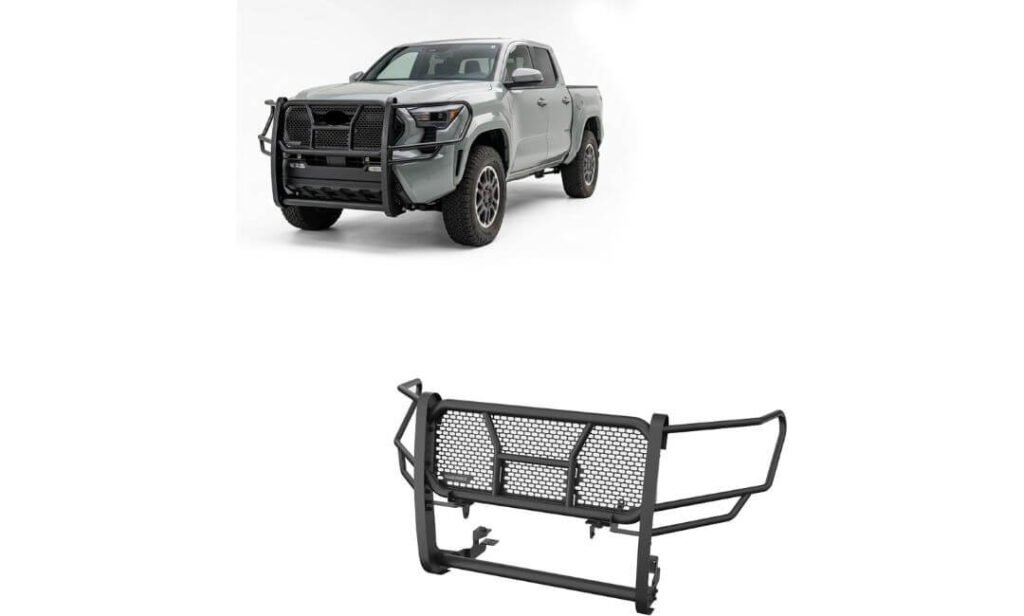
#4. Black Horse RU-TOTA24-B Rugged Grille Guard
Best Brush Guard for Toyota Tacoma 2024–2026 With Heavy-Duty Black Construction for Aggressive Off-Road and Work-Truck Builds
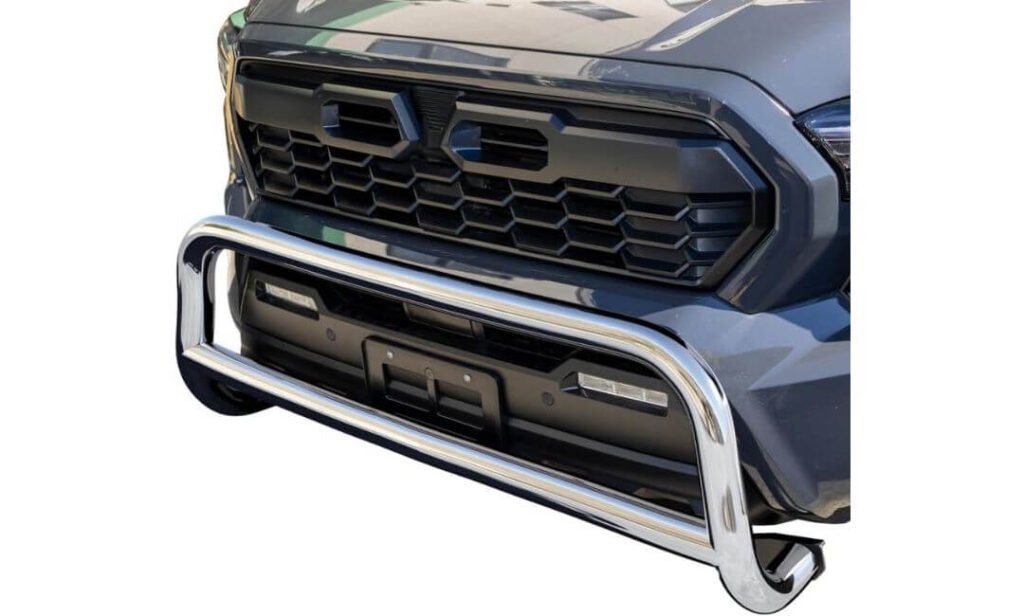
#5. VANGUARD SS Bull Bar
Best Bull Bar for Toyota Tacoma 2024–2026 for Compact Front-End Protection With a Cleaner Alternative to a Full Grille Guard
Expert Tip
Here is the part I would not skip before buying: do not choose a Tacoma grille guard by appearance alone. The 2024–2026 Tacoma is a newer fourth-generation truck, so I would put exact fitment ahead of a heavier-looking design every time. A guard can look fantastic in product photos and still be the wrong choice for your truck if its mounting layout, front-end clearance or intended coverage does not match your build.
I also would not call a bull bar and a full grille guard the same thing. The Westin HDX guards are the more serious choices here if your priority is substantial front-end coverage. The Black Horse options give you a choice between stainless-steel modular styling and a darker heavy-duty appearance. The VANGUARD SS, meanwhile, is for the Tacoma owner who wants a tougher front-end presence without committing to a large full-width guard.
That difference is exactly why I would rather give you five genuinely different options than fill the list with five guards that look almost identical.
How We Chose These Toyota Tacoma Grille Guards
We did not rank these simply by which product looked the toughest in a listing photo. The first filter was vehicle compatibility. Every product kept here is intended for the 2024–2026 Toyota Tacoma, which matters because the fourth-generation Tacoma has a different front-end design from the older third-generation truck. If a guard is not designed around the correct generation, I would not recommend trying to make the fitment work just because the price is attractive.
From there, I looked at what each design actually gives you.
Westin 57-22785 HDX 3-Piece takes the top spot because it is the most convincing choice when front-end coverage and a substantial HD setup are the priority. Its three-piece construction also gives it a more purposeful truck-build character rather than looking like a simple tubular accessory.
The Westin 57-2785 HDX 1-Piece stays right behind it for a different reason. Some Tacoma owners want heavy-duty protection without the more involved appearance of a three-piece design. This gives those buyers a cleaner alternative while staying within the HDX range.
Then there is the Black Horse stainless-steel modular guard. I kept this one because it genuinely changes the choice rather than simply repeating another black steel guard. The stainless-steel finish and modular construction make it the natural option for someone who wants protection with a more finished, less aggressive appearance.
The Black Horse Rugged Heavy Duty earns its place for the opposite reason. If the Tacoma is being built around an aggressive blacked-out or off-road look, the darker heavy-duty design makes considerably more sense than choosing stainless steel simply because it is available.
Finally, the VANGUARD SS Bull Bar is included deliberately, even though it is not a full grille guard. That distinction is important. A buyer who wants a smaller front-end upgrade should not have to choose a large guard just because an article calls every front bar a grille guard. This gives the list a genuine lower-profile alternative.
Most importantly, we did not pretend that one design is perfect for every Tacoma owner. Your use matters. Daily driving, trail use, work-truck duty and an appearance-focused build can lead to completely different choices. That is why the ranking is based on the job each product is best suited to, rather than forcing every product into the same category.
And because these are newer 2024–2026 Tacoma-specific products with less long-term owner feedback than older-generation accessories, I would be careful about making exaggerated claims about durability or real-world performance that cannot be honestly established yet. Where the product specifications are clear, we use them. Where long-term evidence is limited, we do not manufacture a story around it. That is a much better way to choose a grille guard than treating a handful of marketplace ratings as proof of years of off-road use.
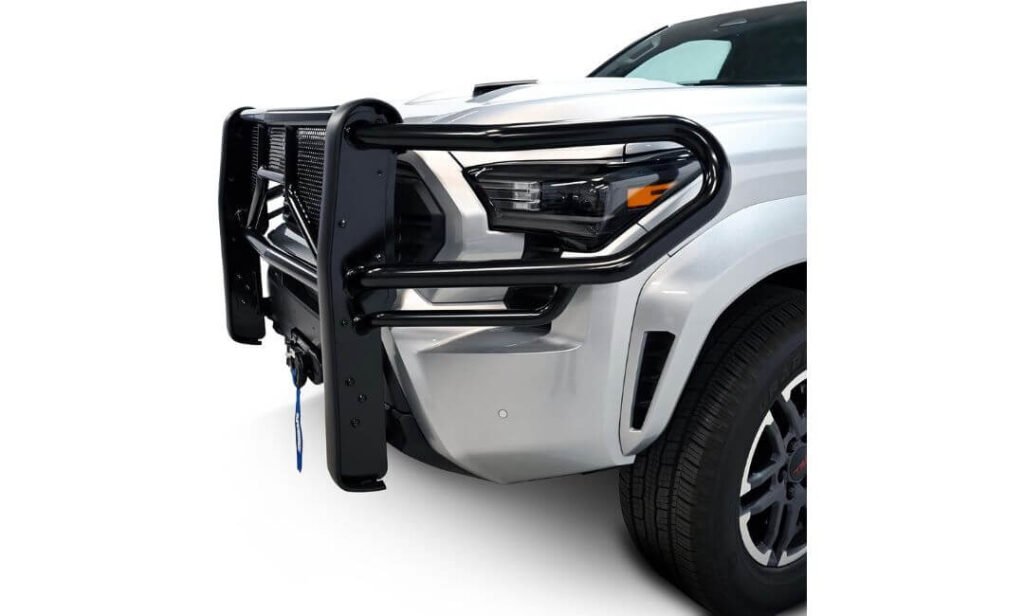
#1. Westin 57-22785 HDX 3-Piece Grille Guard
Quick Specs:
- Fitment: 2024–2026 Toyota Tacoma
- Design: 3-piece modular grille guard
- Protection: Full punch-plate grille with wraparound wings
- Main tubing: 2-inch wraparound tubes
- Headlight protection: Bolt-on, detachable headlight guards
- Bumper contact: 2¾-inch rubber push-pad strips
- Mounting: Frame-mounted bolt-on system
- Included: Mounting kit and installation hardware
- Weight: 110.3 lbs
- Finish: Polished stainless steel or black powder coat
- Warranty: 3 years
The first thing that makes this guard different is that it doesn’t feel like a decorative front-end add-on. The full punch-plate grille and 2-inch wraparound wings give the Tacoma a much more protected front profile, while the three-piece construction lets you remove the headlight guards when you want a less enclosed look. That is a useful bit of flexibility, especially if you are building the truck gradually rather than committing to one permanent appearance.
The 110.3-pound weight tells you something important about the construction without needing a marketing speech around it. This is a substantial piece of equipment, and the frame-mounted installation is exactly what I want to see on a guard designed for serious front-end coverage. The 2¾-inch rubber push-pad strips are another small but worthwhile detail because not every bit of contact around a truck’s front end needs to become a mark on the bumper.
What I particularly like here is the way the protection is distributed. You are getting the full punch-plate centre, wraparound wings and detachable headlight protection rather than one oversized tube doing all the visual work. The gusseted structure is intended to keep the assembly rigid with reduced vibration, while the supplied mount kit and hardware mean the installation is built around a proper bolt-on setup rather than an improvised mounting solution.
(If you want a Tacoma grille guard that looks purposeful from the front and still gives you some control over how much of the truck you want covered, this is one of the more thoughtfully laid-out options in the group.)
What We Like
- Detachable headlight guards are genuinely useful because you can change the front-end look without replacing the whole guard.
- The full punch plate gives the centre section a much more protected appearance than an open tubular design.
- 2-inch wraparound wings give the Tacoma a properly substantial stance without relying on unnecessary styling tricks.
- The supplied frame-mount hardware and kit make the installation approach straightforward and purpose-built.
- Having a choice between polished stainless steel and black powder coat makes it easier to match the guard to the rest of the truck rather than forcing one finish.
One Thing To Keep In Mind
The substantial construction means this is not a lightweight accessory. At 110.3 lbs, it is better suited to someone who actually wants a serious front-end guard than a Tacoma owner looking for the lightest possible cosmetic upgrade.
Tacoma Fitment & Installation
This guard is specifically designed around the 2024–2026 Toyota Tacoma, which is important because the current Tacoma’s front-end layout is not something I would treat as interchangeable with older generations. The frame-mounted design keeps the installation focused on the truck’s chassis rather than relying on a universal bumper fit.
For installation, you should have the included mounting kit and hardware, along with normal workshop tools and enough room to handle a fairly heavy 110.3-pound assembly safely. Because of its size and modular construction, having a second person around during positioning and tightening is simply the sensible way to do it. Before final tightening, I would also make sure the guard sits evenly and that the headlight-guard sections and bumper push pads are properly aligned.
The Insider Pro-Tip
If you are buying this specifically because you want maximum visual coverage, leave the detachable headlight guards in place. If the Tacoma is your daily driver and you prefer a cleaner front end, removing them gives you a surprisingly different look without changing the main protection structure. That modularity is one of the reasons I rate this design above a guard that gives you only one finished configuration.
And one more thing I would check before ordering: confirm your exact Tacoma configuration against the manufacturer’s current fitment information rather than relying only on the year range shown in a marketplace listing. With newer-generation trucks, a few minutes spent confirming the application is far more useful than discovering after delivery that another front-end accessory on your build changes the available clearance.
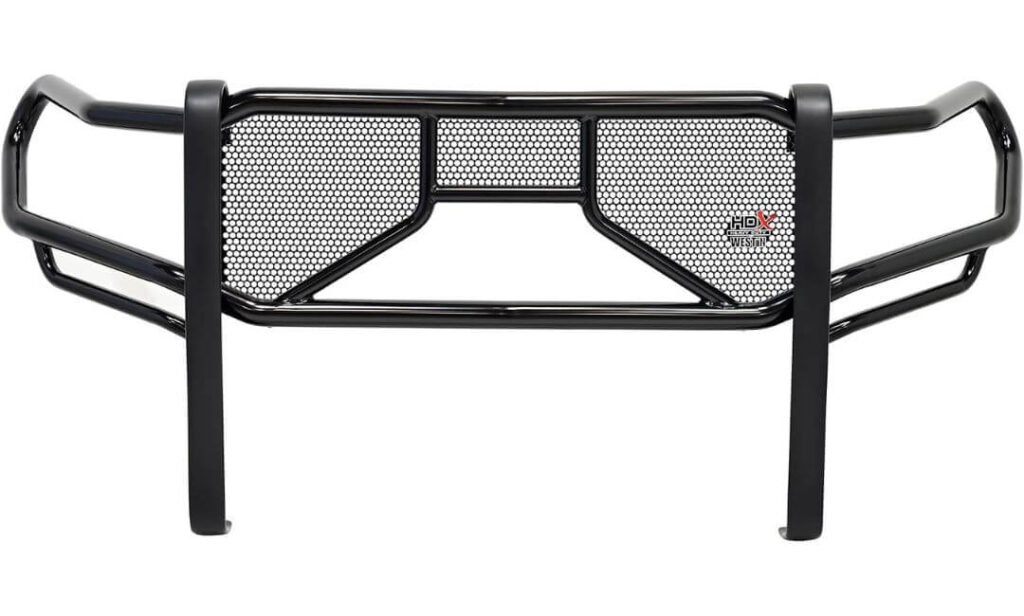
#2. Westin 57-2785 HDX 1-Piece Grille Guard
Quick Specs:
- Fitment: 2024–2026 Toyota Tacoma Double Cab
- Construction: One-piece fully welded steel
- Main tubing: 2-inch full wraparound wings
- Grille coverage: Full punch-plate grille
- Headlight protection: Welded headlight guards
- Rubber protection: 2.75-inch-wide uprights, 1/8-inch thick
- Finish: Black powder coat
- Mounting: Bolt-on frame-mounted installation
- Weight: 138.6 lbs
- Included: Mounting kit, hardware and installation instructions
- Warranty: 3-year limited warranty
There is a certain point where a grille guard stops looking like an accessory and starts looking like part of the truck. This is that kind of setup. The 57-2785 uses a fully welded one-piece steel construction, and at 138.6 pounds, it has the substantial presence you would expect from a guard built around full front-end coverage rather than appearance alone.
The 2-inch wraparound wings are the part that immediately changes the Tacoma’s stance, but the useful detail is what happens inside them. The full punch-plate grille covers the centre section, while the welded headlight guards extend the protection beyond the grille itself. For a truck that regularly sees gravel, trails, rough access roads or just the occasional careless parking-lot situation, that broader coverage makes more sense than choosing a bar purely because it looks aggressive.
I also like the fact that Westin did not leave the mounting side vague. It is a bolt-on design with the mount kit, hardware and instructions included, so you are starting with a proper application-specific setup. The black powder coat keeps the whole thing understated enough for a newer Tacoma, while the wide rubber protection sections add a little separation between the steel structure and the areas around the bumper.
(The real attraction here is simple: one solid piece, serious coverage, no unnecessary modular fuss.)
What We Like
- Fully welded one-piece construction gives it a solid, cohesive feel and a clean finished appearance.
- The 2-inch wraparound wings provide broad front-end coverage rather than stopping at the centre grille.
- Welded headlight guards make the protection feel complete instead of treating the grille as the only vulnerable area.
- The 138.6-pound construction suits buyers who specifically want a substantial heavy-duty guard.
- The black powder coat works naturally with the Tacoma’s tougher styling without making the truck look overly accessorised.
One Thing To Keep In Mind
At 138.6 pounds, this is a serious piece of hardware. That is a positive if substantial protection is what you want, but it also means installation is much easier and safer with another person helping position and support the guard.
Tacoma Fitment & Installation
The 57-2785 is listed for the 2024–2026 Toyota Tacoma Double Cab, so this is not a universal guard that you are expected to make work with the truck. That application-specific design is important on the newer Tacoma because the current-generation front end should not be assumed to share mounting points with older models.
Installation uses a bolt-on mounting system, with the required mount kit, hardware and instructions supplied. I would still treat this as a two-person job simply because of the guard’s 138.6-pound weight. Once positioned, take a moment to check the wing symmetry, headlight-guard clearance and bumper alignment before everything is fully tightened.
The Insider Pro-Tip
If your Tacoma is being built as a proper daily-and-trail truck, I would take the one-piece construction seriously. There is less to fuss with than a modular guard, and the welded headlight protection keeps the overall design visually consistent. You are essentially choosing one substantial front-end structure and leaving it alone.
One other practical point: check the rest of your front-end accessories before ordering. If you already have lighting, a winch-related setup or another bumper-mounted accessory planned, measure the available space rather than assuming everything will coexist. The guard itself is straightforward; the smartest purchase is the one that still leaves your complete Tacoma build working the way you intended.
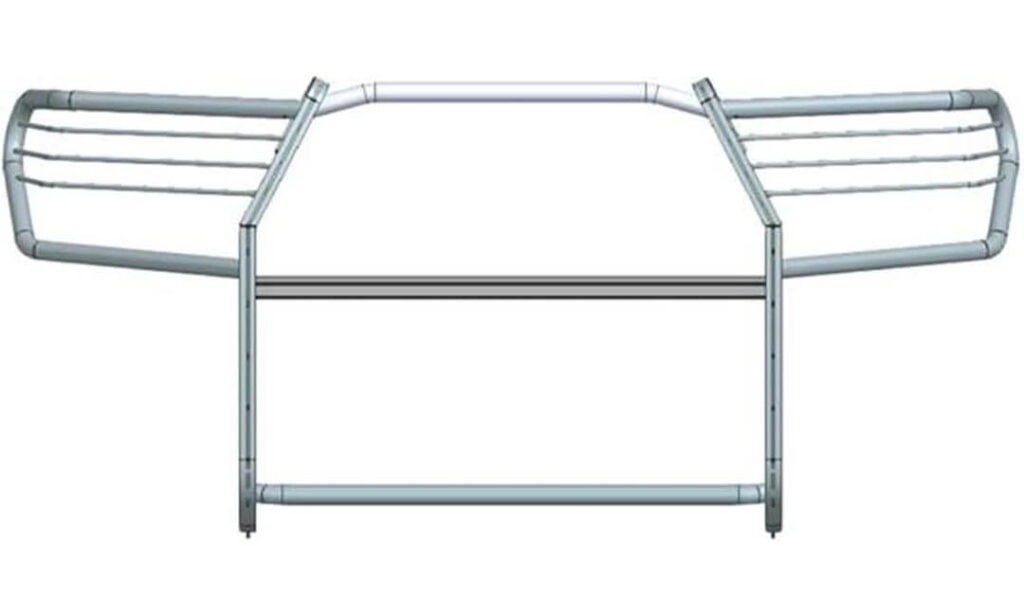
#3. Black Horse 17A096404MSS Grille Guard
Quick Specs:
- Fitment: 2024–2026 Toyota Tacoma
- Material: 304-grade polished stainless steel
- Construction: 3-piece modular bolt-together design
- Tubing: 1.5-inch diameter, 16-gauge mandrel-bent tubing
- Vertical plates: ¼-inch thick 304 stainless steel
- Finish: Near-mirror #7 polished finish
- Light guards: Removable front light guards
- Mounting: Vehicle-specific, frame-mounted, no-drill bolt-on
- Weight: 86 lbs
- Included: Mounting brackets, hardware and installation instructions
- Warranty: Limited lifetime
Stainless steel makes a surprisingly big difference on a Tacoma grille guard. Instead of hiding the hardware under a dark coating, this 304-grade polished construction makes the guard part of the truck’s visual identity. The near-mirror #7 finish catches the light without looking like a cheap chrome accessory, while the 1.5-inch mandrel-bent tubing keeps the design more refined than the larger-tube HD guards above it.
The interesting part is underneath that finish. You get ¼-inch-thick vertical stainless-steel plates, a vehicle-specific frame-mounted system and a three-piece bolt-together layout. It weighs 86 pounds, so it is considerably lighter than the two Westin HDX options above, yet it still has a proper structural design rather than being a lightweight styling bar.
Then there is the modular side of it. The front light guards are removable, which is useful if you want the extra protection for trail use but prefer a cleaner appearance around town. The no-drill installation is another practical advantage because you are not permanently modifying the Tacoma just to install the guard. For a current-generation truck, that is exactly the sort of detail I like seeing.
(This is the choice for the Tacoma owner who wants protection, but also cares enough about the truck’s finish that a bulky black guard would feel out of place.)
What We Like
- 304-grade stainless steel gives this guard a corrosion-resistant construction with a much more premium visual finish.
- The removable light guards let you change the look without replacing the entire assembly.
- No-drill, vehicle-specific mounting keeps installation straightforward and avoids unnecessary modification.
- The 86-pound weight makes it noticeably less imposing than the heavier HDX alternatives.
- The three-piece modular construction gives you useful flexibility while keeping the guard visually cohesive.
One Thing To Keep In Mind
The polished stainless finish is the main attraction here, so it is worth remembering that this is a different design philosophy from the blacked-out heavy-duty guards. If your Tacoma build is deliberately dark and aggressive, the polished finish may not be the look you are after.
Tacoma Fitment & Installation
This grille guard is specifically designed for the 2024–2026 Toyota Tacoma, with a vehicle-specific mounting system rather than a universal bracket arrangement. The manufacturer describes the installation as no-drill and bolt-on, with the mounting brackets and hardware supplied.
That makes the installation more approachable for an experienced DIY owner, but I would still have a second person nearby when positioning the assembly. The three-piece construction helps here because you are not trying to manoeuvre one enormous 86-pound structure into place all at once. Once installed, check the light-guard alignment and make sure the modular sections sit evenly before finishing the final tightening.
The Insider Pro-Tip
This is the guard I would choose when the Tacoma is part truck, part daily driver. The removable light guards give you a genuinely useful choice: keep them installed when you want the more protected off-road appearance, or remove them when you want the polished stainless structure to sit more cleanly against the factory front end.
And because this is a newer current-generation application, I would put more weight on the vehicle-specific fit and construction details than on a long list of internet reviews that simply does not exist yet. An 86-pound 304-stainless guard with no-drill mounting tells you far more about what you are actually buying than a dozen vague five-star comments ever could.
#4. Black Horse RU-TOTA24-B Rugged Grille Guard
Quick Specs:
- Fitment: 2024–2026 Toyota Tacoma
- Material: Cold-rolled mild steel
- Main tubing: 2.25-inch diameter, 16-gauge mandrel-bent tubing
- Vertical plates: 5/16-inch thick HRPO steel
- Construction: 3-piece modular bolt-together design
- Centre protection: Custom-punched grille section
- Finish: Black powder coat over corrosion-resistant E-coat
- Mounting: Vehicle-specific, frame-mounted, no-drill bolt-on
- Weight: 78.7 lbs
- Included: Mounting brackets, hardware and installation instructions
- Warranty: 3 years
Some grille guards are designed to make a truck look tougher. This one takes a more straightforward route: large 2.25-inch tubing, thick 5/16-inch vertical plates and a punched centre section. Those numbers matter because they explain why this guard has such a substantial appearance without needing exaggerated marketing around it.
The 78.7-pound weight is also interesting. Despite using larger 2.25-inch tubing, it comes in lighter than both Westin HDX guards above. The reason is the modular construction: the guard arrives in multiple sections that bolt together rather than being delivered as one enormous welded assembly. That makes handling during installation considerably more manageable, while the frame-mounted, no-drill design keeps the installation focused on the Tacoma itself.
The black finish is another practical choice rather than just a styling decision. The E-coat underneath the powder coat provides an additional corrosion-resistant layer, while the punched centre grille gives the front end more coverage than an open tubular design. If you are building a Tacoma around an understated blacked-out appearance, this fits that direction naturally.
(This is the kind of guard that makes sense when you want the Tacoma to look ready for rough roads without turning the front end into a giant piece of unnecessary hardware.)
What We Like
- 2.25-inch tubing gives it a noticeably tougher profile than smaller tubular guards.
- The 5/16-inch vertical plates bring serious material thickness to the centre structure.
- E-coat plus powder coat is a sensible two-layer finish approach for a truck that sees changing weather and road conditions.
- No-drill frame mounting keeps the installation vehicle-specific without asking you to modify the Tacoma’s frame.
- At 78.7 pounds, it offers substantial construction without reaching the weight of the larger HDX options.
One Thing To Keep In Mind
The manufacturer notes that the guard may interfere with the Tacoma’s front sensors, so owners relying on the factory front parking-assist system should check their specific configuration before purchasing.
Tacoma Fitment & Installation
The RU-TOTA24-B is designed specifically around the 2024–2026 Toyota Tacoma, with a vehicle-specific frame-mounted system and no-drill installation. The guard arrives as multiple pieces that bolt together, with the required mounting hardware and instructions included.
The modular format is helpful during installation because you can handle the sections individually instead of trying to manoeuvre the complete guard at once. I would still have a second person assist with positioning and alignment. Once fitted, pay particular attention to the front sensor area and verify that your Tacoma’s parking-assist functions behave as expected before considering the job finished.
The Insider Pro-Tip
The biggest thing I would not ignore here is the sensor situation. A grille guard can be perfectly suited to the truck physically and still change how the factory electronics behave around the front bumper. If your Tacoma uses front parking sensors, check that part of the setup before ordering rather than treating it as an afterthought.
Also, because this is a multi-piece bolt-together guard, give the hardware a proper check after the first period of driving. That is not a criticism of the design; it is simply good practice with a modular assembly exposed to vibration and road shock. A quick inspection can keep everything sitting tight and looking right for the long haul.
#5. VANGUARD SS Bull Bar
Quick Specs:
- Fitment: 2024–2026 Toyota Tacoma
- Material: 2.5-inch T304 stainless steel
- Finish: Mirror-polished chrome
- Design: Compact bull bar with vehicle-specific shaping
- Installation: Bolt-on; no welding required
- Included: Mounting brackets and assembly hardware
- Modification: Undercarriage cover trimming required on most vehicles
- Plastic trim: Some drilling may be needed for access
- Typical DIY time: Around 2–3 hours
Not every Tacoma owner wants a 100-pound-plus grille guard covering the entire front end. That is where this bull bar makes sense. It takes a much lighter visual approach, using 2.5-inch T304 stainless steel and a mirror-polished finish to give the Tacoma a stronger front-end presence while leaving much of the factory design visible.
The T304 stainless construction is the real talking point here. Instead of adding another black powder-coated accessory to an already dark truck, the polished finish creates a noticeable contrast and gives the front end a more finished appearance. It is also shaped specifically around the 2024–2026 Tacoma, rather than trying to imitate a universal bull bar.
Installation is still worth planning for, though. This is a bolt-on setup with the hardware and brackets supplied, but undercarriage-cover trimming is required on most applications, and some plastic-trim drilling may be necessary for access. That is not a reason to avoid it; it is simply something I would want to know before the box arrives and the truck is already sitting in the driveway.
(If your idea of protection is “make the front tougher without covering the whole truck,” this is the option that gets closest to that brief.)
What We Like
- 2.5-inch T304 stainless steel gives it a substantial tube size without the visual bulk of a full grille guard.
- The mirror-polished finish is a refreshing alternative to the usual black aftermarket look.
- Vehicle-specific shaping keeps the bull bar aligned with the newer Tacoma’s body lines.
- Bolt-on installation avoids welding and keeps the basic mounting process straightforward.
- The design stays deliberately minimal, without adding a skid plate or unnecessary extra structures.
One Thing To Keep In Mind
Unlike the full grille guards above, this is a bull bar rather than a full grille guard, so buyers looking for maximum grille and headlight coverage should choose one of the larger guards higher on the list.
Tacoma Fitment & Installation
The VANGUARD SS is specifically designed for the 2024–2026 Toyota Tacoma, with vehicle-specific brackets and bolt-on mounting hardware included. No welding is required, which keeps the basic installation accessible to an experienced DIY owner.
The part worth preparing for is the underbody. Most vehicles require trimming of the undercarriage cover, and some plastic trim may need drilling to provide access. Allow roughly 2–3 hours if you are doing the job yourself, and do not rush the alignment just because the mounting system is bolt-on.
The Insider Pro-Tip
I would choose this one because it is intentionally less than a full grille guard, not because it is trying to compete with one. If you mainly want a cleaner, more premium front-end upgrade for a daily-driven Tacoma, the 2.5-inch polished stainless tube does that job very well without overwhelming the truck.
Before starting the installation, lay out the brackets and read through the instructions completely. Some owners have found the instructions less clear than they would like, so taking a few extra minutes to understand the mounting sequence can save you a frustrating afternoon. If something in the diagram is unclear, Vanguard’s additional installation guidance is worth using rather than guessing on a vehicle-specific mounting point.
Best Toyota Tacoma Grille Guard (2024–2026) Comparison for Heavy-Duty Front Protection
| Grille Guard | Best Match | Construction | Front-End Coverage | Installation | Weight | Finish | What Actually Sets It Apart |
|---|---|---|---|---|---|---|---|
| Westin 57-22785 HDX 3-Piece Best Overall |
2024–2026 Tacoma Ideal for owners wanting substantial front-end coverage without giving up modular flexibility. |
3-piece modular 2″ wraparound tubing with detachable bolt-on headlight guards and a full punch-plate grille. |
Full coverage Grille, bumper area and headlight zones receive a more comprehensive protective layout. |
Frame-mounted bolt-on Mount kit and hardware included. The modular sections make handling more manageable. |
110.3 lbs Substantial enough to feel like a serious protection upgrade. |
Polished stainless steel or black powder coat. | The standout is the balance between heavy-duty coverage and removable headlight protection. It is the easiest choice when protection is the main reason for buying a guard. |
| Westin 57-2785 HDX 1-Piece Heavy-Duty Pick |
2024–2026 Tacoma Double Cab Best suited to builds where maximum coverage matters more than modularity. |
1-piece fully welded steel 2″ wraparound wings, full punch plate and welded headlight guards. |
Very high The welded headlight protection extends coverage beyond the centre grille. |
Bolt-on Mounting kit, hardware and instructions supplied. |
138.6 lbs The heaviest option in this lineup. |
Black powder coat. | This is the choice for someone who wants a single, substantial welded assembly. There is less modular adjustment, but the finished structure feels extremely purposeful. |
| Black Horse 17A096404MSS Stainless Choice |
2024–2026 Tacoma A strong fit for daily-driven trucks that still see off-road use. |
3-piece modular 1.5″ 304 stainless tubing with ¼” thick vertical stainless plates. |
Broad grille protection Removable front light guards let you alter the amount of visible coverage. |
No-drill bolt-on Vehicle-specific frame mounting with brackets and hardware included. |
86 lbs Noticeably lighter than both Westin HDX choices. |
Polished 304 stainless steel with a near-mirror #7 finish. | Its strongest advantage is the combination of premium stainless construction, modularity and lower weight. It is less aggressive visually than the black steel options. |
| Black Horse RU-TOTA24-B Rugged Build |
2024–2026 Tacoma Suits owners building around a blacked-out or more aggressive truck appearance. |
3-piece modular steel 2.25″ cold-rolled tubing with 5/16″ thick vertical steel plates. |
Strong centre coverage Custom-punched centre grille adds protection without using a completely closed plate. |
No-drill bolt-on Vehicle-specific frame mounting with supplied brackets and hardware. |
78.7 lbs Surprisingly light considering the 2.25″ tubing and thick vertical plates. |
Black powder coat over corrosion-resistant E-coat. | The interesting combination is large tubing with relatively low overall weight. One thing to check before buying is compatibility with the Tacoma’s front parking sensors. |
| VANGUARD SS Bull Bar Low-Profile Alternative |
2024–2026 Tacoma Better suited to daily-driven trucks wanting a cleaner front-end upgrade. |
2.5″ T304 stainless steel Compact bull-bar construction rather than a full grille guard. |
Focused coverage Protects the lower front area while keeping more of the factory grille visible. |
Bolt-on No welding. Undercarriage-cover trimming is required on most applications. |
Not specified Its appeal is its compact design rather than heavy full-front construction. |
Mirror-polished stainless steel. | It earns its place by being genuinely different: less bulk, more factory styling visible and a premium stainless finish. It is not the choice for maximum grille or headlight coverage. |
Buyers Guide to Grille Guards for Toyota Tacoma
Buying a grille guard for a newer Tacoma is one of those jobs where fitment deserves more attention than appearance. A guard can look perfect in a product photo and still become a frustrating purchase if it conflicts with the truck’s front sensors, another accessory, or the exact cab configuration. The 2024–2026 Tacoma is a fourth-generation truck, so I would not assume an older Tacoma guard will transfer simply because the truck names look similar.
The five options above also are not interchangeable. The Westin HDX guards are aimed at buyers who want substantial front-end coverage, the Black Horse models give you different approaches to modular protection and finish, while the VANGUARD is deliberately a more compact bull-bar alternative. The right choice depends on what you expect the front of your Tacoma to deal with.
Start With Exact Tacoma Fitment
Before looking at finish, tubing diameter or price, verify the year, generation and cab configuration against the manufacturer’s fitment information.
For this particular lineup, the products are designed around 2024–2026 Toyota Tacoma applications, but that does not mean every configuration or front-end accessory will have identical clearance. The Westin 57-2785, for example, is specifically listed for the Tacoma Double Cab.
I would also avoid buying based on a marketplace title alone. If the listing says “Tacoma” but gives vague application information, check the manufacturer’s fitment details before ordering. That small step can save you from dealing with an unnecessarily difficult return.
Decide How Much Front-End Coverage You Actually Need
This is where the five guards start to make sense as separate choices.
A full grille guard is the better direction when your priority is broader protection around the grille, headlights and front bumper area. The Westin HDX designs sit firmly in this category.
A modular guard can make sense if you want some control over the final configuration. The Westin 57-22785 allows the headlight guards to be detached, while the Black Horse stainless model also gives you removable light protection.
A bull bar is different. The VANGUARD SS leaves considerably more of the factory front end visible and concentrates its presence lower down. It makes sense for someone who wants a tougher appearance and some front-end protection without turning the Tacoma into a full grille-guard build.
There is no prize for buying the largest guard. If you rarely leave pavement, a massive full-front design may be more than you actually need.
Installation: What You Should Know Before Starting
Most of the guards in this lineup use bolt-on, vehicle-specific mounting, which is exactly what I prefer over a setup that requires unnecessary drilling or fabrication.
The Black Horse stainless guard and Rugged model are particularly straightforward on paper because they use no-drill frame-mounted installation. The Westin guards also come with their mounting hardware and kits.
That does not mean every installation will be a ten-minute driveway job.
A typical installation should involve:
- Read the supplied instructions completely before removing factory components.
- Put all brackets, bolts and hardware on the floor and identify them before starting.
- Remove only the factory pieces required to access the mounting locations.
- Position the mounting brackets without fully tightening everything immediately.
- Have another person help support and align the guard.
- Check both sides for equal spacing before final tightening.
- Verify grille, headlight and bumper clearance.
- Check sensor areas and any wiring before finishing the installation.
- Recheck the hardware after the first period of driving.
For the heavier Westin guards, especially the 138.6-pound 57-2785, I would not recommend trying to hold the entire assembly in position by yourself. A second set of hands is cheap insurance.
The VANGUARD installation has its own consideration: undercarriage-cover trimming is required on most applications, and some plastic trim access may require drilling. That is manageable, but it should be part of your installation plan from day one.
Tools and Workspace You Will Want
You do not need a professional fabrication shop for these bolt-on applications, but you do need a sensible workspace.
At minimum, I would want:
- A complete metric socket and wrench set
- Ratchet and extensions
- Torque wrench
- Screwdrivers and trim-removal tools
- Appropriate lifting or support equipment
- Work gloves
- Good lighting
- A second person for positioning the guard
A torque wrench is particularly worthwhile. These guards carry their own weight and sit on mounting hardware that experiences vibration, road shock and repeated movement from the truck. “Tight enough” is not a useful measurement when the manufacturer provides a proper installation procedure.
Sensor Clearance Is Not a Small Detail
This deserves its own section because it is one of the easiest things to overlook.
The Black Horse Rugged guard specifically comes with a warning that it may interfere with front sensors. That is important if your Tacoma relies on factory front parking-assist functions.
Do not assume that because a grille guard physically bolts onto the truck, every factory feature will behave exactly as it did before installation.
Before purchasing, check:
- Front parking sensors
- Camera locations
- Radar or driver-assistance hardware, if equipped
- Factory bumper openings
- Any wiring positioned around the mounting area
After installation, test the relevant systems in a safe location. If a warning appears or a sensor behaves differently, deal with that before considering the installation complete.
Think About Your Other Tacoma Accessories First
A grille guard is rarely the only modification an owner has planned.
If you already have, or intend to add, auxiliary lighting, a winch, a skid plate or other front-end equipment, check the complete combination rather than looking at each product independently.
The Westin 57-22785, for example, offers optional light clamps that are sold separately. That makes it worth thinking about lighting placement before you buy additional brackets or lamps.
With a winch, the important question is whether the grille guard and winch system are designed to occupy compatible mounting areas. Do not assume that a grille guard advertised as “off-road” is automatically winch-compatible.
The same applies to a skid plate. A front protection system can occupy space around the lower bumper and frame area, so check mounting points, clearance and the intended installation sequence before buying both pieces.
This is one area where spending ten minutes measuring can save several hundred dollars in incompatible accessories.
Maintenance: Keep the Finish Looking Like It Should
A grille guard is exposed to everything the front of your Tacoma sees first: road salt, mud, dust, rain, bugs, gravel and whatever else gets thrown forward at highway speed.
For powder-coated steel, the biggest mistake is allowing dirt and moisture to sit against damaged areas indefinitely. Wash the guard regularly, particularly after muddy trail use or winter driving, and inspect the coating for chips or exposed metal.
The Black Horse Rugged model uses a corrosion-resistant E-coat beneath its black powder coat, which is a useful layer of protection, but no coating makes steel completely immune to neglect.
For 304 stainless steel, such as the Black Horse 17A096404MSS and VANGUARD SS, regular washing is still worthwhile. Stainless steel is resistant to corrosion, but road grime, salt and contaminants can still dull the surface.
For polished stainless:
- Wash with mild automotive soap and clean water.
- Use a soft microfiber cloth rather than an abrasive pad.
- Dry the surface after washing.
- Avoid harsh cleaners that can damage the polished appearance.
- Pay attention to bolts, joints and areas where dirt can collect.
And if you have taken the Tacoma through mud, do not only wash the visible front surface. Clean behind and underneath the guard as well. That is where trapped moisture and debris can quietly sit.
Check the Modular Hardware Periodically
The modular designs deserve one additional maintenance habit.
The Westin 57-22785, Black Horse stainless model and Black Horse Rugged guard use multiple sections that are assembled together, rather than being one completely welded structure.
That is useful for installation and configuration, but it also means I would periodically inspect the joining hardware.
Look for:
- Loose fasteners
- Uneven gaps
- Movement between sections
- New vibration or rattling
- Damaged coating around mounting points
You do not need to obsess over it every week. A sensible inspection after the first few drives, followed by occasional checks during routine maintenance, is enough for most owners.
Warranty and Manufacturer Support Matter More With Newer Products
These are newer-generation Tacoma applications, so I would pay attention to warranty coverage and manufacturer support, not just the number printed on the price tag.
The products in this list have different warranty terms. The Westin HDX options carry 3-year coverage, the Black Horse Rugged guard lists a 3-year manufacturer warranty, while the Black Horse stainless model lists a limited lifetime warranty.
Warranty length is useful, but it is not the entire story.
Before buying, save:
- Your order confirmation
- Product part number
- Installation instructions
- Manufacturer warranty information
- Photos of the product immediately after installation
If you ever need support, having the exact part number and documentation makes the conversation much easier.
For a newer vehicle application, I would also rather buy from a seller with a clear return policy and accessible manufacturer support than save a few dollars through an unknown listing.
Stainless Steel or Black Steel?
There is no universal winner here.
Choose polished stainless steel if you want a more premium appearance, strong corrosion resistance and a finish that stands apart from a blacked-out truck.
Choose black powder-coated steel if your Tacoma has a darker, more aggressive build and you want the grille guard to visually disappear into the rest of the truck.
The Black Horse 17A096404MSS is particularly interesting for daily-driven Tacomas because its 86-pound weight and polished 304 stainless construction make it feel less imposing than the heavier HDX options.
The Black Horse Rugged, meanwhile, makes more sense when appearance and off-road character lean toward a darker, tougher setup.
Full Grille Guard or Bull Bar?
This decision should be easy once you understand the difference.
If you want broader grille and headlight coverage, stay with a full grille guard.
If you want a smaller front-end upgrade that leaves more of the factory styling visible, the VANGUARD SS bull bar is the more natural choice.
I would not buy the VANGUARD and then expect it to provide the same coverage as the Westin HDX 3-piece. That is not what it is designed to do, and there is no reason to pretend otherwise.
The advantage of this list is that you can choose based on the type of protection you actually want rather than being pushed toward one style.
Final Checklist Before You Buy
Before placing the order, run through this list:
- Confirm the exact Tacoma year and configuration.
- Verify the manufacturer’s current fitment information.
- Decide whether you need a full grille guard or a smaller bull bar.
- Check front parking-sensor compatibility.
- Consider any factory camera or driver-assistance equipment.
- Measure clearance for planned auxiliary lights.
- Check compatibility with your intended winch setup.
- Check whether a skid plate will share or obstruct mounting space.
- Decide between polished stainless and black steel.
- Consider the guard’s actual weight before planning installation.
- Confirm whether trimming or drilling is required.
- Read the warranty terms before purchasing.
- Keep the installation hardware and instructions after fitting.
- Recheck modular fasteners after the first period of driving.
The best grille guard is not necessarily the heaviest one or the one with the most aggressive photograph. It is the one that fits your Tacoma correctly, works with the rest of your build, provides the level of coverage you actually need, and still makes sense six months after installation. That is the standard I would use before spending money on any of these guards.
Installation Quick-Tips and Frequently Asked Questions
Installing a grille guard on a Tacoma is not difficult simply because the hardware is bolt-on. The part that usually separates a clean installation from a frustrating one is preparation. The newer Tacoma has a lot going on around the front bumper, so checking clearance, sensors, trim and existing accessories before tightening anything saves far more time than trying to correct the problem afterward.
What should I check before starting the installation?
Park the Tacoma on a level surface, let the front end cool down, and lay out every bracket and fastener before removing anything. Confirm that the supplied hardware matches the instructions and that the guard is actually intended for your exact Tacoma configuration.
I would also inspect the area behind the bumper before installation. Look for factory wiring, parking sensors, camera equipment and any aftermarket lighting or recovery equipment that could occupy the same space.
For the heavier full-size guards in this lineup, have another person available during positioning. Trying to balance a large steel assembly while starting bolts is exactly how an otherwise straightforward installation turns into a scratched bumper or misaligned guard.
Do I need to drill into the Tacoma frame?
For the main grille-guard applications covered here, the mounting systems are designed around vehicle-specific bolt-on installation, with mounting brackets and hardware supplied.
That does not mean every part of every installation is completely modification-free. The VANGUARD bull bar, for example, requires undercarriage-cover trimming on most vehicles, and some plastic trim access may require drilling.
So the sensible rule is simple: do not drill or cut anything until the supplied instructions specifically call for it. Never create your own mounting point because a bracket appears difficult to reach.
Is installation really a one-person job?
Technically, you may be able to handle some of the smaller pieces alone. Practically, I would not recommend it.
The larger guards are substantial pieces of steel, with one option weighing more than 138 pounds. A second person makes alignment dramatically easier and reduces the chance of damaging the bumper, grille or paint while you are trying to start the mounting hardware.
The extra pair of hands is especially useful during the stage where the guard is loosely mounted and needs to be centred before final tightening.
Should I tighten everything immediately?
No. This is one of the easiest mistakes to avoid.
Start the mounting hardware loosely, get the guard positioned correctly, check the gaps on both sides, confirm bumper and headlight clearance, and only then move toward final tightening.
With modular guards, check the relationship between the individual sections as well. You want the finished assembly to sit evenly rather than discovering after everything is tight that one side is sitting higher than the other.
What tools are worth having ready?
You should have a suitable metric socket and wrench set, ratchet, extensions, screwdrivers or trim tools, and a torque wrench.
For the larger guards, proper support equipment can also make the job much easier. Gloves are sensible because there are plenty of brackets and steel edges to handle.
You do not need a fabrication workshop for these applications, but you do need enough space to safely position the guard and access the mounting points.
How do I know if the front parking sensors will still work?
Do not assume they will.
One of the products in this lineup specifically carries a warning about possible front-sensor interference, and that is exactly the sort of detail that should be checked before purchase rather than after installation.
Once the guard is installed, test the parking-assist system in a safe, open area. If your Tacoma starts giving unexpected warnings or the sensor behaviour changes, investigate the clearance before using the system normally.
The same thinking applies to factory cameras and other front-mounted driver-assistance equipment. Physical fitment and electronic compatibility are two different checks.
Will a grille guard work with TRD Off-Road and TRD Pro Tacomas?
This is where you should avoid relying on the trim name alone.
TRD Off-Road and TRD Pro models can have different factory equipment and front-end configurations, so the fact that a product fits a “2024–2026 Tacoma” does not automatically mean every trim should be treated identically.
Before ordering, match the exact trim, cab configuration and factory equipment against the manufacturer’s current fitment information. Pay particular attention to parking sensors, cameras, recovery equipment and any factory-specific bumper components.
If the manufacturer specifically lists your configuration, that is considerably stronger evidence than a marketplace seller simply writing “fits Tacoma.”
Do 3rd-generation and 4th-generation Tacoma grille guards interchange?
I would not assume they do.
The 2024 Tacoma began the fourth generation, bringing a substantially different truck and front-end architecture. Older third-generation accessories should therefore be treated as a separate fitment category unless the manufacturer explicitly confirms otherwise.
This is particularly important when shopping online because product listings sometimes group several Tacoma years together for search visibility. The safest approach is to use the exact part number and manufacturer fitment information, not just the vehicle name shown in the listing title.
Can I use a 3rd-generation guard on a 4th-generation Tacoma if the mounting points look similar?
I would not recommend experimenting with that.
A grille guard is not something where “close enough” fitment is a sensible strategy. The mounting structure, bumper clearance, sensor positioning and overall geometry all need to work together.
If the manufacturer does not list the fourth-generation Tacoma for that specific part number, I would move on to a confirmed application instead of trying to make an older accessory fit.
Can I add auxiliary lights after installing the guard?
Usually, that depends on the guard’s available mounting provisions and the size of the lighting equipment.
The three-piece Westin design, for example, offers optional light clamps sold separately, which is useful if lighting is part of your plan. But before buying lights, check their dimensions and mounting position against the guard.
Do not choose the lights first and assume the brackets will somehow work around them. Plan the complete front-end layout together.
Can I combine a grille guard with a winch?
This requires a proper compatibility check.
A grille guard being described as “off-road” does not automatically make it winch-compatible. A winch needs its own suitable mounting structure and adequate clearance, while the grille guard may occupy some of the same front-end space.
If a winch is already part of your build plan, confirm compatibility between the specific grille guard, winch mounting system and bumper before ordering. I would rather verify three part numbers beforehand than discover after installation that one accessory blocks another.
What about a skid plate?
The same principle applies.
A front skid plate and grille guard can potentially occupy overlapping mounting areas, especially around the frame and lower front section. Check the mounting points and clearance for both products before purchasing them together.
This is particularly important if you are building the Tacoma in stages. Do not design each modification in isolation. Think about what the front of the truck will look like and how everything will physically occupy that space when the build is finished.
Do I need to maintain the guard after installation?
Yes, but it is straightforward.
Wash off mud, road salt and grime instead of letting them collect around joints and mounting areas. For powder-coated steel, inspect the finish periodically for chips or exposed metal. For polished stainless steel, regular washing with mild automotive soap and a soft cloth will help preserve the finish.
With modular construction, periodically check the joining hardware and mounting bolts for movement, especially after the first period of driving. If you have been on rough trails, give the guard a closer inspection.
What is the biggest installation mistake to avoid?
Trying to finish the job too quickly.
Take your time with alignment, sensor clearance and accessory clearance before final tightening. A grille guard that sits perfectly centred and clears everything around it will look considerably better than one that was installed in a hurry.
And if something does not line up, stop. Do not force a bracket into position or start modifying hardware simply to make the installation continue. That is usually the point where a small fitment issue becomes a much larger one.
Final Installation Check Before Driving
Before taking the Tacoma back onto the road, make sure:
- Every mounting fastener is tightened according to the supplied instructions.
- The guard sits evenly from left to right.
- Headlights and grille areas have adequate clearance.
- Parking sensors and cameras have been checked.
- No wiring is trapped behind the mounting structure.
- Auxiliary lights, if installed, are secure and correctly positioned.
- The bumper and underbody trim are not rubbing against the guard.
- All modular sections are firmly joined.
- Any required trim modification has been completed cleanly.
- You have checked the installation again after the first few drives.
The fourth-generation Tacoma is worth treating like a specific vehicle, not a generic pickup. Get the fitment right first, install it patiently, and the guard becomes a useful part of the build instead of another accessory you have to fight with later.
How to Maintain a Toyota Tacoma Grille Guard
A grille guard sits directly in the line of fire every time you drive. Dust, mud, rain, road salt, insects and small stones all reach it before they reach most of the truck, so maintenance is less about making it look shiny and more about stopping small problems from becoming expensive ones.
The good news is that the guards in this lineup do not need complicated maintenance. What matters is using the right approach for the material and paying attention to the mounting points, joints and coating.
Wash More Than Just the Visible Front
After normal road use, rinse the guard with clean water and wash it with a mild automotive soap. If you have been through mud, wash behind the guard and around the mounting areas, not just the sections you can see from the front.
Mud and road debris can collect around modular joints, brackets and lower sections. Leaving that material trapped against the metal keeps moisture in contact with the surface for longer than necessary.
A pressure washer can be useful, but I would avoid putting an extremely strong stream directly into sensors, wiring connectors or tight joints. Clean thoroughly, but do not turn washing into another source of trouble.
Protect the Powder-Coated Steel
The black steel guards need a little attention when the coating gets chipped.
A powder coat provides a protective barrier, but it is not indestructible. Gravel, branches and trail debris can eventually leave small marks in the finish. If you notice exposed steel, clean and dry the area and address the damage rather than leaving bare metal exposed indefinitely.
The Rugged Black Horse design has an E-coat beneath its powder coat, which adds another corrosion-resistant layer, but regular cleaning is still worthwhile.
I would pay particular attention after winter driving or salty roads. Salt sitting inside a joint or around a mounting bracket is exactly the sort of thing you do not notice until the damage has already started.
Keep Stainless Steel Looking Like Stainless Steel
The polished stainless options need a different approach.
The Black Horse stainless guard uses 304-grade stainless steel with a near-mirror #7 finish, while the VANGUARD uses T304 stainless steel with a mirror-polished finish. Both are naturally suited to resisting corrosion, but that does not mean they are maintenance-free.
Use mild automotive soap, clean water and a soft microfiber cloth. Dry the surface afterward, especially around joints and hardware.
Avoid abrasive pads and aggressive household cleaners. They can leave fine scratches in a polished finish that are much more noticeable once sunlight hits the tubing.
If the stainless starts looking dull, clean it properly before reaching for a polishing product. Very often, what looks like a finish problem is simply road film that has been allowed to build up.
Inspect Modular Sections and Fasteners
This matters more on the three-piece designs.
A modular grille guard has an advantage during installation and configuration, but it also has more joining hardware than a completely welded structure. After the first few drives, take a quick look at the connections.
Check for:
- Loose or backed-out fasteners
- Movement between sections
- New rattles or vibration
- Uneven gaps
- Scratching around mounting points
- Damaged coating near joints
You do not need to turn this into a weekly ritual. A quick inspection after installation, then periodic checks during normal vehicle maintenance, is sensible.
If the Tacoma has been driven hard on rough trails, inspect it sooner.
Pay Attention to the Mounting Points
The front of the truck experiences vibration constantly, and rough roads add considerably more movement.
During routine maintenance, look underneath the guard and check the frame-mounting brackets and hardware. Look for obvious movement, damaged hardware or anything that no longer appears seated correctly.
If you notice a new vibration or rattle that was not there before, do not simply turn up the music and ignore it. Find the source.
A grille guard should feel like a solid part of the truck. New movement is a reason to inspect it, not something to accept as normal.
Check the Sensors After Cleaning or Trail Use
This is particularly relevant to the Black Horse Rugged guard because its application information warns that it may interfere with front parking sensors.
If the truck starts behaving differently after installation, cleaning or an off-road trip, check the sensor area for mud, debris or anything that may have shifted.
Do not assume every warning is caused by the grille guard itself. The useful approach is to inspect the complete area, clean it, and then test the system safely.
Give the Guard Extra Attention After Off-Road Trips
A quick trail inspection can catch things that a normal car wash will never reveal.
After driving through mud, rocks or dense brush, look for:
- Fresh scratches or chips
- Packed mud behind the grille guard
- Bent or shifted sections
- Loose modular hardware
- Damage around mounting points
- Debris trapped near sensors
- New rattling or vibration
You do not need to remove the guard after every trail drive. Just spend a few minutes looking closely while the truck is already dirty and the evidence is easy to spot.
Do Not Ignore Small Paint Damage
A tiny chip does not mean the guard is failing. It simply means the protective finish has been damaged at that particular spot.
Clean the area, dry it thoroughly and use an appropriate touch-up or corrosion-protection product suitable for the finish. The goal is to stop moisture from getting a permanent foothold.
This is especially worthwhile on steel components and around areas that receive repeated stone impacts.
What About Winter and Road Salt?
If your Tacoma sees salted roads, maintenance becomes more important.
Rinse the grille guard thoroughly after driving through heavily salted conditions. Concentrate on the lower sections, mounting brackets and areas where salt can sit unnoticed.
Stainless steel will generally tolerate these conditions better than ordinary untreated steel, but “rust-resistant” does not mean “ignore it forever.” Cleaning still matters.
For black steel, regular rinsing is even more worthwhile because damaged coating combined with trapped salt and moisture is a much less friendly environment.
A Simple Maintenance Routine That Actually Works
You do not need a complicated schedule.
After muddy or off-road driving: rinse the entire guard, including the back and lower mounting areas.
During normal washing: clean the tubing, plates, joints and areas around the bumper.
Every few months: inspect mounting hardware, modular connections, finish damage and sensor clearance.
Before winter: make sure the coating is intact and remove accumulated grime from joints and brackets.
After winter: give the entire guard a thorough rinse and inspect the lower mounting areas for corrosion or finish damage.
The Real Maintenance Rule
The easiest way to look after a Tacoma grille guard is to treat it like part of the truck, not a piece of decoration bolted onto it.
Keep it clean, watch the mounting hardware, deal with coating damage early, and inspect it after the truck has had a hard day off-road. That is usually enough to keep a good grille guard looking right and doing its job for years without turning maintenance into another project.
FAQs About Toyota Tacoma Grille Guards
Will a grille guard designed for the 2024–2026 Toyota Tacoma still be the right choice if I have a TRD Off-Road or TRD Pro?
Yes, but I would verify the exact trim and factory equipment before ordering, rather than treating “2024–2026 Tacoma” as a blanket guarantee for every truck.
The current Tacoma is a fourth-generation platform, and different trims can carry different front-end equipment. A guard can have the correct basic mounting application while still creating a clearance issue around sensors, cameras or other factory hardware. That is why the manufacturer’s exact fitment information matters more than a marketplace title.
Before buying, check:
- Exact model year
- Cab configuration
- Factory front sensors
- Camera or driver-assistance equipment
- Existing bumper or recovery accessories
If all of those line up with the manufacturer’s application, you have a much stronger fitment case than simply seeing “Tacoma” in the product title.
Is a full grille guard actually better for a Toyota Tacoma than a smaller bull bar?
Not automatically. It depends on what you are trying to protect and how you use the truck.
A full grille guard gives you substantially more front-end coverage, particularly around the grille and headlights. That makes more sense for a Tacoma that regularly sees trails, rough access roads, brush or work-site conditions where front-end exposure is part of the ownership experience.
A bull bar takes a different approach. The VANGUARD SS, for example, uses a 2.5-inch T304 stainless-steel tube and keeps more of the factory front end visible. It is the better match if you want a tougher appearance and some focused protection without covering the entire grille.
So I would not ask, “Which one is stronger?” first. I would ask, “How much front-end coverage do I actually need?” That answer usually makes the choice much easier.
Can adding a grille guard affect the Tacoma’s factory parking sensors or driver-assistance equipment?
It can, and this is one of the few things I would check before looking at finish or styling.
The Black Horse Rugged application specifically notes possible front-sensor interference, which is a useful warning because physical fitment and electronic compatibility are not the same thing. A guard can bolt into the correct location and still sit close enough to a sensor to change how that system behaves.
After installation, I would test the truck’s relevant systems somewhere safe and quiet. Look for:
- Unexpected parking-sensor warnings
- Changes in sensor detection
- Camera obstruction
- Warning messages from driver-assistance systems
- Anything that behaves differently from before installation
If something changes, do not simply assume the truck needs to “learn” the new guard. Check the physical clearance first.
Why would I choose the lighter Black Horse stainless guard over a heavier steel grille guard?
Because more weight is not automatically more value.
The Black Horse stainless model weighs about 86 pounds and uses 304-grade stainless steel, 1.5-inch tubing and ¼-inch vertical stainless plates. Compare that with the considerably heavier Westin HDX options, and you can see that these products are targeting slightly different buyers.
The stainless option makes particular sense when you want:
- A more premium polished appearance.
- Corrosion-resistant 304 stainless construction.
- Modular removable light guards.
- A vehicle-specific no-drill installation.
- Less overall weight than the larger HDX designs.
I would choose the heavier construction when maximum physical coverage is the priority. I would choose the stainless option when protection, appearance and a less imposing overall build all matter.
That is the more honest comparison than simply calling the heaviest product “the best.”
What should I check if I plan to add a winch, auxiliary lights or a skid plate later?
This is where I would slow down before placing the order.
A grille guard should be considered as one piece of the Tacoma’s entire front-end build, not as an isolated accessory. Adding a winch, lighting or a skid plate later can introduce mounting and clearance conflicts that were not obvious when you installed the guard by itself.
For a planned build, check the following before buying:
- Where the winch will mount
- Whether the grille guard occupies the same frame area
- Available space for auxiliary lights
- Whether optional light clamps are available
- Skid-plate mounting points
- Clearance around factory sensors and wiring
- Space needed for future servicing
For example, the Westin three-piece setup offers optional light clamps sold separately, so someone planning an auxiliary-light setup should think about that before buying separate brackets.
My rule here is simple: if you already know you want three front-end accessories, plan all three before installing the first one. It is much cheaper than discovering later that accessory number three has nowhere sensible to go.
Final Thoughts on Choosing a Toyota Tacoma Grille Guard
A good grille guard should make sense after the excitement of installation wears off. That is the real test. It should fit the Tacoma correctly, leave the important factory equipment working as intended, suit the way you actually drive, and still look right when the truck is no longer sitting in the driveway with its new accessory freshly installed.
For the Tacoma lineup covered here, there is no reason to pretend that one design suits everybody. The Westin HDX 3-piece is the strongest all-around direction if broad coverage and modular headlight protection are what you want. The HDX 1-piece is the more substantial single-structure choice. The Black Horse stainless model brings a lighter, polished approach, while the Rugged series makes more sense for a darker, tougher build. The VANGUARD SS belongs with buyers who want something deliberately smaller than a full grille guard.
What matters most is that you buy for your actual Tacoma, not for a generic idea of what an off-road truck is supposed to look like. Check the exact fitment, consider your sensors, think about future lighting or recovery equipment, and be honest about how much protection you really need.
And because these are relatively new-generation Tacoma applications, I would put more trust in confirmed fitment, construction details and sensible compatibility checks than in exaggerated claims based on a handful of early reviews. Long-term ownership tells you more than a product photo ever will.
If the guard fits properly and works with the rest of your build, it becomes one of those upgrades you stop thinking about because it simply belongs there. That is the outcome worth buying for.
Also Check:


