
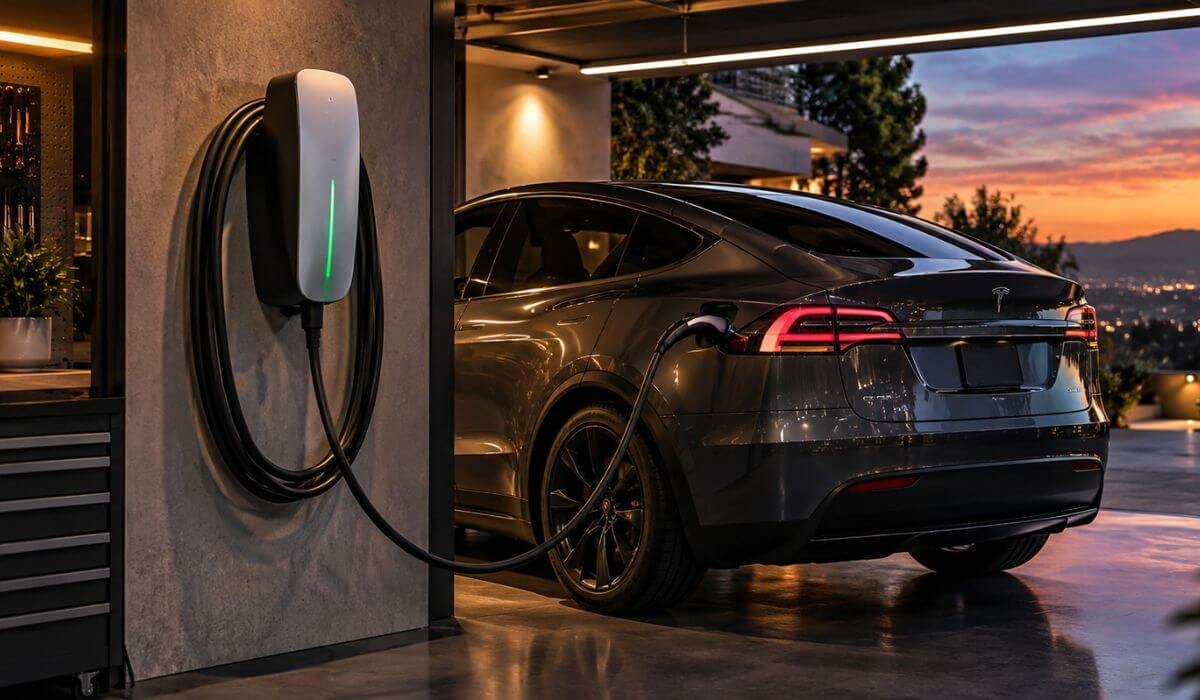
5 Best Home Chargers for Tesla Model Y in 2026: NACS, 240V & 11.5kW Charging
If you are charging a Tesla Model Y at home every night, the charger is one of those purchases where the headline number can be misleading. A 50A or 48A charger does not automatically make your Model Y charge at that rate; the vehicle determines how much AC power it can actually accept. Tesla lists up to 11.5 kW (48A) for Model Y configurations capable of that rate, while other configurations may accept less. Your electrical panel, breaker, wiring and installation also place real limits on what the charging system can deliver.
The connector is only one part of the equation. A native NACS/J3400 charger can connect directly to a compatible Model Y, but NACS itself does not determine charging speed. The 240V supply, available amperage, charger output and the vehicle’s onboard charging capability all work together. That is why a 40A charger delivering 9.6kW can still be a perfectly sensible choice for an owner who has a long overnight charging window, while a higher-output 48A setup makes more sense when daily driving is heavier or the charging window is shorter.
For this list, I focused on chargers that make practical sense for a Model Y garage or driveway: native NACS connection, 240V Level 2 charging, useful cable reach, installation flexibility, weather protection and genuinely useful charging controls. The five picks also cover different installation approaches, from Tesla’s hardwired Wall Connector to plug-in NEMA 14-50 options. The goal is not to chase the biggest number on the specification sheet, but to identify the charging setup that actually fits the Model Y, the home’s electrical capacity and the way you use the car.
Best Home EV Charger for Tesla Model Y: Top 2026 Picks for Level 2 NACS Charging
The real difference between these chargers is not simply how many amps they advertise; it is how well the charging output, electrical installation, cable reach and daily parking routine fit together. That is the detail worth paying attention to before choosing one for your Model Y.
#1. Tesla Wall Connector
Tesla Model Y home charger with native NACS connectivity, up to 48A and 11.5kW at 240V, hardwired installation, 24-foot cable and smart charging controls for dependable overnight charging
#2. EVIQO NACS Level 2 EV Charger 48A
Tesla Model Y 48A charger with 11.5kW Level 2 charging, 240V hardwired installation, 25-foot cable, Wi-Fi app control, adjustable charging current and IP66/NEMA 4 protection
#3. Autel AC Lite Level 2 Home EV Charger NACS 50A
Tesla Model Y NACS charger with up to 50A and 12kW at 240V, 25-foot charging cable, smart Wi-Fi control, adjustable output and NEMA 4X protection for indoor or outdoor home charging
#4. ChargePoint Home Flex Level 2 EV Charger NACS
Tesla Model Y 240V charger with NACS connection, adjustable charging output, 23-foot cable, NEMA 14-50 plug-in setup and smart app controls for flexible Level 2 home charging
#5. Lectron NEXUS Level 2 NACS EV Charging Station
Tesla Model Y Level 2 charger with 40A and 9.6kW output, 240V NEMA 14-50 connection, 23-foot cable, IP66 weather protection and built-in safety protection for straightforward home charging
Must Check: Best CCS to Tesla Adapter
Expert Tip
For a Model Y, overnight charging is the real benchmark. Most owners are not trying to refill a completely empty battery in the shortest possible time every evening; they want to plug in after driving, leave the car overnight and start the next day with enough range. That changes what matters. A properly installed 240V NACS charger with a long enough cable, dependable connection and sensible charging controls can be far more useful day after day than a charger chosen purely for its maximum amp rating.
One small detail is easy to overlook: where the charger sits can matter almost as much as what is inside it. A 23- or 25-foot cable gives you considerably more freedom when the charging point is not directly beside the ideal parking position. For a Model Y parked outside, enclosure protection matters too. These are the details you appreciate after months of ownership—not the number printed in large letters on the front of the box.
How We Choose These Tesla Model Y Home Chargers
We approached these five as home-charging equipment, not just EV accessories.
The first question was simple: does the charger make sense with a Model Y’s NACS charging port and AC charging capability? From there, we separated the products by the way an owner would actually install and use them.
The Tesla Wall Connector represents the most direct Tesla-focused approach. It is hardwired, designed specifically around Tesla vehicles and offers up to 48A charging. EVIQO and Autel take a similar hardwired route but bring their own combination of smart controls, long cables and outdoor-use features. That makes them meaningful alternatives rather than copies of the same product.
We treated ChargePoint Home Flex differently because its NEMA 14-50 configuration gives homeowners a practical plug-in route. That can be important for someone who already has the appropriate 240V outlet and does not want the installation to revolve around a permanently hardwired charger. Lectron, meanwhile, earns its place by offering a lower 40A output with a long cable and NEMA 14-50 connection—useful for an owner who does not need to chase the highest possible charging rating.
Then came the less glamorous details that are easy to skip in a comparison article: cable length, connector type, weather protection, charging controls, installation requirements and safety certification. We gave these real weight because they determine how convenient the charger remains after the novelty wears off.
We also kept the different power levels visible instead of pretending they are interchangeable. A 40A charger, a 48A charger and a 50A charger do not automatically provide three different ownership experiences in a Model Y. The vehicle, circuit and charger have to work within the same electrical limits.
So the final five are not here because they all happen to advertise high power. They are here because each one gives a Model Y owner a credible home-charging setup with a different practical advantage. That distinction is what we think is actually useful when you are spending real money on equipment that may stay on your garage wall for years.
#1. Tesla Wall Connector
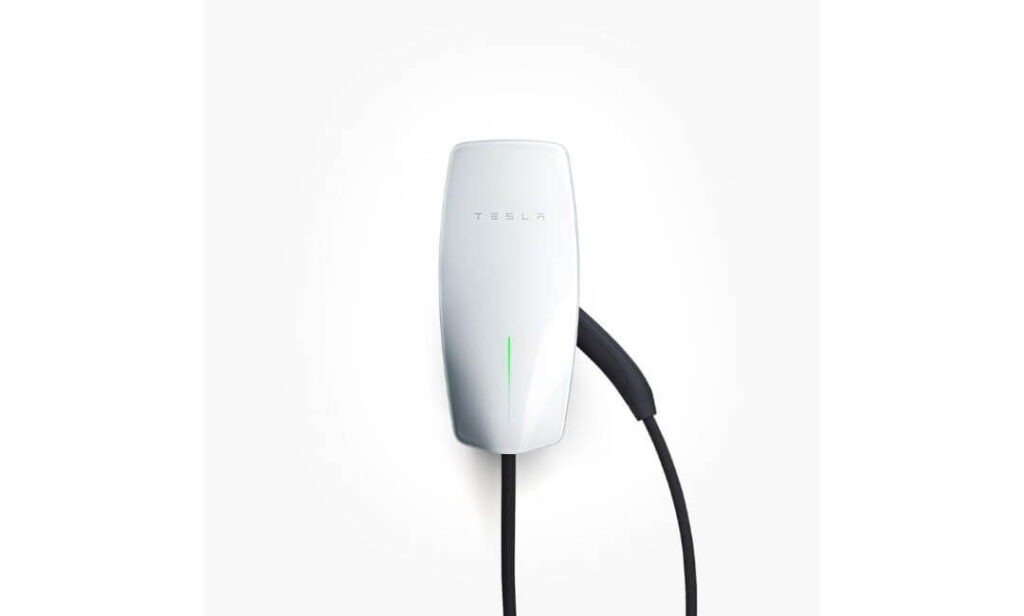
Quick Specs:
- Charging output: Up to 48A / 11.5kW at 240V
- Cable reach: 24 feet
- Current range: Configurable from 12A to 48A
- Installation: Hardwired
- Mounting: Indoor or outdoor
- Connectivity: 2.4GHz Wi-Fi with Tesla app access
- Power sharing: Supports multiple Wall Connectors
- Compatibility: Tesla Model Y and other compatible Tesla vehicles
- Enclosure: Type 3R
- Protection: Integrated ground-fault protection
- Size: 13.6 × 6.1 × 4.3 inches
The numbers tell only part of the story here. What makes this charger particularly well suited to a Model Y is how the hardware, car and software are designed to work together. At its maximum 48A setting, it can deliver 11.5kW on a 60A circuit, and Tesla lists up to 44 miles of Model Y range per hour under the corresponding setup. The actual rate still depends on the vehicle and electrical installation, so that 44-mile figure is a maximum rather than a promise for every Model Y.
The 24-foot cable is one of those specifications that sounds ordinary until you have to park slightly off-centre in a garage. There is enough reach to give the installation some breathing room rather than forcing the wall box to be positioned exactly beside the charge port. The unit can also be configured for lower output when the available electrical supply calls for it, with Tesla documenting settings from 12A through 48A.
Then there is the part you tend to appreciate months later: Wi-Fi connectivity and Tesla app access. Once registered, the Wall Connector can provide charging data and history, while Wi-Fi allows firmware updates and remote management features. If the household eventually has more than one Tesla, power sharing can also distribute available capacity between Wall Connectors rather than requiring each charger to have its own maximum-capacity circuit.
(For a Model Y owner who wants a permanent 240V charging point with native Tesla integration, this is the kind of setup that feels built into the home rather than added to it.)
What We Like
- Native Tesla ecosystem — the software and charging hardware feel like part of the same setup rather than separate pieces.
- 24-foot cable — genuinely useful when the garage layout is not perfectly aligned with the charge port.
- Adjustable output — you can configure the charger around the electrical capacity available at the installation rather than being locked into 48A.
- Useful long-term connectivity — Wi-Fi enables firmware updates and gives residential users access to charging information through the Tesla app.
- Power sharing — worth considering for households that may eventually charge multiple Tesla vehicles from the same electrical supply.
One Installation Detail to Plan For
- This is a hardwired charger, so installation needs an appropriately sized circuit, suitable wiring and professional electrical work rather than simply plugging into an existing NEMA 14-50 outlet. For the full 48A output, Tesla specifies a 60A circuit breaker; lower circuit ratings can be configured for lower output.
Why It Stands Out as a Tesla Model Y Home Charger
There is a reason this sits at the top of a Model Y-focused list: it removes much of the guesswork. You get the native Tesla connector, the full 11.5kW/48A capability available on the supported setup, adjustable current, a 24-foot cable and direct access to Tesla’s charging software.
It is also a charger you can size around your actual home rather than treating 48A as an all-or-nothing requirement. If your electrical installation cannot support the maximum configuration, Tesla’s system allows a lower output setting. That makes the product more adaptable than the headline 48A figure suggests.
The Insider Pro-Tip
Before the electrician arrives, check the maximum AC amperage shown by your Model Y and decide where the cable needs to reach from the wall—not where you think the car will normally park. Tesla specifically points owners to the vehicle’s charging screen to see its maximum amperage. That two-minute check can save you from designing an installation around a number your particular vehicle will not use.
And if you are planning the wiring from scratch, tell the electrician you want the installation designed for the actual continuous EV load, not simply “a Tesla charger.” For the maximum 48A output, Tesla specifies a 60A circuit; if your home’s available capacity is lower, the Wall Connector can be configured accordingly. In other words, buy the capability now, then let the electrical installation determine how much of it you sensibly use.
#2. EVIQO NACS Level 2 EV Charger 48A
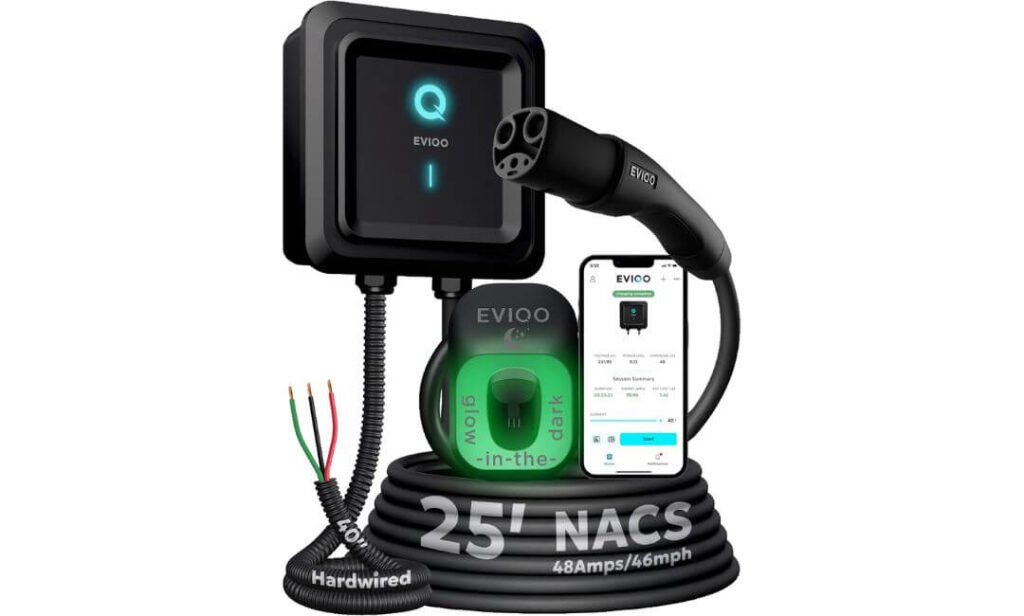
Quick Specs:
- Charging output: 48A / 11.5kW
- Maximum rating: 50A with compatible electrical setup
- Voltage: 240V
- Connector: Native NACS
- Cable reach: 25 feet
- Installation: Hardwired
- Current adjustment: 6A–48A through the app
- Connectivity: 2.4GHz Wi-Fi
- Protection: IP66 / NEMA 4
- Certifications: UL, ETL, FCC and ENERGY STAR
- Warranty: 3 years
- Special touch: Illuminated high-visibility holster and side reset button
What immediately separates this one from a lot of generic home EV chargers is that it starts with the Tesla connector instead of making you work around one. The NACS plug connects directly to a Model Y, and the button on the connector can open the Tesla charge port. At 48A and 240V, it reaches 11.5kW, while the 25-foot cable gives you considerably more freedom if the car does not sit perfectly beside the wall-mounted unit.
The hardwired design is where this setup becomes particularly interesting. EVIQO specifies 48A on a dedicated 60A circuit, while the hardware can be configured for 50A with a dedicated 70A circuit. For a Model Y owner, though, there is little reason to chase that 50A number simply because it exists—the 48A/11.5kW configuration already reaches the maximum output commonly relevant to a Model Y’s AC charging capability.
The smart side is more useful than a flashy “smart charger” label might suggest. Through the 2.4GHz Wi-Fi connection, you can start or stop charging, adjust the current from 6A to 48A, set reminders and track energy consumption and charging cost. Even better for real-world ownership, charging does not become useless simply because Wi-Fi disappears—the charger can still operate without the app. The IP66/NEMA 4 enclosure also gives it the flexibility to live in a garage, carport or suitable exterior location.
(The little details are what make this feel more considered: a 25-foot cable for awkward parking, a visible holster when you’re plugging in at night, and a physical reset button when you simply want to get the charger going again.)
What We Like
- Native NACS connection — a Model Y plugs straight in without needing a separate NACS adapter.
- 25-foot cable — one of the most useful practical advantages here, particularly for wider garages or driveway installations.
- Adjustable charging current — the app lets you set the output from 6A to 48A, giving owners more control over how the charger operates.
- Proper outdoor-ready construction — the IP66/NEMA 4 enclosure is designed for exposure to rain, snow, dust and heat.
- Useful everyday touches — the illuminated holster and side reset button are small features, but both solve annoyances you can actually encounter at night or during a charging fault.
One Installation Detail to Plan For
- Hardwired means planning the electrical side first. For the advertised 48A output, EVIQO specifies a dedicated 60A circuit and professional installation; the optional 50A configuration requires a dedicated 70A circuit. Your electrician should confirm that the home’s panel, wiring and available capacity can support the intended configuration before installation.
Why It Earns a Place Among the Top Tesla Model Y Home Chargers
This is a particularly sensible choice for someone who wants Tesla-style simplicity without necessarily buying Tesla-branded hardware. The direct NACS connection, 48A/11.5kW output, 25-foot cable and adjustable current cover the things most Model Y owners actually interact with every time they charge. It also gives you useful control from your phone without making the basic charging function dependent on the app.
There is also a nice balance between installation quality and everyday usability. The hardwired 240V design keeps the installation clean, while IP66/NEMA 4 protection, the long cable and the illuminated holster make it practical beyond a perfectly arranged indoor garage. The 3-year warranty and U.S.-based support add another layer of reassurance for an appliance that is intended to remain installed for years.
The Insider Pro-Tip
If your Model Y will be parked outside or at the far end of a garage, measure the actual cable path before choosing the mounting position. The 25-foot lead gives you plenty of freedom, but the smartest installation is still one where the cable reaches the charge port without being stretched across a walking path or left lying where vehicles can run over it.
And there is another detail worth getting right: have the electrician configure the circuit around the charging current you genuinely intend to use. The charger can be set up for 48A, but that does not mean your Model Y needs more than that—or that your home needs to be upgraded simply to chase the optional 50A setting. A clean 240V installation delivering the car’s usable maximum every night is a much more sensible target than paying extra for electrical capacity that will sit unused.
#3. Autel AC Lite Home 50A NACS EV Charger
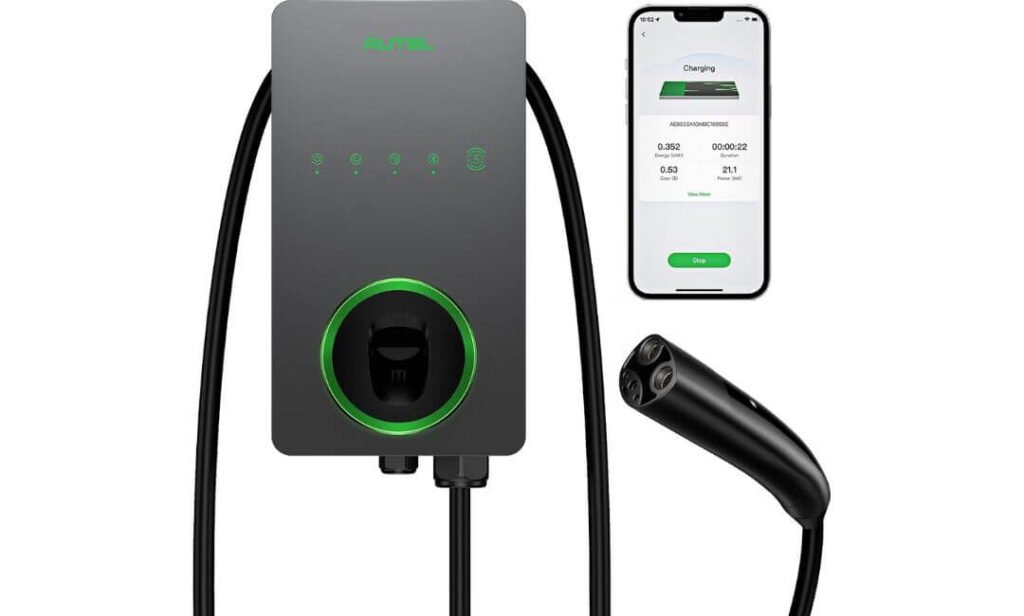
Quick Specs:
- Charging output: Up to 50A / 12kW
- Voltage: 208–240V AC
- Connector: NACS
- Cable reach: 25 feet
- Installation: Hardwired
- Current adjustment: 6A–50A
- Connectivity: Bluetooth, Wi-Fi, Ethernet, CAN and RS485
- Weather protection: NEMA 4X
- Safety: CSA certified
- Warranty: 3 years
- Dimensions: 13.2 × 7.4 × 3.8 inches
- Weight: 14.8 lb
There is a useful distinction with this one: 50A is its maximum capability, not a promise that a Model Y will pull 50A from it. At 240V, the charger is rated for up to 12kW, but the vehicle remains the deciding factor for how much AC power it actually accepts. For a Model Y owner, that makes the 48A/11.5kW neighbourhood more relevant than chasing the extra two amps simply because the specification sheet allows it.
What I particularly like here is the 25-foot cable paired with the NACS connector. That combination makes the charger easier to live with when the wall position and the Model Y’s charge port do not line up perfectly. You also get a genuinely broad connectivity package—Bluetooth, Wi-Fi and Ethernet, along with the Autel Charge app—so charging schedules, session information and current adjustment are handled from the same ecosystem rather than through a collection of separate controls.
The other part worth noticing is the NEMA 4X enclosure. This is not just a garage-only unit; Autel rates it for indoor and outdoor installation and lists operation from -40°F to 131°F (-40°C to 55°C). Add the 3-year warranty, CSA certification, integrated electrical protection and remote firmware capability, and it starts to look less like a simple high-output box and more like a permanent piece of home infrastructure.
(The interesting part is not that it says 50A on the label; it is the combination of 12kW hardware, a direct NACS connection, 25-foot reach and enough connectivity to remain useful after installation.)
What We Like
- Direct NACS connection — your Model Y can connect without building the setup around a separate connector adapter.
- 25-foot cable — gives considerably more freedom when the charging point is not immediately beside the vehicle.
- 6A–50A adjustment — useful when you need to match charging current to the electrical installation or your preferred charging setup.
- NEMA 4X protection — suitable for demanding indoor or outdoor locations, including exposure to rain, dust, snow and ice.
- Proper smart-charging controls — the Autel Charge app can start and stop charging, schedule sessions, monitor charging information and adjust the maximum current.
One Installation Detail to Plan For
- The 50A version is hardwired, so installation should be planned with a qualified electrician and the home’s available electrical capacity checked beforehand. Autel lists selectable input/current configurations up to 50A; the exact circuit and wiring should be sized for the chosen continuous charging load rather than assuming every installation should simply be wired for the maximum.
Why It Makes Sense as a Smart NACS Home Charger for Model Y
This is where the Autel earns its place: it gives you more than raw charging output. The 50A/12kW hardware is there, but the more meaningful everyday package is the NACS connector, 25-foot cable, adjustable 6–50A current and app-based scheduling. For a Model Y owner who wants a feature-rich permanent charger rather than simply the most basic way to deliver 240V power, that combination is useful.
It also has the sort of flexibility that can make sense when the charger is mounted somewhere exposed. NEMA 4X protection, multiple connectivity options and a 3-year warranty give the installation some long-term practicality, while the 25-foot cable avoids forcing the parking position to be perfect every night. And importantly, this is an Autel charger—not a Tesla Wall Connector—so its controls and app experience remain within Autel’s ecosystem.
The Insider Pro-Tip
Here is where I would resist the temptation to design the installation around the 50A headline. If your Model Y is already limited to around 48A on AC charging, the extra capacity is not going to transform the overnight charging experience. Instead, use the adjustable current intelligently and have the electrician size the circuit around the load you actually intend to run. That gives you a cleaner installation without paying simply to make a specification sheet look bigger.
One more thing: measure before mounting. The 25-foot cable is generous, but generous does not mean you should coil ten feet of cable across the floor every night. Position the unit so the cable naturally reaches the Model Y’s charge port with enough slack to park in your normal position. That small installation decision will make a surprisingly big difference to how polished the whole setup feels six months from now.
#4. ChargePoint Home Flex Level 2 EV Charger NACS
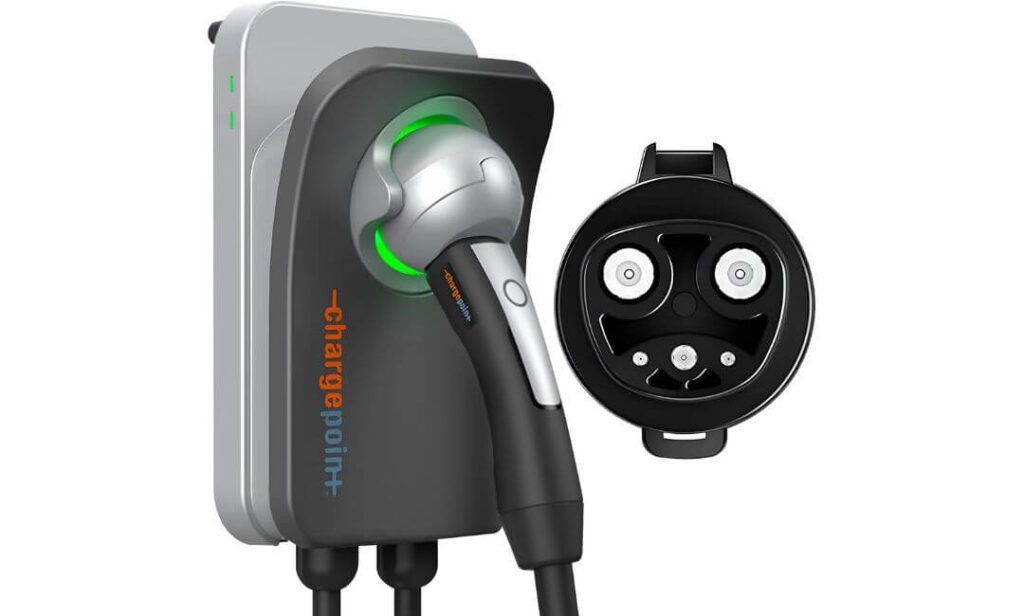
Quick Specs:
- Charging output: Up to 40A / 9.6kW with the NEMA 14-50 plug-in configuration
- Voltage: 240V
- Connector: NACS
- Cable reach: 23 feet
- Installation: NEMA 14-50 plug-in
- Current control: Adjustable through the ChargePoint app
- Connectivity: Wi-Fi and ChargePoint app
- Mounting: Indoor or outdoor
- Safety: UL certified
- Warranty: 3 years
- Cable: Cold-resistant design
For a Model Y owner, the appeal here is refreshingly straightforward: you get a proper 240V home charger without turning the installation into a hardwired project. The NEMA 14-50 version connects to a suitable 240V outlet and uses a native NACS connector, so the charging routine is simple—park, plug in and let the car charge. ChargePoint rates this configuration for up to 40A, with the company quoting roughly 30 miles of range per hour under suitable conditions.
The 23-foot cable is another practical win. It is long enough for most normal garage layouts without becoming an unnecessarily large bundle on the wall. You also get the ChargePoint app for charging information, scheduling and control, which is useful if your electricity plan has cheaper overnight rates. The important distinction is that this particular NEMA 14-50 configuration is a 40A setup—it should not be described as a 50A plug-in charger simply because Home Flex is also available in other configurations.
There is also something reassuring about the simplicity of the hardware. You are not buying this for a huge collection of unusual features; you are buying it because NACS + 240V + NEMA 14-50 + app control makes a sensible everyday combination for a Model Y. If the right outlet is already installed, it can be an especially clean way to move away from slower 120V charging without committing to a permanent hardwired charger.
(For the Model Y owner who already has the right 240V outlet, this is the “keep it simple and use it every night” option.)
What We Like
- Native NACS connector — direct connection to a Model Y without needing an additional adapter.
- Plug-in installation — particularly convenient when a suitable NEMA 14-50 outlet is already available.
- 23-foot cable — enough reach for most conventional garage parking arrangements.
- ChargePoint app — gives you charging information, scheduling and remote control rather than leaving everything to the physical unit.
- Cold-resistant cable — a useful touch for owners who will be charging through colder weather.
One Installation Detail to Plan For
- The outlet matters. A NEMA 14-50 receptacle should be properly installed and rated for continuous EV charging. For the 40A configuration, the electrical installation needs to be capable of supporting that continuous load. If you do not already have a suitable 240V circuit and outlet, electrician work may still be required—the “plug-in” advantage applies to the charger itself, not to creating the circuit from scratch.
Why It Fits the Plug-In Tesla Model Y Charging Sweet Spot
This Home Flex configuration makes sense when you want Level 2 charging without making the wall charger itself a permanent hardwired installation. The 40A output is enough to make a major difference compared with a standard 120V outlet, while the NACS plug keeps the connection straightforward for a Model Y.
Its real strength is the combination rather than any single headline specification: 240V charging, 40A output, NEMA 14-50 convenience, 23-foot reach and app-based control. If your home already has the appropriate receptacle in a sensible location, there is less installation complexity to think about—and that can be more valuable than paying for a higher-rated hardwired charger that your Model Y may not use fully.
The Insider Pro-Tip
Before ordering the NEMA 14-50 version, look at the breaker and the receptacle—not just the outlet shape. A 14-50 socket by itself does not tell you whether the circuit was installed with continuous EV charging in mind. If it is a new installation, have an electrician verify the circuit and receptacle rather than assuming an existing outlet is automatically suitable.
And if your garage already has the correct setup, take advantage of what this charger is actually good at: plug-in simplicity. There is little benefit in turning a straightforward installation into a complicated project just to chase a larger amperage number. Set the charging current appropriately, schedule overnight charging when it makes sense for your electricity plan, and let the Model Y wake up ready for the next drive.
#5. Lectron NEXUS 40A NACS Level 2 EV Charger
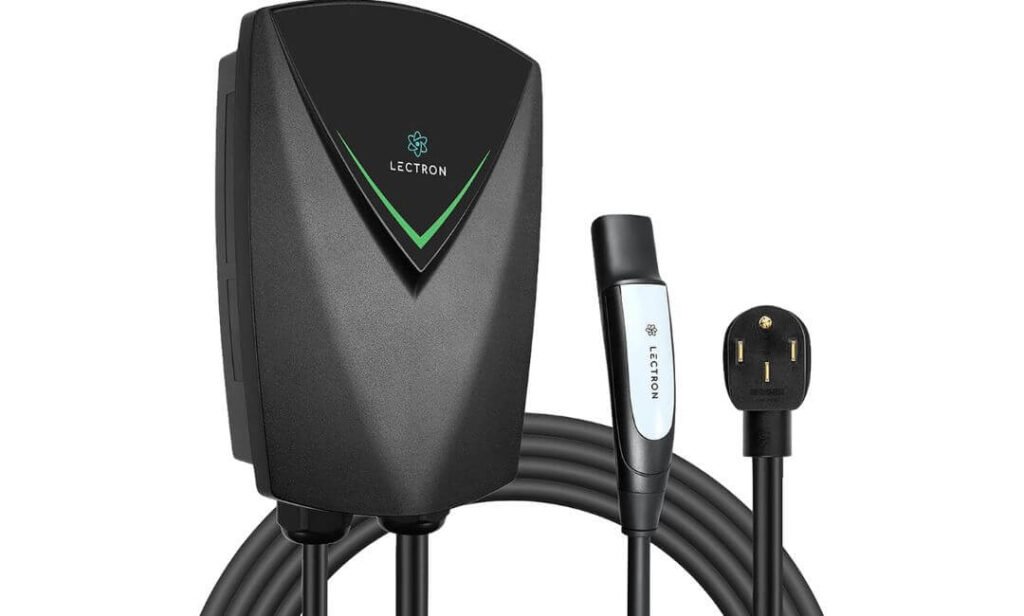
Quick Specs:
- Charging output: 40A / 9.6kW
- Voltage: 240V
- Connector: NACS / J3400
- Cable reach: 23 feet
- Installation: NEMA 14-50 plug-in
- Outlet requirement: 240V NEMA 14-50
- Weather protection: IP66
- Safety: UL 2594, UL 2231, UL 2251 and UL 817 certified; ETL listed
- Charging control: Plug-and-charge, no Wi-Fi or app required
- Warranty: 3 years
- Included: Wall-mounted Tesla-style holster
For a Model Y owner who simply wants to plug in at home and get on with the day, the Lectron NEXUS takes a refreshingly uncomplicated approach. Its native NACS/J3400 connector goes directly into the Tesla, while the 40A/240V setup provides up to 9.6kW of Level 2 charging. Lectron quotes up to 38 miles of range per hour, although real-world range added will vary with the vehicle, battery conditions and charging circumstances.
The part I would pay attention to is the NEMA 14-50 plug-in design. If the appropriate 240V outlet is already installed, there is no need to turn this into a hardwired installation project. The 23-foot cable also gives you enough reach for different parking positions, while the included wall holster keeps the connector off the floor when the car is not charging. It is a straightforward arrangement, and sometimes straightforward is exactly what you want from equipment that gets used almost every night.
Then there is the deliberately simple electronics approach. There is no app, Wi-Fi connection or cloud account to configure. Charging starts from the physical connection, while built-in protection covers conditions such as overcurrent, overvoltage, overheating and ground faults. The IP66 enclosure also means the unit is designed for indoor or outdoor use, provided it is installed according to the manufacturer’s requirements.
(This is the kind of charger that makes sense when your priority is dependable Level 2 charging rather than another smart device competing for space on your phone.)
What We Like
- Native NACS/J3400 connection — direct connection to a Model Y without needing an adapter.
- Simple 40A charging — 9.6kW is a meaningful step up from 120V Level 1 charging and well suited to routine overnight charging.
- NEMA 14-50 plug-in setup — ideal when the correct 240V receptacle is already available.
- 23-foot cable — enough flexibility for garages where the car does not always occupy exactly the same position.
- Offline operation — no Wi-Fi, app account or internet connection is required to start charging.
A Simple Installation Detail to Get Right
- The NEMA 14-50 outlet still needs to be suitable for continuous EV charging. The plug-in design means the charger itself does not need to be hardwired, but it does not mean an old 14-50 receptacle should automatically be assumed suitable. If the outlet is being installed or upgraded, have the circuit and receptacle checked by a qualified electrician before putting the charger into daily service.
Why It Makes Sense as a Straightforward Tesla Model Y Level 2 Charger
The NEXUS earns its position by doing something many modern chargers seem to forget: it does not make basic charging more complicated than it needs to be. You get 40A/9.6kW output, a direct NACS connection, a 23-foot cable, NEMA 14-50 installation and a weather-resistant enclosure. There is no subscription, app setup or Wi-Fi configuration standing between the charger and the car.
It also makes sense for someone who does not need to squeeze every possible amp out of a home charger. 40A at 240V is already substantial Level 2 charging, and for an owner who plugs in after the day’s driving and leaves the Model Y connected overnight, the lower maximum output can be perfectly practical. The three-year limited warranty and independently tested safety certifications add useful reassurance without turning the product into a feature-heavy gadget.
The Insider Pro-Tip
If you already have a properly installed 240V NEMA 14-50 outlet, this is one of those situations where simplicity can actually be an advantage. Mount the holster where you can reach it comfortably, route the 23-foot cable so it does not cross a walking or driving path, and let the Model Y handle the charging session.
Just don’t buy this expecting the experience of a connected smart charger. Its strength is that it stays out of the way. If you want charging schedules, energy-cost tracking or remote controls, the EVIQO, Autel or ChargePoint options in this list make more sense. If you want a direct NACS connection, solid 240V charging and a charger that works without an internet connection, this one keeps the job refreshingly simple.
Best Home EV Charger For Tesla Model Y Comparison (2026)
| Home Charger | Charging Output | Model Y Connection | Installation | Cable & Reach | Smart Features | Weather & Safety | Best Fit for a Model Y Home |
|---|---|---|---|---|---|---|---|
|
Tesla Wall Connector
Tesla’s native home-charging hardware
Native Tesla Setup
|
Up to 48A / 11.5kW 240V • configurable current |
NACS
Direct Tesla Connection
Designed around Tesla vehicles and their charging ecosystem.
|
Hardwired
Up to 48A requires the appropriate 60A circuit and professional electrical installation.
|
24 ft Useful reach for offset garage parking |
Wi-Fi
Tesla App
Firmware updates, charging information and power sharing.
|
Indoor / Outdoor Ground-Fault Protection | Owners wanting the most integrated Tesla home-charging experience. |
|
EVIQO NACS Level 2 48A
Long-cable smart hardwired alternative
25-ft Cable
|
48A / 11.5kW 240V • optional 50A configuration |
NACS / J3400
No Adapter
Direct connection to the Model Y charge port.
|
Hardwired
48A configuration uses a dedicated 60A circuit; optional 50A setup requires a larger circuit.
|
25 ft Excellent reach for garage or driveway layouts |
Wi-Fi App
6–48A Control
Scheduling, charging controls and energy information.
|
IP66 NEMA 4 UL / ETL | Owners wanting native NACS, long cable reach and detailed smart controls. |
|
Autel AC Lite Home 50A
Feature-rich connected NACS charger
12kW Class
|
Up to 50A / 12kW 208–240V • adjustable current |
NACS
Direct Tesla Connection
The charger’s 50A capability exceeds what many Model Y configurations can actually draw.
|
Hardwired
Permanent installation with circuit sizing based on the selected charging current.
|
25 ft Flexible cable designed for indoor or outdoor use |
Wi-Fi
Bluetooth
Ethernet
App scheduling, charging control and monitoring.
|
NEMA 4X CSA Certified | Owners who want a highly connected charger with strong outdoor protection. |
|
ChargePoint Home Flex NACS
NEMA 14-50 plug-in configuration
Plug-In Choice
|
Up to 40A / 9.6kW 240V • NEMA 14-50 version |
NACS
No Adapter
Direct connection for Tesla vehicles with NACS charging.
|
NEMA 14-50
Plug-in convenience when the correct 240V receptacle is already installed.
|
23 ft Practical reach for typical garage layouts |
ChargePoint App
Scheduling, charging information and remote controls.
|
Indoor / Outdoor
UL Certified
Cold-resistant cable for changing conditions.
|
Owners who already have a suitable 240V NEMA 14-50 outlet and want plug-in simplicity. |
|
Lectron NEXUS 40A NACS
Simple offline Level 2 charging
No App Required
|
40A / 9.6kW 240V • steady Level 2 output |
NACS / J3400
Direct Connection
Designed for Tesla and other vehicles with native NACS ports.
|
NEMA 14-50
Plug-in installation when a suitable 240V outlet is available.
|
23 ft Long enough for flexible everyday parking |
Offline
No Wi-Fi, app or cloud account required for charging.
|
IP66
ETL Listed
UL 2594, UL 2231, UL 2251 and UL 817 certifications listed.
|
Owners who want direct NACS charging without adding another smart device to the routine. |
Buying Guide for the Right Tesla Model Y Home Charger
Choosing a home charger for a Model Y is easier when you stop looking at the charger as a standalone gadget. The car, electrical circuit, connector, cable length and daily parking routine all have to work together. A charger can advertise 50A or 12kW and still deliver no practical advantage over a properly configured 48A unit if the vehicle or home’s electrical installation is the limiting factor.
The five chargers in this guide cover two very different approaches: hardwired 240V charging and plug-in NEMA 14-50 charging. Neither is automatically right for everyone. Your existing electrical setup and how you use the Model Y should determine which direction makes sense.
Charging Speed: Look at What the Model Y Can Actually Use
For supported Model Y configurations, Tesla lists up to 48A / 11.5kW of AC charging capability with the appropriate Wall Connector installation. That means a 50A-rated charger does not automatically make the vehicle charge at 50A. The vehicle’s onboard charging capability remains the ceiling.
For home charging, the useful question is therefore not simply, “Which charger has the biggest number?”
| Charger capability | What it means in practice |
|---|---|
| 40A / 9.6kW | Strong Level 2 output and well suited to routine overnight charging |
| 48A / 11.5kW | Matches the maximum AC output commonly relevant to supported Model Y configurations |
| 50A / 12kW | Provides additional charger capacity, but the Model Y may not use the extra output |
| 120V Level 1 | Much slower and generally better suited to low-mileage or occasional charging |
The difference between 40A and 48A can matter if you regularly arrive home with a low battery and need a larger amount of energy before an early departure. For an owner who normally plugs in every evening, however, 9.6kW can already be plenty of charging power.
There is another detail people sometimes overlook: range-per-hour figures are estimates, not fixed refuelling numbers. Charging efficiency, battery temperature, state of charge and the particular Model Y configuration all affect how much usable range is added.
NACS Is the Starting Point, Not the Whole Decision
The Model Y uses Tesla’s NACS/J3400 charging connection, so a native NACS home charger gives you a direct physical connection without introducing an adapter into your everyday routine.
That is particularly convenient when the car is charged almost every night. You are less likely to think about the connector at all—you simply take the cable from its holder and plug it into the vehicle.
For this particular list, all five selections provide a Tesla-compatible NACS connection. The more meaningful differences are what come after the connector:
- Tesla Wall Connector focuses heavily on Tesla’s own charging ecosystem.
- EVIQO combines NACS with 48A output, a 25-foot cable and app controls.
- Autel adds broad connectivity, including Wi-Fi, Bluetooth and Ethernet.
- ChargePoint offers NACS with a NEMA 14-50 plug-in configuration.
- Lectron keeps the experience intentionally simple with offline NACS charging.
If you expect to own other NACS vehicles in the future, a native NACS charger can also remain useful beyond your current Model Y. But “future-proof” should not be treated as a magic feature—electrical capacity and connector standards are only part of how long a charger remains useful.
Installation Reality: Hardwired vs NEMA 14-50
This is probably the biggest buying decision after connector type.
A hardwired charger is permanently connected to the home’s electrical system. It is the route used by the Tesla Wall Connector, EVIQO and Autel options in this comparison.
A NEMA 14-50 charger plugs into a suitable 240V receptacle, as seen with the ChargePoint and Lectron choices.
Hardwired Charging
Hardwired installation makes sense when you are creating a dedicated charging location and want the cleanest permanent setup.
For example, Tesla specifies a 60A circuit for its maximum 48A Wall Connector configuration. The charger can also be configured for lower current when the available electrical supply cannot support the maximum.
The electrician should consider:
- Available capacity in the main electrical panel
- Breaker rating
- Correct conductor size
- Conduit and cable routing
- Distance between panel and charger
- Voltage drop on a long run
- Whether other large electrical loads operate simultaneously
- Indoor versus outdoor installation
- Local electrical-code requirements
Do not choose a breaker simply because a charger advertises a particular amperage. The entire circuit has to be designed for continuous EV charging, and the final configuration should be determined by the electrical installation and applicable code.
NEMA 14-50 Plug-In Charging
Plug-in charging can be wonderfully convenient when the correct outlet already exists in the right location.
But there is an important distinction between having a 14-50-shaped receptacle and having a circuit that was properly installed for continuous EV charging. An older outlet should not automatically be assumed to be suitable just because the charger physically fits.
If you are installing a new NEMA 14-50 receptacle specifically for EV charging, have the electrician verify:
- Circuit capacity
- Wiring and conductor sizing
- Breaker suitability
- Receptacle quality
- Continuous-load requirements
- Grounding and protection
- Distance from the electrical panel
The plug-in route can reduce installation complexity, but it does not eliminate the need for proper electrical work when the 240V circuit itself has to be created.
Cable Length Matters More Than It Looks on Paper
A charger mounted six feet from the ideal parking position can be irritating every single night.
That is why the 23–25-foot cables across this comparison are worth paying attention to. They give you more freedom if:
- The charge port does not line up with the wall.
- You park nose-in one day and reverse-in another.
- Two cars share the same garage.
- The charger is mounted outside and the vehicle parks a little farther away.
- The electrical panel dictates where the charger can be mounted.
Still, longer is not automatically better. Excess cable should have somewhere safe to rest. It should not sit across a pedestrian route or where vehicle tyres can repeatedly drive over it.
Measure the real route from the charger mounting point to the Model Y’s charge port before deciding where to install the unit.
Smart Features: Useful When They Solve a Real Problem
Smart charging is one of those areas where specifications can easily become marketing noise.
For some owners, app control is genuinely useful. For others, the car already provides enough charging management that another app adds little.
The useful features to look for are:
- Charging schedules, particularly if your utility has time-of-use pricing.
- Energy tracking, when you want to understand home-charging consumption.
- Remote start and stop, useful when you are away from the vehicle.
- Current adjustment, particularly when your electrical installation supports different charging limits.
- Firmware updates, which can improve the charger without replacing the hardware.
- Power sharing, useful when more than one charger is installed.
Tesla, EVIQO, Autel and ChargePoint all bring different levels of connected functionality to the table. Lectron takes the opposite approach: no Wi-Fi or app is required for basic charging.
That is not necessarily a disadvantage. If your goal is simply to plug in every evening and charge, an offline charger can actually be refreshingly uncomplicated.
Safety, Certification and Weather Protection
A home EV charger is handling substantial electrical power for extended periods, so certification and protection deserve more attention than decorative features.
Look for appropriate safety certification and protection against conditions such as:
- Ground faults
- Overcurrent
- Overvoltage
- Overheating
- Outdoor moisture
- Dust and debris
The products here take different approaches. The Tesla Wall Connector provides integrated protection and an outdoor-capable enclosure, while EVIQO uses an IP66/NEMA 4 design. Autel goes further with a NEMA 4X-rated enclosure. ChargePoint and Lectron also provide weather-resistant designs intended for indoor or outdoor use.
For an outdoor installation, enclosure protection is especially important. But remember that weather resistance does not replace correct installation. Cable routing, mounting height, receptacle protection where applicable and local electrical requirements still matter.
How to Match the Charger to Your Situation
| Your situation | What to prioritize |
|---|---|
| You want the most Tesla-integrated setup | Native Tesla ecosystem, 48A capability, Wi-Fi and power sharing |
| You want a hardwired NACS alternative | 48A output, long cable, smart controls and outdoor protection |
| You want extensive smart connectivity | Wi-Fi, Bluetooth/Ethernet, app control and energy monitoring |
| You already have a suitable 240V NEMA 14-50 outlet | Plug-in NACS charger with the correct current rating |
| You prefer charging without apps or Wi-Fi | Simple NACS plug-in Level 2 charger |
| Your parking position is awkward | Look closely at 23–25-foot cable options |
| You charge outdoors | Prioritize enclosure rating, cable durability and proper mounting |
| You have limited electrical capacity | Choose adjustable current and have the circuit evaluated before installation |
Common Buying Mistakes Worth Avoiding
Buying by amperage alone. A 50A charger is not automatically a better match for a Model Y than a 48A or 40A unit.
Assuming every NEMA 14-50 outlet is EV-ready. The receptacle needs an appropriate circuit behind it.
Ignoring cable reach. A technically excellent charger becomes annoying if its cable cannot comfortably reach the charge port.
Paying for smart features you will never use. If you already manage charging through the vehicle and only want overnight charging, an app may not change your routine.
Installing at the maximum current without checking the panel. The electrical system needs to support the continuous charging load, not merely the charger’s advertised maximum.
Using an extension cord as a permanent solution. A proper EV charging installation should be planned around the charger and electrical circuit rather than improvised with household extension equipment.
Assuming charging speed equals miles added in every situation. Temperature, battery state, charging efficiency and vehicle configuration all influence the result.
Cost and Value: Where the Real ROI Comes From
The value of a home charger is not just how quickly it can replenish the battery. Think about how often you charge, how much electricity you use and how convenient the setup becomes.
The biggest installation-cost difference is usually between an existing suitable 240V outlet and a new hardwired circuit. If the garage already has an appropriate NEMA 14-50 circuit, a plug-in charger can be a much simpler project. If you are starting from an empty wall with no suitable circuit, electrician work becomes part of the real purchase price regardless of which charger you choose.
Smart scheduling can also have practical financial value if your utility uses time-of-use pricing. Charging during cheaper periods can reduce operating costs over many months, but the actual savings depend entirely on your electricity tariff, driving mileage and charging schedule. It is better to calculate those numbers from your own utility bill than to trust a generic “save $X per month” claim.
For most Model Y owners, the strongest value comes from getting three things right: a correctly sized 240V installation, a charger that matches the car’s usable AC charging capability, and a cable/setup that makes plugging in effortless every night. Once those pieces are right, the difference between chargers becomes much easier to judge on features that genuinely matter to you.
NACS, 240V and 11.5kW Explained for Your Tesla Model Y
These three terms often appear together on EV charger listings, but they describe different parts of the charging setup. NACS tells you about the connector, 240V tells you about the electrical supply, and 11.5kW describes charging power. Understanding that difference makes it much easier to compare the five chargers in this guide without getting distracted by large numbers on a product box.
What NACS Actually Means
NACS stands for North American Charging Standard, and the connector is now standardized under SAE J3400. For a Model Y equipped with the Tesla charging connection, a native NACS charger gives you a direct connection between the vehicle and the home charging equipment.
That matters mostly for convenience. You are not looking at an adapter between the charger and car every night, and the connector is purpose-built around the charging interface used by Tesla vehicles.
There is also an important distinction here: NACS does not tell you how fast the charger will charge the car. A NACS charger could be rated at 40A, 48A, or 50A. The connector tells you how the charger connects to the vehicle; the electrical supply and charging equipment determine how much power is available.
What 240V Means at Home
240V refers to the electrical supply used by the Level 2 home chargers in this comparison.
Compared with charging from a conventional 120V household outlet, a properly installed 240V Level 2 circuit can deliver substantially more power, making it much better suited to regular home charging.
This is why a 240V charger is usually the point where home charging starts to feel genuinely convenient. Instead of thinking about whether the car has enough time to charge overnight, you can normally plug in after driving and let the car replenish while it is parked.
But voltage alone does not tell the complete story. Current matters too.
For example:
- 240V × 40A = 9.6kW
- 240V × 48A = 11.52kW
- 240V × 50A = 12kW
Actual delivered power can vary, and charging is not necessarily held at the mathematical maximum for the entire session.
Where 11.5kW Fits Into the Picture
The 11.5kW figure is particularly relevant to this Model Y comparison because Tesla lists up to 11.5kW / 48A AC charging capability for supported configurations when the appropriate electrical installation is available.
That means a charger advertised at 48A/11.5kW is already operating in the range that makes sense for a high-output Model Y home setup.
This is also why the Autel’s 50A / 12kW rating should not automatically make it the obvious choice over a 48A charger. The charger can be capable of 50A, but the vehicle determines how much AC power it can actually accept.
Think of it this way:
NACS = how the charger connects.
240V = the electrical supply.
11.5kW = the charging power available at the supported 48A configuration.
They work together, but they are not interchangeable terms.
If You Drive Your Model Y Every Day
For a daily driver, I would focus less on squeezing out the final amp and more on creating a charging routine that requires almost no thought.
If you arrive home every evening, connect the cable and leave the vehicle plugged in overnight, both 40A and 48A Level 2 charging can be practical. The 48A class gives you more charging headroom and is particularly useful for drivers who regularly cover large distances.
In this situation, the things worth prioritizing are:
- Native NACS connection
- 240V Level 2 charging
- Appropriate circuit capacity
- Cable length that suits your parking position
- Charging schedules if your utility has time-based rates
- Outdoor protection if the charger is exposed
- A mounting position that makes plugging in effortless
The Tesla Wall Connector, EVIQO and Autel are particularly suited to owners planning a permanent hardwired installation, while the ChargePoint and Lectron options make more sense when a suitable NEMA 14-50 setup is already available.
If You Take Occasional Long Trips
The calculation changes slightly when your Model Y is normally lightly used but occasionally comes home with a much lower battery after a long trip.
In that situation, higher-power Level 2 charging can give you more recovery time overnight. The difference between 40A and 48A is not dramatic for every owner, but it can become useful when you arrive home late and need a substantial amount of energy before leaving again in the morning.
This is where an 11.5kW-capable installation has a practical advantage: you have more available charging capacity when you actually need it, even though your everyday charging routine may not require the maximum.
If Fastest Practical Home Charging Is Your Priority
Look at the 48A / 11.5kW class first, provided your Model Y configuration and home’s electrical system support it.
The Tesla Wall Connector and EVIQO both fit naturally into this category, while Autel offers a higher-rated 50A/12kW charger. The important point is that the vehicle, not the product listing, determines the maximum AC charging rate you will actually receive.
So do not pay extra simply because a box says “50A” if your Model Y will not use the additional capacity.
If Installation Cost and Simplicity Matter Most
The NEMA 14-50 route deserves serious consideration when you already have an appropriate 240V outlet.
The ChargePoint Home Flex NACS and Lectron NEXUS both use this plug-in approach in the configurations covered here. That can make the installation simpler than adding a new hardwired charger, provided the existing circuit is correctly installed and suitable for continuous EV charging.
There is still an important distinction between “plug-in” and “no electrical work.” If you need a new 240V circuit and receptacle, you may still need an electrician.
For someone who already has the right electrical setup, however, plugging in a suitable charger can be refreshingly straightforward.
If You Want One Charger for More Than Just Today’s Tesla
For future EV compatibility, native NACS/J3400 support is the useful feature to watch.
The connector standard is increasingly relevant beyond Tesla, so buying a native NACS charger can make the hardware useful if another compatible EV eventually joins the household.
But future-proofing should be kept realistic. A charger can have the right connector and still be limited by its electrical installation, maximum output, cable placement or vehicle compatibility. Future-proofing is about keeping the entire installation useful, not simply buying the highest amperage available today.
The Practical Choice Comes Down to Your Home
There is no special advantage in choosing “NACS” instead of “240V” because they are solving different problems.
A good Model Y home setup can be thought of as:
NACS connector → 240V electrical supply → appropriate amperage → vehicle’s onboard charging limit → overnight charging routine.
Once those pieces line up, the decision between these five chargers becomes much clearer. If you want the most Tesla-integrated experience, the Tesla Wall Connector takes a very direct approach. If you want a long-cable smart alternative, EVIQO and Autel bring useful features. If you already have the right 240V outlet, ChargePoint and Lectron offer a simpler plug-in route.
The important thing is not to buy the biggest number on the specification sheet. Buy the charging setup that your Model Y can actually use, your electrical system can safely support, and your daily routine will make you glad you installed.
Installation Essentials for a Tesla Model Y Home Charger
A good charger can only perform as well as the electrical installation behind it. This is especially important with a Model Y because the chargers in this guide range from 40A plug-in units to 48A and 50A hardwired systems. The safest approach is to decide the charging output, circuit, mounting position and cable route together rather than buying the charger first and figuring out the electrical side afterward.
Start With the Electrical Capacity, Not the Charger Box
Before installation, have the home’s electrical panel evaluated for available capacity and continuous EV charging load. An electrician should look at the main service rating, existing breakers, major household loads and the proposed charging current.
For the products covered here, the electrical requirements can look quite different:
- A 48A charger operating at its maximum output generally requires a 60A circuit under the applicable continuous-load calculation.
- A 50A charger needs a larger circuit when it is actually configured to deliver 50A continuously.
- A 40A NEMA 14-50 charger requires an appropriately sized 240V circuit and receptacle suitable for continuous EV charging.
- Lower charging-current settings can be useful when the home’s available electrical capacity does not justify the maximum output.
The key point is simple: do not size the breaker from the charger advertisement alone. The electrician should determine the appropriate breaker, conductors, disconnecting requirements where applicable and installation method according to the charger’s instructions and local electrical code.
Give the EV Charger Its Own Circuit
A dedicated circuit is the normal approach for a permanently installed Level 2 EV charger.
That means you should not treat the charger like another ordinary household appliance that happens to draw power occasionally. EV charging can continue for several hours, so the circuit needs to be designed for that continuous load.
The installation should account for:
- Correct breaker rating
- Proper conductor sizing
- Appropriate grounding
- Ground-fault protection as required
- Correct receptacle rating for plug-in equipment
- Panel capacity
- Conduit or cable protection
- Local electrical-code requirements
- The manufacturer’s installation instructions
If the electrical panel is already heavily loaded, the electrician may recommend a lower charging current or evaluate whether the home’s service capacity needs attention before adding the charger.
Hardwired or NEMA 14-50 Changes the Installation
The three hardwired options in this guide—Tesla, EVIQO and Autel—are intended to become a permanent part of the home’s electrical installation.
That approach can produce a clean wall-mounted setup, particularly when the charger is going to stay in the same location for years.
The ChargePoint and Lectron configurations covered here take the NEMA 14-50 plug-in route. That is convenient when a suitable 240V receptacle already exists.
But there is one distinction worth remembering:
Plug-in charger does not mean plug into any old 14-50 outlet.
If the receptacle is being installed specifically for EV charging, it should be installed as part of a properly designed EV circuit. If an existing outlet has an unknown history, have it inspected rather than assuming its rating on the faceplate tells you everything about the circuit.
Choose the Mounting Position Around the Car
Do not choose the wall position simply because it is closest to the electrical panel.
The better starting point is where the Model Y normally parks.
Open the charge port, visualize where the connector will sit and then work backward toward the charger. This helps you avoid an installation where the cable has to stretch diagonally across the garage every night.
The 23- to 25-foot cables in this comparison provide useful flexibility, but cable length should not become an excuse for poor placement.
Aim for a position where:
- The connector can be reached without stretching the cable.
- The cable does not cross a regular walking route.
- The vehicle cannot routinely drive over the cable.
- The connector can be returned to its holder easily.
- The charger remains accessible for maintenance.
- The installation does not interfere with garage doors or storage.
- Outdoor installations have suitable protection from direct exposure and physical damage.
A few minutes with the car parked in its normal position can prevent years of minor daily irritation.
Outdoor Installation Needs More Than a Weatherproof Label
Several chargers here are designed for indoor or outdoor use, including models with IP66, NEMA 4 or NEMA 4X protection.
That is useful, but an enclosure rating does not mean you can ignore the installation environment.
For an outdoor charger, consider:
- Direct exposure to rain and snow
- Drainage around the mounting location
- Sun exposure and heat
- Ice accumulation
- Dust and debris
- Physical impact from vehicles
- Cable storage
- Water exposure around the electrical connection
- Local requirements for the circuit and equipment
The charger should be mounted securely according to the manufacturer’s instructions, with the cable and connector kept off the ground when not charging.
Cable Management Is Part of the Installation
Cable management sounds like a small detail until a heavy charging cable is lying across the garage floor every evening.
Use the supplied holster or an appropriate cable-management point so the connector has a defined resting place.
For a 23- or 25-foot cable, avoid simply wrapping the entire length tightly around the charger unless the manufacturer specifically allows that arrangement. Give the cable enough room to sit naturally without sharp bends, crushing or repeated vehicle contact.
The goal is simple: the cable should reach the Model Y comfortably and return to its holder without becoming part of the garage clutter.
Set Up the App Before You Call the Installation Finished
If you choose a connected charger, complete the software setup while the electrician is still available or immediately after installation.
Depending on the model, this can include:
- Connect the charger to the appropriate Wi-Fi network.
- Register the charger in the manufacturer’s app.
- Confirm the correct vehicle or charging profile where applicable.
- Check the configured charging current.
- Install available firmware updates.
- Confirm that charging-session information is being reported correctly.
- Test remote controls and scheduled charging.
- Save the charger and electrical-installation information for future reference.
Do not assume that because the charger powers on, everything is configured correctly.
A proper first test should confirm that the vehicle begins charging normally, the selected current is appropriate, the connector is seated correctly and no warning appears on the car or charger.
Check Firmware and Connectivity After Installation
Connected chargers can receive firmware updates that improve functionality, compatibility or security.
Tesla, EVIQO, Autel and ChargePoint all take different approaches to connected charging, but the principle is the same: let the charger complete its initial software setup before judging the finished installation.
If the charger is mounted in a garage with a weak Wi-Fi signal, check connectivity from the actual mounting position rather than assuming the router signal will be strong enough.
For a charger that supports Ethernet or multiple connection methods, such as the Autel option, that flexibility can be useful when the installation location is difficult for wireless connectivity.
Do a Real Charging Test
The first charging session should be treated as a commissioning check, not just a quick “it works” moment.
With the Model Y connected, verify:
- The connector locks and releases normally.
- Charging begins without repeated faults.
- The vehicle reports the expected charging current.
- The charger remains stable during operation.
- The cable and connector remain in their intended position.
- The electrical installation shows no abnormal signs such as unusual heat or repeated breaker operation.
- App-based chargers report the session correctly.
- Scheduled charging works if you intend to use it.
If anything unusual occurs, stop and have the installation checked rather than repeatedly resetting the charger and hoping the issue disappears.
Permits and Local Electrical Requirements Are Worth Checking
Permit requirements vary by city, state and local authority, so there is no universal rule that applies to every Model Y installation.
Before beginning a new 240V circuit or hardwired charger installation, check whether your local authority requires an electrical permit or inspection. A qualified local electrician should know the normal process, but it is still worth confirming.
Also check your electricity provider before installation if you have access to:
- Time-of-use electricity rates
- EV-specific charging rates
- Home EV rebates
- Charger purchase incentives
- Installation rebates
- Managed charging programs
- Utility demand-response programs
These programs change by location and over time, so verify the current terms directly with your utility rather than relying on an old rebate figure from a charger listing.
One Installation Detail Model Y Owners Should Not Skip
After everything is installed, look at the charging screen inside the Model Y and check the actual amperage the vehicle is accepting.
That number is more useful to you than the largest number printed on the charger.
If the car is receiving the expected charging power and the installation is operating normally, you have achieved the important part: a safe, repeatable 240V home-charging routine that fits the vehicle and the house.
The best installation is not the one with the biggest breaker or the highest advertised amperage. It is the one where the electrical circuit, charger, cable placement and Model Y all work together without making you think about them every night.
Tesla Model Y Home Charging Tips for Everyday Use
A home charger becomes valuable when charging stops being something you have to think about. For most Model Y owners, the easiest routine is to plug in when you get home, let the car take what it needs, and leave it ready for the next drive. The trick is not to chase maximum charging power every night, but to use the charger in a way that fits your driving pattern, electricity rate and battery needs.
Use Charging Schedules When Your Electricity Rate Changes
If your utility uses time-of-use pricing, scheduling charging can be one of the simplest ways to reduce the cost of running a Model Y.
Instead of starting a large charging session immediately after arriving home during an expensive period, set the vehicle or compatible charger to begin during your utility’s lower-cost window.
A practical routine looks like this:
- Check your electricity provider’s current peak and off-peak periods.
- Choose a charging window that gives the car enough time before your normal departure.
- Avoid assuming that every utility offers cheaper overnight electricity; your tariff determines whether scheduling actually saves money.
- If you use a charger with its own app, make sure its schedule does not conflict with the vehicle’s charging schedule.
- After setting it once, check a few charging sessions to make sure the car starts and stops when expected.
The Tesla Wall Connector, EVIQO, Autel and ChargePoint options in this guide provide connected charging controls, while the Lectron NEXUS takes a deliberately simpler approach without app-dependent charging.
There is no need to make scheduling complicated. If your Model Y is normally parked from 9 p.m. until 7 a.m., you already have a ten-hour charging window. Use the lowest-cost portion of that window that comfortably replaces the energy you used that day.
Set the Charging Limit Around Your Normal Driving
You do not need to charge to 100% simply because the charger can do it.
Tesla provides charging-limit controls through the vehicle, and the appropriate daily limit depends on the particular Model Y battery configuration and Tesla’s current guidance for that vehicle. For many owners, a moderate daily charging limit is enough for normal commuting, while a higher limit can be useful before a long journey.
The important habit is to follow the charging guidance displayed by your specific Model Y, rather than applying one percentage to every Tesla.
A sensible routine is:
- Use the vehicle’s recommended daily charging limit for your particular battery.
- Increase the limit when you genuinely need additional range.
- Use a higher charge level before a long trip when appropriate.
- Avoid leaving the battery sitting at a very high state of charge for longer than necessary.
- Do not deliberately run the battery extremely low just to “exercise” it.
The charger itself does not decide your ideal battery limit. The vehicle’s battery-management system and Tesla’s guidance for your specific configuration are the better reference points.
Do Not Confuse Charging Power With Battery Health
A common misunderstanding is that a 48A home charger must be harder on the battery than a 40A charger simply because the number is larger.
That is not a useful way to think about normal AC home charging.
A Model Y controls how much power it accepts, and the charging system manages the process. The more meaningful battery-health habits are avoiding unnecessary time at very high or very low states of charge, following Tesla’s recommended limits for your battery, and paying attention to temperature.
That is why the 40A Lectron and ChargePoint options can still make perfectly sensible daily chargers. If they replenish the energy you normally use overnight, there may be little practical reason to insist on the maximum possible home-charging rate.
Temperature Matters More Than Most Owners Realize
Battery temperature can affect charging behaviour.
In very cold conditions, the Model Y may spend time preparing the battery before accepting higher charging power. This can make the initial charging rate look lower than expected.
If you know you are leaving soon in cold weather, preconditioning the vehicle while it is connected to the charger can be useful. It allows the car to use external power for preparation instead of relying as heavily on stored battery energy.
During extremely hot conditions, charging behaviour can also change as the vehicle manages battery temperature.
So if you see the charging rate move around, do not immediately assume the charger is malfunctioning. The vehicle may simply be managing battery temperature or other charging conditions.
Plug In After Driving Instead of Waiting for the Battery to Get Very Low
For everyday use, there is little advantage in creating a rule that you must wait until the Model Y reaches a particular low percentage before plugging it in.
If you have a home charger available, small regular charging sessions are perfectly practical.
For example, if you used a modest amount of range during the day, plugging in that evening allows the car to replace that energy while parked. The next morning, you start with the range you actually need rather than turning every charging session into a full recharge event.
This also makes the difference between a 40A and 48A charger less dramatic for many daily drivers. You are giving the car several hours to replenish a relatively small amount of energy.
Give the Cable and Connector a Quick Look
You do not need a complicated maintenance routine for a home EV charger, but a few seconds of visual inspection is worthwhile.
Every so often, check the:
- Charging connector for visible damage.
- Cable for cuts, crushing or unusual wear.
- Wall-mounted holster for looseness.
- Charger enclosure for physical damage.
- NEMA 14-50 plug and receptacle, if you use a plug-in charger, for signs of damage or abnormal heat.
- Mounting hardware for looseness.
- Outdoor installation for dirt, water accumulation or physical impact.
A charging connector should fit naturally into the vehicle’s port. If you notice repeated charging interruptions, unusual heat, a damaged cable or persistent electrical warnings, stop using the equipment and have it inspected rather than continuing to reset it.
Keep the Connector Off the Ground
This sounds minor, but it is one of the easiest habits to get right.
Use the supplied holder or an appropriate wall-mounted cable hook so the NACS connector is protected when it is not plugged into the car.
For the longer 23- and 25-foot cables used by several chargers in this guide, good cable management is particularly important. Do not leave the cable stretched across a driveway where vehicles can drive over it, or across a walking path where someone can trip over it.
A charger that is technically excellent can become a daily annoyance if the cable is always in the wrong place.
Let the Model Y Handle the Charging Decisions
One of the biggest advantages of modern EV charging is that you do not have to micromanage every session.
Set the appropriate charging limit, establish a schedule if your electricity rate makes that worthwhile, connect the charger and let the vehicle manage the charging process.
The 48A and 50A labels on the chargers are maximum capabilities, not targets that need to be forced into every charging session. Your Model Y determines how much AC power it can accept, while the charger provides what the vehicle requests within the limits of the electrical installation.
That is also why buying the highest-rated charger is not automatically necessary for every owner.
Before a Long Trip, Change the Routine Intentionally
Daily charging and road-trip preparation are two different situations.
If you normally use a lower daily charging limit, increase it according to Tesla’s guidance before a long journey so you have the range you actually need.
It is also worth checking:
- Departure time
- Expected route and charging stops
- Weather conditions
- Available battery range
- Whether the vehicle needs preconditioning
- Whether the home charging session has enough time to reach the desired level
The key is to plan the higher charge for when you need it, rather than keeping the battery at a high state of charge every day just because a long trip might happen later.
The Simple Routine That Works for Most Owners
There is no need for a complicated battery-care ritual.
A sensible home-charging routine is:
- Come home and plug in when convenient.
- Use a charging schedule if your electricity plan makes off-peak charging cheaper.
- Keep the daily charging limit aligned with Tesla’s guidance for your specific Model Y.
- Raise the limit before longer journeys when additional range is genuinely needed.
- Allow the vehicle to manage charging power and temperature rather than chasing a fixed amperage.
- Keep the connector and cable clean, dry and properly stored.
- Inspect the equipment occasionally, especially the cable and plug-in connections.
- Address repeated faults or unusual heat promptly instead of treating them as normal.
The best home-charging routine is ultimately the boring one: plug in, let the car manage the process, and wake up with the amount of range you actually need. Once the charger, electrical installation and Model Y are properly matched, home charging should become part of the parking routine—not another task you have to manage every day.
FAQs About Home Charging the Tesla Model Y
Is a 48A or 50A home charger actually worth installing for a Tesla Model Y if most charging happens overnight?
For a Model Y that is parked at home for several hours every night, 48A is a useful capability, not a requirement. At 240V, 48A is about 11.5kW, which is around the upper end of the vehicle’s supported AC charging capability in configurations that accept it. A 40A charger delivers about 9.6kW, which can still replace a substantial amount of daily driving energy during an overnight charging window.
The more interesting question is how much energy you actually need to put back into the battery. If the Model Y uses 25–35% of its battery during a normal day and sits in the garage for eight to ten hours, the difference between 40A and 48A may have little practical impact on your routine. The higher-output option becomes more useful when your driving is heavier, your parking window is short, or you regularly return home needing a large amount of energy before leaving again.
There is also an installation trade-off. A higher-output hardwired charger can require a larger dedicated circuit, while a 40A plug-in setup may fit a home’s existing electrical arrangement more comfortably. Do not pay for unused charging capacity simply because the charger advertises a bigger number.
Does charging a Tesla Model Y at 11.5kW every night wear out the battery faster than using a 40A charger?
Not in the simplistic way that “more amps equals more battery damage.” The Model Y controls the charging process, and normal AC Level 2 charging is fundamentally different from repeatedly relying on very high-power DC fast charging.
For everyday battery management, the bigger considerations are how high the battery is kept, how low it is allowed to fall, temperature and how long it remains at a high state of charge. If Tesla’s recommended charging limit for your particular Model Y is lower than 100%, there is little reason to make 100% your everyday target simply because an 11.5kW charger can get you there quickly.
A sensible routine is:
- Use the charging limit recommended for your particular Model Y.
- Add more charge when you genuinely need additional range.
- Use the car’s scheduled charging and departure features when useful.
- Let the vehicle manage charging power rather than trying to force a particular amperage.
- Give battery preconditioning time in very cold conditions when appropriate.
So the real decision between 40A and 48A is generally about charging time, electrical installation and daily convenience, rather than choosing a lower-powered charger as a battery-protection strategy.
If my Tesla Model Y has a NACS port, why would I care whether a home charger is NACS, 240V or 11.5kW?
Because those three terms describe three completely different parts of the charging system.
NACS describes the physical charging connection. 240V describes the electrical supply feeding the charger. 11.5kW describes the charging power available at approximately 240V and 48A. They are not competing specifications.
That distinction matters when comparing products. A charger can have a native NACS connector but operate at a lower current. Another can advertise 50A capability but still not make the Model Y charge at 50A. The vehicle, charger and electrical circuit all have to agree on what is available.
Think of the setup as a chain:
Home electrical system → charger → NACS cable → Model Y → battery
The weakest relevant limitation in that chain determines what actually happens. This is why buying a “12kW” or “50A” charger does not automatically turn a Model Y into a 12kW charging vehicle.
Is a NEMA 14-50 Tesla Model Y charger really easier to install than a hardwired 48A charger?
It can be, but only when the electrical infrastructure is already appropriate. A plug-in charger such as the ChargePoint Home Flex in its NEMA 14-50 configuration or the Lectron NEXUS can be convenient because the charging equipment connects to a suitable receptacle rather than being permanently wired into the charger.
That does not mean installation is automatically simple or that any existing 14-50 outlet is suitable for continuous EV charging.
If you are starting from scratch, an electrician still needs to evaluate the circuit, conductors, grounding, receptacle, breaker and panel capacity. A hardwired installation can actually make more sense when the charger will remain in one location permanently, particularly for a higher-output 48A setup.
The practical difference is this:
- Existing suitable 240V NEMA 14-50 circuit: a plug-in charger can offer excellent flexibility.
- New high-output installation: hardwiring may provide a cleaner permanent installation.
- Limited electrical capacity: lowering the charging current may be more sensible than upgrading everything simply to obtain maximum amperage.
- Frequent charger replacement or relocation: plug-in equipment can be more convenient.
The right question is therefore not “Which installation is easier?” It is “Which installation makes sense for the electrical system I actually have?”
Why does my Tesla Model Y sometimes charge slower at home even though the charger is rated for 48A or 50A?
Because the number printed on the charger is normally its maximum capability, not a promise that the vehicle will draw that amount during every session.
Charging power can change because of the vehicle’s battery state, temperature, charging conditions and the electrical limits of the installation. In cold weather, for example, the Model Y may need to condition the battery before accepting higher charging power. A charging session can therefore begin differently from one performed with a warm battery under more favourable conditions.
There is another easy mistake: 240V × 48A is approximately 11.5kW, but 11.5kW is not a guaranteed real-time charging rate at every moment.
If you want to troubleshoot a slower-than-expected session, look at the complete picture rather than immediately blaming the charger:
- Check the amperage the Model Y is actually accepting.
- Look at the battery’s state of charge.
- Consider outside and battery temperature.
- Check whether the vehicle is preconditioning.
- Verify the charger’s configured current.
- Look for warnings or repeated interruptions.
- If the behaviour is consistently abnormal, have the electrical installation and charger checked.
That is much more useful than comparing the headline “48A” on one box with “50A” on another. Real home charging is controlled by the entire system, not the largest number in the product title.
Final Verdict: What Actually Matters When Choosing a Tesla Model Y Home Charger
The easiest mistake is to treat a home charger like a race between 40A, 48A and 50A. That is not how a good Model Y charging setup should be judged. The charger is only one part of the system. Your electrical panel, circuit capacity, parking position, cable reach, charging schedule, daily mileage and the Model Y itself all determine whether that extra charging capacity will actually make a difference.
For a driver who comes home every evening and leaves the Model Y parked overnight, a properly installed 40A or 48A 240V Level 2 charger can provide a very different experience from relying on slower household charging. The important part is having enough time to replace the energy you used during the day. If your routine regularly involves heavy driving followed by a short charging window, the higher-output 48A class becomes more meaningful. If the car sits for eight or ten hours, chasing the absolute maximum may add less value than expected.
The Real Decision Is Bigger Than Charging Speed
A native NACS home charger removes unnecessary connector complications, but NACS itself does not tell you how quickly the Model Y will charge. Likewise, 240V tells you the electrical supply, while 11.5kW describes the approximate maximum power available from a 240V, 48A setup. Those numbers need to be understood together rather than treated as separate selling points.
There is also the installation side that product pages rarely make exciting. A charger with excellent specifications is not a good choice if the cable barely reaches the car, the electrical panel cannot comfortably support the circuit, the charger has to be mounted in an awkward location, or the installation leaves you dealing with unnecessary cable clutter every night.
What Makes a Home Charging Setup Feel Right
The best setup is usually the one you stop thinking about after installation.
It should let you:
- Plug in without stretching the cable across the garage.
- Replace your normal daily energy use overnight.
- Schedule charging around your electricity tariff when worthwhile.
- Keep the Model Y at a sensible charging limit for everyday use.
- Increase the charge before longer trips without rebuilding your routine.
- Monitor or control charging remotely when those features genuinely help.
- Keep the connector protected and the cable properly stored.
- Have an electrical installation designed specifically for continuous EV charging.
That is why the five chargers in this guide are not interchangeable despite all being suitable candidates for a Model Y. Tesla Wall Connector focuses on a permanent, high-output Tesla-oriented installation. EVIQO and Autel push into higher-output smart charging with substantial installation flexibility. ChargePoint makes the NEMA 14-50 route attractive for owners who value plug-in convenience and connected features, while Lectron NEXUS takes a simpler 40A approach without making an app part of the everyday charging experience.
One Last Real-World Check Before You Buy
Before ordering, look at your own garage rather than the product photograph.
Measure the distance from the electrical installation point to the Model Y’s charge port. Check where the cable will sit when the car is not charging. Look at your electrical panel. Think about how many miles you normally drive between charging sessions. Then ask yourself how often you genuinely need to recover a large amount of range in a short period.
If the answer is “most nights the car simply sits there until morning,” you may not need the most powerful charger available.
If the answer is “I regularly arrive home with substantial driving still planned for the next morning,” higher-output 48A charging can have much more practical value.
That is the real dividing line. Not the biggest number on the box, not the most expensive installation and not a specification sheet filled with impressive terminology. A good Tesla Model Y home charger is the one that matches the car’s charging capability, your home’s electrical capacity and the way you actually live with the vehicle.
Once those three things line up, home charging becomes exactly what it should be: quiet, predictable and almost completely uninteresting—and that is usually a sign that you chose the right setup.
Also Check:

