
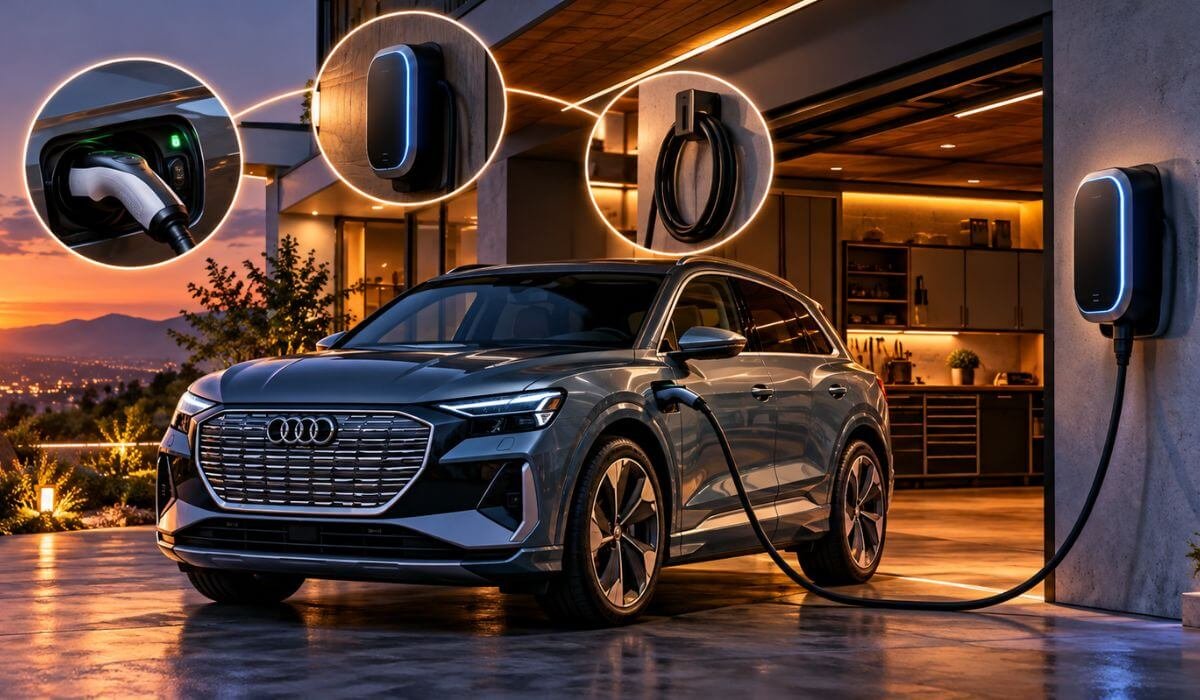
5 Best Home EV Chargers for Audi Q4 e-tron in 2026: 48A Power, Easy Setup & Smarter Charging
If you drive an Audi Q4 e-tron, choosing a home charger is less about buying the biggest amp rating and more about matching the charger to the way you actually use the car. The Q4 e-tron uses an 82 kWh battery in the current U.S. lineup, and 240V Level 2 charging is the practical setup for regular home use. With an 11 kW Level 2 setup taking around 7.5 hours under Audi’s charging guidance, a properly matched overnight charger can make far more sense than paying extra simply to chase a higher number on the charger.
This guide covers chargers suitable for 2026 Q4 e-tron models and recent model years, including the Q4 Sportback e-tron, where the same basic home-charging considerations apply. I’ve looked beyond headline amperage and focused on what actually matters once the charger is mounted in your garage: J1772 compatibility, 240V charging, available current, installation type, cable reach, smart controls and everyday reliability. The goal is not to make the most powerful charger look automatically better, but to help you find the setup that fits your Audi, your electrical system and your daily routine.
One thing that can cause unnecessary confusion is the NACS conversation. The Q4 e-tron’s home AC charging setup remains centered around the J1772 connection, while NACS compatibility is a separate consideration for public DC fast charging. In other words, you do not need to let the latest connector headlines complicate a straightforward home-charging decision. For the chargers below, the focus is on getting dependable Level 2 energy into your Q4 e-tron when it is sitting at home.
Best Home EV Charger for Audi Q4 e-tron: Top 2026 Picks for Level 2 Faster Home Charging
#1. Tesla Universal Wall Connector
Audi Q4 e-tron 48A Home Charger With Dual Connector Support and Flexible Level 2 Charging
#2. Grizzl-E Level 2 40A EV Charger
Audi Q4 e-tron 240V Home Charger With NEMA 14-50 Connection and Reliable Level 2 Charging
#3. ChargePoint HomeFlex Level 2 EV Charger
Audi Q4 e-tron Smart J1772 Charger With 50A Hardwired Installation and Connected Charging Controls
#4. Grasside Upgraded 48A Level 2 EV Charger
Audi Q4 e-tron 11.5kW Home Charger With 48A Hardwired J1772 Charging and Adjustable Current Control
#5. EVIQO Level 2 EV Charger
Audi Q4 e-tron 40A J1772 Charger With 240V NEMA 14-50 Setup and Smart Home Charging Features
Expert Tip
For the Q4 e-tron, I would not spend extra money simply to move from a 40A charger to a 48A or 50A model unless you have a specific reason to do it. The Audi decides how much AC power the battery can actually accept, so the charger’s maximum rating is not the same thing as the Audi’s charging speed.
What matters more in daily use is having a properly installed 240V Level 2 charger, enough cable to reach the charge port comfortably, and a setup that suits how your garage is wired. A 40A unit can already make an excellent overnight charger. The higher-rated options in this list make more sense when you want hardwired installation, additional electrical headroom, smart controls, longer reach or future EV flexibility.
That is also why I have not ranked these chargers simply by their highest amp number. For an Audi Q4 e-tron, the charger that fits your home and your charging routine is usually more useful than the one with the biggest number on its label.
How We Chose These Audi Q4 e-tron Chargers
I did not build this list by taking five popular EV chargers and putting Audi’s name in front of them. The Q4 e-tron has a specific charging requirement, and that is where the selection starts.
First, I looked at connector compatibility. The chargers included here use the J1772 connection where applicable for North American Q4 e-tron home charging. That removes one of the most frustrating mistakes buyers can make: ordering a powerful EV charger that is not designed around the connector they actually need.
Next came charging output. The list covers 40A, 48A and 50A-class chargers rather than pretending that one amperage is automatically right for every owner. The reason is simple: the Q4 e-tron controls the power it draws from an AC charger. A 48A EVSE does not force the Audi to take 48A. It simply provides that available capacity when the vehicle and electrical installation can use it.
We also separated plug-in and hardwired installations. The Grizzl-E and EVIQO give buyers a familiar NEMA 14-50 route, while the Grasside and ChargePoint options provide hardwired alternatives. That distinction matters because the best charger on paper can become the wrong purchase if it does not suit the electrical work you are willing to have done.
Then there is real-world usability. Cable reach, indoor/outdoor suitability, smart controls, installation flexibility and the possibility of using the charger with another EV all matter once the charger is mounted on your wall. These are the details you notice every night after the product photography and specifications have stopped being exciting.
The Tesla Universal Wall Connector is included for a different reason. Its 48A capability, long cable and dual-connector design give it broader household flexibility than a basic single-purpose charger. If your garage may eventually have another EV, that flexibility has genuine value.
The Grizzl-E 40A takes a different approach. It does not try to win on the biggest number. Its appeal is the combination of 40A output, 240V operation, NEMA 14-50 connection and indoor/outdoor use. For an owner who simply wants dependable overnight charging without unnecessary complexity, those characteristics can matter more than another few amps.
The ChargePoint HomeFlex was selected because some Q4 e-tron owners want more control over their charging rather than just a wall-mounted power source. Its J1772 connection, smart functionality and hardwired installation make it a more feature-oriented choice.
The Grasside 48A brings the higher-output hardwired approach to the list, with an advertised 11.5kW capability and J1772 connection. That makes it worth considering for someone planning a dedicated electrical installation and wanting additional charger capacity. I have not treated its 11.5kW rating as proof that the Audi itself will continuously charge at that rate.
Finally, the EVIQO 40A earns its place because it keeps the installation straightforward: 40A, 240V, J1772 and NEMA 14-50. Not every Q4 e-tron owner needs Wi-Fi, hardwiring or an oversized EVSE. Sometimes a clean plug-in installation is exactly what makes the most sense.
One last thing matters to me when making this kind of list: I would rather tell you where a product’s advantage ends than pretend every charger is perfect. These five chargers are not five versions of the same product. They serve different installation styles and priorities, and that is intentional. The right choice depends on your electrical setup, daily mileage and whether you want a simple overnight charger or a more capable long-term EV charging setup.
#1. Tesla Universal Wall Connector
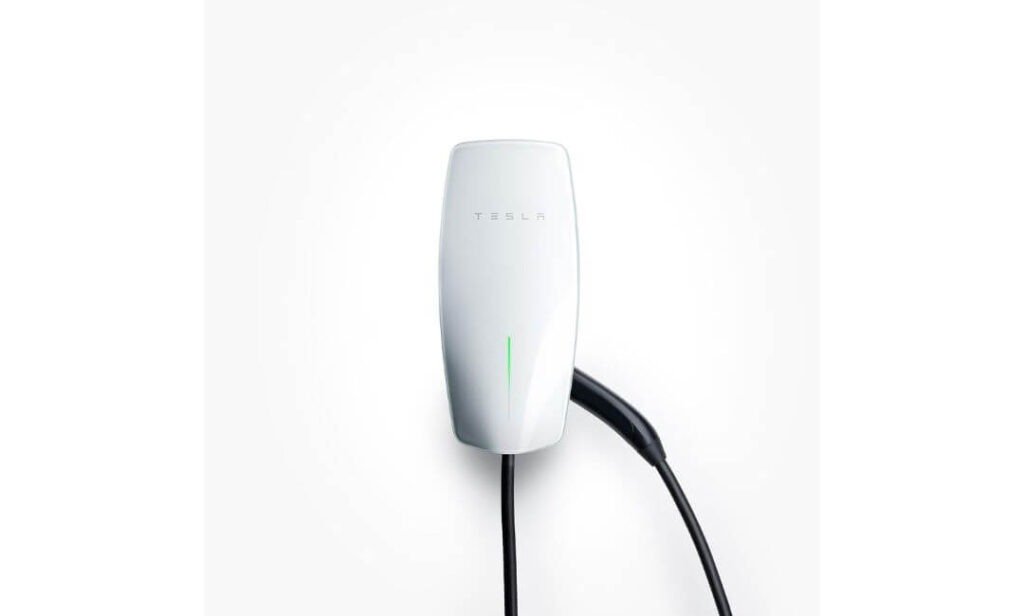
Quick Specs:
- Maximum output: 48A / 11.5 kW at 240V
- Adjustable output: 12–48A depending on the electrical installation
- Connections: Integrated J1772 + NACS
- Cable: 24 feet
- Installation: Hardwired
- Connectivity: 2.4 GHz Wi-Fi + Tesla app
- Use: Indoor or outdoor
- Warranty: 4 years for residential use
The first thing I like about this unit for an Audi Q4 e-tron is that you are not buying a charger that becomes useful only for one particular EV. The integrated J1772 connection handles the Audi, while the NACS side gives the same wall unit a second life if a Tesla or another compatible EV joins the household later. Tesla specifically designed the Universal Wall Connector to charge both Tesla and non-Tesla EVs in North America.
The 48A maximum is also worth putting into perspective. It can deliver up to 11.5 kW when installed on the appropriate circuit, but that does not mean the Q4 e-tron will automatically pull 48A every time you plug in. The vehicle’s onboard charger and the home’s available electrical capacity still determine the actual charging rate. If your panel cannot support the full configuration, the installer can set a lower output. Tesla’s current installation table allows 48A on a 60A breaker, 40A on 50A, and 32A on 40A.
Then there is the 24-foot cable, which is one of those specifications that sounds ordinary until you actually park the car. A charger mounted at the front or side of a two-car garage can be awkward with a short cable; 24 feet gives you considerably more freedom to position the Q4 e-tron without constantly thinking about where the charge port sits. The unit is also rated for indoor or outdoor installation and has a Type 3R enclosure.
(The real advantage here is not chasing the biggest charging number; it is having one well-equipped charger that can continue making sense as your household’s EV needs change.)
What We Like About It
- J1772 and NACS in one unit — unusually useful for a mixed-EV household.
- 24-foot cable — genuinely helpful when the parking position is not directly beside the wall.
- Adjustable amperage — the installation can be matched to the electrical capacity instead of forcing one fixed output.
- Wi-Fi and Tesla app support — useful for monitoring, scheduling, settings and firmware updates.
- Indoor/outdoor design — gives you more freedom over where the charger is installed.
One Thing to Keep in Mind
The Universal Wall Connector is a hardwired installation, so you need a qualified electrician to install it. That is not really a weakness of the charger; it is simply something to account for before ordering, particularly if your existing electrical panel or planned garage circuit needs an upgrade.
Why It Fits the Audi Q4 e-tron So Well
For the Q4 e-tron, the strongest argument is flexibility rather than brute-force output. You get a J1772 connection for the Audi, up to 48A when the electrical installation supports it, and enough cable length to make everyday parking less fussy. If your home already has—or may later have—another EV, the second connector standard becomes an advantage you can actually use.
The smart side is useful too, but I would not buy this solely because it has an app. The better reason is that the hardware gives you adjustable power, charging management and future compatibility in one installation. That combination makes more sense for a Q4 e-tron owner who wants to install a charger once and not immediately start wondering whether they should have bought something different.
The Insider Pro-Tip
If your electrician tells you that a full 48A installation is unnecessary for your home, do not treat that as a reason to abandon this charger. Tesla allows the Universal Wall Connector to be configured for lower output, so the sensible approach is to match the charger to the electrical system you actually have rather than paying for an electrical upgrade purely to make the number on the charger look bigger.
And there is a second detail I would genuinely consider before mounting it: where the 24-foot cable will rest when the Audi is not charging. With this much reach, placement matters. Mount it where the cable can naturally reach the Q4 e-tron’s charge port without crossing the main walking path, and the extra length becomes a daily convenience rather than something hanging around the garage.
#2. Grizzl-E Level 2 40A EV Charger
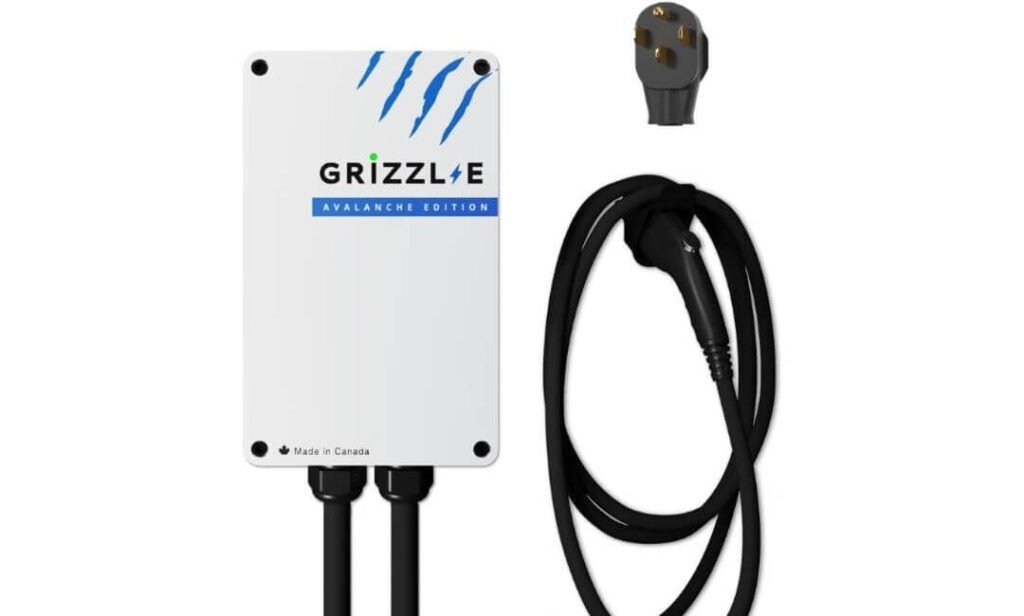
Quick Specs:
- Maximum output: 40A / 9.6 kW
- Adjustable output: 40A, 32A, 24A or 16A
- Connection: J1772
- Cable: 24 feet
- Plug: NEMA 14-50
- Installation: Plug-in wall mount
- Protection: Built-in GFCI, ground fault, overcurrent, overvoltage, undervoltage and over-temperature protection
- Enclosure: IP67-rated aluminum housing
- Warranty: 5 years
Some EV chargers try to turn overnight charging into another app, account and Wi-Fi setup. This one takes the opposite approach. You plug the J1772 connector into the Q4 e-tron, set the appropriate amperage for the circuit and let the car charge. For an owner who mainly wants reliable home charging rather than another piece of connected technology, that simplicity is a genuine advantage.
At its maximum 40A / 9.6 kW, it gives the Q4 e-tron a substantial step up from a standard 120V outlet. More importantly, the output is adjustable to 32A, 24A or 16A, so the charger can be configured around the electrical circuit instead of assuming every garage has the same capacity. That is the kind of flexibility that becomes useful when you are working with an existing installation.
The 24-foot cable is another detail I would not overlook. The Q4 e-tron’s charge-port position and your garage layout will determine whether that length is essential, but having extra reach is far nicer than discovering after installation that the cable barely reaches the car. The aluminum enclosure, IP67 rating and broad operating-temperature range also make this a realistic option for a garage, carport or other location where the charger may see changing weather conditions.
(There is nothing flashy about this setup—and that is precisely why it can make so much sense.)
What We Like About It
- 40A output gives the Q4 e-tron a strong everyday Level 2 charging setup.
- Four selectable amperage levels make it easier to match the charger to the home’s electrical circuit.
- 24-foot cable gives you useful freedom when the wall and charge port are not close together.
- No app or subscription required means fewer things to configure or maintain.
- IP67 aluminum enclosure and built-in protections make it particularly appealing for owners who value physical durability.
One Thing to Keep in Mind
This particular version uses a NEMA 14-50 plug, so the outlet needs to be properly installed and rated for the charger’s selected current. If you do not already have the appropriate 14-50 circuit, an electrician will need to install one rather than treating the charger like an ordinary household appliance.
Why It Makes Sense for the Audi Q4 e-tron
The Q4 e-tron does not need an unnecessarily complicated charger to become an easy overnight-charging vehicle. What you need is a suitable J1772 Level 2 connection, 240V supply, sensible current setting and enough cable reach. This setup covers those fundamentals without adding features that some owners may never use.
The other advantage is that the charger can be adjusted downward. If your electrical installation is more comfortable at 32A or 24A, you do not have to replace the EVSE or accept an unsuitable setup. That makes this a particularly practical choice for someone who wants the charger to fit the house rather than redesign the house around the charger.
The Insider Pro-Tip
Before buying, look at the electrical circuit first and the charger second. If you already have a correctly installed NEMA 14-50 outlet, this plug-in format can keep the installation straightforward. If you do not, get the circuit assessed before ordering—the cost and practicality of adding the outlet can change the overall value of the purchase.
And for the Q4 e-tron specifically, I would not automatically leave it at 40A just because that is the charger’s maximum. Set the output according to the circuit and installation your electrician approves. A properly configured 32A charger running reliably every night is far more useful than a 40A setting that was chosen only because the number looked better on the product page.
#3. ChargePoint HomeFlex Level 2 EV Charger
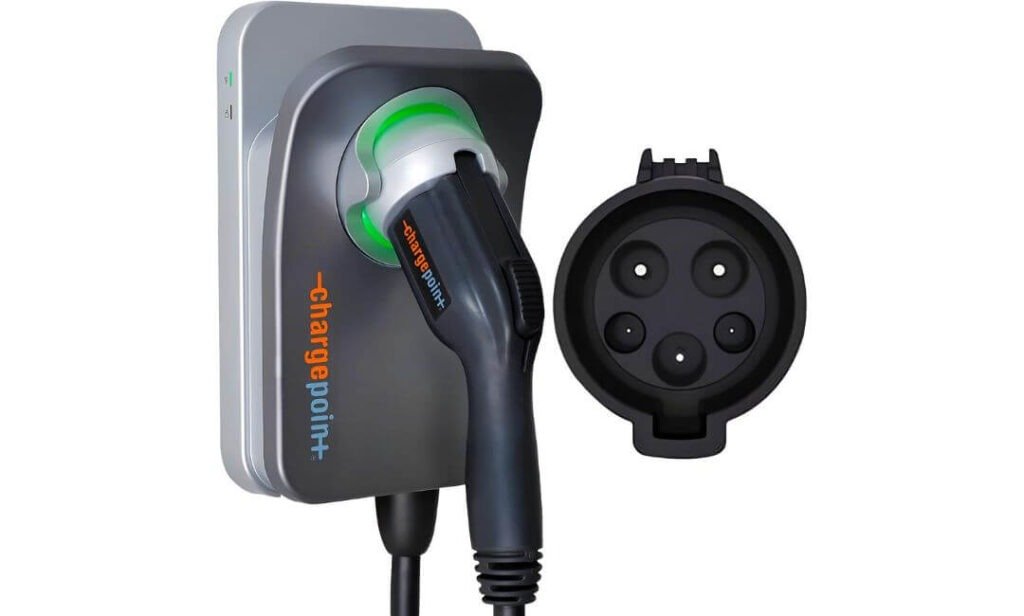
Quick Specs:
- Maximum output: Up to 50A
- Charging power: Up to 12 kW EVSE capability
- Connection: J1772
- Cable: 23 feet
- Installation: Hardwired
- Connectivity: Wi-Fi + ChargePoint app
- Control: Charging schedules, session information and remote controls
- Use: Indoor or outdoor
- Safety: UL certified
- Warranty: 3 years
The biggest reason to consider this unit is not simply the 50A rating. For the Q4 e-tron, the more interesting part is what happens around that hardware. You get a J1772 connection, a long 23-foot cable and Wi-Fi-connected controls, giving you a home charging setup that can be managed rather than simply switched on and forgotten.
The 50A capability gives the installation plenty of headroom, although the Audi remains in control of how much AC power it actually accepts. That distinction matters. Buying a higher-rated EVSE does not force the Q4 e-tron to charge at the charger’s maximum; the vehicle’s onboard charger determines the power it draws. The charger simply needs to be properly installed and configured for the available electrical supply.
The 23-foot cable is another practical advantage. If your garage has an awkward parking position, a side-mounted charge port or more than one possible parking spot, that extra reach can save you from repositioning the car just to plug in. Add the ChargePoint app, charging information and scheduling controls, and this becomes a more connected option for someone who wants visibility over how and when the Audi charges.
(The real appeal is having a charger that feels useful after installation, not just impressive on a specification sheet.)
What We Like About It
- J1772 connection makes it a straightforward match for the Q4 e-tron’s AC home charging setup.
- 50A capability provides useful electrical headroom for a dedicated installation.
- 23-foot cable works well for larger garages and less predictable parking positions.
- Wi-Fi and ChargePoint app add scheduling, charging information and remote management.
- Indoor/outdoor installation gives you more freedom when deciding where the unit should live.
One Thing to Keep in Mind
This particular version is hardwired, so installation is not a simple plug-in job. You will need a qualified electrician to assess the panel, wiring and appropriate breaker before the charger is installed. That extra installation work is worth planning for when comparing its overall cost with a NEMA 14-50 charger.
Why It Stands Out for the Audi Q4 e-tron
For a Q4 e-tron owner who wants more than basic overnight charging, the combination here is compelling: J1772 compatibility, adjustable charging capability, smart controls and a 23-foot cable. You are getting the physical hardware needed for everyday charging along with the information and control that can make ownership easier.
I also like that the smart features are not the only reason to buy it. Even if you rarely open the app, the underlying charger still gives you a substantial hardwired installation with a long cable and a dedicated connection for the Audi. The connected features are there when they are useful rather than being the entire reason the product works.
The Insider Pro-Tip
Before installation, tell your electrician that you want the setup designed around your actual Q4 e-tron charging needs, not simply the charger’s 50A maximum. The right breaker, wire sizing and charger configuration should be determined from the electrical installation as a whole. There is no benefit in chasing maximum amperage if your home does not need it.
And if you are choosing between this and a simpler 40A charger, ask yourself one practical question: will you actually use the smart controls? If you want charging schedules, session information and remote management, the extra functionality has a purpose. If you simply plug in every night and leave the car until morning, a simpler EVSE may give you everything you really need.
#4. Grasside Upgraded 48A Level 2 EV Charger
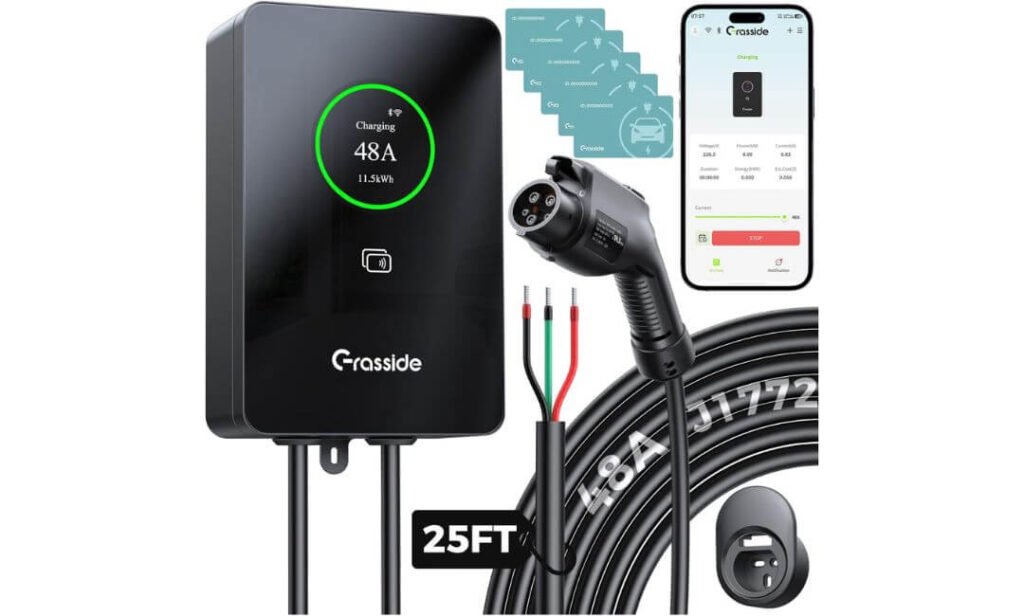
Quick Specs:
- Maximum output: 48A / 11.5 kW
- Adjustable current: 10–48A in 1A increments
- Connection: J1772
- Cable: 25 feet
- Installation: Hardwired
- Circuit: Dedicated 240V / 60A circuit for maximum output
- Connectivity: App control with Wi-Fi
- Access: App, RFID or plug-and-charge
- Display: Built-in charging information screen
- Enclosure: IP65-rated metal housing
- Safety: ETL listed, UL 2594 and CSA C22.2 No. 280 compliant
- Warranty: 3 years
The 48A output is obviously the first number that catches your eye, but it is not the reason I would put this unit on a Q4 e-tron shortlist. What makes it interesting is how much control sits behind that output. Current can be adjusted from 10A to 48A in 1A steps, so the charger can be configured around the electrical installation rather than forcing you to run at maximum power all the time.
That matters with the Audi because the vehicle ultimately decides how much AC power it accepts. The charger can offer up to 11.5 kW, but that does not mean the Q4 e-tron will continuously pull 11.5 kW. Think of the 48A rating as available capacity, not a promise of vehicle-side charging speed. With the right installation, though, it gives the Q4 e-tron plenty of charging capability for regular overnight use.
The 25-foot cable is another detail I genuinely like here. It gives you considerably more freedom when the charger cannot be mounted directly beside the car’s usual parking position. The metal enclosure and IP65 weather-resistant design also make this more than a garage-only proposition. Add the display, app controls and RFID access, and this feels aimed at owners who want to know what the charger is doing without constantly reaching for the car itself.
(The interesting part is not that it has more features; it is that several of those features solve small annoyances you only notice after living with an EV charger.)
What We Like About It
- 10–48A adjustment in 1A steps gives unusually fine control over charging power.
- 25-foot cable makes awkward garage layouts much easier to deal with.
- J1772 connection keeps the setup straightforward for the Q4 e-tron’s AC charging.
- App, RFID and plug-and-charge options let you choose how much control you actually want.
- Metal enclosure with IP65 protection gives the charger a more substantial feel for indoor or outdoor use.
One Thing to Keep in Mind
This is a hardwired charger, so the 48A capability requires the appropriate dedicated electrical circuit and professional installation. If your current garage wiring is not ready for that setup, have an electrician assess it before ordering rather than assuming the charger can simply be connected to an existing outlet.
Why It Deserves a Place on the Q4 e-tron Shortlist
The strongest part of this charger is the balance between power and adjustability. A Q4 e-tron owner can have the higher-capacity 48A EVSE available without being locked into that setting. If your electrical installation calls for a lower current, you can reduce it in precise increments instead of choosing between only a few preset levels.
It also adds features that have genuine day-to-day value. The 25-foot cable can save awkward parking manoeuvres, while the display gives you immediate charging information and the RFID option can be useful when the charger is installed somewhere other people can access. Those are practical touches rather than features added merely to make the specification sheet look impressive.
The Insider Pro-Tip
I would make the electrical installation decision before getting excited about the 48A figure. If your electrician confirms that the home can comfortably support the required circuit, then having adjustable output gives you useful room to work with. If the installation needs to be limited, there is no reason to feel that you have bought the wrong charger—the ability to dial the current down is one of this model’s useful strengths.
And if your garage is large, think carefully about where the 25-foot cable will actually travel. Measure from the proposed mounting point to the Q4 e-tron’s charge port with the car parked normally. That simple measurement can tell you more about whether this charger will feel convenient every night than another hour spent comparing 40A versus 48A on a product page.
#5. EVIQO Level 2 EV Charger
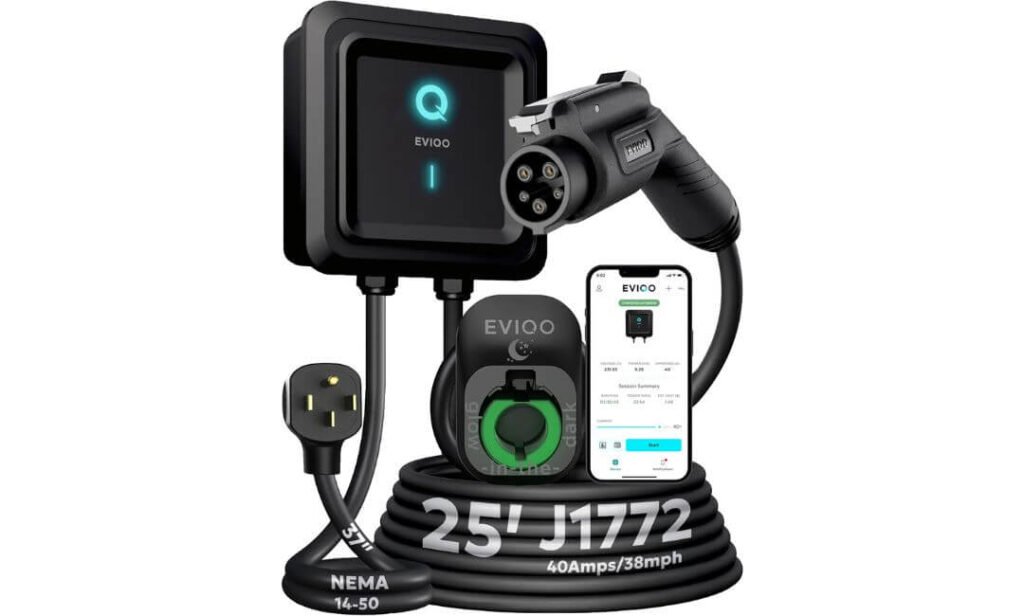
Quick Specs:
- Maximum output: 40A / 9.6 kW
- Adjustable current: 6–40A
- Connection: J1772
- Cable: 25 feet
- Plug: NEMA 14-50
- Installation: Plug-in
- Connectivity: 2.4 GHz Wi-Fi + app
- Housing: IP66 / NEMA 4 rated
- Holster: Glow-in-the-dark connector holder
- Warranty: 3 years
If your garage already has the right NEMA 14-50 outlet, this is where the EVIQO becomes particularly interesting. You get 40A Level 2 charging without committing to a hardwired installation, while the J1772 connector plugs directly into the Q4 e-tron. It is a practical combination for an owner who wants to get a proper home charging setup without turning the installation into a larger electrical project.
The 6–40A adjustment is useful because it lets you tailor the charging current rather than treating 40A as the only possible setting. At its maximum 40A output, the charger can provide up to 9.6 kW, although, as with every charger in this list, the Audi determines how much power it actually draws. That makes the 40A rating useful capacity rather than a guarantee of a particular charging speed.
What makes this model a little more interesting than a basic plug-in EVSE is the 25-foot cable and app connectivity. You can schedule charging, check energy information and control the charger remotely when Wi-Fi is available. Then there are the smaller touches—the glow-in-the-dark holster and side reset button—which sound minor until you are plugging in the car late at night or need to restart the unit without reaching for the electrical panel.
(It is a good example of a charger where the little practical details can matter more than another few amps.)
What We Like About It
- 40A / 9.6 kW capability gives the Q4 e-tron a solid overnight Level 2 setup.
- 25-foot cable provides plenty of reach for larger garages and driveways.
- NEMA 14-50 plug-in design keeps the installation simple when the correct outlet is already available.
- 6–40A adjustment lets you choose a suitable charging level rather than always running at maximum.
- Glow-in-the-dark holster and reset button are genuinely useful everyday touches.
One Thing to Keep in Mind
The convenience of this model depends heavily on already having a properly installed NEMA 14-50 outlet on a suitable dedicated circuit. If you do not have one, you still need an electrician to install the required electrical infrastructure. The charger itself may be plug-in, but the outlet should never be treated like an ordinary household receptacle.
Why It Makes Sense for the Audi Q4 e-tron
The EVIQO fills an important space in this list: it gives Q4 e-tron owners a plug-in 240V option with smart features without requiring the hardwired installation used by the higher-output models above. For someone who already has the right garage circuit, that can make the entire setup considerably easier.
I also like the balance here. You get a J1772 connection, adjustable 6–40A charging, 25-foot cable, Wi-Fi controls and weather-resistant construction, but the charger can still be used in straightforward plug-and-charge mode. You do not have to make the app part of your daily routine just because it is available.
The Insider Pro-Tip
Before ordering, physically check the outlet rather than relying on a photo or the assumption that a four-prong socket is a NEMA 14-50. The correct receptacle and dedicated circuit matter just as much as the charger itself. If you already have the right setup, this model’s plug-in format can be genuinely convenient; if you do not, factor the electrical work into the total purchase decision.
And one small feature deserves more credit than it initially gets: the glow-in-the-dark holster. If your garage is dark at night, being able to immediately see where the connector belongs means one less awkward moment of handling a heavy charging cable in the dark. That is exactly the sort of small design decision that can make an EV charger feel better to live with every day.
Best Home EV Charger for Audi Q4 e-tron (2026): Compare 40A, 48A and 11.5kW Options
| Charger | Q4 e-tron Connection | Power & Current | Installation | Cable Reach | Smart Features | Build & Protection | Best Fit |
|---|---|---|---|---|---|---|---|
|
Most Flexible
Tesla Universal Wall Connector
Dual-connector home EV charger
|
J1772 + NACS J1772 connects directly to the Q4 e-tron for home AC charging. | Up to 48A / 11.5 kW Adjustable from 12–48A depending on the electrical setup. | Hardwired Professional electrical installation required. | 24 ft Useful for wider garages and less convenient parking positions. | Wi-Fi + Tesla app Scheduling, controls and firmware updates. | Indoor / outdoor Type 3R enclosure with 4-year residential warranty. | Mixed-EV households Particularly useful if a Tesla or another EV may share the garage later. |
|
Simple & Rugged
Grizzl-E Level 2 40A
NEMA 14-50 plug-in charger
|
J1772 Direct connection for the Q4 e-tron’s home AC charging. | Up to 40A / 9.6 kW Selectable 40A, 32A, 24A or 16A output. | NEMA 14-50 plug-in Requires the correct dedicated 14-50 circuit. | 24 ft Good reach without making cable management unnecessarily complicated. | No app required Designed around straightforward plug-and-charge use. | IP67 aluminum housing Built-in GFCI and multiple electrical protection systems. | Set-and-forget charging A strong match for owners who value simplicity over connected features. |
|
Smart Choice
ChargePoint HomeFlex
50A hardwired J1772 charger
|
J1772 Straightforward fit for the Q4 e-tron’s home AC charging connection. | Up to 50A Higher-capacity EVSE with adjustable charging capability. | Hardwired Designed for a permanent dedicated installation. | 23 ft Plenty of reach for larger garages and flexible parking. | Wi-Fi + ChargePoint app Scheduling, charging information and remote management. | Indoor / outdoor UL-certified design with a cold-resistant cable. | Connected home charging Best suited to owners who will actually use smart charging controls. |
|
High-Control Setup
Grasside Upgraded 48A
11.5 kW hardwired J1772 charger
|
J1772 Direct connection for the Q4 e-tron’s AC charging port. | Up to 48A / 11.5 kW Fine adjustment from 10–48A in 1A increments. | Hardwired 60A circuit recommended for maximum 48A output. | 25 ft One of the more useful options for deep or awkward garage layouts. | App + RFID + plug-and-charge Charging schedules, live data and access control. | IP65 metal enclosure ETL listed with UL 2594 and CSA C22.2 No. 280 compliance. | Maximum control For owners who want adjustable output plus detailed charging management. |
|
Plug-In Smart Pick
EVIQO Level 2 40A
NEMA 14-50 J1772 charger
|
J1772 Connects directly to the Q4 e-tron’s home AC charging port. | Up to 40A / 9.6 kW Adjustable from 6–40A in 1A increments. | NEMA 14-50 plug-in Straightforward when the correct dedicated outlet already exists. | 25 ft Useful reach for garage and driveway installations. | Wi-Fi + app Scheduling, energy tracking and remote controls; plug-and-charge still works without Wi-Fi. | IP66 / NEMA 4 UL, ETL, FCC and Energy Star certified according to the supplied specifications. | Easy plug-in ownership A good fit when you want smart features without a hardwired charger. |
Buying Guide: How to Choose the Right Audi Q4 e-tron Home Charger for Your Garage
Buying an EV charger is one of those purchases where the highest amperage is not automatically the smartest choice. The Q4 e-tron can make excellent use of Level 2 home charging, but the charger, circuit, installation and vehicle all have to work together. A good setup should fit the electrical capacity you already have, make sense for how you charge, and leave enough flexibility for the years you plan to keep the car.
Start With Your Home’s Electrical Capacity
Before comparing 40A, 48A or 50A chargers, find out what your home can actually support. This is where many buying guides jump too quickly into charger specifications.
For a charger delivering its maximum output, the circuit, breaker, wiring and installation method all matter. A 48A EVSE, for example, is not something you simply connect to any 50A circuit and expect to run at 48A. Continuous EV charging requires the electrical installation to be sized appropriately, which is why higher-output hardwired chargers commonly require a 60A circuit for their maximum advertised output.
A practical way to look at the options is:
| Your situation | What makes sense |
|---|---|
| Already have a suitable NEMA 14-50 outlet | A 40A plug-in charger can be very convenient |
| Installing a new dedicated circuit | Consider hardwired installation while the electrical work is being done |
| Want maximum EVSE capacity | A 48A-class unit can provide additional headroom |
| Older or heavily loaded electrical panel | Have an electrician assess available capacity first |
| Planning another EV later | Consider connector flexibility and load management |
Do not let the charger determine the electrical work by itself. Have the electrician look at the main service capacity, panel space, existing loads, breaker rating, wire sizing and charger location. The right installation is the one that works safely with the entire house, not just the EV charger.
40A Versus 48A: What Actually Changes?
This is probably the most misunderstood part of choosing a home charger for an EV like the Q4 e-tron.
A 40A charger can provide up to 9.6 kW, while a 48A charger can provide up to 11.5 kW under the appropriate electrical conditions. That is a meaningful difference in available EVSE capacity, but it does not mean the vehicle will always charge 20% faster simply because the charger is rated 48A.
The car’s onboard AC charging system remains part of the equation.
That is why I would not tell every Q4 e-tron owner to spend more money on a 48A installation. If your normal routine is to plug in after dinner and leave the Audi charging overnight, a properly installed 40A Level 2 charger may already be more than enough for your daily needs.
The higher-output option becomes more interesting when you:
- regularly arrive home with a low battery and need more charging time before the next trip,
- drive long distances frequently,
- want additional EVSE capacity for future use,
- are already paying for a new electrical circuit,
- or simply want more flexibility from a permanent installation.
Plug-In or Hardwired: Which Installation Fits Better?
There is no universal winner here. The better format depends on your garage and how permanent you want the installation to be.
A NEMA 14-50 plug-in charger makes sense when the appropriate outlet already exists and you value the ability to remove or replace the EVSE later. It can also make the charger easier to relocate if your circumstances change.
A hardwired charger is more appropriate when you are creating a permanent charging location and want higher available output. It also gives the installation a cleaner, more integrated appearance.
The important distinction is that a plug-in charger does not mean you can plug it into any convenient outlet. A proper EV charging circuit is still required.
Think About Where the Cable Will Actually Reach
Cable length looks like a small specification until the charger is installed.
The Q4 e-tron’s charge-port location, garage layout and wall position should all be considered before choosing between a 23-foot, 24-foot or 25-foot cable. Measure it with the vehicle parked where you normally leave it.
A longer cable can be particularly useful if:
- the charger is mounted toward the front of the garage,
- you park in either of two spaces,
- the charge port does not sit close to the installation point,
- you occasionally charge outside,
- or you may change parking arrangements later.
At the same time, do not buy an extremely long cable simply because the number looks impressive. Extra cable needs somewhere sensible to go. Good cable management matters just as much as reach.
Decide Whether Smart Charging Is Actually Worth Paying For
Smart features can be genuinely useful, but only if they fit your routine.
A connected charger can give you things such as charging schedules, energy information, remote controls, usage history and software updates. That can be valuable if your electricity plan has different rates throughout the day or if you want to keep track of household charging.
But if you plug the Audi in every evening and rarely change anything, you may not need a complicated app-driven system.
The important question is not, “Does this charger have Wi-Fi?”
Ask instead:
Will I actually use the features I am paying for?
For a connected setup, I would look for:
- reliable Wi-Fi connectivity,
- adjustable charging current,
- useful scheduling controls,
- clear energy information,
- straightforward plug-and-charge operation,
- and a charger that continues basic charging if the internet connection disappears.
That last point is easy to overlook. Your EV charger should not become useless simply because your home Wi-Fi has a bad day.
Look Beyond the Charger Price
The price shown on the product page is only part of the purchase.
Your real cost can include:
Charger + electrical work + circuit materials + outlet or hardwired installation + permits where required
This is especially important when comparing a plug-in 40A charger with a hardwired 48A model. The more expensive charger may not actually be the more expensive installation, and a cheaper EVSE can become costly if the electrical work required is substantial.
Before buying, ask an electrician for a complete installation quote rather than estimating the electrical work from the charger price alone.
Also check whether your utility company, state, local government or other eligible program offers an EV charging incentive. Eligibility, limits and deadlines vary, so confirm the current requirements before counting a rebate as part of your budget.
Warranty and Support Matter More Than They Look
An EV charger is not a disposable accessory. It is a piece of electrical equipment that you may use several times every week for years.
That makes warranty coverage worth comparing alongside the headline charging speed.
Look at:
- Warranty length
- What components are covered
- Whether replacement shipping is included
- How technical support is handled
- Whether support is available by phone, email or app
- Whether software or connectivity problems are covered
- How easy it is to obtain replacement parts or service
A longer warranty does not automatically mean a charger is better, but it does give you a clearer idea of how the manufacturer stands behind the hardware.
For this reason, I would rather have a charger with sensible specifications and dependable support than pay extra for features that sound impressive but are unlikely to improve everyday charging.
Future-Proofing Without Overbuying
Future-proofing is useful, but it is very easy to take it too far.
If there is a realistic chance that another EV will share your garage, connector flexibility can become valuable. That is one reason a dual-standard charger can make sense for some households.
Power sharing can also matter if you eventually install more than one charger. Instead of assuming that every future EV needs its own full-capacity circuit, think about how the vehicles will actually be charged.
If one car charges overnight and another is usually away during the day, your future requirement may be much smaller than you initially expect.
On the other hand, if you are replacing the electrical infrastructure today, it is worth discussing future EV charging capacity with the electrician while the work is already being done. Preparing sensibly now can be easier than paying for another major electrical project later.
A Practical Way to Match the Charger to Your Needs
| What matters most to you | Look for |
|---|---|
| Simple overnight charging | 40A Level 2, reliable J1772 connection |
| Existing NEMA 14-50 outlet | Plug-in 40A charger |
| Permanent garage installation | Hardwired EVSE |
| Maximum available EVSE capacity | 48A-class hardwired charger |
| Long or awkward parking area | 23–25 ft cable |
| Off-peak electricity rates | Wi-Fi and scheduling |
| Multiple EVs in the household | Flexible connector support or load management |
| Outdoor installation | Weather-resistant enclosure and suitable mounting |
| Minimal technology | Plug-and-charge operation without an app |
| Long-term ownership | Strong warranty and accessible support |
Do Not Ignore the Connector
For North American Q4 e-tron home charging, the J1772 connection is an important specification to check before ordering.
It sounds obvious, but product listings can become confusing because EV charging now involves several connector standards. A charger can have excellent power ratings and smart features and still be the wrong purchase if its connector does not match your vehicle or charging setup.
For the products in this guide, the J1772 connection is what makes them relevant to the Q4 e-tron’s home AC charging use.
Your Final Pre-Purchase Checklist
Before clicking the buy button, I would personally go through these questions:
- Does the charger use the correct J1772 connection for my Q4 e-tron?
- Do I already have the correct electrical circuit?
- If I need a new circuit, has an electrician checked my panel capacity?
- Am I choosing 40A or 48A because I need it, or simply because the larger number looks better?
- Will the cable comfortably reach the Q4 e-tron’s charge port?
- Do I want plug-in convenience or a permanent hardwired installation?
- Will I actually use Wi-Fi, scheduling and app controls?
- Is the charger suitable for where I intend to install it?
- What warranty and customer support come with it?
- Could another EV eventually use the same charger?
- Have I checked current utility or local charging incentives before calculating my final cost?
The best home charger for your Q4 e-tron is ultimately the one that fits the electrical system, reaches the car comfortably, matches your charging routine and gives you useful capacity without paying for power or features you will never use. That is a much better way to choose than simply sorting chargers from the highest amp rating to the lowest.
Audi Q4 e-tron Charging Time and Speeds Explained
The easiest way to understand Q4 e-tron home charging is to separate what the charger can provide from what the Audi can actually accept. A 48A Level 2 charger can be capable of roughly 11.5 kW, but that does not mean the Q4 e-tron will pull that amount throughout an entire charging session. The vehicle, battery condition and electrical installation all have a say in the final result.
For everyday home charging, the important takeaway is much simpler: a properly installed 240V Level 2 charger can turn charging from an all-day Level 1 job into something that fits naturally into an overnight routine.
What Does 48A Actually Mean for the Q4 e-tron?
A 48A charger on a 240V supply can provide approximately 11.5 kW of charging capacity:
240V × 48A = 11.52 kW
That is why you will often see 48A chargers advertised around the 11.5 kW mark.
However, the charger is an EVSE, not the component that decides the final charging rate. The Q4 e-tron’s onboard charging system communicates with the EVSE and determines how much power the vehicle can accept.
So if you install a 48A charger, do not expect the Audi to magically charge at 48A from 0% all the way to 100%. The available power can change during the session, particularly as the battery gets closer to a high state of charge.
This is also why a 40A / 9.6 kW charger can still be an excellent choice. The difference between 40A and 48A is real, but whether you notice that difference in daily life depends heavily on how much energy you normally need to add overnight.
How Charging Power Translates Into Driving Range
Manufacturers and charger companies often advertise figures such as “miles of range per hour.” These numbers are useful for getting a general idea, but they should not be treated as a fixed promise.
Actual range added per hour depends on:
- The Q4 e-tron’s energy consumption
- Current battery state of charge
- Charging efficiency
- Weather and battery temperature
- Driving conditions
- Vehicle configuration
- Charging power available from the installation
For example, a charger capable of around 11.5 kW may be described as adding roughly 40 or more miles of range per hour under favourable conditions. That does not mean every Q4 e-tron will gain exactly that amount every hour.
A better way to think about it is: higher available AC power generally means more energy can be added during the same charging window, provided the vehicle can accept it.
Why Charging Does Not Stay at Maximum Power
This is where real-world charging differs from the simple numbers printed on a product page.
When the battery is relatively low, the vehicle can generally accept more charging power. As the battery approaches a high state of charge, charging can gradually slow. This helps manage battery temperature, voltage and charging efficiency.
That means a calculation such as:
82 kWh ÷ 11.5 kW = approximately 7.1 hours
is useful only as a rough mathematical reference. It is not a promise of a 0–100% charging time.
There are also charging losses between the wall and the battery, so the electricity drawn from the home will not translate perfectly into energy stored in the battery.
For normal ownership, this is not something to worry about. It simply explains why real charging times do not always match the calculator on paper.
What Can Change Your Q4 e-tron Charging Time?
Battery temperature
A cold battery can change charging behaviour considerably. If the vehicle and battery are cold, the charging system may initially limit power until the battery reaches a more suitable temperature.
Hot conditions can also influence charging performance because the vehicle has to manage battery temperature.
This is one reason charging the car immediately after a long drive can produce a different result from charging it after sitting outside overnight in very cold weather.
Starting state of charge
Charging from 20% to 80% is not the same task as charging from 60% to 100%.
If you only need to replace the energy used during your commute, the car may be finished long before it would take to charge the entire battery from empty.
This is why experienced EV owners generally think in terms of energy needed for the next drive, rather than waiting for the battery to reach 100% every night.
Vehicle charging acceptance
The charger can advertise 40A, 48A or even higher capacity, but the vehicle remains the gatekeeper.
If the Q4 e-tron’s onboard charging system is accepting less power than the EVSE can provide, buying a larger charger will not force additional energy into the battery.
That is one of the biggest reasons I would not choose a home charger purely by its maximum amp rating.
Electrical installation
The home’s electrical system is equally important.
A 48A EVSE requires an appropriately sized circuit for full output. If the installation is configured for a lower current, the charger will operate at that lower level.
The same principle applies to a 40A charger. A correctly installed circuit matters more than simply having the highest-rated EVSE on the wall.
Charging losses
The power shown by the EVSE and the energy ultimately stored in the battery are not identical.
There are losses through the charging equipment, wiring and vehicle charging system. This means a simple kilowatt-hour calculation will usually produce a slightly more optimistic result than what you see in real use.
What Does an Overnight Charge Look Like?
This is where Level 2 charging becomes much easier to appreciate.
Imagine arriving home with the battery at a relatively low level after a long day. You connect the Q4 e-tron in the evening and leave it plugged in overnight.
With a suitable 40A or 48A Level 2 charger, you have several hours of charging time while the vehicle is parked anyway.
You do not need to sit beside the car.
You do not need to unplug it after an hour.
And you do not need to charge from empty to full every night.
For most owners, the useful question is:
“How much energy can I add while the car is parked overnight?”
That is far more relevant than chasing a theoretical maximum charging speed.
How the Chargers in This Guide Compare for Charging Speed
| Charger type | Maximum advertised output | What that means for the Q4 e-tron |
|---|---|---|
| 40A NEMA 14-50 | Up to 9.6 kW | Strong overnight Level 2 option |
| 48A hardwired | Up to 11.5 kW | More available charging capacity |
| 50A-class EVSE | Higher EVSE capacity | Vehicle still determines actual acceptance |
| Lower-current configuration | Depends on setting | Useful when the home’s circuit requires it |
The important part is that none of these chargers can override the Audi’s onboard charging limits.
How to Get the Most From a Level 2 Charger
Install the correct dedicated circuit
The foundation is the electrical installation. Have a qualified electrician verify the panel, breaker, wiring and available capacity before choosing the maximum charging setting.
Do not select a 48A configuration simply because the charger offers it.
Choose the charger based on your actual routine
If you typically drive 30–50 miles a day and return home every evening, a properly installed 40A charger may comfortably handle your routine.
If you regularly drive much farther, return home with a low battery and have short periods available for charging, the additional capacity of a 48A-class installation may be more useful.
Use scheduled charging when it benefits your electricity plan
If your utility offers cheaper electricity during certain hours, smart scheduling can allow the Audi to charge during those periods.
The goal is not merely to charge as quickly as possible.
The better goal is to have the battery ready when you need it while using the charging window intelligently.
Give the car enough time
One of the advantages of home charging is that you can leave the vehicle connected for several hours.
There is usually no reason to treat every home charging session like a public fast-charging stop. Plug in when you get home, let the car take the energy it needs, and start the next day with the battery at the level you planned.
Keep cable placement practical
This sounds unrelated to charging speed, but it matters to everyday use.
A charger that is difficult to reach will eventually become annoying, regardless of whether it can deliver 9.6 kW or 11.5 kW. Position the EVSE so the cable reaches the Q4 e-tron’s charge port naturally without stretching across the main walking area.
The Real Takeaway on Q4 e-tron Charging Speed
A 48A / approximately 11.5 kW Level 2 charger gives the Q4 e-tron a strong home-charging setup, but the number itself is only one part of the equation.
The vehicle’s charging acceptance, battery temperature, starting state of charge, electrical installation and charging losses all influence what you actually see.
That is why I would choose between the 40A and 48A options based on your home and driving routine, rather than assuming the higher number is automatically better. If the Audi is parked overnight for several hours, both can provide a substantial amount of usable energy without requiring you to think about charging every time you get behind the wheel.
Audi Q4 e-tron Home Charging Installation Guide
Choosing the charger is only half of the job. The quality of the electrical installation has a direct effect on how safely and consistently your Audi Q4 e-tron can charge at home. A 48A charger may look impressive on a product page, but if the home’s electrical panel, circuit, wiring, outlet, or installation location is not suitable, that extra charging capacity is of little practical value.
For most Q4 e-tron owners, the sensible approach is to have the electrical system assessed first, then choose between a properly installed plug-in NEMA 14-50 charger and a hardwired Level 2 charger based on the home’s capacity, garage layout, desired charging current, and long-term plans.
Start With a Home Electrical Assessment
Before buying the charger, have a qualified electrician check the home’s existing electrical system. This is particularly important if you are considering a 48A charger because higher-current continuous EV charging can place a substantial load on a residential electrical system.
The installer should look at:
- The main electrical service rating and available capacity
- The existing electrical panel and breaker configuration
- Available breaker spaces
- The condition and capacity of the panel
- The distance between the panel and charger location
- The required wire size and installation route
- Whether other large electrical loads operate at the same time
- The garage or outdoor installation location
- Grounding and bonding
- Local electrical-code requirements
- Whether an electrical permit or inspection is required
This assessment can prevent an expensive mistake: buying a charger first and discovering afterward that the home’s electrical system needs additional work before it can support the desired charging configuration.
Decide How Much Charging Power Your Home Actually Needs
You do not necessarily need the highest-current charger your electrical panel can support.
The Q4 e-tron is well suited to Level 2 home charging, but your daily driving pattern should determine the installation rather than the number printed on the charger box.
For example, someone who drives a moderate distance each day and leaves the Audi parked overnight may have little practical reason to maximise the available charging current. Someone who drives long distances regularly and wants to recover more energy during a shorter parking window may have a stronger reason to install a higher-current setup.
There is also a useful future-proofing consideration. If the electrical work is being done anyway, some owners may prefer to install an appropriately sized circuit and hardwired EVSE that leaves room for higher-current charging later, provided the home’s electrical capacity and local requirements support it.
Plug-In or Hardwired: Which Installation Makes More Sense?
Both approaches can work well, but they are not identical.
Plug-In NEMA 14-50 Setup
A plug-in charger is connected to a properly installed NEMA 14-50 receptacle rather than permanently connected to the electrical wiring.
This can be attractive when you want:
- Easier charger replacement in the future
- The ability to remove the EVSE if you move
- A straightforward installation where a suitable receptacle already makes sense
- Adjustable charging current
- A portable or semi-portable charging arrangement
However, the receptacle should be installed specifically for the intended EV charging load. It should not be treated like an ordinary household outlet.
The electrician needs to verify that the receptacle, wiring, breaker, terminations and installation method are appropriate for the intended continuous load.
Hardwired Installation
A hardwired charger is permanently connected to the electrical circuit.
This can make sense when you want:
- A clean, permanent installation
- Higher-current charging configurations where supported
- Fewer plug and receptacle connections
- A dedicated wall-mounted setup
- A charger that is intended to remain in the same location for years
Hardwiring can also make the installation look cleaner, particularly when the electrical panel is close to the garage and the wiring can be routed neatly.
The trade-off is flexibility. If you move or replace the charger later, the electrical work may need to be changed as well.
Do Not Confuse a NEMA 14-50 Outlet With a Normal Wall Socket
This is worth stressing because it is an easy point to overlook.
A Level 2 EV charger drawing substantial current for hours at a time puts a very different demand on an electrical circuit than a typical household appliance that is used occasionally.
If you are installing a NEMA 14-50 connection specifically for the Q4 e-tron, have the installation designed for the EV charging application. The receptacle, wiring and protective devices all need to be appropriate for the intended load and local code.
If the charger allows the current to be adjusted, that can also be useful when the home’s electrical configuration does not require maximum output.
Check Permits and Local Electrical Requirements
Electrical requirements vary by location, so there is no universal installation checklist that applies to every garage.
Depending on where you live, the installation may involve:
- An electrical permit
- A local inspection
- Specific breaker requirements
- Receptacle requirements
- Ground-fault protection
- Required equipment clearances
- Outdoor installation requirements
- Utility or energy-program requirements
Your electrician should confirm these details before work begins.
This is one area where online product descriptions are not enough. A charger can be technically capable of a certain output, while the permitted installation in a particular property may require a different configuration.
What Your Installer Should Check Before Installation
A good installer should not simply arrive, mount the charger and connect whatever wiring is closest.
Before starting, the electrician should confirm the charging location and electrical route, then determine how the circuit will be supplied.
A sensible pre-install checklist includes:
- Confirm the charger model and maximum charging current.
- Inspect the electrical panel and available capacity.
- Determine the appropriate dedicated circuit configuration.
- Select the correct wiring and protective equipment.
- Measure the route from the panel to the charger.
- Check whether the cable needs to pass through walls, ceilings, conduit, or outdoor areas.
- Confirm the mounting surface and charger position.
- Verify grounding and other required safety measures.
- Confirm permit and inspection requirements.
- Test the installation after energising the circuit.
That last step matters. The installation should be tested under load rather than simply switched on and declared finished.
What to Expect on Installation Day
The exact process will depend on the property, but a professional installation normally starts with a review of the planned charger location and electrical connection.
The electrician may then:
- Shut down the relevant electrical supply when required
- Install or prepare the dedicated circuit
- Route the appropriate wiring
- Install the NEMA 14-50 receptacle or hardwire the EVSE
- Secure the charger to the wall or approved mounting surface
- Complete grounding and connections
- Label the circuit where appropriate
- Restore power
- Check the charger for faults
- Test charging with the Audi
- Verify that the charger operates at the intended current setting
If the panel is on the opposite side of the house from the garage, installation can take considerably more work than a charger mounted directly beside the panel.
That is why installation quotes can vary so much even when two homes are buying exactly the same charger.
Where Should the Charger Be Mounted?
The best position is usually not simply the closest available wall.
Think about how you park the Q4 e-tron every day.
The charger should ideally be positioned where:
- The cable comfortably reaches the charge port
- The cable does not cross a regular walking path unnecessarily
- The charger is protected from avoidable physical damage
- The connector can be stored securely
- The cable can be hung without touching the ground
- The display or controls remain accessible
- The installation complies with the manufacturer’s requirements
A longer cable can give you more flexibility, but it should not be used as an excuse for poor charger placement.
Outdoor Installation Requires More Attention
If the Q4 e-tron is parked outside, check that the specific EVSE is approved for outdoor use.
Look at the charger’s enclosure and environmental protection rating, and follow the manufacturer’s mounting instructions. Outdoor installations also need sensible cable management and protection from accidental damage.
Do not assume that because a charger has a weather-resistant housing, every part of the installation can be exposed without consideration.
The receptacle, wiring method, conduit, mounting location and other electrical components must all be suitable for the environment.
Why Professional Installation Matters for 11.5 kW Charging
A charger capable of approximately 11.5 kW can require a substantial dedicated electrical circuit.
That is not the type of installation where cutting corners makes sense.
The charger itself may have built-in protection features, but those features do not replace correct household wiring, proper circuit design, appropriate overcurrent protection, secure connections, and compliance with electrical requirements.
If you are not qualified to perform residential electrical work, this is a job for a licensed or otherwise appropriately qualified electrician in your area.
Can You Install a 22 kW Charger for the Q4 e-tron?
This is an important distinction when shopping.
A charger may be advertised as 22 kW capable, but the presence of a 22 kW EVSE does not mean the Q4 e-tron will charge at 22 kW from an ordinary U.S. residential installation.
AC charging speed is limited by the vehicle’s onboard charging system, the electrical supply, and the EVSE.
For a typical North American home setup, the more relevant target for the Q4 e-tron is the 240V Level 2 charging range discussed throughout this guide, rather than buying a 22 kW-capable unit simply because its headline number is higher.
In other words, do not spend money on charging capacity the vehicle and electrical service cannot actually use.
After Installation: Test the Charger Before Calling It Finished
Once installation is complete, connect the Audi and verify that charging starts normally.
Check for:
- Normal charging initiation
- No charger fault codes
- Stable connection
- Correct current setting
- Secure cable connection
- Proper connector fit
- No unusual heat or smell
- No repeated breaker trips
- Normal charger status indicators
The charger and electrical connections should remain within their intended operating conditions during use.
If a breaker repeatedly trips, the charger reports a fault, or an electrical connection becomes unusually hot, stop using the system and have it inspected rather than repeatedly resetting the breaker.
How to Keep Your Home Charging System Performing Consistently
There is not much routine maintenance required from a quality Level 2 EVSE, but that does not mean it should be completely ignored.
Keep the connector and cable clean
Inspect the charging connector periodically and keep it free from dirt, moisture contamination, and physical damage.
Do not drag the connector across the floor or leave the cable where vehicles can drive over it.
Inspect the cable
Look for cuts, crushed sections, exposed wiring, severe kinks, or other damage.
A charging cable carries substantial electrical current, so physical damage should be treated seriously.
Keep the charger ventilation and housing clear
If the manufacturer specifies clearance around the unit, maintain it.
Do not cover the charger with storage items or install objects directly against it simply to make the garage look tidier.
Check the receptacle if you use a plug-in charger
For a NEMA 14-50 installation, periodically look for signs of discoloration, melting, unusual heat, loose connections, or damage.
If something looks abnormal, stop using the charger and have the receptacle inspected.
Keep firmware and app software current
For connected chargers, manufacturer software updates can improve functionality, security, compatibility, or reliability.
You do not need to obsess over updates, but keeping the charger and associated app reasonably current is worthwhile.
Do You Need to Maintain 11 kW or 22 kW Performance?
There is no maintenance procedure that can force the Audi to accept a particular charging rate.
If the charger is capable of around 11.5 kW but the vehicle is temporarily charging at a lower rate, that does not automatically mean something is wrong.
Before calling an electrician, consider:
- Battery state of charge
- Battery temperature
- Vehicle settings
- Charging schedule
- Electrical supply
- Charger current setting
- Temporary vehicle charging limitations
- Charger fault messages
If the charging rate remains unexpectedly low under normal conditions, or the charger repeatedly interrupts charging, then professional diagnosis makes sense.
For a 22 kW-rated EVSE, the same principle applies even more strongly: the charger rating does not determine the vehicle’s actual AC charging rate.
A Practical Installation Checklist
Before the electrician arrives:
- Confirm the exact charger model.
- Decide whether you want plug-in or hardwired installation.
- Know where you normally park the Q4 e-tron.
- Check that the cable length suits that position.
- Have the electrical panel assessed.
- Confirm available electrical capacity.
- Ask whether a permit or inspection is required.
- Get the expected installation cost before work begins.
After installation:
- Confirm the charger powers on normally.
- Test charging with the Audi.
- Check the current and charging status.
- Make sure the connector locks and releases correctly.
- Confirm the cable reaches the vehicle comfortably.
- Check that there are no warning messages or repeated interruptions.
- Keep the installation documentation and charger warranty information.
The Real-World Installation Takeaway
For the Audi Q4 e-tron, a good home charging installation is less about chasing the biggest number and more about getting the electrical system, charger, installation method and daily parking routine working together.
A properly installed 40A setup can be perfectly practical for an owner who charges overnight. A higher-current hardwired installation can make more sense for someone who wants additional charging capacity and has the electrical service to support it.
Either way, the smartest installation is the one that is correctly sized, professionally connected, convenient to use, and appropriate for both the Audi and the home. That is what turns a Level 2 charger from a product purchase into a dependable part of your everyday driving routine.
FAQs About Audi Q4 e-tron Home Charging
Does a 48A charger actually make the Audi Q4 e-tron charge at 11.5 kW all the time?
Not necessarily. A 48A Level 2 charger can provide roughly 11.5 kW at 240V, but that is the EVSE’s available charging capacity, not a guarantee of what the Audi Q4 e-tron will continuously draw.
The vehicle’s onboard charging system decides how much AC power it accepts at any particular point in the session. Battery temperature, state of charge, charging conditions, and the vehicle’s own charging limits can all change that number. So if you see the charging rate fall later in a session, particularly as the battery gets much fuller, that does not automatically mean the charger is underperforming.
The more useful question is whether the charger can put enough energy into the Q4 e-tron during the hours the car is normally parked. For an overnight charging routine, consistent usable charging time is often more important than seeing the maximum kW number on the charger display.
Is a 48A hardwired charger worth installing for the Audi Q4 e-tron if a 40A charger can already charge overnight?
It depends on how you actually use the car, and this is where buying advice often gets too simplistic.
A 40A charger can provide up to about 9.6 kW, while a 48A setup can provide approximately 11.5 kW under the right electrical conditions. The difference is meaningful, but it is not necessarily dramatic for an owner who plugs in every evening and leaves the Q4 e-tron charging for several hours.
A 48A installation starts making more practical sense when you regularly return home with a lower battery level, drive substantial distances, or have a shorter charging window. It can also make sense when you are already paying for electrical work and want a higher-current installation for long-term use.
There is a twist, though: do not spend considerably more on electrical work just to gain a theoretical charging advantage that your daily routine rarely uses. If the Audi already has most of the night to charge, a properly installed 40A system may accomplish the real job just as well.
Can I install a 22 kW home charger for the Audi Q4 e-tron and actually get 22 kW?
A 22 kW-rated charger and 22 kW vehicle charging are two different things.
A charger can be capable of supplying a certain amount of AC power, but the vehicle’s onboard AC charger and the home’s electrical supply ultimately determine what can actually be delivered to the battery. Simply installing a 22 kW-capable EVSE does not make the Q4 e-tron accept 22 kW.
For a typical North American home installation, this is particularly important because the electrical requirements for genuinely delivering 22 kW are substantially different from the familiar 240V, 40A or 48A Level 2 setups discussed in this guide.
Before paying extra for a 22 kW unit, check the Audi’s actual AC charging capability in your market and configuration, as well as what your home’s electrical service can support.
The honest buying rule: don’t buy 22 kW because the number looks impressive. Buy the charging capacity the vehicle and your electrical system can actually use.
Why can my Audi Q4 e-tron charge more slowly even though the charger is rated for 40A or 48A?
Because the charger rating is only one part of the charging equation.
A lower charging rate can be caused by the vehicle limiting power because of battery temperature, the current state of charge, charging settings, electrical limitations, or other temporary operating conditions. The charger may still be functioning exactly as designed.
It is worth checking a few things before assuming the EVSE has a problem:
- Is the battery unusually cold or hot?
- Is the battery already at a high state of charge?
- Has the vehicle been configured with a charging schedule?
- Is the charger set to a lower current?
- Is the home circuit supplying the expected voltage?
- Is the EVSE showing any fault or warning?
- Does the lower rate happen every time or only under certain conditions?
This distinction matters because a temporary reduction in charging power is not the same thing as a faulty charger. If the behaviour is consistent, unexpected, and accompanied by faults or repeated charging interruptions, that is when the installation and vehicle should be properly investigated.
What should I check before installing a 48A Audi Q4 e-tron charger at home?
Do not start with the charger. Start with the electrical panel.
A 48A EV charging load can require a substantial dedicated circuit, so the electrician should verify the home’s available electrical capacity, panel condition, circuit routing, wiring requirements, grounding, protective equipment, and local code requirements before the charger is installed.
The physical route matters too. A charger mounted directly beside the electrical panel can be a very different installation from one requiring wiring through a finished basement, exterior wall, attic, or a long garage run.
Before installation, I would want these questions answered:
- Can the existing electrical service comfortably support the intended EV charging load?
- What dedicated circuit configuration is required for the selected charger?
- Will the charger be plug-in or hardwired?
- Is a NEMA 14-50 receptacle appropriate for the chosen setup?
- What permits or inspections are required locally?
- Where should the charger be mounted so the cable reaches the Q4 e-tron without becoming a trip hazard?
- What will the complete installation cost, including wiring and any panel work?
The last point is important. The charger itself can be the inexpensive part of a complicated installation. A realistic total cost should be understood before the electrician begins cutting, drilling, or routing cable.
Final Thoughts on Choosing a Home Charger for the Audi Q4 e-tron
The right home charger for the Audi Q4 e-tron is not necessarily the one with the highest amp rating, the longest feature list, or the biggest number printed on the box. What matters is how well the entire setup works together: the vehicle’s charging capability, your home’s electrical capacity, the installation method, your daily driving distance, and the amount of time the Audi normally spends parked.
A 40A charger can make perfect sense for an owner who plugs in every evening and has a full night available. A 48A hardwired setup becomes more attractive when you regularly need to put a larger amount of energy back into the battery within a shorter window. Neither choice is automatically right for everyone, and paying for additional charging capacity only makes sense when your home and driving routine can actually take advantage of it.
The installation itself deserves just as much attention as the charger. A properly sized circuit, suitable wiring, secure connections, sensible cable placement, and an electrician who understands continuous EV charging are not glamorous features, but they are what make the system dependable over years of use. If you are using a NEMA 14-50 setup, treat the receptacle as part of the charging system rather than just another wall outlet.
There is also no real benefit in chasing a 22 kW label if the vehicle or residential electrical system cannot use that capacity. Likewise, seeing a 48A charger temporarily deliver less than its maximum does not automatically mean something is wrong. EV charging is dynamic, and the vehicle can adjust its power based on conditions.
The Bottom Line
If I were looking at this purely from an ownership perspective, I would make the decision in this order:
- Check the home’s electrical capacity first.
- Confirm what charging power the Q4 e-tron can actually use.
- Choose 40A or 48A based on your daily charging window.
- Decide between plug-in and hardwired installation based on the property and long-term plans.
- Prioritise cable reach, build quality, protection and warranty over unnecessary features.
- Have the installation completed and tested properly rather than treating it as a simple appliance hookup.
Once those pieces are right, home charging becomes remarkably uneventful — and that is actually what you want. You plug the Q4 e-tron in when you get home, let it charge while the car is sitting unused, and start the next day with the energy you need.
That is the real measure of a good home charging setup: not how impressive the specification sheet looks, but how reliably it disappears into your daily routine.
Also Check:


