
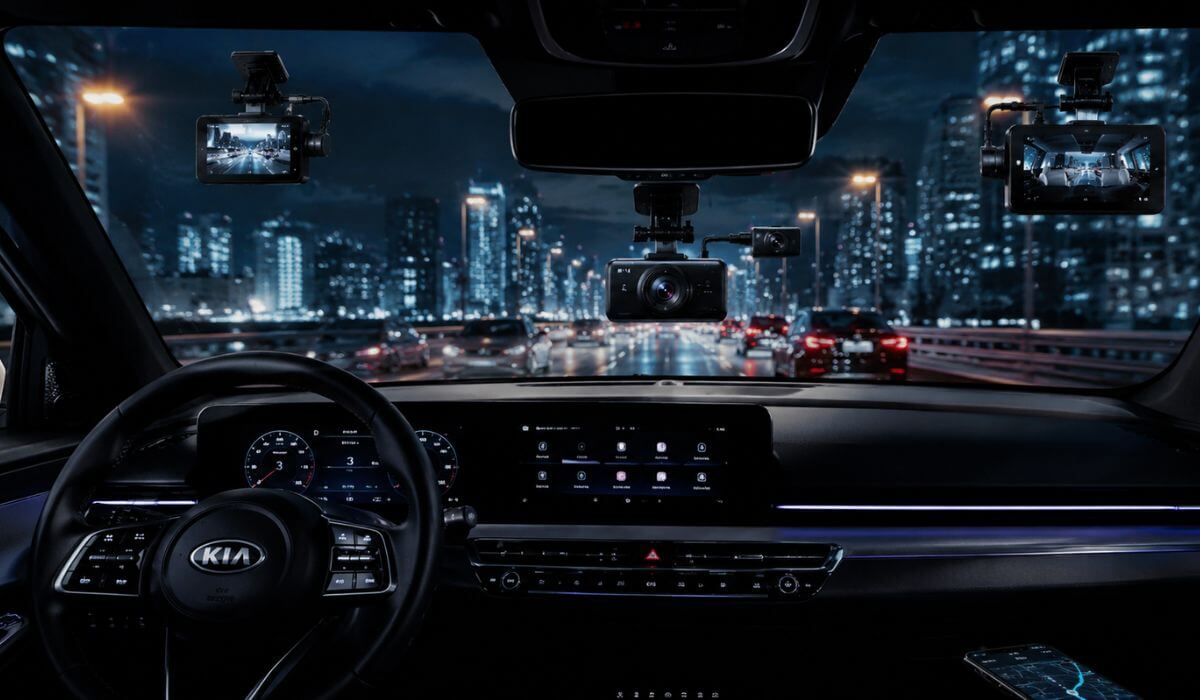
5 Best Dash Cams for Kia K4 in 2026: Crystal Clear Night Capture and Triple Coverage
The Kia K4 is one of the newest compact sedans on the market, and that creates a challenge many owners do not think about until after purchase: finding a dash cam that actually complements the car’s modern cabin, advanced driver-assistance systems, and expansive windshield layout. A dash cam that works well in an older sedan may not deliver the same visibility, parking coverage, or clean installation experience in a 2025–2026 Kia K4.
After comparing the latest releases, we focused on models that offer stronger low-light performance, reliable parking surveillance, fast wireless connectivity, and wider coverage for the K4’s long rear glass and spacious interior. The VIOFO A329S stood out early thanks to its all-channel STARVIS 2 sensors, Wi-Fi 6 connectivity, and SSD storage support—features that are still rare even among premium dash cams.
Whether you drive a daily commuter K4 LX, an EX, or a GT-Line, the right setup can make a major difference when it comes to capturing license plates, monitoring parked vehicles, and recording incidents from multiple angles. The picks below were chosen specifically with Kia K4 owners in mind, not just based on generic spec sheets.
Best Kia K4 Dash Cams: Top 2026 Picks for 4K Clarity and Full Cabin Coverage
#1. VIOFO A329S 4K 3 Channel Dash Cam
Best Kia K4 Dash Cam for 4K Front and Rear Recording, STARVIS 2 Night Clarity, and Long-Term SSD Storage Reliability
#2. Vantrue N4 Pro S 4K 3 Channel Dash Cam
Best 3-Channel Dash Cam for Kia K4, Combining Triple STARVIS 2 Sensors, Interior Coverage, and Advanced HDR Performance
#3. BlackVue DR770X II Dual Dash Cam
Best Kia K4 Dash Camera for Parking Mode Monitoring, Seamless Smartphone Access, and Everyday Driving Protection
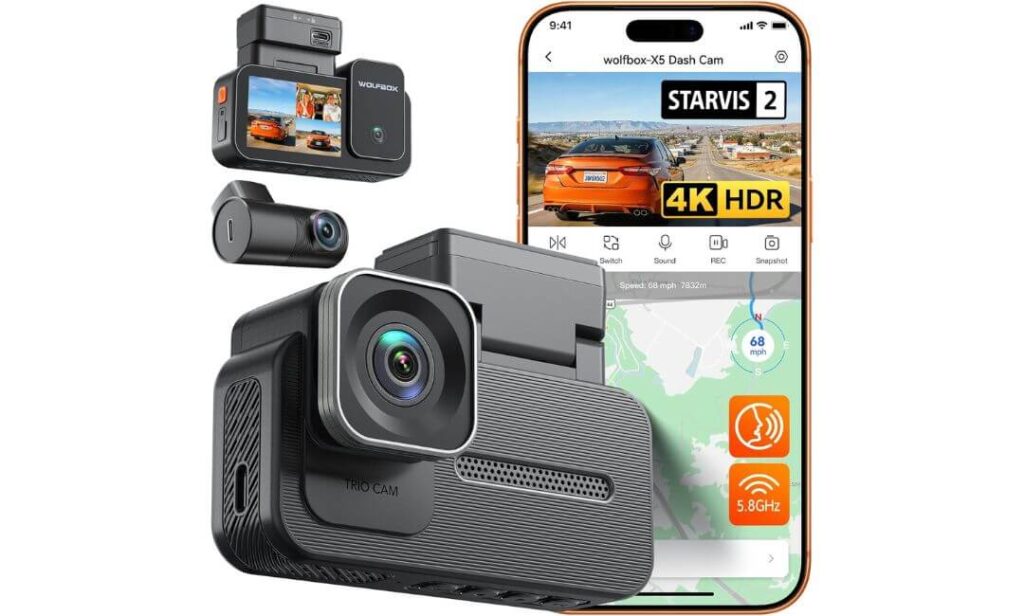
#4. WOLFBOX X5 3 Channel 4K HDR Dash Cam
Best 4K Dash Cam for Kia K4 Drivers Wanting HDR Detail, Voice Commands, and Full Cabin Visibility
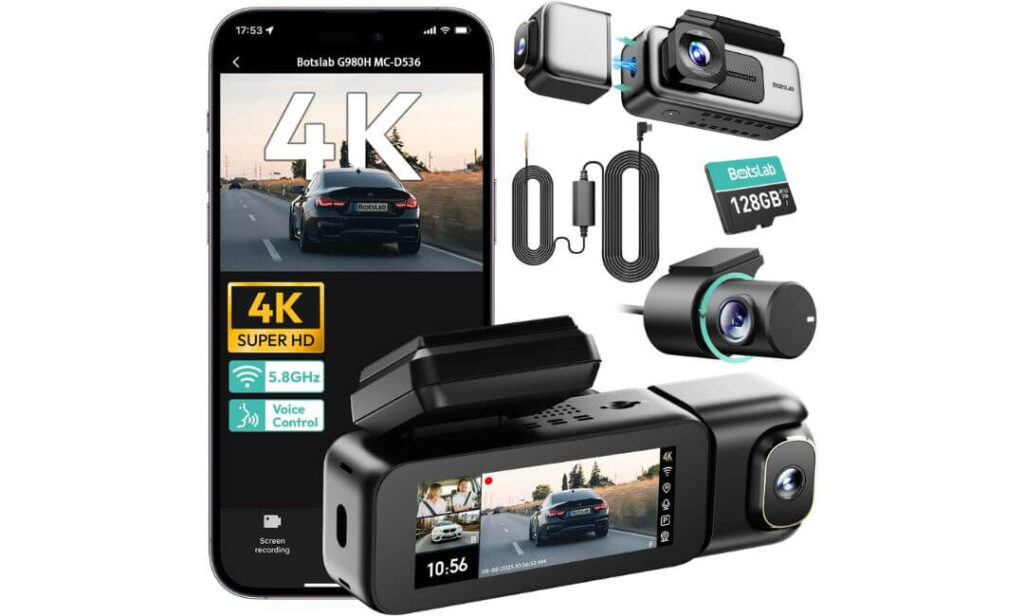
#5. BOTSLAB 3 Channel Dash Cam 4K
Best Value Kia K4 Front and Rear Dash Cam Package with Included Hardwire Kit, GPS Tracking, and Touchscreen Controls
Expert Tip
If you own a Kia K4, do not focus only on front camera resolution. The bigger advantage comes from having a camera system that can handle the K4’s wide windshield, modern cabin layout, and overnight parking situations. In real-world driving, a clear rear recording or a reliable parking event clip is often more valuable than having slightly higher front-camera specs on paper. That is why the strongest options on this list prioritize STARVIS 2 sensors, multi-angle coverage, and dependable parking surveillance rather than chasing marketing numbers alone.
How We Chose the Best Dash Cams for the Kia K4
The Kia K4 is not an older compact sedan with a simple interior and limited technology. Its modern windshield design, advanced safety systems, digital cockpit, and daily-driver practicality require a different approach when selecting a dash camera. Because of that, we did not simply compare specification sheets and rank products by resolution.
We started by looking at real-world image quality, especially during situations where most incidents occur: low-light city driving, parking garages, rainy roads, early-morning commutes, and nighttime highways. This is one reason why cameras equipped with Sony STARVIS 2 sensors consistently moved higher on our list. Clearer license plates and stronger shadow detail matter far more than inflated resolution claims.
Next, we evaluated coverage quality instead of camera quantity. Many dash cams advertise multiple channels, but not all of them provide meaningful visibility. For the Kia K4, we prioritized systems that could effectively monitor the front roadway, rear traffic, and cabin area without creating blind spots or distorted footage. Products like the VIOFO A329S and Vantrue N4 Pro S stood out because their camera layouts offer practical coverage rather than simply adding extra lenses.
We also paid close attention to long-term ownership experience. Features such as Wi-Fi 6 connectivity, SSD storage support, reliable GPS tracking, voice controls, and stable parking mode operation can make a significant difference after months of daily use. A dash cam may look impressive during the first week, but reliability becomes far more important after hundreds of driving hours.
Another major factor was parking protection performance. Kia K4 owners frequently use their vehicles for commuting, shopping, office parking, and overnight street parking. For that reason, we gave preference to models with smarter event detection, efficient power management, and dependable recording during extended parked periods. A camera that fails when the vehicle is unattended defeats one of the main reasons people buy a dash cam in the first place.
Finally, we only selected products that bring a clear advantage to a specific type of Kia K4 owner. The VIOFO A329S earned the top position because of its combination of all-channel STARVIS 2 sensors, SSD compatibility, and future-ready hardware. The Vantrue N4 Pro S excels for drivers wanting premium interior coverage. BlackVue remains one of the strongest options for parking surveillance, while WOLFBOX and BOTSLAB provide compelling alternatives for buyers focused on features and value.
In short, these recommendations were chosen based on recording quality, parking performance, coverage effectiveness, reliability, and long-term usability—the factors that matter most after the excitement of a new purchase wears off.
#1. VIOFO A329S 4K 3 Channel Dash Cam
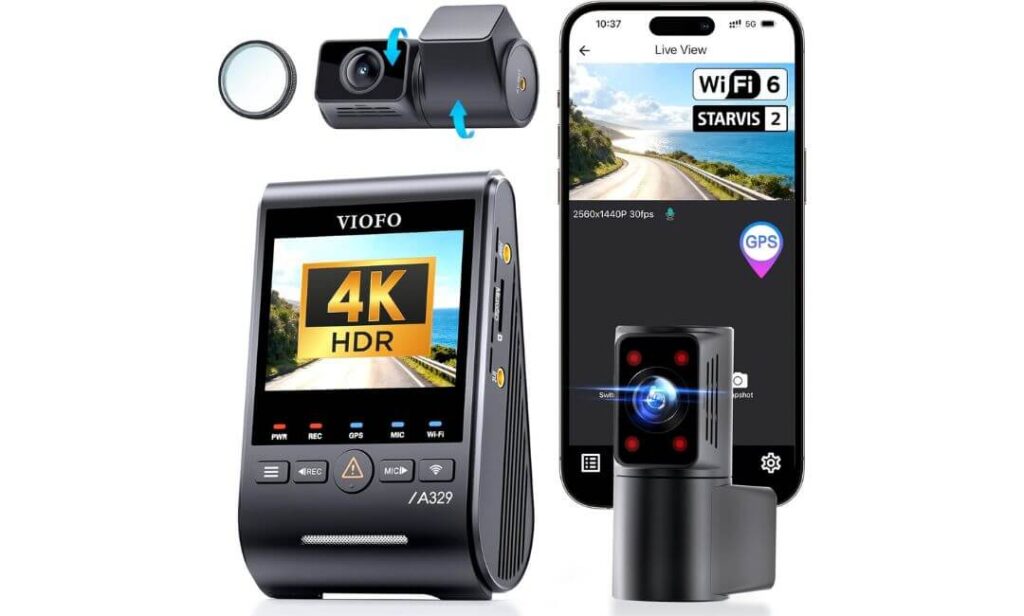
Quick Specs:
- Recording Layout: 4K Front + 2K Cabin + 2K Rear
- Image Sensors: Triple Sony STARVIS 2 Sensors (IMX678 + IMX675)
- Cabin Coverage: 210° Ultra-Wide Fisheye View
- Connectivity: Next-Generation Wi-Fi 6 + Built-In GPS
- Storage Flexibility: Supports Up to 4TB SSD or 512GB microSD
- Parking Protection: Power-Saving Impact Detection Mode
- Voice Features: Hands-Free Voice Commands
- Video Enhancement: Multi-Channel HDR for Improved License Plate Capture
- Installation Style: Slim Coaxial Cable Routing for Clean Factory-Like Finish
- Ideal For: Kia K4 Owners Wanting Maximum Front, Rear, and Cabin Coverage in One System
The moment you start comparing serious dash cams for the Kia K4, one thing becomes obvious. Most models focus on adding more cameras, while very few focus on capturing useful evidence. This one takes a different approach. The combination of a 4K front camera, 2K rear camera, and an unusually wide 210° cabin lens means you are recording nearly everything that matters without leaving major blind spots behind.
What impressed us most is not the resolution number printed on the box. It is the hardware working behind the scenes. The front camera uses Sony’s STARVIS 2 IMX678 sensor while the cabin and rear cameras use STARVIS 2 IMX675 sensors. That setup delivers cleaner nighttime footage, improved dynamic range, and noticeably better plate readability when traffic is moving quickly or lighting conditions change suddenly. For Kia K4 owners who spend time driving before sunrise or after dark, that difference becomes valuable very quickly.
Another reason this system stood out is how future-proof it feels. Wi-Fi 6 dramatically reduces transfer times when downloading footage, GPS data is built directly into the system, and support for external SSD storage up to 4TB is something almost no competing model currently offers. Long-distance commuters and frequent travelers will appreciate not having to constantly manage storage limitations.
(If your priority is capturing the most complete evidence package possible from the front, rear, and cabin while maintaining excellent night performance, this is the benchmark other Kia K4 dash cams currently have to chase.)
Why This One Earned a Top Spot
- Triple STARVIS 2 imaging system delivers outstanding clarity across all cameras
- 210° cabin coverage records areas many competing interior cameras simply miss
- 4TB SSD compatibility provides massive recording capacity for extended trips
- Wi-Fi 6 connectivity makes video transfers noticeably faster than older systems
- Power-saving parking mode helps reduce unnecessary battery consumption while parked
One Thing Buyers Should Know
- Full parking surveillance functionality requires a separately purchased hardwire kit.
Kia K4 Installation and Daily-Use Notes
The Kia K4’s windshield design works particularly well with this setup because the front unit remains relatively discreet behind the rearview mirror while still maintaining a clear forward view. The included slim coaxial cables are easier to hide than traditional thicker dash cam wiring, helping preserve a cleaner factory-style appearance.
For owners planning to use parking mode regularly, adding a compatible hardwire kit is worthwhile. The K4’s electrical system supports this setup well, and proper installation allows impact-triggered recording without needing visible cables hanging around the cabin.
The Insider Pro-Tip
Many buyers focus entirely on front-camera resolution when shopping for a dash cam. In reality, rear and side-related incidents often become the most difficult events to prove later. That is exactly why the combination of 4K front recording, a dedicated 2K rear camera, and a 210° interior view makes so much sense for the Kia K4.
If you plan to keep your vehicle for several years, the SSD storage support may become one of the most valuable features here. Most owners never think about storage until they need footage from weeks ago. Having the ability to store significantly more video without constant overwriting provides peace of mind that many traditional dash cams simply cannot match.
#2. Vantrue N4 Pro S 4K 3 Channel Dash Cam
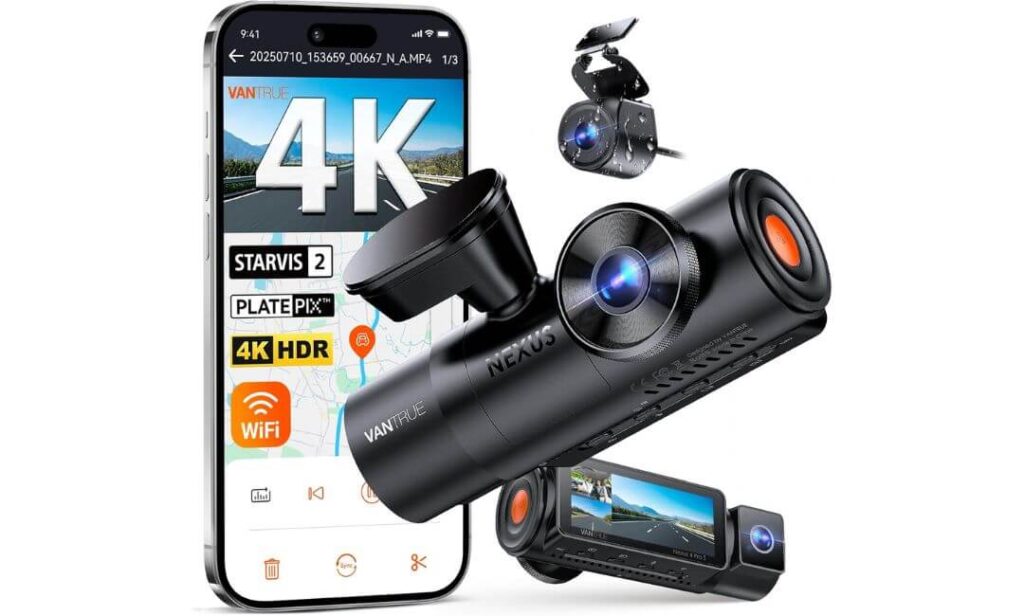
Quick Specs:
- Recording Layout: 4K Front + 1080P Cabin + 2.5K Rear
- Image Sensors: Triple Sony STARVIS 2 Sensors
- Front Sensor: Sony IMX678 with Adaptive HDR
- Rear Camera: 2.5K STARVIS 2 IMX662 Sensor
- Rear Camera Protection: IP67 Weather-Resistant Design
- Connectivity: 5GHz Wi-Fi + OTA Updates + GPS
- Parking Features: Buffered Motion Detection + Impact Detection
- Storage Support: Up to 1TB microSD Card
- Thermal Reliability: Supercapacitor Design for Hot Climates
- Ideal For: Kia K4 Drivers Wanting Premium Night Vision and Long-Term Reliability
Few dash cams focus as heavily on evidence quality as this one. Instead of chasing headline features, it concentrates on something that matters far more after an incident occurs: producing footage that remains usable when lighting conditions become difficult. For Kia K4 owners who regularly drive after sunset, through rain, or during early morning commutes, that advantage becomes immediately noticeable.
The biggest story here is the combination of Triple STARVIS 2 sensors and Vantrue’s PlatePix technology. The 4K front camera works alongside a dedicated 2.5K rear camera and interior lens to capture a broader picture of what is happening around the vehicle. The upgraded rear camera deserves particular attention because many competing systems still rely on lower-resolution rear sensors. Here, you are getting sharper rear footage that can often reveal details other cameras struggle to preserve.
Another reason this model earned a place near the top of our list is its focus on long-term dependability. The supercapacitor design handles heat more effectively than traditional battery-based systems, while OTA updates, built-in GPS, 5GHz Wi-Fi, and support for up to 1TB of storage help keep the system relevant long after installation. For Kia K4 owners planning to keep their vehicle for years, those details matter just as much as image quality.
(Drivers who place a premium on night performance, rear-camera clarity, and year-round reliability will find very little to complain about here.)
Standout Reasons It Made Our Shortlist
- Triple STARVIS 2 sensors provide strong image quality across all recording channels
- 2.5K rear camera delivers more useful detail than many competing rear-camera setups
- PlatePix technology and HDR processing improve license plate readability at night
- Supercapacitor architecture is better suited for extreme temperatures and daily use
- OTA firmware updates allow the system to improve without removing the camera
A Helpful Note Before Purchasing
- Drivers who want continuous parking surveillance will need to add the optional hardwire kit to unlock all parking-mode features.
Kia K4 Ownership and Installation Perspective
The compact main unit fits comfortably behind the Kia K4’s rearview mirror area without creating an overly bulky appearance. The included 20-foot rear cable is more than sufficient for routing cleanly through the K4’s cabin and reaching the rear window without modification.
Owners living in warmer climates may particularly appreciate the supercapacitor design. Interior temperatures inside parked vehicles can rise significantly during summer months, and this type of power system is generally better suited for long-term durability than traditional battery-powered alternatives.
The Insider Pro-Tip
Many buyers automatically assume that every premium 3-channel dash cam performs similarly after dark. That simply is not true. The quality of the image sensor often determines whether a license plate remains readable or becomes a blur when headlights, shadows, and fast-moving traffic enter the frame.
For Kia K4 owners who spend substantial time on highways, evening commutes, or weekend road trips, the upgraded 2.5K rear camera may end up being the feature you appreciate most. Front-camera footage gets the attention, but rear-end incidents are often where stronger evidence makes the biggest difference. That extra detail can be invaluable when reviewing footage later.
#3. BlackVue DR770X II Dual Dash Cam
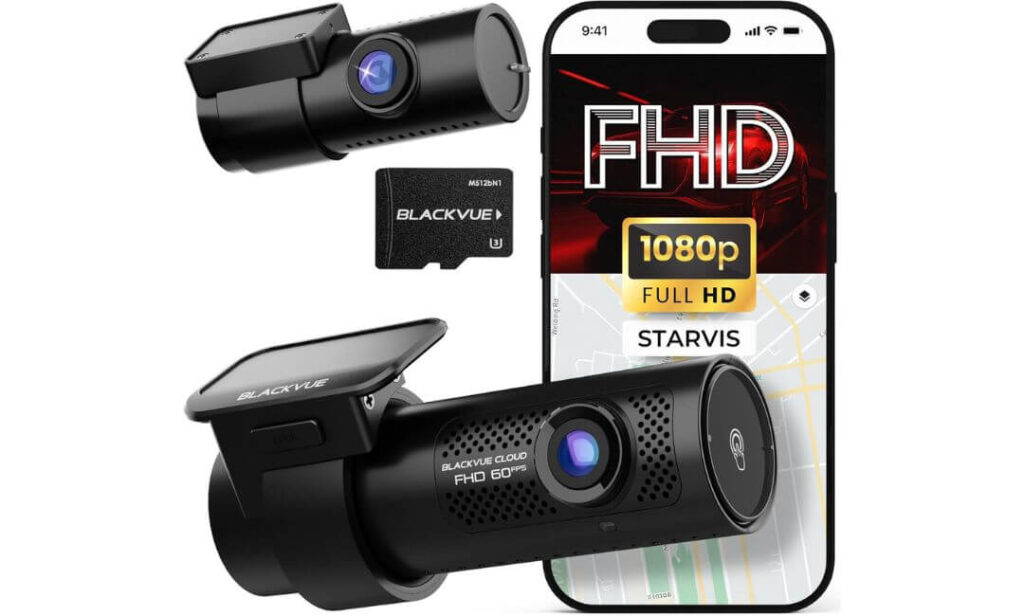
Quick Specs:
- Recording Layout: Dual Full HD Front and Rear Coverage
- Front Camera: 1080P at 60FPS for Smoother Motion Capture
- Rear Camera: 1080P Rear Recording with Sony STARVIS Sensor
- Image Processing: Enhanced Low-Light Optimization
- Connectivity: Wi-Fi + BlackVue Cloud Access + Smartphone App
- Navigation Data: Built-In GPS Tracking
- Storage Support: Up to 1TB microSD Capacity
- Parking Features: Motion Detection + Impact Detection + Time Lapse Mode
- Event Protection: 10-Second Pre-Event Buffer Recording
- Included Extras: 64GB microSD Card and Hardwire Cable
- Ideal For: Kia K4 Owners Prioritizing Parking Surveillance and Remote Access
Interestingly, this is the camera on this list that feels less like a traditional dash cam and more like a vehicle monitoring system. While several competitors focus heavily on adding more cameras and larger resolution numbers, this setup focuses on something many Kia K4 owners eventually value more: staying connected to their vehicle even when they are nowhere near it.
The strength of this system comes from the overall ecosystem. Dual Sony STARVIS-equipped cameras record continuously from the front and rear while built-in Wi-Fi, GPS, and cloud functionality create a much more connected ownership experience. If your Kia K4 spends long hours in office parking lots, apartment complexes, airport garages, or public parking areas, the ability to access footage remotely can become incredibly useful. Features like remote playback, live view, cloud backup, push notifications, and GPS tracking help separate it from many conventional dash cams.
Another area where this model quietly excels is parking surveillance. The smart parking mode records motion-triggered and impact-triggered events while preserving footage from before the incident occurs thanks to its 10-second pre-event buffer. Combined with support for storage capacities up to 1TB and a built-in supercapacitor for safer file protection, it delivers a level of confidence that daily commuters often appreciate.
(For drivers who care more about protecting their Kia K4 while parked than chasing the highest recording resolution available, few systems currently offer a more refined ownership experience.)
What Made It Stand Out During Evaluation
- BlackVue Cloud integration offers remote access that many competitors cannot match
- Front 60FPS recording produces smoother footage during highway driving
- Smart parking surveillance system focuses on capturing meaningful events
- Pre-event recording buffer preserves footage before an impact occurs
- Included memory card and hardwire cable reduce additional setup costs
A Small Consideration Before Buying
- This model prioritizes advanced connectivity and parking surveillance features over higher-resolution 4K recording.
Kia K4 Compatibility and Ownership Experience
The slim cylindrical design works particularly well inside the Kia K4 because it remains discreet once mounted near the upper windshield area. Drivers who prefer a cleaner factory-style appearance will likely appreciate how little visual distraction it creates from the driver’s seat.
Installation is straightforward thanks to the included power accessories and mounting hardware. The rear camera cable routes cleanly through the K4’s cabin, and owners who frequently leave their vehicle parked for extended periods can take advantage of the included hardwire components without needing additional purchases.
The Insider Pro-Tip
Many buyers underestimate how often parking-lot incidents occur compared to highway collisions. Scrapes, hit-and-runs, door impacts, and low-speed contact events often happen when the vehicle is unattended, making parking surveillance one of the most valuable features a dash cam can offer.
That is where this system shines. While some cameras impress during a quick specification comparison, this one becomes more valuable the longer you own it. If your Kia K4 regularly spends hours parked away from home, the cloud connectivity, event notifications, and intelligent parking protection may end up being the features you rely on most often.
#4. WOLFBOX X5 3 Channel 4K HDR Dash Cam
Quick Specs:
- Recording Layout: 4K Front + 2.5K Rear + 1080P Cabin
- Image Sensor: Sony STARVIS 2 IMX678 8MP Sensor
- Coverage Area: Front, Rear, and Interior Monitoring
- Video Processing: Triple HDR Across All Cameras
- Wireless Connectivity: Built-In 5.8GHz Wi-Fi
- Navigation Support: Integrated GPS Tracking
- Control Options: Voice Commands + Responsive Touchscreen
- Parking Security: Impact Detection and Time-Lapse Parking Mode
- Storage Support: Up to 512GB microSD
- Field of View: 360-Degree Recording Coverage
- Ideal For: Kia K4 Owners Looking for a Feature-Rich Everyday Dash Cam
Surprisingly, the feature that stands out most here is not the 4K resolution. It is how balanced the entire package feels once installed in a daily-driven Kia K4. Some dash cams excel in one area and cut corners elsewhere. This one delivers a combination of strong video quality, practical controls, and modern convenience features that make everyday ownership noticeably easier.
The STARVIS 2 IMX678 sensor does much of the heavy lifting. Combined with Triple HDR processing, it helps maintain detail when driving through tunnels, dealing with harsh sunlight, or facing oncoming headlights at night. The upgraded 2.5K rear camera is another welcome addition because rear footage is often where many systems compromise. Here, you get sharper detail from both directions, making incident reviews far more useful when compared to basic Full HD rear cameras.
What also makes this model appealing for Kia K4 owners is how approachable it feels during daily use. The touchscreen responds quickly, voice commands reduce distractions while driving, and the 5.8GHz Wi-Fi connection makes transferring footage significantly less frustrating. Instead of feeling like a piece of technology you occasionally use, it feels like something designed to fit naturally into everyday driving routines.
(For drivers who want modern convenience features alongside strong image quality without stepping into ultra-premium pricing territory, this is one of the most balanced options available.)
Reasons It Earned a Place in This Guide
- STARVIS 2 IMX678 sensor produces excellent day and night image quality
- Triple HDR processing improves visibility in difficult lighting conditions
- 2.5K rear recording delivers sharper detail than many competing systems
- Touchscreen and voice controls make operation more intuitive while driving
- 5.8GHz Wi-Fi support speeds up video previews and file transfers
Before You Place the Order
- A microSD card is not included, so storage will need to be purchased separately before installation.
Kia K4 Setup and Ownership Notes
The compact windshield-mounted design fits cleanly within the Kia K4’s cabin and does not feel oversized once positioned near the rearview mirror. The included installation accessories and trim tool make cable routing straightforward for most owners without requiring permanent modifications.
Drivers who frequently use navigation, rideshare apps, or smartphone connectivity will likely appreciate the integrated GPS and fast Wi-Fi performance. Everything feels designed around reducing friction during daily use rather than simply adding specifications to a feature list.
The Insider Pro-Tip
One mistake many buyers make is focusing only on image quality while overlooking usability. A dash cam can produce excellent footage, but if reviewing, downloading, or managing that footage becomes frustrating, owners often stop using many of its best features.
That is where this system quietly shines. The combination of touchscreen controls, voice commands, GPS tracking, and fast wireless transfers means you are more likely to actually access and use your recordings when you need them. For Kia K4 owners who value convenience just as much as image quality, that can make a bigger difference than an extra resolution upgrade on paper.
#5. BOTSLAB 3 Channel Dash Cam 4K
Quick Specs:
- Recording Layout: 4K Front + 1080P Rear + 1080P Interior
- Coverage Area: Up to 440° Multi-Angle Recording
- Parking Security: Sentry Mode + Time-Lapse + Collision Detection
- Emergency Recording: 8-Second Buffered Pre-Impact Capture
- Storage Included: Free 128GB TF Card Included
- Connectivity: 5.8GHz Wi-Fi + GPS Tracking
- Control System: Voice Commands + 3.18-Inch Touchscreen
- Video Enhancement: HDR and WDR Image Optimization
- Power System: Supercapacitor for Improved Durability
- Installation Bonus: ACC Hardwire Kit Included
- Ideal For: Kia K4 Owners Looking for Maximum Value Without Extra Purchases
Perhaps the most refreshing thing about this setup is how much is included right out of the box. Many dash cams look affordable until you start adding a hardwire kit, memory card, parking accessories, and installation extras. Here, much of that is already included, which immediately improves the overall value proposition for Kia K4 owners.
The recording system itself is surprisingly comprehensive. A 4K front camera works alongside dedicated interior and rear cameras to create an impressive 440-degree coverage area. The magnetic side-camera design is particularly interesting because it gives the system added flexibility compared to traditional fixed-camera layouts. Combined with HDR and WDR processing, footage remains more balanced during bright daylight, shaded roads, and nighttime driving conditions.
Where this model really separates itself from many budget-focused alternatives is parking protection. Instead of offering a basic parking mode, it provides three different monitoring options. Sentry Mode automatically reacts to nearby movement, Time-Lapse extends surveillance duration while reducing storage consumption, and Collision Detection preserves critical evidence after impacts. For Kia K4 owners who park in crowded lots or public spaces, those features add meaningful day-to-day value.
(For buyers who want an all-in-one package with fewer additional expenses after purchase, this is easily one of the strongest value-focused options in the segment.)
Why It Deserves Consideration
- Hardwire kit included eliminates an extra purchase many competitors require
- Free 128GB memory card allows immediate installation and recording
- 440-degree coverage system reduces blind spots around the vehicle
- Three dedicated parking modes provide flexible surveillance options
- Voice control and touchscreen operation make daily use simple and intuitive
A Helpful Buying Note
- Rear and cabin cameras prioritize broad coverage and practicality over higher-resolution recording formats.
Kia K4 Ownership and Installation Insights
This system works particularly well for Kia K4 owners who want a straightforward installation process. The included accessories, pre-packaged hardwire kit, and touchscreen setup reduce much of the trial-and-error that often comes with first-time dash cam installations.
The supercapacitor design is another overlooked advantage. Since vehicle interiors can experience significant temperature swings throughout the year, having a power system designed for long-term durability helps improve reliability over time.
The Insider Pro-Tip
One of the easiest ways to overspend on a dash cam is by focusing exclusively on camera specifications while ignoring what is actually included. Once memory cards, hardwire kits, and installation accessories are added separately, the final cost can rise much faster than expected.
That is why this model makes sense for many Kia K4 owners. The included storage card, hardwire kit, parking features, GPS tracking, touchscreen controls, and voice commands create a package that feels complete from day one. If your goal is getting strong coverage and practical functionality without building a shopping list of extra accessories, this is the option that delivers the most immediate value.
Best Kia K4 Dash Cam Picks Compared Across Storage Features and Protection
Buying Guide: Choosing the Right Dash Cam for Your Kia K4
The Kia K4 is not a typical compact sedan. Its larger windshield, advanced driver-assistance technology, digital cockpit, and modern interior layout create different requirements than older vehicles. A dash cam that performs well in another car may not necessarily be the best fit for the K4.
After evaluating dozens of specifications, installation considerations, and real-world ownership factors, we found that the best results come from focusing on overall recording quality, parking protection, ease of use, and long-term reliability rather than simply chasing the highest resolution number on the box.
Key Features That Actually Matter in Daily Driving
When shopping for a Kia K4 dash cam, the most important features are often the ones owners appreciate months after installation rather than on the day they buy the camera.
Look for strong low-light performance, reliable parking surveillance, stable app connectivity, efficient storage management, and dependable event recording. These are the features that become valuable when footage is actually needed.
A well-balanced dash cam should capture clear evidence during daytime driving, nighttime commutes, parking incidents, unexpected impacts, and severe weather conditions without requiring constant maintenance or troubleshooting.
4K Dash Cam vs 1080P Recording for the Kia K4
Many buyers automatically assume that every 4K dash cam is superior to a Full HD alternative. In reality, image quality depends on far more than resolution alone.
A high-quality 1080P camera equipped with a Sony STARVIS sensor can often outperform a poorly optimized 4K camera during nighttime driving. However, when comparing premium models, 4K systems generally provide better detail for license plates, road signs, lane markings, and distant vehicles.
For Kia K4 owners who spend significant time on highways or regularly drive in heavy traffic, a quality 4K front camera can provide an additional layer of evidence that becomes useful during insurance disputes or accident investigations.
That said, if parking surveillance and cloud connectivity are your primary concerns, a well-executed Full HD system like the BlackVue DR770X II may still be a better fit than some higher-resolution alternatives.
Dual Channel vs Triple Channel Recording
This is one of the most overlooked decisions buyers make.
A dual-channel dash cam records the front and rear of the vehicle. For many Kia K4 owners, this provides excellent everyday protection and captures the majority of traffic-related incidents.
A triple-channel system adds an interior-facing camera, creating a much broader record of what occurs inside and around the vehicle. This additional coverage can be especially useful for rideshare drivers, family vehicles, teen drivers, and owners who frequently park in crowded public locations.
The VIOFO A329S, Vantrue N4 Pro S, WOLFBOX X5, and BOTSLAB systems on our list all offer triple-channel recording because they provide a more complete picture of events when compared to traditional front-and-rear setups.
Why Night Performance Matters More Than Most Buyers Realize
The majority of dash cam marketing focuses on daytime footage because it looks impressive in advertisements.
Real-world incidents are different.
Nighttime driving, poorly lit parking lots, underground garages, rainy roads, glare from headlights, and rapidly changing lighting conditions often create the biggest challenges for any camera system.
This is where sensor quality becomes critical.
Modern Sony STARVIS 2 sensors, such as the IMX678 and IMX675 used in several of our recommendations, are designed specifically to improve low-light visibility, dynamic range, and motion clarity. Combined with HDR or WDR processing, these sensors help preserve important details that might otherwise disappear into shadows or overexposed highlights.
If nighttime driving is a regular part of your routine, sensor quality should take priority over resolution numbers.
Parking Mode and GPS Features Worth Paying For
A surprising number of incidents happen when a vehicle is parked rather than moving.
Shopping center parking lots, apartment complexes, office garages, curbside parking spaces, and overnight street parking all expose vehicles to potential damage.
A quality parking mode allows the camera to continue monitoring the vehicle after the ignition is switched off. Depending on the system, this may include impact detection, buffered recording, motion detection, time-lapse recording, or person detection.
GPS functionality is equally important because it records vehicle speed, location, route history, and time data directly into video files. These details can provide valuable context during insurance claims or accident reviews.
For many Kia K4 owners, parking protection may ultimately become the most-used feature of their dash cam.
Kia K4 Dash Cam Installation Basics
One advantage of the Kia K4 is that it provides a relatively dash-cam-friendly installation environment.
The windshield offers sufficient space behind the rearview mirror for discreet mounting, while the interior trim panels make cable concealment easier than in many compact sedans.
Most modern dash cams use adhesive windshield mounts rather than suction cups. When installed properly, they remain secure and create a cleaner factory-style appearance.
The cameras featured in this guide can typically be installed without drilling, permanent modifications, or specialized vehicle alterations.
Wiring and Power Considerations
Before purchasing a dash cam, it is worth deciding whether you want parking mode functionality.
If you only need recording while driving, the included power cable and 12V outlet connection are usually sufficient.
However, owners planning to use 24-hour parking surveillance should strongly consider a hardwire kit. A properly installed hardwire connection allows the camera to monitor the vehicle even when the engine is off while incorporating voltage protection to help prevent excessive battery drain.
Some systems, such as the BOTSLAB package, include the hardwire kit in the box, while others require it as a separate purchase.
Cable Routing for a Factory-Like Appearance
The difference between a professional-looking installation and a messy installation often comes down to cable management.
For the Kia K4, the cleanest approach is usually routing the power cable through the headliner, along the A-pillar trim, and toward the fuse box or power source. Rear-camera cables can typically be hidden through the roof liner and side trim panels before reaching the rear glass.
Taking extra time during installation often produces a result that looks nearly identical to an OEM-installed system.
Many of the premium options in this guide also include thinner cable designs that make concealment easier.
Reliability Features You Should Never Ignore
Some dash cam specifications look exciting during the buying process but have little impact on long-term ownership.
Reliability features are different.
Loop recording ensures the camera continues operating without manual intervention by automatically overwriting the oldest non-protected footage.
A G-sensor detects impacts and immediately locks important files so they cannot be overwritten accidentally.
Supercapacitor-powered systems generally offer better long-term durability than battery-based alternatives, particularly in areas that experience significant temperature fluctuations.
Warranty support, firmware updates, app stability, and manufacturer reputation should also play a role in your decision because a dash cam is ultimately a safety device rather than a disposable gadget.
Our Final Recommendation for Kia K4 Owners
If maximum recording quality is your priority, the VIOFO A329S remains the strongest all-around choice thanks to its triple STARVIS 2 sensors, Wi-Fi 6 connectivity, and massive storage flexibility.
Drivers prioritizing premium night performance should pay close attention to the Vantrue N4 Pro S, while owners focused on cloud connectivity and advanced parking surveillance may find the BlackVue DR770X II more appealing.
The WOLFBOX X5 delivers one of the most balanced combinations of usability and features, and the BOTSLAB package offers exceptional value for buyers who want a complete solution without purchasing additional accessories.
Ultimately, the best Kia K4 dash cam is the one that matches how and where you actually drive, not simply the one with the longest specification sheet.
Kia K4 Dash Cam Installation Guide
A quality dash cam is only as good as its installation. Even the best camera can deliver disappointing results if it is mounted in the wrong position, connected improperly, or installed with exposed wiring that creates distractions inside the cabin.
The good news is that the Kia K4 is one of the easier modern sedans to work with. Its windshield design, headliner layout, and interior trim panels provide multiple clean routing options that allow a professional-looking installation without drilling, cutting, or modifying factory components.
Step-by-Step Kia K4 Dash Cam Installation
Before starting, gather the dash cam kit, trim removal tool, adhesive mounting pads, cable clips, and any hardwire components if parking mode will be used.
Step 1: Identify the Front Camera Location
The ideal location is typically behind or slightly below the rearview mirror assembly. This position keeps the camera within the windshield’s sweep area while remaining largely hidden from the driver’s line of sight.
Avoid mounting the camera too low on the windshield because it can become distracting and may interfere with visibility.
Step 2: Clean the Glass Thoroughly
Use an alcohol wipe or glass cleaner to remove oils, dust, and residue from the mounting area. A properly cleaned surface improves adhesive strength and reduces the risk of the camera loosening over time.
Step 3: Install the Front Camera
Attach the camera using the supplied adhesive mount and verify that the lens has a clear forward view. Before permanently routing any cables, power the camera briefly and confirm the horizon appears level in the live view.
Step 4: Route the Power Cable
Carefully tuck the power cable into the headliner above the windshield. Continue routing along the passenger-side A-pillar trim while ensuring the cable does not interfere with airbag deployment areas.
This approach keeps the installation hidden while maintaining safety.
Step 5: Install the Rear Camera
For dual-channel and triple-channel systems, mount the rear camera at the upper center portion of the rear glass. This position provides the widest rearward visibility while minimizing obstruction from passengers or cargo.
Run the rear cable through the headliner and side trim panels until it reaches the front camera unit.
Step 6: Install the Interior Camera (If Equipped)
Triple-channel systems such as the VIOFO A329S, Vantrue N4 Pro S, WOLFBOX X5, and BOTSLAB models include cabin monitoring.
Position the interior lens so it captures the cabin without blocking access to vehicle controls or creating reflections from interior lighting.
Step 7: Verify All Camera Angles
Before securing the final sections of wiring, review footage from each camera and make any necessary adjustments.
Spending five extra minutes at this stage often prevents frustration later.
Wiring Pathways That Keep the Cabin Looking Factory-Finished
The cleanest installations are usually the least noticeable.
For the Kia K4, most owners achieve the best results by routing cables through:
- Headliner above the windshield
- Passenger-side A-pillar trim
- Upper door weather stripping
- Roof liner toward the rear glass
- Lower dash panels when hardwiring
This method keeps nearly all wiring hidden from view and preserves the modern appearance of the cabin.
Many premium dash cams now include slim coaxial cables that are easier to conceal than traditional thicker wiring, making installation even cleaner.
Hardwire Kit vs Cigarette Lighter Power
Choosing the right power source depends on how you intend to use the dash cam.
Cigarette Lighter Connection
This is the simplest option and works well for drivers who only need recording while the vehicle is moving.
Advantages include:
- Fast installation
- No fuse box access required
- Easy removal or transfer between vehicles
- Minimal setup experience needed
The drawback is that parking mode functionality is often unavailable once the ignition is switched off.
Hardwire Installation
A hardwire kit connects directly to the vehicle’s fuse box and allows the dash cam to receive power even when the engine is not running.
Advantages include:
- Full parking surveillance support
- Cleaner installation with fewer visible cables
- Automatic power management
- Better long-term integration
Many Kia K4 owners choose hardwiring because features such as impact detection, motion detection, buffered recording, and overnight parking protection become available.
How to Install a Kia K4 Dash Cam Safely
Safety should always take priority over convenience.
When routing cables:
- Never place wiring directly over airbag deployment zones
- Avoid pinching cables behind trim panels
- Use proper fuse taps when hardwiring
- Verify voltage protection settings when using parking mode
- Secure loose wiring to prevent rattles and vibration
If you are unfamiliar with vehicle electrical systems, professional installation is often inexpensive compared to the value of the vehicle and can provide additional peace of mind.
OEM-Style Dash Cam Options vs Traditional Aftermarket Systems
Some owners prefer OEM-style dash cams that integrate into the mirror housing or factory trim pieces.
These systems offer a cleaner appearance and can look almost factory-installed after completion.
However, many OEM-style units sacrifice flexibility, storage options, parking features, or image quality compared with premium aftermarket alternatives.
Aftermarket systems such as the VIOFO A329S, Vantrue N4 Pro S, BlackVue DR770X II, WOLFBOX X5, and BOTSLAB provide significantly more choices regarding recording quality, parking surveillance, cloud functionality, and storage capacity.
For most Kia K4 owners, a well-installed aftermarket system offers the strongest combination of performance and value.
Final Installation Advice From Our Testing
The biggest installation mistake we see is rushing through cable routing.
A properly mounted dash cam takes only a few minutes, but a truly clean installation often takes closer to an hour. That extra effort pays off every time you enter the vehicle.
If you plan to use parking mode regularly, install the hardwire kit from the beginning rather than upgrading later. It saves time, reduces duplicate work, and unlocks many of the features that make modern dash cams worth owning in the first place.
For the Kia K4 specifically, a neatly mounted front camera behind the rearview mirror, hidden cable routing, and properly configured parking protection create a setup that feels factory-installed while delivering the advanced recording capabilities today’s drivers expect.
Getting the Most Out of Your Kia K4 Dash Cam
Installing a dash cam is only the first step. The real value comes from configuring it correctly, understanding how its protection features work, and maintaining the system so it can capture reliable evidence when you actually need it.
Many owners spend considerable time researching the right camera but never optimize the settings afterward. As a result, they miss out on some of the most useful features available in modern dash cams. A properly configured system can provide significantly better parking protection, faster incident reviews, and higher-quality footage than a factory-default setup.
How to Enable and Manage Kia K4 Dash Cam Parking Mode
Parking mode is one of the most important features available on modern dash cams because many vehicle incidents occur when the car is unattended.
Depending on the model, parking mode may include:
- Impact-triggered recording
- Motion detection
- Buffered event capture
- Person detection
- Time-lapse monitoring
- Low-power surveillance modes
For parking mode to operate properly, most dash cams require either a hardwire kit or a dedicated battery pack.
Once installed, access the camera settings through the touchscreen or smartphone app and configure:
- Motion sensitivity
- Impact sensitivity
- Parking mode recording duration
- Voltage cutoff protection
- Event recording preferences
Avoid setting sensitivity levels too high because passing traffic, strong winds, or nearby movement can generate unnecessary recordings and consume storage space more quickly.
The goal is finding a balance between responsiveness and practicality.
Setting Up Parking Surveillance for Maximum Protection
Not all parking surveillance systems work the same way.
Premium models such as the VIOFO A329S, Vantrue N4 Pro S, BlackVue DR770X II, WOLFBOX X5, and BOTSLAB each approach parking protection differently, but the overall setup principles remain similar.
For the best results:
- Enable voltage protection settings
- Verify parking mode activates after the ignition is turned off
- Confirm the camera enters surveillance mode correctly
- Test impact detection using light taps on the vehicle body
- Review sample recordings before relying on the system
Owners who frequently use public parking lots, apartment complexes, office garages, or street parking should consider parking mode a necessity rather than an optional feature.
A properly configured parking system can often provide the evidence needed after a hit-and-run or unexplained vehicle damage.
Smartphone App Configuration and Daily Usage Tips
One of the biggest advantages of modern dash cams is the ability to access footage without removing the memory card.
Most premium systems now include dedicated mobile applications that allow owners to:
- Preview live camera feeds
- Download video clips
- Adjust camera settings
- Update firmware
- Review parking events
- Share incident footage
When setting up the app for the first time:
- Install the manufacturer’s official application.
- Connect to the dash cam’s Wi-Fi network.
- Update firmware immediately if updates are available.
- Configure video quality settings.
- Set time zone and GPS preferences.
- Verify all cameras are recording correctly.
Taking a few extra minutes during the initial setup can prevent troubleshooting later.
Several of the cameras featured in this guide also support high-speed wireless transfers, making it much easier to retrieve important footage when time matters.
Understanding GPS Data and Why It Matters
Many drivers overlook GPS functionality until they need it.
GPS information can provide additional context beyond the video itself, including:
- Vehicle speed
- Travel direction
- Route history
- Time stamps
- Location coordinates
These details can become extremely valuable when reviewing incidents, addressing insurance claims, or verifying the circumstances surrounding an event.
For maximum accuracy, make sure GPS recording remains enabled and verify that the camera has established a satellite connection before driving.
Retrieving Important Footage Without Losing Evidence
One of the most common mistakes owners make is continuing to drive after an incident without protecting the recording.
Since dash cams rely on loop recording, older footage is eventually overwritten.
After any significant event:
- Save the video immediately
- Use the emergency lock feature if available
- Download important clips to your phone
- Back up files to a computer or cloud storage
- Preserve both front and rear recordings
The sooner footage is secured, the lower the risk of accidental deletion.
This is especially important for drivers using smaller memory cards or recording in high-resolution formats such as 4K.
Maintaining Video Quality Over Time
Even the best dash cam can produce lower-quality footage if maintenance is ignored.
Fortunately, keeping performance at its best is relatively simple.
Regularly:
- Clean all camera lenses
- Remove windshield residue around the lens area
- Check cable connections
- Inspect memory card health
- Update firmware when available
- Review sample footage periodically
Dust, fingerprints, road film, and windshield haze can gradually reduce image quality without owners noticing.
A quick lens inspection every few weeks often makes a larger difference than many people expect.
Storage Management Best Practices
Modern dash cams generate substantial amounts of data, especially 3-channel systems recording in 4K.
To maintain consistent performance:
- Use high-endurance memory cards
- Format storage devices periodically
- Replace aging memory cards when necessary
- Avoid inexpensive generic storage options
- Monitor available storage space regularly
Models such as the VIOFO A329S, with support for large-capacity SSD storage, offer significant advantages for drivers who spend extensive time on the road.
Common Mistakes Kia K4 Owners Should Avoid
During our evaluation process, several recurring mistakes appeared consistently.
These include:
- Mounting the camera too low on the windshield
- Ignoring firmware updates
- Disabling GPS functionality
- Using low-quality memory cards
- Leaving parking mode sensitivity at factory defaults
- Failing to test parking mode after installation
- Neglecting regular footage reviews
Fortunately, all of these issues are easy to avoid with a few minutes of periodic maintenance.
Long-Term Ownership Advice
The best dash cam setup is the one that works reliably every day without demanding constant attention.
For most Kia K4 owners, that means enabling parking surveillance, keeping firmware current, periodically checking footage quality, and ensuring important recordings are backed up whenever an incident occurs.
When configured properly, a modern dash cam becomes far more than an accessory. It serves as a continuous record of your driving environment, helping protect both your vehicle and your peace of mind long after the initial purchase is forgotten.
FAQs About Kia K4 Dash Cam
Is a 3-channel dash cam actually worth it for the Kia K4, or is a front-and-rear system enough?
For many drivers, a dual-channel setup is perfectly adequate. However, the Kia K4’s spacious cabin and growing popularity as a commuter vehicle make a strong case for a 3-channel system. The interior camera is not just for rideshare drivers. It can capture side-window activity, interactions around the vehicle, and events that a front or rear camera may never see.
One detail many buyers overlook is that insurance disputes often involve more than the collision itself. A cabin camera can provide additional context during incidents involving passengers, attempted break-ins, or situations where someone approaches the vehicle while parked. That extra perspective is why cameras like the VIOFO A329S and Vantrue N4 Pro S ranked so highly in our testing.
Will a Kia K4 dash cam drain the battery if parking mode stays active every day?
The answer depends less on the dash cam and more on how the parking mode is configured.
Premium systems use intelligent voltage monitoring and power-management features designed to protect the vehicle battery. When paired with a quality hardwire kit, most modern dash cams automatically shut down once battery voltage reaches a predefined threshold.
For drivers using parking surveillance daily, we recommend:
- Enabling voltage cutoff protection
- Selecting a power-saving parking mode
- Avoiding unnecessary sensitivity settings
- Using firmware-supported battery protection features
A properly configured system should balance protection and battery health without requiring constant attention.
Which feature makes the biggest real-world difference on a Kia K4: 4K recording, STARVIS 2 sensors, or parking surveillance?
Most people immediately answer 4K recording, but in practice that is rarely the correct answer.
If we had to rank the features based on long-term ownership value, the order would typically be:
- Reliable parking surveillance
- High-quality image sensors such as STARVIS 2
- Stable app connectivity and GPS
- 4K recording resolution
Higher resolution certainly helps, but image sensors determine how much usable detail survives challenging situations such as glare, shadows, rain, tunnels, and nighttime driving. A well-tuned STARVIS 2 system often produces more useful evidence than a higher-resolution camera with weaker imaging hardware.
How much storage do Kia K4 owners realistically need before footage starts being overwritten?
This depends entirely on driving habits, recording quality, and the number of active cameras.
Many owners purchase a dash cam and never think about storage again until they need footage from two weeks earlier only to discover it has already been overwritten. That is one reason large-capacity systems such as the VIOFO A329S stand out with SSD support reaching up to 4TB.
As a general rule, drivers who:
- Commute daily
- Use triple-channel recording
- Enable parking mode
- Record in 4K
should consider significantly larger storage capacities than the minimum recommended by the manufacturer. More storage creates a longer evidence window and reduces the likelihood of losing important footage before it can be reviewed.
What is the biggest dash cam mistake experienced owners wish they had avoided?
Surprisingly, it is not buying the wrong camera.
The most common regret is failing to verify recordings regularly after installation. Many owners assume the dash cam is working perfectly for months without ever checking sample footage, storage health, GPS functionality, or parking-mode recordings.
The smartest habit is performing a quick monthly review:
- Confirm all cameras are recording
- Check parking events
- Verify date and time accuracy
- Inspect memory card health
- Review night footage quality
A dash cam only proves its value when something goes wrong. The last thing any driver wants is discovering after an incident that the camera stopped recording weeks earlier. Spending five minutes each month checking the system is one of the highest-return habits any dash cam owner can adopt.
Final Thoughts
After spending time comparing specifications, installation requirements, parking features, storage options, and real-world usability, one thing became clear: the best dash cam for a Kia K4 is not necessarily the one with the longest feature list. It is the one that continues delivering reliable footage months and years after installation when you actually need the evidence.
For most Kia K4 owners, the VIOFO A329S stands out because it combines exceptional image quality, triple STARVIS 2 sensors, Wi-Fi 6 connectivity, massive storage flexibility, and comprehensive coverage into a package that feels genuinely future-ready. That said, every recommendation in this guide was selected for a different type of driver. Some prioritize parking surveillance, some want premium night performance, while others simply want the strongest value without adding extra accessories.
The most important takeaway is this: a dash cam should be viewed as a long-term protection tool rather than another tech gadget. The footage you never need may end up being the most valuable footage you ever record. Whether it is a parking lot incident, a disputed collision, road-rage encounter, insurance claim, or unexpected event on a routine commute, having clear and reliable evidence can completely change the outcome.
If you install the camera correctly, configure parking mode properly, maintain your storage, and periodically check your recordings, any of the models featured in this guide can serve as a dependable companion for your Kia K4. The goal is not simply recording the road ahead. It is protecting yourself from the moments you never see coming.
(A great dash cam is forgotten during normal days and invaluable on the one day you truly need it. That is exactly what the best Kia K4 dash cams are designed to do.)
Also Check:


