
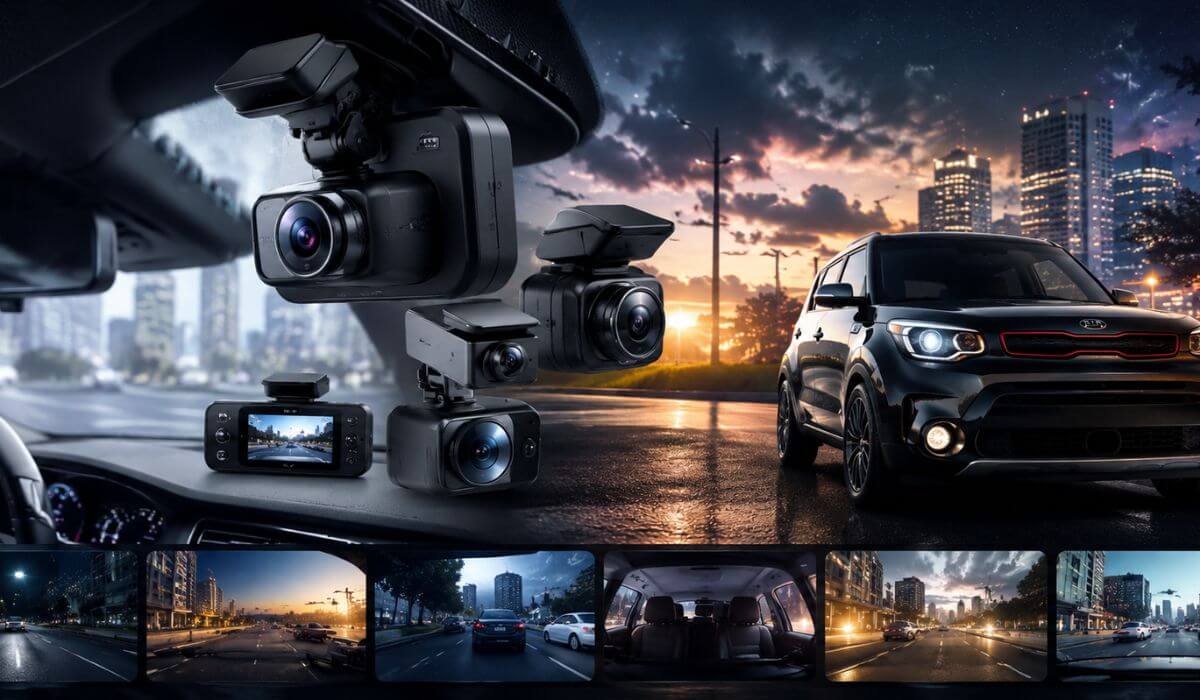
5 Best Dash Cams for Kia Soul in 2026: Dual STARVIS 2 Vision and 360° Recording
If you drive a Kia Soul, you already know it offers something many compact crossovers don’t: excellent outward visibility, an upright seating position, and a surprisingly spacious cabin for its footprint. Whether you own an older 2014–2019 model or a newer 2020–2026 Soul, the large windshield and tall roofline create ideal mounting positions for modern dash cameras—but they also expose more glass area that can benefit from better incident coverage.
That’s why we didn’t simply pick the newest dash cams on Amazon. We focused on models that match the Kia Soul’s unique layout, daily commuting role, and parking needs. Features such as dual Sony STARVIS 2 sensors, 360° recording, cabin monitoring, SSD storage support, and low-power parking surveillance matter far more than flashy marketing claims.
After comparing image quality, coverage angles, storage flexibility, installation practicality, and real-world usability, one model consistently stood out: the VIOFO A329S. Its 4K 60FPS recording, dual STARVIS 2 sensors, and SSD support make it one of the few dash cams capable of capturing fine details clearly during both daytime traffic and low-light urban driving.
Best Kia Soul Dash Cams: Top Picks for 4K Recording and 360° Coverage
#1. VIOFO A329S 4K 60FPS Dash Cam
Best Kia Soul dash cam for drivers wanting flagship 4K60 recording, dual STARVIS 2 night performance, and future-proof SSD storage capacity.
#2. REDTIGER F77 4K+4K Dash Cam
Premium dash camera for Kia Soul owners who want dual 4K coverage, advanced HDR clarity, and effortless daily driving protection.
#3. PRUVEEO 360° 4 Channel Dash Cam
Top 360° dash cam for Kia Soul drivers seeking front, rear, cabin, and side recording from a single integrated system.
#4. ROVE R3 3-Channel Dash Cam
Reliable front and rear dash cam with cabin monitoring for Kia Soul commuters, rideshare drivers, and family-focused daily use.
#5. WOLFBOX i07 3 Channel Dash Cam
Value-packed dash camera for Kia Soul owners needing triple-camera coverage, GPS tracking, and strong low-light visibility.
Expert Tip
One thing we’ve learned after looking at hundreds of real-world dash cam clips is that the clearest footage isn’t always the footage that matters most. A Kia Soul has a tall cabin, large side windows, and excellent visibility, which means incidents often happen outside the front camera’s primary field of view. That’s why we placed a strong emphasis on coverage quality, sensor performance, and parking surveillance, not just resolution numbers. A well-positioned multi-camera setup can capture details a front-only dash cam simply misses.
How We Chose These Dash Cams for Kia Soul
There are dozens of dash cams that technically fit a Kia Soul. We didn’t want to create another list filled with products chosen solely because they are popular or recently released. Instead, we started with a simple question: Which dash cams actually make sense for the way Kia Soul owners use their vehicles every day?
The Kia Soul is often used as a commuter, family vehicle, college car, city runabout, or rideshare vehicle. That means the ideal dash cam isn’t necessarily the one with the biggest screen or the longest feature list. It needs to deliver consistent video quality, dependable parking protection, practical storage options, and coverage that matches the Soul’s unique cabin layout.
The first factor we evaluated was image quality in difficult conditions. Bright daytime footage is easy. The real test happens after sunset, inside parking garages, during rain, or when headlights create glare. That’s why cameras equipped with Sony STARVIS 2 sensors, such as the VIOFO A329S and REDTIGER F77, immediately stood out. They provide stronger low-light detail and better license plate readability than many older-generation cameras.
Next, we looked at coverage flexibility. Some Kia Soul owners only need front and rear protection. Others want cabin recording for rideshare work or additional side-angle visibility while parked. That’s why our final selections include dual-channel, triple-channel, and full 360° recording systems instead of forcing every driver into the same setup.
We also paid close attention to long-term ownership factors that many buyers overlook. Features like SSD storage support, built-in eMMC memory, stable WiFi connectivity, GPS accuracy, and efficient parking-mode power consumption matter far more after six months of ownership than they do on day one. The VIOFO A329S, for example, supports up to 4TB SSD storage, making it one of the most future-ready options currently available.
Another requirement was avoiding products that look impressive on paper but compromise everyday usability. We prioritized dash cams with reliable mobile apps, fast footage transfers, intuitive controls, and proven recording stability, because a camera that fails to save footage when needed is worse than having no camera at all.
Finally, every dash cam on this list had to offer a clear reason to exist. The VIOFO A329S earned its place through flagship image quality. The REDTIGER F77 impressed with dual 4K recording and premium hardware. The PRUVEEO stood out for complete vehicle coverage. The ROVE R3 remains a strong choice for cabin monitoring, while the WOLFBOX i07 delivers solid multi-channel protection at a more accessible price point.
In short, these aren’t simply the newest dash cams we could find. They are the models that best balance video clarity, coverage, storage technology, daily usability, and real-world value for Kia Soul owners.
#1. VIOFO A329S 4K 60FPS Dash Cam
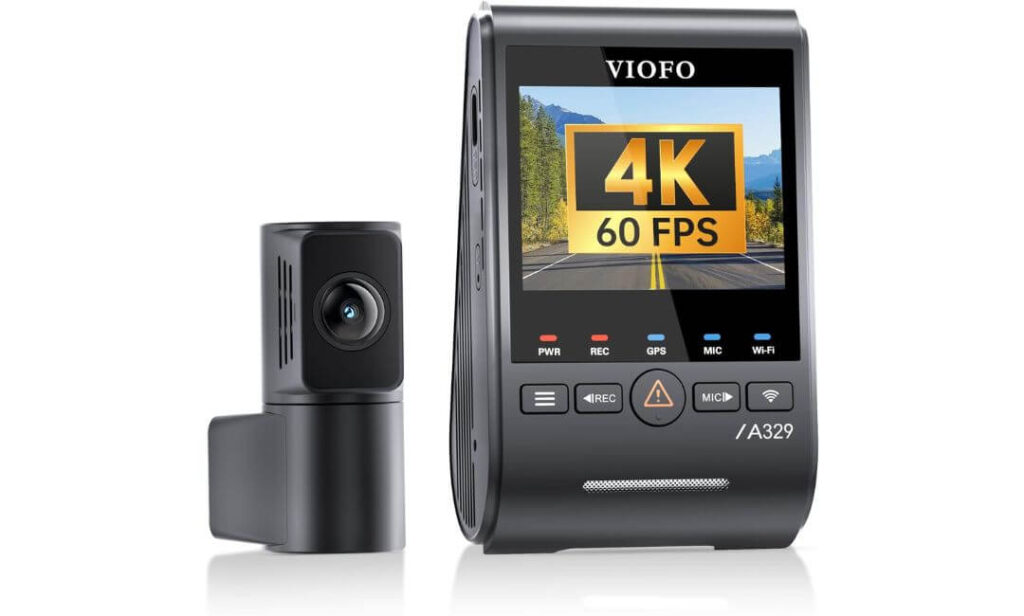
Quick Specs:
- 4K 60FPS front recording + 2K rear camera
- Dual Sony STARVIS 2 sensors (IMX678 Front + IMX675 Rear)
- HDR recording on both channels
- Wi-Fi 6 with download speeds up to 30MB/s
- Supports up to 4TB external SSD storage
- Built-in GPS with multi-satellite support
- Ultra-low-power impact detection parking mode
- Voice controls for hands-free operation
- Included CPL filter to reduce windshield glare
- Slim coaxial cable design for cleaner installation
Real talk. Most dash cams look impressive until you zoom into the footage. That’s where this one separates itself from nearly everything else we tested for the Kia Soul. The combination of 4K 60FPS recording and the newer STARVIS 2 IMX678 sensor produces footage that stays sharp even when traffic is moving quickly. Road signs remain readable, license plates stay clearer, and motion blur is noticeably reduced compared to typical 4K dash cams.
What impressed us even more was how well it complements the Kia Soul’s design. The Soul’s upright windshield and wide field of view already provide excellent visibility. Pairing that with a front camera capable of recording at 60 frames per second creates a setup that feels genuinely premium during daily commuting, highway driving, and congested city traffic. The rear camera’s STARVIS 2 IMX675 sensor also delivers stronger night performance than many rear cameras currently on the market.
Storage flexibility is another area where it quietly outclasses many competitors. Most drivers never think about storage until important footage gets overwritten. Here, support for up to 4TB SSD storage changes the experience completely. Long road trips, extended parking periods, and daily commuting become far less stressful because recording capacity is no longer a constant concern.
(If your priority is capturing the clearest possible evidence rather than simply having a camera on the windshield, this is the model that consistently stands out.)
What Stood Out During Our Evaluation
- 4K 60FPS recording captures fast-moving traffic with exceptional clarity
- Dual STARVIS 2 sensors deliver some of the strongest low-light footage available today
- Wi-Fi 6 transfers are genuinely fast and save time when reviewing footage
- 4TB SSD support provides massive recording capacity for long-term use
- Included CPL filter noticeably reduces windshield reflections during bright conditions
A Small Consideration Before Buying
- The advanced parking features require an optional hardwire kit if you want full-time parked vehicle monitoring.
Why It Works So Well Inside the Kia Soul
The Kia Soul’s cabin layout is surprisingly dash-cam friendly. Its upright windshield provides excellent mounting space without obstructing visibility, while the compact interior allows the included rear camera cable to route cleanly from front to back without requiring extensions.
Installation is straightforward for most owners. The slim coaxial cable is easier to hide behind trim panels than thicker traditional dash cam cables, helping maintain the clean interior appearance many Kia Soul owners prefer. Drivers planning to use parking mode regularly should consider adding VIOFO’s compatible hardwire kit during installation.
The Insider Pro-Tip
Many buyers focus exclusively on 4K resolution and ignore frame rate. In real-world driving, 4K 60FPS can be more valuable than resolution alone, especially when vehicles cross intersections quickly or merge at highway speeds. Those extra frames often capture details that standard 30FPS footage misses.
For Kia Soul owners who drive frequently in urban environments, parking lots, or heavy commuter traffic, the combination of 60FPS recording, STARVIS 2 imaging, HDR processing, and large-capacity storage creates a level of evidence collection that few dash cams currently match. That’s ultimately why this model earned the top position on our list.
#2. REDTIGER F77 4K+4K Dash Cam
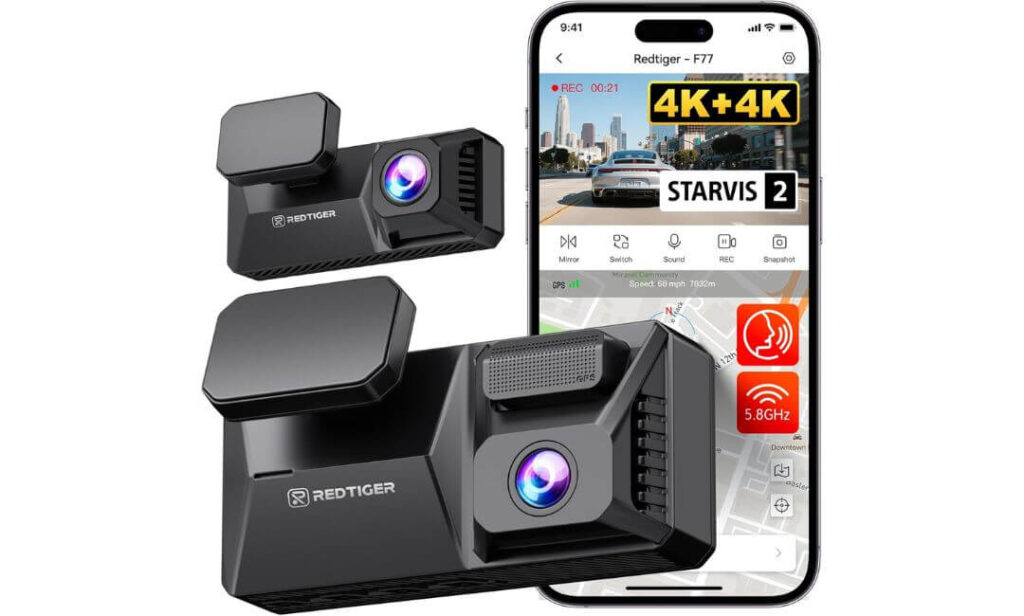
Quick Specs:
- True 4K front + 4K rear recording
- Dual Sony STARVIS 2 IMX678 image sensors
- HDR and WDR image enhancement
- Built-in 128GB eMMC storage
- 5.8GHz WiFi connectivity
- 4-inch touchscreen display
- Smart voice command support
- Built-in GPS tracking
- Supercapacitor-powered design
- Parking surveillance support with hardwire kit
Here’s something most buyers never realize until after installation. Many front-and-rear dash cams advertise 4K, but only the front camera records at the highest quality while the rear camera gets downgraded. This setup takes a different approach by delivering 4K recording from both ends of the vehicle, which is a major advantage for Kia Soul owners who spend time in busy parking lots, urban traffic, and tight city streets.
What makes this especially interesting is the use of dual STARVIS 2 IMX678 sensors. Most competitors use a premium sensor up front and a less capable sensor in the rear. Here, both cameras receive the same flagship-grade hardware. During difficult lighting conditions, such as underground garages, rainy evenings, and bright headlights at night, footage remains noticeably cleaner and more balanced than many similarly priced systems.
The built-in 128GB eMMC storage is another feature that deserves more attention. Instead of relying entirely on removable memory cards, recordings are stored on integrated high-speed memory. For daily drivers, that means one less component to worry about and a recording system designed for continuous use. Combined with voice controls, touchscreen navigation, GPS logging, and fast 5.8GHz WiFi transfers, it feels less like a typical dash cam and more like a complete in-car recording platform.
(For drivers who want maximum front and rear image quality without stepping into a more complex multi-camera system, this is one of the strongest options currently available.)
Highlights That Earned It a Top Spot
- True dual 4K recording provides exceptional detail from both directions
- Matching STARVIS 2 sensors front and rear create more balanced footage
- Built-in 128GB eMMC storage eliminates immediate memory card concerns
- Large touchscreen makes reviewing footage surprisingly convenient
- Fast 5.8GHz WiFi speeds simplify downloading and sharing recordings
A Small Consideration Before Buying
- Drivers planning to use advanced parking surveillance will want to add the optional hardwire kit during installation for the best experience.
Why It Fits the Kia Soul So Well
The Kia Soul’s upright windshield provides plenty of space for the compact front unit while keeping it tucked high enough to avoid becoming distracting during daily driving. The included rear cable is more than long enough for the Soul’s cabin dimensions and can be routed cleanly along the headliner and trim panels.
Installation remains approachable for most owners. The touchscreen simplifies setup, while built-in storage removes the extra step of purchasing and configuring a memory card before getting started. For many Kia Soul drivers, that makes the overall ownership experience noticeably easier from day one.
The Insider Pro-Tip
When comparing premium dash cams, many people focus exclusively on front camera quality. In reality, rear footage often becomes just as important during insurance disputes, parking incidents, and rear-end collisions. That’s where this model quietly gains an advantage.
Because both cameras use STARVIS 2 IMX678 sensors and record in 4K, the footage quality remains remarkably consistent regardless of which direction the incident occurs. For Kia Soul owners who want premium evidence collection from every angle without moving into a larger multi-camera setup, that balance is difficult to overlook.
#3. PRUVEEO 360° 4 Channel Dash Cam
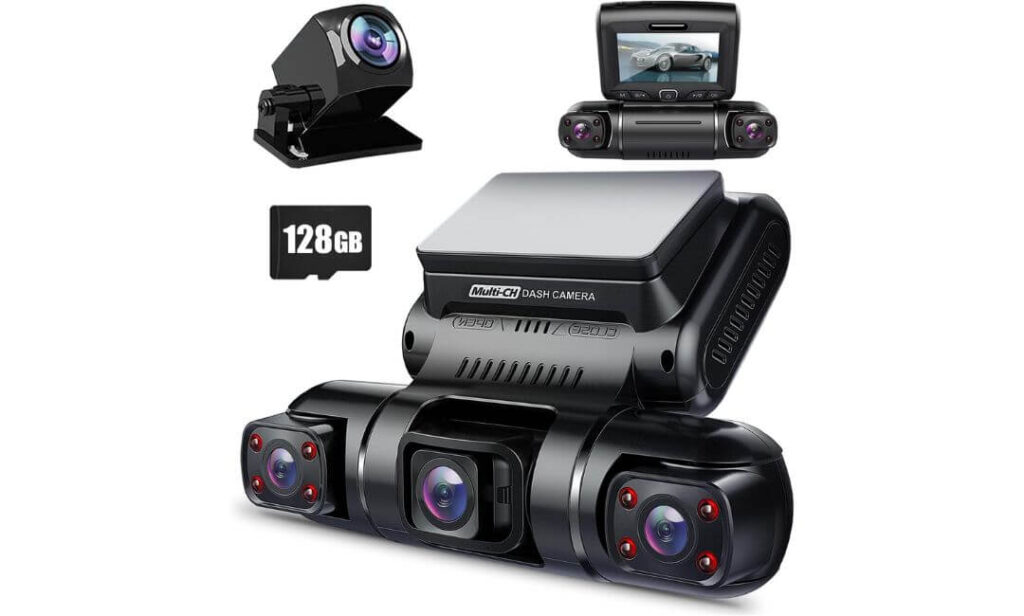
Quick Specs:
- Four-camera recording system
- Simultaneous front, rear, left, and right recording
- 360° vehicle coverage
- Built-in GPS tracking
- Built-in WiFi connectivity
- Night vision with infrared cabin support
- Parking surveillance capability
- Time-lapse recording mode
- Included 128GB memory card
- Loop recording with collision-locked footage
Here’s the reality most dash cam buyers discover too late. Many incidents never happen directly in front of your vehicle. They happen beside you in a parking lot, while someone brushes a door against your car, or during a low-speed maneuver where traditional front-and-rear systems miss critical details entirely.
That’s exactly why this setup earned a place on our list. Instead of focusing solely on resolution numbers, it focuses on something many drivers overlook until it’s needed most: complete vehicle awareness. With dedicated front, rear, left, and right cameras recording simultaneously, it captures angles that conventional dual-channel systems simply cannot see.
For Kia Soul owners, this approach makes even more sense. The Soul’s boxy shape, upright glass area, and urban-friendly design often place it in crowded parking lots, apartment complexes, shopping centers, and tight city streets. In those situations, side-angle footage can become just as valuable as front-facing video. The adjustable camera positioning also allows owners to tailor coverage around their driving habits rather than relying on fixed viewpoints.
What impressed us most was how practical the overall package feels. Built-in GPS, WiFi connectivity, included 128GB storage, infrared-assisted night recording, and parking monitoring create a system designed around visibility rather than specifications alone. It approaches vehicle security from a different perspective than the cameras ranked above it—and for certain drivers, that perspective may actually be the smarter choice.
(If your biggest concern is knowing exactly what happened around your Kia Soul rather than simply recording what happened in front of it, this setup deserves serious consideration.)
What Made It Stand Out From Traditional Dash Cams
- Records front, rear, left, and right simultaneously
- Provides coverage angles most dual-camera systems cannot capture
- Included 128GB card means recording starts immediately
- GPS and WiFi features simplify footage review and sharing
- Adjustable camera positioning allows more personalized coverage
A Small Consideration Before Buying
- Image quality prioritizes complete coverage and situational awareness rather than ultra-high-resolution 4K recording.
Why It Works Surprisingly Well in the Kia Soul
The Kia Soul’s upright windshield and spacious cabin layout make mounting multiple camera angles easier than in many compact vehicles. The included mounting hardware works well with the Soul’s glass surfaces, while the compact interior allows cable routing without excessive complexity.
Drivers who regularly park in busy public areas or leave valuables inside the vehicle will likely appreciate the additional visibility. For owners who frequently deal with crowded parking environments, side-angle recording can provide valuable context that standard front-and-rear setups often miss.
The Insider Pro-Tip
When reviewing real-world insurance disputes, one pattern appears repeatedly. The winning evidence is not always the sharpest footage—it’s the footage that shows the entire event from beginning to end.
A vehicle entering from the side, a parking-lot scrape, an unidentified driver approaching your car, or a hit-and-run while parked often starts outside the view of traditional dash cams. That’s where a four-camera system quietly becomes one of the most useful tools a Kia Soul owner can have. Sometimes the most valuable footage is the footage other cameras never captured in the first place.
#4. ROVE R3 3-Channel Dash Cam
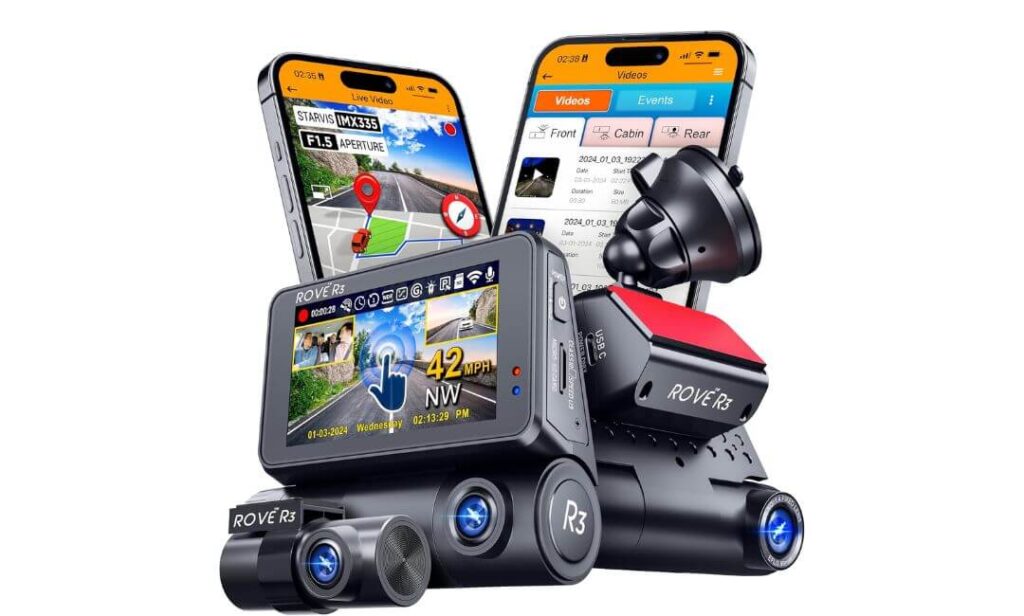
Quick Specs:
- 1440P front + 1080P cabin + 1080P rear recording
- Triple-channel coverage system
- 3-inch IPS touchscreen display
- Infrared cabin night vision
- Dual-band 5GHz and 2.4GHz WiFi
- Download speeds up to 30MB/s
- Built-in Quad-Mode GPS
- Supercapacitor-powered design
- Supports up to 512GB microSD cards
- Digital image stabilization and H.265 recording
Interestingly, this was one of the few dash cams in our testing process that felt like it was designed by people who actually use dash cams every day. Instead of chasing extreme specifications, the focus here is practicality, ease of use, and coverage that makes sense for real-world driving.
For Kia Soul owners, the three-camera layout creates a particularly balanced setup. The front camera records in 1440P, while dedicated cabin and rear cameras continuously capture what happens behind and inside the vehicle. That extra interior perspective can become incredibly useful for rideshare drivers, teenage drivers, family vehicles, or anyone who wants a more complete record of what happened before and after an incident.
What stood out most was the overall ownership experience. The touchscreen is responsive, the interface feels modern, and the WiFi transfer speeds are genuinely fast. Combined with Quad-Mode GPS tracking, remote firmware updates, voice guidance, infrared night vision, and support for large-capacity memory cards, the entire system feels thoughtfully developed rather than overloaded with unnecessary features.
The cabin camera deserves special attention. Equipped with four hidden infrared LEDs, it continues recording clear interior footage even when the cabin is almost completely dark. For drivers who spend significant time on the road after sunset, that capability adds a layer of visibility many traditional front-and-rear systems simply cannot provide.
(If your Kia Soul regularly carries passengers, family members, pets, or rideshare customers, this setup offers a level of context that standard dual-camera systems often miss.)
Reasons It Earned a Place on Our List
- Three-camera recording captures front, rear, and cabin activity simultaneously
- Infrared cabin camera remains effective even in near-total darkness
- Fast 5GHz WiFi transfers make reviewing footage quick and convenient
- Quad-Mode GPS adds accurate speed and location records
- User-friendly touchscreen interface requires very little learning curve
A Small Consideration Before Buying
- A memory card is required separately, so you’ll want to add a high-endurance card before installation.
Why It Matches the Kia Soul So Well
The Kia Soul’s upright seating position and spacious cabin layout create an ideal environment for a three-channel recording system. The cabin camera has a clear view of the interior without requiring unusual mounting positions, while the included rear cable routes cleanly through the vehicle’s compact dimensions.
Installation remains straightforward for most owners. Both suction and adhesive mounting options are included, allowing drivers to choose the setup that best fits their preferences. Those planning to use parking monitoring features should consider adding the appropriate hardwire kit during installation.
The Insider Pro-Tip
Most drivers assume a dash cam’s job is simply to record accidents. In reality, some of the most valuable footage comes from events that happen before an incident ever occurs.
A distracted passenger, an unexpected interaction at the window, suspicious activity while parked, or details inside the cabin can sometimes provide context that front-facing footage alone cannot explain. That’s why three-channel systems continue gaining popularity among experienced drivers.
For Kia Soul owners looking for a balance between coverage, usability, and day-to-day convenience, this model delivers something increasingly rare in the dash cam world: a feature-rich system that remains genuinely easy to live with long after installation day.
#5. WOLFBOX i07 3-Channel Dash Cam
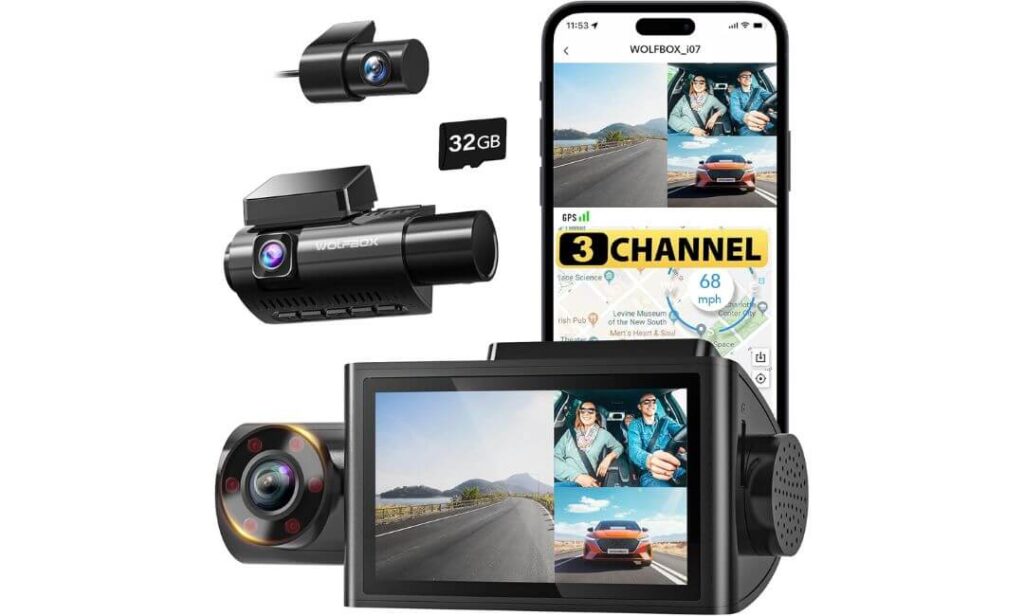
Quick Specs:
- 4K front + 1080P cabin + 1080P rear recording
- Triple-channel protection system
- 170° ultra-wide front field of view
- Built-in GPS tracking
- Built-in WiFi app connectivity
- Six infrared night vision LEDs
- HDR and WDR image enhancement
- 3-inch LCD display
- Supercapacitor-powered reliability
- Included memory card in the box
Let’s be honest. Most Kia Soul owners are not looking for the most expensive recording system on the market. They want something dependable, easy to install, simple to use, and capable of capturing what matters when something unexpected happens.
That’s where this model finds its place. Rather than chasing premium-tier pricing, it focuses on delivering the features most drivers actually use. You get 4K front recording, dedicated cabin coverage, rear protection, GPS tracking, WiFi connectivity, infrared night vision, and parking surveillance in a package that remains approachable for everyday drivers.
What makes it particularly appealing for Kia Soul owners is the balance between visibility and simplicity. The front camera uses a wide 170-degree viewing angle, while the interior and rear cameras help create a much more complete picture of what’s happening around the vehicle. Whether you’re commuting daily, transporting family members, or simply wanting extra peace of mind while parked, the three-camera setup provides significantly more context than a standard front-only system.
Another detail worth mentioning is the included memory card. It sounds simple, but many dash cams require additional purchases before they’re ready to record. Here, the setup process feels refreshingly straightforward. Mount it, route the cables, complete the initial configuration, and start recording.
(For drivers who want broad protection, useful features, and strong overall value without moving into premium flagship pricing, this package makes a compelling case.)
Features That Add Real Everyday Value
- 4K front recording captures road details with impressive clarity
- Three-camera system provides front, cabin, and rear coverage
- Infrared night vision improves visibility after dark
- GPS and WiFi connectivity simplify footage management
- Included memory card helps reduce initial setup costs
A Small Consideration Before Buying
- Video quality is strongest from the front camera, while the cabin and rear cameras prioritize coverage and documentation rather than maximum resolution.
Why It Works Well in the Kia Soul
The Kia Soul’s upright windshield provides a natural mounting location for the compact front unit, while the included 20-foot rear cable easily reaches the rear glass without requiring extensions. The cabin camera also benefits from the Soul’s open interior layout, allowing it to capture a broader view of the passenger area.
Installation is beginner-friendly. The adhesive mounting system keeps the camera secure, and the included memory card removes one of the most common setup frustrations new dash cam buyers encounter. Drivers interested in extended parking surveillance should consider pairing it with the appropriate hardwire kit.
The Insider Pro-Tip
One of the biggest mistakes buyers make is assuming they need the highest-resolution camera available. In reality, the best dash cam is often the one that records consistently, stores footage reliably, and provides enough coverage to explain what actually happened.
For many Kia Soul owners, that balance matters more than chasing specifications alone. The combination of 4K front recording, triple-camera visibility, infrared night vision, GPS tracking, and simple day-to-day operation makes this a practical choice for drivers who want solid protection without overcomplicating the experience. It may not be the most advanced model on this list, but it delivers many of the features drivers genuinely benefit from every single day.
Best Kia Soul Dash Cam Comparison for Image Quality Coverage and Daily Driving
Why More Kia Soul Owners Are Investing in a Dash Cam
The Kia Soul has earned a reputation for being practical, easy to drive, and surprisingly versatile. Whether it is being used for daily commuting, family transportation, college driving, food delivery, or long-distance road trips, it often spends a significant amount of time on busy roads and crowded parking lots. That reality alone makes a dash cam one of the smartest upgrades many owners can add.
What we have noticed while researching modern dash camera systems is that the biggest benefit is not simply recording accidents. It is having reliable evidence when details become unclear, stories change, or responsibility is disputed. In many situations, a few seconds of footage can save weeks of frustration.
Protection Against Staged Accidents and Insurance Disputes
Unfortunately, not every accident is as straightforward as it appears. Drivers sometimes face situations where fault is disputed, important details are overlooked, or events are described differently after the fact.
A quality dash cam creates an independent record of what actually happened. Modern systems such as the VIOFO A329S and REDTIGER F77 record in extremely high resolution, making it easier to verify lane positions, traffic signals, vehicle movements, and other details that can become critical during insurance claims.
For Kia Soul owners who regularly drive in urban traffic, congested intersections, or high-volume commuter routes, having video evidence can remove much of the uncertainty that often follows an accident.
Valuable Evidence for Parking Damage and Hit-and-Run Incidents
Many vehicle owners assume dash cams are only useful while driving. In reality, some of the most frustrating incidents occur when the vehicle is parked.
Parking lot scrapes, shopping cart damage, door dings, and hit-and-run incidents frequently happen without witnesses. This is where parking surveillance features become valuable. Cameras equipped with impact detection, motion monitoring, or time-lapse recording can help document activity around the vehicle even when you are away.
For Kia Soul owners who park in apartment complexes, university campuses, public garages, or busy retail areas, this additional layer of visibility can provide peace of mind that mirrors and bumpers alone cannot.
Broader Coverage Means Fewer Blind Spots
Traditional front-only dash cams record what happens directly ahead, but they often miss critical details occurring beside or behind the vehicle.
That is one reason our recommended list includes multiple recording styles. Some drivers may only need front and rear coverage, while others benefit from cabin cameras or full 360-degree systems. Options such as the PRUVEEO 360° and ROVE R3 capture perspectives that standard dash cams cannot, providing additional context when reviewing incidents.
The goal is not simply recording more footage. The goal is understanding the complete sequence of events if something unexpected happens.
Why 4K Recording Makes a Real Difference
Resolution is often treated like a marketing feature, but there are situations where it genuinely matters.
Higher-resolution cameras can improve the ability to capture license plates, road signs, lane markings, and vehicle details, particularly when footage is paused or zoomed during review. This becomes even more important when driving at highway speeds or during challenging lighting conditions.
Models such as the VIOFO A329S and REDTIGER F77 combine advanced STARVIS 2 sensors with high-resolution recording, helping preserve important details that lower-quality cameras may struggle to capture. While no dash cam can guarantee a perfect frame in every situation, stronger image quality increases the likelihood of obtaining usable evidence when it matters most.
A Small Investment That Can Save Major Headaches
After comparing dozens of options, one conclusion became clear. The value of a dash cam is rarely appreciated on the day it is installed. It becomes valuable on the day something unexpected happens.
For many Kia Soul owners, the combination of accident documentation, parking protection, insurance support, and everyday peace of mind makes a dash cam one of the most practical upgrades available. Whether you choose a premium dual-4K system, a three-channel setup, or a full-surround recording solution, having reliable footage available can make a significant difference when questions need answers.
Buying Guide: How to Choose the Right Dash Cam for Your Kia Soul
A dash cam is one of those upgrades that looks simple on the surface but becomes surprisingly complicated once you start comparing models. Resolution numbers, sensor names, storage options, parking modes, and camera channels can quickly make every product look similar.
The truth is that the best dash cam for a Kia Soul is not necessarily the most expensive one. It is the one that matches how you actually drive, where you park, and what type of protection you expect from your investment.
Start by Deciding How Much Coverage You Need
The first decision should not be resolution. It should be coverage.
If you mainly want evidence during daily driving, a quality front-and-rear system is usually enough. Models such as the VIOFO A329S and REDTIGER F77 focus heavily on image quality and provide excellent protection for typical commuting and highway driving.
However, if your Kia Soul is frequently parked in crowded areas, used for rideshare work, or carries passengers regularly, additional camera angles may be worth considering. Triple-channel and four-channel systems provide visibility that standard dual-camera setups simply cannot offer.
Think about where incidents are most likely to happen in your daily routine, then choose your coverage accordingly.
Prioritize Image Sensors Over Resolution Numbers
Many buyers immediately look for the highest resolution available. While resolution matters, the image sensor often has a bigger impact on the final footage quality.
A well-designed camera with a modern sensor can outperform a higher-resolution camera using older imaging technology. This becomes especially noticeable after sunset, during rain, or when headlights create glare.
That is one reason several of our top recommendations use Sony STARVIS 2 sensors. These sensors improve low-light performance, dynamic range, and license plate visibility, which are often more important than resolution alone.
Consider Your Parking Environment
Where your Kia Soul spends the night matters almost as much as where it spends the day.
Drivers with private garages may not rely heavily on parking surveillance. On the other hand, owners who regularly park on city streets, apartment lots, office complexes, university campuses, or public garages may benefit significantly from advanced parking monitoring features.
Look for systems that offer impact detection, motion-triggered recording, or time-lapse surveillance. These features help document activity around the vehicle when you are not present.
Keep in mind that most advanced parking modes require a compatible hardwire kit for continuous operation.
Think About Storage Before You Buy
Storage is one of the most overlooked parts of dash cam ownership.
Higher video quality produces larger file sizes. A dual 4K recording system can fill memory significantly faster than a standard 1080P setup. If you drive frequently or take long road trips, storage capacity becomes increasingly important.
The VIOFO A329S stands out with support for external SSD storage up to 4TB, while the REDTIGER F77 simplifies ownership with built-in 128GB eMMC memory. Both approaches reduce concerns about constantly overwriting important footage.
Don’t Ignore Ease of Use
A dash cam only helps if it works reliably when needed.
Complicated menus, slow apps, unreliable WiFi connections, and confusing controls often create frustration over time. Features such as voice controls, touchscreen displays, fast WiFi transfers, and intuitive mobile apps can make daily ownership much easier.
The best dash cam is not always the one with the longest feature list. It is often the one that remains simple and dependable months after installation.
Make Sure the Installation Fits Your Expectations
The Kia Soul is generally a dash-cam-friendly vehicle thanks to its upright windshield and spacious interior layout. Most of the cameras on our list install cleanly and allow cable routing through the headliner and interior trim panels.
However, installation requirements can vary depending on the features you want to use. Basic recording is usually straightforward, while advanced parking monitoring may require additional wiring through a hardwire kit.
If you prefer a cleaner setup, look for models with slim cables, compact camera bodies, and integrated GPS modules.
Focus on Long-Term Value Rather Than Short-Term Savings
Many drivers shop for a dash cam hoping they never need it. Ironically, that is exactly why quality matters.
A reliable camera may spend months quietly recording without drawing attention. Then, in a single unexpected moment, it becomes one of the most valuable pieces of equipment in the vehicle.
When choosing a dash cam for your Kia Soul, focus on recording quality, coverage, storage reliability, parking protection, and ease of use. Those factors will have a much bigger impact on your ownership experience than flashy marketing claims or specifications that look impressive on a product page.
In the end, the right dash cam is the one that gives you confidence every time you start the engine, park the vehicle, or review footage after an important event.
Installation Guide for Kia Soul Dash Cams
One of the biggest advantages of installing a dash cam in a Kia Soul is that the vehicle’s upright windshield, tall roofline, and practical interior layout make the process easier than it is in many compact crossovers. Most modern dash cams can be installed cleanly without drilling, permanent modifications, or professional assistance.
That said, the difference between an average installation and a great installation often comes down to camera placement, cable routing, and power management. A few extra minutes during setup can improve recording quality, reduce distractions, and create a much cleaner factory-like appearance.
Start With the Right Preparation Before Mounting
Before attaching anything to the windshield, take a few minutes to inspect the installation area carefully.
Clean the glass thoroughly using an alcohol wipe or glass cleaner, paying special attention to the area behind the rearview mirror where most front cameras will be mounted. Even a small amount of dust or residue can reduce adhesive strength over time.
Next, unpack all components and confirm that you have the front camera, rear camera, power cable, mounting accessories, cable clips, and memory card if required. Many installation issues occur simply because drivers begin routing wires before confirming all parts are available.
A dry test fit before removing any adhesive backing is always worth doing. This helps confirm visibility, cable lengths, and camera positioning before anything becomes permanent.
Choosing the Best Front Camera Position
For most Kia Soul owners, the ideal mounting location is directly behind or slightly to the passenger side of the rearview mirror.
This placement keeps the camera within the windshield wiper sweep area, provides a clear view of the road ahead, and minimizes distraction while driving. Because the Kia Soul features a relatively upright windshield, there is usually plenty of room to mount the camera without obstructing visibility.
Avoid mounting the camera too low on the windshield. Lower placements may capture more dashboard reflections and can partially block the driver’s forward view.
The goal is to create a setup that feels almost invisible during everyday driving.
Rear Camera Placement for the Best Recording Angle
The rear camera should generally be positioned near the center of the rear glass.
Because the Kia Soul has a nearly vertical rear hatch design, finding an effective location is usually straightforward. Mounting the camera near the top center section of the rear window typically provides the most balanced field of view.
Make sure rear defroster lines, tint film edges, stickers, or cargo items do not interfere with the camera’s recording area.
Before finalizing placement, sit in the driver’s seat and verify that the rear camera maintains a level horizon and unobstructed view.
Power Source Options Explained
Most Kia Soul owners will choose one of two power methods.
The simplest option uses the included 12V power adapter connected to the vehicle’s accessory outlet. This method is fast, beginner-friendly, and requires no electrical modifications.
Drivers who want advanced parking protection should consider a dedicated hardwire kit. Hardwiring connects the dash cam directly to the vehicle’s fuse box and allows features such as impact detection, motion monitoring, and parking surveillance to function while the vehicle is parked.
Many premium models in this guide, including the VIOFO A329S and REDTIGER F77, unlock their most advanced parking features through hardwire installation.
Wiring Tips for a Cleaner Factory-Style Installation
Good cable routing is what separates a professional-looking installation from one that feels temporary.
The easiest approach is to run the front camera power cable along the headliner, down the passenger-side A-pillar, and toward the chosen power source. Most Kia Soul interiors provide enough trim flexibility to tuck cables out of sight without removing major panels.
For rear camera systems, continue routing along the headliner toward the rear hatch. The Soul’s boxy design often makes this process easier than in sloping SUVs or sedans.
Take your time during cable routing. Avoid placing wires near moving components, airbag deployment areas, or sharp metal edges that could damage insulation over time.
Keeping the Windshield and Cabin Looking Clean
A properly installed dash cam should never dominate the interior.
Use included cable clips, trim channels, and headliner gaps whenever possible. Excess cable should be secured neatly rather than coiled loosely behind trim panels.
Compact systems such as the VIOFO A329S, REDTIGER F77, and WOLFBOX i07 are particularly easy to integrate into the Kia Soul’s interior because their camera bodies remain relatively discreet after installation.
The cleaner the installation, the less likely you are to notice the system during daily driving.
Safety and Legal Considerations Before Finalizing Installation
Every installation should prioritize safety first.
Make sure the camera does not obstruct your field of view, interfere with the rearview mirror, block driver-assistance sensors, or affect visibility through the windshield. The camera should feel unobtrusive once seated behind the wheel.
It is also worth reviewing local regulations regarding windshield-mounted devices and audio recording. Some jurisdictions have specific rules regarding recording conversations inside a vehicle, particularly when using cabin-facing cameras.
A quick review of local requirements before installation can prevent complications later.
A Final Installation Tip Most Owners Overlook
After installation is complete, take a short test drive and review the footage before considering the project finished.
Check daytime recording quality, verify night performance, confirm GPS operation if equipped, and make sure both front and rear cameras capture the angles you intended. It is far easier to make small adjustments immediately than after weeks of driving.
For most Kia Soul owners, a properly installed dash cam becomes something you rarely think about. That is exactly how it should be. The best installation is the one that stays out of sight, records reliably, and is ready when you need it most.
How to Use Your Kia Soul Dash Cam Features Effectively
Buying a high-quality dash cam is only part of the equation. What often separates average footage from genuinely useful evidence is how the camera is configured after installation. Many owners leave factory settings untouched, never realizing that a few small adjustments can dramatically improve recording quality, parking protection, and overall reliability.
The dash cams featured in this guide include advanced features such as 4K recording, STARVIS 2 sensors, parking surveillance, GPS tracking, WiFi connectivity, and multi-camera coverage. Taking advantage of those features properly helps ensure your Kia Soul receives the full benefit of the system you’ve installed.
Configuring Front and Rear Recording Correctly
The first thing every Kia Soul owner should verify is that both cameras are actively recording.
Most dual-channel systems automatically detect the rear camera during startup, but it is still worth confirming through the dash cam’s screen or mobile app. A loose connection or incomplete setup can sometimes result in front-only recording without the driver realizing it.
For models such as the VIOFO A329S and REDTIGER F77, review sample footage from both cameras immediately after installation. Confirm that horizon levels are straight, image quality looks correct, and both camera views remain unobstructed.
Spending a few minutes checking recordings now is far better than discovering a problem after an important incident.
Getting the Most From Multi-Camera and 360° Coverage
If you choose a three-channel or four-channel system, camera positioning becomes even more important.
The PRUVEEO 360° dash cam records front, rear, left, and right perspectives simultaneously. To maximize effectiveness, adjust the side-facing cameras carefully so they capture vehicle surroundings rather than excessive sky or interior trim.
For triple-camera systems such as the ROVE R3 and WOLFBOX i07, verify that the cabin camera covers both front and rear seating areas while maintaining a clear view of vehicle occupants.
Remember that the goal of multi-camera recording is not simply capturing more footage. It is capturing the complete sequence of events from multiple perspectives if something unexpected occurs.
Optimizing 4K Recording, Loop Recording, and G-Sensor Settings
One of the most common setup mistakes involves leaving video quality at default settings.
If your memory card or storage device supports it, enable the highest recording quality available. Cameras such as the VIOFO A329S and REDTIGER F77 perform best when operating at their intended recording resolutions.
Loop recording should remain enabled at all times. This feature automatically overwrites the oldest footage when storage becomes full, ensuring continuous recording without manual intervention.
The G-sensor deserves careful adjustment as well. If sensitivity is set too high, normal bumps and potholes can create hundreds of unnecessary locked files. If sensitivity is too low, important impacts may not trigger event protection.
For most Kia Soul owners, medium sensitivity provides the best balance between protection and practicality.
Making Parking Mode Work the Way It Should
Parking mode is one of the most valuable features modern dash cams offer, yet it is often misunderstood.
For parking surveillance to function correctly, most systems require a dedicated hardwire kit connected to the vehicle’s electrical system. Once installed, the dash cam can continue monitoring activity even after the ignition is turned off.
Depending on the camera model, available features may include:
- Motion detection recording
- Impact-triggered recording
- Time-lapse surveillance
- Automatic emergency file locking
- Low-power monitoring modes
The VIOFO A329S uses advanced power-saving parking technology, while the REDTIGER F77 offers both impact detection and time-lapse options. Properly configured, these systems can help capture evidence during parking lot incidents, vandalism attempts, and hit-and-run situations.
Understanding Automatic File Protection
Modern dash cams constantly overwrite older footage through loop recording. That is normal and necessary.
However, important clips should never be overwritten automatically.
This is where event protection becomes important. When the G-sensor detects a significant impact, the camera automatically locks that file and moves it into protected storage. Most systems also allow manual file locking through a touchscreen, physical button, or voice command.
Knowing how to manually save footage can be extremely useful if you witness an accident involving another vehicle or encounter an unusual road event.
Pairing Your Dash Cam With the Mobile App
The mobile app often becomes the feature owners use most frequently after installation.
Most cameras in this guide support smartphone connectivity through built-in WiFi. Once paired, the app allows you to:
- Review recordings instantly
- Download footage wirelessly
- Adjust camera settings
- Update firmware
- Save important clips
- Monitor storage status
Premium systems such as the VIOFO A329S benefit from WiFi 6 technology, while the REDTIGER F77 and ROVE R3 offer high-speed wireless transfers that make reviewing footage much faster than removing memory cards manually.
For the best experience, complete the initial app pairing at home before relying on it during an emergency situation.
Using GPS Data to Your Advantage
GPS functionality is about far more than mapping where you drove.
When enabled, GPS can record:
- Vehicle speed
- Travel route
- Date and time information
- Location coordinates
This additional data can provide valuable context during insurance claims and incident investigations.
For example, GPS records may help demonstrate vehicle position, verify travel direction, or confirm driving speed during a disputed event. While video remains the primary evidence source, GPS information often adds another useful layer of documentation.
Understanding Cloud Features and Remote Access
Not every dash cam includes cloud connectivity, but some systems support cloud-related functions through companion apps or optional accessories.
Before purchasing additional cloud services, consider how you plan to use your Kia Soul. Many owners find that local recording combined with WiFi access provides everything they need. Others who park in public areas frequently may appreciate remote monitoring capabilities when available.
The most important factor is maintaining reliable recording first. Cloud features can be useful additions, but they should never replace strong video quality, dependable storage, and properly configured parking protection.
The Setup Adjustment Most Owners Never Make
After using the dash cam for several days, revisit the settings menu.
Review sample daytime footage, nighttime recordings, parking events, and storage usage patterns. Small adjustments to exposure, G-sensor sensitivity, parking mode behavior, or camera positioning often improve results significantly.
The best dash cam setup is rarely achieved the moment installation is finished. It is achieved after fine-tuning the system to match how your Kia Soul is actually driven and parked every day.
Those extra few minutes of adjustment can make a meaningful difference when footage is needed most.
FAQs About Kia Soul Dash Cam
Which dash cam setup makes the most sense for a Kia Soul owner who parks in busy public areas every day?
If your Kia Soul spends most of its time in apartment complexes, university parking lots, shopping centers, or street parking environments, coverage often matters more than pure resolution. Many owners initially focus on 4K recording, only to realize later that parking incidents frequently happen outside the front camera’s field of view.
For these situations, a multi-camera setup usually provides better overall protection. A system such as the PRUVEEO 360° can capture activity occurring beside the vehicle, while triple-channel options like the ROVE R3 and WOLFBOX i07 add interior visibility. If your primary concern is documenting everything happening around the vehicle while parked, broader coverage can often be more valuable than higher pixel counts alone.
Is a premium dash cam actually worth it for a Kia Soul, or will a budget model capture the same evidence?
This depends on the type of evidence you want to collect.
Most modern dash cams can record an accident. The difference appears when conditions become difficult. Night driving, rain, headlight glare, fast-moving traffic, and poorly lit intersections are where premium cameras begin to separate themselves.
Models equipped with newer imaging technology such as STARVIS 2 sensors often provide advantages in situations like:
- Reading license plates after sunset
- Capturing details during highway-speed incidents
- Managing bright headlights and dark shadows simultaneously
- Preserving important details during poor weather
A budget dash cam can absolutely provide useful evidence. Premium models simply increase the likelihood that critical details remain visible when conditions become challenging.
For Kia Soul owners, is storage capacity more important than video quality?
In reality, the two work together.
Higher-quality recording generates larger files, which means storage becomes increasingly important as resolution increases. This is particularly relevant for drivers who commute long distances, take road trips frequently, or rely heavily on parking surveillance.
One overlooked factor is retention time. A camera with limited storage may overwrite important footage much sooner than expected. That’s why systems such as the VIOFO A329S with SSD support or the REDTIGER F77 with built-in eMMC storage stand out. They allow drivers to retain more footage before older recordings are replaced.
For many Kia Soul owners, the ideal solution is balancing both factors rather than prioritizing one over the other.
Can parking mode drain the battery if the vehicle sits for several days?
This is one of the most common concerns among dash cam buyers, and it is a reasonable question.
Modern parking systems are significantly smarter than older designs. Many premium cameras now include voltage protection features that automatically shut down recording before battery levels become unsafe. Some also use ultra-low-power monitoring modes designed specifically to reduce electrical consumption.
However, results can vary depending on:
- Battery condition
- Local weather conditions
- Parking mode settings
- Daily driving habits
- Hardwire kit configuration
Drivers who leave their vehicles parked for extended periods should review power management settings carefully rather than simply enabling every parking feature at maximum sensitivity.
What is the biggest dash cam mistake experienced drivers wish they had avoided earlier?
Surprisingly, it is not buying the wrong camera.
The most common mistake is installing a great dash cam and never reviewing the footage afterward. Many drivers assume everything is working properly simply because the camera powers on.
Experienced users typically recommend checking footage regularly, especially after installation. Verify recording quality, review nighttime performance, confirm GPS operation, inspect camera angles, and ensure parking mode behaves as expected.
A simple five-minute review every few weeks can reveal issues such as:
- Misaligned camera angles
- Incorrect time settings
- Memory card problems
- Excessive windshield reflections
- Improper parking-mode sensitivity
The best dash cam in the world cannot help if the footage is not being recorded the way you expect. Taking the time to verify your setup periodically is often more valuable than upgrading to a more expensive model.
Final Thoughts
After spending time comparing image quality, coverage options, storage technology, parking protection features, and day-to-day usability, one thing became clear: there is no single dash cam that fits every Kia Soul owner.
Some drivers simply want the sharpest possible footage for insurance protection. Others care more about monitoring the vehicle while parked. Some need cabin coverage for family use or rideshare driving, while others want complete visibility around the vehicle from multiple angles.
That’s exactly why the dash cams in this guide were selected. Each one solves a different problem exceptionally well rather than trying to be everything for everyone.
If maximum image quality is your priority, the VIOFO A329S remains the standout choice thanks to its 4K 60FPS recording, dual STARVIS 2 sensors, and massive storage potential. Drivers seeking premium dual-camera performance will appreciate the REDTIGER F77, while those wanting broader vehicle awareness may find the PRUVEEO 360°, ROVE R3, or WOLFBOX i07 better aligned with their needs.
The important thing is not choosing the most expensive model. It is choosing the camera that matches how your Kia Soul is actually used every day.
A dash cam is one of the few vehicle upgrades you hope you never need. Yet when an accident occurs, a parking lot incident happens, or an insurance dispute arises, it can quickly become the most valuable piece of technology in the vehicle.
Choose the coverage that fits your driving habits, install it properly, spend a few minutes configuring the settings correctly, and let it work quietly in the background. If the day ever comes when you need evidence, you’ll be glad those few extra minutes were invested upfront.
(The best dash cam is not the one with the longest specification sheet. It’s the one that captures the moment you cannot afford to miss.)
Also Check:


