
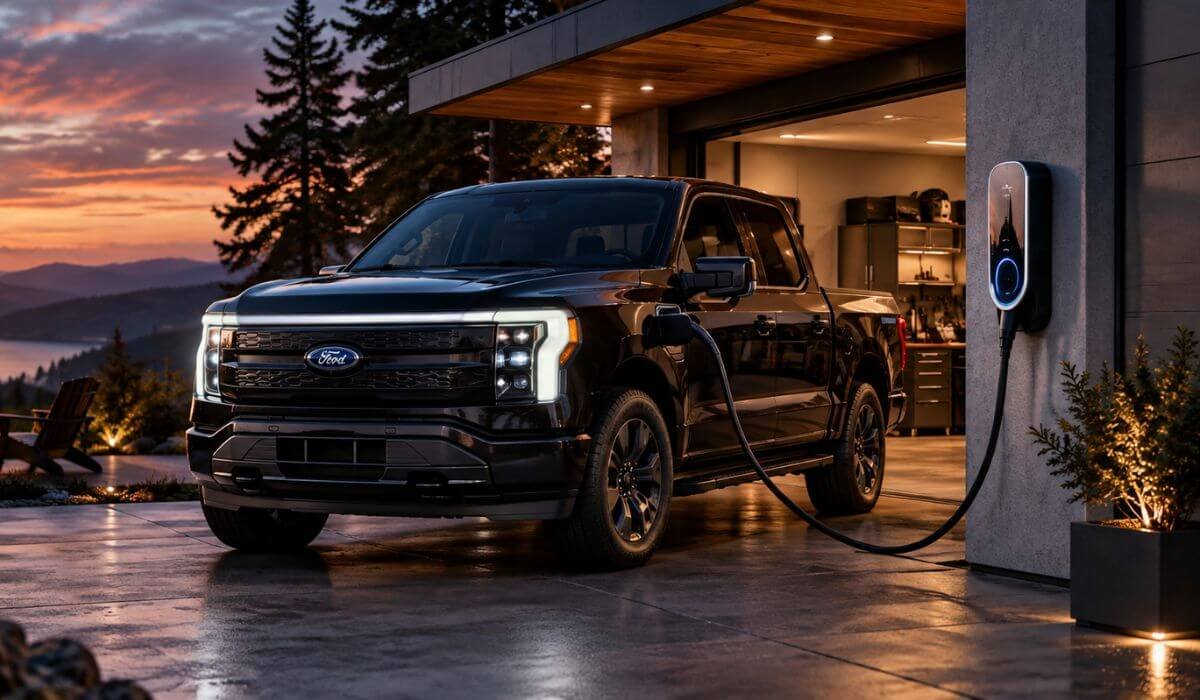
Best Level 2 Home Chargers for Ford Lightning in 2026: 48A J1772, Smart Control & 30-Ft Reach
If you own a Ford F-150 Lightning, choosing a home charger is less about chasing the biggest amp number and more about matching the truck to a setup that works with your daily routine. The Lightning’s onboard AC charger is rated at 48 amps and 11.3 kW of input power in Ford’s published specifications, while battery capacity varies across configurations. Ford estimates a 48A Level 2 charge from 15% to 100% at roughly 10 hours for the 98-kWh battery, 12 hours for the 123-kWh battery and 13 hours for the 131-kWh battery. Those figures are useful benchmarks, but real charging time can vary with starting charge, battery conditions and the charging session itself.
That matters when you are comparing a Ford Lightning Level 2 charger because a 48A or 50A label on the EVSE does not mean the truck will automatically pull that exact current. The Lightning’s onboard charging system controls how much AC power it accepts. For most owners, the more meaningful differences are the things you will actually live with every day: 240V Level 2 output, hardwired installation, cable reach, weather protection, smart controls and reliable overnight charging. For example, the ChargePoint HomeFlex combines adjustable charging output with smart controls and a hardwired setup, which is the kind of practical combination worth looking for rather than simply choosing the highest-rated EVSE.
For this list, I focused on J1772 Level 2 home chargers that make practical sense for the Ford F-150 Lightning, rather than simply choosing the EVSE with the highest advertised number. I looked at charging output, installation flexibility, cable length, smart charging controls, outdoor protection and everyday usability. That leaves five chargers with genuinely different strengths, from established smart charging equipment to long-cable and flexible-installation options, giving Lightning owners a more useful starting point than a generic list of high-amp EV chargers.
Best Ford F-150 Lightning Level 2 Home Charger: Top 2026 Picks
#1. ChargePoint HomeFlex Level 2 EV Charger
Best Ford Lightning Home Charger With 48A Level 2 Charging, 240V Hardwired Installation, Smart Wi-Fi Controls, Adjustable Amperage & Reliable Overnight Home Charging
#2. Autel Home Smart EV Charger 50A
Best Ford F-150 Lightning Smart Charger With 50A Capability, 240V J1772 Level 2 Charging, Wi-Fi & Bluetooth Control, 25-Ft Cable, Weather-Ready Build & Flexible Home Installation
#3. EVIQO Level 2 EV Charger J1772 48A
Best Ford Lightning 48 Amp Charger With Hardwired 240V Level 2 Charging, J1772 Compatibility, Adjustable 6A–48A Output, 25-Ft Cable, Wi-Fi Scheduling & Outdoor Protection
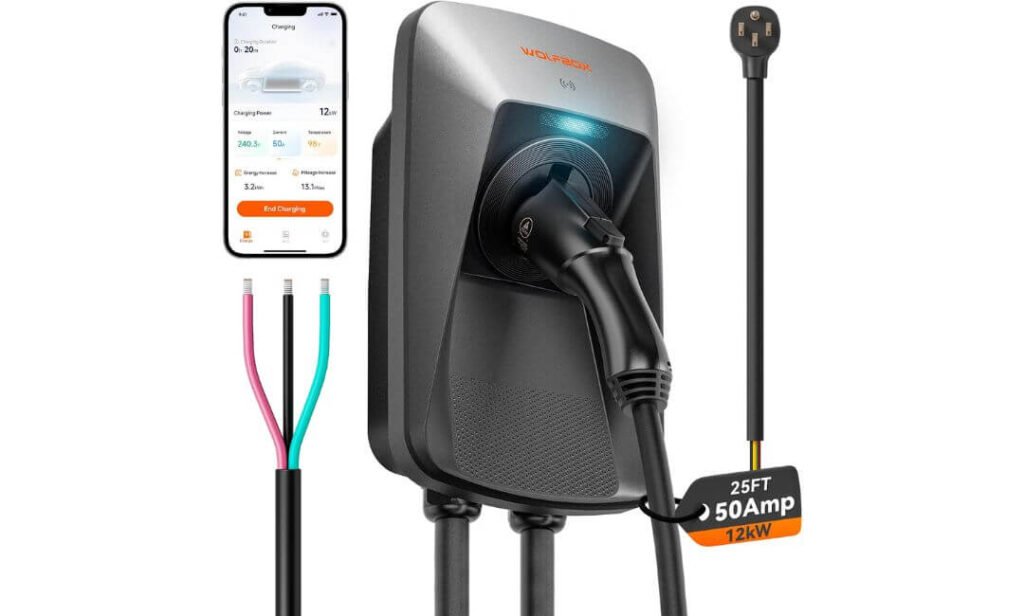
#4. WOLFBOX WE50 50A Level 2 EV Charger
Best Ford Lightning J1772 Charger With 50A Level 2 Capability, 240V Hardwired Installation, 25-Ft Cable, Wi-Fi App Control, RFID Access, Charging Schedules & NEMA 4X Protection
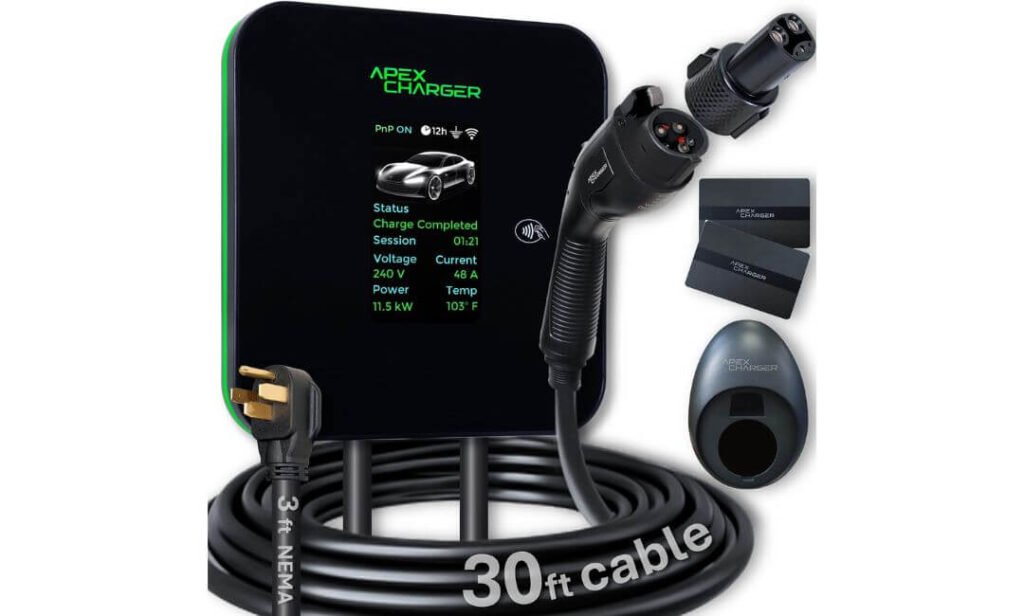
#5. MACH 2 48A Level 2 EV Charger
Best Ford Lightning Home Charging Station With 48A Hardwired Level 2 Power, 40A NEMA 14-50 Option, 30-Ft Cable, Wi-Fi & Bluetooth Controls, J1772 Connection, Included NACS Adapter & RFID Access
Expert Tip
Don’t buy a Ford Lightning charger simply because the box says 50A. The truck is the part that ultimately decides how much AC power it can take, so paying extra for a higher-rated EVSE does not automatically mean faster charging. What matters more is getting the electrical installation right and choosing a charger that fits where you park, how long the cable needs to reach, and how you actually charge the truck.
For most Lightning owners, I would rather have a properly installed 48A or 50A hardwired charger with a sensible cable length and dependable controls than a cheaper unit advertising a bigger number that the truck cannot use. That is the difference between buying an EV charger for the specification sheet and buying one that actually works well every night.
How We Chose These Ford Lightning Chargers
We did not rank these chargers by amp rating alone. The shortlist was built around one simple question: which chargers make the most sense when they are connected to a Ford F-150 Lightning and used as the owner’s main home charging point?
First, we looked at J1772 compatibility, because that is the connection that matters for the Lightning’s AC Level 2 charging. From there, we considered the charger’s usable output rather than treating the advertised maximum as the truck’s actual charging speed. A 48A or 50A EVSE can be perfectly suitable without the Lightning necessarily pulling that entire amount.
Installation was the next filter. A home charger is only as good as the circuit behind it, so we gave more weight to hardwired models where appropriate, particularly for owners who want a permanent garage or outdoor setup. ChargePoint, for example, supports adjustable 16A–50A operation and specifies different circuit requirements depending on the selected output.
We also looked at the details that become surprisingly important after the first few weeks: cable reach, smart controls, connectivity, installation flexibility and everyday usability. That is why the list is not simply five chargers with similar 48A or 50A labels. The Autel earns attention for its connected features and 25-foot cable, while the MACH 2 brings a 30-foot reach. ChargePoint, meanwhile, offers adjustable output, Wi-Fi connectivity and a 23-foot cable in its current Home Flex configuration.
Finally, we considered whether each product brings a genuine reason to choose it over the others. Some owners want a mature smart-charging ecosystem. Others just want a straightforward hardwired 240V charger. Some have a difficult parking position where cable length matters more than an app. Those are very different buying situations, and our rankings reflect those differences rather than pretending there is one perfect charger for every Lightning owner.
The result is a list built around real home-charging decisions, not a race to find the largest number printed on an EV charger.
#1. ChargePoint HomeFlex Level 2 EV Charger
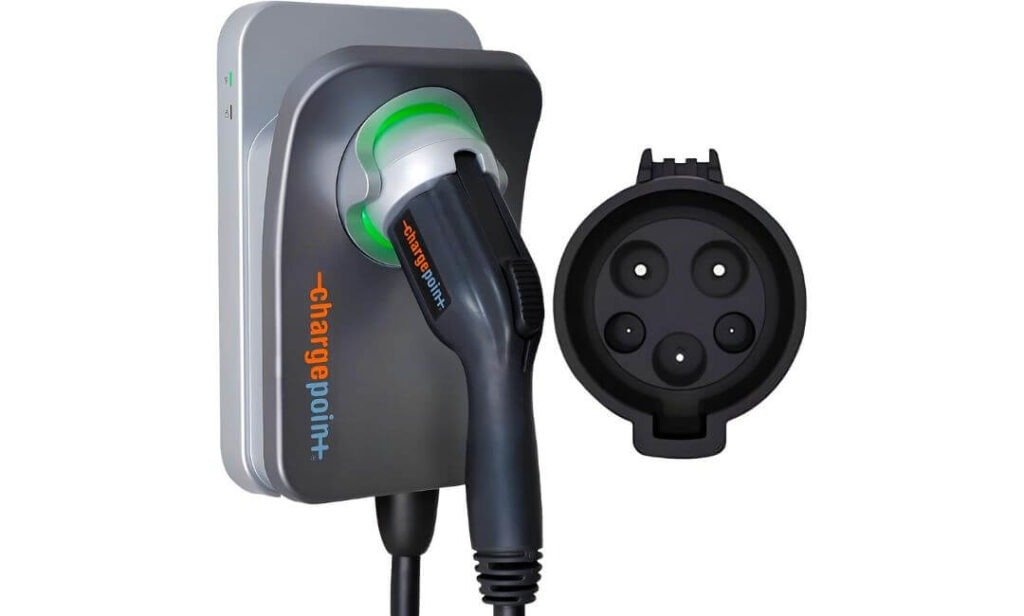
Quick Specs:
- Connector: J1772
- Maximum Output: 50A / 12 kW at 240V
- Lightning Setting: 48A / 11.5 kW
- Cable Length: 23 ft
- Installation: Hardwired
- Amperage Control: 16A–50A through the app
- Connectivity: Wi-Fi
- Protection: Built-in CCID ground-fault detection
- Certifications: UL / ENERGY STAR
- Weight: 13.8 lb
The important number here isn’t the headline 50A. Ford’s current Lightning specifications list an 11.3-kW/48A onboard charger for retail battery configurations, so setting the Home Flex to 48A is already a very sensible match for the truck. ChargePoint itself lists 48A as 11.5 kW and 50A as 12 kW, while noting that the vehicle’s onboard charger ultimately determines how much power it can use.
What I particularly like about this setup is the adjustable output. You aren’t locked into one charging rate for the life of the installation: the Home Flex can be configured from 16A through 50A, which lets an electrician match it to the home’s available electrical capacity. At 48A, ChargePoint specifies a 60A circuit, while 50A requires a 70A/80A circuit. That distinction is worth knowing before buying, because the extra 2A isn’t useful if your electrical panel isn’t sized for it.
Then there is the part you notice every evening: the 23-foot cable. That’s long enough to make parking position much less of a headache in a typical garage, and the cable is designed for indoor or outdoor use. The hardwired version can work with circuits from 20A to 80A, and an electrician should handle the circuit, breaker and final amperage setting rather than treating the charger like a simple plug-in appliance.
What We Like
- 48A is the sweet spot for a retail Lightning rather than paying attention only to the 50A headline.
- The 16A–50A adjustment gives your electrician room to match the charger to your actual panel capacity.
- A 23-foot cable is genuinely useful with a full-size pickup, especially in a two-car garage.
- Wi-Fi and app control add useful scheduling and charging-management features without being necessary just to charge the truck.
- The combination of UL listing, ENERGY STAR certification and built-in CCID protection gives this more substance than a basic wall-mounted EVSE.
What We Would Keep in Mind
The only thing I’d plan for before ordering is the electrical installation. If you’re aiming for 48A, have the electrician confirm that your panel and wiring can support the required dedicated circuit; don’t choose the breaker size from the charger’s name alone. ChargePoint specifically says the electrician should select the highest amperage your home has capacity for.
Why It Makes Sense for Ford Lightning Level 2 Charging
For the Lightning, the appeal is really the match between the vehicle and the charger, not a flashy specification. The J1772 connection fits the truck’s AC charging system, and the adjustable 48A setting gets very close to the Lightning’s retail onboard charging capability. That makes the Home Flex a charger you can configure around the truck instead of buying more electrical capacity than the truck can actually use.
The 23-foot reach, hardwired design and smart controls then solve the practical problems that come after the purchase. You can park the Lightning where it normally lives, plug in, schedule charging through the app and leave the system doing its job overnight. It is also backed by a 3-year warranty and 24/7 customer support, which matters when this is going to be a permanent piece of your home’s electrical equipment.
The Insider Pro-Tip
If your electrician tells you that your panel comfortably supports the 60A circuit needed for 48A charging, I’d choose that setting rather than automatically chasing the 50A maximum. Ford’s retail Lightning already tops out around 48A on AC charging, so the extra 2A on the EVSE doesn’t buy you meaningful truck-side charging speed.
And don’t underestimate the 23-foot cable. With a Lightning, that extra reach can be more valuable every single night than a few additional amps on the specification sheet. It lets the charger work around the truck’s parking position instead of forcing you to work around the charger.
#2. Autel Home Smart Electric Vehicle Charger
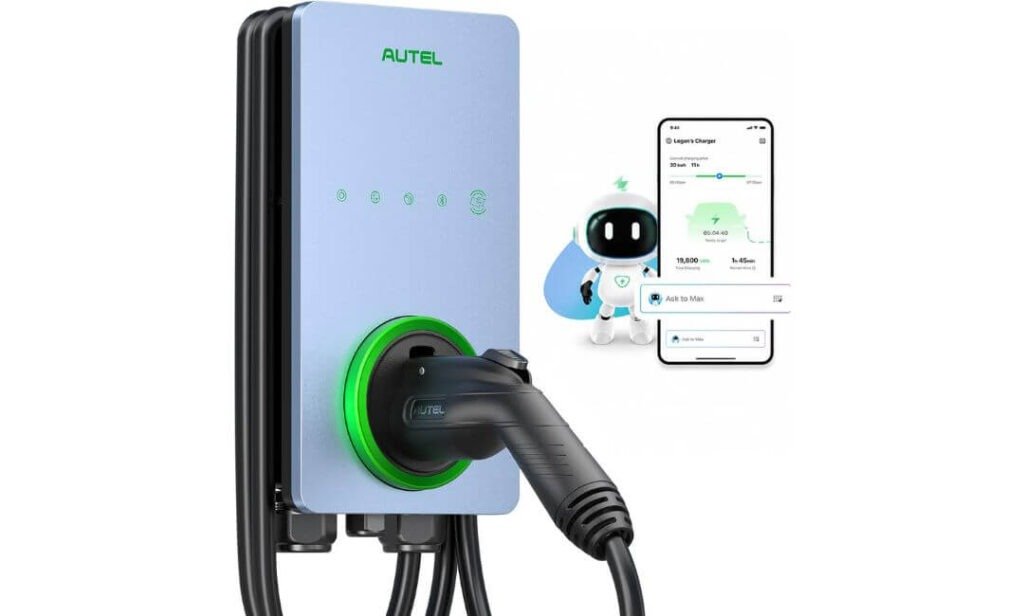
Quick Specs:
- Connector: J1772
- Maximum Output: 50A / 12 kW at 240V
- Recommended Lightning Setting: 48A
- Cable Length: 25 ft
- Installation: Hardwired
- Connectivity: Wi-Fi, Bluetooth & Ethernet
- Weather Rating: NEMA 4X
- Protection: Overcurrent, overvoltage, undervoltage, surge & ground-fault protection
- Operating Temperature: Down to -40°C
- Certification: CSA
There is a good reason this one sits near the top of the list: it feels like a charger designed around the reality of a large pickup, rather than a small wall-mounted EVSE that happens to work with one. The 25-foot cable is immediately useful with an F-150 Lightning, particularly when the charge point isn’t positioned exactly where the truck’s charge port ends up. The J1772 connection is also the right fit for the Lightning’s AC charging setup, while the 50A maximum gives you plenty of headroom even though the truck itself determines its actual draw.
The smarter part is where this unit separates itself. You get Wi-Fi, Bluetooth and Ethernet connectivity, so the Autel Charge app can handle charging schedules, status and remote management. That is genuinely useful if your electricity rate changes during the day and you prefer the truck to charge overnight rather than simply plugging it in whenever you get home. The charger also supports OTA firmware updates, meaning you don’t have to treat the hardware as finished the day it goes on the wall.
For an outdoor installation, the hardware is particularly interesting. NEMA 4X protection gives the enclosure dust-tight and water-resistant protection, while the system adds overcurrent, overvoltage, undervoltage, surge and ground-fault protection. Add the cold-resistant cable and the ability to install it indoors or outdoors, and this is one of the more convincing choices for an owner who doesn’t have a perfectly sheltered garage setup. The important caveat is still the same: have a qualified electrician size the circuit and configure the charger correctly for your home’s electrical capacity.
What We Like
- 25-foot cable gives a full-size Lightning considerably more parking flexibility.
- NEMA 4X protection makes it a particularly practical option for exposed installations.
- Wi-Fi, Bluetooth and Ethernet provide more ways to keep the charger connected.
- The Autel Charge app gives useful scheduling and charging-management controls.
- 48A operation makes more sense for a retail Lightning than simply chasing the unit’s 50A maximum.
What We Would Keep in Mind
The smart connectivity is useful, but I would treat the app as an extra rather than something the truck depends on. If the network connection is ever unavailable, the charger can still be used for straightforward charging; the important thing is that the electrical installation and basic charging function remain reliable.
Why It Fits Ford Lightning Level 2 Home Charging
The strength here is the combination of truck-friendly output, long cable reach and serious weather protection. A Lightning is a large vehicle, and a charger that gives you 25 feet of usable cable can make everyday charging noticeably easier. You also aren’t forced to install it inside simply because the garage is inconvenient; its NEMA 4X enclosure is built for much harsher conditions than a basic indoor-only unit.
The smart side adds another layer of convenience. You can schedule charging, check the session from your phone and manage the unit remotely, while Bluetooth and Ethernet give you alternatives when Wi-Fi isn’t the ideal connection. For a Lightning owner who wants one permanently installed charger to handle both everyday overnight charging and a less predictable parking routine, that combination is difficult to ignore.
The Insider Pro-Tip
Don’t let the 50A label make the buying decision for you. If the electrician sets this up for the Lightning’s practical 48A charging capability, you’re already working close to what the retail truck can accept from AC power. The bigger advantage here is the package around that power: 25 feet of cable, NEMA 4X protection and multiple connectivity options.
If your Lightning sometimes lives outside, that changes my view of this charger considerably. In that situation, I’d pay more attention to the weather protection and cable flexibility than to a tiny difference in advertised amperage. A charger that comfortably reaches the truck and survives the environment where you actually park it is far more useful than one that simply wins on a specification sheet.
#3. EVIQO Level 2 EV Charger J1772 48A
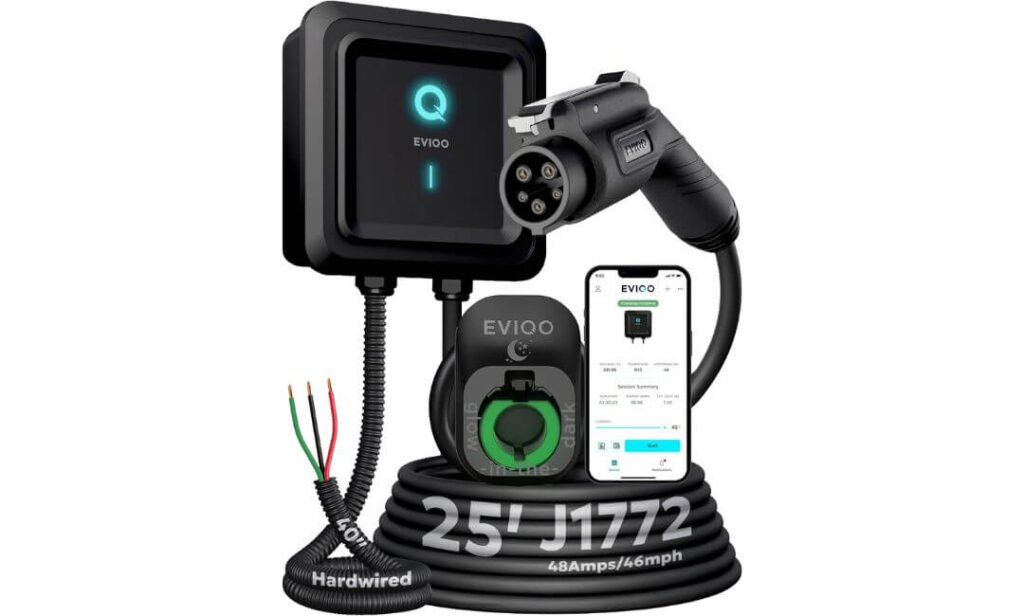
Quick Specs:
- Connector: J1772
- Maximum Output: 48A / 11.5 kW at 240V
- Optional Output: Up to 50A with the appropriate circuit setting
- Cable Length: 25 ft
- Installation: Hardwired
- Circuit: 60A for 48A charging
- Connectivity: 2.4 GHz Wi-Fi
- Adjustment: 6A–48A through the app
- Weather Rating: IP66 / NEMA 4
- Certifications: UL, ETL, FCC & ENERGY STAR
- Warranty: 3 years
What makes this one interesting for the Lightning isn’t a huge number printed on the front of the box. It is the fact that 48A is already right in the useful range for the truck, while the charger gives you enough control to dial the output down when your home’s electrical capacity calls for it. At 240V, the unit delivers up to 11.5 kW, and its J1772 connector plugs directly into the Lightning’s AC charging port without turning the installation into an adapter project.
The 25-foot cable is another detail I would take seriously with an F-150. A full-size pickup doesn’t always end up parked exactly where a wall charger designer imagined it would. That extra reach can save you from repositioning the truck or installing the charger in an awkward location. The cable is also designed for outdoor use, while the IP66/NEMA 4 enclosure gives the unit protection against rain, dust and other everyday weather exposure.
Then there is the part that makes this more than a basic hardwired EVSE: the phone control. The app lets you adjust charging from 6A to 48A, schedule sessions, start or stop charging remotely and keep an eye on energy use. I also like the small touches that tend to matter after installation, such as the glow-in-the-dark connector holster and the side-mounted reset button. Neither changes charging speed, but both make the charger easier to live with.
What We Like
- 48A at 240V is a sensible match for the Lightning’s retail AC charging capability.
- The 25-foot cable gives a large pickup much more freedom when parking.
- 6A–48A adjustment lets you match charging to the home’s electrical setup.
- IP66/NEMA 4 protection makes indoor or outdoor installation practical.
- The glow-in-the-dark holster and side reset button are genuinely useful everyday touches.
What We Would Keep in Mind
The hardwired installation is the part to plan before ordering. At the standard 48A setting, the installation calls for a dedicated 60A circuit, and the electrical work should be sized and completed by a qualified electrician. The optional 50A setting requires a larger circuit, but there is little reason to chase that setting for a retail Lightning simply because it appears on the specification sheet.
Why It Fits Ford Lightning Home Charging
This is a particularly straightforward pairing because the charger’s J1772 connector and 48A output line up well with what the Lightning can actually use from an AC Level 2 source. Instead of buying an oversized EVSE and hoping the truck makes use of it, you’re getting a charger that can deliver the relevant power while still giving you control over the amperage.
The practical package is just as compelling. 25 feet of cable, hardwired 240V charging, weather protection and adjustable output cover the things that matter once the charger has been mounted on your wall. The app is useful when you want scheduling and energy information, but basic plug-in charging doesn’t have to depend on having your phone beside you.
The Insider Pro-Tip
The feature I’d pay more attention to here is the 6A–48A adjustment, not the optional 50A setting. If your electrician confirms that a 60A circuit is appropriate, running at 48A already gives the Lightning a very capable home Level 2 setup. There is little practical value in upgrading the electrical installation just to gain another 2A that the truck may not use.
And if your parking situation is awkward, measure the distance from the proposed charger location to the Lightning’s charge port before installation. The 25-foot lead is generous, but positioning the wall unit intelligently can make that cable feel even longer. That’s the sort of small decision that you’ll appreciate every single night.
#4. WOLFBOX WE50 50A Level 2 EV Charger
Quick Specs:
- Connector: J1772
- Maximum Output: 50A / 12 kW at 240V
- Recommended Lightning Setting: Up to 48A
- Cable Length: 25 ft
- Installation: Hardwired
- Circuit: 70A for 50A output
- Connectivity: 2.4 GHz Wi-Fi
- Controls: App, RFID & Plug-and-Charge
- Weather Rating: NEMA 4X
- Safety: 8 electrical protection systems
- Certification: CSA, FCC & UL 2594 compliant
- Support: 24/7 assistance
A full-size pickup changes what you notice about a home charger. With the WE50, the first useful detail is the 25-foot cable. It gives the Lightning enough reach to make less-than-perfect parking positions much easier to live with, while the J1772 connector keeps the setup straightforward for AC Level 2 charging. The charger can deliver up to 50A at 240V, although for a retail Lightning, the sensible approach is to configure the installation around the truck’s actual AC charging capability rather than buying into the biggest number on the label.
The smarter side is unusually practical for a family garage. You can control charging through the app, RFID card or simple plug-and-charge operation, so you’re not forcing every person who uses the truck to install an app. The app also supports multiple charging schedules and amperage adjustment, which is useful when electricity rates change throughout the day. For an owner who wants more control over when the Lightning charges without making charging itself complicated, that’s a meaningful advantage.
The hardware is built with outdoor use in mind as well. The NEMA 4X enclosure, CSA/FCC certification and UL 2594 compliance are backed by protection against leakage, overcurrent, short circuits and excessive temperature. There is also internal temperature monitoring and a flame-retardant design. None of those features makes the truck charge faster, but they matter when a high-current charger is going to be permanently connected to your home’s electrical system for years.
What We Like
- 25-foot cable gives the Lightning plenty of parking flexibility.
- RFID control is genuinely useful when several people share the charger.
- Multiple scheduling options make the app more than a basic start/stop remote.
- NEMA 4X protection makes indoor or outdoor installation practical.
- Adjustable current lets the electrician configure the charger around the home’s available electrical capacity.
What We Would Keep in Mind
The 50A maximum needs the right electrical installation. For a Lightning, there is little reason to enlarge your home’s electrical setup simply to chase the final 2A if the truck isn’t going to use it. Have the electrician size the circuit and configure the charger based on the vehicle and your panel rather than the headline number.
Why It Fits Ford Lightning Level 2 Home Charging
The WE50 makes the most sense for a Lightning owner who wants flexibility around the charging routine. J1772 compatibility handles the truck’s AC connection, while the 25-foot cable makes the physical side easy. You can then choose between app control, RFID or straightforward plug-in charging depending on who is using the truck.
The real attraction is that it doesn’t force one particular way of charging. Someone who likes scheduled off-peak charging can use the app; someone else can simply plug the Lightning in and walk away. Add the weather-resistant enclosure and multiple electrical protections, and it becomes a versatile permanent home charger rather than just another 50A box on the wall.
The Insider Pro-Tip
The RFID feature is the detail I’d pay attention to if the Lightning is a shared family vehicle. You don’t need to hand someone access to your charging app just so they can start a session. That sounds minor when you’re comparing specifications, but it becomes surprisingly convenient once the charger is installed.
For the actual installation, I’d have the electrician configure the unit around 48A rather than automatically using 50A. You’re already getting the useful charging capability the Lightning can accept, while avoiding unnecessary electrical work just to make the charger display a larger number.
#5. ApexCharger MACH 2 Level 2 EV Charger
Quick Specs:
- Connector: J1772 with included NACS adapter
- Hardwired Output: 48A / 11.5 kW at 240V
- NEMA 14-50 Output: 40A / 9.6 kW
- Cable Length: Up to 30 ft
- Installation: Plug-in or hardwired
- Connectivity: Wi-Fi & Bluetooth
- Controls: App, RFID & Plug-and-Play
- Display: 4.75-inch LED
- Protection: Automatic temperature monitoring
- Certification: UL 2594, ETL & ENERGY STAR
- Warranty: 5 years
The MACH 2 is the one I’d look at when installation flexibility matters almost as much as charging power. Unlike the hardwired-only chargers higher on this list, it can run from a NEMA 14-50 outlet at up to 40A or be hardwired for 48A and 11.5 kW. That gives a Lightning owner two sensible paths: use an existing properly rated outlet where available, or have an electrician hardwire the unit when you want its maximum output.
The 30-foot cable is another genuine advantage for a full-size truck. You get considerably more freedom to position the Lightning without having to mount the charger precisely beside the charge-port area. The unit also brings a surprisingly useful amount of information to the wall itself through its 4.75-inch LED display, showing charging data such as voltage, amperage and power. You don’t have to reach for your phone every time you want to know what the charger is doing.
There is also a nice bit of future-proofing here. The native J1772 connector handles the Lightning, while the included NACS adapter means the same charging station can remain useful if another EV with a different charging connection joins the household. Add Wi-Fi, Bluetooth, two RFID cards, temperature monitoring and automatic adjustment between plug-in and hardwired configurations, and this feels more like a flexible home charging station than a one-purpose EVSE.
What We Like
- Plug-in or hardwired installation gives you genuine flexibility.
- 30-foot cable is especially useful with a large pickup.
- The 4.75-inch display provides charging information without opening an app.
- J1772 plus the included NACS adapter makes it useful for multiple EVs.
- 5-year warranty gives the hardware a longer protection period than many home chargers.
What We Would Keep in Mind
The important distinction is between the two installation modes. The NEMA 14-50 setup is limited to 40A, while the full 48A output requires hardwiring to a suitable 60A circuit. So if you’re buying it specifically for maximum Lightning AC charging, plan the electrical installation around the hardwired configuration rather than assuming the 14-50 plug delivers the same output.
Why It Fits Ford Lightning Level 2 Home Charging
This charger earns its place because it solves a slightly different problem. The Lightning gets a capable 48A hardwired Level 2 setup, but you’re not giving up the option of using a NEMA 14-50 connection when that makes more sense for your home. That’s valuable for owners who may move, change garages or simply don’t want their charger permanently tied to one electrical connection.
The 30-foot reach, built-in display and dual-connector flexibility also make it unusually practical. You can see what’s happening directly on the charger, reach a difficult parking position and keep the station useful for another EV later. Those are everyday advantages that don’t show up when you compare chargers by amperage alone.
The Insider Pro-Tip
If your only goal is charging one Lightning every night, don’t choose this because it says 48A. Choose it if you actually value the combination of 30-foot reach and installation flexibility. The 40A NEMA 14-50 mode is already useful for overnight charging; hardwiring becomes worthwhile when you want the charger’s full 48A capability and have the electrical capacity for it.
One more thing I would do before installation: decide where the display will be easiest to see from the truck. The built-in screen is one of this charger’s genuinely useful features, and mounting it where you can glance at the charging information without walking around the truck makes far more sense than treating the display as decoration.
Best Level 2 Home Charger for Ford F-150 Lightning: Real-World Specs Side by Side
| What Matters for the Lightning | ChargePoint Home Flex Smart Home Pick | Autel Home Smart Weather-Ready Pick | EVIQO 48A 48A Value Pick | WOLFBOX WE50 Flexible Control | ApexCharger MACH 2 Most Flexible Setup |
|---|---|---|---|---|---|
| Lightning Connection | J1772 | J1772 | J1772 | J1772 | J1772 |
| Maximum Charger Output | 50A / 12 kW | 50A / 12 kW | 48A / 11.5 kW | 50A / 12 kW | 48A / 11.5 kW |
| Practical Lightning Setting | 48AExcellent match | 48AExcellent match | 48ANative output | Up to 48AConfigure for vehicle | 48A hardwired11.5 kW |
| Cable Reach | 23 ft | 25 ft | 25 ft | 25 ft | 30 ft |
| Installation Choice | Hardwired | Hardwired | Hardwired | Hardwired | NEMA 14-50 or Hardwired |
| Smart Connectivity | Wi-Fi + App | Wi-Fi + Bluetooth + Ethernet | 2.4 GHz Wi-Fi + App | Wi-Fi + App | Wi-Fi + Bluetooth + App |
| Alternative Controls | App / Plug & Charge | App / RFID / Plug & Charge | App / Plug & Charge | App / RFID / Plug & Charge | App / RFID / Plug & Play |
| Outdoor Protection | Indoor / Outdoor Rated | NEMA 4X | IP66 / NEMA 4 | NEMA 4X | Outdoor-Rated Enclosure |
| On-Charger Information | App-based | App-based | App-based | App-based | 4.75-inch LED display |
| Special Practical Feature | 16A–50A adjustment | 25-ft cable + NEMA 4X | 6A–48A adjustment | RFID + multiple schedules | 30-ft cable + NACS adapter |
| Safety / Certification | UL / ENERGY STAR | CSA / NEMA 4X | UL / ETL / FCC / ENERGY STAR | CSA / FCC / UL 2594 compliant | UL 2594 / ETL / ENERGY STAR |
| Warranty | 3 years | 3 years | 3 years | 3 years | 5 years |
| Best Fit for Your Setup | Connected daily charging | Indoor or exposed install | Straightforward 48A setup | Shared household charging | Long reach + flexibility |
Buying Guide for a Ford Lightning Level 2 Home Charger
Buying a charger for the F-150 Lightning gets easier once you stop treating 48A, 50A, cable length and smart features as separate shopping trophies. They all need to work together with the truck, your electrical panel and the place where you actually park. A charger that looks impressive on a product page can be a poor fit if its cable barely reaches the charge port or its maximum output requires electrical work your home does not need.
Start With the Lightning’s Actual AC Charging Capability
For a retail F-150 Lightning, 48A Level 2 charging is the figure that deserves the most attention. Ford’s technical specifications list an 11.3-kW/48A onboard AC charger on current retail configurations. That means a 50A-rated EVSE can be perfectly suitable, but the truck will still control how much power it accepts.
This is why I would not choose a charger simply because it says 50A instead of 48A. The difference is tiny from the truck’s perspective. What matters more is whether the charger can provide the appropriate current reliably and whether your home’s electrical system can support the required circuit.
A good rule is:
- 48A output: Excellent match for the Lightning’s retail AC charging capability.
- 50A-rated charger: Fine, but the Lightning does not automatically pull 50A just because the EVSE can provide it.
- Lower amperage: Still perfectly usable if your electrical panel or installation requires it.
- Higher advertised output: Not automatically faster if the vehicle cannot accept that additional AC power.
J1772 Compatibility Comes Before Smart Features
The Lightning’s AC Level 2 connection is J1772, so this is the first compatibility check I would make before looking at apps, displays or charging schedules.
All five chargers in this guide use a J1772 connection, which means there is no need to turn the Lightning’s normal AC home charging into an adapter-dependent setup.
This matters because a charger can have an impressive feature list and still be the wrong purchase if the connector or installation arrangement does not suit the vehicle. For this particular truck, J1772 compatibility is the foundation; everything else comes after it.
Cable Length Is More Important With a Full-Size Pickup
Cable length is one of those specifications that looks boring until the charger is installed.
The five options here range from 23 to 30 feet, and that difference can change where you can comfortably park the Lightning. A full-size pickup can occupy considerably more space than a compact EV, and the charge port may not end up close to the wall where the EVSE is mounted.
Think about your actual parking position:
- 23 ft: Plenty for many conventional garage layouts.
- 25 ft: Gives more freedom if the charger is offset from the normal parking position.
- 30 ft: Particularly useful for longer driveways, two-car garages or awkward wall-to-charge-port distances.
I would measure this before buying. Don’t assume that a 30-foot cable is automatically better either; longer cables are also heavier to handle. The right length is the one that reaches the truck comfortably without making the cable unnecessarily difficult to manage.
48A vs 50A Is Really an Electrical-Installation Question
The charger and the home’s electrical circuit need to be considered as one system.
For example, the ChargePoint Home Flex can be configured for different output levels, while the EVIQO provides adjustable current control. The MACH 2 takes a different approach by offering 40A through a NEMA 14-50 setup or 48A when hardwired.
That flexibility can be more useful than simply having the highest number.
Before installation, have an electrician check:
- Available capacity in the electrical panel
- Required dedicated circuit
- Breaker size
- Wire size and installation distance
- Whether hardwiring or a NEMA 14-50 outlet makes more sense
- Local electrical-code requirements
- Final charger amperage setting
Don’t select a breaker based only on the charger advertisement. The electrician should determine the correct installation for your home and the selected charging current.
Hardwired or NEMA 14-50: Choose Around Your Home
A hardwired charger makes sense when you want a permanent charging station and your electrical panel is ready for it. It also avoids relying on a plug connection for a high-current, permanently mounted EVSE.
The MACH 2 is different because it gives you both choices. Its NEMA 14-50 configuration can provide 40A, while hardwiring allows up to 48A according to the supplied product information.
That makes it particularly interesting for someone who already has an appropriate outlet or wants more flexibility later.
For the other chargers in this roundup, the installation is primarily hardwired, so the electrical work should be planned before ordering rather than treated as an afterthought.
Smart Features Should Solve a Problem
Wi-Fi and an app look great in a specification list, but the useful question is: what will you actually do with them?
Useful smart features include:
- Scheduled charging when electricity rates are lower
- Remote start and stop
- Amperage adjustment
- Energy-use monitoring
- Charging-session information
- Firmware updates
- Utility-rate or time-of-use management
The Autel adds Wi-Fi, Bluetooth and Ethernet, giving it several ways to stay connected. The WOLFBOX adds app, RFID and plug-and-charge control, while the MACH 2 combines Wi-Fi/Bluetooth connectivity with an on-unit display and RFID cards.
Those features are worthwhile when they make your routine easier. They are not a substitute for a properly installed electrical system.
Outdoor Installation Changes What Matters
If the charger will be mounted outside, weather protection moves much higher up the shopping list.
The Autel’s NEMA 4X construction and the EVIQO’s IP66/NEMA 4 enclosure make them particularly relevant for exposed installations. WOLFBOX also uses a NEMA 4X housing, while the MACH 2 is designed for outdoor use with temperature monitoring and weather-resistant construction.
For an outdoor Lightning charger, look beyond the word “weatherproof.” Check the actual enclosure rating, connector protection, cable construction and operating environment.
A garage installation has different priorities. In that situation, cable reach, mounting position and ease of daily handling can matter more than extreme weather protection.
Safety Certifications Are Worth Checking
A high-current home EV charger should not be treated like an ordinary extension cord.
Look for recognizable testing and certification information rather than vague statements such as “safe design.” Across this group, the documentation includes certifications and standards such as UL, ETL, ENERGY STAR, CSA, FCC and UL 2594, depending on the model.
Also pay attention to protection systems such as:
- Ground-fault or leakage-current protection
- Overcurrent protection
- Overvoltage protection
- Over-temperature protection
- Short-circuit protection
- Internal temperature monitoring
The important point is not to count protection features like trophies. What matters is whether the charger has appropriate protection, recognized certification and a proper installation behind it.
Which Features Actually Deserve Priority?
| Priority | What to check | Why it matters for the Lightning |
|---|---|---|
| Essential | J1772 connector | Direct AC charging compatibility |
| Essential | 48A-capable Level 2 output | Closely matches the retail truck’s AC charging capability |
| Essential | Correct electrical circuit | Determines whether the charger can safely deliver its selected output |
| Very useful | 23–30 ft cable | Makes parking and charge-port positioning easier |
| Very useful | Hardwired installation | Permanent, high-current home charging setup |
| Useful | Wi-Fi/app control | Scheduling, monitoring and remote management |
| Useful | Weather protection | Important for outdoor installations |
| Situation-dependent | RFID control | Handy for shared household or guest charging |
| Situation-dependent | NEMA 14-50 option | Useful when outlet-based installation is preferred |
| Nice to have | Built-in display | Lets you see charging information without opening the app |
Top Features to Prioritize for Ford Lightning Home Charging
48A Level 2 Charging
For this truck, 48A is the number I would build the buying decision around. It is high enough to make Level 2 home charging genuinely useful for a large-battery pickup without getting distracted by charger ratings the vehicle cannot necessarily exploit.
The key distinction is between charger capability and vehicle capability. A 50A EVSE can supply up to 50A, but the Lightning remains responsible for controlling its own AC intake.
30-Foot Cable Reach
A 30-foot cable is not essential for everyone, but it is one of the most practical upgrades when the charger sits away from the ideal charge-port position.
The MACH 2 stands out here with its advertised 30-foot cable, while the Autel, EVIQO and WOLFBOX provide 25-foot cables. ChargePoint offers 23 feet in the configuration covered here.
For a truck that regularly parks in different positions, I would prioritize reach over a tiny difference in maximum amperage.
Smart Charging and Energy Management
Smart charging becomes genuinely useful when your utility uses time-of-use pricing.
A charger with scheduling can let the Lightning charge during cheaper periods instead of immediately starting a session whenever you plug in. Energy tracking can also help you understand how much electricity the truck is actually using.
But there is a sensible limit: the app should make charging easier, not become the reason you choose the charger.
Weather Resistance and Long-Term Build
If the EVSE is going outside, look for a meaningful enclosure rating and proper protection systems. If it is going inside a garage, the priorities shift toward cable handling, mounting position, controls and everyday usability.
This is also why I would not call one construction style universally better. The best specification depends on where your Lightning actually lives overnight.
Installation Flexibility
Finally, consider whether you want a permanent hardwired installation or the ability to use a NEMA 14-50 connection.
Hardwired charging is the more relevant choice when you want a permanent high-current setup. A plug-in arrangement can make sense when the appropriate outlet already exists or when portability matters.
The MACH 2 is the most flexible in this particular group because it supports both installation approaches, whereas the other selections are primarily designed around hardwired installation.
The simplest way to think about the entire buying process is this: choose the electrical setup first, the Lightning-compatible output second, cable reach third, and smart features after that. Once those four pieces fit together, the difference between the chargers becomes much easier to judge.
Installation Considerations for a Ford Lightning Level 2 Home Charger
Installing a Level 2 charger is not simply a matter of putting a box on the wall and connecting a cable. With an F-150 Lightning, you are dealing with a 240-volt, high-current circuit that may run for several hours at a time. A good installation should therefore be planned around the home’s electrical capacity, the charger’s selected amperage, the cable route and where the truck is normally parked.
Check the Electrical Panel Before Buying the Charger
Start with the home’s electrical panel, not the charger.
A qualified electrician should check whether the panel has enough available capacity for a new dedicated circuit and whether the existing service can support the additional load. This is particularly important if the home already has electric heating, a large air conditioner, electric water heating, a pool or other high-demand equipment.
For the chargers in this guide, the electrical requirements vary with the selected output. For example, the 48A charging configuration generally requires a dedicated circuit sized for that continuous load. The MACH 2 is different because its NEMA 14-50 configuration operates at 40A, while its hardwired configuration can provide 48A.
Do not assume that an unused breaker position automatically means the panel has enough capacity. The electrician needs to assess the complete electrical system.
Choose the Breaker and Wiring Around the Selected Charging Current
The breaker, wiring and charger settings need to work together.
A charger configured for 48A should not simply be connected to whatever breaker happens to be available. The electrician should determine the appropriate breaker, conductor size, disconnect requirements where applicable and installation method according to the equipment instructions and applicable electrical code.
A useful way to approach it is:
- Decide whether you actually need 48A charging.
- Confirm the Lightning’s charging capability.
- Have the electrician calculate the required circuit.
- Match the charger configuration to that circuit.
- Verify all connections before the first charging session.
The goal is not to build the biggest circuit possible. It is to build a correctly sized circuit that safely supports the charging current you will actually use.
Hardwired Installation vs NEMA 14-50 Charging
There is an important difference between the two approaches.
A hardwired charger is permanently connected to the electrical system. This is the cleaner option when the charger will stay in one location and you want a dedicated high-current installation. It also makes sense when you want the charger’s maximum supported output.
A NEMA 14-50 installation uses a properly installed 240V receptacle. The MACH 2 provides this option and is rated for 40A through its NEMA 14-50 configuration, while hardwiring allows its advertised 48A output.
The plug-in approach can be attractive if the correct receptacle already exists, but don’t confuse an ordinary 14-50 outlet with an EV-ready installation. The receptacle, wiring, breaker and circuit all need to be suitable for the intended continuous charging load.
Plan the Charger Location Around the Lightning
This sounds obvious, but it is one of the easiest installation decisions to get wrong.
Before drilling mounting holes, park the Lightning exactly where it normally sits and measure the distance between the proposed charger position and the vehicle’s charge port.
The chargers here provide 23, 25 or 30 feet of cable, so there is plenty of flexibility. Still, a charger mounted too far to one side can turn even a long cable into an annoyance.
Keep the unit:
- Easy to reach when the truck is parked normally
- High enough to avoid accidental impact
- Away from areas where the cable can become a trip hazard
- Positioned so the connector can be returned securely after charging
- Accessible enough for maintenance and basic troubleshooting
For an outdoor installation, also consider rain exposure, direct sunlight, drainage and the path the cable will take across the driveway.
Use the Charger at the Amperage Your Home Can Support
You do not have to run a charger at its maximum rating.
This is particularly useful with adjustable models. The ChargePoint Home Flex, for example, supports adjustable output, while EVIQO provides 6A–48A adjustment through its controls.
If your electrical installation is better suited to a lower charging current, reducing the EVSE output can be a sensible solution rather than unnecessarily upgrading the home’s electrical infrastructure.
Remember, the Lightning’s onboard charger controls the vehicle’s actual AC intake. Increasing the EVSE rating does not force the truck to consume more power.
Avoid Nuisance Trips by Finding the Cause, Not by Repeatedly Resetting the Breaker
A breaker that trips during charging is not something to simply ignore.
If the circuit trips repeatedly, stop charging and have the installation checked. Possible causes can include an overloaded circuit, incorrect charger configuration, loose electrical connections, unsuitable wiring, an electrical fault or another load affecting the circuit.
Don’t solve repeated trips by repeatedly resetting the breaker and continuing to charge.
A properly installed dedicated circuit should allow the Lightning to charge for extended periods without creating a routine of breaker resets.
Give the First Charging Session More Attention
The first session is a good opportunity to make sure everything behaves as expected.
After the electrician completes the installation:
- Confirm the charger is configured for the intended amperage.
- Plug the Lightning in and allow the charging session to begin.
- Check that the charger reports normal voltage and current.
- Monitor the first session for unexpected interruptions.
- Check the connector and cable for anything unusual.
- Confirm that the app, if used, reports the charging session correctly.
- If anything repeatedly trips, disconnects or behaves unexpectedly, stop and have the installation inspected.
This is especially worthwhile with a hardwired charger because the unit may remain connected to the home’s electrical system for years.
Keep the Cable and Connector in Good Condition
The charger may be permanently mounted, but the cable is handled almost every day.
Avoid leaving the cable where vehicles can drive over it, allowing it to sit in standing water, sharply bending it near the connector or hanging the connector by the cable.
Use the supplied holster or connector holder whenever possible. The EVIQO includes a glow-in-the-dark holster, while the MACH 2 has an integrated connector holder and cable-management features. These are small details, but they help keep the charging equipment organized and reduce unnecessary strain.
Outdoor Installation Needs a Little More Planning
A charger designed for outdoor use still deserves a sensible installation location.
The Autel and WOLFBOX models use NEMA 4X protection, while the EVIQO uses an IP66/NEMA 4 enclosure. These ratings make them much more suitable for exposed installations than an indoor-only EVSE, but they do not mean the charger should be installed wherever water happens to collect.
For an outdoor Lightning charging point, choose a location that minimizes direct water exposure where practical, keeps the cable away from vehicle traffic and provides a solid mounting surface.
Let the Electrician Handle the Electrical Work
This is one part of the process where saving money by improvising is not worth it.
A Level 2 Lightning charger operates at 240 volts and substantial continuous current. The electrical panel work, breaker installation, wiring, hardwiring and final verification should be handled by a qualified electrician familiar with EV charging installations.
You can decide where you want the charger mounted and which features matter to you. The electrician should determine how that charger is safely connected to your home’s electrical system.
The best installation is ultimately not the one with the biggest breaker or the highest number on the charger. It is the one where the vehicle, EVSE, circuit, wiring and home electrical system all agree with each other.
Real-World Usage Scenarios for Ford F-150 Lightning Home Charging
Choosing a charger on paper is one thing; living with it every day is another. For most Ford F-150 Lightning owners, home charging becomes less about chasing the fastest possible charging session and more about having a predictable routine that keeps the truck ready without adding unnecessary effort.
The useful question is not simply, “How many amps does this charger provide?” It is whether the charger fits the way you actually use the truck, how long it normally sits at home, when electricity is cheapest in your area, and how much charging power the Lightning can accept through its onboard AC charging system.
Daily Charging Is Usually About Replacing the Energy You Used
A Lightning does not need to be charged from nearly empty to full every night.
If your daily driving only uses a portion of the battery, plugging in when you return home can simply replace that day’s energy. With a properly installed Level 2 charger, the truck can spend several hours replenishing the battery while it is parked, rather than requiring you to plan around public charging stations.
That makes a sensible daily routine quite simple:
- Arrive home and connect the truck when convenient.
- Allow the vehicle to manage the charging session according to your selected settings.
- Let the truck charge while it is parked for several hours.
- Unplug when you need to leave, or leave it connected if your charging routine and settings allow it.
- Repeat the process based on your driving needs rather than waiting for the battery to become nearly empty.
This is one reason a dependable Ford Lightning home charger matters more than an unnecessarily high advertised amperage. The truck spends far more time parked than it spends actively charging.
Overnight Charging Makes Sense for Most Homeowners
Overnight charging is one of the easiest ways to take advantage of a Level 2 installation.
If the Lightning is parked for six, eight or more hours overnight, there is a substantial charging window available without requiring the charger to operate at its absolute maximum output. Ford’s published charging figures also show why a home Level 2 setup can cover a large portion of normal overnight charging needs, with the exact charging time depending on battery size and starting state of charge.
For example, Ford’s technical information lists approximately 10 hours from 15% to 100% for the 98-kWh battery and about 12 hours for the 123-kWh battery, under the stated Level 2 charging conditions. That is a useful reminder that charging time is affected by battery capacity, starting charge level and the vehicle’s charging system, not simply by the number printed on the EVSE.
In real ownership, you will often be adding considerably less than 85% of the battery overnight. If you used only a fraction of the battery during the day, several hours of Level 2 charging may be enough to restore the energy consumed.
Scheduled Charging Can Be More Useful Than Maximum Amperage
A smart charger becomes particularly useful when you want charging to happen at a specific time.
If your electricity plan has lower rates during certain hours, scheduled charging can allow the Lightning to charge during that window instead of immediately beginning a session when you plug in.
The basic idea is:
- Plug the Lightning in after returning home.
- Set the preferred charging schedule through the vehicle or compatible charger controls.
- Allow charging to begin during the selected period.
- Let the vehicle and charger work together until the desired charging target is reached.
This can also make the charging routine more predictable. You can connect the truck whenever you arrive home without needing to think about exactly when the charging session should start.
However, scheduled charging should not be treated as a guaranteed way to reduce your electricity bill. The financial benefit depends on your utility’s actual rate structure, whether you are on a time-of-use plan and whether the lower-rate period applies to your household electricity consumption.
The Lightning Still Controls What It Can Accept
This is one of the most important points when comparing a Ford Lightning 48 amp charger with a 50A or higher-rated EVSE.
The charger does not determine how much AC electricity the truck will accept by itself. The Lightning’s onboard charging hardware determines the vehicle’s charging capability, while the EVSE communicates the available current to the vehicle.
That means buying a charger advertised as 50A does not turn the Lightning into a 50A vehicle charger.
For this article, that is why a properly configured 48A Level 2 charger makes more sense than simply selecting the charger with the largest number on its specification sheet. The goal is to provide the truck with the appropriate electrical supply while keeping the home installation correctly matched to the charging equipment.
Your Battery Size Changes the Real Charging Time
Not every Lightning has the same battery capacity, and that affects how much energy has to be replenished.
A smaller battery and a larger battery can both use the same home charger, but the larger battery naturally requires more energy when you are trying to restore the same percentage of charge.
Charging time also changes according to:
- Starting state of charge
- Battery capacity
- Charging power available from the home circuit
- Vehicle charging limits
- Battery temperature
- Charging conditions
- The charging target selected by the owner
This is why claims such as “X miles per hour” should be treated as useful estimates rather than promises. Driving efficiency, weather, speed, payload, towing and climate-control use can all change how much range you actually recover from a given amount of electricity.
Do Not Confuse Charging Speed With Charging Efficiency
A higher charging rate is useful when you need the battery replenished quickly, but faster does not automatically mean that every owner needs maximum charging power every night.
If the Lightning is normally parked for eight hours, there may be little practical benefit in designing the entire installation around saving a small amount of charging time that you rarely need.
For a typical owner, the more useful questions are:
- How much energy do I normally use each day?
- How many hours does the truck sit at home?
- Do I have time-of-use electricity rates?
- Do I regularly tow or drive long distances?
- Is the truck shared between multiple drivers?
- Do I need to recover a large amount of range in a short window?
Someone who regularly returns home with a heavily depleted battery and needs the truck early the next morning has a different requirement from someone who drives 30–50 miles a day and leaves the Lightning parked overnight.
Towing and Heavy Use Change the Charging Routine
The Lightning’s energy consumption can increase significantly when it is towing, carrying heavy loads or travelling at sustained highway speeds.
That is when the convenience of a properly installed Level 2 charger becomes more obvious. After a demanding trip, you may need to replace considerably more energy than you normally would.
In these situations, a Ford F-150 Lightning 240V charger with an appropriately configured high-current Level 2 circuit can provide a useful recovery window while the truck is parked.
The important distinction is that the charger should be selected around your actual home electrical installation and the Lightning’s charging capability. It should not be selected simply because a higher amperage sounds faster.
Keep the Vehicle’s Charging Settings in the Equation
The charger and the truck should be treated as one charging system.
A smart EVSE can provide scheduling, energy monitoring and remote controls, but the Lightning’s own charging settings still matter. Depending on the software and configuration available to your vehicle, you may have settings that affect charging schedules or the desired charging level.
This is particularly important if you use both vehicle-side scheduling and charger-side scheduling. Setting conflicting schedules can create unnecessary confusion when a vehicle appears to be plugged in but does not immediately begin charging.
A clean setup is usually easier to live with: decide where you want charging intelligence to live, configure it carefully, and then test the routine for several days.
Avoid Chasing a 100% Charge Every Day Without a Reason
For everyday driving, there is generally no need to treat 100% as the only acceptable charging target.
If tomorrow’s driving does not require the entire available battery, you can use a lower target where appropriate and reserve a full charge for situations where you actually need the additional range.
This becomes especially relevant before a long highway trip, towing day or other journey where having more available energy is useful.
The exact charging guidance for your Lightning should take precedence over generic EV advice, particularly because Ford’s battery management system and vehicle software are designed to manage charging within the truck’s operating parameters.
The Best Daily Routine Is the One You Can Repeat
Real-world EV ownership becomes easier when charging is almost boring.
You should not have to constantly watch the battery percentage, calculate charging hours manually or worry about whether the charger can keep up with your normal routine.
A practical Lightning home-charging routine might look like this:
Normal weekday: Plug in after arriving home and allow overnight charging to replace the energy used during the day.
Low-mileage day: Plug in as usual, but there may be no reason to maximise the charging rate because the truck has plenty of time before the next drive.
Heavy driving day: Plug in as soon as you return home and use the available Level 2 charging window to replenish more of the battery overnight.
Long trip tomorrow: Charge to the level appropriate for the trip, giving yourself additional energy for the expected distance, weather and driving conditions.
Time-of-use electricity plan: Schedule charging for the lower-cost period, provided the timing still gives you the energy you need before departure.
What This Means When Choosing a Ford Lightning Home Charger
The real-world choice comes down to matching the charger to your routine rather than buying the most aggressive specification.
For most owners, the priorities should be:
- A properly installed 240V Level 2 circuit
- J1772 compatibility with the Lightning
- An output that matches the truck’s AC charging capability
- Enough cable reach for the truck’s parking position
- Reliable overnight operation
- Scheduling if your electricity plan makes it useful
- Strong weather protection for outdoor installations
- Useful monitoring and controls if you actually intend to use them
- A reputable warranty and support system
The biggest takeaway is simple: the Lightning’s onboard charging system, battery size and your daily driving pattern should determine how you use the charger. A 48A or 50A label on the EVSE is only one part of the equation. When the electrical installation is correctly sized and the charging schedule fits your routine, a Level 2 home charger can make daily Lightning ownership considerably more straightforward.
FAQs About Ford Lightning Level 2 Home Charging
Is a 48A charger actually the sweet spot for the Ford F-150 Lightning, or is a 50A charger worth buying?
For a retail Ford F-150 Lightning, the important number is not the 50A printed on the charger. Ford’s current technical specifications list the truck’s AC onboard charger at 11.3 kW input / 10.5 kW output at 48A for the 98-kWh, 123-kWh and 131-kWh battery configurations. Ford also lists a 48A Connected Charge Station as a Level 2 charging option.
So, if you are choosing between a 48A and 50A EVSE, I would not pay extra simply because one says “50A.” The Lightning does not suddenly charge at 50A because the EVSE is capable of it. The vehicle’s onboard charger remains the limiting part of the AC charging chain.
There is another detail that gets overlooked in shopping guides: a 50A-rated EVSE can still be useful even when the Lightning is not taking the full 50A. It gives you some flexibility for another J1772 vehicle, future EV use, or simply a charger whose hardware is designed around that rating. But for the Lightning itself, a properly installed 48A Level 2 charger is already closely matched to the truck’s published AC charging capability.
Does the Ford F-150 Lightning need to be charged to 100% every night for the battery to be “ready”?
No, and this is where real-world ownership is different from the way EV charging is often presented online.
If you drive 40 or 60 miles during the day and return home with plenty of usable battery remaining, there is little reason to treat every evening as a race back to 100%. The more sensible approach is to set your charging routine around tomorrow’s driving requirement, rather than automatically replacing the entire battery every night.
Ford’s newer charging software also gives Lightning owners more control over this routine, including a universal charge limit and scheduled charging at specific locations on supported vehicles/software.
A practical routine can look like this:
- Normal weekday driving: plug in and replenish the energy you actually used.
- Heavy driving or towing: charge earlier and allow a longer overnight session.
- Long trip tomorrow: raise the charge target when the additional energy is genuinely useful.
- Low-mileage weekend: there is no need to force a full recharge simply because the truck is parked.
The important thing is to follow the charging guidance available for your particular Lightning and its current software. The battery has its own management system; the wall charger is supplying power, not deciding how the battery should be managed.
If the Lightning can already charge at 48A, what does buying a smart charger actually add?
This is where a smart charger can earn its place, but only if you will use the features.
The charging hardware itself does not magically make the Lightning’s battery more efficient. What smart functionality can change is when, how and how easily you manage charging.
For example, Ford’s own connected charging ecosystem supports remote monitoring and scheduling, while third-party units in this guide add features such as Wi-Fi control, energy monitoring, current adjustment and charging schedules. Ford specifically highlights the ability to monitor or schedule charging through its connected experience.
The real benefit is convenience and control:
- You can plug the truck in when you arrive home.
- Charging can be scheduled for a preferred period.
- You can monitor the session without walking back to the garage.
- On compatible systems, you can adjust charging behaviour around your electricity plan.
But there is a catch: do not create competing schedules without understanding which system has priority. If both the vehicle and EVSE are waiting for different start times, the truck can appear plugged in while charging is not actually taking place. A simple, tested schedule is usually better than using every smart feature available.
Can I install a 48A Ford Lightning charger on a normal 50A circuit?
This is one of those questions where a simple “yes” can lead someone into an expensive electrical mistake.
A 48A EV charging load is continuous, so the circuit cannot be selected by looking only at the charger’s maximum output and the breaker label. The charger configuration, circuit rating, conductor sizing, installation method and applicable electrical code all need to agree.
Ford’s own installation documentation for its 48A Connected Charge Station specifies a 60A circuit breaker and provides specific wiring requirements for the installation.
That does not mean every third-party charger must use exactly the same installation arrangement. It means you should follow the specific EVSE manufacturer’s installation requirements and have the circuit designed by a qualified electrician.
And this is the real truth: if an electrician tells you that your existing panel or circuit is not suitable for a particular 48A installation, changing the charger setting or buying a different EVSE may be a better solution than trying to force the original setup to work.
Will a 48A Level 2 charger really charge a Ford Lightning faster than a 30A charger in everyday use?
Yes, assuming the electrical installation and EVSE actually provide those respective charging levels and the Lightning is able to use the available power.
Ford’s published figures provide a useful real-world comparison. For the 2025 Lightning, Ford estimates 15–100% Level 2 charging at about 10 hours for the 98-kWh battery, 12 hours for the 123-kWh battery and 13 hours for the 131-kWh battery using a 48A Connected Charge Station. Ford estimates considerably longer times with its 30A/240V Mobile Charger.
But there is an important nuance that most “fastest charger” articles skip: you rarely need to replenish 85% of the battery every night.
If you only used a modest portion of the battery during the day, both chargers may have enough time to restore what you consumed before morning. The difference becomes much more meaningful when you regularly drive long distances, tow, return home with a low state of charge or have a short overnight charging window.
So the 48A advantage is real, but its value depends heavily on how you use the truck, not just the theoretical charging rate.
Final Verdict: Choosing the Right Level 2 Charger for Your Ford Lightning
The right Ford Lightning home charger is not necessarily the one with the biggest amperage number, the longest feature list or the most expensive hardware. After looking at the truck’s charging capability, installation requirements and what actually matters during everyday ownership, the more sensible approach is to build the charging setup around the vehicle first and the charger second.
The F-150 Lightning’s AC charging system is already capable of making good use of a properly installed high-output Level 2 charger. That is why the 48A class makes practical sense here. You get a substantial overnight charging window without buying into the idea that a charger rated for more current will somehow make the truck charge beyond what its onboard charging system can accept.
Where Each Charger Makes Sense
The ChargePoint Home Flex makes the most sense if you want a mature smart-charging setup with adjustable current, app control and a strong everyday focus. Its ability to configure the charging output gives it useful flexibility when the electrical installation or household requirements change.
The Autel Home Smart is particularly interesting for owners who want a longer cable and a charger that is well suited to an outdoor installation. Its connectivity options also make it a natural fit for someone who actually intends to use smart monitoring and remote controls rather than treating them as box-checking features.
The EVIQO 48A takes a more straightforward approach. Its 48A output lines up neatly with the Lightning’s practical AC charging capability, while the long cable, current adjustment and weather protection make it a sensible choice when you want the important charging hardware without making the setup unnecessarily complicated.
The WOLFBOX WE50 is more interesting for households where charging control matters. The combination of a long cable, smart controls and RFID functionality can be useful when more than one person uses the charging equipment or when you want more control over who can start a session.
The ApexCharger MACH 2 stands apart because of its installation flexibility. It can operate at 40A through a NEMA 14-50 connection or up to 48A when hardwired, while also including a NACS adapter, a 30-foot cable and multiple control options.
The Part That Matters More Than the Charger Brand
Before ordering any of these chargers, look at the electrical installation.
A 48A EVSE is only useful if your home’s electrical system can support the required circuit safely. If the panel has limited capacity, the wiring run is difficult or the installation cost becomes disproportionate to your actual charging needs, stepping down the charging current can be the more practical decision.
Likewise, do not choose a charger simply because it says 50A when your Lightning cannot use that extra current through its onboard AC charger. The charger is the supply equipment; the truck ultimately determines how much AC power it accepts.
That distinction is easy to miss when shopping online, where bigger numbers naturally look better.
What I Would Prioritize Before Buying
If this were a real home installation rather than a specification comparison, I would work through the decision in this order:
- Confirm the Lightning’s charging capability and the charging output you actually want to use.
- Have the home’s electrical capacity checked before purchasing the EVSE.
- Decide whether hardwired installation or a properly installed NEMA 14-50 setup suits the property.
- Measure the parking position and choose a cable length that reaches without stretching.
- Add smart features only when scheduling, monitoring or access control will genuinely be useful.
- For outdoor installation, pay attention to enclosure protection and the actual mounting environment.
- Check the manufacturer’s warranty and support before treating the purchase as finished.
That order prevents a common mistake: buying the charger first and only afterwards discovering that the home’s electrical installation, mounting location or daily routine does not suit it.
The Real Takeaway for Lightning Owners
A good Level 2 setup should eventually become something you stop thinking about.
You come home, connect the truck, and let the charging system do its job. If you have cheaper overnight electricity, schedule around it. If tomorrow involves towing or a long trip, give the Lightning enough time and energy to prepare. If your normal commute is short, there is no reason to obsess over recovering the entire battery every evening.
That is what makes a Ford F-150 Lightning Level 2 charger genuinely useful: not an impressive specification sheet, but a reliable installation that fits the truck, the house and the way you actually drive.
For most owners, the smartest purchase is therefore not the charger with the highest advertised number. It is the one that provides the Lightning with the charging power it can use, works comfortably with the home’s electrical system, reaches the truck without hassle and has features you will still appreciate six months after installation.
Also Check:


