
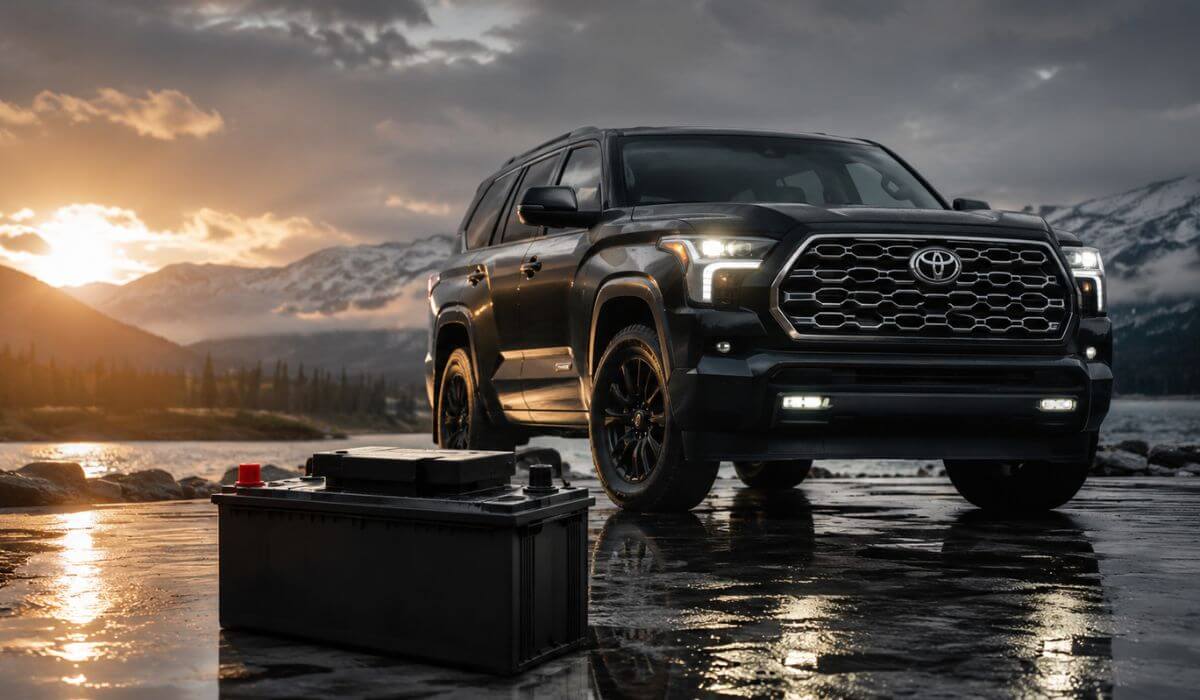
6 Best Batteries for Toyota Sequoia in 2026: High-CCA AGM Picks for Reliable Starts
If you own a newer Toyota Sequoia, you already know this SUV is a completely different animal compared to the old V8 trucks. The 2023–2026 models pack more onboard tech, hybrid hardware, larger displays, power-hungry accessories, and automatic start-stop systems that can expose a weak battery fast—especially during cold starts or long idle periods. That’s why blindly buying the cheapest replacement battery usually ends with random warning lights, sluggish starts, or electrical gremlins a few months later.
Most newer Toyota Sequoia models use an H7/94R AGM battery, and honestly, that’s where owners should stay focused. The fitment is cleaner, the reserve capacity is stronger, and AGM batteries simply handle modern SUV electronics better than older flooded designs. Older Sequoia generations—especially 2001–2022 models—can still use Group 24F or 27F batteries depending on trim and engine setup, but the newer hybrid-based Sequoia platform responds noticeably better to high-quality AGM replacements with at least 800+ CCA and solid reserve capacity.
For this guide, we skipped generic “best seller” fluff and focused on batteries that actually match what Sequoia owners care about in the real world: reliable cold starts, long accessory runtime, stable voltage for modern electronics, and proper H7/94R fitment without modification headaches. Some of these batteries are newer to the market, but their specs, dimensions, AGM construction, and real-world compatibility make far more sense for the current-generation Sequoia than many overpriced legacy options people keep recommending out of habit.
Best Toyota Sequoia Battery: Top 2026 Picks for Modern H7 Batteries and Older 24F Upgrades
#1. Interstate Batteries MTX-94R/H7 AGM Battery
Best 94R AGM battery for Toyota Sequoia owners wanting trusted long-term reliability, powerful cold-start performance, and stable voltage delivery for modern hybrid SUV electronics.
#2. UPLUS BCI Group 94R AGM-L80-UP Battery
Strong Toyota Sequoia battery replacement choice for drivers needing higher reserve capacity, cleaner AGM power delivery, and dependable daily performance in newer 2023–2026 models.
#3. Weize Platinum AGM Battery Group 94R
Excellent H7 battery for Toyota Sequoia buyers looking for premium-level specs, 850CCA starting power, and modern AGM durability without overspending.
#4. Autocessking H7 Group Size 94R AGM Battery
Smart 94R AGM replacement for Toyota Sequoia hybrid models with strong cold-weather starts, solid reserve capacity, and enough output for towing, camping, and heavy accessory use.
#5. 1AUTODEPOT BCI Group 24F AGM Battery
Reliable battery for older Toyota Sequoia models that still use Group 24F sizing, offering AGM durability and stronger startup consistency than basic flooded batteries.
#6. Mighty Max MM-G24F AGM Battery
Affordable Toyota Sequoia battery upgrade for older SUVs needing a dependable 24F AGM replacement with solid everyday starting performance and maintenance-free operation.
Expert: Before replacing the battery in a newer Toyota Sequoia, check the label on your current unit instead of trusting random parts-store databases. Toyota changed a lot with the newer hybrid platform, and many owners end up buying smaller batteries that technically “fit” but struggle once the SUV starts running power-hungry systems like the digital cluster, power liftgate, heated seats, cameras, and stop-start functions together. A proper H7/94R AGM battery with high reserve capacity usually feels noticeably smoother in daily use—especially during early morning starts, short trips, or long highway drives with accessories constantly running.
How We Chose These Toyota Sequoia Batteries
A lot of “best battery” lists online are honestly built backwards. They start with affiliate commissions, then try to force random batteries into SUVs they barely fit. We took the opposite route and started with the actual needs of the modern Toyota Sequoia platform first.
The biggest thing we looked at was proper H7/94R AGM fitment for newer 2023–2026 Sequoia models. That sounds basic, but it matters more than most people realize. A battery can have huge CCA numbers on paper and still be a poor real-world choice if the dimensions, terminal layout, reserve capacity, or AGM calibration don’t match what the Sequoia’s electrical system expects. That’s why nearly every newer-model pick here stays focused on true H7/94R AGM sizing instead of mixing in random universal batteries just to make a longer list.
We also paid close attention to cold cranking amps and reserve capacity, because the Sequoia is not a lightweight crossover. This SUV carries more electronics, hybrid hardware, larger infotainment systems, and accessory load than older generations ever did. Batteries underpowered for modern SUVs usually reveal themselves fast through slow starts, voltage dips, flickering electronics, or strange warning messages after sitting overnight. That’s why most of our top picks stay around the 850CCA and 140RC range, which is where newer Sequoia owners generally see more stable real-world performance.
Another thing we intentionally avoided was chasing old-school brand nostalgia. Some of the batteries in this guide are newer products with fewer long-term reviews right now, but the actual specs tell a more honest story than internet hype does. AGM construction, reserve capacity, terminal configuration, vibration resistance, and real fitment dimensions matter far more than people recommending the same outdated battery they installed in a truck ten years ago.
For older 2001–2022 Sequoia models, we included Group 24F options because many owners still want a dependable maintenance-free AGM replacement without overpaying for oversized commercial batteries they simply do not need. Those older V8 trucks are generally less sensitive than the newer hybrid platform, but they still benefit from stronger AGM performance if you tow regularly, drive in colder weather, or use extra electronics.
Most importantly, none of these picks were chosen just because they were cheap. We focused on batteries that make sense for how Sequoia owners actually use these SUVs in the real world—family hauling, towing, road trips, winter starts, camping setups, and long-term daily driving where consistent voltage stability matters just as much as raw starting power.
#1. Interstate Batteries MTX-94R/H7 AGM Battery
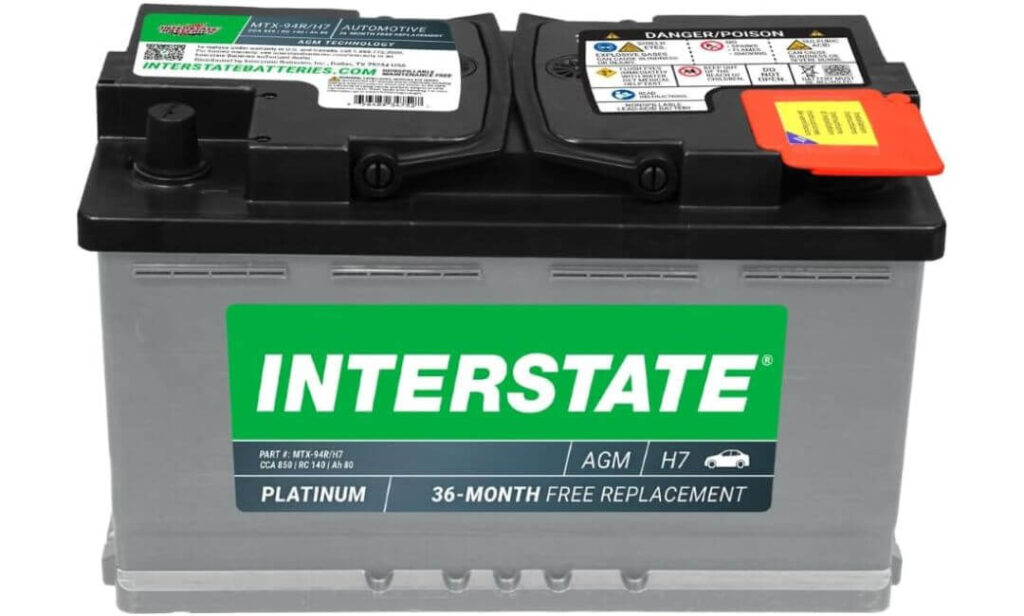
Quick Specs:
- Battery Group: H7 / 94R AGM
- Cold Cranking Power: 850CCA
- Reserve Capacity: 140 Minutes
- Battery Capacity: 80Ah
- Voltage: 12V
- Battery Chemistry: Pure Lead AGM
- Fitment Style: Top Post / Vehicle-Specific Fit
- Best Use Case: Modern full-size SUVs with heavy electronics and start-stop systems
- Real-World Strength: Stable voltage delivery during cold starts, towing loads, and long accessory use
- Warranty Coverage: 36-Month Free Replacement
There’s a certain type of battery that looks good on a spec sheet, and then there’s the type that immediately changes how a big SUV feels during the first morning startup. This one lands in the second category. The moment the ignition fires, the power delivery feels cleaner, faster, and noticeably more stable—especially in larger SUVs loaded with heated seats, panoramic displays, power liftgates, cameras, charging ports, and start-stop systems constantly pulling voltage in the background.
What makes this setup genuinely interesting is the combination of 850CCA, 80Ah capacity, and 140 minutes of reserve power packed into a true H7/94R AGM footprint. That reserve capacity matters more than most people think. In real-world driving, it’s the difference between a battery that only “starts the engine” and one that continues supporting electronics smoothly while idling in traffic, running accessories during road trips, or sitting overnight in colder temperatures without feeling weak the next morning.
Interstate also went heavier on the internal lead design here, and honestly, that explains why this battery feels more composed under load than many cheaper AGM options floating around online right now. The vibration resistance is strong, the casing feels properly reinforced, and the maintenance-free AGM construction eliminates the messy ownership experience older flooded batteries were known for. Even the built-in handles sound minor until you’re leaning over a large engine bay trying not to smash your knuckles during installation.
(And yes — this is the kind of battery that makes people realize their “old battery wasn’t fine after all.”)
What Stood Out During Our Evaluation
- 850CCA output feels genuinely strong during cold morning starts
- 140RC reserve capacity supports heavy electronics without voltage drops
- Pure lead AGM construction feels more stable under real SUV loads
- Maintenance-free sealed design keeps ownership simple long term
- One of the better options for towing setups, camping gear, and accessory-heavy driving
A Small Thing Worth Knowing Before Ordering
- The terminal sizing can feel slightly tighter or looser depending on older clamp wear, so double-check your connections during installation instead of forcing them down quickly.
Real-World Toyota Sequoia Compatibility Notes
For newer Toyota Sequoia models using the H7/94R AGM battery size, this is one of the safer “buy once and forget about it” options currently available. The dimensions line up correctly for modern Sequoia battery trays, and the higher reserve capacity works especially well for hybrid-based SUVs running multiple electronic systems at the same time.
Older Sequoia owners should still verify fitment before ordering because earlier generations may use Group 24F or 27F sizing instead. But for current-generation models, the electrical characteristics here feel much closer to what the SUV actually wants from a modern AGM replacement instead of just “something that fits.”
The Insider Pro-Tip
Most battery problems in modern SUVs don’t start with the engine cranking slower. They usually begin with tiny voltage inconsistencies people ignore for months — flickering screens, lazy auto start-stop response, weak remote starts, random sensor warnings, or accessories behaving strangely after short drives. A high-reserve AGM battery fixes more of those hidden issues than most owners expect.
If the original battery in your Sequoia is already a few years old, upgrading before winter or before a long road-trip season usually saves far more frustration than waiting for a total failure in a parking lot somewhere. The smartest battery replacements happen before the battery starts begging for help.
#2. UPLUS BCI Group 94R AGM-L80-UP Battery
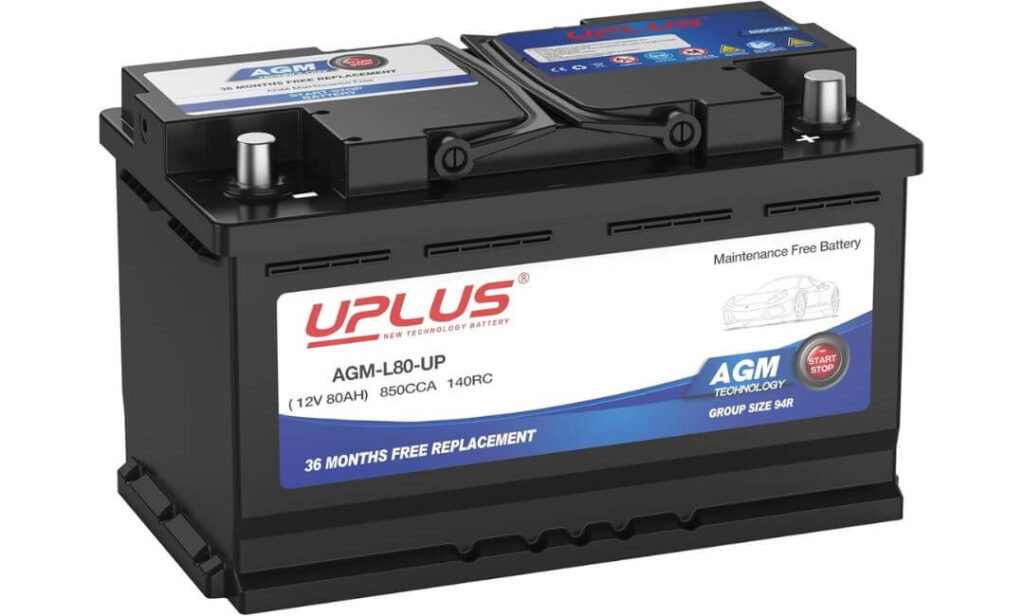
Quick Specs:
- Battery Group: H7 / 94R / L4
- Cold Cranking Output: 850CCA
- Reserve Capacity: 140 Minutes
- Battery Capacity: 80Ah
- Voltage: 12V
- Battery Design: Sealed AGM / VRLA Construction
- Terminal Layout: Left Negative / Right Positive
- Internal Technology: Silver Calcium Alloy + High Density Negative Paste
- Best For: Start-stop SUVs, heavy electronics, frequent short-trip driving
- Real Advantage: Higher cycling durability under constant accessory load
- Warranty Coverage: 3-Year Full Replacement
Some batteries still behave like they were designed for a simpler era — crank the engine, recharge, repeat. This one feels engineered around how modern full-size SUVs are actually used now: short trips, stop-and-go traffic, giant infotainment screens glowing for hours, heated seats running nonstop, phones charging everywhere, and electronics quietly draining power even after the vehicle is parked.
That’s exactly where this setup starts making sense. The combination of 850CCA, 80Ah capacity, and true AGM deep-cycle behavior gives it a more controlled feel under daily electrical load than many basic replacements people install just because the dimensions match. The extra cycling capability is especially important here because newer SUVs with automatic start-stop systems can wear down weaker batteries shockingly fast once traffic-heavy driving becomes part of everyday life.
Another thing worth appreciating is the actual weight of this battery. At around 52 pounds, there’s a reason it feels heavier than many cheaper H7 options floating online. More internal lead material usually translates into better reserve stability, stronger recovery after repeated starts, and less strain when electronics stay active for extended periods. Add in the sealed spill-proof AGM construction, vibration resistance, and clean voltage delivery, and it starts feeling much closer to a premium OEM-style replacement than its price initially suggests.
(Honestly, this is the type of battery people end up recommending after realizing their factory unit never felt this stable to begin with.)
What Earned It a Spot in This Guide
- Excellent 850CCA starting performance during cold weather and heavy load situations
- Strong 140RC reserve capacity for large infotainment and accessory systems
- Designed specifically for start-stop vehicles and modern electronics
- AGM construction stays cleaner, quieter, and more stable over time
- Higher cycling durability than many standard AGM batteries in this price range
A Small Thing Worth Knowing Before Ordering
- Like most AGM batteries with higher reserve capacity, this one benefits from a proper full charge before first installation instead of immediately dropping it into service straight out of the box.
Real-World Toyota Sequoia Compatibility Notes
For Toyota Sequoia owners running the newer H7/94R battery setup, this battery checks most of the boxes people actually care about in long-term ownership — strong starts, clean electrical behavior, and enough reserve power to support the SUV’s growing list of electronics without feeling stressed.
It also works particularly well for drivers who spend a lot of time in city traffic, take frequent shorter trips, or leave accessories running during camping, tailgating, or family travel. Those situations quietly punish weak batteries over time, and this setup feels much more prepared for that kind of daily abuse than cheaper flooded replacements.
The Insider Pro-Tip
One of the biggest mistakes SUV owners make is assuming high CCA alone means a battery is “better.” In reality, large vehicles with modern electronics care just as much about cycling stability and reserve capacity as raw startup power. That’s why some batteries crank hard on day one but feel tired surprisingly fast after months of real-world use.
If your Sequoia spends more time in traffic, short commutes, winter weather, or accessory-heavy driving than long uninterrupted highway runs, investing in a true AGM battery with stronger cycling capability usually pays off long before the warranty card ever matters.
#3. Weize Platinum AGM Battery Group 94R
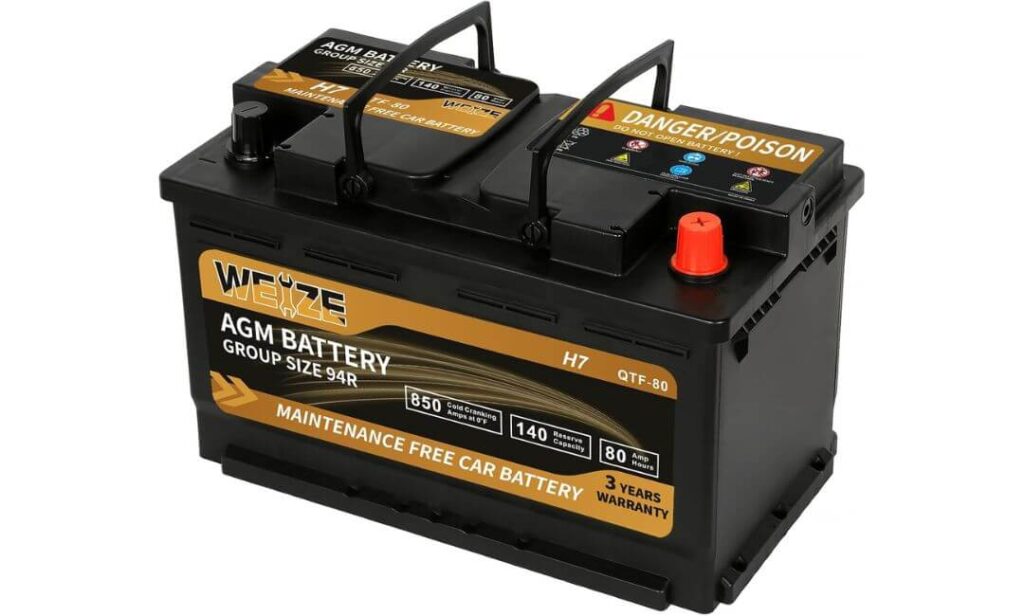
Quick Specs:
- Battery Group: H7 / 94R AGM
- Cold Cranking Strength: 850CCA
- Reserve Capacity: 140 Minutes
- Battery Capacity: 80Ah
- Voltage Output: 12V
- Operating Temperature Range: -22°F to 158°F
- Terminal Layout: Left Negative / Right Positive
- Battery Construction: Sealed AGM with vibration-resistant housing
- Best For: Modern SUVs with start-stop systems and high accessory demand
- Real-World Advantage: Faster recharge recovery during short-trip driving
- Warranty Coverage: 36-Month Replacement Support
There’s a moment where a lot of SUV owners realize they’re not actually paying extra for “better quality” anymore — they’re just paying for familiar logos. That’s exactly why this AGM setup stands out. On paper, the specs already look strong. But once you look closer at the combination of 80Ah capacity, 140RC reserve power, and true 850CCA cold-start output, it becomes obvious this battery was built for vehicles carrying serious electrical demand, not just basic commuter duty.
What makes it genuinely impressive is how balanced the overall package feels. Some AGM batteries focus heavily on startup power but feel weak once accessories stay active for longer periods. Others offer decent reserve capacity but recharge slowly after repeated short drives. This one lands in a smarter middle ground. The battery recovers quickly, maintains voltage stability well during stop-and-go traffic, and feels especially composed in SUVs constantly running navigation, heated seats, charging ports, cameras, and large infotainment systems at the same time.
Another thing that deserves real credit is the temperature tolerance. A battery rated to operate from -22°F to 158°F tells you immediately this wasn’t designed only for perfect weather conditions. Combined with the leak-proof AGM construction and reinforced vibration resistance, it feels more capable of handling real-world SUV abuse — rough roads, cold mornings, heavy traffic, and long family trips where electronics rarely stop running.
(Honestly, this is one of those batteries that quietly makes the whole vehicle feel “healthier” electrically after installation.)
What Made It Earn a Spot in This Lineup
- Strong balance of 850CCA startup power and long reserve capacity
- AGM design recharges faster than many older flooded batteries
- Handles stop-start systems and modern electronics surprisingly well
- Excellent operating temperature range for year-round reliability
- Feels more premium in daily driving than its pricing initially suggests
A Small Thing Worth Knowing Before Ordering
- This battery follows strict H7/94R dimensions and terminal placement, so taking two minutes to compare your current battery measurements beforehand saves a lot of unnecessary installation frustration later.
Real-World Toyota Sequoia Compatibility Notes
For Toyota Sequoia owners using the newer 94R/H7 AGM setup, this battery fits the direction modern SUVs are moving toward — more electronics, heavier accessory load, and greater demand for voltage consistency instead of just raw cranking power.
It’s also a strong match for drivers who deal with frequent stop-and-go traffic, short commutes, colder weather, or long idle sessions during road trips and camping setups. Those situations slowly expose weak batteries, and the higher cycling capability here helps the vehicle feel much more stable during daily use.
The Insider Pro-Tip
A lot of modern SUV battery failures happen because the battery never fully recovers from repeated short drives. The engine starts fine for months, but the reserve capacity quietly weakens in the background until strange electrical behavior starts appearing everywhere else.
That’s why AGM batteries with faster recharge recovery matter so much now. In real life, they’re not just helping the engine crank — they’re protecting the entire electrical personality of the vehicle from slowly becoming unreliable over time.
#4. Autocessking H7 Group Size 94R AGM Battery
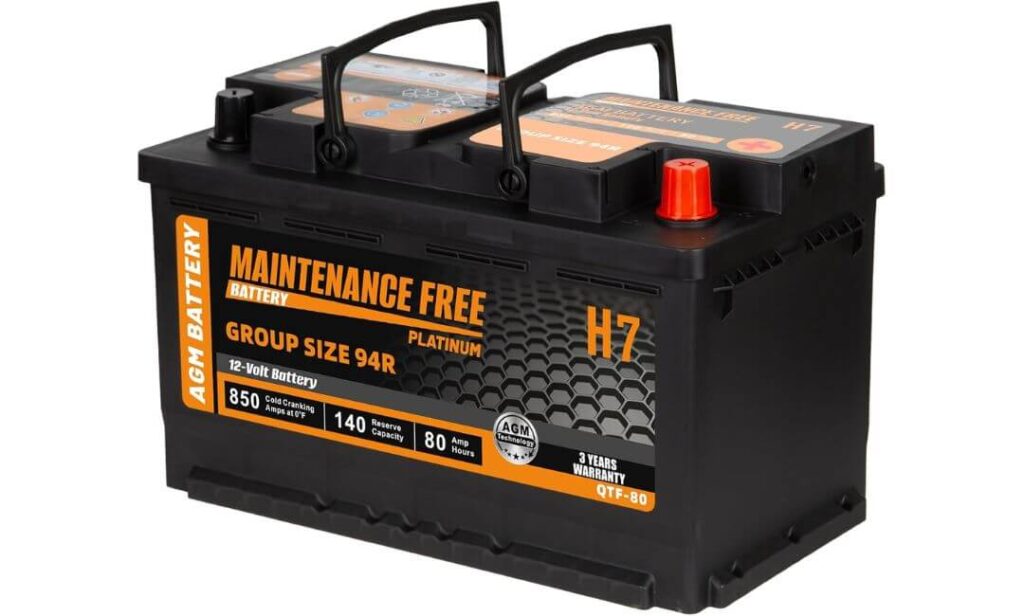
Quick Specs:
- Battery Group: H7 / 94R AGM
- Cold Cranking Power: 850CCA
- Reserve Capacity: 140 Minutes
- Battery Capacity: 80Ah
- Voltage: 12V
- Operating Temperature Range: -18°C to 60°C
- Extreme Tolerance Range: -40°C to 75°C (short-term)
- Terminal Layout: Left Negative / Right Positive
- Battery Construction: High-density AGM with sealed leak-proof design
- Best For: Cold climates, towing setups, heavy accessory loads, stop-start driving
- Real Advantage: Extremely high vibration resistance for rough-road durability
- Warranty Coverage: 3 Years
There’s a noticeable difference between a battery designed for occasional commuting and one clearly engineered expecting rougher real-world use. This AGM setup lands firmly in the second category. The moment you look at the specs — 850CCA, 80Ah capacity, 140RC reserve power, and a heavier 57-pound construction — it becomes obvious this thing was built with durability in mind first, not just price-point marketing.
What immediately stands out here is the battery’s focus on surviving stress. Frequent start-stop cycling, rough roads, cold mornings, towing loads, long idle sessions with electronics running — these are the situations where cheaper AGM batteries slowly begin feeling unstable. This one attacks those problems differently. The high-density negative paste improves conductivity under repeated cycling, while the reinforced internal structure dramatically improves vibration resistance compared to conventional batteries. For larger SUVs that spend time hauling family gear, trailers, camping equipment, or traveling long highway miles, that extra toughness matters more than people realize.
The climate tolerance also deserves serious attention. Batteries that can reliably function across aggressive temperature swings tend to behave more predictably over time, especially in SUVs carrying heavier electrical demand. Add in the fully sealed AGM construction, spill-proof safety design, and maintenance-free ownership experience, and this starts feeling like the kind of battery people buy specifically because they are tired of replacing weaker units every couple of winters.
(Honestly, it gives off the same energy as overbuilt truck parts that quietly outlast everything around them.)
What Made It Stand Out in Real-World Evaluation
- Excellent 850CCA cold-start performance during winter conditions
- Strong AGM cycle durability for stop-start traffic and short-trip driving
- 18X higher vibration resistance than many standard batteries
- Leak-proof sealed design keeps long-term ownership cleaner and safer
- Feels especially well-suited for towing, rough roads, and accessory-heavy SUVs
A Small Thing Worth Knowing Before Ordering
- The battery casing is slightly heavier than many mainstream H7 options, so installation is easier if you clear enough workspace beforehand instead of trying to wrestle it into tight engine bays quickly.
Real-World Toyota Sequoia Compatibility Notes
For Toyota Sequoia owners running the newer H7/94R AGM battery configuration, this battery feels particularly well-matched to SUVs that spend time towing, traveling long distances, or carrying constant electronic load from family gear and accessories.
It also makes a lot of sense for drivers dealing with colder climates or rougher roads where vibration resistance and reserve stability become more important than simple startup numbers on a product page. Modern Sequoias place real demand on their batteries, and this setup feels designed with that reality in mind instead of treating the SUV like a basic commuter vehicle.
The Insider Pro-Tip
A surprising number of AGM batteries fail early not because the chemistry is bad, but because repeated vibration slowly damages weaker internal construction over time. Larger SUVs quietly punish batteries harder than sedans do — especially during towing, uneven roads, potholes, or heavy-load driving.
That’s why vibration resistance is one of the most underrated specs in modern battery shopping. A battery that stays structurally stable under stress often feels stronger and more consistent years later, even when the original cranking numbers on paper look similar to cheaper alternatives.
#5. 1AUTODEPOT BCI Group 24F AGM Battery
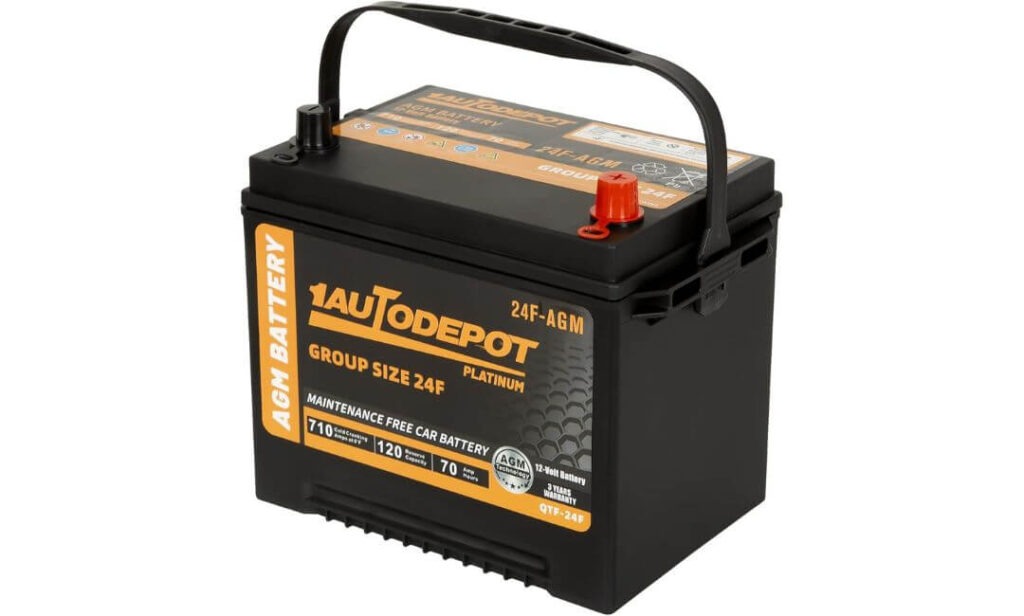
Quick Specs:
- Battery Group: 24F AGM
- Cold Cranking Output: 710CCA
- Reserve Capacity: 120 Minutes
- Battery Capacity: 70Ah
- Voltage: 12V
- Operating Temperature Range: -22°F to 158°F
- Terminal Layout: Left Negative / Right Positive
- Battery Construction: Maintenance-free sealed AGM design
- Best For: Older Toyota Sequoia models needing a stronger AGM upgrade
- Real-World Advantage: Better long-term reliability than basic flooded replacements
- Warranty Coverage: 36-Month Support
A lot of older SUV owners fall into the trap of chasing oversized batteries when the real issue is usually outdated battery technology, not battery size. That’s exactly why this Group 24F AGM setup makes so much sense for older Toyota Sequoia models still running the original-style battery tray. Instead of forcing larger commercial batteries into tight spaces, this option focuses on delivering cleaner, more stable AGM performance in the correct fitment footprint.
The specs hit a sweet spot for older V8 SUVs. With 710CCA, 70Ah capacity, and 120 minutes of reserve power, it has more than enough strength for daily starts, colder mornings, family hauling, and long accessory use without feeling overkill. More importantly, the AGM construction changes how the battery behaves over time. Compared to older flooded batteries, the voltage delivery feels steadier, self-discharge happens slower, and the battery recovers better after sitting unused for several days.
Another underrated advantage is the temperature resilience. Older SUVs often spend years dealing with heat cycles, rough roads, towing loads, and inconsistent maintenance history. AGM batteries generally handle that abuse far more gracefully than traditional flooded designs, and this setup feels intentionally built around long-term durability instead of simply offering the cheapest possible replacement. The sealed construction also eliminates the messy corrosion and acid-leak headaches older battery setups were notorious for.
(Honestly, this feels much closer to the kind of upgrade older Sequoia owners wish they had installed sooner.)
What Made It Worth Including in This Guide
- Excellent AGM upgrade for older 24F-equipped Toyota Sequoia models
- Strong 710CCA starting power for daily driving and colder climates
- Holds charge better during long periods of inactivity
- Maintenance-free design keeps ownership simpler long term
- Better vibration durability and cycle life than traditional flooded batteries
A Small Thing Worth Knowing Before Ordering
- This battery sits slightly taller than some older factory batteries, so checking tray clearance beforehand helps avoid unnecessary surprises during installation day.
Real-World Toyota Sequoia Compatibility Notes
This battery makes the most sense for older Toyota Sequoia generations using the Group 24F battery size, especially owners wanting a more modern AGM replacement without completely changing their factory setup.
It’s also a smart choice for SUVs that spend time parked for longer periods, handle occasional towing duty, or operate in climates where traditional flooded batteries tend to wear down faster. The stronger reserve behavior and lower self-discharge characteristics feel noticeably better in real ownership than many budget replacements people typically install.
The Insider Pro-Tip
A surprising number of older SUV electrical problems aren’t caused by failing alternators at all — they come from aging flooded batteries slowly losing voltage consistency over time. Things still “work,” but they stop working smoothly.
Switching an older Sequoia to a quality AGM battery often improves more than startup reliability. Interior electronics behave cleaner, voltage fluctuations calm down, and the SUV usually feels less strained overall during everyday driving, especially if the original charging system is still factory-aged.
#6. Mighty Max MM-G24F AGM Battery
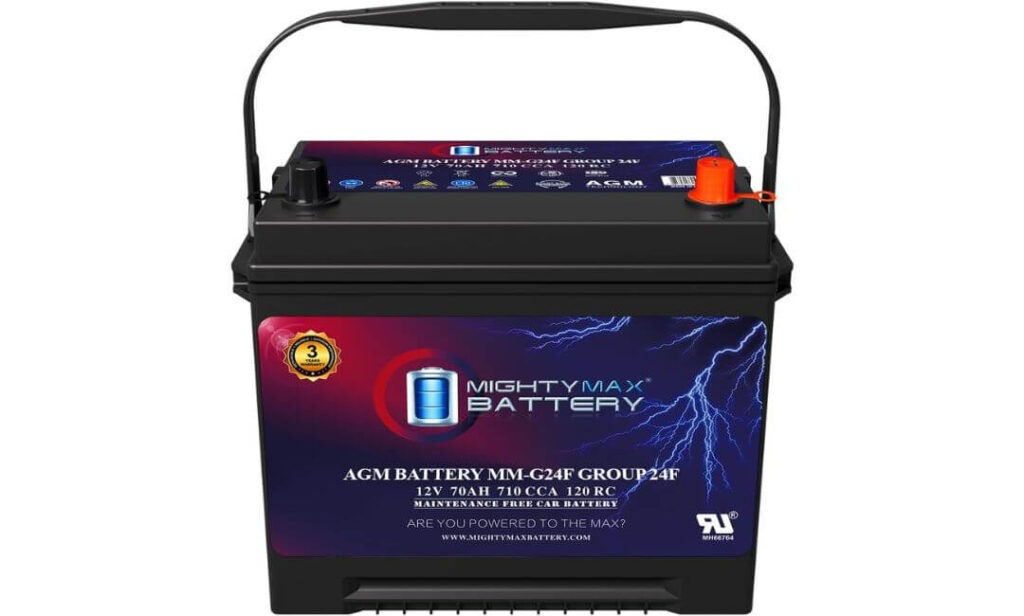
Quick Specs:
- Battery Group: 24F AGM
- Cold Cranking Power: 710CCA
- Reserve Capacity: 120 Minutes
- Battery Capacity: 70Ah
- Voltage: 12V
- Battery Design: Sealed AGM / Spill-Proof Construction
- Terminal Layout: Right Positive / Left Negative
- Installation Style: Multi-position compatible (except upside down)
- Best For: Older Toyota Sequoia models needing a dependable everyday AGM replacement
- Real-World Advantage: Stable startup power with surprisingly good value for the money
- Warranty Coverage: 1-Year Manufacturer Support
Not every battery upgrade needs to feel “extreme” to make a real difference. Sometimes the smartest replacement is simply the one that restores confidence every morning without draining the wallet in the process. That’s exactly where this Group 24F AGM setup fits in. It doesn’t pretend to be a racing battery or a commercial heavy-duty monster — it focuses on delivering clean, reliable daily performance where older SUVs actually need it most.
The combination of 710CCA, 70Ah capacity, and 120RC reserve power gives it enough strength to handle older Toyota Sequoia models comfortably, especially if the SUV still sees regular commuting, family hauling, road trips, or occasional towing. More importantly, the AGM design changes the ownership experience itself. Voltage delivery feels steadier, startup response stays more consistent during colder mornings, and the battery recovers better after sitting parked for several days compared to older flooded replacements.
Another thing worth appreciating is the simplicity here. The sealed spill-proof construction keeps maintenance minimal, installation is generally straightforward, and the rugged casing handles vibration and rough-road abuse better than many budget batteries owners usually end up replacing every couple of years. It’s not trying to oversell itself — and honestly, that makes it easier to trust.
(This feels like the type of battery practical SUV owners end up appreciating more over time, not less.)
What Made It a Strong Final Pick
- Solid 710CCA cold-start performance for older SUVs
- AGM construction feels cleaner and more reliable long term
- Strong value for drivers not wanting overpriced OEM replacements
- Handles rough roads and vibration better than standard flooded batteries
- Easy installation process with included mounting hardware
A Small Thing Worth Knowing Before Ordering
- The battery height can sit slightly taller in some older engine bays, so checking battery cover clearance beforehand helps avoid unnecessary fitment surprises during installation.
Real-World Toyota Sequoia Compatibility Notes
This battery works best for older Toyota Sequoia generations using the Group 24F battery size, especially owners wanting a straightforward AGM replacement without moving into oversized commercial-style setups.
It also suits SUVs that spend part of the week parked, handle occasional towing duty, or operate in climates where traditional flooded batteries struggle to hold charge consistently. For everyday driving use, the balance between startup strength, reserve capacity, and pricing feels genuinely practical.
The Insider Pro-Tip
A lot of older SUVs develop a reputation for “random electrical quirks” when the real issue is simply unstable battery voltage from aging flooded batteries. People replace alternators, sensors, even starters — while the battery quietly remains the weak link the entire time.
Moving to a sealed AGM setup like this often improves daily reliability more than owners expect, especially in vehicles where the original electrical system is already carrying years of wear, vibration, and heat cycles behind the scenes.
Best Toyota Sequoia Battery Comparison for H7/94R and 24F AGM Upgrades
| Battery | Best For | Group | CCA | Reserve | AGM | Warranty |
|---|---|---|---|---|---|---|
|
Interstate MTX-94R/H7
Most Trusted Pick
|
Perfect for newer Toyota Sequoia owners wanting stable voltage delivery, premium AGM durability, and strong winter starts. | 94R / H7 | 850 | 140RC | Yes | 36 Months |
|
UPLUS AGM-L80-UP
Best Premium AGM
|
Excellent for stop-start driving, traffic-heavy commutes, and SUVs packed with modern electronics. | 94R / H7 | 850 | 140RC | Yes | 3 Years |
|
Weize Platinum 94R AGM
Best Value Choice
|
Balanced mix of reserve power, fast recharge recovery, and dependable all-weather startup performance. | 94R / H7 | 850 | 140RC | Yes | 36 Months |
|
Autocessking H7 AGM
Heavy-Duty Pick
|
Ideal for towing setups, rough roads, cold climates, and long-distance SUV driving. | 94R / H7 | 850 | 140RC | Yes | 3 Years |
|
1AUTODEPOT 24F AGM
Older Sequoia Upgrade
|
Smart AGM replacement for older Toyota Sequoia models still running Group 24F fitment. | 24F | 710 | 120RC | Yes | 36 Months |
|
Mighty Max MM-G24F
Best Budget AGM
|
Great everyday AGM option for older SUVs needing reliable startup power without overspending. | 24F | 710 | 120RC | Yes | 1 Year |
How to Verify the Right Toyota Sequoia Battery Fit Before Buying
One of the biggest mistakes Toyota Sequoia owners make is assuming every battery labeled “compatible” will actually fit and perform correctly in real-world driving. Modern Sequoias — especially newer hybrid-based models — are far more sensitive to battery sizing, reserve capacity, and terminal layout than older SUVs used to be. A battery can physically squeeze into the tray and still create annoying long-term problems like unstable voltage, weak start-stop performance, random electrical warnings, or poor cold-weather starts.
That’s exactly why verifying proper fitment before ordering matters so much, especially when moving from older flooded batteries to modern AGM replacements.
How to Check Your Toyota Sequoia Battery Group Size Properly
The easiest way to avoid ordering the wrong battery is to check the group size directly from the current battery already installed in the SUV. Most Toyota Sequoia batteries will have a visible label showing sizes like H7, 94R, 24F, or 27F printed somewhere near the top or side casing.
For newer Sequoia models, especially recent hybrid generations, the most common fitment is usually:
- H7
- 94R
- AGM configuration
Older Toyota Sequoia models may still use:
- Group 24F
- Group 27F
But this is where owners get caught off guard — production years alone are not always enough. Different trims, dealer-installed equipment, towing packages, climate packages, or previous owner battery swaps can all change what is currently sitting inside the vehicle.
That’s why physically checking the installed battery first is always smarter than blindly trusting generic online compatibility charts.
The Measurements Matter More Than Most People Realize
A battery that is even slightly taller, wider, or mounted differently can create surprisingly frustrating problems during installation. Battery hold-down brackets may stop fitting correctly, terminal cables can stretch awkwardly, and battery covers sometimes refuse to close properly even when the battery technically “fits.”
Before ordering, compare:
- Battery length
- Width
- Height
- Terminal location
- Positive and negative orientation
For example, most newer H7/94R AGM batteries use:
- Left-side negative terminal
- Right-side positive terminal
If those positions are reversed, the factory battery cables may not safely reach the posts without tension — and forcing them into place is never a good idea in modern SUVs packed with electronics.
Visual Fit Checks Most Buyers Skip — Then Regret Later
A surprisingly high number of battery returns happen because owners only compare group size numbers and completely ignore the engine bay itself.
Before buying, take a quick look at:
- Battery tray shape
- Hold-down clamp placement
- Height clearance near hood insulation
- Plastic battery cover spacing
- Nearby fuse box positioning
- Cable routing angles
This becomes especially important with AGM batteries because many premium models are heavier and slightly taller due to thicker internal lead construction and reinforced casing designs.
In real life, a battery with better internal materials often weighs more — and that extra weight usually exists for a reason.
Why AGM Batteries Need More Attention in Modern Sequoias
Older flooded batteries were relatively forgiving. Modern AGM batteries are different. They deliver stronger reserve capacity, cleaner voltage stability, faster recharge recovery, and better support for electronics-heavy SUVs, but they also need proper fitment to perform correctly long term.
For newer Toyota Sequoia models running:
- Start-stop systems
- Large infotainment screens
- Hybrid electronics
- Heated seats
- Power liftgates
- Multiple charging systems
a properly sized AGM battery matters far more than simply buying the highest CCA number available online.
The balance between:
- correct group size
- reserve capacity
- AGM compatibility
- terminal orientation
- physical tray fitment
is what actually creates a smooth ownership experience.
Why the Owner’s Manual Still Matters More Than Random Internet Listings
Even today, the owner’s manual remains one of the safest ways to confirm the correct battery specifications for a Toyota Sequoia. Most manuals clearly list:
- Recommended battery group size
- Required cold cranking amps
- OEM battery type
- Terminal layout
- Charging system recommendations
That information is far more trustworthy than random marketplace compatibility filters that sometimes lump multiple Toyota SUVs together incorrectly.
A quick cross-check between:
- The current installed battery
- The owner’s manual
- The replacement battery dimensions
usually prevents almost every major fitment mistake people run into later.
The Real Truth Most People Learn Too Late
A battery is no longer just a simple “starting box” in modern SUVs. In today’s Toyota Sequoia, it has become part of the vehicle’s entire electrical personality. When the fitment, reserve capacity, and AGM setup are correct, the SUV feels calmer, smoother, and more predictable during everyday driving.
When the battery is wrong — even slightly wrong — modern electronics usually let you know sooner than later.
Toyota Sequoia Battery Installation and Replacement Guide
Replacing the battery in a Toyota Sequoia is not especially difficult, but modern SUVs have become far more sensitive to voltage interruptions, terminal mistakes, and improper battery mounting than older trucks ever were. The newer Sequoia platform — especially AGM-equipped models with heavy electronics and hybrid-assisted systems — reacts differently when battery voltage suddenly drops or connections are unstable.
That’s why a clean, careful installation matters just as much as buying the right battery itself.
What You Should Prepare Before Starting
Before touching the battery terminals, gather everything first instead of stopping halfway through the job with cables disconnected.
A proper setup usually includes:
- Socket wrench set
- Battery terminal cleaner or wire brush
- Protective gloves
- Safety glasses
- Anti-corrosion spray or dielectric grease
- Baking soda and water mixture for corrosion cleanup
- Shop towel or microfiber cloth
- Battery carrying strap if using heavier AGM batteries
Most AGM batteries recommended for Toyota Sequoia models weigh between 50–57 pounds, so lifting carefully matters more than people expect once leaning over a large SUV engine bay.
Step-by-Step Toyota Sequoia Battery Replacement Basics
The safest way to replace the battery is slowly and methodically. Rushing usually leads to stripped terminals, accidental shorting, broken hold-down brackets, or electrical glitches later.
Step 1: Turn Everything Off Completely
- Shut off the engine
- Remove the key or key fob from the vehicle
- Turn off headlights, HVAC, radio, and accessories
- Let the SUV sit for a minute or two before disconnecting anything
Modern vehicles continue communicating electronically for a short time after shutdown, so giving the system a moment to fully power down helps avoid unnecessary electrical spikes.
Step 2: Disconnect the Negative Terminal First
This is one of the most important safety habits in battery replacement.
Always remove:
- Negative terminal first (-)
- Positive terminal second (+)
Disconnecting the negative side first reduces the risk of accidental grounding if a tool touches metal during removal. Skipping this order is one of the fastest ways to create sparks or electrical shorts inside a crowded engine bay.
Once disconnected, move the cables aside carefully so they cannot spring back into contact with the terminals.
Step 3: Remove the Hold-Down Bracket Carefully
Toyota Sequoia battery trays are built to secure heavier batteries firmly, especially in SUVs designed for towing and rough-road driving.
Remove:
- Hold-down clamp
- Crossbar bracket
- Mounting bolts
Then lift the battery straight upward instead of dragging it sideways across the tray.
AGM batteries are heavier than many owners expect, and tilting them aggressively while removing can strain terminals or surrounding plastic covers.
Step 4: Inspect and Clean the Battery Tray Before Installing the New Unit
This is the step many people skip — and regret later.
Check for:
- Acid residue
- White or blue corrosion buildup
- Rust around mounting hardware
- Loose terminal clamps
- Cracked cable insulation
If corrosion exists, clean it using a baking soda and water mixture, then dry the area fully before installing the replacement battery.
A clean tray helps:
- maintain stronger grounding
- reduce future corrosion
- improve mounting stability
- protect AGM battery lifespan long term
Step 5: Install the New Battery and Verify Terminal Orientation
Before tightening anything, confirm:
- Group size matches correctly
- Positive and negative posts face the proper direction
- Battery sits flat inside the tray
- Hold-down bracket aligns normally
Most newer Toyota Sequoia AGM batteries use:
- Left-side negative terminal
- Right-side positive terminal
Forcing cables to stretch awkwardly across the battery usually means something is wrong.
Once aligned correctly:
- Secure the battery mount first
- Connect positive terminal (+)
- Connect negative terminal (-) last
That final step matters because reconnecting the negative terminal last reduces accidental grounding risk during installation.
Why Proper Battery Mounting Matters More Than People Think
Large SUVs create more vibration and chassis movement than smaller vehicles, especially during towing, uneven roads, potholes, or highway travel.
If the battery is not properly secured:
- internal battery damage can develop
- terminal stress increases
- electrical interruptions become more likely
- AGM lifespan can shorten dramatically
A battery should feel completely stable after installation — no rocking, shifting, or movement inside the tray.
Post-Installation Checks Most Owners Forget
A successful install is not just “the engine started.”
After replacement, spend a few minutes checking how the charging system behaves.
Check Resting Voltage
With the engine off:
- Healthy AGM battery voltage usually sits around 12.6V–12.9V
Significantly lower voltage may indicate:
- weak initial charge
- poor connection
- shipping discharge
- charging system problems
Check Alternator Charging Voltage
Once the engine is running:
- charging voltage should usually fall between 13.5V–14.8V
If voltage stays unusually low or spikes excessively high, the issue may involve:
- alternator performance
- voltage regulator problems
- weak grounding connections
Not the battery itself.
Perform a Real First-Start Test
After installation, pay attention to more than just whether the engine cranks.
Watch for:
- smooth startup behavior
- stable infotainment screen brightness
- normal start-stop operation
- responsive electronics
- absence of warning lights
- normal idle behavior
Modern Toyota Sequoia models communicate constantly with electronic modules, and unstable battery voltage often reveals itself through strange electrical behavior long before a total battery failure occurs.
The Real Mistake That Shortens Battery Life Early
A surprising number of brand-new batteries fail early because the charging system was already weak before replacement. People install a fresh AGM battery into a vehicle with poor grounding, low alternator output, or heavy corrosion — then blame the battery months later when performance drops again.
That’s why the smartest battery replacement is never just swapping parts. It’s verifying the entire charging environment is healthy enough for the new battery to actually perform the way it was designed to.
How Long Does a Toyota Sequoia Battery Usually Last?
Battery lifespan sounds like a simple question until you actually look at how differently people use their Toyota Sequoias in the real world. A battery inside a lightly driven highway SUV in mild weather can behave completely differently from one dealing with stop-and-go traffic, freezing winters, heavy towing, short trips, and constant accessory use every single day.
That’s why there is no honest “one-number answer” for battery life anymore — especially in modern Sequoias packed with electronics and start-stop systems.
What Most Toyota Sequoia Owners Realistically Experience
For newer AGM-equipped Toyota Sequoia models, most quality batteries generally last:
- Around 3–5 years under normal daily driving
- Sometimes longer with steady highway use and proper charging behavior
- Sometimes noticeably shorter in extreme climates or heavy stop-start driving
Older flooded batteries often wear out faster because they struggle more with:
- repeated short trips
- voltage fluctuations
- accessory-heavy driving
- long idle periods
- heat exposure
That’s one reason AGM batteries became such a smart upgrade for modern SUVs. They tolerate cycling stress better, recover faster after startup, and maintain voltage stability more consistently over time.
The Real Reason Modern SUV Batteries Wear Out Faster
A lot of people assume the engine itself is what drains the battery most. In reality, modern SUVs constantly pull electrical power even after shutdown.
Newer Toyota Sequoia models continue supporting systems like:
- security modules
- keyless entry communication
- infotainment memory
- onboard computers
- remote-start functions
- power liftgate systems
- hybrid support electronics
That background electrical activity slowly adds up, especially when the SUV sits unused for several days at a time.
Add short trips into the equation — where the alternator barely gets enough time to fully recharge the battery after startup — and battery wear accelerates quietly month after month.
Cold Weather vs Hot Weather — Which Is Actually Worse?
Most drivers blame winter when batteries fail, but extreme heat is often what causes the long-term damage first.
Hot temperatures accelerate:
- internal chemical breakdown
- water evaporation in weaker batteries
- plate corrosion
- voltage instability
Then winter arrives and exposes the weakened battery during a cold morning start.
That’s why many batteries seem to “die suddenly” in cold weather even though the actual aging process happened slowly during hotter months beforehand.
Signs Your Toyota Sequoia Battery Is Starting to Get Weak
Battery failure rarely happens instantly without warning. Modern SUVs usually give subtle signs first.
Some of the most common warning signs include:
- Slower engine cranking during startup
- Flickering interior lighting
- Start-stop system behaving inconsistently
- Weak remote-start performance
- Dashboard warnings appearing randomly
- Infotainment screens rebooting unexpectedly
- Power liftgate acting sluggish
- Electronics feeling unstable after short drives
In many cases, these symptoms appear weeks or months before the battery fully fails.
Why AGM Batteries Usually Feel More Stable Over Time
AGM batteries behave differently from traditional flooded batteries because the internal electrolyte is absorbed into fiberglass mats instead of remaining as free liquid acid.
That design helps improve:
- vibration resistance
- cycling durability
- charge recovery speed
- reserve capacity stability
- long-term voltage consistency
For a large SUV like the Toyota Sequoia — especially one carrying heated seats, cameras, charging ports, towing equipment, and multiple onboard computers — those differences become surprisingly noticeable during everyday driving.
Driving Habits Matter More Than Most Owners Realize
A battery inside a Toyota Sequoia driven:
- 30 highway minutes daily
will usually age much differently than one driven: - 5-minute stop-and-go city trips repeatedly
Short drives are hard on modern AGM batteries because startup consumes significant power, but the alternator often does not get enough uninterrupted time to fully recharge the battery afterward.
Over time, partial charging cycles slowly reduce battery health.
Ironically, some batteries fail faster from being underused than overused.
The Real Truth About “Maintenance-Free” Batteries
Maintenance-free does not mean “ignore it forever.”
Even premium AGM batteries still benefit from:
- clean terminals
- proper alternator voltage
- secure mounting
- occasional voltage testing
- avoiding long-term deep discharge situations
Most early battery deaths happen because the charging environment around the battery was unhealthy long before the battery itself finally gave up.
What Smart Toyota Sequoia Owners Usually Do Differently
Experienced SUV owners usually replace batteries before total failure happens, not after. Waiting until the vehicle refuses to start often creates extra problems:
- lost time
- towing costs
- frozen mornings
- electronic resets
- charging-system stress
Replacing an aging battery proactively — especially before winter or long travel seasons — almost always feels cheaper and less stressful than pushing an old battery until complete failure.
And honestly, once a large SUV starts showing clear battery symptoms consistently, it rarely “fixes itself” for very long.
FAQs About Toyota Sequoia Battery
Does the Toyota Sequoia actually need an AGM battery, or is that just marketing hype?
Honestly, this is one of the biggest misconceptions floating around modern SUV ownership right now. Older Toyota trucks could survive on almost any decent flooded battery because the electrical systems were relatively simple. The newer Toyota Sequoia is different. Once you add hybrid support systems, large infotainment screens, start-stop operation, cameras, powered accessories, and constant background electronics, battery behavior starts affecting the entire driving experience.
That does not mean every Sequoia instantly “requires” AGM technology by law, but in real-world ownership, AGM batteries usually behave noticeably better long term. They recover faster after startup, handle repeated cycling more efficiently, and maintain steadier voltage under heavy electrical demand.
The real difference people notice is not just startup power — it is how stable the SUV feels overall:
- smoother cold starts
- fewer voltage-related quirks
- more consistent electronics
- better reserve performance during short drives
- less stress during winter or towing use
That’s why so many owners who switch from flooded batteries to AGM setups end up saying the SUV simply feels healthier electrically afterward.
Why do some Toyota Sequoia batteries fail surprisingly early even with low mileage?
Mileage barely tells the full story anymore. Modern battery wear is driven more by electrical behavior and driving habits than odometer numbers alone.
A Toyota Sequoia used mainly for:
- short grocery runs
- school pickups
- stop-and-go traffic
- long idle sessions
- sitting parked for days
can actually wear through batteries faster than a highway-driven SUV with double the mileage.
The reason is simple: starting the engine consumes a large amount of power instantly, and short drives often do not give the alternator enough uninterrupted time to fully recharge the battery afterward. Over months and years, the battery slowly lives in a partially charged state — and that quietly damages long-term capacity.
Ironically, some of the worst battery wear happens in “light-use” family SUVs that rarely leave town.
Is higher CCA always better for a Toyota Sequoia battery replacement?
Not automatically — and this is where internet advice gets dangerously oversimplified.
A lot of people shop batteries the same way they shop horsepower numbers: bigger sounds better. But in modern SUVs, battery quality depends on balance, not just one giant CCA figure slapped on the label.
What actually matters together is:
- proper H7/94R or 24F fitment
- AGM compatibility
- reserve capacity
- cycling durability
- voltage stability
- terminal orientation
- alternator charging behavior
A battery with huge CCA but weak reserve capacity may crank aggressively for a while, then start struggling once electronics stay active longer during daily driving.
That’s why many of the best Toyota Sequoia batteries sit around the same sweet spot:
- 80Ah capacity
- around 850CCA
- roughly 140RC reserve power
That balance usually works better in real-world SUV ownership than chasing extreme numbers alone.
Why does my Toyota Sequoia still act weird after installing a brand-new battery?
Because sometimes the battery was never the only problem.
A fresh battery often exposes hidden charging-system issues that the old weak battery had been masking for months. If the alternator output is inconsistent, the grounds are corroded, or the battery connections are unstable, the SUV may still show strange electrical symptoms even after replacement.
Some common signs include:
- random warning lights
- infotainment glitches
- weak auto start-stop response
- dim interior lighting
- voltage fluctuations
- sluggish remote start behavior
Modern SUVs are extremely sensitive to unstable voltage now. In many cases, the smartest thing after battery replacement is checking charging voltage properly instead of assuming the new battery alone will magically solve every issue.
A healthy AGM battery installed into a weak charging system usually becomes an expensive victim instead of a solution.
Is it worth upgrading an older Toyota Sequoia from a flooded battery to AGM?
In a lot of cases, yes — especially if the SUV still sees regular driving, towing, road trips, or colder weather use.
Older Sequoias were originally built during a time when flooded batteries were more common, but AGM technology brings several real-world improvements older SUVs benefit from immediately:
- better vibration resistance
- stronger reserve capacity
- cleaner voltage delivery
- lower self-discharge
- improved winter startup behavior
- reduced corrosion risk
The biggest difference owners usually notice is consistency. The SUV tends to crank more confidently, electronics behave more predictably, and the battery generally feels less stressed during demanding conditions.
That said, the smartest AGM upgrade is always one that respects the original battery tray dimensions and terminal layout instead of forcing oversized batteries into the engine bay just because someone online claimed “bigger is always better.”
Final Thoughts
Finding the best battery for a Toyota Sequoia is not really about chasing the biggest brand name or the most aggressive marketing claims anymore. Modern Sequoias — especially newer H7/94R AGM-equipped models — demand a battery that can quietly handle real electrical pressure every single day without turning ownership into a guessing game six months later.
That’s why the strongest options in this guide were chosen around things that actually matter once the SUV leaves the parking lot:
- stable voltage delivery
- proper AGM compatibility
- real reserve capacity
- cold-start reliability
- vibration durability
- long-term fitment confidence
For newer Toyota Sequoia models, the Interstate, UPLUS, Weize, and Autocessking batteries simply make more sense than many outdated flooded replacements still being pushed online. They are built around how modern SUVs are actually driven now — heavy electronics, short trips, stop-start traffic, towing loads, winter mornings, family travel, and constant accessory demand.
At the same time, older Sequoia owners should not ignore how much difference a properly fitted AGM battery can make either. The 1AUTODEPOT and Mighty Max options prove you do not always need oversized commercial batteries to improve startup confidence and long-term reliability in older V8 models.
And honestly, that is the real takeaway here.
A good battery should disappear into the ownership experience. No strange warning lights. No weak cold starts. No random voltage weirdness. No second-guessing whether the SUV will crank after sitting overnight.
When the right battery is installed, the Toyota Sequoia simply feels calmer, stronger, and more dependable in everyday life — which is exactly what a full-size SUV like this should feel like in the first place.
Also Check:

