
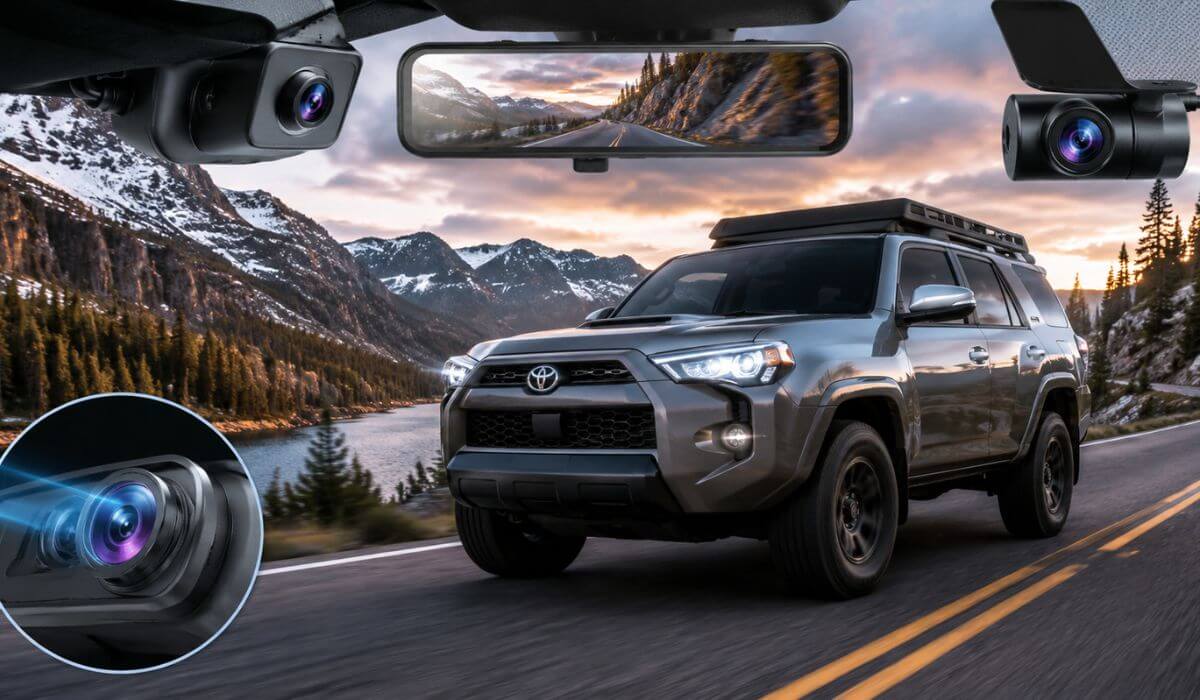
6 Best Dash Cams for Toyota 4Runner in 2026: OEM Fits, 4K Night Vision & Parking Mode
The Toyota 4Runner is one of the few SUVs people actually keep for years, which is exactly why choosing the right dash cam matters more here than it does in a typical commuter crossover. Whether you drive a newer 2025–2026 4Runner TRD Off-Road, an older fifth-gen model, or a lifted trail build that spends weekends covered in dust and mud, a cheap camera usually won’t survive long heat cycles, rough suspension movement, or dark backroad driving.
That’s also why this list isn’t filled with random Amazon best-sellers. We focused on dash cams that genuinely make sense for the 4Runner’s cabin layout, windshield angle, off-road use, and long-term daily driving. Some owners want a clean OEM-style hidden dash cam that looks factory-installed. Others care more about true 4K night vision, reliable parking surveillance, or wide-angle recording for trails, parking lots, and highway driving.
Most 4Runner owners also run larger tires, rooftop gear, rear cargo setups, or darker tint, so visibility becomes a real issue at night. That’s where better sensors like Sony STARVIS actually matter. A good dash cam should still capture plates clearly during rain, low light, or while bouncing through rough terrain — not just look good on a spec sheet.
Best Toyota 4Runner Dash Cams: Top 2026 Picks for OEM Fit, 4K Clarity & Parking Mode
#1. Fitcamx 4K Dash Cam for Toyota 4Runner
Best OEM-style dash cam for Toyota 4Runner 2025–2026 with hidden factory-fit design and clean 4K recording.
#2. Mangoal 4K Dash Cam for Toyota 4Runner
Best hidden dash cam for Toyota 4Runner 2025–2026 owners wanting OEM-style fitment with GPS and parking mode.
#3. ROVE R2-4K Dual Dash Cam
Best front and rear dash cam for Toyota 4Runner with STARVIS night vision and reliable 4K footage.
#4. WOLFBOX G900 Pro Mirror Dash Cam
Best mirror dash cam for Toyota SUV drivers needing wider visibility and premium parking surveillance.
#5. IIWEY 4K+4K Dash Cam
Best value dual 4K dash cam for 4Runner with WiFi-6, GPS, and wide-angle recording.
#6. TERUNSOUl 4K+4K Dash Cam
Best budget dash cam for Toyota 4Runner with front-and-rear 4K recording and included storage.
Expert Tip: If you drive a Toyota 4Runner mostly at night, on trails, or in areas with heavy rain and dust, don’t get distracted by “4K” alone. A lot of cheaper dash cams technically record in 4K but still struggle to capture license plates once sunlight drops or the road starts shaking. That’s why sensors like Sony STARVIS matter more in real driving than flashy marketing specs. On a taller SUV like the 4Runner, windshield angle, vibration control, heat resistance, and parking reliability make a bigger difference long term than people realize. A clean install also matters more than most owners expect — especially inside a 4Runner cabin where loose wires and bulky mounts start looking annoying fast after a few weeks.
How We Chose These Dash Cams for the Toyota 4Runner
We didn’t build this list around random Amazon ratings or whichever brand shouted the loudest about “ultra HD.” The 4Runner is a very specific type of SUV, and most generic dash cam lists completely ignore that.
A Toyota 4Runner sits higher than a normal crossover, has a more upright windshield, stronger cabin vibration on rough roads, and is often driven in places where lighting conditions are terrible. That changes what actually works in real life. A dash cam that looks great inside a sedan can become frustrating inside a 4Runner once heat, dust, off-road movement, darker tint, or rear cargo setups come into play.
That’s why we focused heavily on sensor quality, mount stability, parking protection, and whether the camera genuinely makes sense inside a 4Runner cabin — not just on a product page.
For example, the Fitcamx and Mangoal models made this list because they solve a problem most 4Runner owners hate: ugly dangling wires and bulky windshield mounts. Both cameras blend into the factory trim much better than typical universal dash cams, which honestly makes a huge difference in a vehicle people keep for years.
The ROVE R2-4K Dual ranked high because its STARVIS sensor performance is consistently stronger in difficult lighting than many similarly priced cameras. That matters on backroads, during storms, or while driving through poorly lit areas where cheaper sensors start turning footage blurry and unusable.
We also paid attention to things many lists never mention, like:
- Whether the app actually stays stable during file transfers
- If parking mode works reliably without constant false triggers
- Heat handling during long summer parking
- Real rear visibility for lifted or gear-loaded 4Runners
- How clean the install looks after a few months of ownership
- Whether the footage remains usable once the vehicle starts bouncing on rough terrain
The WOLFBOX G900 Pro earned its place because mirror-style setups genuinely help in SUVs where rear visibility gets blocked by cargo, rooftop gear, passengers, or darker tint. Meanwhile, the IIWEY and TERUNSOUl models made sense as value picks because they still offer features buyers actually care about — dual recording, GPS, parking mode, and usable image quality — without jumping into premium pricing territory.
Most importantly, we avoided recommending cameras that only look impressive on paper. The goal here was simple: choose dash cams a real 4Runner owner could install, live with daily, trust during an incident, and still feel good about six months later instead of wanting to replace immediately.
#1. Fitcamx 4K Dash Cam for Toyota 4Runner
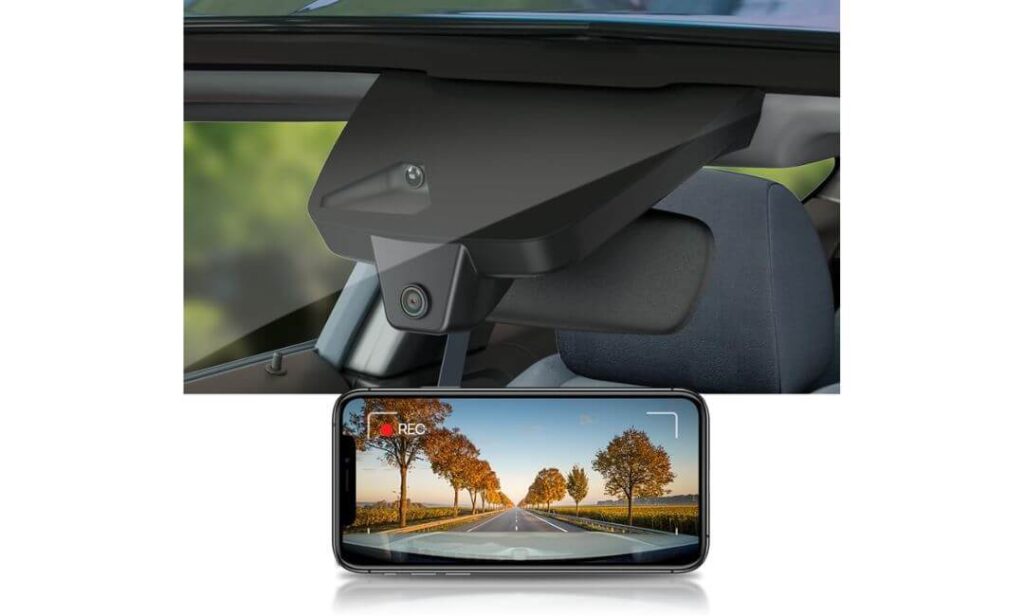
Quick Specs:
- Built specifically for Toyota 4Runner & 4Runner Hybrid
- True OEM-style hidden fitment with no hanging wires
- Front-facing 2160P UHD recording
- Sony-based low-light optimization with WDR night clarity
- Built-in WiFi with FITCAMX mobile app support
- Plug-and-play installation using factory trim area
- Includes pre-installed 64GB microSD card
- Heat-resistant build rated for extreme summer cabin temperatures
- Loop recording + impact-triggered emergency file locking
- Does not include parking mode recording
Some dash cams always feel temporary — suction-mounted screens hanging from the windshield, cables shoved into trim panels, random startup noises every morning. This one doesn’t feel like that at all. Once installed, it honestly looks like Toyota designed it with the SUV from the factory. That matters more in a 4Runner than people think because the cabin already has a clean, upright layout and oversized universal cameras tend to look awkward fast.
The biggest reason this model stands out is how naturally it integrates into the vehicle. No dangling wires, no bulky display blocking your sightline, no cheap plastic mount wobbling every time the suspension moves over rough pavement. It sits tucked into the upper windshield area in a way most passengers probably won’t even notice unless you point it out. For owners who hate clutter inside the cabin, this setup feels surprisingly satisfying after installation.
Video quality is also stronger than most “OEM-look” cameras usually deliver. The 2160P footage combined with the f/1.6 aperture and WDR tuning helps keep nighttime footage usable instead of turning everything into a blurry mess once street lighting disappears. License plates, road signs, and lane markings remain much easier to read during darker highway driving or rainy weather — especially important in a taller SUV where glare and windshield reflection can get annoying quickly.
There’s also something refreshing about how simple the experience feels. Start the 4Runner, recording begins automatically, and the app handles quick footage access without forcing constant WiFi pairing every drive. No gimmicky touchscreens, no distracting cabin lights, no weird menus buried behind tiny buttons. Just clean integration and reliable recording that quietly does its job.
(Honestly, this feels less like adding an accessory and more like unlocking a feature Toyota forgot to include from the factory.)
What Stood Out During Our Evaluation
- Factory-style integration genuinely looks cleaner than universal dash cams
- Doesn’t interfere with the SUV’s interior visibility or driving feel
- Strong low-light clarity for highways, storms, and backroad driving
- Cabin looks far more premium without exposed wiring
- Heat resistance is better than many cheaper compact cameras
- App access feels simple instead of overly complicated
Where Some Owners May Hesitate
- No dedicated parking surveillance mode when the vehicle is turned off
Real-World 4Runner Compatibility Notes
This setup is designed specifically around the newer Toyota 4Runner cabin layout, which is why fitment feels much tighter and cleaner than standard windshield-mounted alternatives. The trim alignment, housing shape, and wiring path all make more sense once installed because it’s built around the vehicle instead of trying to “universally” fit dozens of SUVs.
It’s also important to know this version is not meant for older-generation 4Runner models. The housing shape and mounting system are specifically designed for the newer body style, so owners with previous-generation dashboards should avoid assuming compatibility based on appearance alone.
The Insider Pro-Tip
If your goal is simply getting the absolute highest number of features for the lowest possible price, there are cheaper cameras everywhere online. But if you care about keeping the interior of your 4Runner looking clean long term, this style of integrated setup changes the ownership experience more than spec sheets can explain.
Most people only realize how annoying traditional dash cam wiring becomes after living with it for a few months — especially in SUVs used for camping, road trips, off-roading, or daily commuting. This setup avoids that problem almost completely, which is a big reason so many 4Runner owners end up preferring OEM-style cameras once they try one.
#2. Mangoal 4K Dash Cam for Toyota 4Runner
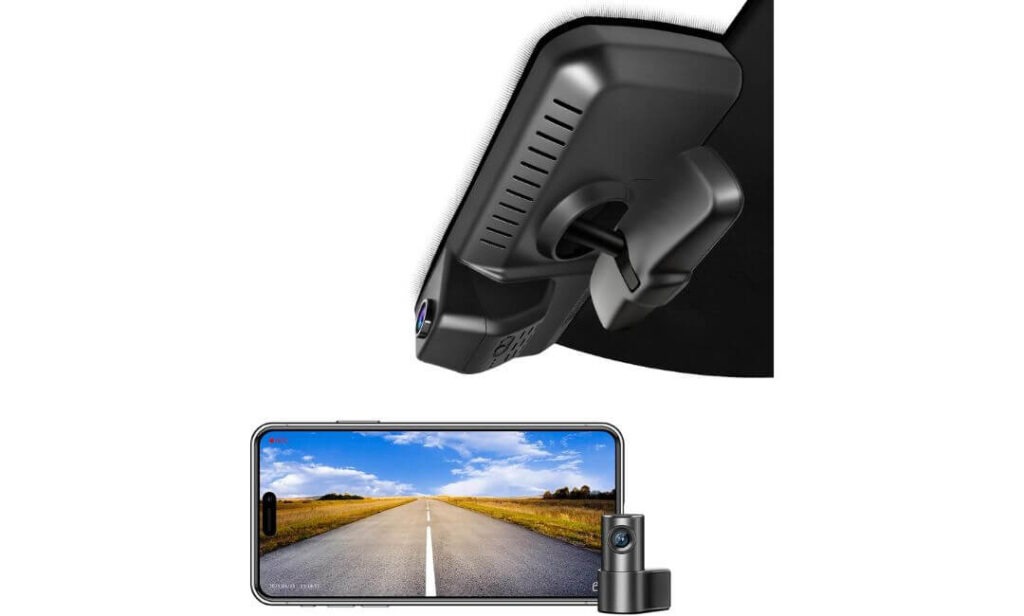
Quick Specs:
- Custom-built for newer Toyota 4Runner trims including SR5, TRD Off-Road, Limited & Sport
- Integrated OEM-style housing mounted behind the mirror
- Front 4K UHD recording with dedicated rear 1080P camera
- Wide-angle coverage (150° front / 140° rear)
- Built-in GPS for speed and route tracking
- App-controlled WiFi video access and downloads
- Includes larger 128GB microSD card out of the box
- G-Sensor collision locking with seamless loop recording
- Supercapacitor-based internal setup for better heat durability
- Includes rear camera wiring and lane-assist power adapter
Here’s the thing most people realize after owning a 4Runner for a while: the cabin feels too clean and purpose-built to ruin with a giant hanging screen and visible wires everywhere. That’s exactly why this setup immediately stands out. Instead of looking like an aftermarket gadget stuck onto the windshield, it blends into the mirror area in a way that genuinely feels intentional.
What makes this one especially interesting is the balance between factory-style appearance and actual functionality. A lot of “hidden” dash cams sacrifice features to stay compact, but this setup still gives you true front-and-rear recording, GPS tracking, app control, and wide-angle visibility without turning the cabin into a mess. Once installed, it feels closer to a premium OEM option than a typical Amazon accessory.
The dual-camera setup also makes more sense in a 4Runner than many owners expect. SUVs like this often carry gear, luggage, recovery equipment, or rear passengers that affect visibility, so having a dedicated rear camera becomes genuinely useful during parking incidents, traffic situations, or highway driving. The front 4K footage stays sharp enough to catch road details and plates clearly, while the rear 1080P recording adds a layer of protection many factory-integrated models still skip entirely.
Another detail worth appreciating is the use of a supercapacitor instead of relying completely on a traditional battery setup inside the camera. In hotter climates or during long summer parking, that matters more than flashy marketing claims because heat is one of the biggest reasons cheaper dash cams start failing early inside SUVs.
(This feels like the kind of setup someone installs once, then completely forgets about because it quietly works every single drive.)
What Earned It a Spot on This List
- Clean integrated look fits the 4Runner interior surprisingly well
- Dual-channel setup adds extra confidence during parking and traffic
- Included 128GB card saves an extra purchase immediately
- GPS tracking is useful for road trips and trail documentation
- Wide-angle coverage helps reduce blind spots around larger SUVs
- App access feels quicker and less frustrating than many budget systems
A Small Thing Buyers Should Know Up Front
- Fitment is very specific, so checking the correct mirror-cover version before ordering is important
Fitment Notes for Newer Toyota 4Runner Trims
This model is designed specifically around the newer-generation 4Runner interior layout and trim structure, which is why the installation ends up looking much cleaner than universal dash cameras. It fits behind the factory mirror area rather than hanging below it, helping preserve the open visibility that 4Runner owners usually prefer.
It also supports multiple trims including SR5, TRD Off-Road, TRD Sport, Limited, and Premium variants, but choosing the correct version matters because Toyota changed interior layouts between generations. The newer “Model B” fitment is the important detail here.
The Insider Pro-Tip
If you already know you want rear recording, it’s usually smarter to start with an integrated dual-camera setup like this instead of adding a rear camera later. Most people underestimate how annoying it becomes trying to hide extra wiring after they’ve already installed a front-only camera.
What makes this setup appealing isn’t just the specs — it’s how complete the package feels right out of the box. Front camera, rear camera, GPS, storage card, proper fitment hardware… it avoids that frustrating cycle where you keep ordering extra accessories weeks after the original purchase just to make everything work properly.
#3. ROVE R2-4K Dual Dash Cam
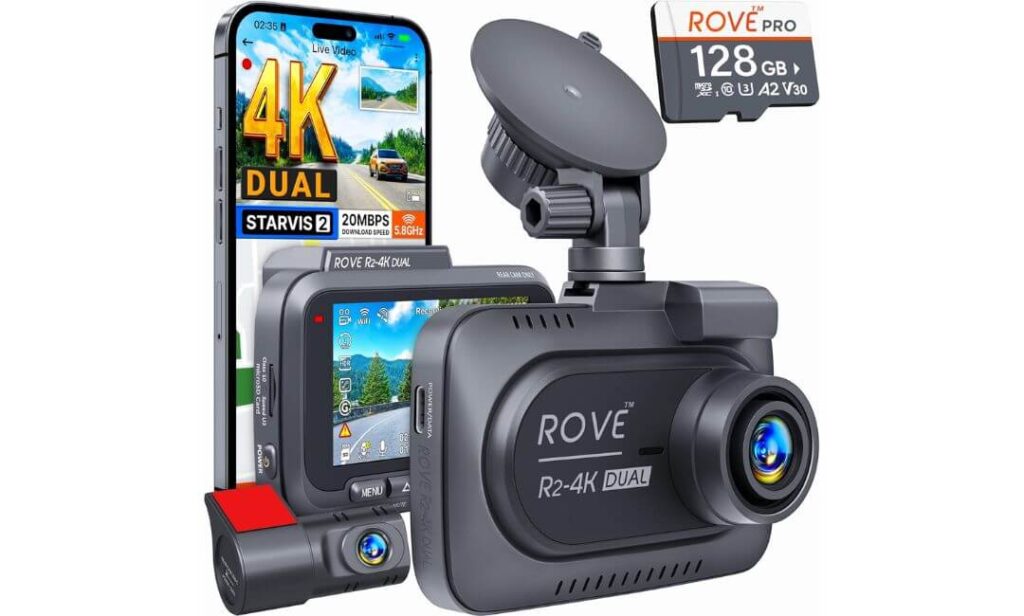
Quick Specs:
- True dual-channel setup with 4K front + 1080P rear recording
- Premium Sony STARVIS 2 sensor for stronger low-light clarity
- Ultra-fast dual-band 5G WiFi downloads up to 20MB/s
- Built-in GPS with speed, route, and location stamping
- Real 24-hour parking protection support (hardwire kit required)
- Supercapacitor setup built for heat, cold, and long-term durability
- Wide-angle coverage (150° front / 140° rear)
- Includes full 128GB microSD card
- Supports storage expansion up to 1TB
- Multiple mounting options for cleaner SUV installations
Some dash cams look impressive until the sun goes down. Then suddenly headlights bloom everywhere, license plates disappear, and the footage becomes useless the one time you actually need it. This setup feels completely different the moment nighttime driving enters the picture. The STARVIS 2 sensor is the real reason people keep coming back to this model — not marketing hype, actual usable low-light footage.
Inside a 4Runner, that matters even more because SUVs naturally sit higher and deal with more windshield glare, wider road exposure, darker tint setups, and rougher driving environments. The combination of the Sony IMX675 sensor, f/1.5 front aperture, and HDR tuning gives this camera a noticeably cleaner image during rain, poorly lit highways, parking garages, and backroad driving where many cheaper cameras completely fall apart.
What also makes this setup stand out is how complete it feels without trying to force an “OEM” identity it doesn’t actually have. Unlike integrated mirror-housing cameras, this is unapologetically a premium universal setup — and honestly, that works in its favor. You get a larger 3-inch display, faster app transfers, better customization, stronger parking monitoring options, and much more flexibility when positioning both cameras inside the SUV.
The app experience is another place where this model quietly separates itself from typical budget dash cams. Download speeds are genuinely fast, settings feel polished, and OTA firmware support means the camera doesn’t immediately feel outdated six months later. Even the included accessories package feels unusually complete compared to most kits people end up piecing together afterward.
(This is the kind of dash cam people buy after getting frustrated with cheaper models that looked good online but failed during actual night driving.)
What Made It Easy to Recommend
- STARVIS 2 night footage is genuinely stronger than most competitors
- Parking mode options feel more advanced and customizable
- Fast WiFi transfers save a surprising amount of daily frustration
- GPS data adds useful evidence during incidents or insurance claims
- Supercapacitor setup handles SUV cabin heat much better long term
- Rear camera coverage works well in larger vehicles like the 4Runner
One Thing Buyers Should Understand Before Ordering
- Installation takes more effort than OEM-style integrated cameras because rear wiring must be routed manually
Real-World Compatibility for Toyota 4Runner Owners
Unlike the first two cameras on this list, this setup is not designed specifically around Toyota’s factory trim pieces. Instead, it uses a more traditional windshield-mounted approach with separate front and rear camera placement. For some owners, that’s actually an advantage because positioning becomes much more customizable.
The included rear cable length also works surprisingly well for larger SUVs, which matters because many dual-camera systems end up too short once routed cleanly through a 4Runner cabin. With proper cable management, the final setup can still look clean without interfering heavily with visibility or interior functionality.
The Insider Pro-Tip
If nighttime clarity is your top priority, sensor quality matters more than raw resolution numbers. A bad “4K” camera still looks terrible once lighting conditions get difficult. That’s why setups using newer STARVIS sensors consistently outperform many cheaper alternatives that advertise similar specs on paper.
This model also makes more sense for drivers who plan to keep their dash cam long term. Expandable storage, firmware updates, stronger parking features, and better thermal durability all become much more valuable after a year of ownership than they seem on day one.
#4. WOLFBOX G900 Pro Mirror Dash Cam
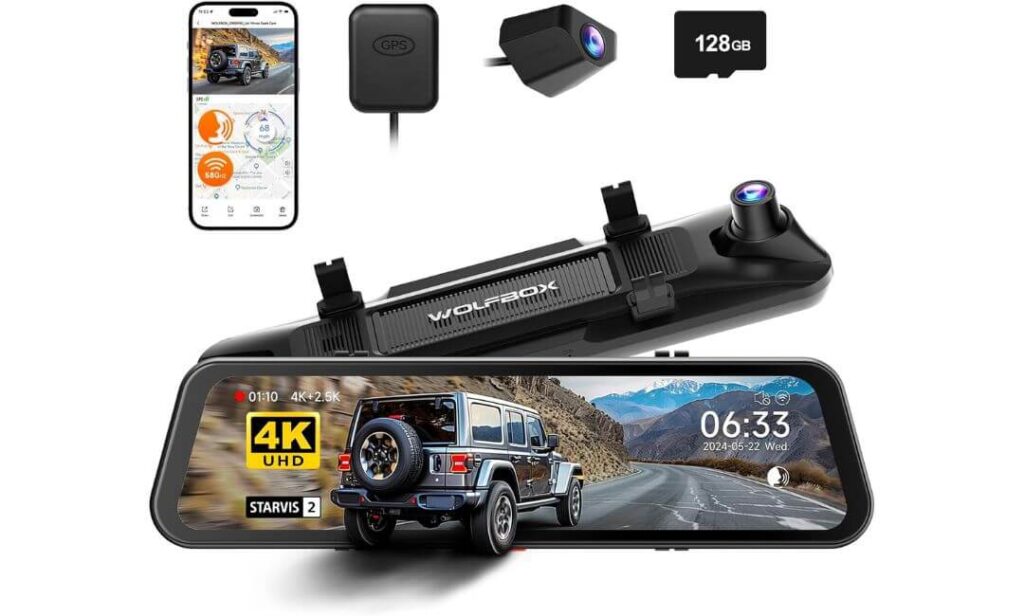
Quick Specs:
- Massive 12-inch smart mirror display
- Front 4K 8MP recording with upgraded rear 2.5K camera
- Premium Sony STARVIS 2 IMX678 sensor
- Wide 170° field of view for broader road coverage
- Built-in GPS with route and speed tracking
- High-speed 5.8GHz WiFi with app control
- Voice-command support for hands-free operation
- Includes full 128GB memory card
- Supercapacitor setup for better heat durability
- 24-hour parking monitoring support (hardwire kit required)
Oddly enough, this is the first camera on the list that can completely change how the inside of your 4Runner feels while driving. The moment the 12-inch mirror screen powers on, rear visibility opens up in a way standard dash cams simply can’t replicate — especially in SUVs carrying camping gear, cargo boxes, recovery tools, passengers, or darker rear tint.
Instead of acting like a tiny recording device stuck onto the windshield, this setup becomes part of the driving experience itself. The larger mirror display gives a much wider live rear view than the factory mirror alone, which honestly feels incredibly useful in a taller SUV like the 4Runner where blind spots and blocked rear visibility are already common frustrations.
Image quality is also much more serious than most “mirror cameras” people remember from years ago. The upgraded 8MP STARVIS 2 sensor paired with the 7-glass lens setup delivers surprisingly crisp footage during difficult lighting conditions, especially at night. Highway signs, lane markings, headlights, and plate details stay cleaner and more controlled than many smaller dash cams struggling with glare and motion blur.
Then there’s the convenience side of this setup, which starts making sense almost immediately during daily driving. Voice controls, fast WiFi transfers, GPS tracking, touchscreen access — it all feels designed for people who actually use their vehicles constantly instead of just wanting emergency footage sitting untouched on an SD card.
(This doesn’t feel like buying a dash cam. It feels more like upgrading the entire mirror system inside the SUV.)
What Really Impressed Us Here
- Huge mirror display dramatically improves rear visibility
- STARVIS 2 night clarity feels genuinely premium
- Rear 2.5K footage is sharper than most dual-camera rivals
- Voice controls reduce distraction during driving
- Long rear cable works well in larger SUVs like the 4Runner
- WiFi transfers are fast enough to actually use regularly
One Thing Worth Knowing Before Installation
- The larger mirror format takes a few drives to get fully comfortable with if you’ve never used a smart mirror camera before
Real-World Fitment Notes for 4Runner Owners
This is a universal mirror-mounted system rather than a factory-integrated housing, but it actually works extremely well inside the 4Runner because of the SUV’s taller windshield and cabin layout. The long rear cable routing also helps simplify installation compared to some smaller dual-camera kits that struggle inside larger vehicles.
Some owners also pair it with an optional OEM-style mounting bracket for a cleaner appearance, which helps the final setup feel even more natural inside the cabin. Either way, the system fits the 4Runner surprisingly well once properly installed.
The Insider Pro-Tip
Mirror dash cams make the biggest difference in vehicles where rear visibility changes constantly. That’s exactly why they tend to feel more valuable inside SUVs and trucks than inside small sedans.
If your 4Runner regularly carries camping gear, luggage, rooftop equipment, pets, passengers, or darker tint, a setup like this becomes useful every single drive — not just during accidents. That’s the part many buyers don’t fully understand until after living with one for a few weeks.
#5. IIWEY 4K+4K Dash Cam
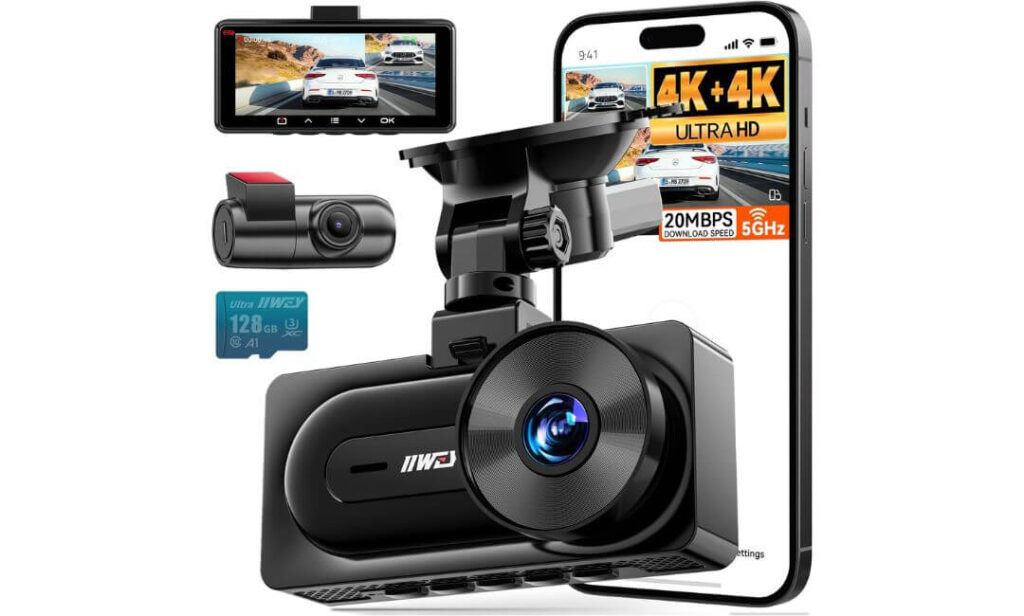
Quick Specs:
- True 4K front + true 4K rear recording
- Dual Sony STARVIS low-light sensors
- Ultra-fast WiFi 6 transfers up to 20MB/s
- Built-in GPS route and speed tracking
- Real 24/7 parking monitoring support
- Wide 170° viewing coverage
- HDR tuning for difficult night driving
- Supercapacitor setup for long-term heat durability
- Includes full 128GB memory card
- Supports app-based clip viewing and downloads
Most value-focused dash cams force buyers into compromises somewhere — weak rear quality, slow apps, blurry night footage, cheap heat-sensitive internals, or fake “4K” marketing that collapses the second headlights hit the lens. This one avoids more of those problems than expected, which is honestly why it earned a place this high in the lineup.
The biggest surprise here is the fact that both cameras record in full 4K instead of dropping the rear camera down to basic 1080P like most competitors. Inside a larger SUV like the 4Runner, rear footage matters more than many drivers realize because tailgaters, parking incidents, lifted trucks behind you, and highway lane changes often happen outside the front camera’s view. Having actual usable rear clarity instead of soft blurry footage makes a real difference.
Night performance is also stronger than typical mid-range setups thanks to the dual STARVIS sensors and wider F1.6 aperture design. High-beam glare stays more controlled, darker highways remain easier to read, and plate visibility during nighttime driving feels noticeably cleaner than cheaper cameras that struggle once road lighting disappears. It doesn’t try to artificially over-brighten footage either, which helps preserve detail instead of turning everything into a washed-out mess.
The WiFi 6 support ends up becoming more useful than expected too. Most people don’t think about transfer speed until they’re sitting in a parking lot waiting forever for a large video file to move onto their phone. Here, downloads feel quick enough that you’ll actually use the feature regularly instead of avoiding it.
(This feels like one of those rare value-focused products that was clearly designed by people who actually use dash cams themselves.)
What Made This One Easy to Appreciate
- True dual 4K recording is rare at this price level
- STARVIS sensors improve nighttime clarity noticeably
- Fast WiFi transfers save time during footage downloads
- Rear footage quality stays sharper than most competitors
- Parking protection features feel surprisingly complete
- Included accessories make installation easier immediately
A Small Detail Worth Knowing Early
- Parking monitoring requires the separate hardwire kit for full functionality
Real-World Setup Notes for Toyota 4Runner Owners
This is a universal windshield-mounted system rather than an integrated OEM-style setup, but the wider viewing angles and long rear cable routing work surprisingly well inside larger SUVs like the 4Runner. The rear camera placement especially benefits from the taller hatch layout and broad rear visibility area.
Installation also tends to feel simpler than some dual-camera systems because the package includes most of the small accessories owners usually end up buying separately later. With clean cable routing along the headliner, the final setup can still look neat without heavily affecting cabin visibility.
The Insider Pro-Tip
A lot of buyers chase “front camera quality” and completely ignore rear footage until after an incident happens behind them. That’s usually when regret starts. In real-world SUV driving, rear coverage matters far more than people expect — especially in parking lots, highway traffic, and stop-and-go conditions.
That’s why this setup stands out. It doesn’t treat the rear camera like an afterthought. Both sides of the vehicle get enough clarity to feel genuinely useful, which is still surprisingly uncommon even in many expensive dash cams.
#6. TERUNSOUl 4K+4K Dash Cam
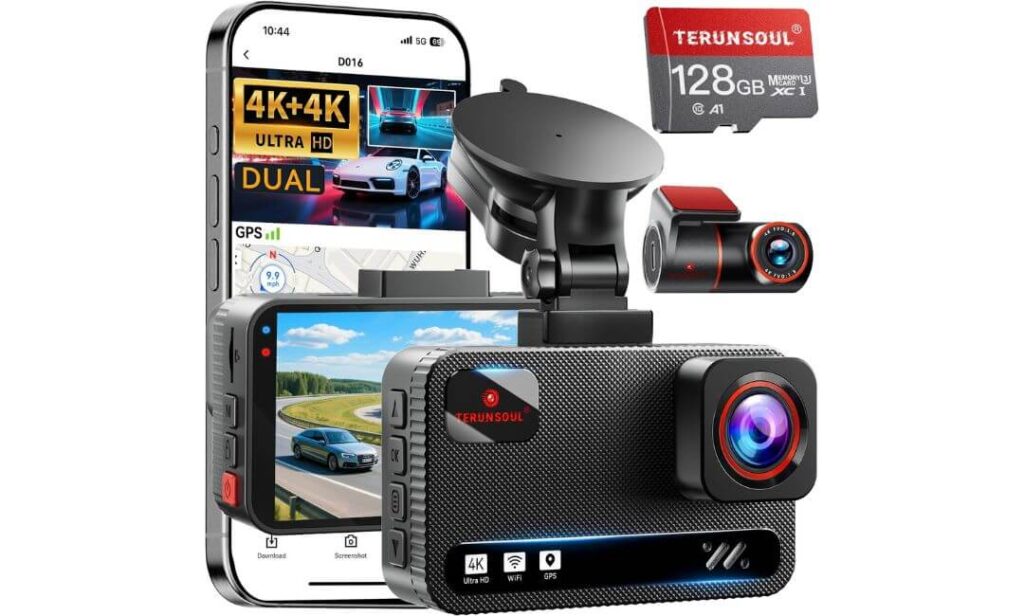
Quick Specs:
- True 4K front + 4K rear recording
- Wide 170° front-road coverage
- Enhanced WDR night recording with large F1.5/F1.8 apertures
- Built-in GPS with live speed and route tracking
- Fast dual-band 5.8GHz WiFi app connectivity
- Includes full 128GB memory card
- Supports storage expansion up to 512GB
- 24-hour parking surveillance support
- One-touch emergency video lock button
- Long 21ft rear cable designed well for larger SUVs
Sometimes the best value products are the ones that don’t spend half their budget trying to look “premium.” They simply focus on giving drivers the features they actually use every day — and honestly, that’s exactly the feeling this setup gives once installed inside a 4Runner.
The first thing that stands out is the fact that both cameras record in full 4K instead of treating the rear camera like a secondary afterthought. In a taller SUV, rear footage becomes surprisingly important because highway traffic, parking incidents, and aggressive tailgaters often happen outside the front lens. Here, both sides of the vehicle stay detailed enough to feel genuinely useful instead of “good enough.”
Night performance is also stronger than expected for this price range. The larger apertures combined with enhanced WDR processing help preserve road details without aggressively overexposing headlights or turning darker areas into grainy noise. Highway signs, lane markings, and nearby vehicles remain easier to identify during low-light driving — especially important in SUVs that naturally sit higher and collect more glare across the windshield.
There’s also a simplicity to this camera that many buyers end up appreciating long term. The setup process feels straightforward, the included accessories reduce extra purchases, and the physical emergency lock button is surprisingly useful during stressful moments when digging through menus is the last thing you want to do.
(This feels less like a flashy tech gadget and more like a practical road companion that quietly handles its job every drive.)
What Helped It Earn a Spot Here
- True dual 4K recording adds real rear visibility value
- Included 128GB card keeps setup simple from day one
- Wide viewing angle works well in larger SUVs
- GPS tracking adds useful driving evidence when needed
- Night clarity performs better than expected in this range
- Long rear cable routing suits the 4Runner cabin layout nicely
One Small Reality Buyers Should Know
- App connectivity can occasionally feel less polished compared to higher-end premium brands
Real-World Setup Notes for Toyota 4Runner Owners
This is a universal windshield-mounted system rather than a hidden OEM-style camera, but it adapts well to the 4Runner’s cabin because of the SUV’s upright windshield and spacious interior layout. The extra-long rear cable also helps simplify routing toward the back hatch area without forcing awkward placement compromises.
Installation tends to feel beginner-friendly overall, especially for owners doing their first dual-camera setup. With proper headliner cable routing, the final look can still remain fairly clean without heavily affecting visibility.
The Insider Pro-Tip
A lot of buyers assume “budget-friendly” automatically means weak footage or frustrating ownership. That’s not always true anymore. Some newer dash cams are starting to prioritize practical features instead of flashy branding, and this setup is a good example of that shift.
If your goal is getting strong front-and-rear protection, solid nighttime visibility, GPS tracking, and usable parking coverage without jumping straight into premium pricing territory, this kind of setup honestly makes more sense for many everyday 4Runner owners than overspending on features they may never actually use.
Best Front and Rear Dash Cam Options for Toyota 4Runner Owners Compared
| Dash Cam | Best For | Video Setup | Night Driving | Parking Mode | Install Style | Why Owners Love It |
|---|---|---|---|---|---|---|
|
Fitcamx 4K
OEM Favorite
|
Factory-look 4Runner builds | Front 4K | Excellent WDR clarity | No | Hidden OEM integration | Looks almost factory-installed once fitted |
|
Mangoal 4K
Best Hidden Dual Cam
|
OEM look + rear recording | 4K Front + 1080P Rear | Strong low-light balance | Supported | Mirror-integrated setup | Keeps the cabin clean without losing rear coverage |
|
ROVE R2-4K Dual
Editor’s Pick
|
Balanced all-around performance | 4K Front + 1080P Rear | STARVIS 2 sensor | 24H Supported | Universal windshield mount | One of the strongest real-world night performers |
|
WOLFBOX G900 Pro
Premium Mirror Setup
|
Lifted SUVs & cargo-heavy setups | 4K Front + 2.5K Rear | Excellent glare control | 24H Supported | Smart mirror replacement | Huge mirror screen changes rear visibility completely |
|
IIWEY Q7
Best Value 4K+4K
|
True dual 4K recording | 4K Front + 4K Rear | Dual STARVIS sensors | 24H Supported | Universal mount | Rear footage quality is surprisingly sharp for the price |
|
TERUNSOUl D016
Budget-Friendly Pick
|
Affordable full-time protection | 4K Front + 4K Rear | Enhanced WDR tuning | 24H Supported | Windshield mounted | Gives surprisingly complete features for the money |
Buying Guide: What Actually Matters Before Choosing a Dash Cam for the Toyota 4Runner
A Toyota 4Runner isn’t driven like a normal crossover, and honestly, that’s where many generic dash cam recommendations completely miss the point. The taller seating position, upright windshield, off-road suspension movement, summer cabin heat, cargo-heavy road trips, rooftop gear, darker tint — all of those things change what works well long term inside this SUV.
That’s why choosing the right dash cam for a 4Runner is less about chasing random “4K” marketing and more about finding something that genuinely fits the way these vehicles are used in real life.
OEM Fit vs Universal Mounts: Which Actually Makes More Sense?
This is usually the first major decision 4Runner owners need to make.
OEM-style cameras like the Fitcamx or Mangoal setups are designed to blend directly into the factory mirror housing area, which creates a much cleaner interior look. No hanging screens, fewer visible wires, less windshield clutter. For daily drivers, newer trims, or owners who care heavily about cabin aesthetics, this style usually feels more satisfying long term.
Universal dash cams, on the other hand, give more flexibility. Cameras like the ROVE, IIWEY, and TERUNSOUl models can be positioned exactly where you want them, often include larger displays, stronger parking features, and easier hardware upgrades later.
Neither option is automatically “better.” It depends on whether you value factory integration or maximum flexibility more.
Why Sensor Quality Matters More Than “4K” Labels
A huge number of buyers focus only on video resolution, which honestly creates disappointment later.
A cheap 4K camera with weak sensors can still produce blurry nighttime footage, blown-out headlights, unreadable plates, and grainy highway recordings. In a taller SUV like the 4Runner — especially one driven at night, on trails, or during bad weather — sensor quality becomes far more important than raw pixel numbers.
That’s exactly why cameras using Sony STARVIS sensors stood out so strongly in this article. Better low-light processing, cleaner HDR control, stronger plate visibility, and improved glare handling make a real difference once road conditions become difficult.
For many 4Runner owners, nighttime clarity is the feature they end up appreciating most after a few months of ownership.
Front-Only vs Front-and-Rear Coverage
A lot of people initially think a front camera is enough… until the first parking lot incident or rear-end close call happens.
Inside larger SUVs, rear visibility naturally changes depending on passengers, luggage, rooftop cargo, camping equipment, or darker tint. That’s why dual-camera systems usually make more sense in the 4Runner than they do in smaller cars.
Front-and-rear setups provide:
- Better evidence during rear impacts
- More parking protection coverage
- Cleaner highway incident recording
- Extra visibility around blind spots and cargo-loaded setups
Some of the newer systems now even offer true 4K rear recording instead of reducing the rear camera to soft 1080P footage, which helps significantly during insurance situations.
Parking Mode Isn’t Just a Bonus Feature Anymore
For SUVs that spend time parked outdoors, parking surveillance becomes genuinely valuable.
But this is also where many buyers misunderstand how dash cam parking modes actually work. There are usually two different systems involved:
- Motion detection recording
- Impact-triggered recording using a G-sensor
Higher-end setups often combine both. Some cameras continuously monitor movement around the vehicle, while others automatically lock footage once a collision or vibration is detected.
It’s also important to know that many dash cams require a separate hardwire kit for full-time parking functionality. Without proper hardwiring, some parking features simply won’t activate correctly.
Why WiFi and App Quality Matter More Than Expected
Most buyers ignore app quality during research, then regret it later.
A dash cam can have amazing footage quality, but if transferring clips becomes painfully slow or the app constantly disconnects, owners eventually stop using those features entirely. Faster WiFi systems like WiFi 6 or 5.8GHz setups genuinely improve the ownership experience because downloading large clips becomes quick enough to actually use regularly.
This matters even more during stressful situations where you need footage immediately after an accident or road incident.
Good app support also helps with:
- Firmware updates
- GPS playback
- Clip sharing
- Emergency downloads
- Camera setting adjustments
The difference between a polished app and a frustrating one becomes obvious surprisingly fast.
Heat Resistance and Off-Road Durability Are Huge for the 4Runner
This part gets ignored on most websites, but it matters heavily in real ownership.
The inside of a parked 4Runner can become brutally hot during summer, especially with larger windshields and darker interiors. Add off-road vibration, rough terrain movement, dust exposure, and long-distance travel, and weaker dash cams start failing much faster than expected.
That’s why supercapacitor-based systems are usually safer long-term choices than cheaper battery-reliant cameras. They tolerate heat better, handle repeated temperature cycles more reliably, and tend to survive rougher use conditions.
Off-road driving also creates constant vibration, which means mount stability matters much more in the 4Runner than in many commuter vehicles.
Hidden Installations Usually Age Better
Most owners underestimate how annoying exposed wires become over time.
What initially feels “fine” during installation slowly starts looking messy after months of daily driving, cleaning, road trips, windshield sunshades, camping gear, and passengers moving around the cabin.
That’s exactly why hidden OEM-style installations have become so popular recently. A clean setup simply feels better every single day you drive the SUV.
And honestly, in a vehicle people often keep for years like the Toyota 4Runner, small cabin details end up mattering much more than buyers expect at first.
Quick Snapshot: Why Newer Dash Cam Setups Feel So Much Better Inside the Toyota 4Runner
The difference between older dash cams and newer-generation systems becomes obvious the moment you actually start driving with them daily inside a 4Runner. A few years ago, most cameras focused mainly on basic accident recording. Now, the better setups are starting to feel much more integrated into the overall driving experience — especially in larger SUVs where visibility, parking protection, and night clarity matter more than people expect.
That shift is exactly why modern dash cams no longer feel like simple windshield accessories. The stronger systems now solve real ownership frustrations that 4Runner drivers deal with constantly, from poor nighttime visibility to messy installations and unreliable parking coverage.
4K Recording Finally Became Genuinely Useful
For a long time, “4K” mostly existed as a marketing term. Plenty of older cameras advertised ultra-high resolution but still produced blurry footage once vehicles started moving quickly or lighting conditions became difficult.
That’s changed quite a bit with newer sensors and processing systems.
Modern 4K setups now capture significantly cleaner license plate details, sharper highway signage, trail markers, parking lot movement, and lane positioning — especially in SUVs sitting higher off the road like the 4Runner. During road trips, mountain driving, off-road trails, or heavy traffic situations, the extra detail becomes much easier to appreciate once footage is reviewed later.
Rear-camera quality has also improved heavily. Earlier dual-camera systems usually sacrificed rear clarity completely, but newer setups offering true 4K rear recording or upgraded 2.5K rear footage now provide much more usable evidence during rear-end incidents and parking situations.
Night Driving Performance Has Improved More Than Most Buyers Realize
This is honestly where the newest dash cams separate themselves fastest from older hardware.
Driving a 4Runner at night creates unique visibility challenges because of the SUV’s height, windshield angle, larger cabin reflections, darker tint setups, and off-road environments with very little surrounding light. Older cameras often struggled badly once highways became dark or headlights started reflecting aggressively across wet roads.
Newer systems using technologies like Sony STARVIS sensors, HDR tuning, larger apertures, and multi-layer glass lenses now handle those situations much better. Instead of footage turning into smeared glare and grainy shadows, road markings, nearby vehicles, signs, and plate details remain more controlled and readable.
That improvement becomes especially noticeable during:
- Rainy highway driving
- Backroad travel with little street lighting
- Parking garages
- Trail exits after sunset
- Long-distance road trips
- Heavy traffic with strong headlight glare
For many owners, nighttime clarity ends up becoming the single feature they appreciate most after several months of real driving.
Parking Protection Has Become Much Smarter
Earlier parking modes were honestly pretty basic. Many systems either missed incidents completely or constantly triggered false recordings every few minutes.
The better modern setups now use much smarter combinations of motion sensing, collision detection, buffered recording, low-voltage battery protection, and time-lapse surveillance. That means the camera can often start saving footage moments before an impact happens instead of only recording after the collision already occurred.
This becomes especially valuable in:
- Crowded parking lots
- Apartment parking garages
- Trailhead parking areas
- Airport long-term parking
- Street parking overnight
Some newer systems also quietly improved battery management, helping reduce the risk of draining the vehicle during extended parking sessions — something older hardwired setups occasionally struggled with.
OEM-Style Designs Changed the Entire Ownership Experience
One of the biggest reasons modern dash cams feel better inside the 4Runner has nothing to do with image quality at all.
It’s the cleaner installation style.
Older dash cams often looked temporary — giant suction mounts, hanging power cables, flashing screens, bulky housings attached awkwardly to the windshield. Inside a clean SUV interior like the 4Runner, that clutter started feeling annoying surprisingly quickly.
The newer OEM-style systems changed that completely.
Integrated mirror housings, hidden wiring paths, smaller camera bodies, and cleaner trim-mounted designs now make many setups feel almost factory-installed once completed. Some passengers won’t even realize a camera is installed until footage gets shown later.
And honestly, for an SUV people often keep for many years, that cleaner everyday experience matters far more long term than most buyers initially think.
Installation & Setup: What Actually Makes a Dash Cam Look Clean Inside a Toyota 4Runner
A surprising number of dash cams get blamed for “bad design” when the real problem is poor installation. Inside a Toyota 4Runner, setup quality changes everything — visibility, heat resistance, cabin appearance, rattles, even long-term reliability.
The good news is that the 4Runner is actually one of the easier SUVs to work with once you understand where the wiring should go and which mounting style makes the most sense. The cabin has enough trim space and headliner room to hide cables properly without turning the interior into a mess.
And honestly, this is the point where spending an extra hour during installation pays off every single day afterward.
Choosing the Right Mounting Position Matters More Than Most People Think
One of the biggest mistakes owners make is mounting the camera too low on the windshield.
A dash cam should sit high enough to maximize road visibility while staying outside your normal driving line of sight. In most 4Runner setups, the sweet spot is usually near the rearview mirror area because it:
- Keeps the windshield looking cleaner
- Reduces distraction while driving
- Improves front-road visibility angles
- Captures license plates more consistently
- Protects the camera better from direct sunlight
OEM-style models naturally solve this better because they integrate directly into the mirror housing area. Universal setups require a little more positioning effort, but when mounted correctly, they can still look very clean.
The camera angle matters too. Slightly downward positioning usually produces the best balance between road coverage, horizon exposure, and nearby plate visibility without wasting frame space on too much sky.
How to Route Wiring Without Ruining the Interior
This is where many installations start looking messy.
The cleanest 4Runner dash cam setups almost always route power cables:
- Behind the headliner
- Down the A-pillar trim carefully
- Under weather stripping or door seals
- Through side trim panels toward the power source
Most owners never realize how much loose wiring changes the feel of the cabin until they finally hide everything properly. A clean installation honestly makes the dash cam feel more premium immediately.
But there’s one extremely important detail here: avoid placing cables directly across airbag deployment paths inside the A-pillar area. The 4Runner’s curtain airbags need space to deploy safely, so wiring should stay tucked behind factory routing channels instead of crossing directly over airbag locations.
Taking a few extra minutes to route cables carefully prevents future rattles, loose trim clips, and unnecessary cabin noise too.
Hardwire Kits vs 12V Power: Which One Makes More Sense?
This depends heavily on how you actually use the SUV.
For basic daily driving, a 12V cigarette lighter connection works perfectly fine. It’s simpler, faster, and easier for beginners installing their first dash cam. The camera powers on with the vehicle and shuts off automatically afterward.
But for owners wanting:
- 24-hour parking monitoring
- Motion-triggered recording
- Time-lapse surveillance
- Impact recording while parked
…a proper hardwire kit becomes much more important.
Hardwiring connects the camera directly into the fuse box while using low-voltage protection to avoid draining the battery excessively. Many modern dash cams now support buffered parking recording, which means they can save footage from moments before an impact occurs instead of only after the collision already happened.
Inside the 4Runner, fuse box access is usually manageable for most DIY installations, though some owners still prefer professional installation for cleaner routing and peace of mind.
Rear Camera Installation Usually Takes Longer Than Expected
Front cameras are easy. Rear cameras are where patience matters.
The cleanest rear-camera setups usually route the cable:
- Along the headliner
- Through upper door trim areas
- Toward the rear hatch carefully
- Behind interior panels whenever possible
The 4Runner’s larger cabin and rear cargo area actually make this easier than in many smaller vehicles, especially when using longer included rear-camera cables like the ones found on the ROVE, WOLFBOX, IIWEY, and TERUNSOUl systems.
OEM-style setups usually hide front wiring more naturally, while universal systems require more manual cable management. Neither approach is wrong — they just create different installation experiences.
And honestly, once everything is hidden properly, the interior feels dramatically more refined compared to setups with visible hanging wires.
WiFi Setup and App Pairing Are Usually Easier Than People Expect
Most newer dash cams now use mobile apps for:
- Video playback
- Downloading clips
- Firmware updates
- GPS route viewing
- Camera settings
- Emergency footage saving
The fastest systems use 5GHz or WiFi 6 connections, which helps tremendously when transferring large 4K files to a phone.
One thing many owners don’t realize: you usually do not need the camera constantly connected to WiFi during daily driving. Most systems automatically record independently once powered on. WiFi mainly becomes useful later when reviewing or saving footage.
Firmware updates also matter more now than they used to. Some brands actively improve stability, parking features, app performance, and recording reliability through OTA updates long after purchase.
Visibility, Recording Laws, and Safety Considerations
Dash cams should never block your forward driving view or interfere with factory safety systems.
In most states, windshield-mounted cameras are legal when positioned properly, usually near the top center area behind the rearview mirror. Still, local regulations can vary, especially regarding:
- Windshield obstruction laws
- Audio recording permissions
- Parking surveillance recording
- Consent rules for interior audio capture
That’s why many owners now prefer compact hidden systems or OEM-style housings that stay mostly out of sight.
And finally, no matter how advanced the camera is, secure mounting matters. Off-road vibration, rough terrain, potholes, and long-distance driving can slowly loosen weak mounts over time. Inside a 4Runner, stronger adhesive mounting systems and stable mirror integrations usually hold up better long term than cheaper suction setups.
Real-World Situations Where a Good Dash Cam Changes the Entire 4Runner Ownership Experience
A lot of people still think dash cams are only useful after accidents. In reality, most 4Runner owners end up appreciating them long before anything serious ever happens.
That’s because the Toyota 4Runner is rarely driven in predictable conditions. These SUVs end up on mountain roads, desert trails, crowded parking lots, dark highways, remote campsites, cross-country road trips, and rough weather routes where visibility and evidence matter far more than they do in normal commuter vehicles.
And honestly, once you start using a properly installed dash cam daily inside a 4Runner, it becomes one of those upgrades that quietly changes how relaxed and prepared the vehicle feels overall.
Off-Road Driving Creates Situations Most Standard Cars Never Deal With
This is one of the biggest reasons 4Runner owners benefit from stronger dash cam systems.
Off-road driving introduces constant vibration, sudden angle changes, uneven terrain, dust, mud, rocks, wildlife crossings, and unpredictable trail traffic. During rough driving, cheaper cameras often start shaking excessively, overheating, losing footage, or missing important details completely.
A stronger setup helps capture:
- Trail entrances and route markers
- Unexpected impacts or suspension hits
- Aggressive passing on narrow trails
- GPS-tagged route history
- Recovery situations and convoy driving
- Damage evidence during difficult terrain sections
Some owners even use their footage later to review tire placement, trail conditions, or route changes during longer trips.
This is also where wide-angle lenses and stable mounts become extremely important. Inside a bouncing SUV, footage quality can fall apart quickly if the camera mount isn’t stable enough for rough terrain.
Night Driving Feels Much Safer With Better Low-Light Cameras
Driving a 4Runner at night feels completely different than driving a smaller sedan.
The higher seating position, darker cabins, larger windshield reflections, rooftop gear, tinted rear glass, and rural-road driving conditions all make nighttime visibility more challenging than many people expect. Add rain, fog, canyon roads, or poorly lit highways, and weak dash cams quickly become frustrating.
That’s why newer STARVIS-equipped cameras stood out so strongly throughout this article.
Better night sensors help with:
- Reading license plates during highway speed changes
- Capturing wildlife movement near roadsides
- Controlling harsh headlight glare
- Preserving lane markings during storms
- Identifying vehicles during low-light incidents
And honestly, this becomes especially valuable during long road trips where fatigue, darkness, and weather conditions all combine at the same time.
Many owners don’t fully realize how weak older dash cams are until they finally compare nighttime footage side by side against newer sensor technology.
Parking Lots Are Where Many Drivers Finally Appreciate Parking Mode
A huge number of vehicle incidents happen while the SUV is parked.
Door dings, shopping cart impacts, hit-and-runs, careless reversing, vandalism — parking lots create more frustration than most owners expect, especially for SUVs that spend time outdoors regularly.
That’s exactly why modern parking modes matter now.
Better systems can:
- Detect impacts automatically
- Save buffered footage from before the collision
- Trigger recording when motion appears nearby
- Lock important clips from being overwritten
- Monitor the vehicle during overnight parking
For 4Runner owners who travel frequently, park near trails, leave gear inside the vehicle, or spend time in crowded urban parking areas, these features quickly stop feeling like “extras” and start feeling essential.
And unlike older parking systems that constantly drained batteries or triggered false alerts, newer low-voltage protection systems are becoming much smarter and more reliable.
Long Road Trips Put More Stress on a Dash Cam Than Most Buyers Expect
This is where build quality quietly separates good cameras from frustrating ones.
Long-distance 4Runner trips often mean:
- Hours of direct sunlight through the windshield
- Cabin temperatures climbing aggressively
- Constant recording over many hours
- Rough highway vibration
- Dust exposure
- Frequent file saving and overwriting
Cheaper cameras can struggle badly in these conditions. Overheating, corrupted footage, app freezing, random shutdowns, and weak mounts become much more common during extended driving sessions.
That’s why features like:
- Supercapacitor-based power systems
- Large storage support
- Reliable loop recording
- GPS route tagging
- Fast WiFi downloads
- Stable firmware support
…matter much more in real ownership than many buyers initially realize.
Loop recording is especially important because road-trip footage piles up fast. Better systems automatically overwrite old files smoothly while protecting important clips from accidental deletion after incidents or impacts.
Some newer app systems also simplify cloud backups and quick phone transfers, which becomes surprisingly useful when sharing scenic trail clips, documenting incidents, or saving footage immediately after something unexpected happens.
And honestly, for vehicles built around adventure and long-term ownership like the 4Runner, a dash cam starts feeling less like emergency equipment and more like part of the overall travel setup itself.
Maintenance, Updates, and Long-Term Reliability: What Actually Keeps a Dash Cam Working Properly in a 4Runner
Most dash cams work perfectly during the first few weeks. The real difference shows up six months later — after summer heat, rough roads, constant recording cycles, dust exposure, parking surveillance, and long-distance trips start putting stress on the system daily.
That’s especially true inside a Toyota 4Runner because these SUVs tend to live harder lives than normal commuter vehicles. More vibration, more heat exposure, more outdoor parking, more road trips, more off-road movement. Over time, even small maintenance habits make a noticeable difference in footage reliability and overall lifespan.
And honestly, many of the “bad dash cam reviews” people leave online are often caused by neglected storage cards, outdated firmware, dirty lenses, or poor power setups rather than the camera hardware itself.
Firmware Updates Quietly Matter More Than Most Owners Realize
Years ago, dash cams basically shipped with fixed software forever. That’s changed heavily.
Most modern systems now receive periodic firmware updates that improve:
- App stability
- Parking mode behavior
- GPS accuracy
- Recording reliability
- Heat management
- WiFi connectivity
- File corruption prevention
- Startup speed and bug fixes
Brands with active firmware support usually age much better long term because problems get refined over time instead of staying permanently broken after release.
The better systems now even support OTA (over-the-air) updates directly through the mobile app, which makes the process far easier than older cameras requiring manual SD card flashing.
Still, one thing many owners overlook is update timing. Constantly installing every new firmware version immediately isn’t always necessary. In most cases, checking for stable updates every few months is enough unless the manufacturer specifically fixes a major issue affecting your setup.
SD Card Health Is One of the Biggest Reasons Dash Cams Fail
This is probably the single most ignored part of dash cam ownership.
Unlike normal phone storage, dash cam memory cards are constantly recording, deleting, rewriting, locking emergency clips, and looping footage every single drive. That repeated stress eventually wears cards out over time, especially cheaper low-end storage cards not designed for continuous recording.
Common warning signs usually include:
- Random recording gaps
- “Card error” messages
- Corrupted video files
- Missing clips after incidents
- Unexpected restarting
- Frozen footage
That’s why high-endurance cards matter more than maximum advertised speed numbers.
Even when cameras include free memory cards, many experienced owners eventually upgrade to:
- Larger capacities
- High-endurance cards
- Better thermal resistance models
…especially for road trips or 24-hour parking monitoring.
Formatting the card regularly also helps maintain recording stability. Most manufacturers recommend formatting every few weeks or at least once a month depending on usage intensity.
Parking Mode Can Affect Battery Health if Set Up Incorrectly
Parking surveillance is incredibly useful, but it also introduces one of the biggest long-term setup mistakes.
Without proper voltage protection, aggressive parking recording can slowly weaken the vehicle battery over time — especially during colder weather, long airport parking, or extended outdoor parking sessions.
That’s why better hardwire kits now include low-voltage cutoff protection systems. Once battery voltage drops too far, the dash cam automatically shuts itself down before causing starting issues.
Inside a 4Runner, this becomes especially important for owners using:
- 24-hour parking mode
- Time-lapse surveillance
- Motion-triggered recording
- Frequent overnight parking monitoring
It’s also smart to avoid overly aggressive parking sensitivity settings unless truly needed. Constant false triggers from passing cars, heavy rain, or nearby movement can create unnecessary battery drain and huge amounts of useless footage.
Balanced sensitivity usually works much better long term than trying to capture every tiny vibration around the vehicle.
Off-Road Dust and Heat Affect Cameras More Than Most Buyers Expect
This is where 4Runner ownership changes the conversation completely.
Off-road driving introduces:
- Fine dust buildup
- Strong cabin vibration
- Sudden temperature swings
- Mud splash residue
- Adhesive stress from rough movement
Over time, even premium cameras can slowly shift angle positioning or collect lens haze if ignored.
That’s why experienced owners periodically check:
- Camera alignment
- Rear camera positioning
- Adhesive stability
- Lens cleanliness
- Cable tightness near trim panels
Even a tiny angle shift after rough trail driving can reduce license plate visibility dramatically without the driver noticing immediately.
Lens cleaning matters too. A small layer of dust or windshield haze can destroy nighttime clarity surprisingly fast once headlights start reflecting across the glass.
Heat Resistance Is a Bigger Deal Inside SUVs
The inside of a parked 4Runner can become brutally hot during summer, especially with dark interiors and large windshield exposure.
That’s one reason supercapacitor-based dash cams tend to age better long term than older battery-reliant systems. They tolerate repeated heat cycles much more effectively and usually handle extended parking exposure with fewer swelling or shutdown issues later.
Owners who frequently park outdoors also benefit from:
- Windshield shades
- Slightly cracked windows during extreme heat
- Heat-resistant mounting adhesives
- Avoiding direct sun placement when possible
Even simple habits like those can noticeably extend long-term camera stability.
And honestly, once a dash cam is installed correctly and maintained properly, it usually fades into the background completely — which is exactly what the best setups are supposed to do.
FAQs About Toyota 4Runner Dash Cam
Is an OEM-style dash cam actually better for the Toyota 4Runner, or does it just look cleaner?
Honestly, it’s both — but not for the reasons most people think.
Inside the Toyota 4Runner, windshield space matters more than it does in smaller vehicles because the cabin already has a taller seating position, larger mirror area, and stronger windshield reflections during daytime driving. That means bulky universal dash cams can start feeling visually annoying much faster over long-term ownership, especially once wires become visible around the headliner.
OEM-style systems like the Fitcamx and Mangoal setups solve that problem extremely well because they blend directly into the factory mirror housing area instead of hanging underneath it. But the hidden advantage most owners discover later is reduced distraction. The camera stops feeling like an accessory and starts fading into the background naturally.
That said, OEM-style setups aren’t automatically “better” for everyone. Universal systems still usually offer:
- More flexible positioning
- Easier upgrades later
- Larger displays
- Stronger parking mode customization
- Better rear-camera expandability
So the real decision comes down to whether you prioritize factory appearance or maximum feature flexibility long term.
Which type of dash cam works best for a lifted Toyota 4Runner with rooftop gear or darker tint?
This is actually one of the most overlooked buying questions — and it matters a lot more than most articles admit.
Once a 4Runner starts carrying rooftop tents, cargo racks, oversized spare tires, camping equipment, darker rear tint, or recovery gear, rear visibility changes dramatically. That’s where mirror-style systems like the WOLFBOX G900 Pro suddenly make much more sense than traditional compact dash cams.
The wider live mirror display helps compensate for blocked rear visibility while driving, parking, reversing, or changing lanes. In many lifted SUVs, that extra visibility becomes useful every single day rather than only during emergencies.
At the same time, stronger low-light sensors become much more important because darker tint naturally reduces visible detail during night driving. Cameras using STARVIS sensors or stronger HDR processing usually perform noticeably better once lighting conditions become difficult.
A lot of buyers focus only on resolution numbers, but for modified 4Runner builds, visibility balance matters much more than raw “4K” marketing.
Do 4Runner owners actually benefit from rear cameras, or is front recording enough?
For most daily commuter sedans, front-only recording can still work reasonably well.
Inside a Toyota 4Runner, though, rear cameras make far more sense than many buyers initially expect.
The reason is simple: SUVs naturally deal with more visibility variation. Cargo setups, passengers, trail gear, bikes, luggage, rooftop equipment, and taller ride height all create situations where rear visibility changes constantly.
That’s why rear recording becomes useful for:
- Parking lot incidents
- Highway merging disputes
- Rear-end collisions
- Tailgating evidence
- Trail convoy driving
- Backup visibility during camping trips
And honestly, many owners don’t realize how valuable rear footage is until the first incident happens behind the vehicle instead of in front of it.
The newer systems offering upgraded rear quality — especially true 4K rear or cleaner 2.5K setups — are much more useful than older low-quality rear cameras that mainly captured blurry shapes and headlights.
Why do some dash cams suddenly stop recording properly after months of working fine?
In many cases, the camera itself isn’t actually failing.
The real problem is usually the SD card.
Dash cams constantly overwrite footage every single drive, which creates heavy long-term stress on storage cards. Over time, lower-end cards can start corrupting files, freezing recordings, creating missing clips, or randomly disconnecting — especially in hotter SUV cabins like the 4Runner.
Common warning signs include:
- Random “card error” messages
- Missing footage after incidents
- Restart loops
- Frozen recordings
- Cameras shutting off unexpectedly
That’s exactly why high-endurance cards matter so much for long-term reliability.
Another overlooked issue is heat. A parked SUV can become brutally hot during summer, and weaker battery-based cameras sometimes struggle under repeated temperature cycles. Supercapacitor-based systems usually handle long-term heat exposure much better.
Ironically, many “bad dash cam reviews” online are actually storage or heat-management problems rather than true camera failures.
Is parking mode really worth using on a 4Runner, or does it just drain the battery?
Parking mode is one of those features people underestimate… right until the first parking lot incident happens.
Modern parking systems are much smarter now than older setups from years ago. Better cameras use buffered recording, low-voltage battery protection, motion detection, and impact sensing to reduce unnecessary battery drain while still protecting the vehicle.
For 4Runner owners, parking surveillance becomes especially valuable because these SUVs often get parked:
- At trailheads
- In crowded outdoor lots
- Near campsites
- During long road trips
- In apartment complexes
- With expensive outdoor gear visible inside
That said, setup quality matters heavily.
A poorly configured hardwire setup with aggressive sensitivity settings can absolutely create unnecessary battery stress. But a properly installed low-voltage hardwire kit usually avoids those problems while still giving reliable overnight protection.
And honestly, once someone experiences a parking lot hit-and-run without footage… parking mode suddenly stops feeling optional very quickly.
Final Thoughts
Choosing a dash cam for the Toyota 4Runner honestly comes down to one simple question: do you want something that merely records video, or something that actually fits the way a 4Runner gets used in real life?
Because this SUV lives a very different life than most daily commuters.
It sits longer in outdoor parking lots, handles rougher roads, carries more cargo, sees more nighttime driving, spends more time on highways, and often stays with the same owner for years. That changes what truly matters long term. Clean installation starts mattering. Heat resistance matters. Stable mounts matter. Reliable parking recording matters. And once you finally experience genuinely good nighttime footage, it becomes almost impossible to go back to cheaper blurry setups again.
That’s also why every camera in this guide earned its place differently.
Some owners will absolutely prefer the OEM-style simplicity of the Fitcamx or Mangoal systems because they preserve the clean factory feel of the cabin beautifully. Others will appreciate the stronger night sensors and flexibility of the ROVE setup. And for drivers carrying camping gear, rooftop cargo, or darker tint, the WOLFBOX mirror system can honestly change rear visibility more than expected during daily driving.
Meanwhile, the IIWEY and TERUNSOUl setups proved something important too: newer value-focused dash cams are becoming far more capable than older “budget” systems people remember from years ago.
But maybe the biggest thing this article should leave you with is this — the best dash cam usually isn’t the one with the longest spec sheet. It’s the one you completely stop thinking about after installation because it quietly works every single drive, every parking session, every road trip, and every late-night highway run without creating frustration later.
And in a vehicle built around long-term ownership like the Toyota 4Runner, that kind of reliability ends up mattering more than almost anything else.
Also Check:


