
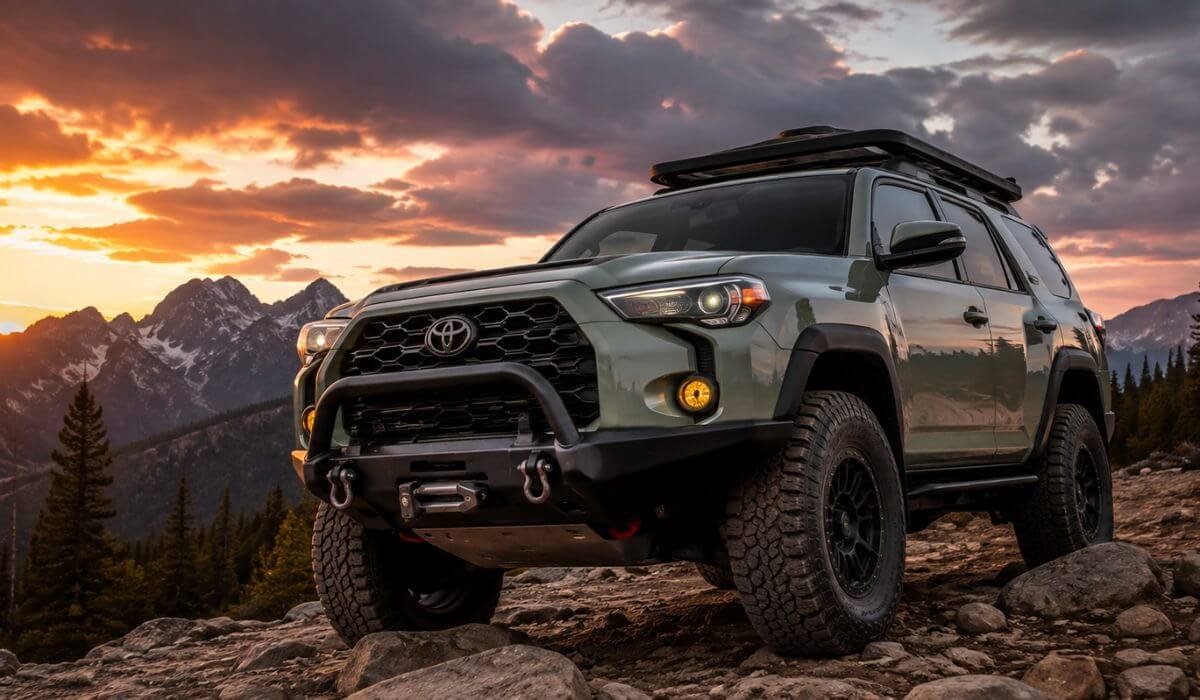
5 Best Bull Bars for Toyota 4Runner in 2026: Patented, Modular & Trail-Ready Picks
I’ll be honest with you — shopping for a bull bar on your 4Runner is more confusing than it should be. Half the listings out there just slap “fits Toyota 4Runner” on the title and leave it at that, and then someone with a 2022 TRD Sport or a Nightshade edition orders it, waits two weeks for shipping, and finds out it doesn’t line up with their bumper at all. That’s the part nobody talks about enough, so before anything else, know your exact trim and year, because that one detail decides whether this whole guide even applies to you.
What you’ll find below isn’t a random top-5 pulled off a bestseller page. Some of these bars are built specifically for the newer 2025-2026 body style, others cover the 2010-2024 range but skip certain trims like Limited or TRD Pro, and a couple leave you room to bolt on a winch or a light bar later if that’s where you’re headed. I picked these because the fitment notes actually held up when I dug into them, not because they had the most reviews or the flashiest photos.
None of these are old, overexposed products with a thousand reviews sitting under them — they’re recent enough that you’re getting current builds, not something sitting in a warehouse since 2019. So if you’re trying to figure out which one actually matches your 4Runner instead of guessing and hoping the return window saves you, this should get you there faster.
Best Toyota 4Runner Bull Bars: Top 2026 Picks by Fitment and Build
#1. VANGUARD BK Super Wide ‘A’ Bar
A wide-stance steel bull bar built specifically for the 2025-2026 Toyota 4Runner and Land Cruiser, giving newer trims front-end protection that older aftermarket bars simply weren’t designed to fit
#2. TAC Modular Bull Bar
A patented modular bull bar for 2010-2024 4Runner models that leaves room for a winch mount and auxiliary light bar, built for owners who plan to upgrade their setup down the line
#3. Black Horse Max T Bull Bar
A textured black, heavy-duty steel bull bar for 2010-2024 Toyota 4Runner trims, built with off-road and trail-ready protection in mind for daily drivers and weekend wheelers alike
#4. Tyger Auto TG-GD6T60178 Front Bumper Guard
A light bar mount ready bull bar for 2010-2024 4Runner, designed for owners planning to add auxiliary lighting without needing a separate mounting bracket later
#5. PARTREE Bull Bar
An affordable steel bull bar for 2010-2024 4Runner that skips the extra features and keeps front bumper protection simple, solid, and budget-friendly
Expert Tip: Before you order anything, pop your hood and actually look at your bumper’s underside, or better yet, check your VIN build sheet if you’re not 100% sure which trim you’re running. I’ve seen too many people go by “I have a 2020 4Runner” without realizing Limited and TRD models have different bumper structures underneath the same body year. That thirty-second check saves you a return shipment and a week of waiting for the right one to show up.
How We Chose These Bull Bars
I didn’t just pull five random listings and call it a day. Every bar on this list got checked against three things that actually matter once it’s bolted to your truck.
Fitment accuracy came first. These are all newer products, which means most of them don’t have thousands of buyer reviews yet to lean on. So instead of guessing, I went straight to the manufacturer fitment notes, cross-checked trim exclusions like Limited, Nightshade, and TRD Sport, and made sure each listing was specific about what it does and doesn’t fit. A bull bar that vaguely says “fits 4Runner” without naming excluded trims got left off this list entirely, because that vagueness is exactly what causes people to order the wrong part.
Build quality and steel construction mattered next. A front bumper guard is only as good as what it’s made of, so I looked at gauge thickness, finish, and whether the bar was designed to actually take a hit off-road or if it’s more of a styling piece. The ones that made the cut use real steel construction, not thin decorative tubing that bends the first time you brush a trail obstacle.
Upgrade potential was the third factor. A lot of 4Runner owners don’t stop at just a bull bar, they eventually want a winch or auxiliary lighting down the line. So I paid attention to which bars have a winch mount built in, which ones are light bar mount ready, and which ones are simpler, no-frills setups for people who just want front-end protection without planning any future upgrades. That’s also why the order on this list isn’t random, it goes from the newest fitment coverage down to the most budget-conscious pick, so whatever year or budget you’re working with, there’s a logical place to land.
#1. VANGUARD BK Super Wide ‘A’ Bar
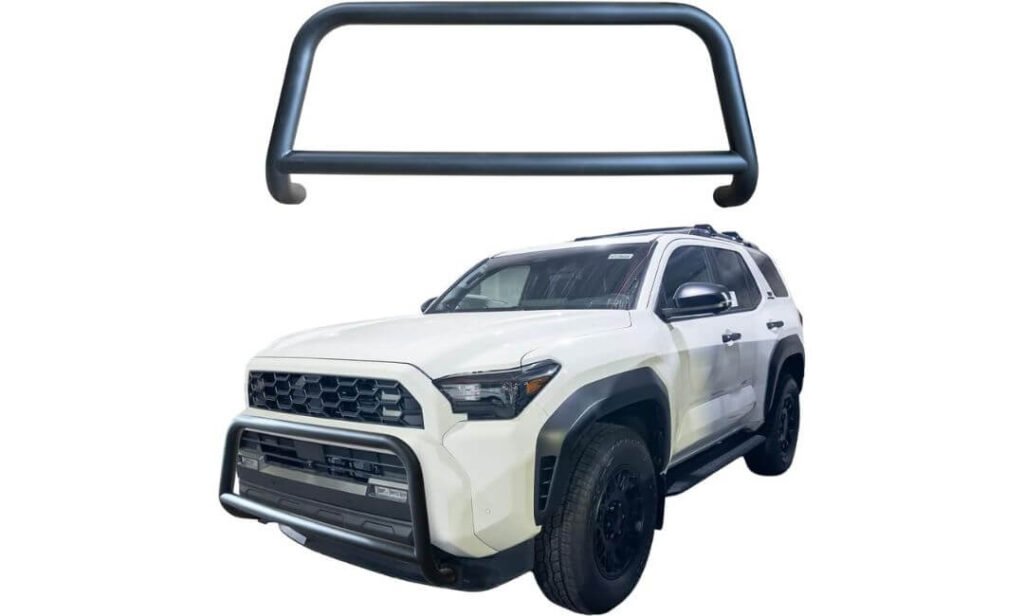
Quick Specs:
- Fitment: 2025-2026 Toyota 4Runner (vehicle-specific fit)
- Material: 2.5-inch Q235 structural steel
- Finish: Electrophoretic black primer + black powdercoat topcoat
- Design: Super wide ‘A’ bar profile for extended front coverage
- Installation: Bolt-on, all mounting hardware included
- Warranty: 1-year manufacturer warranty (Vanguard Off-Road)
- Mount Compatibility: Front lower position, factory-aligned mounting points
If you’re driving one of the newest 4Runners on the road, you’ve probably already noticed the problem — most bull bars in this space were engineered for older body styles and then loosely marketed as a “fit” for whatever’s new. This one’s different. Vanguard built the Super Wide ‘A’ Bar entirely around the 2025-2026 4Runner chassis, so the mounting points, bumper contour, and hardware line up the way they’re supposed to instead of being forced into place.
The construction itself stands out too. It’s made from 2.5-inch Q235 structural steel, a heavier and denser gauge than what most bars in this category use, and it’s finished with an electrophoretic primer layer under the powdercoat, which means the rust protection runs deeper than a typical surface spray. The wide ‘A’ bar shape isn’t just for looks either — it stretches coverage further across the front end, so more of your bumper and grille area actually sits behind protection instead of just the center strip.
Installation is straightforward bolt-on, with every bracket and bolt included in the box, so there’s no separate hardware run to the parts store. Most owners get it mounted in an afternoon, and once it’s on, the fit sits flush against the factory lines rather than looking like an aftermarket add-on bolted on as an afterthought.
(Bottom line: this is currently the only bar built specifically around the newest 4Runner generation, not adapted from an older one.)
What We Like
- Vehicle-specific engineering for the 2025-2026 4Runner, not a carryover design
- Heavier 2.5-inch Q235 steel gauge than most bars in this class
- Wide ‘A’ bar profile extends protection further across the front end
- Dual-layer black finish for stronger long-term rust and corrosion resistance
- Complete bolt-on hardware kit included, no extra parts run needed
What We Don’t
- Being built specifically for the newest 4Runner, it’s a newer release with a smaller install-review base compared to older, long-running bull bar models
4Runner Fitment
This bar is engineered specifically around the 2025-2026 Toyota 4Runner, matching the updated front-end geometry of the current generation. If your 4Runner falls in this year range, the mounting points and bracket alignment are built to match your factory bumper without modification to the core structure.
Some vehicles may require light trimming of the undercarriage cover for a completely flush fit — a normal part of most bull bar installs on this generation, and one Vanguard already accounts for in their fitment guide.
The Insider Pro-Tip
Before final tightening, dry-fit the bar loosely against the bumper first and check that both sides sit level before torquing anything down. On a wide ‘A’ bar design like this one, even a slightly uneven initial mount can throw off the symmetry once fully secured. Take the extra five minutes here, and you’ll get a finish that lines up clean on both sides — exactly how it looks in Vanguard’s own product photos.
#2. TAC Modular Bull Bar
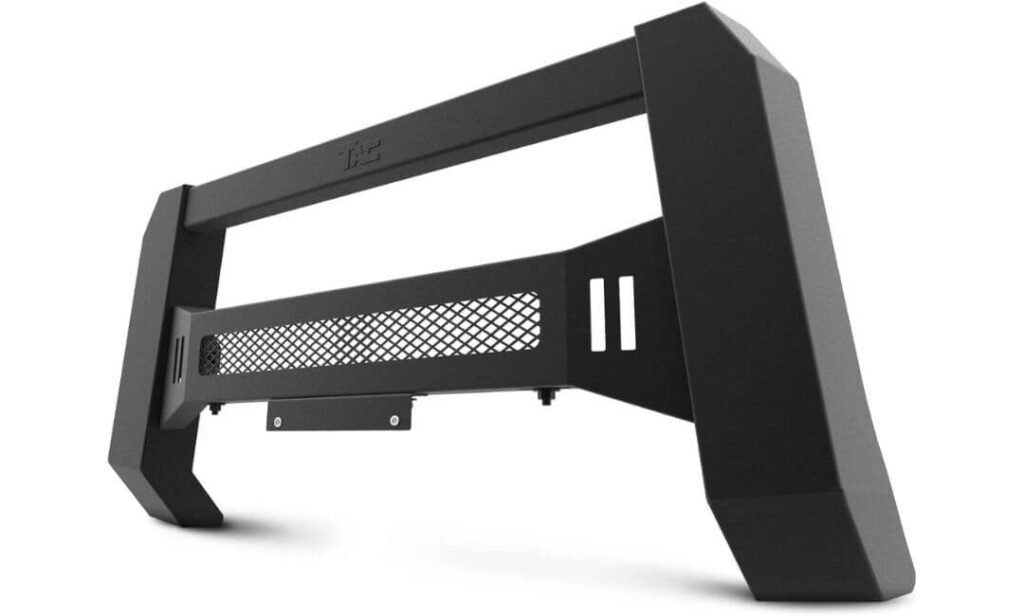
Quick Specs:
- Fitment: 2010-2024 Toyota 4Runner (excludes Limited, Nightshade Edition, TRD Sport)
- Material: Heavy-duty alloy steel frame, 5-piece modular build
- Finish: TAC dual-stage textured black finish, rust-resistant
- Design: Mesh plate structure for improved heat dissipation
- Weight: 44.6 lbs of solid steel construction
- LED Compatibility: Pre-drilled for LED light bar mounting, hardware included
- Bonus: Built-in license plate relocation bracket
- Patent: US 10,315,599 B2
- Warranty: 5-year manufacturer warranty
Here’s what separates this one from a typical bolt-on bar — it’s actually patented, which tells you the modular five-piece design wasn’t just copied off an existing template, it’s TAC’s own engineering. And once you start looking at the build, that shows. This isn’t a single rigid slab of steel, it’s a modular structure, meaning individual sections can be worked with separately, which makes both installation and any future customization noticeably easier than a one-piece bar.
At 44.6 lbs, you can feel the difference the moment you unbox it. This is genuinely heavy-duty alloy steel, finished with TAC’s dual-stage textured black coating that’s built to resist rust rather than just look black out of the box. The mesh plate design across the front isn’t just styling either, it’s functional, allowing better airflow and heat dissipation compared to a fully solid bar, which matters more than people expect once you’re running a bumper-mounted bar for years in different weather.
Where this one really pulls ahead is the extras most bars leave out entirely. It’s pre-fitted for LED light bar installation, so if you’re planning auxiliary lighting down the line, the hardware’s already accounted for, and it even includes a license plate relocation bracket, which is a small detail that saves you sourcing a separate part later. Backed by a 5-year warranty, TAC is clearly building this for the long haul, not a one-season product.
(Bottom line: between the patented modular design and the 5-year backing, this is the bar built for people who want both protection now and flexibility to upgrade later.)
What We Like
- Patented modular 5-piece design (US 10,315,599 B2), not a generic copy
- 44.6 lbs of alloy steel for genuinely solid, substantial build quality
- LED light bar mounting hardware included, ready for future lighting upgrades
- License plate relocation bracket included, no separate part needed
- 5-year manufacturer warranty, among the longest coverage in this category
What We Don’t
- Front-mounted sensor models need a quick fitment check with TAC before ordering, just to confirm clearance on your specific trim
4Runner Fitment
Built for the 2010-2024 Toyota 4Runner, though it steps aside for Limited, Nightshade Edition, and TRD Sport trims where the factory bumper geometry doesn’t line up the same way. If your 4Runner falls outside those three exclusions, the modular frame is designed to bolt directly onto the stock mounting points without drilling.
If your 4Runner has front bumper-mounted sensors, it’s worth a quick message to TAC before ordering just to confirm clearance, since sensor housing placement can shift slightly across trims even within the same year range.
The Insider Pro-Tip
Because this is a modular five-piece build, don’t fully torque down any single section until all five pieces are loosely mounted together first. Installing and tightening one piece at a time tends to throw off alignment by the time you reach the last section. Get the whole frame loosely assembled on the truck, check that it’s sitting even across the front, then go back and tighten everything in sequence. It’s a five-minute difference in approach that saves you from redoing a section later.
#3. Black Horse Max T Bull Bar
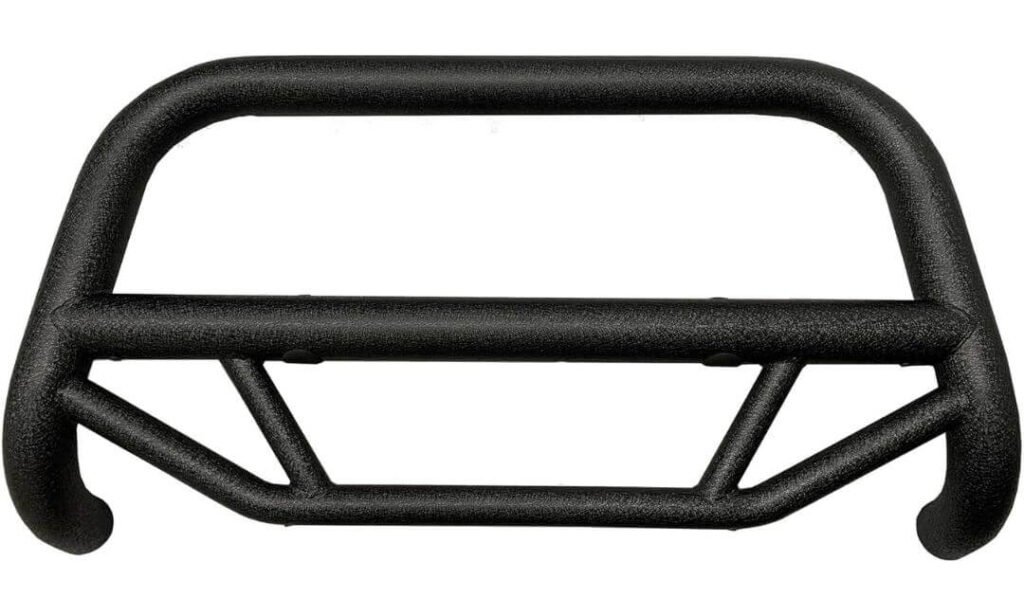
Quick Specs:
- Fitment: 2010-2024 Toyota 4Runner (excludes Limited, Nightshade Edition, TRD Sport)
- Material: Heavy-duty 2.5″ 16-gauge cold-rolled round steel tubing
- Finish: Textured black powdercoat + e-coat undercoat for added rust protection
- Weight: 25.6 lbs, noticeably lighter than most steel bull bars
- LED Compatibility: Pre-drilled for Black Horse 20″ LED Light Bar (PL3104FS & PL1223)
- Bonus: License plate relocation kit included
- Installation: Frame-mounted, no-drill bolt-on
- Warranty: 3-year manufacturer warranty
Some bull bars are built for looks, and some are built to actually take a hit — this one falls firmly into the second category. Black Horse calls it their most heavy-duty build, and the spec sheet backs that up: 2.5-inch, 16-gauge cold-rolled round steel tubing, which is a thicker, tougher tube profile than most competitors run in this price range. It’s frame-mounted rather than just bumper-mounted, meaning the load path runs into the truck’s actual structure, not just a plastic panel.
The finish is where this one quietly outperforms a lot of bars twice the price. Black Horse doesn’t just powdercoat it and call it done, there’s an e-coat undercoat layer beneath the textured black topcoat, which is the same rust-prevention approach used on factory frame components, not typical aftermarket accessory coatings. And despite all that steel, it comes in at just 25.6 lbs, so it’s genuinely easier to maneuver into place during install than its rugged looks would suggest.
It’s also already thought through for what comes next. The mounting holes are pre-drilled to accept Black Horse’s own 20-inch LED light bar, so if lighting’s on your future upgrade list, there’s no improvising a bracket later, and the included license plate relocation kit means you’re not left figuring out where your plate goes once the bar’s mounted. Backed by a 3-year warranty, it’s positioned as a long-term front-end upgrade, not a short-lived styling piece.
(Bottom line: if trail-ready toughness is the priority over anything else on this list, the frame-mounted steel build here is hard to match at this weight.)
What We Like
- 2.5″ 16-gauge cold-rolled steel tubing, among the toughest builds in this list
- E-coat undercoat plus textured powdercoat for genuinely long-term rust resistance
- Frame-mounted design ties directly into the truck’s structure, not just the bumper
- Pre-drilled for Black Horse’s own 20″ LED light bar, no guessing on bracket fitment
- Only 25.6 lbs despite the heavy-duty steel, easier solo installation
What We Don’t
- If your 4Runner has adaptive cruise control, it’s worth confirming sensor clearance first, since the bar sits close enough to potentially need the system switched to standard mode
4Runner Fitment
Compatible with the 2010-2024 Toyota 4Runner, stepping aside for Limited, Nightshade Edition, and TRD Sport trims where factory sensor placement and bumper geometry differ. Outside of those exclusions, the frame-mount design bolts directly to existing structural points, and it’s been confirmed to work cleanly alongside factory skid plates with no undercarriage conflicts.
If your 4Runner has front-mounted sensors or adaptive cruise control, it’s worth checking clearance before install, since the frame-mounted design sits close to where those sensors are typically housed.
The Insider Pro-Tip
Because this is a frame-mounted bar rather than a bumper-clip design, torque the frame bolts in stages rather than all at once, snug each mounting point evenly first, then go back and fully tighten in a crossing pattern like you would with lug nuts. It keeps the frame sitting flush against the mounting points instead of pulling slightly to one side, which matters more here given how much weight and structural load this particular bar is designed to carry.
#4. Tyger Auto TG-GD6T60178 Front Bumper Guard
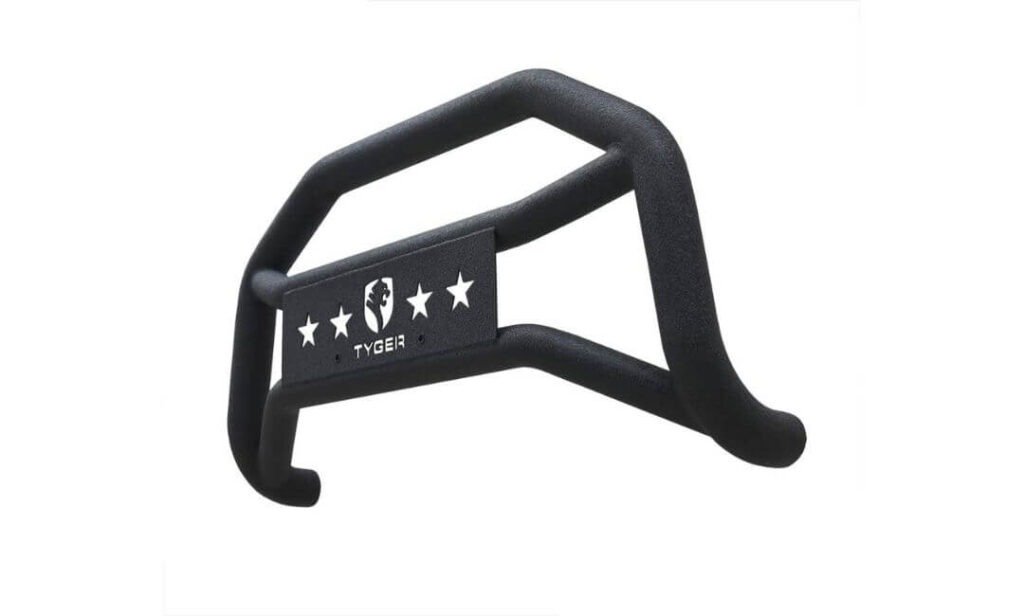
Quick Specs:
- Fitment: 2010-2024 Toyota 4Runner (excludes Limited, Nightshade, TRD Pro, TRD Sport)
- Material: Heavy-duty 2.5″ stainless steel tubing
- Finish: Textured black E-coating for rust resistance
- Build: Seamless welded construction, no bolted joints in the frame
- LED Compatibility: Pre-welded light mount channel (lights sold separately)
- Bonus: Pre-drilled license plate relocation holes
- Weight: 26.8 lbs
- Warranty: 3-year warranty against manufacturing defects
There’s a detail buried in the fine print here that’s worth pulling forward — this is a US design patented guard, which isn’t something every brand on this list can claim. Tyger didn’t just weld some tubing together and copy an existing shape, the design itself is protected, and once you look closer at the build, you can see why. Instead of bolted-together sections, this one uses seamless welding throughout the frame, which gives it a noticeably sturdier, one-piece feel compared to bars assembled from separate bolted parts.
The steel itself runs 2.5-inch heavy-duty tubing, finished with an E-coating beneath the textured black topcoat, the same rust-resistance approach you’d expect on a part meant to sit exposed to road salt and weather year-round, not just look good in the driveway. At 26.8 lbs, it sits right in the middle of this list, heavier than the lightest option but easier to handle solo than the bulkiest one.
What stands out most is how much Tyger built in without charging extra for it later. There’s a pre-welded light mount channel already integrated into the frame, so LED lighting is a drop-in addition whenever you’re ready, no aftermarket bracket needed. Add in the pre-drilled license plate relocation holes and you’ve got a bar that’s clearly designed around what 4Runner owners actually do next, not just the bar itself. Just know going in that a small trim of the splash guard is typically needed to clear the brackets cleanly, which is a five-minute step, not a major modification.
(Bottom line: between the patented design and the seamless welded frame, this is the bar for owners who want factory-level build quality with light-mounting already sorted.)
What We Like
- US design patented construction, not a generic copycat build
- Seamless welded frame for a sturdier, one-piece structural feel
- Pre-welded LED light mount channel built directly into the frame
- E-coating plus textured powdercoat for genuine long-term rust resistance
- License plate relocation holes pre-drilled and ready to use
What We Don’t
- A minor trim to the splash guard is typically needed during install to clear the mounting brackets cleanly, a quick step but worth knowing before you start
4Runner Fitment
Compatible with the 2010-2024 Toyota 4Runner, excluding Limited, Nightshade Edition, TRD Pro, and TRD Sport trims where factory sensor and bumper layouts don’t align the same way. Outside those exclusions, the seamless-welded frame bolts on using the factory mounting points with only minor splash guard trimming required.
If your 4Runner has front sensors equipped, it’s worth confirming placement beforehand, since this guard sits in a position that can interfere with Toyota Safety Sense sensors on certain trims.
The Insider Pro-Tip
When trimming the splash guard for bracket clearance, cut in small increments and test-fit the bracket between each cut rather than removing a large section upfront. It’s tempting to cut generously to avoid doing it twice, but oversized trimming here leaves a visible gap once the guard’s mounted. A few extra minutes of trim-and-check gets you a cleaner finish where the bracket sits flush without any exposed splash guard edge.
#5. PARTREE Bull Bar
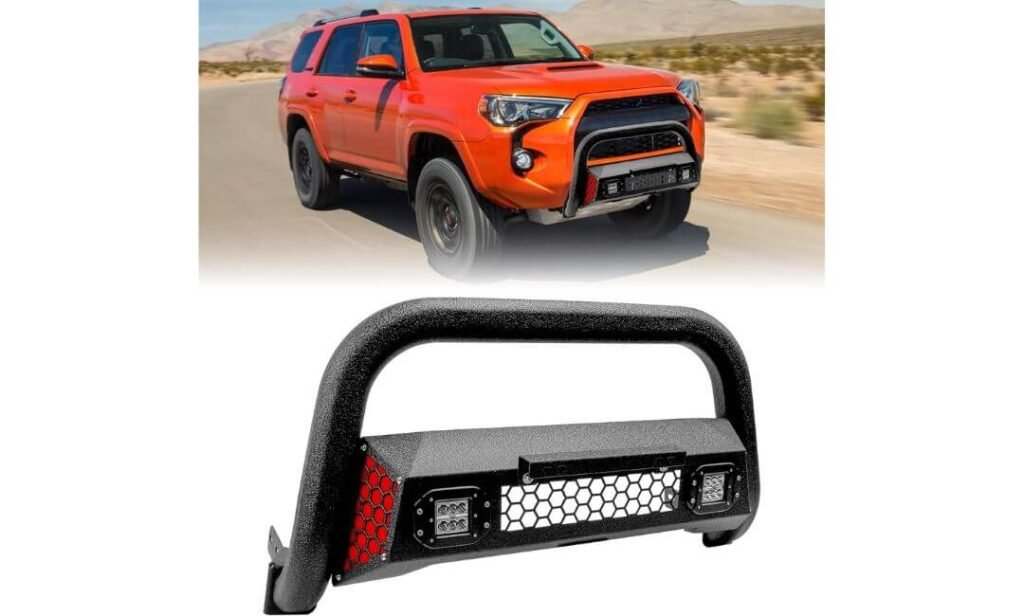
Quick Specs:
- Fitment: 2010-2024 Toyota 4Runner (not compatible with front radar sensor models)
- Material: 3″ thickened carbon steel tubing
- Finish: Powder-coat finish for rust and corrosion resistance
- LED: Integrated 18W LED light (switch harness sold separately)
- Bonus: License plate bracket + support beams included
- Customization: Trim panel is DIY paintable
- Installation: Bolt-on, no drilling required
- Warranty: 2-year manufacturer warranty
If you’re working with a tighter budget but you’re not willing to compromise on how solid the thing feels once it’s bolted on, this is the one worth slowing down for. PARTREE quietly includes something most bars at this price point skip entirely — built-in support beams, extra bracing that gives the frame noticeably more rigidity than a standard single-bar mount. It’s the kind of detail you don’t notice on a spec sheet until you’re the one tightening bolts and realize there’s actual reinforcement behind the steel, not just the tube itself.
The build is 3-inch thickened carbon steel, finished with a powder-coat layer for rust resistance, and it comes with an 18-watt LED light already integrated into the design, so you’re not paying extra or sourcing a separate light kit to get basic illumination on darker trails. It does need its own switch harness wired in separately, so budget a little extra install time for that step, but the hardware itself is already there waiting.
One detail that sets this apart from every other bar on this list is the DIY paintable trim panel. Instead of being locked into black, you’ve got the option to match it to your 4Runner’s factory color or go a completely different direction, which is rare at this price tier. Add in the included license plate bracket and full bolt-on hardware kit, and you’re looking at a bar that covers the essentials without cutting the corners that usually show up first, like the frame bracing.
(Bottom line: for the price, the included support beams and paintable trim panel make this the most feature-complete budget bull bar on this list.)
What We Like
- Built-in support beams for extra frame rigidity, uncommon at this price point
- Integrated 18W LED light already part of the build, not a separate purchase
- DIY paintable trim panel for color customization beyond standard black
- 3″ thickened carbon steel construction with powder-coat rust protection
- License plate bracket included, no separate part needed
What We Don’t
- The LED requires a separate switch harness for wiring, so factor a little extra install time into the setup
4Runner Fitment
Compatible with the 2010-2024 Toyota 4Runner across the model range, though it’s not built for vehicles equipped with a front radar or parking sensor system, so that’s the first thing to confirm on your specific trim before ordering.
If you’re unsure whether your 4Runner has front radar sensors, checking your trim’s original equipment list or looking for a sensor housing on your current bumper beforehand will save you a return down the line.
The Insider Pro-Tip
Since this bar includes support beams that most competitors skip, take the time to fully secure those bracing points before tightening the main frame bolts, not after. Installing the support beams first gives the whole structure a stable reference point, so when you go to tighten the primary mounting bolts, everything pulls into alignment evenly instead of you fighting to square up the frame at the very end.
Best Toyota 4Runner Bull Bars (2010-2026) — Side-by-Side Comparison
| Bull Bar | Fitment Range | Material & Build | Weight | Standout Feature | Best For |
|---|---|---|---|---|---|
| VANGUARD BK Super Wide ‘A’ Bar Newest Fitment | 2025-2026 4Runner & Land Cruiser | 2.5″ Q235 structural steel | — | Wide ‘A’ bar profile, dual-layer black finish | Newest generation owners |
| TAC Modular Bull Bar Most Modular | 2010-2024 (excl. Limited, Nightshade, TRD Sport) | Alloy steel, patented 5-piece frame | 44.6 lbs | LED-ready + license plate bracket, 5-yr warranty | Owners planning future upgrades |
| Black Horse Max T Bull Bar Toughest Build | 2010-2024 (excl. Limited, Nightshade, TRD Sport) | 2.5″ 16-gauge cold-rolled steel | 25.6 lbs | Frame-mounted, e-coat + powdercoat protection | Trail-heavy, off-road driving | May affect adaptive cruise control
| Tyger Auto TG-GD6T60178 Light Mount Ready | 2010-2024 (excl. Limited, Nightshade, TRD Pro/Sport) | 2.5″ stainless steel, seamless welded | 26.8 lbs | US design patented, pre-welded LED channel | Owners adding LED lighting soon |
| PARTREE Bull Bar Best Value | 2010-2024 (not for front radar models) | 3″ thickened carbon steel | — | Built-in support beams, integrated 18W LED | Budget-conscious buyers |
Buying Guide: What Actually Matters When Choosing a 4Runner Bull Bar
Picking a bull bar isn’t just about grabbing whatever shows up first in a search result, because the wrong pick can mean drilling into a bumper that wasn’t designed for it, blocking a sensor you didn’t know was there, or ending up with something that looks tough in photos but flexes the first time it takes a real hit. Here’s what actually separates a good choice from a regretted one.
Compatibility: Know Your Exact Generation and Trim
This is the part that trips up more buyers than anything else on this list. The 4Runner has gone through different body styles across its production years, and even within the same generation, trims like Limited, Nightshade Edition, TRD Sport, and TRD Pro often have different bumper structures, sensor placements, or grille shapes than the standard trim. That’s exactly why every product on this list comes with specific exclusions, the VANGUARD is built only for the 2025-2026 body style, while the TAC, Black Horse, and Tyger bars cover 2010-2024 but step aside for those special editions. Before you even look at price or features, confirm your exact year and trim against the listed compatibility, because a bull bar that’s off by even one trim level usually won’t line up with your mounting points, no matter how much trimming or force you’re willing to put into it.
Construction and Protection: What the Steel Is Actually Doing
Not all steel is built the same, and the tubing gauge, thickness, and construction method make a real difference once the bar is mounted for years. A frame-mounted design, like what you get with the Black Horse Max T, ties directly into the truck’s structure rather than just the bumper, which matters if you’re actually expecting the bar to absorb impact rather than just look the part.
Seamless welded construction, like the Tyger Auto guard, tends to hold up better as one solid unit compared to bars assembled from multiple bolted sections, since there are fewer joints that can loosen or flex over time. Weight is also a signal worth paying attention to, a heavier gauge steel like the 44.6 lbs on the TAC Modular or the 3-inch thickened tubing on the PARTREE usually means more material actually protecting your front end, not just a lighter decorative shell. And don’t skip the coating details, a bar with only a single powdercoat layer will rust faster than one with an e-coat undercoat beneath it, especially if you’re driving somewhere with road salt, humidity, or a lot of off-road mud exposure.
Modularity: Planning for What You’ll Add Later
A lot of 4Runner owners don’t stop at a bull bar, they eventually want a winch, auxiliary lighting, or additional trail gear mounted up front, and this is where thinking ahead saves you from buying twice. The TAC Modular Bull Bar stands out here because of its patented five-piece design, which makes it genuinely easier to work with individual sections rather than treating the whole bar as one fixed unit. If you already know you want a winch down the line, check specifically for winch plate compatibility before buying, because not every bull bar on the market is built to handle that additional mounting stress, and retrofitting a winch mount onto a bar that wasn’t designed for it usually isn’t a clean solution.
Light Bar Mounting and Clearance
If off-road night driving or trail runs are part of why you’re upgrading your front end in the first place, light bar compatibility should be near the top of your checklist, not an afterthought. Bars like the Black Horse Max T and Tyger Auto guard come pre-drilled or pre-welded specifically for LED light bar installation, meaning you’re not left improvising a bracket or drilling new holes into steel that wasn’t meant for it. The PARTREE goes a step further by including an 18-watt LED light directly integrated into the bar itself, though you’ll need a separate switch harness to wire it in.
Before buying based on light compatibility, check the actual mounting width and clearance listed for your intended light bar, because “light bar ready” can mean different things depending on the bracket spacing and channel design each manufacturer uses.
Install Cost and Ease: What You’re Actually Signing Up For
Every bar on this list is bolt-on rather than weld-in, which keeps installation realistic for a driveway DIY setup rather than requiring a welding shop, but “bolt-on” doesn’t always mean zero extra work. The VANGUARD typically needs some undercarriage cover trimming to seat properly, the Tyger Auto guard usually requires a minor trim to the splash guard to clear its brackets, and the TAC’s modular design means you’re working with five separate pieces that need to be aligned together rather than a single unit dropped into place. None of these require specialty tools beyond a standard socket set, but budget an afternoon rather than a rushed hour, especially if it’s your first time installing a front-end accessory like this.
Warranty, Patents, and Trail-Readiness
A warranty length tells you how confident a manufacturer actually is in their own build, and it’s worth weighing alongside the specs rather than treating it as a footnote. The TAC Modular leads this list with a 5-year warranty backed by its own US patent, which is a stronger trust signal than a generic, unbranded design copied across multiple listings.
The Tyger Auto guard also carries its own US design patent alongside a 3-year warranty, while Black Horse and PARTREE back their builds with 3-year and 2-year coverage respectively. Trail-readiness ultimately comes down to combining everything above, the steel gauge, the mounting method, and how the manufacturer stands behind their own product, rather than any single spec in isolation.
Installation and Maintenance Tips for Your 4Runner Bull Bar
Buying the right bull bar is only half the job, because how it’s installed and maintained afterward decides whether it still looks and functions the same way two years from now, or starts rattling, rusting, or sitting slightly crooked within a few months. Here’s what actually matters once the box shows up at your door.
General Bolt-On Installation Steps
Every bar covered in this guide uses a bolt-on system rather than requiring welding, which means a standard socket set, a torque wrench, and a couple of hours in the driveway are usually enough to get the job done. Start by removing the factory bumper trim or splash guard sections that need to come off, and this is where reading the specific instructions for your bar matters, because some require a small amount of trimming to clear brackets while others need the undercarriage cover pulled back slightly for proper seating.
Once the mounting brackets are exposed, position the bar loosely against the factory mounting points first, without fully tightening anything, so you can check that it’s sitting level and centered before committing to final torque. From there, work your way around the bolts in a crossing pattern rather than tightening one side fully before moving to the other, since uneven tightening is one of the most common reasons a bar ends up sitting slightly off-center once everything’s secured.
If your bar includes a modular design with multiple sections, get every piece loosely mounted together first before tightening any single one, because working through one completed section at a time tends to throw off alignment by the time you reach the last piece.
Common Installation Pitfalls and How to Avoid Them
The single most common mistake isn’t a tooling issue, it’s skipping the fitment double-check before ordering, because trims like Limited, Nightshade Edition, TRD Sport, and TRD Pro often carry different bumper structures or sensor placements than the standard trim, even within the same model year. Confirm your exact trim against the compatibility notes before your bar even ships, not after it’s sitting in your driveway.
The second pitfall shows up around sensors, if your 4Runner has front crash sensors, parking sensors, or adaptive cruise control, some bars can interfere with those systems once mounted, so it’s worth checking sensor placement and clearance beforehand rather than discovering an error code after installation. Rushing the trimming step is another frequent issue, cutting too much off a splash guard or undercarriage cover upfront to “save time” usually leaves a visible gap once the bar’s mounted, so trim conservatively in small increments and test-fit between cuts instead of committing to one big cut.
Finally, don’t skip the manual entirely and rely on guesswork, a few manufacturers include support beams or bracing steps that aren’t obvious just by looking at the parts laid out, and missing that step early on means redoing part of the install later.
Maintenance Tips to Extend the Life of Your Bull Bar
A bull bar sits directly in the path of road salt, mud, rain, and constant debris, so a little routine care goes a long way toward keeping the coating and structure intact for years rather than months. Rinse it down regularly, especially after off-road trips or winter driving where salt exposure is heavier, since built-up grime sitting against the coating is what eventually leads to surface rust forming underneath a chip or scratch.
Check the coating periodically for any small chips or exposed metal, and if you spot one, touch it up with a matching rust-resistant paint before it has a chance to spread, because a coating breach left untreated is how a small scratch turns into a rust patch over a season or two. Beyond the finish, revisit your mounting bolts every few months, particularly if you’re driving rough terrain often, since vibration over time can gradually loosen even properly torqued hardware, and a quick check with a wrench catches that early before it turns into an actual rattle or shift in the bar’s position.
If your bar includes a light mount or winch plate you’re actively using, inspect that hardware separately as well, since added weight from lights or a winch puts extra stress on the mounting points compared to a bar running without any accessories attached.
Real-World Use Cases: Which Bull Bar Fits Your Driving Style
The right bull bar really comes down to what you’re actually doing with your 4Runner day to day, because the person doing weekend trail runs and the person just wanting a rugged front-end look for daily driving have very different priorities, even if they’re shopping the same list.
Daily Driving with Occasional Off-Road Trips
If your 4Runner spends most of its time on regular roads with the occasional dirt trail or gravel path thrown in, you don’t necessarily need the heaviest, most reinforced build on this list, you need something that looks sharp, protects against minor bumps, and doesn’t require constant upkeep. A lighter frame with a solid finish handles this kind of use well, since you’re not putting it through repeated trail impacts, you’re mostly guarding against parking lot bumps, road debris, and the occasional deer or animal encounter that daily drivers genuinely do run into more often than people expect.
Serious Trail and Off-Road Use
If weekends mean actual trail runs, rock crawling, or backcountry driving where your front end is realistically going to take hits from brush, rocks, or uneven terrain, this is where frame-mounted construction and heavier steel gauge stop being a nice-to-have and start being the actual point. A bar tied directly into the truck’s structural frame, built with thicker tubing and reinforced with extra support bracing, is going to hold up to repeated impact in a way a lighter, styling-focused bar simply isn’t designed for. This is also where checking adaptive cruise control and sensor interference matters most, because serious off-roaders are more likely to already have those systems equipped on higher trims.
Owners Planning Future Upgrades
Some people know upfront they want a winch eventually, or they’re planning to add a full light bar setup for night trail driving down the road, even if they’re not ready to buy all of it right now. If that’s you, prioritize a bar with genuine modularity, pre-drilled or pre-welded light mount channels, and confirmed winch plate compatibility over anything else on the spec sheet, because retrofitting mounting points onto a bar that wasn’t built for them later is far more work than paying slightly more upfront for a design that already accounts for it.
Budget-Conscious First-Time Buyers
If this is your first time adding a bull bar and you’re mainly testing whether you like the look and function before investing heavily, there’s no shame in starting with a solid, no-frills option that covers the essentials, steel construction, basic rust protection, and straightforward bolt-on installation, without paying extra for features like advanced modularity or premium patented designs you may not use right away. You can always upgrade later once you know exactly what you want out of your front-end setup, and starting simple means less financial risk if your priorities shift after a season of actually using it.
FAQs About Toyota 4Runner Bull Bar
Does adding a bull bar affect my 4Runner’s front crash sensors or adaptive cruise control?
This is genuinely one of the most overlooked questions, and it should be near the top of your list before ordering anything. If your 4Runner is equipped with Toyota Safety Sense, front parking sensors, or adaptive cruise control, certain bull bars can physically sit close enough to interfere with those systems once mounted, sometimes triggering a fault code or requiring you to manually switch cruise control to standard mode instead of adaptive. It’s not that every bar causes this, it depends heavily on the specific design and how close the frame sits to where your sensors are housed.
Before ordering, the smarter move is checking your specific trim’s equipment list, because not every 4Runner year and trim carries the same sensor package, and a bar that’s completely fine on a base model might create clearance issues on a higher trim loaded with driver-assist features. If you’re unsure, reaching out directly to the manufacturer with your VIN or trim details before purchasing saves you the hassle of a return down the line.
Will a bull bar void my 4Runner’s factory warranty?
People assume any aftermarket part automatically voids their warranty, and that’s not quite how it actually works. Under the Magnuson-Moss Warranty Act, a dealership can’t void your entire vehicle warranty just because you installed an aftermarket bull bar, they’d need to prove that the bull bar specifically caused the failure of whatever component you’re bringing in for warranty service. So if your transmission fails and you’ve got a bull bar bolted to your front bumper, that’s not grounds for denial unless there’s a direct, provable connection between the two.
That said, there are situations where it does become relevant, particularly if the installation process damaged something during mounting, like drilling into a component it shouldn’t have touched, or if the bar interferes with a safety system and that interference is later linked to a separate issue. Keeping your installation clean, avoiding unnecessary drilling beyond what’s specified, and keeping documentation of a professional install if you go that route protects you if this question ever comes up at a dealership.
Can I run a winch on any bull bar, or does it need to be built for that specifically?
Not every bull bar is engineered to handle the pulling force and structural stress a winch puts on a front mount, even if it physically looks like there’s room to bolt one on. A winch under load transfers significant force back through the mounting points, and a bar designed purely for light protection or styling doesn’t always have the reinforced backing or thicker gauge steel needed to handle that repeated stress without eventually flexing, cracking a weld, or pulling loose from its mounting bolts over time.
If a winch is part of your plan, look specifically for bars that mention winch plate compatibility or reinforced mounting sections rather than assuming any bull bar with open center space will work. A modular design tends to handle this better since individual sections can be built with reinforcement specifically where the winch mounts, rather than relying on the same gauge steel throughout the entire frame.
Why do some bull bars specifically exclude trims like Limited, Nightshade, or TRD Pro even within the same model years?
This confuses a lot of buyers because on the surface, a 2020 4Runner is a 2020 4Runner, so it seems odd that one trim fits and another doesn’t. The real answer comes down to how Toyota builds different trims on the same platform, special editions and higher trims often get different front bumper structures, unique grille designs, or additional sensor hardware that standard trims don’t carry, which changes the actual mounting geometry underneath what looks like the same bumper from the outside.
A few things commonly differ between trims even in the same generation:
- Bumper cover shape and mounting bracket positions
- Sensor placement for parking assist or adaptive cruise control
- Grille design affecting bull bar clearance
- Skid plate or undercarriage differences on TRD-badged trims
So it’s not that manufacturers are being overly cautious, it’s that the physical structure underneath genuinely changes between trims, and a bar engineered for standard mounting points simply won’t align correctly on a trim with a different bumper design.
How much does a bull bar actually change my 4Runner’s real-world crash protection, versus just looking rugged?
This is the question a lot of buyers don’t ask but probably should. A bull bar genuinely does add a layer of protection against lower-speed impacts, brush contact, and animal strikes, especially in rural or off-road driving where deer strikes and trail debris are realistic risks, and the steel frame absorbing that initial contact instead of your factory bumper is a real, practical benefit.
Where expectations need adjusting is higher-speed collision protection, because most bull bars sold for personal vehicles aren’t rated or designed to meaningfully change outcomes in a serious highway-speed crash, and some safety researchers have raised concerns about rigid front-mounted bars potentially affecting pedestrian safety in an impact, which is worth being aware of if you’re driving in areas with more foot traffic. The honest way to think about it is that a bull bar is genuinely useful for low-speed, off-road, and wildlife-related protection, while the more aggressive, heavy-duty look is a separate bonus rather than proof of serious crash-rated performance.
Final Thoughts
At the end of the day, picking a bull bar for your 4Runner really comes down to being honest with yourself about what you’re actually going to do with your truck, not what looks best in a listing photo. If you’re running the newest 2025-2026 body style, your options are already narrowed down to what’s actually engineered for that generation, and the VANGUARD covers that gap cleanly. If you’re somewhere in the 2010-2024 range, the decision shifts toward what matters most to you personally, whether that’s future modularity, frame-mounted toughness, light bar readiness, or simply getting solid protection without overspending on features you won’t use.
None of these five are filler picks thrown in to round out a list, each one earned its spot for a specific reason, and the right one for you is genuinely the one that matches your trim, your driving habits, and what you’re planning to add down the road, not necessarily the one with the most features crammed onto the spec sheet. Whichever direction you go, double-check your exact trim against the fitment notes one more time before you order, because that single step is what separates a clean install from a frustrating return, and it’s the difference between a bull bar that looks like it belongs on your 4Runner and one that never should’ve been ordered in the first place.
Also Check:


