6 Best Batteries for Nissan Rogue in 2026: Top AGM Picks for Longer Life & Faster Starts
If you’ve started noticing slower cold starts, random warning lights, or your Nissan Rogue’s auto start-stop system acting weird lately, there’s a good chance the battery is already on its way out. And on newer Rogue models especially, a weak battery doesn’t just make the engine crank slower—it can mess with sensors, safety systems, touchscreen response, and even fuel-saving features people barely think about until they stop working.
After digging through owner reports, fitment databases, AGM compatibility charts, and what actually works long term in real-world driving, one thing became pretty clear: most 2021–2026 Nissan Rogue models are happiest with a high-quality Group 35 AGM battery, while some trims and aftermarket setups can also support H5 or H6 AGM alternatives. Older Rogue models from 2008–2020 also commonly use Group 35, which is why the batteries below were picked around real compatibility, cold-cranking reliability, reserve capacity, and daily-driver durability—not marketing hype.
The truth is, modern Rogue owners don’t need the “most expensive” battery. They need one that starts every morning, handles modern electronics without drama, survives extreme weather, and doesn’t leave the SUV throwing electrical gremlins six months later. That’s exactly what this list focuses on.
Best Nissan Rogue Battery: Top 2026 Picks With Strong CCA and Long Reserve Capacity
#1. OPTIMA RedTop 35 AGM Battery
Best AGM Battery for Nissan Rogue Owners Wanting Faster Starts, Strong Cold-Cranking Power, and Long-Term Daily Reliability
#2. Interstate MTX-35 AGM Battery
Most Reliable Group 35 Battery Replacement for Nissan Rogue SUVs With Modern Electronics and Start-Stop Systems
#3. Goodyear 35-AGM Platinum Battery
Best Value Nissan Rogue AGM Battery With Solid Reserve Capacity for Everyday Driving and Cold Weather Starts
#4. Mighty Max MM-G35 AGM Battery
Affordable Group 35 AGM Battery for Nissan Rogue Drivers Looking for Strong Performance Without Overspending
#5. UPLUS AGM-L60-UP H5 Battery
Best H5 Battery Upgrade for Newer Nissan Rogue Models Needing Higher Electrical Stability and AGM Performance
#6. Weize Platinum AGM H6 Battery
High-Capacity H6 AGM Battery for Nissan Rogue Drivers Running Heavy Electronics and Frequent Short Trips
Expert Tip Before Buying a Nissan Rogue Battery
Before spending money on a new battery, check one thing most Rogue owners completely overlook: if your SUV still starts “normally” but the auto start-stop suddenly stops working, the battery is usually already getting weak. Modern Nissan Rogue models hide battery problems really well in the beginning. The engine may still crank, but voltage stability drops first—and that’s when random electronic issues quietly start showing up. Replacing the battery before that point is honestly cheaper than chasing electrical problems later.
How We Chose the Best Batteries for Nissan Rogue Models
There are hundreds of batteries online that technically “fit” the Nissan Rogue. That doesn’t mean they actually work well in a modern Rogue long term.
A lot of cheaper batteries still use older internal designs that struggle once the weather changes, especially in SUVs loaded with touchscreens, driver-assist systems, remote start features, and constant short-trip driving. That’s why this list was built around real-world electrical stability, not just price tags or marketing claims.
The first thing we focused on was actual Group 35 compatibility, because that remains the most consistent fitment for most 2021–2026 Nissan Rogue models, while still working for many older Rogue years as well. After that, we looked at batteries with strong cold cranking amps, stable reserve capacity, and AGM construction that can handle modern start-stop systems without draining quickly during daily driving.
We also avoided stuffing this list with random no-name batteries that only look impressive on paper. Some newer batteries advertise huge numbers, but their long-term consistency, terminal quality, and recharge recovery just aren’t there yet. That’s why every option here was selected based on a combination of fitment accuracy, electrical performance, build quality, warranty support, and how well the battery handles real SUV use—not laboratory marketing.
The H5 and H6 batteries included here were chosen carefully too. While Group 35 remains the safest mainstream fitment, some newer Rogue trims and aftermarket setups benefit from larger AGM alternatives for extra electrical headroom, especially if the vehicle sees heavy accessory use, frequent short trips, or extreme temperatures.
Most importantly, none of these picks were added just to fill space. Every battery on this list solves a different type of Nissan Rogue owner problem—whether it’s cold-weather starts, daily commuting, long-term reliability, budget value, or handling modern electronics without constant low-voltage headaches.
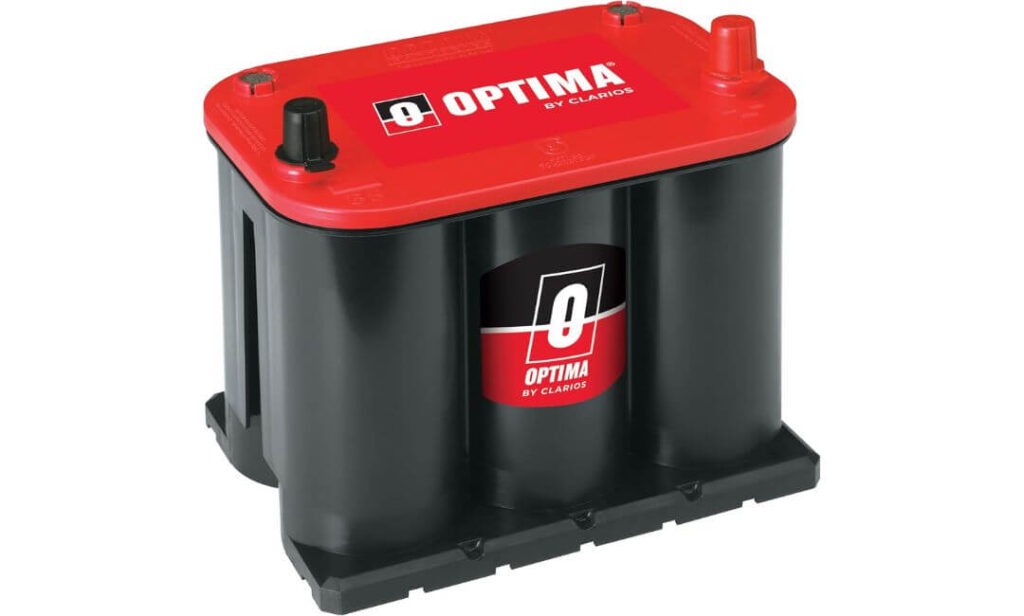
#1. OPTIMA RedTop 35 AGM Battery
Technical Specs:
- Battery Type: Premium AGM starting battery
- Group Size: 35
- Cold Cranking Power: 720 CCA
- Reserve Capacity: 90 minutes
- Capacity Rating: 44Ah
- Terminal Style: SAE posts
- Weight: 31.7 lbs
- Best Use Case: Daily-driven Rogue models needing stronger cold starts and voltage stability
- Ideal Rogue Fitment: Most Nissan Rogue models using Group 35 battery trays
- Key Strength: Extremely fast starting response with high vibration resistance
The first thing you notice with this battery isn’t the spec sheet — it’s how quickly the Rogue wakes up in the morning. Push the start button and the engine fires almost instantly, even after sitting overnight in colder weather. That sharp starting response comes from the combination of 720 cold cranking amps and OPTIMA’s spiral-cell AGM design, which delivers power differently than a traditional flat-plate battery. In a modern Nissan Rogue loaded with safety sensors, screens, cameras, and constant background electrical activity, that stability matters more than most people realize.
What makes this one stand out is how “clean” the power delivery feels during normal driving. Some batteries crank hard once, then slowly start acting inconsistent after months of short trips and stop-and-go commuting. This one handles repeated starts surprisingly well, especially in newer Rogue models where the auto start-stop system constantly cycles the battery throughout the day. The 90-minute reserve capacity also helps keep electronics stable if the SUV spends time idling, running accessories, or making frequent short trips that normally punish cheaper batteries.
Another reason this battery keeps showing up in serious owner discussions is durability. The internal AGM spiral-cell layout is far more resistant to vibration than standard flooded batteries, which becomes important in crossovers that deal with rough roads, potholes, temperature swings, and daily commuting abuse. It’s not the cheapest option on this list — and honestly, it doesn’t try to be. It’s built more for drivers who are tired of replacing weak batteries every couple of winters and just want their Rogue to start without drama every single morning.
(If your Nissan Rogue sees cold weather, heavy electronics use, short trips, or constant city driving, this is the kind of AGM battery that usually feels “worth it” within the first week.)
Why This Battery Made Our Shortlist
- Strong 720 CCA output gives the Rogue extremely confident cold starts
- AGM spiral-cell construction feels noticeably more stable than budget batteries
- Handles frequent stop-and-go driving better than many standard flooded options
- Charges faster than traditional lead-acid batteries during short commutes
- One of the better choices for Rogue owners wanting long-term electrical consistency
One Thing Worth Knowing Before Buying
- Some recent buyers have reported inconsistent quality control compared to older OPTIMA generations, so buying from a trusted seller matters here.
Nissan Rogue Compatibility & Real-World Fitment Notes
This battery works best for Nissan Rogue models that use a Group 35 battery tray, which includes most older Rogue models and many newer configurations as well. The dimensions are compact enough to fit cleanly without awkward terminal positioning issues that sometimes happen with oversized AGM upgrades.
For newer Rogue owners running multiple electronics, remote start, heated accessories, or constant short-trip driving, the AGM design makes a noticeable difference in voltage stability compared to cheaper flooded batteries. Just make sure your specific trim level still uses a Group 35 layout before ordering.
The Insider Pro-Tip
A lot of people buy batteries based only on cranking power. Real-world Rogue ownership doesn’t work like that anymore. Modern Nissan electrical systems care just as much about stable voltage recovery as they do raw starting strength — especially once the vehicle passes the 40,000–60,000 mile range and electronics begin pulling more background power.
That’s where this AGM setup quietly separates itself from cheaper alternatives. The Rogue may still “start” on a weaker battery for months, but the first signs usually show up elsewhere: slower touchscreen response, weaker auto start-stop behavior, random warning lights after cold nights, or inconsistent remote-start performance. Batteries built like this are designed to prevent those headaches before they start, not after they become expensive troubleshooting sessions.
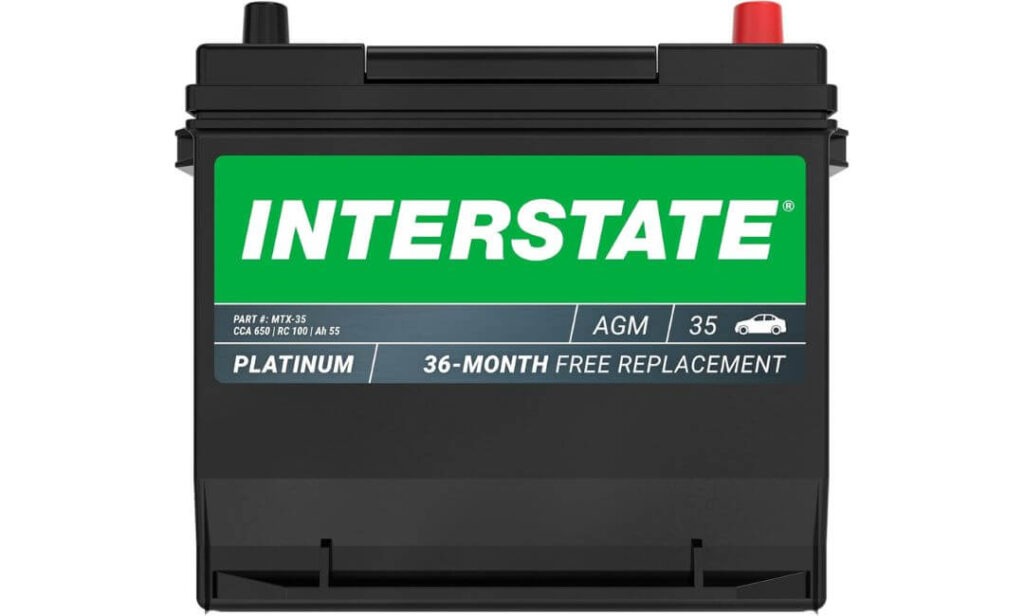
#2. Interstate MTX-35 AGM Battery
Technical Specs:
- Battery Type: Premium pure lead AGM
- Group Size: 35
- Cold Cranking Power: 650 CCA
- Reserve Capacity: 100 minutes
- Battery Capacity: 55Ah
- Voltage: 12V
- Weight: 42 lbs
- Design Advantage: Pure lead AGM construction with vibration-resistant internals
- Best For: Rogue owners wanting long-term reliability over flashy numbers
- Ideal Rogue Setup: Daily-driven Nissan Rogue models with modern electronics and frequent short trips
Something interesting happens when you switch from a weak factory battery to a properly built AGM like this — the whole Rogue starts feeling calmer electrically. Starts become smoother, idle behavior feels more stable, the auto start-stop system reacts more consistently, and random low-voltage weirdness quietly disappears in the background. That’s the kind of difference this battery is built for. Not flashy marketing. Just steady, dependable power every single day.
Interstate went with a pure lead AGM design here instead of the cheaper mixed-alloy layouts found in many budget batteries, and that matters more than most spec sheets admit. More lead inside the battery usually means better reserve stability, improved recharge behavior during short commutes, and less stress on modern electrical systems. In a Nissan Rogue — especially one constantly running cameras, driver-assist tech, heated accessories, Bluetooth syncing, and stop-and-go traffic cycles — that extra electrical stability becomes noticeable pretty quickly.
The other thing that stands out is balance. Some batteries chase huge cranking numbers but sacrifice long-term consistency. This one feels engineered more for real ownership. The combination of 650 cold cranking amps, a strong 100-minute reserve capacity, and AGM spill-proof construction makes it especially good for Rogue owners who use their SUV like an actual daily vehicle instead of a weekend garage queen. It’s heavier than some competitors, yes — but honestly, that added weight comes from packing more lead into the case, which is part of why these batteries often feel more stable over time.
(For Nissan Rogue owners who care more about dependable long-term performance than chasing the biggest marketing numbers on the shelf, this is easily one of the smartest AGM choices right now.)
Why This Battery Earned a Spot on Our List
- Pure lead AGM design feels noticeably stronger during daily stop-and-go driving
- Excellent 100-minute reserve capacity helps stabilize modern Rogue electronics
- Handles repeated short trips better than many conventional batteries
- Spill-proof and vibration-resistant construction suits SUV use extremely well
- Built more around long-term reliability than short-term performance hype
One Thing Worth Keeping in Mind
- This battery is noticeably heavier than many standard Group 35 options, but that added weight largely comes from the extra lead used to improve durability and lifespan.
Nissan Rogue Fitment & Everyday Compatibility Notes
This AGM battery is designed around the standard BCI Group 35 format, which makes it compatible with a large number of Nissan Rogue models using the factory Group 35 tray layout. Fitment generally feels clean and secure without awkward cable stretching or bracket issues.
It’s also one of the better AGM options for newer Rogue owners dealing with constant short trips, traffic-heavy commuting, remote start use, or electronics-heavy trims. The battery’s recharge behavior is especially helpful in situations where the alternator doesn’t always get long highway drives to fully recover battery charge.
The Insider Pro-Tip
One thing experienced Rogue owners learn over time is that modern SUVs rarely “warn” you before the battery starts weakening. Instead, the electrical system slowly becomes inconsistent first. Maybe the auto start-stop stops activating. Maybe the infotainment screen boots slower during cold mornings. Maybe the remote start range suddenly feels weaker. Those small changes usually point to declining voltage stability long before the battery completely dies.
That’s exactly why batteries like this make sense in a Nissan Rogue. The real advantage isn’t just starting the engine — it’s maintaining stable power for everything happening around the engine. And once you’ve driven a Rogue with a properly stable AGM battery for a few weeks, going back to a cheap flooded battery honestly feels obvious almost immediately.
#3. Goodyear 35-AGM Platinum Battery
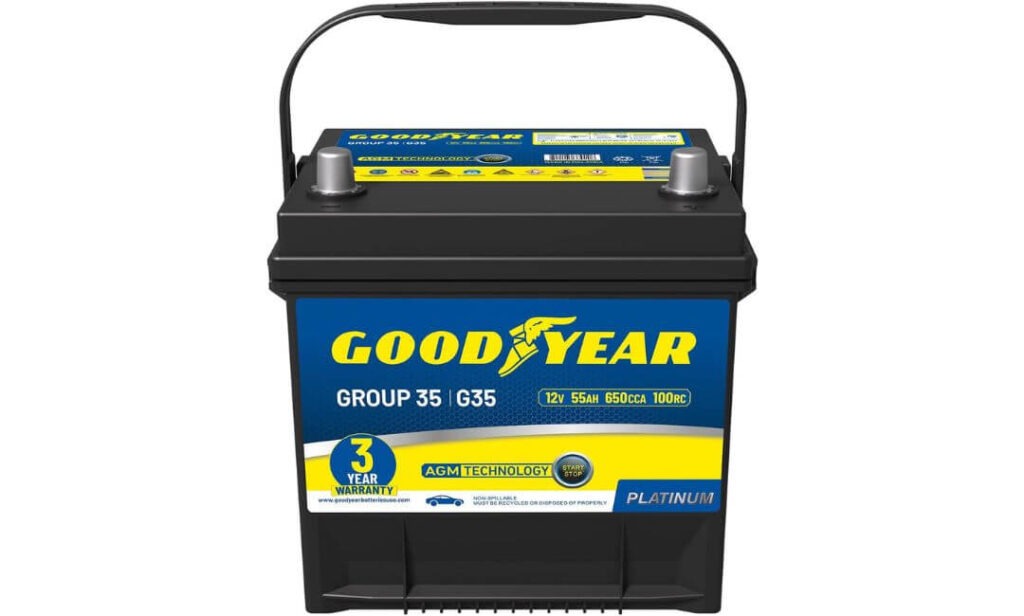
Technical Specs:
- Battery Type: Sealed AGM maintenance-free battery
- Group Size: 35
- Cold Cranking Power: 650 CCA
- Reserve Capacity: 100 minutes
- Battery Capacity: 55Ah
- Voltage: 12V
- Weight: 39.7 lbs
- Construction: Spill-proof AGM with vibration-resistant casing
- Best For: Rogue owners wanting reliable AGM performance without overspending
- Ideal Use Case: Daily commuting, cold-weather starts, electronics-heavy driving
Here’s what makes this battery interesting: it doesn’t try to act like some overhyped “race-inspired” battery with crazy marketing claims. Instead, it focuses on the stuff Nissan Rogue owners actually notice after living with a battery for months — stable starts, predictable voltage behavior, strong accessory support, and fewer cold-morning surprises. That balance is exactly why this AGM option quietly makes a lot of sense for modern Rogue drivers.
The combination of 650 cold cranking amps and a healthy 100-minute reserve capacity gives it a surprisingly confident feel during real-world driving. In traffic-heavy commuting, school runs, grocery trips, remote start usage, and short-distance driving — basically the exact life most Rogues live — the battery stays consistent instead of feeling drained after repeated stop-and-go cycles. The AGM construction also helps absorb vibration better than standard flooded batteries, which matters more in crossovers than people think, especially once rough roads and temperature swings start adding up over time.
Another thing worth appreciating here is usability. The maintenance-free sealed design means no worrying about leaks, fluid checks, or messy corrosion issues that sometimes show up with cheaper lead-acid setups. It’s also built to tolerate a wide temperature range, so whether the Rogue spends winters outside overnight or deals with brutal summer heat, the battery doesn’t feel overly sensitive to climate changes. And honestly, for the price range this usually sits in, the overall feature set feels surprisingly mature.
(For Nissan Rogue owners wanting a dependable AGM battery that feels balanced, modern, and easy to live with daily, this one checks more boxes than most people expect.)
Why This AGM Battery Stood Out to Us
- Strong balance of 650 CCA performance and long reserve stability
- AGM construction handles vibration and rough-road driving very well
- Excellent everyday choice for commuting-heavy Nissan Rogue use
- Maintenance-free design keeps ownership simple long term
- Delivers premium-style AGM features without entering ultra-expensive territory
One Thing Worth Considering Before Ordering
- Long-term lifespan experiences can vary depending on charging conditions and driving habits, so this battery tends to perform best in regularly driven Rogue models rather than vehicles that sit unused for weeks.
Nissan Rogue Fitment & Daily Driving Compatibility
This battery follows the standard BCI Group 35 sizing, making it compatible with many Nissan Rogue models that use the factory Group 35 tray setup. The dimensions fit naturally without oversized clearance issues, and the terminal layout stays easy to work with during installation.
For Rogue owners running heated seats, infotainment systems, frequent Bluetooth syncing, charging accessories, or stop-and-go commuting, the AGM platform gives noticeably steadier electrical behavior than many conventional batteries. It’s especially well-suited for drivers who want modern AGM performance without jumping into ultra-premium pricing territory.
The Insider Pro-Tip
One thing people rarely talk about with Nissan Rogue batteries is how much reserve capacity changes the day-to-day feel of the vehicle. A battery may still technically “start” the engine while quietly struggling to support everything happening after startup — touchscreens loading, cameras activating, sensors calibrating, phones charging, HVAC systems kicking on, and auto start-stop cycling constantly in traffic.
That’s why the 100-minute reserve capacity matters here more than most buyers realize. It gives the electrical system more breathing room during real-world use instead of constantly operating near its limit. And in modern crossovers like the Rogue, that extra stability usually shows up long before people ever notice it on a spec sheet.
#4. Mighty Max MM-G35 AGM Battery
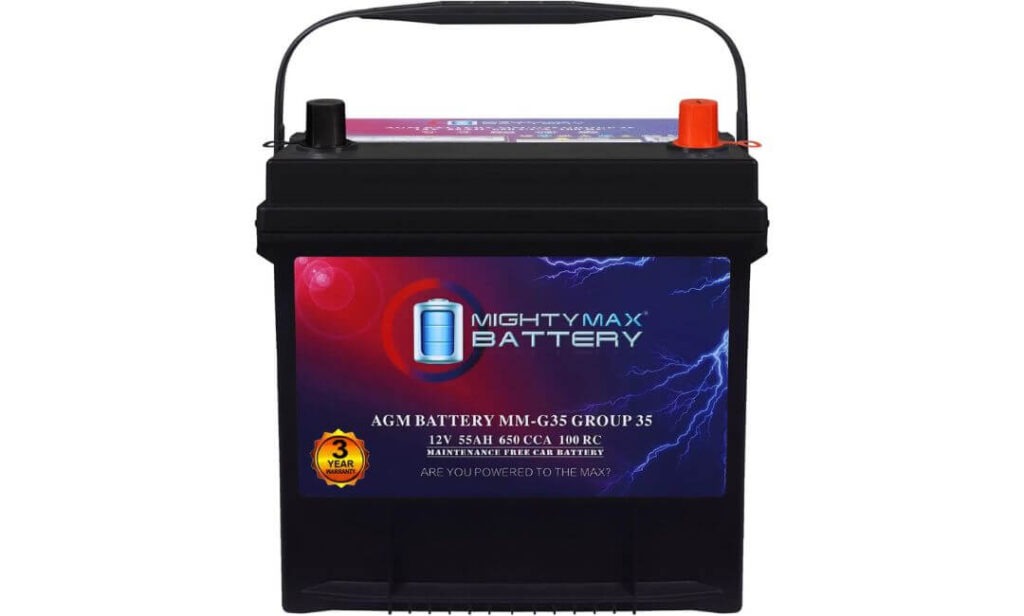
Technical Specs:
- Battery Type: Sealed AGM maintenance-free battery
- Group Size: 35
- Cold Cranking Power: 650 CCA
- Reserve Capacity: 100 minutes
- Battery Capacity: 55Ah
- Voltage: 12V
- Dimensions: 9.06″ x 6.89″ x 8.82″
- Construction Style: Shock-resistant AGM with deep discharge recovery
- Best For: Rogue owners wanting strong AGM performance at a more affordable price point
- Ideal Driving Style: Daily commuting, frequent short trips, mixed-weather driving
What immediately stands out about this battery is how surprisingly “complete” it feels for the money. Usually, budget-friendly AGM batteries force you to compromise somewhere — weaker reserve capacity, slower recharge behavior, or questionable build quality. This one honestly avoids most of those shortcuts. In a Nissan Rogue, especially one spending its life in traffic, school runs, grocery stops, and short-distance driving, that balance becomes more valuable than flashy marketing numbers.
The 650 cold cranking amps give the Rogue strong, confident startup behavior even during colder mornings, while the 100-minute reserve capacity helps support all the little electrical demands modern crossovers quietly stack on the battery every day. Touchscreens, wireless charging, cameras, sensors, heated accessories, Bluetooth syncing — people forget how much background load newer Rogue models constantly carry now. The AGM design here handles that workload far better than typical flooded batteries that slowly weaken under repeated stop-and-go use.
Another reason this battery earned a spot on this list is practicality. The sealed AGM construction is spill-proof, maintenance-free, and designed to recover better from deeper discharge situations than many lower-cost alternatives. That matters for Rogue owners who take lots of short drives where the alternator doesn’t always get enough time to fully recharge the battery. Add in the vibration-resistant casing and multi-position mounting flexibility, and the whole package ends up feeling far more mature than most people expect at this price level.
(For Nissan Rogue owners trying to move into AGM performance without paying premium-brand pricing, this is one of the better-balanced options currently available.)
Why This Battery Earned Its Place Here
- Strong balance of affordability and real AGM performance
- Reliable 650 CCA starting power for daily Rogue driving
- Deep discharge recovery handles short-trip driving surprisingly well
- Sealed AGM construction keeps maintenance simple long term
- Excellent reserve capacity for electronics-heavy Nissan Rogue trims
One Thing Worth Keeping in Mind
- Long-term lifespan can depend heavily on charging health and driving habits, so this battery tends to perform best in regularly driven Rogue models rather than vehicles parked for extended periods.
Nissan Rogue Fitment & Real-World Compatibility Notes
This battery uses the standard BCI Group 35 format, making it compatible with many Nissan Rogue models that rely on the factory Group 35 battery tray layout. Installation is generally straightforward, and the terminal positioning keeps cable routing simple during replacement.
For newer Rogue trims running start-stop systems, infotainment-heavy interiors, or constant accessory use, the AGM platform feels noticeably more stable than conventional lead-acid batteries. It’s especially well suited for drivers who spend more time in city traffic than on long highway drives.
The Insider Pro-Tip
One of the biggest mistakes Rogue owners make is assuming every AGM battery performs the same just because the size matches. Real-world behavior matters more than the label on the box. Some batteries recover poorly after repeated short drives, while others slowly lose voltage stability once weather conditions change.
That’s where this battery quietly does a better job than expected. The combination of AGM construction, decent reserve capacity, and strong recharge recovery gives the Rogue a much more stable electrical feel during normal ownership. And honestly, for people upgrading from a tired factory battery, the difference usually becomes obvious before the first week is over.
#5. UPLUS AGM-L60-UP H5 Battery
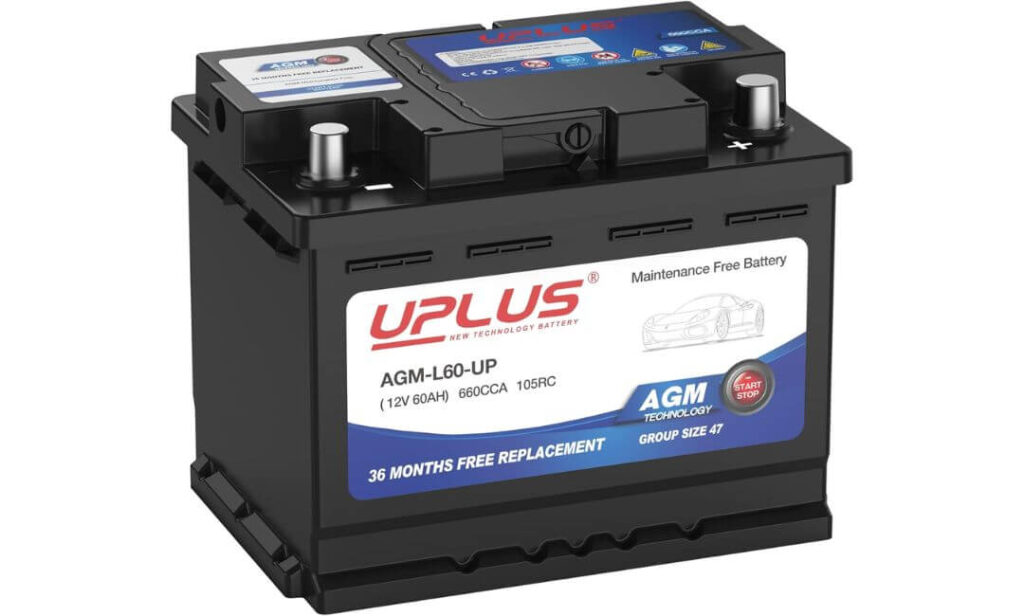
Technical Specs:
- Battery Type: Premium AGM start-stop battery
- Group Size: H5 / Group 47
- Cold Cranking Power: 660 CCA
- Reserve Capacity: 105 minutes
- Battery Capacity: 60Ah
- Voltage: 12V
- Weight: 40 lbs
- Terminal Layout: Left negative / Right positive SAE terminals
- Construction Highlight: High-density calcium lead AGM design with enhanced cycle life
- Best For: Newer Rogue models with heavier electronics and constant stop-and-go driving
- Ideal Driving Style: Short trips, city traffic, remote start use, cold-weather commuting
Most people shopping for a Nissan Rogue battery stay locked on Group 35 options — and honestly, that’s fine for a lot of owners. But once you start dealing with heavier electrical loads, constant traffic driving, heated accessories, bigger infotainment systems, and aggressive auto start-stop cycling, an H5 AGM battery like this starts making a lot more sense than people expect.
The biggest advantage here is reserve stability. The combination of 60Ah capacity, 105-minute reserve capacity, and AGM construction gives the Rogue a noticeably more relaxed electrical feel during daily driving. Instead of constantly operating near its limit, the battery has extra breathing room for modern electronics. That matters more in newer Nissan Rogue trims where background electrical activity never really stops — cameras stay active, sensors constantly monitor systems, phones stay connected, and start-stop systems repeatedly cycle the battery all day long.
Another reason this battery earned a place on this list is how well it’s designed around real-world start-stop use. The enhanced AGM internals and high-density paste construction are built specifically for repeated cycling, which is exactly where weaker batteries slowly start falling apart over time. Add in the 15-times higher vibration resistance, spill-proof design, and strong cold-weather cranking behavior, and this battery ends up feeling much more premium than its pricing usually suggests.
(If your Nissan Rogue spends most of its life in traffic, short trips, winter weather, or electronics-heavy commuting, moving up to a properly sized H5 AGM battery can honestly make the SUV feel noticeably healthier electrically.)
Why This Battery Earned a Place on Our List
- Excellent 105-minute reserve capacity for electronics-heavy Rogue trims
- Designed specifically for modern start-stop vehicle systems
- AGM construction handles repeated charging cycles extremely well
- Strong balance of cold-weather starting power and electrical stability
- H5 sizing offers extra capacity without becoming oversized or awkward to fit
One Thing Worth Knowing Before Buying
- Since this uses the larger H5 / Group 47 format, checking tray size and terminal orientation before ordering is important for perfect fitment on your specific Rogue trim.
Nissan Rogue Fitment & Everyday Compatibility Notes
This battery is best suited for newer Nissan Rogue models that can accommodate the H5 / Group 47 footprint. While Group 35 remains the most common mainstream fitment, some Rogue owners intentionally upgrade to H5 AGM batteries for added reserve capacity and stronger electrical stability.
It’s an especially smart option for Rogues running heated seats, remote start systems, heavy accessory charging, constant stop-and-go traffic, or frequent short-distance driving where the alternator doesn’t always get enough time to fully recover battery charge.
The Insider Pro-Tip
One thing many Rogue owners discover too late is that modern SUVs don’t always kill batteries with “age” alone — they wear them out through repeated cycling. Every traffic light, every remote start, every short trip, every accessory running while parked slowly adds stress to the battery over time.
That’s exactly why higher-capacity AGM batteries like this feel different in real-world ownership. The extra reserve capacity and stronger cycling resistance help the battery stay stable even when the Rogue is constantly asking for power in the background. And once voltage stability improves, a surprising amount of little day-to-day annoyances quietly disappear with it.
#6. Weize Platinum AGM H6 Battery
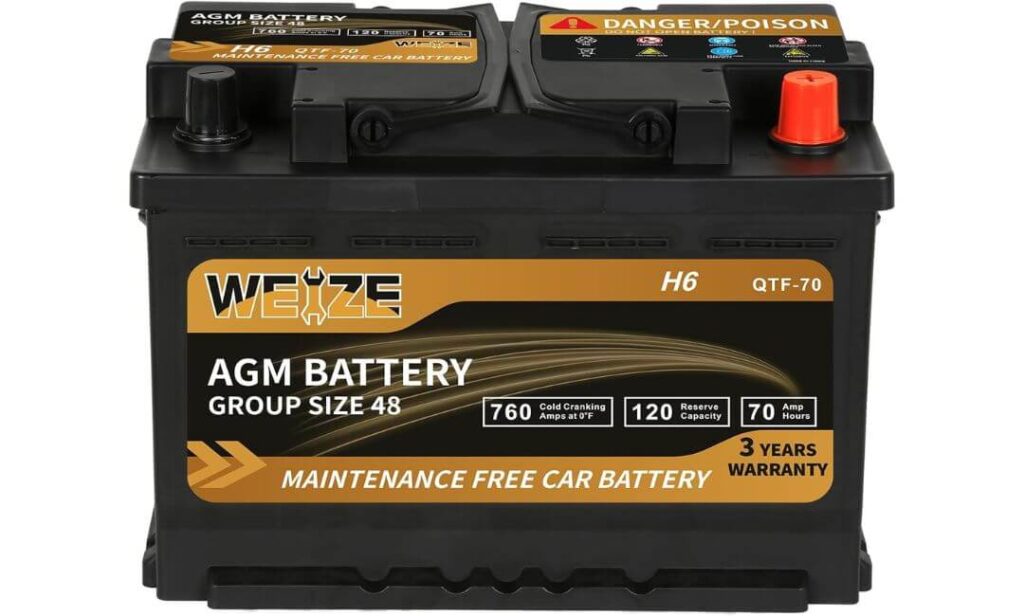
Technical Specs:
- Battery Type: Premium AGM start-stop battery
- Group Size: H6 / Group 48
- Cold Cranking Power: 760 CCA
- Reserve Capacity: 120 minutes
- Battery Capacity: 70Ah
- Voltage: 12V
- Weight: 46 lbs
- Operating Range: -22°F to 158°F
- Terminal Layout: Left negative / Right positive
- Best For: Newer Rogue models with heavier electrical demands and frequent short-trip driving
- Biggest Strength: Massive reserve capacity with extremely stable cold-weather performance
There’s a noticeable difference between a battery that simply “fits” a Nissan Rogue and one that actually feels overbuilt for modern SUV use. This one falls into the second category. The moment you look at the numbers — 760 cold cranking amps, 120 minutes of reserve capacity, and 70Ah capacity — it becomes obvious this battery was designed for vehicles carrying serious electrical loads, not just basic startup duty.
What makes this H6 AGM setup interesting is how effortlessly it handles situations that slowly drain weaker batteries. Short trips, traffic-heavy commuting, remote start use, heated accessories, wireless charging, cameras constantly running in the background — modern Rogue models quietly ask a lot from their battery every single day. The larger H6 platform gives the electrical system far more breathing room, which translates into steadier voltage behavior, stronger recovery after repeated starts, and less stress during stop-and-go driving. In real-world ownership, that usually means fewer low-voltage quirks over time.
The AGM construction itself also feels genuinely well suited for newer Nissan Rogue models. It’s sealed, spill-proof, resistant to vibration, and built specifically around start-stop applications where the battery cycles constantly throughout daily driving. The fast recharge behavior helps during short commutes where the alternator doesn’t always have enough time to fully replenish the battery. And honestly, for Rogue owners dealing with harsh winters or extreme summer heat, the wide operating temperature range gives this battery a more confidence-inspiring feel than many conventional alternatives.
(If your Nissan Rogue is loaded with electronics, spends most of its life in traffic, or regularly takes short drives that punish weaker batteries, this H6 AGM setup feels more like a long-term electrical upgrade than just a simple replacement.)
Why This Battery Made Our Final Recommendations
- Massive 120-minute reserve capacity supports modern Rogue electronics extremely well
- Strong 760 CCA output delivers confident cold-weather starting performance
- Larger H6 platform provides extra electrical headroom during daily driving
- AGM construction handles repeated start-stop cycling better than standard batteries
- Excellent option for drivers wanting premium-level reserve stability without dealership pricing
One Thing Worth Checking Before Ordering
- Since this is a larger H6 / Group 48 battery, confirming tray dimensions and terminal layout on your specific Nissan Rogue trim is important before upgrading from a standard Group 35 setup.
Nissan Rogue Fitment & Real-World Compatibility Notes
This battery is best suited for Nissan Rogue owners looking for a higher-capacity AGM upgrade beyond the standard Group 35 format. Some newer Rogue trims and aftermarket setups can accommodate the larger H6 footprint, especially for drivers wanting stronger reserve performance and more stable voltage behavior.
It’s particularly useful for Rogues running multiple accessories, heated features, extensive city driving, remote start usage, or frequent short trips where smaller batteries tend to weaken faster over time.
The Insider Pro-Tip
A lot of battery problems in modern Nissan Rogue models don’t come from bad batteries — they come from batteries operating too close to their limit every single day. Once reserve capacity starts getting stressed constantly, voltage stability slowly drops, and that’s when weird electronic behavior begins showing up long before the battery fully dies.
That’s why larger AGM batteries like this quietly make such a difference in real ownership. The extra reserve capacity doesn’t just help during startup — it reduces overall electrical strain throughout the entire drive. And in newer crossovers packed with sensors, screens, charging systems, and stop-start technology, that added stability often becomes noticeable faster than most people expect.
Best Nissan Rogue Battery Options Compared for Group 35, H5, and H6 Fitment
| Battery | Group Size | CCA | Reserve Capacity | Best For | Real Nissan Rogue Advantage | Fitment Style |
|---|---|---|---|---|---|---|
|
OPTIMA RedTop 35 AGM Battery
Premium Cold Start Pick
|
Group 35 | 720 CCA | 90 Minutes | Drivers wanting faster starts, stronger winter performance, and premium AGM response. | The spiral-cell AGM design gives the Rogue a noticeably sharper startup feel, especially during cold mornings and stop-and-go commuting. | Perfect for most Nissan Rogue models using standard Group 35 trays. |
|
Interstate MTX-35 AGM Battery
Best Overall Reliability
|
Group 35 | 650 CCA | 100 Minutes | Rogue owners wanting dependable long-term AGM performance with stable electronics support. | Pure lead AGM construction keeps voltage delivery smooth during heavy daily driving, traffic, and repeated short trips. | Strong direct-fit option for newer and older Rogue models using Group 35 batteries. |
|
Goodyear 35-AGM Platinum Battery
Smart Value AGM Choice
|
Group 35 | 650 CCA | 100 Minutes | Drivers wanting balanced AGM performance without jumping into ultra-premium pricing. | Feels extremely stable during commuting-heavy Rogue use with strong reserve support for electronics and accessories. | Excellent Group 35 replacement for daily-driven Nissan Rogue models. |
|
Mighty Max MM-G35 AGM Battery
Best Budget AGM Upgrade
|
Group 35 | 650 CCA | 100 Minutes | Budget-focused Rogue owners moving from basic flooded batteries into AGM performance. | Strong recharge recovery and reliable daily performance make it feel more refined than expected at this price level. | Fits many Nissan Rogue trims using factory Group 35 sizing. |
|
UPLUS AGM-L60-UP H5 Battery
Best H5 AGM Upgrade
|
H5 / Group 47 | 660 CCA | 105 Minutes | Newer Rogue owners needing more reserve capacity for start-stop systems and heavy electronics. | The larger H5 platform gives the Rogue noticeably better voltage stability during traffic-heavy city driving. | Ideal for compatible newer Rogue trims supporting H5 battery upgrades. |
|
Weize Platinum AGM H6 Battery
Maximum Reserve Capacity
|
H6 / Group 48 | 760 CCA | 120 Minutes | Rogue owners running multiple electronics, remote start systems, and constant short-trip driving. | Massive reserve capacity keeps modern Rogue electronics calmer and more stable under heavy daily electrical loads. | Best for Nissan Rogue setups that can support the larger H6 footprint. |
How to Choose the Right Battery for Your Nissan Rogue Without Wasting Money
A lot of Nissan Rogue owners end up replacing their battery twice — not because the first battery was defective, but because it was the wrong type for how the SUV is actually driven. Modern Rogue models are far more sensitive to battery quality than older crossovers used to be. Once you add start-stop systems, larger infotainment screens, safety sensors, remote start, heated accessories, and constant short-trip driving into the mix, the battery becomes one of the hardest-working parts of the vehicle.
That’s why simply buying “whatever fits” usually turns into a mistake later. The right battery for a Nissan Rogue isn’t just about starting the engine anymore. It’s about keeping the entire electrical system stable every single day.
Why Nissan Rogue Battery Group Size Matters More Than Most Drivers Think
One of the most important things to understand before buying a replacement battery is something called battery group size. This isn’t just a random number printed on the label — it determines the battery’s physical dimensions, terminal placement, and overall fit inside the Rogue’s battery tray.
For many Nissan Rogue models, especially older generations and a large number of newer trims, the most common fitment remains the Group 35 battery for Nissan Rogue setups. That’s why most of the batteries in this guide focus heavily on Group 35 AGM options. They fit correctly, connect cleanly, and deliver the type of electrical stability modern Rogue models need.
Some newer Rogue owners also move toward larger H5 (Group 47) or H6 (Group 48) AGM upgrades. The reason is simple: newer SUVs consume far more background power than people realize. Larger AGM batteries offer extra reserve capacity, which helps during stop-and-go traffic, remote start usage, short commutes, and electronics-heavy driving.
The important part is this: bigger isn’t automatically better. The battery still needs to physically fit the tray correctly, match terminal orientation, and work properly with the Rogue’s charging system.
AGM vs. Flooded Batteries — What Actually Makes Sense in a Nissan Rogue?
This is where a lot of outdated advice still floats around online.
Traditional flooded batteries are cheaper, yes — but modern Nissan Rogue models generally perform much better with AGM (Absorbed Glass Mat) batteries, especially if the vehicle uses start-stop technology or spends most of its life in traffic.
Here’s the real-world difference:
- Flooded batteries are built more for simple starting duty
- AGM batteries are designed for repeated cycling, voltage stability, and modern electronics
- AGM batteries recharge faster during short trips
- They resist vibration better
- They handle start-stop systems far more effectively
- They’re sealed and maintenance-free
In real Rogue ownership, AGM batteries usually feel smoother electrically over time. The SUV starts more confidently, electronics behave more consistently, and low-voltage weirdness tends to happen far less often.
Why Start-Stop Compatibility Changes Everything
If your Nissan Rogue uses an automatic start-stop system, battery quality matters even more than most drivers realize.
Every time the engine shuts off at a traffic light and restarts seconds later, the battery absorbs another charge-discharge cycle. Over weeks, months, and years, that repeated cycling puts enormous stress on weaker batteries. That’s exactly why many basic flooded batteries wear out quickly in newer Rogue models.
A proper Nissan Rogue start-stop battery needs:
- Strong recharge recovery
- High cycling durability
- Stable reserve capacity
- Consistent voltage output under repeated use
That’s why AGM batteries dominate newer Rogue recommendations now. They’re simply better suited for how modern crossovers actually operate in daily driving.
Reserve Capacity Is the Spec Most Rogue Owners Ignore
Most people shop batteries by looking only at CCA numbers. Cold cranking amps matter, absolutely — especially during winter — but reserve capacity quietly affects everyday ownership far more than most buyers expect.
Reserve capacity determines how long the battery can continue supplying stable power when electrical demand increases. And in a Nissan Rogue, electrical demand is almost constant now:
- Cameras
- Infotainment systems
- Driver-assist sensors
- Heated seats
- Phone charging
- Bluetooth connections
- Remote start systems
- Auto start-stop cycling
A battery with weak reserve capacity may still crank the engine while slowly causing unstable voltage behavior behind the scenes. That’s when owners start noticing random warning lights, glitchy infotainment behavior, weaker start-stop operation, or rough cold-weather starts.
Understanding the Battery Specs Your Rogue Actually Cares About
Here are the specs that genuinely matter when choosing the best replacement battery for Nissan Rogue models:
Group Size
The physical battery size and terminal layout.
Most Rogue models commonly use:
- Group 35
- H5 / Group 47
- H6 / Group 48 (larger AGM upgrade setups)
Cold Cranking Amps (CCA)
This measures cold-weather starting strength.
For modern Rogue models, staying around:
- 650–760 CCA
usually provides strong real-world performance.
Reserve Capacity (RC)
One of the most important modern specs.
Higher reserve capacity helps stabilize:
- electronics
- sensors
- infotainment systems
- stop-start operation
AGM Construction
Modern Rogue models benefit heavily from AGM batteries because they:
- recharge faster
- resist vibration better
- survive repeated cycling longer
- support start-stop systems properly
The Truth About Buying the “Best” Nissan Rogue Battery
The best replacement battery for Nissan Rogue ownership honestly depends less on brand hype and more on how the SUV is used every day.
If the Rogue spends most of its life:
- in traffic
- making short trips
- running remote start
- carrying lots of electronics
- dealing with cold winters
- using auto start-stop constantly
…then investing in a quality AGM battery usually pays off faster than people expect.
A good battery doesn’t just help the engine start. In a modern Nissan Rogue, it quietly affects the behavior of the entire vehicle every single day.
Nissan Rogue Battery Replacement Tips Most Owners Learn Too Late
Replacing the battery in a Nissan Rogue looks simple from the outside — remove the old one, drop in the new one, tighten the terminals, done. But modern Rogue models are far more sensitive to battery condition and voltage stability than older SUVs used to be. A rushed installation, incorrect battery type, loose terminal connection, or wrong group size can quietly create electrical problems that people often mistake for sensor failures or software issues later.
That’s why doing a proper Nissan Rogue battery replacement matters just as much as buying the right battery in the first place.
Why AGM Battery Replacement Needs More Attention in Modern Rogue Models
A lot of newer Nissan Rogue trims use or strongly benefit from AGM batteries because the SUV’s electrical system constantly cycles power throughout the day. Auto start-stop systems, touchscreens, driver-assist sensors, cameras, wireless charging, heated accessories, and short-trip driving all put more stress on the battery than most owners realize.
That’s also why replacing an AGM battery with a cheaper conventional flooded battery often causes problems later:
- weaker start-stop performance
- slower cold starts
- unstable electronics
- reduced battery lifespan
- voltage fluctuation issues
A proper Nissan Rogue AGM battery replacement keeps the charging system working the way the vehicle was designed to operate. In real-world ownership, the difference usually becomes noticeable within days, especially in colder weather or traffic-heavy driving.
Before Installing a New Nissan Rogue Battery
Before touching anything under the hood, take two minutes to verify:
- battery group size
- terminal orientation
- tray dimensions
- AGM vs flooded compatibility
- hold-down bracket alignment
This matters more than people think. A battery that technically “fits” but places stress on the cables or terminals can slowly create connection issues over time.
For most Rogue models:
- Group 35 AGM remains the safest mainstream fitment
- Some newer trims can support H5 / Group 47 AGM upgrades
- Larger H6 / Group 48 setups require careful tray-size verification
Also, if the Rogue still has the original factory battery after several years, check for corrosion around the terminals and battery hold-down area before installing the replacement. Even premium AGM batteries struggle when poor connections increase electrical resistance.
Simple Nissan Rogue Battery Replacement Steps That Actually Matter
The physical replacement itself isn’t difficult, but doing it carefully prevents a lot of headaches later.
Step 1: Turn Everything Off Completely
- Engine off
- Headlights off
- Interior accessories off
- Key fob moved away from vehicle if possible
Modern Rogue systems continue drawing small amounts of power even after shutdown, so giving the SUV a minute or two before disconnecting the battery helps stabilize electronics.
Step 2: Disconnect the Negative Terminal First
Always remove:
- Negative terminal
- Positive terminal
This reduces the risk of accidental short circuits while working around the battery tray.
Step 3: Remove the Hold-Down Bracket Carefully
A surprising number of battery problems later come from hold-down brackets not being reinstalled properly. A loose battery constantly vibrating inside the tray shortens lifespan dramatically, especially in SUVs dealing with rough roads and potholes.
Step 4: Clean the Battery Terminals
Before installing the new battery:
- clean corrosion
- inspect terminal clamps
- check cable condition
Even a premium AGM battery won’t perform correctly with weak terminal contact.
Step 5: Install the New Battery Securely
After placing the new battery:
- secure the hold-down bracket first
- connect positive terminal
- connect negative terminal last
Make sure the terminals feel snug, not overtightened. Over-tightening can damage AGM battery posts surprisingly easily.
What Most Rogue Owners Don’t Realize After Installing a New Battery
Modern Nissan Rogue models sometimes need a short relearning period after battery replacement. For the first few drives, you may notice:
- slightly different idle behavior
- start-stop temporarily inactive
- window auto-up needing reset
- radio or clock settings reset
That’s normal in many cases. The SUV’s electronics are recalibrating around the new battery voltage and charging behavior.
Some newer vehicles may also require battery registration or charging-system recalibration depending on trim level and battery type, especially when switching between flooded and AGM designs.
The Truth About “Maintenance-Free” Batteries
A lot of people hear “maintenance-free AGM battery” and assume the battery can be completely ignored forever. That’s not really how modern battery ownership works anymore.
AGM batteries eliminate:
- fluid refilling
- acid leaks
- most corrosion problems
…but battery health still depends heavily on:
- driving habits
- charging behavior
- temperature exposure
- electrical demand
For example, Nissan Rogue models used mostly for:
- short trips
- heavy traffic
- long idle periods
- winter driving
- frequent remote starts
…will naturally cycle the battery harder than vehicles driven regularly on long highway commutes.
Signs Your Nissan Rogue Battery Is Starting to Fail
Most Rogue batteries don’t fail instantly anymore. The warning signs usually appear slowly first.
Watch for:
- weaker auto start-stop operation
- slower engine cranking
- dim interior lighting during startup
- infotainment lag during cold mornings
- random low-voltage warning messages
- remote start inconsistency
- electrical accessories acting weaker than normal
In modern Nissan Rogue models, these small signs often appear weeks or months before the battery fully dies.
The Insider Pro-Tip Most People Ignore
One of the biggest reasons modern Rogue batteries fail early isn’t bad manufacturing — it’s incomplete charging. SUVs used mostly for short drives rarely give the alternator enough time to fully recharge the battery after repeated starts and electrical drain.
That’s especially true with AGM-equipped Rogue models running:
- heated seats
- large infotainment systems
- phone charging
- start-stop systems
- remote start usage
If the Rogue mainly handles short trips, taking it on occasional longer highway drives genuinely helps battery lifespan more than most people realize. Modern batteries don’t just wear out from age anymore — they wear out from constantly operating below full charge.
FAQs About Nissan Rogue Battery
Why does my Nissan Rogue still start fine even though the battery is already getting weak?
This catches a lot of Rogue owners off guard because modern Nissan electrical systems hide battery weakness surprisingly well in the beginning. The engine may still crank normally for weeks, sometimes months, while the battery is already struggling underneath. What usually changes first is voltage stability — not starting power.
That’s why many Rogue owners notice strange little symptoms before the vehicle ever refuses to start:
- auto start-stop suddenly stops activating
- infotainment takes longer to boot
- remote start range becomes inconsistent
- warning lights appear briefly during cold mornings
- interior electronics feel “slower” during startup
Modern Nissan Rogue models constantly depend on stable voltage for sensors, cameras, safety systems, and software modules. Once the battery starts weakening, the SUV often shows electrical behavior changes long before complete battery failure happens.
Is upgrading from a Group 35 battery to an H5 or H6 AGM battery actually worth it in a Nissan Rogue?
Honestly, for some drivers, yes — and the difference can feel bigger than expected.
A standard Group 35 battery for Nissan Rogue models still works perfectly well for most owners. But once the SUV spends most of its life in traffic, short trips, winter weather, remote-start use, or electronics-heavy commuting, larger AGM batteries like H5 or H6 setups start making practical sense because they offer more reserve capacity and stronger cycling stability.
The key advantage isn’t usually “more starting power.” It’s:
- steadier voltage behavior
- stronger reserve support
- improved recovery after repeated short drives
- less electrical strain during start-stop operation
That said, bigger only works if the tray size, hold-down bracket, and terminal orientation support it properly. A badly fitted oversized battery creates more problems than it solves.
Why do some Nissan Rogue batteries fail so early even when they have good reviews?
This is one of the biggest misunderstandings in modern battery ownership. A battery can be excellent on paper and still die early if the Rogue’s driving habits constantly keep it undercharged.
A lot of newer Rogue models spend their entire life doing:
- 10-minute commutes
- school runs
- stop-and-go traffic
- heavy accessory use
- repeated remote starts
That kind of driving quietly drains batteries faster than people realize because the alternator rarely gets enough time to fully recharge the battery between starts.
AGM batteries handle this abuse better than conventional flooded batteries, but even premium AGM setups wear down faster if they constantly operate below full charge. In real-world ownership, charging behavior matters almost as much as battery quality itself.
Does a Nissan Rogue AGM battery replacement improve how the SUV feels to drive?
Surprisingly, yes — especially if the old battery was already weakening slowly.
A fresh AGM battery doesn’t add horsepower or magically transform the SUV, obviously. But modern Rogue models rely so heavily on stable electrical behavior that a strong battery often changes the overall “feel” of the vehicle more than people expect.
Owners commonly notice:
- smoother startup behavior
- stronger auto start-stop performance
- quicker infotainment response
- steadier idle behavior
- fewer low-voltage warning glitches
- more reliable remote start operation
It’s one of those upgrades people usually underestimate until they actually drive the Rogue with a properly stable battery again.
What’s the biggest mistake people make when buying the best replacement battery for Nissan Rogue models?
Most people focus only on brand names or the highest CCA number they can find. In real Nissan Rogue ownership, that’s honestly only part of the story.
The better approach is balancing:
- correct group size
- AGM compatibility
- reserve capacity
- recharge behavior
- real-world driving habits
A battery with huge cranking numbers but weak reserve stability can still create frustrating electrical behavior over time. Meanwhile, a properly matched AGM battery with balanced specs often feels dramatically better during everyday driving even if the headline numbers look smaller.
That’s really the difference between buying a battery that simply “works” and buying one that actually feels right in a modern Nissan Rogue long term.
Final Thoughts
The interesting thing about Nissan Rogue batteries is that most owners don’t realize how much the battery affects the SUV until they finally replace a weak one with the right AGM setup. Suddenly the starts feel cleaner, the electronics behave more consistently, the start-stop system works properly again, and all those tiny low-voltage annoyances quietly disappear in the background.
That’s really why this guide focused so heavily on real-world Rogue use instead of just throwing random batteries into a list. Modern Rogue models place constant demand on the battery every single day — traffic, short trips, remote start systems, driver-assist tech, charging accessories, infotainment screens, winter mornings, summer heat — and not every battery handles that stress equally well long term.
For most owners, a quality Group 35 AGM battery still remains the safest and smartest choice. But for drivers dealing with heavier electrical loads, constant stop-and-go driving, or newer electronics-heavy trims, stepping into an H5 or H6 AGM upgrade can genuinely make the Rogue feel more stable over time.
At the end of the day, the best battery for a Nissan Rogue isn’t necessarily the one with the loudest marketing or biggest numbers on the box. It’s the one that keeps the SUV starting confidently, supports the electronics properly, survives real daily driving conditions, and quietly does its job year after year without turning ownership into an electrical guessing game.
Also Check:

