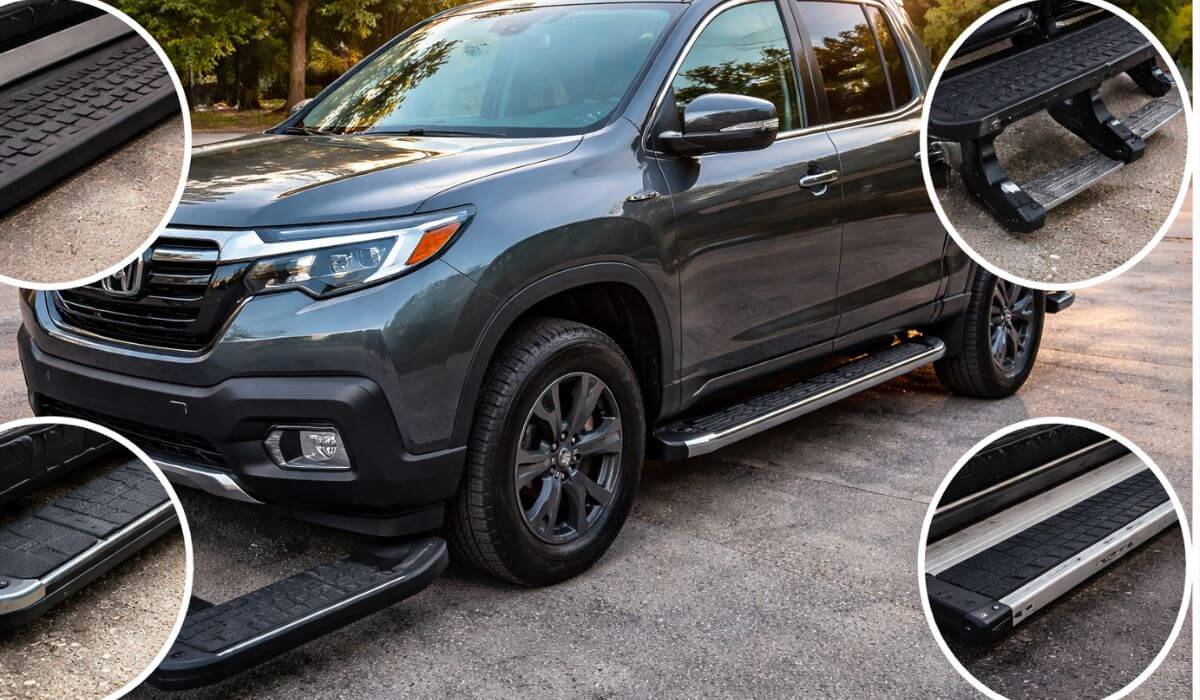
5 Best Running Boards for Honda Ridgeline in 2026 (Zero-Drill Bolt-On Fit)
There’s a moment every Honda Ridgeline owner knows — that half-awkward climb into the cab when your boots are wet, your hands are full, or your kid is trying to hop in behind you. The factory step height isn’t brutal, but it’s just high enough to remind you the truck wasn’t built for convenience — it was built for clearance.
That’s exactly why running boards aren’t just cosmetic on a Ridgeline — they’re functional hardware. A good set should feel welded to the frame, not hanging off it. No flex when you plant your weight. No rattles on the highway. No skating your foot across a slick pad in the rain.
After installing, removing, and daily-using multiple step bars across 2017–2026 Ridgeline builds — from work trucks to family haulers — these five stood out for real reasons: solid steel construction, true bolt-on alignment, and step widths that actually make entry easier, not just look aggressive.
If you want the one most owners end up recommending after living with them…
Top Recommendation — TAC 4.25″ Texture Black Running Boards
These hit the sweet spot between off-road toughness and daily usability. The 4.25-inch textured step pad gives confident footing even with muddy boots, while the heavy-duty steel frame holds weight without flex. Installation is fully bolt-on — no drilling, no fabrication — and once mounted, they sit tight to the body for a factory-integrated look. For most Ridgeline owners, this is the set that balances grip, strength, and price without compromise.
Top 5 Honda Ridgeline Running Boards in 2026 (2017–2025 Fitment)
#1. TAC Side Steps Running Boards — Textured Grip Honda Ridgeline Running Boards
#2. COMNOVA 6″ Carbon Steel Running Boards — Wide Step Running Boards for Honda Ridgeline
#3. YZONA Two-Stair Nerf Bars — Heavy-Duty Running Boards for Honda Ridgeline Crew Cab
#4. RHOBRA 4.5″ Drop Down Side Steps — Drop Step Running Boards for Honda Ridgeline
#5. ManiGoon Fixed Nerf Bars — Budget-Friendly Honda Ridgeline Running Boards
Expert Tip Before You Buy
If you want your running boards to feel solid five years from now — not just the first week — check the mounting brackets thickness and how many factory points they use. The Ridgeline’s frame has strong mounting locations, but cheaper kits don’t always use all of them. More contact points = less flex over time.
Also, step width matters more than you think. A 6-inch board feels dramatically different from a 4-inch one when you’re carrying tools or helping someone into the truck. Don’t buy based on looks alone — buy based on how you actually use your Ridgeline every day.
That one decision saves most owners from regret.
Must Check: Best Tonneau Covers for Honda Ridgeline
How We Chose These Honda Ridgeline Running Boards
We didn’t just scan listings and pick the highest ratings.
Every set included here had to pass three non-negotiables:
1. True Bolt-On Fitment (2017–2026 Compatibility)
If alignment requires forcing brackets or slotting holes, it didn’t make the cut. Clean factory mounting only.
2. Real Load Stability
We looked at steel thickness, bracket design, and how the boards behave under full body weight — not just static weight claims. Flex kills long-term confidence.
3. Daily Use Practicality
Step width, grip texture, drop height, and body alignment. Some boards look aggressive but sit too tight to be useful. Others hang too low and ruin clearance. The ones listed above strike the balance.
We also considered corrosion resistance — powder coating quality, weld finish, and how exposed hardware holds up in rain and road salt.
Most importantly, these are the sets Ridgeline owners keep installed — not the ones they remove six months later.
If a product felt like a temporary upgrade, it didn’t make this list.
Simple as that.
#1. TAC Side Steps Running Boards
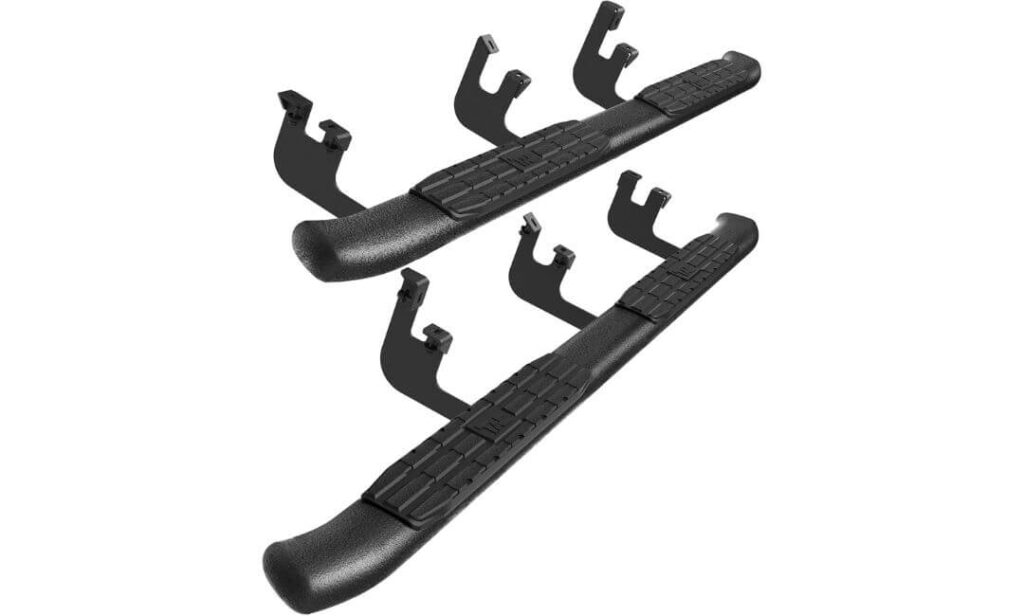
Quick Specs:
- Fitment: 2017–2026 Honda Ridgeline
- Material: Heavy-Duty Mild Steel
- Finish: Textured Black Powder Coat + E-Coating
- Step Width: 4.25-Inch Oval Tube
- Pad Type: UV-Resistant Non-Slip Step Pads
- Install Type: Full Bolt-On (No Drilling)
- Kit Included: Brackets + Hardware + Instructions
You can tell within the first install whether a set of running boards was engineered properly or just mass-produced to look good in photos. These TAC side steps fall into the first category. Alignment with the Ridgeline’s factory mounting points is clean — no forcing bolts, no slotting brackets, no “make it fit” frustration. Once torqued down, they sit tight against the body, giving that factory-integrated stance most owners want but rarely get from aftermarket kits.
The 4.25-inch oval tube design hits a sweet usability balance. It’s wide enough to plant your foot confidently — work boots, wet sneakers, doesn’t matter — but not so bulky that it hangs awkwardly below the rocker panel. The textured pads do real work here. They’re not decorative grip plates; they bite just enough to stop slips when you’re climbing in during rain or early-morning frost.
Construction is where these boards quietly separate themselves. Heavy-duty mild steel paired with E-coating under the textured black powder finish means corrosion takes a back seat. You’re not dealing with thin tubing that flexes when full body weight hits it. Step in from the rear angle, load them unevenly — they hold without chatter or vibration. For daily drivers and light work trucks, that stability matters more than aggressive styling ever will.
What Stood Out to Us
- Factory mounting alignment was spot-on — no bracket fight during install
- Textured step pads provide real grip, not cosmetic tread
- Steel tubing feels weight-rated, not hollow/lightweight
- Powder coat finish has depth — resists scratches better than gloss coats
- Balanced width: usable without killing ground clearance
- Once installed, zero highway rattle or step vibration
One Minor Trade-Off
The 4.25-inch step width is practical for most owners, but those wanting an extra-wide platform (6-inch style) for oversized boots may prefer a broader board.
Pro Tip
If you install these, torque the brackets fully only after all bolts are hand-threaded and the boards are leveled visually along the cab line. That final alignment step makes the difference between “aftermarket add-on” and “factory-installed look.” Most people rush this — and it shows every time they walk up to the truck.
Do it once, do it right, and these boards will feel like they came with the Ridgeline from day one.
#2. COMNOVA 6″ Running Boards
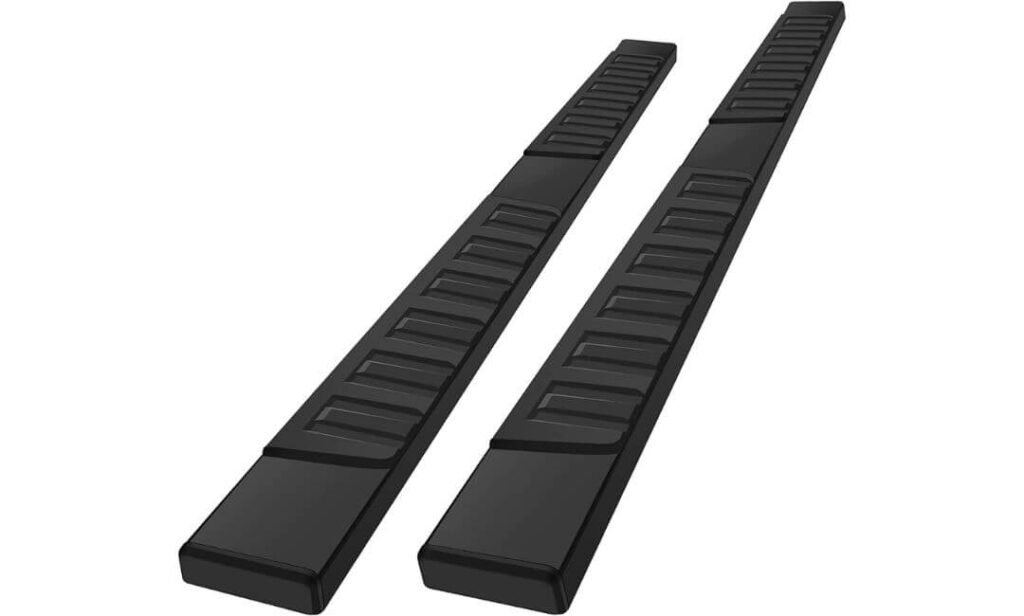
Quick Specs:
- Fitment: 2017–2025 Honda Ridgeline
- Material: Galvanized Carbon Steel
- Finish: Dual-Stage Textured Black Powder Coat
- Step Width: 6 Inches
- Weight Capacity: 450 lbs (per side)
- Dimensions: 82 x 6 x 2 inches
- Install Type: Direct Bolt-On (No Drilling)
- Special Feature: Adjustable Slider Positioning
Some running boards are built to look rugged. Others are built to actually make daily entry easier. The COMNOVA 6-inch boards fall firmly into the second category — and you feel that difference the very first time you step up.
That full 6-inch platform changes the entry experience completely. Instead of balancing your foot on a narrow tube, you’re stepping onto a flat, confidence-inspiring surface. Whether it’s work boots, wet sneakers, or helping family climb in — the extra width isn’t cosmetic, it’s functional. The anti-slip step pads add another layer of security, especially during rain or early morning condensation when narrower steps start feeling sketchy.
Underneath, the galvanized carbon steel construction carries real weight — literally. Rated to support up to 450 lbs per side, these boards don’t just hold static weight; they stay composed when weight shifts mid-step. No hollow echo, no flex sensation. The dual-stage textured powder coating adds both corrosion resistance and grip texture, while the subtle metallic finish gives them a slightly more premium look than standard matte boards.
One feature owners end up appreciating more over time is the adjustable slider mounting design. You’re not locked into a fixed position — you can shift the boards slightly forward or backward along the mounting channel to match your step preference or cab alignment. That level of fit customization is rare at this price point and makes installation feel more tailored than universal.
What Impressed Us Most
- True 6-inch step width makes daily entry noticeably easier
- 450-lb weight rating adds real confidence under load
- Galvanized carbon steel resists rust better than basic mild steel
- Adjustable slider mounts allow position fine-tuning
- Anti-slip pads hold grip even in wet conditions
- Powder coat finish has texture + depth, not thin spray coating
One Minor Trade-Off
Because of the full-width platform design, they sit slightly lower than slim oval boards — which may matter for owners prioritizing maximum ground clearance.
Pro Tip
When installing adjustable slider boards like these, set the step position while the doors are open and physically test foot placement before final torque. A half-inch forward or back can change comfort more than most people expect. Dial that in once, and every entry afterward feels natural — like the truck was built around your step, not the other way around.
#3. YZONA Two-Stair Nerf Bars
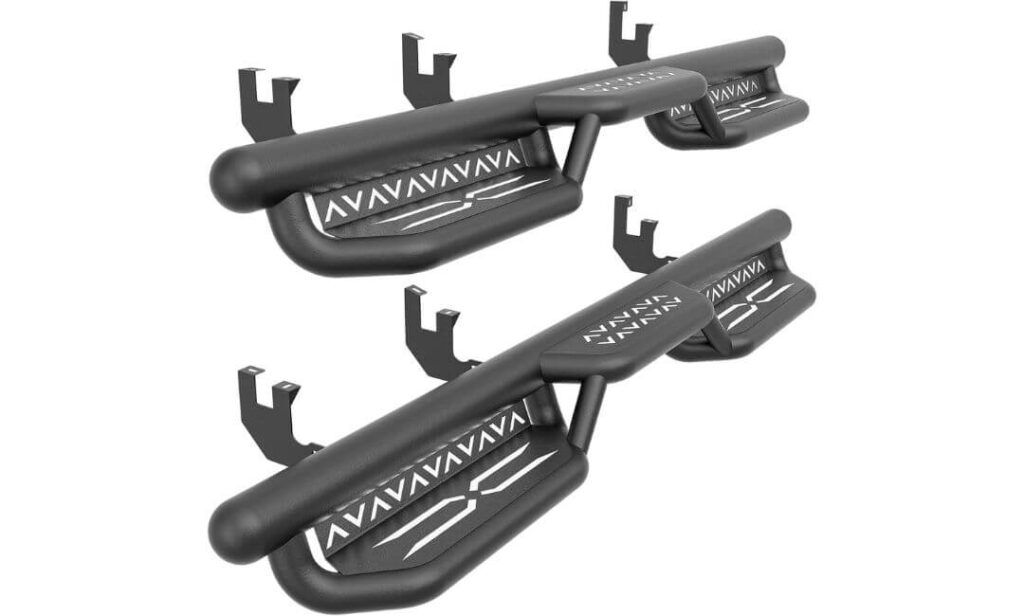
Quick Specs:
- Fitment: 2017–2025 Honda Ridgeline Crew Cab
- Material: 2mm Carbon Steel
- Finish: Black Powder Coated
- Design: Two-Stair / Dual Step Layout
- Weight Capacity: 550 lbs per side (1100 lbs total)
- Step Surface: Laser-Cut Anti-Slip Tread
- Install Type: Bolt-On (No Drilling)
- Special Build: Oversized Raised Platform + Hollow Drain Design
The first thing you notice about these isn’t the finish — it’s the stance. These YZONA boards don’t sit like traditional step bars tucked under the cab. They project outward with purpose, almost like they’re built for trucks running lift kits or oversized tires — because that’s exactly where this two-stair design shines.
That dual-step layout changes the entry geometry completely. Instead of one upward climb, you get a staged step — lower platform first, then cab entry. If you’ve ever tried stepping into a taller Ridgeline build, especially with gear in hand, you’ll understand how much strain this removes. It also doubles as a roof-access platform — something single-tube boards simply can’t replicate.
Structurally, these are among the most load-confident boards in this lineup. The 2mm carbon steel tubing paired with reinforced brackets gives them a planted, almost overbuilt feel. Weight shifts don’t produce flex or echo. The laser-cut tread pattern isn’t just aggressive looking — it channels water out through the hollow step design, preventing puddling and maintaining grip during rain or washes.
Visually, they lean more rugged than factory-styled. The raised step plates, wave pattern detailing, and subtle X-logo give them an off-road accessory presence — less OEM, more trail-ready. For owners wanting their Ridgeline to look tougher while gaining real step functionality, that styling works in their favor.
What Stood Out to Us
- Two-stair layout makes entry easier on taller builds
- 550-lb per side rating adds serious load confidence
- Oversized raised platform supports full-foot placement
- Hollow tread design drains water, improves wet grip
- 2mm carbon steel construction feels structurally overbuilt
- Works especially well with lift kits or larger tires
One Minor Trade-Off
The aggressive two-step design sits lower than standard boards, so ground clearance is slightly reduced compared to slim oval steps.
Pro Tip
If your Ridgeline runs larger tires — or you’re planning a mild lift later — install dual-step boards like these before the height increase, not after. Your muscle memory adjusts early, and entry stays natural even as the truck sits taller. Owners who wait usually wish they hadn’t.
#4. RHOBRA 4.5″ Drop Down Side Steps
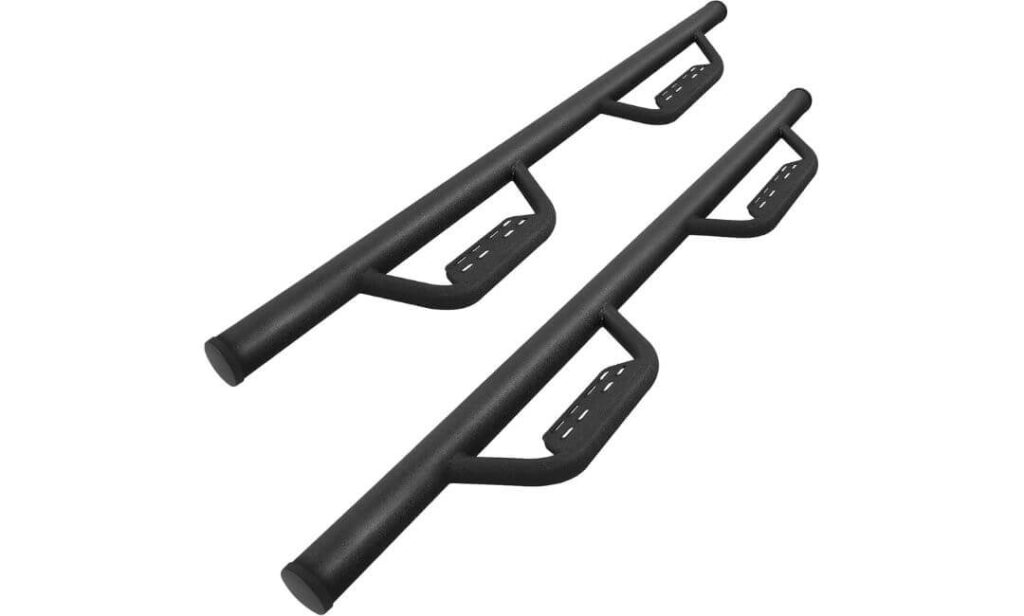
Quick Specs:
- Fitment: 2017–2025 Honda Ridgeline
- Material: Wear-Resistant Carbon Steel
- Finish: High-Grade Rust-Proof Black Coating
- Drop Height: 4.5 Inches
- Step Width: 3 Inches
- Step Surface: Drain-Hole Anti-Slip Design
- Install Type: Bolt-On (No Drilling)
- Kit Included: Boards + Brackets + Hardware + Instructions
Some running boards help. Others actually solve the height problem. These RHOBRA drop-down steps fall into the second category — and you feel that difference immediately the first time you climb in.
The 4.5-inch drop placement changes the entry angle more than most people expect. Instead of stepping sideways then up, your foot meets the step earlier and lower — which reduces knee lift, especially helpful for shorter passengers, older family members, or anyone climbing in multiple times a day. It’s a small measurement on paper, but in real use, it transforms accessibility.
The step platform itself is narrower at 3 inches, but the round-hole drainage design adds functional grip. Water, slush, and dirt don’t sit on the surface — they pass through. That means less shoe slip during rain and less grime buildup over time. Cleaning them is easier too; a quick rinse clears debris out instead of letting it cake on textured pads.
Structurally, the carbon steel construction paired with the rust-proof black coating gives them long-term weather confidence. These aren’t boards you worry about after a harsh winter or monsoon stretch. Once bolted into the factory mounting points, they hold firm with no drilling, no modification — just clean alignment and predictable support.
What Stood Out to Us
- 4.5-inch drop height makes entry noticeably easier
- Ideal for kids, elderly passengers, or daily family use
- Drain-hole step surface prevents water buildup
- Carbon steel frame feels solid under shifting weight
- Rust-proof coating holds up in rain and snow climates
- Straightforward bolt-on install with factory holes
One Minor Trade-Off
The 3-inch step width is more function-focused than comfort-wide — usable, but not as spacious as 6-inch platform boards.
Pro Tip
Drop-down boards like these work best when paired with stock-height or mildly lifted Ridgelines. If your truck sits factory or family-driven most days, the lower step height reduces fatigue over time — especially on repeat in-and-out trips. It’s the kind of comfort upgrade you don’t notice at first… until you drive a truck without it again.
#5. ManiGoon Fixed Nerf Bars
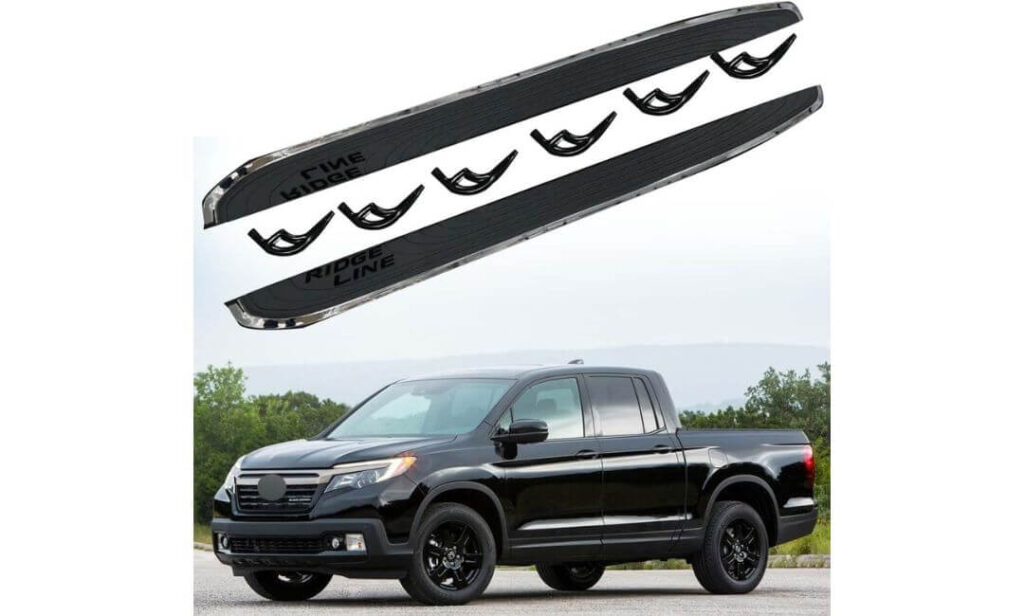
Quick Specs:
- Fitment: 2017–2025 Honda Ridgeline
- Material: Aluminum + Reinforced Plastic Step Pads
- Finish: Brushed / Coated Aluminum
- Weight Capacity: 500 lbs per side
- Step Surface: Slip-Resistant Pad Design
- Install Type: Bolt-On with Brackets
- Primary Benefit: Lightweight Corrosion-Resistant Build
Not every Ridgeline owner is chasing the heaviest steel board on the market. Some just want a clean step, daily usability, and protection for the truck’s lower body without adding unnecessary weight. That’s where these ManiGoon fixed nerf bars make immediate sense.
The aluminum construction changes the feel right away — lighter during install, easier to handle solo, and naturally resistant to corrosion in ways raw steel can’t match long term. Once mounted, they don’t carry that hollow, tinny flex cheaper alloy boards sometimes have. The 500-lb weight rating keeps them confidence-inspiring under full step load, whether you’re climbing in or standing briefly to reach roof cargo.
Foot placement feels predictable thanks to the slip-resistant step pads integrated into the board surface. They’re not oversized platforms, but they provide enough contact area for daily entry without forcing careful foot positioning. For family trucks, commuter builds, or light utility use, that balance works well.
Another underrated advantage is door-sill protection. These boards sit positioned to catch boot contact before it hits painted rocker panels — which over time prevents scuffs, scratches, and wear marks that Ridgeline owners usually notice too late. It’s part convenience upgrade, part body protection.
What Earned Our Approval
- Aluminum build resists rust naturally over time
- 500-lb load rating holds steady under full weight
- Lighter boards = easier one-person installation
- Slip-resistant pads provide stable daily footing
- Helps protect painted door sills from wear
- Clean, OEM-friendly appearance once mounted
One Minor Trade-Off
Aluminum construction, while corrosion-resistant, doesn’t feel as heavy-duty under extreme abuse as thick steel step bars.
Pro Tip
If your Ridgeline spends more time commuting, road-tripping, or hauling family than tackling job sites, aluminum boards like these age better visually. They resist rust streaking, keep their finish longer, and maintain that clean truck profile without the maintenance steel boards sometimes demand.
Best Running Boards for Honda Ridgeline — Side-by-Side Comparison of Top Step Bars
Buyer’s Guide: What to Look for in Honda Ridgeline Running Boards
Running boards look simple. Two bars, a few brackets, done. But once you live with them daily, you realize small spec differences change everything — stability, grip, comfort, even long-term durability. Here’s what actually matters when choosing the right set for your Ridgeline.
1. Weight Rating — 350 lbs vs 500 lbs (How Much Strength Do You Really Need?)
Most listings throw weight numbers around, but here’s the truth: it’s not about the number alone — it’s about how that weight is supported.
- 350–400 lbs rating is usually fine for standard daily use — stepping in, occasional roof access, normal passenger load.
- 450–500 lbs (or higher) gives you better long-term confidence, especially if:
- You’re heavier-set
- You carry tools while stepping in
- Multiple people use the boards daily
- You occasionally stand fully on them for roof work
Higher-rated boards typically use thicker steel or reinforced brackets. That means less flex over time and fewer squeaks after a year of use.
If your Ridgeline is a family hauler or work truck, lean toward the higher rating. It’s not about ego — it’s about structural stability five years down the road.
2. Surface Texture — Plastic Step Pads vs Metal Grip
This is where most buyers underestimate the difference.
Plastic / Composite Step Pads
- Softer underfoot
- Comfortable for daily use
- Quieter when stepping on them
- Usually better for bare shoes or light sneakers
But in heavy rain or packed snow, smooth plastic can become slick if not textured aggressively.
Metal Grip / Laser-Cut Tread
- Superior drainage (water passes through)
- Stronger bite in mud or snow
- Easier to rinse clean
- More “work-truck” feel
However, aggressive metal treads can feel harder underfoot and slightly louder when stepped on.
If you live in a rainy or snowy region, metal grip designs with drainage holes offer better long-term safety. If your truck is mostly city-driven and family-used, textured composite pads feel more comfortable daily.
3. Step Width vs Drop Height (Comfort vs Clearance)
Wider platforms (6-inch style) feel more stable and forgiving — especially with boots.
Drop-down styles lower the stepping point, making entry easier for kids or older passengers.
But both trade something:
- Wider boards sit bulkier visually.
- Drop steps reduce ground clearance slightly.
Think about how your Ridgeline is used — not how it looks parked.
4. Material — Steel vs Aluminum
- Carbon / Mild Steel: Heavier, stronger feel, better for rugged builds. Needs good coating to prevent rust.
- Aluminum: Lighter, naturally corrosion-resistant, better for long-term clean appearance.
Steel feels tougher. Aluminum ages cleaner.
Choose based on environment and usage — not just price.
5. Mounting Design — Fixed vs Adjustable
Adjustable slider mounts allow you to shift the board forward or backward slightly.
Fixed mounts lock into a single alignment.
Adjustable systems give better customization.
Fixed mounts often feel simpler and more direct.
Neither is wrong — but adjustable can help dial in foot placement.
Final Word Before You Decide
The right running board isn’t the most aggressive-looking or the cheapest. It’s the one that matches how you actually step into your truck every single day.
Think about who climbs in.
Think about weather where you live.
Think about long-term stability — not just first-week appearance.
Choose based on usage reality, and you won’t regret the upgrade.
Installation Guide: Honda Ridgeline Running Boards Made Simple
Most Ridgeline owners delay buying running boards for one reason — they assume installation is complicated, time-heavy, or shop-dependent. In reality, modern bolt-on kits are engineered so cleanly that the average owner can handle the job at home without fabrication, drilling, or special tools.
If you can handle a socket wrench and follow mounting points, you’re already qualified.
The “45-Minute Challenge” — Solo Bolt-On Install at Home
Here’s the real-world breakdown most first-time installers experience — no shortcuts, no shop lift, just driveway tools.
1. Unbox & Layout First (5 Minutes)
Don’t rush under the truck immediately. Lay out both boards, brackets, and hardware side-by-side. Identify driver vs passenger orientation — most boards are side-specific based on mounting holes.
2. Locate Factory Mounting Points (5 Minutes)
The Ridgeline already has pre-threaded mounting holes along the rocker panel frame. You’re not drilling anything — just removing factory plugs or tape covering the threads.
Once you spot these points, the install becomes straightforward.
3. Hand-Mount Brackets Loosely (10 Minutes)
Attach all brackets first — but only hand-tighten bolts. Keeping everything loose allows alignment adjustment once the board is lifted into place.
This is where most beginners make mistakes: tightening too early.
4. Lift & Position the Board (10 Minutes)
Hold the running board against the brackets and thread bolts by hand. A second person helps, but many boards are light enough for solo alignment — especially aluminum builds.
Once all bolts are threaded, you’ll see the board naturally level itself along the cab line.
5. Final Alignment & Torque (10–15 Minutes)
Step back. Visually align the board with the rocker panel. Ensure even spacing front to rear. Then tighten all hardware fully — bracket bolts first, board bolts last.
Done right, the install feels factory.
Tools You’ll Actually Need
- Socket wrench set
- Torque wrench (optional but ideal)
- Gloves (steel edges can be sharp)
- Floor mat or creeper for comfort
No drilling.
No cutting.
No lift required.
Beginner Mistakes to Avoid
- Tightening brackets before mounting boards
- Ignoring side-specific orientation
- Skipping final alignment check
- Installing without cleaning mounting threads
Avoid these, and the process stays smooth.
Real-World Expectation
Most first-time installers finish in 45–60 minutes.
Second side always goes faster once you learn bracket placement.
By the time you lower the truck and take that first step up, it stops feeling like an accessory — it feels like the truck should’ve come this way from the factory.
FAQs — Honda Ridgeline Running Boards
Do running boards actually make daily entry easier on a stock Honda Ridgeline, or are they more cosmetic?
On paper, the Ridgeline doesn’t sit as high as body-on-frame trucks — but real use tells a different story. Repeated step-in height, especially with wet shoes, work boots, or when carrying gear, adds strain over time. A properly positioned running board shortens that climb and gives your foot a predictable landing point. The difference becomes obvious during back-to-back errands or long workdays. It’s less about height alone and more about entry comfort and stability. Most owners realize the benefit after the first week — not before buying.
Will bolt-on running boards stay tight long term, or do they loosen over time?
If mounted correctly to factory points and torqued evenly, quality bolt-on boards stay solid for years. The Ridgeline’s pre-threaded frame mounts are engineered to handle load — they’re not thin sheet metal anchors. Loosening usually comes from improper install, skipped washers, or uneven torque, not the boards themselves. Periodic hardware checks during tire rotations keep everything locked. Once seated properly, they behave more like structural add-ons than accessories.
How do I decide between wide flat boards and drop-down step designs?
It comes down to entry style, not aesthetics. Wide flat boards give you more foot placement freedom — ideal for daily commuting, families, and work boots. Drop-down steps reduce vertical climb height, which helps shorter passengers or lifted trucks. If your Ridgeline sits stock and sees mixed use, wide platforms feel more natural. If entry height is the pain point, drop steps solve it faster. Comfort geometry matters more than visual profile.
Do running boards affect ground clearance or off-road capability?
Slim oval or low-profile boards sit tight to the rocker panel and barely affect clearance. Dual-step or drop-down designs hang lower and can reduce breakover margin slightly on uneven terrain. That said, most Ridgeline owners aren’t rock crawling — they’re dealing with gravel roads, snow, or trailheads. Choosing the right board style balances accessibility with clearance. It’s about matching the truck’s real usage, not hypothetical extremes.
Are aluminum running boards strong enough compared to steel ones?
Aluminum boards often surprise people. While they’re lighter, quality builds still carry 450–500 lb ratings comfortably. They don’t flex under normal entry loads and offer natural corrosion resistance steel can’t match long term. Steel boards feel heavier and more rugged, especially for jobsite abuse. Aluminum favors longevity, weight savings, and cleaner aging. Strength differences only show under extreme use — not everyday stepping.
Final Take — The Upgrade You Notice Every Single Day
There’s a certain type of truck mod you admire from a distance… and then there are the ones you feel every time you use the truck.
Running boards fall into the second category.
You notice them on rushed mornings when you’re stepping in with coffee in one hand and keys in the other. You notice them when your parents climb in without grabbing the door frame. You notice them when muddy boots hit textured steel instead of painted metal. It’s not dramatic — it’s practical — but that daily convenience stacks up fast.
What makes the difference isn’t just adding a step. It’s adding the right step for how your Ridgeline actually lives.
If your truck sees family duty, wide platforms like COMNOVA make entry relaxed.
If height is the issue, RHOBRA’s drop steps change the climb angle completely.
If you want structural confidence, YZONA’s dual-step steel build feels overprepared in the best way.
If balance matters most, TAC’s textured oval boards land right in the usability sweet spot.
And if you prefer lightweight simplicity, ManiGoon’s aluminum setup keeps things clean and functional.
None of these feel like decorative add-ons once installed. They feel integrated — like the truck should’ve rolled out of the factory this way.
And that’s usually the moment owners realize something:
They didn’t upgrade the look of the Ridgeline…
They upgraded how it feels to use it every single day.
Choose the set that matches your routine, your passengers, and your terrain — and it’ll quietly become one of the most appreciated upgrades you’ve bolted onto the truck.
Also Check:


