
5 Best Dash Cams for Ford Bronco in 2026: OEM Hidden Cameras With 4K Trail Recording
The Ford Bronco is one of those SUVs where a cheap universal dash cam usually ends up looking wrong after a few weeks. The windshield sits more upright than most crossovers, the cabin gets shaken harder on trails, and removable roof panels expose cameras to more vibration, dust, heat, and sunlight than a normal daily driver. That’s exactly why Bronco owners usually prefer OEM-style hidden dash cams instead of bulky suction-mounted units hanging from wires.
For this guide, I focused specifically on 2021–2026 Ford Bronco and Bronco Raptor models — not the Bronco Sport. Most of these cameras are designed around the Bronco’s factory mirror housing and power layout, which matters more than people think. A proper Bronco dash cam should fit cleanly near the windshield trim, avoid blocking trail visibility, handle rough off-road movement without constant rattling, and still record usable footage at night when you’re miles away from street lighting.
A lot of newer Bronco-specific dash cams still don’t have thousands of long-term reviews yet, so instead of repeating generic specs, these picks were chosen based on actual fitment quality, OEM appearance, app stability, parking mode reliability, WiFi performance, and how well they work during off-road driving. Some are better for hidden factory-style installs, while others are better for trail footage, rear coverage, or wider night visibility on back roads.
Best Ford Bronco Dash Cam: Top 2026 Picks With GPS, WiFi & Trail Coverage
#1. Fitcamx Front 2160P+Rear 1080P Dash Cam
Best 2025–2026 Ford Bronco Dash Cam With OEM Factory Fit, Hidden Trail Camera Recording, Rear Coverage & Stable Parking Mode for Daily Driving and Off-Road Use
#2. WOLFBOX G900 PRO Mirror Dash Cam
Best Premium 4K Front and Rear Dash Cam for Ford Bronco Owners Wanting Wide Trail Visibility, Night Vision Recording, GPS Tracking & Large Mirror Display
#3. Mangoal Front 4K & Rear 1080 Dash Cam
Best Value Ford Bronco WiFi Dash Cam With GPS, Rear Recording, Hidden OEM-Style Installation & Reliable Trail Footage for 2021–2026 Models
#4. FUVYMYT OEM Style Front 4K Dash Cam
Best Hidden OEM Dash Cam for Ford Bronco Drivers Who Want a Clean Factory Look, Simple App Control & Sharp 4K Front Recording Without Extra Wiring Mess
#5. GATGIT Front 4K Dash Cam
Best Budget 4K Dash Cam for Ford Bronco With Plug-and-Play OEM Fitment, HDR Night Recording, GPS & Fast 5.8GHz WiFi Connectivity
Expert Tip: One thing most Bronco owners realize too late: a dash cam that looks great in a sedan can become annoying fast inside a Bronco. Wind noise, roof vibration, rough trail movement, direct sunlight through removable panels, and constant cabin shaking expose weak mounts and unstable cameras very quickly. That’s why a clean OEM-style fit mattered more in this list than flashy marketing specs alone. A camera that stays stable and records clearly after six months on trails is worth far more than a “feature-packed” model that starts rattling or overheating after summer.
How We Chose These Ford Bronco Dash Cams
There are hundreds of generic 4K dash cams online right now, but most of them were never truly designed around the Bronco’s cabin layout. For this article, the goal was simple: find cameras that actually make sense inside a real 2021–2026 Ford Bronco, including newer Bronco Raptor trims — not just random cameras with “Bronco compatible” added to the title.
The first thing we looked at was factory-style fitment. The Bronco’s windshield angle and mirror housing leave very little room for bulky universal cameras. That’s why most of the stronger picks here use a hidden OEM-style design that sits tighter near the factory trim instead of hanging lower into the driver’s view. In real-world driving — especially on trails — that cleaner placement matters more than people expect.
We also paid close attention to power stability and parking mode behavior. A lot of newer dash cams advertise parking surveillance, but several Bronco owners have already reported issues with weak app connections, unstable loop recording, or battery drain after the SUV sits parked overnight. The cameras selected here were chosen because their overall setup feels more stable for long-term daily use, not just because they advertise high resolution.
Another thing that separated these models was real off-road usability. Recording quality on a smooth highway is easy. Recording usable footage on dusty trails, uneven rock sections, forest roads, or low-light backcountry routes is much harder. Cameras with weak sensors often turn trail footage into blurry vibration-heavy clips once sunlight disappears. That’s one reason the WOLFBOX model stood out — its larger STARVIS sensor handles darker roads noticeably better than most budget options.
We also avoided overhyping specs that sound impressive but rarely matter in actual ownership. For example, several cheaper “4K” cameras still suffer from slow WiFi transfer speeds, laggy mobile apps, poor heat handling, or weak adhesive mounts once the Bronco cabin heats up during summer. A clean install, reliable startup every morning, stable app connection, and footage you can actually retrieve quickly matter far more in real ownership than marketing numbers alone.
Finally, these recommendations were balanced around different types of Bronco owners. Some people want a completely hidden OEM-style setup that looks factory installed. Others care more about front-and-rear trail coverage, wide mirror visibility, GPS route tracking, or stronger night recording for rural driving. Instead of forcing one “perfect” pick, this list was built around how different Bronco owners actually use their SUVs every day.
#1. Fitcamx Front 2160P+Rear 1080P Dash Cam
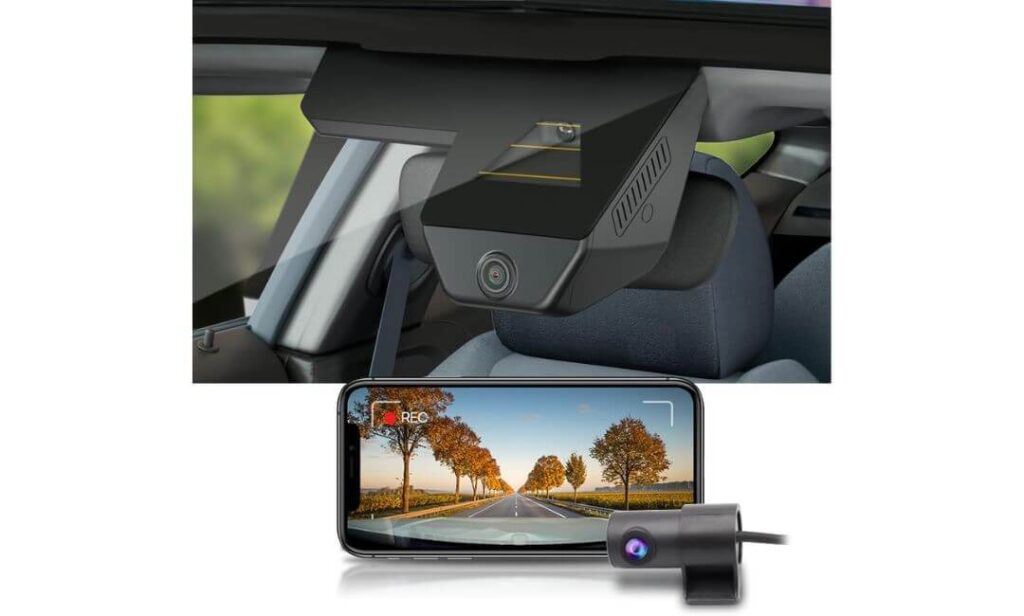
Quick Specs:
- Fits Ford Bronco & Bronco Raptor models with OEM-specific windshield housing design (not compatible with Bronco Sport or older 2021–2024 setups)
- 2160P front + 1080P rear recording with dual-channel trail and parking coverage
- 170° front and 140° rear viewing angles for wider off-road visibility and side-lane capture
- Hidden OEM factory-style installation with no hanging wires or bulky windshield mount
- Built-in WiFi + FITCAMX app control for instant video preview and quick clip downloads
- f/1.6 aperture with WDR night processing for clearer low-light highway and trail footage
- Loop recording + G-sensor protection to automatically lock important impact clips
- Heat-resistant ABS + PC construction built for hotter cabin temperatures and rougher driving conditions
- 128GB memory card included so the setup feels ready immediately out of the box
- Clean plug-and-play style integration that looks much closer to a factory-installed Bronco camera than a generic aftermarket setup
The first thing that stands out here is how unusually “factory” the setup looks once installed. Seriously — from the driver’s seat, most people won’t even notice there’s a dash cam sitting there. No dangling cable near the mirror, no giant screen blocking windshield visibility, no cheap plastic suction mount shaking every time the suspension moves. Inside a Bronco cabin, that matters more than spec sheets make it sound.
What also impressed me is that this setup clearly feels designed around how Bronco owners actually use these SUVs. The wider 170-degree front view helps capture more of the trail edges, side traffic, and recovery situations without forcing a fish-eye mess into the footage. Then once sunlight disappears, the f/1.6 aperture and WDR processing start pulling their weight. It’s not cinema-camera level night footage obviously, but compared to many generic “4K” dash cams floating around online, this one holds road signs, headlights, and trail detail together surprisingly well.
Another thing worth mentioning — the FITCAMX app setup is refreshingly simple compared to a lot of newer dash cams. Some systems still feel like unfinished tech projects with random disconnects and painfully slow transfers. Here, previewing footage, downloading clips, and adjusting settings feels straightforward enough that you’ll actually use it instead of ignoring it after the first week. And because the camera draws power cleanly through the Bronco’s existing layout, the whole install ends up looking much closer to something Ford itself could’ve offered from the factory.
(If your Bronco spends more time on trails, forest roads, camping routes, or remote highways than sitting in city traffic, this kind of clean OEM-style setup usually becomes worth every dollar surprisingly fast.)
Why This One Stayed Near the Top of Our Bronco List
- Blends into the Bronco interior almost perfectly once installed
- Dual-channel setup gives useful rear coverage during trail driving and parking
- Wide-angle recording works especially well for off-road visibility
- Included 128GB card makes the setup feel genuinely ready out of the box
- WiFi app experience feels cleaner and more stable than many newer budget rivals
A Small Thing Worth Knowing Before Ordering
- This version specifically fits newer Bronco models and does not work with Bronco Sport or earlier 2021–2024 setups, so checking trim compatibility first really matters here
Real-World Bronco Compatibility Notes
This camera was built specifically around the standard Ford Bronco cabin layout, including trims like Base, Outer Banks, and Badlands. Once mounted near the mirror housing, it sits tight against the upper windshield area instead of protruding downward like universal cameras usually do. That cleaner positioning helps a lot when driving narrow trails or rough terrain where visibility already matters.
It’s also one of the few newer OEM-style setups that genuinely looks like it belongs inside the Bronco interior. The black housing matches the surrounding trim surprisingly well, so even passengers often assume it came factory-installed instead of added later.
The Insider Pro-Tip
Most Bronco owners focus heavily on video resolution first, but after testing enough of these systems, the real difference usually comes down to mount stability, heat resistance, and app reliability. A camera can advertise “4K” all day long, but if the footage shakes badly on trails or the app becomes frustrating after a month, the resolution stops mattering pretty quickly.
This is one of the few Bronco-specific dash cams right now where the overall ownership experience feels more polished than expected. The hidden OEM fit, stable power connection, simple app controls, and cleaner install make it feel less like an accessory — and more like part of the SUV itself.
#2. WOLFBOX G900 PRO Mirror Dash Cam
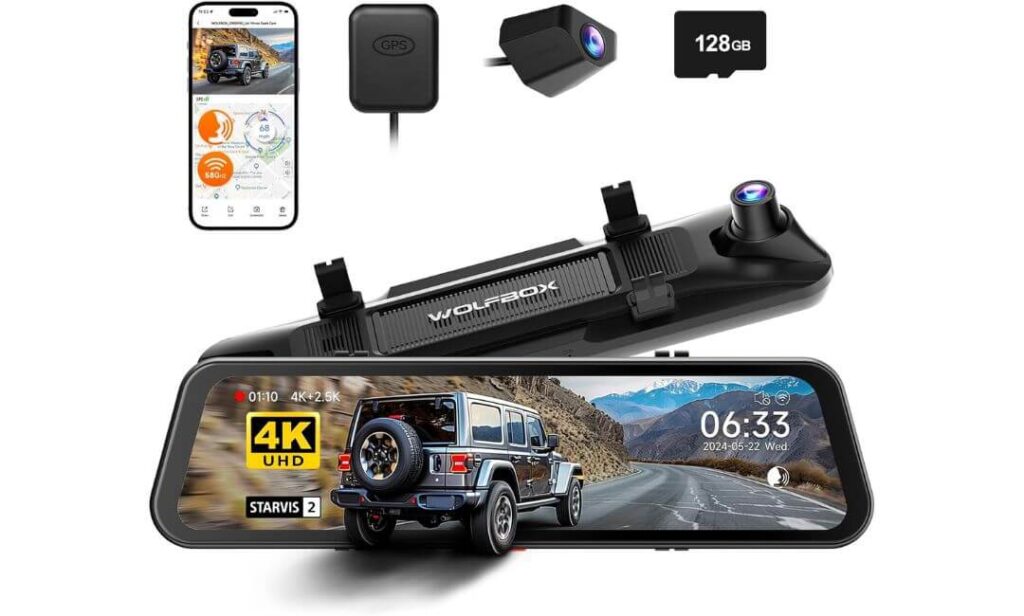
Quick Specs:
- Front 4K + Rear 2.5K recording with noticeably sharper rear footage than most mirror dash cams in this range
- 8MP Sony STARVIS 2 IMX678 sensor for stronger low-light highway and trail visibility
- Large 12-inch mirror display that replaces the cramped feel of smaller OEM mirrors
- 5.8GHz high-speed WiFi for faster video transfers and smoother app connection
- Built-in GPS tracking for route, speed, and location logging during drives
- Voice control support for hands-free recording commands while driving trails or highways
- 170-degree wide-angle front view with broader lane and shoulder visibility
- Rearview mirror mounting system that works well with Bronco windshield layouts
- 128GB card included with support for larger storage up to 512GB
- Supercapacitor-based design for improved heat durability compared to cheaper battery-powered setups
There’s a very specific type of Bronco owner this camera makes immediate sense for — the one who actually wants to see more while driving, not just quietly record footage in the background. The moment this larger 12-inch mirror powers on, the cabin suddenly feels more modern, more open, and honestly much easier to monitor in bad weather, nighttime driving, or crowded traffic.
But what separates this setup from most oversized mirror dash cams online is the imaging hardware behind it. The STARVIS 2 IMX678 sensor is genuinely one of the better low-light sensors currently showing up in consumer dash cams. On dark highways, wooded trails, rainy back roads, or poorly lit parking lots, this thing pulls in noticeably cleaner detail than typical “4K” cameras that turn nighttime footage into muddy blur. Pair that with the sharper 2.5K rear camera, and license plates, road signs, and vehicles behind you stay readable far more often than expected.
Another thing Bronco owners will probably appreciate: the mirror setup actually works well with the Bronco’s taller seating position. Instead of feeling like you’re peeking through a tiny factory mirror while gear, passengers, or cargo block visibility, the larger digital display gives a much wider and clearer look behind the SUV. Once people get used to it, going back to a normal mirror honestly feels outdated surprisingly fast.
And unlike many cheaper mirror cams that feel laggy or overloaded with gimmicks, this one feels unusually polished in daily use. The 5.8GHz WiFi connection transfers clips faster, voice commands work better than expected, and the whole system feels designed for people who will actually use the features regularly instead of forgetting they exist after setup.
(If your Bronco regularly handles long highway trips, camping gear, night driving, towing, or darker off-road routes, the visibility upgrade alone here can end up feeling more valuable than the recording feature itself.)
What Made This One Stand Out During Research
- Low-light recording quality is genuinely stronger than most mirror dash cams right now
- Rear 2.5K footage looks noticeably sharper during parking and highway driving
- Large mirror display improves rear visibility inside the Bronco cabin
- Voice controls are surprisingly useful once hands are busy on rough terrain
- Faster WiFi connection makes downloading clips less frustrating than older systems
A Few Things Smart Buyers Usually Know First
- Because this uses a larger mirror-style setup, some drivers who strongly prefer completely hidden OEM cameras may still lean toward smaller factory-style options instead
How It Fits Into the Bronco Driving Experience
The universal mirror mount works especially well inside the Bronco because the SUV already has a taller windshield and upright driving position. Once installed, the display feels natural instead of oversized, and it doesn’t interfere with factory electronics or existing Bronco systems the way some universal dash cams can.
Setup is also more straightforward than many people expect. Most Bronco owners finish installation within an hour or two, especially since the included cables, GPS antenna, and mounting hardware cover nearly everything needed out of the box.
The Insider Pro-Tip
A lot of people buy mirror dash cams expecting “just a bigger screen,” but the real long-term advantage is visibility fatigue. During longer highway drives, night trips, storms, towing, or heavily loaded cargo situations, constantly checking a small traditional mirror becomes surprisingly tiring. A larger digital rear view changes that experience more than most buyers expect.
This setup especially makes sense for Bronco owners who treat their SUV like an adventure vehicle instead of just a commuter. Between the STARVIS night sensor, sharper rear camera, GPS tracking, voice commands, and wider mirror visibility, this feels less like a simple recording device — and more like a genuine driving upgrade once you live with it for a while.
#3. Mangoal Front 4K & Rear 1080 Dash Cam
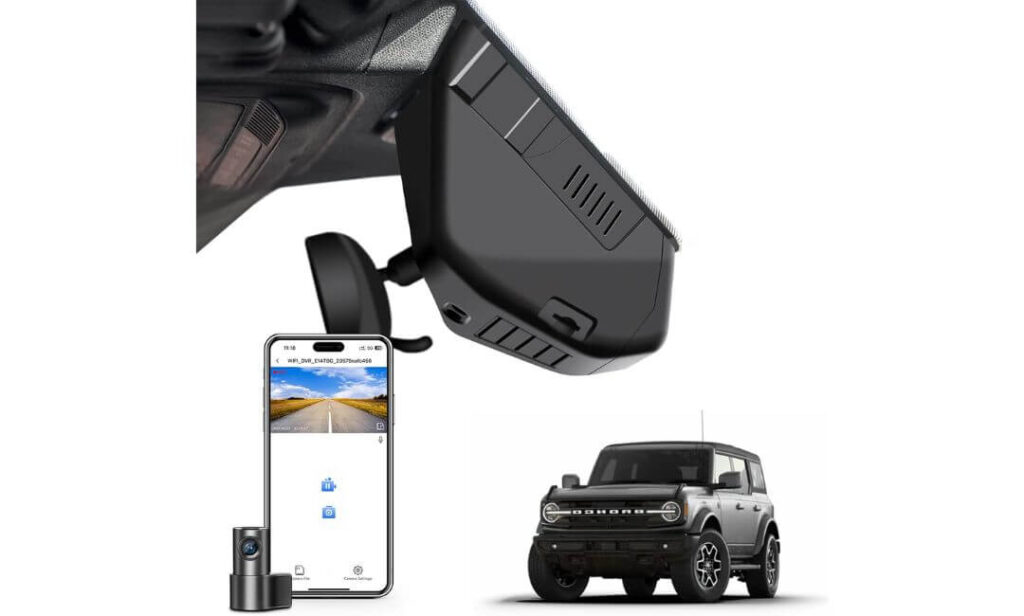
Quick Specs:
- Custom OEM-style fit for Ford Bronco models with behind-the-mirror hidden installation design
- 4K front + 1080P rear recording for cleaner trail, highway, and parking footage
- Sony IMX335 sensor with f/1.8 aperture for improved low-light visibility and sharper night detail
- Built-in WiFi + app control for quick footage access and wireless video downloads
- Integrated GPS tracking for recording routes, driving speed, and trip data
- Loop recording + G-sensor locking for automatic protection of impact footage
- 150-degree front viewing angle with balanced wide-road coverage without extreme distortion
- Supercapacitor-based system designed for better heat resistance during summer driving
- 128GB memory card included with support for larger expandable storage
- Factory-style no-wire appearance that blends naturally into the Bronco interior
Oddly enough, this is probably one of the easiest Bronco dash cams to live with once the excitement of “buying a new gadget” wears off. There’s no oversized display glowing at night, no cable hanging across the windshield, no constant reminder that you installed aftermarket tech into the SUV. Once mounted behind the mirror housing, it simply disappears into the Bronco cabin the way a proper OEM-style camera should.
And honestly, that clean installation changes the whole ownership experience. A lot of universal dash cams technically work inside the Bronco — but very few actually belong there visually. This setup feels intentionally shaped around the Bronco interior instead of adapted afterward. Even from outside the windshield, most people won’t immediately notice it unless they’re specifically looking for a camera.
The recording quality also lands in a smart middle ground that many Bronco owners will appreciate. Instead of chasing exaggerated marketing claims, Mangoal focused more on balanced real-world clarity. The Sony IMX335 sensor, paired with the f/1.8 aperture, keeps daytime footage crisp while still holding together surprisingly well once the roads get darker. Headlights bloom less aggressively than expected, road markings remain visible, and rear footage stays usable during parking or trail driving without looking heavily compressed.
Another thing that quietly helps this camera stand out is how stable the entire system feels during everyday use. The app connection is simple, footage downloads quickly enough to actually use, and the GPS tracking adds useful route data without making the setup complicated. It’s one of those products where the convenience slowly becomes the main selling point after a few weeks of ownership.
(For Bronco owners who want a hidden “install it once and forget about it” style setup, this feels much closer to a factory-integrated driving tool than a flashy aftermarket accessory.)
What Quietly Makes This One a Strong Long-Term Choice
- Hidden OEM-style fit looks cleaner than most universal dash cams
- Sony IMX335 sensor handles difficult lighting better than many budget 4K systems
- GPS tracking adds useful trip and route information during road trips or trail runs
- Rear camera footage stays sharp enough for parking incidents and rear traffic review
- App setup feels simpler and less frustrating than many newer WiFi dash cams
A Helpful Thing to Double-Check Before Buying
- Bronco owners should confirm whether their SUV uses the newer Type A or Type B sensor cover layout, especially on newer model-year configurations, before ordering the correct version
How It Actually Fits Inside the Bronco Cabin
This setup was designed specifically around the standard Ford Bronco windshield and mirror housing area, which explains why it looks so much more integrated than generic dash cams once installed. There’s no awkward gap, bulky hanging screen, or exposed wire clutter disrupting the cabin design.
It also works especially well for Bronco owners who regularly remove roof panels or drive rougher routes, because the tighter OEM-style mounting helps reduce the small vibrations and rattles that universal windshield-mounted cameras often struggle with over time.
The Insider Pro-Tip
One thing experienced Bronco owners usually learn pretty quickly: the “best” dash cam is rarely the one with the loudest spec sheet. The setups people end up happiest with are usually the cameras that quietly work every single day without becoming annoying inside the cabin.
That’s where this one earns its spot. The balanced 4K recording, factory-style fit, stable app connection, GPS integration, and cleaner install make it feel like something designed alongside the Bronco instead of something temporarily attached to it. And over time, that subtle difference matters far more than most buyers realize during checkout.
#4. FUVYMYT OEM Style Front 4K Dash Cam
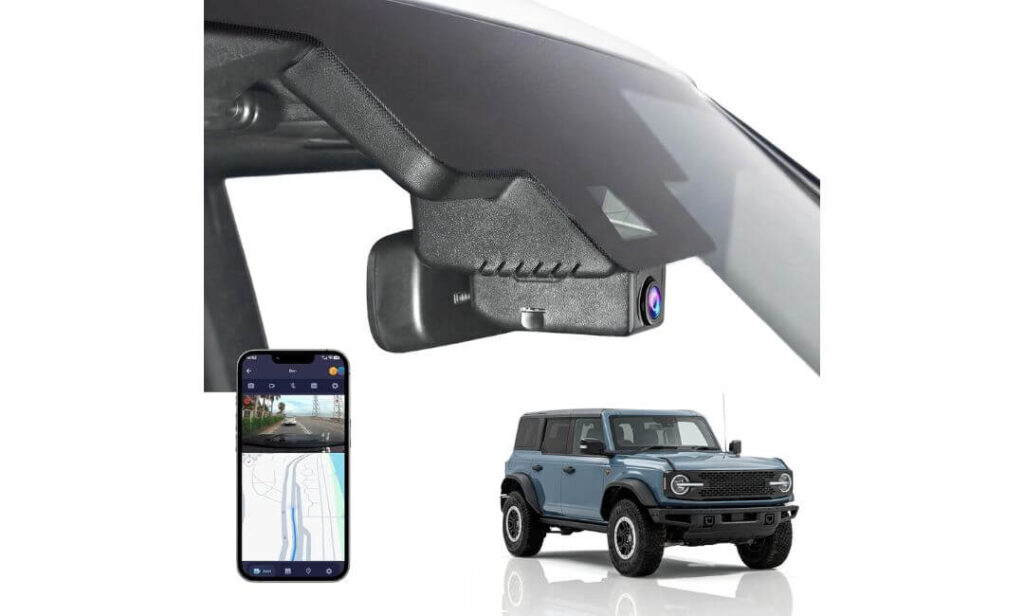
Quick Specs:
- Custom-built hidden OEM fit for Ford Bronco trims including Base, Big Bend, Outer Banks, and Raptor
- True 4K Ultra HD 2160P recording with detailed daytime and night footage capture
- f/1.6 aperture + CMOS sensor for stronger low-light visibility and cleaner nighttime driving clips
- Completely hidden behind-the-mirror installation with no dangling wires across the windshield
- Built-in WiFi + smartphone app support for quick live preview and video downloads
- 145-degree field of view that captures a balanced road perspective without excessive distortion
- Loop recording + automatic G-sensor file locking during impacts or sudden movement
- Optional 24-hour parking monitor support with separate hardwire harness
- 64GB card included in the box with support for larger expandable storage up to 256GB
- Plug-and-play style installation using factory-style housing replacement instead of bulky mounts
Here’s the interesting thing about this camera: it almost feels like it was designed for Bronco owners who don’t want to think about their dash cam at all. No giant display glowing in your face, no oversized mirror replacement, no visible windshield clutter constantly reminding you that aftermarket tech was added later. Once installed behind the mirror housing, the entire setup becomes nearly invisible unless someone intentionally looks for it.
And honestly, inside a Bronco, that cleaner setup matters more than many buyers realize at first. Between removable roof panels, rough suspension movement, sunlight exposure, and off-road vibration, bulky windshield-mounted cameras can start feeling messy surprisingly quickly. This design avoids most of that frustration entirely by staying tucked into the factory mirror area instead of hanging below it.
The actual video quality also lands well above what many people expect from a smaller hidden-style camera. The 2160P 4K recording, combined with the f/1.6 lens and CMOS sensor, captures enough detail to keep road signs, nearby vehicles, and nighttime lanes surprisingly usable even after darker drives or rough weather. It’s not overloaded with artificial sharpening either, which helps footage look cleaner and more natural compared to some aggressively processed budget cameras online.
Another thing worth appreciating here is how uncomplicated the entire ownership experience feels. Open the app, connect through WiFi, preview footage, download clips, and move on with your day. No complicated menus, no unnecessary distractions, no learning curve that makes you avoid using the camera after installation. For a lot of Bronco owners, that simplicity becomes the real reason they stay happy with it long term.
(If your goal is a clean “factory-installed” look without sacrificing real 4K footage quality, this setup probably comes closer to that balance than most universal dash cams currently available.)
What Quietly Makes This One Easy to Recommend
- Hidden installation looks genuinely factory-integrated once mounted
- 4K recording stays surprisingly clean for a compact OEM-style camera
- No exposed wiring helps keep the Bronco cabin looking uncluttered
- WiFi app setup feels simple enough for daily use instead of occasional use
- Smaller hidden housing reduces windshield distraction during off-road driving
A Helpful Thing Worth Knowing Before Purchase
- Parking mode support is available, but Bronco owners wanting full 24-hour monitoring will need the separate hardwire harness kit for that feature
How This Setup Feels Inside the Bronco Cabin
This camera was clearly designed around the Bronco’s windshield and mirror housing layout rather than adapted afterward like many generic dash cams. Once installed, it blends tightly into the upper trim area and avoids blocking forward visibility — something that becomes especially important during trail driving or narrow off-road routes.
The hidden housing also helps preserve the Bronco’s clean interior feel. Instead of adding another screen or bulky device inside the cabin, the setup stays subtle enough that passengers often assume it came with the SUV from the factory.
The Insider Pro-Tip
A lot of Bronco owners spend hours comparing recording resolutions while completely overlooking something more important: whether the camera actually feels enjoyable to live with every day. Because after a few months, convenience usually matters more than flashy marketing numbers.
That’s where this setup quietly wins people over. The hidden OEM design, stable WiFi controls, clean installation, reliable loop recording, and simple ownership experience make it feel less like a gadget — and more like a permanent part of the Bronco itself. And for many drivers, that’s exactly the kind of dash cam they end up appreciating most long term.
#5. GATGIT Front 4K Dash Cam
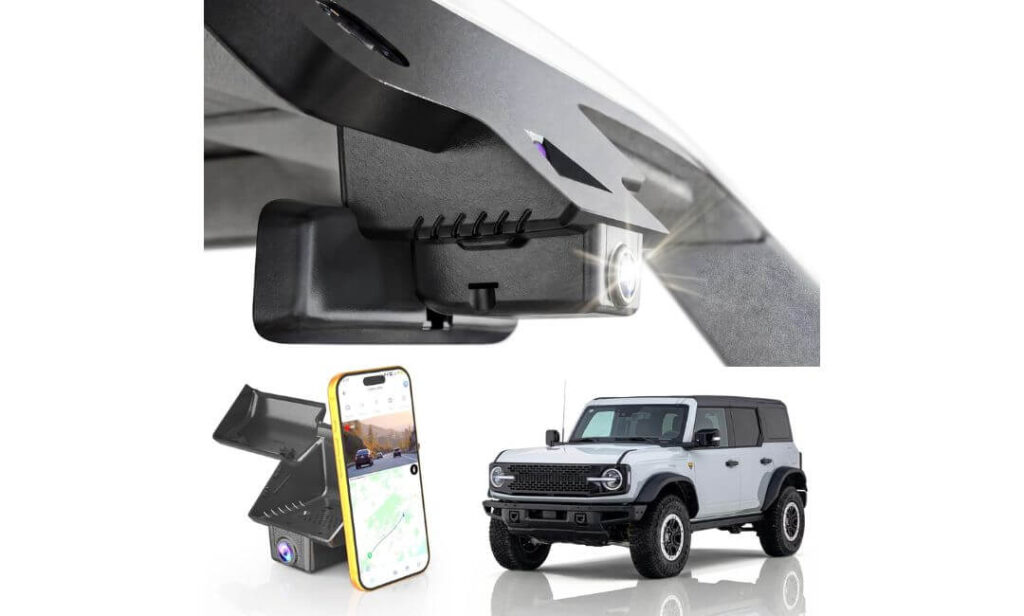
Quick Specs:
- OEM-style hidden fit for Ford Bronco Model B setups with factory-look windshield integration
- True 2160P 4K HDR recording with improved detail retention during bright sunlight and dark roads
- f/1.6 lens + high-sensitivity CMOS sensor for cleaner low-light and nighttime visibility
- Built-in 5.8GHz WiFi with noticeably faster clip downloads compared to older WiFi systems
- Integrated GPS tracking for speed, route, and driving location recording
- Loop recording + automatic emergency file locking through built-in G-sensor detection
- 155-degree wide-angle coverage for balanced lane and shoulder visibility without heavy edge distortion
- Supercapacitor design instead of lithium battery for better long-term heat durability
- Plug-and-play OEM installation with no suction mounts or exposed cable clutter
- 64GB card, Y-cable converter, and install tools included directly in the box
Surprisingly, this ended up feeling less like a “budget alternative” and more like a stripped-down OEM camera setup that simply focuses on the right things. No oversized screen, no unnecessary gimmicks, no clutter hanging across the windshield. Once installed near the Bronco’s mirror housing, the whole system stays clean, quiet, and almost invisible during daily driving.
What really helps this setup stand out is the combination of HDR processing and the f/1.6 lens. A lot of cheaper 4K dash cams technically record in high resolution, but once lighting conditions get difficult — sunrise glare, forest shadows, rain reflections, nighttime highways — the footage often falls apart fast. Here, HDR actually does a decent job balancing bright headlights, darker road sections, and changing light conditions without making the image look overprocessed or artificially sharpened.
The faster 5.8GHz WiFi connection also ends up mattering more than expected once you start using the camera regularly. Downloading clips feels quicker, app responsiveness stays smoother, and reviewing footage after a trip becomes much less annoying compared to slower older systems. Add in the GPS tracking, loop recording, and automatic collision locking, and the entire setup feels surprisingly complete for people who mainly want dependable recording without overspending.
Another thing worth appreciating is the move to a supercapacitor-based design instead of a cheaper lithium battery. Bronco cabins can get brutally hot during summer parking, especially with roof panels removed or during long outdoor trips. Supercapacitors generally tolerate heat and long-term use much better, which quietly adds confidence for owners planning to keep the camera installed year-round.
(If your priority is getting clean OEM-style 4K recording, stable app performance, and dependable everyday usability without paying premium mirror-cam pricing, this setup honestly lands in a very smart middle ground.)
Why This One Quietly Earned a Spot on the List
- HDR recording handles difficult lighting conditions better than expected
- Hidden OEM-style install keeps the Bronco interior looking factory-clean
- Faster 5.8GHz WiFi noticeably improves footage transfers and app use
- GPS tracking adds useful driving and route history during trips
- Supercapacitor setup feels more reassuring for hotter climates and long-term use
One Small Compatibility Detail Smart Buyers Should Check
- This version is specifically built for newer Bronco Model B configurations, so confirming the correct sensor-cover style before ordering is important for proper fitment
How It Actually Feels Once Installed in the Bronco
The cleaner OEM-style positioning helps this camera blend naturally into the Bronco cabin instead of looking like an add-on accessory stuck to the windshield. Visibility stays open during off-road driving, and the tighter fit reduces the little rattles and vibrations universal cameras often develop over rough terrain.
It also works well for owners who want a more factory-like experience without stepping into larger mirror-camera systems. Once mounted, the setup feels subtle enough that many passengers won’t even notice it unless the footage is being reviewed.
The Insider Pro-Tip
Most people shopping for a Bronco dash cam compare resolution first, but long-term satisfaction usually comes from something much simpler: whether the camera becomes annoying after six months of ownership. Loose mounts, slow apps, overheating, bad visibility, or messy wiring ruin the experience faster than people expect.
This setup avoids a lot of those common frustrations by keeping things simple and focused. The OEM-style install, HDR clarity, faster WiFi performance, GPS support, and supercapacitor reliability create the kind of balanced ownership experience that Bronco drivers usually end up appreciating far more over time than flashy marketing specs alone.
Best Ford Bronco Dash Cam Picks Compared for Night Vision, GPS & Off-Road Use
| Dash Cam | Best For | Video Setup | Bronco Fit Style | Night Driving | WiFi Speed | Storage Included |
|---|---|---|---|---|---|---|
|
Fitcamx Front + Rear
EDITOR’S TOP PICK
|
Owners wanting the cleanest OEM-style setup with reliable daily trail recording |
2160P Front 1080P Rear |
True hidden OEM housing Factory-look install |
Very Balanced | Stable Standard WiFi | 128GB Included |
|
WOLFBOX G900 PRO
PREMIUM NIGHT VISION
|
Bronco drivers wanting the best visibility upgrade for highways and dark trails |
4K Front 2.5K Rear |
12-inch mirror display Universal mirror mount |
STARVIS 2 Sensor | Ultra-Fast 5.8GHz | 128GB Included |
|
Mangoal Front + Rear
BEST VALUE OEM PICK
|
Drivers wanting factory-style integration without overspending |
4K Front 1080P Rear |
Behind-mirror OEM fit No exposed wiring |
Sony IMX335 | Fast Built-In WiFi | 128GB Included |
|
FUVYMYT OEM 4K
MOST HIDDEN LOOK
|
Bronco owners wanting a subtle install with zero windshield distraction | 2160P Front |
Mirror housing replacement Factory-style blend |
Super Night Vision | Smooth App WiFi | 64GB Included |
|
GATGIT Front 4K
SMART BUDGET CHOICE
|
Drivers wanting dependable HDR recording and faster WiFi without premium pricing | 2160P HDR Front |
OEM-style windshield fit No visible cable clutter |
HDR Enhanced | 5.8GHz Fast WiFi | 64GB Included |
Buying Guide: How to Choose the Right Dash Cam for a Ford Bronco Without Regretting It Later
The Bronco is not a normal commuter SUV, and honestly, that changes what actually matters in a dash cam more than most buyers expect. A camera that works perfectly inside a smooth-riding crossover can become frustrating fast once it deals with removable roof panels, trail vibration, dusty back roads, direct summer heat, and rough suspension movement every weekend.
That’s why choosing a Bronco dash cam should go beyond just comparing “4K vs 1080P” on a product page. The real difference usually comes down to visibility, heat resistance, mounting stability, app reliability, and how naturally the system fits into the Bronco cabin long term.
Recording Quality Matters More Off-Road Than Most Buyers Realize
A lot of Bronco owners initially assume any “4K” label automatically means excellent footage, but real-world recording quality depends heavily on the camera sensor, HDR processing, lens quality, and low-light tuning — not just the resolution number itself.
For example, trail driving creates lighting conditions that are far more difficult than normal highway driving. Bright sunlight cutting through trees, dust reflections, muddy water splashes, dark forest sections, tunnel shadows, rain glare, and uneven terrain all push dash cams much harder than smooth suburban roads.
That’s exactly why several picks in this article focus heavily on sensors like Sony STARVIS or wider aperture lenses like f/1.6 and f/1.8 setups. These cameras maintain cleaner detail during nighttime driving, early morning trail runs, and darker highways where cheaper dash cams often produce blurry or overexposed footage.
If your Bronco regularly handles camping trips, off-road routes, towing, mountain roads, or remote travel, investing in stronger night recording quality usually matters more than chasing exaggerated “8K” marketing claims online.
Front and Rear Coverage Changes the Entire Ownership Experience
A front-only camera may work fine for basic commuting, but many Bronco owners eventually realize rear coverage becomes incredibly useful once cargo gear, bikes, camping equipment, or oversized tires start limiting visibility.
A proper front and rear dash cam setup helps during:
- Parking incidents
- Rear-end collisions
- Trailer towing
- Highway lane disputes
- Tight off-road reversing
- Campsite maneuvering
- Recovery situations on trails
That’s also why several top options in this guide include dual-channel recording, especially for drivers who spend time off pavement. Rear footage becomes surprisingly valuable once the Bronco starts carrying adventure gear or driving in remote areas where incidents are harder to document later.
Night Vision Is One of the Biggest Real-World Upgrades
This is the area where cheaper dash cams usually fall apart first.
During daylight, even average cameras can look decent. But once you hit dark highways, foggy weather, forest roads, rain, or low-light parking lots, weaker sensors struggle badly. Headlights bloom, signs disappear, and moving vehicles become difficult to identify.
Bronco owners who drive outside city areas should prioritize:
- HDR recording
- STARVIS or advanced CMOS sensors
- Wider aperture lenses
- Better dynamic range processing
- Stable low-light exposure handling
A strong night-driving dash cam does more than simply “record” — it preserves usable evidence when lighting conditions become difficult.
Heat Resistance and Build Quality Matter More in a Bronco
Bronco cabins can become brutally hot, especially during summer parking, beach trips, desert driving, or when roof panels are removed for long periods.
That’s why cheaper battery-powered dash cams often develop problems over time, including:
- Random shutdowns
- Swollen batteries
- App instability
- Recording corruption
- Mount failure in heat
Several of the stronger picks here use supercapacitor-based systems, which generally tolerate heat and long-term use much better than standard lithium battery setups.
The physical mounting design also matters heavily in a Bronco. Rough suspension movement can slowly loosen weaker windshield mounts, causing vibration-heavy footage and annoying rattles. OEM-style hidden housing systems usually handle this environment much better long term.
WiFi and App Control End Up Mattering More Than Expected
A surprising number of buyers never think about app quality until after installation.
But once you actually need footage quickly — after an accident, trail incident, parking damage, or wildlife encounter — slow apps become frustrating immediately. Older WiFi systems often disconnect randomly or take forever to transfer large 4K files.
That’s why newer 5.8GHz WiFi dash cams stand out. Faster downloads, smoother live preview, easier sharing, and more stable connections genuinely improve everyday ownership.
The best dash cam is usually the one you’ll actually use consistently, not the one with the most complicated feature list.
Storage Capacity and Loop Recording Shouldn’t Be Ignored
Bronco owners often record longer trips than average drivers, especially during overlanding, camping, or trail weekends. Higher-resolution 4K footage also fills storage surprisingly fast.
A good Bronco dash cam should support:
- Reliable loop recording
- Automatic collision locking
- Larger microSD card compatibility
- Stable overwrite protection
- Easy footage retrieval
Several options in this guide already include 64GB or 128GB cards, which helps avoid extra setup costs immediately after purchase.
OEM Hidden Installations Usually Age Better Than Universal Mounts
After testing enough Bronco setups, this becomes obvious pretty quickly.
Universal suction-mounted dash cams technically work, but they often end up looking messy inside the Bronco cabin over time. Hanging wires, large displays, windshield vibration, and adhesive mounts slowly make the setup feel temporary instead of integrated.
That’s why OEM-style hidden dash cams have become so popular with Bronco owners recently. A cleaner install:
- Preserves windshield visibility
- Reduces cabin clutter
- Minimizes vibration movement
- Looks more factory-installed
- Feels less distracting during trail driving
And honestly, once most owners switch to a proper hidden OEM-style setup, they rarely want to go back to bulky universal windshield cameras again.
The Real Secret Most Bronco Owners Learn Later
The “best” dash cam usually isn’t the one with the loudest spec sheet.
The cameras people stay happiest with long term are usually the ones that quietly work every single day without becoming annoying inside the SUV. Stable app connection, cleaner installation, reliable night footage, solid heat resistance, and OEM-style fitment matter far more over time than flashy marketing terms.
That’s exactly why every camera in this guide was chosen around actual Bronco ownership experience first — not just impressive numbers on a product listing.
Installation Guide: Real Ford Bronco Dash Cam Setup Tips That Actually Matter Long Term
Installing a dash cam inside a Ford Bronco is honestly different from installing one in a normal SUV. The Bronco’s upright windshield, removable roof sections, exposed cabin layout, off-road vibration, and tighter trim areas change how cameras behave once they’re actually used outside smooth city driving.
That’s why a clean Bronco installation is not just about “making the camera work.” The real goal is building a setup that still feels solid six months later — after heat, dust, rough trails, highway vibration, rain, and repeated roof removal.
Choosing the Right Mounting Position Matters More Than People Expect
A lot of first-time owners mount their dash cam too low on the windshield, then slowly realize it becomes distracting during trail driving, parking, or long highway trips.
Inside the Bronco, the best location is usually close to the rearview mirror housing, tucked high enough to stay outside your normal driving sightline while still maintaining a wide recording angle. That’s one reason OEM-style hidden dash cams work so well in the Bronco specifically — they naturally blend into the upper windshield trim instead of hanging into view.
For larger mirror-style systems like the WOLFBOX setup, positioning matters even more. You want the screen centered properly without interfering with sun visors, forward visibility, or Bronco safety sensors already mounted near the windshield area.
Another thing many people overlook: windshield glare. Cameras mounted too openly can catch heavy dashboard reflections during bright daylight or sunset driving. Slightly higher positioning near the mirror area usually reduces this problem noticeably.
Understanding the Best Power Source Before Installation
There are generally three common ways Bronco owners power their dash cams:
- Cigarette lighter connection
- Fuse box hardwiring
- OEM-style mirror power integration
The cigarette lighter route is the fastest and easiest, but it usually leaves more visible wiring around the cabin unless carefully hidden. It works fine for temporary setups or mirror dash cams, especially for owners who don’t want to modify anything.
Fuse box hardwiring is cleaner long term, especially if you want:
- 24-hour parking monitoring
- Automatic startup and shutdown
- Hidden cable routing
- Cleaner cabin appearance
However, Bronco owners should take extra care when routing wires around side airbags and A-pillars. Careless wiring placement can create serious problems during airbag deployment.
OEM-style Bronco dash cams simplify this dramatically because many connect directly through existing mirror-area power connections, avoiding long visible cables almost entirely.
OEM Hidden Installations Usually Feel Better Every Day
After enough trail driving, this becomes obvious pretty quickly.
Universal windshield-mounted dash cams may technically work, but many eventually develop small annoyances inside the Bronco cabin:
- Vibrating mounts
- Visible cable clutter
- Windshield obstruction
- Heat-related adhesive failure
- Rattling over rough terrain
That’s exactly why hidden OEM-style installations have become so popular with Bronco owners recently. Using the existing trim layout around the mirror housing creates a much cleaner and more stable result.
The best OEM-style setups usually route wiring through:
- Headliner trim
- Factory sensor covers
- Existing mirror housing paths
- Upper windshield trim channels
Once installed properly, the camera ends up looking far closer to a factory feature than an aftermarket add-on.
Cable Management Matters More Off-Road Than on Normal SUVs
This is something many online install videos completely ignore.
Broncos experience far more cabin movement and vibration than average commuter vehicles. Loose cables that seem harmless during normal driving can eventually create rattles, snagging, or annoying movement once the SUV starts handling rough terrain regularly.
A proper Bronco cable setup should:
- Stay tightly secured against trim
- Avoid hanging near pedals or steering areas
- Remain clear of curtain airbags
- Avoid sharp bends near roof panels
- Stay protected from repeated door pressure
Using trim tools, soft cable clips, and factory-style routing paths makes a huge difference long term.
And honestly, once the installation is complete, the best setups are the ones you completely forget are even there.
Don’t Ignore Visibility and Local Dash Cam Laws
A dash cam should improve security — not create new driving risks.
Some owners accidentally mount cameras directly in their line of sight, especially with larger mirror systems or oversized universal screens. In many areas, windshield obstruction laws can also apply if the camera blocks too much forward visibility.
The safest approach is usually:
- High windshield positioning
- Mirror-area placement
- OEM-style hidden integration
- Keeping displays out of direct sightlines
Bronco owners should also avoid routing cables across airbag deployment zones, especially near the A-pillars and roofline.
If you’re unsure about local windshield-mount laws, it’s always smart to double-check state or regional regulations before final placement.
Always Test Everything Before Finishing the Install
One of the biggest mistakes people make is finishing the cable routing before testing the actual camera functions properly.
Before reinstalling trim pieces completely, always verify:
- Camera powers on correctly
- Front and rear footage records properly
- GPS tracking works
- Mobile app connects reliably
- Loop recording functions normally
- Parking mode activates properly
- Time and date settings are correct
- Video playback looks clear during daytime and night testing
This becomes especially important with WiFi-based systems because some cameras need small app permission adjustments during first setup.
And honestly, spending an extra 15 minutes testing everything properly is far better than tearing the Bronco trim apart again later because one cable connection came loose.
The Real Secret to a Dash Cam Setup That Still Feels Good a Year Later
The cleanest Bronco dash cam installs are usually the least noticeable ones.
A camera that blends naturally into the cabin, starts automatically every drive, survives heat and rough trails, records clearly at night, and doesn’t clutter the windshield ends up feeling less like aftermarket tech — and more like part of the SUV itself.
That’s why OEM-style hidden installations consistently age better inside the Bronco than bulky universal mounts. After enough miles, convenience, visibility, and long-term reliability matter far more than flashy setup photos on day one.
Pro-Level Ford Bronco Dash Cam Tips Most Owners Only Learn After Months of Driving
Buying a good dash cam is honestly only half the story. The real difference between average footage and genuinely useful Bronco recordings usually comes down to setup habits, camera maintenance, storage management, and how the system is actually used during daily driving and off-road trips.
A lot of Bronco owners install a camera once, leave every setting untouched forever, then wonder why nighttime footage looks soft, GPS logs disappear, or important trail clips become impossible to find later. Small adjustments and better habits make a much bigger difference than most people expect.
Building a Better Bronco Trail Recording Setup
Trail driving creates very different recording conditions compared to normal highway commuting. The camera constantly deals with vibration, changing light, dust, steep angles, water crossings, and sudden movement — all at the same time.
One of the smartest things Bronco owners can do is enable event-trigger recording and GPS logging before long off-road trips. That way, if something unexpected happens — a close recovery situation, wildlife crossing, trail obstacle, near-collision, or difficult descent — the footage gets automatically protected instead of accidentally overwritten later by loop recording.
For dual-channel setups, positioning also matters heavily. Front cameras should stay level enough to capture both the trail surface and surrounding terrain, while rear cameras should avoid being blocked by oversized spare tires, camping gear, bike racks, or recovery equipment.
Many experienced off-road drivers also create a simple recording habit before trail runs:
- Confirm SD card storage space
- Clean the lens quickly
- Verify GPS signal lock
- Open the app briefly to confirm live view
- Check rear camera angle if carrying extra gear
It takes less than two minutes but prevents a surprising number of recording issues later.
Night Recording Settings Can Completely Change Footage Quality
Most dash cams automatically handle exposure settings, but Bronco owners who regularly drive dark highways, mountain roads, or remote trails should still understand how night recording behaves.
At night, the biggest problems usually come from:
- Headlight glare
- Motion blur
- Dark roadside shadows
- Rain reflections
- Aggressive overexposure from streetlights
Cameras with HDR and larger aperture lenses already help a lot, but positioning and settings still matter.
A few real-world tips that noticeably improve nighttime footage:
- Avoid mounting the camera too low where dashboard reflections become stronger
- Keep windshield glass extremely clean near the lens area
- Use HDR mode during mixed lighting conditions
- Avoid heavily tinted windshield strips directly in front of the camera
- Update firmware occasionally if the manufacturer improves exposure tuning
Some advanced dash cams also allow minor exposure adjustments through the app. Slightly reducing exposure in brightly lit urban driving can sometimes preserve plate readability better at night.
Weather, Dust, and Trail Conditions Affect Dash Cams More Than People Think
The Bronco environment is rough on electronics. Dust, heat, mud, humidity, rain, and constant vibration slowly expose weaknesses in cheaper camera systems.
One thing many owners overlook is lens cleanliness. After dusty trails or rainy highway drives, footage quality can drop dramatically from a dirty lens even when the camera itself works perfectly.
A simple microfiber wipe every few days often improves recording clarity more than changing camera settings.
Bronco owners who regularly drive:
- Desert trails
- Snowy roads
- Muddy routes
- Coastal humidity
- Heavy rain conditions
should also occasionally inspect:
- Cable tightness
- Mount stability
- SD card health
- Rear camera alignment
- Moisture buildup near connectors
OEM-style hidden dash cams usually hold up better long term because they stay protected inside the upper trim area instead of sitting fully exposed on the windshield.
Choosing the Right Storage Size Prevents Constant Headaches
4K footage fills storage much faster than many buyers expect.
A single long off-road weekend with dual-channel recording can consume huge amounts of space, especially when GPS data and event-protected clips are also being saved.
For most Bronco owners:
- 64GB works for lighter commuting
- 128GB feels more realistic for regular road trips
- 256GB becomes ideal for overlanding, towing, camping, or longer trail weekends
But storage size alone isn’t enough. The SD card itself should also be high-endurance rated because Bronco dash cams constantly overwrite old footage through loop recording. Cheap cards often fail silently after repeated heat cycles and vibration.
Formatting the card occasionally through the dash cam itself also helps maintain recording stability long term.
Organizing Footage Properly Makes Ownership Much Easier
Most people only think about footage organization after they suddenly need an important clip.
A smarter approach is creating a simple routine from the beginning.
For example:
- Save trail highlights immediately after trips
- Create folders by location or trip date
- Separate accident footage from scenic recordings
- Backup important clips to cloud storage or SSD drives
- Rename GPS-tagged files before they get lost in random file names
WiFi-based systems make this process much easier now, especially with faster 5.8GHz setups that transfer large 4K files more quickly to smartphones.
And honestly, once Bronco owners start capturing trail drives, wildlife encounters, storms, scenic routes, or recovery moments regularly, the dash cam slowly becomes less of a “security tool” and more of a permanent adventure recorder.
The Biggest Long-Term Mistake Bronco Owners Make
A lot of people obsess over buying the “perfect” dash cam, then completely ignore maintenance afterward.
But the owners who stay happiest long term are usually the ones who:
- Keep the lens clean
- Check mounts occasionally
- Replace aging SD cards before failure
- Update firmware when needed
- Test recordings once in a while instead of assuming everything works forever
Because at the end of the day, a dash cam only matters when the footage is actually there when you need it most.
And inside a Bronco — where every drive can turn into a road trip, trail run, storm drive, or unexpected adventure — that reliability matters far more than flashy marketing specs ever will.
Ford Bronco Dash Cam Ecosystem Guide: What Actually Works Together Long Term
One thing that surprises many Bronco owners after installing a dash cam is how quickly the camera becomes part of a much bigger technology setup inside the SUV. It stops being “just a recorder” and slowly turns into something connected to navigation habits, trail planning, parking protection, road-trip documentation, GPS tracking, mobile apps, cloud backups, and even other aftermarket Bronco accessories.
That’s exactly why choosing the right dash cam ecosystem matters more now than it did a few years ago. A camera might record excellent footage, but if the app feels outdated, firmware support disappears, or the system struggles with future Bronco upgrades, ownership satisfaction usually drops pretty quickly.
OEM-Style Bronco Dash Cams Usually Integrate Better With Factory Accessories
The Bronco interior already contains a surprising amount of technology packed into a relatively rugged cabin design. Between factory sensors, driver-assist systems, removable roof hardware, GPS antennas, auxiliary switches, and aftermarket overlanding accessories, space near the windshield area becomes limited very quickly.
That’s one reason OEM-style hidden dash cams have become far more popular among Bronco owners recently. These systems typically integrate more naturally alongside:
- Factory mirror housings
- Lane-assist sensor covers
- Existing trim pathways
- OEM wiring channels
- Bronco auxiliary electronics
Instead of competing for windshield space, they work around the Bronco’s original layout much more cleanly.
This matters long term because Bronco owners rarely leave their SUVs completely stock. Eventually many people add:
- Light bars
- Roof racks
- Trail GPS systems
- Off-road radios
- Radar detectors
- Auxiliary power kits
- Camping electronics
A bulky universal dash cam can quickly become one accessory too many hanging inside the cabin. Hidden OEM-style setups usually age much better once the Bronco starts evolving into a fully built adventure vehicle.
Modern Dash Cams Work Best When the App Experience Is Strong
A surprising amount of ownership satisfaction now depends on the mobile app ecosystem attached to the camera.
Several years ago, most dash cams were basically isolated recording devices. Today, Bronco owners expect much more:
- Instant phone playback
- GPS route overlays
- Wireless clip downloads
- Firmware updates
- Cloud backup options
- Parking alerts
- Fast social sharing for trail clips
And honestly, weak apps ruin otherwise good cameras faster than many buyers expect.
That’s why newer systems using 5.8GHz WiFi or more polished companion apps stand out so much. Faster transfer speeds become incredibly useful once you start working with larger 4K files, especially after long off-road weekends where dozens of clips may need to be reviewed quickly.
Some Bronco owners even build complete travel workflows around their dash cam footage:
- Recording scenic drives
- Saving wildlife encounters
- Logging off-road routes
- Creating overlanding highlights
- Documenting recovery situations
- Backing up GPS-tagged travel footage
At that point, the camera becomes part security tool, part travel archive.
GPS Integration Quietly Becomes More Valuable Over Time
A lot of buyers initially ignore GPS logging because it sounds less exciting than “4K recording,” but experienced Bronco owners usually end up appreciating it far more later.
GPS-enabled dash cams can automatically store:
- Driving speed
- Route history
- Coordinates
- Timestamped trail data
- Trip tracking information
That becomes extremely useful for:
- Insurance claims
- Accident evidence
- Off-road route recall
- Overlanding trip organization
- Travel documentation
- Parking event verification
Several systems in this guide also allow GPS overlays during playback, which can make saved clips much more useful later compared to plain video footage alone.
Cloud Backup and Long-Term Storage Are Becoming More Important
As dash cam quality improves, file sizes become much larger. Bronco owners recording extended trail trips, road travel, camping routes, or dual-channel 4K footage can easily fill storage cards much faster than expected.
That’s why many experienced owners now use a combination of:
- Dash cam storage cards
- Smartphone transfers
- Portable SSD backups
- Cloud storage systems
- Organized trip folders
The smartest setups usually create multiple layers of protection for important footage instead of relying only on loop recording forever.
And honestly, this matters more than people realize until the first time a meaningful clip almost disappears accidentally.
Firmware Support Can Quietly Make or Break Long-Term Ownership
One of the least discussed parts of buying a newer Bronco dash cam is firmware support.
Some brands continue improving:
- WiFi stability
- Exposure tuning
- GPS accuracy
- Parking mode reliability
- App compatibility
- Recording optimization
Others release a product and rarely touch it again afterward.
This becomes especially important as newer Bronco model years continue changing sensor covers, windshield layouts, mirror hardware, and power integration points. A dash cam that fits perfectly today may require updated software behavior or revised mounting support later.
That’s why owners planning long-term use should pay attention not only to hardware specs, but also to whether the manufacturer actively supports the ecosystem surrounding the camera.
Upgrading Between Bronco Model Years Is Not Always Simple
This is something many owners discover too late.
Ford has already changed certain windshield sensor cover layouts and mirror-area configurations across different Bronco model years. That’s why several cameras in this guide specifically mention:
- Type A vs Type B layouts
- Bronco vs Bronco Sport compatibility
- Model-year-specific housing designs
- Revised mirror cover shapes
Even cameras that look visually identical online may use completely different mounting shells underneath.
Before upgrading to a newer Bronco or transferring a camera between trims, owners should always verify:
- Sensor cover shape
- Mirror housing layout
- Power connector compatibility
- Firmware support
- Parking mode hardware compatibility
Because in the OEM-style dash cam world, tiny fitment differences matter far more than most buyers initially expect.
The Biggest Ecosystem Advantage Bronco Owners Usually Appreciate Later
The best Bronco dash cam setups don’t feel like random accessories added one by one.
They feel integrated.
A strong ecosystem means the camera works naturally with the Bronco cabin, the mobile app stays reliable, footage transfers quickly, GPS tracking remains accurate, firmware support continues improving stability, and future upgrades don’t become frustrating compatibility nightmares.
And honestly, that’s usually the difference between a dash cam people tolerate… and one they genuinely enjoy owning for years.
FAQs About Ford Bronco Dash Cam
Is an OEM-style hidden dash cam actually better for the Ford Bronco, or is it mostly about appearance?
Honestly, after enough real Bronco driving, it stops being only about appearance very quickly.
The Bronco cabin moves more than most daily SUVs. Roof panels come off, suspension travel is rougher, trails create vibration, and summer heat inside the windshield area gets intense. Universal suction-mounted dash cams may look fine initially, but over time many owners start noticing small annoyances — shaky footage, loose mounts, windshield clutter, rattles, heat-related adhesive problems, or cables becoming visible around the mirror area.
That’s exactly why OEM-style hidden systems work so well specifically inside the Ford Bronco. The tighter mirror-housing integration reduces movement, preserves visibility during off-road driving, and usually feels much more natural long term. Cameras like the Fitcamx, Mangoal, and GATGIT setups almost disappear into the cabin once installed, which genuinely changes the ownership experience compared to bulky aftermarket mounts.
And honestly, after living with a clean OEM-style setup for a few months, most Bronco owners rarely want to go back to traditional windshield-mounted cameras again.
Do Ford Bronco dash cams overheat during summer trail driving or roof-off weather?
This is actually one of the smartest questions Bronco owners can ask before buying.
The Bronco creates a harsher environment for electronics than many crossovers or commuter SUVs. Direct sunlight, removable roof panels, desert heat, camping trips, long highway exposure, and parked cabin temperatures push dash cams much harder than people expect.
That’s why heat handling matters more than flashy marketing specs.
The setups that usually survive best long term tend to include:
- Supercapacitor-based designs instead of cheaper lithium batteries
- OEM-style hidden mounting away from direct windshield exposure
- Better internal heat management
- Stable loop-recording systems under extended use
This is one reason cameras like the WOLFBOX and GATGIT models stand out. Their supercapacitor systems generally tolerate heat and repeated recording cycles better than lower-end battery-powered dash cams.
But there’s also a real-world truth many blogs ignore: even premium dash cams benefit from small maintenance habits. Keeping the windshield area clean, avoiding constant direct sun parking when possible, and formatting the SD card periodically all help maintain long-term recording stability far more than most people realize.
Is a front-only Bronco dash cam enough, or does rear recording eventually become worth it?
For lighter commuting, a front-only camera can absolutely work.
But many Bronco owners slowly realize rear coverage becomes much more valuable once the SUV starts being used the way Broncos are typically meant to be used — camping, towing, carrying bikes, loading recovery gear, trail driving, road trips, overlanding, or parking in crowded outdoor locations.
Rear recording becomes especially useful for:
- Rear-end accidents
- Parking lot incidents
- Trailer situations
- Cargo-blocked visibility
- Tailgating evidence
- Campsite maneuvering
- Off-road recovery documentation
And honestly, once a Bronco starts carrying larger tires, roof gear, cargo systems, or bikes, rear visibility naturally changes. That’s why dual-channel setups like the Fitcamx, Mangoal, and WOLFBOX systems usually end up feeling more complete over time.
The interesting part is that many owners initially buy rear cameras “just in case,” then later realize they use the rear footage almost as often as the front.
Why do some Bronco owners care so much about 5.8GHz WiFi on a dash cam?
Because slow dash cam apps become frustrating very quickly in real ownership.
Older WiFi systems often struggle badly once large 4K files are involved. Downloading footage after an accident, trail incident, wildlife encounter, or road trip can suddenly turn into a slow, unstable mess with random disconnects and painfully long transfer times.
That’s where newer 5.8GHz WiFi systems quietly make a huge difference.
The stronger setups usually provide:
- Faster clip downloads
- More stable app pairing
- Smoother live preview
- Easier GPS playback
- Less waiting after long trips
And honestly, this matters more in the Bronco than people think because Bronco owners tend to capture longer, more interesting drives than average commuters. Once the dash cam starts recording mountain roads, trails, storms, camping routes, or scenic travel footage regularly, easier file management becomes a massive quality-of-life improvement.
A surprising number of owners end up using their dash cam footage almost like a travel archive after a while.
What’s the biggest mistake people make when buying a Ford Bronco dash cam?
Most people focus almost entirely on resolution numbers and ignore the actual ownership experience.
A camera can advertise “4K HDR Ultra HD AI Night Vision” all day long, but if the app constantly disconnects, the mount vibrates on trails, the footage overheats during summer, or the windshield setup feels distracting every drive, the experience becomes annoying fast.
The Bronco especially exposes weak dash cams because it’s not a gentle vehicle environment. Rough suspension movement, heat, dust, roof removal, long highway drives, camping trips, and trail vibration slowly reveal which systems were actually designed for rugged use — and which ones were mainly designed for online marketing.
That’s why the best Bronco dash cams usually aren’t the flashiest ones.
They’re the cameras that:
- Start recording every single drive
- Stay stable over rough terrain
- Handle heat properly
- Keep the windshield clean and uncluttered
- Maintain reliable app performance
- Deliver usable footage at night
- Quietly work for years without becoming irritating
And honestly, that reliability matters far more than chasing the highest spec sheet on Amazon.
Final Thoughts
The Ford Bronco changes what a “good” dash cam actually means.
In a normal SUV, almost any decent camera can survive daily commuting. But the Bronco is different. Roof panels come off, trails shake the cabin constantly, weather changes fast, gear fills the cargo area, and long highway drives turn into dirt roads without warning. That environment exposes weak mounts, unstable apps, overheating electronics, and poor night recording surprisingly quickly.
That’s exactly why every option in this guide was chosen around real Bronco ownership first — not just spec-sheet marketing.
Some drivers will prefer the almost factory-perfect hidden fit of the Fitcamx or Mangoal systems. Others will appreciate the visibility upgrade and stronger low-light performance from the WOLFBOX mirror setup. And for owners who simply want clean OEM-style 4K recording without overcomplicating the cabin, options like the FUVYMYT and GATGIT setups quietly make a lot of sense.
But honestly, the biggest thing Bronco owners usually realize later is this: the best dash cam is the one that becomes invisible in daily life. It powers on every drive, records clearly during bad weather and dark roads, survives rough terrain, stays stable through heat and vibration, and never makes the cabin feel cluttered or distracting.
That’s when a dash cam stops feeling like an accessory.
It simply becomes part of the Bronco itself.
Also Check:


