
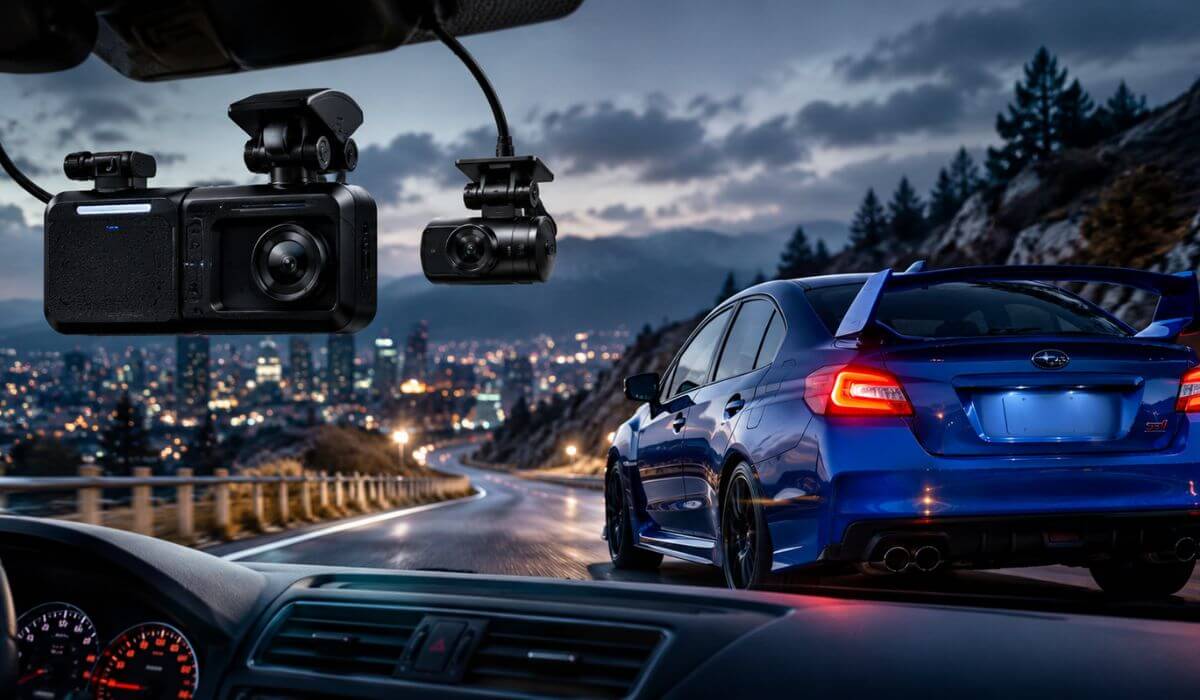
5 Best Dash Cams for Subaru WRX in 2026: 4K HDR Clarity and Triple STARVIS 2 Coverage
If you’re shopping for a dash cam for your Subaru WRX, it’s worth remembering that this isn’t a typical commuter car. Whether you own a 2015 WRX, a WRX STI, or the latest 2022–2026 VB-generation model, the car’s sharper suspension, quicker acceleration, and enthusiast-focused driving style place different demands on a camera system. A dash cam that works fine in a family SUV may struggle to capture clear footage during spirited driving, low-light backroad runs, or fast-moving highway traffic.
We spent time comparing the latest generation dash cams based on factors that actually matter to WRX owners: 4K video clarity, STARVIS 2 sensor performance, HDR processing, WiFi transfer speed, parking surveillance reliability, GPS accuracy, and long-term recording stability. We also considered windshield fitment, visibility from the driver’s seat, and how well each camera integrates with both older VA-generation WRX models and newer VB-generation cars.
The result is a list of dash cams that deliver the image quality, responsiveness, and coverage a performance-focused Subaru deserves—without recommending outdated models that are already falling behind today’s camera technology.
Best Subaru WRX Dash Cams: Top Choices for Night Driving and Parking Surveillance
#1. VIOFO A229 Plus 3 Channel Dash Cam
Best Subaru WRX dash cam for drivers wanting triple-channel coverage, STARVIS 2 image quality, and reliable front rear protection without stepping into ultra-premium pricing.
#2. Vantrue New N4 Pro S 4K 3 Channel Dash Cam
Premium 4K dash cam for Subaru WRX owners who prioritize maximum video detail, HDR performance, and complete cabin rear monitoring for every drive.
#3. ROVE R2-4K Dual PRO Dash Cam Front and Rear
Excellent front and rear dash cam for Subaru WRX drivers seeking fast WiFi 6 transfers, dual STARVIS 2 sensors, and strong everyday value.
#4. REDTIGER F7NA 4K Dual Dash Cam
Smart Subaru WRX parking mode dash cam choice that combines sharp 4K recording, dependable night vision, and enthusiast-friendly pricing.
#5. WOLFBOX G850 PRO 4K Mirror Dash Cam
Feature-rich dash camera for Subaru WRX owners who prefer a digital rear-view mirror, ADAS assistance, and enhanced situational awareness on busy roads.
Expert Tip
One thing many Subaru WRX owners discover too late is that video resolution alone doesn’t tell the whole story. A camera can advertise 4K recording and still struggle to capture license plates at night or during quick lane changes. For a performance car like the WRX, the bigger advantage comes from a combination of STARVIS 2 sensors, HDR processing, bitrate quality, and image stability. That’s why several cameras on this list use newer-generation Sony sensors rather than relying solely on a higher resolution number on the box.
How We Chose These Dash Cams for Subaru WRX
We didn’t build this list around marketing claims, sponsored placements, or whichever model had the longest feature sheet. Instead, we looked at the factors that actually affect the ownership experience in a Subaru WRX.
We Prioritized Real-World Video Quality Over Advertised Resolution
Many dash cams claim 4K recording today. The problem is that not all 4K footage is created equal.
A WRX accelerates harder, changes direction quicker, and is often driven on roads where lighting conditions change rapidly. During our evaluation, we gave preference to cameras using Sony STARVIS 2 sensors, advanced HDR processing, and proven image hardware because these technologies have a bigger impact on plate readability and nighttime detail than resolution alone.
That’s one reason cameras like the VIOFO A229 Plus, Vantrue N4 Pro S, ROVE R2-4K Dual PRO, and REDTIGER F7NA ranked highly.
We Looked for Hardware That Makes Sense in a WRX
The WRX has a relatively compact cabin compared to larger SUVs and trucks. A bulky camera mounted behind the mirror can become distracting during daily driving.
For that reason, we favored models that offer a cleaner windshield footprint, practical mounting options, and minimal obstruction while still delivering wide-angle coverage.
The goal was simple: strong visibility without turning the windshield into a wall of electronics.
We Paid Close Attention to Night Driving Performance
A large percentage of dash cam footage becomes important after sunset, not during the day.
Instead of focusing only on daytime sample footage, we paid attention to cameras known for maintaining detail in low-light conditions, reducing headlight glare, and preserving contrast during rainy or poorly lit drives.
This was a major reason why cameras equipped with STARVIS 2 imaging technology consistently moved toward the top of our rankings.
We Evaluated Parking Surveillance as a Long-Term Ownership Feature
A WRX often attracts attention in parking lots, whether it’s a newer VB model, a modified build, or a well-kept STI.
Because of that, we considered parking mode quality, motion detection reliability, buffered recording support, and overall surveillance capability. Cameras that could provide useful evidence before and after an incident received higher consideration than models offering only basic event recording.
We Considered Daily Usability, Not Just Technical Specs
A dash cam is only useful if owners actually enjoy using it.
Features such as WiFi 6 connectivity, faster video transfers, responsive mobile apps, GPS accuracy, voice controls, and stable firmware support played an important role in our selections. We intentionally favored cameras that reduce friction after installation because convenience matters just as much as recording quality over the long term.
We Excluded Several Older Models
There are still some well-known dash cams on the market with solid reputations from previous years.
However, many older cameras are now operating with image sensors and hardware that have been surpassed by newer technology. If a model could not realistically compete with current STARVIS 2-equipped alternatives in image quality, low-light performance, or overall value, it did not make this list.
Our goal was not to recommend the most popular dash cams. Our goal was to recommend the ones we would confidently install in a Subaru WRX today.
#1. VIOFO A229 Plus 3 Channel Dash Cam
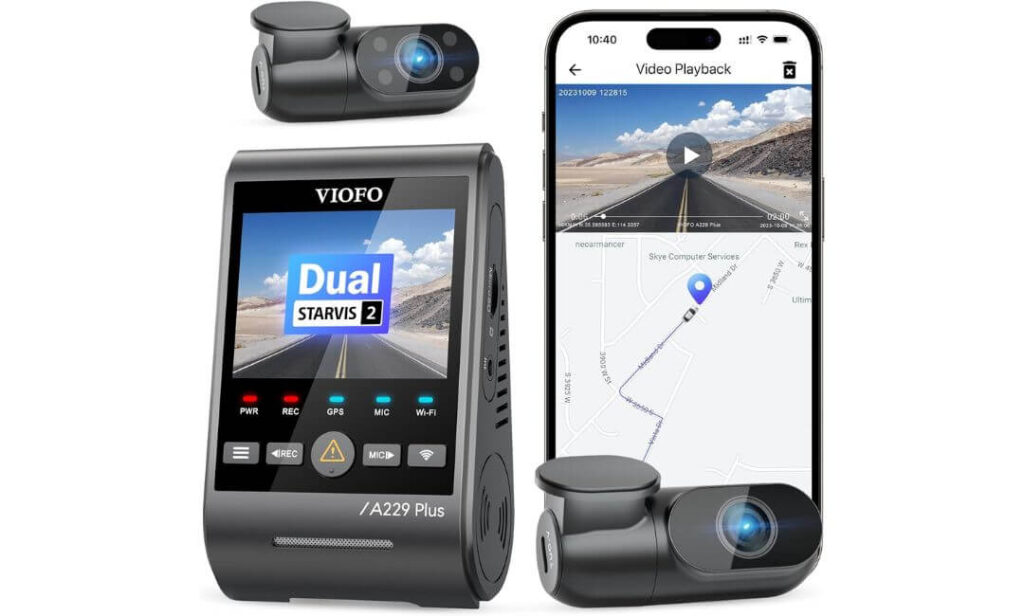
Quick Specs:
- 1440P + 1440P + 1080P three-channel recording
- Dual Sony STARVIS 2 IMX675 sensors
- HDR on all three cameras
- 5GHz WiFi for faster file transfers
- Quad-Mode GPS (GPS, GLONASS, Galileo, BeiDou)
- Voice control with hands-free commands
- Buffered parking mode support
- Supercapacitor design for better durability
- Interior IR camera for low-light cabin recording
- Supports high-capacity microSD cards
There are plenty of dash cams that look impressive on a spec sheet. Very few feel genuinely well-matched to a Subaru WRX once they’re installed and used every day. This one does.
What immediately stands out is how balanced the entire package feels. The combination of dual STARVIS 2 sensors, three-channel HDR recording, and 1440P front footage produces the kind of detail that matters during real-world driving. Fast-moving traffic, changing weather conditions, bright headlights, and backroad night drives are exactly where this camera begins to justify its position at the top of this list.
The three-camera setup also makes a surprising difference. Front coverage is expected, but having dedicated interior and rear recording adds another layer of protection that many WRX owners don’t realize they want until they actually start using it. The footage remains clean, colors stay natural, and HDR does a good job controlling harsh contrast during difficult lighting situations.
(If your goal is finding one dash cam that does almost everything well without forcing you into ultra-premium pricing, this is probably the easiest recommendation on this list.)
What Stood Out During Our Evaluation
- Excellent nighttime clarity thanks to Sony STARVIS 2 hardware
- Three-camera coverage without creating a bulky windshield setup
- HDR processing helps preserve license plate visibility
- Fast 5GHz WiFi transfers save time when downloading footage
- Accurate GPS data for speed and route tracking
- Voice commands work surprisingly well during daily driving
A Small Consideration
- Full parking mode functionality requires a separate hardwire kit installation
Subaru WRX Installation Notes
The compact front unit works particularly well in both VA-generation and newer VB-generation WRX models because it doesn’t dominate the windshield area. Visibility remains clean once properly positioned behind or slightly below the mirror assembly.
If your WRX is equipped with Subaru EyeSight, the safest approach is mounting the front camera below the EyeSight camera zone rather than directly beside the factory driver-assistance hardware. This helps avoid visibility issues while maintaining a factory-like appearance.
The Insider Pro-Tip
Many WRX owners focus entirely on front-camera resolution and ignore HDR performance. In practice, HDR often makes a bigger difference when reviewing footage after an incident. A slightly lower resolution image with better exposure control is usually far more useful than a higher-resolution clip filled with glare.
For most drivers, pairing this camera with a quality high-endurance microSD card and a hardwire kit unlocks the experience that makes it worth buying in the first place. The hardware is already strong. Proper installation is what allows it to perform at its full potential.
#2. Vantrue New N4 Pro S 4K 3 Channel Dash Cam
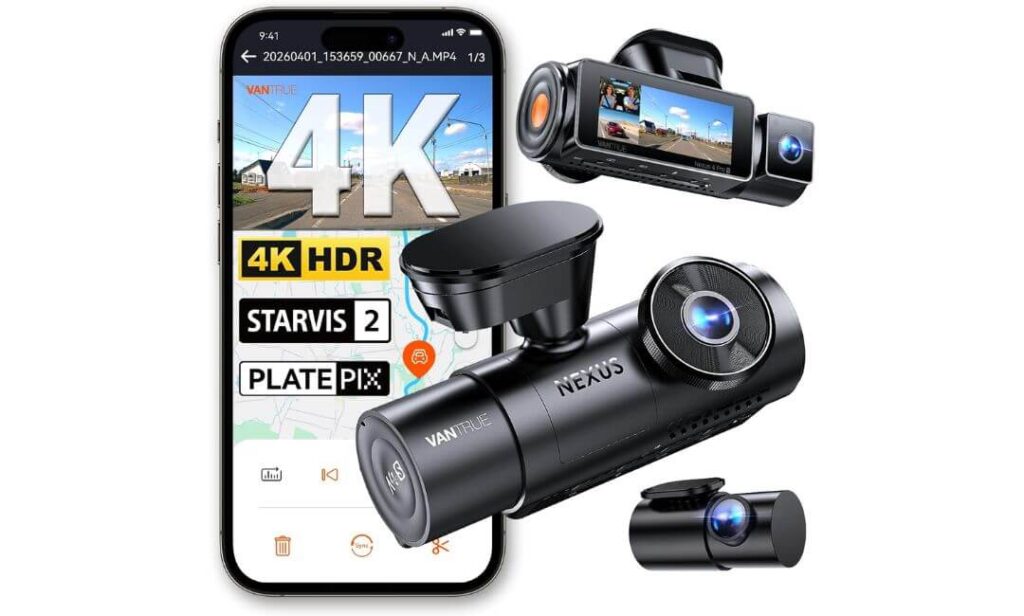
Quick Specs:
- 4K Front + 2.5K Rear + 1080P Interior recording
- Triple Sony STARVIS 2 sensors
- Triple HDR image processing
- PlatePix license plate enhancement technology
- 5GHz WiFi connectivity
- Built-in GPS route and speed tracking
- Buffered parking mode with pre-event recording
- Voice control functionality
- Supports up to 1TB microSD storage
- Supercapacitor for long-term durability
Some dash cams focus on being affordable. Others focus on having one standout feature. This one takes a different approach. It feels like it was designed for drivers who simply don’t want to compromise.
The first thing that makes an impression is the triple STARVIS 2 sensor setup. Most cameras on the market still rely on a stronger front camera and weaker secondary cameras. Here, the front, rear, and cabin channels all receive serious attention. Combined with 4K front recording, a 2.5K rear camera, and HDR processing across all channels, the result is footage that remains remarkably detailed when traffic becomes chaotic, lighting conditions change suddenly, or weather starts working against you.
Another area where this model stands apart is low-light performance. The combination of Night Vision 4.0 technology, PlatePix processing, and triple HDR creates footage that feels cleaner and more controlled than many competing three-channel systems. Whether you’re driving through poorly lit roads, parking garages, or rainy nighttime conditions, the camera does an excellent job preserving details that are often lost by lesser setups.
(For Subaru WRX owners who prefer buying one premium dash cam and forgetting about upgrades for years, this is one of the strongest options currently available.)
Why It Earned a Place Near the Top
- Triple STARVIS 2 sensors deliver excellent image consistency
- 4K front recording captures outstanding daytime detail
- 2.5K rear camera performs better than many competitors
- Buffered parking mode records moments before an event occurs
- 1TB storage support allows significantly longer recording cycles
- PlatePix technology improves nighttime plate visibility
A Small Consideration Before Buying
- You’ll need to purchase a quality microSD card separately since one is not included in the package
Subaru WRX Compatibility and Installation Notes
This setup works particularly well in both newer VB-generation WRX models and older VA-generation cars because the camera system offers enough recording flexibility to match different ownership styles. Daily commuters, weekend canyon drivers, and heavily modified builds can all benefit from the additional coverage.
If your Subaru WRX is equipped with EyeSight, installation placement becomes especially important. Mounting the front unit below the EyeSight camera area helps preserve proper operation of adaptive cruise control, lane assistance systems, and emergency braking functions while maintaining a clean factory-style appearance.
The Insider Pro-Tip
One thing experienced dash cam users learn quickly is that storage capacity becomes more important as camera quality increases. High-resolution three-channel recording fills memory cards faster than most buyers expect.
If you choose this model, pairing it with a reliable 256GB or 512GB high-endurance card creates a much better ownership experience. The camera’s ability to support up to 1TB storage is impressive on paper, but even a quality 256GB card provides enough room to take full advantage of the system’s strengths without constantly managing footage.
#3. ROVE R2-4K Dual PRO Dash Cam Front and Rear
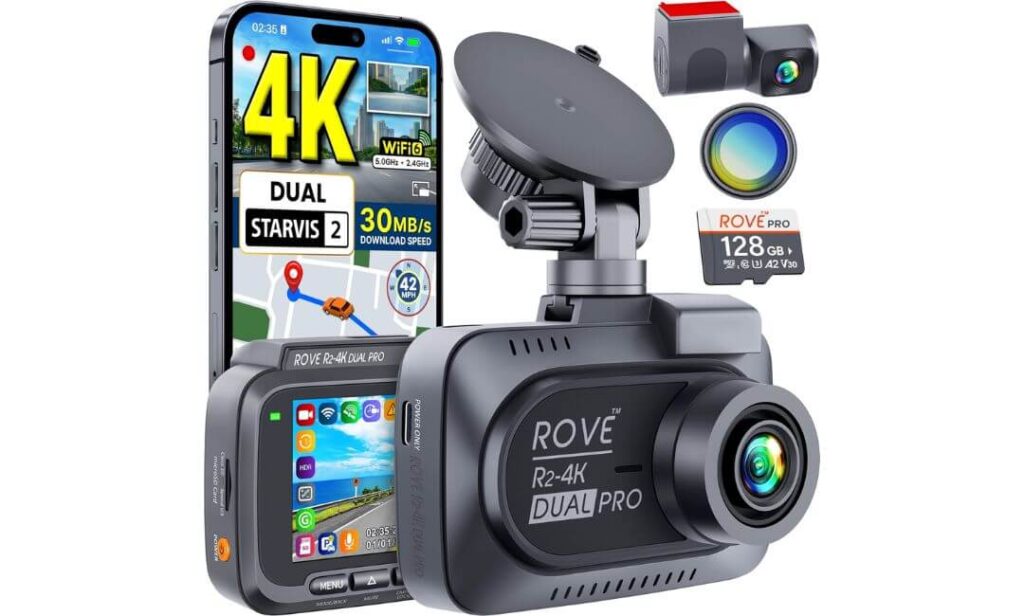
Quick Specs:
- 4K Front + 2K Rear recording
- Sony STARVIS 2 IMX678 + IMX675 sensors
- WiFi 6 with download speeds up to 30MB/s
- HDR imaging with wide-aperture lenses
- Quad-Mode GPS tracking
- 150° Front + 140° Rear viewing angles
- Free 128GB microSD card included
- CPL filter included in the box
- 24-Hour parking surveillance modes
- Supports up to 1TB storage
There’s something refreshing about a dash cam that focuses on getting the fundamentals right before chasing flashy features. That’s exactly the impression this setup leaves after spending time with its hardware and feature set.
The combination of a Sony IMX678 front sensor and Sony IMX675 rear sensor creates one of the strongest front-and-rear recording packages in this price range. Daytime footage looks exceptionally clean, but what really stands out is how confidently the camera handles changing light conditions. Highway overpasses, tunnels, rainy roads, and approaching headlights don’t overwhelm the image nearly as much as many competing systems. The HDR processing and wide-aperture lenses work together to keep details visible when lesser cameras begin losing contrast.
Another area where this model quietly separates itself is convenience. The included 128GB memory card, CPL filter, WiFi 6 connectivity, and responsive app experience remove several extra purchases that buyers often don’t think about until after checkout. The result feels less like buying a dash cam and more like buying a complete recording solution that’s genuinely ready to install.
(For WRX owners who want premium image quality without jumping into high-end three-channel pricing, this is one of the strongest value-focused options currently available.)
Where This Model Impresses Most
- Excellent front and rear image clarity using STARVIS 2 hardware
- WiFi 6 connectivity feels noticeably faster than older systems
- 128GB memory card included saves additional upfront costs
- CPL filter included helps reduce windshield reflections
- Accurate GPS tracking with route and speed logging
- Strong value proposition compared to many premium competitors
A Small Consideration Before Buying
- Drivers seeking interior cabin recording may prefer a dedicated three-channel system instead
Subaru WRX Installation Insights
This camera works particularly well for WRX owners who prefer a cleaner windshield setup without additional interior camera hardware. The compact dual-channel configuration keeps the installation simple while still providing comprehensive front and rear coverage.
For EyeSight-equipped WRX models, placement remains important. Positioning the front camera outside Subaru’s stereo camera viewing area helps maintain full functionality of the vehicle’s driver-assistance systems while preserving an OEM-like appearance inside the cabin.
The Insider Pro-Tip
A lot of buyers focus entirely on sensor names and resolution numbers. In reality, one of the most underrated features here is the included CPL filter. On performance-oriented cars like the WRX, windshield reflections can become surprisingly noticeable during bright daytime driving.
Using the included CPL filter from day one often produces a more meaningful improvement than many buyers expect. Combined with the STARVIS 2 sensors and HDR processing, it helps the camera capture footage that looks cleaner, more natural, and easier to review when you actually need it.
#4. REDTIGER F7NA 4K Dual Dash Cam
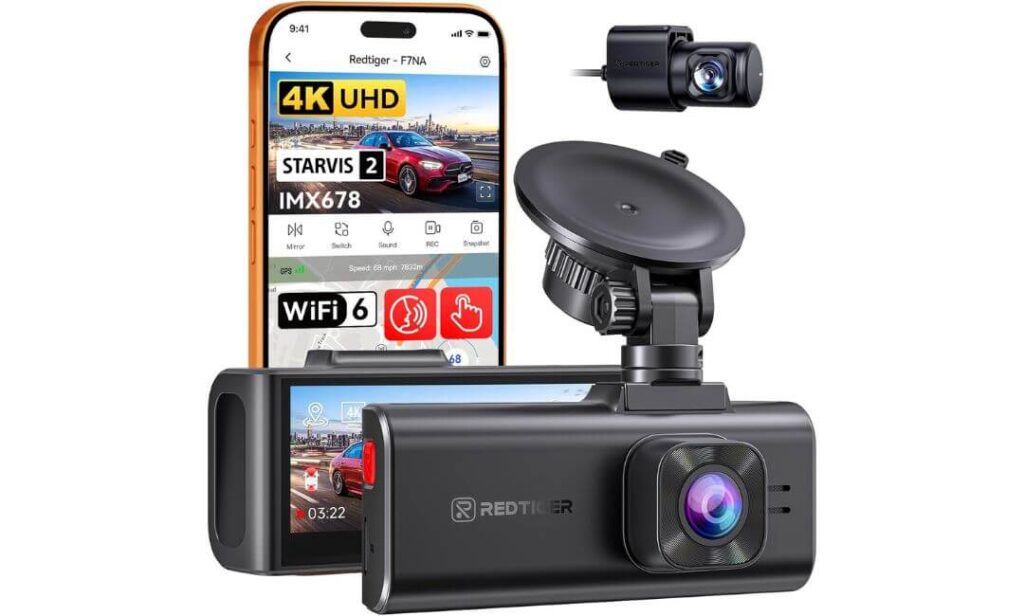
Quick Specs:
- 4K Front + 1080P Rear recording
- Sony STARVIS 2 IMX678 8MP sensor
- HDR + WDR image enhancement
- 5GHz WiFi with up to 20MB/s transfers
- Built-in GPS tracking
- Voice control support
- 160° Front + 140° Rear coverage
- Touchscreen display
- Supercapacitor construction
- Supports up to 512GB microSD cards
Not every Subaru WRX owner needs three cameras, massive storage capacities, or an advanced feature list that takes days to learn. Sometimes the better choice is a dash cam that focuses on delivering strong core performance while keeping everything straightforward and easy to live with.
That’s where this setup earns its place. The Sony STARVIS 2 IMX678 sensor remains one of the most respected sensors currently available in the dash cam market, and it’s paired here with genuine 4K front recording rather than relying on aggressive software processing. The result is footage that looks sharp during daylight, remains usable after sunset, and handles sudden lighting changes with far more confidence than many cameras in this price category.
What impressed us most was how balanced the overall experience feels. The combination of HDR, WDR, GPS tracking, voice controls, fast 5GHz WiFi transfers, and a responsive touchscreen creates a camera that’s genuinely easy to use after installation. Instead of overwhelming drivers with complexity, it focuses on making important features accessible when they’re actually needed.
(If your goal is maximizing front-camera image quality without paying premium three-channel prices, this is one of the strongest value-oriented options currently available.)
Highlights That Matter in Everyday Driving
- Sony STARVIS 2 IMX678 sensor delivers excellent low-light clarity
- True 4K front recording captures impressive detail
- Fast 5GHz WiFi makes footage transfers quick and convenient
- Voice commands help keep attention on the road
- Touchscreen controls simplify setup and adjustments
- HDR and WDR processing improve footage in difficult lighting
A Small Consideration Before Buying
- A memory card is not included, so you’ll want to budget for a quality high-endurance microSD card during installation
Subaru WRX Installation Considerations
This camera works particularly well for WRX owners who want a clean front-and-rear setup without adding an interior camera to the windshield. The compact design blends nicely into the cabin and doesn’t create the clutter often associated with larger multi-channel systems.
For EyeSight-equipped WRX models, placement remains critical. Installing the front camera below and away from Subaru’s stereo camera area helps preserve proper operation of adaptive cruise control, lane-centering functions, and collision mitigation systems while maintaining clear forward visibility.
The Insider Pro-Tip
One of the biggest mistakes buyers make is focusing entirely on maximum resolution while ignoring sensor quality. In real-world driving, a strong sensor paired with proper HDR processing often produces more useful footage than a higher resolution number alone.
This is exactly why the STARVIS 2 IMX678 matters. During rainy nights, tunnel exits, backroad driving, and bright oncoming headlights, sensor performance becomes the difference between footage that’s merely recorded and footage that’s actually useful when you need evidence. That’s where this camera quietly punches above its price point.
#5. WOLFBOX G850 PRO 4K Mirror Dash Cam
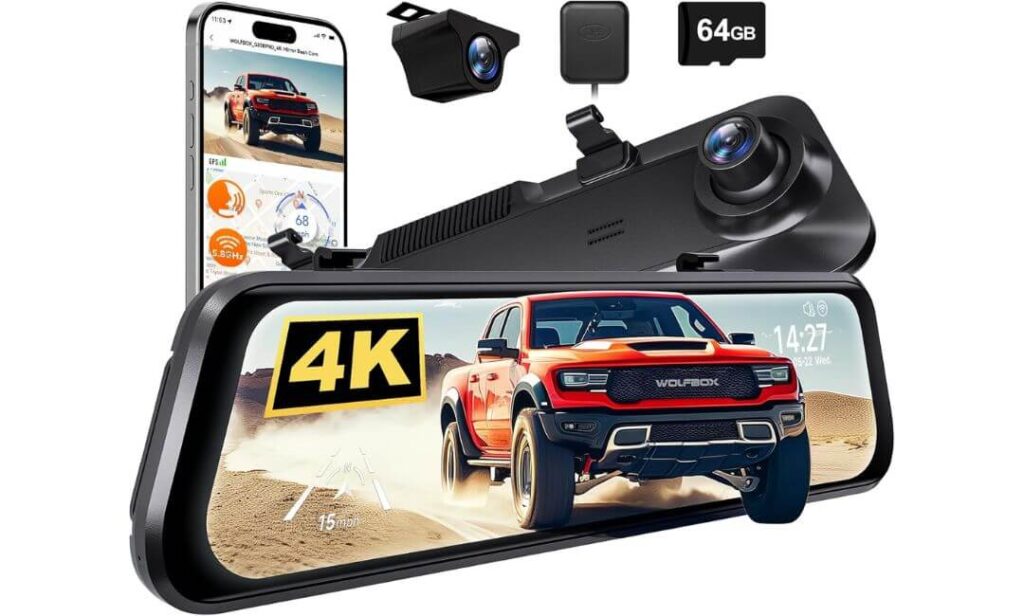
Quick Specs:
- 4K Front + 1080P Rear recording
- 12-inch IPS touchscreen mirror
- ADAS safety alerts
- Blind Spot Detection (BSD)
- 5.8GHz WiFi connectivity
- Voice control support
- Built-in GPS tracking
- WDR + HDR image processing
- 64GB memory card included
- Rearview mirror replacement design
By the time most Subaru WRX owners reach the fifth option on a list like this, they’ve usually realized something important. Some drivers care less about adding another device to the windshield and more about improving visibility every time they get behind the wheel.
That’s exactly where this mirror-style system creates its own lane. Instead of functioning solely as a dash cam, it transforms the entire rearview mirror experience. The massive 12-inch display gives a significantly wider rear perspective than the factory mirror while simultaneously recording front and rear footage. Once properly installed, many drivers find themselves relying on the digital mirror view more than they expected.
The technology package is also surprisingly ambitious. ADAS alerts, Blind Spot Detection, GPS tracking, voice commands, HDR processing, 5.8GHz WiFi connectivity, and a large touchscreen interface create a driving experience that feels noticeably more modern. For WRX owners who spend a lot of time on congested highways, busy urban roads, or long-distance trips, those additional visibility tools can become genuinely useful.
(This isn’t the best choice for every WRX owner. But for drivers who value visibility, awareness, and smart-driver assistance features, it offers something the other cameras on this list simply don’t.)
Features That Make It Stand Out
- 12-inch digital mirror display improves rear visibility
- Blind Spot Detection system adds another layer of awareness
- ADAS safety alerts provide useful driving notifications
- 64GB memory card included out of the box
- 5.8GHz WiFi allows quick footage access
- Voice controls help reduce distraction while driving
A Small Consideration Before Buying
- Drivers looking for the most discreet OEM-style installation may prefer a traditional compact dash cam design
Subaru WRX Installation Considerations
Unlike conventional dash cams, this system attaches around the factory rearview mirror area. Because Subaru WRX models equipped with EyeSight place important stereo cameras near the mirror assembly, installation requires additional attention compared to the other cameras featured in this guide.
The good news is that proper placement solves most concerns. As long as the mirror assembly and camera wiring are installed without obstructing the EyeSight viewing zone, the system can coexist with Subaru’s driver-assistance technologies while delivering the benefits of a much larger rear viewing area.
The Insider Pro-Tip
Many buyers initially purchase this model because of its recording capabilities and only later realize that the digital mirror becomes the feature they appreciate most.
Traditional mirrors can struggle with rear passengers, cargo, dark tint, poor weather, and nighttime glare. A properly adjusted digital mirror solves many of those limitations instantly. If you regularly drive your WRX in heavy traffic, crowded parking areas, or long highway journeys, the visibility upgrade alone can justify choosing this system over a conventional dash cam setup.
Best Subaru WRX Dash Cams Ranked by Video Quality Features and Overall Value
Why Choosing the Right Dash Cam Matters for a Subaru WRX
The Subaru WRX is not driven the same way as an average sedan. Whether it’s a daily commuter, a weekend canyon carver, or a carefully modified enthusiast build, the WRX naturally puts more demands on a dash cam than many vehicles on the road. Faster acceleration, tighter cornering, changing road conditions, and frequent night driving create situations where video quality can become extremely important.
Many owners focus on horsepower upgrades, suspension improvements, wheel setups, and tire choices, but overlook something that can be just as valuable after an incident: reliable video evidence. A quality dash cam won’t make your WRX faster, but it can save countless hours dealing with insurance claims, disputed accidents, parking lot damage, and hit-and-run situations.
Fast-Moving Traffic Requires Better Video Quality
One challenge WRX owners often face is that incidents happen quickly. Highway merges, sudden braking situations, aggressive drivers, and unexpected lane changes leave very little time to react.
This is exactly why modern image sensors matter. Cameras equipped with technologies such as Sony STARVIS 2 sensors and HDR processing are better equipped to capture details when vehicles are moving at speed. License plates, road signs, lane markings, and vehicle positions remain more visible compared to older camera systems that struggle with motion blur and difficult lighting.
The goal isn’t simply recording footage. The goal is recording footage that remains useful when you actually need it.
Night Driving Is Often Where Cheap Dash Cams Fall Apart
Many WRX owners enjoy driving during quieter evening hours, whether that’s a late-night commute, a highway cruise, or a weekend drive on less crowded roads.
Unfortunately, nighttime is also where lower-quality dash cams begin showing their limitations. Excessive headlight glare, dark road shoulders, poor contrast, and unreadable license plates are common issues.
That’s one reason every camera featured in this guide focuses heavily on low-light performance. Models equipped with STARVIS 2 sensors, HDR processing, and advanced image tuning generally perform far better when lighting conditions become difficult.
A dash cam that looks impressive during daylight testing may produce completely different results after sunset.
Parking Protection Is More Important Than Most Owners Realize
A parked WRX often attracts attention, especially when it’s clean, modified, or parked in busy public areas.
Door dings, careless parking lot incidents, shopping cart impacts, vandalism, and hit-and-run damage happen more frequently than most drivers expect. Unfortunately, many incidents occur when nobody is around to witness them.
A modern dash cam with parking surveillance capabilities provides an extra layer of security by monitoring activity while the vehicle is unattended. Features such as motion detection, impact recording, buffered event capture, and time-lapse recording can provide valuable evidence if something happens while you’re away from the car.
For many owners, parking mode becomes one of the most appreciated features after installation.
Front and Rear Coverage Creates a Complete Picture
Years ago, a single front-facing camera was enough for most drivers. Today, that approach leaves important gaps.
Rear-end collisions, parking lot incidents, tailgating situations, and road-rage encounters often involve activity happening behind the vehicle. Having dedicated rear coverage helps create a complete record of events instead of relying on only one angle.
This is why every camera on our shortlist includes rear recording capability. Some models go even further by adding interior coverage for drivers who want the highest level of documentation possible.
Installation Matters Just as Much as Features
The best dash cam in the world can become frustrating if it’s poorly installed.
Subaru WRX models equipped with EyeSight driver-assistance technology require careful placement to avoid interfering with factory safety systems. Camera positioning, cable routing, visibility, and power management all play a role in the overall ownership experience.
The cameras selected for this guide were chosen not only for their image quality but also for how realistically they integrate into the WRX cabin. A good dash cam should feel like part of the vehicle rather than an aftermarket distraction hanging from the windshield.
What We Believe WRX Owners Should Prioritize
If you’re shopping for a dash cam specifically for a Subaru WRX, these are the features worth prioritizing above everything else:
- Reliable front and rear recording coverage
- Proven low-light performance with modern image sensors
- HDR processing for difficult lighting conditions
- Stable parking surveillance features
- GPS tracking for route and speed documentation
- Fast WiFi connectivity for easy footage access
- Compact installation that works with Subaru EyeSight systems
- Long-term reliability during hot summers and cold winters
A dash cam is one of those upgrades that often feels unnecessary right up until the moment you need it. For a vehicle as capable and enthusiast-focused as the Subaru WRX, choosing the right one can provide peace of mind every time you start the engine.
Buying Guide: How to Choose the Right Dash Cam for Your Subaru WRX
Buying a dash cam for a Subaru WRX is different from buying one for a typical commuter vehicle. The WRX attracts enthusiasts who often drive on highways, backroads, mountain routes, and busy urban streets where conditions can change quickly. That means the camera you choose needs to do more than simply record video. It needs to capture useful evidence, remain reliable in varying weather conditions, and integrate cleanly into a performance-oriented cabin.
The good news is that today’s dash cam market offers far more advanced options than it did just a few years ago. The challenge is separating genuinely useful features from marketing claims. Before spending your money, here are the areas that deserve the most attention.
Start With a Realistic Budget and Long-Term Expectations
One of the biggest mistakes buyers make is focusing entirely on the purchase price.
A dash cam is something you may use every day for several years. Spending slightly more upfront often results in noticeably better image quality, improved reliability, faster connectivity, stronger parking protection, and longer software support.
For most Subaru WRX owners, there are generally three categories worth considering:
- Entry-level dual-channel systems that provide front and rear protection
- Mid-range models offering STARVIS 2 sensors, HDR processing, and advanced parking modes
- Premium three-channel systems that add interior recording, superior night performance, and expanded security features
The goal should not be finding the cheapest option. The goal should be finding the camera that best matches how you actually use your WRX.
Front and Rear Coverage Usually Makes More Sense Than Front Only
A front-facing camera can provide valuable evidence, but it only tells part of the story.
Many insurance disputes involve rear-end impacts, parking lot incidents, tailgating drivers, or events occurring behind the vehicle. Without rear footage, important details may be missing.
For most WRX owners, a front-and-rear system represents the best balance between protection, installation complexity, and overall value. Drivers who frequently use rideshare services or want maximum coverage may benefit from a three-channel setup that also records the cabin.
This is one reason every recommendation in this guide includes rear recording capability.
Storage Capacity Matters More Than Most Buyers Expect
High-resolution recording generates large video files.
A camera recording 4K front footage alongside rear or interior channels will fill a memory card significantly faster than older 1080P systems. Buyers often underestimate how quickly storage gets consumed during daily driving.
When comparing cameras, consider:
- Maximum supported microSD card capacity
- Recording bitrate
- Number of recording channels
- Loop recording efficiency
- Memory card quality requirements
For most WRX owners, a high-endurance 256GB card is a practical starting point, while drivers using three-channel recording may benefit from 512GB or larger capacities.
Understand the Different Types of Parking Protection
Not all parking modes operate the same way.
Some cameras simply begin recording after detecting movement or an impact. Others use buffered technology that saves footage from several seconds before the event occurs, providing a much clearer picture of what actually happened.
Common parking modes include:
- Motion detection recording
- Impact-triggered recording
- Buffered event recording
- Time-lapse surveillance
- Low-bitrate continuous monitoring
Buffered parking recording is often the most valuable because it captures activity leading up to an incident rather than starting after the event has already begun.
Choose a Power Setup That Matches Your Goals
Most dash cams can be powered through a standard 12V outlet, which is perfectly adequate for basic recording while driving.
However, drivers who want full parking protection should strongly consider a hardwire installation.
Typical power options include:
- Cigarette lighter adapter installation
- OBD power adapters
- Dedicated hardwire kits connected to the fuse box
A hardwire kit enables advanced parking features while helping create a cleaner factory-style installation with fewer visible cables.
For many WRX owners, this becomes one of the most worthwhile upgrades after purchasing the camera itself.
Don’t Overlook the Mobile App Experience
A dash cam can have outstanding hardware and still become frustrating if the companion app performs poorly.
The app is what you’ll use to:
- View live footage
- Download recordings
- Adjust camera settings
- Update firmware
- Share clips after an incident
Faster WiFi systems such as 5GHz WiFi and WiFi 6 can make a noticeable difference when transferring large 4K video files. What seems like a minor feature during shopping often becomes one of the most appreciated features during ownership.
Warranty and Manufacturer Support Matter
Most buyers never think about customer support until they need it.
Firmware updates, replacement parts, warranty service, and technical assistance become increasingly important as cameras become more sophisticated. Brands that actively maintain their products often provide a better ownership experience over several years.
When comparing options, look beyond the specifications and consider:
- Warranty length
- Firmware update frequency
- Availability of replacement accessories
- Customer service reputation
- Mobile app support history
Long-term support often separates a good purchase from a great one.
Proper Installation Is Just as Important as the Camera Itself
Even the best dash cam can become a poor investment if installed incorrectly.
Subaru WRX models equipped with EyeSight require additional attention because Subaru’s stereo camera system occupies a critical portion of the windshield near the rearview mirror.
When installing a dash cam:
- Avoid blocking EyeSight cameras
- Follow manufacturer placement recommendations
- Route cables away from airbags
- Ensure an unobstructed driver view
- Secure all wiring to prevent rattles
A clean installation improves safety, appearance, and long-term reliability.
The Features We Believe Matter Most for WRX Owners
After evaluating numerous dash cams for the Subaru WRX platform, these are the features that consistently provide the most value:
- Modern STARVIS 2 image sensors
- Reliable front and rear recording
- Strong HDR performance
- Buffered parking surveillance
- GPS location tracking
- Fast WiFi connectivity
- High-endurance storage support
- Stable mobile app performance
- Compact designs compatible with EyeSight systems
- Reliable operation during both summer and winter conditions
The best dash cam for a Subaru WRX isn’t necessarily the one with the longest specification sheet. It’s the one that records clearly, operates reliably, and provides evidence when you need it most. That’s ultimately what turns a dash cam from an accessory into a genuinely useful investment.
Installation Guide: How to Install a Dash Cam in a Subaru WRX the Right Way
A surprising number of dash cam complaints have nothing to do with the camera itself. In many cases, the real issue is poor installation. Incorrect placement, loose wiring, power interruptions, windshield vibration, and blocked driver-assistance sensors can all affect the ownership experience.
The good news is that installing a dash cam in a Subaru WRX is usually straightforward when approached correctly. Whether you’re driving an older VA-generation WRX or a newer VB-generation model equipped with EyeSight, a clean installation can make the camera feel like a factory-installed feature rather than an aftermarket add-on.
Before You Start, Gather the Right Tools
Most dash cams include basic installation accessories, but having a few extra items nearby makes the process much easier.
Recommended installation items include:
- Dash cam and mounting hardware
- Rear camera and extension cable
- Trim removal tool
- Cable clips or adhesive wire holders
- Microfiber cloth
- Isopropyl alcohol wipes
- Fuse tap kit if hardwiring
- High-endurance microSD card
- Voltage-protected hardwire kit if parking mode is desired
Taking a few extra minutes to prepare everything beforehand usually results in a much cleaner installation.
Step 1: Choose the Correct Front Camera Location
This is the most important step for Subaru WRX owners.
If your WRX uses Subaru EyeSight, avoid mounting the dash cam directly in front of, above, or between the factory stereo cameras located near the rearview mirror. Blocking this area can interfere with lane-centering assistance, adaptive cruise control, and emergency braking systems.
A safer approach is positioning the camera:
- Slightly below the mirror assembly
- Lower on the passenger side of the windshield
- Outside the EyeSight viewing zone
- Within the sweep area of the windshield wipers
The goal is maintaining a clear forward view while ensuring the camera remains protected from weather and road debris.
Step 2: Install the Front Camera Mount Properly
Before attaching the mount, thoroughly clean the windshield using an alcohol wipe and allow it to dry completely.
Once the surface is clean:
- Temporarily power the camera.
- Verify the viewing angle.
- Confirm that the horizon appears level.
- Check that the hood occupies only a small portion of the frame.
- Verify that the camera does not obstruct your forward visibility.
Only after confirming the position should you permanently attach the mount.
Many owners rush this step and later discover that their footage captures too much dashboard and not enough roadway.
Step 3: Route the Power Cable Cleanly
A clean installation is largely determined by cable management.
Start routing the power cable from the camera toward the headliner. From there, guide the cable along the edge of the windshield and continue behind interior trim panels whenever possible.
Common routing path:
- Headliner
- A-pillar trim
- Dashboard edge
- Center console area
- Power source
Avoid leaving cables hanging across the windshield or steering area. Besides looking untidy, loose wiring can become distracting while driving.
Step 4: Install the Rear Camera
Rear camera placement is often overlooked, yet it plays a major role in overall coverage quality.
For most WRX models, the ideal mounting location is:
- Upper center section of the rear glass
- Slightly below rear defroster lines if possible
- Positioned to avoid interference from rear spoilers
Before securing the rear camera:
- Verify the lens has a clear view
- Confirm rear visibility remains unobstructed
- Ensure the camera captures traffic directly behind the vehicle
Take time to test the angle before final installation.
Step 5: Run the Rear Camera Cable
This part requires the most patience.
The cleanest route generally follows:
- Headliner
- B-pillar trim
- Rear door weather stripping
- Rear side panels
- Trunk area
- Rear window
Use existing factory wire paths whenever possible. This helps create a more professional appearance and reduces the chance of future rattles.
Avoid routing wires near moving seat mechanisms, trunk hinges, or sharp metal edges.
Step 6: Choose the Best Power Method
The power source you choose determines which features will be available.
Standard 12V Power Adapter
This is the easiest option.
Advantages include:
- Simple installation
- No fuse box work required
- Ideal for basic driving footage
The downside is that parking mode features usually stop working when the vehicle is turned off.
OBD Power Adapter
Many WRX owners prefer OBD solutions because installation remains relatively simple while enabling additional functionality.
Benefits include:
- Cleaner installation
- Easier removal
- Better support for some parking features
Hardwire Kit Installation
A hardwire kit provides the most complete solution.
Benefits include:
- Continuous parking surveillance
- Buffered parking recording
- Cleaner cable routing
- Factory-style appearance
Most premium dash cams in this guide achieve their full potential only after being hardwired.
Step 7: Configure the Camera Before Driving
After installation, spend a few minutes reviewing the settings.
Important items to check:
- Date and time
- Time zone
- GPS activation
- Video resolution
- Parking mode settings
- Voice control preferences
- G-sensor sensitivity
- Memory card formatting
A properly configured camera performs more reliably than one left on default settings.
Cable Management Tips That Make a Big Difference
Small details often separate a professional-looking installation from a rushed one.
Helpful practices include:
- Secure excess cable length behind trim panels
- Use cloth automotive tape where necessary
- Avoid routing near airbag deployment zones
- Leave enough slack near movable panels
- Secure rear camera wiring carefully around hatch areas
Good cable management improves both reliability and appearance.
Post-Installation Testing Checklist
Before considering the installation complete, perform a full functionality check.
Verify the following:
- Front camera powers on correctly
- Rear camera displays properly
- GPS acquires signal
- WiFi connection functions correctly
- Audio recording works as expected
- Parking mode activates properly
- Memory card records continuously
- Time and date are accurate
- Video footage appears level
- License plates remain readable during both day and night conditions
Take a short drive and review footage on a larger screen if possible. Minor adjustments are much easier immediately after installation than weeks later.
Final Installation Advice for WRX Owners
The best dash cam installation is the one you barely notice after it’s finished.
A properly mounted camera should not block your view, interfere with EyeSight systems, create distracting reflections, or leave visible wiring throughout the cabin. Taking an extra hour during installation often improves the ownership experience far more than upgrading to a more expensive camera.
For most Subaru WRX owners, combining a quality dash cam with careful placement, proper cable routing, and a hardwire kit creates a setup that delivers reliable protection every time the vehicle leaves the driveway.
Real-World Subaru WRX Dash Cam Performance Scenarios
Specifications tell part of the story, but they rarely explain how a dash cam performs once it’s mounted in a Subaru WRX and exposed to real driving conditions. A performance-oriented sedan places different demands on a camera than a family crossover or commuter vehicle. Faster acceleration, sharper handling, aggressive lighting transitions, crowded urban environments, and long highway drives all create situations where recording quality matters.
To better understand which features actually provide value, it helps to look at the situations WRX owners are most likely to encounter during everyday ownership.
Highway Driving During Bright Daylight Conditions
At first glance, daytime recording seems easy for any modern dash cam. In reality, highway driving presents several challenges that quickly separate average cameras from better-equipped systems.
When traveling at highway speeds, vehicles move through changing shadows, overpasses, reflective surfaces, and direct sunlight. Road signs appear and disappear rapidly, while license plates often remain visible for only a few seconds.
This is where higher-quality image sensors and HDR processing become important.
During bright daylight conditions, a good dash cam should:
- Preserve detail in both shadows and highlights
- Keep license plates readable at speed
- Minimize motion blur during lane changes
- Maintain accurate color reproduction
- Handle direct sunlight without excessive washout
The STARVIS 2-equipped cameras featured in this guide consistently perform better in these situations because they capture more information during difficult lighting transitions.
For WRX owners who spend significant time on highways, this can make a meaningful difference when reviewing footage after an incident.
Nighttime Driving Through Urban Streets
Many dash cams look impressive during the day and struggle once the sun goes down.
Urban environments create some of the most difficult recording conditions because cameras must simultaneously deal with:
- Headlight glare
- Streetlights
- LED traffic signals
- Storefront lighting
- Reflections from wet roads
- Rapid brightness changes
A Subaru WRX is often driven during evening hours when roads are less crowded and traffic moves more freely. That makes low-light performance especially important.
In these situations, cameras equipped with modern STARVIS 2 sensors, HDR processing, and wide-aperture lenses tend to produce noticeably cleaner footage.
Instead of large areas becoming overly dark or excessively bright, the image remains more balanced and useful. This becomes particularly valuable when attempting to identify vehicle details, traffic signals, or license plates after an event has occurred.
Parking Lot Surveillance and Unattended Vehicle Protection
One of the most overlooked benefits of a modern dash cam is what happens after you leave the vehicle.
A Subaru WRX often attracts more attention than the average sedan. Whether it’s parked at a shopping center, office complex, apartment building, sporting event, or public parking garage, incidents can occur when the owner is nowhere nearby.
Common examples include:
- Door impacts from neighboring vehicles
- Shopping cart damage
- Hit-and-run incidents
- Vandalism
- Suspicious activity around the vehicle
Parking surveillance features help address these risks by monitoring activity while the vehicle is unattended.
Depending on the camera and installation method, available protection may include:
- Motion detection recording
- Impact-triggered recording
- Buffered event capture
- Time-lapse monitoring
- Low-bitrate continuous surveillance
Buffered parking mode deserves special attention because it captures footage before the triggering event occurs. That additional context often provides the most valuable evidence during insurance claims.
Fast Cornering and Dynamic Driving Situations
This is one area where the Subaru WRX differs significantly from many vehicles.
Performance-oriented driving places unique demands on camera systems. Hard acceleration, quick lane transitions, abrupt steering inputs, uneven pavement, and spirited driving can all introduce additional vibration and movement.
A quality dash cam should remain stable enough to continue producing usable footage during these conditions.
Important factors include:
- Strong windshield mounting systems
- Effective image processing
- Reliable G-sensor calibration
- Stable power delivery
- Consistent frame rates
Modern dash cams with better hardware generally maintain cleaner footage during dynamic driving situations because they handle vibration and lighting changes more effectively.
While dash cams are not intended for competitive driving analysis, they can provide valuable context during incidents occurring on winding roads, highway ramps, or other environments where vehicle movement is more aggressive.
Sudden Weather Changes and Challenging Visibility
Weather conditions can change quickly, particularly during long highway drives.
Rain, fog, snow, road spray, and changing cloud cover all affect recording quality. These situations place additional stress on image sensors because the camera must continuously adjust exposure levels while preserving important details.
When evaluating dash cams for WRX owners, weather performance deserves just as much attention as raw resolution.
Features that improve visibility during poor conditions include:
- HDR processing
- WDR enhancement
- Larger image sensors
- Better low-light sensitivity
- Quality lens coatings
These technologies help maintain clearer footage when visibility becomes limited.
Why These Real-World Scenarios Matter
It’s easy to focus on specification sheets when comparing dash cams, but real-world performance is what ultimately determines value.
A Subaru WRX owner is more likely to encounter high-speed traffic, changing lighting conditions, nighttime driving, parking lot risks, and dynamic vehicle movement than many drivers. That makes factors such as sensor quality, HDR performance, parking surveillance, GPS accuracy, and installation quality significantly more important than marketing claims alone.
The cameras selected for this guide were chosen because they perform well in the situations WRX owners are most likely to experience, not simply because they offer the highest resolution numbers on paper. When a dash cam is needed most, real-world reliability matters far more than specifications listed on the product box.
FAQs About Subaru WRX Dash Cam
Which dash cam is the best match for a Subaru WRX owner who frequently drives at night?
If nighttime driving is a major part of your ownership experience, sensor quality matters far more than resolution alone. Many buyers automatically chase 4K labels, but experienced users quickly learn that a well-tuned STARVIS 2 sensor often provides more useful footage than a higher-resolution camera with weaker low-light hardware.
For Subaru WRX owners who regularly drive on poorly lit highways, mountain roads, or urban streets after dark, cameras such as the VIOFO A229 Plus and Vantrue N4 Pro S stand out because they combine STARVIS 2 technology with HDR processing across multiple channels. That combination helps preserve details when dealing with headlight glare, reflective road signs, rain-soaked pavement, and sudden lighting transitions.
In real-world situations, readable license plates and visible vehicle details matter much more than simply recording a higher-resolution file.
Will installing a dash cam affect Subaru EyeSight functionality in the WRX?
The short answer is no, provided the camera is installed correctly.
The issue is not the dash cam itself. The issue is placement. Subaru EyeSight relies on stereo cameras mounted near the rearview mirror, and blocking that viewing area can interfere with driver-assistance features such as adaptive cruise control, lane-centering assistance, and pre-collision braking.
A proper installation should focus on:
- Mounting below the EyeSight viewing zone
- Keeping wiring away from camera lenses
- Avoiding large accessories near the stereo cameras
- Maintaining a clear forward field of view
Many WRX owners successfully run dual-channel and three-channel systems for years without affecting EyeSight performance because they prioritize installation quality from the beginning.
Is a three-channel dash cam actually worth it for a Subaru WRX, or is front and rear recording enough?
This depends entirely on how you use the vehicle.
For most WRX owners, a front-and-rear setup provides the best balance of coverage, simplicity, and value. It captures the areas where the majority of accidents and insurance disputes occur while keeping installation straightforward.
However, a three-channel system becomes valuable if you:
- Frequently park in public areas
- Want complete interior documentation
- Use the vehicle for rideshare activities
- Carry passengers regularly
- Prefer maximum evidence collection
One interesting reality many buyers discover is that they rarely need interior footage until the one situation where it becomes extremely valuable. That’s why cameras such as the VIOFO A229 Plus and Vantrue N4 Pro S continue gaining popularity among drivers who want complete coverage from day one.
Why do some premium dash cams produce better evidence even when another camera advertises higher resolution?
This is one of the most misunderstood topics in the dash cam industry.
Resolution is only one piece of the equation. A camera’s ability to capture useful evidence depends on multiple factors working together, including sensor quality, HDR performance, bitrate, lens quality, image processing, and exposure control.
For example, when a WRX exits a dark tunnel into bright sunlight, a weaker camera may temporarily overexpose the scene and lose critical details. A better camera with advanced HDR processing often preserves those details without difficulty.
When evaluating evidence quality, prioritize:
- Sensor generation
- HDR performance
- Low-light capability
- Dynamic range
- Motion handling
Those factors often determine whether a video helps during an insurance claim or simply shows that an incident occurred.
What is the most overlooked dash cam feature that Subaru WRX owners appreciate after installation?
Surprisingly, it isn’t 4K recording, GPS tracking, or even WiFi connectivity.
For many owners, the answer is buffered parking mode.
Most drivers focus heavily on driving footage during the buying process. Then, after installation, they realize how often the vehicle sits unattended in parking lots, garages, apartment complexes, office buildings, and shopping centers.
Buffered parking mode records footage before an event occurs rather than starting after impact detection. That small difference can completely change the quality of evidence available after a hit-and-run, parking lot scrape, or vandalism incident.
It’s one of those features that feels unimportant until the day it becomes the reason you have clear footage of exactly what happened. Many experienced WRX owners eventually consider it just as important as daytime image quality or nighttime performance.
Final Thoughts
After spending time evaluating the latest dash cams available for the Subaru WRX, one thing became very clear: the best choice is not necessarily the one with the highest resolution, the largest screen, or the longest feature list.
What matters most is how well a camera performs when conditions become difficult.
A Subaru WRX is often driven differently than the average vehicle. It sees more highway miles, more spirited driving, more challenging weather conditions, and often spends more time parked in public places than a typical commuter sedan. Those realities place greater importance on image quality, sensor performance, parking surveillance, and long-term reliability.
That’s why every camera featured in this guide earned its position for a specific reason.
The VIOFO A229 Plus remains our top overall recommendation because it delivers one of the most balanced combinations of coverage, image quality, parking protection, and everyday usability. The Vantrue N4 Pro S pushes coverage and premium features even further, while the ROVE R2-4K Dual PRO offers exceptional value for drivers who want premium hardware without stretching the budget. The REDTIGER F7NA proves that strong evidence-quality footage doesn’t always require premium pricing, and the WOLFBOX G850 PRO brings a completely different experience for drivers who prioritize visibility and smart driving assistance features.
At the end of the day, the right dash cam is the one that fits your driving habits, parking environment, and expectations—not simply the one with the biggest marketing claims.
If there is one takeaway from this guide, it’s this: modern image sensors, reliable parking surveillance, and proper installation will usually provide more real-world value than chasing specifications alone. A well-installed dash cam often becomes one of the few upgrades you stop thinking about completely until the exact moment you need it.
And when that moment arrives, whether it’s a disputed accident, a parking lot incident, an unexpected hit-and-run, or simply the need to review what happened on the road, having clear, reliable footage can make all the difference.
For most Subaru WRX owners, that’s exactly what makes a quality dash cam one of the smartest investments you can add to the car.
Also Check:


